ROYAL BLOOD – Royal Blood (2014 Warner Music Japan, three bonus tracks)
Bass and drum duos are all the rage, but it’s all about the songs. You can do a lot with just those two instruments as it turns out. Royal Blood’s palette of sound is also of the bass and drum duo persuasion, and they have the songs too. Their 32 minute (43 minute on the Japanese with bonus tracks) debut album has enough good tunes that you won’t notice there are only two guys playing. The tunes are all short, tight and to the point.
Mike Kerr (bass, vocals) and Ben Thacker (drums) have been praised by luminaries such as Jimmy Page for this fine debut album. When someone like Jimmy Page excitedly declares he’s a fan, I don’t care who you are — you gotta check them out. Royal Blood composed a series of tightly arranged riffy songs, with some serious heft. Riffs such as the one on “Come on Over” sound nothing at all like bass. Kerr squeals high notes out of his bass like it’s nothing, all while pouring it all into his singing simultaneously. The dude possesses the pipes necessary to infect his songs full of angst.
Check out the tense “Figure it Out”, their best single so far. Thacker keeps himself busy on the drums, working with the song not against it. Everything these guy do serves the song. “Figure it Out” had to be one of the best rock singles of 2014, expertly crafted for maximum rigidity and plutonium hooks. Every song delivers sturdy riffs, understated vocal melodies, and plenty of taut rock action.
The songs are on such a level that only a few stand out above the others. “Figure it Out” is the obvious one, but a few others impress as highlights. “Little Monster” (also a single) isn’t forgettable, and “Ten Tonne Skeleton” immediately reminded me of Them Crooked Vultures. “Loose Change” shakes things up by going slightly funky with some electronic drum effects. These guys don’t waste their time farting around. They slam you with the riffage, bang bang bang, and they’re done. Of course with a band of this configuration, the songs are composed with plenty of space between the instruments, and that adds to the heft of it all.
When the CD ends after “Better Strangers” we are treated to three Japanese bonus tracks. “Hole” is from the first Royal Blood EP Out of the Black. Its slow Soundgarden-Nirvana grunge is notably less crisp sounding than the album at large, but holy cow — this is heavy shit! Right out of 1992. “You Want Me” was lifted from the single for “Come on Over”. This is upbeat hard rocking fun. The final track “Love and Leave it Alone” is from the “Figure it Out” single, and it may be one of the best songs here. It’s interesting that the bonus tracks offer more variety than the album itself, which is a good enough reason to own them. Each of these tracks is different and deliciously good.
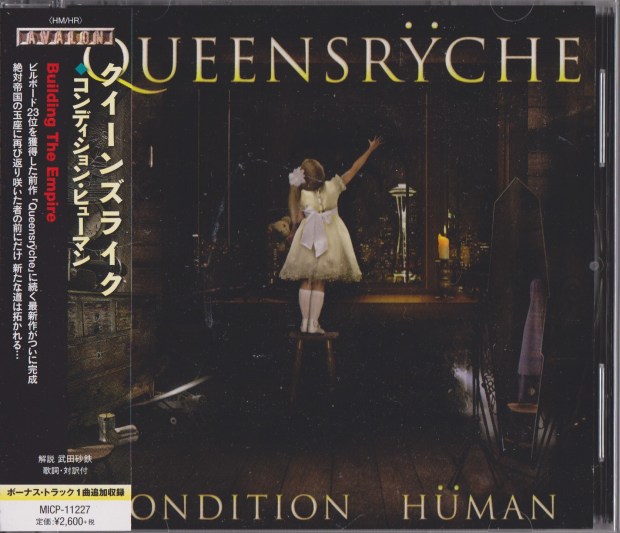
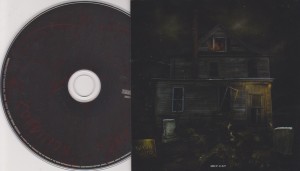
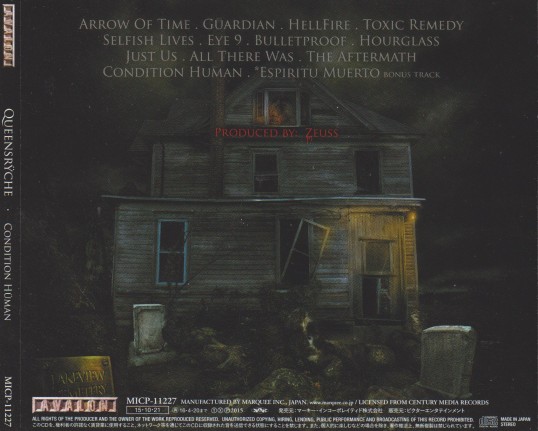
QUEENSRŸCHE – Condition Hüman (2015 Century Media Japanese edition)
As if it was not abundantly clear on their last album (2013’s self-titled), Queensryche seem to have no intentions of abandoning their heavy metal roots again. Furthermore when you have a significant lineup change, such as a new lead singer, you can’t just stand still. You have to keep progressing forward. The ‘Ryche used their last album to re-ground their sound, but for a followup you need more than that. Condition Hüman pushes the boundaries out once more, but not without keeping the metal intact.
Indeed, “Arrow of Time” sounds as if the quintet had been ingesting nothing but classic Iron Maiden for breakfast. Swift and viscous, “Arrow of Time” gets the job done in the requisite four minutes but not without exploring the exotic side of metal riffing. Imagine an alternate reality where Queensryche did not go in the highly technological direction of 1986’s Rage for Order album. Envision instead a timeline in which they followed The Warning (1984) with an album that continued to progress, but also go heavier at the same time. That album would have been Condition Hüman. “Hellfire” demonstrates this as well; the song would have fit on a heavier version of Rage.
“Guardian” demonstrates this even more clearly. With the vintage-style screams and vocalizations (Todd La Torre for MVP), metal riffing, but also Mindcrime-like progressive rock, Queensryche have hit upon a satisfying balance. Songwriting credits are various combinations of all five band members; all but “Eye 9”, written solely by bassist Eddie Jackson (a first, I think). The album has a cohesive sound, like five guys all pulling in the same direction. The production, by Zeuss, is punchy. Queensryche have always employed elements such as sound effects and programming, and Condition Hüman has these fixtures as well.
Moving on, “Toxic Remedy” is Mindcrime-like, but denser and massive sounding. Pay attention to the way Todd La Torre layers his vocals on “Toxic Remedy”. He has arranged the vocals in his own way; this is not a carbon copy of something else. “Selfish Lives” is the same. Yes, there are hooks and melodies that sound very Queensryche, but Todd is showing off his own personality more than before. And he’s not taking the easy way out on any of it! Sounds like he is really pushing his own limits, especially on “Selfish Lives”. It’s quite remarkable how lucky Queensryche were to find a compatible guy like Todd, who is also able to stretch it out.
Another album highlight is the rhythmic “Eye 9”, the aforementioned Jackson composition. This Queensryche-meets-Queens of the Stone Age track blows the doors wide open in terms of direction by putting the rhythm first. It sounds like Queensryche, yet nothing like any prior Queensryche, simultaneously. “Bulletproof” puts a new slant on the Queensryche power ballad, keeping the emphasis on the power. La Torre makes it his own — listen to the last note he sings. Sends chills up the spine. Speaking of chills, crossing the acoustics with the heavy chunky riffing on “The Hourglass” did exactly that. There are Pink Floyd influences coming up to breathe from time to time on Condition Hüman. This is most obvious on “Just Us”, which is also very much like the slightly psychedelic acoustic side of Led Zeppelin. Queensryche have never done anything like “Just Us” before. “Silent Lucidity” this is not. The soulful singing at the close of the song is also unlike anything on a prior Queensryche song.
For fans of the technical, fast side of Queensryche, “All There Was” will scratch that itch. With that pulsing technological rhythm and “Needle Lies” tempo, you are in for a ride. Don’t forget the blazing guitar histrionics. The final album track is “Condition Hüman” itself, 7:48 of dramatic progressive metallic rock. Check out the “Astronomy Domine” section after the fifth minute, just before it goes into that deliberate Mindcrime riff. If I had to pigeonhole the sound of this album, it would be “progressive metallic rock”, but pigeonholes are lazy. Still, as Commander Pavel Chekov once said, “If shoe fits…”
Holding out for the Japanese edition of the album, the bonus track “Espiritu Muerto” is the bonus track worth waiting for. Going sludgy for 3:40, but topped with a soaring chorus, the bonus track is in the mold of the album but different just the same. It’s a long album though, and adding more material (even if good) can sometimes push a CD just a bit too far in terms of attention span. “Espiritu Muerto” is close to this line, but because it has enough personality of its own, it’s worth staying around for.
If any of these songs sound intriguing to you, check out Condition Hüman. Fans who wonder where Queensryche could have gone had they adhered to heavier roads will find much to enjoy. They have never taken the easy way with any of their albums, but it is hard to imagine a fan of early ‘Ryche who won’t find something here to love.
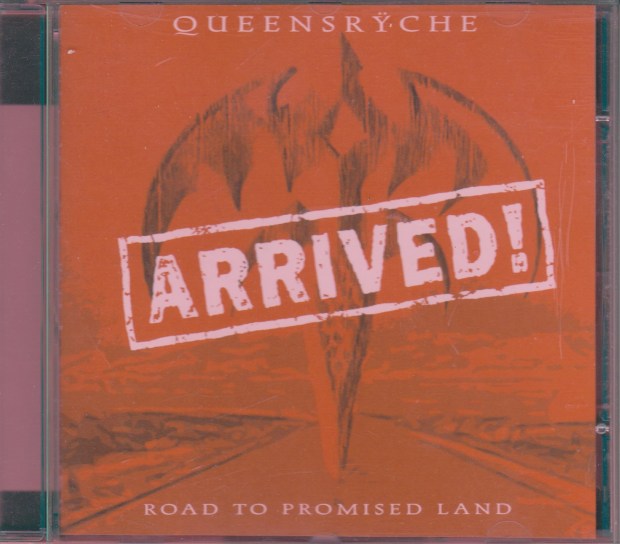
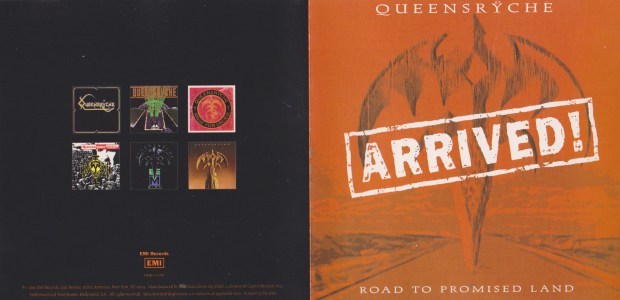
QUEENSRŸCHE – Road to Promised Land (1995 EMI promotional “best of” CD)
20 years ago, good buddy T-Rev let me know this little treasure had arrived in his store (first discussed in Record Store Tales part 120). Released to promote the 1995 Promised Land tour, Queensryche’s Road to Promised Land AKA Arrived! was a neat little greatest hits package released well before their actual Greatest Hits several years later. This is a promo CD released by EMI in the United States, and it covers every Queensryche release to date.
From the original EP is not “Queen of the Reich”, but “The Lady Wore Black”. The ballad starting the set is an odd but explainable choice. Queensryche were playing “The Lady Wore Black” on tour, but Geoff Tate didn’t enjoy singing “Queen of the Reich” and tried to avoid doing so. Being so full of powerful metal drama, even as a ballad, “The Lady Wore Black” can work as an opener. Then “Take Hold of the Flame” follows, one of the best Queensryche songs of all time (from the first LP The Warning). Unfortunately that is the only inclusion from The Warning, although it is certainly a must. Geoff Tate used screams as a art form on this song like no other. You want metal drama? They opening tracks are Metal Drama 101.
Two tracks are selected from Rage For Order, and they are fairly obvious choices: “Walk in the Shadows” [“WALK WITH MEAT!“] and “I Will Remember”. It is a given that both are high quality songs, from an album that can be difficult to pick individual hits. The opening part of the CD feels rushed, with the critical first EP and two albums giving up only four songs. Keep in mind that these albums now make up a large bulk of Queenryche 2015’s set, although that wasn’t the case in 1995 with their original singer.
From the brilliant landmark concept album Operation: Mindcrime are three selections: “I Don’t Believe in Love”, “Eyes of a Stranger” and “Revolution Calling”. Once again these are fairly obvious choices, being the three singles from the album. Strangely, “Eyes of a Stranger” was not edited down and is the full 6:39 cut, complete with album outro. Their most successful LP yet, Empire, was also give three inclusions. “Best I Can”, “Jet City Woman” and “Silent Lucidity” were three great singles. I wonder why the title track “Empire” wasn’t used? I think it’s more identifiable than “Best I Can”.
Rolling into Promised Land for the final three tracks, it is plain sailing to hear the evolution of the band over their first decade. Although the metal got tuned down in favour of more drama and radio-friendly elements, one thing that never changed was their urge to experiment. Indeed, the first Promised Land single “I Am I” features plenty of daring sounds. (This version of “I Am I” fades out rather than skipping directly into “Damaged”.) From cello (by Chris DeGarmo) to tribal percussion to innovative vocal effects, “I Am I” proved that Queensryche could rock progressively in the increasingly alternative 1990’s. Lyrically, they were as serious as ever but more personal. The ballad “Bridge” was about DeGarmo’s relationship with his father. Finally, the heavy-as-plutonium “Damaged” closes the CD abruptly. That’s the problem with these record company assembled promo CDs. They are not designed to play as an album. They are designed for radio use and store play. In other words the only real consideration is including all the individual tracks you want to plug. Like “I Am I”, “Damaged” too was edited for radio. They shaved three seconds off in fades, because normally these songs flow together on album.
Rating a CD like this is kind of pointless, because it was never meant to be sold. But let’s say you don’t own any Queensryche, and you saw this used while wandering the shops. Would it be a good Queensryche purchase for somebody looking for a good overview of the classic years?
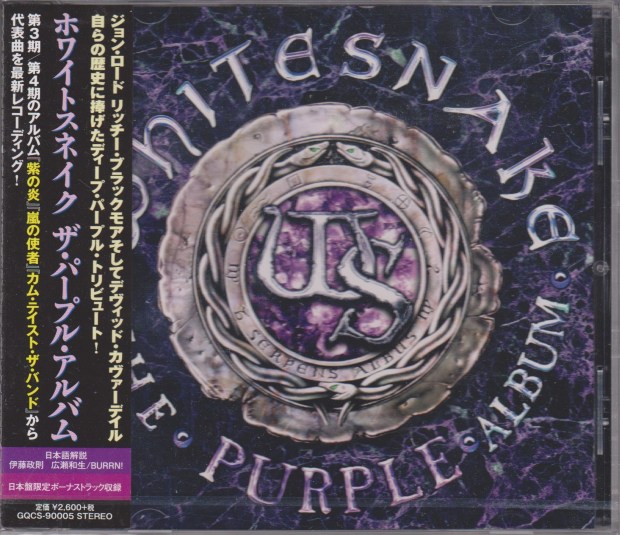
WHITESNAKE – The Purple Album (2015 Frontiers, Japanese & deluxe editions)
One old school buddy of mine, Rob Vuckovich, was a huge David Coverdale fan back in the 1980’s, but mostly a Deep Purple fan. He took great pride in telling me that he went to see Whitesnake on the 1987 tour. He held aloft a sign that said “PLAY PURPLE”. David reportedly acknowledged his sign by saying, “We’re not doing any of that!” What changed?
Jon Lord’s dying wish to his friend David Coverdale was to somehow reform Deep Purple MkIII. “Life’s too short and too precious to hold any animosities,” learned David after Lord’s passing. He reached out to Candace Night, wife of Ritchie Blackmore, and eventually spoke to the Man in Black about a Lord-less reunion. Blackmore was intrigued and David started working on updated arrangements for the tunes. He didn’t want to sing them in the same way that he did in his 20’s. The situation with Ritchie didn’t work out, but David did not want the work he had gone to on the new arrangements to go to waste. He approached his band and asked them what they thought about a Deep Purple covers album. The response was instant. Joel Hoekstra (guitar) in particular was pumped.
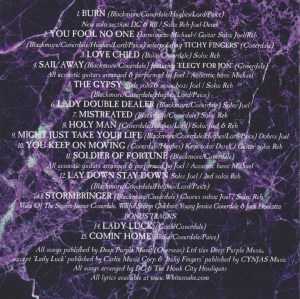
The result is The Purple Album. Sourced from Coverdale’s three albums with Deep Purple (Burn, Stormbringer, and Comes Taste the Band), 15 songs were selected. It’s hard to argue with the selection, either. There are chances taken. “Holy Man” is a damn hard song to sing, and it was originally performed by Glenn Hughes, not David. And four, count ’em, four songs (on the deluxe) from Come Taste the Band, perhaps the most underrated album in the Purple canon.
The sound is “Snaked up” as David says, which means modern guitars and technical shredding. To his credit, David really let his band play instead of copying Deep Purple. Joel Hoekstra is a hell of a guitarist, able to shred. He has brought some soul back to Whitesnake that I felt was missing from their two studio albums with Doug Aldrich. Other songs are stripped down, such as the now-acoustic “Sail Away”. This song is dedicated to Jon Lord and it’s certainly among the best songs on The Purple Album. It’s very “live” in the studio.
Is it necessary? Hell no, but David’s entitled to do what he wants. Nobody else is keeping these songs alive except for Glenn Hughes now and then. Jon Lord would be delighted with the quality of it, but he would surely be saddened that Deep Purple MkIII has never reunited. Since that was indeed the case, David and Whitesnake worked very hard on plenty of new parts and licks for their own arrangements. Reb Beach sings many of the Glenn Hughes lead vocal parts (quite well), and finally Whitesnake feels like a real band again. It’s odd that it happened on a Deep Purple cover album, but the band sound like a real band, on album for the first time in ages. Hopefully the injection of passionate young blood in Hoekstra and new bassist Michael Devin will result in new music some day.
The deluxe edition of The Purple Album comes with two bonus tracks and a loaded DVD. “Lady Luck” and “Comin’ Home” from Come Taste the Band are actually two of the best selections. It’s rare that bonus tracks are album highlights, but just because these songs are not as world-renowned as “Burn” does not mean they are not as good. They’re awesome. “Comin’ Home” is very different from the original, having a new and very Whitesnake (circa Slide It In) riff installed.
Japan usually get exclusive bonus tracks and this time it’s a different mix of “Soldier of Fortune”. The reason for the alternate mix (according to the documentary DVD, which we’ll get to) is that David was somewhat torn on which version he liked best. The original concept was a straight acoustic version, with just David’s voice and an acoustic guitar — one guitar, like in Deep Purple. That version didn’t make the album. In a last minute decision, David chose to record bass and other embellishments, and that is what you hear on the standard album. The lucky fans in Japan (or those who wish to shell out for an import!) get the original concept as a bonus track. Delightful.
The bonus DVD is a nice treat, for the 30-minute “Behind the Scenes” feature. It’s great to see the band get so much face time, talking about their love of Deep Purple. Things like this aid in your appreciation of the final album. Observations: Reb Beach does a hilarious Coverdale impression. Tommy Aldridge is still an unstoppable beast of a drummer, even today. Indeed, the new Whitesnake lineup comes across as an inspired band. It is a brand new era for Whitesnake, according to David. He is happier with their sound than he has been in years.
Then there’s the fluff, the Whitesnake EPK (electronic press kit) which is just a condensed version of the main feature. Added to this are four music videos. It’s almost amusing that Whitesnake made music videos today, but again the band get a lot of face time and that’s cool. In the music videos, it really seems like Whitesnake are a band regardless of the lineup changes. The videos are glossy, a little cheesy, but a nice little add-on.
The original rating for this album was going to be 3/5 stars. Cover albums just can’t be judged by the same yardstick as an album of original material. Having seen and heard how much passion and work Whitesnake put into The Purple Album, I’ve grown to appreciate it more. Therefore:
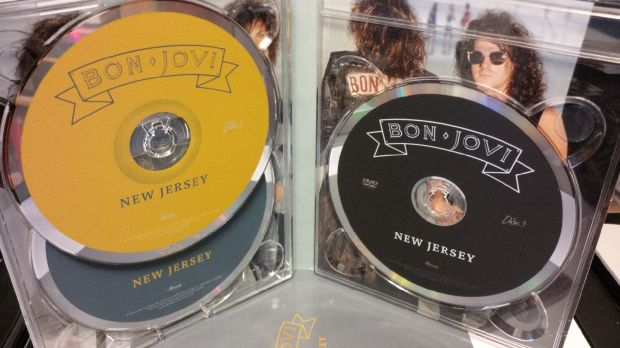
BON JOVI – New Jersey (2014 Universal Super Deluxe edition, part 1)
BACKLOG! I received this box set over 10 months ago. We at LeBrain HQ are so busy with so much rock and roll that it has taken that long to finally give this entire box set a proper examination. Fortunately, we (the “royal” we) have already reviewed New Jersey itself, in March of 2014 before this box set was released. There is no need to repeat what was said in that review. It is still an accomplished album worthy of its 4.5/5 star rating. New Jersey was and easily remains a very high water mark. For this review we will look at all the bonus tracks and the entire DVD in detail. All three parts combined will probably give you the most complete look at the New Jersey Super Deluxe edition out there.
There are loads of bonus tracks to discuss, some of which were available before. Bon Jovi must have known this release was always in the cards. Look at the track list for their box set, 100,000,000 Bon Jovi Fans Can’t Be Wrong. Not one of these demos is on that massive five disc box set. Many of these tracks had been leaked a long time ago on bootleg CDs such as Keep the Faith/New Jersey Outtakes, but never issued by the band. It’s natural to be cynical and say, “Well they must have been saving them for another box set like this one.”
“The Boys Are Back in Town” is an A-OK Thin Lizzy cover. When Lizzy wrote this song, Phil Lynott almost had the blueprint for the future of Bon Jovi plotted out. Bon Jovi, a back who love singing songs about the boys being back in town, were the perfect band to cover it and make it their own song. Cynics may laugh, but Richie Sambora and Tico Torres are quality players able to inject class into the cover. Keyboardist David Bryan uses the “organ” setting on his keys to offer appropriate backing for the boys. It’s hard to have a winner with a Lizzy cover and not sound like a bunch of jackasses. This one was recorded by Bruce Fairbairn for the 1989 anti-drug compilation Stairway to Heaven/Highway to Hell.
“Love is War” was good enough to be a single in its own right, but it was only the B-side to “Living in Sin”. Perhaps the reason it was chosen for B-side status was that the verses and chorus don’t quite jibe. The song has great, dark verses and a big old Slippery-like chorus. It doesn’t quite sound like a New Jersey song, but it’s hard to track down today.
A very rare bonus track is an acoustic version of “Born to Be My Baby”, only available on a Japanese “Living in Sin” CD single. Fans love when Jon and Richie just sit down together with a couple acoustics and do a live-in-the-studio rendition of a hit. It’s an uber-rarity that LeBrain HQ did not even know existed before this box set was issued. As usual, Richie’s soulful singing reaches deep into your guts. His classical-influenced guitar solo is a masterpiece.
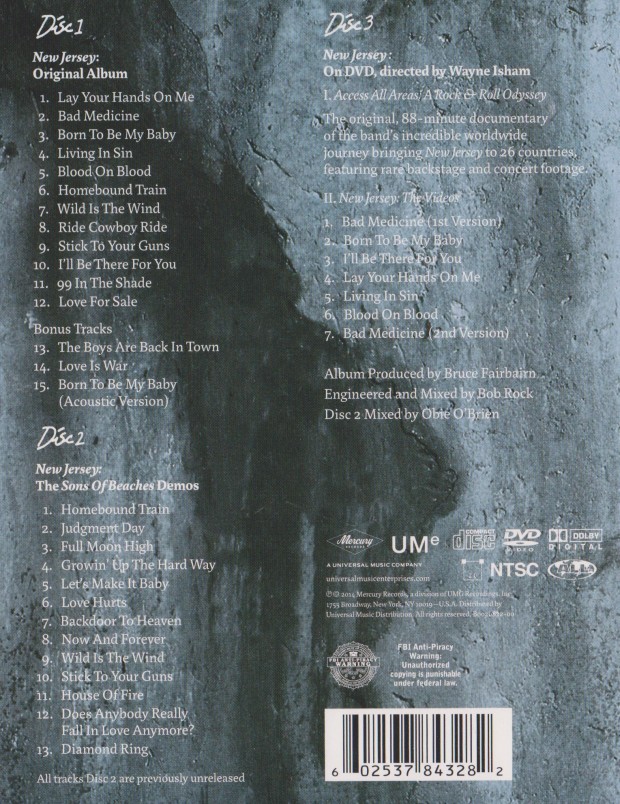
Famously, Bon Jovi once considered the awful title Sons of Beaches for their 1988 album. Disc two is called the Sons of Beaches Demos and there are plenty more great tracks here that are familiar to bootleg collectors. The opening demo version of “Homebound Train” is even bluesier and greasier than the great album take. Anyone who doubts the instrumental ferocity of Bon Jovi can check this out and see what the original lineup was capable of.
“Judgement Day” opens with traditional “nah-nah-nah” Bon Jovi vocals, giving it a sound-alike quality to other more familiar Bon Jovi songs. It is good enough that it could have been on an album (or single B-side). Then “Full Moon High” (also known as “River of Love” on bootlegs) is familiar. I recognize the music from somewhere else: it became the Keep the Faith B-side “Save a Prayer”! The riff is intact, and what “Full Moon High” amounts to is an alternate 80’s version of it. It is just as great as “Save a Prayer”, and it is difficult to pick a preferred version. “Full Moon High” is an achievement, and Richie’s guitar playing is nutso. “Growing Up the Hard Way” is back to the “nah-nah-nah’s”, and it sounds as if this is an early version of “Love is War”, but with a very different chorus.
With a slinky, dusky song behind him, Jon urges someone “Let’s Make it Baby”. This tune would have been good enough for Keep the Faith, but did not surface until a double disc version of These Days was issued in the mid-90’s. This is a noticeably different mix from that release — more raw. Then “Love Hurts” goes into upbeat territory with a decent set of melodies to sing along to. It is a bit similar to “Love is War” once again, but that’s why these songs were never officially released before. I’ve had this song in my collection for 20 years, but not with this level of audio quality. Likewise “Backdoor to Heaven”, a ballad that fans have loved for a long time (just not officially). Again, this song was probably deemed too similar to others such as “I’ll Be There For You”. Same with “Now and Forever”, another ballad of high quality, but also similarity.
A harder-edged “Wild is the Wind” demo is otherwise very similar to the album arrangement, with some different bits on keyboards and acoustic guitars. Singling out Tico Torres as drummer extraordinaire, I love his hard hitting style. Same with the excellent “Stick To Your Guns”; it’s more or less already complete at the demo stage. The rawness is a beautiful thing…you can hear Richie talking at one point.
The one track of all of these which LeBrain HQ was most excited about is “House of Fire”, a song that Jon donated to Alice Cooper for his Trash LP. Cooper’s version was “unremarkable” [LeBrain Trash review], but Bon Jovi did it right. If Alice didn’t release his own single for it, I wonder if Jon would have? One word: infectious.
Fans in the know have always loved “Does Anybody Really Fall in Love Anymore”, another ballad that might be deemed too similar. Another issue is that the chorus really reaches for the high notes, and Jon misses most of them on this demo. Somebody probably realized it would be a difficult song to bring to the concert stage. The bootleg version of this is more complete, with backing vocals filling it out. This demo, perhaps earlier than the one that was bootlegged ages ago, lacks all backing vocals and sounds like it may be live in rehearsal. “Keep going,” says Jon to someone, indicating this is likely the case.
“Diamond Ring” became such a fan favourite after the band played it live that this New Jersey demo was tried out again for Keep the Faith, and finally made an album in 1995 for These Days. Each arrangement of the ballad was different from the last. This one is the earliest, featuring bluesy electric guitars and organ. Its final incarnation was much quieter.
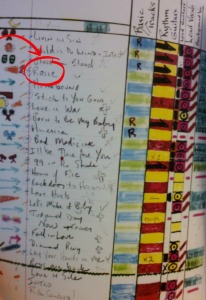
Very conspicuous by its absence: “Rosie”. This was written by Richie and Jon about someone they knew growing up (as many of their songs are). Desmond Child and Diane Warren helped them finish it, and it was recorded by Sambora for his first solo album Stranger in This Town. Since that album featured Tico Torres and David Bryan on drums and keys, you can almost consider that a Bon Jovi song. But why is it not here, with the demo sessions that it belongs with? It’s cynical but not unlikely to think it’s due to Jon and Richie’s feud. Shame. There are other Sons of Beaches demos missing that are out there on bootlegs, such as “Love is War” so don’t fool yourself, this is not a complete set of ’em.
Come back tomorrow and we’ll look at the final disc in this set, the DVD.
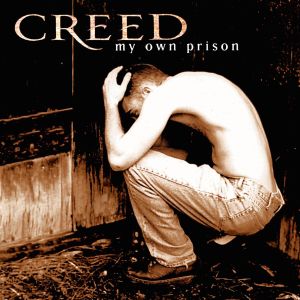
CREED – My Own Prison (1997 Wind-Up, originally Blue Collar)
Have you ever gotten flak for an artist or genre of music that you enjoy? Not a whole lot of fun, is it? Try to imagine that negative opinion not just as common, but as something resembling the general consensus. One that not only discounts anyone that disagrees, but actively mocks and ridicules them. Ask anyone you meet on the street: who are the “worst” musical artists of all time? Chances are, one particular scapegoat of late-90s’ rock will come up… To say that Creed is a controversial band is putting it lightly. Perhaps no group in the history of rock and roll has been a casualty of its own fame quite the same way the band composed of vocalist Scott Stapp, guitarist Mark Tremonti, drummer Scott Phillips and bassist Brian Marshall have. While the amount of fans often rivalled the number of critics in their heyday, as of 2015 the predominant word is negative. Whether it be from fans moving on or the band’s hiatus keeping them from speaking up for themselves, anything positive is rare. Case in point: Scott Stapp’s recent mental breakdown in December featured the most press coverage the frontman has had to endure since the turn of the millennium. EVERYBODY had something to say about it, oftentimes hateful. What of him now? He’s pulled himself back together and aside from his own personal PR, only one or two websites actually reported the news. I’m sure more than a few readers of this review will think he’s still whacked out on drugs, despite spending the last five months at home with his family.
Unfortunately, Creed’s status as something of a pariah maintains that I can’t just hop into the music and give you my personal take. If I were to do so, I’d likely have more than a few commenters simply reiterating age-old hate for the band or questioning the validity of my perspective because I’m not slinging feces. So let’s get to it: perhaps the most common strike against Creed is the idea that they’re heavily derivative of Pearl Jam. Um… have you ever listened to either of these bands? Generally speaking, Pearl Jam is angry garage rock with guitars that bite but don’t shred, and songs that are intended to coast primarily on the emotion conveyed in Eddie Vedder’s vocals and lyrics. Creed is arena rock with soaring pop hooks and beefy guitar riffs. Forgive me if I don’t find those two approaches to be all that similar. Not to mention the fact that Creed rarely ever treads the political ground that Pearl Jam does, and that the perspective of Pearl Jam’s material is often outward, with the Creed being much more introspective. To put it simply, Pearl Jam’s songs are often “you, you, you” while Creed’s are “me, me, me.” If you consider such a point-of-view as pretentious I understand, but I’d rather have someone pointing a finger at themselves than me or a hypothetical “them.”
Of course, this comparison between the bands primarily stemmed from the similarities in Vedder and Stapp’s vocal styles, specifically their employment of what’s known as “yarling” (which involves putting an ‘R’ sound behind enunciations). I’m not going to try and convince anyone that the two frontmen don’t sound similar, but there are important differences that even a cursory listen will highlight: Vedder has more range and is much more likely to yelp, with his voice cracking as he gets higher and more intense. Stapp has a richer timbre but over-pronounces his words in a somewhat silly manner that has become common fodder for haters that fancy themselves comedians. I understand the comparison, but postulating that Stapp “copied” Vedder isn’t wholly substantiated. Claiming that he sounds exactly like Vedder and applying that comparison to the whole band is outright lunacy. This didn’t make any sense to me when I only knew either band from their radio hits; having actually dug into each band’s body of work in subsequent years, it now strikes me as pure propaganda. The fact that the Pearl Jam comparison is blanketed over pretty much EVERY band of the so-called “post-grunge” era just confirms that suspicion.
The next common (and even more ridiculous) complaint is that Creed is somehow Christian rock. Come again? Creed isn’t Christian rock anymore than AC/DC is Satanist metal. Talking about God in a song does not make it religious in and of itself; Christian music involves God as the subject nine times out of ten, with some sort of message of hope through Him conveyed therein. With Creed, God is only ever mentioned as being there; Stapp’s lyrics allude to the Divine in the same way a person might speak of gravity. He’s not trying to convert or otherwise convince anyone of his religious convictions, he’s simply stating them as one might a fact of life. If you dislike this quality that’s fine but it doesn’t make Creed Christian music, even if some of the members are open about their religious convictions.
Even then, to properly interpret these allusions, one must also have some understanding of Stapp’s upbringing. He, like many youngsters, was born into a religious home. He had little interaction with his real father, and his mother remarried when he was still a kid. His stepfather Steven Stapp (from whom Scott took his last name) was a dentist by trade, but a zealot in practice. He made Scott study the Bible for several hours each day and conclude his time by writing essays about what he learned from the passages he perused (Scott later came to find that Steven was using his essays for Sunday school lessons). Think that’s bad? It’s not even the worst of it: whenever Scott messed up, he was physically beaten by Steven. As in abused. Steven also set a specific time each week that Scott was to be thrashed for sins that his stepfather “knew he committed but didn’t see.” Scott was also punished whenever Steven caught him listening to rock and roll, because it’s “the devil’s music.” To top it off, the doctrine advocated was of an unforgiving God that would damn a soul to Hell for the slightest trespass, lest they live a perfect life.
So why am I telling you all of this? Because personal experience naturally informs art, and if you were brought up in a household like this, chances are you’d address those feelings through song as well. It’s all in HOW one addresses these topics that informs the atmosphere. Scott didn’t write lyrics that concerned themselves with theology because he wanted listeners to believe it, he wrote them because HE didn’t know what to believe about the God he had shoved down his throat by his stepfather. It’s a fair assessment to assume that his childhood had a massive effect on his personality, not to mention the disparate reactions to the Creed’s music. It’s a wonder Stapp didn’t have a meltdown before 2014. Of the common complaints about this band, I consider the Pearl Jam point open for debate. Do the bands sound alike? To a degree; both play dour hard rock. There’s only so much variation one can attain within that template, after all. The Christian rock charge, however, is simply untrue. Overall, as far as I’m concerned, both of these sleights were coined not because of their accuracy, but moreso to knock the band off of their perch when they got huge. With the passing of time, these legends have become fact, and the legend is being printed. (As a final point, it behooves me to point out that the band was originally to be called Naked Toddler until Brian Marshall suggested the name be changed to Creed).
Finally, you have the general complaint of the era to contend with: Creed is most often resigned to the “post-grunge” monicker. I don’t care who you are or what you think about grunge, designating a bunch of later artists with a “post-” label when they make pretty much the exact same type of music as their forbears is ridiculous. Does that make Poison and Guns N’ Roses “post-hair metal” since they appeared relatively late in that particular cycle? I get that the so-called post-grunge bands are considered much less authentic than their precedents, but the problem with that line of thinking is that grunge didn’t really invent anything, nor were they all that “original.” Sure, grunge killed hair metal, but there’s a distinct difference between killing and conceiving. The faces of the sub-genre, Nirvana and Pearl Jam, are watered down punk with a hard rock flair. Think AC/DC is simplistic? Nirvana rocks three chord riffs like there’s no tomorrow. That “yarl” that is so often attributed to Eddie Vedder? He wasn’t even the first from the scene to use it, much less music at large. Layne Staley of Alice In Chains holds that dubious distinction for the grunge crowd. As far as the style’s far-reaching beginnings, Ray Charles, George Jones and Jim Morrison of the Doors all sung with such an affectation before Eddie Vedder was ever a glint in his father’s eye. Nevermind the fact that Stapp often cites Morrison as perhaps his most formative influence, along with Def Leppard and U2 (or that Scott honed his singing skills in black churches, whose members would frequently goad him to use “soul” as he sung (read: yarling)).
There are a variety of other diatribes against Creed, such as the band taking itself too seriously (didn’t Nirvana, Led Zeppelin and Black Sabbath, among others?), that Scott Stapp was an arrogant ass (John Lennon, Kurt Cobain, Axl Rose?) and that the band was too commercialized…sigh. This accusation has to be the MOST fragile of the stones thrown at these guys. Just because a song or album is mainstream does not in and of itself guarantee any sort of quality, good or bad. Anyone that attempts to postulate otherwise is too far up their own ass to give any other line of thought consideration. Sure, rock and roll has always had rebellion in its blood, so I can understand that the idea of a rock band NOT pushing such an image as odd. But let’s not forget that the most respected band of all time, the Beatles, was also the most commercial.
There’s also the charge that the band simply blended in with most of the other like-minded superstars of the time, with LeBrain’s popular line being to colloquially refer to them all as Theory of a NickelCreed. Maybe so, but if the band was so “generic” why are they singled out as one of the “worst of all time”? Just because they got big? And the only way to fight it was to backpedal 110% the other way? Politics, politics, politics… and that’s not even the worst of it. By far the most immature response to this band over the years has not been so much in terms of their output, but the fact that a disturbing amount of haters act like no one else has a damned right to enjoy this band. As if Creed deserves to be burned at the stake and obliterated from the public record along with anyone that admits to being a fan. If hold anything but contempt for them you’ve obviously been living under a rock and haven’t experienced the “good stuff” yet. Are you kidding me? Yeah, and Creed fans are the stupid ones.
Preamble over. Can we move on to the actual music now? That’s what we’re here to discuss, but my pen is pre-ordained to at least address these concerns beforehand, lest I be case out of the “elite” musical regime (which will probably happen anyway since, you know, my argument about Creed consists of more than the age old operandi “they suck because they suck.” Even now I feel readers skipping past my prose to the comments section to light their torches and take my ass to task for my “transgressions”).
Released in 1997 and selling over six million copies in the United States alone by 2002, My Own Prison heralded the arrival of Creed. According to a decent amount of the more casual fans and even some critics, this is their best album, and one after which many jumped ship in indignation. Why? Because of the first three records from the band, this one is decidedly the least commercial. The songs mostly just crunch and end, leaving the listener to sort out the details. Few are trying to be populist anthems. It’s not my favorite Creed album, but I can see why it’s a popular choice. The album weaves through mostly introspective stories of faith and loss, with slight forays into light political fair on “In America.” Overall, this is a moodier and less bombastic affair than the band’s subsequent albums.
Tremonti’s lead guitar ordains the album opener “Torn” with melancholy, and Stapp’s vocals maintain the atmosphere. “Peace is what they tell me/love, am I unholy?/Lies are what they tell me/Despise you that control me” he sings. The guitars crash in in full force on the word lies, underscoring the inherent evil of the practice. “The peace is dead in my soul/I have blamed the reason for/My intentions poor” goes the chorus. I love the atmosphere and passive, rather than assertive, anger conveyed with the lyrics and instrumental. Say what you will about this band but they know how to start an album (perhaps not coincidentally, “Torn” along with followup album Human Clay’s opening track “Are You Ready?” are my two favorite songs from this band).
Next comes “Ode”, a quintessential tune about being mistreated by others. Scott hints at his past here: “One step on your own/And you walk all over me/One head in the clouds/You won’t let go you’re too proud.” This track is a weaker standout, but still pretty good. The title track follows at number three. Perhaps I’m biased, but I consider the song “My Own Prison” to be a classic of ‘90s rock. The one feat Creed is rarely credited for is their knack for catchy and memorable hooks. There’s a reason they were so popular, and forgive me if I don’t think they’ve sold 40 million albums just because the general populace has “terrible taste.” Stapp is often cited for being too earnest with his lyrics and lacking subtlety; well, as far as I’m concerned life isn’t subtle, and he captures that aspect well. I consider the lyrics of “My Own Prison” to be pure poetry: “So I held my head up high/Hiding hate that burns inside/Which only fuels their selfish pride/We’re all held captive/Out from the sun/A sun that shines on only some/We the meek are all in one.” I’d be entertained just reading this stuff; can’t really say the same for “Lithium” or “Even Flow.” As a song, Tremonti and Marshall’s haunting guitar work and Phillips’ dejected drumming elevate the experience to another level.
The album hits something of a snag with the next few tracks in that none of them really stand out from one another (hey, I can make the case that this band is highly underrated but I never implied they were perfect; no artist is). “Pity for a Dime” is your typical “no one cares about me” song that never really distinguishes itself. The atmosphere of the album bolsters this track along with the other weak links, but otherwise it’s one that you skip when going for the meat. The melody is decent, but the point of the lyrics is quickly lost in their redundancy. Even then, the guitar work starting at 3:50 is a real treat and a standout of Tremonti’s contributions.
“In America” is caught in the same net as “Pity for a Dime”, essentially reprising the same theme. However, the twist is that Stapp is noting other opinions rather than his own. I’ve often felt the perspective that Stapp’s lyrics convey to be a hint of subtle genius; he’s merely playing the part of observer, not necessarily “judge” of the politics he addresses. While I think he’s overlooked as a lyricist, Stapp makes a crucial mistake in his treatment of the central conceit: the hook plays as “ONLY in America.” Even as someone that actively avoids politics and the news, I know that very few (if any) of the social issues brought up in this song occur solely in Uncle Sam’s domain. Even if the premise is flawed, the theme of being torn between two extremes is powerful. That military-esque drum beat at the beginning is a nice touch as well.
Two of the more intense tracks from My Own Prison are “Illusion” and “Unforgiven.” The former’s dissident fascination with the nature of life is engrossing. While I wouldn’t call it a standout, it’s also hard to dismiss. If anything, the song helps maintain the atmosphere and momentum, even if you probably won’t catch yourself reaching for this album solely to hear it. However, if you’re just letting the album play it certainly adds to the experience. As for “Unforgiven”, remember Scott’s stepfather and his violently fundamentalist ideas about God? Well, the title should speak for itself. Stapp bluntly speaks of his childhood and feelings about that time in his life. The music is appropriately menacing on this track and it’s a popular live song for the band despite not being released as a single. Tremonti’s guitar solo is especially striking, no doubt a major part of the song’s popularity.
“Sister” is next, perhaps my least favorite track from Creed’s debut. Interestingly, it maintains the theme of “Unforgiven”, with the focus shifted onto a sibling of Scott’s that endured similar treatment as he did. It’s still perhaps the weakest track, but I like the continuity and pondering of the idea of his younger sisters having not one role model as he did, but two (counting Scott himself). Who says Creed have no artistic merit? The instrumental and overall atmosphere of the song are much lighter than previous tracks, perhaps underscoring the love one feels for their immediate family.
The ninth slot is filled by a song called “What’s This Life For,” one of the four monster singles from this album. This is another favorite of fans, myself included. I appreciate the passion in this track and the yearning for answers. Call me a sap, but haven’t we all wondered this exact thing at SOME point in our lives? Sure, it’s not exactly profound nor does the song really offer anything resembling a solution, but I like it. Shoot me. (Side note: some assessments of the song I’ve read cite the “don’t have to settle no Goddamn score” part as eliciting giggles. Am I alone in wondering just what might be funny about that part? Just because Scott says “Goddamn”? Note that this word is omitted from the single version; it was 1997 after all).
I like to think the entire album is summed up with the final track “One.” Stapp reprises that poetic quality from before: “Society blinded by color/why hold down one to raise another” he sings. Relevant in 2015, don’t you think? “One, oh one/the only way is one” he imparts on the chorus, backed up by another bright riff from Tremonti. The song goes on to note the aforementioned prison the narrator finds himself in, as well as the desire to escape and the likelihood of it happening. To be honest, songs like this remind me much more of U2 than Pearl Jam, with that “save the world” vibe coming in full force. As such, the song falls prey to some of the same problems that ilk does by sweeping the more intricate complications of these social issues under the rug, but it’s hard not to appreciate the intent behind the song. I especially like the “flying” effect at 3:16, where the sound circles between speakers, as if to “unite” them once the song kicks back in, just as the band wishes for the world to be united.
Well, if you’ve read this far, I trust that I have your full attention and that you’ve been at least slightly entertained by my ramblings. A little known fact about this album is that two different versions exist. Recorded for a meager $6,000, My Own Prison was originally published through Blue Collar Records, a label founded by Creed to get their music out. The band received some airplay with this version in their native Florida before attracting the attention of major labels. An exact figure of their pre-fame sales is hard to find, but My Own Prison is quoted as shifting several thousand units before it was bought and reissued by Wind-Up records. Creed were then called back in to re-record parts of the album, while the rest was remixed to make for a more polished listening experience. I picked up one of the original copies on eBay a few years ago for about $50. Back in the day, these things were known to go for a few hundred. So how do the tracks compare?
Well, the first thing you notice is the lack of dynamic range. Sure, Creed’s albums have always been among the numerous victims of the loudness wars, in that they’re mixed to blow your head off with sheer noise. However, believe it or not, the dynamics seem more stylized on the Wind-Up version when compared to the original. The opening seconds are a perfect example of this: whereas the first strains of “Torn” are a bit quieter before the song crescendos in the re-release, the original is pretty much the same volume throughout. This goes for all of the tracks to some degree, with certain parts louder and softer given the version. On a related note, the bass is non-existent on the original version, similar to how it was missing from Metallica’s …And Justice For All. The remix brings it out a bit more, though ultimately the lead guitar and vocals mostly overpower the other parts.
The re-recorded material mostly amounts to some vocals. On certain song choruses of the “official” version, Stapp and Tremonti can frequently be heard singing in multiple keys at the same time. Here, it’s mostly just one at a time. It sounds to me like an additional acoustic part was added to “In America” as well. Reverb was also applied to the remix, which I feel adds to the overall atmosphere of the recordings. Some songs also start at different points, with the odd note or two being cut off, as with “My Own Prison.” The biggest and most noticeable change is the omission of the original intro to “What’s This Life For”, a quiet little melody that appears nowhere else in the song. Tremonti is known to play it at concerts when performing, but it’s completely missing from the Wind-Up version.
Overall, if you resent the commercial tendencies of Creed, you might do well to seek out the original mix of this album. This is the band at their rawest. However, I wouldn’t recommend a purchase unless you’re actually a fan as prices are frequently steep and the remix isn’t THAT different when all is said and done. I have one because I’m a collector and completist, as well as a curious listener. I also have an inkling that as this album nears its 20th anniversary, we might see something of a special edition that features both mixes on separate discs (the perfect gimmick). Not that I urge you to wait for a hypothetical re-release, but it’s a thought. Wind-Up released a vinyl compilation celebrating the label’s 15th anniversary in 2013, with the original version of “What’s This Life For” featured. They obviously have access to the masters and might put it to use at some point. All in all, the rawer mixes can readily be found on YouTube if you are so inclined to seek them out but don’t want to pay collector prices for an original copy.
For those interested, there’s also a bonus track version of the Wind-Up issue featuring an 11th song by the name of “Bound & Tied.” The bonus track version was available in Central America and Europe, though it might be a little harder to find these days. For U.S. listeners, the song was made available via the soundtrack to the 1998 film Dead Man on Campus. If you can get your hands on the bonus track version of My Own Prison for a reasonable price, I’d say go for it. “Bound & Tied” is a forgotten gem from Creed, with an intriguing into in which each instrument comes in at a different point, gradually intensifying the sound. I especially like the vocal effects, as well as the menacing guitar riff from Tremonti. The lyrics are also much more ominous than most Creed songs: “Tongue-tied, restless and wanting/Looks like you might bite, you might bite/Breathin’ in, breathin’ out, you’re weakened/The poisons hit your mind, your mind/Time’s ticking and it’s got you thinking/You’re happy with your life.” The band seems to be commenting on the double-edged sword that is fame; you seek it, yet can’t escape it once it’s attained.
In conclusion, if you actually made it this far (scanning or skipping doesn’t count!), my final verdict is that this album is solid. Classic? Perhaps at times, but it’s not anything resembling horrible, either. If your standards are so lofty that a slightly generic album of solid hard rock is your idea of “horrible” music, I envy your musical taste. Here’s hoping that My Own Prison and Creed as a whole are subject to a re-evaluation of sorts at some point in the future. If you can listen past your gut reaction to the name and pay attention to the music, you’ll probably find something to like.
Rating: 3.5/5
Thanks for reading, guys! Thank you, Mike, for the opportunity to do this! LeBrain has given me the option to review Creed’s discography, so if you want more let us know in the comments! (P.S. I take no responsibility for the band’s music videos. They’re atrociously dated and corny, at least for the next two albums, and if your only exposure to Creed is of the visual kind I don’t blame you for thinking they’re garbage.)
No sir, thank you Mr. Acca Dacca for a very thought-provoking review! I really appreciate the time and effort he put into this monster of a review. I have definitely opened my ears to this band. – LeBrain
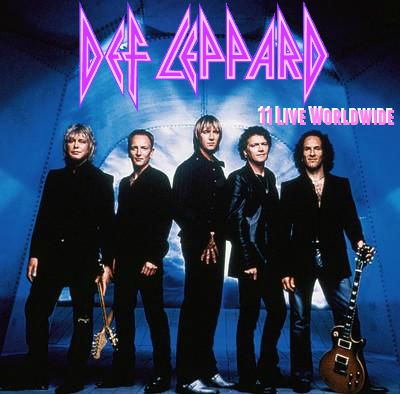
DEF LEPPARD – Official 11 track live mp3 collection, download only (2000-2001)
We at LeBrain HQ have always loved being able to shed some light on music that is so rare, that you just can’t find out much of anything about online anymore. It seems one of most obscure categories of rare music are official downloads from long ago that were never physically released, and long since taken down. 15 years isn’t a long time ago, but did you know that in 2000-2001, Def Leppard gradually put up 11 live tracks to download from their official site? This was long before they had any sort of live album out whatsoever.
These official live recordings were selected by the band, and were released over a period of several months. They were not available for long. They were taken down by the time Leppard changed their site over to promote the X album in 2002. Taken together, I assembled them in order of release into a a full length live album by Def Leppard — unofficial, yet official just the same!
The first song released was the old acoustic standby “Two Steps Behind” (San Antonio, Texas, 2000). Joe begins by announcing that they were recording the show, and that this particular night was also the “official opening evening, at it were, of our brand new website, www dot defleppard dot com. And that’s the reason we’re recording it, because we’re gonna put it on the web. Worldwide, you guys are going worldwide!” That certainly explains things! The recording itself is quite excellent, rich and clear. You also know there are no overdubs, because chords are missed and the songs goes on. To me this is the ideal form of live recordings: official, but with a loose “who cares” attitude in regards to fixing mistakes later on.
An older classic, “Women” (Salem, Oregon, 2000) has similar sonic qualities. It’s also quite bass heavy which is a nice change of pace for this band. There had already been a B-side live version of “Women” out there for a while, recorded in 1987 for the video In the Round – In Your Face. This version however has the currently lineup with Vivian Campbell, and a Joe Elliot who hits all the screams at the end. This would have to be my go-to live version when I want to hear one.
The first then-new Def Leppard song to get the live release treatment was “Demolition Man” from Euphoria. This one, from Denver, Colorado in 1999, sounds faster than the album version. On an album of mostly so-so songs, “Demolition Man” at least had some velocity to it, unremarkable as it is. It’s over and out quickly enough.
“When Love & Hate Collide” (Tokyo, 1999) is the second ballad released in the collection. Although you could get an acoustic version on the bonus disc (Acoustic in Singapore) to Slang in 1996, this was the first full-on electric live release. This version has some heft to it, and once again I would say this is the go-to version to listen to.
Def Leppard have been playing The Sweet’s “Action” for so long now, that you may as well consider it a built-in part of their set. This was the first live version made available (London, 1999). Like “Demolition Man”, it seems faster and much heavier live. Joe’s voice is sounding pretty ragged at the end — as it should be after a performance like that!
The hit song “Animal” from Hysteria was not readily available in live form, at least on an audio format. They did it unplugged for Acoustic in Singapore, and there were a couple VHS videos out there too, but nothing on vinyl or CD. This more recent version (Nashville, Tennessee, 2000) is as reliable as any other. It’s clear that even though the Euphoria album was shaky, the tour behind it was anything but.
Def Leppard started putting the instrumental scorcher “Switch 625” live again on the Slang tour. It was welded onto “Bringin’ On the Heartbreak” for a High ‘N’ Dry medley, just like it was on album. This Montreal recording from 1996 is incredible. Even the ballad has some serious crunch and scream to it. Would you like some feedback? Here you go, turn it way up. Campbell nails the solos on “Heartbreak”, but it is “Switch 625” that is the pièce de résistance. Just listen to Rick Allen, but don’t leave your jaw on the floor! At the end, Joe says “Ladies and gentlemen, the best drummer in the world, Mr. Rick Allen!” Then, a moment later you can hear Joe say, “He is,” to affirm the man’s awesomeness. These two were released as one solid 8 minute 12 second track. Then, from the same 1996 show in Montreal is another special track. Is it “Knockin’ on Heaven’s Door”?
“Mama take this gin from me, I can’t drink it anymore, Where’s the sink, I gotta pee, Looks like I’m checking into Betty Ford…”
In another moment of “I’m really glad they didn’t cut that,” Joe needed to fill a minute while Phil Collen went to pee! They left it in. Joe then turns the microphone over to Phillipe for his song “Miss You in a Heartbeat”, performed acoustically. Phil does the lead vocal and also the acoustic guitar solo, while it is quite possible that Joe himself went to pee.
“Rock! Rock! Till You Drop” is the only song fromPyromania to be released as part of this series. By the opening tapes, it sounds like it was the first song of the set in Cardiff, Wales in 1999. As such, Joe’s got a lot of screaming to do, but he does a good job. What an opener that must have been! You have to give these five guys credit for putting a lot of energy into their live performances. There is a lot of singing, soloing, and riffing to do, and they don’t make it easy for themselves!
The final two songs of the set were recent Euphoria songs, from the Tokyo show in 1999 once again. The ballad “Goodbye” is just boring as hell. You gotta get out there and promote the new album and single, but this was never a good album or single. It was a weak attempt to write another “Have You Ever Needed Someone So Bad”. Thankfully they saved the best Euphoria song for last, which was “Paper Sun”. I like when Def Leppard get into that “Gods of War” / “White Lightning” space, and that is what they did with “Paper Sun”. (It also has shades of “Women”.) Unfortunately these last two recordings, being new songs and all, feel a little more stiff. The band weren’t as familiar with them obviously, but I think you can hear it. Still, what are the chances of Leppard ever playing “Paper Sun” live again? Slim to none, I’d say. So who’s complaining? Not this guy.
Since this time, Leppard have put out plenty of official live product. There’s the excellent double live Viva! Hysteria, with loads of rarities. There’s Mirrorball, a double album representing a standard modern Def Leppard concert set. There was even a bonus live disc added to the deluxe version of Pyromania. None of those releases have “Demolition Man”, “Goodbye”, “Paper Sun”, “Miss You in a Heartbeat”, or “When Love & Hate Collide”. That makes this collection pretty special, to this day.
4.5/5 stars
We at LeBrain HQ want to hear from you if you know any more about these tracks. Any information gleaned such as actual recording or release dates will be happily added to this review. (Comments regarding trades will be deleted.)
This is the sixth and final part in a series on singles from Def Leppard’s Adrenalize era, including hard to find B-sides! This is a bit of a “bonus” review, since this song wasn’t actually on Adrenalize!
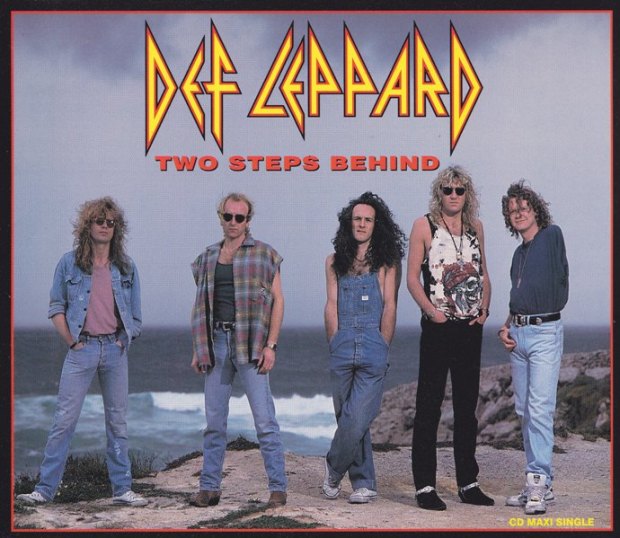
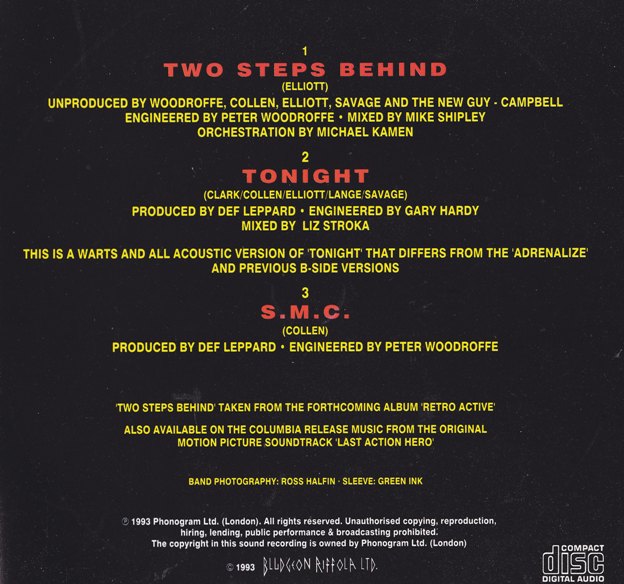
DEF LEPPARD – “Two Steps Behind” (1993 Phonogram)
From a B-side to an A-side in its own right, “Two Steps Behind” has seen more releases than most Def Leppard songs. Sure, it’s significant that it was Def Leppard’s first acoustic song, but it’s really not that exciting. When Arnold Schwarzenegger comes a-knockin’ and says “I need a rock band to give me ballad for my new movie” in that threatening Arnie voice of his, nobody’s going to refuse him.*
However it unfolded, “Two Steps Behind” was selected for the Arnie turd, Last Action Hero in 1992, next to bands such as AC/DC, Alice in Chains and Megadeth. In comparison to the aggressive contributions from them, Def Leppard’s track seemed hopelessly behind the times. It still charted in the US, going to #5. It was spruced up with strings courtesy of Michael Kamen, and was given a high-budget music video.
This single falls between two albums. Visually, the cover art recalls the prior Def Leppard singles with its yellow and red lego, but features the photographic style that the Retro-Active singles would sport. Since it cleans up a few B-sides from the era that didn’t carry over onto Retro-Active, I’ve decided to include it here.
The first B-side is a “warts and all” acoustic version of “Tonight”. This was later released on the deluxe Adrenalize as the “Sun Studios version”. In many regards, it’s as good as the original. Perhaps it’s even better, with its sparse but rich sound. Without the layers of a typical Def Leppard recording, the song breaths like never before.
The final track on the single (and this series!) to discuss is “S.M.C.” which is still unavailable anywhere else. Unfortunately it is only 1:14 long. Written and performed solely by Collen, it is a pretty acoustic instrumental track. Jaunty and light, it sounds classical in vibe. Leppard fans would be well advised to seek out this single, to add this brief guitar workout to their Leppard libraries.
4/5 stars
* I’m not sure that this is exactly how it played out, but it could have!
Part five in a series on singles from Def Leppard’s Adrenalize, including hard to find B-sides!
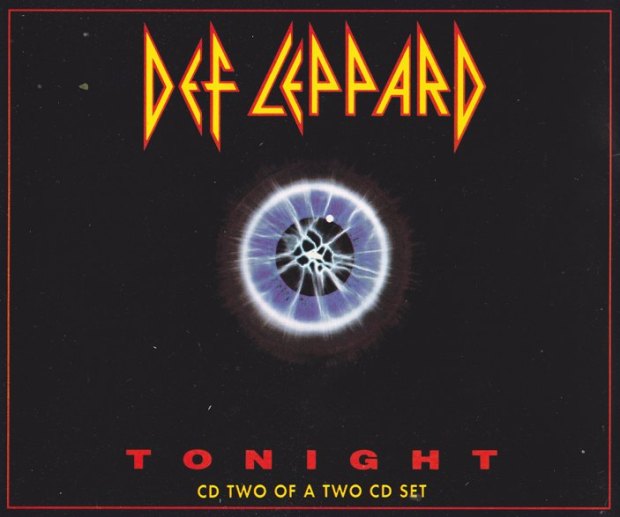
DEF LEPPARD – “Tonight” (1993 Phonogram CD singles)
LeBrain HQ has two different “Tonight” singles in the library, each with its own B-sides. Things get murky when we start looking at singles released in different territories, but each CD features the same great A-side. Although the lushly layered harmony vocals that lead off the track sound overly sweet, that’s not indicative of the song itself. “Tonight” is the sparsest ballad on Adrenalize, and also the toughest. Original guitarist Steve Clark had a hand in writing it, so perhaps he supplied some of the memorable guitar hooks. As far as the Adrenalize album went, “Tonight” was a highlight in a mixed bag of songs.
The US single has “She’s Too Tough” as its second track, but we already looked at that song (originally released by Helix but written by Joe Elliot) last time. Skipping to the end, we get a live version of “Pour Some Sugar on Me” from the 1992 club tour. This was from Bonn, Germany and is also available on the deluxe Adrenalize. I don’t think “Sugar” has ever particularly worked well live.
Onto the UK single, there are some more interesting B-sides. For Def Leppard fans, one of their most memorable appearances had to be the Freddie Mercury tribute concert in 1992. As part of their set, Brian May came out on stage to play “Now I’m Here”. What a great version of a Queen song perfectly suited to Def Leppard. With Brian May on stage it doesn’t get much more authentic. From Bonn once again comes “Photograph” performed live. This is probably the best of the recordings from Bonn.
Unusually for Def Leppard singles of this period, every single track is available elsewhere. “She’s Too Tough” was on the single for “Heaven Is”, and all the live songs were later reissued on the deluxe Adrenalize. Therefore, collectors can breath a little easier. If you don’t have “Tonight”, you probably don’t really need it. If you do, at least the two singles combine to form an excellent listening experience.
Part four in a series on singles from Def Leppard’s Adrenalize, including hard to find B-sides!
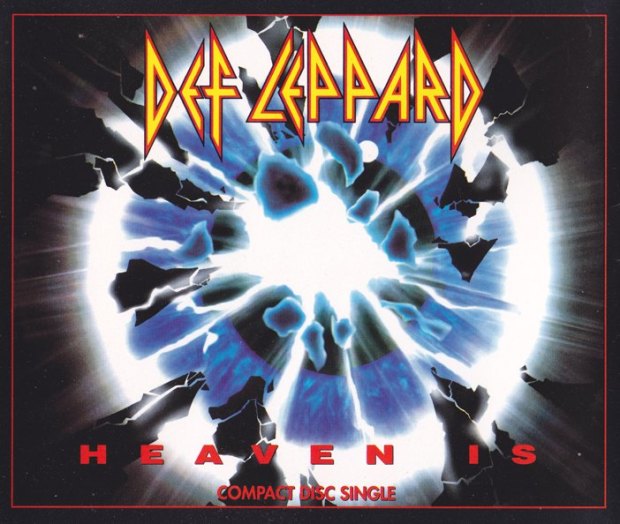
DEF LEPPARD – “Heaven Is” (1993 Phonogram CD single)
“Heaven Is” and “Stand Up (Kick Love Into Motion)” were released as singles at roughly the same time (different territories and whatnot), but I don’t have a copy of “Stand Up”. It doesn’t matter though, since both singles shared the exact same B-sides. These are an interesting mix of new and old.
The Canadian rock band Helix released “She’s Too Tough” on 1987’s Wild in the Streets album. While their version is faster and louder, the Leppard version sounds way better. Helix had production issues on their album, while Leppard recorded theirs with trusted engineer Pete Woodroffe as a quartet during the Adrenalize sessions. The single contains the original version of the track. Rick Allen re-recorded the drums in June 1993, and that version was released on the Retro-Active album. No matter which version you have, it’s an absolute pleasure to hear Leppard with Joe screaming like he used to.
“Elected” is indeed a live cover of the Alice Cooper classic. This one dates back to 1987 and features the late Steve Clark on guitar! A young, energized Leppard have no problem filling this with all the electricity needed. One must assume the old tapes were not the best, since the credits claim the track was “salvaged” by engineer Pete Woodroffe! Following this is a new live recording, of “Let’s Get Rocked” in 1992, from Bonn, Germany. Naturally that means this features the new boy Vivian Campbell on rhythm guitar. This version, from the 1992 club tour, is available on the deluxe Adrenalize.
As for the A-side itself, “Heaven Is” works as a pleasant enough pop rock song. Fans were tiring of that schtick, but “Heaven Is” is fine for a second-tier Def Leppard hit. When Steve Clark died I don’t think the band felt it was the time to stretch out and find new musical avenues. Writing safe rock was the easiest and probably only real course of action.
























 mikeladano.com