RECORD STORE TALES Part 277.5: Klassik Kwote – The Dandy Douche Strikes Back
I’m a pretty big Led Zeppelin fan, having bought all their albums more than once (and at least once more) over the years. When this Robert Plant CD came out in November 2003, it was high on my radar. I didn’t own any Plant solo albums (beyond The Honeydrippers), but wanted something of his in my collection. This compilation of hits and rarities was perfect for my needs.
I was listening to it in the store one afternoon when Dandy sauntered in. Always eager to criticize my musical selections on any given day, he had this to say about Robert Plant’s Sixty Six to Timbuktu:
“I was talking to my dad about why Led Zeppelin sucked,”he said. “Now I know. It’s not Led Zeppelin that sucked, it was just Robert Plant all along.”
Following the demise of Whitesnake and the failure of Zeppelin to mount a 1991 tour in support of their first box set, it was almost inevitable what happened next. It was something that many Zeppelin fans feared. Lead Snake David Coverdale, who was once derided as “David Coverversion” by Robert Plant, joined Plant’s erstwhile bandmate Jimmy Page in a new supergroup. Geffen’s John Kalodner (John Kalodner) helped facilitate this move which should have generated sales over 10 million units. Unfortunately another thing also happened in 1991: grunge.
The shame of it is that Coverdale-Page is a stunning rock album. For years it haunted my bargain bins, simply because of the hard rock stigma that permeated the 1990’s. Many fans refused to listen to it, others simply chose to mock superficial elements of it, such as Coverdale’s man-shrieks. The fact that Page was looking and sounding great should be enough to warrant multiple listens by any serious rock fan. He hadn’t released any new material since 1988’s Outrider. As for Coverdale, it was a chance to get back to his bluesy rock roots, something he expressed a desire to do shortly after Whitesnake’s dissolution.
The studio band weren’t hacks either. Ricky Phillips had played bass with Neal Schon and Jonathan Cain in Bad English, and he’s been in Styx for ages now. Drummer Denny Carmassi was in Montrose (that’s him on the cover of the classic 1973 self-titled record) among many stellar bands, and he later did a stint in Whitesnake itself. Coverdale and Page co-produced the album with veteran Mike Fraser.
Finally, the most important elements were also in place: the songs. 11 songs, most in the 5-6 minute range, make up Coverdale-Page. Those expecting or even hoping for a Zeppelin album were bound to be disappointed. Despite the “Coverversion” nickname, Cov the Gov is his own person and persona. Singing over Pagey’s classic Zeppish riffs does not a Zeppelin make. Rather, Page and Coverdale comingle over their common ground, and naturally there are elements that have a Whitesnake aura. To expect otherwise would be folly.
“Shake My Tree” was the perfect opener. Pagey’s tricky little licks have that familiar sound, immediately. Then the great lothario Cov the Gov starts howlin’…the stage was set within the first minute of the album. The closest comparison I can think of would be “Slow An’ Easy” in terms of overall vibe. Just replace Moody’ slide guitar with Jimmy’s intricate chicken pickin’. David’s lyrics were as naughty as ever. It must have burned Robert Plant’s ass to have to sing it when he reunited with Jimmy later on himself. He seemed to be freestyling it quite a bit with David’s lyrics, barely sticking to the words at all!
“Waiting On You” would have been a radio-ready single. It has that kind of smoking hard rock riff, a killer of a chorus, and great vocals. Coverdale’s no poet, but I dig his words. “Ever since I started drinkin’, my ship’s been slowly sinkin’, so tell me what a man’s supposed to do.” Well, let me tell you David. 1) Drinking and boating is against the law, just like drinking and driving. 2) Put on your goddamn life vest!
I hesitate to call “Take Me A Little While” a ballad. I mean, it is a ballad, but it’s also a pretty good bluesy workout for David. It’s a little classier than the average “power ballad”, because hey…it’s Jimmy Page. It doesn’t sound like other ballads by other bands, because not too many bands have Jimmy Page. His playing and writing are unlike anyone else’s, he is one of the most recognizable musicians in rock and roll.
“Pride And Joy” was the first single, and what a single it was. It starts off swampy and acoustic, before Jimmy’s big Les Paul announces its presence with some big chords. Then David’s back in lothario-land, seducing “daddy’s little princess, Momma’s pride and joy.” Despite the lyrics, the song’s still a stunner. “Over Now” is also cool; a thinly veiled attack on Tawny Kitaen.
You told me of your innocence, An’ I believed it all, But your best friend is your vanity, And the mirror on the wall.
It doesn’t get any nicer from there, but musically this is one of the most Zeppelin-ish songs. While you can’t compare it to any specific song in the Zeppelin oeuvre, but it’s there in that slow relentless drum beat, the orchestration, and Pagey’s unorthodox guitar.
The closest thing to filler on Coverdale-Page is “Feeling Hot”. It’s not outstanding, but it does show off the faster side of Jimmy’s playing. It’s akin to “Wearing and Tearing” but with naughtier lyrics. Once again it is Jimmy’s playing that I’m tuned in to. That continues with “Easy Does It” which begins acoustically. Like most acoustic moments on the album (and like Zeppelin), Jimmy’s guitar is recorded in layers, giving it real heft. This all changes halfway through the song, when Jimmy’s Les Paul once again takes center stage. Then it transforms into a bluesy prowl.
Possibly the most commercial song is “Take A Look At Yourself”. Not a bad song, but definitely the most “pop rock”. It’s probably closest to a Whitesnake song such as “The Deeper The Love”. Had the year been 1990 or even 1991, “Take A Look At Yourself” would have been a top charting single everywhere. David seems to have cheered up with new found love here. However the heartbreak is not over. “Don’t Leave Me This Way” is about as earnest as it gets. At 8 minutes, it’s also the most ambitious song. It’s the centerpiece of the album. It sounds at once like it’s the most sincere song, showcasing some of Jimmy Page’s best post-Zeppelin guitar work. As for David, he’s never sung better.
“Absolution Blues” begins similarly to “In The Evening”. Fading in are layers of atmospheric guitars as only Jimmy plays them. These give way to the fastest, heaviest song on the album. It’s also one of my favourites. You you can hear the elements of Jimmy and David separately, but working together. The song goes through numerous changes before returning to that riff. If you thought Jimmy Page had already written every great riff in Led Zeppelin, think again. It’s “Black Dog” sped up to ludicrous speed.
Album closer “Whisper A Prayer For the Dying” is as cheerful and uplifting as the title alludes. It’s has an epic quality and length like “Don’t Leave Me This Way”, but this time the lyrics are less personal and more topical. David laments the innocent casualties of modern warfare, and refers to politicians as “bodyguards of lies”. While certainly not profound, it’s refreshing to hear Coverdale change the bloody subject away from the female of the species every now and again. Profound or not, I’m certain that it was heartfelt, and musically it kicks ass. It’s also a perfect album closer for a dark and brooding record like this. So there.
Hugh Syme (Rush) did the artwork. Say what you will about the bland cover itself, but I like the way he used the “merge” sign much like the “object” was in the artwork for Presence. And like many Zeppelin albums, there are no pictures of the artists anywhere.
The year 1993 was not a kind one to singers of Coverdale’s ilk. Most of his competition had been replaced by Chris Cornell, Eddie Vedder, and Kurt Cobain. One way or the other, the Coverdale-Page tour was not doing enough business and the plug was pulled. David has since mentioned that he and Page had more songs, enough to get started on a second album. He’s also expressed a desire to release those songs on some kind of deluxe edition reissue. I hope that happens. I’d buy Coverdale-Page again. It would only be the third time.
Take a trip back to September, 1993. Led Zeppelin had no greatest hits albums available and just three years previous, the monstrous Led Zeppelin box set was a smash hit. I believe it was the most successful box set ever at the time!
It was, however, just a sampling of Zeppelin’s catalogue. A generous sampling, but a sampling nevertheless. 31 album tracks were missing, as it was just a four disc set. The missing tracks are not throwaways though. How could you say that about “Good Times, Bad Times”, “Living Loving Maid”, “Out On The Tiles”, “The Rover”?
So, predictably, three years later came Box Set 2 with all those tracks plus the recently discovered “Baby Come On Home”. The result is a complementary set; you really can’t have one without the other. Having both sets is how I originally heard the Zeppelin catalogue, and I do have a certain nostalgia for these sets.
Much like the first box, this set was lovingly sequenced and remastered by Jimmy Page himself. As such, the track order takes you on a journey of sorts. Unfortunately it’s just not as epic a journey as the first box. How can there be? With no “Kashmir” or “Stairway” available, it could never be as monumental. Still, it’s a pretty cool trip. Starting you off on disc one with “Good Times, Bad Times” and closing disc 2 with the melancholy “Tea For One”, this tracklist does what it was meant to do. Sandwiched between there are some of the best Zeppelin album cuts of all time.
I don’t think I need to go over highlights. I do? Alright. “Down By the Seaside” is simply gorgeous, one of my personal favourite Zeppelin songs. It’s in my top five for sure. Although it’s a bit silly, I dig the country hoe-down of “Hot Dog”. It’s certainly the heaviest country music I ever heard. With John Bonham on drums, how could it not be? “That’s the Way” is another beauty, acoustic and pretty. It’s “Carouselambra” that throws me the most, a complex swirl of synthesizers and howling Plant vocals.
The sound quality was great for its time, but technology, tastes and standards change. The songs have been remastered since, and will be again. Personally I have no qualms with the sound and I still enjoy this box to this day, even though I own the massive 10-disc Complete Studio Recordings as well. Really, my only issue was the inclusion of just one previously unreleased song. “Baby Come On Home” is a wonderful slice of soul, a young Plant belting about a cheating woman while Pagey plays some elegant notes behind him. Yet, as we saw later with the release of the BBC Sessions, there was more in the vaults. Why couldn’t “The Girl I Love She Got Long Black Wavy Hair” or “Something Else” be included here much like “Traveling Riverside Blues” was included on the first box set? We know Jimmy has dug up more rarities since.
It is what it is. Maybe it was a bit shameful to bait die-hard fans with one new song, but the remastering of the set was also considered a major selling feature. The set, being only a 2 disc set, is physically much smaller than the original, and contains one new essay, by David Fricke. The packaging is quite beautiful, and everything from the cover art to the layout echoes the first box. Clearly, you are meant to have both.
A photo-heavy review for you today folks, enjoy the goodness! This one goes out to Rich, from KamerTunesBlog, a collection of detailed journeys through the discographies of many great artists.
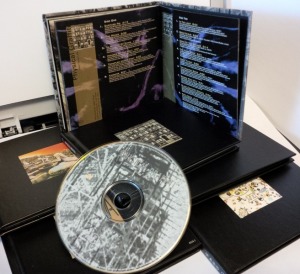
LED ZEPPELIN – The Complete Studio Recordings(1993 10 CD Atlantic box set)
It’s funny to read some of the complaints about this box set on sites like Amazon! “The Song Remains the Same isn’t included!” Well, correct. It’s called Complete STUDIO Recordings, not Complete Live Recordings. “The artwork is too small!” Well, it’s a CD, not an LP. I’m of the belief that you can’t go wrong buying the Zeppelin LPs in mint condition. Much like Kiss or Alice Cooper, Zeppelin often gave you extra bang for your LP buck (more on that later). “Presence and Coda suck!” Well, I’m sorry if you feel that way, but this is the COMPLETE Studio Recordings, not the Personal Favourite Studio Recordings.
Anyway, I listened to the entire box set last weekend once again, and it’s always nice to revisit Zeppelin’s back catalogue in that way. After all, each album is a portrait of where they were at that time, and are truly best when played as complete albums, not songs on a compilation. Zeppelin I and II are an embrionic, pseudo-heavy metal band with hippy tendencies, but you are immediately blown away by how good this band was. All four members were simply stunning, a raging and ripping Plant included. By Zeppelin III they really started to explore the “light and shade” that Pagey speaks of in the included Cameron Crowe essay. It is a beautiful album. Zeppelin IV of course combines the sounds of the first three together into one multi-platinum work of art.
After Zeppelin IV, their albums become harder to characterize, but diversity is still key. Much like the Beatles before and Queen after, Zeppelin were not content to be a simple bass/guitar/drums combo. Strings, prototypical tape-based synth, and numerous other instruments are brought in to add to the Zeppelin mosaic. Houses of the Holy contains one of my favourite moments in “No Quarter” which is anchored by John Paul Jones’ keyboard and synth work, a hauntingly beautiful piece. Physical Grafitti contains perhaps their highest achievement in “Kashmir”, but certainly songs like “The Rover” continue the metallic goodness that spawned the band. Presence is an album misunderstood by many, a back-to-basics tour-de-force of power. The very Rush-like “Achiles Last Stand” combines progressive rock tendencies with Plant’s lyrical mysticism. Finally In Through the Out Door represents Pagey taking a step back and Jones filling the gap with modern forward-thinking synthesizer arrangements. “All My Love” is a ballad that came about five years too soon, a Plant/Jones penned masterpiece of beauty. “In The Evening” haunts with Plant’s vocals buried in the mix under cascades of Jonesy’s synth and Page’s whammy bar. “Hot Dog” is a pure country ho-down, and Zeppelin ended their career with the diversity that they started it with. But it doesn’t end there, as an expanded version of Coda is included, an odds-and-sods collection of outtakes. Certainly these are not the absolute greatest of Zeppelin moments, but “Bonzo’s Montreaux” represents the kind of experimentation that Zeppelin were founded on. A sequel of sorts to “Moby Dick”, it is a drum orchestra and worthy of the albums before. The expanded edition includes one of my favourite tracks, Zeppelin’s version of “Traveling Riverside Blues”. Page’s slide guitar is eloquent as it is excellent.
The packaging is ample. A thick booklet with photo after photo is included, as well as the aforementioned Cameron Crowe essay. Reading it, you can see where much of Almost Famous came from. Each CD is packaged with a reproduction of each LP’s original artwork. That means, for In Through the Out Door, you get all six covers, plus an image of the paper bag, and the inner sleeve. Zeppelin III gives you a miniature version of “the wheel”, and Physical Graffiti, the “windows”. These are static versions; if only you could manipulate them like the originals, but alas.
Remastering job is OK. I detected what I thought were a couple problems, I thought I heard some tape drop-out. I hate to say it, but maybe the Zeppelin catalogue could use a fresh remastering. 20 years have passed since this was released. And hey, just in time, Jimmy’s working on remastered deluxe editions of each album! Stay tuned.
As for the here-and-now, you can either go out and buy each album separately, or you can buy this set. Personally I think this set is the way to go, especially if you care about packaging. And it’s Zeppelin — you kind of need all the albums, don’t you? I won’t rate albums individually (that would require a Zeppelin series, something I would like to do) but I can give this box set:
LED ZEPPELIN – self-titled box set (1990, retail price approx $60 CAD at press time)
It was the fall of 1990, and I was on the verge of graduating highschool and entering the “real” world. However, my musical development was way far behind — everybody’s was, in 1990. Poison, Whitesnake and Motley Crue ruled the charts: All bands, one way or another, influenced by Zeppelin, by the way. Yet, I had avoided actually hearing a Zeppelin studio recording. MuchMusic’s endless showing of The Song Remains The Same had cooled any interest I might have had in this great band. I really didn’t like that concert, and I still don’t listen to it.
In 1990, pop rock was showing its first signs of death and I was becoming interested in bluesier, more authetic sounds. I was beginning to listen to FM radio and I heard a song called “Travelling Riverside Blues”. The slide guitar was eloquent and infectious. Immediately, I wondered what I was missing.
A friend, Danesh, who also had never owned a Zeppelin album in his life, picked up the box set released that fall. I asked him how it was. Cryptically, he responded, “It’s good.” It went on my Christmas list and I anxiously opened it on December 25, 1990.
I didn’t get to start plowing through the thing until the next day, after the turkey and Christmas guests were gone. On the 26th, I woke up early. I read the liner notes and I listened to the whole thing in one marathon almost-5-hour-session. Today, this is the running order that I associate these Zeppelin songs in, not the original studio album order. I listened to the box set in these marathon sessions 3 times during the Christmas break!
This was actually the first box set I ever owned. Not too many bands I liked had one, back then. In fact I think the only other box on the market at the time that even slightly interested was The Ultimate by Tommy Bolin.
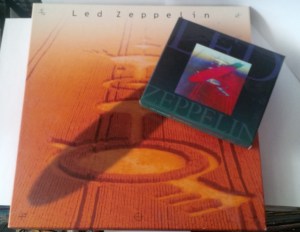
I loved the cover art. I was obsessed with the crop circle phenomenon. I bought a T-shirt with this design on it a few weeks later. upon seeing the cover, my friend and fellow Zeppelin fan Andreas said “Figures, Zeppelin created everything else in rock, why not crop circles too?”
For the record, this is still no substitute for owning all the Zeppelin studio albums. They have a life all their own. However, Jimmy Page carefully assembled this running order to breathe new life into these tracks, and breathe they do.
I can’t imagine a better opener than “Whole Lotta Love”. It is a one-two punch followed by “Heartbreaker”, and then “Communication Breakdown” takes things to an out-of-control pace. Geniously, Page followed this with “Babe I’m Gonna Leave You”. Total switch of pace, and another brilliant side to the band. But yet even on this, Plant refused to tame down his vocals, straining at the leash to let hell loose. I was hooked. I couldn’t even fathom a set of songs better than these. Better late than never, right?
I was entranced by the swirling “Kashmir”, a song I will never tire from. I could not believe the power of “What Is and What Should Never Be”. The Rush-like complexity of “Achilles Last Stand”. The tender acoustics of “Going to California”. The muddy, churning synth of “In The Evening”. The dark, foreboding blues of “When the Levee Breaks”. The fun, upbeat reggae of “D’Yer Mak’er” (still don’t really know what that means). The tropical heat of “Fool In the Rain”. The ominous “No Quarter”. Song after song, hour after hour, Led Zeppelin continued to reveal new layers of this band to me.
The only songs that I didn’t care much for, and still consider also-rans, are a lot of the tracks from Coda, their posthumous outtakes release. I felt stuff like the punk rock of “Wearing and Tearing” and the folky “Poor Tom” were not as great as the A-listers. While they are not without their merits, I don’t believe that today they can stand up against “The Immigrant Song” or “Tangerine”.
We kids didn’t really get the lyrics, or why Robert was singing about wearing flowers in your hair. We found the lyrics amusing, quaint.
Today I own all the individual Zeppelin albums in box set form (The Complete Studio Recordings), but I still listen to this box and its sequel, 1993’s Box Set 2. When I have 5 hours at home, this is the way I prefer to go. This box set creates a journey. Each disc is a journey with a distinct opening and a distinct end, but the entire running order is like that as well. There are distinct sections, moods, and movements in the box set. Witness “All My Love” as the final track. I couldn’t imagine a better way to end a five hour journey than that hopeful fade out.
Then Bonzo died and the hope was gone.
Interestingly, even though the unreleased/rare tracks here were later reissued on the Complete Studio Recordings (they were “Traveling Riverside Blues”, “White Summer/Black Mountainside”, and “Hey Hey What Can I Do”), one slipped through the cracks and to the best of my knowledge is only available on this set: Moby Dick/Bonzo’s Montreaux”, an interesting remix (today we would call this a “mash-up”) of Bonzo’s two drum solos intertwined. It is not on the Complete Studio box. It’s not because it’s inferior or redundant, in my opinion. Jimmy lovingly put this track together as a tribute to his friend 10 years after his death, and it works brilliantly. It neither replaces the originals, nor gets in their way, because it’s more a cool showcase of Pagey’s mixing skill, if you asked me.
10 years gone? It was hard for me to believe that Zeppelin had been gone for only 10 years at that time. It seemed to me like they were part of pre-history, something that predated everything I’d known. Yet all the bands I knew cited Zeppelin as an influence, from Kiss on down to the newest groups, like Cinderella (who worked with John Paul Jones). They were a part of my rock and roll soul without me even knowing it. Hearing this box for the first time was like discovering a part of myself!
Liner notes are excellent, and until reading The Hammer of the Gods, was pretty much my sole source of Led Zeppelin information and photographs. They are ample, and include an essay by Cameron Crowe.
Interestingly, even though this set has theoretically been supplanted by newer, superior sounding collections, it remains in print and reasonably priced. There must be something to it, I guess!
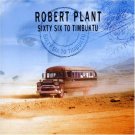 I’m a pretty big Led Zeppelin fan, having bought all their albums more than once (and at least once more) over the years. When this Robert Plant CD came out in November 2003, it was high on my radar. I didn’t own any Plant solo albums (beyond The Honeydrippers), but wanted something of his in my collection. This compilation of hits and rarities was perfect for my needs.







 mikeladano.com