rock and roll

REVIEW: The Four Horsemen – Welfare Boogie (21st Anniversary Edition)

scan_20160918THE FOUR HORSEMEN – Welfare Boogie (originally 1990, 2009 Anniversary Edition with bonus tracks)

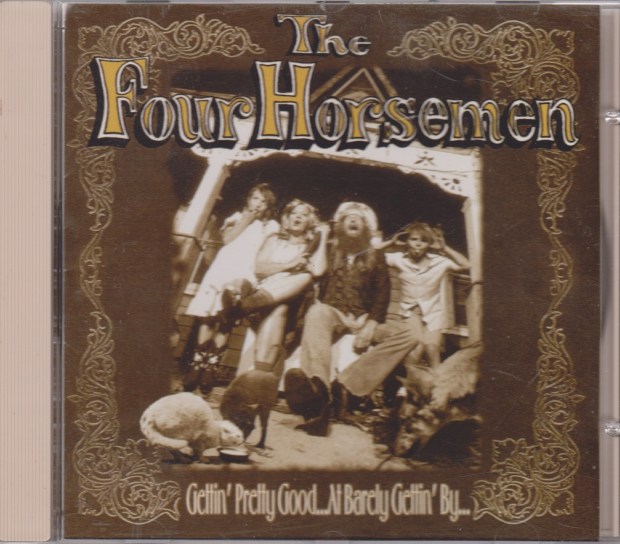
It feels right to review this re-released EP only after we have already discussed Nobody Said it Was Easy and Gettin’ Pretty Good at Barely Gettin’ By.  Until I met T-Rev at the old Record Store, I didn’t even know such an EP existed.  But he had it; an original copy purchased somewhere in the States before we met.  He taped it for me (same songs both sides) and that was the first I heard of the Horsemen’s 1990 debut EP.  I hunted high and low for another CD copy, but failed until this 2009 reissue.  Originally and simply titled The Four Horsemen, the reissued EP sports the new title Welfare Boogie, and five bonus tracks.

According to the liner notes, the band didn’t mind if they sounded a bit like AC/DC since “nobody is doing AC/DC anymore, not even AC/DC”.  The EP has the same raw and rough vibe of Powerage-era Bon Scott, but with a guy who can also scream like Brian Johnson.  “Welfare Boogie” itself works as an example.  It’s a basic riff, a rawk vibe, a shout-along chorus and a charismatic shrieker (Frank C. Starr).  This track and the laid-back rock and roll “Shelly” were both written solely by drummer Ken “Dimwit” Montgomery.  Dave Lizmi’s guitar solo is equal parts Angus Young and Ace Frehley.  The date might say 1990, but it sounds more like 1978.  “High School Rock N’ Roller” was written by founding member, Haggis (aka Kid Chaos aka Stephen Harris), who had finished a world tour with the Cult.  Once again, it’s easy to point at early AC/DC as the prime influence.  The one track that sounds more like punk rock (Dimwit was from D.O.A.) than AC/DC is “Hard Lovin’ Man”.  Starr might not have written it, but it’s clearly about him.  I have heard him reference his tattooed weiner before in a RIP Magazine interview.  (“It has eyes!” he seemed to beam with pride.)  The lyrics:

“I got heart of stone,
And a hand of steel,
Got a tattooed pecker,
And a Batmobile.”

“I”m a hard lovin’ man,” he boasts, before inviting “come here baby and see how hard I am.”  All this to the rock and roll blitzkrieg of a song so fast that it doesn’t even break the 2 1/2 minute mark.  The four tracks combined make for a grand little EP, not even 13 minutes long!  In and out, mission accomplished.  Thankfully the bonus tracks extend the experience for those wanting a little bit more action.

A cassette demo of “Rockin’ is Ma Business” demonstrates a work in progress as the band fiddled with the arrangement.  Comparing the final track to the demo, it sounds like it ingested a steady diet of coffee and gin before cranking it up to 11.  Always interesting to hear these early works in progress.  The bones are there but the meat is only being added.  “The Needle” is an unreleased song, a menacing night prowler with teeth flashing in the gloom.

“Born to Boogie” transformed completely between this demo and a later demo included on Nobody Said it Was Easy.  According to the liner notes here, this song eventually mutated again into “Can’t Stop Rockin'” from the album.  This track however is just a good time boogie with a bouncy riff lifted from “New York Groove” by Ace Frehley.  Then there is “Ain’t Telling Me”, a purely AC/DC stomp with a hint of Guns N’ Roses on top like a cherry.  Finally, a fun track called “Bring On the Girls” goes down like a round of tequila.  You can hear that the chords here later became “Moonshine” on the LP.  Even the bass line is identical, but this is a more party-hearty version of a fondly remembered deep cut.

This collection of songs was never meant to be more than a warm-up.  The main course was always intended to be the LP.  When a band is as good as The Four Horsemen were, the EP still impresses more than a thousand other bands’ proper albums.

3.5/5 stars


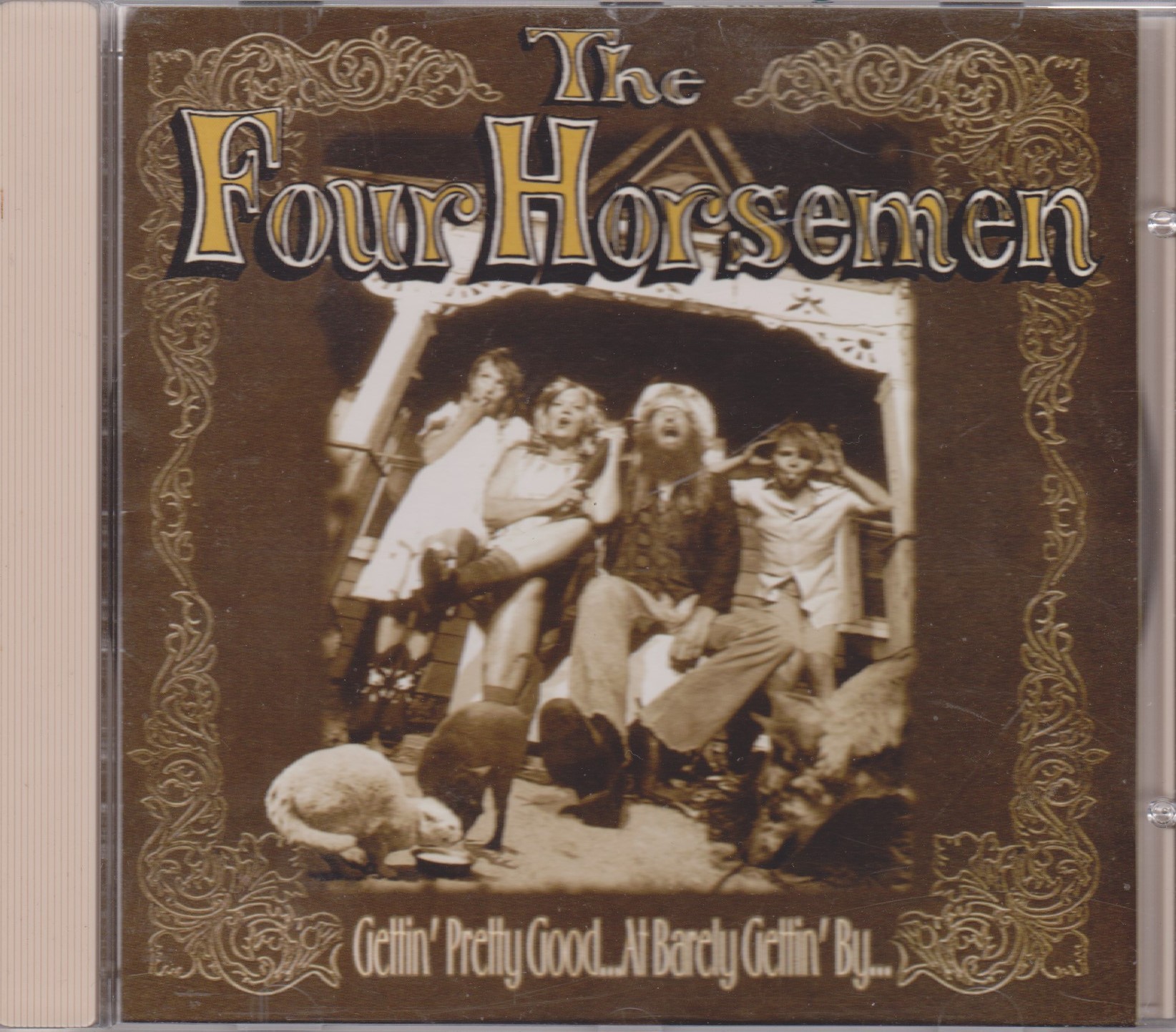
REVIEW: The Four Horsemen – Gettin’ Pretty Good…at Barely Gettin’ By (1996)

scan_20160908THE FOUR HORSEMEN – Gettin’ Pretty Good…at Barely Gettin’ By (1996 Magnetic Air)

The Four Horsemen seemed to burn the candle at both ends.  Before really even getting off the ground, they imploded, but not before dropping one of the greatest unsung records of the decade:  Nobody Said it Was Easy.  They had Rick Rubin, they had Def American, they had a guy that was in the Cult and another from D.O.A., and they had tours with the Black Crowes and Lynyrd Skynyrd.  They also had a volatile frontman who drove the band nuts and ended up in jail, and they just couldn’t make it last.

Founding member Haggis tried to give it another shot.  He reformed the band with a new singer named Tim Beattie, but ultimately the album was shelved.  It sounded like a completely different band, a southern soul band with nothing hard or heavy.  That’s not a bad thing:  the album Daylight Again was finally released in 2009, and it’s incredible (and we’ll get there soon).  Instead they folded again, but not for long.  Dave Lizmi and Frank C. Starr formed a new Four Horsemen, with Canadians Pharoah (bass) and drummer extraordinaire Randy Cooke.  With another Canadian, producer Rich Chycki, they forged a rare followup:  one as good as the original.

Slimmed down to a single guitar band, the new Horsemen sounded leaner and less AC/DC.  Frankie’s voice had changed and he was no longer screaming, and that also lessened similarities to AC/DC.  He had also become more expressive, while losing none of his power or character.  They opened the album with a southern flavoured “Still Alive and Well”, a Rick Derringer cover.  Considering the five year gap between albums, they couldn’t have picked a better opener.

The title track “Gettin’ Pretty Good at Barely Gettin’ By” goes deeper into the swamps of the south.  Lizmi takes out the slide, and who doesn’t love some greasy slide guitars?  This is an uplifting hard rocker, stating the Horsemen’s modus operandi:  “Well well, oh my my, what have we here?  Some good old fashioned music, lots of whiskey and beer.”  Lizmi wrote the lyrics for this album, but the words sound like Frankie’s.  It’s a celebration of rock and roll, proudly and loudly.

The third song in a killer triple threat of openers is “Drunk Again”, which sounds exactly like you hope it does: fast, upbeat, cocked and loaded.  Gotta love the female backing vocals, giving it a kick of soul.  The performance sounds live and authentic.  At one point, it sounds like Frankie cracks up chuckling right in the middle of a line.  “It’s been 40 days since I looked at my face…ah shit…”  This is the kind of music everybody needs for a serious rock and roll party.

scan_20160908-3

There are few more standout songs that have to be discussed.  First is “Song for Absent Friends”, one of the most emotionally bare tracks you’ll ever find from a band of this ilk.  Original drummer Ken “Dimwit” Montgomery, a Canadian punk legend, died in 1994 of a drug overdose.  “Song for Absent Friends” sends legitimate tingles up the spine.  You can feel the hurt.  But it’s not a funeral, it’s as much a celebration of Dimwit as the rest of the album is a celebration of life.

“And I know that you all are out there somewhere,
On a leave of absence from this place,
And I still have a place for you all,
A place around near me,
And your glasses will always be full.”

Then we have the blazingly fast drag race of “Hot Rod”, featuring the lyric “I got the hottest rod around,” ha ha. It’s that slippery fast guitar lick that knocks you out. But if you want a song that’ll knock some teeth out, with some biting lyrics, look no further than “Back in Business Again”. Frank sounds pissed!

“And we were headed for the top babe,
Way back in ’91,
Some record business scumbags took it from us,
Well they forgot my gun.
Well now we’re back in business folks,
I’ve come to claim what’s mine,
See we’re the Four fucking Horsemen,
Back for a second time!”

That’s nothing. Clearly, they were still ticked that they got dropped by the label in 1992. I don’t think Frank or Dave thought much of the latest wave of bands that were topping the charts in the early part of the 1990’s. Exhibit A:

“Now pay attention,
I got a little story here to tell ya,
It kinda goes like this.
You know I had a couple years off there babe,
To kinda take some time,
And I heard a bunch of whining, little wussy rock n rollers,
Complaining about how fame and fortune’s got them down.
I say we gather up all these little bastards,
Shove them back to their little nowhere town,
See I was born on this stage,
And I plan to stick around!”

Frank didn’t get that chance, either.

Before Gettin’ Pretty Good…at Barely Gettin’ By was even released (by the Canadian label Magnetic Air), Frank was hit by a drunk driver while riding a motorcyle. He suffered massive brain trauma. He never woke from coma, and died four years later.

It’s almost absurd how much hardship fell upon this band, almost as if the fates decided that nothing would stand in the way of grunge. The Horsemen tended to end their albums with emotional epics, and this album ends with “What the Hell Went Wrong”. It’s a complicated question with many answers, but the bottom line is that the success the Four Horsemen had was inversely proportional to their talent.

In one of the strangest twists of an already twisty story, the masses finally heard the Four Horsemen when “Back in Business Again” was used in the movie G.I. Joe: Retaliation.  Completely out of context, but who cares.  The movie starring Dwayne “The Rock” Johnson made $375.7 million.  That’s a lot of people who got to hear a kick ass Four Horsemen track with theater quality sound!

Rest in peace, Frankie.  Rest in peace, Dimwit.

5/5 stars


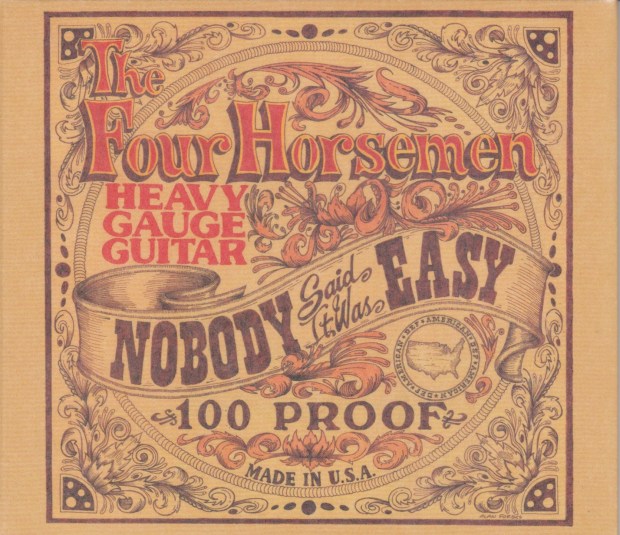
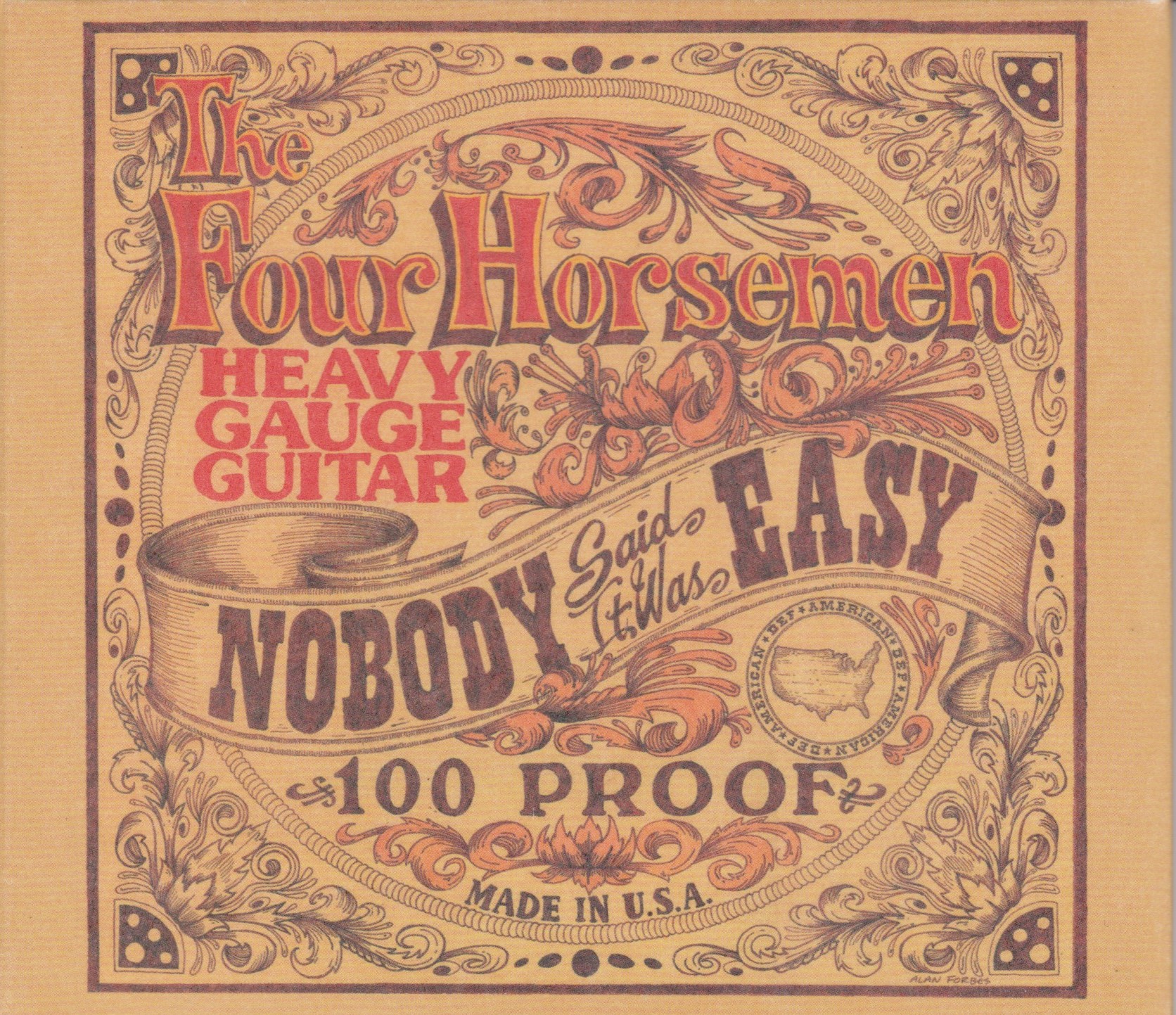
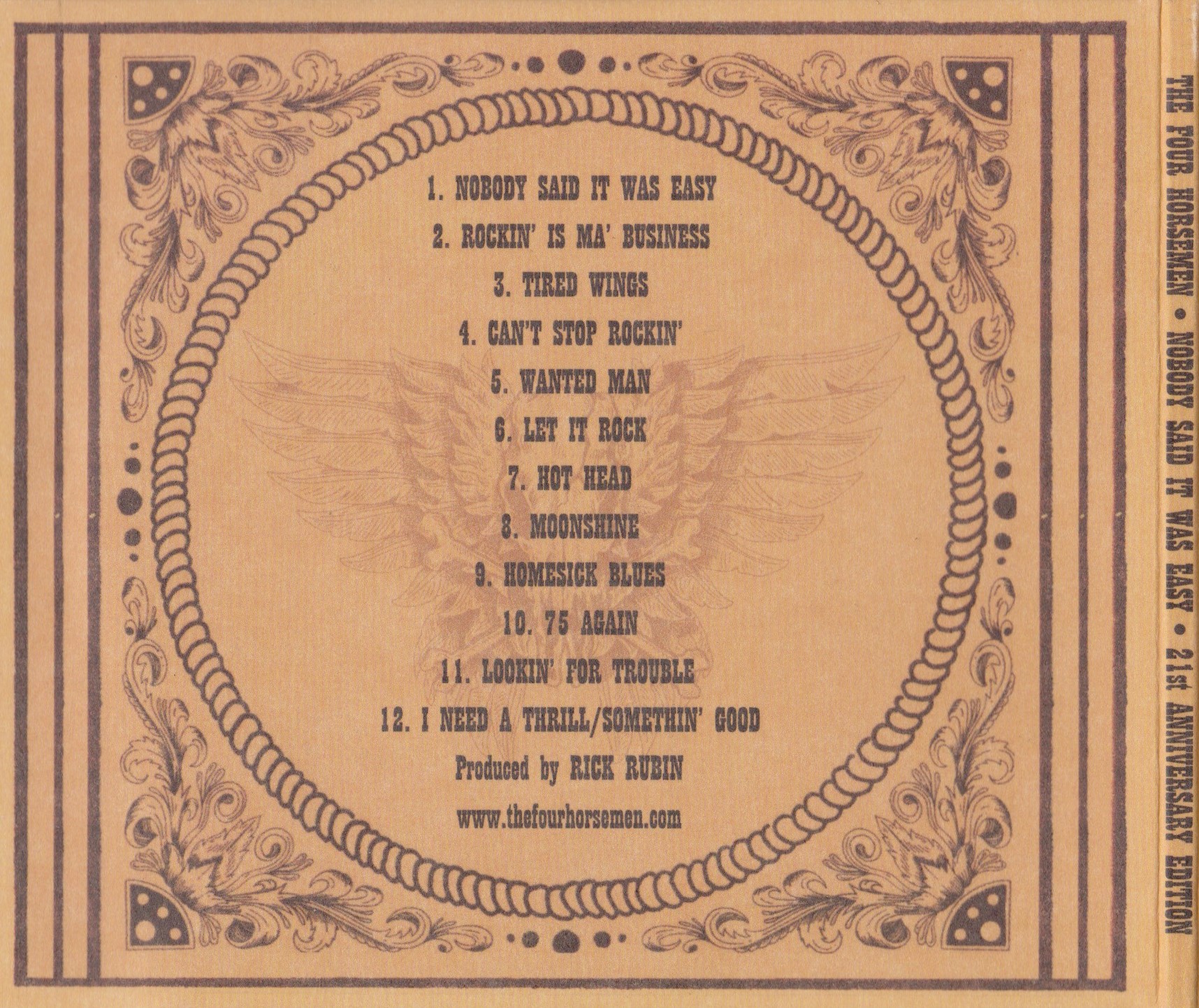
REVIEW: The Four Horsemen – Nobody Said it Was Easy (21st Anniversary Edition)

Giddy up! Part one of a five part Four Horsemen series this week at mikeladano.com!


scan_20160907THE FOUR HORSEMEN – Nobody Said it Was Easy (originally 1991 Def American, 2009 Anniversary Edition with bonus tracks)

1991’s Nobody Said it Was Easy was one of the greatest rock albums to ever come from the grunge decade that you’ve never heard of.  The Four Horsemen were a multinational band, with Rick Rubin at the helm at the legendary Sound City studios, and one of the greatest rock star frontmen to ever grace the stage:  the late Frank C. Starr.

There could only be one Frankie.  But there was so much more to this band than just the singer.

There was Haggis, on rhythm guitar (ex-The Cult, formerly known as Kid Chaos).  He lent the album an AC/DC edge with simple rock and roll riffs.  Then there was Dave Lizmi, an uber-talented guitarist with a knack for classic tube-amp driven solos.  On bass was Ben Pape who provided the album with interesting and melodic basslines.  Finally, on drums, the man the myth the legend:  Kenneth “Dimwit” Montgomery.  A Canadian native as big as the mountains that spawned him, Dimwit was an absolute beast on the skins.  His brother Charles Montgomery would change his name to Chuck Biscuits and join Danzig.  Both brothers would spend time in the legendary Canadian punk band D.O.A.  Sadly, Dimwit succumbed to drugs and died in 1995.  What a gargantuan loss.  (He later inspired the Horsemen track “Song for Absent Friends” from their second CD.)

This album was preceded by an impossible-to-find four song EP (since reissued), so when it was released on Def American, it was the first time most of us heard the Horsemen.  And it was instant.  With three unforgettable singles, the Horsemen kicked out the jams.

“Nobody Said it Was Easy” was a hell of an introduction.  With a riff similar to those peddled by the Black Crowes a year before, but with a much harder edge, the track kicked every ass in the room.  Get into the groove and enjoy, because the party is just starting.  Frankie had a rock n’ roll voice, but when he let loose with his screaming, that’s when we knew he was special.  Able to sing with a Brian Johnson shred, the Horsemen really had an ace in their pocket with him.  Frankie was something else.  He took no prisoners and without him, the Horsemen just didn’t sound like the Horsemen.

There aren’t breaks between the songs, so “Nobody Said it Was Easy” goes right into “Rockin’ is Ma Business”, the heavier second single.  Louder, groovier and weightier, “Rockin’ is Ma Business” proves its point.  “And if it’s so good why am I still fuckin’ broke?” asks Frankie before Lizmi rips into another solo.  (That would be a question for the accountants, Frankie!)

The third (and some say the best) single was the slide-drenched “Tired Wings”.  With a southern Skynyrd vibe, “Tired Wings” is simply awesome.  I’m a sucker for a slide guitar, and there’s enough here to drown a cat. Haggis makes sure there is plenty to go around.

There could have been more singles, but the band hit the rocks when Frank was arrested and jailed for a year on drug charges. They were dropped by the record label, who stopped promoting the record. That effectively put the band on ice for several years, but that’s another tale for another review (or two).

T-Rev always pointed out the strength of the closing track, essentially two songs over eight minutes long, “I Need a Thrill/Somethin’ Good”.  The song reeks of cigarettes, booze and tired hotel rooms.  With organ and loads of Lizmi licks, it’s an epic track soaked in feeling.   T-Rev pointed out that the Horsemen seemed to like closing their albums with slow bluesy epics like this.  The next CD, Gettin’ Pretty Good…at Barely Gettin’ By has a similar track called “What the Hell Went Wrong”.  Their long lost second album (finally available today) called Daylight Again closes with an 11 minute version of “Amazing Grace”.  That’s the kind of track this is.  It could only be an album closer.

This CD reissue has three bonus cuts from the original demo tapes.  I didn’t really want to trade up my old original CD copy of this album, but these bonus tracks made it worth while.  “She’s Got It” was written by Dimwit, and has a pure AC/DC riff like they used to write when Bon Scott was alive.  “Born to Boogie” is a rare Starr co-write (with Haggis).  This is a completely different song from the same-titled demo that was included on the EP reissue (Welfare Boogie).  It has a completely different riff, which is good because the original one basically sounded like “New York Groove” by Ace Frehley.  I prefer this version, the faster and more fun of the two.  Finally there is a different version of “Homesick Blues”, featuring a harmonica part by Tim Beattie.  The funny thing here is that Beattie later joined a reformed Horsemen as their lead singer!  It is he that recorded Daylight Again, before yet another version of the band would form and start recording with Frankie up in Canada….

But again, that’s another story for another review.  If you are one of the many rock fans who missed the Four Horsemen during their brief heyday, then this CD reissue makes the album easy to acquire.  The important thing is to get it!*

5/5 stars

scan_20160907-2

* But beware!  I know of at least one customer, Freddy, who purchased a defective copy of the original CD with Dwight Yoakam instead of the Four Horsemen! (Record Store Tales Part 224: Rockin’ is Ma Business)

For a review by 1537, click here  (It’s Dirty, It’s a Pity).


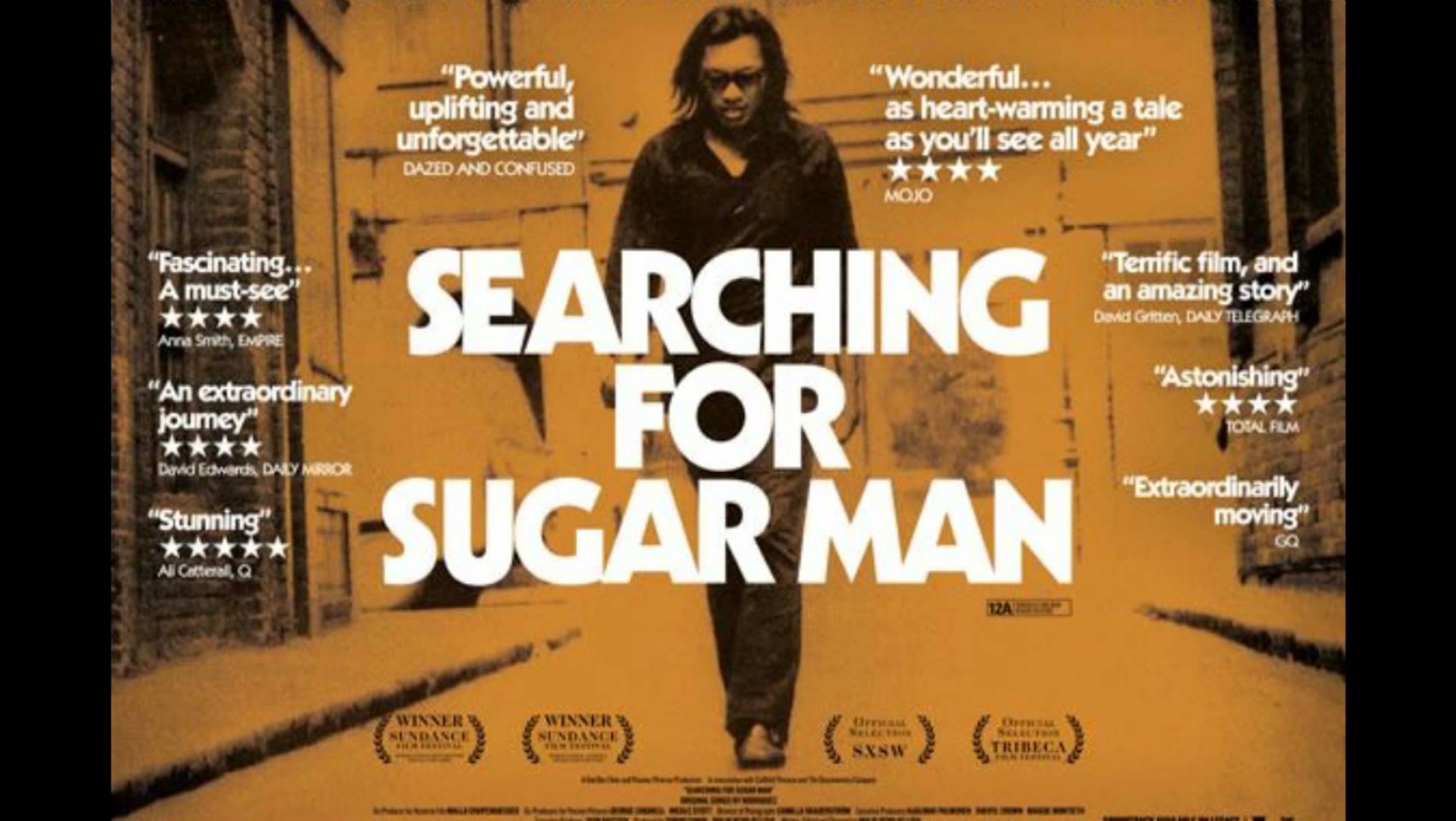
MOVIE REVIEW: Searching For Sugar Man (2012)

Looking for something to watch on Netflix this weekend? Look no further.

SIXTO

SEARCHING FOR SUGAR MAN (2012 Sony)

Directed by Malik Bendjelloul

Like the rest of the world outside of South Africa (and Australia), I had never heard of the American singer Sixto Rodriguez.

If I had, I could all but guarantee I would have been a fan.  With a rare songwriting ability often compared to Bob Dylan, the artist known only as Rodriguez released two albums in the early 70’s.  He sounded something like Dylan hanging out with Neil Diamond and Johnny Cash, with the sadness of Nick Drake.  His voice, like those of Dylan and Cash, communicated volumes of emotion.  After he was dropped by his label, he disappeared completely.  What he did not realise is that change was coming to South Africa that he would one day be a part of.

They think his music first arrived in Apartheid-era South Africa via a bootleg tape that made the rounds.  Cold Fact (1970) and its followup Coming From Reality (1971) were of a remarkable quality, but with socially conscious lyrics that struck a chord.  Rodriguez became immensely popular among the people, who were tired of racism and felt Rodriguez’ music was valid to their country.  Some songs were banned completely.  The government didn’t like it, and scratched the songs out of the records so they could not be played.  But no government lasts forever.

Nobody in South Africa even knew who Rodriguez was.  Even his full name wasn’t obvious.  His albums had credits with names such as “Jesus Rodriguez” and “Sixth Prince”, but nothing confirming the artist’s identity.  The story was he killed himself in a spectacular fashion, on stage.  The tale wasn’t consistent.  In one version, he doused himself with gasoline and set himself alight.  In another, he shot himself on stage.  These stories helped propel his popularity in South Africa to a level beyond even Elvis or the Beatles.  And he had no idea any of this was happening.

Hard core fans and musical detectives were determined to find out what happened to Rodriguez.  They followed the money, but nobody was paying the artist for South African CD reissues.  They poured through his lyrics for clues as to his whereabouts.  References to Amsterdam were misleading, and clues scarce.  “How did Rodriguez die?” was the only question on the searchers’ list.  Imagine their surprise when Rodriguez’ daughter in Detroit Michigan discovered the searchers online, and contacted them to tell that Rodriguez was alive and well and living modestly in the city!  Many South Africans thought this impossible, and fully expected it to be a hoax.  Only when he arrived and played a series of concerts in the country did they realise this was no impostor.  It was akin to Elvis returning for a comback today.

Searching For Sugar Man maintains the mystery.  That seems to be the way Rodriguez wants it.  Now that his fame in South Africa has finally caught up with him, he gives most of his newfound wealth away to family and friends.  The voice is intact, and so is the mystique.  The movie has given him a second chance in music, and he has returned to the stage for the first time since a brief tour in Australia in 1979, where he maintained a small pocket of fandom.  Rodriguez will be playing the Centre in the Square in Kitchener Ontario, on Sept 10.

5/5 stars

A rare of example of bass clarinet in popular music.

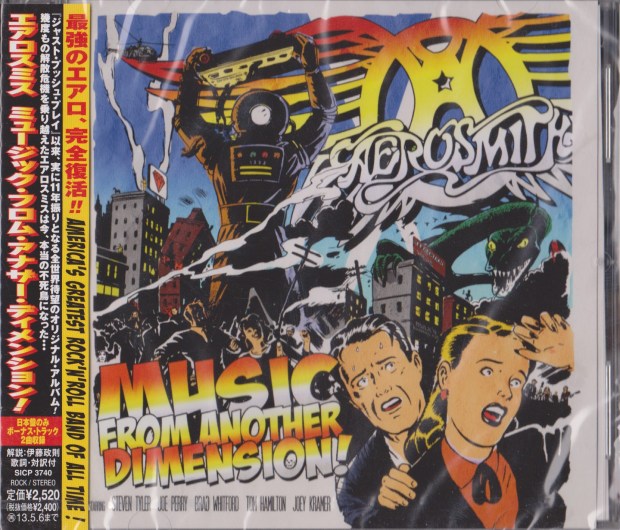
RE-REVIEW: Aerosmith – Music From Another Dimension! (Japanese edition)

AEROSMITH – Music From Another Dimension! (2012 Sony Music Japan)

When this album came out in 2012, Tommy Morais and I both took a shot at reviewing it, and you can find both those reviews here.  With the benefit of hindsight, Tommy’s review (2/5 stars) is more in line with how I feel now, compared to the 4/5 stars I rated it in 2012.

Having recently acquired a Japanese import of Music From Another Dimension, with two exclusive bonus cuts, now is the time to revisit the album for yet another review.  It can be interesting to document how music does or doesn’t grow on you over the years.  Unfortunately for me, Music From Another Dimension has become more irritating, and I am less willing to overlook its flaws.

The core weakness is that the album sounds like a collection of soundalike outtakes from Get A Grip.  The modern production and layers and layers of overdubs do it no favours.  “Luv XXX” sounds incomplete.  I praised it as “really good” before; I’m not willing to go that far this time.  The production is unnecessary and that’s true of most of the album.  I think that’s why nobody believes Aerosmith when they say “it sounds like Rocks“.  It was never going to sound like Rocks.  Aerosmith simply do not record things basic and live like that anymore.

“Oh Yeah” is still pretty good, as is “Street Jesus” and the funky “Out Go the Lights”.  Given a few years to absorb the album, “Out Go the Lights” is one of the few tracks that really does harken back to better days.  More cowbell!  Probably the best tune on the album, and certainly the most vintage.  The ballads, as before, are largely crud.  “Another Last Goodbye” is the only one still memorable today.

The Japanese fans did not get the same bonus tracks that we got on our North American deluxe edition (“Sunny Side of Love”, “Oasis in the Night”, “Up on the Mountain”).  They got some equally interesting stuff instead.  “Shakey Ground” is so good, it’s insane that it wasn’t included on the album proper.  Just nuts — “Shakey Ground” is the most authentic thing Aerosmith have done in decades.  With full-on horns, sax and female backing vocals at the ready, Aerosmith finally really turn up the funk again!  I want to know who’s playing clavinet, but the credits don’t say.  Tyler?  “I’m Not Talkin'” is also quite good, being a rockabilly experiment.  No layers of production, no additional accoutrements, this is just Aerosmith playing, and Tyler singin’.  Unlike much of the rest of the album, this sounds like something real; an actual band!

Can you imagine if Aerosmith had cut just a little bit of fat from the album (mainly ballads), and included the bonus tracks instead?  You’d have a shorter, harder, more Aero-sounding disc.  Less is more.  Music From Another Dimension is the musical proof of this concept.  The less fiddling in the studio, the less overdubbing, the better.  And fewer songs are better, too.  Aerosmith albums used to have 10 songs on them.  Maybe they should get back to that, especially considering that Music From Another Dimension has 20 altogether.

3/5 stars

#466: Clap for the Wolfman


“Another lovely day begins, for ghosts and ghouls with greenish skin. So close your eyes and you will find that you’ve arrived in Frightenstein. Perhaps the Count will find a way to make his monster work today. For if he solves this monster-mania, he can return to Transylvania! So welcome where the sun won’t shine, to the castle of Count Frightenstein!”Vincent Price

GETTING MORE TALE #466:  Clap for the Wolfman

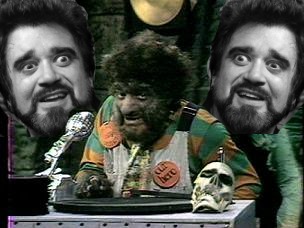
I surely cannot be the only person in the world who heard of rock and roll because of the legendary radio DJ Wolfman Jack…although mine was in a roundabout way!

The irresistibly gravel-voiced Wolfman Jack was born in 1938 as Robert Smith.  A love of classic horror led to the creation of the Wolfman character.  He played rock and roll records from a high-powered transmitter on the Mexico border.  So powerful was the signal that Jack claimed “Birds dropped dead when they flew too close to the tower.”  On a clear night, listeners in the Soviet Union could hear the Wolfman half a world away.

Killing birds and eating records, the Wolfman really came to fame when tapes of his broadcasts were used for radio syndication.  By selling his tapes world-wide, Jack could be heard on over 2000 stations at his peak.    The Wolfman character became synonymous with rock and roll no matter where you lived.

American Graffiti: Richard Dreyfuss and Wolfman Jack

I was too young to know of Wolfman Jack directly.  I was even too young for American Graffiti, the 1973 George Lucas classic about the cruising scene in Modesto California circa the summer of ’62.  Wolfman Jack made a memorable appearance as himself, and did radio DJ intros for most of the tunes through the movie.  This however was preceded by a 1971 Canadian kid’s comedy show called The Hilarious House of Frightenstein. Similarly to of the syndication that made the Wolfman a smash success, Frightenstein was on TV well into the 70’s and 80’s, even though all the episodes were made in 1971.  Via Frightenstein, I learned who the Wolfman was.

Because of the endless re-runs, there was no way for young Canadian kids to miss it.  Before we had cable, it was one of the few shows we could reliably get, both at home and at the cottage, as it was broadcast from Hamilton Ontario.  Billy Van played almost every character himself: Grizelda the Witch, the Librarian, Dr. Pet Vet, Bwana Clyde Batty (a British explorer who ran the “Zany Zoo”), and many more.  Van’s most memorable character however had to be The Wolfman – an actual wolfman radio DJ inspired by Jack, down to the gravelly voice and wolf howls!  The Wolfman would spin classic rock and roll records each show, accompanied by psychedelic images of him dancing and playing air guitar with the character of Igor, played by Fishka Rais.  (The huge Rais was one of very few additional actors on the show.  Vincent Price and Professor Julius Sumner Miller recorded all their parts over the course of the summer of 1971.  And let’s not forget Guy Big, as the Midget Count!)

When the Wolfman’s segments would begin, you would know it immediately.  His theme song was “I Wanna Take You Higher” by Sly and the Family Stone.  “I am the Wolfman!  Ah-oooooooo!” he would howl at the start of his show.  He would play “golden oldies” by the Stones and other classic rock and roll artists, on his radio station “EECH”. He would tell callers that he was “fangtastic”.  (The “golden oldies” concept was brilliant.  Even if he was playing a fairly recent Stones single, he’d call it a “golden oldie”, thus ensuring that the show seemed current even when being broadcast in, say, 1986.  Planning and syndication!)

One of the few Youtube clips featuring original audio and music.

So there I was, a young kid sitting on the basement floor during Canadian winter, playing with Lego and watching  this pretty low-budget kid’s show, when suddenly this wolfman appeared!  “I am the Wolfman!  Ahooooooo!”  I didn’t know the music.  I’d never heard Sly and the Family Stone.  They were great!  I was hooked.  I even made my own tapes of the Wolfman.  I played the Wolfman…and all the other characters.  I had him battling Star Wars composer John Williams for chart superiority!  Fortunately, these tapes no longer exist!

I had no idea yet that Billy Van’s Wolfman was based on a real person.   That came later, probably through my parents, as I learned more about rock and roll.  All I knew was that he was a fun character who played good songs.  “I Wanna Take You Higher” was an early favourite.  The Stones made a strong impression.  He also played Mungo Jerry.  I didn’t like the slow songs.  Unfortunately due to the legal rights involved, “I Wanna Take You Higher” had to be replaced on the DVD versions.  Rights could only be obtained to release a few episodes on disc. (Most of the Youtube clips you will find are overdubbed versions with different music, and a new voice, since Billy Van had passed away before the DVDs were released.)

Wolfman Jack himself appeared on many television shows and records over the years.  After American Graffiti, he appeared in the ill-advised sequel, which flopped.  TV loved him; he even guested on Battlestar Galactica’s spinoff series Galactica 1980.  Notably, in 1974 he appeared as himself on The Guess Who’s classic single “Clap for the Wolfman”, a memorable tribute featuring plenty of the Wolfman’s trademark growl.  His influence trickled down, creating waves far exceeding the radio broadcasts that once reached Russia.  Via these tributes to his accomplishments, the Wolfman served to introduce rock and roll music to new generations, either via TV and movies or Billy Van’s character inspired by him.  Clap for the Wolfman indeed!

REVIEW: Little Richard – The Essential (1985)

Scan_20160106LITTLE RICHARD – The Essential (1985 Specialty)

Ah-OOOOOOO!  Little Richard!  Predator!  OOOOO!  Wop bop a loo bop!  Get to the choppa!

Who doesn’t love Little Richard?  If you answered that question with “me!” then click your “back” button now and go listen to some X Ambassadors or something equally un-rock and roll.  Little Richard?  Pure rock and roll, baby!  You have your rock bands that are based on guitar, but then you have other artists that are based on piano.  And let me tell you, when Little Richard (Ah-OOOOOOOO!) starts bangin’ on those keys, you can’t help but boogie woogie.

Richard has an extensive catalogue of albums and singles, and much like any of the other founding fathers of rock and roll, there is so much more to him than just the greatest hits.  This album is called The Essential, and it is.  There is much, much more.  “Can’t Believe You Wanna Leave” isn’t on here, but so many favourites are!  (OOOOO, gonna have some fun tonight!)

Commencing in 1955, every single track on this CD (single A’s and B’s) is in the two minute range. Wham bam, thank you ma’am! (No, that’s Dean Martin…) Loaded with piano, sax and Little Richard’s unmistakable voice, every song is incredible. My favourite song is “Jenny Jenny” (OOOO!), which is so damn raw and perfect, sax honkin’ and Richard letting loose with every “Woo” and “Ooo”. His throat is pushed to the limit, running off the rails from time to time, but always perfect. From Lucille to Teddy to Jenny to Miss Ann and Miss Molly, some may notice that there is a certain sameness to the material. That would be missing the point. Richard is like AC/DC. You get what you want, every time. Since the songs are so short none overstay their welcome.

Everybody should know plenty of these songs, whether from movies or TV. At least half the album should be familiar. Even if you haven’t heard Richard’s version of “By the Light of the Silvery Moon”, you probably know it from Etta James, Happy Days, Bugs Bunny, or I Love Lucy. It’s just one of those songs that everybody has heard. (Richard’s version is the best one, if you asked me! Ah-OOOOOO!)

Even though this is an older release, the audio is just fine. According to the booklet, all tracks were remastered from the original mono tapes. Old time rock and roll just sounds better in mono. In mono, it sounds saturated and harder. (WOOO!) The booklet isn’t skimpy and has plenty of old black and white photos.

So, if you have “Heebie-Jeebies” for some “Long Tall Sally”, then “I Got It” for you. You’ll be “Slippin’ and Slidin'” for the whole length of this 45 minute CD, which will be over before you know it. If you wanna “Keep-A-Knockin'”, then just play it on repeat and “Rip It Up”.

5/5 stars

Final note: I will happily give a lollypop to anyone who can tell me where I can buy Richard’s elusive version of “Itsy Bitsy Spider”.

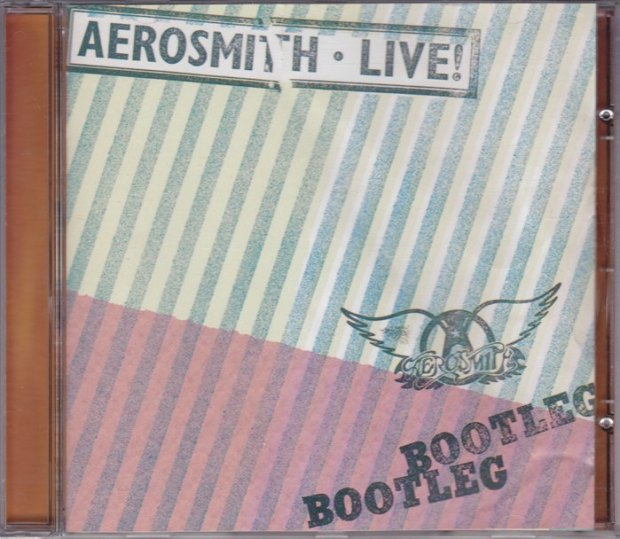
REVIEW: Aerosmith – Live! Bootleg (1978)

LIVE BOOTLEG_0001AEROSMITH – Live! Bootleg (1978 Columbia, 2003 Sony)

Five records in, and it’s time for a double live.  Aerosmith had gained a reputation for their fiery live shows, and bootleggers were ensuring that fans willing to pay had something live that they could buy.  The way to beat the bootleggers was for Aerosmith to put out their own official live album.  Collecting tracks from a variety of live performances and radio broadcasts, including many songs unavailable on album, Live! Bootleg is today one of the best examples of the epic double live.  The intentionally shoddy album art conceals within it a live record of nuclear critical mass.  With liner notes, photos, and even hidden tracks, Live! Bootleg hits all the bases.

“Back in the Saddle” recorded in ’77 is chosen to open the proceedings, which it does with the kind of rawness that only comes with a real live performance.  Unfortunately it’s a thin sounding version, but fear not because “Sweet Emotion” in March ’78 is full of guitar noise.  The liner notes state that there are no synthesizers on the song, just guitars “screaming in pair”.  Then “Lord of the Thighs” from the same gig keeps the momentum going smooth and dirty.  The extended jamming stretches the song out to the seven minute mark, and that is the kind of noisy spontaneity that wasn’t captured on any of Aerosmith’s studio albums.

“Toys in the Attic” was recorded in the boys’ home town of Boston, straining at the leash.  It’s a fevered live take, faster and more reckless.  Then, also from Boston is the Tyler/Whitford classic of Aerofunk tastiness, it’s the “Last Child”.  Live (in a club), it’s funkier and slinkier.  The first surprise rolled out on the album is the Beatles cover “Come Together”, from a secret gig in ’78 at the band’s headquarters the Wherehouse.  It’s very similar to the studio version they did for the Sgt. Pepper’s Lonely Hearts Club Band soundtrack, perhaps a bit slower and more menacing.

Joe Perry dusts off the talk box for an ultra-funky “Walk This Way”.  One reader said, “Joey [Kramer] sets the tone and man he’s driving the bus at break-neck speed.”  That’s it exactly!  This is Aerosmith starring in that movie about the bus that couldn’t slow down!  (I think it was called The Bus that Couldn’t Slow Down.)  As if that isn’t hot enough, a smoking “Sick as a Dog” from ’77 crashes the damn bus over the guiderail and off into the sunset!  Lots of tasty extended soloing here.

Eight songs in and only now we’re hitting the first ballad, and only ballad!  “Dream On” is a necessary outing.  Aerosmith slow it down a bit a-la “Stairway” and let it build.  Look for a surprise f-bomb in the middle of the song.  (I guess Aerosmith were not being recorded for radio broadcast that day, or if they were, Tyler just didn’t give a fuck!)

LIVE BOOTLEG_0006My favourite Aerosmith song of all time is “Chip Away the Stone”, written with Richie Supa.  This brand new song was chosen as the single fron Live! Bootleg.  The studio version was relegated to a B-side!  The live one has less piano, but has just as much boogie.  This is Aerosmith doing that old time rock and roll.  (The current version of Guns N’ Roses has been known to play “Chip Away the Stone” from time to time.)

Bringing back the funk of “Sight for Sore Eyes”, there is no time for rest, and from there it’s straight into “Mama Kin”.  Everything that the first Aerosmith album lacked in out-of-control raucousness is intact on this live version.  Without a breath they tear into “S.O.S. (Too Bad)”, ablaze with the intensity of fully-fuelled Aerosmith.

There’s an awkward transition between “S.O.S.” (recorded ’77 in Indianapolis) and “I Ain’t Got You” (1973 for a radio broadcast).  The younger band sound very different, less wartorn and ragged from the drugs.  They go straight into James Brown’s “Mother Popcorn”, complete with sax.  It’s the funkiest thing Aerosmith have ever done by a long shot.  Material like these tracks are perfect examples why Live! Bootleg is so beloved today.  They were giving you value for your money, and songs that you didn’t have, but didn’t know you didn’t have!

The next surprise is the unlisted “Draw the Line”, a live version so over the top that perhaps it even surpasses the original!  Wait until you get to Tyler’s screams if you don’t believe me.  Checkmate honey!  After a tracklist like this, ending the album with “Train Kept a Rollin'” (Detroit 1978) is one of the only options left.  Probably tired from an energetic set, Tyler gets the audience’s help on the chorus.  Joe Perry’s hanging by a thread but still able to piece together some gratuitous solos.   He throws in a bit of Sinatra’s “Strangers in the Night” for shits n’ giggles too.  Live! Bootleg ends on an overindulgent but perfectly appropriate note.

The radioactive fallout from their double live album bought Aerosmith, burning out fast from the inside, a little more time before being required to produce something new.  Even then they were breaking from the strain.  Something had to give.

Fortunately before imploding, Aerosmith managed to crank out the obligatory double live album that helped seal their place in rock history.  Check that one off the box!

5/5 stars

AEROSMITH BOX OF FIRE review series:

BOX OF FIRE THUMBDisc 1: Aerosmith (1973)
Disc 2: Get Your Wings (1974)
Disc 3: Toys in the Attic (1975)
Disc 4: Rocks (1976)
Disc 5: Draw the Line (1977)
Disc 6: Live! Bootleg (1978)

REVIEW: Aerosmith – Draw the Line (1977)

DRAW THE LINE_0001AEROSMITH – Draw The Line (1977 Columbia, 1993 Sony)

The intial batch of Aerosmith platters (particularly Get Your Wings, Toys In The Attic, and Rocks) are all but undisputably great records. Most agree that, for a couple years anyway, Aerosmith created some of the great most important rock music in America. Draw The Line, Aerosmith’s fifth, was considered at the time to be a drop in quality although it has certainly aged well and fared better in hindsight. Compared to Rocks, perhaps it stumbles behind like a drunk tumbling out of the bar, but it is still a magnificent piece of rock and roll damnation.  And you gotta love the cover art caricature, by Al Hirschfeld.

The drug problems had sunk in, a monkey it would take them another decade to shake, but you wouldn’t be able to tell by the title track. Even though they were basically only recording music in order to keep paying for drugs, they still managed to create some legendary music on the title track.  This is desert island material, one of those songs that I don’t want to live my life without. To this day nobody has written anything as perfectly manic as “Draw The Line” from start to finish. They may have been falling apart, but musically they were capable of cranking out breakneck rock and roll of the highest quality.   It was Van Halen’s frontman David Lee Roth himself who proved the mettle of “Draw the Line” in a scientific way.  When all else failed, he used it to drive a yak heard away in the Himalayas!

And I still have no idea what Steven Tyler is singing after the lead solo break.  This is what it sounds like to me:  “OOOH check mate don’t be late take another pull, that’s right, impossible, when you gotta be yourself you’re the boss of the toss so dice the price baby baby and Draw the Line…”  I’m certain that’s not entirely right, and who knows what the fuck it means, but I’m not going to go and look up the lyrics.  Do you know why?  Because Draw the Line didn’t come with lyrics. If Steven Tyler wanted me to know what the hell he’s singing there, he’d have written it down.

Much like they did with “Nobody’s Fault” from Rocks, thrash metal pioneers Testament covered “Draw the Line”, which was released on their Signs of Chaos compilation.  Once again, it’s a perfect fit for the thrashers.

It doesn’t end there with “I Wanna Know Why” being one of the catchiest of the early ‘Smith rockers.  Those Tyler piano touches and Aerosmith horns make it the most “rock and roll” of the tracks.  It’s brassy, sassy and shows no indication of the decay setting in at all.  “Critical Mass” was also great, a song that grooves along smoothly.

Although Aerosmith fared well in the past marrying funk and rock, “Get it Up” doesn’t work as well.  While the band were playing beyond what you’d expect them to be able to, their songwriting was starting to fizzle.  Joe Perry’s “Bright Light Fright” kicks the decibels, but sounds unfocused and haggard.  The saxophone solo is a highlight, but listening to “Bright Light Fright” is like watching a drunk partying in top gear.  You know the crash is inevitable, and soon.

Turning sharply back towards jaw-dropping quality, “Kings and Queens” is regal and mighty.  Listen for the banjo lying underneath.  Oh if Aerosmith could only achieve lofty heights like “Kings and Queens” today!

“The Hand that Feeds” is a crap song, but “Sight for Sore Eyes” is better.  Aerosmith seemed to be leaning on the funkier side on the latter half of Draw the Line.  They close it with a chugging blues, a cover of “Milk Cow Blues” perhaps showing that Aerosmith didn’t have enough ideas of their own, perhaps not — they have always done covers.  Regardless, “Milk Cow Blues” is well executed, sounding very live and reckless in the studio, just like it should be.

This is impaired Aerosmith, but not entirely off the rails yet!

Yet…

4/5 stars

AEROSMITH BOX OF FIRE review series:

BOX OF FIRE THUMBDisc 1: Aerosmith (1973)
Disc 2: Get Your Wings (1974)
Disc 3: Toys in the Attic (1975)
Disc 4: Rocks (1976)
Disc 5: Draw the Line (1977)

REVIEW: Stone Country – The Songs of the Rolling Stones (Various)

The sixth review from Mike and Aaron Go to Toronto…Again!  This CD was given to me by A himself.
This is also a SIMULTANEOUS REVIEW!  The far more Stones-knowledgeable Aaron has reviewed the same album today: take a look!

STONE COUNTRY – Country artists perform the songs of the Rolling Stones (1997 Beyond Music)

STONE COUNTRY_0005Country artists covering the Stones? Sure, why not?  You might be surprised by the common ground exhibited here on Stone Country.

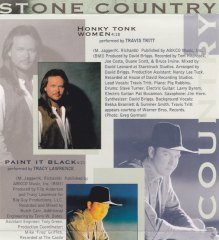
You can’t mistake “Honky Tonky Woman” right from that opening cowbell.  Travis Tritt sounds natural performing this one, because it’s already so country.  I dig it.  Travis Tritt’s always been one of those country guys who I respected.  He didn’t seem like a sell-out to me.  And he’s never cut his hair either, so fuck yeah!  This is a very rocking country version, and it sounds very alive in the studio.  It has some serious thump too.

Tracy Lawrence on the other hand, I wrote off years ago, because if you hit a woman, you lose my respect.  However I gotta be honest — I dig his version of “Paint It, Black”.  I told Aaron a while ago, “I never need to hear another cover of that song,” but I was wrong.  I can add this one to my library without shame.  It’s cool how the exotic and country sides meet without conflict in this version, and there are cool solos (organ and guitar) to boot!

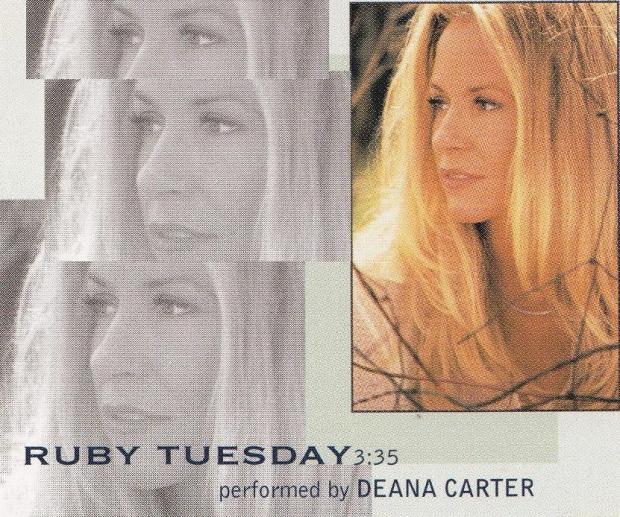
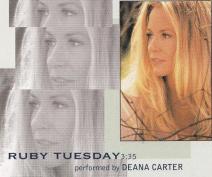
STONE COUNTRY_0003“Ruby Tuesday” by Deana Carter, on the other hand, doesn’t “rock” per se, but it’s “Ruby Tuesday” and it doesn’t suck!  It’s softer and has some twang in the vocal and fiddle, but the strings are still there pumping up the chorus.  Up next, “The Last Time” is transformed into a bar room country chug by The Tractors.  There’s plenty of cool  guitar playing to keep you satisfied, but this isn’t one of my favourite Stones tunes to begin with.

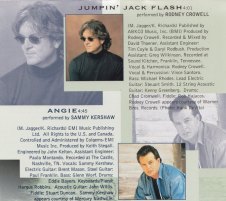
Rodney Crowell then takes a challenge upon himself with “Jumpin’ Jack Flash”.  What an iconic song, and inherently youthful and edgy.  He changes the guitar riff to a fiddle one, and holy shit!  It works!  This track smokes!  There’s even a sax solo.  How rock n’ roll!  High five, Rodney.

STONE COUNTRY_0002Sammy Kershaw has sold a lot of records over the years, but I truthfully don’t know if I’ve ever listened to him before.  He chose to cover the ballad “Angie”, a bold choice, since it relies so heavily on the voice.  The gamble paid off.  “Angie” does not stray far from the original, and it’s amazing how well Mick’s idiosyncratic vocal delivery works with a little twang in it.   Well done Mr. Kershaw, you have a great voice.  Respect!

Blackhawk transform “Wild Horses” into a fast bluegrass ramble.  I’m reminded of Blue Rodeo in a big way, who have plenty of songs that sound this way naturally.  I’m not too keen on the vocals, but there is some serious pickin’ going on here!  I don’t think I had ever heard Blackhawk before this.  I can say the same for Collin Raye: heard of him, never heard him.  Raye takes on “Brown Sugar” which has a great guitar sound.  This sounds like a good bar band’s take on the song, which is all you really need.  It’s punchy, and would work great just before a bar fight in a seedy strip club in some Bruce Willis cop movie.

I’m on record with “Beast of Burden” being one of my fave Stones tunes of all time.  It’s untouchable to me.  So Little Texas (out of Nashville!) have a lot to prove to me.  But shit, they managed to do it!  The song still has that swanky sway, punchy bass, and it does not suck, until the “pretty pretty girl” breakdown in the middle.  Other than that, it’s pretty good.  Then country veteran Nanci Griffith does “No Expectations”, which was originally a B-side, so kudos to her.  It was originally a slide guitar country song anyway, but Griffith takes it up in tempo and mood.  Just one comment:  what a voice!

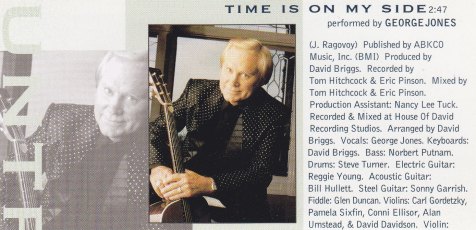
Saving the biggest name for last, George Jones sings “Time Is on My Side”, not a Stones original but a song they did make famous.  This slow dance is perfectly suited to Jones’ balladeering.  I can picture in my mind the ladies in the audience swaying to the sound of Jones’ spoken word section.

Aaron reckons that he found this CD for no more than $2.  In that case I say money well spent!

3.5/5 stars

STONE COUNTRY_0004