My old friend and collaborator Tommy Morais passed away in 2024, but miraculously, I found this 2015 email from him. It contained a complete review of Twisted Sister’s Love Is For Suckers album that we never published, and a memorial for Twisted Sister drummer A.J. Pero, who had recently died. I am please to finally publish this final review that Tommy sent me to post. Rest in peace Tommy.
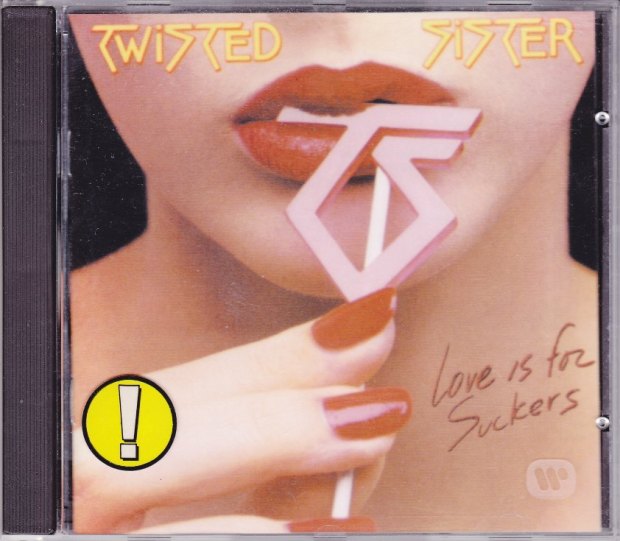
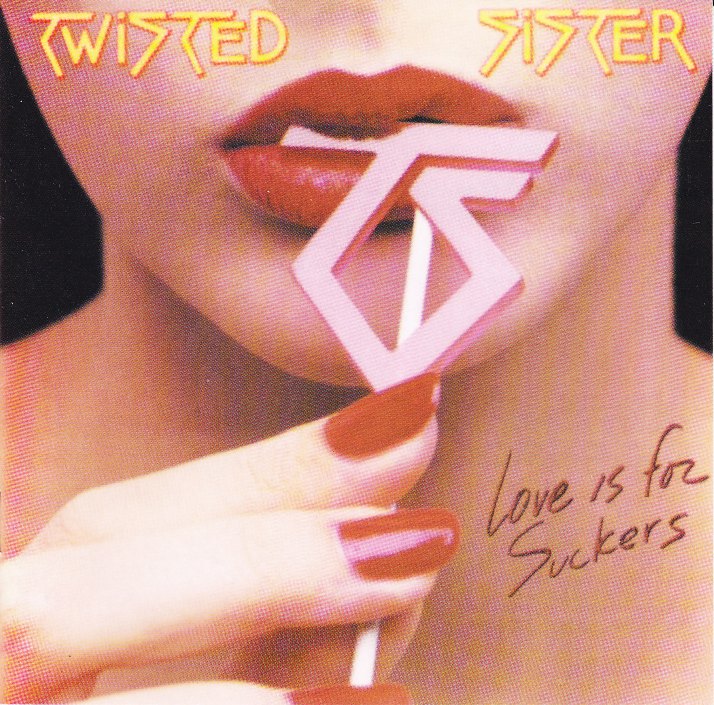
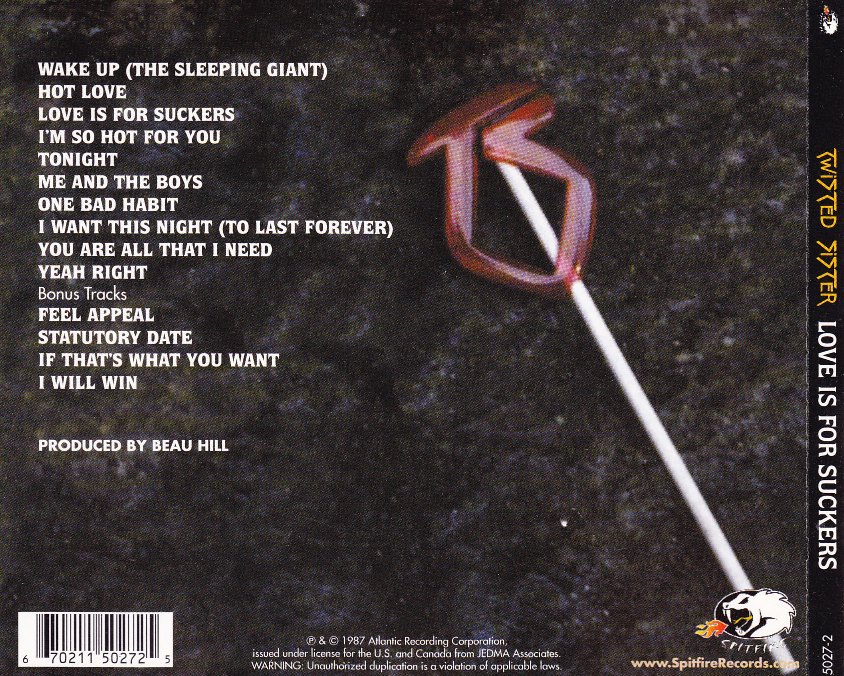
TWISTED SISTER – Love Is For Suckers (1987 Atlantic)
by Tommy Morais – written March 28, 2015
“The ‘Soft & Filler’ album…” Bought in 2012 in France for something like 17 euros!
Twisted Sister’s fifth and final studio album Love Is For Suckers (unless you count the band’s 2004 Still Hungry, a collection of re-recordings of Stay Hungry) is one that tends to divide people. Some hardcore fans dismiss it as too pop and lacking much substance, while others have a soft spot for it and thought it was an enjoyable release at the time. There’s some claims to be made about both opinions. The main problem with with Love Is For Suckers is that it really isn’t a Twisted Sister album. “Wake Up The Sleeping Giant” is deceiving in that it almost sounds like classic TS. Yet only Dee Snider as an original member remains, and then there’s Joey “Seven” Franco who was in the current lineup on drums. It really should have been a Dee Snider solo album which is what it was intended as and truly was, but instead the record company pressured this to be released as a Twisted Sister album.
Then it is plagued by a few big issues, besides the absence of the classic lineup. Did you ever see Reb Beach and Kip Winger receiving credits on a Twisted Sister album? Well, they played on this. Probably not a happy thought for most Twisted Sister fans, as it ended up taking an ultimately softer and a more pop direction. Then you have to consider that it may have been competitive and cutting edge in 1987, but Love ls For Suckers has not held up well with time. Also for an album title that claims love “sucks”, it’s ironic that most of these songs are well… love songs.
What’s with the drum sound?! The songs are wimpy but with a thunderous, big drum sound which leads to question that maybe Joey was a good drummer who ended up playing on the wrong album. The production by Beau Hill is about what you’d expect, very “1987” and time has not been too kind to its sound.
Opener “Wake Up The Sleeping Giant” is misleading. 1) It sounds like Twisted Sister and 2) It’s the best song on the album, and it leads you to think (and hope) the rest may be up to this standard. “Hot Love” was and is a great candy rock piece tailored for 1987; cheesy but fun and a good overall choice of single. It’s one of the most memorable songs (remember the video that went along?). The title track is actually not a bad rocker at all, it’s consistent as Snider does a good vocal performance and it’s somewhat catchy. This is where the album takes a slide in the quality department with “l’m So Hot For You” and “Me And The Boys” (this one especially is embarrassing) being generic filler tracks that halt any momentum the album had going for it. Sandwiched in between those songs is the slightly better rocker “Tonight” which showcases some aggression; not a bad tune at all. “One Bad Habit” is more filler material. “I Want This Night To Last Forever” has a Van Hagar feel to it, especially during the chorus but is nothing to write home about either. “You’re All That l Need” tried to be a big power ballad but it failed during the chorus, even though it had a nice build up. The keyboards prevent it from being a strong ballad like “The Price”, and as a result it sounds a little too soft and thin. The closing “Yeah Right” ends thing on a more positive note. It’s a solid upbeat rocker and one of the heaviest songs on an album that could’ve used more songs of this calibre.
I own the remastered version with four extra songs. “Statuary Date” is the worst of the bunch. “Feel Appeal” is better than some of the songs that made it onto the actual album, it’s more straight up rock and a little catchier. “I Will Win” is rocking but the chorus doesn’t get it right; close but no cigar. “If That’s What You Want” became “Me And The Boys” although it’s earlier incarnation was stronger and had better lyrics. If you ask me this version should’ve made the album instead!
There you have it. Any way you slice it, Love Is For Suckers is definitely, without a doubt, the worst Twisted Sister album. It suffers from the production, is full of fillers and it doesn’t feature Jay Jay French, Eddie Ojeda, Mark Mendoza, A.J Pero (who left before this was released), even though the liner notes say they were a part of it (minus Pero, replaced by Joey Franco). The first two songs, and the album cover, are the only things that are truly memorable about LIFS. The rest is really unfocused and sub-par. Twisted Sister’s decline had already begun with their previous effort, 1985’s Come Out And Play which would show cracks of the band’s implosion, but this one was a commercial disappointment failing to reach gold status or chart successfully. Simply put, Twisted Sister was no longer a band at this point and the album did nothing to stop them from breaking up and was quite frankly just not very good.
It was grade six. I was 11 years old, and it was the Friday before a holiday, which meant the whole class got to do nothing but chill and watch a movie. For the rest of the day our teachers let us hang out and do nothing. We each brought pop, chips or both to share. One of my friends Maxime brought one of his dad’s CDs. That CD? Twisted Sister’s greatest hits. He asked the teacher if he could play it for us, and the rest is history. I was introduced to my first taste of Hard Rock and Metal. I distinctively remember telling one of my friends “this is not bad huh?”, to which he agreed. I glanced at the album cover. It said “Twisted Sister Big Hits & Nasty Cuts“. Then l proceeded to tell Maxime that this (ugly) “girl band” was pretty good. I wasn’t familiar with Glam/Hair/80’s metal at that point and even less so with the look. Truth is l had been exposed to some AC/DC, Loverboy and Metallica prior to that but this was the first time it really clicked. Maybe it was just just the right age, the right time. There you have it, Twisted Sister was the first band I recall really taking a liking to. From then on l discovered my dad and his brother’s LPs and played them on the turntable (I remember digging the first Van Halen a lot). I definitely have a soft spot for Twisted Sister.
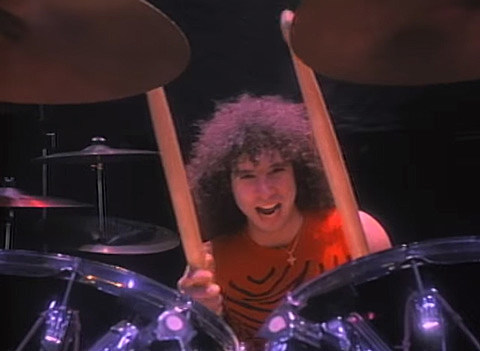
It is with sadness that I learned of longtime drummer and classic lineup member A.J. Pero’s unfortunate passing. Pero was a crucial part of the band and its sound, and a great drummer too. I approached Mike about maybe doing something Twisted Sister related on his blog to which he was very enthusiastic. I wanted to review something AJ played on, like Come Out And Play as l plan to review all of TS’s material in the upcoming days, but with time restraints l had to settle for my (still brand new) Love ls For Suckers. The band has said that were to make some big announcement next week. One can only assume that it is regarding Twisted Sister’s future as a band. Jay Jay said on social media that they were already thinking about hanging it up prior to Pero’s passing. Then Dee Snider said it would be profitable to the Pero family if the band kept playing and that they were thinking about winding down in 2016 for the band’s 40th anniversary. I’m not against them continuing performing live and going out on a final tour to honour AJ and the anniversary of the band just as l am not opposed to the band calling it quits. I have a feeling they’ll at least play a few more shows and maybe do one last concert CD/DVD (that would be cool). Rest in peace A.J., the rock world lost a great drummer.
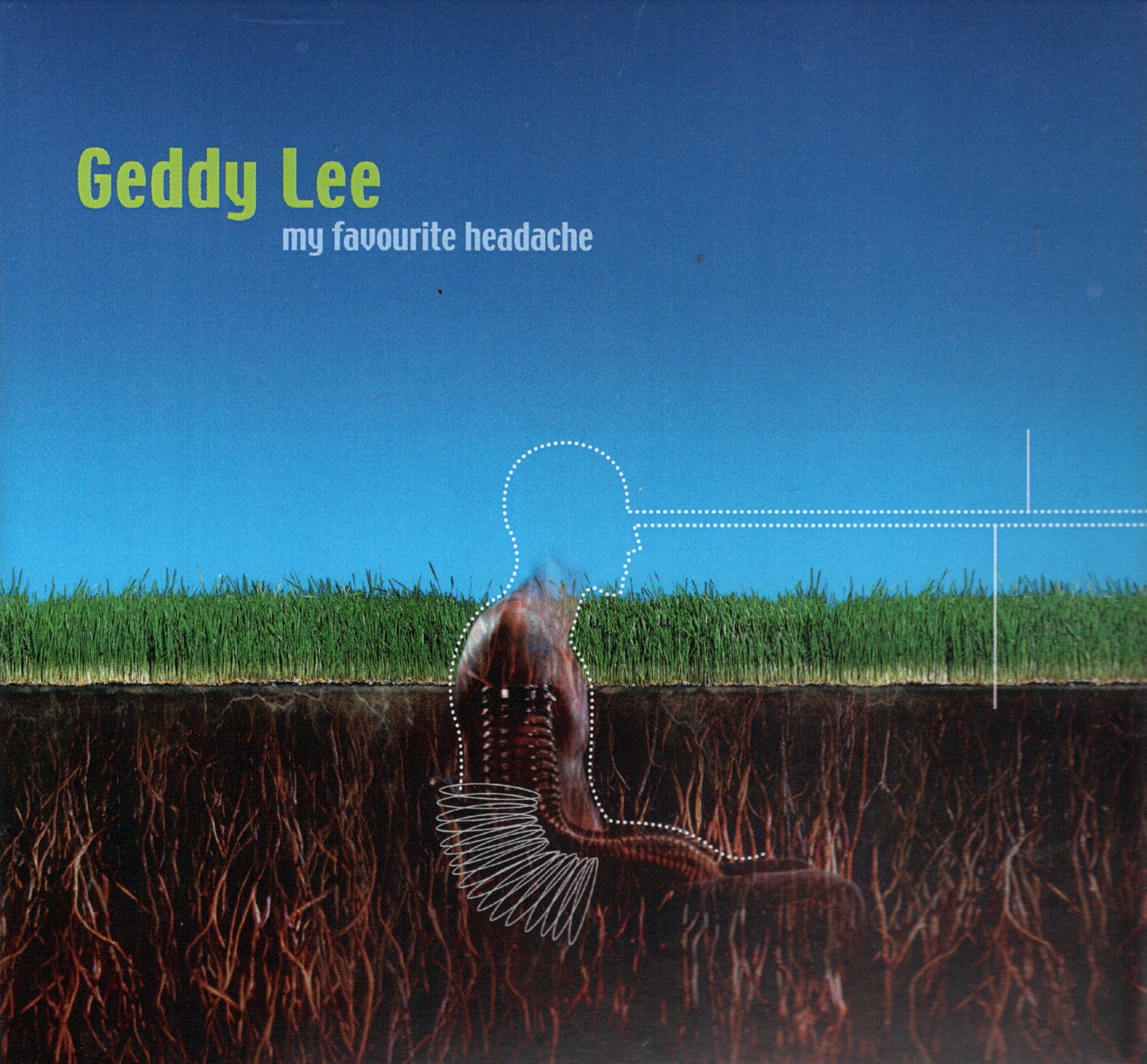
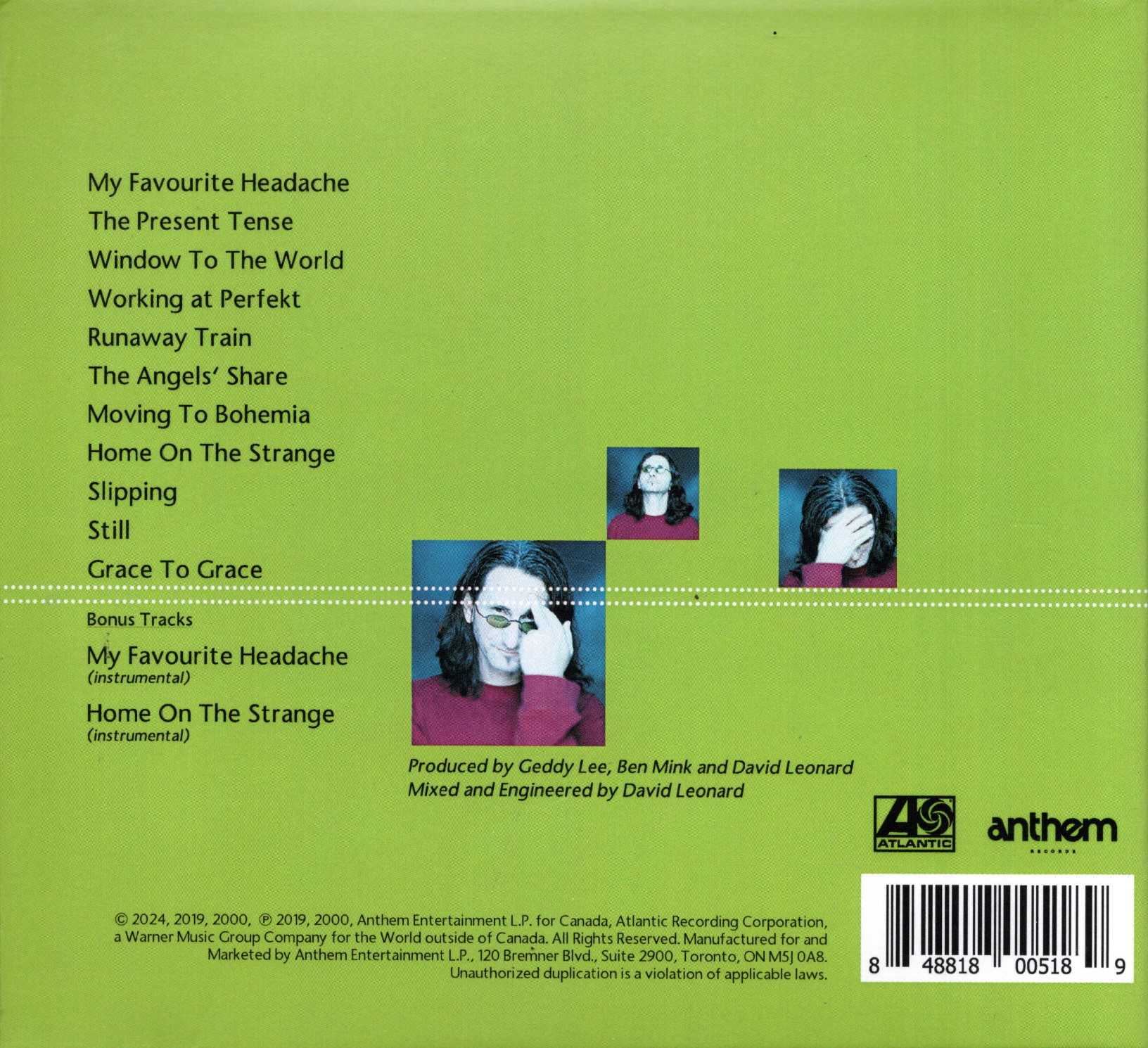
GEDDY LEE – My Favourite Headache (2000 Atlantic, 2024 Anthem reissue)
As a Rush fan, Geddy Lee’s solo album My Favourite Headache never quite clicked. The lyrics seemed inferior and the music immemorable. In 2024, Geddy reissued the album with two bonus demo tracks. This is a perfect time to revisit the album and see if time has been kinder than I was in my original review. It has been a number of years since last listen; perhaps even a decade.
The phrase “my favourite headache” means making music to Geddy Lee. The art of crafting songs is a headache, but he would not trade it for the world. That is what the title means. For historical context, this album was made when Rush were on a serious hiatus. Neil Peart was dealing with tragic loss and nobody knew if the band would ever reunite, including Neil. From that soil grew My Favourite Headache, which Geddy recorded with drummers Matt Cameron of Pearl Jam and Soundgarden, and Jeremy Taggart of Our Lady Peace (on one song). Geddy plays the lion’s share of instruments with Ben Mink and other guests also contributing.
As it should, “My Favourite Headache” opens with some heavy bass, Geddy’s fingers flying. Then, it degenerates into a dissonant and hard guitar riff with throws the listener for a loop: it’s not at all like Rush. It might be the bass player and singer from Rush, but this does not sound like Rush. Which is good; which is the point. It takes a moment to adjust. “My Favourite Headache” slows to a lush section with piano, violins and violas by Mink. The lyrics are fascinating. “I watch TV, what do you want from me?” There is a lot to unpack here now that Geddy is able to express himself verbally in his music.
More Rush-like is “The Present Tense”, a song about living in the now. It bounces from heavy choruses to softer acoustic verses, which is perhaps a different approach from a Rush one. Perhaps by doing something more streamlined, Geddy wrote a catchier song here. His bass sings full, but not over-dominant. Cameron is an apt companion on drums; while not attempting to play like Peart, he is more than capable of navigating the tricky changes and fills.
“Window to the World” has a more exotic feel in its light chords, and Geddy uses his bass to deliver some delightful trills and hooks. It has some of those jarring dissonant guitars from the title track, but not as prominent. This song is melodic, largely easy to digest, and it delightfully careens from soft to hard, with interesting keyboard textures.
Heavier is “Working on Perfekt”. This might be the most enticing of all Geddy’s songs. Tense verses are broken by a sparser chorus. Electronic sounds aside, this is a very Rush-like song. You can almost image what Alex and Neil would do with it, but as Geddy’s song, it is rich in tones and deep, tense hooks.
“Runaway Train” is one of the brightest, most upbeat songs. Mink’s keys and violins add a light, airy feel above Geddy’s hammering bass. His playing is always eloquent and entertaining, if you choose to focus on the bass. Between the electronics and Mink’s rich contributions, there is a lot you can listen to. Or just enjoy the song. It’s a good one. Perhaps I misjudged this album before.
The first mistep might be “The Angels’ Share”, which some may love, but fails to launch for me. It’s a lighter song, but Geddy’s bass ensures it’s like lead. Ben Mink provides some really interesting soloing and backing, but the song itself never quite takes off. In hindsight it sounds like Clockwork Angels-era Rush. While we are in this perceived rut, Geddy throws his worst lyric out in the next song: “Say goodbye to suburbia, you don’t have to cut the lawn.” That’s from “Moving to Bohemia”, which is actually a pretty catchy song. It’s pretty upbeat for this album, and Geddy’s bass playing is at its most thumping.
Geddy turns up the funk on the magnificently weird “Home on the Strange” (with Taggart on drums). What the hell is this? It’s crazy, it’s like Geddy pulled out all funkiest records in his collection and combined them. The lyrics here are also quite fun: “He’s a Canadian icon, he sleeps with his clothes on.” Is it autobiographical? “And he don’t like change, you may think he’s deranged, but he’d rather be home, home on the strange.” Once you get used to its groove, this song won’t let go.
Back to the light, with “Slipping”, which relies on acoustics and piano for a gliding kind of feeling. This is followed by “Still”, which is unusually sparse and simple. An acoustic ballad, with an upbeat tempo, it’s a beautiful song. It certainly sounds autobiographical. “Still halfway up that hill, my fingers may bleed but I’ve got to get there still.” This song strikes me as the best, musically and lyrically, on the album. Strange that it never jumped out at me before.
Closer “Grace to Grace” remains an exceptional song, and one that really ends the album on familiar territory. A burning guitar and driving bass are the focus, as if to say “Hey guys, I’m always going to rock. Thanks for joining me on this trip. Here’s a song I think you’ll like.”
Of course, on this new reissue, Geddy treats us to two previously unreleased demo versions. If you haven’t bought the album before, you may as well go for this edition. True, I usually criticize albums for being a bit on the long side, and My Favourite Headache is a bit long, but demo bonus tracks are added value that you don’t have to include if you just want to listen to the “album” for the experience. There doesn’t seem to be any recording information about these two demos, “My Favourite Headache” and “Home on the Strange”. These are full realized arrangements, though without all the vocals. “My Favourite Headache” might surpass the album track for its live sounding rawness. Maybe it should have been an instrumental with only a chorus? The demo is great. Same with “Home on the Strange”. These tracks are worth the listen, and the re-buy.
Ultimately, My Favourite Headache requires the listener to set aside any thoughts of Rush, no matter how much Geddy and his bass will always sound like Rush. It’s a challenge, but once you get there, it is easier to appreciate the songs and the experiment. It takes time to absorb, as it is actually a very dense production, even for Geddy. Ben Mink’s contributions are priceless textures that help transport yourself away from a Rush mindset. Listen to those; focus on Mink and appreciation will come.
3.5/5 stars
Check out my autographed copy of My Favourite Headache by clicking the thumbnail.
Check out Grant Arthur and Davey Cretin as they get this album all wrong on the Warehaus tonight. 8 PM EST June 23 2025
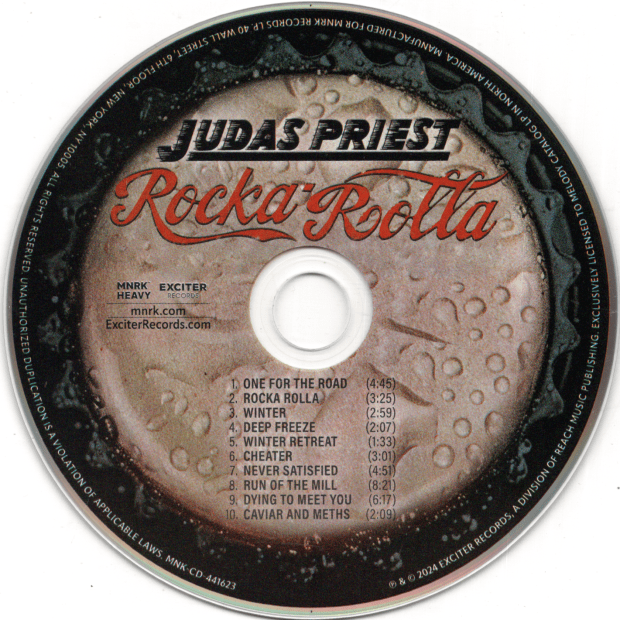
JUDAS PRIEST – Rocka Rolla (1974 Gull, 2024 Exciter Records Remixed and Remastered)
How did he do it?! Somehow, by some digital miracle of the master tape gods, producer Tom Allom has remixed Rocka Rolla, and transformed it from one of my least favourite Priest albums of all time, to one of my favourites.
Generally I can’t get into the remixed versions of albums. Even if the remix is objectively a better release, such as Rush’s Vapor Trails or Marillion’s Radiat10n, I always find myself coming back to the flawed originals.
Not this time.
For context, Tom Allom didn’t originally produce Rocka Rolla, and this is not the first remix of it. Rodger Bain produced, but his name appears smaller than Allom’s on the new back cover. The Rocka Rolla (full album) remix that appeared on Hero, Hero (1981) was helmed by Bain, less effectively. Tom Allom is best known for producing the run of Judas Priest albums from Unleashed in the East (1979) to Ram It Down (1988). What he has done with Rocka Rolla is somehow give it a makeover to sound more like a real 1970’s Priest album. Sonically, it now has thickness. There’s a real beefiness to the mix, but not in the sense that you immediate say “oh yeah, this is different.” It just sounds like the album always sounded that way, and you just got your stereo system upgraded.
The track listing is unchanged. “One For the Road” still opens with a groove, but now that groove hits different. You can better appreciate the guitar fills at the end, and the songs goes well past its old fade-out. This is a trick that remixed album should do more often.
“Rocka Rolla” remains a metal delight, but there is new shimmer to Rob’s vocals and the song chugs with more edge. It’s all very objective and subtle, but once again Tom Allom took a Priest classic and made it sound like it was always this weighty.
The “Winter” suite is the most altered of any of the tracks. Notably, Allom chose to separate the tracks from the suite format, and leave them as individual songs.
John Hinch’s drums sound crushingly Bonham-like on “Winter” itself, and the backing riff far more weighty. The biggest change is that it no longer fades into KK’s guitar showcase “Deep Freeze”. You can hear more of KK at the end, with some experimental playing that was inaudible before. The track fades out past its previous point, and “Winter Retreat” stands on its own as a song. In the 70s, Priest were experimenting with acoustics and psychedelic sounds from time to time. “Winter Retreat” can now join those songs as something that sonically fits in better. Finally, “Cheater” always was its own song really, and now it’s just heavier. Rob’s harmonica is more prominent, which of course recalls the heaviness of Black Sabbath.
Moving on to side two, “Never Satisfied” finally has the punch it always felt like it had inside: A little more echo on this this vocal line, a lot more weight behind the drums, more texture on the guitars, and a few things made audible for the first time. We now have the definitive version of this song. With the impressive soloing mixed in just right, this becomes a long, jammy Priest thumper as it always should have been. If Rocka Rolla sounded like this when I was a kid, I would have got it immediately.
“Run of the Mill” takes time to build as it always has. It has a long instrumental section, with some mindblowing guitar playing, and now it’s all finally hitting right. The bass isn’t just sitting there. It’s picking you up and taking you along with the groove. The keyboards in the background are more ominous. Everything about this is just so much better than the original.
Perhaps the only song that still bores, for the first half anyway, “Dying to Meet You” is similarly upgraded but benefits less from the treatment. That is until it picks up midway in the “Hero, Hero” section. This part of the song still cooks, but has a different, more spare feel. Finally, the light instrumental “Caviar and Meths” really benefits from the remix treatment. The drums, once again, really add atmosphere to it.
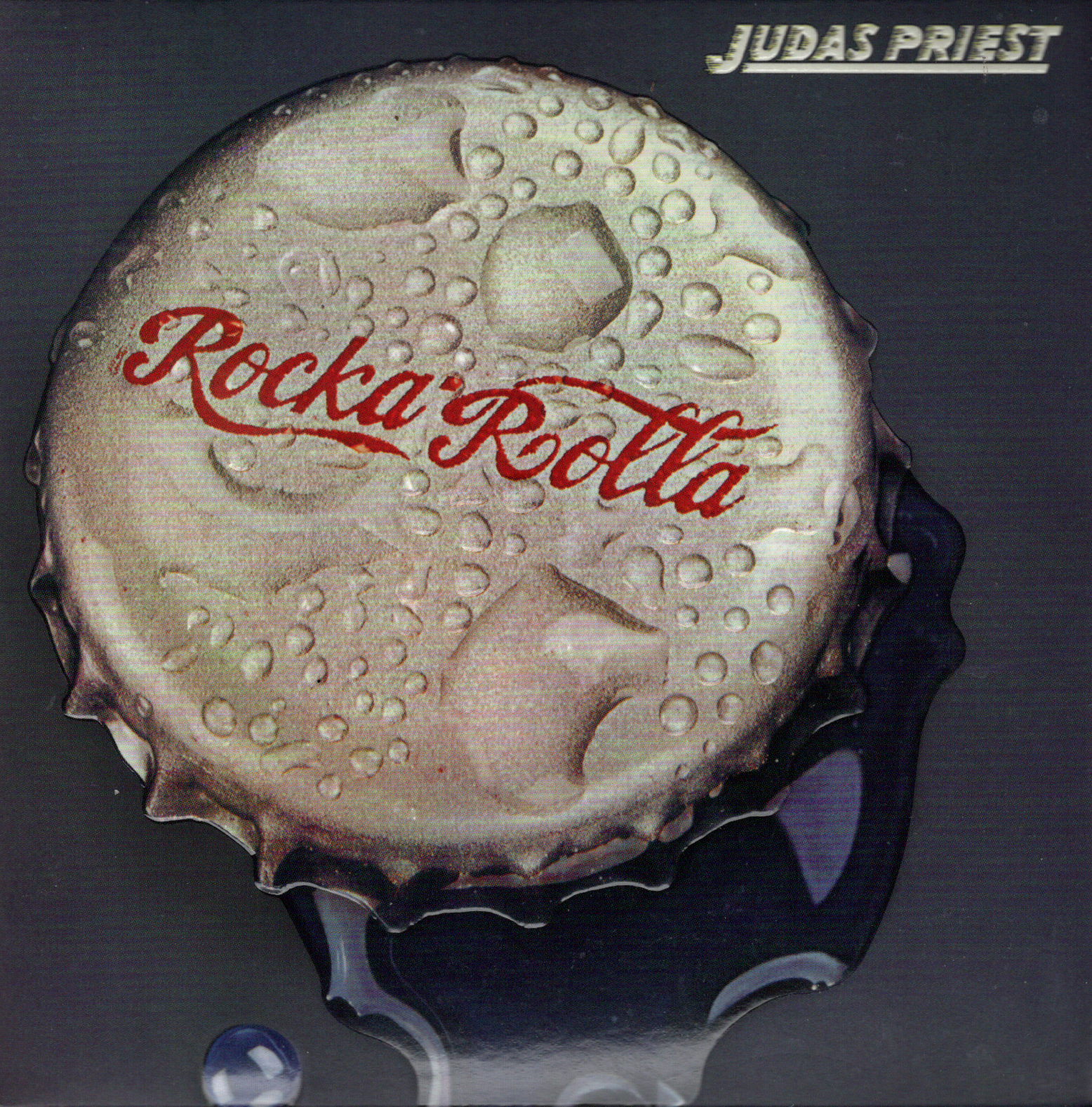
As an added attention to detail, the front cover of Rocka Rolla is now as three dimension as the music. The water drops are now tactile. You can feel the bumps with your fingers. A perfect topper.
What did Tom Allom do with these master tapes? Did he conjure some kind of heavy metal spell and make a two dimensional album sound big and beefy? Only Allom knows, but now I do believe in magic.
DREAM THEATER – “Hollow Years” (1997 Warner Music Germany)
I always found something about 1997’s Falling Into Infinity to be underwhelming. Yes, we had the stunning Doug Pinnick cameo in “Lines in the Sand” and a wickedly heavy “Burning My Soul”, but the album didn’t have the same impact or longevity as Awake or Scenes From a Memory. It wasn’t for lack of effort. They recruited Desmond Child and Kevin Shirley, and released singles. The album never broke the top 50 in Canada and received mixed reviews. A later-released demo version of the album revealed what the band would done if not influenced by Shirley and Child. One of those demos was first released on the 1997 “Hollow Years” single.
First track on this single is a 4:15 edit of “Hollow Years”, with more than a minute and a half edited out. The shame is that it didn’t become an instant hit. With the Spanish guitar melody and subtle keyboard accents, it could have and should have done better for the band. There is a very pretty piano melody after the chorus by Derek Sherinian, in his last of two outings with Dream Theater. Yet it’s still Dream Theater, not some ballad band. John Myung’s fretless bass sets it apart, and Mike Portnoy is always Mike Portnoy no matter the style of music. The premature fade on the edit version, however, is extremely annoying. Even if you don’t already know the song, it sounds like a premature fade. The ending is so good; a song highlight! The full length version, uncut and as intended, is really the only version to listen to.
“You Or Me” is a version of “You Not Me” from the album, before Desmond Child helped them tweak it. It opens with the sound of a radio changing stations, and then a cool synth rhythm. John Petrucci’s riff soon kicks in, and it’s clear Dream Theater were trying new things that might be perceived as more appealing. Ultimately, the version that ended up on the album is probably the better of the two. It’s definitely catchier.
The final track is “The Way It Used To Be”, a long non-album song with a Marillion-like guitar melody. It could have been lifted directly from Seasons End. Petrucci is the star on this one, as he also employs cool harmonics. Definitely a cool and valuable bonus track. If it wasn’t almost eight minutes long with plenty of musical prowess, it might have been a worthy hard rock hit on its own.
Great little CD single, but those edit versions are never as cool as they are collectible.
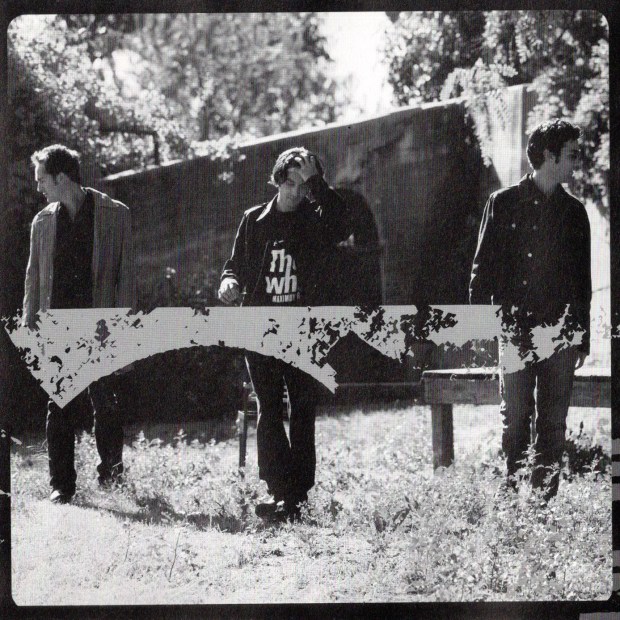
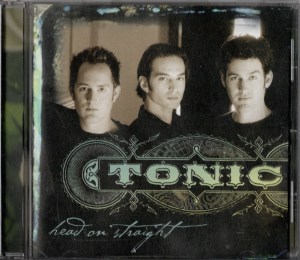
Though they had Bob Rock in the producer’s seat, Tonic really stopped rocking on their third album.
TONIC – Head On Straight(2002 Universal)
This album really should have been their best to date, with talent like Bob Rock at the console. Instead, it sounds as if Rock was bored or distracted, and there was nobody in quality control for songwriting. The band sound desperate, chasing hits, and not doing what they used to – rock in their own style with twang and stomp. The bland cover art belies the faceless music within.
The misleading opener “Roses” is a typical de-tuned early 2000s rock song. The riff and chorus fail to lift off. It slams hard, but there’s nothing at all to hook you in. It’s as if the band have forgotten how to write songs. You can hear that Jeff Russo is doing some cool stuff on guitar, but you can’t actually hear it! It’s buried under the uninteresting riff. It’s like they forgot all that southern charm that made their debut and follow-up both attention-getters.
Second track “Take Me As I Am” is the first ballad, and it’s fine, if a bit cookie-cutter. It has hooks. Three more ballads follow, and none are as memorable as anything on the first two albums. Even the title track, “Head On Straight”, is a ballad. I was expecting a rocker. These ballads just don’t have the weight or impact of past albums. They’re well produced and hefty enough, but they lack that je ne sais quoi they used to have.
“Liar” is the first rocker in a dog’s age, and it’s crap. Low on melody and high on cliche, it ain’t good. Then, more ballads! Songs like “On Your Feet Again” might work a lot better if there were only two. As it is, the brain just can’t differentiate from song to song.
Fortunately, “Come Rest Your Head” isn’t a ballad, but it also doesn’t really rock. It has one riff that rocks, but it meanders into the murky swamp of “meh”. Bet you’ll never guess that “Ring Around Her Finger” is a ballad though, and it’s the sappiest yet. Singer Emerson Hart affects an annoying falsetto. This song just stinks. It’s followed by “Believe Me”, which I guess for lack of better words, we will also call a ballad. It’s not a rocker, so what is it? Mid-tempo schlock with xylophone, on an album that needed adrenaline in any form. It’s atrocious, is what it is.
“Irish” is also embarrassing. Would you call this a sea shanty? A rock sea shanty? I have no friggin’ idea. Normally I like this kind of thing – rock music with a celtic bent – but maybe I’m just sick of this album and feeling salty.
The album ends on…a ballad. “Let Me Go”. It’s so cliche, it could have been music from a Family Guy montage. Fortunately the song picks up at the end, but until that point, it is the most cliche song on the entire album. “Let me change my direction, I won’t take their rejection!” But Emerson…you did change your direction. You use to have some serious emotion; now you’re punching a clock. It’s no wonder this was Tonic’s last album before a break up.
The shame of it is, I like these guys. I adore the first twoalbums, and I followed Jeff Russo through to his career in TV soundtracks. The last minute guitar burning on “Let Me Go” is far too little, too late to save this album.
EUROPE – The Final Countdown (1986, 2019 Rock Candy remaster)
When Europe set in to do The Final Countdown, some changes were necessary. The drum seat went from Tony Reno to Ian Haughland, a guy that Joey Tempest liked partially because his drum kit looked like Alex Van Halen’s. Some new songs, such as “Carrie” and “Ninja” had already been road-tested on the Wings of Tomorrow tour. The record label was gunning hard and hooked them up with Journey producer Kevin Elson for the third album. What Elson brought to the music was not drastic change, but the essentially improvements that made the record what it is today.
Record? In this case, CD. In 2019, Rock Candy reissued The Final Countdown with six bonus tracks: the same three live ones from the 2001 Epic remaster edition, plus three extra. For that reason, let’s take a second deep dive: It has been over 10 years since we last reviewed it.
With the ominous boom of synth, the anthemic title track opens The Final Countdown with regal, grand intentions. The track was cut down from seven minutes to just five, and for that reason it was able to become the hit it was. Today you hear it on TV commercials and shows such as Arrested Development (in hilarious fashion). Back then, it was pushing the envelope about how much keyboard was acceptable in hard rock or heavy metal. Europe really started as a metal band on their first album. Yet here we are, with those big gongs of synth provided by new member Mic Michaeli. When the trumpet-like main keyboard melody enters the fray, it’s all but over. Your mind is now hooked! The wicked John Norum guitar solo remains one of his catchiest and most memorable, with plenty of fret-burning action. The lyrics tell the story of abandoning the Earth for Venus due to catastrophe. Corny, but pretty unusual for its time. “The Final Countdown” remains one of those career-defining songs that live forever.
“Will things ever be the same again?” begs Joey Tempest, before the chorus. For the band, no. Superstardom hit soon thanks to this unforgettable anthem. Though their fortunes would fade and they would never hit these heights again, they wrote themselves into rock history with one song.
Straight-ahead party rocker “Rock the Night” was the infamous video that featured Joey Tempest using a ketchup bottle as a makeshift microphone. Great song though, with that kind of shout-along chorus that Bon Jovi were also becoming experts in. But listen to Ian Haughlaand’s drums! Absolutely pounding. All the elements come together in perfect balance here, with the keyboards taking a back seat to John Norum, who continues to burn on the solo. His tone on this album was unique and very tasty.
“Carrie” was born on tour as a simpler arrangement with just Joey and Mic on stage. When recorded for the album, it was a full band arrangement. A little heavy handed, a little over-dramatic perhaps. It too was a huge hit. It still sounds good today, largely thanks to Joey’s impassioned vocal performance. The man was at the peak of his powers, and it shows here. Very few singers can do what Joey does on “Carrie”.
The rock returns on “Danger on the Track”, a tale of Joey fleeing from the strangers on his back. And he was so right, apparently, but we won’t get into that! This is clearly an album track, not up to the standards of the previous three singles, but still good enough for rock and roll. It’s “Ninja” that surpasses the singles, with a ripping tale of the era of the ninja. It has the rhythmic chug that the other songs don’t, and plenty of John Norum’s addictive, dramatic runs.
The final song written for The Final Countdown was one of its best: the side two opener “Cherokee”. It seems odd for a band from Sweden to sing about a dark period in American history, but the lyrics aren’t too far off the mark. They were based on a book Joey saw while working in America. This is probably the second most anthemic song on the album behind “The Final Countdown”. It has a big keyboard hook too, and a chorus that sticks for days.
“Time Has Come” is only the second ballad, but it has some heavy guitars to keep it from going too soft. Once again, Norum’s solo is a highlight, being a key part of the song’s melodicism. Moving on to “Heart of Stone”, a memorable mid-tempo track, John Norum continues to shine. This cool song boasts a killer chorus to boot. There are cool stabs of organ a-la Deep Purple ’84. You wouldn’t call it a heavy song, but “On the Loose” sure is. This scorcher is among Europe’s best blasts. It’s just a simple song about teenage frustration and energy. This might have been the song that made me a John Norum fanboy in the first place.
Album closer “Love Chaser” is a melancholy mid-tempo romp. It has a bouncy beat and keyboard hooks, and it ends the album just perfectly. It even has a keyboard melody at the start that recalls “The Final Countdown” a bit, providing the album with a nice set of bookends. Sadly this would be John Norum’s last appearance with Europe until a 1999 reunion. He was replaced by Kee Marcello, who appears in all the music videos aside from “The Final Countdown” itself.
The first set of bonus tracks are the three live songs that appeared on the 2001 Epic remaster. These are taken from the Final Countdown World Tour VHS from the Hammersmith Odeon in 1987, and feature Marcello on guitar, though this information is not included in the otherwise excellent booklet. It is audibly him. “The Final Countdown”, “Danger on the Track” and “Carrie” are the three tracks included, though there is a clear opportunity here to do a 40th anniversary edition with the entire show on disc 2. These are solid live versions, and it does sound pretty live especially in the lead vocals. Joey Tempest is one of the most impressive singers in hard rock, and though the press was trying to build a rivalry with Bon Jovi in 1986-87, Joey was clearly the superior singer.
The first of the new bonus tracks is a rare 1986 re-recording of “Seven Doors Hotel” from their debut. There are now drapes of synths over the piano opening, but the song still scorches hot as ever. John’s guitar is doubled effectively for a more Lizzy-like approach. It was clearly too heavy for The Final Countdown album but it could have been an excellent B-side.
Speaking of B-sides, a special B-side remix of “Rock the Night” is another rarity brought back to light. This version could have been better than the original, but falls short of the mark. It does not actually sound like a remix at all, but a completely different recording, at least vocally. If you wanted to hear this song a little heavier, then this version might do it for you, except for the annoying looping of hooks. “Rock now, rock now, rock now, rock the night!” “What do you want? What do you want?” Stop looping the hooks, please! It sounds so artificial. This version is a minute and a half longer than the original. It’s a slog, but it didn’t have to be.
Finally, the excellent B-side “On Broken Wings”, previously available on compilations, has been restored to the album as it always should have been. It’s a hard rocker, a driving song, and could have fit very well on side two. It would have been one of the faster songs, yet with another memorable Europe chorus.
This new Rock Candy remaster sounds sharp and vibrant. An excellent remastering of a stone cold classic. The booklet includes an interview with Joey Tempest on the making of the album. Until they issue an expanded edition for the 40th anniversary (let’s hope), then this is the version to buy, hands down.
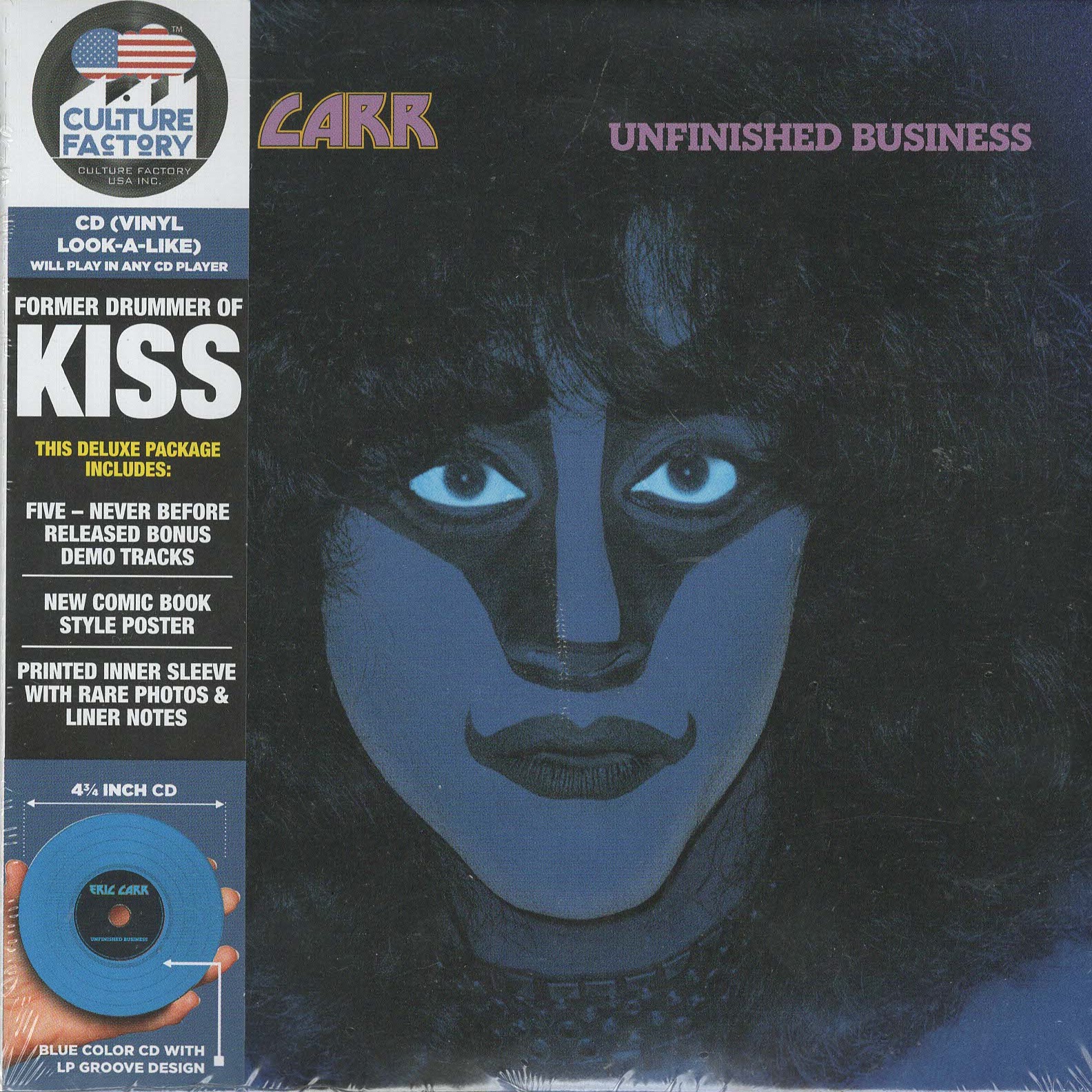
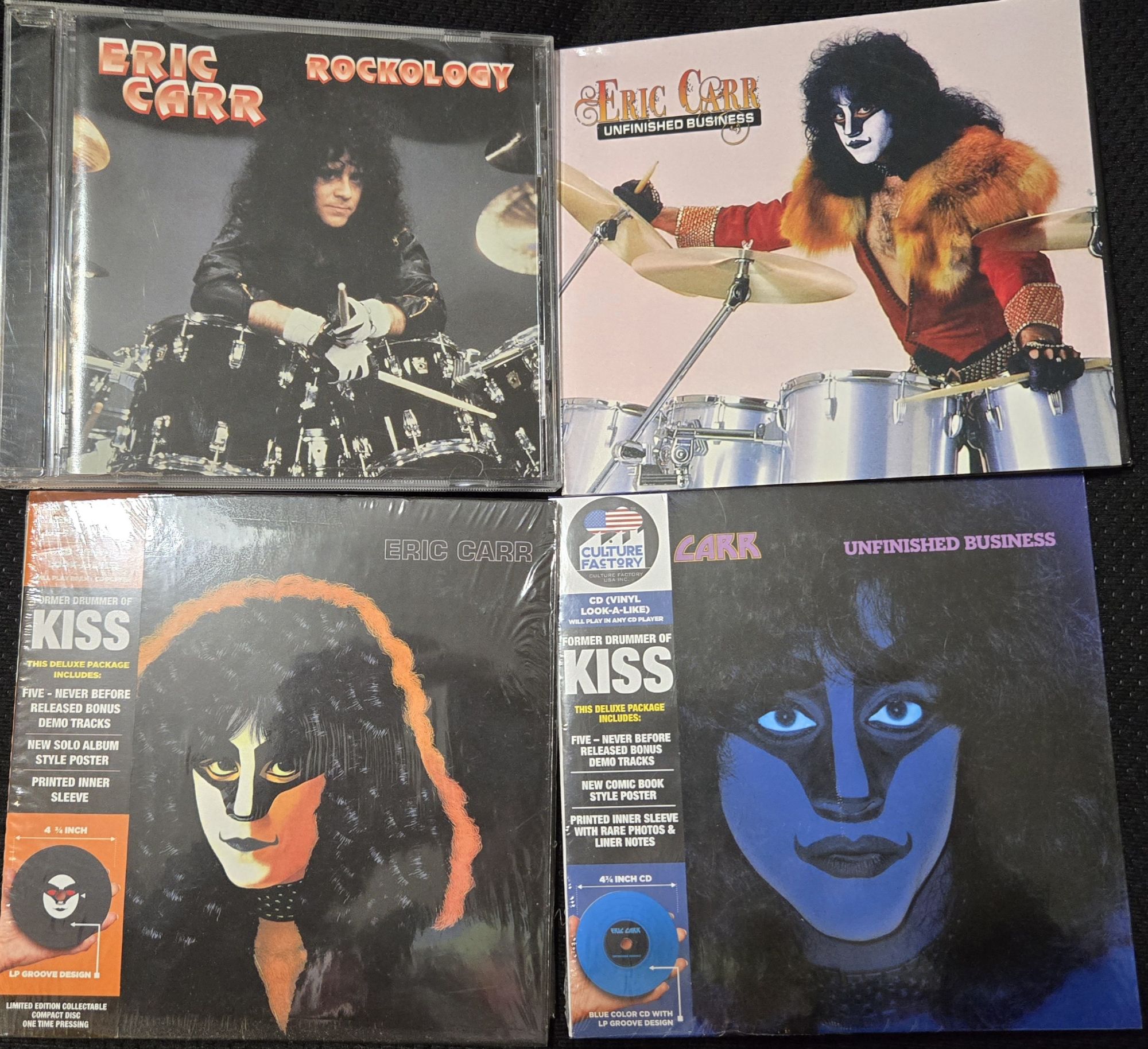
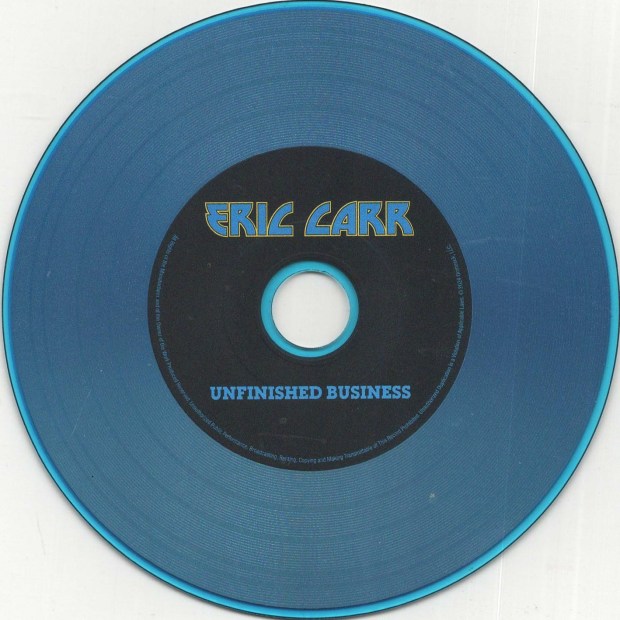
ERIC CARR – Rockology (2000 EMI/2023 Culture Factory RSD CD release)
This release provoked a bit of controversy early in 2023. Vinyl fans and collectors were pleased that Eric Carr’s collection of unfinished tracks, Rockology, was being reissued on LP. They were doubly elated by the retro-1970s cover art that fit in with the original 1978 Kiss solo albums. It even came with a poster to match the original four solo albums, and the CD was printed on a disc replicating a vinyl look. The packaging, with obi-strip and brilliant black and orange coloration, looks sharp. They even threw on five extra bonus tracks that weren’t on the 2000 release or 2011’s Unfinished Business.
Unfortunately, much like 2011’s Unfinished Business, the bonus tracks are hardly-listenable throwaways and castoffs that were never meant for public consumption. What’s more, like all RSD releases, the LP and CD copies were so poorly distributed that fans were soon paying ridiculous amounts of cash on the second-hand market. Music should be accessible and affordable to everyone, but this reissue was hardly worth it for what amounts to fancy packaging and five ragged unreleased tracks.
We’ll start this review by discussing the five bonus tracks.
Part One – the five bonus tracks
First up is a “long demo” of “Tiara”, a ballad from the original Rockology. The original track was 4:28 and this “long” version is 23 seconds longer, but it is a completely different demo version. It is much rougher and laden with occasional noise. The lyrics are incomplete, as Eric improvises “do-do-do” vocals over the instrumental opening. Bruce Kulick provides overdubbed lead guitars, but sadly it sounds like a poor quality cassette. This is the kind of thing we got too much of on the Unfinished Business CD.
Another “alternate demo” is next, of “Can You Feel It”, a song that Eric hoped Bryan Adams would cover. Like “Tiara”, this demo is earlier and much rougher. Similarly incomplete lyrics over a drum machine. The liner notes claim it’s Eric Carr playing drums, but it’s obviously a drum machine. Shoddy liner notes.
An “accapella” version of “Eyes of Love” is just a rough multitrack vocal take with no backing music. It’s not the exact same vocal take used on the other demo version. It is of limited enjoyment. It doesn’t sound like there’s a pop guard on the microphone, therefore, lots of noise.
Finally, something we’ve really never heard before: A 1967 version of the Beatles’ “Ob-La-Di, Ob-La-Da”. This is a very rough sounding tape with lots of noise, but due to its age, we’ll allow. It’s a fairly faithful take of the Beatles classic, with Eric on lead vocals and drums. It features his band The Cellarmen and is the earliest Eric Carr recording yet to be released. A difficult listen, but at least something of value. You’d think they could have used AI noise reduction to get rid of that crackling sound.
The last of the five bonus tracks is a 1974 original called “Stranger” by his band Creation. Eric is on drums alone this time, with bandmates John Henderson and Sarita Squires (also the songwriters) singing lead. It is a decent soul-rock song and one of the better sounding recordings. Though the drums are not the main feature of the song, and buried back in the mix, you can hear Eric’s personality shine through his fills.
The late Kiss drummer Eric Carr was frustrated towards the end. He was writing good material, but it was always being rejected by Paul and Gene. In the press, Eric would tow the company line and explain that everybody else had such good songs, that there was no room for his. In his heart, he was hurt and felt shunned.
Eric Carr wasn’t just a drummer. He could sing lead, and he could write. Kiss’ single “All Hell’s Breaking Loose” was an Eric idea. He co-wrote “Don’t Leave Me Lonely” with Bryan Adams. Although his writing credits on Kiss albums were sparse, he had plenty of material in the can. 2000’s Rockology is a series of those demos, some in a near-finished state and some left incomplete. Much of this material was intended for a cartoon Eric was working on called The Rockheads. 10 years later, Bruce Kulick finished recording some guitar parts and mixed it for release. He also wrote liner notes explaining the origins and Eric’s intentions for each track.
Eric didn’t have a particularly commercial voice, falling somewhere south of a Gene Simmons growl. There’s no reason why Gene couldn’t have sung “Eyes of Love” from 1989, which has more balls than a lot of Hot in the Shade. This demo has Eric on drums and bass, and Bruce Kulick on guitar with a solo overdubbed in 1999. It doesn’t sound like a finished Kiss song, but it could have been tightened up to become one. Same with the ballad “Everybody’s Waiting”. It sounds custom written for Paul Stanley. But it was 1989, and nothing was going to displace “Forever” from the album, nor should it have.
Many of the demos have no words. “Heavy Metal Baby” features Eric scatting out a loose melody. This heavy and chunky riff would have been perfect for the later Revenge album, had Eric lived. In a strange twist, several of the best songs are instrumentals. The hidden gem on this CD is the unfinished “Just Can’t Wait”. It could have given Journey and Bon Jovi a run for their money. Eric, Bruce and Adam Mitchell wrote it for Crazy Nights, and you can almost hear a killer chorus just waiting to leap out at you. This potential hit could have been the best song on Crazy Nights, had it been finished.
“Mad Dog” has nothing to do with the Anvil song of the same name. The chorus is there but the verses are a work in progress. This hard rocker from 1987 was probably too heavy for what Kiss were doing, though it would have added some much needed groove. “You Make Me Crazy” is in a similar state of completion and boasts a tap-tastic solo by Bruce. Apparently this demo was originally called “Van Halen” and you can hear why. Two versions of a song called “Nightmare” exist, including a really rough one without drums. This incomplete song could have really been something special. It has a dramatic feel and different moods, and was probably too sophisticated for Kiss, though any number of 80s rock bands would have been lucky to have such good material.
The last batch of tracks show off the Rockheads material. Whether Eric’s cartoon idea ever would have happened or not, the advent of bobble-heads and Pops would have made marketing easy. The songs are virtually complete though the drums are programmed. “Too Cool For School” is a little cartoony, which is the point, right? For keyboard ballads, “Tiara” showed promise. It’s not the equal of “Reason to Live” but it demonstrates a side to Eric unheard before. Next, Bruce says that they always wanted Bryan Adams to cover “Can You Feel It”. It would have fit Adams like a nice jean jacket. Not that Adams really needed the help, it would have been awesome on Waking Up the Neighbors. The set closes with “Nasty Boys”, nothing exceptional. It sounds like a song called “Nasty Boys” would sound…or anything by 80s Kiss really.
Part Three – the packaging and remastering
The selling point for the majority of fans for this reissue was the packaging. The original cover featured Eric in 1989 or 1990, obviously without makeup. The new version is designed to look like an Eraldo Caragati portrait matching the first four Kiss solo albums. It does, after a fashion. It doesn’t have the depth or realism of a Caragati, but it matches. The aura colour is orange. Inside, there is a poster that similar recalls the original four from 1978.
The liner notes from the original CD release are missing. This is unfortunate. As such you don’t get the stories or context or knowledge from Bruce Kulick about the background of these songs. Instead you get a CD that looks like a record. This is pressed in black plastic, and has actual ridges on the face side that look like record grooves. The play of the CD is inhibited in no way by this.
The remastering is much louder. It does sound like somebody messed with the tapes. “Eyes of Love” sounds like it has more echo on the drums compared to the original. Is this due to more echo being applied, or more being audible due to the raised volume? Possibly just a listener-induced effect, but it does sound different.
If you want but don’t have Rockology yet, seek out the reissue. If you’re dying to make a display of the five lookalike solo albums, get the reissue. If you don’t feel like listening to rough demos with tape crackle bonus tracks, run away like a fox.
Welcome to Arkells Week! We will be completing the Arkells Album Review Series this week, and diving into one of their EPs! Four days, four reviews, for you! By all means, not a complete series yet – Arkells have expensive EPs I am still in need of and am hunting for.
ARKELLS – Jackson Square (2008 Dine Alone)
Confirmed: The Arkells were already brilliant from starter’s gun. Their remarkable debut album Jackson Square (they had an EP before this under the name Charlemagne, that has since been partly reissued as the Arkells Deadlines EP) displays a formidable band with a strong handle on writing great songs.
Jackson Square (the name of a neighbourhood they used to frequent in Hamilton) opens with the slamming “Deadlines”. First it’s Nick Dika’s bass rumbling through, then Tim Oxford goes hard-hitting on a drum into. Singer Max Kerman’s lyrics are his first in a career-long attack on the guys in the suits. “They’re sitting up in the board room, and you sit like a fly on the wall. You can hear the man in the suit say we don’t have time to stall. We got deadlines to meet.” Musically it’s one of the Arkells heaviest tracks and the bass is just omnipresent.
Immediately things lighten up with “Pullin’ Punches”. A fast punky beat is crossed with a pleasant guitar melody. There’s a reference to Kingston, Ontario, home of the Tragically Hip. Again, drummer Tim Oxford gets singled out for his inventive beat. Max Kerman even references Elton John’s “Your Song” in lyric and melody, in a clever way. See if you catch it.
The big single was called “Oh, The Boss Is Coming!” A heavy blues rocker about getting busy on the job, it was also the Arkells first of many comedic music videos. For using the office safety video tape to record one of their jams, the band are called into the boss’ office! They are tasked with creating a new safety in the workplace video by Monday morning! Mostly, it’s fun to observe just how young they were! Musically, this track recalls the Zeppelins of yore. Nick’s bassline certainly recalls some of John Paul Jones’ of the past.
Arguably the Arkells’ best song in these early days was the Beatles-Meets-Arkells bop of “Ballad of Hugo Chavez”. The piano line by Dan Griffin recalls some late era 60s hits, while the “hey hey hey” refrain is pure Arkells. Though not mixed prominently enough in the song, there’s also the Arkells first horn section to enjoy. This laid-back classic is a singalong favourite.
Things get fast again on “Tragic Flaw”, a punchy little number. A melodic chorus keeps it in Arkells-land, but musically there’s a lot of cool stuff going on here with the bass, drums and keyboards. Guitarist Mike DeAngelis always holds down the fort with catchy little guitar lines, which he does here on the outro. “Tragic Flaw” flows straight into “No Champagne Socialist”, a harmonica-inflected slow burner. Again the bass and drums really dominate the mix, but the harmonica work gives it a bit of a Black Crowes vibe.
A soft ballad called “Abigail” boasts a really strong chorus, while the verses simmer under the soothing throb of bass. A stunner of a song from the early days that perhaps foreshadowed some of the powerful, dramatic songs the band would later write. Then it’s time for an anthemic blast called “Heart of the City”. A prototype for later Arkells powerhouses, the chorus is an absolute banger. A great song for singing along to, pounding your fists, in the house or in the car. (Especially the car.)
The ballad “I’m Not the Sun” has a lovely, but sad sound. It has one of Mike DeAngelis’ biggest and best guitar solos, recalling the tone of Neil Young. This powerful song is a slow burner, but burn it does. This suddenly transitions into “The Choir”, which has a completely different feel. It bubbles under, but has a heft to it. These early songs all have a lot of weight, even the lighter “John Lennon”. “I’m John Lennon in ’67,” goes the chorus, and you just can’t help but bop your head along.
A final song, “Blueprint”, turns up the tempo and brings back the horns. This is a blast of a song, pedal to the floor and off to the races. Those “hey hey hey” refrains firmly cement it as an Arkells song, but what a way to close an album!
Two observations about this album in general. A couple songs aside such as “Oh, the Boss is Coming!”, Max doesn’t really belt it the way he later would. As a singer he was still finding his voice and perhaps didn’t have the confidence he would later display. Second, the production on this album is very powerful but basic. Later Arkells albums would have many more layers of vocals, keyboards and effects. That’s not a strike against Jackson Square; just an observation. There’s a sonic power to this album that the others don’t have.
4/5 stars
There is a double vinyl reissue of this album with a live EP that is still on my wantlist. The Charlemagne EP is a holy grail item.
This little EP, exclusive to Japan, is almost like a miniature “greatest hits” for Extreme. Of the six songs, five were singles. You might say “It’s not a greatest hits if it doesn’t have ‘More Than Words’ on it, and that would be a valid point, but that breakthrough ballad hadn’t been released as a single yet in November 1990.
Opening with the current single “Get the Funk Out”, we are off to a good start. This track works most excellently as an opener. That bass rolls in, before the guitar riff starts to rip. Once the horns kick in, your face is thoroughly melted. This EP focuses on fun. There’s nothing here that’s a drag.
An edit version of “Decadence Dance” is unblunted. It’s mostly just the intro stuff that’s missing anyway, and that belonged on the concept album from which it came. The bonus here is you get Paul Geary’s cymbal count-in instead, which you can’t hear on the Pornograffitti album. So dance to the beat of the decadent drummer, and get rocked. This is one of Extreme’s best bangers, a full-on Van Halen romp with hooks and flash…as you like it.
Back to the self-titled 1988 debut album for the next three tracks. A remix of “Mutha (Don’t Wanna Go to School Today)” may have more bass, edge and clarity. It’s not a radical remix. Nuno’s guitar fills jump out nicely. The first Extreme album was a mixed bag of material, with none of it reaching the upper echelons like the second record. That said, “Mutha” was probably the best track of the bunch, and the most like what came later.
“Little Girls” only loses about 20 seconds, so you’re fine with this version. Again, it’s the opening missing. This song is notable for some remarkable harmonica playing by Rapheal May. Really impressive stuff here, just as superb as Nuno’s guitar work. The lyrics, however, can’t be saved. They were never good, even by 1988 standards. “Incestual blood is thicker than water,” has to be the worst words that Gary Cherone has ever penned to paper. Roll up your windows if you intend to sing along to this song. Shame the band is so hot.
The album version of “Kid Ego” is here unaltered, it’s just not that interesting of a song. The groove plods along in a lazy, 1980s way that every single band was doing. It sounds like every band had their metronome set to the same time.
The B-side “Nice Place to Visit” has been released in a number of places, such as the “More Than Words” single in 1991, but first it was the B-side to “Little Girls”. As an outtake from the so-so first album, this song is also so-so.
The final track, and the only one exclusive to this CD, is a message from Extreme! These messages from band members were fairly common on Japanese EPs and singles by Western bands. It is geared specifically for the Japanese fans, and it’s adorable hearing their deep Boston accents. This message is fairly light. Nuno talks about their goals as a band, and Gary assures the fans that they will see them real soon. Apparently, the Japanese fans also sent the neatest, tidiest mail.
Good EP for its time. There’s even a sticker inside.
THE DARKNESS – Permission To Land… Again (2023 Box Set)
Once (and perhaps still) considered one of the biggest jokes in rock*, The Darkness have proven ’em wrong, for it was 20 years ago they dropped this bomb on the world called Permission to Land. Regardless of the ups and downs, the band continues on today with a documentary film in the works. Of course, the obligatory box set was also necessary. Permission to Land… Again collects nearly everything from the era and packs it up for you in a 5 disc set perfect for home consumption. And it’s affordable, too.
CD 1 commences with the original 2003 album, a monolith of Queen and AC/DC’s bastard children, brought to life in spandex and bandanas. The album itself spawned four singles:
“Get Your Hands Off My Woman”, the expletive-laden favourite that still delights today as a fast head banger.
“Growing On Me”, perfectly in the pocket, a melodic hard right classic with just enough bite.
“I Believe In A Thing Called Love”, iridescent and unforgettable as ever, a classic in every sense.
“Love In Only A Feeling”, bombastic and beautiful guitar chords crashing on this prototype for the trademark Darkness ballad. Steve Tyler wishes he could write ’em like this today.
That leaves six killer album tracks, none of which are filler. Opener “Black Shuck” is a monster (literally), rocking heavy and beating the doors down despite your best efforts. “Givin’ Up” should have been a single, but the language, tisk tisk! Foreshadowing Justin Hawkin’s drug issues, this song is literally about “stickin’ that fuckin’ shit” up his nose. Yes it’s surprisingly delightful, and perhaps the most immediately catchy one on the album. “Stuck In A Rut” is different, blasting fast and loud, with Justin singing at max voice. Back to lighter, catchy territory, “Friday Night” is a certain fan-favourite. It easily could have been another single, as Justin literally reads off his weekly schedule. “Monday, cycling, Tuesday, gymnastics, dancing on a Friday night.” Bopping piano accents will keep feet moving. Moving on to “Love On the Rocks With No Ice” (great title), the slow heavy grind smacks you in the head and reminds you this is a rock and roll band. Despite that, the album closes on a lovely ballad “Holding My Own” which also really could have been a single.
CD 1 is beefed out with six extra songs, all demos, of tracks that didn’t make the album and tracks that did. Speaking of which, they are rough but so similar to the final versions. Some have bits that were later trimmed out or de-emphasized, like keyboard overdubs and intros. “Black Shuck”, though without the hard-hitting production, might be better in some ways than the album version, with more twists and vocals. There is also a demo of “Out of My Hands”, a fine album B-side.
The best inclusions on this disc, however, are the surprises: demos that didn’t make Permission to Land! “Live ‘Til I Die” went unreleased until 2019’s Easter Is Cancelled, but this version has Eddie Graham on drums. This version is very, very different. Much more AC/DC and dare I say, much catchier and better. There’a also an early demo of “Nothing’s Gonna Stop Us”, which was finally released on 2012’s reunion album Hot Cakes. This one is much more similar to the glossier final product.
CD 2 is a treasure trove of goodies! Every studio B-side from the album, some non-album singles, some “clean” versions that we wouldn’t purposely seek out to buy; they are all here. (The live B-sides are included with their respective shows, but we’ll get to those.) This is comprehensive as heck.
The three tracks from the very rare 2002 EP I Believe In A Thing Called Love are included: the title track, “Love on the Rocks With No Ice” and “Love Is Only A Feeling”. The recordings themselves are the same as the final album versions, but the mixes are not. These earlier mixes have slight, but audible differences and can be characterised as a bit less finished. The bass may be more pronounced on some places, and backing vocals in another.
Like some British bands before them, such as Oasis, The Darkness seemed to put just as much effort into their B-sides, often making them album (or single) worthy on their own. The complete studio B-sides here are:
“The Best Of Me”, a crankin’ rocker with a southern vibe.
The aforementioned “Out of My Hands”, a lighter song with a Def Leppard vibe on the guitars. Could have been a hit in its own right. Brilliant chorus.
Concert favourite “Makin’ Out”, which has more of that AC/DC vibe that the Darkness really mined in their early days. A fan favourite for a reason.
“Physical Sex”, another riffy number with an outrageously high chorus.
The ballad “How Dare You Call This Love?” which also could have been on the album, had it been longer. The actual album had two already. A fun song though, with some lovely Lizzy-ish guitar harmonies.
“The best instrumental that AC/DC never recorded”, according to Tim Durling, is “Bareback”, one of the Darkness’ best B-sides ever…if not their best. Thankfully, this song was not just relegated to the dusky corners of the “Growing On Me” single, but received some live workouts too. More on that later.
A song about building a house, “Planning Permission”, is a bit goofy lyrically (mixing cement!), but it gets goofier still as you’ll see. Fortunately it’s a catchy, upbeat Darkness number that has all their trademark guitar and vocal accoutrements.
“Curse of the Tolland Man” is the goofiest of them all, a ghost story, and a song that gets trashed in the liner notes as awful muck, but is defended by Justin and Dan Hawkins as a favourite. The jury remains out, but they are all correct about it.
“I Love You 5 Times” is another ballad, but by this time we’re technically heading outside album territory. Forgettable, but for the strings and Justin’s silly “m-m-m-meees” stuttery vocals. It was actually the B-side to a standalone Christmas single, “Christmas Time (Don’t Let the Bells End)”, an excellent song in its own right.
This box set is so comprehensive that it even includes the two singles that were not from it.
“Christmas Time (Don’t Let the Bells End)“…don’t Google what “bell end” means in British slang. Let’s just say Justin had his tongue in cheek! Great rocker, very Lizzy, and an absolutely Darkness classic. Produced by Bob Ezrin! This track was included on some European editions of the album as a bonus.
Then we have the rarest of them all, and finally available physically for us to buy: 2004’s “Get Your Hands Off My Woman…Again“. Though it does have Frankie Poullain on bass, this song is more a part of the story for the second album, One Way Ticket. The band were experimenting with producer Roy Thomas Baker and this remake was sold digitally. It is here in both “clean” and “explicit” versions. A cleaner, sharper incarnation of the song, for better or worse! The liner notes finally explain the mystery of the added piano part: It was inspired by Ben Folds’ cover of the song, which they thought was an improvement!
CDs 3 and 4 contain three live gigs, and the balance of the B-sides from this era. “Gimme a D! Gimme an Arkness!”
The 2003 set at Knebworth is brilliant. Opening with “Growing On Me”, the band has a bizarre and comedic stage presence, but the song kicks! They are a tight band, and a beat is not missed. They play two B-sides, a manic “The Best of Me” (for dancing, says Justin) and the classic “Makin’ Out”. “I Believe In A Thing Called Love” from the Knebworth concert was previously issued on a German version of the Christmas single. I like when Justin asks the audience which version of “Get Your Hands Off My Woman” they’d like to hear, clean or dirty?
On the same disc is a set from the Astoria in 2003. Opening with a raging “Bareback”, this set is even better than the Knebworth one. What a start! Instrumentals can make a pretty killer opener! From there it’s “Black Shuck”, and a live version of “Get Your Hands Off My Woman” that was previously issued as a B-side to a rare DVD single for “Love Is Only A Feeling”. It’s notable for the strange “me-me-me” singalong thing Justin does at the end. Another thing they do in this set is something called “Buffet”, a pretty cool riff, from a part in the show that is explained in the booklet.
Best of all: The action-packed Astoria and Knebworth shows are both included on DVD inside. Watch Dan play all the guitars so Justin can do the splits! The DVD also includes all the music videos, outtakes and behind-the-scenes footage from their music videos. There’s a cute bit in the EPK (electronic press kit) explaining why Justin always asked the audience to see their thumbs. The editing on the Astoria show is absurdly fast!
CD 4 is a full-length show from 2004 at Wembley recorded on Dan’s birthday, and the last show on the tour. It’s especially cool, because the band were already road-testing new songs from One Way Ticket. Opener “Grief Hammer” was a new song that would become a B-side in 2005. It has a stuttery riff with elements of that AC/DC vibe, but the band were clearly moving beyond that pigeonhole. It takes balls to open a set at Wembley with a new song that nobody had heard before. From there they visit more familiar territory with the favourite “Givin’ Up”. A manic “Stuck In A Rut” blasts out immediately afterwards.
Other B-sides played at Wembley include the fan favourite “Makin’ Out”, “Physical Set” and that “Buffet” again! Future classics “Dinner Lady Arms” and “Seemed Like A Good Idea at the Time” are rolled out alongside the hits. “Dinner Lady Arms” is a tad harder than the soft-Leppard style of the later version, though the chorus still soars into the stratosphere. “Seemed Like Such A Good Idea at the Time” is presented without introduction, and Justin on piano with a more spare arrangement than the elaborate album version to come. This is more power ballad, and less experiment in extravagance.
As the 17 song set rolls through classics and hits, it’s clear this disc could be a standalone live album if the band choose to release it as such. Great banter, and the band were obviously having a blast on stage. At the end, there are two more surprises. One is an abbreviated cover of “Do They Know It’s Christmas?” by Band Aid, performed solo by Justin on piano. Finally, they close the show with a bombastic “Christmas Time (Don’t Let the Bells End)”, which works brilliantly in the end slot. There is no feigning joy and surprise here. All the delight is pure and genuine.
The final ingredient you need in a box set such as this is a kickass booklet with loads of reading. Look no further, as Dan and Justin exhaustively tell the story from session to session and song to song. The stories will keep you in stitches as the band shed light on things you never knew before. Eddie Graham was the most “normal” one of the bunch, but they have survived it all, and the Darkness keep going!
We live in the age of box sets. The Darkness have risen to the occasion with, dare I say it, the perfect version of Permission To Land. Will they pull this trick again in the future with One Way Ticket? They should, because they have demonstrated an understanding of what makes a great box set. In short:
Complete collection of B-sides, even from formats as obscure as DVD single.
The rare demos and EP versions we’ve been wanting.
Non-album singles.
Even those clean versions that we normally wouldn’t try too hard to collect.
Live concerts.
Extensive liner notes.
DVD with added value and live shows.
Reasonable pricing and packaging.
5/5 stars
* One evening in 2003, I was listening to the Darkness with my girlfriend in my living room, late at night, heavily intoxicated. I suddenly jumped and said “I get it! These guys are not a joke at all! They are dead serious about what they are doing! Listen! Just listen!” It was an epiphany and I was right.
BONUS! Check out Tim and I discussing this box set and more!