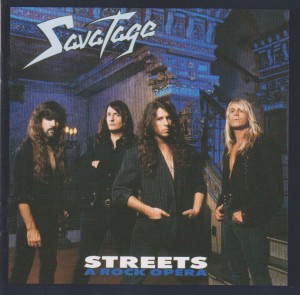
Streets: A Rock Opera

Top Ten SAVATAGE Tracks Ranked – A Collaboration with the 80sMetalMan

SAVATAGE!  This Florida metal band reigned from 1979 to 2002, and is now back ready to unleash a new album called Curtain Call!  They never received the recognition they deserved over the course of 12 mostly excellent albums.  Let’s fix that here and now!

This list is part of a collaborative effort with 80sMetalMan!  You can check his list here.


10. “Handful of Rain” from Handful of Rain (1994)

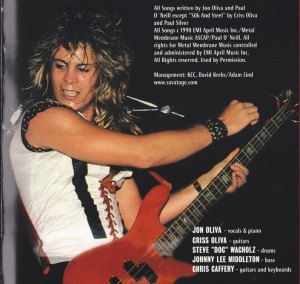
We begin our story with tragedy, but also triumph.  Lead guitarist Criss Oliva was killed by a drunk driver, almost ending the band permanently, and shattering the soul of his brother Jon.  Jon Oliva was not even a member of the band anymore, having abdicated the mountain king throne to new singer Zack Stevens a year prior.  Undaunted, Oliva wrote and recorded almost all the instruments on the next Savatage album Handful of Rain.  Even though bassist Johnny Lee Middleton and drummer Steve “Doc” Wacholz are pictured inside, they did not play.  Jon did.  Joining him on lead guitar was former Testament master-shredder Alex Skolnick.  An immensely powerful team up.  They produced a somber album, but not without power and thrills.  The title track, available as a 5:25 extended edition or the standard 5:02 version, boasts acoustic verses and a powerful chorus that will stay with you for days.


9. “Morphine Child” from Poets and Madmen (2001)

The final Savatage epic from the final Savatage album.  Jon Oliva was back on lead vocals.  Zack Stevens departed to form his own band, Circle II Circle.  This song utilizes a powerful, relentless riff and a host of backing singers taking care of a complicated vocal counterpoint.  Different lyrics and melodies all overlap to form a cohesive and weighty segment of an already powerful song.  With piano and guitars intertwined with equal emphasis, Savatage may have taken their new operatic metal style to its peak here.  Though a comeback is planned, the band has remaining largely inactive ever since.  Regardless, at least they finished their first life in style, and with masterful progressive metal music.


8. “Warriors” from Power of the Night (1985)

Though this song commences with a corny keyboard bit and a ballady melody, it is far from that!  The battle grunts of the “warriors” soon join in with a sharp metal riff.  An alloy of iron and titanium, “Warriors” boasts a relentless chorus.  The verses are fun too.  “Armed to attack!  The soldiers react!”  Not poetry, but it matters not when Oliva screams.  This is simply heavy metal, down to the basics, and executed with youth and naivete.  The thing is:  it’s really good and catchy!


7. “Sirens” from Sirens (1983)

A shorty, at under four minutes.  The tempered steel of Criss Oliva’s riff is the main hook.  Much would improve later on, such as Jon’s lyrics and the band’s writing skills, but they had everything they needed from the get-go.  There’s a slower breakdown in the middle that only serves to re-ignite the powerful riff later on.  Oliva’s shrieking was already in place, fully formed and under his complete control.  Because the song is so short, you just have to go back and play it one more time.


6. “Strange Wings” from Hall of the Mountain King (1987)

Producer/manager Paul O’Neill was working with a little band called Badlands in 1989, featuring former Black Sabbath singer Ray Gillen on lead vocals.  He made a hell of an impression before Badlands as a backing vocalist on “Strange Wings” by Savatage!  This song, which boasts a powerfully simple riff, contains one of Savatage’s mightiest choruses!  A melancholy metal song with oodles of power, “Strange Wings” is one of Savatage’s top deep cuts.  There are many to choose from, but Ray’s singing on this one sets it apart.  His voice, mixed with Jon Oliva’s, offers a rare metal duet of stainless steel.


5. “Hall of the Mountain King” from Hall of the Mountain King (1987)

A classic Criss Oliva riff, backed by the haunting screams of brother Jon!  This song introduced Savatage to the metal masses.  Few songs can top the power of its mighty riff, or the unholy notes that Oliva hits on the chorus.  Not overly complex, but neither is it simple.  After Criss’ solo, Jon simply lets loose with the howls of a banshee gone mad!  Many would rank this song much higher than #5.   Perhaps the Metal Man is one.  It is extremely difficult, since Savatage have so many songs of different flavours.  Of their era of pure metal majesty, this song is tops.


4. “The Wake of Magellan” from The Wake of Magellan (1999)

Savatage have utilized counterpoint vocals numerous times on their albums from Handful of Rain to Poets and Madmen.  It is arguable that “The Wake of Magellan” is their most effective use of the technique.  Multiple vocal parts and lyrics overlap over each other, with uncountable Zacks singing complementary parts over each other.  Fortunately, the melodies are strong enough to stand out in the storm!  While the band and orchestra cooks behind, Zack Stevens sings all the parts, overdubbed for simultaneous power.  The first layer:  “Don’t see the storms are forming, don’t see or heed the warning, don’t hear the sound of tyrants, surrounded by the silence.”  Then a second Zack joins, singing the same.  A third Zack emerges overtop, singing the extremely fast and challenging lines:  “Columbus and Magellan and De Gama sailed upon the ocean in a world of ignorance with thoughts so primitive.  That men were killed with no more will than that they simply had the notion, but in this world of heartless men this thing they never did.”  Imagine singing that live, which the band had to do, at machine gun speed!  Another Zack doubles those lines.  Then a fifth Zack joins:  “Don’t hear it, don’t hear it…”  Then another Zack:  “Got to keep it underground, pretend you never heard a sound.”  More Zacks join with the lines “If they find it, kill it, blind it,” and “Lord tell me what is to be,” until all the voices coalesce together in the line “They whisper, and I…”  Has there ever been a more epic song in any genre?


3. “Edge of Thorns” from Edge of Thorns (1993)

New singer.  New lease on life.  Zack Stevens was sometimes compared to Geoff Tate when he first debuted in 1993 on Edge of Thorns.  The first single from the first album of a new era, combining the metal of Savatage’s early years and the piano epics of the previous two records.  The brilliant title track from Stevens’ debut still raises goosebumps on the arms.  An apex of this style of metal, “Edge of Thorns” has no dull surfaces.  Every edge cuts deep, the scarlet blood stains lingering in your heart forever.  “I have seen you on the edge of dawn, felt you here before you were born.  Balance your dreams upon the edge of thorns…but I don’t think about you anymore.”  Yet he clearly does.  This theme recurs through the album on songs like “Conversation Piece”.  Another genius Criss Oliva guitar solo is the cherry on top.  Few bands can meld their different styles from separate eras together like Savatage did on “Edge of Thorns”.  A masterpiece of a song.


2. “Gutter Ballet” from Gutter Ballet (1989)

I’ll never forget hearing that opening piano figure.  Loosely, Jon Oliva plays:  “ding, ding, ding…”  Then as he plays the notes become stronger and the tempo more steady.  Suddenly the band crashes forth and “Gutter Ballet” careens through your stereo, into your soul.  Savatage had never incorporated piano like this before, and by breaking new ground they broke down walls.  No longer were they a simple heavy metal band.  The doors to a whole new world of concept and drama had opened.  Welcome to the Gutter Ballet.  This track combines an epic piano melody with incendiary guitar riffs, an orchestra, and street-smart Oliva/O’Neill lyrics about the nasty gutters of New York City.  “Balanced on their knives, little parts of lives, such a strange reality.  Kill the unicorn, just to have its horn, soon he’s just a fantasy…”  And the Criss Oliva guitar solo!  A composition unto itself, backed by strings.  Power, emotion, skill and fire combined together into one incredible song.  An epic song that few bands could top.  Few…except Savatage.


1. “Believe” from Streets: A Rock Opera (1991)

Within the context of the Streets story, the main character D.T. Jesus witnesses a luminous spirit emerge from a dying homeless man, that he follows up several flights of stairs to a roof of a building.  D.T. opens his heart, and hears the voice of God.  “Believe” is the perfect ending to an epic emotional journey.  With all the power that Savatage can muster — overblown, dramatic, and pompous — “Believe” ends the rock opera (and this list) properly.  Interestingly, it retains an epic section that was lifted directly from “When the Crowds are Gone”, as the two albums share a genesis.  So epic is this segment, that Savatage had to re-use it.  Then later, on the Savatage album Handful of Rain, part of it was re-used again, along with other parts of “Believe”.  “Believe” ends this album on the bright up-note that you want a story to end with, your soul awash with light and musically uplifted.  “I’ll be right there, I’ll never leave, and all I ask is believe”

REVIEW: Savatage – Streets: A Rock Opera (1991, 2002 remaster)

I haven’t reviewed much of my Savatage collection, and the reason for this is actually their fault.  There are so many different versions with different bonus tracks that I cannot keep any of it straight.  I have no idea what I have or what I’m missing at this point concerning bonus tracks.  I like to be thorough when reviewing an album, providing some commentary on all the different tracks available.  In Savatage’s case, I give up.  I can’t keep up with the bonus tracks, but I’m going to review the albums anyway.  Streets: A Rock Opera is the Savatage album closest to my metal heart.  And that means it’s Epic Review Time!

Scan_20160523SAVATAGE – Streets: A Rock Opera (1991, 2002 Steamhammer remaster)

The origins of Savatage did little to hint at what they could become.  Little more than a thrash band with remarkable riffs and throat, Savatage truly began to grow when they hooked up with producer/co-writer Paul O’Neill.  He had already been working on an idea for a musical called Gutter Ballet.  Savatage liked his ideas;  singer Jon Olivia used the title for his song “Gutter Ballet” (unrelated), after being inspired by Phantom of the Opera.   Their next project was determined to be the O’Neill musical, which now needed a new title:  Streets (with Ghost in the Ruins being O’Neill’s preferred, un-used title).   One song was already used:  “When the Crowds are Gone” was recorded by Savatage for their 1989 LP.  Other songs would also have to be trimmed, such as “Desirée”, and “This is Where We Should Be” which later emerged as bonus tracks elsewhere.

A children’s choir opens the title track “Streets”, before the tinkling of creepy piano.  “Streets” acts as introduction to the story, setting the scene with Jon Olivia as your narrator.  The song turns very metal to let us know this story is going to be a heavy one.  “These streets never sleep, still they never wake,” goes the ominous tune.  Jon’s brother, guitarist Criss Oliva, rips up and down the neck for a solo section that evokes hope instead of fear.  I feel chills on my arms.

Streets contains very little dialogue.  A man begging for a quarter introduces himself.  “I ain’t no bum or nothin’.  I used to live uptown once before too you know.”  He lights up a cigarette.  Lots of characters down here.  But there was one character who made it out of here:  D.T. Jesus.  He was a drug dealer, “Downtown Jesus”, or “Detox” to his friends.  Streets is his story, and this is the intro to “Jesus Saves”.


“Jesus Saves”…

The interesting thing about “Jesus Saves” is that there is an alternate version out there that wasn’t used, called “DT Jesus”.  Lyrically it’s identical, but musically it’s gospel rock.  Don’t ask me to choose a favourite; I can’t.  The gospel version has an incredible power that the album version, “Jesus Saves”, does not.  However Savatage are a metal band, and even if this is a rock opera, “Jesus Saves” works better for a metal album.  It’s exactly what is needed for the start of this album:  a short, hard shot right in the face, guitars exotically dancing and Jon Oliva shrieking the best he can.  D.T. Jesus may have been a low-life, but that wasn’t his future.  “Bought himself a cheap guitar, started playing bars, kids came in their cars.”


…and “DT Jesus”. Which do you prefer?

Fame comes.  T-shirts, radio interviews, headline concerts.  It was not to last for D.T. Jesus.   “He started missing shows, the band came down to blows, but Jesus just didn’t care.”  Even when he quits the band, his fame won’t disappear.  The story of the musician who could not kick his demons resonated with Jon Oliva who went through his fair share of powders and pills before Streets.  There are probably several kernals of truth within his vocals and that is one thing that makes Streets so unforgettable.

“Tonight He Grins Again” refers to the monkey on his back:  addiction.  “Still he is my only friend, and tonight he grins again.”  The power in this piano/metal hybrid is undeniable.  During the quiet passages, Oliva’s voice quavers; then he shouts hauntingly on the choruses.   Mid-tempo guitars kick in for “Strange Reality”, and the story begans to turn.  Jesus sees a filthy man on the streets.  “That could be me,” he begins to think to himself.  Is it a sign or a warning?  D.T. comes to this realization and then begins a confessional on “A Little Too Far”.  A pretty piano ballad like “A Little Too Far” may seem out of place, but it is only the first of several.  “A Little Too Far” is very special, raw and penetrating.  Towards the end it lightens up, and this is my favourite verse on the whole album:

“And who’s to say what it’s about,
When John Wayne caught the last train out?
And Spock and Kirk have had enough,
And no-one’s left to beam me up?…”

Drummer Steve “Doc” Wacholz used to play with a United Federation of Planets banner on his bass drum.

The mood lightened, D.T. Jesus goes for a comeback.  “You’re Alive” is the most “pop-metal” of all the songs, like Sava-Journey, indicating this is it:  this is D.T.’s moment.  “The crowd they came in just to see a man back from the dead.”  Triumphant hard rock it is, victorious and fist-pounding.  But it’s too soon for a happy ending. “You’re Alive” ends abruptly.  Enter:  Sammy.

“Sammy and Tex” is old-school Motor-metal.  The heavy chug interrupts the celebration.  Oliva screams rapid-fire from the left speaker, as the character of Sammy, an old acquaintance from the drug days.  He’s come looking for an old drug debt: $30,000, plus interest:  “Now I would have said duck it, but with the money by the bucket, I hear you’re raking in…”  A struggle ensues, but D.T.’s manager Tex hears the commotion and enters the room.  Sammy pulls a knife, and Tex is dead.

Musically, “Sammy and Tex” is the most hard core Savatage metal on the album.  Shreddery and riffs collide with the kind of speed metal tempos that they mastered on their earliest albums.  Relentless and without pause, “Sammy and Tex” perfectly accompanies the words.  The struggle is over in a blur.  Sammy makes a run for it leaving D.T. with Tex’s dead body.

The first side of the album closes with the sorrowful “St. Patrick’s”.  Not knowing where to turn, D.T. enters St. Patrick’s church, begging for answers.  The statues and paintings provide no answers.  “Surely, you must care, or are you only air?” asks D.T. in frustration.  The music turns dramatic, and then explodes as D.T. breaks down.  He then apologizes for his outburst: “Didn’t mean to doubt what it’s all about, seems I forgot my place.  But if you find the time, please change the storyline.”

SAVATAGE STREETS

Side two opens in a different mood, a dreamy landscape of echoey drum bursts and light guitars.  “Can You Hear Me Now” drops a heavy Criss Oliva riff at the halfway mark and then it starts to rip.  D.T. Jesus seems haunted by people from his past as he tries to fall asleep.  Hitting the streets again, “New York City Don’t Mean Nothing” begins as an out-of-place acoustic song.  Here we meet some other unsavoury street characters, as the song begins to accelerate.  First a fast bass beat, then chunky electric guitars join in and the song blasts off.  All sorts of advice is offered to our lead character, but none is really useful.

It sounds like Savatage ripped off the opening guitars from Def Leppard’s “Die Hard the Hunter” on the next track, “Ghost in the Ruins”.  I all but expect Joe Elliot’s voice next.  It goes heavy instead, painting a picture of the bad side of town at night.  D.T. then begins to question what the world would be like if he didn’t exist anymore.  Would anybody care?  “If I Go Away” goes full-on power ballad mode.  It is one of the most powerful songs on the album, anthemic and beautiful, but sad.  It has become a bit of a classic to Savatage fans today, often considered among their best ballads.

D.T.’s demons will not die, and the urge to go back to the drugs once again speaks on “Agony and Ecstasy”, the last of the heavy tracks on the album.  With a chugging Criss riff, this one blasts like a train fueled by Van Halen (not Van Hagar) albums!  “Just remember, if you ever need me…I’m here,” ends the song.  Then the story gets a little fuzzy, but thankfully the band included a narrative that helps explain events.  The album closes with a trio of piano ballads, each building upon the other to a satisfying climax.

Fair warning here:  Much of Savatage’s conceptual music has Christian overtones, but none more obvious than on these three tracks.  According to the story, D.T. finds a homeless man in the streets who is dying.  D.T. feeds him and clothes him.  This would be during the ballad, “Heal My Soul”, the first of the ballad trio.  It is based on a Welch lullaby called “Suo Gân”.  With just piano and the voice of Oliva, you can imagine D.T. singing this to comfort the man as he passes away.  The children’s choir then returns, adding a pretty but haunting quality.


“Believe”

According to the story, D.T. witnesses a luminous spirit emerge from the homeless man, who he follows up several flights of stairs to a roof of a building.  On “Somewhere In Time”, D.T. seems to have come to a spiritual realization and confesses all his regrets and mistakes.  “I’ve been grasping at rainbows, holding on to the end, but the rain is so real lord, and the rainbows pretend.”  The music goes upbeat with a hard rocking middle section, guitars squealing as if possessed by St. Halen himself.  Then, finally D.T. opens his heart and gets his answers:  “Believe” is the perfect ending to an epic emotional journey.  With all the power that Savatage can muster, overblown, dramatic, and pompous, “Believe” ends a rock opera properly.  Interestingly, it retains a simply epic section that was lifted directly from “When the Crowds are Gone”, excised from the story when it was used on the Gullet Ballet album.  So epic is this segment, that Savatage had to re-use it.  Then later, on another Savatage album later in 1994 called Handful of Rain, part of it was re-used again, along with other parts of “Believe”.  Its positioning on that album was the same:  it was part of the closing track.  Only on Handful of Rain, it was on a song called “Alone You Breathe” that was a tribute to Criss Oliva, who was killed by a drunk driver.

“Believe” ends the album on the bright up-note that you want a story to end with, your soul awash with light and musically uplifted.  Reading the story and words, it’s really hard to avoid the obvious message.  Listening to the music purely as an album, you can probably live life completely ignorant of the story.  But as soon as they put A Rock Opera in the title, that makes the listener try to follow along.  I think it’s pretty obvious, in the final song “Believe”:  “I am the way, I am the light, I am the dark inside the night…”   Paul O’Neill, who wrote the musical on which this album was based, is openly Catholic, and there’s nothing wrong with that.  There’s nothing wrong with writing what you know and what interests you and what makes you feel something.  But some…probably a minority of listeners…just flat out won’t like it.  They will consider the call of “I’ll be right there, I’ll never leave, and all I ask is believe,” to be heavy-handed preaching, and fair enough.  That’s why I’m putting it out there — for readers to make up their own minds.


A later, Zak Stevens-sung version of “Believe” done acoustically.

So, on to this lovely Steamhammer remaster…with “bonus tracks”.

Two bonus tracks are listed:  “Jesus Saves” and “Ghost in the Ruins” live.  One issue:  There are no bonus tracks on this CD.  None.  Nada.

There is a recent release with narration between all the songs, and a previously unreleased track called “Larry Elbows”.  That’s probably a good one to have.  There is a 2011 remaster with unreleased acoustic songs.  There was a 1997 release with a Zak Stevens-sung version of the outtake “Desirée”. Or you could go with the original 1991 release if you’re so inclined, because there are more flaws with this Steamhammer package.

One is that all the artwork is blurry in comparison to an original release.  The other is that the narrative story isn’t included in the booklet.  It was in the original, along with the lyrics.  Steamhammer only brought over the lyrics.  In compensation, they do include an 11 page (very small print) segment detailing every aspect of the making of this album and the tour that followed.  In the end, Jon Oliva resigned from the band, citing exhaustion.  His replacement was the young and able Zak Stevens for 1993’s followup Edge of Thorns.

Savatage’s Streets: A Rock Opera was their first full-length concept album, the first of many:  Dead Winter Dead, The Wake of Magellan, and Poets and Madman all followed after a brief period of non-conceptual work.  That’s some heavy competition, but Streets remains their most passionate.

5/5 stars

but 1/5 for Steamhammer!

REVIEW: Savatage – Gutter Ballet (Steamhammer remaster)

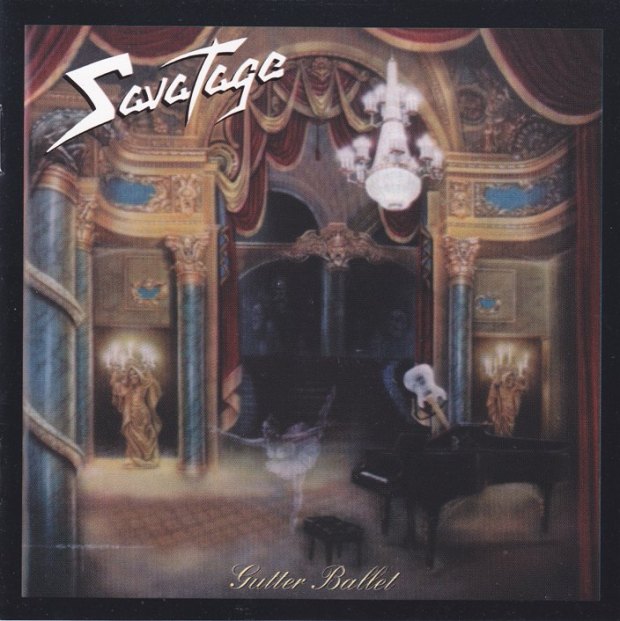
GUTTER BALLET_0001SAVATAGE – Gutter Ballet (1989, 2002 Steamhammer remaster)

Having first latched onto Savatage in ’87 with “Hall of the Mountain King”, I was primed and ready for Gutter Ballet.  What I didn’t expect was the heavy piano on the title track/first single.  But that was a pleasant surprise: I was heavily getting into piano within the context of hard rock at the time.  Savatage’s Jon Oliva has a tendency to write simple but very catchy piano parts.  “Gutter Ballet” was inside my head on first mindblowing listen.  All that was left for me to do was buy the album.

Savatage have reissued Gutter Ballet with different bonus tracks many times.  I have the 2002 Steamhammer release (the Earmusic version) which has an extensive booklet with ample liner notes.  Gutter Ballet was the post-rehab album for Jon Oliva, and this informs many of the lyrics (“Thorazine Shuffle” for example).  Upon beginning the album, Jon and his brother Criss wrote heavy guitar based metal songs which were later included as bonus tracks on various releases.   Not satisfied, producer/co-writer Paul O’Neill sent Oliva out to see Phantom of the Opera in New York.  This changed everything.  Meanwhile, the rehab stint ended up producing a three song mini-suite.  The road to 1991’s Streets: A Rock Opera was now paved.

Gutter Ballet commences with “Of Rage and War,” the bass hook of which reminds of “24 Hours Ago” from the last album.  It has one of those staggered Criss Oliva guitar riffs that I miss so much, and the unforgettable drum patterns of Steve “Doc” Wacholz.  The lyrics are not profound, but they’re catchy enough (especially when Oliva starts shrieking).  They’re also still relevant today.

You got Libya, you got the Russians
You got civilian planes crashing to the oceans
Airports full of terrorists, Nazi skins, anarchists
When are you gonna learn?

Lyrics aside, the strongest thing about “Of Rage and War” is the guitar riffing.  The six-string then takes a bit of a back seat (solo aside of course) on “Gutter Ballet” to the piano for the first time.  Oliva’s simple melody is one of the first that I learned to play on keyboard and I still have my old cassette demo somewhere!  A minute later things speed up and get dramatic.  As good as the piano part is, the guitar riff that comes in to compliment it is just as stellar.

Could “Gutter Ballet” be Savatage’s best song?  You could easily argue that, even though the band would later ramp up the drama and complexity on their albums.  I think the song is completely without flaw.  From Jon’s lyrics (inspired by a stabbing he witnessed while in New York) to the slightest piano accents, the track is perfect.  And it even manages to maintain its balls, which I’m sure helped longtime Savatage fans adapt to the new sound.

First video with Chris Caffery.

“Temptation Revelation” is a 3:07 instrumental track that really only serves to bridge “Gutter Ballet” to another piano based hit, “When the Crowds are Gone”.  The piano and guitar vibe is maintained throughout.  “When the Crowds are Gone” is a very special song, and undoubtedly you could call it a ballad.  It has heavy choruses, but the thrust of the song is based on Jon’s voice and piano.  Jon sounds tiny at first before using his full throat.  The song was first conceived by Paul O’Neill as part of  the later Streets rock opera, a project he had cooking for many years.  The song would have fallen after “A Little Too Far” on side one.  I think it’s another one of Savatage’s best-ever compositions, and Jon’s screaming at the end seems to really embody the desperation of the lead character.

I never wanted to know, never wanted to see
I wasted my time, till time wasted me
Never wanted to go, always wanted to stay
‘Cause the person I am, are the parts that I play.

So I plot and I plan, hope and I scheme
To the lure of a night, filled with unfinished dreams
I’m holding on tight, to a world gone astray
As they charge me for years I can no longer pay.

Note Doc Wacholz’s United Federation of Planets drum kit!*

Side one closed with an acoustic instrumental called “Silk and Steel” which is really a showcase for the underrated Criss Oliva.  It’s just acoustic guitars — nothing else — for four minutes.  Right on, and perfect for a side closer.

No punches are pulled whatsoever on side two.  A bruising tune called “She’s In Love” boasts a chugging riff and those speedy Dr. Killdrums snare hits.  As for Jon, he spends most of the song screaming in fury (but also in tune).  Musically, think “Loss of Control” by Van Halen, but metalized.  “Hounds” then opens with quiet picking, similar to Metallica’s “One”.  This doesn’t last, and before too long it’s a regal metallic plod with a little bit of Sabbathy organ audible in the background.  Then, “The Unholy”:  a stampede of tricky licks and screaming vocals.  There is no let up.

GUTTER BALLET_0003The aforementioned three-song mini suite is next, and it begins with “Mentally Yours”.  The character of “Timmy” is introduced, a disturbed character.  The insanity theme is immediately obvious by the piano intro where Jon sets the scene.  Think Alice Cooper’s From the Inside album.  This piano intro could even be considered a separate song, as it has nothing to do with “Mentally Yours” musically.  Intro aside, this is another heavy metal bruiser, guitars on the prowl.  It even changes to a speed metal thrasher by the end.

“Summer’s Rain” is the only thing resembling a ballad on side two.  If so, it’s a heavy ballad without piano.  It does feel spiritually connected to “When the Crowds are Gone” from side one.  Still, the best tune of this trilogy is “Thorazine Shuffle” which has an ominous opening.  Then the song really begins; a stuttering limping riff, evoking the Thorazine shuffle Oliva sings about.  Gutter Ballet ends on an appropriately heavy note.

This remastered edition has two live bonus tracks; unfortunately they are just from the album Final Bell/Ghost in the Ruins. As such I’ve chosen not to talk about them, since I’d rather just review that album later on.  So be aware, the Steamhammer remaster from 2002 doesn’t have any exclusive bonus tracks.

3.5/5 stars

* Savatage MUST be Trekkies.  The next album, Streets, featured the following lyrics:

And who’s to say what it’s all about?
When John Wayne took the last train out?
And Spock and Kirk have had enough,
And no one’s left to beam me up.