RECORD STORE TALES PART 87: The Great Change
The Great Change happened around the turn of the millennium.
Prior to that, CD sales were fast and furious. DVD sales had begun to replace VHS sales. We still carried blank cassette tapes. Not too many people were downloading music. Most people weren’t even connected to the internet yet. I still had friends who would come over to use it, and I only got it in mid ’98.
Then I noticed a change. Cassette sales dwindled while requests for blank CD’s increased. Initially we resisted carrying blank CD’s. We thought by doing so, we would be unintentionally killing a CD sale. Eventually we began carrying blank discs, when they started dropping in price. They, they took off. We started hearing about Napster. And Metallica. Metallica fans began selling off their discs.
I remember one guying coming in with a great selection of Metallica discs. All the albums, plus the Live Sh*t box set.
“Wow, this is a great Metallica collection you have here,” I commented as I went through the discs.
“Thanks. I’m selling them because of that fucking asshole Lars. I ripped them all to my computer and now he can go fuck himself.”
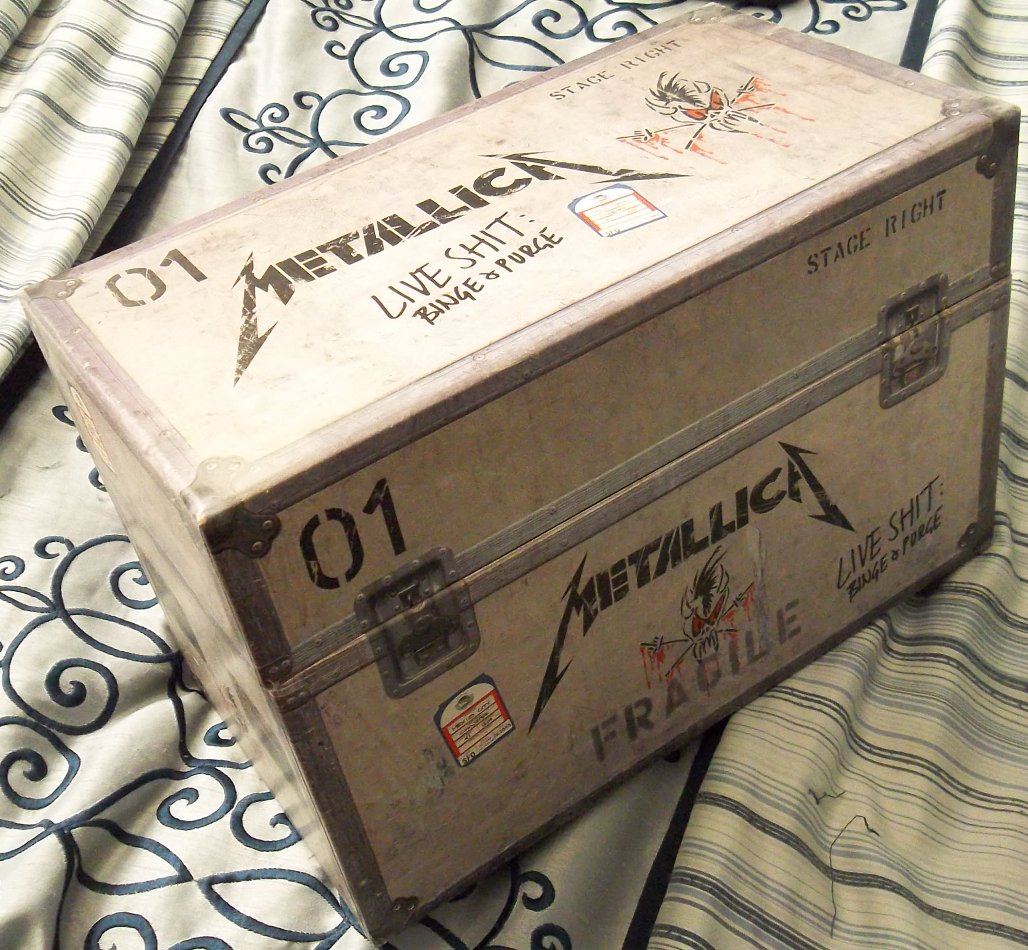
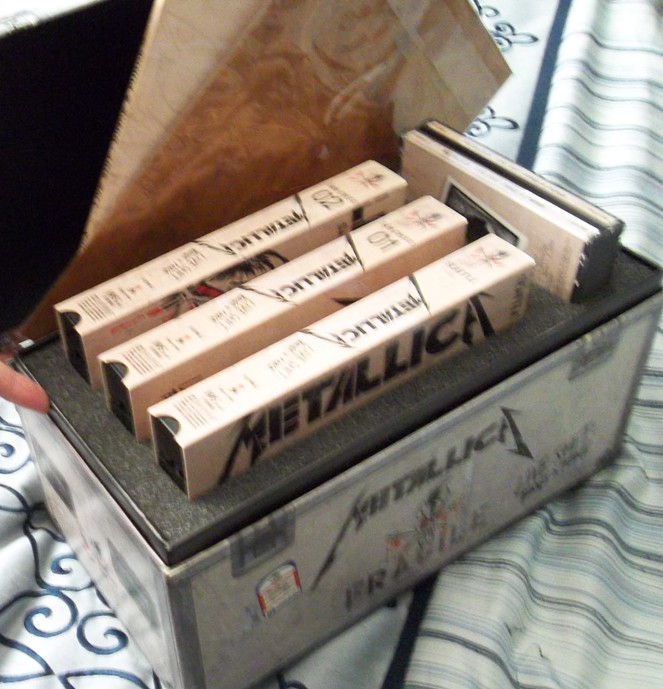
I’ll never forget that because at first I felt like, “Well, that doesn’t really do anything to Lars, you already paid for the discs and gave him your money,” but I guess it was the principle of the thing. People were really pissed off. And that represented a huge change. People always bitched about CD prices. $24 for a regularly priced disc, that’s a lot of money. I used to get two albums for that money in 1986. There’d never been a satisfactory answer as to why a kid had to pay $24.99 for the new Judas Priest in 1998. And believe me, it wasn’t the stores ripping off the kids. The margin we made on new CDs could barely be called profit.
Over the next five years, I watched CD prices and sales drop, while we were forced to diversify in order to stay alive. We had already been carrying DVD’s. We started carrying McFarlane dolls. They were cool, but a lot of them were really limited. For example, for Kiss, we only got one Eric Carr, and two Aces. People would want the whole set, but all you’d have left was Paul and Gene.
Then bobble-heads came (which I hate, I absolutely hate bobble-heads). Then Osbournes family toys. Trivia games. Simpsons toys. Clocks. Posters. Books. Hats. CD wallets with a Linkin Park logo on them. Anything we could make a reasonable buck on, even if it was only marginally related to what we did, like the Simpsons toys. (We carried DVD’s, so Simpsons was marginally related.) Then we’d knock down whatever wasn’t selling to clearance prices, and try something else.
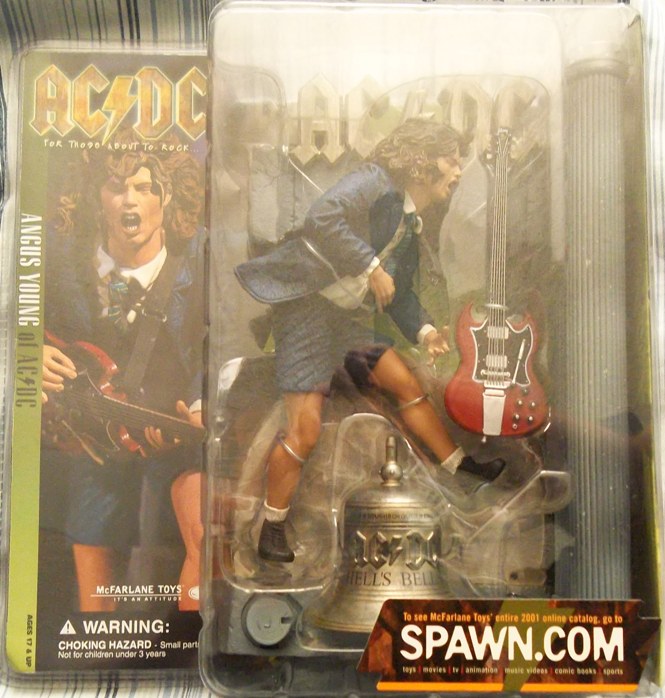
The only tangent that was really successful was Xbox and Playstation games. We had so many requests, and physically a game is identical to a CD or DVD, so games were a no brainer. People asked for them all the time. We had to educate ourselves from the ground up on game pricing and we jerry-rigged a way in our computer system to inventory them. However to me, the scent of decay was in the air. Because downloading had killed such a huge chunk of our music sales, the stores were nothing like the way I remembered.
Working in a store selling video games and bobble-heads wasn’t the dream job that started me on this path. I was always there for one reason: the music!
Well, yeah, and the staff discount.


You must be logged in to post a comment.