RECORD STORE TALES Part 156: Value
The art of buying and selling used music mainly hinges on two factors: condition, and re-sell value.
Condition can be subjective. Is it slightly scratched? Heavily scratched? Do those minor marks from wiping the CD count as scratches? Our upper management tried to give us consistent guidelines to follow on condition. The customers didn’t always agree, but we tried to be consistent – not an easy task when you have dozens of buyers!
Value, on the other hand, could get very subjective. For example, let’s say the year is 1996. You went out and bought yourself a brand-spankin’ new copy of Live Through This, by Hole. You paid $23.99 for it at your local store. You played it a couple of times and didn’t like it, and they won’t take it back without the receipt. So, you come to see me with a mint condition copy, only played twice. You’re hoping for good money. You paid $23.99, maybe you’d like to cut your losses and get $10 back?
Well, it never worked that way. We’d never pay that much for a single regularly priced CD for many reasons:
- If you paid $23.99 for Live Through This by Hole, you still paid way too much, even in 1996. You could have got it cheaper elsewhere.
- We have to make a profit on it too. Whatever we pay, we’d generally have to double it to make a profit, after the overhead of running a store are considered.
- What if we already had a couple copies, that have been sitting here for a month or two? Do I really need a third to sit there?
These are all factors that came into play.
The next thing the customer would often say was this:
“I’m not looking for my money back, just another CD. Can I just trade this to you, one for one?”
Well, again, no. There’s no profit in that either. I’m just swapping your disc for my disc and not making a dime on the transaction. Essentially, I’d be doing you a favour and that’s all. And chances are, you’d want to trade it for something better than Live Through This!
One time, while having this very same discussion, I explained to a customer why I couldn’t pay him $10 for his CD. “Because that’s what we sell it for, I wouldn’t be making any money on it.” He shrugged and said, “That’s your problem, not mine.” No, it’s your problem, since I won’t be paying you $10 for your disc.
Another reason that people expected more money for a disc was rarity. If something was considered rare, yes, we would generally pay more. But who decides if something is rare?

I remember a guy holding up a copy of Big Game by White Lion, saying, “This CD is worth over $50!” Well, maybe somebody was asking $50 for it somewhere, and maybe somebody was willing to pay that. So yes, to those two people, it’s worth $50. But if you look, you could definitely find it for under $10, guaranteed. Even in 1996. All you had to do is hunt a little. I did, and I got my copy for under $8. It’s a title that was not in demand.
Some things that WERE considered rare:
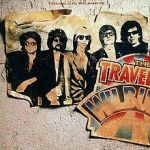
The Traveling Wilburys – Volume I. We asked $50 for that one. It was out of print for many years. Out of print Bob Dylan is worth a lot more than out of print White Lion!

Metallica – Garage Days Re-Revisited. Also out of print. We asked $50 for that one too, until it was reissued as a part of Garage Inc. Reissues would usually kill the value of an our of print disc.
Some things that were NOT considered rare:
A lot of old soundtracks. Soundtracks were a tricky thing. You might be the only person in town that gives a crap about the Operation Dumbo Drop soundtrack for example. Maybe it’s out of print, and maybe you collect soundtracks, but maybe I already have a copy priced at $5 that has been sitting there half a decade!
We tried to be as fair as possible, but it’s not always easy to see when I’m giving you $4 for a CD that you paid $24 for. You can’t please all the people all the time. Still, it was better than a garage sale!


“Because that’s what we sell it for, I wouldn’t be making any money on it.” He shrugged and said, “That’s your problem, not mine.”
That said just about everything that needs to be said about dealing with the general public.
I remember in Borders we’d get folk looking for the Travelling Wilburys CD all the time. That was so in demand when it was out of print. Flew off the shelves when it finally got reissued too.
LikeLike
We had a lot of people like that. That one guy though, I’ll never forget. He must have been in construction because he was always wearing the gear. He was a pain to deal with and it seemed like it was always me dealing with him.
When the Wilburys thing was $50, you’d get a lot of people saying, “What the hell? I’m not paying that!” And you can understand why. But good luck finding it elsewhere. If you’ve been looking for an album for 10 years without success, maybe there was a reason for it!
I never knew why it was out of print, I assumed perhaps contractual issues with the Orbison estate.
LikeLike
I’ve bought and sold used CDs for close to 20 years, so I understand your dilemma. Bottom line, you’re running a business. And telling people what they don’t want to hear is the toughest.
Another thing you forget is sentimental attachment to an album. Music is a powerful force in people’s lives. They may be bringing you a CD that they associate with a person, place or event. They wouldn’t sell it off, given a choice, but maybe they need the money badly and so in they come to you. They hope to do well on it, because of their attachment. And you paw through the collection not knowing those attachments, and give them less for it than they’d hoped. Just another possible variable.
I like your bit about White Lion, how you should just “hunt” for the CD. Hunting for Big Game. Was the pun intended?
LikeLike
Pun fully intended, yes :)
And yeah, there is sometimes some serious sentimental value. I always felt bad for the sob stories. But on the other hand, it seemed that most people who had hard luck stories and needed the money really badly didn’t take good enough care of their discs to warrant good money. It wasn’t every case but it certainly was the majority. I wonder what that says.
LikeLike