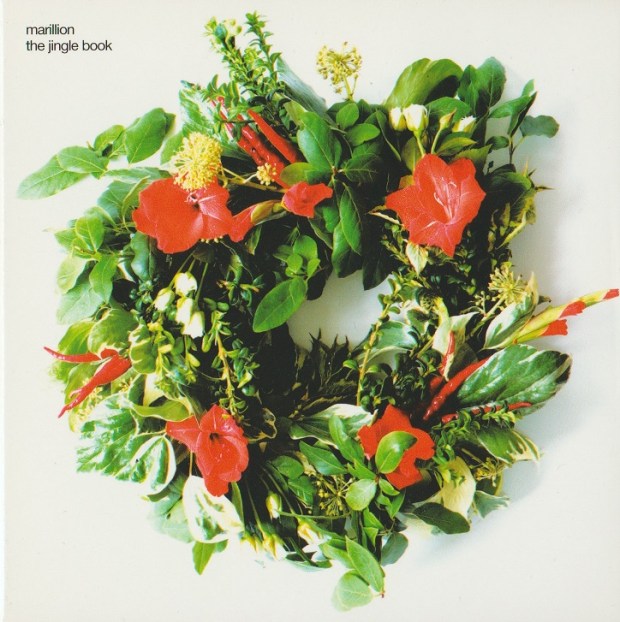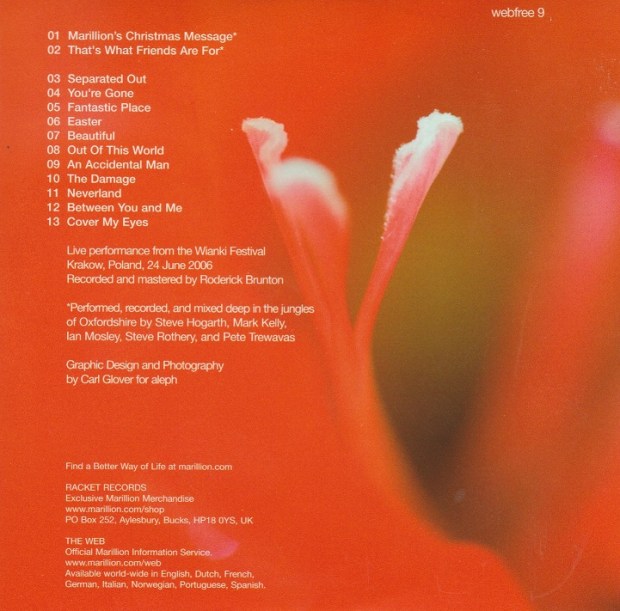
Gather ’round the glow of your computers children, and get your hot chocolate in hand, for it is time for a look at another Marillion Christmas CD. Β The Jingle Book is a doubly clever title, for Marillion’s Christmas song for 2006 was a cover of “That’s What Friends Are For” from The Jungle Book.Β A surprising choice, it is rather movie accurate and partly acapella. Β There is also the traditional and always silly Christmas greeting from the band. Β In what may also be a Marillion tradition, this short message requires multiple takes!
The bulk of the CD is a live set from Poland in 2006. Β The festival setting lends this CD a different atmosphere than other live Marillion discs. Β From the sonics to the feel, The Jingle BookΒ doesn’t work like typical Marillion sets. Β Β There are only a few long bombers, lots of singles, and no tracks earlier than Seasons End. Β Decent quality audio will satisfy all but the pickiest of fans; remember this amounts to an official bootleg.
An ass-kicking “Separated Out” was chosen for opening position. Β This song, among Marillion’s most energetic, would have got the crowd’s attention. Β Drummer Ian Mosely is a monster on “Separated Out”, which is immediately followed by the band’s hit single “You’re Gone”. Β The mosh pit vibe gives way to ethereal dance. Β Floating like smoke in the air, “Fantastic Place” and “Easter” are rolled out in powerful performances. Β Talking is minimal though Steve “h” does attempt some Polish.
Afraid of Sunlight is given a nod with the ballad “Beautiful”, and progressive epic “Out of this World”. Β “Beautiful” is as lovely as its name, and has the feeling of celebration. Β The mood darkens immediately on “Out of this World”, as there are very few positive songs about nautical disasters. Β Steve Rothery’s immaculate guitar tone sings its own song, sad but hopeful.
The beat picks up with the electrifying “Accidental Man” from This Strange Engine. Β As a highlight from that often overlooked album, “An Accidental Man” does not get showcased often, and this organ-heavy take is satisfying. Β Boppy Beatles-y single “The Damage” (from Marbles) is sheer delight. Β With genie now out of the box, “Neverland” begins a long slow climax. Β As one of the most dramatic of all Marillion epics, “Neverland” haunts the air like burning incense. Β Then like a halogen light, Rothery brightens it up with hisΒ un-immitatible string magic. Β Consider the heart that “h” puts into his singing here, combined with Rothers’ liquid guitars, and this could be the best ever live version of “Neverland”.
Rolling into the encores, “Between You and Me” and “Cover My Eyes” exude glee and positive vibes. Β There is much common ground between the two albums those songs are taken from (Holidays in Eden and Anoraknophobia) so it is unsurprising that they work together so well in the encore position. Β A brilliant pairing, crisp and refreshing like Sauvignon Blanc with a healthy avocado salad.
As with any past Marillion Christmas CD, you canβt buy this anymore and the chances of stumbling upon one in the shops are nil, even with the help of all of Santa’s elves. Β However you can still download it and the others by joining the official Marillion webUK fan club. Β Members receiveΒ threeΒ thick, glossy full colour magazines, theΒ Christmas CD, and other downloadable content. Β Worth thinking about, or adding to yourΒ Christmas list.
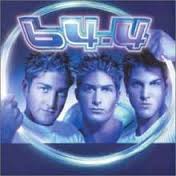
Unfortunate Canadians will recall boy band b4-4 (also known as Before Four). They were a trio, had two brothers in the group, made two albums and faded away quietly.
Courtesy of former store owner (now road manager for Steve Earle) Mike Lukacs, here’s a classic quote that shoulda been in Record Store Tales:
“Back in the record store days, some people came in the store looking for these guys’ CD. One of the dudes that worked for me asked them why they wanted such garbage. ‘They are our sons’ replied the people…”
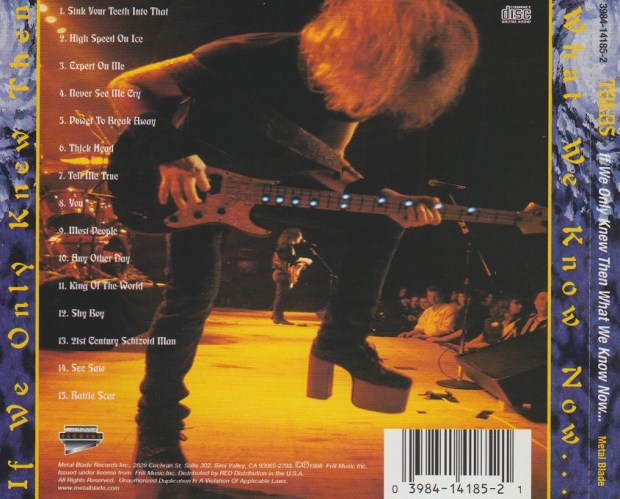
TALAS – If We Only Knew Then What We Know Now… (1998 Metal Blade)
The Talas story did not end with the breakup of the band. Β Of course not; bands both famous and obscure like to reunite for nostalgia shows. Β Talas did that in 1997 with the original power trio lineup: Β Billy Sheehan on bass, Paul Varga on drums, and Dave Constantino on electric guitar. Β With classicΒ material (from the first two Talas albums) and a few unreleased songs, they memorialized their reunion with a brand new live CD. Β Billy even pulled his old platform boots out of the closet for this one.
As usual the set opens with “Sink Your Teeth Into That” and an enthusiastic home town crowd. Β Talas only sounded better with age. Β The original voices are there and just as strong as they were in 1982. Β It actually sounds like everyone has improved over the years. Β A speedy “High Speed on Ice” is in the second spot ensuring no loss of momentum. Β Material from the first self-titled Talas album is included too (unlike the last live album Live Speed on Ice). Β “Expert on Me” is very pop in construction, but clearly not as great as the songs from album #2, Sink Your Teeth Into That. Β Speaking of which, the slow rumbler “Never See Me Cry” is brilliantly adapted to the stage.
“Power to Break Away” is one of the previously unrecorded songs, and it kicks it just as hot as anything from Sink Your Teeth Into That. Β It’s taut with hooks and the prerequisite bassΒ workouts. Β “Tell Me True” is the second unreleased song, a slow non-descript dirge ballad that takes a while to get going.
Imagine Billy Sheehan plowing his bass right through a funky Led Zeppelin riff. Β That’s “Thick Head”, an awesome track from Talas (1979). Β “You” has a cool vibe, almost like an unheard Aerosmith demo from the Done With Mirrors era. Β A few other tunes from the first Talas (“Most People”, “Any Other Day” and “See Saw”) are adequately entertaining. Β Back to Sink Your Teeth Into That, “King of the World” is still one of the best Talas tunes, overshadowed by only a few like “Shy Boy”. Β Here, “Shy Boy” is preceded by a Paul Varga drum solo. Β The sheer velocity of “Shy Boy” itself makes me wonder how Varga did it. Β It’s just pedal to the metal, blurring the lines and smoking the minds.
Nothing like a good cover to help draw a live album to a close. Β Talas did two: Β “21st Century Schizoid Man” and “Battle Scar”. Β The King Crimson cover is a daring one to attempt. Β They somehow manage to strip it down and pull it off with integrity. Β As for “Battle Scar”? Β Total surprise there! Β Max Webster were just across the border from Buffalo, and Billy Sheehan nearly joined Max at one point late in their career. Β Introduced by a Billy Sheehan bass solo, this Max/Rush cover is the set closer. Β As a final addition, “Battle Scar” surely makes this one hell of an album for the history books. Β (The Japanese version has a bonus track called “Doin’ It Right” — this shall be reviewed at a later date. Β Our copy is on order but willΒ not arrive for several weeks.)
Since this is a more recent release on a well known label (Metal Blade), it turns out that If We Knew Then What We Know Now is an easy CD to find in the shops. Β Fortunately this is a good first Talas album to add to any collection.
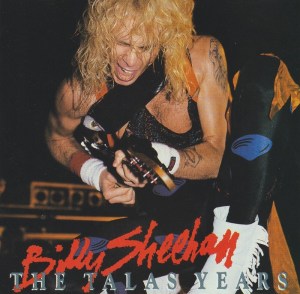
Second in a two-part review of the 1989 compilation CD, Billy Sheehan – The Talas Years. Β Part one is here: Β Sink Your Teeth Into That. Β More Talas tomorrow!
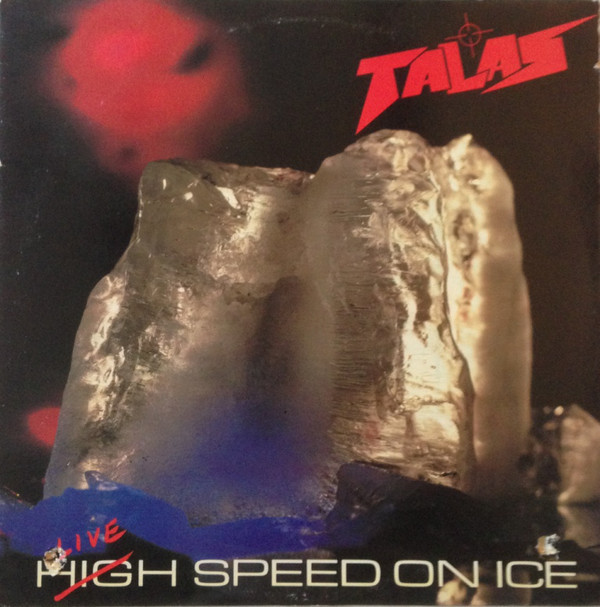
BILLY SHEEHAN – The Talas Years (Part TwoΒ of Two) Β (1989 Relativity) TALAS – Live Speed on IceΒ (1983 Relativity)
When we last met Talas, they were a power trio. Β On their 1984 live album, they were a quartet. Β Billy Sheehan was the only remaining member of the original lineup, with some hot talent behind him: Β Mark Miller on drums, Mitch Perry (MSG) on guitar, and the hugely talented Phil Naro singing. Β Naro has been around, including a stint with Peter Criss. Β (You can hear a number of his performances on Mitch Lafon’s Kiss tribute CD AΒ World With Heroes.)
There is little question that Naro’s voice brings the songs to another level. Β “Sink Your Teeth Into That” benefits from his young rasp. Β Mitch Perry throws in a more articulated guitar solo for an extended section leaving Billy to hold down the riff. Β Second in line is a new song, “Crystal Clear” which has a biting Police guitar riff. Β The busy bass holds down the melodic center as Naro soars on top. Β Live Speed on Ice has great value, since much of its material was actually brand new and never released on anything else. Β “The Farandole” is another new one, an instrumental of jaw-dropping ability. Β Dueling bass and guitars dance and parry while the drums hit the heavy blows.
More new tunes: Β “Do You Feel Any Better”, “Lone Rock”, and “Inner Mounting Flame” continue the ass-kicking streak. Β Each has their own groove, but “Inner Mounting Flame” truly is live speed on ice. Β A few older tracks from the album are solid winners: Β “King of the World”, “High Speed on Ice” and of course “Shy Boy”, the one Talas song that people know today thanks to David Lee Roth. Β Billy’s signature bass solo is also performed live (and extended), but cleverly retitled. Β While “NVH 3345” meant “SHEEHAN” upside down, “7718 (3A17)” means “BILL (LIVE)”. Β With the freedom of the live setting, Bill took his time to showcase someΒ unheard of chops and effects.
Any album that has Billy Sheehan on bass is bound to include a thousand notes of pure thrills, and any record with Phil Naro is going to sound awesome vocally. Β Therefore, Live Speed on Ice should be a welcome addition to the discerning rock fan’s personal library. Β The easiest way to get it is on CD combined with Sink Your Teeth Into That as the 1989 compilation Billy Sheehan – The Talas Years. Β Either way, you win.
A two-part review of the 1989 compilation CD, Billy Sheehan – The Talas Years.
BILLY SHEEHAN – The Talas Years (Part One of Two) Β (1989 Relativity) TALAS – Sink Your Teeth Into That(1982 Relativity)
Fans of David Lee Roth are probably already aware of Talas via their incredible bassist Billy Sheehan, an innovative genius of the four-string rumble. Β His first recordings were with Talas (1979-1983), a Buffalo power trio. Β With Roth, he re-recorded the Talas track “Shy Boy” on Eat ‘Em And Smile. Β The Talas original can be found on their second LP Sink Your Teeth Into That, or the compilation The Talas Years.
The focus is immediately and obvious on the bass. Β Billy plays it simultaneously as a lead instrument, and the rhythmic foundation. Β “Sink Your Teeth Into That”, the title track boasts not only insane playing, but sounds that had never been heard before from a bass guitar. Β And the song’s pretty good too. Β It’s raw 80s hard rock, no more no less, except for that bass. Β “Hit and Run” is just as strong. Β Talas were not just a bass showcase, but a band that could actually write good songs. Β These are unpolished and rough songs, with the band (Dave Constantino on guitar and Paul Varga on drums) alternating lead vocals.
The centerpiece of the album is the bass solo “NVH 3345”. Β Write that down and turn it upside down: Β it spells “SHEEHAN”. Β It has been said before that as Eddie Van Halen’s “Eruption” was a game changer on guitar,Β “NVH 3345” is the “Eruption” of the bass guitar. Β It is hard to imagine more sheer technique stuffed into 2:21. Β For anyone who is a serious collector of hard rock heroes,Β “NVH 3345” must find a way into your collection.
“High Speed On Ice” returns to a hard rocking momentum, like “Highway Star” via Buffalo New York. Β Then “Shy Boy” which needed David Lee Roth and Steve Vai to finally perfect it. Β Think of this version as a prototype. Β It is hard to believe that David Lee Roth did not write the line “Gotta keep things movin’ ’til my personality starts it groovin'”, but Roth made it sound like he meant it.
“King of the World” and “Outside Lookin’ In” occupy the mid-tempo range, and that would be Billy singing those high screams. Β Both good songs with the memorable hooks to go with the bass hijinks. Β Shadows fall on “Never See Me Cry”, a darker side of Talas but still with the hooks intact. Β Second to last song “Smart Lady” is the only loser. Β There isn’t room for songs that just don’t cut it. Β “Hick Town” ends the album on a better note, with bass pyrotechnics and thrills to go.
Sink your teeth into Talas, and come back tomorrow for a look at Live Speed on Ice.
Every year, like the most reliable loyalty program in the world, Marillion reward their fanclub members with a special Christmas release. Β Each one has exclusive music on it, some more Christmas-y than others. Β The main exclusive on the 2005 Christmas release is a live set by “Los Trios Marillos”: Β a stripped down trio version of the band. Β Los Trios does acoustic versions, usually for radio sessions, and consists of singer Steve Hogarth, guitarist Steve Rothery, and bassist Pete Trewavas. Β These 13 tracks were recorded in Washington DC for XM radio, featuring a wonderful cross-section of Hogarth-era favourites.
That’s not all, of course! Β Marillion deliver their traditional Christmas message at the start of the CD, campy and tipsy. Β Bonus points if you’re from North America but can still translate everything the band says. Β It takes them a few takes to finally get it to their, err, satisfaction. Β “We hope you have a really good Christmas, don’t get too drunk, and we’ll see you next year.” Β Then, “That’s not written down at all!” Β Usually these albums include a brand new studio Christmas track too, and this time it’s the celtic “Erin Marbles”. Β It’s a hyperactive IrishΒ jig with mandolin, tin whistle, squeezebox, fiddles and bodhran. Β Calling this a Christmas track is a bit of a stretch, as it is basically the song “Marbles” from the same-titled album done up for fun, mixed with a medley of Christmas tunes. Β There is no question it’s fun for the fans, but nobody except fans will “get it”, so it’s not really useful for mom’s Christmas mix CD this year.
The Los Trios set commences with the downer “Hollow Man” which is an abrupt change of moods. Β The was recorded live with an audience, but they are so quiet during “Hollow Man” you could hear a pin drop, which makes the song that much more haunting. Β It is performed solo by Hogarth only accompanied by piano. Β “It’s a little early in the morning to be singing,” says Steve. Β Fortunately things become upbeat if only for a little while on “Cover My Eyes”, a song that is brilliant acoustically. Β If you have heard Marillion’sΒ piano treatment of this single, then you will recognize this arrangement. Β It might have been too early to sing that morning, but Steve manages just fine, including the high “pain and heaven” section that challenges every mere mortal. Β Rothers and Pete join Hogarth at this point for the B-side “The Bell in the Sea”, which Steve mis-introduces having lost his place in the set list! Β It’s live radio, folks. Β This is the jazzy bass-oriented acoustic version that the band had been performing since at least 1998, very different from the nautical epic original. Β They then return to the song that H was beginning to introduce, “Runaway” from Brave. Β It was the song that kickstarted the whole concept of the album. Β It is a dark and emotional band and fan favourite, but stripped down to a trio format, it is even more delicate.
The first of four songs from the most-recent Marbles is the dancey hit “You’re Gone”. Β Acoustically Β it is a different animal, but just as beautiful. Β The focus isn’t on the beats but on the melody. Β Another song that is completely altered is “Dry Land” from Holidays in Eden. Β It is slowed down with a gentle electronic pulse as it rolls softly. Β “Fantastic Place” from Marbles flows naturally from there, and Rothery’s solo is absolutely supernatural. Β The set really moves at this point, with minimal talking. Β “This is the 21st Century” from Anoraknophobia burns quietly but strongly. Β On album it percolates with unusual electronic effects, but live it simmers with the hot tone of Steve’s guitar.
“Easter” is a bright light in the set. Β This version startsΒ very quiet, slow and understated. Β It’s an inventive take, and it slowly builds to the resemble the original, though it ends early. Β “Marbles 1” and “Don’t Hurt Yourself” are the last of the new songs presented, and the audienceΒ get right into it. Β “Don’t Hurt Yourself” has to be one of the best songs Marillion has ever written, and the clapping crowd energizes it. Β “Don’t Hurt Yourself” was one of many highlights on Marbles, but here it is head and shoulders the winning track. Β A wonderful performance of an exceptional track.
Old favourites end the radio session: Β “Answering Machine” (from Radiat10n) and “Man of a Thousand Faces” (from This Strange Engine). Β “Answering Machine” should be very familiar, as this acoustic mandolin and guitar arrangement has been recorded many times before. Β The handclapping crowd returns to finish “Man of a Thousand Faces” with class. Β This song has always been acoustic, so thisΒ does not tread far from its roots, though it is shortened for the trio format.
You can’t buy this CD anymore and the chances of stumbling upon one in the shops are nil, however you can still download it by joining the official Marillion webUK fan club. Β It is well worth it. Β You get threeΒ thick, glossy full colour magazines, this year’s Christmas CD, and access to download all the old ones and much more. Β Worth thinking about, or adding to this year’s Christmas list.
The below is a personal non-preachy discussion on living life as a Christian heavy metal fan. Β I’m not interested in changing anyone’s personal convictions, just telling a story. Β If this bothers you, press “back” now.
GETTING MORE TALEΒ #533: Spirituality as a Heavy Metal Fan
Any fan of heavy metal music who is also a believer in the Lord above has had to come to grips with this apparently hypocrisy. Β How can one follow the word of God and yet listen to Ghost?
Believe In One God Do We, Satan Almighty, The Uncreator Of Heaven And Evil, And The Unvisable And The Visable, And In His Son, Begotten Of Father, By Whom All Things Shall Be Unmade, Who For Man And His Damnation, Incarnated, Rise Up From Hell, From Sitteth On The Left Hand Of His Father, From Thense He Shall Come To Judge, Out Of One Substance, With Satan, Whose Kingdom Shall Haveth No End.
I wrestled with this contradiction very early in life. As a young Catholic-raised kid discovering rock music, I wanted to make up my own mind. One of my earliest sources of music via the magic of Sunday afternoon taping sessions was my next door neighbor George. Β In addition to the Kiss discography, George had most of the Maiden, Priest and Ozzy catalogue either on LP or cassette. Β George wasn’t particularly religious, but one afternoon he did tell me, “I won’t listen to anything Satanic.” Β I took that to mean that Maiden, Priest and Ozzy lyrics checked out A-OK.
Many people of faith have found that their religious convictions shake and waver over the years. Β That period for me began in the 1990s, although I never consideredΒ myself an agnostic or an atheist. Β I was in the early years of my University career; that period when you think you know it all. Β I remember some fierce discussions around the dinner table with me loudly proclaiming that I was the only sitting authority on whatever subject had come up. Β My parents remember them too, as the naive younger me spouted off about whatever I read on an overhead projector. Β Meanwhile, I was frustrated that they didn’t seem to be giving my lecture serious enough consideration. Β Some dinners ended up with me storming up to my room in anger withΒ my food unfinished.
One of my earliestΒ courses in UniversityΒ was my first year introduction to Anthropology. Β The prof, whose name long escapes me now, was an animated character. Β His long hair was always tied up in a ponytail on the back of his head. Β He wore suits and ties to class, which most profs did not. Β Many (especially in the psych department) preferred socks and sandals. Β He told anecdotes and moved around a lot. Β He always kept one hand on the podium. Β The class noticed his storytelling sessions always proceeded with one hand firmly anchored, keeping him in a tight orbit at the front of the classroom. Β He was a fantastic teacher and I briefly considered a career in Anthropology before I realized it involved a great deal of travel and going out of doors.
He was most certainly an atheist, which is unsurprising considering that the first semester of the class was about primate evolution. Β He was fascinating, and though I never doubted the science of genetics and natural selection, he certainly proved to me that the simple 7-days 7-nights story of the Bible did not happen as simply as it was written. Β That could only be allegory for a sequence of events that humanity did not have words for or basic knowledge of at the time. Β Knowledge is cumulative. Β We know now that we can follow the development of life through fossils, getting older and older as we dig deeper. Β Things line up, make sense. Β He explained to us why the concept of a “missing link” is a logical fallacy.
None of this bothered me. Β Even though I wouldn’t consider myself a spiritual person at that age, I just assumed any God who is truly all knowing and all powerful could easily create the universe as it was, with the laws of nature, physics and all the matter inside it, via the Big Bang. Β It would still turn out exactly as He envisioned it to, because that’s the definition of an all powerful God. Β There didn’t seem to be any contradiction to me. Β I tried to argueΒ this as part of an intro Philosophy course paper that I wrote the same year. Β I attempted to go to the quantum scale to explain things and blew it fabulously. Β That paper was a C-, if I recall correctly. Β The T.A. that marked it suggested that the quantum section should have beenΒ axed completely. Β (He was absolutely right!)
At the same time, I was very deeply invested in a love of heavy music, having collected at least 400 tapes at that stage. Β Stryper aside, none of them were Christian rock. Β There were plenty of masters of the dark arts, however: Β Alice Cooper, the Ozzman, the Sabs, Priest, Maiden and the lot. Β As least, that’s the way many religious folks seemed to think it was over the years. Β I couldn’t hear any Satanism in their lyrics. Β Look at the words to Sabbath’s “After Forever”:
I think it was true it was people like you that crucified Christ, I think it is sad the opinion you had was the only one voiced, Will you be so sure when your day is near, say you don’t believe? You had the chance but you turned it down, now you can’t retrieve.
Perhaps you’ll think before you say that God is dead and gone, Open your eyes, just realize that He’s the one, The only one who can save you now from all this sin and hate, Or will you still jeer at all you hear? Yes! I think it’s too late.
Because the song also has a line that goes “Would you like to see the Pope on the end of a rope – do you think he’s a fool?,” some folks are likely to get their panties in a bunch. Context in any art form isΒ important, often true with lyrics. Β It’s hard to imagine Ozzy sitting there seriously worshipping Satan when he’d rather be drinking, don’t you think?
At the same time, I was collecting the albums of Savatage, and their lyrics sometimes had a clearly Christian bent. Β Their Streets album features a character called “D.T. Jesus” and a full-on Holy character redemption. Β This didn’t bother me either. Β It stirred warm memories of Bible stories that I learned in school. Β Most importantly at that time, I was learning that music lyrics are not always meant to be taken at face value. Β Take Poison for example. Β You might think that the “Unskinny Bop” might be an exercise regime. Β They cleverly disguised their true intention with made-up words. Β Ozzy isn’t singing about his belief in the undeadΒ in “Bark at the Moon”. Β Maybe he’s inspired by some movie he saw as a kid. Β Does it really even matter? Β It’s just a song. Β It’s just entertainment.
There is one instance when paying attention to the words does really matter, such as when aΒ vulnerable youth might think “Flying High Again” sounds really fun and cool because Ozzy said so. Β But that is where the parents must step up. Β It’s not Ozzy’s responsibility, nor the state’s, to monitor what your kids are doing. Β Pay attention to what theyΒ are listening to and make sure you give themΒ the straight talk on any issues that concern you. Β That’s what my parents did (unbeknownst to me). Β My mom read over the lyrics when I wasn’t home. Β She never had made any musical demands of her son other than “turn it down” when it was too loud.
I felt a stronger return to my faith around the time I met my wife. Β Our connection seemed beyond just two random people falling for each other. Β It seemed like two puzzle pieces coming together. Β Like I’d finally found the one who understands and puts up with my bizarre self, and vice versa. Β It’s not about thinking “I was made for loving you, and you were made me loving me,” so much as feeling it. Β One thing I learned from Philosophy class is that faith is not something you can prove or disprove. Β The definition of an omniscient and omnipotent God meansΒ He or She could create the universe we live in without leaving any trace of His/Her existence, nor any purpose we can comprehend. Β Maybe we’re all just chess pieces on a big chess board. Β You don’t know and you can never prove it one way or another, because how do you know your “proof” isn’t just another move in the chess game?
Faith means you believe something or not. Β I think science is pretty bang-on with how it describes how the universe behaves, and will continue to modify and reshape its theories based on what comes flying out of the next particle accelerators. Β It’s an exciting time to be following science, as we unlock some of the most elusive particles predicted by theory. Β At the same time, events in my life (far more than just meeting my wife) have made my heart lean further in the direction of faith than disbelief. Β I think whoever it is that created the universe did so with the laws of nature that we study today. Β I think that science is peering into the mind of God, as Einstein suggested. Β I came to these conclusions on my own; only later did I realize many got there before me.
As for lyrics about Satan even though I’m on the other guy’s side? Β I think it’s all about being a good person in the time you’re given on this Earth. Β I don’t care what you call it; that doesn’t mean we can’t be friends. Β As long as you try to go about your life without being an asshole, sure we can be friends. Β For example I’d be foolish to exclude you from friendship just because we don’t share the same opinions on (delicious) olives. Β I’d be equally foolish to exclude you just because you have different ideas about how we all got here. Β I think, if anything, we’re all here to help each other. Β We should do that anyway, even if it’s just holding a door open for your neighbor. Β There are some things that some Christians consider hellfire-worthy sins that I could care less about. Β It was always important for me to find a balance between my spiritual beliefs and what I know to be right or wrong. Β I’ve encountered a few Christians who say that homosexuality in a sin. Β A really bad one, too. Β I don’t want anything to do with that statement. Β I know in my mind and my heart that it doesn’t matter what gender you’re attracted to. Β What matters is using your time on this Earth to be the best person you can be.
I like Ghost; I don’t have to sing along to their music if I’m not feeling the words. Β That’s free will, and I don’t think I’ll go to hell for exercising it, even though some folks have warned me that’s where I’m headed. Β I hope that when it comes to the important choices in life, I’ve made more of the good kind than bad. Β At the end of it all, that seems to be more important.
Reverend X. Β Much different than Catholic school. Β Is that a phone book?
When grunge took over the airwaves in 1991-1992, a lot of older guard bands found themselves without a record contract. Β W.A.S.P.’s 1992 concept album The Crimson Idol failed to generate enough interest for Capitol Records to continue investing in the band. Β A greatest hits contractual obligation album was a typical move for bands in this situation, and that is how First Blood…Last Cuts came to be. Β With that in mind, the 16 track album is great bang for the buck. Β Rarities and new songs add value, and the photo-loaded booklet is tons of fun.
A rarity right off the bat, “Animal” was a non-album single and W.A.S.P.’s first. Β It’s better known as “Fuck Like a Beast”, and that might explain why it wasn’t on the W.A.S.P. album. Β A good but not exceptional track, it does boast a nice metal chug, but it’s otherwise just there for shock value. Β It is primitive metal akin to the first LP, with Blackie in full screech. Β You either like W.A.S.P. or you don’t.
“L.O.V.E. Machine” from the first LP is remixed with the first verseΒ re-recorded, for some reason. Β Presumably Blackie must have beenΒ dissatisfied with the original. Β There are several remixes on this CD, including singles “I Wanna Be Somebody”, “I Don’t Need No Doctor” (a metalized Ray Charles cover via Humble Pie), “Blind In Texas” and “Wild Child”. Β The remixes generally have a sharper drum sound, particular the tracks originally from the muddy first album. Β The remixing leads to an uneven listen. Β Rather than sounding fresh, theΒ remixes feel off-kilter and slightly unfamiliar, especially when butted up against non-remixed tracks. Β The muddy “On Your Knees” follows the remixed “I Wanna Be Somebody”. Β The transition between the two songs, both originally fromΒ the same album, could be better.
Thankfully the strong songs outnumber the middling by a hefty margin. Β “Headless Children” and “The Real Me” (a Who cover from Quadrophenia) remain two highlights of the W.A.S.P. canon. Β The chugging heavy epic “Chainsaw Charlie” has never been topped by Blackie.
The final incentives are the two new songs, although one (“Rock and Roll to Death”) was recycled on 1995’s Still Not Black Enough. Β “Sunset and Babylon” is special as it features Lita Ford on guest lead guitar. Β The nimble-fingered Ford adds some character to the tune, a pretty standard rock n’ roller from Blackie and cohorts.
At 75 minutes, First Blood…Last Cuts is a long running album providing great value. Β Perhaps it runs a song or two too long, but nit picking aside it is a solidly hot listen through. Β The drunken cowboy blasts of “Blind in Texas” are as fondly remembered as the gentle strumming on ballads like “Hold On to My Heart”. Β Indeed, as the album runs on toΒ its second half, ballads begin to outshine the rockers. Β “Forever Free” remains one of W.A.S.P.’s brightest stars, as likeable as it was in 1989. Β “The Idol” is a darkly beautiful ballad demonstrating that Blackie Lawless is indeed deeper than just his assless chaps. Β Although the album dialogue should have been chopped for this greatest hits CD, it just breaks up the flow.
Most people do not need all the W.A.S.P. albums. Β In fact, scientific studies have shown that one or two W.A.S.P.’s is all the average homo sapiens will ever need. Β First Blood…Last CutsΒ would be solidly recommended CD for your first or only W.A.S.P. purchase.
I thought it would be fun going forward to re-post old chapters of Record Store Tales that you may have missed. Enjoy this Christmas-themed re-post!
RECORD STORE TALES Part 150: Β SmellsLike Presents
Our original computerized inventory system forced us to manually type in every album title ourselves. Β Out of sheer boredom, often we’d shake it up a bit. Β For example, just for laughs, we’d often input Alanis Morissette’s album Jagged Little Pill in the system as Jagged Little Pillow. Β Or whatever.
When we saw this Celine Dion Christmas album come in, somebody came up with a clever custom title for our system. Β Remember that Marilyn Manson album, Smells Like Children? Β Take a look at the Celine Dion album cover. Β You’ll understand why we used to call this one Smells Like Presents!
Al Atkins was the original lead singer in Judas Priest, before “Bob” Halford was invited to join. You’ll find a number of Atkins credits on the first two Priest albums, even though he was out of the band by that time. In fact, Atkins formed a band called Judas Priest in 1969. The band were named by bassist Bruno Stapenhill. They split in 1970, and Atkins went looking for a new band. He found them in Ken “KK” Downing and Ian “Skull” Hill, who were looking for a singer. With Atkins and drummer John Ellis, they eventually settled on the name Judas Priest, same as Atkins’ prior band. And yes, that means that Ian Hill is actually the only remaining original member of Judas Priest.
Atkins wrote and co-wrote much of Priest’s earliest material. Before he left, he wrote a song called “Whiskey Woman”. Rob Halford used that song and merged it with one of his called “Red Light Lady”. The result was “Victim of Changes”, the first and perhaps greatest of Judas Priest’s epics. Two other songs he wrote in Priest were “Mind Conception” and “Holy is the Man” which were demoed but never released.
Atkins worked a 9-5 job after Priest, but got back into music again in short order. His fourth solo album, Victim of Changes, was essentially a tribute to his Judas Priest years. It is a collection of new recordings of (mostly) a lot of numbers that Priest played live during the Atkins era. Β As a gimmick, he had Priest’s drummer from the 1980s, Dave Holland, on this album.
Atkins and Halford couldn’t sound less alike. Β Rob is known for his high-pitched operatics. Β Atkins has a gutsier, grittier sound, somewhat like a Paul Di’anno meeting Blaze Bayley. Β There is no question that Rob is the right singer for Judas Priest, so it is really only a matter of curiosity to hear these tunes with Atkins singing. Β The tunes are at least good.
The unreleased “Mind Conception” commences the disc, re-recorded and very modern sounding especially in the guitars. Β It is difficult to know exactly what the original “Mind Conception” sounded like, but it’s very safe to say it would not have sounded like this. Β In the liner notes, Atkins states the original demos were recorded stoned and with a sore throat. Β “Holy is the Man” has a slower groove to it, and would work very nicely as a modern Priest track. Β As the only representation of these unreleased tracks available, die-hard Priest collectors will want to hear them. Β Another track of interest is the cover of Quatermass’ “Black Sheep of the Family” which Priest played live at their earliest gigs (along with Hendrix’s “Spanish Castle Magic”). Β Rainbow’s recording is still the one to beat.
The familiar Priest tracks are actually anything but. Β They are probably arranged more like the way Priest used to play them in the early days. Β “Never Satisfied” is extended with a tough bluesy acoustic intro. Β The heavy parts have a Zeppelin-yΒ beat, due to Holland’s straightforward style. Β Same with “Winter”. Β Then there is “Caviar and Meths” which is a whopping 7:12 long. Β According to Atkins, this song was their big finale live, but never recorded in full in the studio. Β This version is the full-length arrangementΒ thatΒ they used to close with live. Β And it’s brilliant. Β Finally there is “Victim of Changes” itself, and Atkins has some help from a backup singer for the high parts that Rob does.
There are a couple tracks that could be considered filler, since they have nothing to do with Judas Priest. Β These are the instrumentals “The Melt Down” and “Metanoia”, written by guitarist Paul May. Β They are excellent tracks, however, and should not be ignored. Β (“Metanoia” serves as a postscript to “Winter” on the CD.) They are European sounding heavy metal tracks, loaded with guitar drama and ferocity.
Check out Victim of Changes for a glance at what Priest might have sounded like with Al Atkins singing lead. Β One can hope for those unreleased demos to surface, but one can also wish for the moon.