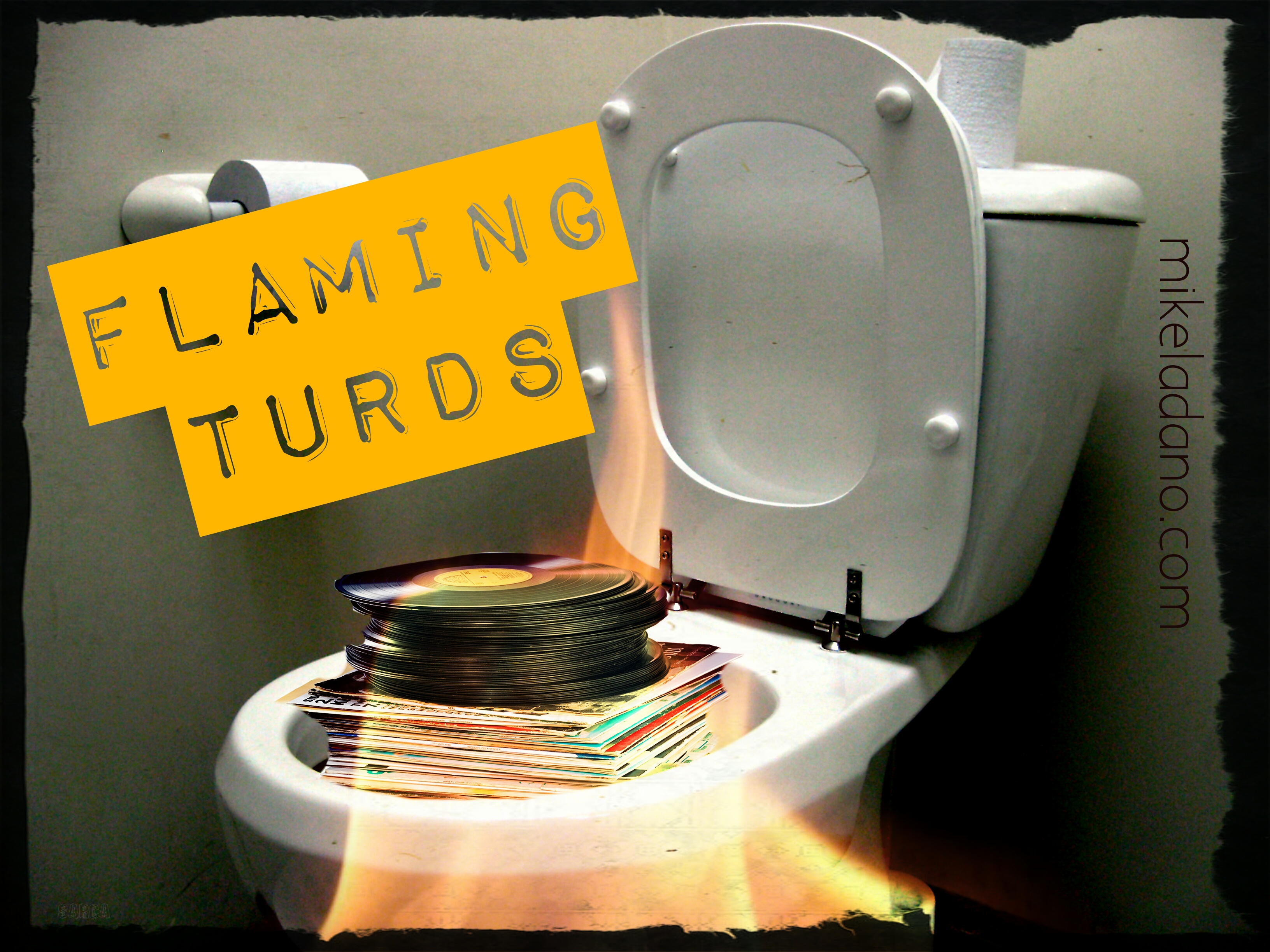
I hope you enjoyed the Week of Flaming Turds here at mikeladano.com. Β When you amass a large collection of music, you end up with a number of stinkers because “hey, it’s part of the collection”. Β Collecting could probably be diagnosed as an illness, related to OCD. Β As a reviewer, I tend to review the music I listen to more often, which is (generally) stuff I like. Β Hence, a skew towards positive reviews. Β To break up the monotony I collected some writings about some stinkers this week and put ’em out as the Week of Flaming Turds. Β And thank you Sarca for the title and logo. Β She rocks, doesn’t she?
Now that we’re at the end of the week I have three questions, so please feel free to leave a comment.
1. Did you like this theme week?
2. Which of the five do you think stink the most? Β If applicable, which album do you like most?
What better way to end theΒ WEEK OF FLAMING TURDSΒ than with a covers album?! Β Thanks for joining us this week for some very questionable music!
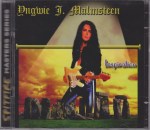
YNGWIE MALMSTEEN – Inspiration (1998, 2000 Spitfire 2 CD reissue)
“Woah!” said I upon spying this album for the first time, back in 1998 at the big HMV on Yonge St. Β “Yngwie did a covers album! Β Scorpions,Β Rainbow, Rush, lots of Purple…I’m in!” Β For some reason, I thought that updated versions of some of my favourite songs redone by Yngwie Malmsteen would be something I’d want to hear all the time. Β Eagle Rock did a reissue of Inspiration a couple years later with some bonus tracks out of the Yngwie archives, so when that one came in used at the Record Store, I swapped up for it.
Now, you might think that with such vocal luminaries as Jeff Scott Soto, Joe Lynn Turner, and Mark Boals, it would be hard to miss. Β You would be wrong. Β It’s impressive that all three guys served as lead vocalist for Yngwie in the early years, and returned for the covers album. Β Beyond that, this album is still a turd. Β Right from the orange-skinned Yngwie turd cover art, to the ghastly version of “Manic Depression” that Yngwie sings himself, this album is dreadful. Β Just a real haul to try and listen to in one sitting.
Yngwie insists on producing all his music, and he has managed to make Jeff Scott Soto sound dull, sterile and boring. Β No mean feat. Β “Carry On Wayward Son” (Kansas) is an excuse for Malmsteen to over-shred, but Soto is not given a chance to do anything. Β Even though Yngwie’s version of the song is actually shorter, it sounds way longer. Β A simply atrocious “Pictures of Home” is given to Joe Lynn Turner to sing; kind of obvious since he was actually in Deep Purple for a few minutes. Β How did they get drums to sound this bad? Β The Blackmore obsession continues with “Gates of Babylon” (Rainbow) and even more Purple: Β “Mistreated”, “Demon’s Eye”, and “Child in Time”. Β Yes, that makes half of this covers album a Ritchie Blackmore covers album. Β “Gates of Babylon” is pretty good, Soto finally unleashed, but then Yngwie shits all over it with a guitar solo that is way louder than the lead vocals!
Gates of Babylon
The best things about these remakes could beΒ the keyboard of Jens Johansson: not trying to copy Jon Lord in any way, but certainly a fun player to listen to if you’re into the neo-classical. Β Unfortunately even he can’t save some of these tracks. Β “Child in Time” is truly awful, simply not worth listening to. Β Why waste eight minutes on this when you can play the original? Β On the brighter side, a heavy version of “In the Dead of Night” by the progressive rock supergroup, U.K. is pretty good. Β It’s a song you may recognize (I knew it from somewhere), but perhaps the reason I dig Yngwie’s version is that the original isn’t ingrained in my mind. Β Β Mark Boals sings it, and his voice is strong and ripping!
Then we have the bonus CD. Β (The Japanese version of the CD has a bonus track, Hendrix’s “Spanish Castle Magic”, but I don’t care.) Β The best track on this disc is the song “Voodoo” from Yngwie’s album Magnum Opus. Β Mike Vescera was the singer, and I always liked his era in Malmsteen. Β It’s a heavy original tune with buckets of drama.
The balance of the bonus CD is a mixture of early Yngwie rarities and interviews…mixed together. Β Meaning you don’t get actual full songs. Β You get bits of songs and then Yngwie talking about the album and the music that inspired him, including Paganini. Β I really hate when songs are chopped up like this. Β The interview is not riveting but is good. Β Childhood musical memories, early bands, and influences are notable topics. Β Yngwie’sΒ preoccupationΒ with his own playing is fascinating. Β He calls it an “obsession” and it’s clear from his work that he plays only to please himself. Β And that’s just dandy.

InspirationΒ as a whole is overplayed, sonically sterile, and comes across as completely uninspired. Β When Yngwie overplays on his own originals, that’s OK. Β That’s the way the songs were written. Β When you go nuts soloing all over “Sails of Charon” (Scorpions), all the listener really wants is to hear the sultry, original tones of Uli Jon Roth. Β InspirationΒ is still a chore to finish, and it’s now going back on the shelf for a very long time.
We continue with theΒ WEEK OF FLAMING TURDS! Β We’re looking at a collection of malodorous music. Β Strike a match, you’ll need it for these stinkers! Β This one smells like something went bad in that fridge….
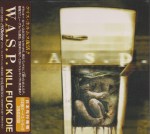
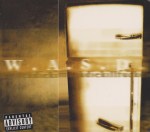
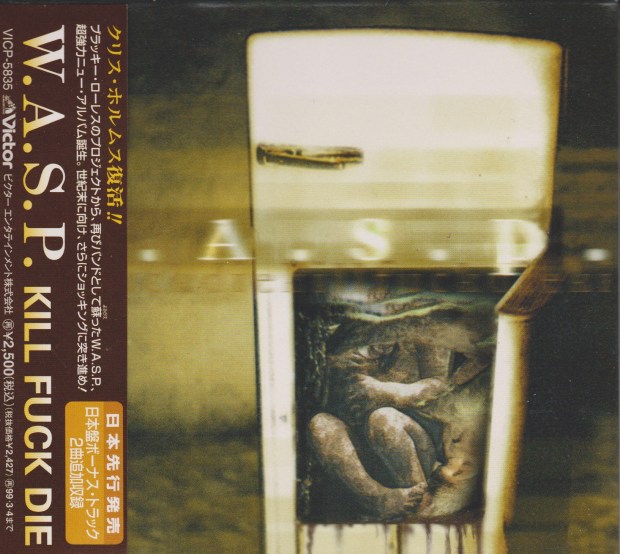
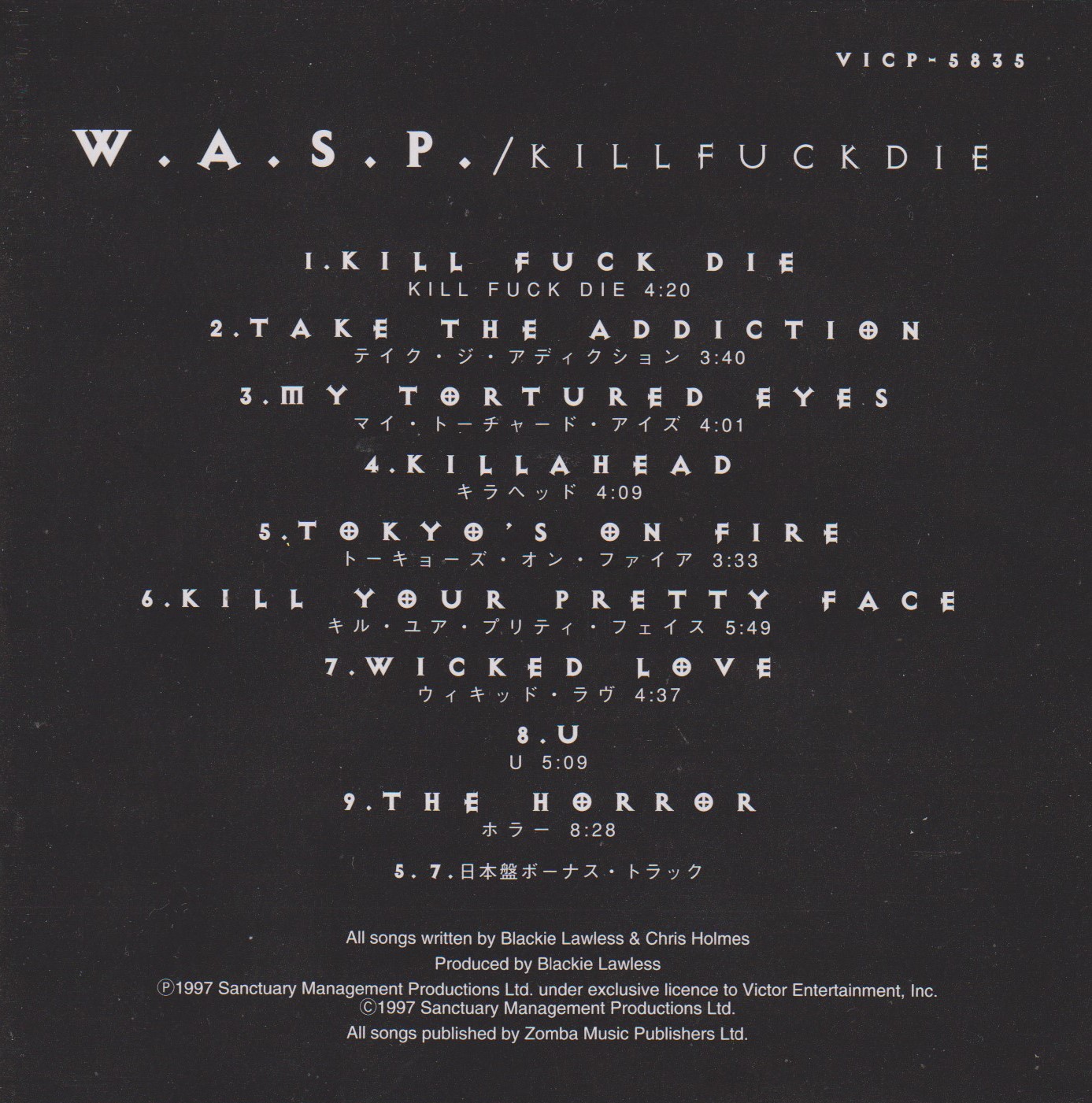
W.A.S.P. – Kill.Fuck.Die (1997 Castle, 1997 Victor Japanese import)
W.A.S.P. sure started to suck in the 1990’s. 1995’s Still Not Black Enough was alright: It got the job done in putting new W.A.S.P. music on the shelves, though it was hard to find in stores. Β Then Marilyn Manson came along, the new king of shock rock, and Blackie Lawless said “Hey! Β I did that first! Β I need to take back my throne.” Β Caking on the makeup, he reconnected with erstwhile lead guitarist Chris Holmes. Β Rather than playing to their collective strengths, the pair instead wrote and recorded an album of industrial rock that came off as a desperate attempt to be relevant. Β The oh-so edgy album title Kill.Fuck.Die. had to be abbreviated to K.F.D. Β The album packaging was clever in concept but crap in delivery. Β A blurry picture of a fridge opens to reveal another blurry picture body parts and meat. Β On the inside, yet another blurry picture of a pig carcass. Β Go, 90’s!
Because this writer is a fucking OCD idiot, he owns both the domestic and Japanese versions of K.F.D. Β This means I have all the different bonus tracks. Β You get to read a one-stop review including all the tracks. Β Good for you!
“K.F.D” sounds as if the band were playing in a shoe box full of stuffing. Β W.A.S.P. are muffled, robbing them of the guitar excitement we’re used to. Β Blackie’s voice is distant because…90’s. Β As usual Stet Howland’s drumming is way too busy. Β Fortunately the song has hooks, but who wants to run around singing “Kill! Β Fuck! Β Die!”? Β Not this guy. Β Sorry Blackie, but even as an angry young man I thought this was lame.
Skip the boring and monotonous “Take the Addiction”. Β Do the same for “My Tortured Eyes”, a slow distorted drag of a song. Β These tunes are necessary listening only for diehard Blackie fans who need to buy everything he burps and farts. Β There are a couple good songs next, though the titles are pretty doltish: Β “Killahead” and “Kill Your Pretty Face”. Β The first is fast metal, but of course still with this annoying “industrial” production. Β (I use the quotation marks because it’s really not industrial music per se…there are no interesting samples or loops to keep things moving.) Β The second is a slow burn, that drags for a while before we finally get to the chorus, which is a good one at least. Β Good enough to consider it a decent song. Β “Fetus” is a waste of time, just a minute of screaming and noise. Β It blends into “Little Death”, just noise trying to sound like Trent Reznor. Β Wisely, the Japanese edited these twoΒ off, and included their own bonus track “Tokyo’s On Fire” in this spot. Β Maybe “Little Death” could have been a good song if it wasn’t compressed and distorted into nonsense. Β Thankfully they stuck to a rock production with “Tokyo’s On Fire”. Β That does make it sound odd sitting in the middle of the album. Β Suddenly, the music sounds alive, not strangled! Β “Tokyo’s On Fire” sounds like W.A.S.P., not Marilyn-Trent Lawless!
Another dumb title, “U”, masks an OK song. Β The lyrics are pretty are pretty half-baked. Β “U fuckin’ suck!” sings Blackie. Β No wonder they didn’t include a lyric sheet in this baby. Β Anger is a great emotion to express in rock music. Β Get it out! Β But “Kill yourself for me,” doesn’t cut it for lyrics. Β Shock without purpose. Β A molotov cocktail without a revolution. Β It’s just shrapnel, nothing more. Β “Wicked Love” is better, thankfully, with a good chorus and melody, but again the compressed guitars just underwhelm. Β It would have been nice if Blackie had let the guitars sound like, you know, guitars. Β The album closes out on “The Horror” which is way too long, and takes forever to go anywhere. Β A good solid five minutes could have been trimmed from this coma-inducer. Β It ends powerfully, but it’s basically just a reprise of “K.F.D.”. Β So, if you consider “K.F.D.” and “The Horror” to be one song in two parts, and do the same for “Fetus” and “Little Death”, then…holy shit, Blackie only came up with nine new songs for this album, including the Japanese bonus track!
The aforementioned domestic CD packaging has two significant flaws. Β One is that the cardboard fridge is hinged on a perforation, which usually tears after opening it too many times. Β The other is that it is unfortunately not worth opening. Β Keep the fridge closed, fans.
We continue with theΒ WEEK OF FLAMING TURDS! Β We’re looking at a collection of malodorous music. Β Strike a match, you’ll need it for these stinkers! Β Today, please welcome to the stage, Mr. Geoff Tate.
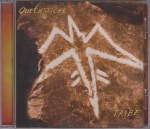
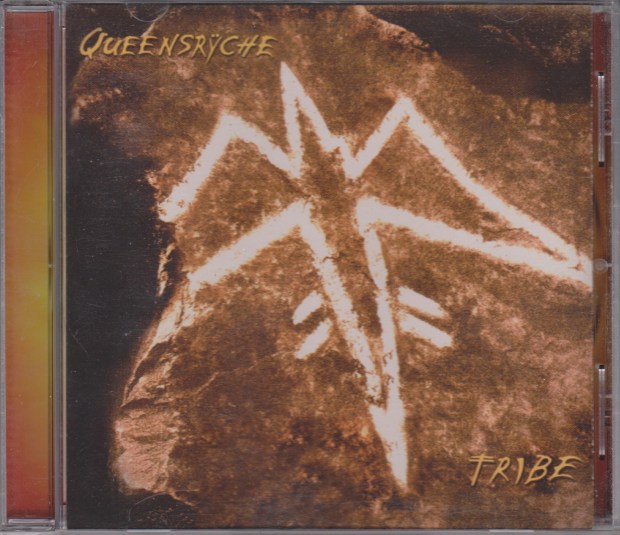
QUEENSRΕΈCHE – Tribe (2003 Sanctuary)
Queensryche fans have had a lot to deal with over the last 20 years. Β Uneven albums, lineup changes, framed by occasional flashes of brilliance were the norm up until recently. Β The most significantΒ obstacle was the 1997 departure of Chris DeGarmo, their chief songwriter and beloved guitarist. Β Overall burnout caused by band turmoil led DeGarmo to retire from music altogether and follow his dream of becoming a pilot. Β Later statements from the band (during their legal battle with former singer Geoff Tate) claimed outright that he left because of “Geoff Tate’s personal demeanor” with the guitarist. Β In his absence,Β Tate took over the role of primary songwriter and began leading the band. Β Their first post-DeGarmo album was 1999’s Q2k, a pretty heavy record that was largely dismissed by fans for being a departure from style and quality. Β DeGarmo’s replacement guitarist Kelly Gray was let go shortly after the Live Evolution album. Β Struggling to come up with material for another album, Queensryche called Chris DeGarmo up on the telephone. Β The guitarist softened his stance and readied himself to make a full return to the band. Β He wrote, played guitar in the studio and even took part in photo shoots. Β Fans hoped for something special that would live up to the Queensryche legacy from this reunion. Β It was not to last. Β The same old strains returned between DeGarmo and Tate, and it was over before it started.
Fandom felt the wind taken out of itsΒ sails, and eyebrows were raised at the sudden second departure. Β The releasedΒ album TribeΒ featured five co-writes from Chris DeGarmo, and one from new Queensryche guitarist Mike Stone (ex-Peter Criss), who was hired shortly after. Β Both Stone and DeGarmo receive credit as special guests. Β Upon listening, best hopes for the album were dashed. Β Tribe‘s 10 songs come off as half-baked outtakes from a better album that was Β never made. Β Some of the blame must go to the production, a flat and dry sounding affair. Β However that cannot explain the dull songs. Β It’s not all bad — “Open Your Eyes” features a damn fine, exotic sounding riff, probably contributed by DeGarmo. Β They just couldn’t construct a memorable song around it, and Tate couldn’t seem to get his singing into gear.
The sole Mike Stone co-write, “Losing Myself” is a programmed mess of samples without a song. Β The chorus sounds like an outtake from the dreary Hear in the Now Frontier album. Β Same with the acoustic “Falling Behind”, which is too bad because it’s one of the songs on which you can hear Chris DeGarmo’s playing. Β In fact, Tribe in general might be considered Hear in the Now Part II, so similar are they.
The only real quality musical moment happens on the DeGarmo co-write “Desert Dance”. Β Exotic and heavy but with an actual song built out of it, “Desert Dance” gets you moving. Β Drummer Scott Rockenfield throws a lot of percussion tricks into it, emphasizing the exotic (this is true of the album in general). Β Tate actually sounds alive on this, becoming the cheerleader of the album. Β “Desert Dance” was the only song that had me reaching for the volume knob to turn it up. Β One other decentΒ trackΒ is “Rhythm of Hope”, a co-write with Eddie Jackson and Scott Rockenfield that sounds like it was an effort to be the second “Silent Lucidity”. Β Unfortunately that moment has passed.
It’s worth noting that the only member to have a songwriting credit on every song in Geoff Tate. Β I place the blame for Tribe‘s lack of life at his feet. Β The album is only 41 minutes, but it is a long 41 minutes. Β Difficult to finish, hard to like and easy to forget, Tribe remains a chore today.
It’sΒ theWEEK OF FLAMING TURDS!Β This week we will be looking at a collection of malodorous music. Β Strike a match, you’ll need it for these stinkers! Β
For aΒ “drunk review” of this same album by Aaron over at the KMA,click here!
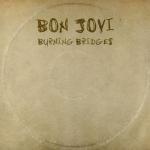
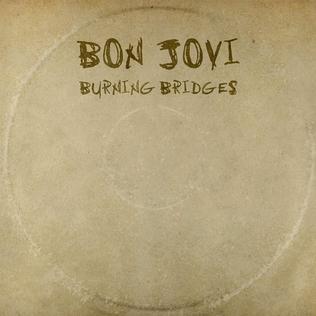
BON JOVIΒ – Burning Bridges (2015 Mercury)
Like the gambler, I lay my cards on the table: Β Richie Sambora was a critical component of Bon Jovi, perhaps as important as their leader. Β That’s the way we see it here at LeBrain HQ. Β A Bon Jovi without Sambora is a far less interesting animal. Β Still, we do have a responsibility to listen to their first post-Richie album, Burning Bridges, with open ears and report back with accuracy. Β So let us begin.
Burning Bridges is a set of unreleased and new songs, and also their last record with Mercury. Β By calling it a gift to the fans and not considering it a “real” album, the pressure was off. Β Producer/co-writer John Shanks handles guitar duties with Jon Bon Jovi on acoustic. Β Billy Falcon also co-wrote a number of tracks, and there’s even one lone Richie co-write.
Things begin slowly on “A Teardrop toΒ the Sea” but there is a dark edge to it that is appealing and reminiscent of the underrated These Days album. Β I question the wisdom of opening an album wish such a slow number but it does make a strong first impression. Β It is sparsely arranged yet powerful, and with or without Richie it sounds like Bon Jovi. Β All it needs is one of his bluesy, soulful solos…alas. Β Shanks does his best to imitate the axeman. “We Don’t Run”, the single, starts off well but then it descends into another glossy, overproduced digital mess with another imitation Richie solo. Potential wasted.
Sambora co-wrote “Saturday Night Gave Me Sunday Morning” but it’s just paint-by-numbers Pop Jovi. You can predict the hooks coming, although you gotta give credit to the talent of Tico Torres for throwing in some cool drum beats. Pop Jovi strums the acoustics again on “We All Fall Down”, a ballad completely interchangeable with similar ones on any Bon Jovi album over the last decade. Ditto, “Blind Love”. It’s like Kleenex: You pull one out, and an identical tissue takes its place! Β Pop Jovi continues balladeering on “Who Would You Die For”. Β It does have a dark and low keyΒ These Days kind of vibe, but the slick production and programming are completely unnecessary. Β I’d give the song a C though rather than a D or lower, because it’s dramaticΒ enough, crap production aside.
Unplugged “Fingerprints” is horrid, flaccid and flatulent for its entire six minute length. Β Lyrically, at this point I’m convinced that Jon is just writing down the first things that come to his mind. Β “I gave you my fingerprints, guilty or innocent,” he sings with false passion. Β More woah-oh-oh singing commences on the nauseatingly contrived “Life is Beautiful”, clearly a leftover from Bon Jovi’s new country period (Lost Highway). Β The crapslide continues with “I’m Your Man”, upbeat at least but without a spine. Β Finally we have “Burning Bridges”, the song Jon wrote about leaving Mercury, and it’s actually the best song on the album! Β Yes, it’s country, but it sounds more or less like a jam, without the annoying production. Β The lyrics are pretty hilarious and are by far the most interesting ones on the album. Β It’s pretty obvious what it’s about so if you want a taste of the music industry from Jon’s perspective, give it a listen:
“After 30 years of loyalty, They let you dig the grave, Now maybe you could learn to sing, Or even strum along,Β I’ll give you half the publishing, You’re why I wrote this song.”
Ooft! Β Elsewhere he invites them to play this song in hell! Β A bitter end indeed.
Burning Bridges is an unnecessary album to own. Β It’s bookended by two decent songs, with the last being the only one that I would consider for a mix tape. Β The “real” Β new Bon Jovi album, This House is Not for Sale, comes out this spring. Β Perhaps with new guitarist Phil X (formerly of Triumph) in the mix, some chemistry will finally return.
1/5 stars
1. “A Teardrop to the Sea”
2. “We Don’t Run”
3. “Saturday Night Gave Me Sunday Morning”
4. “We All Fall Down”
5. “Blind Love”
6. “Who Would You Die For”
7. “Fingerprints”
8. “Life Is Beautiful”
9. “I’m Your Man”
10. “Burning Bridges”
Welcome to theWEEK OF FLAMING TURDS! Β This week we will be looking at a collection of malodorous music. Β Strike a match, you’ll need it for these stinkers! Β Let us begin with a story from Getting More Tale.
GETTING MORE TALE #473: Party For Two
I found this old diary entry. Sometimes you don’t need any commentary. So here you go!
Date: 2006/10/05 Title: GOD DAMMIT
Fuck, me. I am listening to Shania Twain.
“Party For Two” with Mark McGrath.
FUCK, ME. I am listening to Shania Twain AND Mark McGrath.
What the fuck has happened to me?
Jesus Christ. I can’t fucking believe this. I used to make fun of my buddy T-Rev who started listening to Shania Twain because his girlfriend liked them. In my case it’s not my girlfriend. She hates Shania Twain. It’s the fucking am radio at work. God damn them to hell and then may Satan skullfuck them until they bleed red scales out of the ears.
I better go put on a Testament or Anthrax CD or something. FAST.
OK fine, I’ll add some commentary. Β One of the bosses at work dated Shania Twain when she was a teenager named Eilleen. Β It’s true. Β As far as I’m concerned, her music still stinks!
DEEP PURPLE – Space Vol 1 &2 (Live in Aachen 1970) (2001 Sonic Zoom)
Over the course of the decades, Deep Purple and their official Appreciation Society have found numerous interesting live recordings to release for the fans. Β From significant moments to obscure gigs, each disc has had their own points of interest. Β It doesn’t hurt that Deep Purple never did the exact same thing twice.
This German gig from 1970 wasn’t well documented or reported on. Β Purple were on a large bill including Pink Floyd, Free, Traffic and Tyrannosaurus Rex. Β It’s possible but not known for certain that Kraftwerk may have also played that day. Β Bootleggers made sure that at least some of it was recorded. Β The released bootleg H-Bomb was one of the earliest Deep Purple live recordings available, and has been available in bootleg form since it taped. Β According to organist Jon Lord, he heard that the bootleggers sneaked in an eight track mixer inside a Volkswagon, hidden under the stage. Β When they had the chance to hear the recordings on LP, the band were actually impressed with the overall quality.
In 2001, Sonic Zoom released the show on CD and called it Space Vol 1 & 2. Β Since the original tapes were long lost, Sonic Zoom went back to the earliest vinyl pressings, and cleaned them up, using the best sounding versions of each track.
What you get here is only four longs, but quite a long set, being well over an hour long. Β Purple opened with their instrumental “Wring That Neck”, stretched out to include lots of solos and jams. Β They tease out recognizable melodies such as “Hall of the Mountain King”, “Jingle Bells”, and a jazzy “Three Blind Mice”, disguised on rock instruments. Β Vocals were scarce that evening, perhaps because Ian Gillan was suffering from a sore throat. Β As such his vocals don’t come through as well, but they also often sound as if he’s singing into a tin can. Β Though most everything else is well recorded enough, when the vocals do happen such as on “Black Night”, they are very rough and tumble. Β Jon Lord was also known to be very hard on his Hammond, and like electric whip cracks you often hear the instrument yelping away in the background.
The Stones cover “Paint It, Black” is mostly another excuse to jam on something. Β 11 minutes of equipment-destroying guitar, drums, bass and organ madness is a lot for anyone to digest. Β If you dig drum solos, Ian Paice will keep you mesmerized forΒ manyΒ minutes of straight high-velocity rhythmic instructional. Β You’ll know it’s over when the other guys finally come back! Β That’s nothing, though. Β Half an hour of “Mandrake Root” awaits, one of the longest versions known. Β Ian spends a lot of it screaming, but when it’s jam time you can hear him on the congas. Β The first half of the jam is loose but at least structured. Β Lord considered this his best keyboard work that had been captured so far. Β Interestingly, part of this jam resembles a future song called “Highway Star”. Β Then,Β the second half descends into pure madness. Β Atonal noise, feedback and electric pain dominate these 10 minutes. Β It is an endurance challenge to be sure.
It is not known for certain if any other songs were played that day, but because it was a festival it seems likely that Purple played for this hour and nothing more. Β According to the only written account of the day, PurpleΒ wonΒ over the festival crowd by powering over them. Β That much is clear from this recording.
ALICE COOPERΒ – Freedom for Frankenstein – Hits & Pieces 1984-91(1998 Raven, Australian import)
After a productive spurt of activity in the late 80’s and early 90’s, Alice Cooper laid low for a while. Β A fun live album called A Fistful of Alice in 1997 was his first such release in 20 years. Β There was then a long wait for the next Cooper studio album (Brutal Planet, 2000). Β In the meantime, fans got to snack on interim treats such as the Australian release, Freedom for Frankenstein.
There are already a number of compilations that cover similar periods to Freedom for Frankenstein. Β Prince of Darkness (1989) tackled the two MCA albums Constrictor (1986) and Raise Your First and Yell (1987) plus one single B-side. 1995’s Classicks summed up the Epic albums Trash (1989), Hey Stoopid (1991) and The Last Temptation (1994), with the bonus of rare live tracks from the 1989 live home video Alice Cooper Trashes the World, plus the Hendrix cover B-side “Fire”! Β With those releases already on the market, does Freedom for Frankenstein offer anything unique?
Hell yeah!
1. “I Got a Line on You”. Β Spirit wrote this one in 1968 and Alice Cooper covered it in 1988 for the Iron Eagle II soundtrack. Β Alice’s version was released as a cool music video and stands as one of his best tracks from the era. Β (You can also get this on the Life and Crimes of Alice Cooper box set.) Β Here is an easy way to get the song, a must-own for fans of 80’s Alice. Β This was our first look at Alice’s new musical direction: commercial hard rock! Β He dropped the splatter horror direction and went full-on for radio and video hits.
2. Four-count-’em-four rare live single B-sides. Β These are “Go to Hell”, “Ballad of Dwight Fry”, “Sick Things” and “Only Women Bleed/Wind Up Toy”. Β None overlap with the other two compilations. Β “Wind Up Toy” was only played on the Hey Stoopid tour.
3. “It Rained All Night”. Β It is absolutely inexplicable how this song wasn’t included on the Life and Crimes box set. Β An original Alice Cooper/Desmond Child composition, “It Rained All Night” was also too good to be just another B-side. Β It backed the single for “Hey Stoopid” but stood as a better track than some on the album. Β Perhaps it was nixed for being too ballady on an album that didn’t need any more. Β You can get it most easily now by buying the Hey Stoopid 2013 reissue…but if you get Freedom for Frankenstein instead, you won’t need that reissue at all.
By getting this, you will also acquire “Fire”, and a goodΒ number of the best songs from this period. Β “He’s Back”, “Teenage Frankenstein”, “Freedom”, “Poison”, “House of Fire”, “Hey Stoopid”, and “Feed My Frankenstein” were the big singles, all on one CD. Β Then there’s “Side Show”, the incredible opener from Alice’s 1994 concept album The Last Temptation. Β In fact, the only weakness with this CD is that there is only one song from The Last Temptation. Β Classicks has three — but none of them are “Side Show”.
Freedom for Frankenstein was compiled with the help of Andrew Carpenter, “Australia’s biggest Alice Cooper fan” and archivist. Β Full points are awarded for the interesting booklet and rarities in the tracklist. Β I think the running order could beΒ slightly tweaked for a smoother ride, but at over 78 minutes long, these hits and pieces provide value for your bucks.
HOUSE OF LORDS – House of Lords (1988 Simmons Records/BMG)
Yes you read that correctly. Simmons Records. Did they ever put out anything decent?
House of Lords actually made a hell of a debut with Simmons Records in 1988. Nobody was calling them a “supergroup”, but most of the members had been around the block more than once. House of Lords evolved out of Giuffria, a pretty good AOR rock band featuring the keyboard stylings of Greg Giuffria. In fact there are several songwriting credits by ex-Giuffria singer David Glen Isley, giving clues to the genesis of this CD.
Lanny Cordola played guitar on the prior Giuffria LP, and continued on to House of Lords. Bassist Chuck Wright had a stint in Quiet Riot (in fact he’s back with them today). Drummer Ken Mary kept time during Alice Cooper’s metal phase. All they needed was a singer, and they found a great one in James Christian, who today is the sole remaining original member of House of Lords. They signed to Gene Simmons’ imprint, and got legendary producer Andy Johns behind the mixing desk. All the ingredients were in place.
MuchMusic were promoting the shit out of these guys, and so I dutifully picked up the cassette at A&A Records and Tapes in the fall of 1988.
The self-titled debut, though classy, didn’t have enough identity. Good songs throughout, no clunkers, but also nothing that identified House of Lords as something unique. And so, this great CD has remained largely unknown over the years.
The keyboard heavy opening on “Pleasure Palace” has less to do with Bon Jovi and more to do with the progressive rock bands of the 70’s. The production is pure 80’s, with the echoey drums and the hard to hear bass. It is what it is, and Andy Johns did a better job than most producers could have done in ’88. James Christian comes across as a full-lunged, well rounded singer. He’s able to sing with a little of blue eyed soul, and he’s capable of the screams too. The feature that actually sets the song apart is the keyboards, very gothic and European sounding, but not wimpy.
“I Wanna Be Loved” was the first single/video, an easy choice being mid-tempo with a shout-along chorus. “Oh woah, oh woah, I just wanna be loved!” Sure, sounded good to 16 year old me. Heaps of backing vocals thicken up the mix, and Lanny Cordola plays a tasteful albeit standard guitar solo on top. “Edge of Your Life” serves as a keyboard power-ballad, and a dramatic one at that. The musicianship is stellar and the arrangement is expert, but the standout performer is James Christian.
Since you need a bar room blaster for the dudes, “Lookin’ For Strange” fits the bill. Instruments aflame, and with obvious inspiration from the Van Halen shuffle of old, “Lookin’ For Strange” is nonetheless a ton ‘o fun. Ending the first side of the tape was “Love Don’t Lie”, another power ballad, this one a bit on the soft side. It was also edited down and remixed by David Thoener for a single release. This mix was used for the music video and can be found on reissues of the CD. The album version is the better of the two, since edits often sound…awkward.
Rock and roll resumes with “Slip of the Tongue”, a title that David Coverdale would use a year later. High octane, full speed ahead, this is House of Lords doing the shred. The musicianship speaks for itself and you can hear clear Whitesnake and Thin Lizzy influences. The fast pace sets up “Hearts of the World” very well via contrast. From here, the album becomes more progressive, dramatic, and bombastic. “Hearts of the World” is AOR perfection, choppy with caverns of keyboards and waterfalls of gang vocals. It all sounds so serious, but it’s hard to deny the quality of this song. “Under Blue Skies” follow this with bagpipes (!) and ELP-like keyboard horns. It’s another dramatic, melodic winner with progressive qualities. The outro has those “na na na na na” vocals that all but guarantee you’ll be singing along. “Call My Name” makes it three in a row, though it changes the forecast to sunny. Bright and positive, “Call My Name” is still a big sounding song, with the gang vocals and guitar shreddery that you’ve come to expect.
Cordola gets the chance to show a lil’ bit (a minute) of classical guitar chops as an intro to “Jealous Heart”, the last of 10 tracks. This is your typical album-ending breakup ballad: weepy hearts, melodramatic lyrics, powerhouse vocals…it’s a dead ringer for Journey! Good Journey, though. Since Journey were defunct in 1988, let’s forgive House of Lords for a little hero worship.
House of Lords is a good debut album. Is it great? I would have said so back in ’88 or ’89, but the production has caused it to age, not so well. That’s unfortunate because what House of Lords put out here was pretty remarkable hard rock.
“He influenced me as a drummer, but not a person.” – Simon Kirke, Bad Company
BEWARE OF MR. BAKER (2012 SnagFilms)
Directed by Jay Bulger
Cream.Β Graham Bond.Β Fela Kuti.Β Blind Faith.Β Masters of Reality.Β The resume is one of the most impressive for any drummer of any genre.Β It belongs to the one and only Ginger Baker, a phenomenon of a man, a loose cannon, and a rhythmic genius.Β As you might guess, a documentary based on this wildman prodigy had to be tour de force.
From the start, you know this is not going to be your typical love-fest documentary.Β It begins at the end, with Ginger Baker assaulting director Jay Bulger with his cane, cracking his nose over the issue of who else might appear in this film.Β Indeed, Ginger was not happy about some people the director was interviewing, perhaps his ex-wives and arch nemesis but brilliant bandmate Jack Bruce (RIP).
The bloodied director Jay Bulger
Bruce is one of many associates interviewed.Β Bill Ward, Chad Smith, Neil Peart, Charlie Watts, Eric Clapton, Chris Goss and many more praise the drummerβs abilities. Β His skill seemed to earnΒ Baker many a free pass over the years, for his quick temper.Β Poor Eric Clapton thought he was free of the fiery drummer with the end of Cream, but then Ginger joined his new band Blind Faith! Β In this film, Baker seems like an incredibly difficult individual.Β He barks at the director many times over questions he doesnβt like. Β He’s purposely difficult. Β Living a faraway life on a ranch in South Africa, Ginger Baker had isolated himself from his past.Β It is a recurring theme in his life.Β When things got tough, or when he went flat broke, he has always uprooted and gone elsewhere, starting over fresh. Β Baker never had it easy, losing his dad in World War II when he was only four.
The constant uprooting and starting anew took its toll on Baker and his family. Β While living in California in the early 90βs with his third wife, he hooked up with Masters of Reality for their landmark second album, Sunrise on the Sufferbus.Β Though it was a good experience musically, Baker couldnβt hack starting over this time.Β Opening for Alice in Chains, the drummer was pelted with crap by grunge fans thatΒ had no idea who the legend Ginger Baker even was.Β The union did not last and Baker was off again to start over once more.
Through the mess that was his life, Ginger Baker was always one of the most brilliant drummers on the stage.Β More a jazz drummer who played heavy, Baker learned to move all four limbs independently which created an illusion of a blur of speed.Β He wasnβt physically moving as fast as it sounds, but the end result was a unique sound in rock that nobody else copied.Β Jazz drummer Phil Seaman introduced him to African rhythms which led to a life-long quest.Β Baker lived in Africa more than once, absorbing the local rhythms and playing with Fela Kuti, learning all he could from the birthplace of the drum.
Johnny Rotten, with whom Baker played in P.I.L., praised the drummer regardless of his personal shortfalls.Β Whatever his personality might be, it is what was necessary for Baker to perfect his craft, argues Rotten.Β The ends justify the means.Β He could not have been Ginger Baker, if he was not Ginger Baker.Β A very punk-like attitude.Β Whoever Baker bruised and bloodied, the higher goal of rhythmic transcendence was achieved, and could not have been achieved if he was a different person.Β Thatβs the way Johnny Rotten sees it, and since nobody can change the past, thatβs a good way of looking at it.