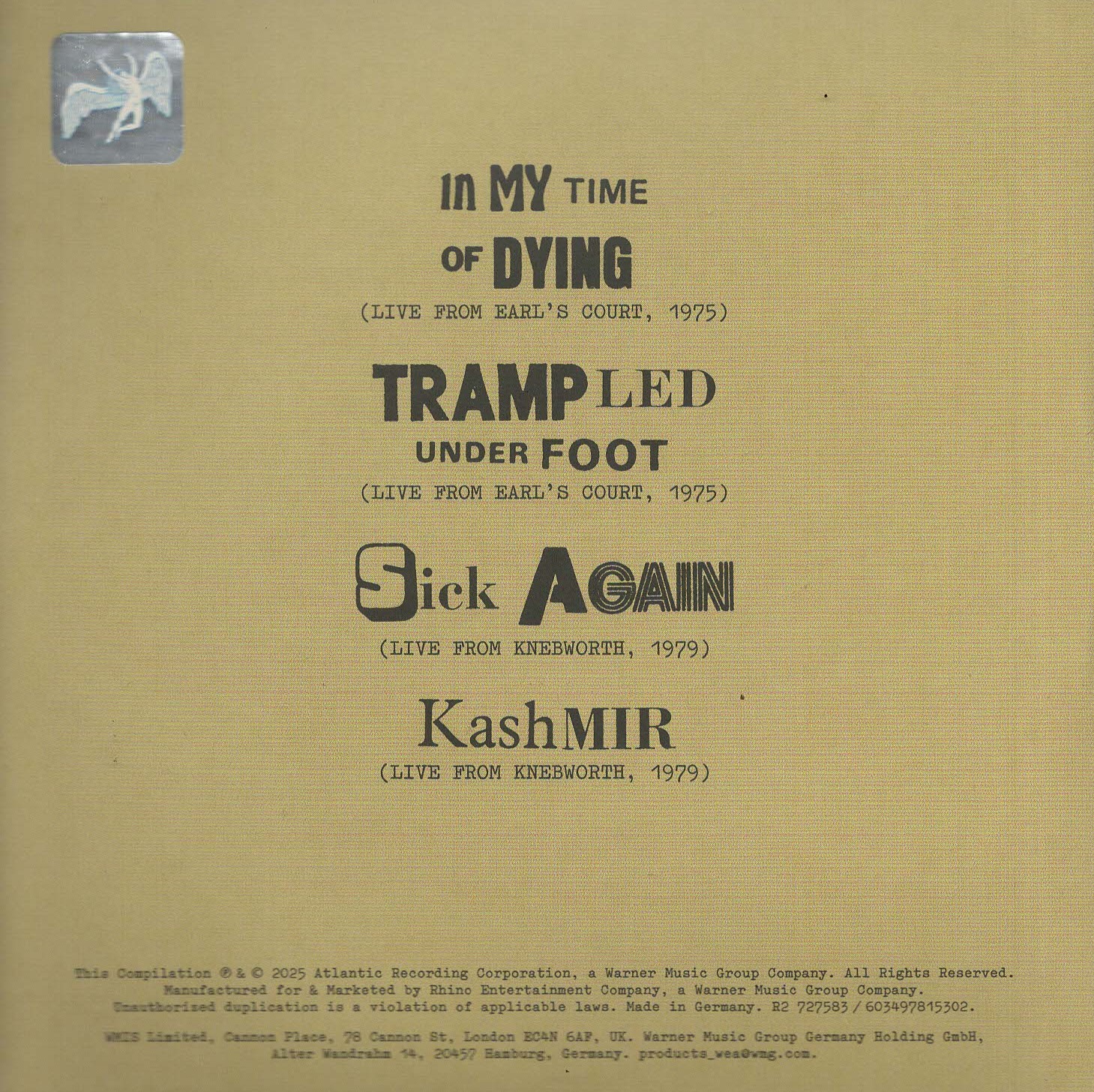
Feast or famine: Led Zeppelin have always been weird with their archival releases. There are numerous valid complaints about the release of this live EP, sourced from their 1975 Earls Court and 1979 Knebworth concerts. Why not just release the whole shows, as they were on the DVD set? Why not indeed? We have no good answers to that, so instead we’ll focus on what we did get: a smoking hot live EP by Led Zeppelin, including a magnificent “Kashmir”. It also tickles the nostalgic funnybone that they simply called it Live EP. From the band that brought you a DVD called DVD, and a box set called Box Set 2. The cover art recalls Physical Graffiti in such a way that you know without guessing that it’s a Led Zeppelin release.
Of course, calling it an EP is a matter of perspective. At over 34 minutes, it’s a live album.
“In My Time of Dying” was played fourth at Earl’s Court, but here it opens the affair with a slower, more brooding tempo. Then things pick up. You know how the song goes: “Oh Gabriel, let me blow your horn!” as things get faster and funkier. Plant drives this beast with orgasmic shouts and declarations, while Pagey plies the neck of his guitar with a slide. In the back, John Paul Jones and John Bonham are so locked in, it’s boggling. With Jones playing countermelodies, Bonham accentuates the groove. You could listen to the song multiple times, focusing on different musicians, and not get tired despite the 11 minute running time. Plant’s vocal outro is the kind of bombastic exercise you expect in any decent Zep parody – but done with sincerity. This is is peak Led Zeppelin.
13th in the Earl’s Court set was “Trampled Underfoot”, but here it appears without a gap. You want funky? You got funky. Talk about love! Plant brings the love. This accelerated version is locked into the groove, with Bonham adding flair when necessary, and John Paul holding it down. Pagey is free to possess that riff like a six string demon, all before John Paul goes into a keyboard solo. At about seven minutes, they just bring the whole thing to a boiling jam. Not just a jam, but a memorable part of the performance. A definitive version of a classic.
There is a fade before we get to the Knebworth 1979 tracks. Something about late Led Zeppelin. You know they were not at their peak, health-wise, and there are tales of mixed reviews live. Knebworth was one such concert, considered a show with incredible moments of Led Zeppelin’s chemistry, and others a display of a tentative, nervous band. “Sick Again” shows absolutely none of the weakness. It was played 15th in the set. Perhaps by that time, Zeppelin had felt warmed up and comfortable?
“Knebworth was useless. It was no good at all. It was no good because we weren’t ready to do it, the whole thing was a management decision. It felt like I was cheating myself because I wasn’t as relaxed as I could have been. There was so much expectation there, and the least we could have done was to have been confident enough to kill. We maimed the beast for life, but we didn’t kill it. It was good, but only because everybody made it good.” – Robert Plant
None of that is evident to the untrained ear on “Kashmir”, which was 13th in the set. “Kashmir” is somewhat a rarity as far as official Led Zeppelin live audio versions go. The only other officially released live version in audio format was on Celebration Day, a 2007 reunion concert with Jason Bonham on drums. This sounds brilliant. There might be more energetic performances out there, but as the only live one by the vintage band on CD goes, it’ll probably get repeat plays in your deck.
As a Live EP (or album if you will), this is a brilliant way to spend 34 minutes with Led Zeppelin.
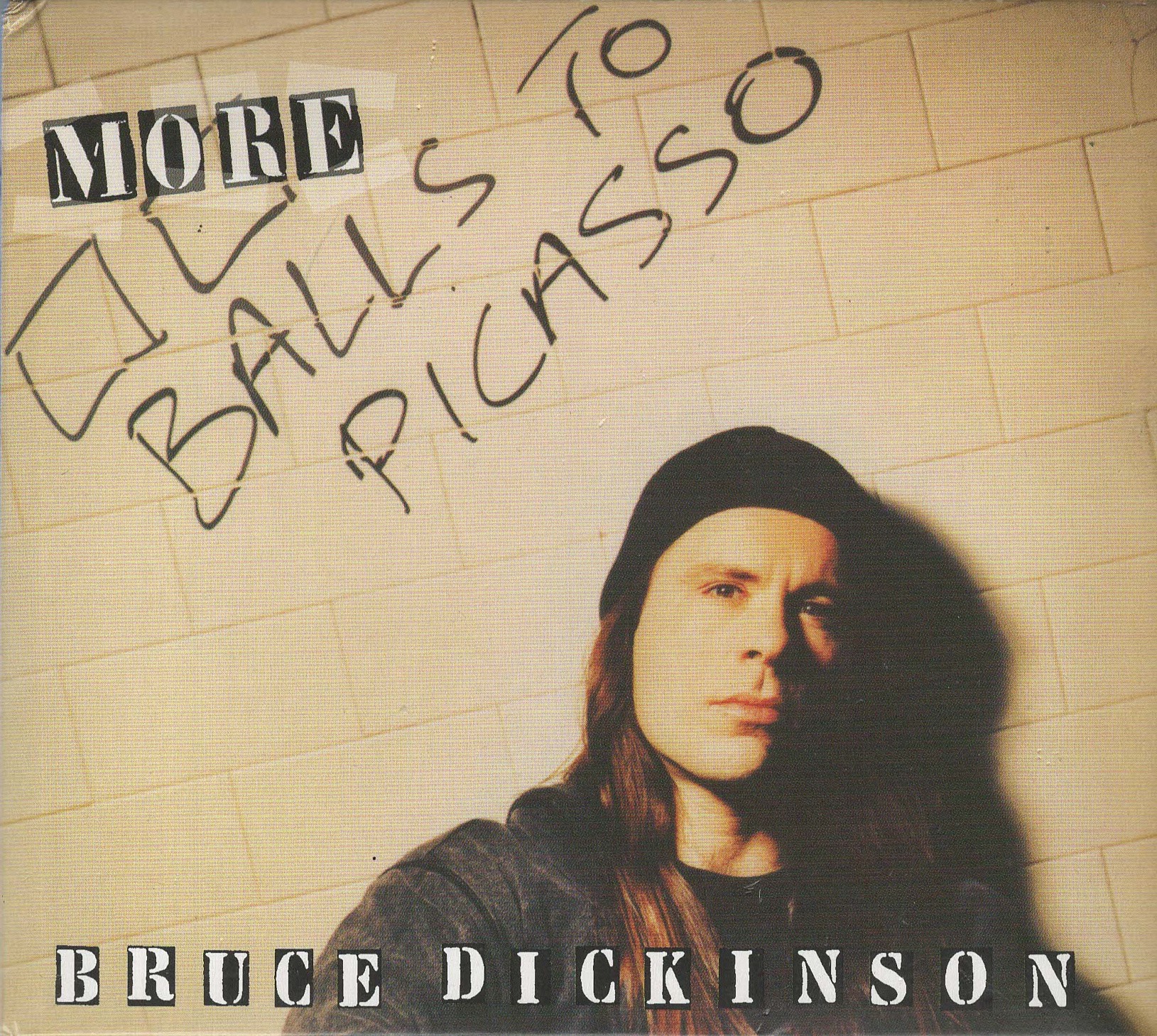
BRUCE DICKINSON – More Balls to Picasso (2025 BMG)
A time of turmoil! As Bruce explains in the excellent liner notes within, there was a lot going on in the early 1990s. Aside from leaving Iron Maiden in order to spread his wings as an artist, Bruce ended up scrapping the new solo album a couple times. The first was an attempt with the UK band Skin. Bruce was dissatisfied. He tried again in America with Keith Olsen, a more pop version that Bruce said was influenced by Peter Gabriel. Olsen had some issues, and that record too was scrapped when Bruce met a band called Tribe of Gypsies. Immediately finding chemistry with guitarist Roy Z, Bruce started over again with producer Shay Baby, retaining only the song “Tears of the Dragon” from the earlier attempts. Most of the Olsen album was ultimately released on B-sides, and on the 2 CD deluxe edition of Balls to Picasso. The released 1994 album was heavy, and very 90s. Little did we know, however, that Bruce wasn’t fully satisfied with the final album either. By the time Bruce reunited with Roy and the Tribe of Gypsies in the late 1990s on Accident of Birth and Chemical Wedding, Bruce was questioning if Balls to Picasso should have been heavier. More guitars.
Now, you can decide for yourself. More Balls to Picasso is a remixed version of the album, with guitars added after the fact, and other enhancements made using the original tapes. Given that the original is considered an important album in Bruce’s solo j0urney, it’s a risky record to revisit in this way. Yet, Bruce did have a point. As good as it was, it stands out in the discography as different; a lone rock.
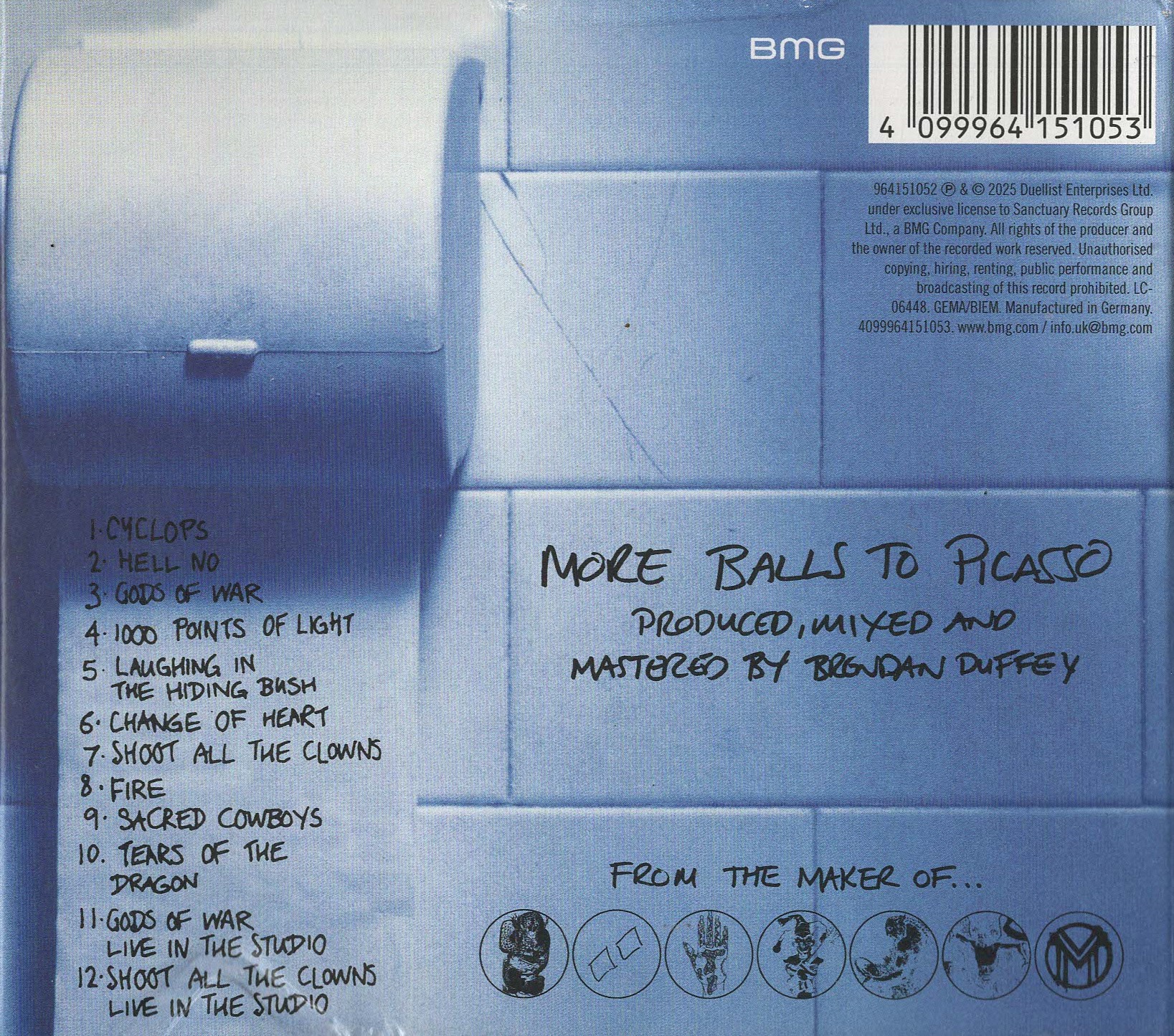
The running order is unchanged. “Cyclops”, a song more relevant today lyrically, is about living in the camera’s eye. The sonic changes are immediate. You can hear the sparse instrumentation of the original mix, but with thicker guitars and an added keyboard part that just shrieks. It’s a very cool enhancement and the first clue that messing with this album was not a bad idea. All the original elements are there, from Roy’s sparse guitar to the exotic percussion that often set the stage on this album. Now there is just more to listen to. You realize, there was always room for more.
“Hell No” opens as the original did, with more percussion and more guitar chords. The bass has more thump, and the keyboard licks are a nice touch. “Gods of War” has an added “war drum” part, along with some keys that sound like howling winds. This song is one of the more transformed of the lot, though still not drastically so. “1000 Points of Light” has one of the best enhancements. In the chorus, you get a sudden guitar and keyboard duo lick that was never there before, and never would have existed in 1994. It’s much more in line with the kind of metal melodies that Bruce did later in his solo career. This hook improves the song 1000 percent, but never would have made the 1994 record.
Side two would have come at this point on the original album, which opens with “Laughing in the Hiding Bush”, never a standout song, but similarly remixed with additional atmosphere. Now, “Change of Heart” is one that shouldn’t be messed with. You don’t enhance perfection. The keyboard/string arrangement is a nice touch, but the original is just too ingrained. Its sparse arrangement was part of what gave it such lonely impact. Now it sounds less special. Less unique. Less like a dark room with a sole occupant. On the other hand, “Shoot All the Clowns” (which was a single) is much improved. The song always felt a little cringey, with Bruce doing that rap part. Now, with a horn section added, it makes much more sense. A solid improvement. “Fire”, meanwhile has more going on with the guitar and bass, and feels more engaging. There are also what sounds like keyboards playing horn-like parts. Moving on to the blazing “Sacred Cowboys”, this one would be difficult to improve upon. Bruce’s double-tracked vocal on the original was so hypnotic. This remixed version sounds strangely nasal. Finally, “Tears of the Dragon” is another sacred song that you don’t want to mess around with. The added string-like keys don’t really add. Once again, the original was already perfect and this new one is like Bruce’s version of Drastic Symphonies. Some may love it, but the original will remain the go-to for most.
Two added “live in the studio” bonus tracks are included. Previously unreleased, these are heavy versions that should have been issued last time they released this album! Bruce absolutely wails on “Gods of War”. “Shoot All the Clowns” meanwhile gives you something to compare the horn version with, but Bruce’s vocals are very different on the verses. They’re actually cooler here.
What this sounds like is Bigger Balls to Picasso. It’s the same album. With a couple exceptions, what we loved about the original record is still here. In the liner notes, Bruce talks about being most comfortable in a “band” situation, rather than just with a bunch of hired musicians. This sounds like the same band, but bigger. It’s basically the Balls to Picasso band, as if they added a backing guitarist and a keyboardist and went out to play the songs live in the new configuration. Some songs lose in the exchange, but more end up sounding better. That’s it in a nutshell.
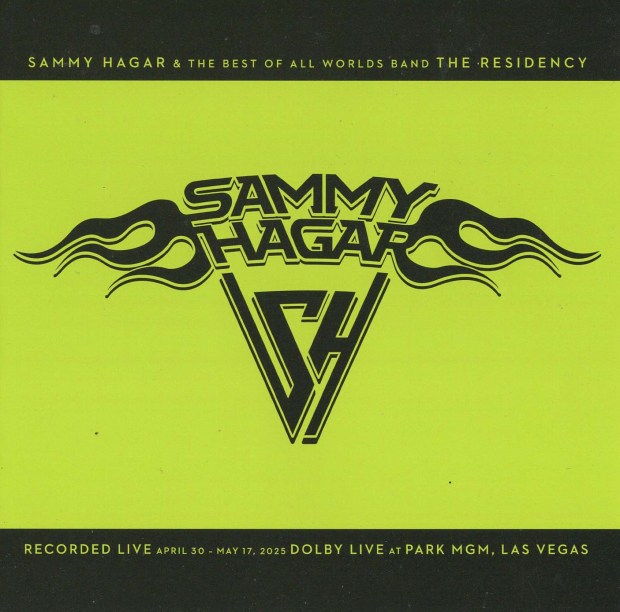
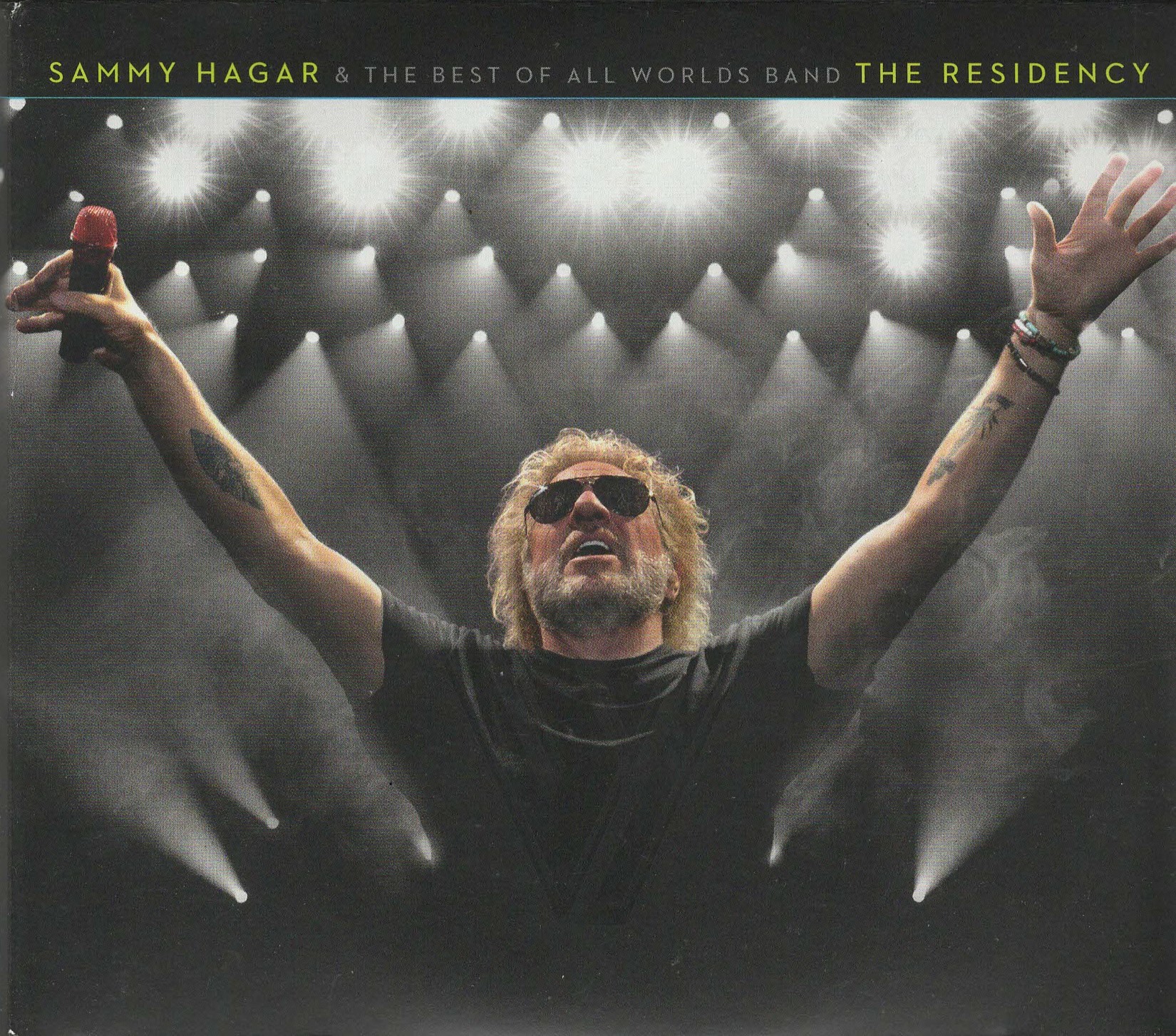
SAMMY HAGAR & THE BEST OF ALL WORLDS BAND – The Residency (2025 Big Machine Rock)
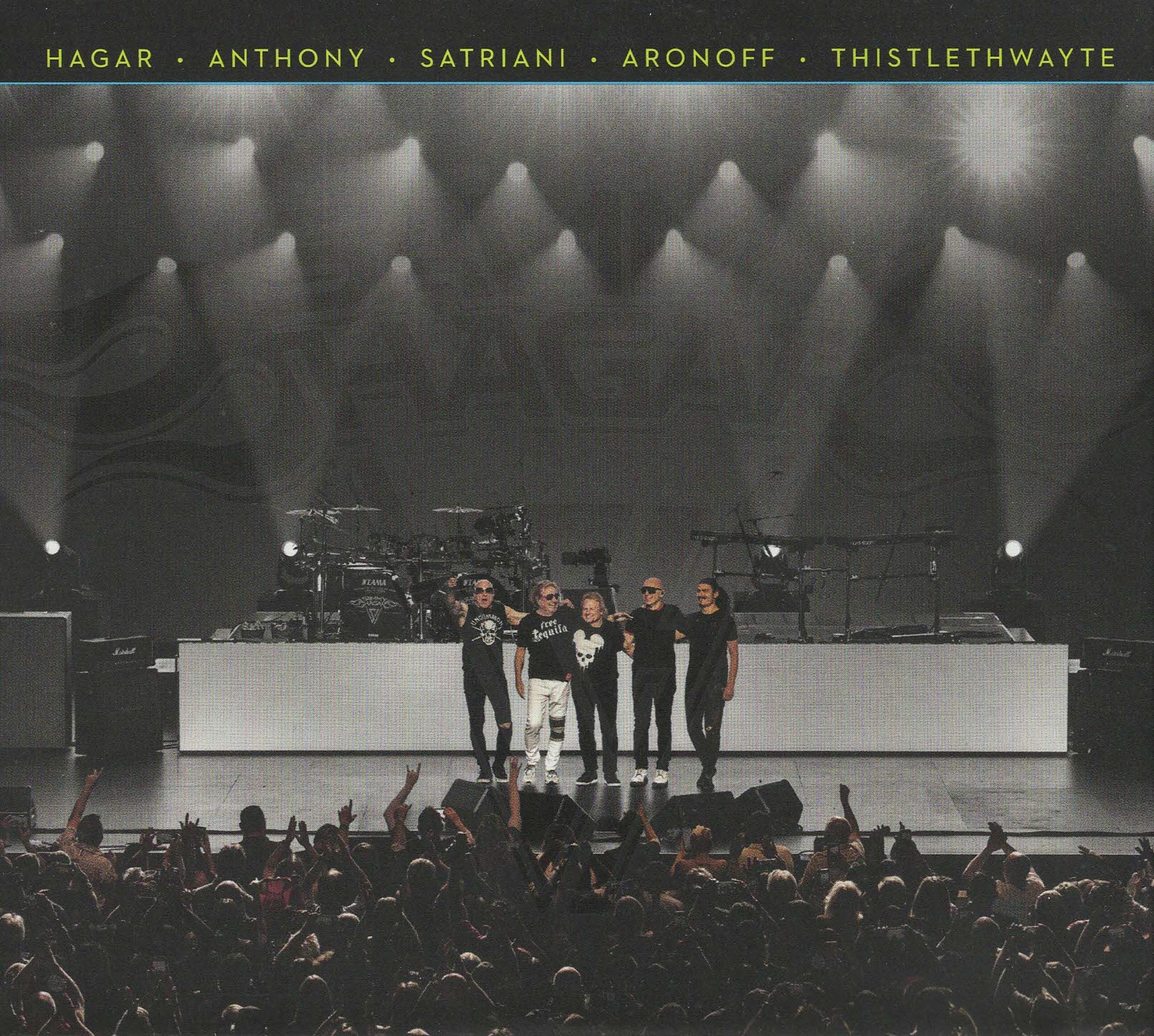
Chickenfoot are back! A rose by any other name, right? Nothing wrong with it. Nothing at all. It would have been nice if there was some kind of official Van Halen tribute show, but since nobody else wanted to do it, it’s up to Sammy. The songs deserve to be kept alive, both Sammy and Roth eras. There are only two Roth songs here, but we didn’t expect more. Recorded in Vegas during April and May 2025, the album was produced by Sammy Hagar, Joe Satriani, and Chris Lord-Alge.
The truth is that when Michael Anthony sings those backing vocals, things just sound a little Van Halen-y. Joe Satriani is one of the only guys in the world I’d want to hear play Van Halen songs besides Eddie himself. Sure, Joe doesn’t play the same. Eddie was freewheeling and improvisational. Joe is schooled and plays with forethought. He is more than capable of pulling Eddie’s tricks and trademarks, but tends to stay away from slavish imitation. He may do a pick scrape exactly where Eddie did it on “Top of the World”, but he doesn’t necessarily play all the hooks and fills exactly as Ed did. He usually plays them close enough that the solos are true to the original while not being exact copies. In other places, he goes off into jazzy territory that wouldn’t have been explored before. That is really the way it should be when it comes to a tribute to the greatest guitar player who ever lived. He wouldn’t want to hear Joe imitating him, either.
Kenny Aronoff is one of the best drummers suited around, always in demand. It would have been nice if Jason Bonham was still around, but Kenny might be better suited to the Van Halen material (listen to him on “Summer Nights”). Adding those necessary backing keyboards (and guitars and vocals) is Rai Thistlethwayte, from Australia’s Thirsty Merc. Normally he’s a frontman and hitmaker unto himself, but this is a pretty tempting gig to take.
As for Sammy himself, Hagar is one of the most reliable figures in all of hard rock. Barely aging as the decades pass, and always releasing new music and touring behind it, Sammy Hagar is rock and roll’s unsung stalwart. He may often say too much, but on stage, he’s still in great shape. Now, the songs are detuned a little bit to accommodate the aging human voice. This is unavoidable.
The live album opens with the tribute to Eddie aptly called “Encore, Thank You, Goodnight”. (The studio version is on a rare 7″ single that is very hard to find.) Joe Satriani plays several licks that are in homage to Edward the Great. Simple but poignant lyrics like “Since you’ve been gone, things don’t feel the same.” It’s a decent enough song, but likely wouldn’t have attracted much attention if not for the words. Decent song but only notable for its lyrics and intent. It would not have been a standout on either of the two Chickenfoot albums.
It soon becomes evident that this album is as much a tribute to Sammy as to Eddie. There are five Sammy solo hits included: “One Way To Rock” (which admittedly Van Halen played live on the 5150 tour), “Eagles Fly” (unnecessary), “Mas Tequila!” (almost insulting considering that Eddie disapproved of Sammy promoting his tequila while on tour with Van Halen), “Heavy Metal” (which Van Halen never played live) and “I Can’t Drive 55”. Contrast this with the two David Lee Roth era songs included: “Panama”, and “Ain’t Talkin’ ‘Bout Love” (which Sammy doesn’t even sing; Rai does!). Not even “Jump”, which Van Halen released as a live single with Sammy singing. Throw in Montrose’s “Rock Candy” and it’s clear this isn’t entirely about the mighty Van Halen.
The setlist includes a few delights. “There’s Only One Way to Rock” gives Joe a chance to really stretch out. “Humans Being” was neglected by Van Halen, but this band does a great live version of it. The only shame is that due to the decades past, Sammy doesn’t sing it in that monotone rasp. Joe though, wow, he really nails the Eddie vibe on the guitar solo! This version of “Humans Being” really shows why Joe was the right guy for this gig. Meanwhile, Michael’s bass reminds us of why he was so integral to the band’s sound. It’s great to hear “5150” (though the title should be in quotes on the back cover). “Rock Candy” and “Heavy Metal” are awesome, regardless of the shift in focus away from Eddie. “Love Walks In” is an interesting way to close the album, but it does work.
We always like to complain about setlists for shows like this. It would probably have been appropriate to drop “Eagles Fly” and “Mas Tequila!” in favour of other songs (definitely not “Little White Lie”). Anything to represent the Balance album would be welcome. Sammy even could have included something from I Never Said Goodbye, an album that Eddie played bass on and co-produced. That said, the album remains a solid listen.
Some diehards (or those who claim to be) won’t give The Residency a chance, but any fan of these musicians will love to hear how they interpret the works of Van Halen. Pretty satisfying.
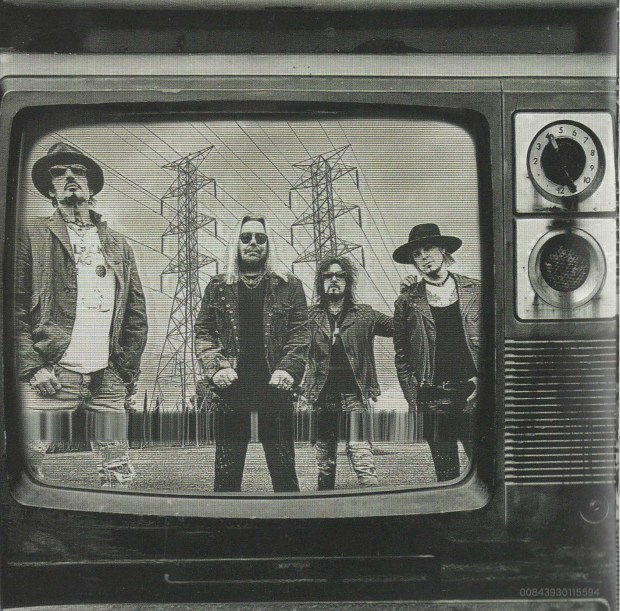
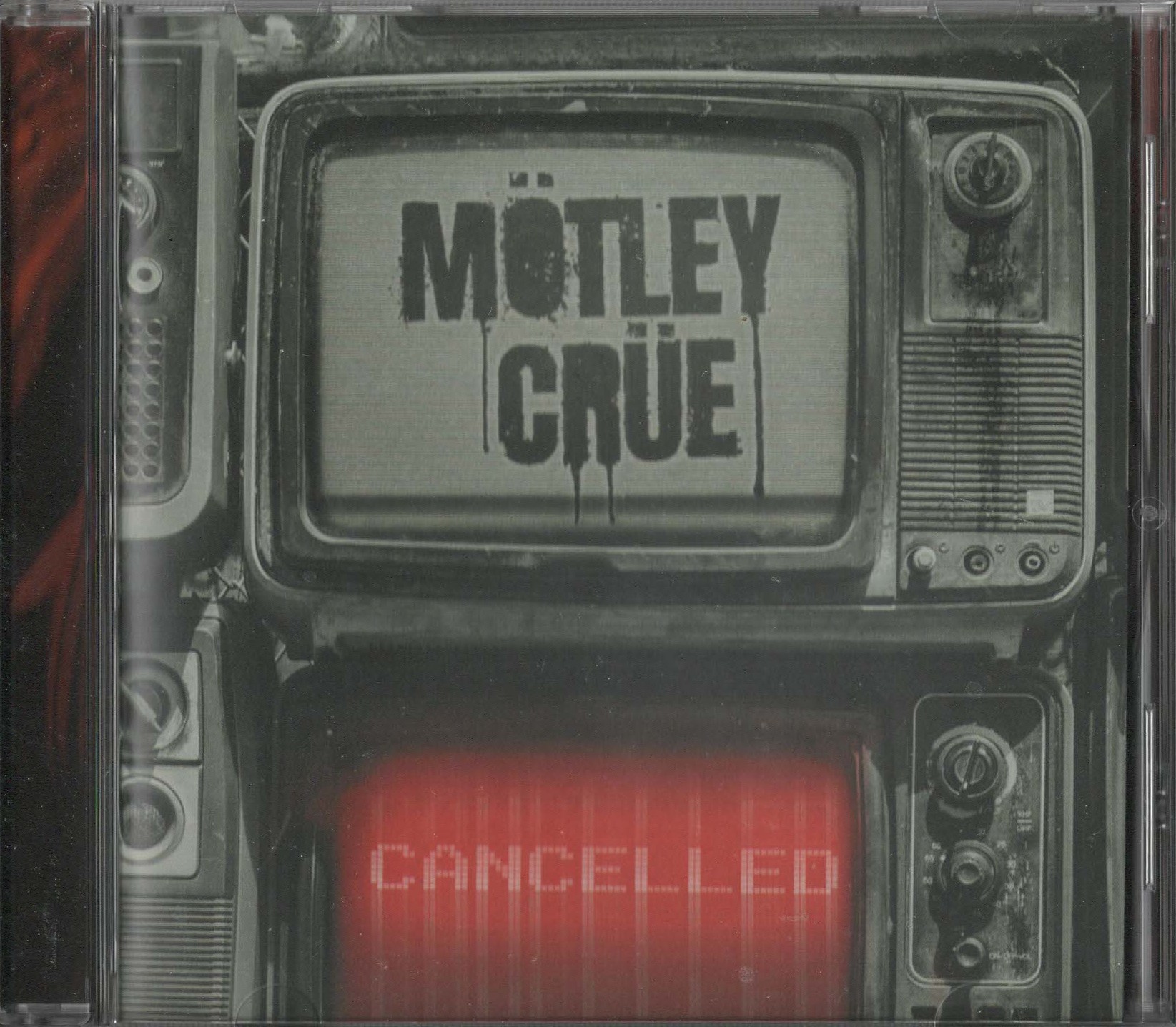
I’ll give Motley Crue credit for two things: 1. Giving us some decent packaging for the Cancelled EP, in the day and age of cheap-out wallets. This has a full jewel case and booklet. 2. Employing John 5 as their new guitarist.
That’s about it. John 5 aside, this band has acted shamefully in recent years, and giving us sub-par new material is no consolation. Sure, it’s great that Motley are releasing new music on CD. It’s fine that they’re working with Bob Rock again. It’s not good that these new songs are generic and boring as hell. This EP feels lazy.
“Cancelled” has a pounding riff. Vince does a patented “WOAW!” at the beginning. John absolutely smolders. Then… the song really starts, but there’s no song here. The lyrics are actually irritating. As if Motley Crue ever got “cancelled,” and the less said there, the better! The positives to the song are the riff and the shredding, both of which can be credited to John 5. The solo even recalls the classic days for a little while. Vince is actually singing fine for his age and stage of his career, but he sounds bored to death. Any spark to this song sounds artificial; either from the production or the hired flashy guitarist.
The single, “Dogs of War” has never stood out. Same formula. Slammin’ riff, and unmemorable song. Production and guitar. “Don’t let those bastards get you down,” sings Vince, knowing that he’s sailing easily into retirement.
The final abomination is “Fight For Your Right”, the Beastie Boys cover, and it’s actually the best song here. Why? Because the Beastie Boys wrote a song! One with some verses and a chorus that you remember to this day. Once again though, Vince sounds bored to tears. As if he’d rather be at another rager than in the recording studio. Anywhere but where he was right then and there! Tommy sounds like he’s enjoying himself, and John’s spewing guitar slag out of the speakers in a far more interesting display than anything the singer has on offer. Whammy tricks and noisy notes galore, it’s great that John 5 is able to loan this kind of playing to Motley Crue. Does it fit? Does it sound like Motley Crue? Not the Crue of old, no. Mars had his own blues-based style and while John can play anything he wants, he’s not Mars and he’s not trying to be Mars. If Motley Crue themselves were more interested in writing good tunes that integrate John into an actual band, we’d have potential here.
I really hate when Vince says, “Tommy! Sixx! 5! Let’s make some noise!” It just doesn’t have the same vibe as “My buddies Sixx, Mick and Tom,” even though it does feel like they’re copying themselves.
Final quality control note: This disc will not play in my brand new PC without horrible background noise, one of only two or three in my collection with that issue.
By the suggestion of Peter Kerr! Hot on the heels of our best KISS song lists, here are my WORST songs by my favourite band! One song for every studio album, plus one song to represent the many extra tunes that Kiss have in their discography! Enjoy – or don’t enjoy -the list of stinkiest Kiss songs of all time! (Peeeeww!)
NOTE: Some of these albums have no truly bad songs. Hotter Than Hell and Destroyer, for example. Therefore, I just had to stick my neck out with my “least best”. This is a much more difficult list than picking favourites.
EXTRA SONGS – Nothing Can Keep Me From You (Detroit Rock City soundtrack)
A really hard list. Worst song from Hot in the Shade? Get in line. Worst song from Lick It Up or Creatures? Much harder. Even The Elder was difficult. In most cases I went with my first instinct. I hope you enjoy this list – and sorry Joey about “I Love It Loud”!
In Early December, I hooked up once again with Joey Suto of Rock Show Critique. The topic this time was KISS, and it has been so long since I talked about that band. My channel rarely features my favourite band. It’s hard to find interested parties. I was happy to do this show with Joey. I think it’s one of the best things I’ve ever done. Funny thing – after Ace passed, another channel did a Kiss song list, but it was top Kiss songs from the Ace albums. I let them know that I was peeved that I wasn’t asked to participate. “Who’s the biggest Kiss fan you know?” So I pledged to do a better show. With Joey, we did exactly that!
Not everybody is into videos, so for those who still enjoy the written word, here is my list: One song for every studio album, plus one song to represent the many extra tunes that Kiss have in their discography! Enjoy the list!
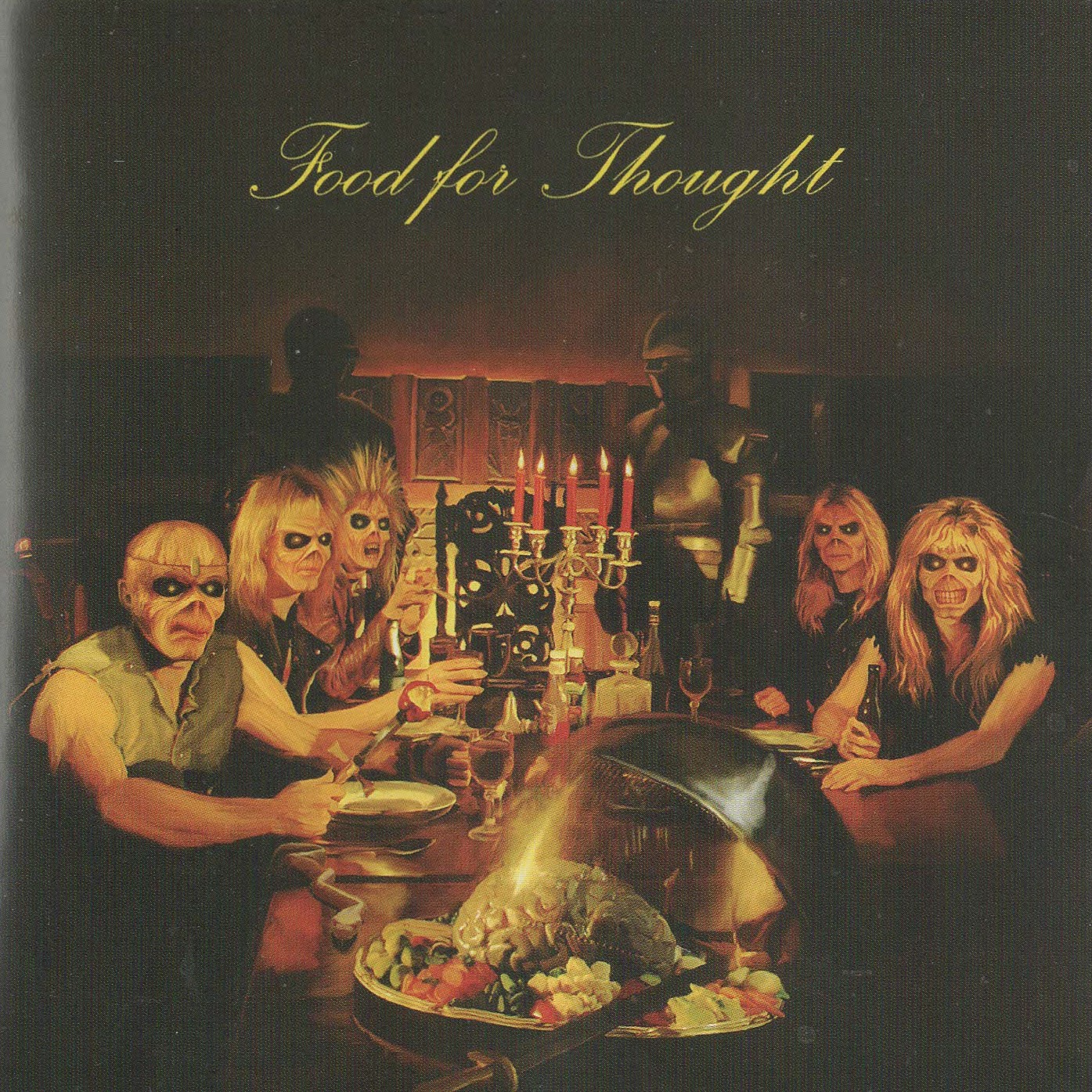
FOOD FOR THOUGHT – Now That’s What I Call ‘Kin Music / What Are We Doing This For? (2003)
Thanks to Harrison the Mad Metal Man, the world knows about this incredible and unorthodox Iron Maiden tribute album. Hunt for it and hunt well, for you will want this in your collection far more than the Encomiums and Nativities In Black out there. Food For Thought (a spoof of Piece of Mind) get it far better than any corporate version could. Through its 19 tracks, Food For Thought visit every single Maiden album (to date), and even some non-album material. The tracks are performed in a variety of styles, often imitating the trademark styles of major artists like Deep Purple, Motorhead, AC/DC, and…Kate Bush. It’s not all metal, but it’s almost all brilliant. This is a unique and effective tribute album, infinitely listenable and thoroughly enjoyable. Let’s break it down from first track to last.
1. “Be Quick Or Be Dead”
Not as breakneck. More of a groove. Opens with a distorted transistor radio sounding guitar part; very alterna-90s. There is a second guiltar part in the beginning that sounds inspired by Bruce’s solo Skunkworks album. The wah-wah pedal in the riff is a nice addition. The female lead vocals are a change of pace, but the oodles of guitar solos are really tasty. The chorus is more layered with both male and female vocals. It’s heresy, but I like this version of the song better than Iron Maiden’s.
2. “Twilight Zone”
Let’s take Maiden to Funk Town! Unbelievably, this works really well as a horn-inflected funk song. Like a funkier version of Sledgehammer! I’ve AI Maiden funk stuff before, but believe us when we say that the human-made kind is way way better. Don’t listen to AI; listen to this! Once again, Food For Thought have created a version of an Iron Maiden song that rivals the original. The horns here are very Bosstones.
3. “22 Acacia Avenue”
We’ve gone to Funk Town, so now let’s hit the lounge. Yes, it’s a lounge version of this ode to the oldest profession in the world! It is largely acoustics and fretless bass, by special guest Chris Dale of Skunkworks! Though it opens with male vocals, during the “Charlotte” section the song transforms into a full blown Kate Bush homage. An absolutely genius interpretation and re-imagining. In many ways, these Food For Thought cover are almost like originals. This actual arrangement has little to do with Iron Maiden’s! The piano parts are really completely original.
4. “Angel and the Gambler”
Our first foray into the Blaze era, which this album does frequently. This folksy acoustic version is only 2:14 long. It is either a duet, or mixed with double tracked vocals. The original should probably have been about this length! The delicately picked guitars are like a country picnic. Such a strange re-imagining, but imminently catchy…with a lot less repetition. There’s even a country hoedown at the end.
5. “Mercenary”
One of the best tracks on the album. This lesser known track from Brave New World is performed as a Bee Gees homage via “Stayin’ Alive”. Has to be heard to be believed. The falsetto vocals aren’t bad, but the funk Disco beats are gonna get your butt shakin’. The lyrics are a complete contrast to the dancey vibes of the music! A short one though, as soon we’re off to war…
6. “The Trooper”
Electric violin, with growly metal lead vocals. Musically it’s reminiscent Canadian fiddler Ashley MacIsaac. The heavy growl vocals ground it in metal. There is a even a violin solo to go with what sounds like a fuzzy bass solo. Toward the middle, it goes into a section possibly inspired by Maiden’s “Mother Russia”.
7. “Fortunes of War”
Blaze era track number two with this dark classic, re-interpreted as an industrial/electronica track, with programmed drums and music, and distorted lead vocals. The digital beat is bizarrely catchy, and this track can easily become a favourite. The inspiration might be early Ministry.
8. “Blood on the World’s Hands”
That’s two Blaze tracks from The X Factor, in a row! They could not be any more different from each other. “Blood on the World’s Hands” is jazzy, with piano a’plenty and tasty jazz guitars. This one swings fast and bold. The scat vocals and drum break are a total delight!
9. “Stranger In A Strange Land”
Back to Somewhere In Time with a song that doesn’t get enough attention. Here’s some attention for ya! The mood of the lyrics is captured in this somber, acoustic version with violin as the feature instrument. The words are based on the lost Franklin Expedition, marooned somewhere in the Arctic ocean far from civilization. The fabulous guitar solo is pretty much note-for-note to Adrian Smith’s original. Maiden fans far and wide are likely to enjoy this one, one of the less quirky songs on the album, though still a departure.
10. “Flash of the Blade”
Powerslave time, with a Celtic jig and a violin. The violin handles the main riff, which is performed with hammer-ons when played on guitar. Here is the swipe of the bow. The layered violins also re-create Maiden’s guitar harmonies. The drum part is a perfect homage to Nicko’s signature original. This magnificent metal masterpiece translates well to a new genre that we’ll call violin metal! Unlike many of the other songs on the album, the lead vocal part is true to Bruce’s original.
11. “Wildest Dreams”
Is that Lemmy? The newest song on the album, from Dance of Death, is clearly done in the style of Motorhead. Everything about it screams “Lemmy”, from the distorted bass to the accelerated tempo. And this was already a fast song to begin with! Now it is breakneck. An album highlight.
12. “Futureal”
Best song on the album? What if Bon Scott replaced Blaze Bayley in Iron Maiden? This version of “Futureal” from Virtual XI poses that question. Both the lead and backing vocals could be mistaken for Bon Scott era AC/DC. The solo sounds like Angus. There is even an added lyric referencing “Dirty Deeds”! Honest, it is worth buying the album just for this version, which is so much fun that you’ll play it on repeat. The tempo and vibe are based on “It’s A Long Way To The Top (If You Wanna Rock ‘n’ Roll)”. You might even trick your friends into thinking it’s unreleased AC/DC track. Give it a try!
13. “Nomad”
Very System of a Down/Serj Tankien in the vocals. Very jokey. Feels like a polka. Not an album highlight, but brief.
14. “Sanctuary”
Also brief is this “Speed King” inspired version of the classic Maiden single. Right to the tempo, distorted organ and the solos, it’s very Deep Purple. “Speed King” is a great song to base a Maiden cover on; I’m sure they would approve. If Purple wrote “Sanctuary” in 1970, this is what it would sound like. The only difference is that this singer doesn’t scream, but he really shouldn’t since is a Paul Di’Anno song, not Bruce.
15. “Innocent Exile”
Another foray into electronica. The programmed beats and music are accompanied by female lead vocals. Not bad, because it’s a great Maiden song, but again not an album highlight.
16. “Public Enema Number One”
No Prayer for the Dying is represented here by this lovely acoustic ballad, with mournful vocals, accordion and a fretless bass solo. Though it is a total contrast to the original, perhaps it captures the mood of the lyrics better than Maiden did it.
17. “Heaven Can Wait”
A wake-up call here as we’re bombarded with upbeat 80s New Wave. Is the inspiration here the Talking Heads? Regardless it’s tremendous fun and much shorter than Maiden’s original.
18. “Burning Ambition”
A B-side and a surprising choice at that! This forgotten Maiden song works better as performed by Food For Thought, as an acoustic folksy version, with mandolin. It’s all very Rod Stewart circa “Maggie Mae”. If only it had Rod’s rasp. This track is a lot of fun, especially if you love Iron Maiden deep cuts.
19. “Seventh Son of a Seventh Son”
Food For Thought chose to close the album with what is normally a Side Two opener, “Seventh Son of a Seventh Son”. It works brilliantly in this position. Unlike some of the abbreviated tracks on this album, “Seventh Son” is the full length, well over 10 minutes. It begins very “No Quarter” (Led Zeppelin) to begin, with that John Paul Jones keyboard sound. It gets heavy after the middle section, which could top the Maiden original. The way they use the original music, but play it on different instruments, it fascinating to hear. A track like this is tricky to re-arrange, but here it is!
Find this album. Get it in your collection, and enjoy it over and over again.
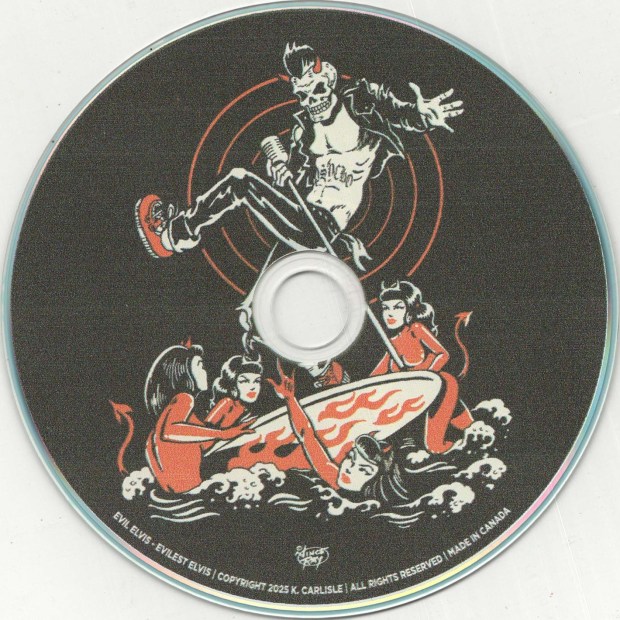
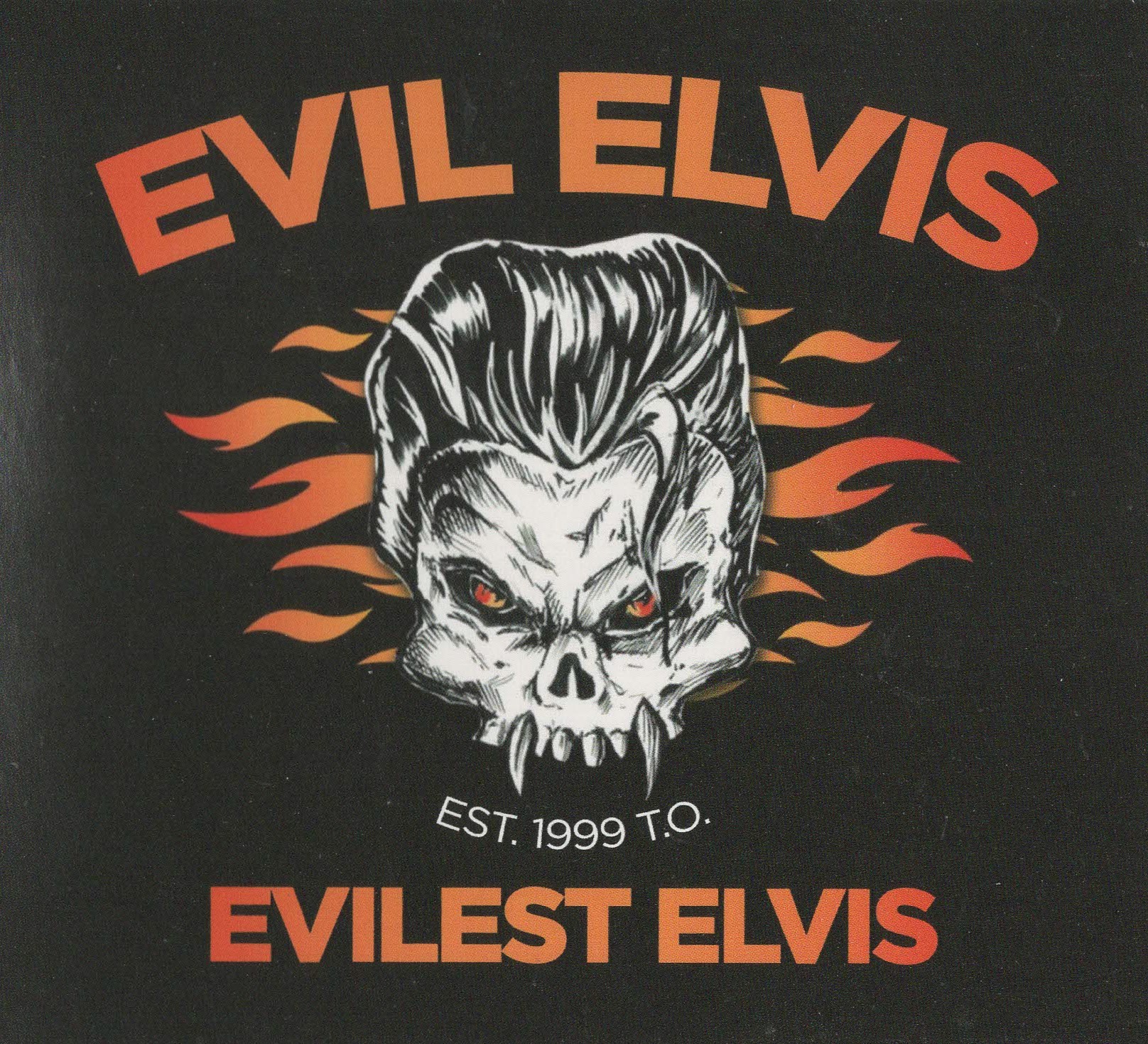
Evil Elvis is back in 2026 with his new album Atomic Psycho, but you can get a taste of the new tunes on his new compilation: Evilest Elvis! KC Carlisle is a Toronto psychobilly artist who has a reputation for a hot live show, great musicianship, and horror-inspired lyrics. The tunes range from punky spunk to loungy rock.
The songs:
“Cat Woman” from 2017’s Undead Or Alive: The rambunctious chorus of “Here, kitty kitty” will keep you rocking while that bassline keeps things moving!
“Zombified” from 2001’s Evil Elvis: Now we’re on a slow nocturnal groove, perfect for those spooky nights. This smooth, smoky tune has an intoxicating quality.
“Evil Love” – new song from 2026’s Atomic Psycho: The master of the drum, Cleave Anderson from Blue Rodeo, makes his Evil Elvis debut here. It is incredible to think that this veteran drummer from one of my favourite bands is now burning down the house with Evil Elvis. On this one, EE channels the original Elvis a bit on the chorus, but in ways the King could never have foreseen. “I’ll kill your fuckin’ parents and make it look like suicide!” he growls. “Evil Love” indeed! Cleave absolutely proves his punk rock mettle here. A promising song.
“Too Fast For You” – a 2015 single that ended up on Undead Or Alive, is a personal favourite. There’s an Alice Cooper vibe here, of the Detroit variety.
“Surfin’ To Hell” – from 2011’s Tattoo’d Fuckwit. This adds surf rock sounds to the repertoire. The guitar solo is manic panic fun.
That concludes “Side Eh” of the album, and on to “Side B”:
“My Evil” from 2017’s Undead Or Alive: A jaunty number with organ and a shuffle beat. This impressive song has lush backing vocals, on a chorus that reminds me a little bit of Big Bad Voodoo Daddy. Possibly the best track on the album and a song which deserved to be a hit somewhere somehow! “GO!”
“I Wanna Wed (The Undead)” is a funny title, from 2001’s Evil Elvis. This has the most traditional rock and roll sounds, like something out of a 1950’s graveyard. Just pure fun, with a Halloween dance party vibe.
“Wolf Woman” – from 2006’s Viva Las Vampire: If you have a thing for a woman with body hair, you will probably love this ode to werewolf love!
“Heavenly Body (From Outer Space)” is the second of the new songs to come from 2026’s Atomic Psycho. The bassline plays a bit of the Twilight Zone theme before Cleave rings the band in with a thumping beat. We’re off to space this time! The backing vocals provide a the hooks on the chorus. Once again, the musicianship and singing are really top notch here. The guitar solo is way fun!
“Let’s Make Sin” from 2011’s Tattoo’d Fuckwit: “Come on baby, let the sinnin’ begin!” Vampire love is fun way to end the album. But wait!!
There’s more! Two “XXXtra Tracks” bring the total track count to 12.
“Backseat Love” – from 2017’s Undead Or Alive. A fun duet with one foot in the 1950s and the other in the grave!
“Hey Space Girl!” – from 2001’s Evil Elvis. The roughest, most garage-y song on the album. An ode to a woman from Mars that’s here to stay. “Hey space girl, wanna see my laser gun?”
This album was dedicated to photographer Ron Boudreau, a staple of the Toronto scene who took pictures of many of the bands I loved. Rest in peace Ron.
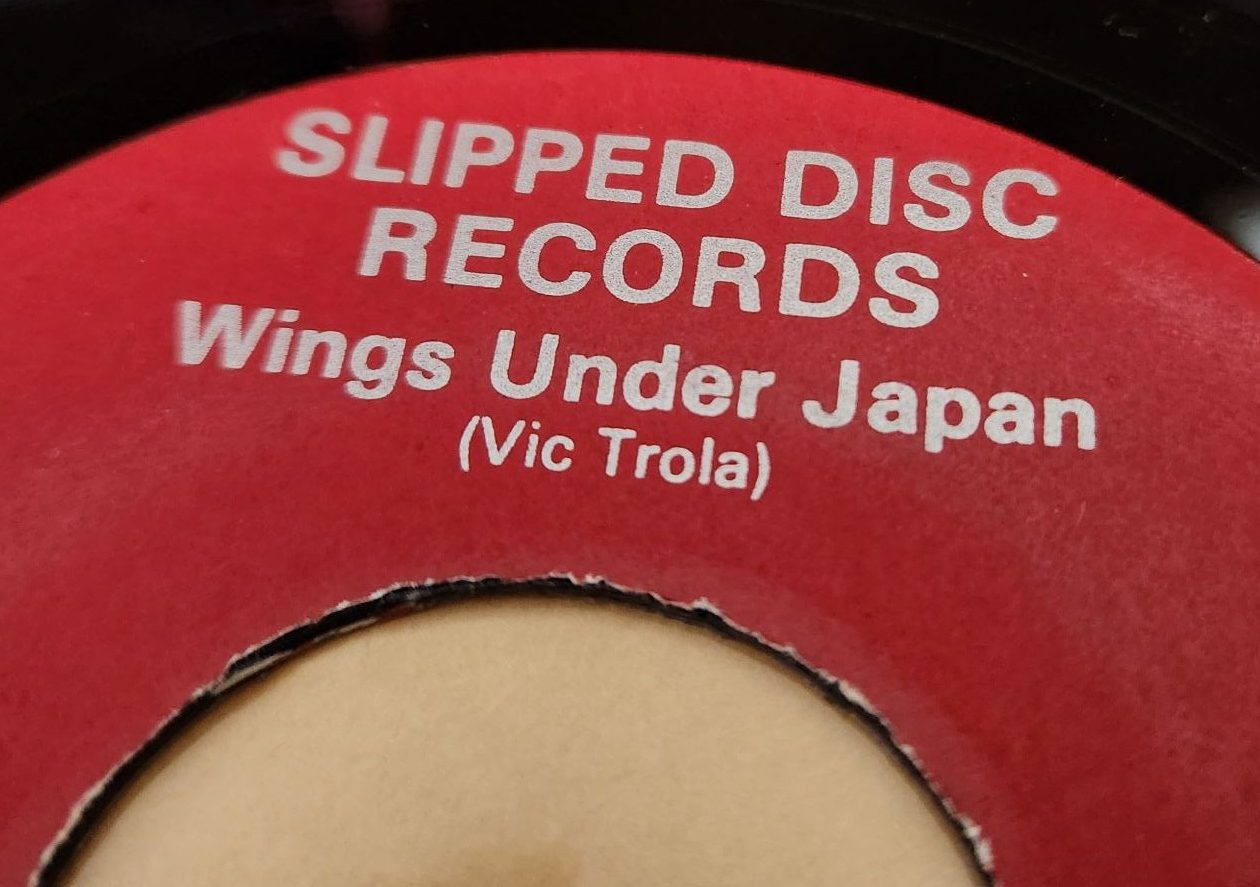
SPASTIC PHONO BAND – “Wings Under Japan” (1980 7″ single, Slipped Disc Records)
INVESTIGATIVE REPORT – 45 years ago…
[Editor’s note: the authors of this report have asked to retain their anonymity.]
The year: The harsh winter of 1980, remembered for its deep cold and snow. In the realm of popular music, all four Beatles were still alive, even though the band had been broken up for a decade. One of the Beatles soon found themselves in a wee bit of trouble. This trouble would spill all over the world news, causing rippling effects and ramifications far beyond the shores of England, for that winter in New York State, a band would go on to record a song….
The Beatle in trouble was the still-babyfaced Paul McCartney. It was no secret that he was already known for enjoying the green leaf. Back in 1972, McCartney was arrested in Sweden for possession of Lady Ganja. He was released without charges at that time, but his reputation was now cemented. McCartney wanted to book a Japanese tour in the mid-70s, but the country was very strict about illegal substances and refused Paul permission to play. The fans in Japan would have to do without.
Finally, in 1980, Japan had a change of heart and granted permission for Paul McCartney and Wings to tour in the Land of the Rising Sun.
He just needed to make sure he packed appropriately for the trip.
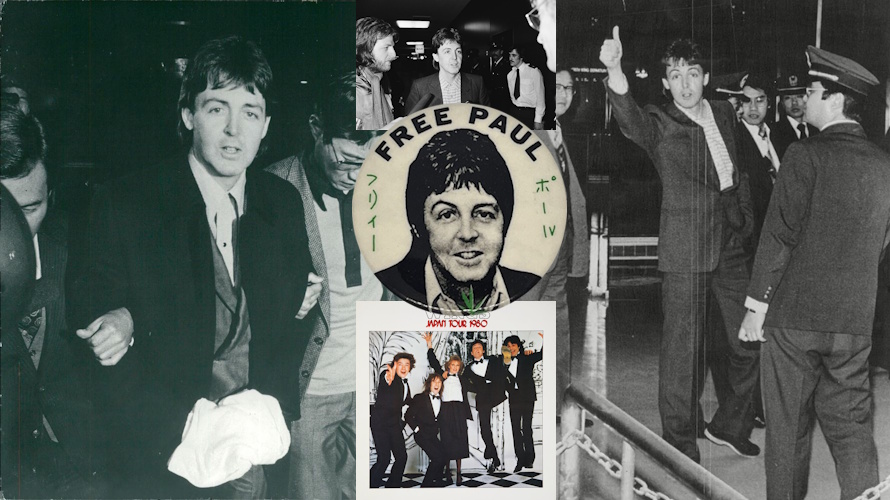
Paul McCartney is an undisputed musical genius. His songs will last 100 years. That does not mean that Paul always used his head. Despite the scrutiny he was bound to experience upon entering Japan, he decided to bring a stash with him. He was arrested upon discovery at the Narita Airport with 220 grams of Hawaiian green. Reportedly, he didn’t even attempt to hide the electric lettuce, just packing it in his carry-on bag with his clothing. Paul subsequently spent 10 days in the keiji shisetsu (刑務施設); actually the Tokyo Metropolitan Police Department. Teenage girls numbering about 50 serenaded the station during Prisoner 22’s incarceration.
Unfortunately for Paul, the nature of this arrest and jailing far away from home meant headlines all over the world. “PAUL IN CHAINS” and “EX-BEATLE ARRESTED IN JAPAN” went the articles, along with a photo of McCartney being escorted by Japanese officials. It was huge news, especially in the UK where it became a bit of a media circus.
The judge in the case determined that McCartney brought the drugs for personal use and not trafficking, and decided that Paul had spent enough time in jail. He was taken to the airport, and flown to Holland, where he was (perhaps surprisingly) refused entry. He still had time for a chat with the press.
“How did you get out?” asked the reporter.
“Walking on foot,” answered Paul in typical cheeky Beatle humour.
The experience was “a drag” for Paul. “I was woken up at six in the morning, then had to sit cross-legged for a roll-call. It was like Bridge on the River Kwai. They shouted out ’22’ in Japanese, and I had to shout back, ‘Hai!'”
The 11 date Japanese tour was cancelled at the cost of 2.5 million dollars and 90,000 tickets.
Did he learn from his experience?
“Now I have made up my mind never to touch the stuff again. From now on, all I’m going to smoke is straightforward [cigarettes]. No more pot.” He later acknowledged his own stupidity. “Well, to this day I have no idea what made me do it. I don’t know if it was just arrogance or what. Maybe I thought that they wouldn’t open my suitcase. I can’t put myself back into that mindset now…to this day I have no idea what made me do it.”
Over in America, shortly after shoveling out from a massive dumping of overnight snow, a young songwriter named “Vic Trola” was inspired to write a song. At least that’s how the credits read on the actual record. A recent online theory postulated that “Vic Trola” was indeed a pseudonym, but these writings are mostly found in conspiracy theory discussions. A fringe group that splintered off the main conspiracy theory group added that “Vic” was short for “Victoria”, not “Victor” as previously assumed. These theories are largely dismissed by the other groups. Our own extensive research has failed to unearth any other compositions written by Trola; just the one that you are reading about today. We do know, thanks to documents obtained in the process of researching this article, that after catching their breath from shoveling the drive on that cold winter day, Trola went inside and began writing. The surviving notes from Vic Trola’s respirologist confirm these facts.
Vic Trola’s song, as it evolved into its final form, was the product of on-stage gigging by the mysterious Spastic Phono Band, and that is where our story really begins. Though their names are now lost to time, and their relationship to Vic Trola is clouded, we do know that they consisted of a tight rhythm section. Both the drummer and bassist were exceptional. They boasted a dual guitar configuration, and multiple lead singers including one female vocalist who appears prominently on their sole recording called “Wings Under Japan”.
The Spastic Phono Band had experience. They had already been working on a set of originals and comedic covers. Favourite hits by Santana and the Might Zep were endowed with new witty words, and they found an audience who shared their sense of musical comicality. Encouraged by the audience reception to these songs, the Spastic Phono Band turned their attention to the hot news of the day: Paul’s arrest in Japan. Presumably with Vic Trola’s lyrical input, they started playing bits of his Beatles and Wings hits in a medley. Egged on by the crowd, and adding throwaway lyrics here and there, the song “sort of wrote itself”, according to a maraca player who claims to have been there at the time (and requested complete anonymity). It took only three or four shows for the song to come together as we know it today. The Paul medley became an instant live hit. The crowds ate it up. They learned the words, sang along and shouted for more! Clearly, the song needed to be recorded in a studio, and put out on a record.
Unfortunately for the band and Vic Trola, who were based out of Liverpool (New York, pop. 2400), there were few studios around within the reasonable driving distance of a beaten-up touring van. Their studio of choice would be unavailable for three weeks, and time was of the essence. The Paul story was hot now, not later! Even if they recorded the song immediately, it would have to be mastered and pressed at a record plant, meaning they had to act immediately. The scarcity of nearby studios presented a challenge. Would these young musical minds be able to publish their Paul pastiche in time?
As they used to say, the Spastic Phono Band let their fingers do the walking: They picked up the phone and eventually connected to something that somehow passed as a recording studio. The old schoolhouse that they booked was certainly was not conceived as a studio when it was built in the last decade of the 1800s. The top floor housed the recording space, but in a decidedly inconvenient design and safety choice, it was only accessible via an outdoor fire escape. All the band’s equipment had to be hauled up the emergency exit: drum after drum after drum, followed by amp after amp. Bags were passed from vehicle to musician and up the fire escape, which wobbled with every tentative step. Also, it was winter. Members of the band were not sure if they were going to survive the combination of snow and ice, metal steps, and gravity. To our great fortune, they did.
The studio owner was also the engineer, and his soul still lived in the 1950s. He didn’t grasp the nuance, or understand the Spastic Phono Band’s particular brand of humour. He did, however, have a friendly personality and got along with the band. A good sounding record began to take shape on tape. The band nicknamed the engineer “Eddie”, a reference to a classic Leave It To Beaver character, Eddie Haskell. Eddie’s studio had all the necessary equipment (minus an elevator). He even had an ARP synthesizer which can be heard on two segments of the recording: “Silly Drug Laws“ and “Banned in Japan”. Though the band did not have the budget to spend more time in the studio to do some further work on the guitars, the band climbed down the fire escape holding in their mittens a reel-to-reel tape of their hard-earned work. Physicists specializing in the behaviour of water at low temperatures speculate that the tape was almost dropped once on the way down, but saved from an icy fate in the snow.
The schoolhouse was demolished in 2025 at 131 years old.
Though recorded, the song still had to be mastered and cut to vinyl. With time slipping away, and Paul McCartney finally starting to experience a decline in the media frenzy over his Japanese vacation in the big house, the Spastic Phono Band were in an ever-increasing time crunch. Their song, heavily dependent on McCartney’s imprint in the public consciousness, had to make its way to a physical record that you could buy. Their preferred manufacturer was fully booked and the band could not wait any longer. The track was complete, mixed and ready to be mastered…but where?
Through furious searching and some tense bidding on eBay, we have obtained some of the logs, unfortunately anonymous, detailing the following sequence of events of the recording:
Monday.
Tempus is fugiting. Much to our dismay, the cute Beatle’s troubles in the Far East are rapidly becoming old news. Also with windchill, it is about four degrees today.
The Paul story was soon displaced by other current events. The Iranian Revolution made fresh headlines, and soon came the hostage crisis. Front pages were dominated by the tense 444 day crisis, during which 66 Americans were held hostage at the US Embassy in Tehran. As it happens, another band in the same area as the Spastic Phono Band, a trio, were working on a song referencing these events. One of the songs in their regular set, popular in some of the local Irish venues around the area, was Jerry Jeff Walker’s “London Homesick Blues”. It featured the unique chorus of “I wanna go home with the armadillo.” (Who wouldn’t?) This was easily adapted into “I’ve had enough of the Ayatollah”. The clever lyrical substitute worked, and the band approached the club owners documented only as “The Brothers Three”. The Brothers actually owned three clubs, which seemed poetic. The Brothers Three liked the song, feeling that it tapped into the sentiment of the day. The reached into their pockets and financed a studio recording of the Walker cover. They were now in the record business.
The Spastic Phono Band, who were familiar with the trio in question, learned of this. Realizing it was a good idea, they decided to make their own pitch to the Brothers Three.
Wednesday.
They went for it. Sure, they argued a bit and the oldest one may have smacked the youngest one, but we did get a unanimous decision. The Brothers Three are going to allow us to use the disc maker where they pressed the Ayatollah record.
The record would be made in a little postage-stamp sized record plant (if you could call it that) in Connecticut.
Tuesday.
One of the Brothers Three picked me up in his MG convertible today. We took the tape to a dumpy little record pressing company. Mission accomplished. We ordered 300 copies to be made. Then headed home, but my companion driving the convertible decided to put the top down. It may be February thaw, but it was so cold I still don’t have feeling back in my nose. Considering calling an otolaryngologist.
Frozen noses aside, when the boxes containing 300 copies of “Wings Under Japan” finally arrived, the McCartney story was equally cold.
Friday.
Believe it or not, there isn’t a lot of demand for a record by a band that nobody’s heard of.
The records were delivered to stores, who tried their best to push it, but were fighting an uphill battle. The record was not a hit. The 300 copies did eventually end up in the hands of the public. There are no documents detailing any sales, so we do not know if the band sold them at shows, or by mail order, or any of the other quaint methods available in 1980. Mr. McCartney never stumbled upon the record, as far as the evidence suggests. At least, we know he hasn’t sued. But could he even locate the Spastic Phono Band if he wanted to? We could not. Vic Trola has pulled a DB Cooper: Taken the money (if any) and flown.
Though only the original 300 copies were made, we were able to track one down for this article. It was clearly loved in its previous home.
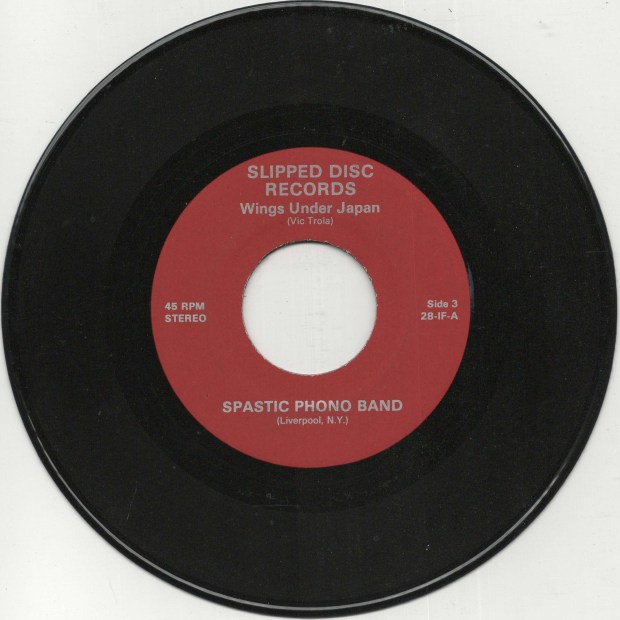
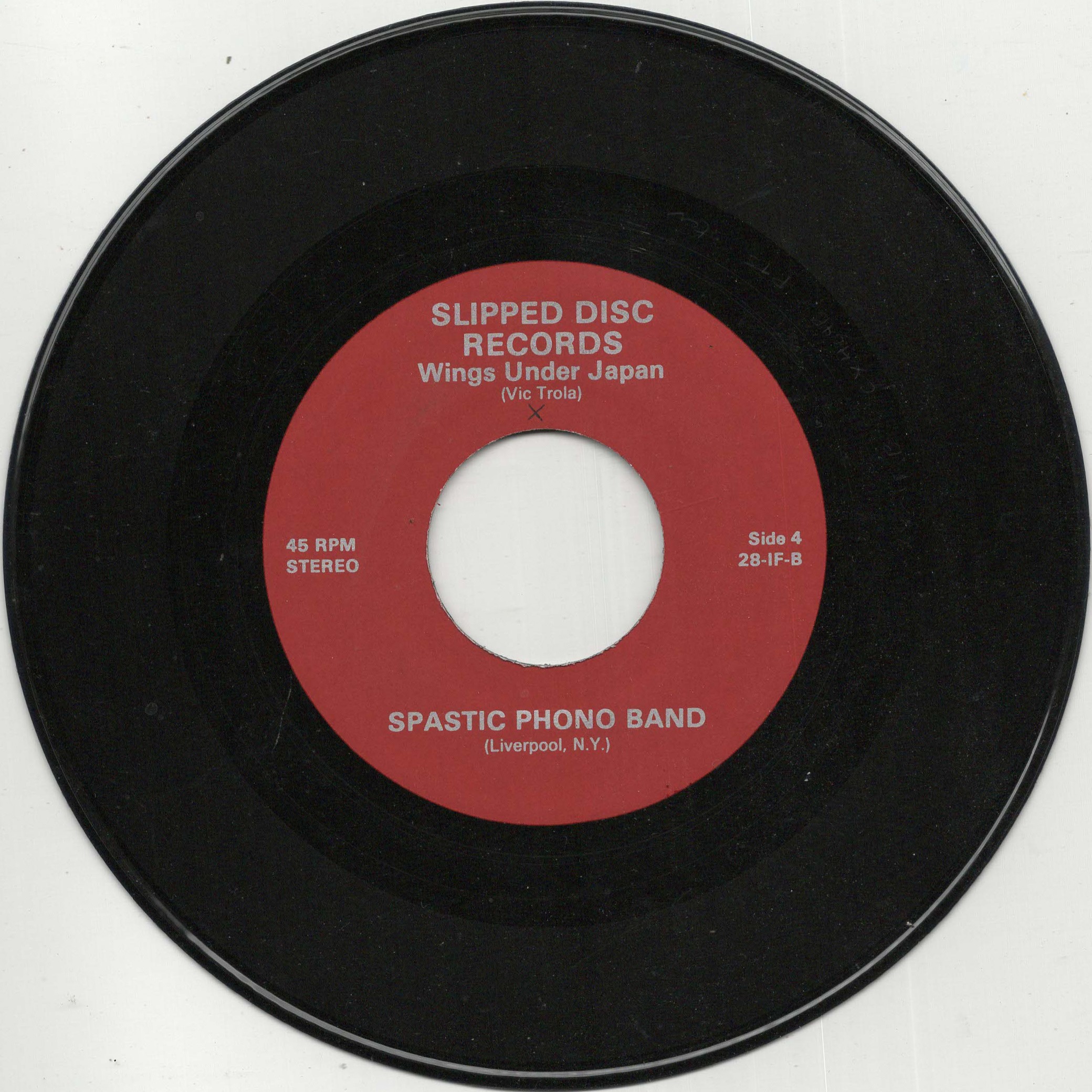
Housed in a yellow-brown sleeve (the original?), the 45 has a nice maroon label, stating this is on Slipped Disc Records. Charmingly, the song “Wings Under Japan” is split over the two sides…sides 3 and 4. (It has been suggested that this release, with sides 3 and 4 instead of 1 and 2), gave George Lucas the idea to number The Empire Strikes Back as Episode V instead of Episode II as expected. With that film releasing in May 1980, we cannot completely dismiss the claim.)
The track is just over seven minutes combined.
Leavin’ on a Japanese roadtrip, Headin’ down a London runway, Paul said ‘I need to bring along some good weed, Because it helps me relax when I play.’
Guffaw! The song begins with a spoof of “The Ballad of John and Yoko”, now called “The Ballad of Paul and Linda”, with a similar structure, but words about Paul. “The way things are gooooin’, they’re gonna scrutinize me!” And they did…but not long enough for the Spastic Phono Band. The song continues.
Staring at the man with the baggie. Paul said, ‘Maybe I’m amazed! It only amounts to less than half an ounce, Why do you have to get so carried away?’
In perhaps the most obvious yet fun twist, the song then goes into Wings’ “Hi Hi Hi”…but re-written as “High High High”. This is funny because it’s so obvious, it had to be done. It’s amazing nobody else did it. Incidentally the harmony vocals in this section are rich and excellent.
Next up in the Paul medley is “Silly Love Songs”, redone as “Silly Drug Laws”. “What’s wrong with drugs, I’d like to know, ’cause here I go again! I’m in jail…” Another example of great singing by the Spastic Phono Band, but listen to that 1970s groove and the dexterous bassline! This is some serious playing.
Side “3” ends, and so we flip to side “4”. Fortunately in the modern era, we can use our digital capture software to seamlessly edit the two into one track! Next is “Band On the Run”, revised as “Banned In Japan”. In this case, the original song is almost a medley of different sections itself. The Spastic Phono Band do several of them here. “Stuck inside these stone walls, might be here forever!” There is a poignant moment coming here, frozen in time. Little did they know that John Lennon had only months to live, for in December of 1980, he would be murdered in New York. So to hear the line, “I’ll join with Ringo, and George and John and we’ll put the reunion on,” reminds us that finite period of time when such a thing was indeed possible.
A brief pause and then, just like on Abbey Road, wait for a Beatles-y coda.
“Wings Under Japan” is, quite frankly, one of the best parody medley songs (or however you want to describe it) you’ll ever find, for three reasons.
The mystery. Who are the Spastic Phono Band anyway? We may never know. (Or, more accurately…we may never tell.)
The musical prowess. There is some serious playing and singing on this brief single, and your life would be richer if you heard it.
Though depicting events before some of you were born, the lyrics are still hilarious due to the timeless nature of weed jokes.
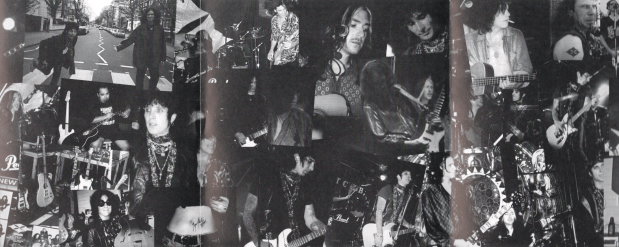
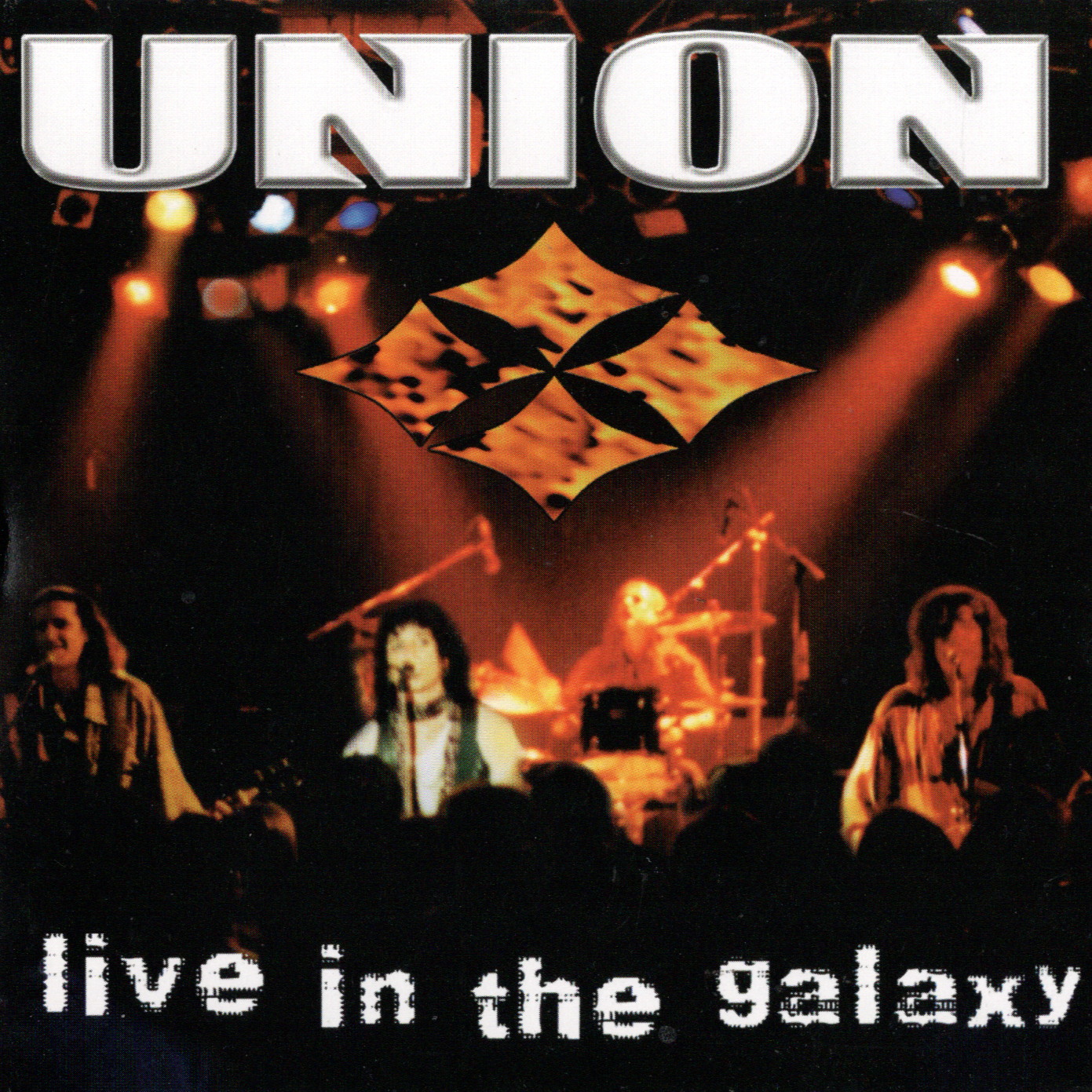
This great, forgotten Union live album should be added to the collections of any fans of John Corabi or Bruce Kulick. Packed with great songs from Union, Motley Crue, Kiss, the Scream, and even Cheap Trick and the Beatles, this live album delivers on every level. 11 tracks live, plus two bonus studio songs. Power to the music indeed!
There are no specifics about recording dates, but regardless the album has been well sequenced, opening with Union’s own album opener, “Old Man Wise”. Very much a continuation of the Motley and Kiss albums of 1994 and 1997 respectively. Mix them up with riff and groove sauce, you’d get something like “Old Man Wise”. Bruce’s playing is always fascinating and “Crabby” was in top voice. Grit and power are the words of the day. This song pounds, and Bruce absolutely rules. We go straight into the equally grooving but more upbeat “Around Again”. Union had an excellent self-titled album out at the time, and it makes up the bulk of the album. Fortunately the band’s original songs set a high bar. Bruce Kulick doesn’t put out crap. A third song from the debut, “Heavy D…” might be called a ballad, but really it’s a quiet song with heavy parts. Or is it a heavy song with quiet parts? It is performed with gusto in either guise.
“We’re gonna do something from Carnival of Souls! This is called the ‘Jungle’, baby!” Then Jamie Hunting comes in with that rolling bassline, originally played on album by Bruce himself. Kulick’s past with Kiss makes an appearance on “Jungle”, a song Kiss never performed live, so quite a treat. John Corabi’s spin on a Paul Stanley vocal is full of raspy power yet still appropriate. Hearing this makes one wish that Kiss did have the balls to play it live.
That’s a lot of heavy rock in a row, and to lighten the mood, it’s the Union original “Love (I Don’t Need It Anymore)”, which is dedicated to a certain someone who was involved with a current event in the news at the time. It’s a little more upbeat, a little more “Motley” and absolutely one of the best Union songs from the debut. The chorus kills like a classic from Dr. Feelgood. Corabi then takes us back to his earliest catalogue, The Scream’s “Man In the Moon”. The Scream were a sort of musician’s super group, featuring Bruce Bouillet and John Alderete from Racer X. The Scream was more mainstream than that. This is a melodic rocker with a bluesy twist, and the band do a slamming job of it.
Bruce Kulick takes center stage on another Kiss song that was never played live, and his vocal debut: “I Walk Alone”, which he wrote with Gene Simmons. It begins with a short, Zeppelin-esque guitar exercise from Bruce. As for the vocals, you gotta give Bruce credit for not going back and fixing things. This is Kulick’s voice raw and exposed and imperfect and yet…perfect for the album. In many ways, this is better than the Kiss version, as Bruce adds a really sweet guitar outro.
A fun unexpected cover next: Cheap Trick’s “Surrender”! The backing vocal abilities of the entire band enable them to easily pull this off. You’d look at it on paper and scratch your head a bit, but it’s short work for these pros. It’s all about the vocals.
A dramatic “Pain Behind Your Eyes” brings to the stage another soft/hard hybrid with wicked drumming and vocals. However this is just a prelude to one of the heaviest Motley Crue songs ever: “Power to the Music”. Corabi takes center stage doing some screamin’ and preachin’ to the crowd. The demanding song is handled ably by Corabi, seemingly relishing playing this awesome song live on the stage again. They probably would have blown Motley off the stage doing the same song.
After some band intros, we get some Kulick solo wailing right into the final song “Tangerine”. Nothing like the Zeppelin song, this is a riff-rocking groover with excellent melodic delivery by John Corabi. Union were a melodic band, but John’s approach added the grit and grime that is like rock candy going down. This song slays with a resilient groovy riff.
Bonus studio tracks are two: an acoustic rendering of “October Morning Wind” from the debut, and a Beatles cover that blows away the more well know Oasis version. First up though, the rich acoustics of “October Morning Wind” really bring warmth to a cold subject. “My pain is measured by a sky that is old and grey,” sings John in a song that may well be about seasonal affective disorder. Then, the Beatles cover is handled with ease. “You’ve Got to Hide Your Love Away” benefits from similar acoustic warmth. It sounds live in the studio, and again the lead and backing vocals make it work seemingly without effort!
Union really made a strong impression with their first two releases, the debut and the live album. Was it too soon for a live album? When you look at the setlist, absolutely not. They had enough material with which to build a very strong set of songs, needing only one true cover (the Cheap Trick song). The bonus acoustic tracks are icing.



















You must be logged in to post a comment.