REVIEW: Jan Terri – “Losing You” (1993 music video)

JAN TERRI – “Losing You” (1993 JT Records music video)

While Jan Terri and her immense talent are the stuff of legends, you just don’t hear her songs on the radio. You don’t gaze upon her limousine riding skills on music video shows. Are there music video shows anymore? There should be, because Jan Terri and video go together like peanut butter and meatballs.

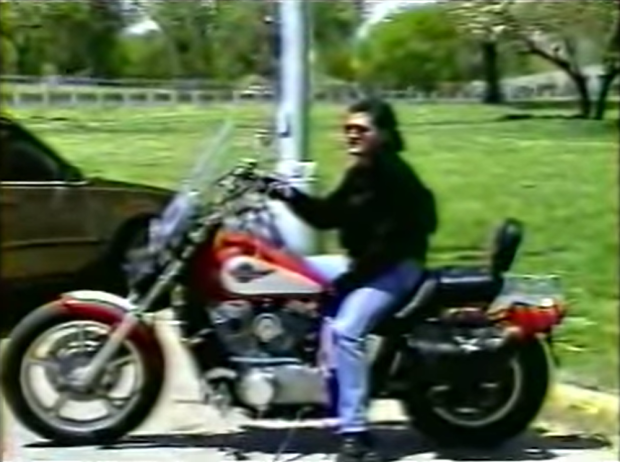
“Losing You” is a melodic symphony; Jan’s dulcet tones not at all harsh to the ear. Plus she knows how to rock a leather jacket. She likes her dudes with mullets n’ ‘staches. And motorcycles. That’s all she needs. A leather jacket, a song, and a dude with a ‘stache. She doesn’t even need the cameraman to stay focused. Jan Terri doesn’t need anyone to carry her bags either!

If you think you know a smash hit when you hear it, then you were wrong all this time.  “Losing You” is the proof.

100/5 stars

LeBrain Train Easter Weekend Schedule

The LeBrain Train: 2000 Words or More with Mike Ladano

Episodes 57 and 58 – Max the Axe & Easter Special weekend!


Happy Easter everyone — a weekend I have traditionally looked forward to ever since I was a kid.  Spring is in the air!  The last two Easters have been pretty weird, but I’m glad to spend some time with you during this global crisis.  It’s only getting worse currently here in Ontario as the third wave threatens to undo all our progress.  So, this weekend I’ll be doing two shorter shows instead of one long one.  Here’s the plan:

Thursday April 1 – Max the Axe “Straight Outta Lockdown” session – 7:00 PM E.S.T.

For the first time in almost a year, Max the Axe reunited for a rehearsal.  It was rough and ragged but lead vocalist Uncle Meat has given me the thumbs-up to play some songs from this session, including the brand new “Pygmy Blowdart”.  Special guest:  the one, the only Max himself!


Friday April 2 – Good Friday – Easter Memories – 7:00 PM E.S.T.

Similar to the “Christmas Memories” show from last year.  I had a lot of good Easters.  Join me on Good Friday for some happy memories, musical and otherwise.  Such as:

  • Easter ’85 – Condition Critical in Ottawa
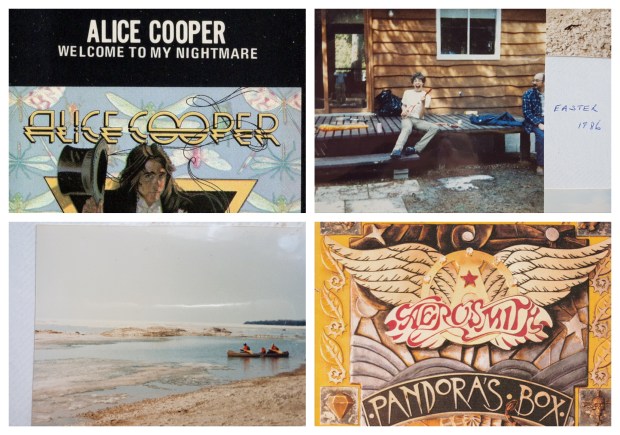
  • Easter ’86 – Quiet Riot air guitar weekend, Turbo, Crossbows & Catapults on the kitchen floor
  • Easter ’87 – Digging trenches in the back yard for GI Joe.
  • Easter ’88 – Skyscraper in Ottawa
  • Easter ’91 – Welcome to My Nightmare?
  • Easter ’92 – Pandora’s study regime
  • Easter ’16 – Record Store shopping in Ottawa

Hope to see you this weekend on the LeBrain Train.  NEXT WEEK:  Andy Curran!

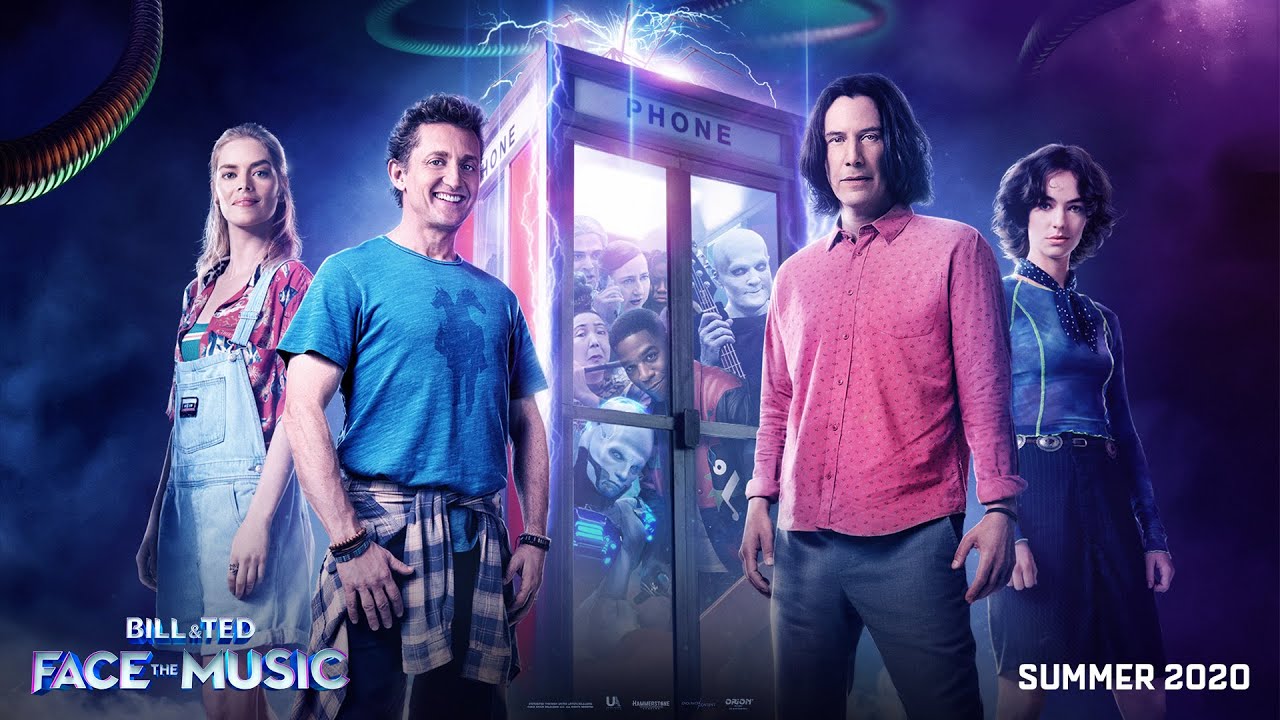
MOVIE REVIEW: Bill & Ted Face the Music (2020)

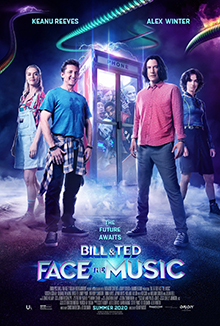
Bill & Ted Face the Music (2020 United Artists)
Directed by Dean Parisot

I went into Bill & Ted 3 not expecting much, due to the poor reviews and long-ass time since the second movie (1991).  I came out thinking everybody else got it wrong, and Bill & Ted Face the Music could actually be the best of the series.

Keywords:  “the series”.  This isn’t The Godfather we’re competing with.  Once you shed the rosy glow of nostalgia, realize one thing:  Bill & Ted were never great.  They were always fun, headbanging nonsense.  There was some wit and some great performances thanks to George Carlin and William Sadler, but Bill & Ted were never great.  The movies didn’t make a lot of sense where time travel is concerned, and were essentially just vehicles for the two dumb guys to have dumb adventures.

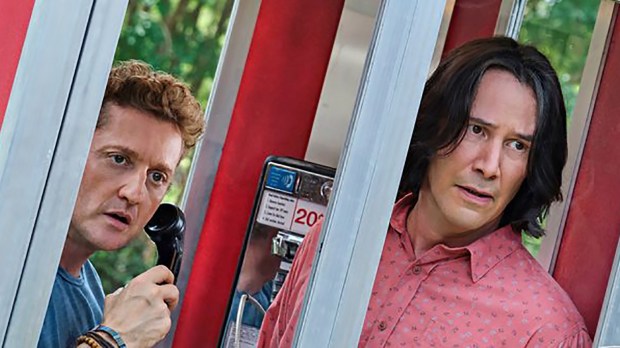
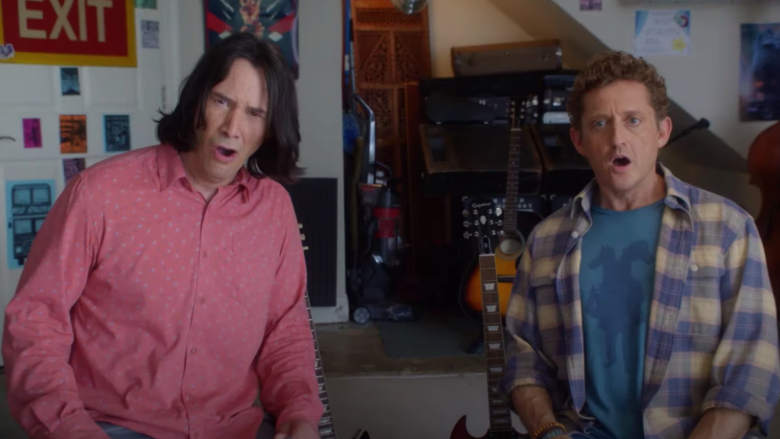
What is amazing is that the two “dumb guys” (Keanu Reeves and Alex Winter) wanted to come back.  They seemed to be having fun making the movie, which means it’s fun to watch.  What’s new in the last 30 years?  Not only are Bill & Ted still together, but they are still together with their medieval princesses too!  And they even have children — Thea and Billie.  And they are chips right off the old blocks.

One catch though.  Although Bill & Ted’s band Wyld Stallions achieved some early success, they quickly dropped off the map* and never wrote the song that would bring the world together.   And if they don’t do it before 7:17 PM, the universe will cease to exist!  (That doesn’t make sense?  Well neither did the first two films!)

The movie splits into two tangents here, both equally entertaining.  The affable Bill & Ted decide to go into the future, and just steal the song from their future selves.  Meanwhile, Billie and Thea have their own idea:  form the band that will back their dads when they play the song.  They borrow a time machine from Kelly, who is the daughter of Rufus (George Carlin).  Kelly is trying to warn their dads about a time travelling assassin robot (named Dennis) sent back to kill them.

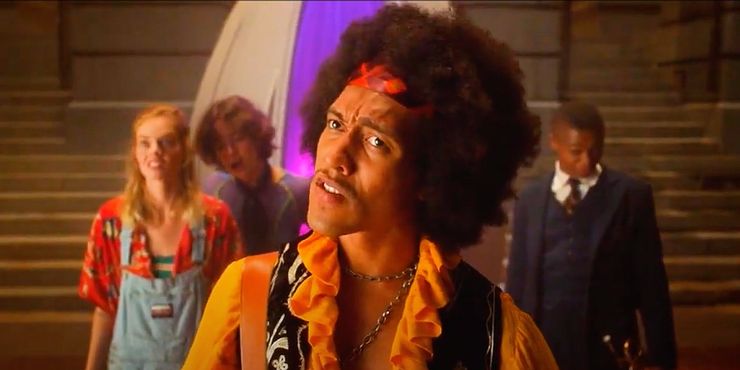
While Bill & Ted encounter increasingly older versions of themselves as they travel further trying to find the song, Billie and Thea recruit Jimi Hendrix, Louis Armstrong, Mozart, legendary Ling Lun, and a cave drummer from the stone age named Grom — the greatest musicians in history.   This is where Bill & Ted Face the Music really surpasses its forebears.  While it was fun seeing Bill & Ted recruit historical figures and going to hell in the past, this time it’s actually about the music.  For three movies, we are told that Wyld Stallions will unite the world in music.  Only in the third is the music actually a significant part of the movie.  It’s fun seeing Hendrix jam with Mozart despite the language (and time) barrier.

Spoilers from this point.  Bill & Ted screw up worse and worse the further they go.  Their future selves try to trick their past selves into stealing a song from Dave Grohl, which backfires and ends up with future Bill and future Ted in the slammer.  Their princesses abandon them.  Dennis lasers everybody to death (including himself) and they all end up in a familiar landscape:  Hell.  But that’s OK.  Turns out that Bill & Ted’s former bassist lives nearby.  Yes, it’s William Sadler as Death, who we learn quit Wyld Stallions to go solo years ago.  (We couldn’t get George Carlin back, but we did get William Sadler, and that’s just awesome.)  The clock ticks on and all seems lost, but don’t worry — Kid Cudi shows up to help with the quantum mathematics.

But what about the song?  As Mr. Holland’s Opus proved adequately, when you build up a piece of music in the audience’s mind, nothing will meet that expectation.  And as Dave Grohl is well aware “this is not the greatest song in the world, this is just a tribute.”  Given that no piece of music will ever satisfy an audience when you build it up as “the song that will save the universe”, this movie took an interesting turn.  It is revealed that the song itself wasn’t as important as getting everyone in the world to play along simultaneously.  It’s like a big “I’d like to buy the world a Coke and sing in harmony” situation.  And our heroes have a time machine, so they can make sure they get the message (and an instrument to play along) out to everyone in the world.  Don’t think about it the time travel stuff too hard!

End spoilers.  

Keanu Reeves, and Alex Winter in particular, are so much fun to revisit as these characters.  Keanu is a little more laid back, but Bill & Ted are in their late 40s (while the actors are in their 50s).  They’re not as enthusiastic as they once were.  But they are still Bill & Ted, bonded at the hip, and going to couples therapy as a quartet with their princesses.

Because of its focus on the music, Bill & Ted 3 surpasses the previous two movies.  There’s little “wheedly-wheedly” air guitar and shenanigans.  They don’t run around saying “excellent” and “bogus” all the time.  The endgame of Bill & Ted has always been that one day they would save the world with their music, yet the previous two movies didn’t focus on music.  The first one was about collecting historical figures to pass the highschool history exam.  A fun and fresh premise indeed.  The second went dark, having them assassinated by future robots and journeying through hell.  The third combines the two ideas, but this time with historical musicians.  Rock, jazz, classical, and I had to look up Ling Lun!

You get the sense that Keanu and Alex realized that there is a certain innocence to Bill & Ted that requires younger characters.  Their daughters (played by Samara Weaving – niece of Hugo, and Brigette Lundy-Pain) fill those roles and do it, pardon the pun, excellently.  You need that wide-eyed excitement.  Bill & Ted have already travelled through time, met Socrates and did it all twice — they have nothing to be wide-eyed about.  To them it’s old hat, even ending up in Hell one more time.

The Bill & Ted movies are, objectively, dumb movies.  The two lead characters are, objectively, dumb.  But dumb can be classic, as Stooge aficionados know, and updating a classic is really difficult to do.  Just ask the Farrelly brothers.  Ted Theodore Logan and Bill S. Preston, Esquire managed to have a third adventure appropriate to their ages, while finally saving the world as George Carlin promised they would.  Nothing new added to the stew.  By finally focusing on the music, potential is fulfilled.

3.5/5 stars

* Their experimental opus “That Which Binds Us Through Time: The Chemical, Physical and Biological Nature of Love; an Exploration of The Meaning of Meaning, Part 1” is not a hit.

#890: Top Ten Most Annoying Things About Listening Stations

A sequel to #444:  “Can I Listen to This?”

RECORD STORE TALES #890: Top Ten Most Annoying Things About Listening Stations

Although it seems like dystopian fiction now, there was once a time when if you wanted to sample an album before you bought it, the best way was going to a store and asking to listen to it.

I imagine even today, people walk up to the counter at Ye Olde Record Store and ask to hear something before they buy it.  I am certain the demand is not like it once was.  We used to have six individual listening stations.  Granted, we were lucky if three or four worked at any given time, but when we first opened, we had six brand new players.  And they were busy.  On a Saturday, all six would be in use at once.  With a couple more people lined up waiting to jump in when one was vacated.

Here’s how it worked.  Pay attention, because some people just didn’t get it.

It’s actually pretty simple.  You just look around the store, grab a few CDs you want to listen to, and bring the cases to me to load them up.  All the discs were kept safely behind the counter.  All I had to do was load them up, and lay them out for you to hear.

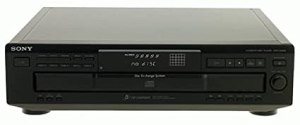
All our players were five disc changers.  I would load up the first five of your selections, and lay down the cases on the counter.  “This is the order they are in the player.”  Then I would give them a quick run-through on the remote control.  Play, skip, stop, skip disc…I would ask them to ignore the rest of the buttons.

Annoying Thing #1:  People who don’t listen.

“Sir!  This player isn’t working.”

Because you ignored my instructions and hit the “program” button.  Now you’re in program mode.  Let’s get out of that, and just press play this time.

Annoying Thing #2:  People who help themselves.

There was nothing more startling than finding a customer behind the counter with you!  These people think the listening stations are like self-serve gas stations.  They’d go behind the counter and start looking for the CDs to load up themselves.  I’m really not sure what possesses people to think they can do that.  There’s a counter.  It has a front and a back.  We used to have a divider chain, but it ripped out years before.

Annoying Thing #3:  Using the remote to open the tray. 

You don’t need to open the tray.  You’re not helping by hitting the “open” button.  More than once, I was picking discs that were stored beneath the CD players.  I stood up, and “CRASH!”  Right into the now-open tray of a CD player.  Thanks for that.  I’ve definitely had them open up on me while I was walking past, too.

Annoying Thing #4:  Audiophiles.

Quoting a prior chapter:

“These headphones suck.  I can’t hear the nuances in the music.”  That was a real complaint.  Since there wasn’t much I could do about it, I explained that the listening stations were there just so you could hear a song and decide if you liked it or not.  Not much thought was given to hearing the nuances.  But this guy insisted he couldn’t tell if he liked a song without the “nuances”, so no sale was made.

Yes the headphones sucked, mostly from years of use.  Another issue is that all the headphones were run through a little tiny volume box that was custom made for us.  This volume control was the real problem.  Knobs went staticky, came right off… Maybe it wasn’t the audiophiles that were the problem, maybe it was the shitty volume knobs.

Annoying Thing #5:  Gross remote controls.

I think I cleaned those things every day.  I don’t know what people are walking around with on their hands, but those remotes got disgusting.  The listening stations were always solidly disinfected from headphones to remotes, but they somehow felt…gross to the touch.

Annoying Thing #6:  “Is there a way to plug in two headphones?  My friend wants to listen.”

No!  Stop asking!  Yes, it would be “cool” if we could do it.  The single-output volume boxes were bad enough.  Imagine putting two in there.

Annoying Thing #7:  Singers.

Yes, sometimes, people sang along.  It wasn’t frequent.  Other customers would turn and look.  Usually you’d just ignore it.  Only twice did I have to cut someone off for singing too loud.  Once was two girls singing “This shit is bananas!” along with Gwen Stefani.  Another was an angry kid who, quite frankly, was starting to scare me.

Annoying Thing #8:  Kids treated them like toys.  

Young kids get bored in music stores.  Trust me on this.  Some liked to climb on top of the stools, grab the remote control, and…you guessed it…open and close the trays.  They’d just mash their fingers on a remote and yell “HOW DOES THIS WOOOOORK?”

I wish I was making this stuff up, I really was.

Sometimes, mom or dad would ask me to put on a kids’ CD for them to listen to, to keep them occupied.  That I was happy to do.  As long as they didn’t play with the remotes, or God forbid, put them in their mouths.
Annoying Thing #9:  High maintenance listeners.

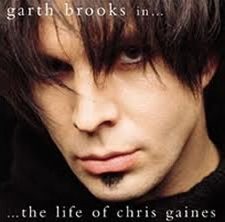
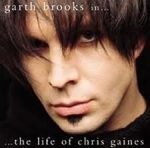
Sometimes you had to help people skip tracks.  You could even show them on the remote where the button is, and they’d still need help.  “Which disc am I listening to now?”  Well, it says disc 2 on the display, and I put the cases down here in order, so that would be Garth Brooks.  “Well it doesn’t sound like him!”  And that’s because you picked his Chris Gaines album.

Annoying Thing #10:  No limits.

You could come to the counter with 25 discs, and I had no choice but to let you listen to them all if you wanted to.  And you could take as much time doing so as you liked.  Some gentlemen (often fans of jazz or electronica or both, but always men) spent an entire morning glued to a listening station.  They only moved to go and look for more discs to listen to.

I won’t lie to you, listening station service was hard work when you have a guy like that in the store while you’re busy.  It takes time to retrieve all those CDs from behind the counter.  It takes time to file them back when you’re done.  And then I still have to re-file the cases out for display.  For you it’s one easy step — just pick the discs you want to listen to.  For me, it’s three steps.  Get the CD from its specific location, put the CD back when you’re done, and re-file the case.

Some customers thought they were being helpful by re-filing the cases for me.  All that did was create more difficulty, because now I had to look each one up in the computer to see where the CD itself is supposed to go.  And that wasn’t always easy.  You know, sometimes there are CDs out there with nothing to identify the artist or title.  At all.  And after serving the guy 25 discs, you’re not gonna remember what it was.


There are other miscellaneous things that used to bug me.  People who would treat you like a servant.  Working as a listening station jockey for an afternoon was a pretty thankless job.  Of course there are exceptions.  The exceptions aren’t the memories that stick in your head for 25 years!


Lists Bloody Lists: Marco the Contrarian boards the LeBrain Train with some Black Sabbath lists!
Thank you Marco from The Contrarians for your appearance Friday night!  The subject was Black Sabbath songs.  Three Nigel Tufnel Top Ten lists from three die-hard fans.  Do the math — that’s like a million tons of metal right there.

Marco is one of the most knowledgeable guests we’ve had on the show.  We couldn’t let him off without asking him some questions about Marco.  The first part of the show features a new segment that we call “Lightning Round – Getting to Know You”.  We’d like your feedback on this part of the show.  We had a lot of fun with it and so did the live viewers.  What did you think of this new feature?  Let us know in the comments.

Finally, we did a Contrarians style discussion on my favourite Black Sabbath record Born Again.  This was very enjoyable and I hope we did the Contrarians justice with our version of the format.

Finally Finally:  Marco mentioned a film project he is working on about a Canadian metal band called Mystique that is very close to his heart.  Check out their Youtube channel by clicking here.  This subject really grabbed the imagination of the live viewers who started looking up their stuff on Discogs!  ($377!)  You’ll also hear about a band called Slam Glory that I liked a lot back in the 90s.

All this and more on the LeBrain Train.  Thanks for watching!

For the statisticians:  Of the 33 songs on our lists, only five overlapped.  They were:

  • Cornucopia (Meat and Marco)
  • Sign of the Southern Cross (Mike and Meat)
  • Hand of Doom (Meat and Marco)
  • Disturbing The Priest (Marco and Mike)
  • Children Of the Sea (Mike and Meat)

Crossover! Contrarian Marco joins the LeBrain Train for some Black Sabbath shenanigans

The LeBrain Train:  2000 Words or More with Mike Ladano…and Meat!

Episode 56 – Contrarian Marco talks Black Sabbath

In a crossover event sure to melt the structure of reality, we have Marco from The Contrarians here with us tonight!  Their excellent YouTube show, featuring Martin Popoff, is the place you want to be for some real in-depth heavy metal album discussions.  It’s all about people like us who pick odd-duck albums as their favourites.  Which is something I’ll be doing tonight as well!

Without spoiling all the fun, here’s what we have in store.  Uncle Meat and I will be asking Marco some questions so we can get to know him a little better.  Then the three of us will break out the lists!  It’s the Nigel Tufnel Top Ten Black Sabbath songs.  As if that isn’t enough epic-ness, we will also be discussing contrarian-style my favourite Sabbath record:  Born Again.

Additionally:  I will be announcing the winners of our CD draw from last week’s One Year Anniversary show!  This will happen in the pre-show segment before 7:00 PM.


Announcements:  Next week is already Easter.  I’m considering doing two shorter shows that weekend:  One, featuring a Max the Axe live rehearsal with four songs.  These “Straight Outta Lockdown” sessions include a new tune.  The second show I am considering would be Easter memories.  Guests are on a volunteer basis if you’re interested.

Following that:

April 9:  Please welcome the legendary Andy Curran of Coney Hatch to the show!  With co-host Superdekes.

May 7:  It’s Paul Laine, Canadians singer extraordinaire, formerly of Danger Danger and currently with The Defiants!  With co-host John T. Snow!

Are you excited?  Because I sure am!  Thanks to Deke and John for booking these awesome guests.

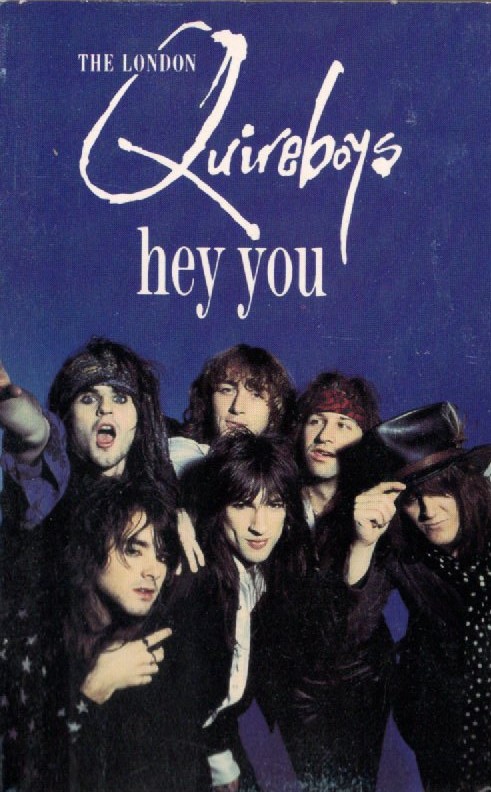
REVIEW: The London Quireboys – “Hey You” (1990 cassette single)

THE LONDON QUIREBOYS – “Hey You” (1990 Capitol cassette single)

A curiosity unique to cassette.  The UK 12″ single for “Hey You” included a live “Hoochie Coochie Man” on the B-side.  It and the 7″ single also contained the album track “Sex Party”.  You could get these same tracks on the CD single, but the cassette went with a different route.

The A-side common to all is of course “Hey You” from the hit debut album A Bit Of What You Fancy. It sounds classic from first crash of guitar. The Stones-y Faces vibe is immediately apparent, and fondly recalls the summer of 1990 when the need for such a sound heralded in the Quireboys and Black Crowes.  It was completely unlike everything out by Motley Crue, Bon Jovi, and Warrant.  Its refreshing reliance on slide guitar still sounds great in the speakers, but the rasp of singer Spike is its most defining trait.

The first B-side is the roudy “Sex Party” from the album.  The boogie piano keeps it kickin’ hard.  But then the cassette goes its own way with two additional tracks.  They are severely edited versions of hit singles “I Don’t Love You Anymore” and “7 O’Clock”.  Both fade out prematurely just as the songs are getting awesome!

The whole thing repeats on both sides.  The idea is to give the kids incentive to go out and buy the album next time.  Save your allowances and buy the album to get the full songs.  Such teases!  Just as Spike is telling us what time it is, adding that it’s also “time for the party”, the song fades and the side ends!

Can’t realistically rate something like this very high.  While the two full tracks are both awesome, it’s hard to justify buying this tape today as anything other than a curiosity.  The cassette still sounds good after 31 years though!

2/5 stars

#889: The Dreadnoks

RECORD STORE TALES #889: The Dreadnoks

I’ve always had trouble letting go.  Even though rock music was my true obsession, there was some overlap.  Even  into grade nine, I still bought GI Joe comics and figures.  It was always hard letting go of an obsession.  My “favourite things”, in order of discovery were:

  1. Star Wars until its natural end in 1983-84.
  2. GI Joe/Transformers from 1984 to 1986-87.
  3. Rock music from 1984 to present.
  4. WWF Wrestling from 1985 to 1990.

You can see how the evolution of this worked.  A GI Joe figure was in the same scale as Star Wars, but with far more articulation well suited to an older kid.  The first wave of figures even featured real-world accurate weapons.  They were a natural step for a kid still wanting that action figure experience, but geared for someone older.  Transformers went hand in hand, since Marvel were producing a comic line to go for each.  Transformers resembled the die-cast cars that older kids (and adults) collected and displayed.

I discovered heavy metal music on December 26, 1984.  A  few months later, wrestling appeared on my radar with the very first Wrestlemania.  A lot of those guys looked like rock stars, with crazy costumes, long hair and male bravado.

As my interests shifted and evolved, so did my collections.  The Star Wars toys were put into storage in the crawl space.  I was given tape boxes, Christmas after Christmas, to store my growing music collection.  A typical Christmas would see me receiving some new tapes and action figures.  I’d sit in my bedroom reading GI Joe comics while rocking out to Long Way to Heaven by Helix.  I was a weird kid but I liked what I liked and didn’t much care.

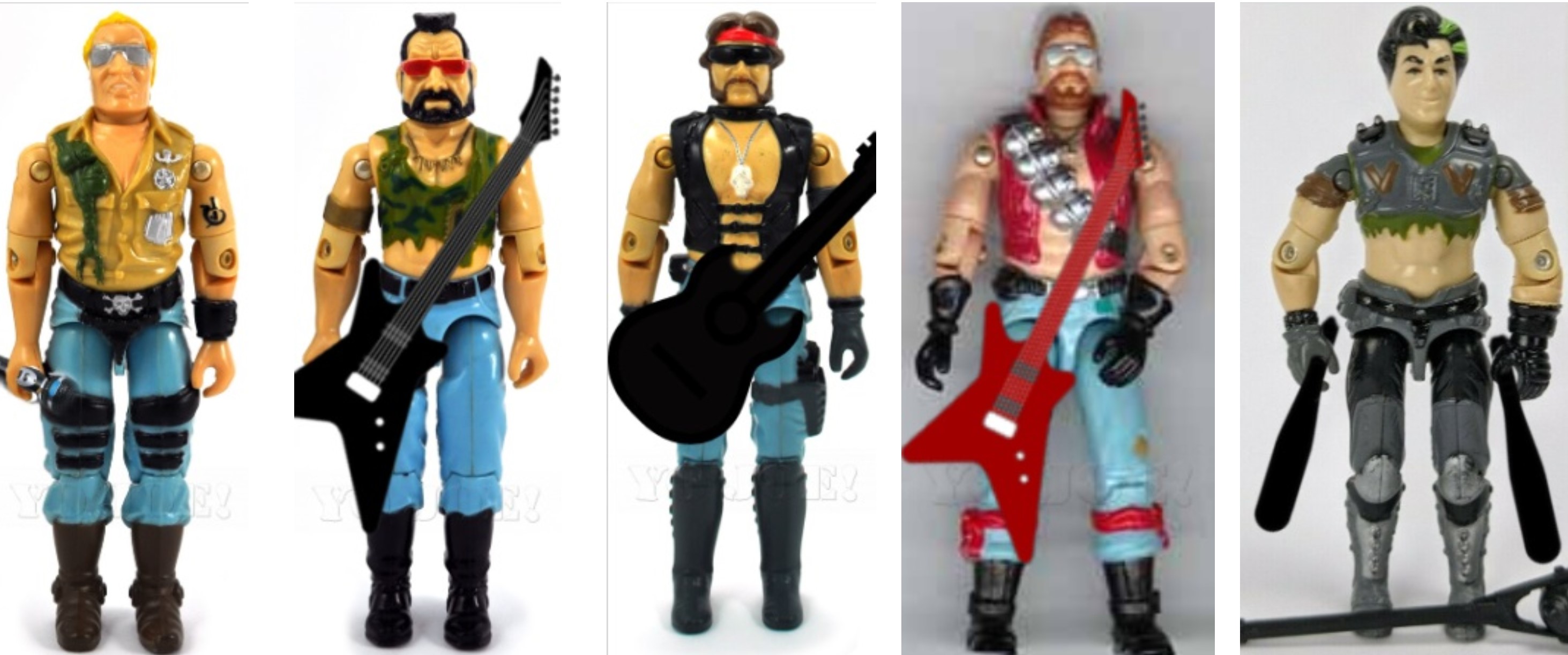
The Joe characters diversified along with me.  In 1984 they got a little more outlandish with the introduction of Zartan and the Dreadnoks.  Zartan, the master of disguise, was a deluxe action figure whose skin colour turned blue in direct sunlight.  This gimmick only worked outdoors, which meant we played with Zartan outside in the summer while giving him a rest in the winter.  His backup didn’t arrive on toy shelves until 1985.  They were three bikers named the Dreadnoks:  Buzzer, the Brit with a ponytail and a chainsaw, the mohawked Ripper, and the flamethrower Torch who had a bit of a Lemmy beard going on.  Their Mad Max inspired outfits would have allowed them to fit into a rock band quite easily, if only they came with musical instruments instead of weapons.  They’d make a cool punk trio.

The Dreadnoks expanded their lineup the following year.  On explosives came Monkeywrench, bearded and obsessed with Guy Fawkes.  Then in a deluxe set came the vehicle driver Thrasher, and his definitely Mad Max inspired Thunder Machine car.  Made of bits and pieces of scrap, it hit the same post-apocalyptic notes as the other Dreadnoks, as well as rock bands like Motley Crue, Kiss, and Armored Saint.  Thrasher had a punk rock streak of green in his hair.  And now they were a quintet.  They were literally begging for me to make them custom musical instruments.

There were always wooden match sticks in the house, so I used them for guitar necks, drum stands, drumsticks, and a microphone.  Cardboard boxes were cut up to make the bodies of guitars and a few drums and cymbals.  Black electrical tape held them all together.  And so the Dreadnoks became a five piece band, and I put them on display in my bedroom on a shelf with my Kiss cassettes.

If only I had a picture of my Dreadnok band.  Not everybody had a camera back then.  Even if you did, it seemed film was always out!  You can imagine what they looked like!


REVIEW: Accept – Too Mean to Die (2021)

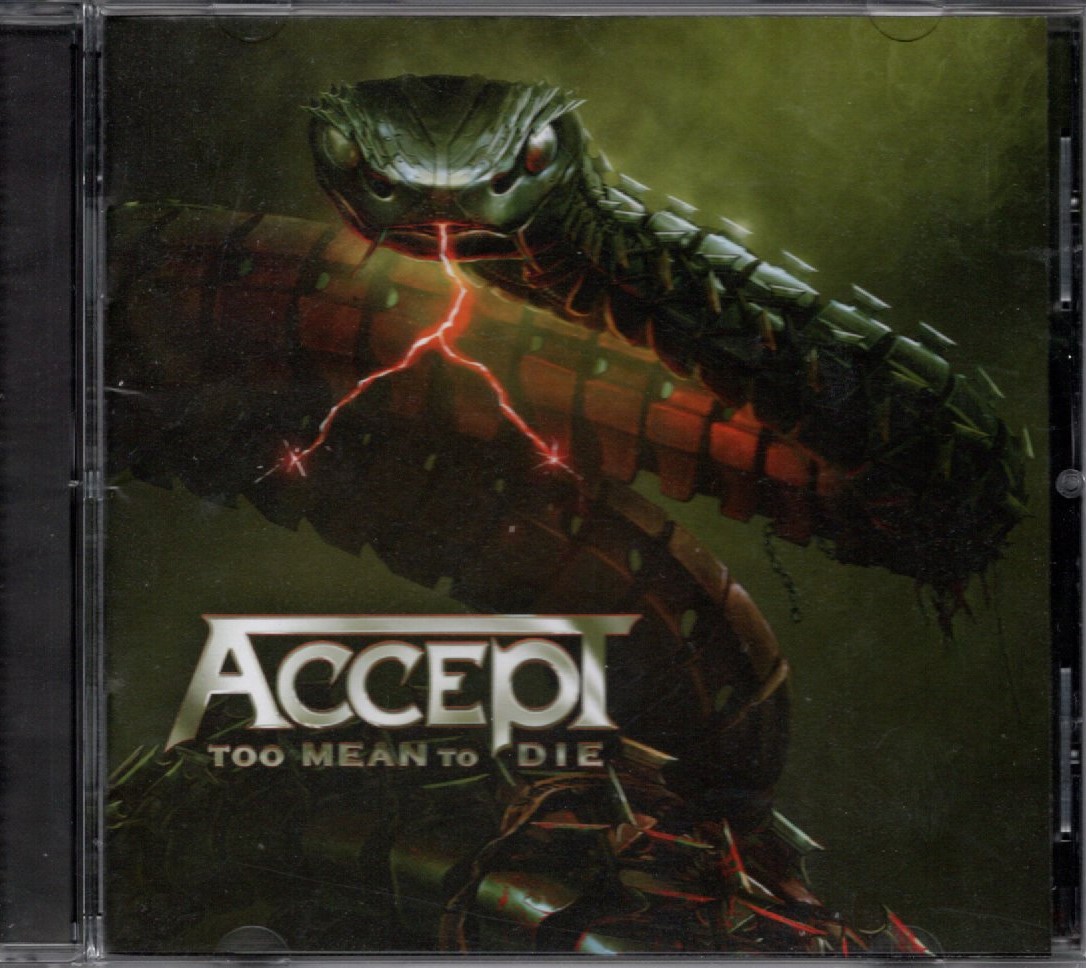
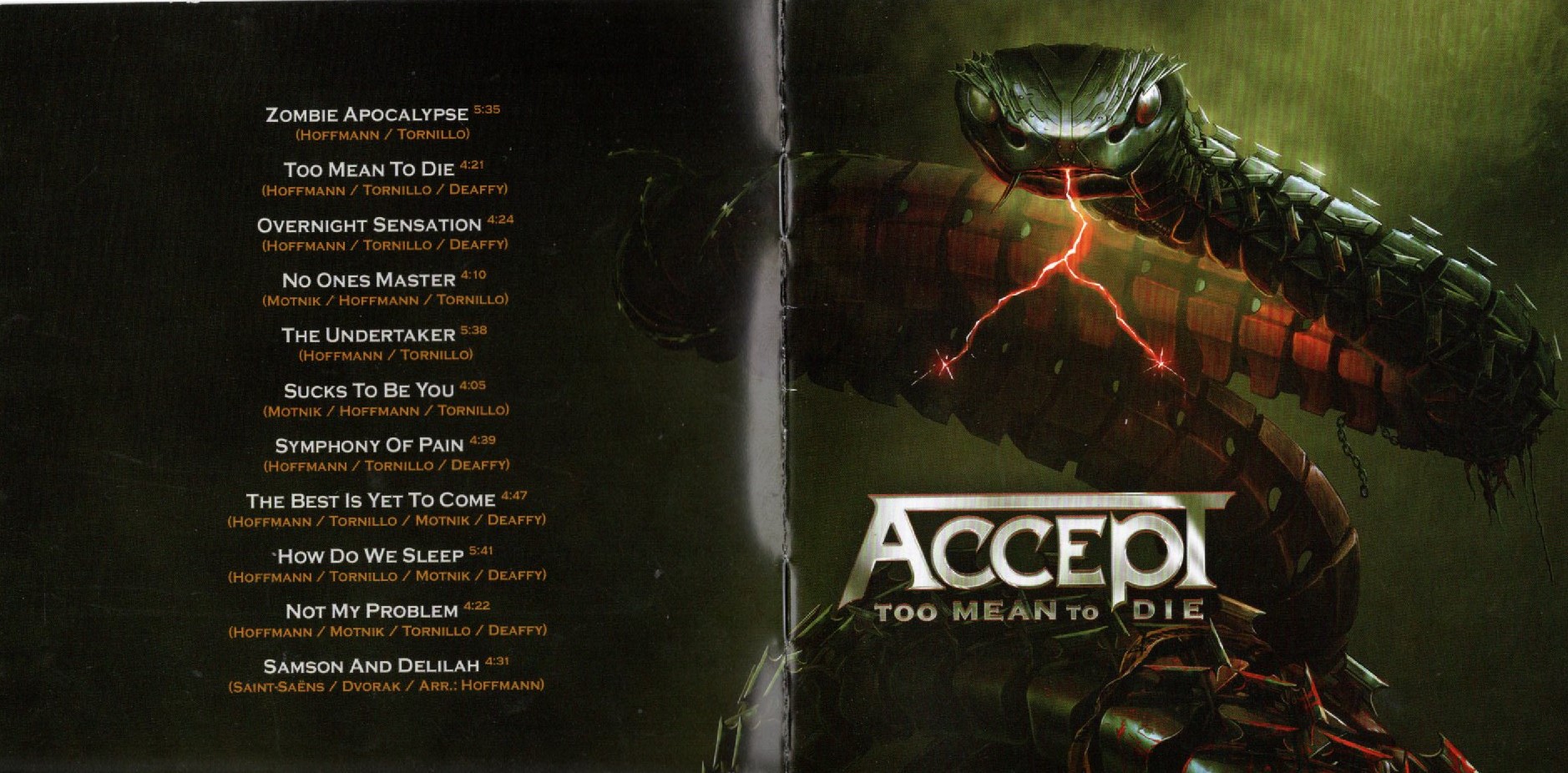
ACCEPT – Too Mean to Die (2021 Nuclear Blast)

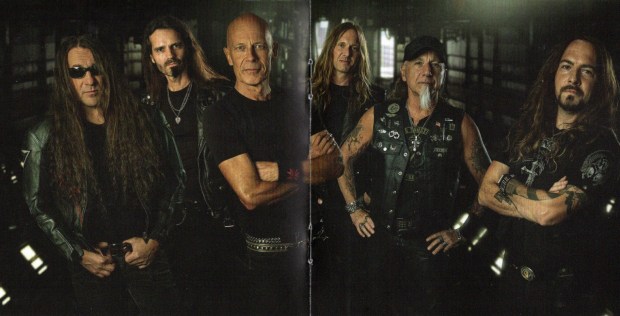
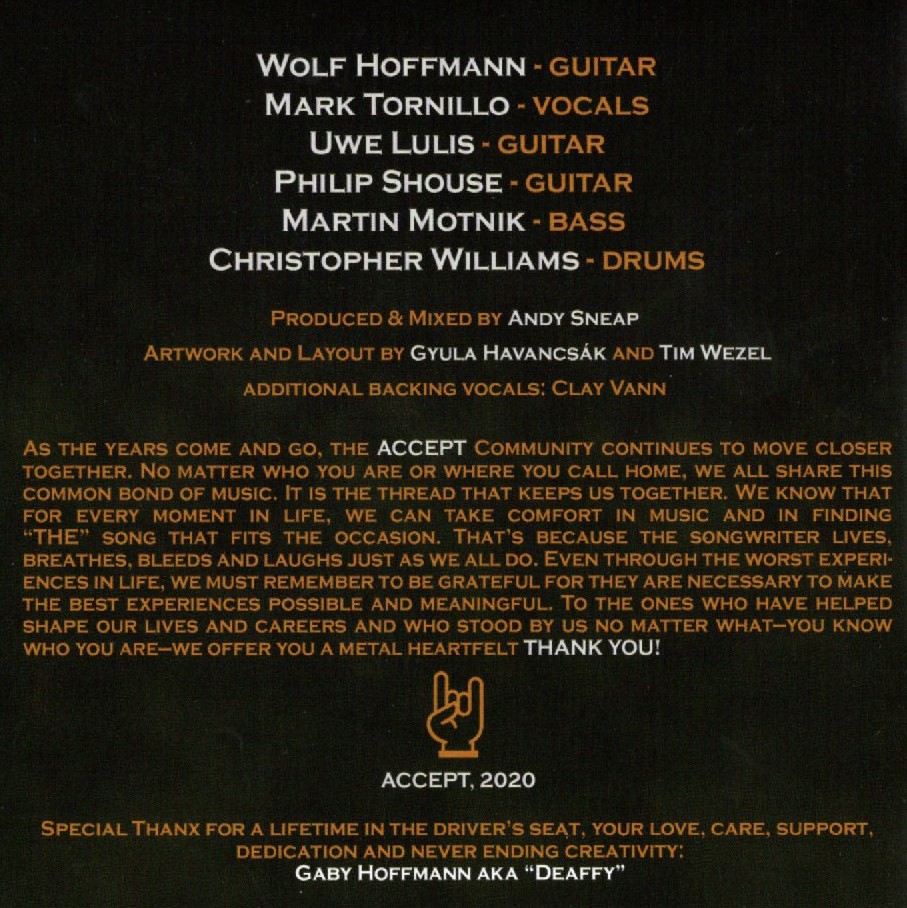
Tornillo-era Accept has been a pretty even field; a level grid of Sneap-sharp production and Hoffmann’s razor-riffs.  If you expected change just because there’s a new bass player for the first time ever, you’d be wrong.  Accept may be down to just one original member (Wolf Hoffmann himself) but it doesn’t matter much.  What Accept deliver on Too Mean to Die is the same as they have done for every album since 2010’s Blood of the Nations.  Reliable, like AC/DC…or a comfortable leather jacket.

Nothing wrong with this.  Accept found a formula that works in their post-Udo world and it works well.  It’s difficult to remember what songs are from what albums, but Accept haven’t stopped putting out solid quality metal.

There’s the song about zombies (“Zombie Apocalypse”), one about never giving up (“Too Mean To Die”), the mid-tempo one (“Overnight Sensation”), the one about the media (“No Ones Master”), the single* (“The Undertaker”), the one with the funny title (“Sucks to be You”), the classical influence (“Symphony of Pain”), the ballad (“The Best is Yet to Come”), the one about the state of the world (“How Do We Sleep”), the angry one (“Not My Problem”), and the instrumental (“Samsom and Delilah”).

The riffs keep hammering in the capable hands of Wolf, and Mr. Tornillo on lead vocals never stops givin’ ‘er.  Hooks on every track.  The energy is no less than their first together.  Wolf’s guitar tone remains as tasty as it has been for over four decades.  One more album to add to your collection, as the Tornillo era blends together like a monolithic five-CD box set.  Too Mean To Die could have been titled Disc Five, so if you need to complete your set, do it now.

4/5 stars

* The single for “The Undertaker” features a non-album live track on its B-side, of a non-album single called “Life’s a Bitch”!


REVIEW: Bonham – Mad Hatter (1992 Japanese import)

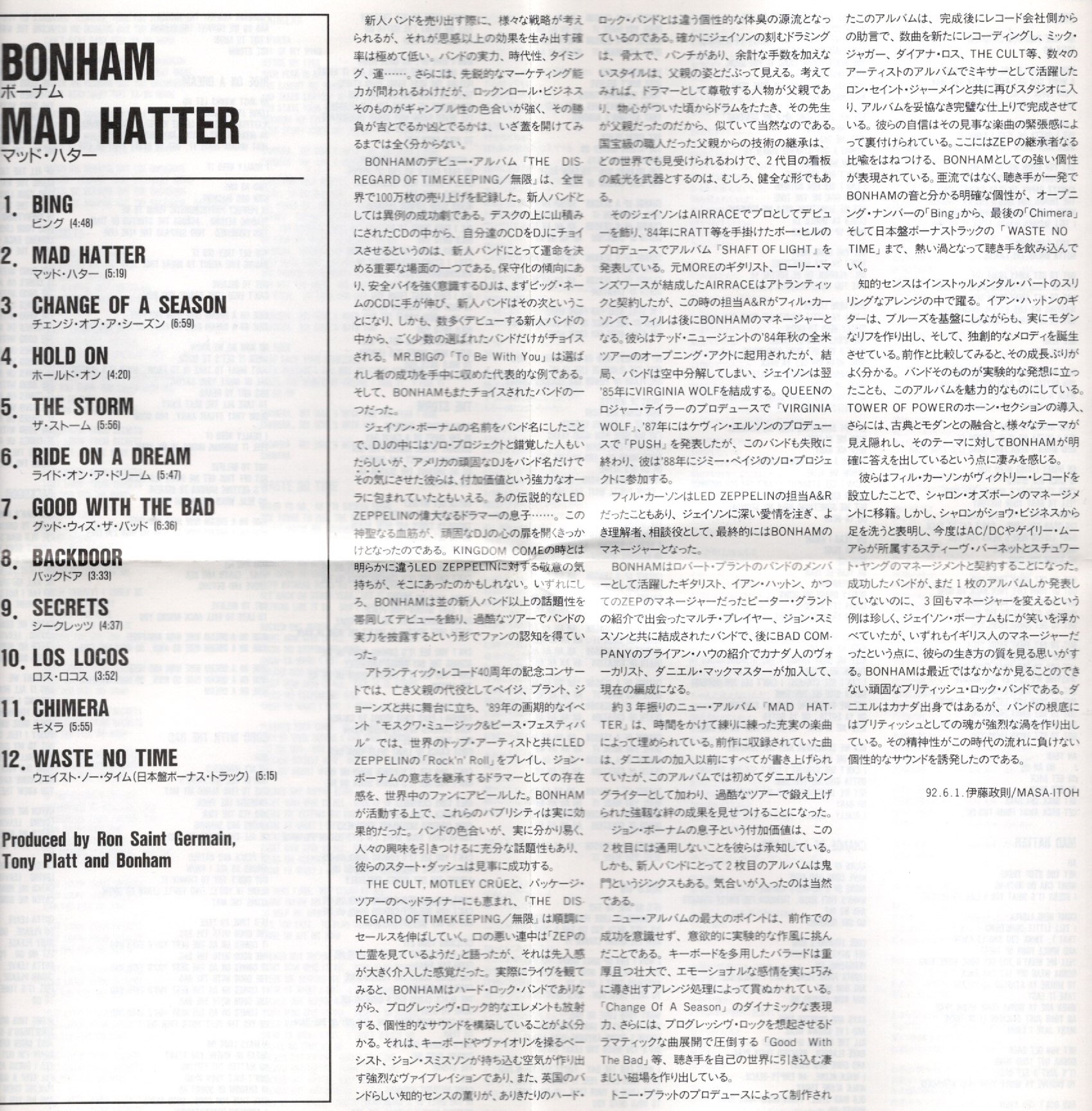
BONHAM – Mad Hatter (1992 Sony Japan)

The first Bonham album in 1989 was a critic’s darling.  Produced by Bob Ezrin, it sold well enough and made plenty of year-end lists.  For the year 1989, it was a breath of fresh air compared to the Motley Crue, Bon Jovi and Def Leppard tracks dominating the airwaves.  Those who thirsted for the rarified air of Led Zeppelin got some of that with Jason on drums and the incredible Canadian Daniel MacMaster on lead vocals.  It was easy to imagine that “Wait For You” was a new Zeppelin single built for that year.  But every band has to grow, and where would Bonham take it?  Further down the Zeppelin road, or try and find their own identity?

Bob Ezrin did not return, and most of the followup album Mad Hatter was produced by Tony Platt, with the rest produced by Ron Saint Germain.  The band grew from the debut, establishing more of their own groove.  It was a more diverse and challenging platter.  Unfortunately, the album arrived in 1992, amidst the Pearl Jams, Soundgardens, Nirvanas and the rising tide of grunge.  Despite the strong single “Change of a Season”, the album tanked.

What an opener “Bing” is, a word that doesn’t seem to be in any of the lyrics.  At first, it has a very old school Zeppelin groove, akin to “Candy Store Rock” meets “Black Dog”.  But then it goes to a completely different place on the chorus.  The sonics are clearer and sharper than the debut.  Jason’s drums are huge as the should be.

Yet it’s the title track that really shocks the system.  Opening with a blast of horns, “Mad Hatter” goes one of the few places Zeppelin never went:  full-on funk with horns.  This would be the Tower of Power horn section.  It would be lazy to compare “Mad Hatter” to “Get the Funk Out” from a couple years past, as it has its own vibe.  Ian Hatton on guitar proves himself to be diverse talent with licks-o-plenty.

Another direction is explored on “Change of a Season”, the shoulda-woulda-coulda single that would have been huge a year or two prior.  The melancholy ballad was simply the wrong temperature for 1992. The gothic tone of the video was cool, but the video got zip for airplay.  It’s the backing strings (synth) and epic chorus that make this song.  It sounds less like Zeppelin and perhaps more like something from David Coverdale’s Reptile Emporium.

Another cool direction is explored on “Hold On”, a unique song with elements from multiple genres.  Funk, soul, progressive, blues, and even bluegrass.  This is followed by another song with epic overtones, “The Storm”, a six minute track that takes the Zeppelin influences to the craggy progressive peaks of another land.

Although there’s no side break on a CD, there are a natural place for it as you can pause for a breath before plunging into “Ride on a Dream”.  A breaknace pace and metallic riff make it unlike anything else on the album.  Perhaps a band like the Scorpions could do “Ride on a Dream”, but even Klaus would be challenged by the outstanding MacMaster lead vocal.  This plutonium-fuelled track would give anyone a run for their money.

But after all that drama, you need something a little more laid back.  That would be “Good With the Bad”, a jazzy piano ballad and the longest song on the album.   It doesn’t remain in ballad territory forever, going to the swamps of Florida where Savatage reside halfway through.  The comparisons are easy to hear.  Next, we go to a bluesy, funky blast of Zeppelin-flavoured ale on “Backdoor”.  Another cool tune with a different vibe from the others.  Things drag a bit on “Secrets”, which tries to marry the funky side with a “Kashmir”-scale chorus but doesn’t really follow through.

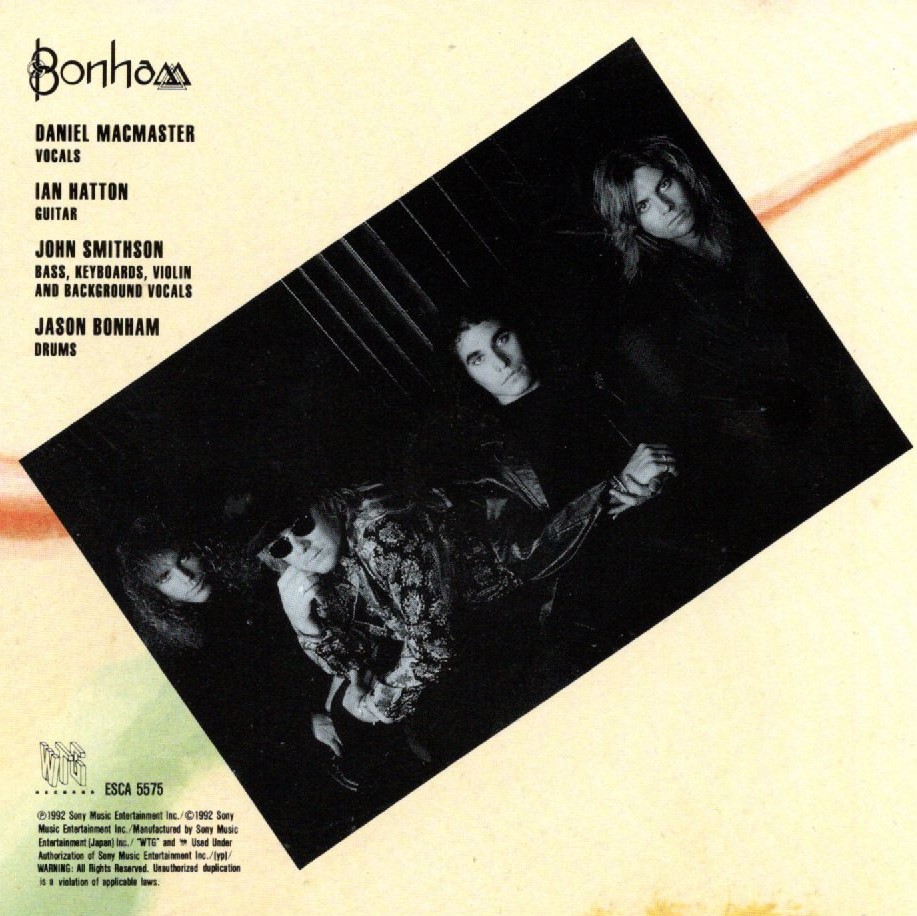
Moving on to the end, it’s “Los Locos” in second to last position.  This is a tender blues guitar/violin instrumental with dark piano accents.  That would be bassist John Smithson handling those wicked violin licks and a lot of the keyboards.  Perfect track for this spot, setting up for the closer.  It’s up to “Chimera” to take you out, and it does with a shiny upbeat vibe.  Although it’s probably sheer coincidence, it sounds a bit like Marillion circa the same period.

Lo and behold, that is not all!  The Japanese fans got a little bonus on their CDs called “Waste No Time”.  It’s definitely not an also-ran.  It has a heavy bass groove that isn’t like the other tracks on the album.  MacMaster really lets it blast on the chorus too.  Definitely Zeppelin vibes come solo time.

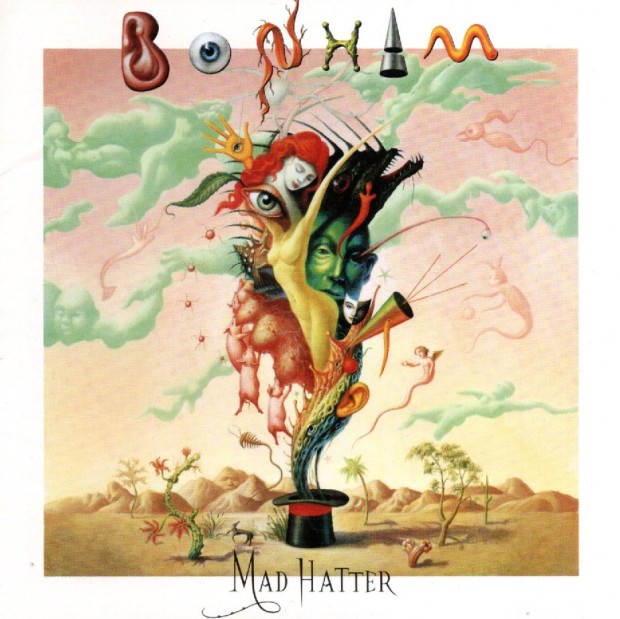
This album was available with two covers.  The majority of copies have the surreal Dali-esque landscape that you see here.  The alternate cover was plain white with just the new Bonham logo.  Which looks rather silly without the proper cover art for context.  That’s the cover that retailers such as Columbia House sold in the 1990s.

In 1994, Jason Bonham reconvened with Ian Hatton and John Smithson, but not Daniel MacMaster.  The new singer was Marti Frederiksen — yes, that Marti Frederiksen, the one that writes massive hits for everyone today.  The band took on a new modern grunge sound, and renamed themselves Motherland.  ☮︎ For Me was the pretentious name of that album.  As a sad final coda, Daniel MacMaster died too young at age 39 from a strep infection that he thought was a cold.

At least we can say that Bonham with MacMaster really did outgrow the Zeppelin tag by the second album.  Still a part of the DNA, but expressing itself more rarely.  It’s a shame about the timing of the album, because had it sold like the first one did, maybe we wouldn’t have had the Motherland debocle.  Mad Hatter is a pretty fine second album that does all the things that second albums should do.  Shame it was the last.

3.75/5 stars