GETTING MORE TALE #436: To offend, or not to offend?
It’s 2015 and any serious business has an online presence on Twitter, Facebook, and everywhere else. Ever sit there at your computer and wonder just what the social media guru for a business does? Ever looked at something online and said, “I could do what they do, and with the resources they have, I could do it better.” I know I have.
But could I?
There is a huge difference between a paid social media person, and someone like myself who is doing this on his own for the sake of the music.
Let’s look at the goals of the paid social media liaison:
Engage in conversation with customers on social media.
Make interesting posts involving questions, to kick-start the conversations.
Give a peek behind the curtain of their business.
Don’t offend anyone.
The first three points here are all pretty easy to accomplish, especially for us as writers. Just substitute “customer” with “reader”. Most music writers online that I follow and read regularly do these things, and with style and fun.
Rock journalist Mitch Lafon is a great example. Almost daily, he poses loaded questions to his many followers. Things like “Slippery When Wet, or New Jersey?” “Iron Maiden, or Judas Priest?” He also asks fans to choose which interview he’ll post next. “Slash or Geoff Tate?” (Slash won.) Mitch has a very engaged following on social media, thanks to his regular posts and questions. He’s quite a natural at it, and he has done a fantastic job. The great thing about social media is the ability for everyone to get involved and be heard.
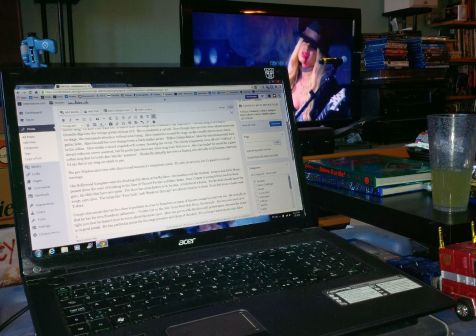
As for a peek behind the curtains, this is all but expected on social media now, no matter who you are. Movie studios are always posting drool-inducing teaser photos from the set via Twitter. Bands do the same from the studio. I have always tried to give you a look at how my creative process works, showing you the mess behind the scenes at LeBrain HQ.
The exciting life of a music blogger
The tricky point is the fourth one: “Don’t offend anyone”. It is very difficult to go through life without offending anyone. I might be considered an expert on such subjects.
When I used to write CD reviews for our old company newsletter, we couldn’t really say anything negative. The reviews were one paragraph each, and had to be to the point. We only reviewed CDs that we could praise, because as a store, we were trying to sell CDs! We didn’t want to offend a fan, nor discourage one from buying a CD.
We did the best we could considering the circumstances. Our monthly newsletter had some humour content, such as “funny customer quotes”, similar to my Klassic Kwotes here, but watered down and tamed. You couldn’t have somebody read the newsletter and say, “Hey, they’re making fun of me! I’m never shopping there again!”
I’m not doing this to sell anything. I started this for the sheer joy of talking about music, and to shine a light on neglected albums that deserved more attention. One of my earlier reader’s comments said something like, “You like everything, how come you don’t have any negative reviews?” Very well, then! My negative reviews have since become some spicy favourites.
Surprisingly, the negative reviews (or stories) are no more likely to receive negative comments than positive ones! It seems that there are many people out there who will take the slightest words the wrong way, or personally. (My radio buddy Craig, who openly loathes all social media, refers to these people as “humourless bastards”. He has also noticed that many of them use three names on Facebook, and have a picture of a cat as their Facebook photo.)
Creative freedom is more important to me than ruffled feathers. It’s different for a business, and I’m glad for that reason that I’m not doing this as a business. I admit that I have purposely sought to get a reaction. I’m the guy who once wrote a Quiet Riot review by pasting a picture of a piece of shit on the album cover. It’s all supposed to be fun. If you’re offended by that, then you’re reading the wrong website. (I have a lot more toilet humour where that came from.)
Even if you’re using social media to promote a business, a little bit of humour never hurts. No, you don’t want to go out of your way to offend someone’s tastes, or sensibilities. You also don’t want to have bland, faceless content. Let your personalities shine, be creative and have fun with your social media. You don’t have to take a page out of my book and uses pictures of poop as a product review (tee hee)*, but if you’re not having a laugh, neither are your followers!
* I’m also not discouraging you from using pictures of poop in product reviews, either.
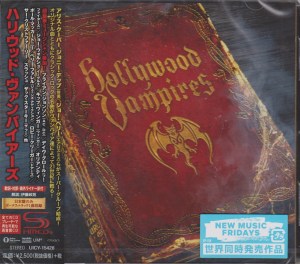
ALICE COOPER / HOLLYWOOD VAMPIRES – Hollywood Vampires(2015 Universal Japan)
Ignore the hype. The press has been going ga-ga over this new supergroup featuring movie star Johnny Depp (rhythm guitar), Joe Perry (lead guitar), and Alice Cooper (lead vocals). Just ignore the hype completely. Cooper fans know what this is. This is the covers album that Alice has been talking about doing ever since Welcome 2 My Nightmare in 2011. Alice has even been playing a number of these tunes, in these arrangements, live. Check out his Raise the Dead double live album/video for a few.
According to an interview with Ultimate Classic Rock earlier this year, “I can’t tell you who’s on what right now, ’cause it’s not gonna be released yet, but it’s the ‘who’s who’ of everything. It was one of those things where, at one point, I’m looking around in the studio and I’m going, ‘Holy crap! Look who’s in the studio.” Bob Ezrin, Alice’s long-time producer and musical collaborator came up with the concept. Alice continues: “Bob came up with the idea, ‘Let’s concentrate it on all the guys that you drank with in L.A., the Hollywood Vampires, the ones that are all dead.’ I like the title All My Dead Drunk Friends. It’s just offensive enough to work, but all those guys would have totally got it. They had the same sense of humor. If you told them you were going to do an album after they were gone called All My Dead Drunk Friends, they would have died laughing.” Ultimately the album was simply called Hollywood Vampires. That’s also the name of this “supergroup” which is essentially just Alice with Depp and guests.
I have this album filed in my Alice Cooper section, and that’s how I’m treating this review.
Hollywood Vampires consists of 14 tracks, except in Japan who have 15. Two of these are brand-new songs, and one is an intro called “The Last Vampire”. Fittingly, this features the narration of Sir Christopher Lee, who passed away earlier this year. Lee’s old friend from the Hammer horror days, Vincent Price, appeared on Cooper’s original Welcome to my Nightmare in 1975. Today, Alice Cooper truly is the last vampire left from those old days. Lee’s rich voice is backed by spooky keys and theremin by Ezrin, Depp and engineer Justin Cortelyou. “Listen to them, children of the night…what music they make.”
Alice then kicks it with “Raise the Dead”. Depp appears on every track, and Alice’s drummer Glen Sobol plays on this one and several others. It’s an upbeat stomper of a track, and a perfect introduction to this covers album that is also a concept album. The first of Alice’s dead drunk friends to be covered is Keith Moon on “My Generation”, an authentic and pounding version. Alice Cooper is one of the few that does justice to it. Bassist Bruce Witkin perfectly tackles John Entwistle’s signature bass solo. One thing that is immediately obvious is how massive this album sounds. Ezrin wrought a monster-sounding disc, so full and heavy, but textured when required.
John Bonham is up next. “Whole Lotta Love” was handled in a completely different way than you’d expect. Starting as a low, prowling Cooper blues it soon blasts into gear. Alice isn’t known for hitting those high Plant notes, so who joins him? None other than Brian Johnson of AC/DC, who kicks my ass completely. Joe Walsh and Cooper’s former lead guitarist Orianthi play some jaw droppingly greasy guitars, but Alice’s harmonica work is also worthy of praise! Even though very few can cover Led Zeppelin, “Whole Lotta Love” turned out to be my favourite track. It’s also the heaviest sounding, like a skid of concrete blocks assaulting your face! That’s Zak Starkey (son of Ringo) on drums.
Cooper has covered “I Got a Line on You” (Spirit) before, on the soundtrack to Iron Eagle 3, of all things. That 1988 take is my preferred version, but Alice remade it on Hollywood Vampires. Abe Laboriel Jr., Joe Walsh, and Alice’s old bassist Kip Winger join as guests. Perry Farrell of Jane’s Addiction helps Alice out on the lead vocals, but his part isn’t prominent. Then it’s time for the Doors, and a medley of “Five to One” and “Break on Through”. Alice had been playing “Break on Through” live, but this version has Robby Krieger! Alice heavies both of them up, but he is also one of the few singers who can do Morrison.
Farrell and Krieger return for a Harry Nilsson medley, joined by David E. Grohl on drums. “One” is rendered as a haunting, creepy piece as if Alice himself wrote it. This merges into “Jump Into the Fire”, a strangely upbeat companion which rocks in a vintage 70’s fashion. It’s like guitar nirvana. There’s also a cute outro of “Coconut”, also by Nilsson.
Sir Paul himself, rock royalty if there ever was one, shows up for Badfinger’s “Come and Get It”, which Paul wrote. Joe Perry has spoken about how incredible it was when McCartney showed up in the studio with his Hofner bass, and actually allowed them to hold it! “Come and Get It” is simple rock/pop, not the kind of timeless thing that happened when Paul wrote with John, but certainly a notch above what mere mortals can write. I love hearing Paul’s “screaming” voice, and I’m sure everybody in the studio had a great time. Sure sounds that way.
Marc Bolan’s “Jeepster” is one I could pass on. Alice makes it sound like an original from 1972’s School’s Out, but if you’re only going to skip one song, it’s probably going to be “Jeepster”. Lennon’s “Cold Turkey” featuring Joe Perry has more kick and grind to it, and it’s always a pleasure to hear Joe Perry do some Aero-jammin’ on lead guitar. (I think it would have been amazing to get McCartney to play bass on this Lennon classic — shame nobody thought of it. That could have been history made.)
The Japanese bonus track is “I’m A Boy”, the second Who cover. Once again, Alice nails it. This is such a difficult song to attempt. Alice makes it work, and if anybody can do it, it’s Alice. “My name is Alice I’m a head-case…” Just that one change makes the song work. “I’m a boy, I’m a boy, but my mom won’t admit it…I’m a boy, but if I say I am, I get it.” And he’s got the girl’s name. It’s perfect! This bonus track is worth tracking down if you’re a Cooper fan. You’ll definitely need it in your collection.
Jimi Hendrix was a Hollywood Vampire, and “Manic Depression” is the song Alice chose to cover. (He’d already done “Fire” back in the Hey Stoopid days.) Like “Jeepster”, this is one that could be skipped. Joe Walsh fans will enjoy his lead guitar work, but otherwise, it’s a stock cover. Way, way better is “Itchycoo Park”. Alice’s treatment of the Small Faces is far more entertaining, and its melodic base continue to deliver the hooks.
Brian Johnson returns to belt it out on the “School’s Out”/”Another Brick in the Wall Part 2” medley. This arrangement is similar to the way Alice did it live, and it’s cool how the two songs work together perfectly. It’s a genius mashup. Guests include Slash, and original Cooper band members Dennis Dunaway and Neal Smith. “School’s Out”, of course, is here for Glen Buxton, of the original Alice Cooper band. Buxton had suffered the consequences of alcohol abuse, and dropped out of music completely when the original band split in ’74. Buxton died in 1997.
The final song is an original, “My Dead Drunk Friends,” the song that Alice wanted to use as a title track. If you don’t mind some black comedy, you will love this tribute to all the lost Hollywood Vampires. It’s irresistible, and also sounds vintage Alice. So chants the crowd: “We drink and we fight and we fight and we puke and we puke and we fight and we drink!” Doesn’t sound particularly glamorous, but Alice isn’t about to have a mournful wake. Alice is about entertainment, and even though a brilliant artist who drinks themselves to death is sad, Alice has thrown a party for them instead. “My Dead Drunk Friends” ends the party on a darkly celebrating note, as only he can. Job well done.
Hollywood Vampires is pleasantly surprising. 9/10 covers albums are not worth the money you paid for them. Alice’s is. They call it a supergroup for marketing purposes but it only takes one listen to know what this is. This is a project that Alice, Bob Ezrin and friends have been passionate about for years, and has finally been finished. It is an apt follow-up to Welcome 2 My Nightmare, and another killer concept album from the kings of concept albums.
GETTING MORE TALE #435: How to Write a Music Review
So you want to throw your voice into the din, and write album reviews? Good for you! Allow me to offer some suggestions to help yours stand out.
First and foremost: Know your subject. That doesn’t mean you have to do a whole bunch of research. It means you should listen to the music and pay attention to the parts you want to talk about. Don’t say, “This song is really catchy” before you realize you can’t remember how it goes the next day. Listen and let it speak. It’s always tempting to blast a new release and say, “It’s awesome!” or “It sucks!” Just browse Amazon for hundreds of reviews like that. Don’t say something is “awesome” or “sucks” unless you are sure that’s how you feel about it, and can back it up in your review.
Research isn’t necessary, but you do have to make sure your review is factually correct. If you don’t, the trolls will come out. For example don’t say “Steve Perry is singing better than ever on the latest Journey album,” because that’s not him! Make sure you get those things straight – who plays on the album, who wrote the songs. All this can be easily determined via Wikipedia which is usually accurate enough for a review. It takes a few extra minutes, but helps ensure you won’t sound like an idiot. When all this information is out there and available for free, there’s no excuse for inaccuracy.
Another great tip: Be passionate. It’s music after all. How does it make you feel? Put that feeling (positive or negative) into your review. If readers can pick up on your passion, it’ll help keep them engaged. You don’t want a dry, boring review that people skip to the end to read the rating.
One reviewers’ strategy that I recommend: Read other reviews. Lots and lots of them. See what you like, and do not like, about other writers’ styles. What can you do better? Use this to inform your own style. Perhaps, like me, you like a review that is thorough. On the other hand perhaps you prefer to cut to the chase. Either technique is valid and perhaps you will choose to mix the two. To me, the most rewarding part of reading other reviews is picking up on words and phrases that I might not have used otherwise. There are only so many ways that I have in my verbal arsenal to describe “awesome” riffs, “killer” lead vocals, “pounding” drums, “bone-shaking” bass, or “scorching” lead guitars. Add more words and phrases to your bag by paying attention to other writers. And by all means, don’t be afraid to use a thesaurus! I use them all the time, to remind myself of words I like but just can’t think of when I need them!
Once you’ve written a few reviews, I think it’s important to shake it up. Keep your readers interested by changing up your style a bit. Don’t do every single review as track-by-track. Don’t use the same format every time. Don’t allow yourself to get bored with your own writing. If you’re bored, will your readers follow suit?
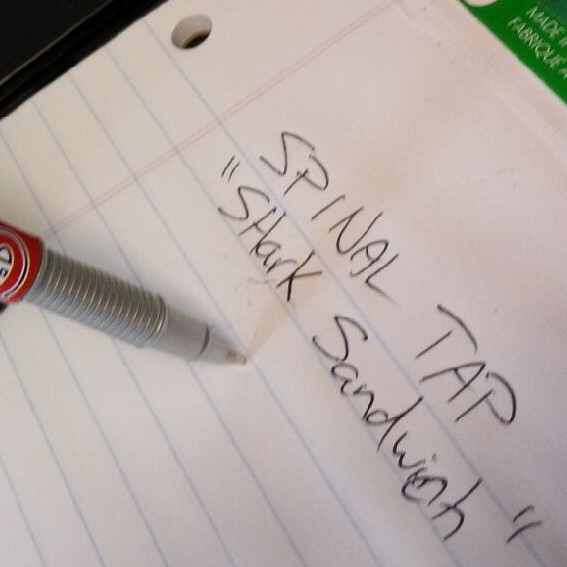
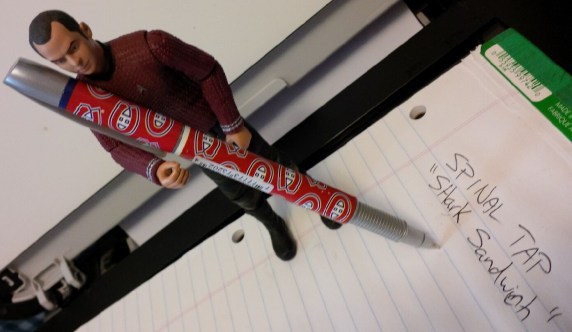
What about length? Length does not matter. If you have a lot to say, then say it. Writing reviews online is completely different from doing it for print publications. There are no word limits, and there are no censors. Short is fine too. Some of the best reviews I’ve ever read were just one sentence. “Shit Sandwich” – everybody remembers that two-word review from This is Spinal Tap. Of course the review “Shit Sandwich”, classic as it is, does violate an earlier rule: “Don’t just say an album sucks.” Sometimes you can get away with it, if you’re an established reviewer, because readers can refer back to your past more detailed work and see what you had to say about the band before. This is a thin line – the fine line between clever and stupid….
How about photos and videos? They are helpful to augment a review. The help break it up visually and add more information. But even though a picture can speak 1000 words, make sure your words are up to par. The words must come first. Everything else is just icing. (Don’t use too much icing, either!)
Ultimately, the best advice is the simplest: Enjoy what you do. Write music reviews simply because that’s what you want to do. If you spend all day talking about and thinking about music anyway, chances are you’ve already written a bunch of great reviews in your head. Now you just need to get them out on paper.
Get out there and do it – there’s nobody to stop you!
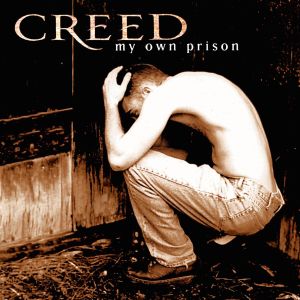
CREED – My Own Prison (1997 Wind-Up, originally Blue Collar)
Have you ever gotten flak for an artist or genre of music that you enjoy? Not a whole lot of fun, is it? Try to imagine that negative opinion not just as common, but as something resembling the general consensus. One that not only discounts anyone that disagrees, but actively mocks and ridicules them. Ask anyone you meet on the street: who are the “worst” musical artists of all time? Chances are, one particular scapegoat of late-90s’ rock will come up… To say that Creed is a controversial band is putting it lightly. Perhaps no group in the history of rock and roll has been a casualty of its own fame quite the same way the band composed of vocalist Scott Stapp, guitarist Mark Tremonti, drummer Scott Phillips and bassist Brian Marshall have. While the amount of fans often rivalled the number of critics in their heyday, as of 2015 the predominant word is negative. Whether it be from fans moving on or the band’s hiatus keeping them from speaking up for themselves, anything positive is rare. Case in point: Scott Stapp’s recent mental breakdown in December featured the most press coverage the frontman has had to endure since the turn of the millennium. EVERYBODY had something to say about it, oftentimes hateful. What of him now? He’s pulled himself back together and aside from his own personal PR, only one or two websites actually reported the news. I’m sure more than a few readers of this review will think he’s still whacked out on drugs, despite spending the last five months at home with his family.
Unfortunately, Creed’s status as something of a pariah maintains that I can’t just hop into the music and give you my personal take. If I were to do so, I’d likely have more than a few commenters simply reiterating age-old hate for the band or questioning the validity of my perspective because I’m not slinging feces. So let’s get to it: perhaps the most common strike against Creed is the idea that they’re heavily derivative of Pearl Jam. Um… have you ever listened to either of these bands? Generally speaking, Pearl Jam is angry garage rock with guitars that bite but don’t shred, and songs that are intended to coast primarily on the emotion conveyed in Eddie Vedder’s vocals and lyrics. Creed is arena rock with soaring pop hooks and beefy guitar riffs. Forgive me if I don’t find those two approaches to be all that similar. Not to mention the fact that Creed rarely ever treads the political ground that Pearl Jam does, and that the perspective of Pearl Jam’s material is often outward, with the Creed being much more introspective. To put it simply, Pearl Jam’s songs are often “you, you, you” while Creed’s are “me, me, me.” If you consider such a point-of-view as pretentious I understand, but I’d rather have someone pointing a finger at themselves than me or a hypothetical “them.”
Of course, this comparison between the bands primarily stemmed from the similarities in Vedder and Stapp’s vocal styles, specifically their employment of what’s known as “yarling” (which involves putting an ‘R’ sound behind enunciations). I’m not going to try and convince anyone that the two frontmen don’t sound similar, but there are important differences that even a cursory listen will highlight: Vedder has more range and is much more likely to yelp, with his voice cracking as he gets higher and more intense. Stapp has a richer timbre but over-pronounces his words in a somewhat silly manner that has become common fodder for haters that fancy themselves comedians. I understand the comparison, but postulating that Stapp “copied” Vedder isn’t wholly substantiated. Claiming that he sounds exactly like Vedder and applying that comparison to the whole band is outright lunacy. This didn’t make any sense to me when I only knew either band from their radio hits; having actually dug into each band’s body of work in subsequent years, it now strikes me as pure propaganda. The fact that the Pearl Jam comparison is blanketed over pretty much EVERY band of the so-called “post-grunge” era just confirms that suspicion.
The next common (and even more ridiculous) complaint is that Creed is somehow Christian rock. Come again? Creed isn’t Christian rock anymore than AC/DC is Satanist metal. Talking about God in a song does not make it religious in and of itself; Christian music involves God as the subject nine times out of ten, with some sort of message of hope through Him conveyed therein. With Creed, God is only ever mentioned as being there; Stapp’s lyrics allude to the Divine in the same way a person might speak of gravity. He’s not trying to convert or otherwise convince anyone of his religious convictions, he’s simply stating them as one might a fact of life. If you dislike this quality that’s fine but it doesn’t make Creed Christian music, even if some of the members are open about their religious convictions.
Even then, to properly interpret these allusions, one must also have some understanding of Stapp’s upbringing. He, like many youngsters, was born into a religious home. He had little interaction with his real father, and his mother remarried when he was still a kid. His stepfather Steven Stapp (from whom Scott took his last name) was a dentist by trade, but a zealot in practice. He made Scott study the Bible for several hours each day and conclude his time by writing essays about what he learned from the passages he perused (Scott later came to find that Steven was using his essays for Sunday school lessons). Think that’s bad? It’s not even the worst of it: whenever Scott messed up, he was physically beaten by Steven. As in abused. Steven also set a specific time each week that Scott was to be thrashed for sins that his stepfather “knew he committed but didn’t see.” Scott was also punished whenever Steven caught him listening to rock and roll, because it’s “the devil’s music.” To top it off, the doctrine advocated was of an unforgiving God that would damn a soul to Hell for the slightest trespass, lest they live a perfect life.
So why am I telling you all of this? Because personal experience naturally informs art, and if you were brought up in a household like this, chances are you’d address those feelings through song as well. It’s all in HOW one addresses these topics that informs the atmosphere. Scott didn’t write lyrics that concerned themselves with theology because he wanted listeners to believe it, he wrote them because HE didn’t know what to believe about the God he had shoved down his throat by his stepfather. It’s a fair assessment to assume that his childhood had a massive effect on his personality, not to mention the disparate reactions to the Creed’s music. It’s a wonder Stapp didn’t have a meltdown before 2014. Of the common complaints about this band, I consider the Pearl Jam point open for debate. Do the bands sound alike? To a degree; both play dour hard rock. There’s only so much variation one can attain within that template, after all. The Christian rock charge, however, is simply untrue. Overall, as far as I’m concerned, both of these sleights were coined not because of their accuracy, but moreso to knock the band off of their perch when they got huge. With the passing of time, these legends have become fact, and the legend is being printed. (As a final point, it behooves me to point out that the band was originally to be called Naked Toddler until Brian Marshall suggested the name be changed to Creed).
Finally, you have the general complaint of the era to contend with: Creed is most often resigned to the “post-grunge” monicker. I don’t care who you are or what you think about grunge, designating a bunch of later artists with a “post-” label when they make pretty much the exact same type of music as their forbears is ridiculous. Does that make Poison and Guns N’ Roses “post-hair metal” since they appeared relatively late in that particular cycle? I get that the so-called post-grunge bands are considered much less authentic than their precedents, but the problem with that line of thinking is that grunge didn’t really invent anything, nor were they all that “original.” Sure, grunge killed hair metal, but there’s a distinct difference between killing and conceiving. The faces of the sub-genre, Nirvana and Pearl Jam, are watered down punk with a hard rock flair. Think AC/DC is simplistic? Nirvana rocks three chord riffs like there’s no tomorrow. That “yarl” that is so often attributed to Eddie Vedder? He wasn’t even the first from the scene to use it, much less music at large. Layne Staley of Alice In Chains holds that dubious distinction for the grunge crowd. As far as the style’s far-reaching beginnings, Ray Charles, George Jones and Jim Morrison of the Doors all sung with such an affectation before Eddie Vedder was ever a glint in his father’s eye. Nevermind the fact that Stapp often cites Morrison as perhaps his most formative influence, along with Def Leppard and U2 (or that Scott honed his singing skills in black churches, whose members would frequently goad him to use “soul” as he sung (read: yarling)).
There are a variety of other diatribes against Creed, such as the band taking itself too seriously (didn’t Nirvana, Led Zeppelin and Black Sabbath, among others?), that Scott Stapp was an arrogant ass (John Lennon, Kurt Cobain, Axl Rose?) and that the band was too commercialized…sigh. This accusation has to be the MOST fragile of the stones thrown at these guys. Just because a song or album is mainstream does not in and of itself guarantee any sort of quality, good or bad. Anyone that attempts to postulate otherwise is too far up their own ass to give any other line of thought consideration. Sure, rock and roll has always had rebellion in its blood, so I can understand that the idea of a rock band NOT pushing such an image as odd. But let’s not forget that the most respected band of all time, the Beatles, was also the most commercial.
There’s also the charge that the band simply blended in with most of the other like-minded superstars of the time, with LeBrain’s popular line being to colloquially refer to them all as Theory of a NickelCreed. Maybe so, but if the band was so “generic” why are they singled out as one of the “worst of all time”? Just because they got big? And the only way to fight it was to backpedal 110% the other way? Politics, politics, politics… and that’s not even the worst of it. By far the most immature response to this band over the years has not been so much in terms of their output, but the fact that a disturbing amount of haters act like no one else has a damned right to enjoy this band. As if Creed deserves to be burned at the stake and obliterated from the public record along with anyone that admits to being a fan. If hold anything but contempt for them you’ve obviously been living under a rock and haven’t experienced the “good stuff” yet. Are you kidding me? Yeah, and Creed fans are the stupid ones.
Preamble over. Can we move on to the actual music now? That’s what we’re here to discuss, but my pen is pre-ordained to at least address these concerns beforehand, lest I be case out of the “elite” musical regime (which will probably happen anyway since, you know, my argument about Creed consists of more than the age old operandi “they suck because they suck.” Even now I feel readers skipping past my prose to the comments section to light their torches and take my ass to task for my “transgressions”).
Released in 1997 and selling over six million copies in the United States alone by 2002, My Own Prison heralded the arrival of Creed. According to a decent amount of the more casual fans and even some critics, this is their best album, and one after which many jumped ship in indignation. Why? Because of the first three records from the band, this one is decidedly the least commercial. The songs mostly just crunch and end, leaving the listener to sort out the details. Few are trying to be populist anthems. It’s not my favorite Creed album, but I can see why it’s a popular choice. The album weaves through mostly introspective stories of faith and loss, with slight forays into light political fair on “In America.” Overall, this is a moodier and less bombastic affair than the band’s subsequent albums.
Tremonti’s lead guitar ordains the album opener “Torn” with melancholy, and Stapp’s vocals maintain the atmosphere. “Peace is what they tell me/love, am I unholy?/Lies are what they tell me/Despise you that control me” he sings. The guitars crash in in full force on the word lies, underscoring the inherent evil of the practice. “The peace is dead in my soul/I have blamed the reason for/My intentions poor” goes the chorus. I love the atmosphere and passive, rather than assertive, anger conveyed with the lyrics and instrumental. Say what you will about this band but they know how to start an album (perhaps not coincidentally, “Torn” along with followup album Human Clay’s opening track “Are You Ready?” are my two favorite songs from this band).
Next comes “Ode”, a quintessential tune about being mistreated by others. Scott hints at his past here: “One step on your own/And you walk all over me/One head in the clouds/You won’t let go you’re too proud.” This track is a weaker standout, but still pretty good. The title track follows at number three. Perhaps I’m biased, but I consider the song “My Own Prison” to be a classic of ‘90s rock. The one feat Creed is rarely credited for is their knack for catchy and memorable hooks. There’s a reason they were so popular, and forgive me if I don’t think they’ve sold 40 million albums just because the general populace has “terrible taste.” Stapp is often cited for being too earnest with his lyrics and lacking subtlety; well, as far as I’m concerned life isn’t subtle, and he captures that aspect well. I consider the lyrics of “My Own Prison” to be pure poetry: “So I held my head up high/Hiding hate that burns inside/Which only fuels their selfish pride/We’re all held captive/Out from the sun/A sun that shines on only some/We the meek are all in one.” I’d be entertained just reading this stuff; can’t really say the same for “Lithium” or “Even Flow.” As a song, Tremonti and Marshall’s haunting guitar work and Phillips’ dejected drumming elevate the experience to another level.
The album hits something of a snag with the next few tracks in that none of them really stand out from one another (hey, I can make the case that this band is highly underrated but I never implied they were perfect; no artist is). “Pity for a Dime” is your typical “no one cares about me” song that never really distinguishes itself. The atmosphere of the album bolsters this track along with the other weak links, but otherwise it’s one that you skip when going for the meat. The melody is decent, but the point of the lyrics is quickly lost in their redundancy. Even then, the guitar work starting at 3:50 is a real treat and a standout of Tremonti’s contributions.
“In America” is caught in the same net as “Pity for a Dime”, essentially reprising the same theme. However, the twist is that Stapp is noting other opinions rather than his own. I’ve often felt the perspective that Stapp’s lyrics convey to be a hint of subtle genius; he’s merely playing the part of observer, not necessarily “judge” of the politics he addresses. While I think he’s overlooked as a lyricist, Stapp makes a crucial mistake in his treatment of the central conceit: the hook plays as “ONLY in America.” Even as someone that actively avoids politics and the news, I know that very few (if any) of the social issues brought up in this song occur solely in Uncle Sam’s domain. Even if the premise is flawed, the theme of being torn between two extremes is powerful. That military-esque drum beat at the beginning is a nice touch as well.
Two of the more intense tracks from My Own Prison are “Illusion” and “Unforgiven.” The former’s dissident fascination with the nature of life is engrossing. While I wouldn’t call it a standout, it’s also hard to dismiss. If anything, the song helps maintain the atmosphere and momentum, even if you probably won’t catch yourself reaching for this album solely to hear it. However, if you’re just letting the album play it certainly adds to the experience. As for “Unforgiven”, remember Scott’s stepfather and his violently fundamentalist ideas about God? Well, the title should speak for itself. Stapp bluntly speaks of his childhood and feelings about that time in his life. The music is appropriately menacing on this track and it’s a popular live song for the band despite not being released as a single. Tremonti’s guitar solo is especially striking, no doubt a major part of the song’s popularity.
“Sister” is next, perhaps my least favorite track from Creed’s debut. Interestingly, it maintains the theme of “Unforgiven”, with the focus shifted onto a sibling of Scott’s that endured similar treatment as he did. It’s still perhaps the weakest track, but I like the continuity and pondering of the idea of his younger sisters having not one role model as he did, but two (counting Scott himself). Who says Creed have no artistic merit? The instrumental and overall atmosphere of the song are much lighter than previous tracks, perhaps underscoring the love one feels for their immediate family.
The ninth slot is filled by a song called “What’s This Life For,” one of the four monster singles from this album. This is another favorite of fans, myself included. I appreciate the passion in this track and the yearning for answers. Call me a sap, but haven’t we all wondered this exact thing at SOME point in our lives? Sure, it’s not exactly profound nor does the song really offer anything resembling a solution, but I like it. Shoot me. (Side note: some assessments of the song I’ve read cite the “don’t have to settle no Goddamn score” part as eliciting giggles. Am I alone in wondering just what might be funny about that part? Just because Scott says “Goddamn”? Note that this word is omitted from the single version; it was 1997 after all).
I like to think the entire album is summed up with the final track “One.” Stapp reprises that poetic quality from before: “Society blinded by color/why hold down one to raise another” he sings. Relevant in 2015, don’t you think? “One, oh one/the only way is one” he imparts on the chorus, backed up by another bright riff from Tremonti. The song goes on to note the aforementioned prison the narrator finds himself in, as well as the desire to escape and the likelihood of it happening. To be honest, songs like this remind me much more of U2 than Pearl Jam, with that “save the world” vibe coming in full force. As such, the song falls prey to some of the same problems that ilk does by sweeping the more intricate complications of these social issues under the rug, but it’s hard not to appreciate the intent behind the song. I especially like the “flying” effect at 3:16, where the sound circles between speakers, as if to “unite” them once the song kicks back in, just as the band wishes for the world to be united.
Well, if you’ve read this far, I trust that I have your full attention and that you’ve been at least slightly entertained by my ramblings. A little known fact about this album is that two different versions exist. Recorded for a meager $6,000, My Own Prison was originally published through Blue Collar Records, a label founded by Creed to get their music out. The band received some airplay with this version in their native Florida before attracting the attention of major labels. An exact figure of their pre-fame sales is hard to find, but My Own Prison is quoted as shifting several thousand units before it was bought and reissued by Wind-Up records. Creed were then called back in to re-record parts of the album, while the rest was remixed to make for a more polished listening experience. I picked up one of the original copies on eBay a few years ago for about $50. Back in the day, these things were known to go for a few hundred. So how do the tracks compare?
Well, the first thing you notice is the lack of dynamic range. Sure, Creed’s albums have always been among the numerous victims of the loudness wars, in that they’re mixed to blow your head off with sheer noise. However, believe it or not, the dynamics seem more stylized on the Wind-Up version when compared to the original. The opening seconds are a perfect example of this: whereas the first strains of “Torn” are a bit quieter before the song crescendos in the re-release, the original is pretty much the same volume throughout. This goes for all of the tracks to some degree, with certain parts louder and softer given the version. On a related note, the bass is non-existent on the original version, similar to how it was missing from Metallica’s …And Justice For All. The remix brings it out a bit more, though ultimately the lead guitar and vocals mostly overpower the other parts.
The re-recorded material mostly amounts to some vocals. On certain song choruses of the “official” version, Stapp and Tremonti can frequently be heard singing in multiple keys at the same time. Here, it’s mostly just one at a time. It sounds to me like an additional acoustic part was added to “In America” as well. Reverb was also applied to the remix, which I feel adds to the overall atmosphere of the recordings. Some songs also start at different points, with the odd note or two being cut off, as with “My Own Prison.” The biggest and most noticeable change is the omission of the original intro to “What’s This Life For”, a quiet little melody that appears nowhere else in the song. Tremonti is known to play it at concerts when performing, but it’s completely missing from the Wind-Up version.
Overall, if you resent the commercial tendencies of Creed, you might do well to seek out the original mix of this album. This is the band at their rawest. However, I wouldn’t recommend a purchase unless you’re actually a fan as prices are frequently steep and the remix isn’t THAT different when all is said and done. I have one because I’m a collector and completist, as well as a curious listener. I also have an inkling that as this album nears its 20th anniversary, we might see something of a special edition that features both mixes on separate discs (the perfect gimmick). Not that I urge you to wait for a hypothetical re-release, but it’s a thought. Wind-Up released a vinyl compilation celebrating the label’s 15th anniversary in 2013, with the original version of “What’s This Life For” featured. They obviously have access to the masters and might put it to use at some point. All in all, the rawer mixes can readily be found on YouTube if you are so inclined to seek them out but don’t want to pay collector prices for an original copy.
For those interested, there’s also a bonus track version of the Wind-Up issue featuring an 11th song by the name of “Bound & Tied.” The bonus track version was available in Central America and Europe, though it might be a little harder to find these days. For U.S. listeners, the song was made available via the soundtrack to the 1998 film Dead Man on Campus. If you can get your hands on the bonus track version of My Own Prison for a reasonable price, I’d say go for it. “Bound & Tied” is a forgotten gem from Creed, with an intriguing into in which each instrument comes in at a different point, gradually intensifying the sound. I especially like the vocal effects, as well as the menacing guitar riff from Tremonti. The lyrics are also much more ominous than most Creed songs: “Tongue-tied, restless and wanting/Looks like you might bite, you might bite/Breathin’ in, breathin’ out, you’re weakened/The poisons hit your mind, your mind/Time’s ticking and it’s got you thinking/You’re happy with your life.” The band seems to be commenting on the double-edged sword that is fame; you seek it, yet can’t escape it once it’s attained.
In conclusion, if you actually made it this far (scanning or skipping doesn’t count!), my final verdict is that this album is solid. Classic? Perhaps at times, but it’s not anything resembling horrible, either. If your standards are so lofty that a slightly generic album of solid hard rock is your idea of “horrible” music, I envy your musical taste. Here’s hoping that My Own Prison and Creed as a whole are subject to a re-evaluation of sorts at some point in the future. If you can listen past your gut reaction to the name and pay attention to the music, you’ll probably find something to like.
Rating: 3.5/5
Thanks for reading, guys! Thank you, Mike, for the opportunity to do this! LeBrain has given me the option to review Creed’s discography, so if you want more let us know in the comments! (P.S. I take no responsibility for the band’s music videos. They’re atrociously dated and corny, at least for the next two albums, and if your only exposure to Creed is of the visual kind I don’t blame you for thinking they’re garbage.)
No sir, thank you Mr. Acca Dacca for a very thought-provoking review! I really appreciate the time and effort he put into this monster of a review. I have definitely opened my ears to this band. – LeBrain
GETTING MORE TALES #434: The Man in the Bob Marley Shirt
10 years ago was a very interesting part of my life. I had been out of college for a few years, and took a promotion at a company that I had been working at for some time. I was single and enjoying my life as a woman in her mid-twenties doing a lot of volunteering and making great friends. A lot of my friends from earlier years were getting married and having kids, but that didn’t seem like a part of my future at that time. Until September, 18th.
I had made a friend through the world of social media who lived an hour down the highway in Kitchener Ontario. We were spending a lot of time using Messenger to chat and occasional phone calls on land lines. One day this friend was having a bit of a bad day. He had been on a first date the day before with a woman he found on the internet who he described as creepy. He was having a bad day at the job he no longer enjoyed. In our chats I invited him to make the drive up the highway to Bramalea Ontario. He accepted and we made plans for him to pick me up at my family home.
He told me that he wanted a laid back evening with a walk in a park. I told him that I could handle that, but in actuality, I was scared shitless. I had never gone on a single date with anyone from the World Wide Web. I had heard horror stories of serial killers and this guy wanted to walk in parks on a Sunday night. Not the smartest of ideas, but for some reason I went with it. Something was telling me that things were going to be okay.
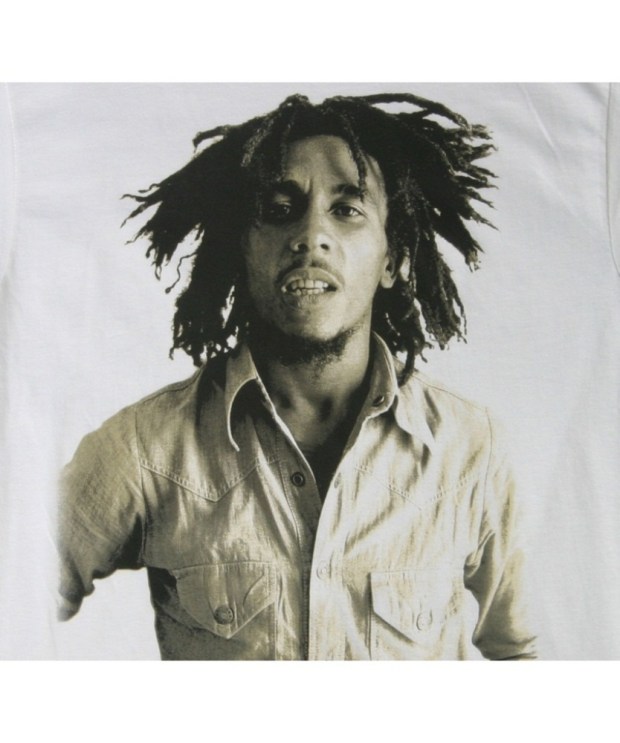
When he arrived at the house in his green neon I was outside having a cigarette. I approached the car and opened the door. Inside was a very cute guy in a grey Bob Marley t-shirt and a blue sweater. Very cute. We drove around for a bit turning on a lot of streets that started with the letter A so I could get him a bit lost (Bramalea is divided into ‘sections’ where streets are all named with the same first letter after UK communities – I figured if he was a serial killer, I could out run him and call 911, telling the police there was a green neon, lost somewhere on Aberdeen.
We took a walk into the park and played on some swings before making our way down to a creek to talk about our lives. He told me that he was starving and saw a Wendy’s. He asked if we could grab a burger there. For all burger aficionados, Wendy’s is at the bottom of the totem poll. I told him there was a much better burger not too far away. We got back in the car and drove to Sonny’s, a drive in burger joint around since the 60’s. We ordered two hamburgers with ‘funky onions’ (a fried onion with paprika seasoning) and other toppings too our likings. We shared a large poutine and talked a lot on the hard to get picnic table. (The joint is so busy, you usually can’t sit – a picnic table is a prime piece of drive in real estate). We talked so much, that we didn’t even give our burgers a try. We left them in their wrappers to eat at a later time.
After our first dinner, we decided to go to another park to hang out some more. I directed him to Gage Park in Brampton Ontario. This is more of a romantic park that girls like to hang out in. We walked around the park, talking for a while, and then moved to a knoll of grass to sit and do more talking. After a few minutes, the man in the Bob Marley t-shirt leaned in and gave me our first kiss. It was ground-breaking. All bets were off.
After a bit more time of kissing in the park, Bob Marley boy realized that he needed to get home because of an early work start. He drove me home, kissed me one more time in the car and drove back to his home in Kitchener. I entered the house to my half-asleep mother. She asked me how my date went. I sat on the reclining chair next to her and told her that I met the man I was going to marry.
She stood up, looked at me and said “You’re just like your father”* and went to bed. That was September 18th in a nutshell.
I love you LeBrain.
* In 1976, Jen’s father was in a Florida hotel. He saw Jen’s mother for the first time in the lobby and went to the phone where he called his best friend and said “Graham, I just saw the girl I’m going to marry. Now I just have to figure out her first name.”
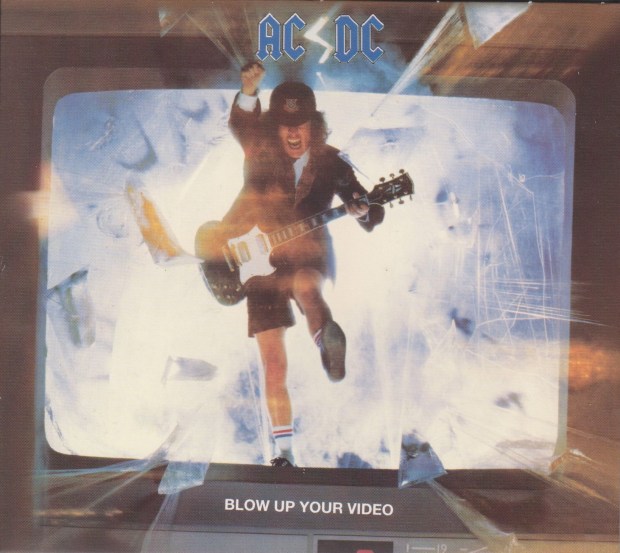
AC/DC – Blow Up Your Video(1988, 2003 Epic remaster)
By 1988, AC/DC had abandoned the bare-bones live-style music videos they had been doing for the last few years, and went into full-on productions. That became AC/DC’s trademark style from that point forward: the band playing in front of an eager crowd, and crazy stuff going on around them. Explosions, lights, wrecking balls or what have you — this all became part of the AC/DC music video experience, with Angus stomping around front and center. “Who Made Who” was really the first of the big AC/DC videos of this style. “Heatseeker” continued the tradition, with Angus popping out of a missile!
“Heatseeker” was an explosive first single, but unexpectedly, it was not really representative of Blow Up Your Video as an album. The highschool halls were filled with mutterings that the new AC/DC was “not as good” as past AC/DC, and that was troubling. Blow Up Your Video proved to be a transitional album, as many changes were afoot for AC/DC.
Malcolm Young had hit rock bottom, in the depths of a drinking problem that was starting to take its toll on the band on the concert stage. He was unable to tour. Angus and Malcolm’s nephew Stevie Young stepped up, and helped the boys out on tour. (Nobody would ever imagine that Stevie would have to do it permanently in 2014 when Malcolm withdrew from the band due to dementia.) Drummer Simon Wright wouldn’t last either. After the tour, he left to join Dio. It was also the last album to which Brian Johnson wrote any lyrics.
On the other hand, the chemistry with producers Harry Vanda and George Young (an older brother) had never been better. They helmed the classic AC/DC albums with Bon Scott, as well as three more recent songs on 1986’s Who Made Who. It was thought that they would bring that old time rock and roll slant back to AC/DC, so they were retained for Blow Up Your Video.
“Heatseeker”, being so upbeat and catchy with just a hint of a jangle in the guitars, was certainly promising. Like a one-two punch, the second single “That’s the Way I Wanna Rock N Roll” is next. The production holds it back, lacking punch (especially on the drums), but it’s a killer AC/DC good time rock and roller. Weak sonics aside, few AC/DC albums begin with two big winners like this right from the get-go.
Things get funky from there. “Meanstreak” does have a bit of funk to it, but suffers again from a muddy sound and too much echo on the vocals and drums. The further one delves into Blow Up Your Video, it seems like the songs aren’t so bad, just the sound. Same with “Go Zone”. There’s nothing wrong with the tune, but it seems to drag and fumble in a muddy puddle with the tires spinning. The side one closer “Kissin’ Dynamite” has a smoky prowling guitar and so sounds more at home. At least the side is salvaged by this last tune.
Since AC/DC offloaded their two singles right off the bat on side one, the second side is a much more turgid affair. “Nick of Time” has a blasts of guitars exactly where you want them, but lacks hooks. “Some Sin For Nuthin'” is better, because it’s back to that menacing dusky prowl that AC/DC do so well. Finally, AC/DC hit all the buttons with “Ruff Stuff”, a mid-tempo rocker with an actual chorus and verses that you can remember! “Two’s Up” is of similar quality, another decent album rocker good enough for rock and roll.
Finally, “This Means War” ends the album on a frantic, unfocused note. It has the energy and fire lacking on earlier songs, but has nothing else. Simon Wright is perfectly behind the beat, and Angus’ fingers sure are flying…but is that enough? For AC/DC, it is not.
The album sold a measly million copies in the US and failed to crack the top ten. Needing to do better, Bruce Fairbairn was called upon when needed for The Razors Edge. Since then, Blow Up Your Video has remained under its large, looming shadow, and for good reason.
NOTE: Because of the three Top 15 on the 15th posts today, there will be no posting for Wednesday. A directory to all the Top 15 on the 15th posts can be found here. Browse them all!
Getting More Tale #433.9 presents: A worldwide online event! THE TOP 15 ON THE 15th – Guest shot by Iron Tom Sharpe
Latest to throw his hat into the Top 15 on the 15th ring is Iron Tom Sharpe, Meaford’s Greatest Athlete. One of the most knowledgeable rock fans in the country, Iron Tom is a national treasure. He is a former Record Store owner, and one of the Jedi masters who instructed me.
His message to me upon completion of his list: “Fuck that was tough…and I know I left off some big ones…I just know it…Ah fuck, The D! Max!”
There may be no Tenacious D, and there may be no Max Webster. But here is one kick-ass #Top15onthe15th.
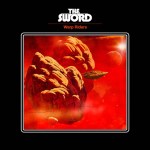
15. The Sword – Warp Riders
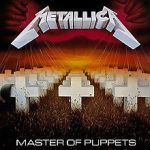
14. Metallica – Master of Puppets
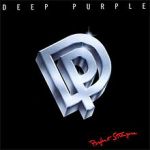
13. Deep Purple – Perfect Strangers
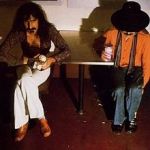
12. Frank Zappa – Bongo Fury
11. Led Zeppelin – Physical Graffiti
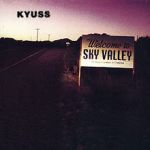
10.Kyuss – Sky Valley
9. Van Halen – Fair Warning
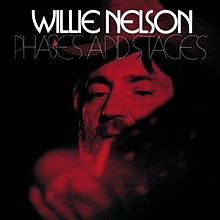
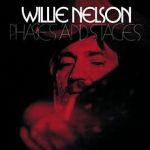
8. Willie Nelson – Phases and Stages
7. Yes – Close to the Edge
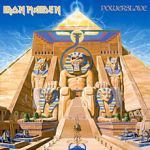
6. Iron Maiden – Powerslave
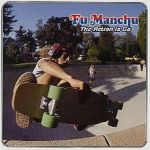
5. Fu Manchu – The Action Is Go
4. Steve Earle – I Feel Alright
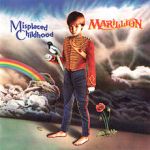
3. Marillion – Misplaced Childhood
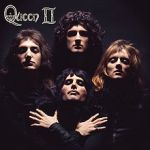
2. Queen – Queen II
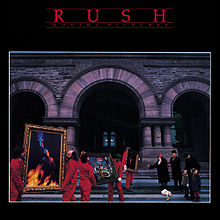
1. Rush – Moving Pictures
Almost made it:
Orange Goblin – Time Traveling Blues
Crosby Stills & Nash – CSN
Pink Floyd – Animals
Motorhead – Another Perfect Day
Black Sabbath – Heaven and Hell
And finally…an extra bonus. Iron Tom’s Top 5 Live!
Getting More Tale #433.5 presents: A worldwide online event! THE TOP 15 ON THE 15th – Guest shot by Uncle Meat
This is an event spanning many sites and writers in the World Wide Web. I will link to as many as possible; my own Top 15 can be found here. A few months ago, the challenge was thrown down to all comers: List your top 15 albums of all time! The date September 15 was chosen for the deadline.
Uncle Meat laboured hard on his Top 15, eventually whittling it down from a list of 31 great records*. Without any commentary, here they are. His only requirement: No live albums.
15.Rust in Peace – Megadeth
14. Screaming For Vengeance – Judas Priest
13.Little Earthquakes – Tori Amos
12.Close to the Edge – Yes
11.Consolers of the Lonely – The Raconteurs
10.Clutching at Straws – Marillion
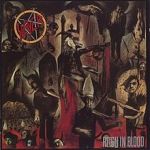
9.Reign in Blood – Slayer
8.Operation: Mindcrime – Queensryche
7.Whale Music – The Rheostatics
6.Misplaced Childhood – Marillion
5.Moving Pictures – Rush
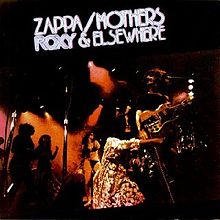
4.Roxy and Elsewhere – Frank Zappa and the Mothers of Invention
3. Pet Sounds – The Beach Boys
2.Hemispheres – Rush
1.El Corazón – Steve Earle
* For shits and giggles, here are the rest of The Meat’s albums that didn’t make the final cut.
Oh, how I loathe lists! Readers seem to love “Top Whatever” lists; different kinds, but I sure do hate making them.
However, I don’t like doing things in half-measures either. So for this, the Top 15 on the 15th, I’ve gone one step beyond. Not only do you get my Top 15 on the 15th, but also a list of the Top 15 tracks to listen to from these 15 amazing albums.
As of today, here are my Top 15. These will change periodically, probably tomorrow, and again the day after. See why I hate lists? In the end I decided that I wanted to fairly represent some of my favourite artists. But enough whining from me — let’s rock. Spin these little bastards for a good time!
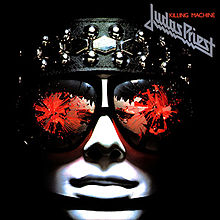
15. Judas Priest – Hell Bent for Leather (Killing Machine)
14. Max Webster – A Million Vacations
13. Queen – News of the World
12. Alice Cooper – School’s Out
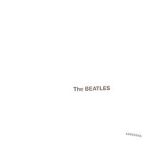
11. The Beatles – The Beatles (The White Album)
10.Thin Lizzy – Johnny the Fox
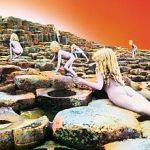
9. Led Zeppelin – Houses of the Holy
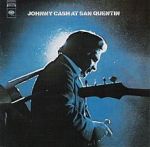
8. Johnny Cash – At San Quentin
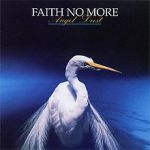
7.Faith No More – Angel Dust
6. Rush – Moving Pictures
5.Van Halen – 1984
Let’s stop here for a moment. The thing about my top albums list is, the top four never change. Four of these five albums have been in my top five for a long as I can remember making lists for. The order may change, but that top four have been my top four, forever. They are indelibly heat-stamped onto my grey matter. These are as much a part of me as my left arm!
4.Iron Maiden – Piece of Mind
3. Kiss – Hotter Than Hell
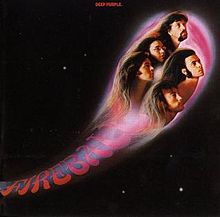
2.Deep Purple – Fireball
1.Black Sabbath – Born Again
Right there are 15 incredible collections of music, both studio and live. But let’s not fool ourselves. Nobody is going to listen to all 15 of those albums just because some guy on the internet who goes by the name of “LeBrain” said so. I have chosen to distill these 15 amazing records down into 15 key tracks. I’m sure nobody needs an introduction to the big hits, so here are tracks you may not have heard. If you have ever cared about rock music, then you need to listen to these Top 15 Songs from the Top 15 Albums, on the 15th!
1. Rush – “Vital Signs”
2. Black Sabbath – “Disturbing the Priest”
3. Queen – “It’s Late”
4. Iron Maiden – “Where Eagles Dare”
5. The Beatles – “Dear Prudence”
6. Johnny Cash – “San Quentin”
“If any of the guards are still speakin’ to me, can I get a glass of water?”
7. Led Zeppelin – “The Ocean”
8. Thin Lizzy – “Massacre”
9. Alice Cooper – “Gutter Cat vs. the Jets”
10. Deep Purple – “Fools”
11. Iron Maiden – “Revelations”
12. Judas Priest – “The Green Manalishi (With the Two-Pronged Crown)”
13. Alice Cooper – “My Stars”
14. Queen – “Spread Your Wings”
15. Deep Purple – “No No No”
Astute readers will realize that one singer appears on two albums. Ian Gillan was fronting Black Sabbath in ’83 for Born Again, and of course is best known as Deep Purple’s lead howler. Does this double appearance make Ian Gillan the greatest rock vocalist of all time? No. But the greatest does appear, with Queen on News of the World – Freddie Mercury!
Part two of a Bon Jovi two parter! For the last instalment, 1984’s Bon Jovi, click here.
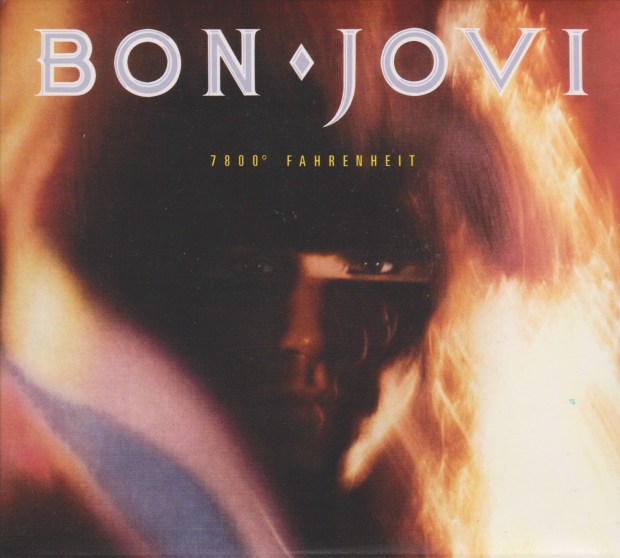
BON JOVI – 7800° Fahrenheit (1985 Polygram, 2012 special edition)
Sophomore slump? Bon Jovi’s first record didn’t set the world alight, but their second, 7800° Fahrenheit sounded like they’d run out of material. It had a darker overall vibe, but managed to go gold in the US. To this day, 7800° Fahrenheit remains an inconsistent listen with a few great songs and a number of pure filler.
Although I was backtracking through their catalogue after Slippery When Wet, I was decidedly disappointed with 7800° Fahrenheit. Based on the excellently fun single and video “In and Out of Love”, it wasn’t unreasonable to expect more. That song was a blast, quality-wise sounding like a Slippery also-ran. It’s the only tune that periodically shows up on Bon Jovi hits albums. This remastered edition also has a smoking live version of the tune (from Tokyo), featuring an extended jam and guitar solo by Richie Sambora, before Tico Torres gets the spotlight for a drum solo! It’s a 12 minute track total, not the kind of thing you expect in a bonus track.
“Tokyo Road”, another hard rocker, is also worthy of praise. Japan was about the only place Bon Jovi were big. I could do without the boring “Sakura” intro though. Wow, does that thing get old fast. Otherwise, “Tokyo Road” is superfine. Jon seems to find these songs embarrassing today. They were certainly not very sophisticated lyrically, but neither is “When you breathe, I wanna be the air for you.”
Also on the better side are “The Price of Love” and “The Hardest Part is the Night”. Every good Bon Jovi has to contain a few heartbroken rockers. These two do the job while retaining an edge of toughness. Having Richie Sambora unfettered on axe sure does help. I’ll also admit a fondness for the single/video “Only Lonely”. Bon Jovi captured that tone of desperation. This rock ballad also appears as a live bonus track, much tougher and stronger than the studio version. It sounds like possibly a rehearsal tape.
“Only Lonely” had a pretty high budget music video for a band of Bon Jovi’s stature. It’s cheesy as hell and absolutely hilarious to watch today. So serious! It almost appears like a trailer in some kind of Bon Jovi movie. I guess Jon was interested in acting even back then.
7800° Fahrenheit was also plagued with its fair share of filler, leading to believe that Bon Jovi really only had half the material needed for a good second album. Among the filler: “Silent Night”, one of the sappiest of the sappy ballads from early Bon Jovi. It does work in clinical studies* as a sleep aid, if you need that sort of thing.
The last three albums tracks in a row were all pretty dozy and unremarkable, rendering the second side a limp finish. “Always Run to You”, “To the Fire”, and “Secret Dreams” as as forgettable as they are substandard. This second side has always made 7800° Fahrenheit a hard album to want to finish listening to in its entirety. The only interesting bit of trivia about these songs is that drummer Tico Torres only had one co-writing credit in Bon Jovi history, and it’s on “Secret Dreams”.
I don’t need to tell you that whatever slump Bon Jovi were in, they certainly overcame it by the next album. With a little help of course: names such as Desmond Child, Bruce Fairbairn, and Bob Rock. 7800° Fahrenheit is a forgettable blip in their trajectory.



































 mikeladano.com