BON JOVI – Bon Jovi(1984 Polygram, 2012 special edition)
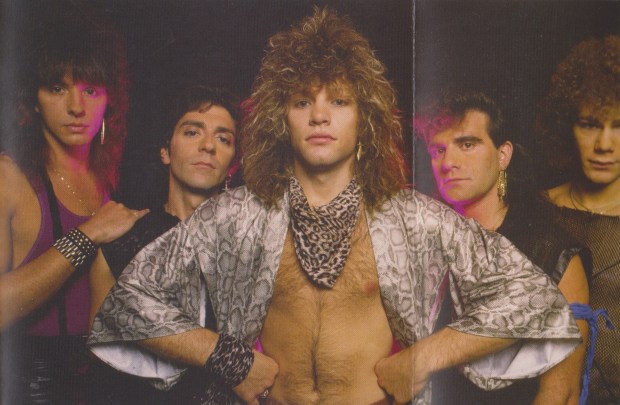
With Bon Jovi sucking quite a lot of ass lately, there has never been a better time to go back and check out some old Bon Jovi. Join us in taking a look at the band’s very first LP, Bon Jovi from 1984. It didn’t do much in terms of sales. The music videos are kind of funny to look at today. But there is an honesty and innocence to early Bon Jovi, that is completely gone from the band now. Then, they were five hungry guys trying to make it together. Today they’re three guys — one boss and two employees. Today we will look at the 2012 reissue, with four live bonus tracks. This is notable since Bon Jovi rarely if ever played these songs after they hit it big.
Jon Bongiovi had been working at Power Station recording studios, having got a job there thanks to his cousin Tony Bongiovi. Several demos from that era have been released on compilations such as Jon Bon Jovi – The Power Station Years. The studio time evolved into a band with a record deal. They soon set down to record nine songs for their debut album to be called Tough Talk, however the label convinced them a self titled debut was the way to go.
The first track and single was actually an older song: “Runaway”. JBJ had a local hit with it, which he recorded with the “All Star Review”, five local studio guys. Among them was bassist Huey McDonald, who later went on to play bass with Bon Jovi themselves. It’s an instantly catchy rock song leaning heavily on keyboards. Even from this early track you can tell that young Jon Bon Jovi had a hell of a talent for writing catchy hooks. The immaculate backing vocals are obviously not those of Richie Sambora. Just wait until Jon goes for the high notes at the end though!
It was 1984, the peak of the “post-apocalyptic wasteland” setting for music videos.
Moving on to “Roulette”, we now get a song that is a little harder-edged. Richie has a chunky guitar riff that gives the song some weight. Jon pours it all on, and it’s clear even on this first album that Sambora was a serious talent. His style has evolved considerably over the years, but at this stage he was already capable of writing great songs with memorable guitar solos.
“She Don’t Know Me” was also a single, but this one has not aged so well. Sounding like a New Jersey version of the lighter side of Journey, “She Don’t Know Me” is a lil’ too sappy for most adults. It’s not terrible but “She Don’t Know Me” is just too heavy on the syrup. It is at least upbeat, with a Sambora solo right out of the Neal Schon book of tricks!
“Shot Through the Heart” is a forgotten song, since its title was used as in the chorus of “You Give Love a Bad Name”. This is a hard rock heartbreak, the kind of thing Jon does so well. The balance comes from Sambora. Without him, there’s no edge. He brings a very special guitar quality to the table, not to mention songwriting.
The first Bon Jovi album’s biggest weakness is an over-reliance on sad sounding love songs. “Love Lies” is another one, a dusky piano based ballad. David Bryan (known here as David Rashbaum) co-wrote it with Jon, and like all the other tunes it does have quality to it. It’s just too much heartbreak for one side of vinyl.
“Breakout”, also written by Rashbaum, is a hard enough rocker to open side two. Jon has found some backbone, telling his ex that he’s “better off on my own”. That’s better, Jon! Let’s stay strong buddy, and crank out a rocker. “Burning for Love” continues the hot streak. Now we’re cooking with gas. Richie really nails it on the axe. Then is a song called “Come Back”. You might expect by the title that Jon has lost his balls again. Thankfully, his pal Richie is there to keep him standing. “Come Back” is a bit of a broken-hearted rocker, but Sambora’s pick scrapes keep it rock and roll.
One last rocker was all you needed to call it an album back then. Of all the songs on Bon Jovi, “Get Ready” sounds the most like what Bon Jovi would become famous for: good time rock music! Guitar, piano, bass and drums: that’s all you need for a rock and roll party. This really sounds like Bon Jovi.
That’s a pretty solid debut album right there, for a band in Bon Jovi’s league. I have no idea why they (he) won’t play so many of these songs anymore. They’re better than most of the stuff he’s been putting out lately. And we still have the four bonus tracks to discuss.
The four live songs come from various shows, 1984-1988. Each is heavier than its studio counterpart. “Runaway” benefits from the full band treatment, as opposed to the studio cats. Having Richie there singing it with Jon makes all the difference. (This is not the same version as the B-side from “Lay Your Hands On Me”.) “Roulette” is a solid inclusion. “Breakout” keeps it rolling, but you gotta love that “Get Ready” was also included, ending the album as it always has.
3.5/5 stars
2010 Special Edition bonus tracks
1. “Runaway (Live Le Zenith, November 20, 1988)”
2. “Roulette (Live BBC Friday Rock Show)”
3. “Breakout (Live Super Rock ’84)”
4. “Get Ready (Live Japan Tour 1985)”
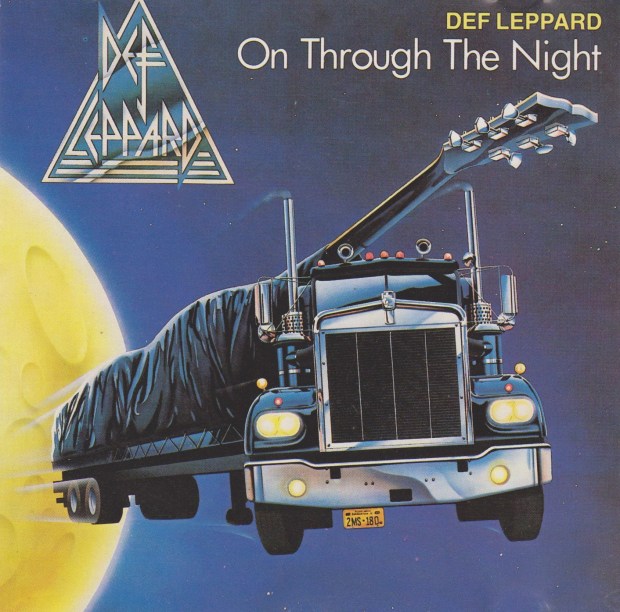
DEF LEPPARD – On Through the Night(1980 Phonogram)
A bright young Mike in grade 11,
During the glorious 80’s,
Needed new music to feel like heaven,
To woo some lovely young ladies.
In 1980 Def Leppard came out,
With the LP On Through the Night,
It is heavy with screams and plenty shouts,
It makes me feel alright alright alright.
“Hello America”! It’s the “Rock Brigade”!
I played these singles on my ghetto blaster,
Unpolished – but the tunes made the grade,
Heavy ones like “Answer to the Master”.
Producer was Tom Allom of Judas Priest fame,
A heavy raw album he did record,
Leppard had not yet joined the hit game,
No big tricks on the electronic soundboard.
“It Could Be You” rocking out to this one,
Reckless abandon with axes ablaze,
“Wasted” blasts you like a shotgun,
Nothing left to see but a smokey haze.
Sophistication will not be found anywhere,
Maybe a little on the closer “Overture”,
Loud guitars drums blasting and long hair,
For your metal sickness this is the cure.
On Through the Night straight into battle,
Leppard hit the launching pad hard,
With the New Wave of British Heavy Metal,
The Lep became leaders of the new guard.
The story continues today as Leppard survive,
Still prowling the concert stage all over the world,
Fans clamour to hear these old song lives,
And so on Viva Hysteria, “Wasted” was unfurled.
This is but the seed that would grow into a beast,
The mere beginning of something great,
Pick up this record at the very least,
You will find it is very difficult to hate.
RECORD STORE TALES MkII: Getting More Tale #432: The Complaint Department
When I run out of fresh things to talk about, that’s when it’s time to go digging through the LeBrain HQ archives! This time I’ve retrieved some comments from the Complaint Department!
Complaint #1: “You don’t review enough new releases!”
Yes, yes I know. This is a rut I’m stuck in. I like to spend some serious alone time with an album before I’m comfortable releasing a full-on review. By the time I get the album (usually a Japanese import or whatever version has bonus tracks) and give it a fair listen, it’s rarely a new release anymore! I prefer to review a physical CD whenever possible. This is so I can read the lyrics, the liner notes, and show you pictures of the physical product. It’s also so I can hear it in full CD quality sound.
I’d love if more contributors would step up and review some new releases for me. Unfortunately most of my former contributors now write for their own sites! Think you have what it takes to put your opinion on the internet for no money and no recognition? Drop me a line!
Complaint #2: “How come you haven’t reviewed any Creed?”
This is being worked on. Watch this space.
Complaint #3: “You post articles just to poke the bear.”
This is partly true. When I have something negative to say about music, I try to do it in a funny way. Well, you know about the internet and humour — sometimes things can be taken the wrong way. (I know you’re surprised.) Plus, I’m not that funny. If I’m out of line, you can go ahead and tell me so. Let’s have some friendly, adult musical discussions. When I’m on a roll, it’s just for a laugh and so we have something to discuss, so let’s do it! Just keep it civil. No name calling.
Complaint #4: “In your Record Store Tales, you make yourself out to be the hero of the story and everyone else like buffoons. Then, you made yourself the victim at the end.”
Really? You think the guy who shit his pants in the store is the hero and not a buffoon himself? Well OK then! I can’t help how people read the stories with their own interpretation. I was no hero, I was a big zero. Zero the Hero! I messed up too, quite royally in some cases, like the time some kid stole our “free CD” stamper on my watch. All of this was on my performance reviews. They transferred me from one store to another because my sales were way down and I was having problems controlling my staff. I don’t think the bosses were buffoons. How could I knock somebody who has created a business that has lasted 25 years and counting? I just think I was taken advantage of, after years of being the nice-guy yes-man. Spoogecakes used to refer to me as the owner’s “lackey”, but nobody wants to be the lackey forever. I have admitted that I was depressed and despondent in the last years. If I have committed any sins, it’s that I didn’t assert myself, or get out of there sooner. That’s my fault. I was too afraid of my bosses to stand up for myself.
Complaint #5: “You talk about heavy metal too much, and not enough about other great artists that you may be missing out on.”
True! I write what I know best, but we do need to get more variety of quality music up here. We need to get more artists represented, although I’ve covered a sampling of country, jazz and and classical before. This is a challenge I accept. Look forward to more branching out in the future!
AEROSMITH – Nine Lives (1997 Columbia, European version)
By popular demand, here is a look at Aerosmith’s Nine Lives, an often overlooked and sometimes forgotten record overshadowed by bigger hits.
Aerosmith were in trouble. In 1995, after completing a massive amount of work to support Get a Grip and Big Ones, drummer Joey Kramer suffered a nervous breakdown. It was a traumatic experience for the musician, who had conquered his drug demons long ago and thought he was otherwise healthy. Aerosmith went ahead with new producer Kevin Shirley, replacing longtime collaborator Bruce Fairbairn who was busy with Van Halen, The Cranberries, and INXS. A session drummer (Steve Ferrone) filled in, with the intention that when Joey returned, they could finish the album with him. Kramer did return, perhaps stronger than ever, and re-recorded all of Ferrone’s drums himself. According to Joey, it made all the difference to him, to make the album sound like Aerosmith.
Although the first single, “Falling in Love (Is Hard on the Knees)” was pretty blasé, the album itself is very strong. I liked it all but immediately, bought it, and then bought it again when I found the European version with the bonus track “Falling Off”. The domestic version was “enhanced” for PC use, with some kind of game where you could play along to Aerosmith songs. I never even tried that, and I ditched the original when I found the European version. I found it in Calgary, Alberta, of all places.
A raucous opening is what you need to set the scene, and “Nine Lives” fits the bill. That’s Joey on drums alright, as he has this steady, heavy beat that is quintessentially Joey Kramer. There’s Tyler, vintage sassy and welcoming you to the party. Over on guitar, Brad Whitford and Joe Perry are sounding brilliant thanks to some crunchy, crisp production from Kevin Shirley. As always Tom Hamilton on the bass isn’t afraid to play all over the neck without getting in the way. In other words, for all appearances, Aerosmith were as strong as ever.
Listening to the dreadfully titled “Falling in Love (Is Hard on the Knees)” again reminds me that I never disliked the song. It was only the title (and the video directed by Michael Bay) I found silly. Otherwise it’s a fine example of horn-enhanced mid-tempo 90’s Aero-rock. It has a sleezy grind to it, but it’s not particularly distinguishable from any similar songs on past Aerosmith records. It’s what they do, and although there are plenty better tunes, I suppose there is an Aero-niche that needs to be filled and here it is. Another thing they had to do was the sappy ballad with strings and so here is “Hole in My Soul”, another single. I think track 3 is a little early for ballad.
I remember walking into a record store with T-Rev one afternoon (I think Sunrise) and they were playing an early pre-release promo of “Taste of India”. I intensely dug the heavy groove, and the exotic spices thrown in. “Holy shit,” I said to Trevor, “this is really good.” He wasn’t as enthusiastic, but I think the groove here is impossible to resist. For latter-day Aerosmith, “Taste of India” represents one of those peaks, kind of like tunes such as “Kings and Queens” were for the early years. It’s adventurous and I’m a sucker for those guitars that sound like sitars. There is also sārangī on this track, performed by Ramesh Mishra who was a student of Ravi Shankar. I will return back to my original point though — the heavy groove here is the key. It’s all about that unstoppable steamroller of a rhythm. You don’t hear Aerosmith groove this heavy very often anymore. Back when I was at the Record Store, I did a brief paragraph review of this record for our store newsletter. I praised the song then too, and my enthusiasm has not diminished in the slightest.
“Full Circle” is an interesting track, a ballad that sounds a bit like something you’d sing in a big group on New Year’s Eve. “Time, don’t let it slip away, raise your drinking glass, here’s to yesterday.” It sounds a bit like an old Beatles ballad, interpreted by Aerosmith. It’s just a stunning little track, different from a lot of the Aero-noise that filled later albums. But “Something’s Gotta Give”, and we need an adrenaline-filled Aero-ass-kicker next. “Something’s gotta give! Does the noise in my head bother you?” Tyler’s harmonica solo is scorching hot, I’m sure his lips were burning. Then it’s a smokey, jazzy (with muted trumpet) intro to “Ain’t That a Bitch”. I don’t think I’d wanna call this a ballad, but maybe a slow Aero-burner? Using the word “ballad” sells the song short because it has more to it than that, even though there’s those strings again! Then the horns return for the “The Farm”, an inessential but dramatic song. This is about where the break between side 1 and side 2 would come, so I consider this song to be an apt side closer.
Aerosmith kick it into gear and “Crash” for a breakneck blaze of a song. Perry’s solo is incandescent. Kramer’s there in the back, locked into Tom Hamilton driving this big beast called Aerosmith forward as fast as it will go. Tyler’s screaming “I’m losing my mind, losing my mind, losing my mind!” while the boys in the back are jamming hard. The second half of this song is truly as good and wreckless as Aerosmith can get. Just top drawer rawk n’ roll.
So of course they bring you down from that “Crash” with a ballad, called “Kiss Your Past Goodbye”. This is by the books, and strictly just an off-the-shelf stock Aero-ballad. There is a lull in the album right about here, as it stalls towards the end. Another single, the pretty dreadful “Pink”, takes up a solid 4 minutes of your listening time. I had a customer at the Record Store, the “Barefoot DJ”, a really annoying fucker who was persistently looking for this damned song. But he refused to pay $11.99 for the Aerosmith album it was on, so he didn’t get it. Sucked to be him, I guess.
Joe Perry redeems the album (on the European version only) with his song “Falling Off”, for which he handles lead vocals. It’s nothing special, but it has an old-style rock integrity to it that centers us back to where we should be with this album. Fortunately it’s followed by another strong song, “Attitude Adjustment” which has a hint of a twang to it. It’s still nice an’ heavy, which you will have noticed by now is a continuing theme on this album. Sure there are lots of ballads, but also lots of kinds of heavy. “Attitude Adjustment” is rhythmically hard-edged, and Joe Perry’s slide guitar always hits you square right in the guts.
“Fallen Angels” brings the ballad count to four. However, this ballad has integrity. It is a long ballad, adorned with strings and all the fixings, but it also has the feeling and drama that preceding ballads lacked. The exotic sounds of India return to close the song and the album, going “Full Circle” as Aerosmith said earlier.
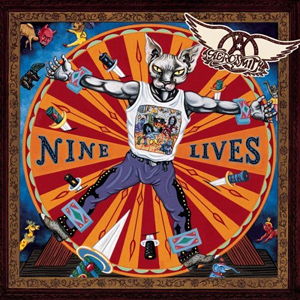
Lastly, I think Nine Lives has some of the best album artwork of any Aerosmith album in the CD age. I know that the original cover art with the snakes and the dancing cat was offensive to some of the Hindu faith. They then issued an alternative, revised version for retailers who wanted it, and it was just as cool anyway. Each page of the booklet features artwork that “pulls back” further giving you a wider perspective of the actual scene. This culminates with a zombie Aerosmith on the last page. The best thing about the revised cover art is that it adds one more picture to this sequence of “pulling back”. Now you can see the zombie Aerosmith are just a picture on a T-shirt on the same cat, who is strapped to a circus knife throwing wheel! I wouldn’t mind getting that version of the CD (cheap) just to have the final picture in the sequence.
This version of Nine Lives has 14 songs. If you think of an album in old-school terms, you realize that’s about four or five songs more than you used to get on a record. If you trimmed a few of these songs off, as if you were releasing a vinyl album in the 1970’s, imagine how tight it could have been. With the ballady filler, I’d give it:
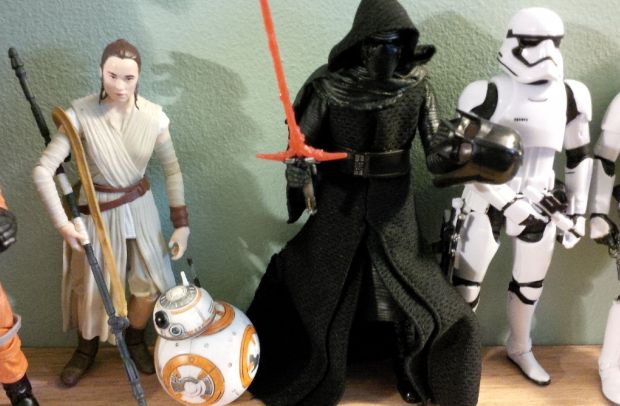
Force Friday came and went without a hitch (for me). It was only the unboxing videos that caused me problems!
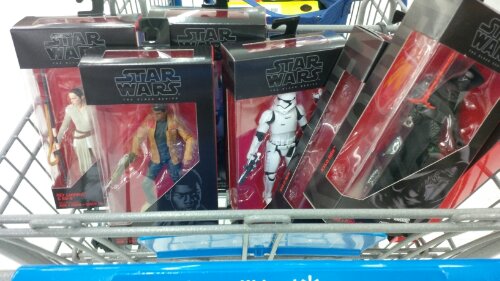
I understand quite a few people came away disappointed. I did not. I was hunting for only one type of Star Wars toy: The Black Series 6″ figures, which readers here know I collect almost religiously. I’ve posted lots of pictures of the opened portion of my collection. They can be found here, here, here, and here. They are just awesome figures that we would have died to have back in the 70’s.
The first wave of 6″ figures from The Force Awakens consists of:
01 – Finn
02 – Rey & BB-8
03 – Kylo Ren
04 – First Order Stormtrooper
05 – Chewbacca
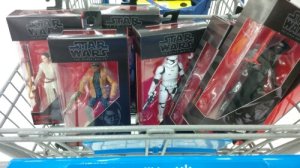
Going in with a game plan, I decided to skip Chewie. (Iron Maiden’s newest was also released on Force Friday, cutting into the budget.) A re-sculpt of an older figure I already have wasn’t a priority, and I don’t like his new face. I also aimed to get two each of Rey, Kylo and Stormie, because I wanted one of each of those to open and play with! (The next wave looks to include Captain Phasma and General Hux. We’re also expecting a Tattooine Luke, and a Kanan from Star Wars Rebels. Count me in for those. But where is Threepio?)
Unboxing #1: Kylo Ren
Unboxing #2: First Order Stormtrooper (technical difficulties!)
I began writing Record Store Tales about 15 years ago. In the time between then and now, a lot of the earlier chapters were cut. One that did not make it was called “Persecution I”. This was some background material, on what it was like growing up as a heavy metal kid in a Catholic school.
Hint: it wasn’t fun.
Now that Record Store Tales is finished, I can revisit some of these old stories.
Grades 7 and 8 were essentially just two years of waiting to finally graduate and get the hell out of there. The bullies were relentless and nasty. I also had the worst teacher for both years. Her method of discipline was to humiliate students in front of the class. This woman was the definition of strict. I still talk to some people from grades 7 and 8, and they seem to remember the teacher the same way I do. She was unpleasant and mean.
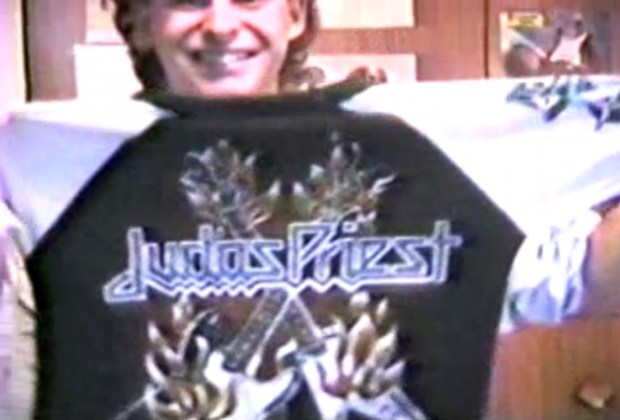
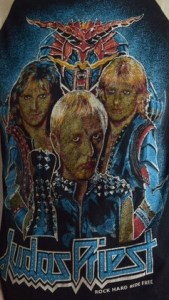
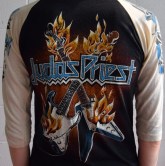
It was always difficult when a kid like me showed up on the first day of class looking different than they did before summer holidays began. I didn’t realize that. I thought people might think I was pretty cool all of a sudden, showing up in my brand new Judas Priest T-shirt.* My grandpa had also given me this camouflage army hat, to which I affixed my favorite rock buttons of Iron Maiden.
The problem with my new look was, the kids who did like heavy metal before had suddenly abandoned the greatest music of all time, in favour of New Wave bands. Where Ian Johnson had previously been boasting about how awesome this new band called Metallica were, suddenly he had grown a rat tail and gone New Wave. He mocked me as hopelessly behind the times. He even had the sack to make fun of me for liking W.A.S.P. when he used to like W.A.S.P. more than I did. I had counted on him as a metal ally, but he was no longer. He joined the rest of the crowd in mocking me.
On the first day back, the teacher walked up to me and pointed to my Priest shirt.
“What does that say?”
I thought she was referring to the small writing at the bottom.
“It says ‘Rock Hard Ride Free’,” I answered.
“No up here! What does that say?”
“It says Judas Priest,” I said, starting to realize maybe she was offended by the “Judas” part.
“Well I never!” she began with her rant. “In all my years I have never seen anyone wear something so disgusting in my classroom. Do you even know what that means?”
I was really upset and confused. “It’s just the name of a band.”
“No it is not! My father used to say that when he was very, very angry. That is a very distasteful phrase. I won’t have those words in my classroom.” I could hear the chuckles of the other kids as she tore into me some more. “I don’t understand it,” she continued. “You should not be wearing that filth. What is the matter with you?”
The same teacher liked to tell us that we were “the worst, most ill-behaved class” she had ever taught. I think she just said that every year.
I knew that the words “Judas” and “Priest” had obvious religious connotations, but how was I to know that it was once considered a “swear”? Nobody in my family said it. My dad was more blunt in his swearing – “shit”, “fuck”, “damn” and so on. None of this esoteric “Judas Priest” nonsense. When my dad swore he went all in. I was completely ignorant, and innocent of any wrongdoing.
Needless to say, I never wore that shirt to school again. I still have it, as it’s an important part of my metal upbringing. It was clear that my teacher wasn’t impressed, and the fact that it was the T-shirt of a metal band didn’t do me any favours. If it wasn’t a hymn, then it probably wasn’t worth singing to her.
Harassment continued to the bitter end. Inside one of the cabinets in the classroom, somebody had stuck a Kiss sticker on the back of one of the doors. It looked like it had been there since the 1970’s, and it probably had been. However I was the only kid in that school in 1985 who liked Kiss, so I was screwed one way or another. As the rest of the class howled, “Mike put it there! He’s the only one who likes Kiss!” I just knew I could not win.
There was one incident that is so surreal that I’m not even sure it actually happened anymore. My memories of it are clear, but I it seems so weird and unlikely. I’m willing to accept the possibility that it never happened at all, and might just be a very vivid dream from back then that has been mis-remembered as an actual event. It’s not impossible, but unless someone else confirms the memory I’m not willing to stand behind this as fact. I’m including it anyway. If anything it illustrates how the whole era felt to a metalhead in a Catholic school.
In my memory it was a chilly, damp fall morning. We were out at recess. The schoolyard was bordered by a gravel pathway now known as the Dom Cardillo trail, named after the beloved former Kitchener mayor, who died in 2013. Parked on the pathway was a white van, and a small crowd of kids was gathered around it. Curiosity must have got the better of me so I went over to see what was going on.
Inside the van were two men, who were preaching the evils of drugs and heavy metal. According to these two guys, the two went hand in hand. Stay away from drugs, and stay away from metal. If you listen to heavy metal, you will be drawn into an evil web of drugs and alcohol, said the two men to the crowd.
This is an assumption that has always pissed me off: metal = drugs. Or metal = evil. Especially among the Catholic crowd, this was the way of thinking. These folks had never bothered to actually listen to the music and lyrics. When Gene Simmons sang in 1981, “I don’t need to get wasted, it only holds me down,” he was being sincere. “All I need is a will of my own, and the balls to stand alone. I believe in me.” Even taken at face value, however, these words did not jibe with what we were being taught in school. We were not taught to exercise our own free will, and to stand on our own. We were told to stand with God, and follow His will. I don’t believe life is that simple. We have brains for a reason and we must use them to do what we believe to be right, for ourselves and for the world around us. Encouraging us to think for ourselves was not in the school curriculum. I gave myself enough credit to know the difference between good and bad. If the music made me feel good, made me feel stronger and more confident, and didn’t hurt anyone, then what was the problem? It probably didn’t help my cause that a lot of rock lyrics encouraged rebellion against authority figures.
The two guys in the van asked the crowd, “Does anyone here listen to heavy metal music?”
Before I knew it, the kids laughed and pushed me to the front of the crowd. I fought against them but I found myself at the front, facing the two guys in the van. The kids were shouting, “He does! He does!”
Face to face with the disapproving guy in the driver’s seat of the van, he asked me, “So you listen to heavy metal?”
“Yes,” I answered quietly.
“So you do drugs then?” he responded.
“No!” I protested, “I don’t do drugs!”
“But you listen to heavy metal music,” responded the man, as if one equaled the other.
I had enough and pushed my way out of the crowd again. I could hear all the laughing behind me. I walked away as fast as I could without looking like I was running. Here I was being branded a druggie based on the music I listened to.
These events happened 30 years ago, and the van incident does not feel real. It feels more like a dream and I’ll probably never know if it really happened or not. It seems too weird to have really happened, but you never know. It’s not impossible, just surreal.
Grade 8 ended on a final, humiliating note. We were all supposed to choose which highschool we wanted to go to. The expectation was that we were to attend the Catholic school. Three or four of us did not, and applied to the public school Grand River Collegiate. That was obviously going to be my escape route. It was a way to get away from the nasty kids who tormented me every day, but it certainly wasn’t teacher approved. She was not happy, at all.
She had already told the entire class that whoever didn’t attend the annual Mount Mary religious retreat would end up on drugs, dead, or both. “Every student I ever had who did not go to Mount Mary grew up to do drugs, or killed themselves,” she told us. Hooray for religious retreats, where music and music-related T-shirts were not allowed.
The day that she handed out our acceptance papers for the highschools, she took one last scornful shot at me. “Shame on you!” she scolded in front of the class. “Not going to St. Jerome’s high school just so you can be with your friends,” she continued. “Shame on you.”
This time, I didn’t care. School was so close to being over it didn’t matter. In a few weeks, she’d have no power over me anymore. There was nothing she could say or do to ever humiliate me again. The bullies would be gone too, off to their own school while I had the chance to make new friends. I wouldn’t have to feel ashamed of the T-shirts I wore, or the bands I liked.
My poor sister had another four years of that school to go, which she dubbed the “Hell Hole” (based on the Spinal Tap song of the same name). Any time we drove by, she’d sing, “Livin’ in a hell hole…” She even ended up with the same damn teacher, who hadn’t changed a bit. When my sister struggled in math, she was publicly chided in class. “Your father is a banker!” shouted the teacher. “How can you not do math? Shame on you!”
There is no shame. Be proud of who you are. Believe in yourself!
I was so frightened I almost ran away I didn’t know that I could do Anything I needed to
And then a bolt of lightnin’ Hit me on my head Then I began to see I just needed to believe in me
Then I, I believe in me And I, I believe in somethin’ more Than you can understand Yes, I believe in me
Then I, I believe in me And I, I believe in somethin’ more Than you can understand Yes, I believe in me
They said, “I didn’t stand a chance” I wouldn’t win no way But I’ve got news for you There’s nothin’ I can’t do
Ain’t no pretendin’ Ain’t no make believe But I’ve got to be the one I gotta do what must be done
Then I, I believe in me And I, I believe in somethin’ more Than you can understand Yes, I believe in me
Then I, I believe in me And I, I believe in somethin’ more Than you can understand Yes, I believe in me I believe in me Yes, I believe in me, yeah
I don’t need no money I don’t need no fame, no I just need to believe in me And I know most definitely
Don’t need to get wasted It only holds me down I just need a will of my own And the balls to stand alone
‘Cause I, I believe in me And I, I believe in somethin’ more Than you can understand Yes, I believe in me
I believe in me I believe in somethin’ more Than you can understand Yes, I believe in me
Yes, I believe in me Yes, I believe in me Yes, I believe in me
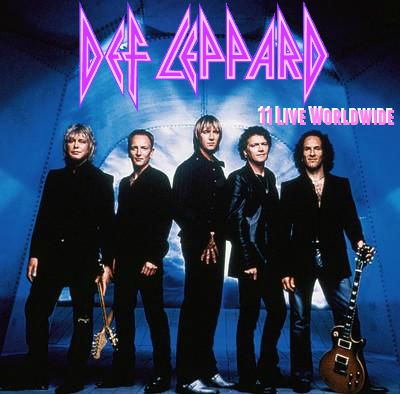
DEF LEPPARD – Official 11 track live mp3 collection, download only (2000-2001)
We at LeBrain HQ have always loved being able to shed some light on music that is so rare, that you just can’t find out much of anything about online anymore. It seems one of most obscure categories of rare music are official downloads from long ago that were never physically released, and long since taken down. 15 years isn’t a long time ago, but did you know that in 2000-2001, Def Leppard gradually put up 11 live tracks to download from their official site? This was long before they had any sort of live album out whatsoever.
These official live recordings were selected by the band, and were released over a period of several months. They were not available for long. They were taken down by the time Leppard changed their site over to promote the X album in 2002. Taken together, I assembled them in order of release into a a full length live album by Def Leppard — unofficial, yet official just the same!
The first song released was the old acoustic standby “Two Steps Behind” (San Antonio, Texas, 2000). Joe begins by announcing that they were recording the show, and that this particular night was also the “official opening evening, at it were, of our brand new website, www dot defleppard dot com. And that’s the reason we’re recording it, because we’re gonna put it on the web. Worldwide, you guys are going worldwide!” That certainly explains things! The recording itself is quite excellent, rich and clear. You also know there are no overdubs, because chords are missed and the songs goes on. To me this is the ideal form of live recordings: official, but with a loose “who cares” attitude in regards to fixing mistakes later on.
An older classic, “Women” (Salem, Oregon, 2000) has similar sonic qualities. It’s also quite bass heavy which is a nice change of pace for this band. There had already been a B-side live version of “Women” out there for a while, recorded in 1987 for the video In the Round – In Your Face. This version however has the currently lineup with Vivian Campbell, and a Joe Elliot who hits all the screams at the end. This would have to be my go-to live version when I want to hear one.
The first then-new Def Leppard song to get the live release treatment was “Demolition Man” from Euphoria. This one, from Denver, Colorado in 1999, sounds faster than the album version. On an album of mostly so-so songs, “Demolition Man” at least had some velocity to it, unremarkable as it is. It’s over and out quickly enough.
“When Love & Hate Collide” (Tokyo, 1999) is the second ballad released in the collection. Although you could get an acoustic version on the bonus disc (Acoustic in Singapore) to Slang in 1996, this was the first full-on electric live release. This version has some heft to it, and once again I would say this is the go-to version to listen to.
Def Leppard have been playing The Sweet’s “Action” for so long now, that you may as well consider it a built-in part of their set. This was the first live version made available (London, 1999). Like “Demolition Man”, it seems faster and much heavier live. Joe’s voice is sounding pretty ragged at the end — as it should be after a performance like that!
The hit song “Animal” from Hysteria was not readily available in live form, at least on an audio format. They did it unplugged for Acoustic in Singapore, and there were a couple VHS videos out there too, but nothing on vinyl or CD. This more recent version (Nashville, Tennessee, 2000) is as reliable as any other. It’s clear that even though the Euphoria album was shaky, the tour behind it was anything but.
Def Leppard started putting the instrumental scorcher “Switch 625” live again on the Slang tour. It was welded onto “Bringin’ On the Heartbreak” for a High ‘N’ Dry medley, just like it was on album. This Montreal recording from 1996 is incredible. Even the ballad has some serious crunch and scream to it. Would you like some feedback? Here you go, turn it way up. Campbell nails the solos on “Heartbreak”, but it is “Switch 625” that is the pièce de résistance. Just listen to Rick Allen, but don’t leave your jaw on the floor! At the end, Joe says “Ladies and gentlemen, the best drummer in the world, Mr. Rick Allen!” Then, a moment later you can hear Joe say, “He is,” to affirm the man’s awesomeness. These two were released as one solid 8 minute 12 second track. Then, from the same 1996 show in Montreal is another special track. Is it “Knockin’ on Heaven’s Door”?
“Mama take this gin from me, I can’t drink it anymore, Where’s the sink, I gotta pee, Looks like I’m checking into Betty Ford…”
In another moment of “I’m really glad they didn’t cut that,” Joe needed to fill a minute while Phil Collen went to pee! They left it in. Joe then turns the microphone over to Phillipe for his song “Miss You in a Heartbeat”, performed acoustically. Phil does the lead vocal and also the acoustic guitar solo, while it is quite possible that Joe himself went to pee.
“Rock! Rock! Till You Drop” is the only song fromPyromania to be released as part of this series. By the opening tapes, it sounds like it was the first song of the set in Cardiff, Wales in 1999. As such, Joe’s got a lot of screaming to do, but he does a good job. What an opener that must have been! You have to give these five guys credit for putting a lot of energy into their live performances. There is a lot of singing, soloing, and riffing to do, and they don’t make it easy for themselves!
The final two songs of the set were recent Euphoria songs, from the Tokyo show in 1999 once again. The ballad “Goodbye” is just boring as hell. You gotta get out there and promote the new album and single, but this was never a good album or single. It was a weak attempt to write another “Have You Ever Needed Someone So Bad”. Thankfully they saved the best Euphoria song for last, which was “Paper Sun”. I like when Def Leppard get into that “Gods of War” / “White Lightning” space, and that is what they did with “Paper Sun”. (It also has shades of “Women”.) Unfortunately these last two recordings, being new songs and all, feel a little more stiff. The band weren’t as familiar with them obviously, but I think you can hear it. Still, what are the chances of Leppard ever playing “Paper Sun” live again? Slim to none, I’d say. So who’s complaining? Not this guy.
Since this time, Leppard have put out plenty of official live product. There’s the excellent double live Viva! Hysteria, with loads of rarities. There’s Mirrorball, a double album representing a standard modern Def Leppard concert set. There was even a bonus live disc added to the deluxe version of Pyromania. None of those releases have “Demolition Man”, “Goodbye”, “Paper Sun”, “Miss You in a Heartbeat”, or “When Love & Hate Collide”. That makes this collection pretty special, to this day.
4.5/5 stars
We at LeBrain HQ want to hear from you if you know any more about these tracks. Any information gleaned such as actual recording or release dates will be happily added to this review. (Comments regarding trades will be deleted.)
RECORD STORE TALES MkII: Getting More Tale #430: Album Art – Where can it go?
How important is album artwork today? Still important, I’d argue, though not as much as it was in the 60’s, 70’s and 80’s. You can tell that artwork is still important, because every major artist produces “cover art” any time they release a single, even if there is no physical product for it to be applied to. Artists will commission art or pose for expensive new pictures to accompany the new music.
Columbia Records kicked off the era of album artwork in 1938, a full decade before the birth of the LP. Columbia’s art director Alex Steinweiss is generally credited with the introduction of packaging art. Before him, 78’s used to come in plain sleeves with very little printing on them. Some sleeves would have large holes in the middle, through which you could read the label on the record. After the dawn of the LP, the rest of the record manufacturers in the world had caught up and were using artwork on their LPs in the 1950’s. The standard size was 12 – 3/8”.
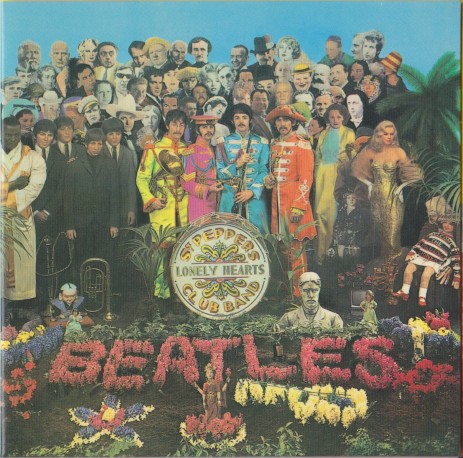
When you think of Sgt. Pepper’s Lonely Hearts Club Band today, you inevitably picture that incredible album artwork as well as the songs. That cover, with its 57 different distinct figures pictured, became a high water mark. They also included cardboard cutouts inside, a gimmick that Kiss were eager to copy and make their own. Sgt. Pepper’s artwork cost 60 times more to create than the average album cover in 1967! It took a band with the success of the Beatles to push the limits in this way.
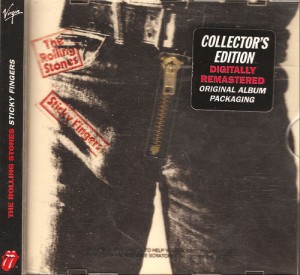
The Rolling Stones included postcards in their Exile on Main Street (another unforgettable album cover), but they also brought album artwork into three dimensions. Sticky Fingers featured a working metal zipper, with which you could open the jeans on the front cover, to reveal briefs inside. It was a level of interactivity previously unseen. The zipper tended to cause damage to the records and packaging in shipment, but pioneering is a process of trial and error!
Early 90’s CD reissue of Sticky Fingers with zipper
Perhaps Led Zeppelin took LP artwork to its end point, with 1979’s In Through the Out Door. The record was concealed in a sealed, stamped paper bag that looked like a cheap bootleg, but inside would be one of six different album covers. You would not know which you got until you tore it open. The Grammy award winning packaging also included an inner sleeve that one could paint on, just by adding water! If you wet a paintbrush (or anything, for that matter), you could dissolve paint embedded in it and colour it yourself. Finding an original unpainted inner sleeve is the goal of a true collector.
Historically speaking, album artwork like this had several purposes. The first and most obvious would be to identify the product inside (something Led Zeppelin messed with by not including their name on Led Zeppelin IV). The second purpose was to attract the eye, in the crowded shelves of the record store. It was noted by many that a brown cover just melted into the background. Something striking would jump out, and be hard to miss in the racks. Another job of the cover art was to tie together all the related marketing for the LP. The artwork could appear in magazine ads, posters, and later on, in music videos.
The purpose of cover art that Kiss embraced was to give value for the money. Not only did you get killer artwork with loud rock and roll inside, but you also got a cardboard Love Gun, or even masks you could cut out and wear. Fans drooled over these extras. For a while, any time Kiss put out an album, you knew that the packaging would be special. For albums such as Destroyer and The Elder, they even used gatefold sleeves – an added, unnecessary expense for single LP packages.
Album artwork suffered in the 80’s and 90’s. With cassettes and ultimately CDs replacing the 12.375” width of an album cover, the pictures were smaller and less striking. You could not pack as much information onto a 4.75” CD sleeve. Iron Maiden’s artist Derek Riggs was known for hiding secret messages and logos in his album covers, including a mischievous “Indiana Jones was here” and “Wot, no Guinness?” inside Powerslave. These touches are lost on smaller CD covers.
There is no question that the majority of cover art suffered in the 90’s. Some bands and labels still strove to give the buyer some extra value, but the canvas was now teeny tiny. Tool are an example of a band who took advantage of the CD age. Their AEnema CD had lenticular, “moving” cover art, thanks to a special jewel case that enabled 3D images. You could even swap images by folding the booklet differently, and get a different moving scene. Kiss copied this, less successfully, for Psycho-Circus in 1998. Coloured plastic jewel cases were another way to get some attention on the CD racks. Bands such as Alice in Chains and Collective Soul used coloured jewel cases for their self-titled albums in 1995, but these were fragile and prone to scratching. The cardboard digipack was another method to enhance CD cover art, but they were not popular with everyone. Some consumers complained that the covers wouldn’t fit properly into their CD towers, and would scratch up the discs if poorly designed. And then of course, we had artists such as Garth Brooks who decided to milk the fans by releasing the same album with different cover art, encouraging them to “collect them all!” His Double Live had no less than seven covers to collect. That would come to well over $150 total for the collector who had to have each one.
LPs are currently having a second surge of popularity. Will it last? No. Before you cry “heresy!”, remember that in today’s society, convenience is king. That means portability. Vinyl LPs are meant to be enjoyed at home. The future will remain digital, although LPs will probably never die completely. The advent of digital music has reduced the importance of cover art yet again. You don’t need a cover, obviously, to enclose something that does not physically exist. Yet, cover art is still being made.
Some have chosen to take cover art in the digital age to minimalist extremes. U2’s Songs of Innocence was initially released digitally, with a very plain photo of a white LP sleeve with “U2” stamped on it. Kanye West embraced minimalism on Yeesus, releasing the CD with no packaging to speak of at all. A CD housed in a clear jewel case, sealed by a strip of orange tape, and a sticker with some credits – that’s all Yeesus gave us, surprising many by not going completely over the top with it. It’s still an artistic statement, but is it the kind of art that a fan will embrace and cherish?
I feel that album artwork is currently in a state of flux. LPs are having their moment again, and with them, lavish packaging that one can handle and enjoy. On the other hand, simple digital pictures are all kids need today, to be attached to their mp3 files. I hope that some enterprising, artistic individual, a modern day Alex Steinweiss, will innovate and bring back cover art in a lasting way. I sure hope, because I do like cover artwork to accompany my music.
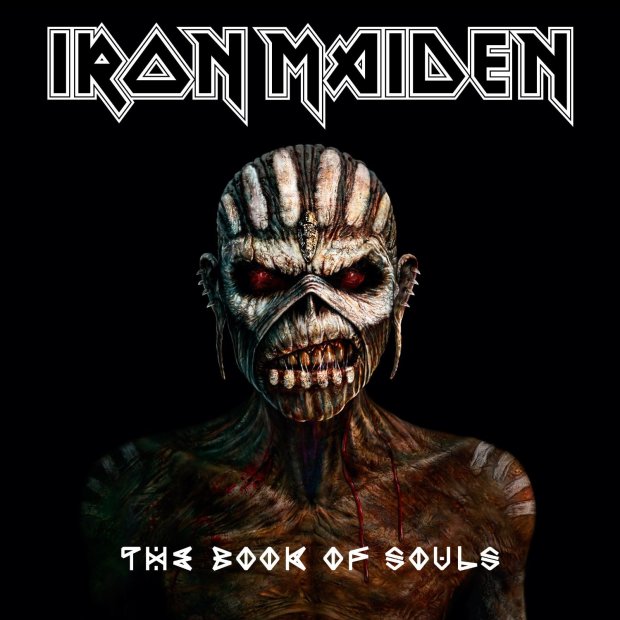
IRON MAIDEN – The Book of Souls(2015 Parlophone, collector’s book edition)
I have a new hero. His name is Bruce Dickinson.
Bruce has not only beaten cancer back to that dark hole from which it came, but he takes command on Iron Maiden’s new opus The Book of Souls.
Even though he only has writing credits on four of the 11 tracks here, his impact is massive. With lungs of iron, Bruce propels everything. For the first time (possibly) ever, I feel that the most important band member is not leader Steve Harris, but the singer himself.
Right from the opener “If Eternity Should Fail”, Bruce is center stage. He wrote this complex number himself. It boasts one of Maiden’s most memorable choruses yet, and musical twists and turns that return us to Powerslave. Meanwhile, there is a hook that reminds me of Bruce’s solo song “The Ghost of Cain”, from Accident of Birth.
We took a good look at the lead single, “Speed of Light” a couple weeks back. Maiden often write a fast, heavy blazer to go with a new album, and that’s “Speed of Light”. Even though it is the single, it is far from the strongest song. Written by Bruce and Adrian Smith, it is certainly a good Iron Maiden track, but in comparison to the monuments of metal that surround it, “Speed of Light” feels like a brief diversion from the epic metal moments at hand. Adrian’s solo, however, is delicious.
“The Great Unknown” (Smith/Harris) opens softly, but even so there is a menacing tone to Bruce’s voice and the underlying instruments. With a slow, thrusting riff, “The Great Unknown” soon lurches forth, a killer metal march for the ages. Bruce pushes his voice to the very limits, giving it all and then some. As with many of the songs on The Books of Souls, I hear hints and echoes of past Maiden epics. This is not a lack of originality, more like a signature — familiar but always different. “The Great Unknown” ends on the soft note with which it began.
What is an Iron Maiden album without a Steve Harris bass intro? He and producer Kevin Shirley captured a wonderful bass sound on this album. “The Red and the Black”, another epic, is the only Harris solo writing credit. It has a riff that takes me all the way back to Killers, but then it is gone, and it’s onto another riff…and another…and another. At 13 minutes in length, this is one of those trademark Harris songs. Time changes galore, loaded with hooks. You can draw parallels to many epics from the past, but to do so takes away from this one. “The Red and the Black” is a proud achievement, a passionate metal song as only Iron Maiden can really do. Adrian Smith handles one of the guitar solos with a huge splash of wah-wah, and that is simply a thing of beauty. In sum, if you took a little bit of everything that makes Iron Maiden great and unique, then all those ingredients are in “The Red and the Black”. Bass outro, and that’s that.
A semi-shorty (5:52) is in the next slot, a fast riffer called “When the River Runs Deep” written by Steve and Adrian. This one is hard to compare to any past Maiden tracks, as it occupies a space all its own. Adrian Smith sometimes brings in riffs that sound like something other than Iron Maiden, and I think that’s “When the River Runs Deep”. Adrian takes another wah-wah solo, but not to be outdone is Janick Gers who throws down an edgy solo of his own. As far as Iron Maiden goes, this song is guitar solo nirvana.
A 10 minute epic always makes a good closer when you’re Iron Maiden, so the title track “The Book of Souls” (Gers/Harris) is last for disc one. Gentle acoustic guitars and keyboards emulating pipes tell us that this is previously uncharted territory. Then “The Book of Souls” trudges forth, with a beat not unlike “Mother Russia” from No Prayer for the Dying. There’s far more to the song than that, however. Soaring lead vocals (Bruce only seems stronger!) just ice the cake. All three Maiden guitarists shine on this, but Janick and Adrian have some solos that just play off each other so well. You want those trademark Maiden guitar melodies? How about galloping riffs? Nicko McBrain killing it on the drums? Maiden deliver, in top notch style, everything and then some more.
Bruce and Adrian co-wrote “Death or Glory”, opening side two with frenetic drums and riffing. Going for the throat, The Book of Souls has more fast riffs per minute than any Maiden album in decades. In five brief minutes, you are blasted against the wall, bounced off the floor, and nailed to the ceiling. Don’t hurt your neck from all the headbanging. This time, the guitar spotlight is on Dave Murray for an intense, dramatic solo.
“Shadows of the Valley” (Gers/Harris) sounds a lot like “Wasted Years” at first, but only briefly. If anything, “Shadows of the Valley” recalls Dance of Death-era Iron Maiden. Although this song is not as powerful or memorable as others on the album, it does contain some seriously incredible instrumental moments.
One of the most heartfelt and powerful songs on the album is the shortest. “Tears of a Clown” is a thoughtful moment about Robin Williams. The poignant lyrics are to the point:
All alone in a crowded room, He tries to force a smile, The smile it beamed or so it seemed, But never reached the eyes, disguise, Masquerading as the funny man do they despise.
I found this to be one of the compelling songs. Of all the bands to commemorate Robin Williams, I did not expect it to be Iron Maiden. But they did it in such a way that it completely fits.
Dave Murray and Steve Harris might not have known that Bruce already has a solo song called “Man of Sorrows”, but it doesn’t matter much since Maiden’s song is called “The Man of Sorrows”. Musically this sounds much like X Factor-era Maiden. Bruce takes it to a higher level than that. Dave himself has a nice slow bluesy solo at the end that is just pure gravy.
The biggest surprise, the biggest song, and the biggest challenge has to be “Empire of the Clouds”. Written solely by Bruce and coming in at almost 20 minutes, it is unprecedented in the Maiden canon. Never before have the credits “Bruce Dickinson – vocals, piano” been written inside one of their albums. For the first time ever, the piano is a part of Iron Maiden’s makeup. Maiden have used orchestras before, and the strings return as well. “Empire of the Clouds” is a peak accomplishment, something that they (and Bruce) can proudly proclaim, “we did that”. The piano is a natural fit, in the way it is used to make an epic song even more dramatic. Aviation has been one of Bruce’s favourite lyrical subjects for a long time, but “Empire of the Clouds” might be his first song about airships. You can trust him to instill it with all the drama and heaviness that you expect from Iron Maiden.
Even though 92 minutes have elapsed, The Book of Souls does not particularly feel longer than A Matter of Life and Death or The Final Frontier. Like those two previous records, The Book of Souls is going to have to be digested long-term, returned to again and again to fully absorb and appreciate. This is an album in the true sense: best appreciated in sequence, as a single work. There’s an intermission in the middle for you to change CDs and take a break, but I recommend diving right back in once again.
With Bruce’s very serious health scare, and the increasing age of the band, there is always the chance that this could be the last Iron Maiden album. Of course, some said that about The Final Frontier as well. It seems that ever since Brave New World in 2000, Iron Maiden have set to top the previous album each time. The cumulative effect of that is that they had a hell of a lot to live up to on The Book of Souls.
Mission accomplished.
5/5 stars
Disc 1
1. If Eternity Should Fail (Dickinson) 8:28
2. Speed Of Light (Smith/ Dickinson) 5:01
3. The Great Unknown (Smith/ Harris) 6:37
4. The Red And The Black (Harris) 13:33
5. When The River Runs Deep (Smith/ Harris) 5:52
6. The Book Of Souls (Gers/ Harris) 10:27
Disc 2
7. Death Or Glory (Smith/ Dickinson) 5:13
8. Shadows Of The Valley (Gers/ Harris) 7:32
9. Tears Of A Clown (Smith/ Harris) 4:59
10. The Man Of Sorrows (Murray/ Harris) 6:28
11. Empire Of The Clouds (Dickinson) 18:01
For the official KeepsMeAlive review by Aaron,click here!




















 mikeladano.com