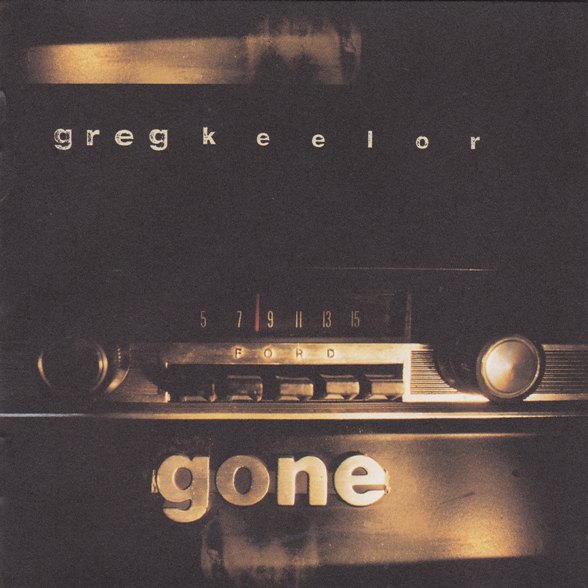
With the exception of A Collection of Recycled Gifts, these Marillion CDs were a free gifts exclusively for members of the official Web UK club. I ceased subscribing and collecting a few years ago when they switched format to DVD releases. Video is way further down on my collecting priority list. In 2014, however, I learned they switched back to CD! A double CD in fact: a live concert recorded in Chile called (heh heh) Chile for the Time of Year!
I re-subscribed just in time to get it. And it has arrived, along with the 48 page glossy Web UK magazine. This is a heavy mag, printed on good quality paper. It’s nice that some bands’ fans still value such niceties. There are four issues per year.
Below are a selection of pics. For more on the Web UK, and a better way of life, visit marillion.com.
NOTE: This is basically a review of the Deluxe edition of Live Evil. I own The Rules of Hell (2008) box set of Dio-era Sabbath, so I did not need to buy the later Deluxe of Live Evil. The 2 CD edition inside The Rules of Hell is sonically the same.
BLACK SABBATH – Live Evil (1982 Warner, 2008 Rhino)
Live Evil: Not only a palindrome, but also the last gasp of the Dio/Appice/Iommi/Butler lineup of Black Sabbath. Hard to believe that their first “official” live release was with Ronnie James Dio at the mic and not Ozzy Osbourne! This infamous live album was the last thing Sabbath did before Dio left (the first time) and it’s actually a lot better than people generally give it credit for.
Some folks may not enjoy that live, there’s only one guitar. When Iommi takes a guitar solo, the gap is filled by bassist Geezer Butler and keyboardist Geoff Nicholls. The audible keyboards in the middle of a heavy metal song like “Neon Nights” do take a little getting used to, admittedly. In the end though, it’s part of the scenery. Black Sabbath didn’t do much with live keyboards in the original Ozzy era, but they were a part of every Sabbath lineup since. There was also apparently a lot of behind the scenes bitching about instrument levels and whatnot that supposedly lead to the disintegration of the band. This remastered edition of the CD leaves me with few qualms about the sound.
Back in the 80’s and 90’s, you used to see a lot of fan rivalry. “Dio sucks!” or “Dio rules!” Today we all have the perspective to know that you can have both Ozzy and Dio, like having your cake and eating it too. Well, until Dio’s heartbreaking 2010 death, that is. It is true most singers that Sabbath have had couldn’t do the Ozzy material convincingly. Ozzy sounded genuinely disturbed and terrified on “Black Sabbath”. (“What is this that stands before me? Figure in black which points at me. Turn round quick and start to run. Find out I’m the chosen one…oh no, please God help me!”) Dio camps it up quite a bit, which is not my personal preference. The same goes for “War Pigs”. I also find that Vinny Appice just can’t cop the vibe that Bill Ward got on the drums. Ward played it very subtle, almost tribal, and Vinny plays it straight ahead. But I’ve yet to hear any lineup that can do that song as well as the original album version, including the reunited (1997-2012) Sabbath with Ozzy and Bill. (Appice also gets a drum solo on “War Pigs”; thunderous but not necessary.)
The set list for this album was pretty cool, including Mob Rules favourites “Voodoo” and an absolutely killer “Sign of the Southern Cross”. This version, melded with a long extended “Heaven and Hell”, is among the very best moments in Dio’s career. Basically, all the Dio-era material here is excellent, while the Ozzy-era stuff leaves you feeling just a little bit underwhelmed. Not to say they’re bad, they’re just…different. Two completely different singers with their own personalities. The fact is that Dio made it work live as best he could, and that’s commendable.
MVP: The super slinky Geezer Butler. The remastered edition allows us to hear with real clarity every massive note, and his bass is like a jolt of caffeine to the brain!
Since this is a 2CD set, all the between-song banter that was deleted on single disc versions has been restored. That’s important. Dio talks a lot between songs and that’s part of the album. Otherwise there is no bonus material. There are ample and interesting liner notes, and the front cover looks absolutely stunning. This is one of Sabbath’s all-time best covers (perhaps second only to their first album) and it definitely shines in this edition. (But don’t let that stop you from tracking down a vinyl copy so you can see it in its 12×12 glory!)
Shame that this was the last album of the original Dio era, but of course Dio and the band felt there needed to be additional chapters later on. And so there were. Live Evil remained a controversial album for a decade after its releasing, dividing fan and band opinions. I asked two of my esteemed Sausagefest rock scholar friends for their opinion on it, to make sure we’ve covered all the bases. This is why they had to add:
Uncle Meat: “As good as Dio was as a singer, I never really liked some of his takes on Ozzy Sabbath songs. He kinda over-sings them. It’s like he is bored with them and he appeases the singer in himself. Also the mix is pretty horrible as well. The truth is, the only great Sabbath live album isnt even a Sabbath album. Ozzy’s Speak of the Devil still sounds great today.”
Dr. Dave: “I don’t love or hate it. I like it. The most interesting thing for me, besides Dio, is the Vinny Appice take on the whole thing. More of a groove, less of a swing than Bill Ward. Not saying better, just neatly different.”
Final note: The liner notes correct Dio’s name to Ronnie James Dio. The original LP and CD had his name printed as simply “Ronnie Dio”, as a bit of a “fuck you” to the singer. They do not, however, reinstate Vinny Appice as an “official” member, having his name under “special thanks”!
3.5/5 stars. The most historic of the Sabbath live albums.
When Blackmore quit Purple for the second time, I had written the band off. I wasn’t too keen on the previous studio record The Battle Rages On, and what is Purple without the man in black? I didn’t want to hear a hack Deep Purple, struggling on to pay the bills with some sub-Blackmore player. The first time he left, it shattered the band and they were unable to continue past one record with Tommy Bolin. Then I started reading reviews of live shows with Steve Morse on guitar. Steve Morse? What the hell was that going to sound like? Morse and Ritchie Blackmore — it is hard to imagine two electric guitar players who sound less alike. (Joe Satriani was also briefly in the band to help them finish up touring commitments. Bootlegs of shows with Satriani are well worth checking out.)
When Purple finally released their new studio album Purpendicular, I had to buy it on import. It didn’t even have a North American release. When it was released officially in the US, an extra bonus track was added, so I tracked that down and bought it too. That is how much I really love this record. It had a huge impact on me musically in the mid to late 90’s, and when I saw Purple on this tour, they were smoking!
Kicking off with some of that patented Morse shredding, the oddly titled “Vavoom: Ted The Mechanic” kicks you in the teeth and won’t let go. This was, according to Gillan, done on purpose. It was a statement: “Here is our new guitar player, bitches.” Ian’s lyrics, ranging from bizarre to absurd and back again, are at their absolute peak on this album. (Check out “Somebody Stole My Guitar”.) Clearly, when the man had been freed of Blackmore’s shackles, he had been creatively revitalized. That probably followed in turn for each of the members.
The second track is the melancholy, bass-driven “Loosen My Strings”, a song which wouldn’t sound out of place on Slaves and Masters. From there, the album goes from strength to strength: The powerful progressive epic “Sometimes I Feel Like Screaming” (probably the best track on the album) to the bright and positive “A Touch Away”. Every song is backed by Morse’s unmistakable picking, miles away from Blackmore’s style of riffing, or medieval tendencies. That is not an attack against Blackmore, but sometimes a quality change can be refreshing. Morse utilizes pinch harmonics frequently on this album, which is a new sound for Deep Purple. He also utilizes long sustained notes with wide vibrato, a classic Steve Morse sound.
There are very few weak songs on Purpendicular. The plodding “Soon Forgotten” can be skipped. Not all the songs are immediate. Some of them are complex arrangements designed to take a little effort to penetrate. This album must be played a couple times for it to sink in. But when it does, stand back and prepare to be blown away. I wouldn’t want to miss “The Aviator”, a rare acoustic Purple tune. Morse lends it a celtic feel. For folks who prefer the 70’s jamming Deep Purple, check into “Rosa’s Cantina” and give a shout-out to “Hey Cisco”. And if you like it a little more straightforward and rocking, you may prefer catchy rockers like “Somebody Stole My Guitar” and “I’m Not Your Lover Now”.
I mentioned that I re-bought this album for a US bonus track. “Don’t Hold Your Breath” is a bright upbeat rock song, and worth tracking down. It’s not necessarily an album highlight, but why do without? Jon Lord’s organ sounds on this one are particularly enticing.
There was also one outtake from this album, a silly little jam/band intro called “Dick Pimple”. This was put out on a fanclub-only release, and later reissued on Ian Gillan & Tony Iommi’s compilation CD WhoCares. It’s a 10 minute track, giving the fans a rare chance to hear Purple with Morse jam just for shits & giggles. Because it’s Deep Purple, it is a quality jam, and completely unlike anything on Purpendicular.
Purpendicular was a vital record for Deep Purple. If they had blown it, that would have been it. They couldn’t have continued with any credibility if it didn’t kill. Fortunately it did. I am pleased to report that despite the tragic death of Jon Lord, Deep Purple has managed four more great records since, all with Steve Morse on guitar.
RECORD STORE TALES MkII: Getting More Tale #354: Packaging & Cellophane
As I sit here finally ripping the cellophane off some of the discs I received for Christmas, a pile of discarded shrink wrap sits before me. I find the plastic waste problematic, but I also recognize that in today’s consumer market, you have to present your product as “brand new” or “untouched by human hands” in some way. So they seal up every CD and DVD, ensuring that nobody got their sticky hands on the playing surface of your disc. As an added bonus the shrink wrap protects the CD or DVD case, meaning you and only you can scuff it up yourself.
Part of me hates waste. The other part (the OCD part) really enjoys ripping the shrink wrap off a brand new CD and knowing that its appearance is perfect inside. Only I can mark it up, now. Same goes with toys, appliances, tools…we all want everything to be brand-spanking-new when we open them, when possible. We want to be the ones to rip the protective plastic film off that new TV. We want to be the ones who carefully remove our new laptops from the layers of packaging protecting them.
This seems to be especially important when giving gifts. When you’re giving something to a loved one, you want everything about it to be perfect as possible, from the box to the product, right? In cases like this, we tend to look at the layers of wasteful packaging as a necessary evil. You probably recycle and re-use as much as possible, but we all throw a whole lot of packaging straight into the garbage bin whenever we open something new.
I’ll give you an example from the Record Store days, just how some people value packaging over waste when gift giving. We used to offer a shrink wrap service. I don’t remember what we charged. If you wanted to buy a used CD and shrink wrap it in order to hide the fact that you were buying a used CD, we’d do it for 25 cents or 75 cents or something. It might shock you how many times I heard variations of the question, “This is a gift. Can you shrink wrap it for me?”
“Is there a way to put plastic on this so he doesn’t know it’s a used CD?”
“I don’t want her to know this is used. Do you have a shrink wrapping machine or something like that?”
And so on and so forth. There was a demand (clearly) so we offered it.
I found a better use for the shrink wrap machine. When I happened upon a rare digipack version of a CD, or something with fragile packaging, I would reseal it, to protect it. You’d be amazed how much you can wreck a CD case just from normal shelf wear. If it’s something which has value in its packaging, then you want to prevent that. I had (and later sold at a profit) a rare copy of The Black Crowes’ Amorica album. This had the “x-rated” cover on a good condition digipack. To prevent it from getting scuffed or damaged and losing value, I resealed it. When I later got the Sho’ Nuff box set, I sold it for like $20.
You know those burgundy and yellow jewel cases that came with Kiss’ You Wanted the Best, You Got the Best CD? Another prime candidate for resealing (though you will still have to be careful you don’t crack the plastic)!
Some of my co-workers were known to reseal their hands. I do not know why. I did not partake in that ritual.
My quandary can be summed up as this: I like packaging to a certain degree. I hate the waste aspect of it, and the environmental impact. In my own life I try to reduce waste as much as possible. But I can’t get around my preference to tear open the shrink wrap on a brand new virgin CD and be the first to touch it with bare hands.
What is the compromise? I don’t know.
I don’t think there is a compromise. I don’t think wasteful packaging is a sustainable practice. I think, sooner or later, we all are going to have to get used to shedding layers of waste in our future.
“Hey! These floors are dirty as hell, and I’m not gonna take it anymore!” – Stanley Spadowski
“Weird Al” Yankovic – UHF (1989 MGM, 2002 DVD)
I never understood why this brilliant, family friendly and absurd comedy wasn’t a hit. Weird Al never made another movie, such was the box office failure. UHF was simply ahead of its time. Today, viewers familiar with the Family Guy and modern comedy will “get” the tangents and bizarre fantasy sequences. Also, it’s important to remember that this great cast was barely known at the time. Michael Richards was pre-Seinfeld. Fran Drescher had yet to become the Nanny. David Proval was years away from playing Tony Soprano’s nemesis in season two. The only one I’d heard of in 1989 was Billy Barty!
George Newman (Yankovic) is an unemployed dreamer who lands a crummy job managing a UHF TV station on the verge of bankruptcy and permanent closure. He just can’t focus, constantly losing himself in rich, heroic dreamscapes. Weird Al as Indiana Jones…Weird Al as Rambo…Weird Al as Mark Knopfler…Can he use his imagination to help the TV station survive? If he doesn’t, his girlfriend Terri (Victoria Jackson) isn’t likely to stick around for long. Fortunately George’s best friend Bob (David Bowe) is there to help.
The station, U-62, comes with its own assortment of personalities. Pamela (Drescher) is the hard working receptionist dying to make the move to on-camera. Noodles McIntosh (Billy Barty) is a 3’9″ camera man! And then there’s Filo, the “chief engineer” who actually lives at the station. (He’s currently working on his interocitor, a reference from the 1955 science fiction classic This Island Earth. If you’ve seen This Island Earth, remember that reference next time you watch UHF. Get it?)
Unfortunately for George Newman, Channel 8 across town doesn’t want U-62 to succeed. RJ Fletcher (Kevin McCarthy) wants to buy it and turn it into a parking lot. Fletcher, a prick, also cruelly fires his best janitor Stanley Spadowski (Michael Richards) over a misunderstanding. Newman hires Stanley, and even buys him a new mop. His old one, which Fletcher’s goons confiscated, was a birthday gift from his mom.
Newman introduces some new shows to U-62 (Wheel of Fish, Raul’s Wild Kingdom, Secrets of the Universe, Uncle Nutzy’s Clubhouse), but nothing really takes off until Stanley is given his own show, Stanley Spadowski’s Clubhouse. His crazy personality endears him to all ages and his show becomes the hottest in town. RJ Fletcher, however, doesn’t intend to let the station’s success continue. Can George and his friends raise enough money to save the station?
UHF is very special for a few reasons. One is that Weird Al does parody better than anyone. The parodies of Geraldo, Rambo, Ghandi, Conan the Barbarian, and more are still being quoted by fans today. Then there’s Michael Richards. The great thing about Michael Richards, says Al, is that you can just “turn him on and tell him to go crazy for two minutes”, and that seems to be how most of the Stanley Spadowski scenes seem to work. And it’s brilliant. Kids who saw this movie in the 80’s loved Stanley. He’s not only an innocent soul who loves cleanliness, but he’s absolutely whacky, hilarious, lovable and loyal. Third, the movie has a good heart. It celebrates imagination, uniqueness and loyalty, qualities that we all value. And of course it also has those random, rapidly changing sketch comedy bits, not too different from Monty Python and SCTV in style. It’s actually intelligent comedy.
The audio commentary on this DVD is great — even Michael Richards stops by to chat. The deleted scenes are a stream of cut bits, but Weird Al’s intro and commentary makes it hilarious. They weren’t in the movie because they suck, says Al! But if they didn’t put them on the DVD, we’d all be whining that they didn’t include any deleted scenes. He has a point! Some characters and shows (such as “Those Darn Homos”, which seems to be about two men who chase each other around a room trying to spank each other with spatulas) were cut completely from the film, so this is the only place you’d see them. As is usually the case, the movie is better for the cuts made. Additionally there is a short behind the scenes doc, explaining the origin of “Wheel of Fish” and more. Al and the cast aren’t serious in the interviews, which are hilarious:
Q: “Why do they call you Weird Al?”
A: “I don’t know, I guess people are basically cruel. I don’t know why they call me Al.”
There’s a huge photo gallery, standard fare for a DVD, and they’re fun but non-essential. The music video for “UHF” is present (the first time he shaved off his moustache, to play Axl Rose!), an indispensable companion piece. Even the menus are awesome, with Al himself popping up and acting silly. My only real beef about the DVD is this: It’s one of those double sided discs with widescreen on one side and full screen on the other. But the deleted scenes are only on the full screen side, so you have to eject and flip the disc just to watch them, because nobody watches full screen anymore.
Do you wanna drink from the fire hose? Then get UHF. It’s out on Blu-ray, too.
A series of vignettes featuring my open collection of 6″ Star Wars Black Series! I wanted to show each figure’s features in detail. These are really fun to play with, and display incredibly well. Were you born in the 70’s? Then enjoy these and play along.
A series of vignettes featuring my open (and one sealed) collection of 6″ Star Wars Black Series! I wanted to show each figure’s features in detail. These are really fun to play with, and display incredibly well. Were you born in the 70’s? Then enjoy these and play along.
This series is dedicated to the memory of George Balasz 1969(?)-2014.
Any time there is an official Deep Purple archival release coming out, diehards have to pay attention. The current library of vintage live CDs is the Official Deep Purple (Overseas) Live Series. A mouthful. Live in Paris was the first in the series, followed by Copenhagen 1972 (which I missed but have to catch up on). Graz 1975 is the third, and it has a long history of incomplete releases going all the way back to 1976! Some songs were used on the single LP Made in Europe in that year. In 1996, five songs were remixed and included on Mk III: The Final Concerts. Now the entire April 3 show in Graz, Austria has been remixed again and released in its completion.
As a guy who owns virtually every single official Deep Purple release and catching up on the rest, I’m amazed at how crisp and fucking essential this new mix of “Burn” is. The liner notes call it “surely the best version of this song, ever.” Paice and Blackmore both play with an excitement and energy that is even above their standards. Lord too, but my God are Ian and Ritchie fueled up, laying down fill after fill that were of that moment. Ritchie was on the verge of leaving — he was gone after only two more shows. Even if you’ve heard this exact same recording of “Burn” from Mk III: The Final Concerts before, you haven’t heard it like this. This new mix kills the prior ones, rendering them almost obsolete. Ditto with “Stormbringer”, which captures all the energy that that was missing from Made in Europe.
I’m always pleased to hear “The Gypsy” from Stormbringer, an underrated track from an underrated album. Glenn Hughes’ young pipes are achingly powerful, drowning out David Coverdale. An unreleased “Lady Double Dealer” is the last short song before the show progresses on to long 10 minute or more jams. Ritchie’s manic pick scrapes are deliciously perfect. This usually isn’t one of my go-to Deep Purple songs, but this absolutely smokes any version I’ve heard before.
The first long bomber is Ritchie’s blues centerpiece, “Mistreated”. I confess I usually snooze through this one. This version will be familiar as one of the “bonus tracks” on Mk III: The Final Concerts. Ritchie is the main focus of “Mistreated”, and he stretches out far and wide, using bits from “Lazy”, “Sail Away” and classical melodies. Coverdale is much stronger vocally than he tends to be on this song. A ramshackle “Smoke on the Water” is also dull by comparison with the first part of the set. Its highlight is a long, building and breaking Jon Lord organ solo, which leads into “With a Little Help from my Friends”. “You Fool No One” is over 10 minutes, and it gives Ian Paice a chance to strut his stuff. Paice is one of those drummers that it pays off to focus on and really listen to, because he is always doing something interesting. All of this is outshined by a 20 minute “Space Truckin'”. Richard Strauss’ “Thus Spake Zarathustra” is a suitably bombastic segue, for a band of Deep Purple’s stature. They also detour into “Child in Time”. If you’re not wiped out by now, you will be by the end.
Gotta say that those responsible do a great job with these Deep Purple products. Absolutely no qualms about this release at all. Not essential to anyone but fans of Deep Purple Mk III.
RECORD STORE TALES MkII: Getting More Tale #353: Hotter Than Hell
Grade 8 was a shitty year. I couldn’t wait to get the hell out of that shitty school. I had it up to here [holds hand right below chin] with the bullies and teachers. I had a fight with a bully at the beginning of the year, which at least kept that one off my case for the rest of it. That was also the year I got mono! The only thing that really helped get me through was rock and roll, and especially Kiss. Way back in Part 3 of Record Store Tales, I acquired Hotter Than Hell on LP, in very bad condition. I almost immediately traded it away for a bunch of other records and swag, but not before dubbing a copy on a terrible Scotch blank tape. As explained in great detail in Part 3, I grew to love Hotter Than Hell despite its flaws. Sonically, it was arguably Kiss’ worst album. I was listening to a scratched LP via a 120 minute Scotch tape that was prone to stretch and warble. I had Kiss’ worst sounding album on the worst sounding format! Yet something about it kept drawing me back.
Sound issues aside, there’s no denying Hotter Than Hell is a powerful record. Perennial Kiss klassics such as “Got to Choose”, “Hotter Than Hell”, “Parasite”, and “Let Me Go, Rock and Roll” can be found right here. It also has one of Peter Criss’ best tunes (albeit written by Paul Stanley) called “Mainline”. I found myself immediately hooked on Peter’s raspy voice. I surmised that “Mainline” wasn’t a hit, since it neither appeared on Alive! nor Double Platinum. I couldn’t figure out why. “If Kiss have songs this good that never became hits,” I reasoned, “the rest of their albums must also be pretty good.”
Right after “Mainline” was another amazing song that I fell for: “Coming Home”. This Stanley ode to the road was chosen many years later as the opening track for Kiss’ MTV Unplugged. Back then, to me it was another classic that should have been a hit. The nucleus of the album became four key songs that I could not get enough of: “Coming Home”, “Mainline”, “Hotter Than Hell” and “Got to Choose”. Later on, “All the Way” expanded that list to five.
Those tunes kept me going. If I was having a rotten day at school, I could hum “Coming Home” to myself and feel better. For a French assignment, we had to record an introductory paragraph about ourselves, approximately 30-60 seconds long. We were allowed to do this with music in the background. I chose the opening riff to “Got to Choose” for mine. First chord — then, “Je m’appelle Michèle…” I talked for the instrumental part, and was finished before the opening line of the song. But I kept the tape running for a moment longer before I did a fade-out: “Baby, you know I heard the neighbors say…” Just so I could work a little bit of Kiss into my French class. I was probably the only one who noticed.
The bullies picked on me pretty hard in grade 8. I was assigned “flag duty”, which meant I was the guy who had to put the flag up every morning. Drawing attention to myself was never a fun thing in grade 8, and I had to do it every morning. Walking down the hall to the coughs of “Fag Boy” — a clever name derived from “Flag Boy” — was a daily torment. They also liked to make fun of my boots, which today would have been cooler than hell, since they were vintage, but then just added to misery. Thursdays were wood shop class, which meant a bus ride to another school downtown. That bus ride was without a doubt the worst part of each week. I was prone to getting sick on Thursdays, for some reason….
When I got mono (for real) I missed most of the end of grade 8, but not before being shamed in front of the entire class by my teacher. “Shame on you!” she said, because I picked the wrong school. We all had to choose which highschool we wanted to go to. We were usually expected to choose the Catholic school, but there was no way in hell I was doing that. You couldn’t have dragged me along with those kids, believe me. There was just no way. I chose Grand River Collegiate, which was closer. Plus my best friend Bob, who was two years older than me, went to that school. It would be cool to see him every day at lunch time. We never had any classes together for obvious reasons, but we conspired to get lockers side by side once. We had a great time in highschool. Those were the golden years!
Certainly better than grade 8. I’ve never told all of these stories publicly before. It is what it is, and all is certainly forgiven now. The interesting thing is how these experiences collided to really galvanize my love of that Hotter Than Hell album. Listening to it today still brings back memories of gym class, waiting for it to finally end, humming “Coming Home” to myself. And that, friends, is why such a terrible sounding record is so important to me!