beau hill

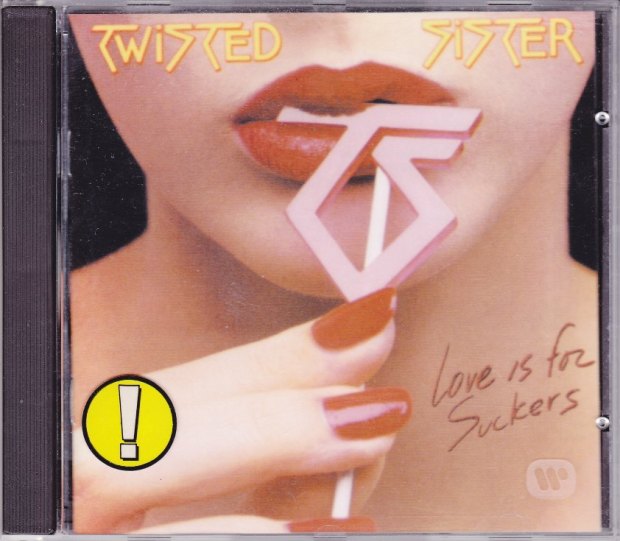
GUEST REVIEW: Twisted Sister – Love Is For Suckers (1987) by Tommy Morais (and remembering A.J. Pero)

My old friend and collaborator Tommy Morais passed away in 2024, but miraculously, I found this 2015 email from him.  It contained a complete review of Twisted Sister’s Love Is For Suckers album that we never published, and a memorial for Twisted Sister drummer A.J. Pero, who had recently died.  I am please to finally publish this final review that Tommy sent me to post.  Rest in peace Tommy.
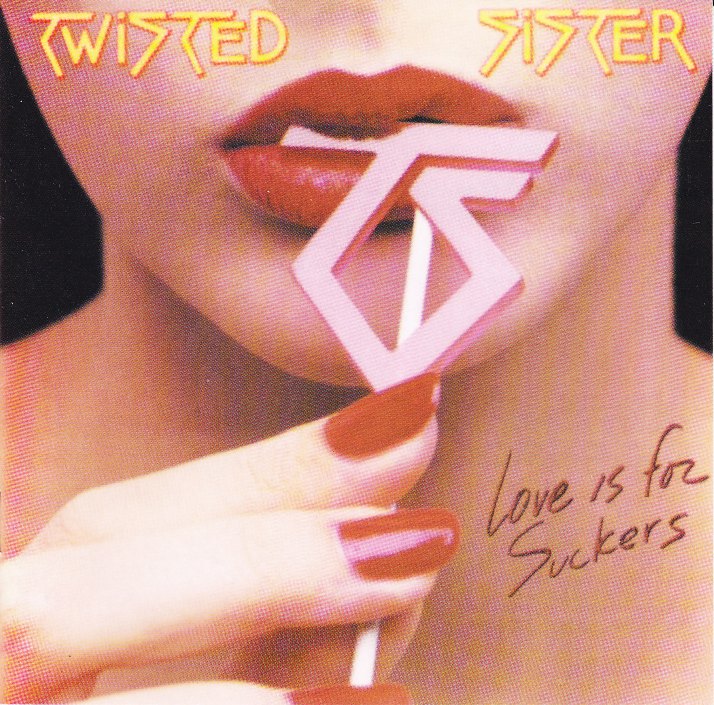
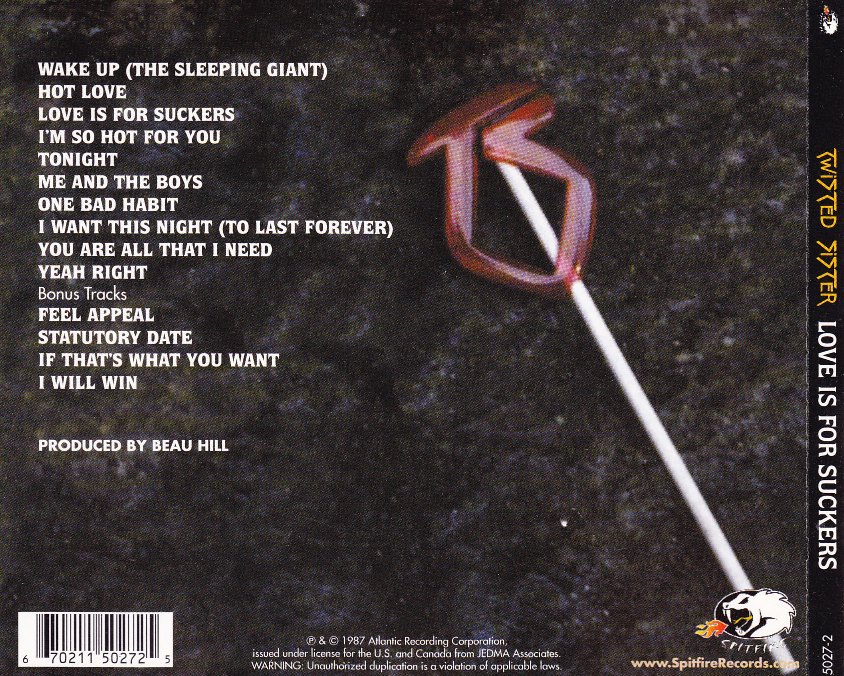
TWISTED SISTER – Love Is For Suckers (1987 Atlantic)
by Tommy Morais – written March 28, 2015
“The ‘Soft & Filler’ album…”  Bought in 2012 in France for something like 17 euros!

Twisted Sister’s fifth and final studio album Love Is For Suckers (unless you count the band’s 2004 Still Hungry, a collection of re-recordings of Stay Hungry) is one that tends to divide people. Some hardcore fans dismiss it as too pop and lacking much substance, while others have a soft spot for it and thought it was an enjoyable release at the time. There’s some claims to be made about both opinions. The main problem with with Love Is For Suckers is that it really isn’t a Twisted Sister album. “Wake Up The Sleeping Giant” is deceiving in that it almost sounds like classic TS. Yet only Dee Snider as an original member remains, and then there’s Joey “Seven” Franco who was in the current lineup on drums. It really should have been a Dee Snider solo album which is what it was intended as and truly was, but instead the record company pressured this to be released as a Twisted Sister album.

Then it is plagued by a few big issues, besides the absence of the classic lineup. Did you ever see Reb Beach and Kip Winger receiving credits on a Twisted Sister album? Well, they played on this. Probably not a happy thought for most Twisted Sister fans, as it ended up taking an ultimately softer and a more pop direction. Then you have to consider that it may have been competitive and cutting edge in 1987, but Love ls For Suckers has not held up well with time. Also for an album title that claims love “sucks”, it’s ironic that most of these songs are well… love songs.

What’s with the drum sound?! The songs are wimpy but with a thunderous, big drum sound which leads to question that maybe Joey was a good drummer who ended up playing on the wrong album. The production by Beau Hill is about what you’d expect, very “1987” and time has not been too kind to its sound.

Opener “Wake Up The Sleeping Giant” is misleading. 1) It sounds like Twisted Sister and 2) It’s the best song on the album, and it leads you to think (and hope) the rest may be up to this standard. “Hot Love” was and is a great candy rock piece tailored for 1987; cheesy but fun and a good overall choice of single. It’s one of the most memorable songs (remember the video that went along?). The title track is actually not a bad rocker at all, it’s consistent as Snider does a good vocal performance and it’s somewhat catchy. This is where the album takes a slide in the quality department with “l’m So Hot For You” and “Me And The Boys” (this one especially is embarrassing) being generic filler tracks that halt any momentum the album had going for it. Sandwiched in between those songs is the slightly better rocker “Tonight” which showcases some aggression; not a bad tune at all. “One Bad Habit” is more filler material. “I Want This Night To Last Forever” has a Van Hagar feel to it, especially during the chorus but is nothing to write home about either. “You’re All That l Need” tried to be a big power ballad but it failed during the chorus, even though it had a nice build up. The keyboards prevent it from being a strong ballad like “The Price”, and as a result it sounds a little too soft and thin. The closing “Yeah Right” ends thing on a more positive note. It’s a solid upbeat rocker and one of the heaviest songs on an album that could’ve used more songs of this calibre.

I own the remastered version with four extra songs. “Statuary Date” is the worst of the bunch. “Feel Appeal” is better than some of the songs that made it onto the actual album, it’s more straight up rock and a little catchier. “I Will Win” is rocking but the chorus doesn’t get it right; close but no cigar. “If That’s What You Want” became “Me And The Boys” although it’s earlier incarnation was stronger and had better lyrics. If you ask me this version should’ve made the album instead!

There you have it. Any way you slice it, Love Is For Suckers is definitely, without a doubt, the worst Twisted Sister album. It suffers from the production, is full of fillers and it doesn’t feature Jay Jay French, Eddie Ojeda, Mark Mendoza, A.J Pero (who left before this was released), even though the liner notes say they were a part of it (minus Pero, replaced by Joey Franco). The first two songs, and the album cover, are the only things that are truly memorable about LIFS. The rest is really unfocused and sub-par. Twisted Sister’s decline had already begun with their previous effort, 1985’s Come Out And Play which would show cracks of the band’s implosion, but this one was a commercial disappointment failing to reach gold status or chart successfully. Simply put, Twisted Sister was no longer a band at this point and the album did nothing to stop them from breaking up and was quite frankly just not very good.

2/5 stars

Mike liked this album slightly more.  Click here for his review.
REMEMBERING A.J. PERO by Tommy Morais
It was grade six.  I was 11 years old, and it was the Friday before a holiday, which meant the whole class got to do nothing but chill and watch a movie. For the rest of the day our teachers let us hang out and do nothing. We each brought pop, chips or both to share. One of my friends Maxime brought one of his dad’s CDs. That CD? Twisted Sister’s greatest hits. He asked the teacher if he could play it for us, and the rest is history. I was introduced to my first taste of Hard Rock and Metal. I distinctively remember telling one of my friends “this is not bad huh?”, to which he agreed. I glanced at the album cover. It said “Twisted Sister Big Hits & Nasty Cuts“. Then l proceeded to tell Maxime that this (ugly) “girl band” was pretty good. I wasn’t familiar with Glam/Hair/80’s metal at that point and even less so with the look. Truth is l had been exposed to some AC/DC, Loverboy and Metallica prior to that but this was the first time it really clicked.  Maybe it was just just the right age, the right time. There you have it, Twisted Sister was the first band I recall really taking a liking to. From then on l discovered my dad and his brother’s LPs and played them on the turntable (I remember digging the first Van Halen a lot).  I definitely have a soft spot for Twisted Sister.
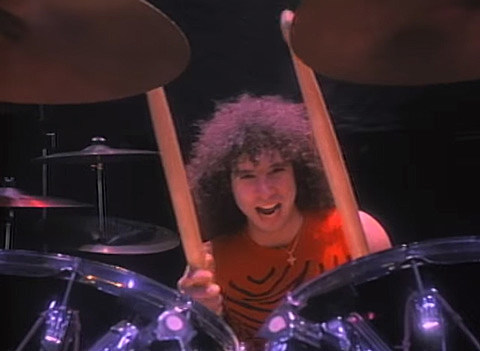
It is with sadness that I learned of longtime drummer and classic lineup member A.J. Pero’s unfortunate passing. Pero was a crucial part of the band and its sound, and a great drummer too. I approached Mike about maybe doing something Twisted Sister related on his blog to which he was very enthusiastic. I wanted to review something AJ played on, like Come Out And Play as l plan to review all of TS’s material in the upcoming days, but with time restraints l had to settle for my (still brand new) Love ls For Suckers. The band has said that were to make some big announcement next week. One can only assume that it is regarding Twisted Sister’s future as a band. Jay Jay said on social media that they were already thinking about hanging it up prior to Pero’s passing. Then Dee Snider said it would be profitable to the Pero family if the band kept playing and that they were thinking about winding down in 2016 for the band’s 40th anniversary. I’m not against them continuing performing live and going out on a final tour to honour AJ and the anniversary of the band just as l am not opposed to the band calling it quits. I have a feeling they’ll at least play a few more shows and maybe do one last concert CD/DVD (that would be cool). Rest in peace A.J., the rock world lost a great drummer.


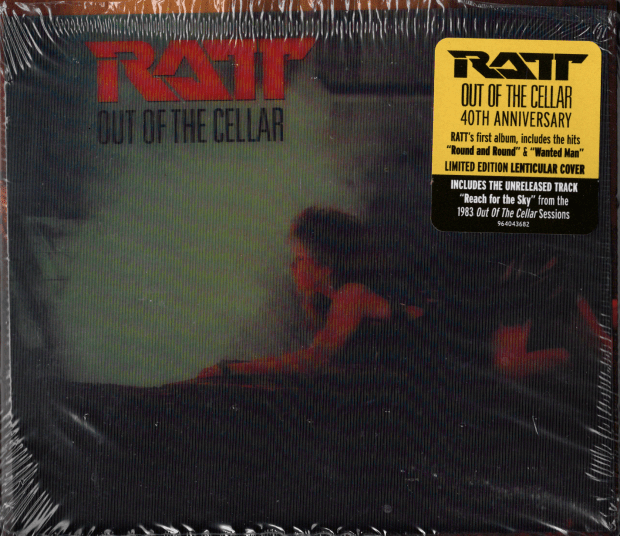
THREE-VIEW: Ratt – Out of the Cellar (1984, 2024 40th Anniversary edition)

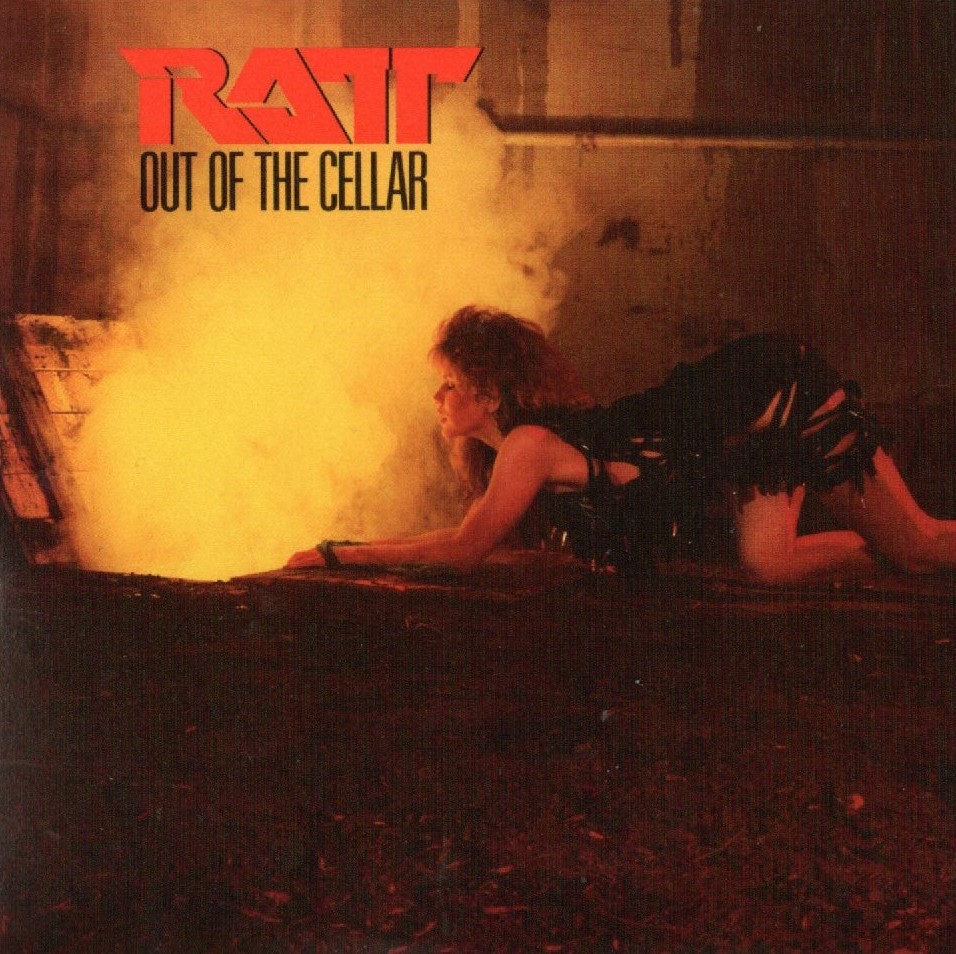
RATT – Out of the Cellar (1984 Atlantic, 2024 40th Anniversary edition)

Shame, shame, shame on Ratt.

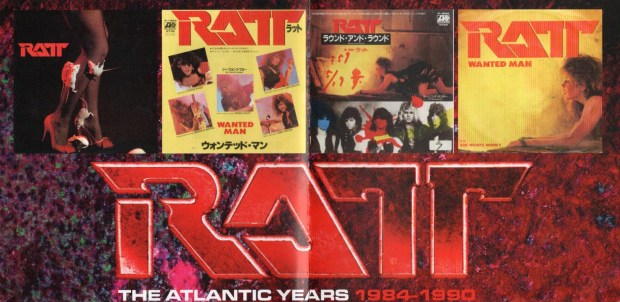
In 2020 they released a beautiful Atlantic Years box set, featuring bonus tracks including one for Out of the Cellar.  In 2024, they coughed up Ratt Rarities, with a bunch of unreleased Ratt tracks.  And now, mere months later, we are given another reissue of Out of the Cellar, this one featuring lenticular cover art and one more unreleased Ratt song.  This song could have been released on a 7″ single on its own, but if you want that, you have to buy the vinyl album all over again.  If you want the unreleased song on CD, you have to buy Out of the Cellar one more time.  I believe this is my fourth or fifth copy of Out of the Cellar now.  This is just exploitative of the fans.  Pearcy must need another swimming pool.

Is the one song worth re-buying the album again?  Fortunately the answer is yes.  “Reach For the Sky” is a 1983 Cellar demo written by Stephen Pearcy, Robbin Crosby, and Marq Torien of Bulletboys.  It sounds remarkably finished.  The guitar harmonies feel very latter-day Thin Lizzy, upon which the guys build a pretty cool song.  Though not as slick as Cellar, it sounds fully produced and ready to release.  Amazing that songs like this can remain buried for 40 years, and was never resurrected for an album even though the title was used in 1988 for the album Reach For the Sky.  While this one song didn’t warrant an entire album re-release, at least we got it.

The album itself remains solid four decades after the fact.  Opening with cowboy themed “Wanted Man”, the five Ratt Rodents were off to a compelling start.  The disorienting sound of backwards drums heralds in “Wanted Man” is an inventive way to make their introduction.  A simple, slow, chomping riff is menacing enough, while Stephen Pearcy growls though various Western metaphors.  “By the road, you will hang, it’s your neck from this Ratt gang.”  The capable harmonies of the band and especially Juan Crocier help nail the melodies that Pearcy alone can’t.  Nice solo work.  A great track worthy of a multiplatinum album.

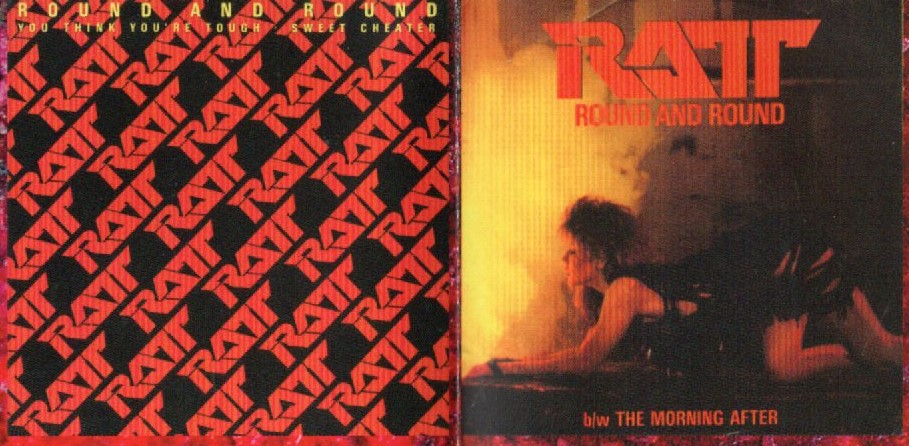
“You’re In Trouble” is a little different.  Juan’s clunky bass still sounds a bit out of place, though the choruses rule.  But “Round and Round”?  Still a total sleaze rock triumph.  A keen sense of melody, rhythm and vibe mixed together with a sweaty Stephen Pearcy.  Brilliant solo work from Warren DeMartini, and perfectly layered harmonies under the production of Beau Hill.  Every element punches, from the simple but memorable riff and those echoey choruses.  Dated to the period, but tasty for all ages.

A nice choppy guitar bodes well on “In Your Direction”, a slinky number that serves Stephen’s style well.  Decent song, but with only one trick.  “She Wants Money” is more fun, a fast upbeat blast on a familiar theme, with Robbin “King” Crosby on lead guitar.  It’s hard not to headbang along with the melodic fun of “She Wants Money”.  That ended side one on the original record.

The second side opens “Lack of Communication”, a biting track just missing one key ingredient:  a real chorus.  The saw-like riff smokes, the verses are great, but it never resolves into a definitive hook.  It’s basically just the riff with some words over it.  “Lack of communication, back off!”

“Back For More” is a little disjointed but salvages it with a killer chorus.  Screamin’ Pearcy and the rodent choir give it the final polish.  Brilliant solo work here by Warren.  Then, one of the best non-singles is the blazing fast “The Morning After”.  It has a bit of a Quiet Riot vibe.  Juan’s bass is furious while Pearcy sings it for melody.  “I’m Insane” is mindless fun; just bad boy rock with the popular “I’m crazy” theme that their pal Ozzy was milking for millions.  Finally the album closes on “Scene of the Crime” which has a neat guitar hook that unfortunately is all but unrelated to the rest of the song.  Some cool melodies with the patented Ratt harmonies here.  Still, solid enough song that if they had been looking for another single, it could have been “Scene of the Crime”.

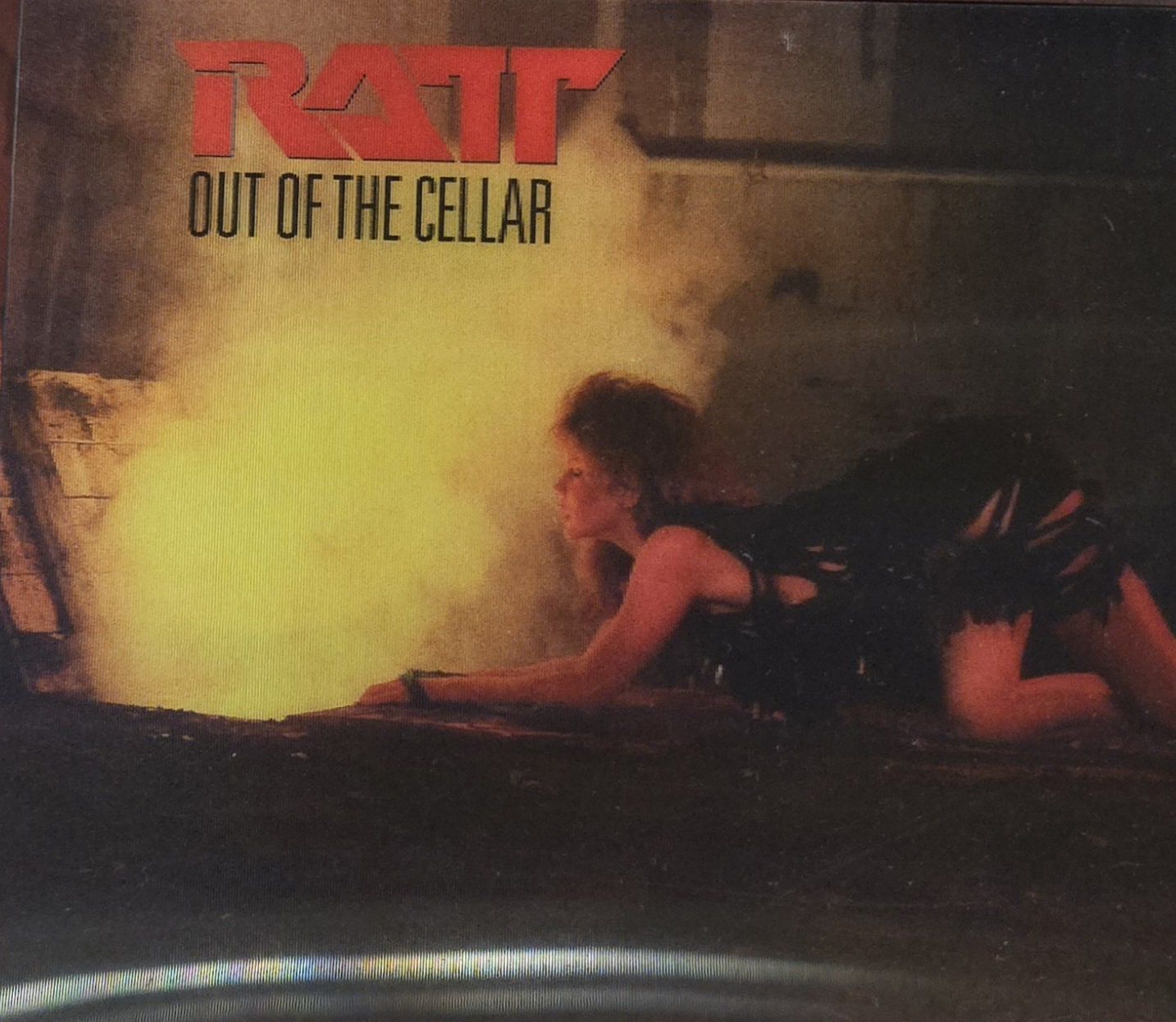
This reissue doesn’t have any additional packaging or liner notes besides the new lenticular cover.  The lenticular art  is nice, but it’s not solidly anchored to the packaging.  It feels like a symbol for the half-arsed nature of this reissue.

3.5/5 stars

REVIEW: Ratt – Reach for the Sky (Part Four of The Atlantic Years series)

Part Four of Five

RATT – Reach for the Sky (Originally 1988, 2020 reissue — The Atlantic Years 1984-1990 box set)

One might suspect that Ratt’s decline in sales (peeling off approximately 1,000,000 buyers every album), they decided to change things up a bit.  The first three Ratt platters were very much in the same mould.  Little variation, just repeating that “Ratt N’ Rott” formula.  Initially they ditched producer Beau Hill to work with Mike Stone, but the record label wasn’t happy and brought Hill back to finish.

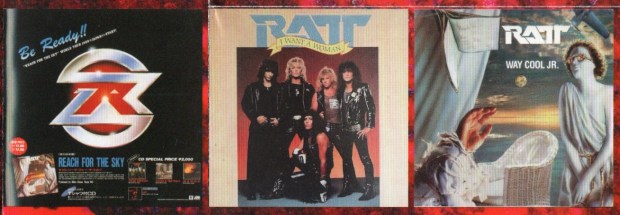
Indeed, the opener “City to City” does sound like a new rodent.  You can’t mistake them for anyone else once Pearcy starts yowling, but the slick song is fresher.  Chugging away in a mid-tempo style, it’s a bangin’ start.  But it’s the second track (and second single) that really kicks.  “I Want a Woman” retained the sleaze but contained more focus on melody with an arena-sized chorus.

The third track, and first single, was the controversial “Way Cool Jr.”.  Ratt with horns; oh my!  It was the biggest leap for the rodents and it did give them a minor charting hit.  Dipping into the blues, and eschewing the heavy histrionics.  Letting the groove of the song work, and not overpowering it.  Truth is Ratt should have tried stretching out a long time before.

Now that the big tracks are out of the way, how does the rest of the album hold up?  Not too badly.  Old-style Ratt returns on “Don’t Bite the Hand”, but at least with more melody than Dancing Undercover offered.  They go ballady on “I Want to Love You Tonight”, kind of a new thing for Ratt, and one they’d explore again in the near future.  That’s side one.

A heavy shuffle called “Chain Reaction” kicks off the second side, a welcome return to velocity.  They return to the mid-tempo zone on “No Surprise”, which sounds like something Gene Simmons might have written for an 80s Kiss album.  Good song, adequate hooks.  “Bottom Line” is in a similar ball park.  If it sounds like Ratt had help writing these songs, it might be because Beau Hill has a credit on most of them.  He only had one on Dancing Undercover.  That could be why this album has so much more melody and attention to songwriting.  The hit-ready “What’s It Gonna Be” is a prime example, almost sounding like Van Hagar.  A little too hard-edged for OU812, but perfect for a Ratt.  A foreshadowing of the kind of songs they would write for their fifth album.

The album closes on a hard rocker that Hill didn’t co-write called “What I’m After”.  A decent closer that doesn’t quite gel fully, but close enough for rock n’ roll.  Or Ratt N’ Roll.

Of all the discs in The Atlantic Years box set, Reach for the Sky has one of the best bonus tracks.  It’s an acoustic version of “Way Cool Jr.” from MTV Unplugged which chronologically happened in 1990 with Michael Schenker on guitar, filling in for Robbin Crosby who was in rehab.  The unforgiving unplugged format can separate the men from the boys, and Ratt make the grade.  Pearcy proves he can do that Ratt voice without layers of overdubs and effects.  Meanwhile, Bobby Blotzer plays some interesting non-drum percussion parts.  With Schenker on board, the mid-song acoustic segment really smokes.  Ratt could have had a whole new side to their career, had they pursued this swampy acoustic direction with Michael instead of breaking up.

But that is still in Ratt’s future; there is one more album to go on this series.  Reach For the Sky sustained Ratt’s sales.  There was no decline this time and they sold a million.  That still wasn’t good enough.  Phone calls were made and Desmond Child, Dianne Warren, Sir Arthur Payson, and one Jon Bon Jovi were about to enter the picture.

Whether Reach sold enough copies or not is irrelevant to the quality of the music, which polished the sound up to a necessary level after the disappointing Dancing Undercover.  It was a step towards the commercial, but they couldn’t do two tuneless albums in a row and survive.

3.5/5 stars


The Atlantic Years 1984-1990:

REVIEW: Ratt – Dancing Undercover (Part Three of The Atlantic Years series)

Part Three of Five

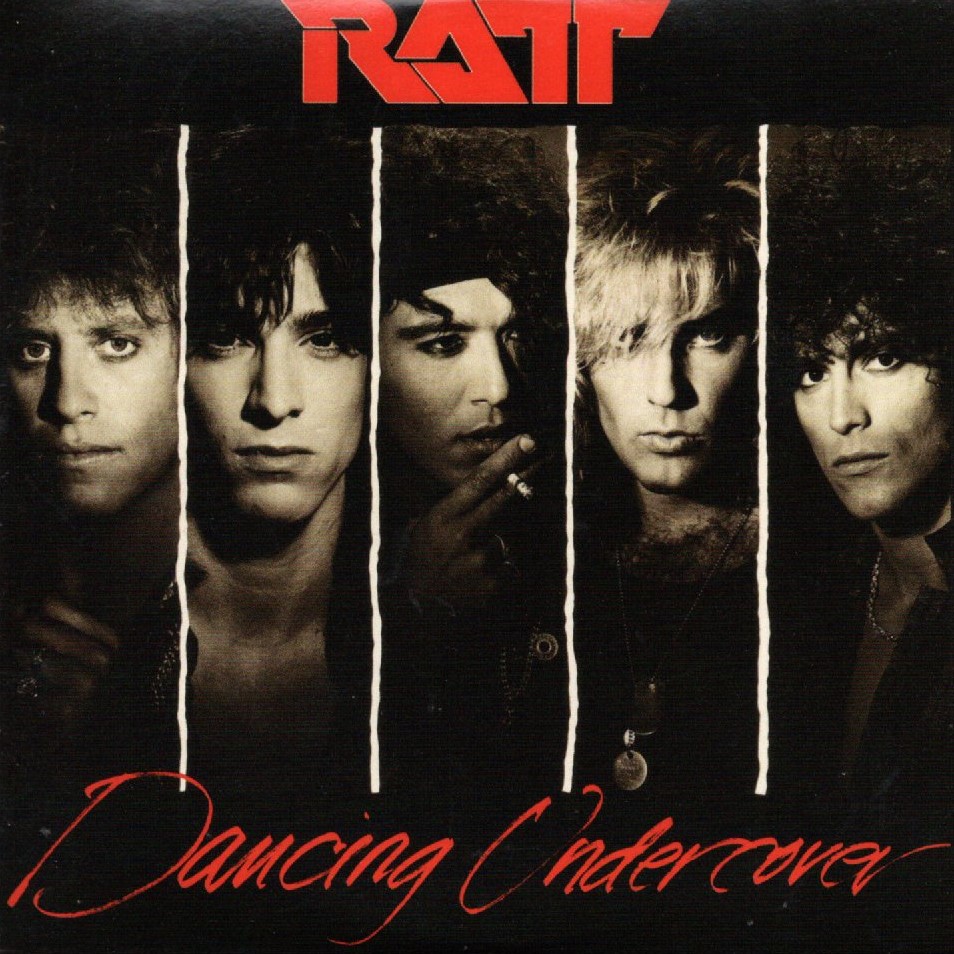
RATT – Dancing Undercover (Originally 1986, 2020 reissue — The Atlantic Years 1984-1990 box set)

Ratt’s fortunes continued to fall on their third album Dancing Undercover.  Their debut went triple platinum and the second album went double.  You didnt need an expert prognosticator to predict that the third album would go platinum and no further.  Which is still very respectable, but the trend was not good.

Opening single “Dance” was solid, with a poppy melody and stuttery 80s guitar lick.  Sleazy pop, rodent style.  A stock Ratt prowler comes second, called “One Good Lover”.  It packs punch, wicked guitars, and a few decent hooks.  Without missing a beat, they accelerate into “Drive Me Crazy” which has a speedy Hollywood-built engine.  Drummer Bobby Blotzer impresses with the machine gun fills.  Unsurprisingly, the drummer has a writing credit on it.  Decent tune, with a clunky arrangement.

The band slides into “Slip of the Lip”, which made for a pretty cool live-style video.  It is a clear album highlight, and most successfully nails the sleaze rock vibe that Ratt peddle in.    They end the first side on the incendiary “Body Talk”; straight-up Ratt thrash.  Probably the heaviest Ratt track ever, even “Body Talk” made for a wicked video.  It was hard to picture Ratt pushing it this fast and hard, but they did, and successfully so.

“Looking For Love” had to be a sleaze rocker. The second side doesn’t open on a great song, but it certainly is a Ratt song.  You couldn’t mistake it for any of their peers.  It does boast a pretty good chorus, even if the rest of the song doesn’t quite nail it.  On the other hand, “7th Avenue” has a menacing vibe and not much else.  “It Doesn’t Matter” has some life.  Unfortunately the second side just doesn’t have enough bite, nor enough good songs.  “Take a Chance” borrows a few chords from “Slip of the Lip” but isn’t nearly as good.  At least the closer “Enough is Enough” has a nice clean guitar part for variety’s sake, but side two is virtually without hooks.

This edition comes with a single edit of “Dance” as the bonus track, which at least allows the album to end on a good song, albeit a repeated one.

2.75/5 stars

The Atlantic Years 1984-1990:


REVIEW: Ratt – Invasion of Your Privacy (Part Two of The Atlantic Years series)

Part Two of Five

RATT – Invasion of Your Privacy (Originally 1985, 2020 reissue — The Atlantic Years 1984-1990 box set)

Going triple platinum on their debut album, Ratt had a lot of expectations going into a followup.  They resumed working with producer Beau Hill and didn’t change up much in their formula.  The result was a double platinum second record, another sales success.  But what about the tunes?

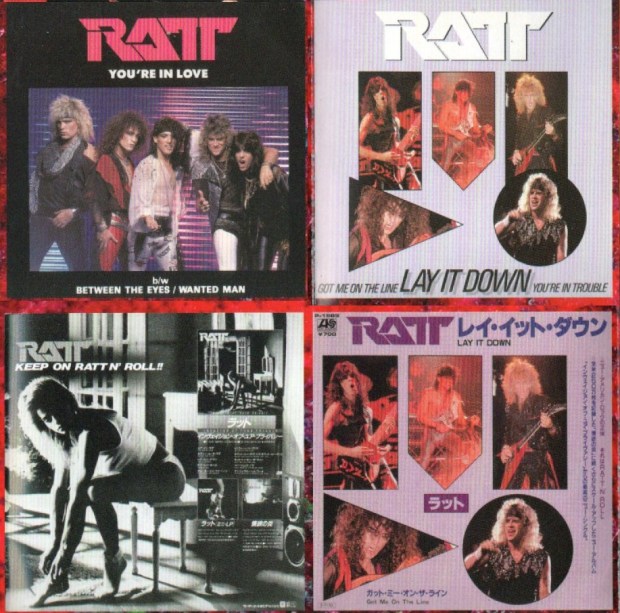
Lead track “You’re In Love” was chosen as a speedy, sleek, metallic and melodic single.  A step up in songwriting, “You’re In Love” packs power and horny Stephen Pearcy passion.  Wicked solo by Warren DeMartini.  The simple riff/melody combo was all the rodents needed to score a hit and a career highlight.  As an album opener, it revs the engine but it is also the fastest track you’ll get on Invasion of Your Privacy.

A tasty heavy riff opens up “Never Use Love”, a nice chugging album track.  Nothing here in terms of a memorable chorus, so strictly album filler.  Not road tape worthy without a decent chorus.  Great Robbin Crosby solo though.  Fortunately the slick first single, “Lay It Down” comes in for the save.  Take “You’re In Love” and slow it down to a sexy locked groove, and you get “Lay It Down”.  Pearcy was not one for subtlety.  “I know you really want to lay it down,” he beckons, and no points for guessing what “it” is.

Track four, “Give It All”, is a decent album cut, with the hooks and chugging Ratt N’ Roll style riffs that people expected.  A track with single potential, had they released another.  Another pretty good album track, “Closer To My Heart”, slows it down but not quite into ballad territory.  More like a slow dirge to close side one.

The second side opens on “Between the Eyes”, a disjointed tune that needs some tightening up.  Some cool hooks but nothing to tie them together into a song.  “What You Give Is What You Get” boasts a cool, tough little chorus and some quality guitar.  Great tune other than a misfitting pre-chorus.  It has a dark, foreboding vibe that Ratt rarely nail this well.   “Got Me on the Line” is a pretty solid deep cut, typical uptempo Ratt N’ Roll.  The solo in particular smokes.  “You Should Know by Now” is a bit clunky, but you can hear what they were going for.  They were trying for a big pop rock chorus, but they welded it to the wrong song.

Closing on “Dangerous But Worth the Risk”, the album comes to a strong ending.  It chugs along with that Ratt N’ Roll groove that embodies the sound of Motley Crue assimilating all of Hollywood California in a single night.  Though Ratt’s sound is not something as unique as they used to sell it as, it does have a niche.  It rarely squirms out of that niche.  Invasion of Your Privacy does not stray far from the debut, and doesn’t add any new wrinkles.  It’s the next batch of songs and all but equal in strength to the first batch.

Each CD in this box set comes with bonus material from singles, and this time it’s a single edit for “What You Give Is What You Get”.  The guitar solo is sadly trimmed by 20 seconds for the radio, but no problem hearing this cool song twice.

3.5/5 stars


RE-REVIEW: Ratt – Out of the Cellar (Part One of The Atlantic Years series)

Part One of Five

RATT – Out of the Cellar (Originally 1984, 2020 reissue — The Atlantic Years 1984-1990 box set)

Ratt’s first full-length Out of the Cellar was a multiplatinum smash.  The band didn’t come out of nowhere, with a successful EP already under their fur.  Though an undeniable commercial success, was Out of the Cellar that great?  Let’s listen with fresh ears to the recent reissue in The Atlantic Years 1984-1990 box set, and see if we can hear with objectivity what those rodents were up to.

The disorienting sound of backwards drums heralds in opener “Wanted Man”, an inventive way to make their introduction.  These Ratts were cowboys, although they wore too much makeup for the ranch.  A simple, slow, chomping riff is menacing enough while Stephen Pearcy growls though.  The capable harmonies of the band and especially Juan Crocier help nail the melodies that Pearcy alone can’t.  A great track worthy of a multiplatinum album.

“You’re In Trouble” is…less worthy.  Clunky bass, chaotic guitars.  But “Round and Round”?  Still as great as ever.  As regal as these rodents are ever likely to sound.  A keen sense of melody, rhythm and vibe mixed together with a sweaty Stephen Pearcy.  Brilliant solo work from Warren DeMartini, and perfectly layered harmonies under the production of Beau Hill.

A nice choppy guitar bodes well on “In Your Direction”, a slinky number that serves Stephen’s style well.  Square, head-bangin’ rhythm from Bobby “Da Blotz” Blotzer.  Decent song, but with only one trick.  “She Wants Money” is more fun, a fast upbeat blast on a familiar theme.  Robbin “King” Crosby on lead guitar here.

The second side opens “Lack of Communication”, a biting track just missing one key ingredient:  a decent chorus.  The saw-like riff smokes, the verses are great, but it never resolves into a definitive hook.

“Back For More” is a little disjointed but salvages it with a killer chorus.  Screamin’ Pearcy and the rodent choir give it the final polish.  Brilliant solo work here by Warren.  Then, one of the best non-singles “The Morning After” will leave you drenched.  It has a bit of a Quiet Riot vibe (Carlos Cavazo ended up in Ratt much later).  “I’m Insane” is mindless fun; just bad boy rock with the popular “I’m crazy” theme that their pal Ozzy was milking for millions.  Finally the album closes on “Scene of the Crime” which has a neat guitar hook that unfortunately is all but unrelated to the rest of the song.  Some cool melodies with the patented Ratt harmonies here.

The box set comes with minor bonus tracks on each disc.  This one has a single edit (3:46) of “Round and Round”.  No problem hearing “Round and Round” twice, but missing most of the solo?  Ugh.  Really bad edit.

Good start to the Ratt The Atlantic Years 1984-1990 box set, and better than memory served.  Rest in peace to Tawny Kitaen: the cover model on this album, the first EP, and the box set itself.

3.5/5 stars

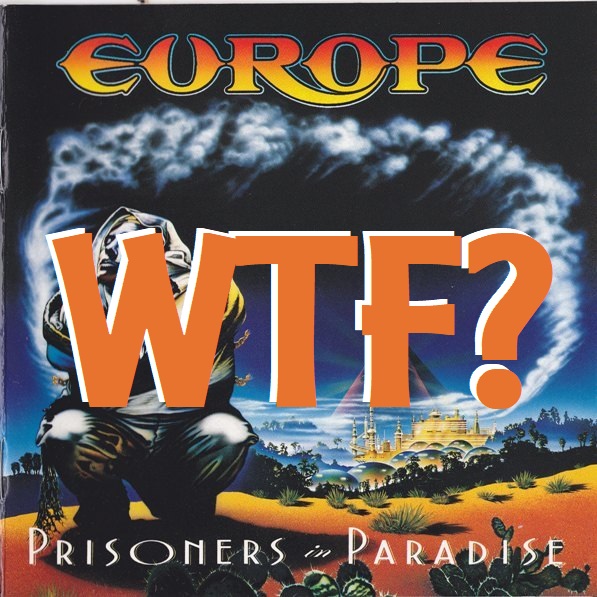
WTF Comments: Prisoners in Max’s Paradise edition

You gotta give Max [not The Axe, as far as we know] credit for this scorcher.  We don’t agree on Prisoners in Paradise by Europe, and that’s OK.  I was harsh on the album so Max was harsh on me.

I don’t know what the fuck this reviewer got stuck in his ears; a dead cat!?

Good one for sure.  Max goes on:

He complains about some songs being “pop” songs. Well what the fuck do you think this band is, Metallica??

Of course not, Max.  But have you heard of this album called Europe, by the band Europe?  Not a pop record, bud.  Not a pop record.

I don’t care. I like ’em. 

That’s cool Max.  I like ’em too.  Cool yer jets, bro!

For Max’s full comment click here.  Thanks for reading, anyway!

GUEST REVIEW: Kix – Midnite Dynamite (1985)

Guest review by Holen MaGroin – part 3 in his KIX series

KIX – Midnite Dynamite (1985 Atlantic)

In 1985, Kix returned after two commercially unsuccessful albums, with what they consider to be their magnum opus, Midnight Dynamite. This is where the new wave styles of the first two records take a backseat to the hard rock influences. Later on, they’d completely shun their new wave influences by kicking them out of the car, and making new wave watch hard rock shag its girlfriend. For now, the blend was still somewhat apparent, but with the mix changed.

Produced by Lebrain’s favorite producer of all time (Beau Hill), Midnight Dynamite definitely sounds like its era, much more so than the debut or Cool Kids. For the first time we get some electronic percussion thrown into the mix and it is the first album by Kix to feature synthesizers in a prominent role. This could have been disastrous, but luckily Kix utilizes them to color the sound and they don’t diminish the hard edge of the guitars one iota. This is a hard rock record first and foremost, and with Ronnie “10/10” Younkins back in the mix, the guitar duo of the first album is reestablished. Pressured once again to work with outside writers, the primary guy for the job is Bob Halligan Jr. If the name sounds familiar, it could be because he wrote two songs for Judas Priest (“Take These Chains” & “Some Heads Are Gonna Roll”), and co-wrote with Icon on their second album Night of the Crime. Boasting some impressive credentials, the songwriting takes a step up this time around. Nearly all the songs are collaborations between bassist Donnie Purnell and Halligan.

The album is jump started by the title track. A slow and heavy number, it was a bold choice to open an album with.  Fortunately for Kix, it completely works. The intensity of the verses builds up tension for the ridiculously catchy harmonies in pre-chorus, where we finally get the big payoff during the chorus. This is melodic hard rock done right, without the frills that are usually associated with AOR or other bands of the time period. Kix made sure that the material had balls, something that many other bands of the time period eschewed for chart success. The intensity of the title track is followed by the erotic “Red Hot (Black & Blue)” with a sleazy stuttering riff. The production on this song is a little heavy handed with the reverse reverb in the verses, but it’s nothing that ruins the impact. Another song with dynamics, the verses stutter along with spunk, until the chorus where that Kix fire is unleashed. Some pretty cheesy lyrics, but if you weren’t prepared for that then why would you be reading a Kix review?

One of Beau’s buddies Kip Winger earns himself a writing credit on track number 3, “Bang Bang (Balls of Fire)”. As you can tell by the title, it’s one of the more generic rock songs on the album. It’s one of the least substantial, but it’s still an enjoyable tune. “Layin’ Rubber” is much better, as all the elements that make up the Kix sound are blended masterfully. Obviously more hard rock orientated than material of the past, the track features bubblegum pop chants before launching into a hard rock riff, while the intensity of the music elevates as the song goes on. Each section of the song’s structure is composed to perfectly transition into the next. One of the best tracks on the album, it manages to be damn brutal, and also catchy as shit.

The rest of the album proceeds in this manner, blistering hard rock tunes with undeniably catchy melodies that are never too sugary enough to make you sick to your stomach. There is only one ballad “Walkin’ Away”, which is built on synthesizers, but has enough of a kick to be enjoyable. “Cold Shower” was the other single, which features some rap like vocals in the verses and singer Steve Whiteman hitting some glass shattering notes before the chorus. It’s one of the most eccentric tunes on the album, and I’m surprised it was picked as a single.

Surprising songs or not, this album is one of the most underrated of the era. It’s a mystery as to why it didn’t sell better than it did. Label indifference? If you’re a fan of the rock music, you owe it to yourself to pick up this album and the even better follow up Blow My Fuse.

4.75/5 stars

A note for Kiss fans, Anton Fig plays drums on the last two tracks because Jimmy “Chocolate” Chalfant had broken his arm.

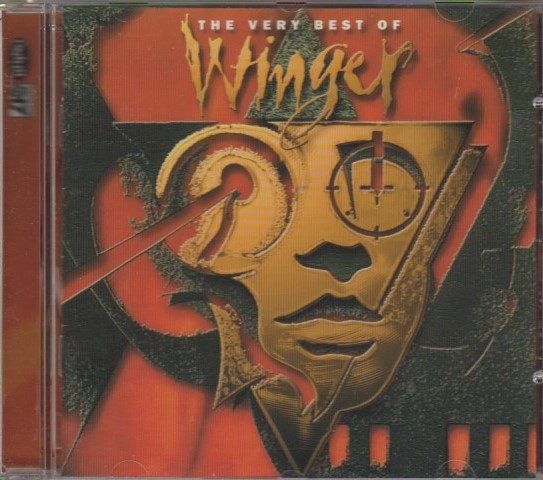
REVIEW: Winger – The Very Best Of (2001)

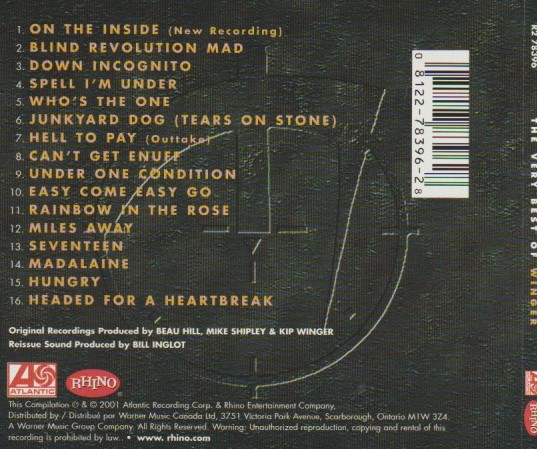
WINGER – The Very Best Of (2001 Atlantic/Rhino)

Winger broke up in ’94, but reunited in 2001.  Part of the reunion entailed new music.  Before they finally released a new album (Winger IV), they tested the waters with one new song on The Very Best of Winger.  Yes indeed, you had to buy a “greatest hits” to get the new song.  At least Winger also gave you a Japanese bonus track for your money too.

New tune “On the Inside” was written for Pull (their third album and last before breakup) but recorded for Very Best Of.  It’s a chunky, heavy tune with splashes of anthemic keyboard in the chorus.  It really underlines that Winger could write and play with integrity when they wanted to.  Reb Beach’s solo is unorthodox and outside the box.  “Hell to Pay” is listed as an outtake, but it was actually released as a Japanese bonus track to Pull.  Stuff like this saves collectors for shelling out mucho dinero for a Japanese import.  Good sassy tune, and listen for that scorching outro.

Pull was a record that never got a shot, so it’s OK that the first chunk of tunes are from that album.  It deserved a second chance.  These are standout songs:  “Blind Revolution Mad” smokes white hot, and with depth.  “Down Incognito” has a bright, memorable chorus contrasted with groovy verses.  90s-style riffing worked perfectly on the track “Junkyard Dog”, a seven-minute thrill ride through different textures.  Winger were not playing it simple.  Even their ballads from that era have more heft.  “Spell I’m Under” has edge under those layered melodies.  Few songs are as starkly lovely as “Who’s the One”.

The Very Best of Winger takes a dive after the Pull material.  The CD is in reverse chronological order, which almost never works.  Yes, it highlights the most current sounding music, but at the cost of consistency.  Winger II: In the Heart of the Young was, let’s be honest, not good.  The ballads were sappier and the rockers too cheesy.  Only “Rainbow in the Rose” really fits on this set.  Past the dreck, the four singles from album #1 are included.  This means the CD at least ends on an up, though the ballad “Headed for a Heartbreak” is a bit anti-climatic.

Go for The Very Best of Winger if:

a) you want to check this band out, or

b) you want the rarities.

Your needs might be met by just buying Pull.

3.5/5 stars

#662: Wingers of Destiny

GETTING MORE TALE #662:  Wingers of Destiny

A highschool guy named Rob Petersen recommended Winger to me. Rob was one of the only kids with long hair. I was so jealous of him. He had the Rick Allen curls and everything. Girls thought he was cute. I thought maybe some of his cool could rub off on me. Luckily I sat next to him in Mr. Lightfoot’s history class.

The year was 1989 and the easiest way for me to check out new bands was via the Pepsi Power Hour on MuchMusic.

I recorded the music video for “Seventeen”, which was OK, but didn’t particularly stand out.  Kip Winger’s abs did.  Towards the end of the video, he did this weird thrusty-dance with his bass.  This is memorable to me because the tape that “Seventeen” was on, was also used for a school video project.  I made a music video for “Nothing But A Good Time” by Poison with friends, for a school award.  I recorded my copy on the same tape as “Seventeen” — immediately after it, actually.  When we presented the video to the film teacher, she caught the tail end of “Seventeen”, and Kip’s thrust.  “Oh,” I heard her comment, and I sensed it was more disgust than titillation.

Kip Winger mid-thrust

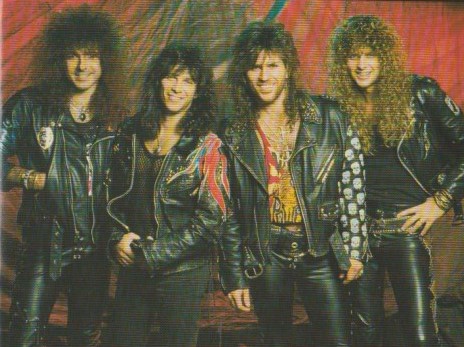
Despite their image, Winger possessed a rare rock pedigree.  Classically trained bassist and singer Charles “Kip” Winger was fresh from Alice Cooper’s band, as was keyboardist Paul Taylor.  Kip also performed on Twisted Sister’s Love is for Suckers LP in 1987, with future bandmate Reb Beach.  Most impressively, drummer Rod Morgenstein was an alumnus of Steve Morse’s Dixie Dregs.  Yet all these massive players went and made a commercial hard rock album with, let’s face it, pretty juvenile lyrics at times.

It’s hard not to be critical of Winger for this.  Knowing what these guys are capable of, the debut album Winger seems like pandering.  They did sneak in a few progressive hints, such as a string quartet on “Hungry”, but the impression was that they were just another hard rock band with big hair and candycane hooks.  They were underachieving, from a certain point of view.

Winger was in the batch of the first CDs I ever got, for Christmas of 1989.  This was based almost entirely on Rob Petersen’s raving.  Another reason I chose it was the “CD bonus track”!  One of the incentives for buying a CD player was to finally get songs that were only on the CD release.  I had mixed impressions.  The first “side” was decent but the second was a little filler-heavy.

I’m sad to admit this, but Winger’s version of “Purple Haze” was the first time I ever heard the song.  Ozzy’s version was the second.  Go ahead, judge me.

Winger could have taken it further on their second album.  In a way, they did:  progressive songs and complex rhythms stood alongside the pop rock tracks.  While they advanced in that regard, they took a step backwards in another.  Some songs were even dumber:  “Can’t Get Enough” for example, was a transparent re-write of “Seventeen”, and the ballads were dreck.  Worst of all was Kip’s very unnecessary rapping on “Baptized by Fire”.

Two songs, “Rainbow in the Rose” and “In the Heart of the Young” (the title track) were so far above and beyond the pack, they could have come from a different album.  These two epics drip of the kind of progressive rock you know these guys can play.  Yet they kept it radio accessible, somehow, even while Rod Morgenstein is playing rhythms my brain can barely compute.

While Winger II charted higher and sold as well as the first, 12 months later it was hopelessly outdated by the birth of grunge.  Winger then fell victim to two of the 90s greatest antiheroes, Beavis and Butt-Head.  A black Winger shirt was worn by nerd character Stewart, and the band were repeatedly mocked.  This eventually killed Winger off as a business.  Gigs dried up.  Fortunately for fans, Kip Winger and Mike Judge of Beavis and Butt-Head recently had a make-up session. Even Kip admitted, “Winger was a band that was popular for some of the wrong reasons, man.”

The third album, Pull, is a reference to skeet shooting.  Kip knew that for all the chances they had, they may as well throw the album into the air and take shots at it.  “Pull!”

It was a lose-lose situation and both Winger and the public lost by Pull‘s commercial failure.  Keyboardist Paul Taylor had left, and so Pull features less of the instrument and a far heavier sound.  Taylor was eventually replaced by John Roth, a guitarist.  The message was pretty clear.  Pull featured some of Winger’s best tracks:  “Down Incognito”, “Blind Revolution Mad”, “Junkyard Dog”, and “Who’s the One”.  Had Pull come out in 1990 instead of 1993, things would have gone very differently.  Instead, Winger broke up.

The happy news is that like many bands, Winger reunited (the John Roth lineup occasionally with Paul Taylor as a fifth member), and started putting out albums again.  Good ones, too.  Their last Better Days Comin’ is pretty great.

As further proof of Winger’s greatness, Reb Beach went from there to Alice Cooper, completing the circle.  Winger, after all, was originally founded by two ex-Cooper players.  He was then picked to replace George Lynch in Dokken.  And Kip?  His 30 minute symphony “Ghosts” should speak for itself.

Those who are curious but sceptical should check out Winger’s Pull, and the albums that followed.  Go ahead and wing it!