cassette

#1218: When Did You Get Your First CD Player?

RECORD STORE TALES #1218:  When Did You Get Your First CD Player?


When I seriously got into music in 1984, cassette was the dominant format in my demographic.  I was 12.  Older kids and adults still bought a lot of records, but when we gathered in the streets, our music was played on portable tape decks:  “ghetto blasters”.  Whether tethered by electrical cords or running free with weak C and D cell batteries, cassette dominated.  Then, one morning, CBC radio was doing a special on a new format:  the compact disc.  Host Clyde Gilmour had the longest running show on Canadian radio, and was known for playing classical and jazz music.  Gilmour’s Albums was the first time I ever heard a CD, but over the radio, it could not be properly appreciated.

In 1987 my cousin and his family came to visit.  They brought with them a CD player and the soundtrack to Good Morning Vietnam.  My biggest takeaway after seeing the format in person myself was there were no side breaks on CDs.  It was a one-sided format.  I had never considered such a thing before.  I didn’t have the imagination to picture a live album without side breaks.  Such a thing had never existed.

It didn’t take me long to discover the temptation of compact disc:  the “bonus track”.  Van Halen’s OU812 was the first CD I spotted with a bonus track called “A Apolitical Blues”.  The Columbia House music catalogue, which we signed up for in 1989, always listed when a format had a bonus track.  Very few records did, but many cassettes and many more CDs did as well.  It was a way of taking advantage of a longer running time without breaks, and to tempt people to make the switch.

For that reason, I officially adapted CD as my newest musical format on Christmas Day, 1989.  My first CDs were Alice Cooper’s Trash, Motley Crue’s Dr. Feelgood, Whitesnake’s Snakebite, and Winger’s debut – with bonus track.  Bob and John Schipper came over to visit during the holidays.  I demonstrated the sound of a CD by putting in Dr. Feelgood, cuing up Time For Change, and letting them listen to the silence at the of the fade.  I cranked it to max.  “No hiss!” I explained.  They didn’t appreciate it the way I did.  Cuing up songs by demand was also a treat.  I remember using it to isolate the track “Ride Cowboy Ride” by Bon Jovi and recording it on its own for cassette.

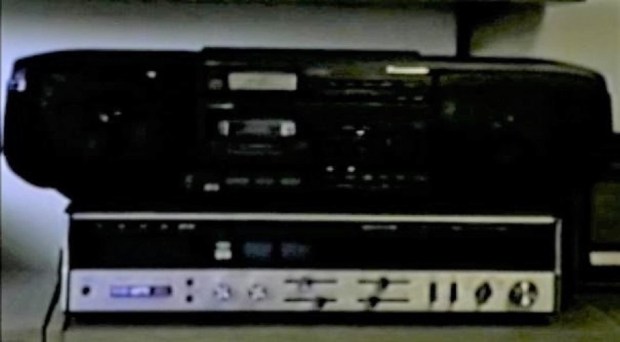
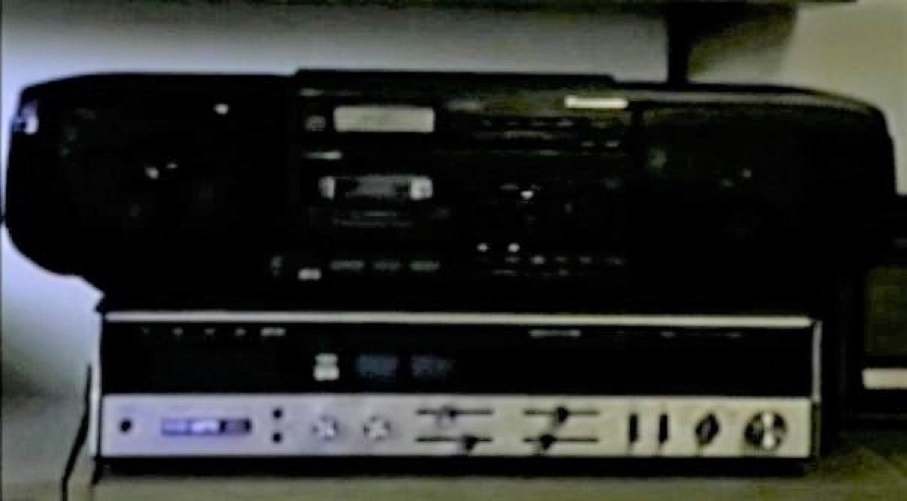
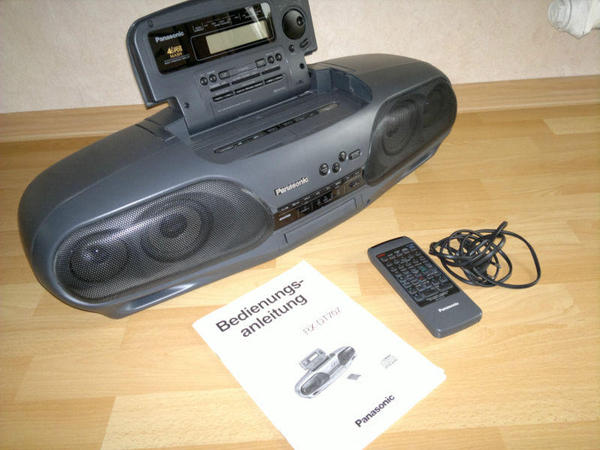
My first was the Panasonic seen below, atop my parents’ old 8-track deck.  The first of countless many.
I asked some friends for their stories about their switch to CD.  They answered the call, some with pictures.


bicyclelegs:

1990 I think, but I don’t remember the make or model.  By 1990 it was getting harder to find new releases on vinyl in Australia, so my hand was forced to a certain extent. But it was also a financial thing: before 1990 I simply couldn’t afford a CD player.

Dan Chartrand:

Same here for the bonus tracks! Mind you, some cassettes had bonus tracks…and even vinyl had bonus tracks…wish the internet was around to investigate more… My first CD was Dio’s Lock Up the Wolves due to the bonus track that wasn’t on the cassette or vinyl.

Melissa Nee:

I am thinking 87. It was super early.  I started getting CDs from Columbia House before buying in stores. They were pricey.  I think Bon Jovi was $16.

Chris Preston:

1988 for me.  quite honestly it was mostly because a bunch of my friends had CDs and they raved about how great they were. Peer pressure! I had also stopped buying vinyl by that point and I was growing tired of the poor quality of cassettes. It was time to embrace the future with CDs!
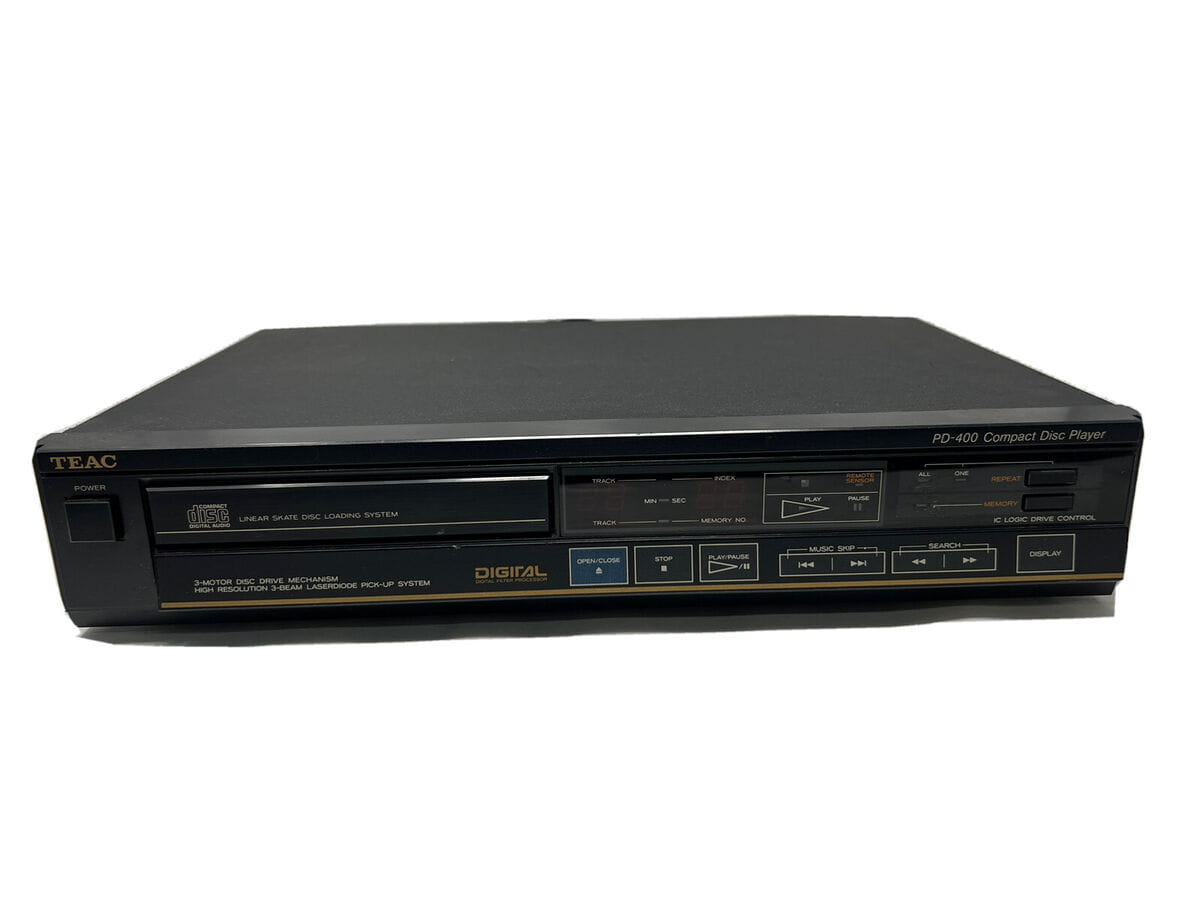
Erik Woods:

It was this. Got it some time in the early 90s.
Henry Wright:

I got my first CD player in June 1992. It was a college graduation present from my parents, I think. I had only cassette for many years but already had about 5-10 CDs before I got the player as I had started buying them around 1990-91, I think. Some of them were things I couldn’t find on cassette (typically from the UK), others were just favourite releases I wanted to upgrade. Before I got the player I would make a tape copy for myself on a friend’s. I don’t know if I thought cassettes were an endangered species but I always disliked how often they wore out or were chewed up by the machines and so I was pretty excited about the new format. I never heard of a bonus track until later although I do recall that new CDs often had the same “extra” tracks that cassettes did unlike the LP or 8-track versions.

Matt Phillips:

Summer of 1993; got my first guitar the same month. And it was the Panasonic with the flip top and the jog dial and the ability to skip to the next song on cassettes. This model:
Larry Russwurm:

1988. Most people in residence in Toronto had them already. Someone in residence had one as early as 1986.

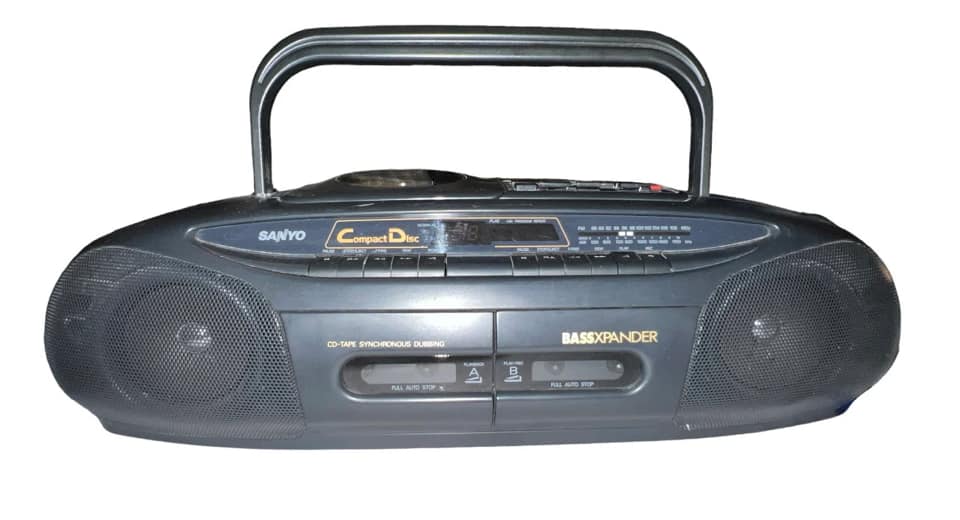
Frank Schenker:

The first CD I ever purchased was Surveillance by Triumph. I also bought the cassette tape at the same time in November 1987 and I didn’t even own a CD player. I the spring of 1988, I purchased a Sanyo boom box with a CD player and cassette tape deck.

Rex Smetzer:

1988.  I just have always loved music & was in college at the time, & got it for Christmas.

Todd Evans:

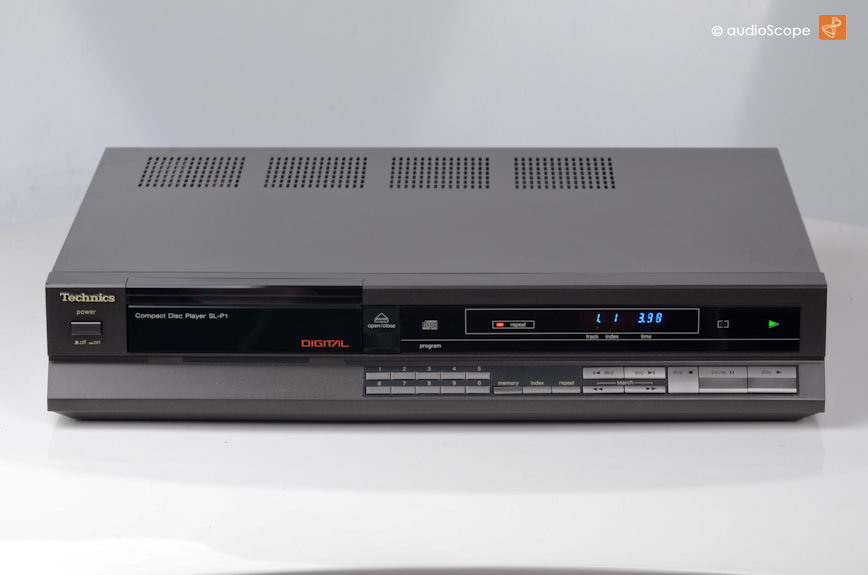
December, 1984. Technics SL-P1.  In early 1984 a local department store had a Magnavox FD1000 on display that you could demo. They had one CD – Rush Moving Pictures. I must have played with that thing for an hour! My parents bought me one for Christmas that year. I remember that a friend bought me two of my first CDs as a Christmas gift – Asia’s first album and Thompson Twins Side Kicks. My parents bought me one to go with the player, but I can’t remember what it was.

It is warming to see some folks embrace the bonus track as I have.  The CD certainly changed our lives when we made the change.  When and why did you make the switch to CD?  Leave your story in the comments below.

#1169: Discontinuing the Tapes

RECORD STORE TALES #1169: Discontinuing the Tapes

In 1995, the writing was on the wall.  After struggling for years as a new CD/tape store, the boss discovered a goldmine:  selling used CDs.  The story has been told a dozen times or more, but the short version is this.  In early 1994, the boss brought a small tray of used CDs into the store, priced them, and they sold out immediately.  I think the discs came from his own collection with a few from his brother.  He realized that he could buy used CDs from the public for a few bucks, and then flip them for double or triple the price.  The hunger days ended soon after.

Profit margins on new CDs and tapes was slim.  After you factor in shipping, overhead, paying the part-timers, and an expensive magnetic security system, the boss was left with little for himself, if nothing at all.  He could not survive like that forever.  With used CDs, he could control his own costs.  This was something rare in retail.  Costs are usually determined by your supplier.  You could negotiate for better rates, but it was nothing compared to used CDs.  We could pay five or six bucks for a CD, and sell it for ten or twelve bucks.

You know what happened next.  Expansion!  Waterloo opened, followed by a second store in Kitchener.  These stores had 90% used stock, with a small chart for new releases.  They didn’t carry cassette tapes, at all.  While this surprised me, it was a smart move.  We were ahead of the curve by not carrying cassettes in those stores.   We didn’t even carry used tapes.  For one, it was harder to check them for quality compared to CDs.  For second, it simplified things greatly by only focusing on discs.  One product, one display system, one storage system.  You could take the disc out of the case, hide it behind the counter, and put the empty case on the shelf.  The security system was replaced in this simple way.

Eventually the original Stanley Park Mall store had to close.  Rent in malls is higher than that in plazas.  It was the only store that still carried a full selection of new CDs and tapes.  It closed at the end of 1995, right after Christmas.  And we weren’t allowed to tell people we were closing.  Technically, it was a move.  A new location had been procured in Cambridge.  It too was to follow the 90% used model.  Although we called it a move for the purpose of good optics, the reality was that one store closed and another very different store opened in another city.  The manager was the same, and they took the unsold stock and sold it as used, but it was a new store.

Closing Stanley Park put us in an awkward position.  In 1995, we lived in what was essentially a two format world:  CDs first and foremost, with cassettes still strong, but dying off bit by bit every year.  More and more releases were coming out on CD only.  Vinyl?  In 1994, only Pearl Jam had a mainstream vinyl release.  We carried Vitalogy on vinyl.  It was beautiful.  The boss opened a copy to look at it.  He ended up selling that one to his brother.  But what about that awkward position?  Here we were, going into the Christmas season and selling gift certificates to a small but significant number of people who still only had cassettes players.  We were selling gift certificates to people who were not going to be able to redeem them for cassettes except for a small window:  the six days following Christmas.  Many of those people had been customers for five years, since we opened.

“If someone complains about it, tell them to talk to me, I’ll take care of it.”  The boss was not the kind of person who relished giving people their money back, but I am sure he handled those cases as best he could.  We did special order cassettes for customers for a short period of time in some of these cases; they were isolated cases.  We had some cassettes returned in the new year as well, which had to be dealt with.

I do remember some angry customers.  “Where am I gonna buy my tapes now?” asked one guy who was unhappy, to say the least, that we were closing up, moving to a new location, and ceasing cassettes completely.  I suggested the HMV store at the other mall, but even they were noticeably cutting back.

For me, it was interesting to have lived through these changes in formats.  As a fan, I watched vinyl decline in importance to the point where nobody in highschool bought records anymore.  That was 1986.  Then I lived through the advent of CD, and its eventual replacement of the cassette.  I was working in the front lines at the Beat Goes On when Napster came along, and I saw shelf space once reserved for CDs now showcasing bobbleheads.

I wouldn’t trade it for the world.  All apologies to the inconvenienced!


REVIEW: The Best of ZZ Top (1977 cassette)

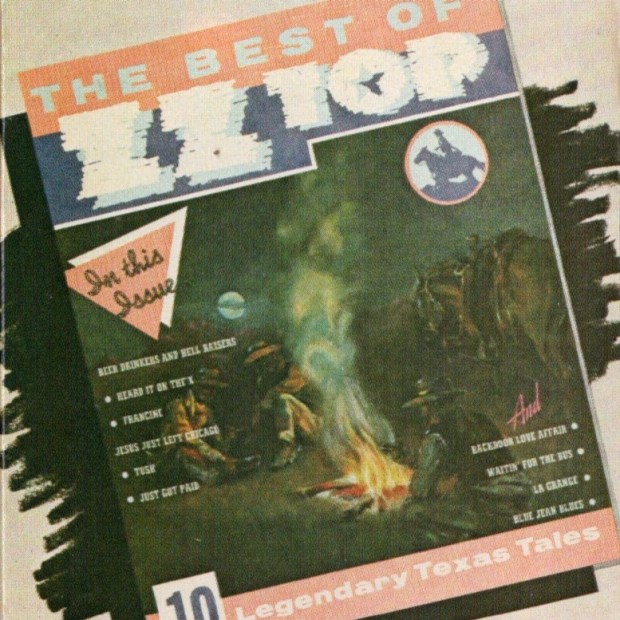
ZZ TOP – The Best of ZZ Top (1977 WEA cassette)

While ZZ Top were on a break between Tejas and Degüello, it made sense to issue the band’s first Best Of.  This album was released in 1977 and though it did not chart high, it did eventually go double platinum, selling over 2,000,000 copies in the United States alone.

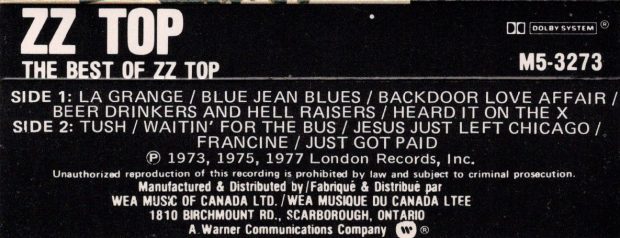
The cassette and vinyl releases had the sides flipped.  This cassette copy in hand begins with “La Grange”, which is still a pretty solid opening even if the vinyl says otherwise!  “La Grange” is an ode to a house of ill repute somewhere in Texas, and it became the prototype blues/rock shuffle for a generation.  This song still burns up the radio today.

One of ZZ Top’s greatest blues had to be “Blue Jean Blues” from Fandango!  So slow, so fully soaked in whiskey and gasoline that you can smell it from here.  Billy Gibbons is fully in the driver’s seat here, but it is Frank Beard and Dusty Hill’s unobtrusive rhythm section that allows him to emote so well.

From the first album comes the dirty upbeat blues of “Backdoor Love Affair”.  It’s a combination of elements:  Billy’s distorted take on the blues guitar, mixed with Dusty’s melodic bass and Beard’s perfect punctuation.  By the end of the song, it’s a jam around a tasty riff.

The familiar “Beer Drinkers and Hell Raisers” from Tres Hombres is an incendiary duet between between Billy and Dusty.  Pedal to the metal, ZZ are off on one of the best rockers from the entire catalogue.  This is the kind of song that endeared them to the headbangers.  Similarly, “Heard it on the X” hones in on the speedy aspect of ZZ Top’s abilities.  This is another duet with Dusty and Billy, and an ode to the Mexican radio stations that informed much of ZZ Top’s upbringing.

Flipping the tape, we are now hearing what is side one of vinyl.  “Tush” ain’t a bad way to start.  It’s the stuff of legend today.  It boasts one of Billy’s best guitar riffs, yet it’s still little more than a basic blues.  It’s just a winning combination:  the blues progressions played by a rocking band.  Billy’s leads are as much of legend as the song itself, stinging little zips of flavour in a bluesy soup of chords and drums.

“Waitin’ For the Bus” is a steady blues.  The speed has been shed for this heavy sludgy one, with Billy laying down not just a guitar solo but a harmonica solo too, one after the other like one greasy blues rock statement.  Then, just like on the Tres Hombres album, “Jesus Just Left Chicago” follows immediately after.  Still blues, but of a different flavour.  ZZ Top were always talented at showing us different sides of the genre, while mixing it with the sensibilities of rock guitar distortion.

“Francine” is a belter, a perfect pop rock tune, with more rock than pop.  Billy’s little riff is tasty as candy, and the song has the necessary melodic mettle.  Even so, it is overshadowed by the slide-drenched closer “Just Got Paid”.  One of ZZ’s heaviest tracks, it’s made completely digestible by Billy’s incredible guitar work.

If you just got paid today, pick up some ZZ Top.

Notably, this cassette pre-dates any of the ZZ Top remixing shenanigans that happened in the 80s, so purists will get only the original classic tracks.

4.5/5 stars

Tim’s Vinyl Confessions: An Album in Review: Helix – Wild in the Streets

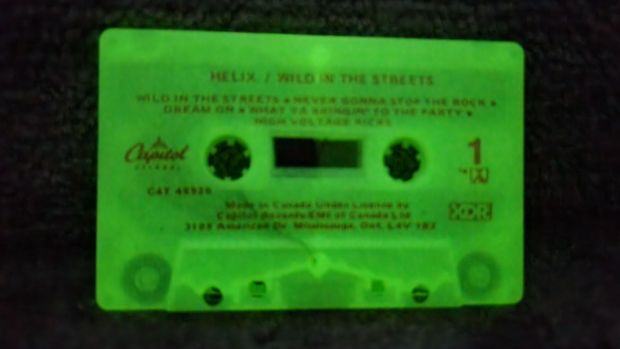
A few weeks ago, Tim & I tackled a classic Helix album on Tim’s Vinyl Confessions. Check out this 4:07 mini album review, in which we discuss the album and the rare Canadian glow in the dark cassette.

The album should have been bigger than it was, so hopefully we spread some appreciation in the video below.

#1130: If I Had A Million Dollars? A Top Five List

RECORD STORE TALES #1130: If I Had A Million Dollars? A Top Five List


If I had a million dollarsWell, I’d buy you a fur coatBut not a real fur coat, that’s cruelAnd if I had a million dollarsIf I had a million dollarsWell, I’d buy you an exotic petYep, like a llama or an emu


Fur coats?  Exotic pets?  No thank you!  If I had a million dollars, I’ll tell ya exactly what I’d buy!


1. AV Designhaus Derenville VPM 2010-1

There goes half my money in one shot ($650,000)!  What do I get for my money? A belt-driven turntable on a Corian chassis, that rests on four feet that are supported and balanced through an air suspension system. Has an ethernet connection, and a HD-TV camera that monitors the diamond stylus.  Why?  To watch it on a high resolution monitor and make necessary adjustments. It would probably take two engineers to set up and test; I certainly couldn’t do it myself!  I doubt there is much you could do to improve the sound of a vinyl record that this turntable doesn’t already have packed in.

2. Vintage 1982 Nakamichi Dragon 3 Head Autoreverse Cassette Recorder

This one will cost me another $10,000 Canadian, but some consider it the Rolls Royce of tape decks. If you ever wanted to make a tape sound almost as good as a CD, this is the way to do it. It requires tuning, maintenance, and knowledge. But money is no object in this exercise, so why not? Dare I say why not? It’s a sleek, beautiful looking beast of 80s esthetics.  Just look at all those buttons and LEDs!  Might be more work than it’s worth, but the sound you can get from a high-quality blank tape and this machine are better than what my ears can discern anyway.

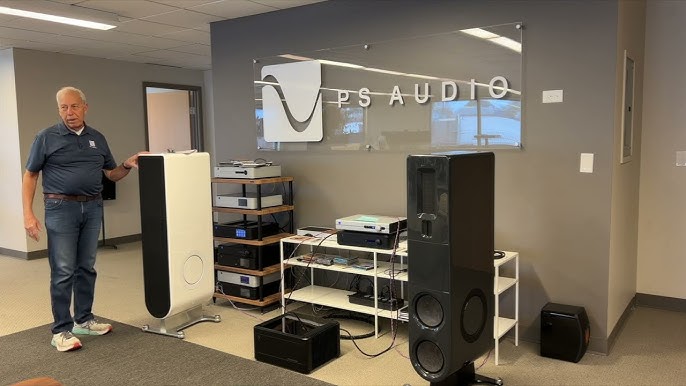
3. PS Audio FR30 speakers

$40,000 for the pair. Then I’d need the amplifiers and Paul McGowan himself to set it all up.  I’d also need to move into a bigger house.  They require a large, neutral listening space.  Which I’d like to have anyway!  By all accounts, these speakers (when set up correctly) provide a very real sounding experience, as if you’re in the room with the musicians.  The low end is supposedly amazing, aided by eight passive radiators.  Plus, don’t they just look gorgeous?

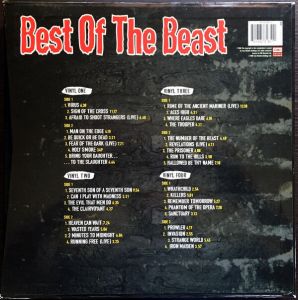
4. Iron Maiden – Best of the Beast vinyl (1996)

Needed for just a handful of tracks!  A live version of “Revelations”, and technically the Soundhouse Tapes EP.  In the condition I want it, it’ll cost me upwards of $1000.  Wish I bought it for $300 new when I had the chance back in 1997.  It’ll sound as good as CD, over my new AV Designhaus Derenville VPM turntable and PS Audio speakers!

5. Marantz SA-10

May as well grab a new CD transport while I’m at it!  This Super Audio player boasts a high-end DAC, and will play files from FLAC to MP3 via a USB stick.  It won’t connect easily with your iPhone, which means nothing to me anyway.  I’ve always wanted a Super Audio player, so why not go with the best?   This will set me back about a grand, and I’ll probably never use most of its features.  But that’s what dreaming is all about!


There you go.  500 words on what I could do with a spare million bucks just kicking around.  What would you buy?  Keep it fun – this is a fantasy exercise, so no need for serious answers.  Drop your comment below!


Our Journey Collections, on Six Formats (With Tim Durling) – Happy Birthday Jon Cain! – Grab A Stack of Rock Special Edition!

GRAB A STACK OF ROCK With Mike and Tim Durling

Special Edition Episode:  Our JOURNEY Collections


Happy birthday to Jonathan Cain of JOURNEY, as we celebrate his discography today with Tim Durling on this very special episode of Grab A Stack of Rock!  We look back at the entire discography of the legendary rock band, all the lineup changes, all the big songs, and a bunch of deep cuts as well.  On six different formats, I show you the entire catalogue, with help from Tim to fill three holes in the official collection.  (There’s still one or two essential things I need to get, but you’ll have to watch the video to find out.)

Tim Durling is what I would call a “Journey expert”.  He knows the facts and the sales numbers and the singles, and he was essential in this video coming to be.  Not just the live albums I’m still missing, but also the knowledge and personal history.  I was late getting into the band, in the late 1990s.  Tim had 10 years on me.  Thank you Tim for helping me make this video!

Together we presented CDs, cassettes, vinyl, 8-tracks, Blu-rays and DVDs of all the essential Journey.  We looked at imports from Japan, Europe, the US, and Mexico as well as different pressings with different bonus tracks.  A wide variety of Journey CD editions are here for you to examine.

Thank you Tim and thank you Journey for the music!


Discography included:

  • Journey (1975)
  • Look Into the Future (1976)
  • Next (1977)
  • Infinity (1978)
  • Evolution (1979)
  • In The Beginning (1979)
  • Departure (1980)
  • Dream, After Dream (1980)
  • Captured (1981)
  • Escape (1981)
  • Frontiers (1983 and 2023 40th Anniversary editions)
  • Raised on Radio (1986)
  • Greatest Hits (1988)
  • Time3 (1992 boxed set)
  • Trial By Fire (1996)
  • Greatest Hits Live (1998)
  • Arrival (2000-2001)
  • The Essential Journey (2001)
  • Red 13 (2002)
  • Generations (2005)
  • Live In Houston 1981: The Escape Tour (2005)
  • Turn the Page (Live Bootleg w/ Jeff Scott Soto (2006)
  • Revelation (2008)
  • Live in Manilla (2009)
  • Eclipse (2011)
  • Greatest Hits 2 (2011)
  • Escape & Frontiers Live In Japan (2019)
  • Freedom (2022)
  • Live In Concert Lollapalooza (2022)
  • Alive In America (2022 booteg)
  • Neal Schon’s Journey Through Time (2023)

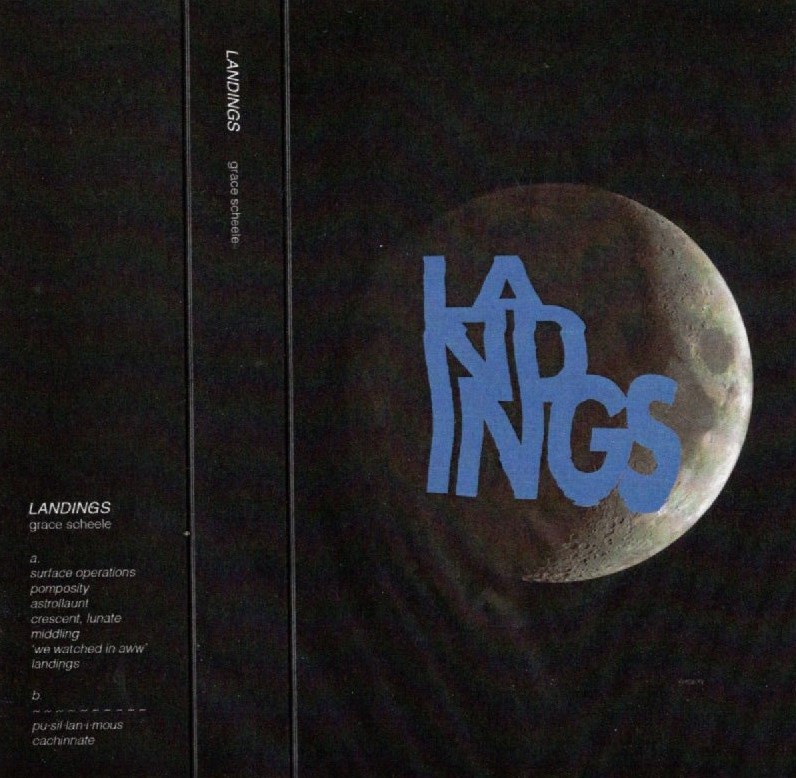
REVIEW: Grace Scheele – landings (2023 cassette, plus bonus tracks on Side B)

GRACE SCHEELE – landings (2023 EP – cassette side two – bonus tracks)

Last year we reviewed Grace Scheele’s concept tape about the moon landing called, bizarrely enough, landings!  Today we listen to the three bonus tracks that make up side two of the tape.  For your convenience, the original cassette review is included below.

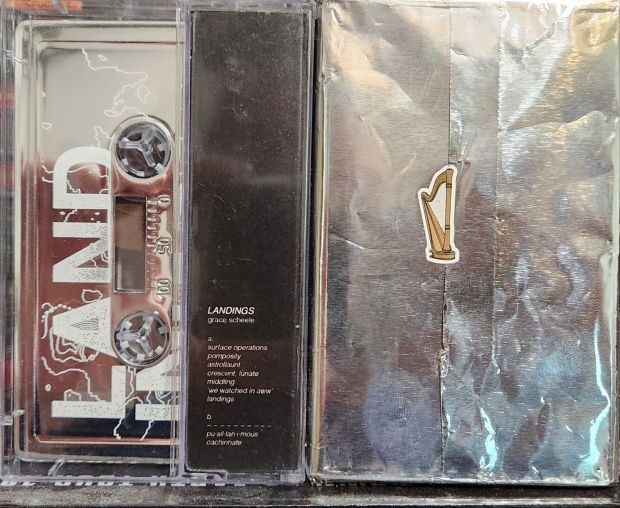
Grace loves the cassette format and understands the desire to own physical music.  Therefore, she was wise to include bonus music on side two.  If you want to hear this, you have to be one of the folks who own a cassette, of which I have two.  There are three bonus tracks on the B-side.  Check out these titles:

1.  “- – – – – – – – – -”  (10:16)

2.  “pu-sil-lan-i-mous” (7:46)

3.  “cachinnate”  (3:48)

The first bonus track (I’m gonna call it “lotsa dashes”) features flute-like keys to open it.  This relaxing piece is enjoyed best with eyes closed.  The time actually flies despite its length.  This is vastly different from the music on the A-side which largely featured soundscapes and space sounds.  This is just notes: pure music, and it sounds largely improvised.  It’s like a lovely backdrop to a quiet night, drifting along to a book of your choice.  (Something science-y would be good.)

Bonus track #2 “pu-sil-lan-i-mous” is in a completely different direction from the first.  This time, the harp takes its time entering the scene over some gentle keys.  But that harp ain’t gentle at all!  With an abrasive scream, the calm is violently pierced by an instrument you do not associate with violence.  It continues to tickle the ear in unexpected ways.  A bassline underlines the music while Grace makes her harp speak, and even sound like feedback.

Percussive sounds introduce the third track “cachinnate”, and strings pluck away satisfyingly while loops ebb and flow.  This is the most “traditional” sounding harp piece on the tape, but electronics take it to another unexpected level.

This music is for those who want to be challenged every once in a while.  This is for the curious, who want to hear the lengths to which you can take a musical instrument without breaking it.  Grace Scheele’s landings is a remarkable release, perfect for open ears or ears that wish to be opened!

The original review for Side A is below.


From Grace’s bandcamp page:

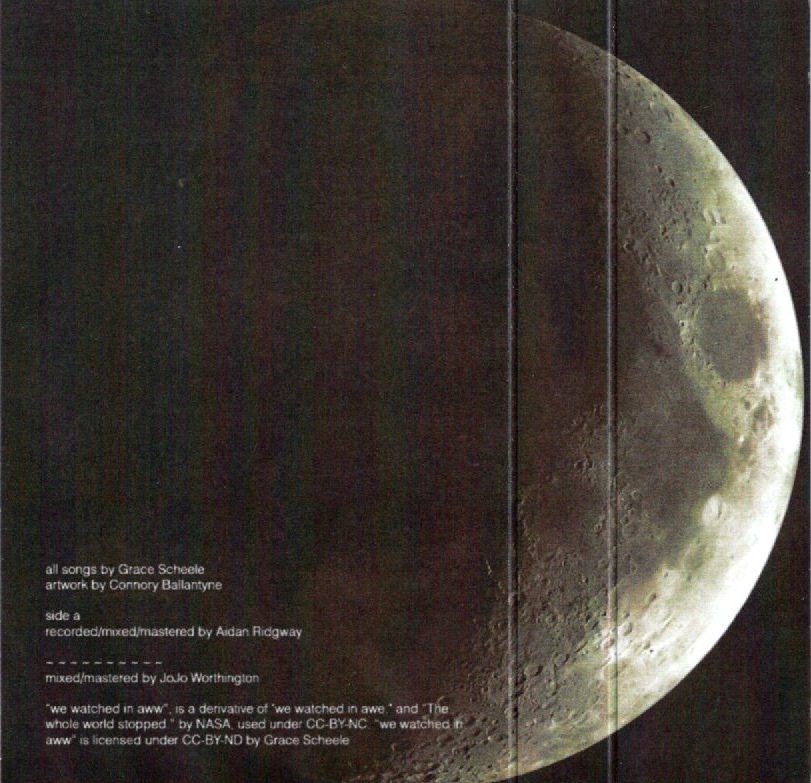
“landings” centres on the real and imagined experience of the Apollo 11 mission to the moon; wielding bowed harp, electronic fx, and sampling from speeches, newsreels, mission audio, and NASA’s own interviews with those present at the historic newscast.  Ranging from the ethereally ambient to grinding, jarring industrial noise, the seven tracks across this debut EP represents an imagined journey into the darkness of space.

I’d call it a concept EP, based on that alone.  It’s a real listening experience, with elements that remind me of Pink Floyd, Star Trek, and War of the Worlds.  Some of the speeches and dialogue will be familiar, others will be novel.  There are sounds that, in my limited experience, I didn’t know you could make with a harp.  At 22 minutes,  is easy to digest in a single sitting, and the download comes with a “gapless version” that enables just that.  The layers of harp, samples, and electronic sound build, painting a sonic picture.  You can feel the tension of the launch!  I bet this sounds great with headphones.

The track “pomposity” has been getting some exposure, so if you only check out one track, try “pomposity” for a taste of what this is like.


Each tape comes in chromed silver with white printing — absolutely stunning!  They also come hand-wrapped in aluminium foil, and packed with personalized goodies.  Mine came with stickers, hand-drawn art, and even a package of Pop Rocks candy.


4.5/5 stars


Tune in this Friday on Grab A Stack of Rock for a special cassette episode with one of Grace’s teachers, Dr. Kathryn Ladano!

REVIEW: Journey – In The Beginning (1979 CBS cassette)

JOURNEY – In The Beginning (1979 CBS cassette)

Journey began scoring hits when they acquired powerhouse vocalist Steve Perry on Infinity (1978) and Evolution (1979).  Why not issue a compilation sourced from the band’s first three Perry-less records, with new cover art that ties into their present?  Seems like a no-brainer.  And so we have Journey’s first compilation album (and a double length at that) called In The Beginning.  Thank you Tim Durling for gifting this copy for the collection and for review.

In The Beginning contains five of the seven tracks from Journey’s self-titled debut.  It begins with three.  As on the original LP, “Of A Lifetime” opens.  The long organ and guitar-drenched opening gives way to a slow and passionate Gregg Rolie lead vocal.  Were Iron Maiden influenced by this song when they wrote “Strange World” for their own debut?  Probably just coincidence, but it can be heard.  The main hook in “Of A Lifetime” was the unmistakable guitar hook.  At this early stage, Journey boasted two guitar players:  Neal Schon and the late George Tickner.  They have to share the spotlight with an absolutely raging Aynsley Dunbar on drums and Rolie tearing it up on the synth.  Undervalued bassist Ross Valory also must be mentioned, playing concrete but melodic foundations under the feature players.

George Tickner’s instrumental “Topaz” goes second, starting slow and then taking on a jamming, progressive jazz rock fusion vibe.  This complex track is not to be taken lightly.  Just absorb every different section as they hit you.  Once again, Dunbar is a monster.  Third is “Kohoutek”, the memorable Schon/Rolie instrumental that was also track three on the debut album.  On vinyl, in both cases, it closed Side One.  It’s another challenging track with a cool galloping section.  (There’s a reason I’ve heard Dunbar referred to as an octopus – he sounds like he’s playing with eight arms!)

Rolie’s “On A Saturday Night” from album #2, Look Into the Future is a completely different style from the first three progressive sprawls.  Under four minutes with a bopping piano, this is just great rock and roll!  Tickner was out and the band was reduced to a quartet with Schon as the sole six-stringer.  Shades here of where the band would head once they figured out their future direction.  Schon’s solo is an example of melodic composition.  The Beatles cover “It’s All Too Much” from Look Into the Future follows.  It fits this new concise straightforward Journey sound, and it is quite excellent.  Rolie was the perfect guy to sing a George Harrison song, and the backwards ending is suitably trippy.  The blues “In My Lonely Feeling/Conversations” takes us back to the debut album.  This Rolie/Valory composition scorches with passionate fretwork.  Not surprisingly, the bass is the foundation.  Also from the debut, “Mystery Mountain” closes side one.  A short, but jamming track with subtle use of the wah-wah pedal.

Opening (cassette) Side Two, “Spaceman” from Next (album #3) was a melodic single.  Journey were honing in on that simple pop rock ballad.  “Spaceman” is one of their first.  As it did on album, “People” follows “Spaceman”, featuring synth and acoustics.  Very psychedelic for Journey.  The back to album #2, “Anyway” rocks hard and slow, like a monumental Whitesnake track from the 70s.  (Dunbar later joined Coverdale & Co. for 1987.)  From the same record, “You’re On Your Own” switches from slow and bluesy verses to a pounding chorus, enabled by Aynsley.  There’s a Beatles influence here in “I Want You (She’s So Heavy”).

We’re into the last tracks here, as vinyl listeners would have been flipping to side four for “Look Into the Future”, a brilliant ballad and one of the band’s early best.  “Nickel and Dime”, a legendary jam from Next feels like a throwback to the first album and for good reason:  it’s a leftover Tickner co-write!  And finally, In The Beginning closes with the epic “I’m Gonna Leave You”, the same song that closed the debut Journey.  Coupling some killer organ with with a heavy riff, this bluesy rocker also boasts some of Rolie’s best vocalizin’.  Legendary!

For those who only know Journey as a lovin’, touchin’, squeezin’ band of crooners and balladeers, this compilation would come as a shock to the system.  But a shock can be a good thing.  In The Beginning is a great way to get many of the key tracks from the first phase of Journey in one purchase.  This stuff doesn’t usually make it onto regular Journey compilations.  It’s a good set to own.

4/5 stars

Grab A Stack of Lost Cassettes! With Jex and Mike on a Surprise Saturday Stream

GRAB A STACK OF ROCK With Mike and Jex

Episode 26:  Lost Cassettes Unboxed!

SURPRISE!  The first two-show weekend since 2021!  Thank Jex!

I thought I lost all my cassettes from my youth:  I assumed they were all thrown into a dumpster here in town, or up north in Thunder Bay.  There was one box (Journey – Niacin alphabetically) that I discovered in my parents’ basement.  Let’s have a look inside with co-host Jex Russell on a surprise Saturday morning show!

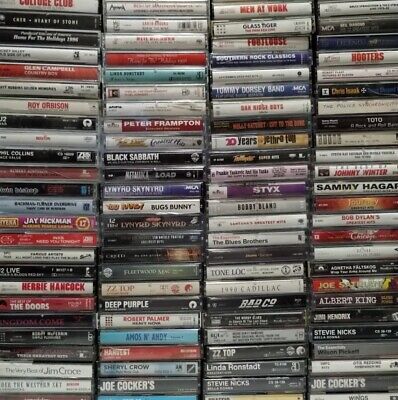
What we found inside was a variety of home made and store bought cassettes.  The astounding thing is just how much effort I went to on some of the artwork!  You will have to see for yourself, but a sampling of some cassette spines can be seen in the gallery below.

I used coloured paper, computer software, fine marker pens, coloured pencils, scissors, paste and photocopiers to create all the cassette art you see here.  I’m pretty proud of all this.

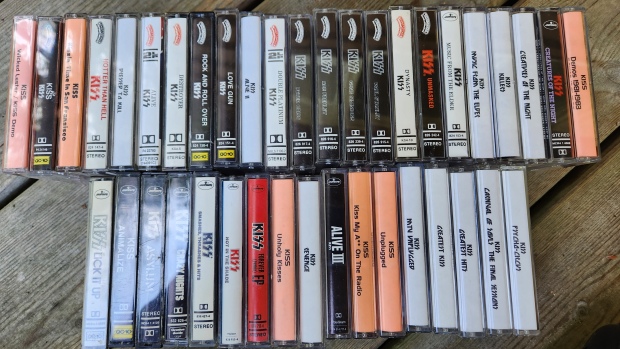
What’s most remarkable is that I still had most of my original Kiss and Judas Priest cassettes!  In some cases, I played these tapes at the cottage for the first time back then, and today unboxed them in the same location!

SHOW NOTES:  

  • If you need context for our opening “topless” sketch, read this first!  All is meant in jest and not to be taken as anything else.
  • If you don’t want to see us topless, you can buy a shirt at teepublic.com!

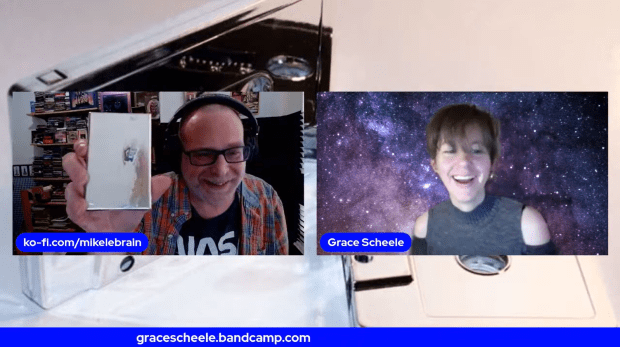
Landings Unboxed! Grace Scheele joins Grab A Stack of Rock to talk about her debut cassette EP!

A blast (-off) was had yesterday, taking a look at Landings, the debut EP by electroacoustic harpist Grace Scheele!  It’s a concept EP about the Apollo 11 mission.  If you like science fiction, space, the moon, chilling, or not chilling, this cassette is for you!  Chromed plastic, sleek packaging, bonus tracks, what more could you ask?  And a small quantity is still available if you’d like your own copy!  You can get it at Bandcamp, and I’m getting a second copy while I still can.  Why?

  • Supporting independent artists is important.
  • Each tape comes hand-sealed in silver foil, with a sticker on the seam.
  • Cassette-only bonus tracks on the B-side!
  • Sensational packaging; chromed cassette shell.
  • Music that is truly out of this world.

Grace joined me on an impromptu short episode of Grab A Stack of Rock on Sunday afternoon, where she explained the creative process, the art, and other details.  Why cassette?  You’ll love the answer.  Also, find out what to do with an ornamental electric harp thingy if you want to have some fun with hacking!  Seriously!

Great little mini-episode!  Thank you Grace for sharing your time with us!

Pick up Landings on Bandcamp!