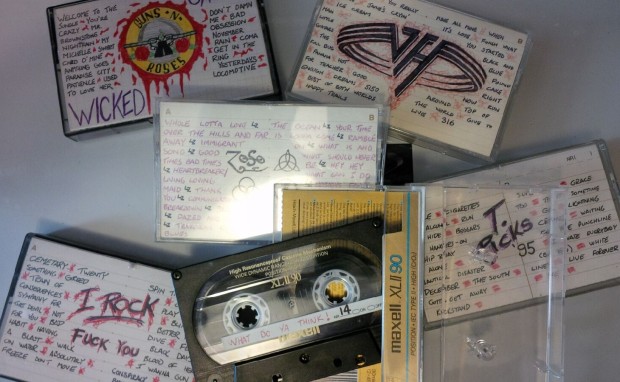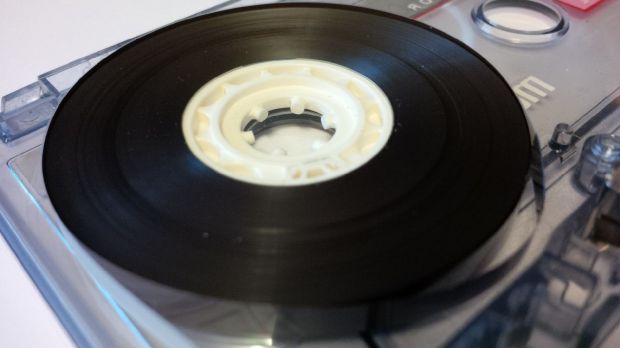
cassettes

REVIEW: Bon Jovi – “Wanted: Dead or Alive” (1987 cassette)

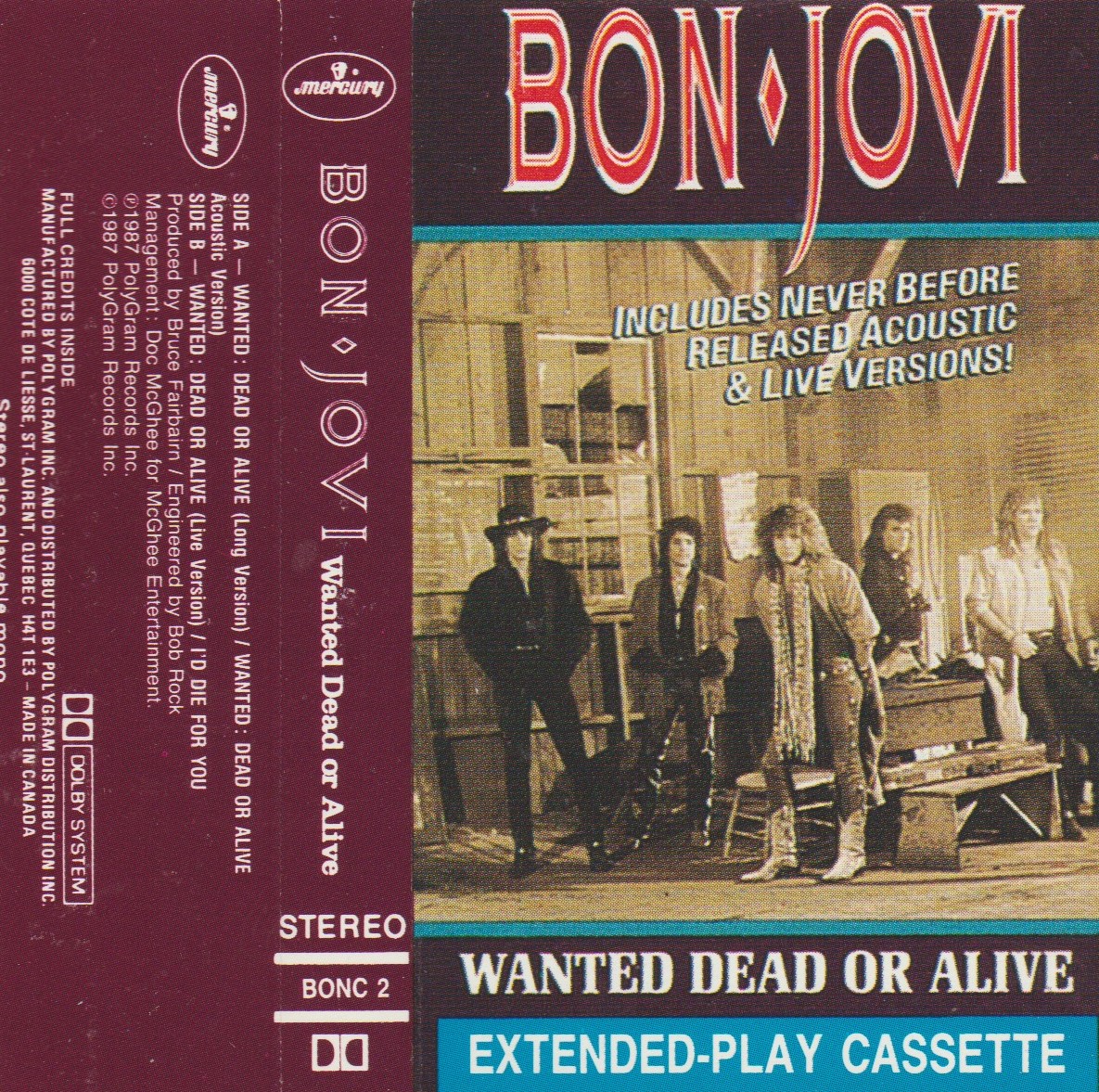
BON JOVI – “Wanted: Dead or Alive” (1987 Mercury extended play cassette)

Some rarities are easiest to find on tape.

That’s definitely still the case for “Wanted: Dead or Alive”, the 1987 acoustic version originally released only on an extended play cassette in most of the world.  This version, discussed below, is a Holy Grail collectable.  What about CD or vinyl?  There was a rare Japanese version with a slightly different tracklist, but for 30 years, all I had was this cherished cassette.

The tape has four tracks.  The original studio version (titled “Long Version” here to avoid confusion with the  4:10 single edit) leads side A.  “Wanted” is Bon Jovi’s first truly brilliant song.  An extended cowboy metaphor about the road, it’s timeless.  It always has been.  Richie Sambora’s 12 string guitar made all the young guitar kids want to play one.  His backing vocals were the real highlight.  Funny thing about Bon Jovi:  the backing vocalist was better than the lead singer!  Smoking guitar solo too, where every note counts.  You can hear Richie pushing those strings and wrenching that solo from the instrument.  It’s a perfect song, with every component serving a purpose and coming together.  The old west as seen from New Jersey.

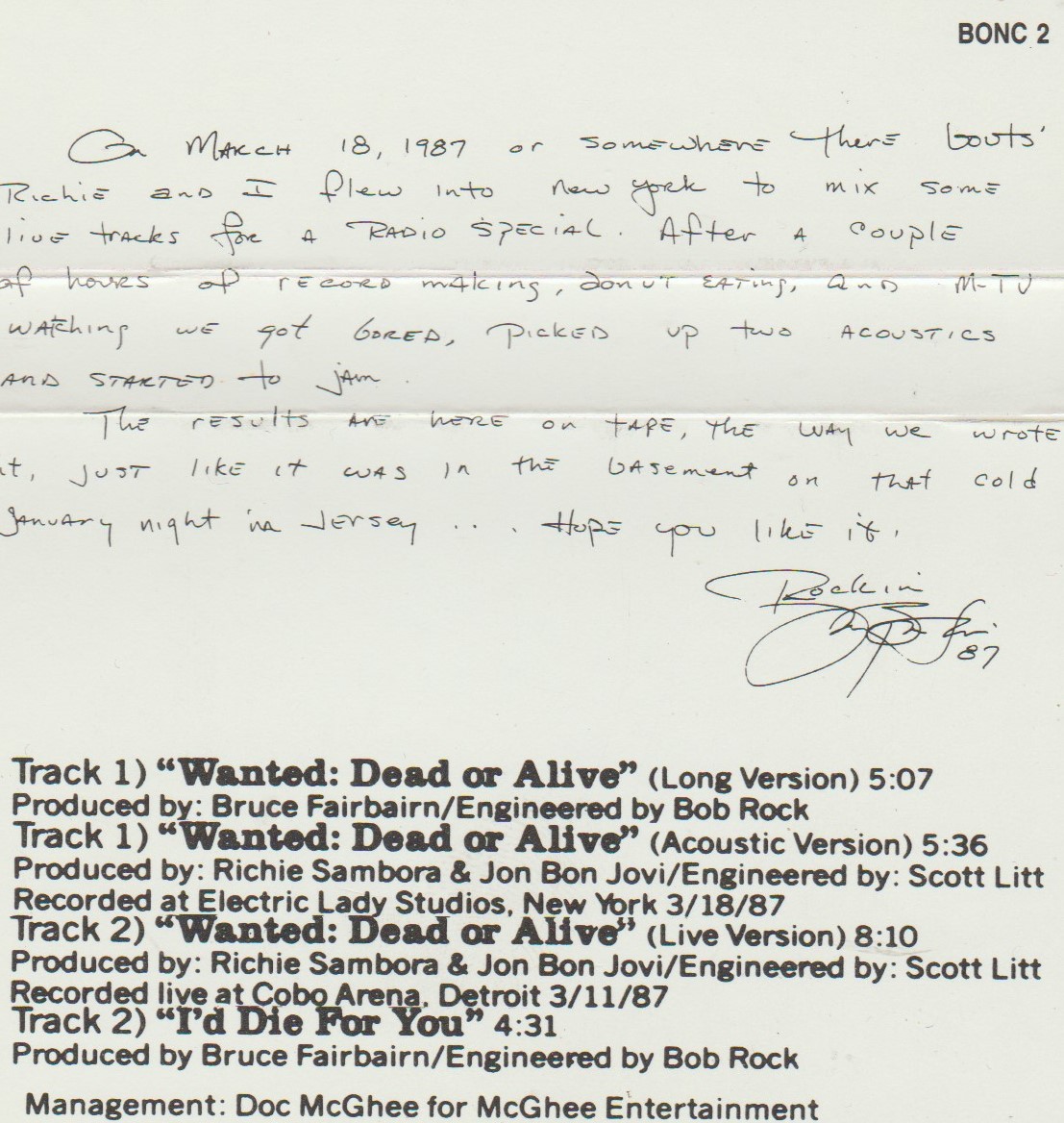
The acoustic version of “Wanted” is the real delight here.  It’s just Jon and Sambora together with two acoustic guitars.  Jon explains the details in the liner notes, but only the cassette has this information: one more good reason to hunt down the tape.  Read below:

“On March 18, 1987 or somewhere there bouts, Richie and I flew into New York to mix some live tracks for a radio special.  After a couple hours of record making, donut eating, and MTV watching we got bored, picked up two acoustics and started to jam.  The results are here on tape, the way we wrote it, just like it was in the basement on that cold January night in Jersey.”

If that doesn’t set the scene, nothing will.  Richie sings more of the lyrics, and belts out a killer acoustic solo too.  It was this recording that demonstrated to me the talents of Mr. Sambo.  What it lacks in glossy finish, it makes up for in spades with vibe.

On side B, the live version of “Wanted” is another rarity.  It’s an extended 8:13 full band version, with a long instrumental prologue.  According to the liner notes (again, only on the cassette), it was recorded at Cobo Hall in Detroit on March 11, exactly a week before the studio jam was recorded.  It’s likely this is one of the live songs that Jon and Richie were in New York mixing on the 18th.  (Production is credited to both.)  You may have lots of versions of “Wanted” already, but owning an extended take from early ’87 is better.

The tape ends on “I’d Die For You”, a song that was good enough to be a single in its own right.  However, it wasn’t.  It’s just an album track from Slippery When Wet, but it’s safe to say it’s a bit of an unsung classic.  The Japanese CD version, on the other hand, comes with the non-album rarity “Edge of a Broken Heart”, one of their best tunes ever.  After “Edge”, there is an exclusive unlisted interview with all five band members.  Inside, Japan also got a “Bon Jovi Dictionary (R to Z)”.  Presumably the other volumes of the dictionary can be found in other Japanese CDs.

Though this cassette has an overabundance of “Wanted”, you simply need to get that acoustic version.  You want the one that’s 5:31 long, recorded in March ’87.  In fact, you need that one.  And even though CD is the superior format, the tape has the liner notes and other details you won’t find on CD.

5/5 stars
Thanks to Mitch Lafon for helping me locate a CD copy of these tracks!

REVIEW: The Candidates – Who’s Your Daddy Now? (1998 EP)

THE CANDIDATES – Who’s Your Daddy Now?  (1998 EP)

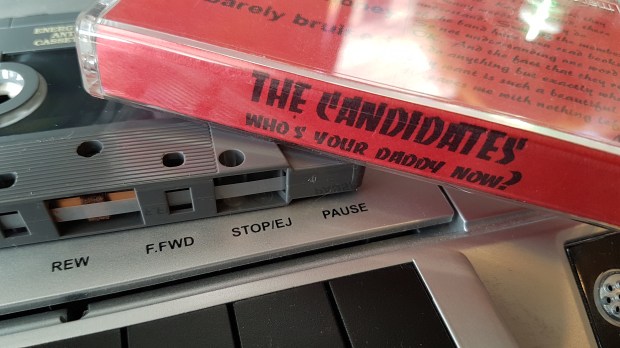
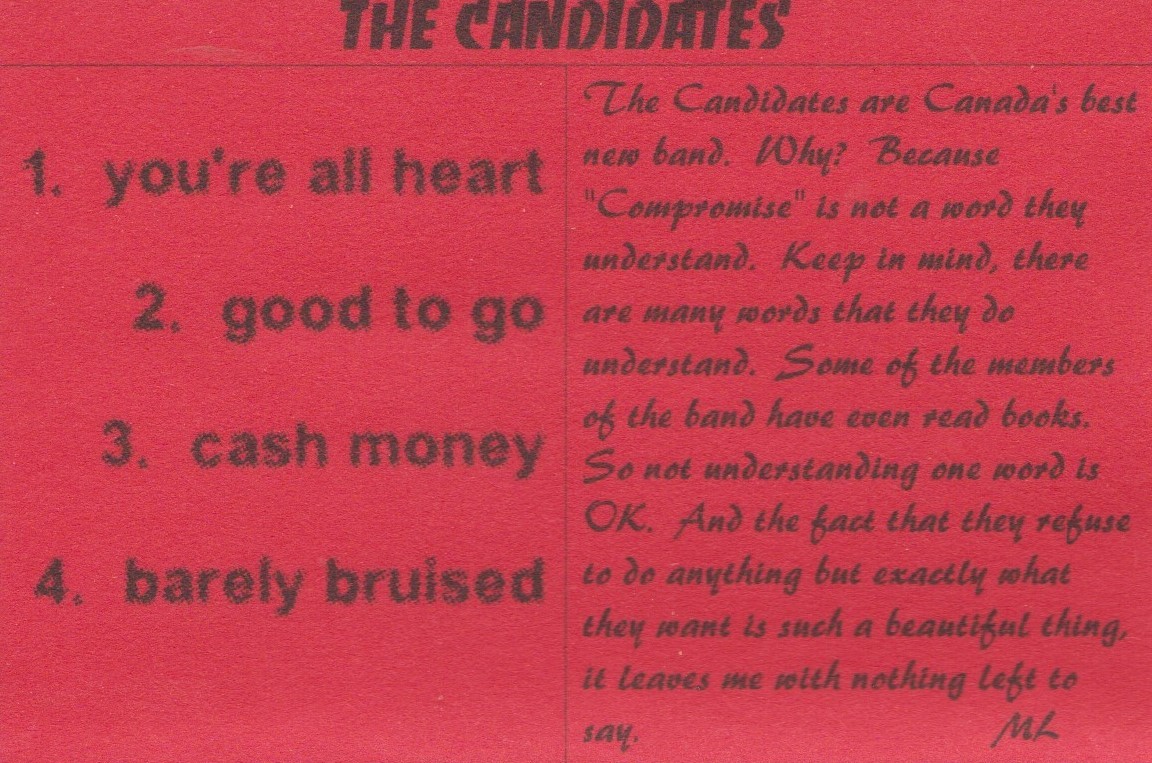
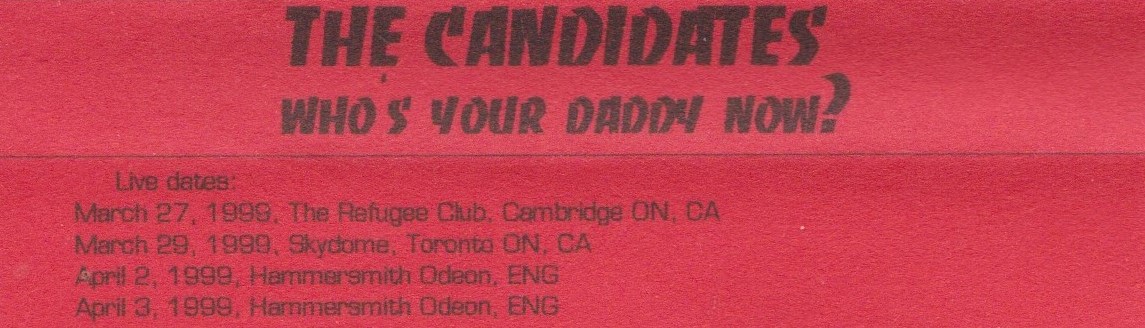
When the Candidates burst onto the local rock scene in the late 90s, I was on board from the get-go.  The Candidates were one of the “Record Store Bands” I wrote about in Record Store Tales Part 40.  They were the product of a former band, The Mighty Fisherman, who put out an actual CD album.  Members of that band formed the Candidates – great guys who made great music.  I don’t use the word “great” lightly.  All four songs on their debut EP (never released to the public) are as good as anything on a major label at the time.  When the guys recorded this EP, they loaned it out to various friends, and so I made my own copy.  (My own liner notes, too!)

I always felt the Candidates had a sound not unlike Sloan, The Who, and the Jam rolled into one.  (Maybe even a hint of Kiss; check out the slow-down ending to “Cash Money”.) The point is: they rocked.  It was rock and roll, nothing but.  No ballads, no fluff, no solos.  Great lyrics, solid riffs and rolling bass lines out the wazoo.  The whole thing is over n’ out in under 12 minutes.

First up, “You’re All Heart”, the song with the most pop in its melody, and a little twang in the six-strings.  The handclaps are a nice touch, as are the rolling thunder drum fills.  Tambourine is thrown in for good measure on “Good to Go”, a song defined by its catchy bassline.  I always liked the line, “There’s nothin’ on the walls, and woo!  There’s nothing on…”  The beat just kills.  “So leave your boyfriend at home, and come hit the town with me.”  It’s the kind of tune that, in our early 20s, was a bit of an anthem.  More handclaps!
Things start to slam heavier on “Cash Money”; a banger of a riff.  “Got my good-to-go boots and I’m gone.”  They don’t come any more rock and roll than “Cash Money”.  Although, as a younger man, I identified most with “Barely Bruised”.  It seems I was constantly having bad luck with the ladies.  I really liked the lines, “I’ve been beaten but I’m barely bruised, I’m lost but I cannot lose.”  I liked the idea of being knocked down and getting back up for more, never giving up.  The band dedicated this one to me in concert one time, and I’ll tell ya, it made my night.  The song itself is a battery of broadsides, so put your dukes up.

Since this EP was never sold, and you’ll never hear it, reviewing it is rather strange and maybe pointless. Eventually, somebody somewhere will google this band, and smile when they read these words.  I just had to tell you about these guys.

5/5 stars

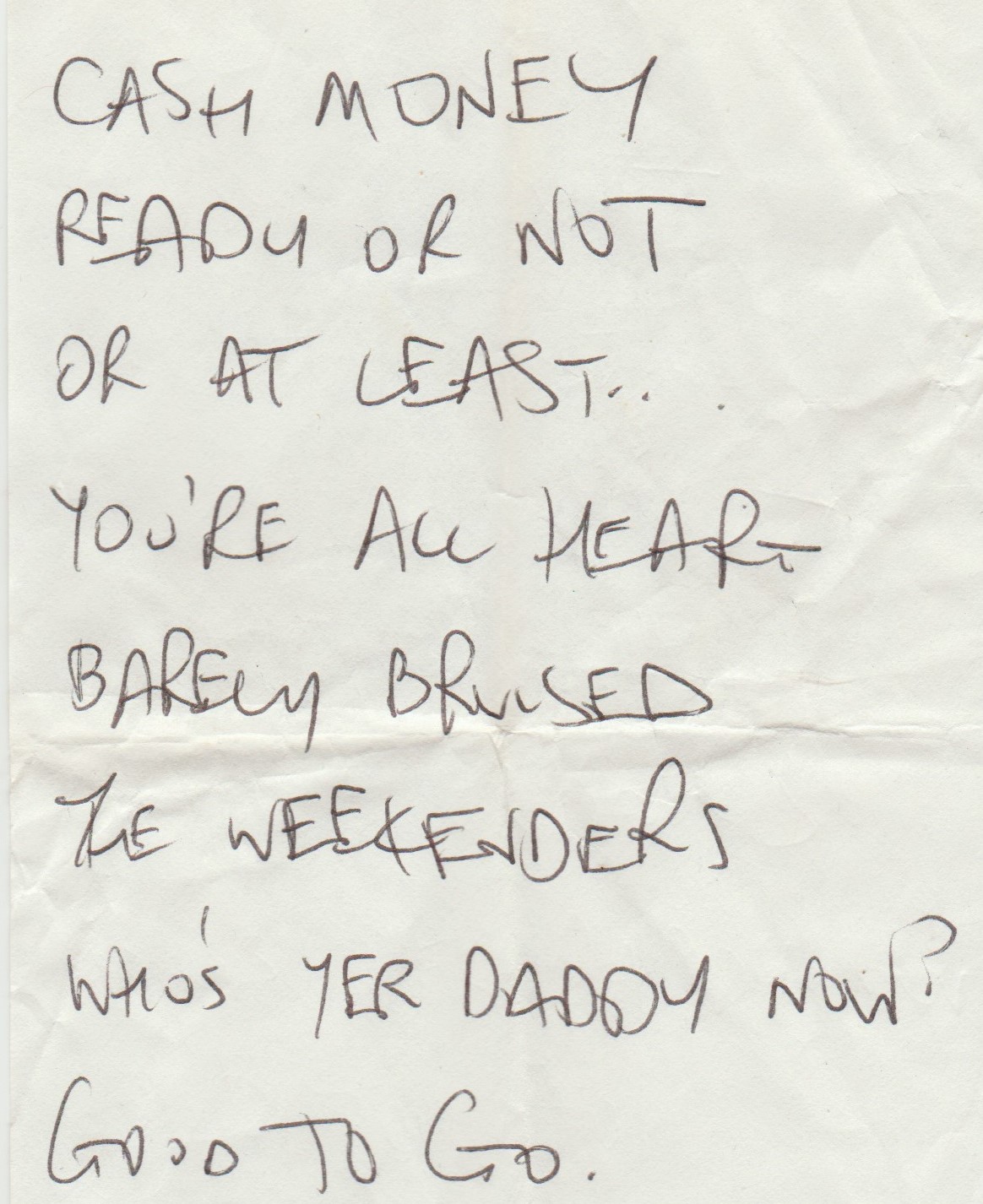
Have a look at my humorous liner notes.  I also stole a setlist from an unknown gig!

REVIEW: Judas Priest – Trouble Shooters (1989 CBS cassette)

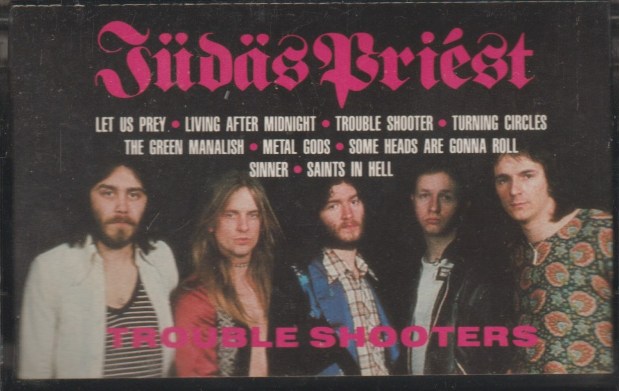
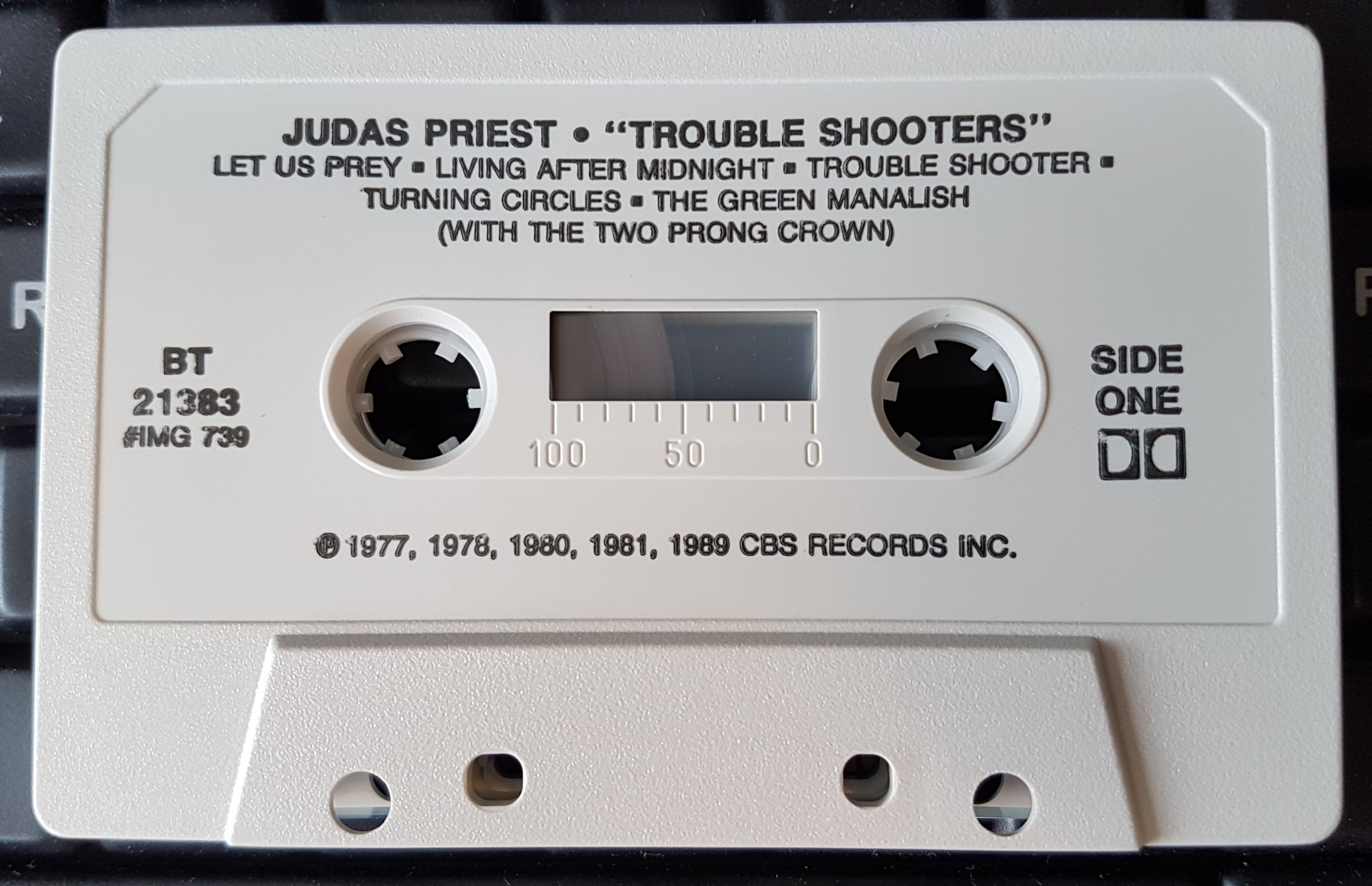
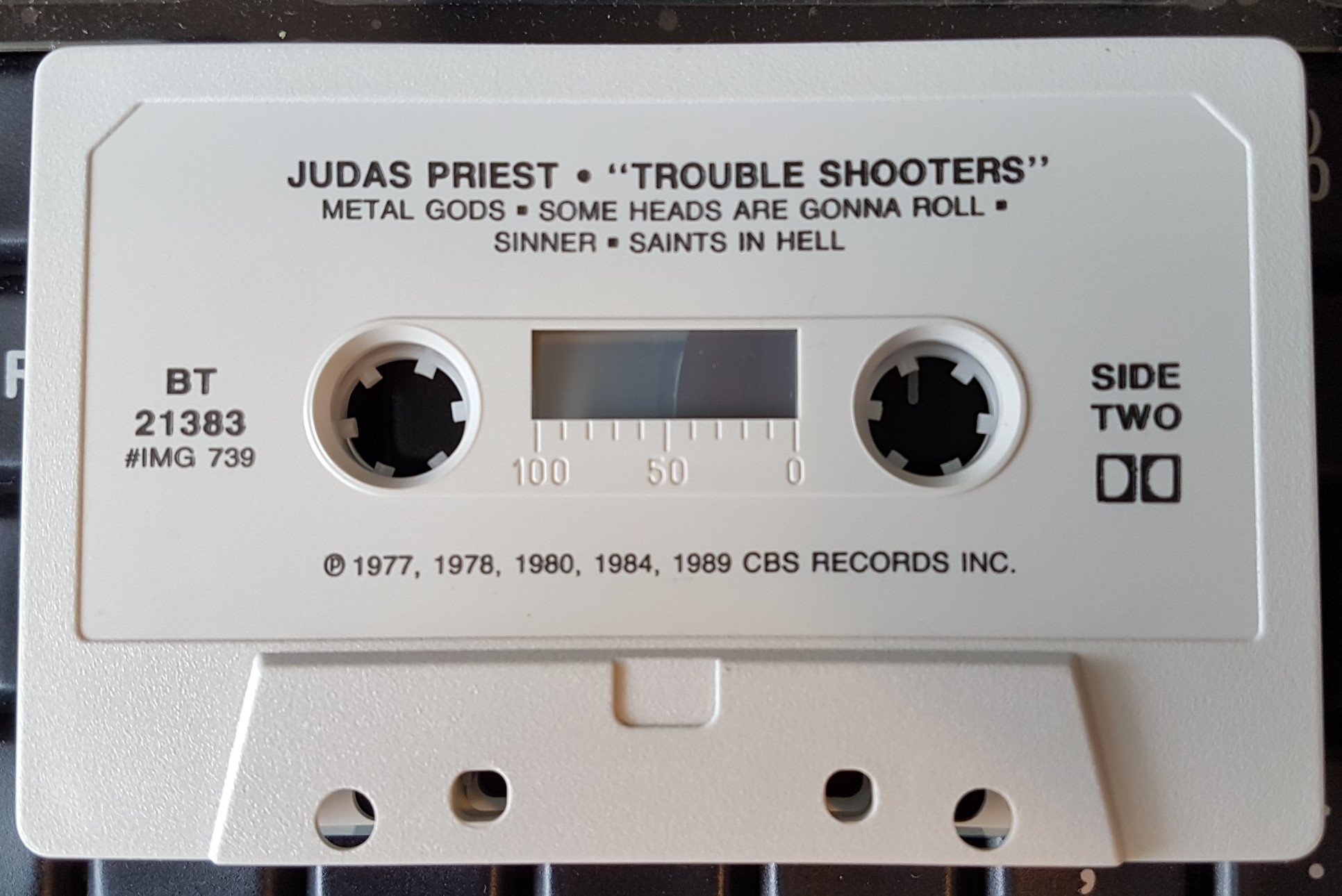
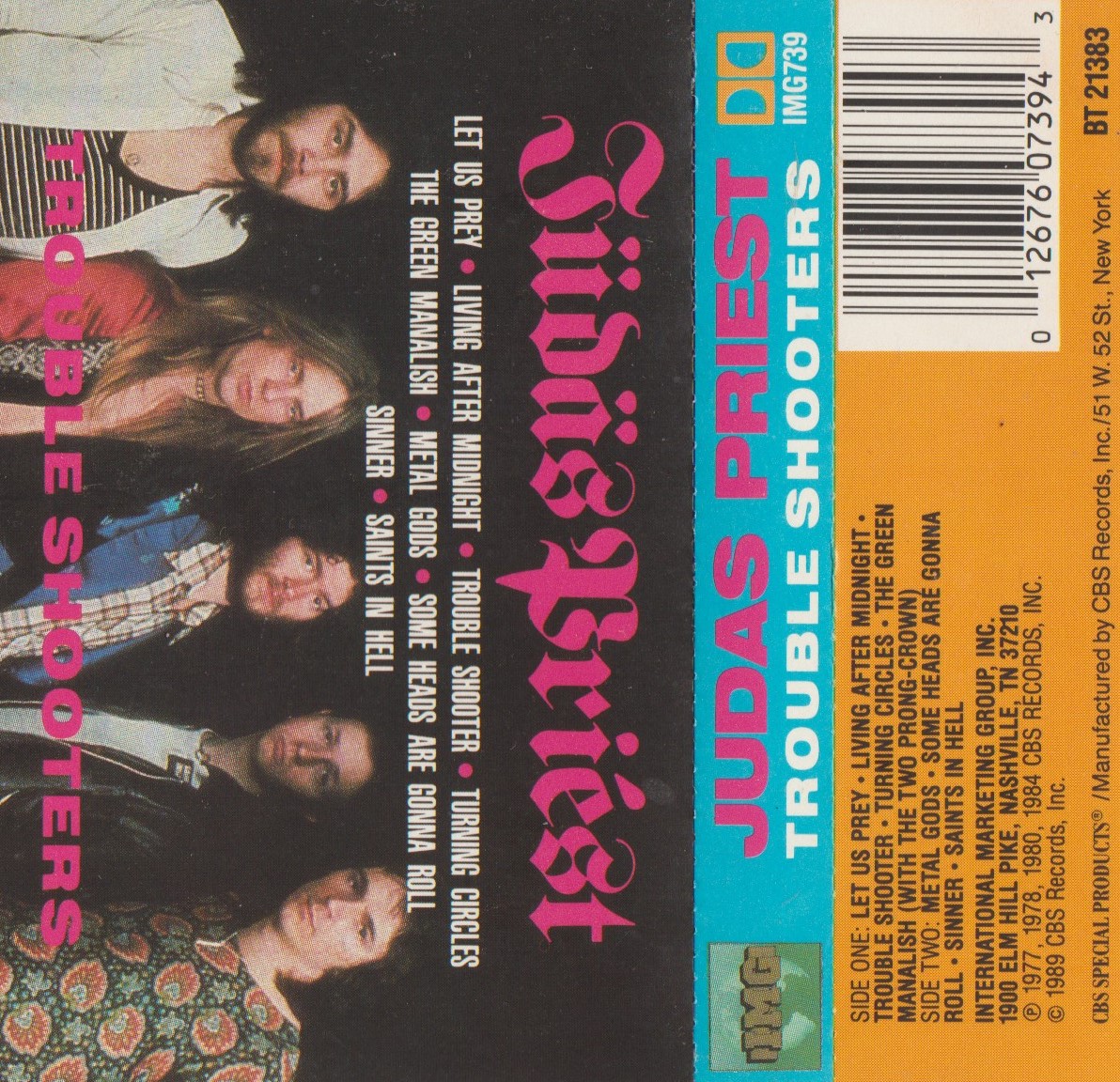
JUDAS PRIEST – Trouble Shooters (1989 CBS cassette)

Readers understand that I’m pretty anti-cassette.  For most of my life, I had shitty equipment and shitty tapes so my memories of fiddling with tapes are not happy ones.  You do tend to find oddities on cassette that don’t exist on any other media, which is one reason I’ll always need a tape deck.

Here’s one from my personal collection that I bought in early 1990.

Bob Schipper knew my favourite band in 1989/1990 was the mighty Priest.  He told me of a cassette I didn’t have called Trouble Shooters.  The one detail I can’t recall is what store he saw it in, but I gave him some money and he got me the tape.

I was disappointed that it was a cheap tape with nothing on the inlay, but I now had a Priest tape I didn’t own before.  I spied the release date:  1989.  It looked odd sitting in my tape cases filed as the “newest” Judas Priest release, with Les Binks on the front cover.  Trouble Shooters was in fact a bargain bin compilation made up of songs from Sin After Sin, Stained Class, Hell Bent for Leather, Point of Entry, British Steel, and Defenders of the Faith.  Another thing that looked strange:  the uber-metal Priest logo on the front.  Turning it up to 11, it’s rendered as the insane-o looking Jüdäs Priést.

The running order on these tapes is usually pretty random, but side one of Trouble Shooters goes down really well.  “Let Us Prey/Call For the Priest” is a pretty cool way to open a tape, with that low hum of instruments before the regal guitarmonies enter.  (Note that the second part of the title isn’t printed anywhere.)  “Let Us Prey” is suited to commence a Priest tape that is heavier than the average.  Its proto-thrash pacing represents Judas Priest at an early peak.  Then, sensibly, Trouble Shooters gets the “hit single” out of the way early, in this case “Living After Midnight”.  Casual music buyers picked up these tapes in discount bins, so you have to put on the hit early; the second slot working best.

I appreciated that they included two songs from Point of Entry as that has always been a personal favourite.  The title track is parsed wrong as “Trouble Shooters” when it should be all one word.  Still a good song, with Priest taking a simple sassy 4/4 time stance.  “Turning Circles” from the same album is lesser known but possesses a slower groove that works just as well as the fast ones.  The secret seems to be Rob Halford, who twists and turns every word for maximum expression.

Side One is granted an epic quality thanks to “The Green Manalishi”, my favourite Priest song of all time and certainly a crowd pleaser too.  (Yeah, yeah, I know it’s a Fleetwood Mac cover.)  You just can’t find a better closer for a Side One anywhere else in the Priest canon.

Continuing the excellent sequencing is a song heralding the arrivals of “Metal Gods” on Side Two.  Then “Some Heads Are Gonna Roll”, the most recent song from 1984’s Defenders of the Faith.  Nothing from Turbo or Ram It Down.  I wonder if there were rules about what could and couldn’t go on these budget compilations.  Maybe they were limited to music five years old or more.  Back to the tape, “Some Heads” follows a similar sonic mood as “Metal Gods”, though the production is less sleek and more muddled.  It’s still apocalyptic metal for breakfast.

Finally it’s back to the start with a couple epics from the early days.  For me, I think I would have ended the tape on “Sinner”, but it comes before “Saints In Hell” here.  Much like “Let Us Prey” on Side One, these songs show off the early savage side of Judas Priest, ripping meat from the bone raw and ugly.  It’s barbaric metal with sharply precise moves.

I don’t know why I hung on to this tape when so many of them ended up in a Thunder Bay landfill.  I’m glad I did:  this was a fun cassette to review.

3.5/5 stars


#641: Farmer’s Market Tapes

GETTING MORE TALE returns! You have spoken — you like the series and you like the numbering system.  Therefore we aren’t changing a thing.  Here’s chapter 641!

GETTING MORE TALE #641: Farmer’s Market Tapes

Much of my highschool downtime was spent trying to build a complete Judas Priest collection.  While I was still in grade school, my first Priest was Screaming for Vengeance in 1985.  Defenders of the Faith was taped off my buddy Bob.  Then came highschool.  I bought Turbo at Zellers in 1986.  It was followed Priest…Live! in 1987, cementing my love for the band, for real.  Collecting began in earnest.

The local Zellers store always had a number of Priest tapes in stock.  Adding British Steel, Point of Entry, and Hell Bent for Leather to the collection was just a matter of time and allowance money.  Anything before Hell Bent was much harder to find, at least on tape, which was my format in the 80s.

We are fortunate in Kitchener to have two excellent farmer’s markets.  The one downtown is cool, but just a little to the north is the big one in St. Jacobs.  In the summer, my mom would take my sister and I to the market.  Sometimes Grandma would come with us.  You could buy anything at the St. Jacobs market.  There have always been music dealers with tables there.

July of 1989, I thought I struck rock solid gold at the market.  One vendor had a bunch of Priest I’d never seen on tape before, ever.  Tapes were $8 each, no tax.

Sad Wings of Destiny and The Best of Judas Priest came home with me that day.  I didn’t really know any of the songs, except one:  “Rocka Rolla”.  Earlier that summer, I bought the Rocka Rolla album on vinyl from Sam the Record Man, figuring I’d never find the tape.  The market had Rocka Rolla on tape, and then some!  For good measure, I also bought Unleashed in the East that day.

It was wonderful being inundated with fresh Priest.  So many tunes I’d never heard before!  “The Ripper” and “Victim of Changes” immediately blew me away.  “Diamonds and Rust” kicked my ass some more.  But something was wrong with two of the tapes.

Sad Wings and Best Of were both originally released on Gull records, and then reissued and reissued and reissued again, often very cheaply.  The two farmer’s market cassettes had very nicely printed cover art, but the tapes were utter garbage.  They were so shitty that there was only music in one channel.  The left side was fine, but there was nothing but a faint echo on the right.  Unleashed in the East, released on CBS, was fine.  Sad Wings and Best Of were awful.  After a few listens, I just couldn’t take it anymore.  It was heartbreaking because I was enjoying the songs, but listening to those tapes was horrendous.  I eventually replaced them with better copies, and stuck the cover art to a school binder.

Buyer beware!  Tapes and their quality issues are no longer really a problem today, but if you’ve never heard of the issuing label, you might want to do your research.


#615: “Shhhh! Be quiet, we’re recording!”

A prequel to Getting More Tale #344:  Childhood Recording Sessions.


GETTING MORE TALE #615:  “Shhhh, be quiet, we’re recording!”


Kids today have it easy!  Want a song?  Just copy and paste a file.  There’s no skill in it.  Not like we had to do it when we were really young.

My old Sanyo tape deck didn’t have audio in and audio out jacks.  It didn’t have a dual tape deck.  It had a headphone plug and that was it.  You couldn’t record anything except with the built-in microphone.

Like kids of the 80s always would, we improvised and did the best with the equipment we had.  Recording back then required planning and discipline for pretty shoddy results.

How did we do it?  In the most primitive way imaginable.

Step one:  Phone a friend who also had a tape deck.

No dual tape deck?  No problem, all you needed was a friend who also had something to play music on.  Come on over!

Step two:  Shhhhhh!  Be quiet!

We’d find a space in the house without a lot of commotion.  In our house, that was the basement.  We’d set up two tape decks, facing each other, about three or four feet apart.  One for playing, one for recording.

We’d tell all parents and younger siblings to “be quiet” and “stay out”!  Once this message was received we could begin recording.  Press “record” on one tape deck and “play” on the other.  Then, very very quietly, step out of the room let the tapes run until the whole side was recorded, open air style, in glorious mono.

The end product was usually awful, but as pre-teens we didn’t know any better.  You could usually hear us whispering at the start or stop.

This is how I first got Styx’s song “Mr. Roboto”.  It’s how I made copies of my Quiet Riot Metal Health tape for my friends.  I sold them for $1 per copy.  I thought I was some kind of entrepreneur!  I even recorded the audio of Star Wars off the TV so I could listen to it, before we had a VCR.

Hard to imagine this was the best we could do, but for years we made it work!


#590: Hipster Moustache Cassette Player

GETTING MORE TALE #590: Hipster Moustache Cassette Player

As expressed in Getting More Tale #423: The Tyranny of Cassette in the 80s, I am not a fan (at all) of the cassette tape format.  As cassettes have picked up traction this year, it is an opinion that I have been sharing more frequently on social media.  I feel we need a refresher.

Some fans (such as fellow writer and tech-head Boppin) have made good arguments for tapes in the past, explaining that if you have the right equipment, you can make a tape sound so good that you won’t know it’s a cassette.  That may be so, but I:

  1. don’t have said equipment nor any desire to get a new tape deck.
  2. no longer have the need to play cassettes, having upgraded 99% of my collection to more permanent formats like CD and LP.

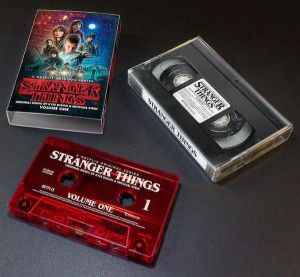
The subject of cassette tapes was recently revived with the announcement that the hit Netflix series Stranger Things will be receiving a deluxe cassette soundtrack.  The cassettes will be packaged to look like miniature VHS tapes…just like the 1980s.

I’m a fan of the show, so I get it.  Stranger Things celebrates so much about the 80s:  the culture, the style, the music, and yes, even the technology.  If you are also a fan, owning a cassette soundtrack version in retro packaging would be quite a collectible treat.  Not as cool as the 80s-style Stranger Things action figures, but still neat.

Fans of the music of Stranger Things would be well advised to get the excellent soundtrack, but if you get it on cassette, why bother to play it?  It won’t even sound as good as a Youtube stream.  Unless you’re one of the few who has great cassette equipment, why not just buy the CD, or the absolutely gorgeous LP editions, and play those?  They’ll last longer while the cassette will wear out the fastest.

Would you open it?  Would you play it?

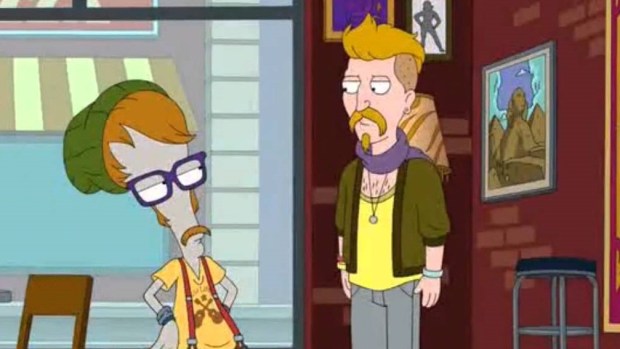
This brings us back to a short bit that I recorded for Sausagefest 2017, which was received with agreement by those in attendance.  Here’s the relevant portion below.  I call it “Hipster Moustache Cassette Player”.  What do you think?


HIPSTER MOUSTACHE CASSETTE PLAYER

Gallery: The Lego Cassette Project

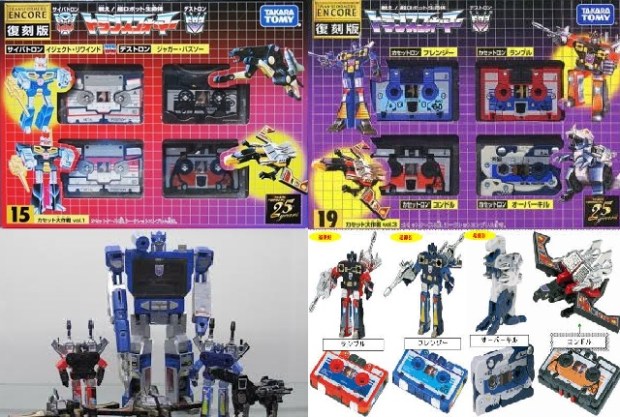
Did you watch cartoons in the 1980s?  If you, you probably remember the Transformers.  Think back, and picture the cassettebots.  Remember them?  Soundwave (Decepticon) and Blaster (Autobot) were the cassette recorders, each with an arsenal of cassette mini-robots to back him up.  Using an advanced alien technology called “mass shifting”, these giant robots could shrink down to the size of an actual cassette, thereby enabling them to spy unnoticed on human and robot alike.  As affordable toys, you may have had some yourselves.  The neat thing was these cassettes designed by Japanese company Takara were designed to perfectly mimic the size and shape of actual micro cassettes.  On the TV show and in the pages of the Marvel comic book, they were depicted as standard sized cassette tapes.

cassettes

Third party company Toyhax (also known as Reprolabels) has come up with some fun ways to enhance your cassette-bot toy collection.  Recently they released a set of plastic engines and stickers for the current Buzzsaw and Laserbeak toys in the 2016/2017 Hasbro Titans Return line.  This time they transform into little media players.  Fans always complain that Hasbro toys “don’t look enough” like the original 80s toy they are an homage to.  Toyhax has created the labels and engines to enhance the current toys, and enhance them they do.  The new accessories even enable new modes, like the “Star Trek communicator” see below.

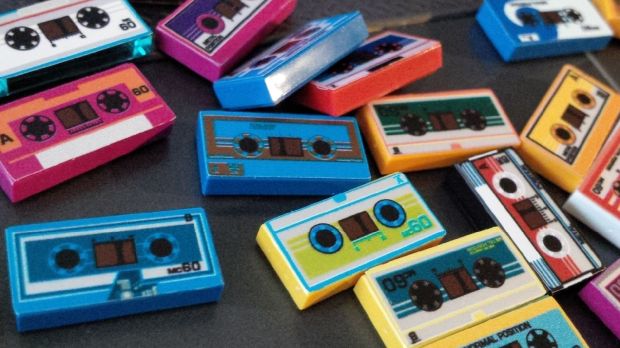
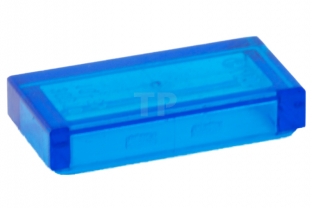
Toyhax have also released a sticker set that enables you to use ordinary Lego bricks to create you own shrunken-down cassette versions of characters both popular and obscure.  All you need  are those small 1×2 flats.  You know the ones I mean?

lego

Don’t have any of those just lying around anymore?  Get this.  You can buy them, picked to order, for just pennies a piece.  You can pick as many of any colour you like.  Mix and match the stickers to get the best looking mini cassettes around, and perfect for your Masterpiece scale figures to hold.

They look great, and it’s a fun little project you can do with very little cost.  They enhance any solid Transformers Masterpiece collection as scale accessories.  See below with Fans Toys’ “Tesla” (aka Perceptor), they look just perfect!


#519: Mistakes I Made Fixing Broken Tapes

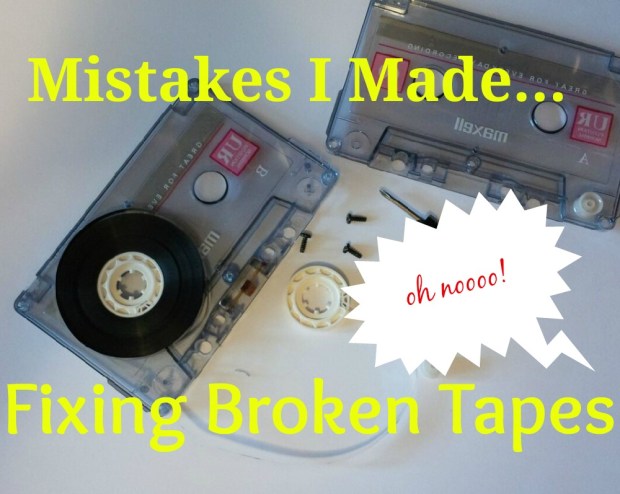
GETTING MORE TALE #519: Mistakes I Made Fixing Broken Tapes

I used to play cassette tapes almost exclusively. Even when I had started growing a CD collection, my cassettes dominated. Why? They were portable. I could record a CD or LP on them, put them in my Walkman, or play them in the car. I didn’t have a good way of doing that with CDs. Plus, you could record a CD to a good quality blank tape, and make a better copy than if you bought it on a pre-recorded manufactured release.

But tapes break. They wear. They get old. There were ways of fixing them, which I sometimes screwed up gloriously. What mistakes did I make?

MISTAKE #1: Dirty hands

You shouldn’t even try to fix a tape with dirty hands. Any time I opened one up to splice or carefully wind the tape on the spools, I was touching them with my unclean, ungloved hands. This deposited dirt and oil on the tape, deteriorating the sound and then transferring that dirt and oil to my tape heads.

MISTAKE #2: Magnetized screwdriver

Here’s another no-brainer that I missed. I had a cool little screwdriver that was magnetized. It was hard to lose those little screws with one of those, since they stuck to the screwdriver. Brilliant way to keep all those little screws from disappearing, but not good for tapes!

I wondered why a lot of my tapes had drop-outs in the sound. Many could have been caused by my favourite screwdriver while trying to fix them. This is common sense but I didn’t think my little screwdriver could possibly do any harm!

MISTAKE #3: Incorrect reassembly

Putting the tape back together is sometimes harder than it looks. Small parts pop out and sometimes it’s tricky to get them back in correctly. The slip sheet – a little piece of plastic inside the tape shell – helps reduce friction and squeal, but only if you put it back in with the slippery side facing the tape spool. When hastily reassembling tapes, I sometimes put the sheet in the wrong way causing slowdowns and noise.

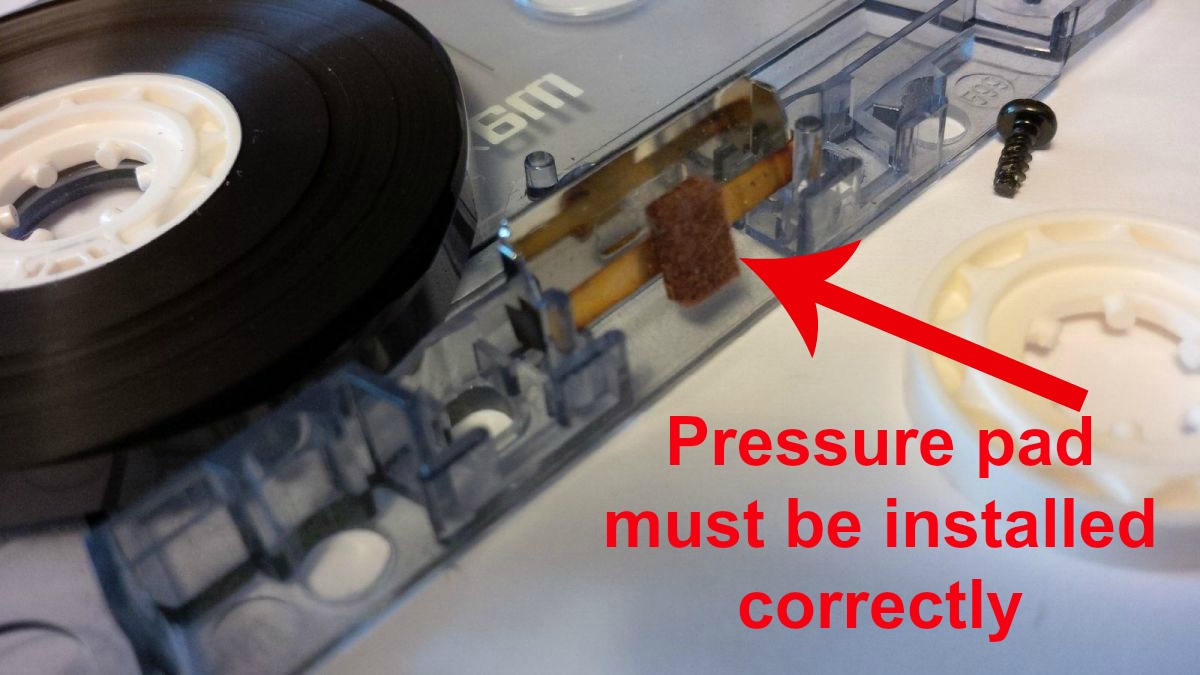
Another critical part is the pressure pad. This applies light pressure on the tape to keep it against the player’s tape head. These pieces were tiny and sometimes popped out of place. There were some tapes I put back together with this piece improperly inserted. The lack of pressure on the tape reduced the sound quality greatly.

push-pad

MISTAKE #4: Splicing with Scotch tape

I spliced successfully with Scotch tape…but only in the short term. As the Scotch tape ages, the stickiness reduces and becomes slimy. This means in time and with a few plays, a careful splice would break. You don’t want to get any of that stinky gunk in your tape deck, so use proper splicing tape. They used to sell it commonly at places like Radio Shack, but I came from a cheap family that used whatever was available. Hence my tapes were spliced with Scotch.

MISTAKE #5: Butter fingers

It’s tricky getting all the tape wound around the right spools and ready to screw back together. Sometimes – quite often actually – I would struggle with this and inevitably crunch the tape between parts of the shell. Once you crunch or crease the magnetic tape, you’re going to hear an audio problem.

I didn’t wreck every tape that I tried to fix, but I did make these mistakes periodically. No wonder my tapes sounded like crap.

#437: So You Want to Make a Mix Tape?

IMG_20150916_172503

GETTING MORE TALE #437: So You Want to Make a Mix Tape?

So you’ve decided to hop into your time machine and make a mix tape?  Good for you!  In the 80’s, making a mix tape was a rite of passage.  Today it is a fading art.  Congratulations for wanting to keep that art alive!  Here are some tips.

First of all, who are you making the tape for?  What do you want on it?  Prep all your recording materials in advance.  Get out the CDs and records you want to tape.  Are you doing a straight hits tape?  A mixture of artists?  Roughly plot out your track list, but only roughly, because you will probably have to make changes on the fly.

Get your tape ready.  What length are you using?  I recommend 90 – 100 minute tapes.  Anything longer than 100 minutes and you risk stretching the tape.  This length range gives you more room to play with than a standard 60 minute tape.

Clean your equipment.  Get your tape head demagnetized, and clean those pinch rollers with isopropyl alcohol or something similar.  Use lint-free cloth.  Since you’re making a mix tape, I assume you want it to sound as good as you can make it.  Use a decent quality blank tape.

Now, using a pencil or just your finger, carefully wind the tape so that the clear tape lead is no longer visible.  When you see brown magnetic tape, you are ready to hit “record”.

I used to add the little test frequencies that they put on the start of cassettes to open my mix tapes.  Don’t have one of those?  That’s OK.  Just download one from Youtube!

My recording technique involved having as short a gap between songs as possible.  I viewed a long gap as an amateur move, unless it was intentional, for effect.   To get a short gap, hit “pause” on your recorder immediately after the song stops, but don’t pause for too long.  Leaving that pause button depressed isn’t good for the tape, because on most machines, the tape head is still making contact with the recording tape.  Still, it’s better than hitting “stop” which tends to leave an annoying clunky sound between songs.

Now, the one irritating thing that amateur tapers do is let a song be cut off at the end of a side.  Don’t do that!  It’s very difficult to get exactly a side of music, so leave some space after the last song.  In fact, I suggest having a bunch of “standby” short tracks handy, to fill up any undesired blank space.  It’s also fun to end a side with a brief movie quote or skit.  It’s up to you, how you decide to end a side, but don’t cut a song off.  That’s annoying!  You may have to improvise, select some shorter songs, and re-do some things, but cutting off a song is just a rookie mistake.  You will have to be flexible with your track list when it comes to where the sides end.  Tape speed is anything but consistent, so even if you’ve clocked your side at exactly 45 minutes, if your tape is running fast then you’ll be out of space.

The beauty of cassette is the opportunity to use the two sides to your advantage.  Each side can be its own journey, with opening and closing tracks.  Yet it’s still part of a whole.  Perhaps you’d like to make a Led Zeppelin hits tape.  Why not make side one all electric, and side two acoustic?  You can have a killer electric opening for side one (“Good Times Bad Times” perhaps), and close it with a corker too (like “Kashmir”).  Then you can kick off side two with an acoustic opener, such as “Gallows Pole” and end it with “Stairway”.  The possibilities are endless, but the ability to create distinct sides is so much fun.

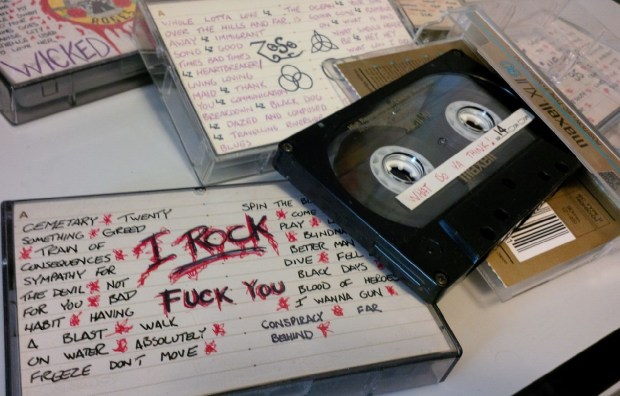
Finally, write those songs down on the J-card, or make some custom cover art.  If you’re artistically inclined, the cover art can be the most fun.

Making a mix tape is a time consuming process since you need to do it in real time.  It can also be a taxing job, if you’re a perfectionist trying to make your mix tape flawless.  The main thing is keeping it fun.  Have a good time with it!

IMG_20150916_172516

#423: The Tyranny of Cassette in the ’80s

RECORD STORE TALES MkII: Getting More Tale
#423: The Tyranny of Cassette in the ’80s

Anyone who grew up in the mid to late 1980s probably enjoyed their music on the most popular format at the time:  cassette.  Vinyl LPs were still around, and still popular, but not nearly as much as cassettes.  CDs were new and only a few of us had CD players yet.  Cassette tapes had the portability factor going for them.  Everybody had a Walkman, and those who didn’t probably had one on their Christmas list in 1985.

Vinyl was a dying breed in our highschool halls.  There were still some older kids who boasted of the superior sound quality, but none of my friends had equipment good enough to enjoy that sound quality.  I certainly didn’t.  All I had was a turntable hooked directly into a Sanyo cassette deck for amplification.  The sound was harsh and tinny.  The scratches inherent with the format were also more distracting than the tape hiss of cassette.

So, it was all about cassette!  Buy ‘em, trade ‘em, swap ‘em and re-record over them when you decide you don’t like the music anymore.  I have a cassette copy of Michael Jackson’s Thriller that had long ago been erased and taped over with other stuff.  When you couldn’t find a fresh blank tape to record on, you could just erase something else.  Everybody did it.  My friend Bob had a cassette of In Through the Out Door that he recorded over with us talking and goofing around!

For teenage highschool kids, cassettes were enough for our musical fixes.  A decent quality name brand tape could hold up to 110 minutes without stretching.   We used them to tape anything and everything.  (I have a tape with the sound of a friend’s dad taking a massive shit — no, I did not record it, they did!)  Since cassettes were re-recordable, that meant that every kid could even record their own music and become a rock star in his or her own basement.  You couldn’t do that with your fancy schmancy LPs, we all thought!  Don’t like your song?  Just rewind and record it again!  Those who didn’t play music could have their own fun, DJ’ing and and writing skits.  And let’s not forget about taping your friends’ albums.  Recording tape to tape would always result in excessive tape hiss, but kids didn’t seem to mind in the 1980’s.  We ignored the hiss.  It was something we considered part of the music, because we really never heard any music without hiss!

Although the flaws of cassettes are patently obvious today, in the 80’s we were just discovering these troubling issues for ourselves.  We overlooked the tape hiss, but it was harder to ignore speed issues.  The biggest problem that I had with cassettes was inconsistent speed.  Some tapes, especially those made by Polygram and EMI in Canada, seemed to have a lot of internal friction.   Grab a small screwdriver and open up an old cassette tape some time.  Inside you will find rollers, spindles, and bits and pieces all designed for the cassette tape to roll smoothly.  Whether they worked right always seemed to be a matter of random luck.  When friction inside caused the tape to run slow, it was immediately obvious.  The pitch would be noticeably lower, and often the tape would warble as your player tried to play it at normal speed, but fought against the friction.

On the other hand, sometimes the problems came down to your player.  Your tape deck had even more spindles and doo-dads to turn that tape around and around.  Those got dirty and worn out, too.  Sure, you could buy tape head cleaners and demagnetizers, but did they ever really have a noticeable effect on your listening experience?  Probably not.  I used to diligently clean the insides of my tape decks with lint-free cloths and isopropyl alcohol.  Although I could see black filth coming off the rollers when I cleaned them, the sound and speed never really improved.  It was always very frustrating when a tape would play fine on a friend’s deck, but went slow as molasses on your own.  My Sanyo went in for service and professional cleaning more than once, but that didn’t help either.

Although cassettes sounded like shit, and only got worse the longer you kept them, they did have a big advantage over CD for me, and that was portability.  I preferred cassettes in the car, up until fairly recently.  The reason for this was, working in the used CD store, I saw so many CDs that were just utterly destroyed by car CD players.  You don’t get that problem so much anymore, but in the 90’s and 2000’s, there were a lot of discs just annihilated by a lot of car decks. It didn’t seem to matter if the car player was a high-end stereo or a piece of crap.  People would bring their used CDs in to me, and ask me how they looked.  I’d usually ask, “Did you play this in a car deck?”  I could always tell.  Customers would ask me, “How did you know?”  Because the CD would be completely scratched, but always in perfect circles.  Some dirt clearly got into the car deck, and scratched up the discs as they were spinning.  Or, the disc was just scraping up against the internal workings of the car player as it spun.  Either way, the result was usually a CD that looks like a kid’s Spirograph drawing.

At least when playing a cassette in the car, those things could take a beating.  I only ever had one or two that were “eaten” by the player.  Compare that to the thousands of CDs that I saw destroyed by car decks over the years.

If life is a musical journey, then cassettes were my travelling companions for over a decade.  We had a necessary parting of ways, and now I am happy to stick to CD and flash drives when on the road!