classic rock

REVIEW: The Four Horsemen – Welfare Boogie (21st Anniversary Edition)

scan_20160918THE FOUR HORSEMEN – Welfare Boogie (originally 1990, 2009 Anniversary Edition with bonus tracks)

It feels right to review this re-released EP only after we have already discussed Nobody Said it Was Easy and Gettin’ Pretty Good at Barely Gettin’ By.  Until I met T-Rev at the old Record Store, I didn’t even know such an EP existed.  But he had it; an original copy purchased somewhere in the States before we met.  He taped it for me (same songs both sides) and that was the first I heard of the Horsemen’s 1990 debut EP.  I hunted high and low for another CD copy, but failed until this 2009 reissue.  Originally and simply titled The Four Horsemen, the reissued EP sports the new title Welfare Boogie, and five bonus tracks.

According to the liner notes, the band didn’t mind if they sounded a bit like AC/DC since “nobody is doing AC/DC anymore, not even AC/DC”.  The EP has the same raw and rough vibe of Powerage-era Bon Scott, but with a guy who can also scream like Brian Johnson.  “Welfare Boogie” itself works as an example.  It’s a basic riff, a rawk vibe, a shout-along chorus and a charismatic shrieker (Frank C. Starr).  This track and the laid-back rock and roll “Shelly” were both written solely by drummer Ken “Dimwit” Montgomery.  Dave Lizmi’s guitar solo is equal parts Angus Young and Ace Frehley.  The date might say 1990, but it sounds more like 1978.  “High School Rock N’ Roller” was written by founding member, Haggis (aka Kid Chaos aka Stephen Harris), who had finished a world tour with the Cult.  Once again, it’s easy to point at early AC/DC as the prime influence.  The one track that sounds more like punk rock (Dimwit was from D.O.A.) than AC/DC is “Hard Lovin’ Man”.  Starr might not have written it, but it’s clearly about him.  I have heard him reference his tattooed weiner before in a RIP Magazine interview.  (“It has eyes!” he seemed to beam with pride.)  The lyrics:

“I got heart of stone,
And a hand of steel,
Got a tattooed pecker,
And a Batmobile.”

“I”m a hard lovin’ man,” he boasts, before inviting “come here baby and see how hard I am.”  All this to the rock and roll blitzkrieg of a song so fast that it doesn’t even break the 2 1/2 minute mark.  The four tracks combined make for a grand little EP, not even 13 minutes long!  In and out, mission accomplished.  Thankfully the bonus tracks extend the experience for those wanting a little bit more action.

A cassette demo of “Rockin’ is Ma Business” demonstrates a work in progress as the band fiddled with the arrangement.  Comparing the final track to the demo, it sounds like it ingested a steady diet of coffee and gin before cranking it up to 11.  Always interesting to hear these early works in progress.  The bones are there but the meat is only being added.  “The Needle” is an unreleased song, a menacing night prowler with teeth flashing in the gloom.

“Born to Boogie” transformed completely between this demo and a later demo included on Nobody Said it Was Easy.  According to the liner notes here, this song eventually mutated again into “Can’t Stop Rockin'” from the album.  This track however is just a good time boogie with a bouncy riff lifted from “New York Groove” by Ace Frehley.  Then there is “Ain’t Telling Me”, a purely AC/DC stomp with a hint of Guns N’ Roses on top like a cherry.  Finally, a fun track called “Bring On the Girls” goes down like a round of tequila.  You can hear that the chords here later became “Moonshine” on the LP.  Even the bass line is identical, but this is a more party-hearty version of a fondly remembered deep cut.

This collection of songs was never meant to be more than a warm-up.  The main course was always intended to be the LP.  When a band is as good as The Four Horsemen were, the EP still impresses more than a thousand other bands’ proper albums.

3.5/5 stars


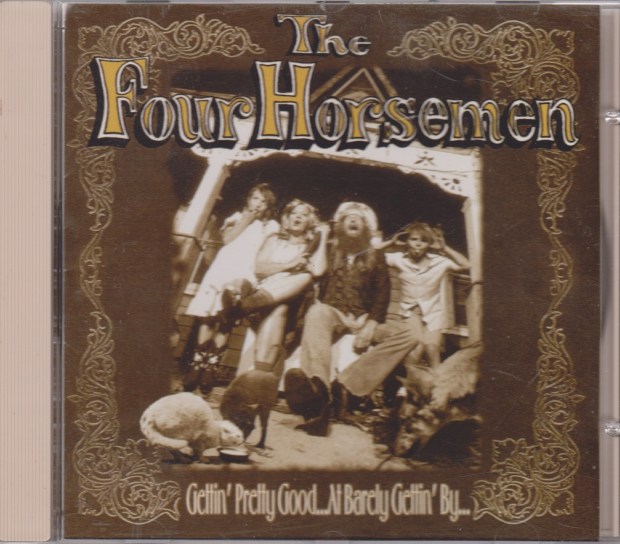
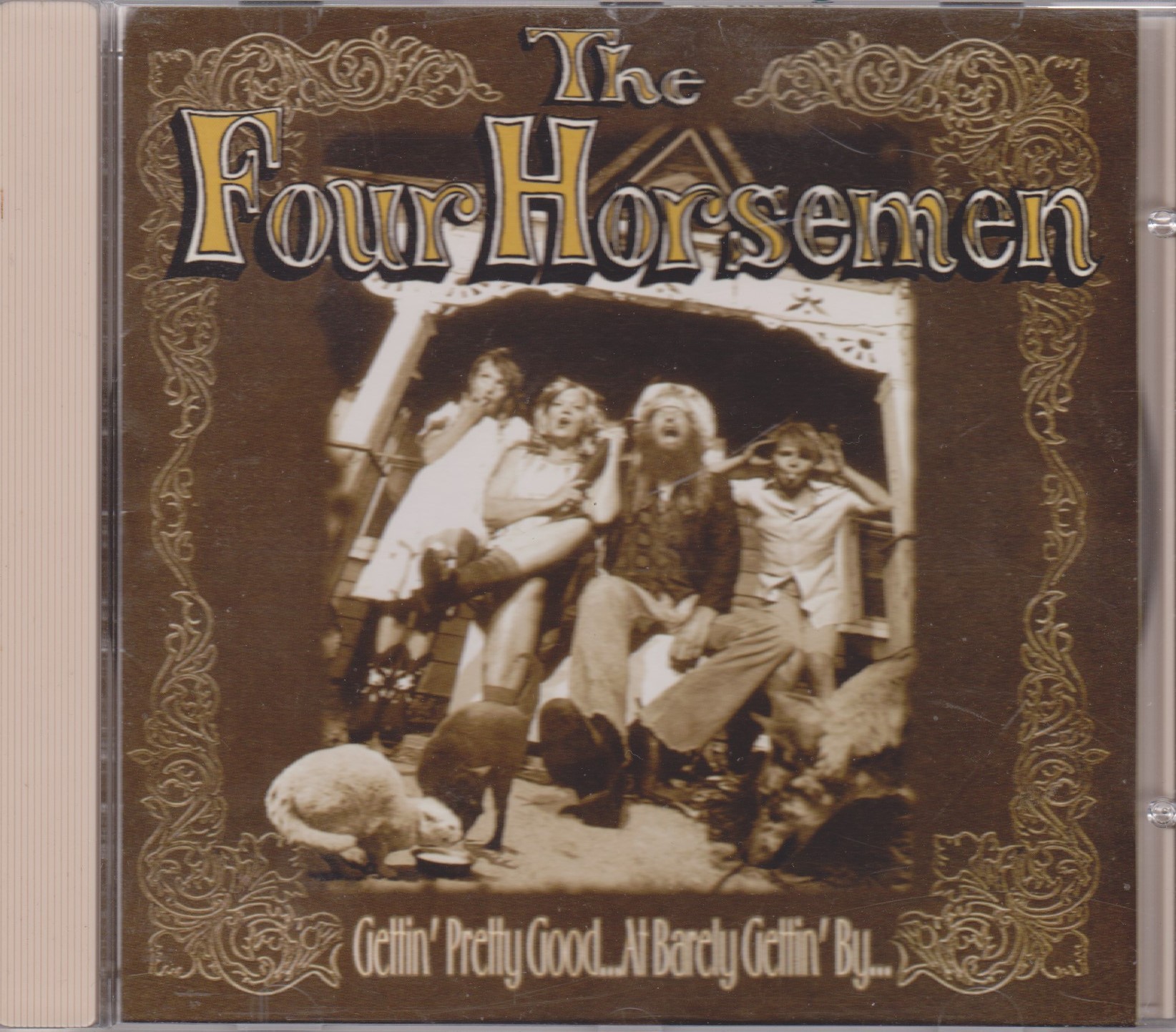
REVIEW: The Four Horsemen – Gettin’ Pretty Good…at Barely Gettin’ By (1996)

scan_20160908THE FOUR HORSEMEN – Gettin’ Pretty Good…at Barely Gettin’ By (1996 Magnetic Air)

The Four Horsemen seemed to burn the candle at both ends.  Before really even getting off the ground, they imploded, but not before dropping one of the greatest unsung records of the decade:  Nobody Said it Was Easy.  They had Rick Rubin, they had Def American, they had a guy that was in the Cult and another from D.O.A., and they had tours with the Black Crowes and Lynyrd Skynyrd.  They also had a volatile frontman who drove the band nuts and ended up in jail, and they just couldn’t make it last.

Founding member Haggis tried to give it another shot.  He reformed the band with a new singer named Tim Beattie, but ultimately the album was shelved.  It sounded like a completely different band, a southern soul band with nothing hard or heavy.  That’s not a bad thing:  the album Daylight Again was finally released in 2009, and it’s incredible (and we’ll get there soon).  Instead they folded again, but not for long.  Dave Lizmi and Frank C. Starr formed a new Four Horsemen, with Canadians Pharoah (bass) and drummer extraordinaire Randy Cooke.  With another Canadian, producer Rich Chycki, they forged a rare followup:  one as good as the original.

Slimmed down to a single guitar band, the new Horsemen sounded leaner and less AC/DC.  Frankie’s voice had changed and he was no longer screaming, and that also lessened similarities to AC/DC.  He had also become more expressive, while losing none of his power or character.  They opened the album with a southern flavoured “Still Alive and Well”, a Rick Derringer cover.  Considering the five year gap between albums, they couldn’t have picked a better opener.

The title track “Gettin’ Pretty Good at Barely Gettin’ By” goes deeper into the swamps of the south.  Lizmi takes out the slide, and who doesn’t love some greasy slide guitars?  This is an uplifting hard rocker, stating the Horsemen’s modus operandi:  “Well well, oh my my, what have we here?  Some good old fashioned music, lots of whiskey and beer.”  Lizmi wrote the lyrics for this album, but the words sound like Frankie’s.  It’s a celebration of rock and roll, proudly and loudly.

The third song in a killer triple threat of openers is “Drunk Again”, which sounds exactly like you hope it does: fast, upbeat, cocked and loaded.  Gotta love the female backing vocals, giving it a kick of soul.  The performance sounds live and authentic.  At one point, it sounds like Frankie cracks up chuckling right in the middle of a line.  “It’s been 40 days since I looked at my face…ah shit…”  This is the kind of music everybody needs for a serious rock and roll party.

scan_20160908-3

There are few more standout songs that have to be discussed.  First is “Song for Absent Friends”, one of the most emotionally bare tracks you’ll ever find from a band of this ilk.  Original drummer Ken “Dimwit” Montgomery, a Canadian punk legend, died in 1994 of a drug overdose.  “Song for Absent Friends” sends legitimate tingles up the spine.  You can feel the hurt.  But it’s not a funeral, it’s as much a celebration of Dimwit as the rest of the album is a celebration of life.

“And I know that you all are out there somewhere,
On a leave of absence from this place,
And I still have a place for you all,
A place around near me,
And your glasses will always be full.”

Then we have the blazingly fast drag race of “Hot Rod”, featuring the lyric “I got the hottest rod around,” ha ha. It’s that slippery fast guitar lick that knocks you out. But if you want a song that’ll knock some teeth out, with some biting lyrics, look no further than “Back in Business Again”. Frank sounds pissed!

“And we were headed for the top babe,
Way back in ’91,
Some record business scumbags took it from us,
Well they forgot my gun.
Well now we’re back in business folks,
I’ve come to claim what’s mine,
See we’re the Four fucking Horsemen,
Back for a second time!”

That’s nothing. Clearly, they were still ticked that they got dropped by the label in 1992. I don’t think Frank or Dave thought much of the latest wave of bands that were topping the charts in the early part of the 1990’s. Exhibit A:

“Now pay attention,
I got a little story here to tell ya,
It kinda goes like this.
You know I had a couple years off there babe,
To kinda take some time,
And I heard a bunch of whining, little wussy rock n rollers,
Complaining about how fame and fortune’s got them down.
I say we gather up all these little bastards,
Shove them back to their little nowhere town,
See I was born on this stage,
And I plan to stick around!”

Frank didn’t get that chance, either.

Before Gettin’ Pretty Good…at Barely Gettin’ By was even released (by the Canadian label Magnetic Air), Frank was hit by a drunk driver while riding a motorcyle. He suffered massive brain trauma. He never woke from coma, and died four years later.

It’s almost absurd how much hardship fell upon this band, almost as if the fates decided that nothing would stand in the way of grunge. The Horsemen tended to end their albums with emotional epics, and this album ends with “What the Hell Went Wrong”. It’s a complicated question with many answers, but the bottom line is that the success the Four Horsemen had was inversely proportional to their talent.

In one of the strangest twists of an already twisty story, the masses finally heard the Four Horsemen when “Back in Business Again” was used in the movie G.I. Joe: Retaliation.  Completely out of context, but who cares.  The movie starring Dwayne “The Rock” Johnson made $375.7 million.  That’s a lot of people who got to hear a kick ass Four Horsemen track with theater quality sound!

Rest in peace, Frankie.  Rest in peace, Dimwit.

5/5 stars


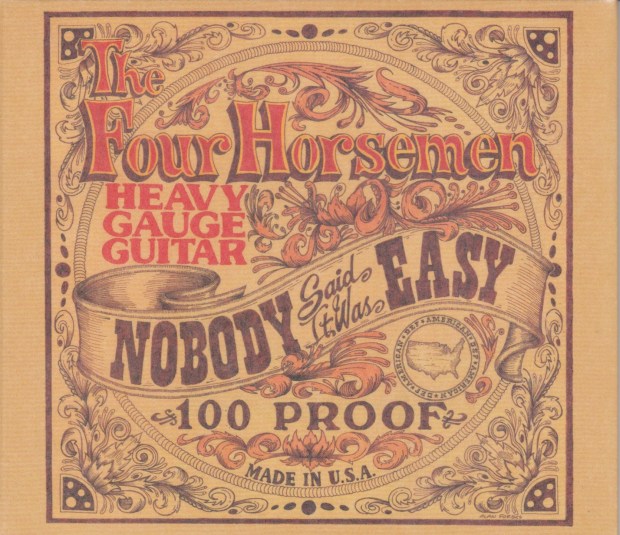
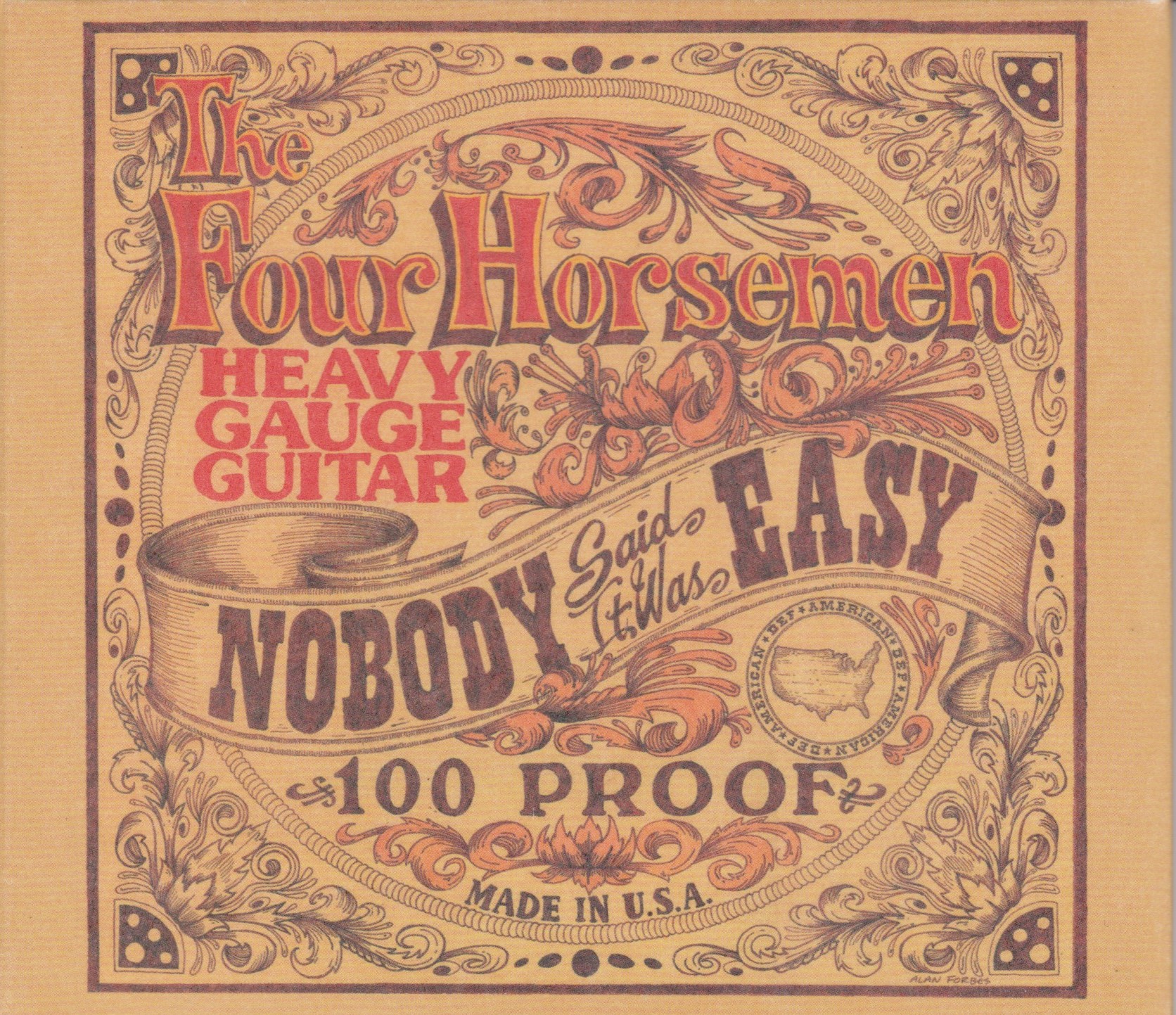
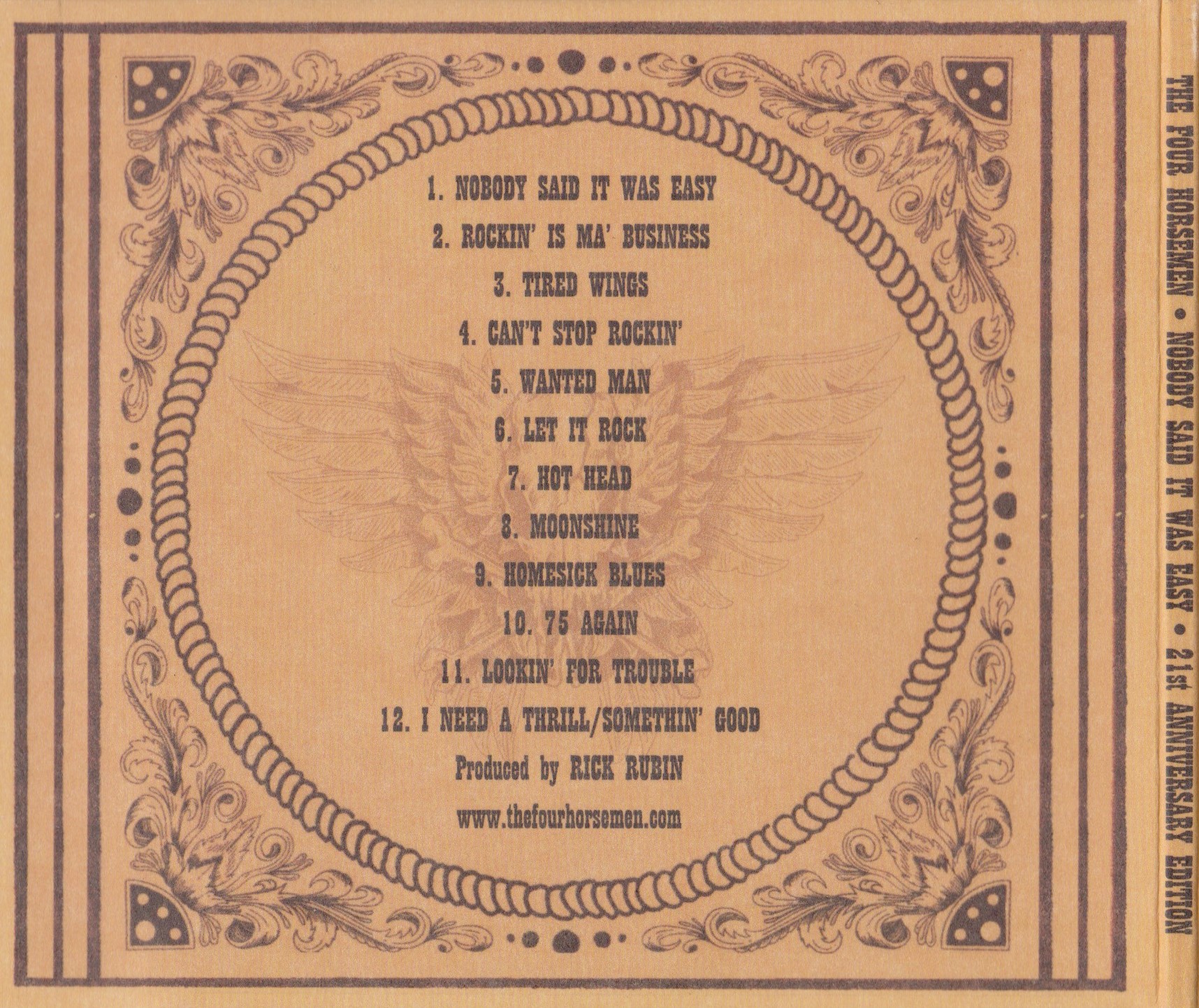
REVIEW: The Four Horsemen – Nobody Said it Was Easy (21st Anniversary Edition)

Giddy up! Part one of a five part Four Horsemen series this week at mikeladano.com!


scan_20160907THE FOUR HORSEMEN – Nobody Said it Was Easy (originally 1991 Def American, 2009 Anniversary Edition with bonus tracks)

1991’s Nobody Said it Was Easy was one of the greatest rock albums to ever come from the grunge decade that you’ve never heard of.  The Four Horsemen were a multinational band, with Rick Rubin at the helm at the legendary Sound City studios, and one of the greatest rock star frontmen to ever grace the stage:  the late Frank C. Starr.

There could only be one Frankie.  But there was so much more to this band than just the singer.

There was Haggis, on rhythm guitar (ex-The Cult, formerly known as Kid Chaos).  He lent the album an AC/DC edge with simple rock and roll riffs.  Then there was Dave Lizmi, an uber-talented guitarist with a knack for classic tube-amp driven solos.  On bass was Ben Pape who provided the album with interesting and melodic basslines.  Finally, on drums, the man the myth the legend:  Kenneth “Dimwit” Montgomery.  A Canadian native as big as the mountains that spawned him, Dimwit was an absolute beast on the skins.  His brother Charles Montgomery would change his name to Chuck Biscuits and join Danzig.  Both brothers would spend time in the legendary Canadian punk band D.O.A.  Sadly, Dimwit succumbed to drugs and died in 1995.  What a gargantuan loss.  (He later inspired the Horsemen track “Song for Absent Friends” from their second CD.)

This album was preceded by an impossible-to-find four song EP (since reissued), so when it was released on Def American, it was the first time most of us heard the Horsemen.  And it was instant.  With three unforgettable singles, the Horsemen kicked out the jams.

“Nobody Said it Was Easy” was a hell of an introduction.  With a riff similar to those peddled by the Black Crowes a year before, but with a much harder edge, the track kicked every ass in the room.  Get into the groove and enjoy, because the party is just starting.  Frankie had a rock n’ roll voice, but when he let loose with his screaming, that’s when we knew he was special.  Able to sing with a Brian Johnson shred, the Horsemen really had an ace in their pocket with him.  Frankie was something else.  He took no prisoners and without him, the Horsemen just didn’t sound like the Horsemen.

There aren’t breaks between the songs, so “Nobody Said it Was Easy” goes right into “Rockin’ is Ma Business”, the heavier second single.  Louder, groovier and weightier, “Rockin’ is Ma Business” proves its point.  “And if it’s so good why am I still fuckin’ broke?” asks Frankie before Lizmi rips into another solo.  (That would be a question for the accountants, Frankie!)

The third (and some say the best) single was the slide-drenched “Tired Wings”.  With a southern Skynyrd vibe, “Tired Wings” is simply awesome.  I’m a sucker for a slide guitar, and there’s enough here to drown a cat. Haggis makes sure there is plenty to go around.

There could have been more singles, but the band hit the rocks when Frank was arrested and jailed for a year on drug charges. They were dropped by the record label, who stopped promoting the record. That effectively put the band on ice for several years, but that’s another tale for another review (or two).

T-Rev always pointed out the strength of the closing track, essentially two songs over eight minutes long, “I Need a Thrill/Somethin’ Good”.  The song reeks of cigarettes, booze and tired hotel rooms.  With organ and loads of Lizmi licks, it’s an epic track soaked in feeling.   T-Rev pointed out that the Horsemen seemed to like closing their albums with slow bluesy epics like this.  The next CD, Gettin’ Pretty Good…at Barely Gettin’ By has a similar track called “What the Hell Went Wrong”.  Their long lost second album (finally available today) called Daylight Again closes with an 11 minute version of “Amazing Grace”.  That’s the kind of track this is.  It could only be an album closer.

This CD reissue has three bonus cuts from the original demo tapes.  I didn’t really want to trade up my old original CD copy of this album, but these bonus tracks made it worth while.  “She’s Got It” was written by Dimwit, and has a pure AC/DC riff like they used to write when Bon Scott was alive.  “Born to Boogie” is a rare Starr co-write (with Haggis).  This is a completely different song from the same-titled demo that was included on the EP reissue (Welfare Boogie).  It has a completely different riff, which is good because the original one basically sounded like “New York Groove” by Ace Frehley.  I prefer this version, the faster and more fun of the two.  Finally there is a different version of “Homesick Blues”, featuring a harmonica part by Tim Beattie.  The funny thing here is that Beattie later joined a reformed Horsemen as their lead singer!  It is he that recorded Daylight Again, before yet another version of the band would form and start recording with Frankie up in Canada….

But again, that’s another story for another review.  If you are one of the many rock fans who missed the Four Horsemen during their brief heyday, then this CD reissue makes the album easy to acquire.  The important thing is to get it!*

5/5 stars

scan_20160907-2

* But beware!  I know of at least one customer, Freddy, who purchased a defective copy of the original CD with Dwight Yoakam instead of the Four Horsemen! (Record Store Tales Part 224: Rockin’ is Ma Business)

For a review by 1537, click here  (It’s Dirty, It’s a Pity).


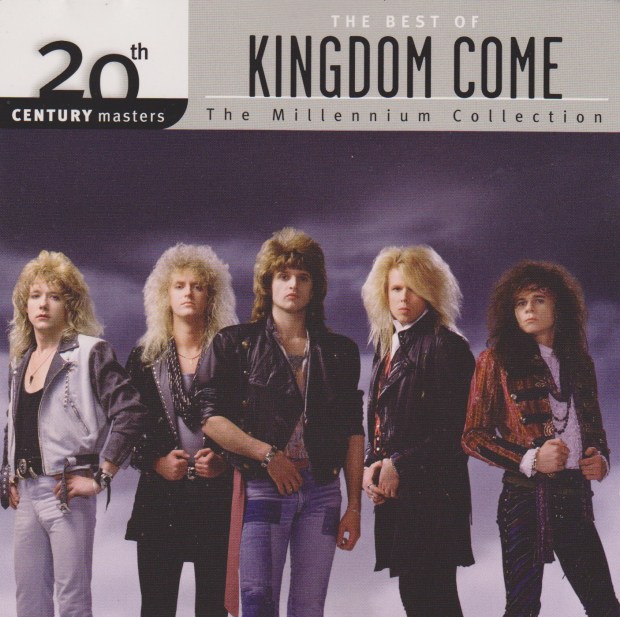
REVIEW: Kingdom Come – 20th Century Masters – The Millennium Collection

KINGDOM COME – 20th Century Masters – The Millennium Collection (2003 Universal)

Kingdom Come are a German/American band that rose from the ashes of Stone Fury.  For those who may not remember, Kingdom Come were quite infamous in their day.  Gary Moore wrote a song called “Led Clones” (with Ozzy singing lead) about Kingdom Come and bands of their ilk who were seen to be milking the now defunct Zeppelin cow.  The “Led Clones” riff directly aped “Kasmir” by Zeppelin, as did Kingdom Come’s lead single “Get It On”.  A little Zeppelin influence is fine, but Kingdom Come enraged Jimmy Page himself when one of their guitarists claimed he’d never heard a Led Zeppelin album.

The Zeppelin angle was one direction that Kingdom Come exploited in their early days, and though they grew out of it by their second album, the damage had been done. Their nickname became “Kingdom Clone”, the punchline of many jokes. This is why a simple 20th Century Masters compilation may be all the Kingdom Come you actually need.  Herein you will find all but one of their hits, and a fair few tracks from their first three studio albums.  Two guys from this band ended up in Warrant:  Rick Steier and James Kottak, who is also the longest-serving drummer that the Scorpions have ever employed.  By the third album, the original lineup had completely dissolved leaving singer Lenny Wolf the sole original member.

The one missing hit is a track called “Loving You” from the first LP, an acoustic ballad, sort of a sub-“Battle of Evermore”.  The other hits are here:

  • “Get It On”, the single that made them famous, which wears its Zep influences on its sleeves.
  • “What Love Can Be”, essentially Lenny Wolf’s transparent rewrite of “Since I’ve Been Loving You”.
  • “Do You Like It”, the first single from sophomore album In Your Face.

Lenny could have gotten away with some of the Zeppelin references if he didn’t try to sing so many Plant-isms.  You can only ma-ma-ma so much before you sound like Robert Plant, and Lenny could have tried to be his own singer instead.  You have to lay some of that at the feet of producer Bob Rock, who could have said, “Cut that shit out.”

The second album was a move away from that.  Keith Olsen got a sharper, more vibrant sound than Bob Rock did (though Rock really got a great drum sound for James Kottak).  Reportedly, some stores refused to stock the second LP because they thought the band’s name was Kingdom, and the album called Come In Your Face.  Too bad, because the incendiary “Do You Like It” was critically acclaimed for its drive.  The other In Your Face tracks included here absolutely represent a move away from Zeppelin and towards a more mainstream, slightly European rock sound.  Good songs, especially the mid-tempo “Gotta Go (Can’t Wage a War)”.

The third album, Hands of Time, came and went without a sound and Lenny was dropped from the label.  Reviews suggested it was soft and ballad oriented, but there are two decent slow rockers here from that album.  “Should I” has a slow grind topped by a passionate vocal.  The one included ballad, “You’re Not the Only…I Know” has a weird title but a great melody.

The great thing about the 20th Century Masters series is the ability to get key hits for a low price from bands that you may not want albums from.  The 11 tracks on the Kingdom Come edition are all worth owning, no duds in the bunch.  That makes this CD an easy one to pull the trigger on.

4/5 stars

scan_20160913-3

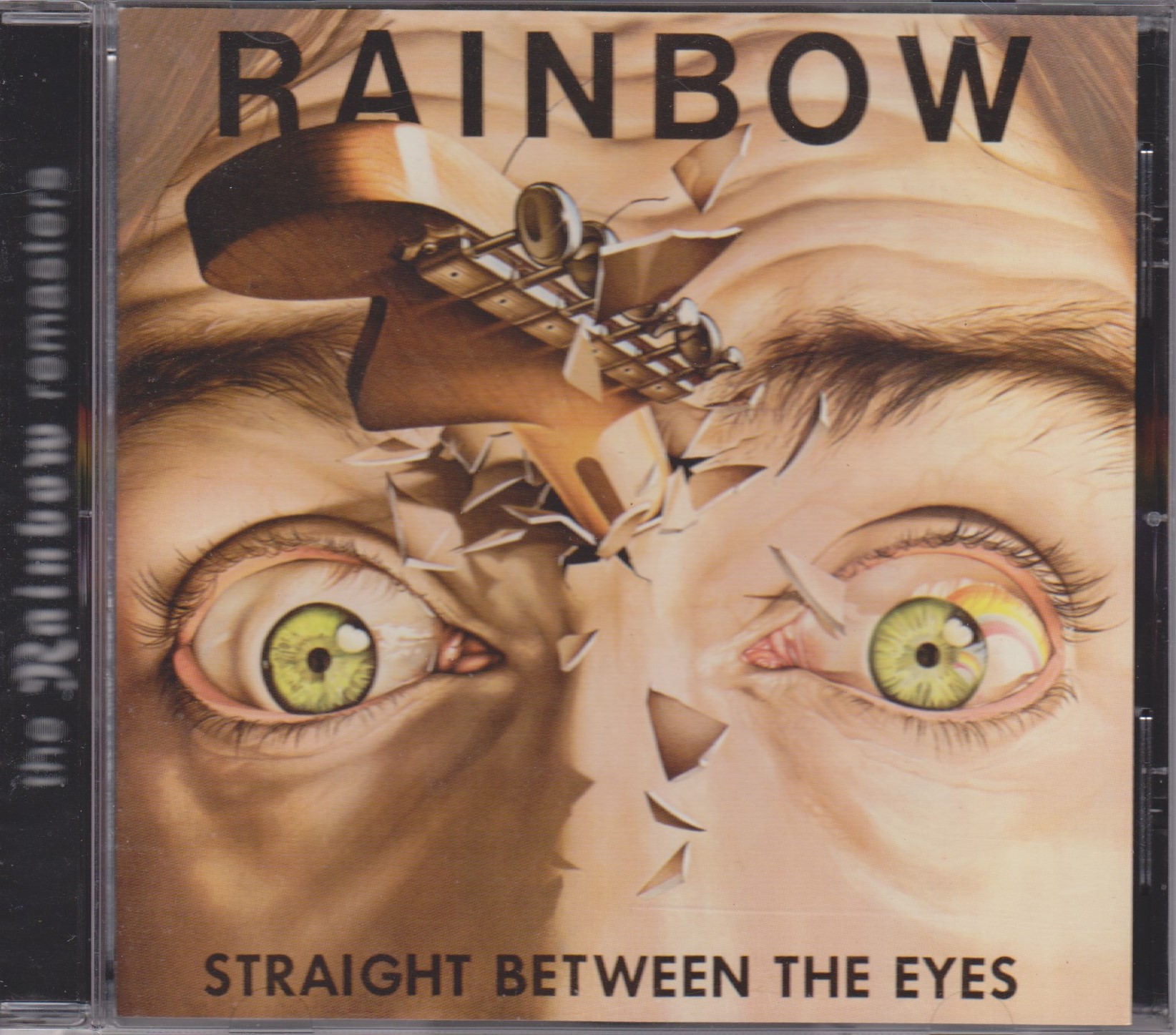
REVIEW: Rainbow – Straight Between the Eyes (1982)

scan_20160911RAINBOW – Straight Between the Eyes (Remastered, originally 1982 Polydor)

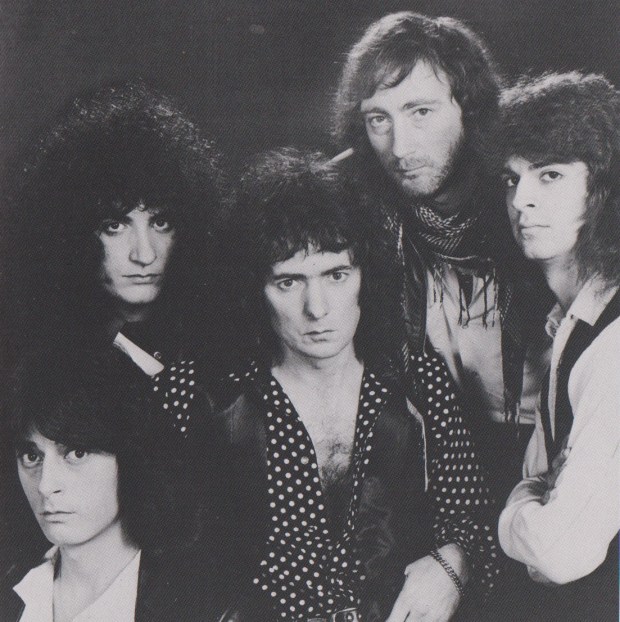
I’ve always found the most interesting bands in rock to be the ones who have had multiple singers over different eras.  Blackmore’s Rainbow never did two albums in a row by the same lineup.  From Ronnie James Dio to Graham Bonnet to Joe Lynn Turner and beyond, Rainbow has been an ever-changing entity during its brief lives.  Each era has much to offer, with the Turner years sometimes slagged as the weakest.  It is true that ballads became a larger part of the Rainbow sound under Joe, but the turn towards the commercial was evident during the Graham Bonnet era, on Down to Earth.

The peak of the Turner period would have to be Straight Between the Eyes, his second with the band.  The lineup this time consisted of founder Ritchie Blackmore, with Roger Glover on bass (his third Rainbow record), drums by Bobby Rondinelli (his second) and new keyboardist David Rosenthal, replacing Don Airey.  Rondinelli is a remarkably hard-hitting drummer and his solid, massive beats propel the songs.  The finest example of this is “Death Alley Driver”, which could easily be seen as an updated version of “Highway Star” from a decade earlier. The amusing video clip featured Joe Lynn Turner on a motorcycle being chased perilously close by a pilgrim-hatted Blackmore in a hearse!* “Death Alley Driver” indeed!**

Although “Death Alley Driver” is the first track, the soulful ballad “Stone Cold” was the first single. It was a minor hit and still gets radio play today. The integrity lies in Ritchie’s smooth guitar, Joe’s always authentic vocals, and the classy organ backing it up. The song’s strength is in its unmistakable pulse, which is Rondinelli and Glover’s impeccable rhythm. Blackmore fans may have been aghast at the soft rock single, but “Stone Cold” holds up as a classy ballad from a spanking album.

Sadly the music video was not the humorous pleasure the “Death Alley Driver” was. Turner looks stiff**^ and awkward searching through a hall of mirrors looking for a girl with a frozen face.  Blackmore just looks disinterested.

Straight Between the Eyes was produced by Roger Glover, as were the previous two albums.  With Bobbi Rondinelli behind the kit, Glover extracted an even bigger drum sound, and it is up in the mix.  Each track boasts a massive beat, even the ballads like “Tearin’ Out My Heart”.  He provides a gallop, and that’s the extra kick the songs get.  The album would not have been as forceful with a different drummer.

So as Joe sings it, “Let the Dream Chaser take you away” if you want to get “Rock Fever”!  The album can be found affordable so it won’t be a “Tite Squeeze” on your wallet.  Feel the “Power” and “Bring on the Night”!  It’ll rock you “Stone Cold”.**^^

4/5 stars


* Something about that action-packed music video makes the music seem faster and heavier.

** During the Blackmore closeups inside the hearse, pay attention to the rear window behind him. You can clearly see from the trees behind that the car is not moving an inch!

**^ Cue Aaron.

**^^ These are all good songs.  No real duds on Straight Between Eyes.

REVIEW: Mr. Big – Mr. Big (1989)


Scan_20160811MR. BIG – Mr. Big (1989 Atlantic)

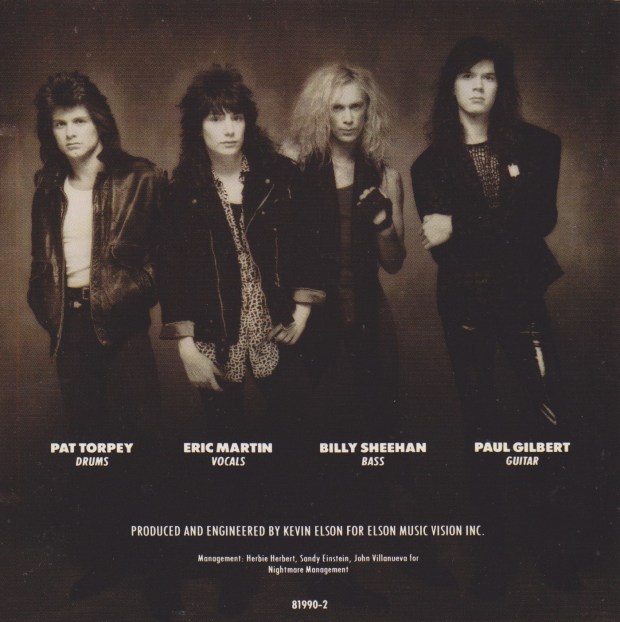
Mr. Big started as a “supergroup” of sorts, with bassist Billy Sheehan being the most well known due to his stint with David Lee Roth (and Talas before that).  Because of his bass prowess, we know his band Mr. Big would be heavy on the shred.  What set them apart was the blue eyed soul of singer Eric Martin.  Their debut record possessed the speediest chops imaginable, but used sparingly.  It’s a song-oriented album, with “Addicted to that Rush” leading off with heavy space-age playing.  Unfortunately nothing else is as memorable, except the Humble Pie cover “30 Days in the Hole”.

Tracks like “Had Enough”, “How Can You Do What You Do”, “Rock & Roll Over” and “Merciless” are all competent rock tunes, and due to Billy’s bass, the bottom end is unbelievable.  Unfortunately it took Mr. Big one more album to really come up with the songwriting goods.  Their debut is fine enough indeed, but folks who dig the playing will be sticking around.  Those looking for soul and memorable hooks will have to dig deep.  There is good stuff here, but little that will make repeated spins in the CD player months and years down the road.  Good, but not quite good enough.

3/5 stars


REVIEW: Tesla – Mechanical Resonance Live! (2016 Japanese with bonus track)


scan_20160915-3TESLA – Mechanical Resonance Live! (2016 Ward Records, Japanese with bonus track)

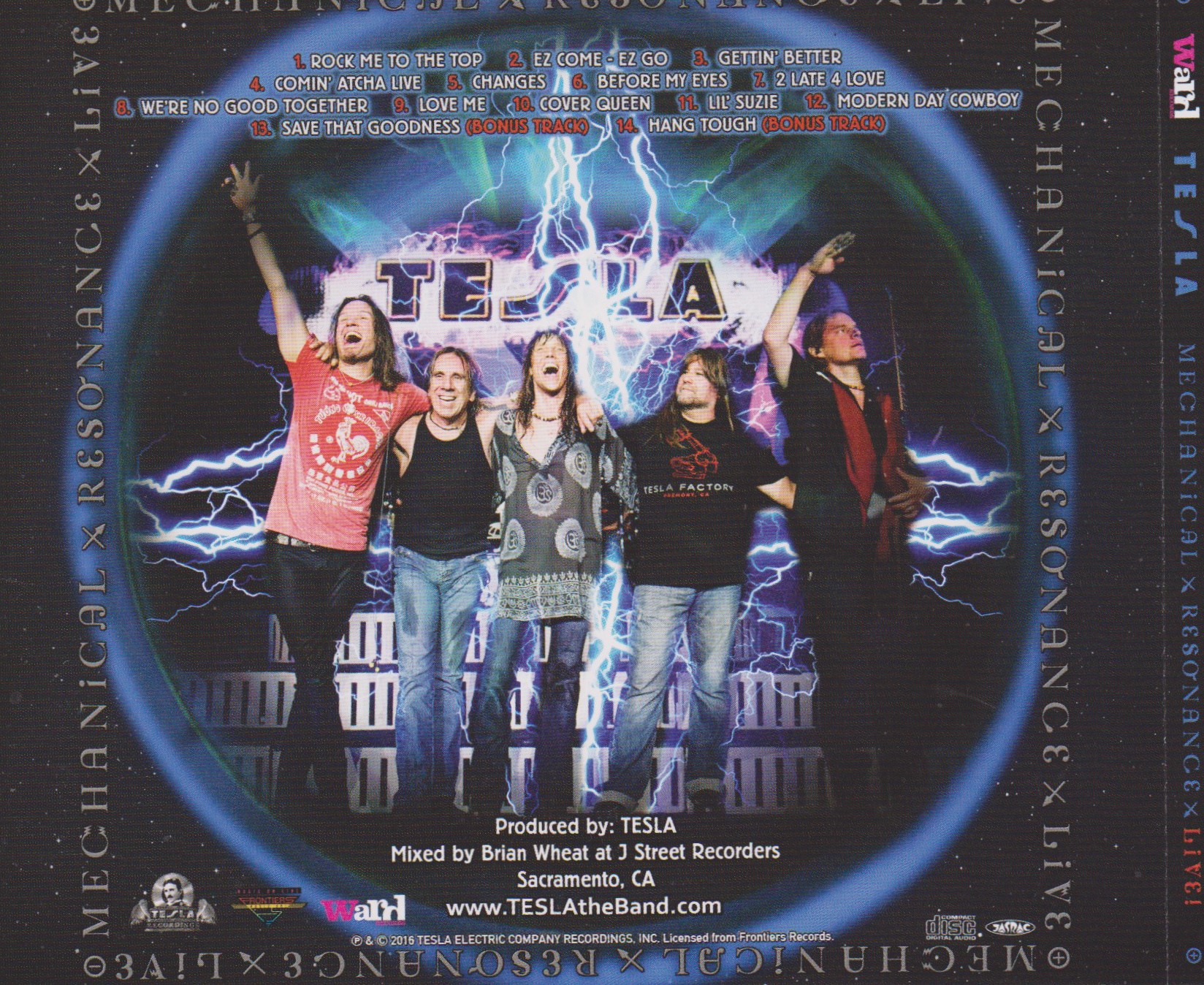
30 years?  Holy shit, I remember when Tesla was considered a new band.  Far more talented that the critics gave them credit for, or the bands they are lumped in with, Tesla have officially stood the test of time.  May as well use the 30th anniversary to put out a live album.  Unlike many other bands from their era, Tesla produced a number of studio albums worth listening to from front to back.  Their debut Mechanical Resonance has long been a favourite, a high quality slab o’ rock, so may as well play the whole thing live, right?

Tesla tweaked the song order (presumably for the live concert experience) to start with “Rock Me to the Top”.  Eternally young singer Jeff Keith has barely aged, and has lost nothing in the decades.  The rasp, the power, and the character are all intact.  The keys have been lowered, as any 30 year old band would have to do, but it’s hardly noticeable.  This makes Mechanical Resonance Live an absolute pleasure to listen to.

The other guys in the band kick as much ass as possible.  Tesla are a guitar band, and losing the talented and charismatic axeman Tommy Skeoch (first in the 90’s and then again in 2006) was a hell of a blow to suffer.  With mainstay Frankie Hannon on guitar, and new addition Dave Rude, they have continued on forcefully.  You can tell one ingredient is missing compared to the original LP, but that also makes it a fresh take on an old favourite.  As for the rhythm section of Brian Wheat (bass) and Troy Luccketta (drums), I think age has only made them better (just listen to “Cover Queen”).  Troy has his own distinct drum style, and you can hear that in the cymbal work.

scan_20160915-2

Strangely, some of the songs that stick out most are the slow tracks.  “Changes” for example is amped up, guitars duelling furiously, with Jeff pouring his all into the microphone.  “Before My Eyes” is another slower song with some stunning guitar work from Rude and Hannon.  Of course the hits are also fantastic — “Little Suzie”, “EZ Come EZ Go”, and of course an explosive “Modern Day Cowboy” which is moved to the closing slot in the set.

Tesla have a 30 year friendship with Def Leppard, and that’s why there is one new studio song written and produced by Phil Collen.  The opening chords, melody and rhythm of “Save That Goodness” are all immediately identifiably Def Leppard.  Tesla are a little more rough-edged than Leppard, and that especially comes out in Jeff Keith’s rasp.  Great track, and something special for the fans craving new music since 2014’s Simplicity.  I’m a sucker for a great new song at the end of a live album.

But that’s not all!  The Japanese release has one more extra — the classic “Hang Tough” from The Great Radio Controversy.  It sounds live, but there’s no crowd noise.  Whether it’s mixed out or if this is a rehearsal recording, the booklet does not say.

4/5 stars

scan_20160915-4

REVIEW: KISS – Kiss Rocks Vegas (3 CD/1 Blu-ray Japanese import)


NEW RELEASE

KISS – Kiss Rocks Vegas (3 CD/1 Blu-ray Japanese import, 2016 Eagle Rock)

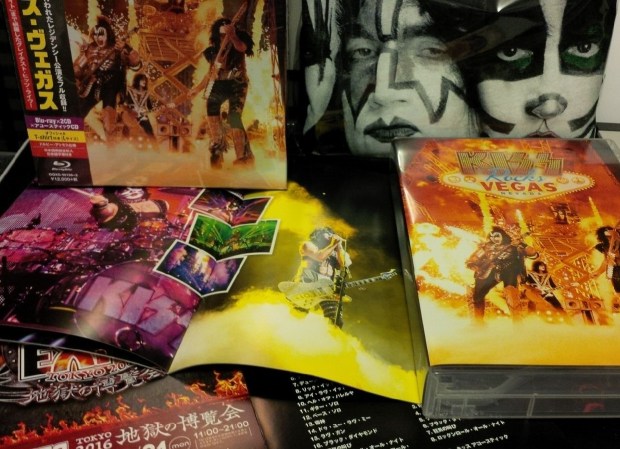
Kiss put on a hell of a show for their nine gig run in Las Vegas.  You could argue that spectacle is 50% of the Kiss experience.  That said, the audio has to hold up, and it does.  I gave it two spins before review: one at home and one in the car, and only after that did I put on the Blu-ray.  As expected, Paul Stanley’s voice is the chink in the armour.  But it is the only one.  This is one of the most musically capable versions of Kiss ever, and vocally they can’t be touched.  When Tommy Thayer, Eric Singer, and Gene Simmons start to harmonize together, it becomes a far stronger beast.  This is how Kiss have adapted to Paul’s current vocal shortcomings, and on a whole it works.  Check out “Tears Are Falling” for a version of a song that gets a serious boost thanks to these guys singing backup.  Now get ready to rock for the next 80 minutes.  Of note, some of Paul’s stage raps are trimmed for time on the CD version, as is Gene’s “bass solo”/blood spitting/flying.  The video has the whole enchilada.

The audio is clear; Gene’s bass nicely audible and in the pocket.  With the 5.1 surround sound cranked, let’s dive into the Kiss Blu-ray, a fine shining example of hi-def rock video.  You can try to count the sparkles on Paul’s guitar, when they open with “Detroit Rock City”.  Their stage looks like a cross between the Creatures-era tank stage and a Dalek.  Giant screens ensure everybody gets a good view, which is a good thing since there is so much going on.  From “Detroit” into “Creatures” itself,  and then “Psycho Circus”, Kiss started the show with three of their classic openers from three different eras!  On screen it’s clear Paul Stanley is still in excellent physical shape.  He doesn’t look like someone who’s had a double hip replacement.   He hops around a bit, plays guitar between his legs, and dances up a storm as always.

IMG_20160904_191221

Kudos must be given to Tommy Thayer, who takes many of the flashier solos from 80’s Kiss and adapts them to the style of the 70’s that Kiss tend to ply most.  Tommy’s re-imagining of guitar solos and giving them a Frehley-like vibe is one reason to check out new live versions of these Kiss classics.  Never to be underrated is Eric Singer, a talent to be reckoned with in this band.  His beats are always perfect, but so is his voice.  As usual, he sings “Black Diamond” towards the end of the show, with respect and class.

Other setlist highlights:

Gene’s “War Machine” from Creatures (Gene blows fire at the end).  Paul’s “Tears are Falling” from Asylum (“Some of you weren’t born in 1985!” says Paul, accurately observing his audience).   “Lick It Up”, featuring Kiss’ sometimes-segue into “Won’t Get Fooled Again”.  “Hell or Hallelujah”, from Monster.  “God of Thunder” with its flying Gene, and playing way up high on a tiny little platform.  Paul running out to sing on a catwalk suspended over the crowd on “Love Gun”.  All of this is served up with lights, lasers, explosions, levitating platforms and larger-than-life sparkle.  Kiss still deliver it.

Admittedly, when there is so much great live Kiss from the past out there, it’s hard to get excited about a new one.  (Why watch a 2016 live version of “War Machine” when you can watch one from 1983, 1984, 1988 or 2004?)  The added bonus that makes the whole thing hard to say no to is a seven song acoustic set.  This is a makeup-free event in a packed conference room.  A few more rarities are served up here, such as “Love Her All I Can”.  The loose atmosphere is refreshing.  They goof around a bit on “Christine Sixteen” (in harmony!) and Paul helps with some forgotten words on “Goin’ Blind”.  Just don’t go and compare these with the acoustic ones on MTV Unplugged.  That was 20 years ago.  Controversially, Eric sings “Beth”.  The mitigating factor is that this is a small event for fans and not part of the main Vegas concert.  It’s worthwhile to get a version of this release that contains the acoustic portion on the bonus CD.

The Japanese release is an interesting one.  Instead of one CD, the Vegas concert is split over two.  This is probably because the concert is close to the 80 minimum maximum that a CD can hold, and the Japanese usually adhere to a higher manufacturing standard.  They also included a nice T-shirt in a shiny, embossed box.

As usual, any time Kiss release new product, fans will bitch that they’re over the hill.  They’ll complain that there are only two original members left, and that Paul’s voice is but a shadow of what it once was.  While these things are indeed true, Kiss have found a way to continue on with two talented members helping Paul out with the vocal burden.  If you don’t like it, fair play.  But let the rest of us continue to enjoy Kiss without your negativity.

3.5/5 stars

CD 1
1. “Detroit Rock City”
2. “Creatures of the Night”
3. “Psycho Circus”
4. “Parasite”
5. “War Machine”
6. “Tears are Falling”
7. “Deuce”
8. “Lick it Up”
9. “I Love it Loud”

CD 2
1. “Hell or Hallelujah”
2. Tommy guitar solo
3. “God of Thunder”
4. “Do You Love Me?”
5. “Love Gun”
6. “Black Diamond”
7. “Shout it Out Loud”
8. “Rock and Roll All Night”

CD 3 – Kiss Acoustic
1. “Comin’ Home”
2. “Plaster Caster”
3. “Hard Luck Woman”
4. “Christine Sixteen”
5. “Goin’ Blind”
6. “Love Her All I Can”
7. “Beth”


REVIEW: AC/DC – Live (Remastered 2 CD collector’s edition)

AC/DC – Live (1992, 2003 Epic remastered collector’s edition)

AC/DC and their label did something very clever for their first live album with Brian Johnson in 1992.  Instead of putting out a full-on and expensive double live album (well over $30 on CD in the 90’s) they allowed fans to choose a more economic option.  A single “highlights” version of AC/DC Live was released simultaneously with 14 of the 23 tracks on one disc.  AC/DC must have been one of the first bands to release a “collector’s edition” of an album with an extra CD at a higher price.

Of course to a real AC/DC fan, the single disc is for rookies.  Sure, its firepower can’t be denied, but anybody with the dollars and a hard-on for AC/DC shelled out for the double.  Their last live release was 1978’s If You Want Blood You’ve Got It with Bon Scott, a mere single disc.

Here’s the only serious flaw with AC/DC Live (either version).  Like The Razors Edge, it was produced by Bruce Fairbairn.  Why would AC/DC need a studio guy like Fairbairn to produce a live album?  Astute fans have picked apart the release and compared it to bootleg recordings from the same shows.  Like most live albums, even AC/DC succumbed to post-concert studio overdubs.  This is not particularly obvious on one listen, but it was always suspected due to the clean and near-perfect sound of AC/DC Live.  Where is the raunch?  Mixed out and overdubbed.   That’s unfortunate.  More bands should just pick the version of a song they like best, suck it up and put it on the album as-is.

Since 1992, AC/DC have released a lot of live material, both current and from the Bon era.  Notable is Live at River Plate (2012), another double, with Phil Rudd on drums.  A valid question would be, “How badly does a fan really need AC/DC Live in 2016?”  With so much to choose from, especially on DVD, AC/DC Live serves today as an historic document.  The Razors Edge album was a huge comeback for a band that never stopped, the tour was massive, and the resultant album is a document of this period.  With period hits like “Moneytalks” and “Heatseeker”, there are a few songs you won’t get live on some other releases.  (These two are even on the single CD version.)  There are also a couple nice long extended Angus jams, if you’re into the solos.  Lastly, AC/DC Live is the only live album with then (and present) drummer Chris Slade.  While no one will deny that Phil Rudd is “the man” when it comes to AC/DC, Chris Slade is well-liked and deserves his place in history.  He’s even on the album cover.

Scan_20160815 (2)

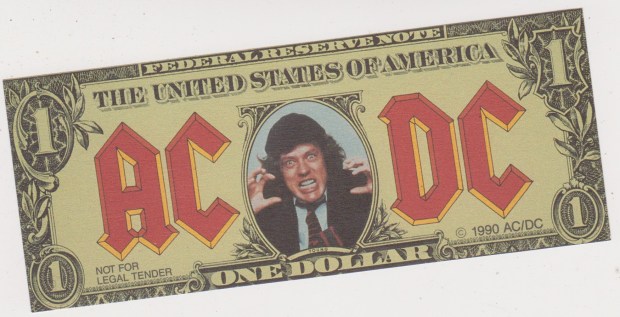
Of note, the original (non-remastered) printing of AC/DC Live came with a neat bonus:  a little Angus $1 bill, like the ones they used to drop on the crowd during “Moneytalks”.  This memento was not included in the remaster, so when I traded my original copy in for a remaster I said “fuck it” and kept the $1 bill.  It’s too cool to throw away, and I’m sure many of those old Angus bills have been lost or destroyed since.

Ever so lucky, the Japanese fans received a bonus track:  “Hell Ain’t A Bad Place to Be”.  Fear not, everyone else.  This track was included on the live 1992 “Highway to Hell” single, which is fairly common.  Worth tracking down; it’s also on the Backtracks box set.

3.5/5 stars

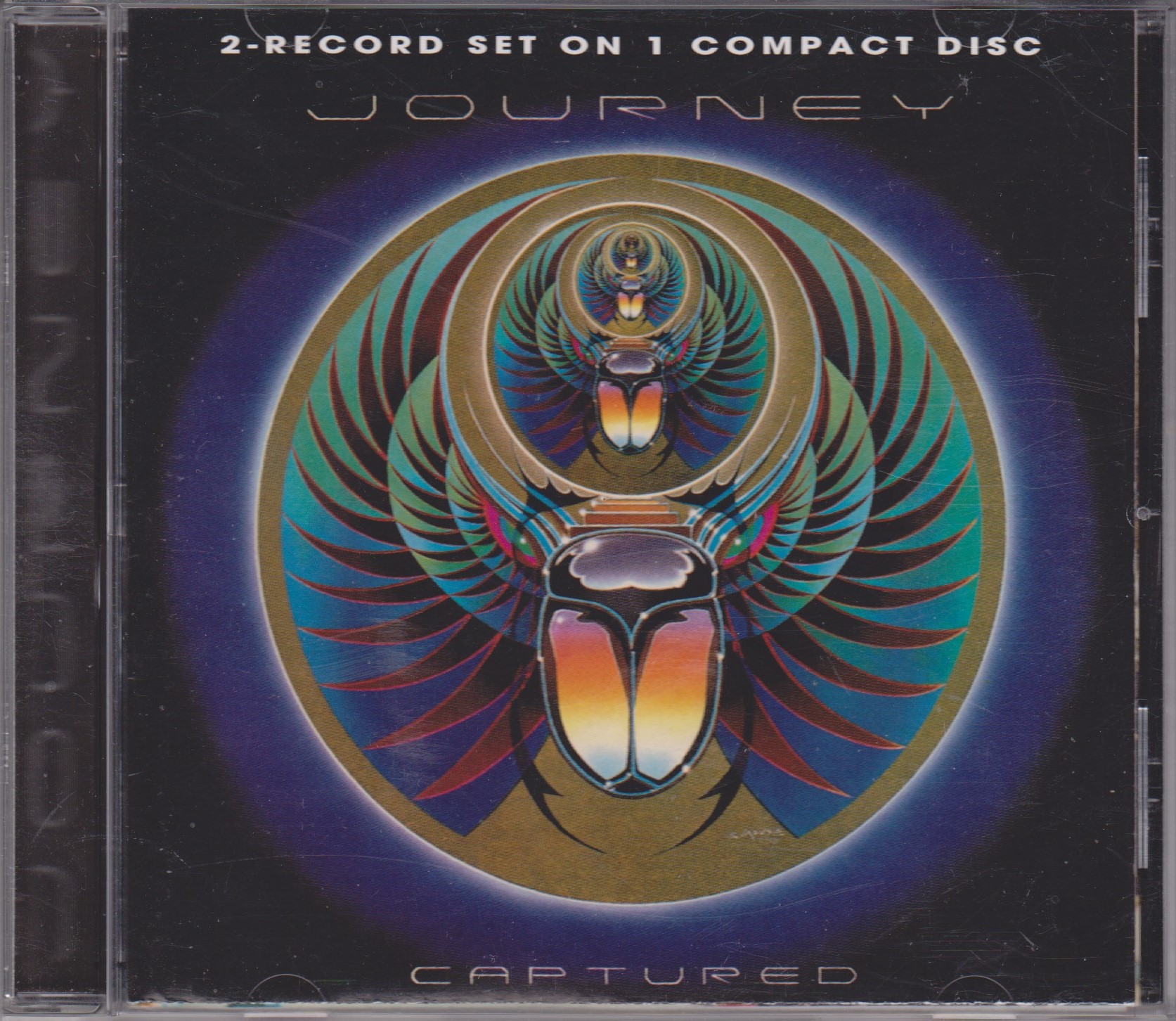
REVIEW: Journey – Captured (1981)

Scan_20160722JOURNEY – Captured (1981 Columbia, 1996 Sony SBM remaster)

Captured was a turning point for Journey.  After this, they went from mega to uber-mega.  It was their first live album, and their last with founding keyboardist and singer Gregg Rolie (who actually sang lead in Journey on their first three albums, before they discovered Steve Perry).  When Rolie left and Journey hired on Jonathan Cain, they went in an even more radio-friendly direction.  The live album captured (pun intended) the end of the Rolie era with basically every hit they had.  They were more of a rock and roll band back then, and this album shows it.

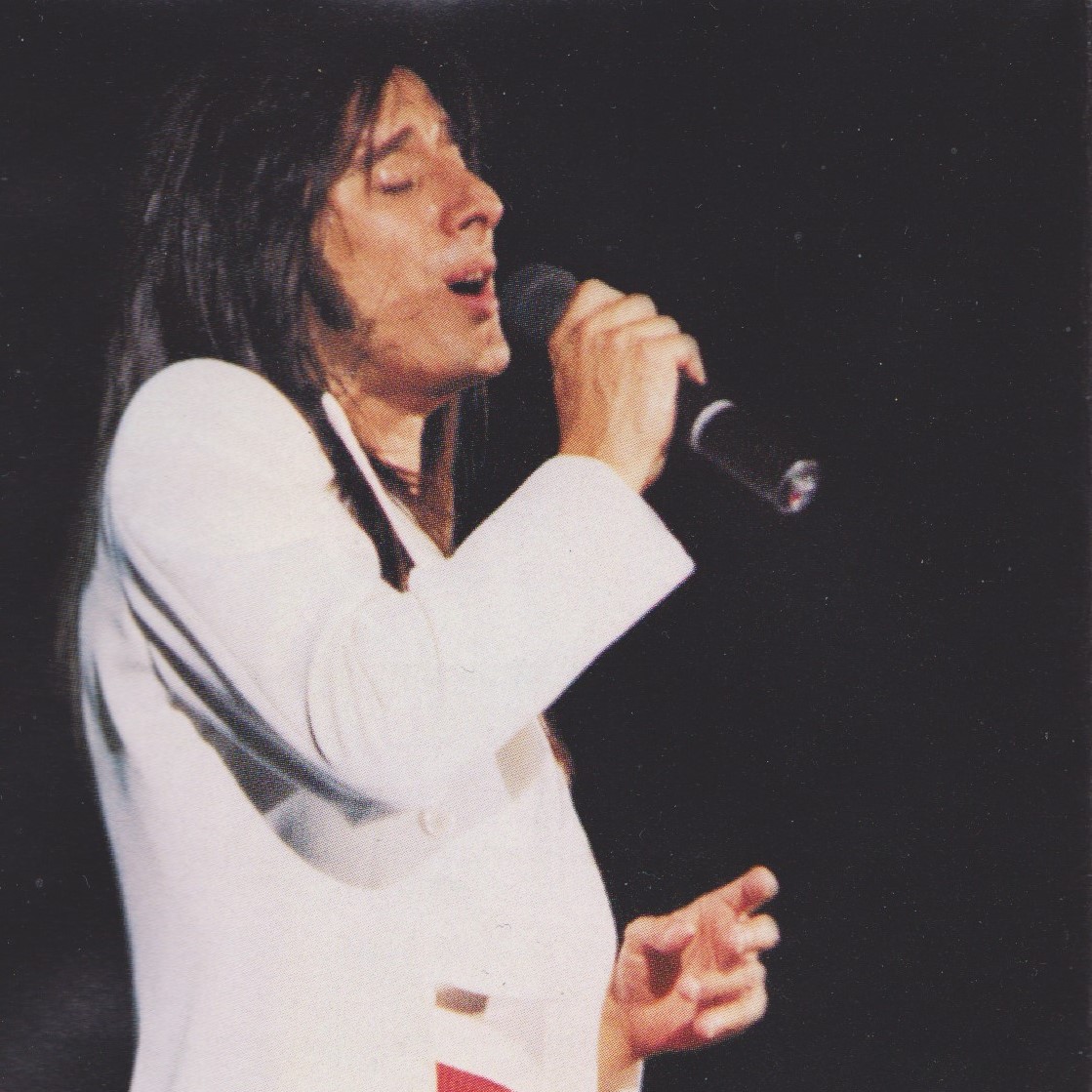
The scorching heat of “Where Were You” is the perfect track to prime the rock n’ roll BBQ.  Journey’s brand of rock is driving, but polished to a shimmery gleen.  This is partly due to the impeccable pipes of Steve Perry.  I’m not sure if Steve has even heard of a bum note, let along sung one.  But Perry was only one of two singers in Journey, and Rolie has his first lead on the mid-tempo pleaser “Just the Same Way”.  Although he is not comparable to Perry, he’s no slouch and the different singers gave Journey more dimension.

Blazingly fast, the gleeful “Line of Fire” is the hardest rocker on the album. “So don’t go sayin’ Stevie’s a liar!” he sings, and the crowd goes nuts. But Journey are probably better associated in the public eye with tender ballads. “Lights” live is a definitive version. It merges into another beautiful ballad, “Stay Awhile”. Perry’s singing here is so splendid, so perfect, so soulful and powerful that it’s hard not to just be amazed. Not to be outdone is Neal Schon with one of his most memorable guitar solos on “Lights”. A pretty version of “Too Late” makes it a trilogy.

Scan_20160722 (3)One of the coolest treats on Captured is a new song, “Dixie Highway”, that was never recorded on a studio album. Boogie with Journey down the Dixie Highway and listen to that blazing musicianship, more progressive rock at times than radio friendly AOR. Then it’s the Rolie/Perry duet “Feeling That Way”, an out-and-out classic. The combined sheer lung power on that stage that night could not be measured by science. It is said by some that all the canines within the city of Detroit suddenly perked their ears simultaneously at that moment, with a spill-off effect happening in areas of close proximity across the border in Canada. The University of Marysville is currently investigating these reports, hoping to calculate numerically just how much Steve and Rolie sang their fucking balls off that night.

Rolling right into “Anytime” and “Do You Recall”, the listener is treated to some lesser-recognized Journey classics that are as good or better than their biggest hits. “Do You Recall” in particular boasts the kind of melodies and smooth rock grooves that radio hits are made of. With that out of the way for now, they go into a blues jam with “Walk Like a Lady”. According to Steve Perry, “We got two of the best blues players in the whole world here tonight. Two of the best! We got Mr. Gregg Rolie on the Hammond B-3 and Mr. Neal Schon on the Stratocaster!” After a blazing Schon solo, Journey blast into “La Do Da”, another one of their lesser-known rock blitzes.  Bass solos!  (By Ross Valory!)  Drum solos! (by Steve “Machine Gun” Smith!)  And then the listener is rewarded for their patience with a string of their biggest hits:  “Lovin’, Touchin’, Squeezin'”, “Wheel in the Sky”, and “Any Way You Want It”.

That’s a hell of a double live album right there.  No, Journey’s Captured is not remembered on the same level as Live and Dangerous, Frampton Comes Alive, or Kiss Alive (I or II).  Captured is certainly great, but somehow falls ever so shy from achieving the same lofty heights as the aforementioned.  It’s difficult to pinpoint exactly why it’s not quite up there.  Perhaps it’s the perfectionist style of the band, because it’s certainly not Steve Perry.

It’s not over though:  Journey included a new song, and their first ever without Gregg Rolie on keys.  Studio cat Stevie “Keys” Roseman filled in, on the ironically piano-based “Hopelessly in Love”.   This unsung classic is one of the strongest Journey songs in the canon.  It’s too bad that it rarely gets pulled out for compilations, instead residing at the end of a near-forgotten live album.

4/5 stars