It’s always risky buying a compilation album from a label “series”. Yesterday, we looked at a Judas Priest compilation from Sony’s Steel Book Series. Over 60 Minutes With… was a CD-only (no tapes, no records) series by Capital/EMI in the late 80’s and early 90’s. I remember seeing it over Christmas break in ’89, and trying to decide whether to buy it, or Ace Frehley’s Trouble Walkin’. (I went with the Ace, and saved the Helix for a month or two later.) I was confused: Here was a brand new Helix CD, with Brent “The Doctor” Doerner right there on the front cover. But hadn’t he left the band? He had, but that was how I could tell this was a semi-official release, driven by the label.
The difference between Over 60 Minutes With…Helix and all the other label compilations is that this one is really, really good. In fact to this day, it is still the one of the best Helix compilations assembled (and it was the first!). Here are some reasons:
1. Rare tracks! Three of them in fact. You get demos for “Give It To You” (a new song re-recorded for the Back For Another Taste CD), “Jaws Of The Tiger” (re-recorded for B-Sides) and “Everybody Pays The Price” (later to be the B-side to “The Storm”).
2. Lots of hits. 21 tracks are contained within, and a good solid six of them were hit singles.
Those two points are enough reason to buy this CD (especially the first). Let’s keep listening.
3. Rocker-to-ballad ratio is a generous 17 : 4. Keep me mind, Helix ballads tend to rock anyway. “Never Wanna Lose You” gets pretty heavy come chorus time!
4.Loads of tunes from No Rest for the Wicked. When this CD came out in ’89, that album was unavailable on CD and scarce on cassette. This CD has seven songs from No Rest! That album, loaded with rockers heavy and melodic, is still one of their very best today. Even though there were only three unreleased songs on Over 60 Minutes With…, there were tons that were brand new to me.
That considered, Over 60 Minutes With… has one serious flaw. The record company only included songs from the first three Capitol Helix albums. Obviously nothing from the independent albums Breaking Loose or White Lace & Black Leather were up for grabs. Strangely though, 1987’s Capitol Wild In The Streets CD is strangely missed. The inclusion of one or two tracks from that album would have been appreciated.
Flaw aside, the liner notes are informative and the track listing is still generous. You certainly don’t want to miss album tracks such as the awesome “You Keep Me Rocking”, the raunchy “Dirty Dog” or the slinky “Check Out The Love”. They are here along with many others. Pick this up, enjoy it, and then explore some of Helix’s proper albums, such as No Rest for the Wicked. This is great, but it’s only the beginning! Gimme an R indeed.
Welcome back to GREATEST HITS WEEK! This week we are looking at different, interesting hits albums from various bands. Today we re- visit the Mighty Priest, for the second of a Priest double-shot!
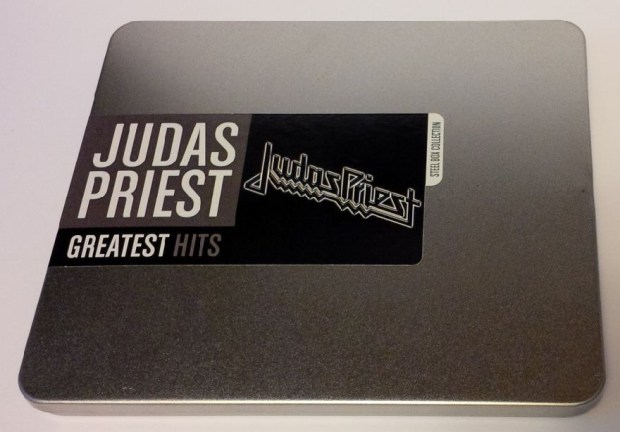
Ever buy a CD for no real good reason? I have all these songs, because I already own every song Priest has ever released. I saw this Judas Priest compilation, from the “Sony Steel Box” collection, at my local Best Buy for a few measly dollars. There are a few artists who have hits albums in this collection, such as Aerosmith. I just wanted one of the steel boxes, so I chose Priest. I chose Priest because of the brief, but interesting track listing. There are some odd choices for a greatest hits disc: “Rock Hard Ride Free”, and “Rock You All Around the World”, for example, instead of “Heading Out to the Highway”, “A Touch of Evil”, “Painkiller”, or other better know singles. Hell, where’s “You’ve Got Another Thing Comin'” or any song from Screaming? You do get two “new” songs from Angel of Retribution. Needless to say, for a 10-track hits CD, it was an interesting selection of songs, so I chose this one. I have only played it once, so it’s time to revisit and assign a rating.
This is where we run into the flaw with these Sony steel boxes — the front cover and back cover art is just a sticker, that wraps around the case. When you open the case, it damages the sticker where it covers the hinge, digging huge creases all over the spine. I’ve opened my copy a couple of times and see what it looks like already? That’s me being careful.
“Breaking the Law” has always worked well in the opening position. Off with a bang (literally; the first sound is a snare drum), we are now off to the races. This Greatest Hits concentrates almost entirely on material from British Steel and after, collecting a lot of Priest music from their simple, straightforward metal period of the 1980’s. There is nothing wrong with that of course, but it lacks the balance that earlier more complex tracks like “Victim of Changes” would have brought to the table. “Breaking the Law” and “Living After Midnight”, both classics culled from British Steel, get the job done on a hit laden note. The sound is fine, as it appears these were lifted from the Priest remasters.
I’m not sure the logic in choosing “Out of the Cold”, a synth-laden slow crawler from Turbo. There is nothing wrong with it of course, it was and remains a stormy fan classic. That’s just it though, it’s a fan classic, not a well known hit that the band play in concert. On a 10 song CD, it seems an odd choice, but it leads well into the dark “Love Bites”. I went through a period of about three days in grade 8 of being completely obsessed with this song. The things I liked about it, such as the choppy rhythms and hypnotic vocals, are still striking today. It also flows perfectly into “Rock You All Around the World”, which unfortunately is pretty much just filler that should have been donated to the Scorpions.
I still think it terms of albums having “sides”, and I wonder if whoever sequenced this CD had the same thought? “Rock You All Around the World” is a great side closer, as it filled that slot on Turbo. Then the next track is the very different “Diamonds and Rust” (live version from Unleashed in the East). It’s as if you have started a new side. Another track from Defenders of the Faith (“Rock Hard Ride Free”) brings the listener back to the 80’s. Although it was not a single, it was good enough to be one. Back to the Turbo album for the third time, “Turbo Lover” is a song that still gets occasional radio airplay. It’s funny how this robotic and very dated song is still loved today. I wouldn’t have predicted that.
“Turbo Lover” is the last of the golden oldies, since the last two tracks are off Angel of Retribution, Priest’s glorious reunion album with Rob Halford after a long solo career. Strange though that the single “Revolution” is not one of these tracks. “Deal With the Devil” was an OK tune, a good heavy album tune that was of the same quality as similar songs from Painkiller. “Worth Fighting For” was excellent – a midtempo quiet rocker that almost borders on ballad territory. This song was a triumph, a really excellent song worth of the Priest canon. Unfortunately in this case, a quiet midtempo near-ballad does not work to close a Priest compilation. It works as a song to build into another song, but here it just leaves you hanging. Sloppy sequencing.
Rating the steel book CD is not a reflection on the songs or the band, just the CD itself. There are too many serious omissions (“Metal Gods:, “Freewheel Burning”, hello!) for it to rate highly. The flawed packaging design is the final nail in the steel box.
Welcome back to GREATEST HITS WEEK! This week we are looking at different, interesting hits albums from various bands. Today we visit the Mighty Priest!
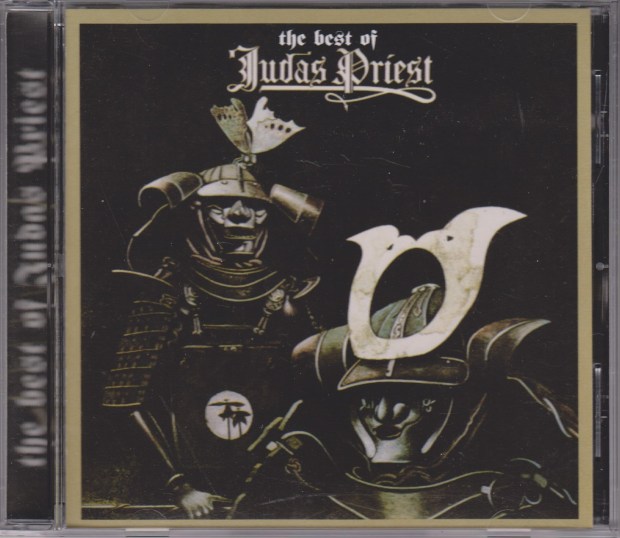
JUDAS PRIEST – The Best of Judas Priest(1978 Gull, 2000 Koch Insight Series reissue)
The abbreviated story: Judas Priests’s first two albums, Rocka Rolla and Sad Wings of Destiny, were released on Gull records. Priest’s first album for Columbia was Sin After Sin in 1977. When they made the move to the bigger label, they lost all rights for their first albums to Gull. The label proceeded to issue and reissue unauthorized compilations of those songs. They even had Rocka Rolla remixed in its entirety by Rodger Bain and reissued in 1981 as part of the double album Hero, Hero.
The Best of Judas Priest was the first exploitive release by Gull, in 1978. It would have been frustrating for the band to be out there promoting the new album, Stained Class (1978) when the unauthorized Best of hit the shelves. Whenever asked about it, Priest have discouraged fans from spending their money on these Gull releases. That was especially true when Best of Judas Priest was reissued again in 2000 by Koch records as part of the “Insight Series”. They even placed a disclaimer on the official Judas Priest site advising fans to stay away from this CD in particular. What really seemed to chap their collective ass was that the “Insight Series” contained a lengthy interview with former drummer John Hinch, who was really in the band for only a short time and was fired due to “lack of ability” (their words).
We at LeBrain HQ have acquired a copy for research purposes!
The Best of opens with 10 minutes of slow sludge from Rocka Rolla in the form of “Dying to Meet You” and “Never Satisfied”. Poor sequencing aside, it is surprising that the up-tempo “One for the Road” is nowhere to be found. Some heat is finally in the kitchen on Joan Baez’ “Diamonds and Rust”, an early unreleased version. This too must have peeved the Priest. This was recorded during the Sad Wings of Destiny sessions, but ultimately left off the album. Not wanting to let the arrangement go to waste, it was re-recorded for Sin After Sin with Roger Glover producing. This earlier version, out the following year, probably confused a few fans who bought both albums. The Sad Wings version is of high quality. It lacks the crispness of the Glover recording, but should be absolutely essential to collectors today. It can be found on a number of releases including Hero, Hero.
“Victim of Changes” was and is a high water mark. It’s actually an amalgam of part of a song Rob Halford wrote (“Red Light Lady”) with a song by original Priest singer and founder, Al Atkins (“Whiskey Woman”). To this day, has Halford ever used his scream more effectively? “Victim of Changes” is nothing less than a desert island classic. “Victim”, and the rest of the songs, all come of Priest’s immortal second album Sad Wings of Destiny.
“Island of Domination” is not a place you want to visit: “We gotta get, we gotta get, we gotta get out of this place. There’s a man with a needle who’s pleading to get to my face.” The speedy metal delight keeps you there anyway. “The Ripper” is a brief but undeniable classic, another highpoint from the Gull years. Finally, “Deceiver” is separated from its first chapter, “Dreamer Deceiver”. It does sound odd without its companion, but for a brief and explosive rock song to end a side of vinyl, it is certainly more than up to the task.
Finally there is the infamous 18 minute John Hinch interview that so upset the Priest camp upon its release. Hinch discusses his history with the band, going back to forming a band with Rob Halford called Hiroshima. Perhaps the guys in Priest were peeved when Hinch recalls playing on the same bill as Judas Priest, who he says were “horrible”. His description of KK Downing as a “strutting lead guitarist [with] long blonde hair,” isn’t complimentary. Ian Hill invited Rob and Hinch to join the band to replace Al Atkins, and their drummer Chris “Congo” Campbell. According to Hinch, they did so reluctantly and with a desire to change the name. This critique turns to praise, especially after Glenn Tipton joined the band to fill out the sound. Perhaps his recollections don’t match those of the band, but it is otherwise impossible to find any other interviews with the drummer from Priest’s first album. If you want a perspective from the drum stool in 1974, here it is. What’s missing is any comment on why he was let go.
Ultimately it is up to the fan to decide where to draw the line on what to buy, and what not to buy. Since the early “Diamonds and Rust” is also on Hero, Hero, one could choose to only buy that release, if they decide they don’t need the Hinch interview. One could even buy both, or neither. Personally speaking, I would have bought this anyway if only for the unique cover art. It is your decision, but The Best of Judas Priest is a decent listen.
Welcome to GREATEST HITS WEEK! This is an idea I nicked from Aaron over at the KMA. (For his original Greatest Hits Week, click here!)
All week, we will be looking at different (and I hope interesting) hits albums from various groups. Let’s get this one out of the way first though: the proverbial contractual obligation album!
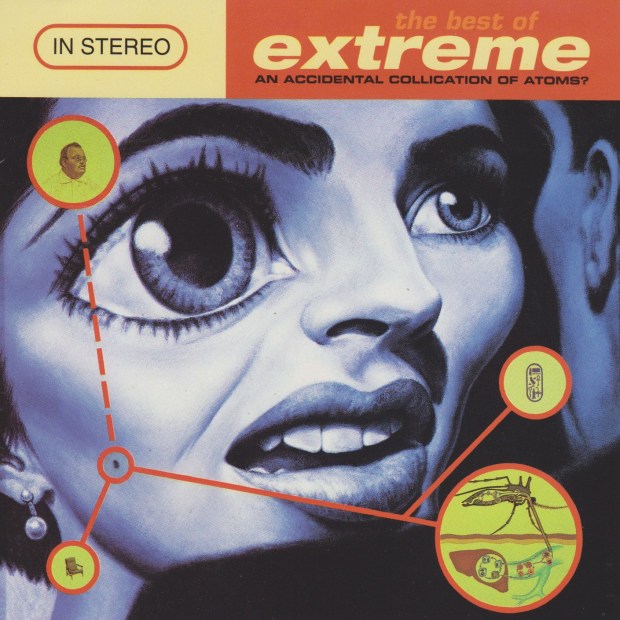
EXTREME – The Best of Extreme: An Accidental Collication of Atoms? (1997 A&M)
The best of Extreme? Perhaps, by some arguments, but the ball sure was fumbled, with this CD that fails to keep the attention from flagging.
The Best of Extreme (subtitled An Accidental Collication of Atoms?, whatever the hell that’s supposed to mean) plays it straight, in a paint-by-numbers kind of way. Pretty much every song here is a single, though not many were very big singles. The thing is, like more respected bands such as King’s X (with whom they shared management), Extreme were about albums much more so than singles. First record aside, Extreme never failed to impress with a cohesive collection of jaw-dropping rock. So what happens when you take a record company suit (or a room full of them) and assign them the duty of picking a baker’s dozen of tracks for the requisite greatest hits CD? You get an accidental collication of atoms, apparently.
Opening with “Decadence Dance” was a great idea, but why leave on the rain storm and narration that opens the album version of the song? Why not use the dynamite single version? That intro makes little sense in context of a greatest hits disc. Great song, though — in fact every single song here is bonafied great! With the possible exception of “Kid Ego”, every track here was always of the utmost quality, delivering innovation and hooks. “Rest in Peace” – brilliantly produced, written and performed. “Tragic Comic” – just pure class acoustic rock as only Extreme deliver. Same with the massive hit “Hole Hearted”. “Hip Today” – still aggressive to this day. That was Extreme’s first single with Mike Mangini on drums, incidentally.
So you can’t knock the tunes, at all. It’s the crummy execution that’s the problem. The rain at the beginning of Decadence Dance is one such example. Then on “Rest in Peace”, the guitar outro that normally leads into “Politicalamity” is retained, but it ends abruptly and leads into nothing. That is sequenced into “Kid Ego” from the first album, which as an awkward transition. “Leave Me Alone” works better as a side opener. There’s no reason behind the track listing that I can imagine. It’s not chronological, and it doesn’t flow well, especially when you hit 11 minutes of ballads right in the middle of the whole thing. The booklet is a joke, with no liner notes of any value. It’s just a slathering of images that has nothing to do with Extreme or any of their past albums. Just lazy. Nobody would even cop to compiling it by putting their name in the credits. The anonymous compilers are as faceless as the CD they created. The band had been broken up for a while, when Gary Cherone joined Van Halen. This was just a record company trying to squeeze a few more dollars out of a band that had little value in 1997 dollars.
There are two touches I like on The Best of Extreme. One is the “Horn Mix” of “Cupid’s Dead”. I don’t have this on any singles in my collection, so thank you, suits! (I know you included this remix just for idiots like me that would buy an entire CD just for one song. However the joke is on you. I bought it used from my own Bargain Bin.) It’s a killer remix. It should have been this way on the album. Maybe somebody said, “We can’t have too many horns! One has to go.” It’s also nice to see “Am I Ever Gonna Change” closing the CD. That “song” is actually just the middle section of “Everything Under the Sun”, the side-long epic that closed Extreme III Sides to Every Story. It was one of the more single-like moments from an album that offered few such songs. Fans have long said that it should have been a single, so it is interesting to hear it here, amputated from its parent song.
Unless you need that “Cupid’s Dead” remix, you don’t need this CD.
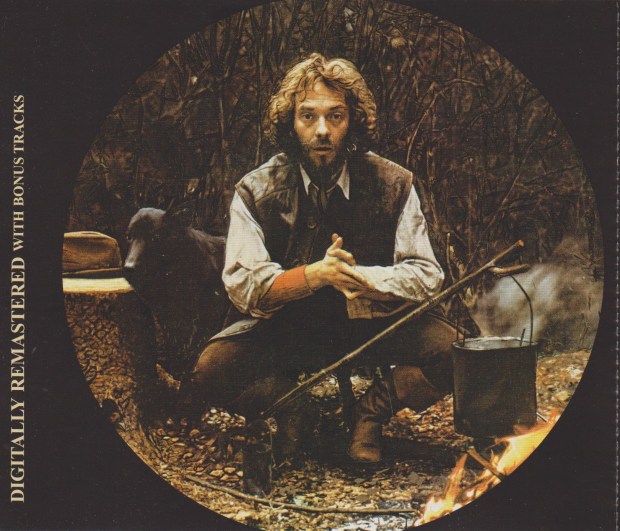
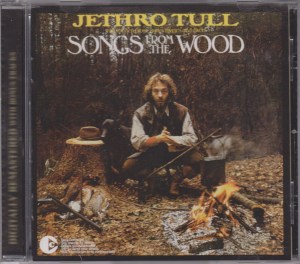
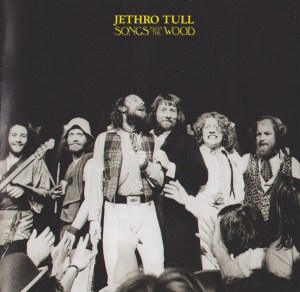
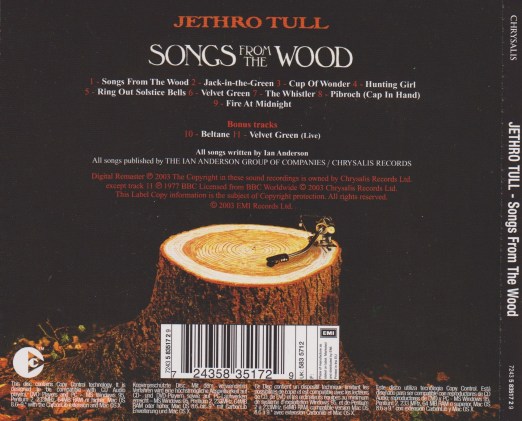
JETHRO TULL – Songs From the Wood (1977, EMI 2003, remaster)
I love the jaunty, lighter side of Jethro Tull. One of the reasons I started listening to Tull was that acoustic side. It’s unique among rock bands. They could still be pompous, but in a fun kind of way. The critics called it “folk rock”, but that is misleading. It’s much more complicated than that. Songs From the Wood might be considered the epitome of this kind of Tull music. It was also the first for keyboardist David Palmer as an official member of the band, and perhaps that has something to do with the direction of the album.
The title track begins things immediately with this type of soft playful Tull song. A multi-layered Ian Anderson sings harmonies with himself, and then the band come in backing him with gleeful but complex music. Palmer’s synthesizer is immediately obvious, as he doubles down with John Evan, also on keys. Certainly Barriemore Barlow has to be one of the most underrated drummers in rock, and his work here is as excellent as it is difficult.
Ian plays all the instruments himself on personal favourite “Jack-in-the-Green”. This character from old English folklore is usually associated with the coming of spring, and the music is appropriate for that kind of imagery. This kind of song was in part inspired by the countryside that Ian had relocated to. While there he read a book on folklore, and that made its way into the music. It’s hard not to like “Jack-in-the-Green”, unless you’re just a Grinch. “Cup of Wonder” is brilliant, a celebration with orchestration and bright melodies.
“Hunting Girl” is the first song that delivers a big heavy riff (thank you Martin Barre). The song has a gallop to it, as if you are riding horseback with the Hunting Girl herself. Martin’s guitar solo is a delight, a brief moment of rock genius. Up next is a song that was re-recorded many years later for The Jethro Tull Christmas Album: “Ring Out Solstice Bells”. It doesn’t feel at all out of place on Songs From the Wood. It fits the direction and lyrical concept of other songs, with the solstice theme. Barrie Barlow’s drums on the outro are something else!
Side two of the album opened with “Velvet Green”, a very percussive song. Of the tracks thus far, it is the least instantaneous. It’s one of the longest track at six minutes, and has a very progressive bent. “The Whistler” on the other hand is pretty instant. I used to mis-hear the lyrics. I thought Ian was singing, “I have a pipe, and I’ve come to play.” I prefer my words to the actual ones, “I have a fife and a drum to play.” This brilliant little song is about as bright and jaunty as Tull get. “Pibroch (Cap in Hand)” gives Martin Barre a chance to make a lot of cool noises…weirdly Kiss-like, actually. “Pibroch” is a long bomber (8:35) and a bit too long at that, but the moments of brilliance shine through, as always. Especially enjoyable are the quaint “Dr. Who” sounding keyboards near the end. Just great stuff. The closer is “Fire at Midnight”, a title that Blackmore seems to have ripped off for his Fires at Midnight album. It is a brief mostly-acoustic number that returns to the bright spring-like sound that commenced the album.
The Jethro Tull remaster series has been excellent. Songs From the Wood only has two bonus tracks, which is a darn shame. “Beltane” shares lyrical themes with other songs on the album. I don’t know if it’s a B-side or what have you, but it’s clearly from these sessions. It boasts some of Ian’s best flute work on the disc. It’s of excellent quality, a worthy bonus track for a great album. The other extra is a live version of “Velvet Green”, every bit as complex as its studio counterpart. It’s a bit more lively, perhaps.
People who like Tull would probably love this album because it emphasizes a lot of traits that are unique about Jethro Tull. Those who hate “folk rock” or progressive rock, or whatever else Tull gets pigeonholed as (classic rock?*) should keep their distance from Songs From the Wood.
RECORD STORE TALES MkII: Getting More Tale #422: Sausagefest 2015 – The Complete Countdown
The annual trek to Sausagefest is centred upon the always epic Countdown. There were many misadventures on the way to the Countdown, and after. While I am sworn to abide by the credo “What happens at Sausagefest stays at Sausagefest,” I am also bound by my own nature as a storyteller. Therefore, I can share with you a number of brief tidbits, hints, and insinuations.
Yes founder Chris Squire died only days before the Sausagefest countdown. It was too late to include a tribute a Squire tribute into the countdown itself, so Tom and Uncle Meat sequenced about an hour of Squire’s best music to precede the actual countdown. This was a promising hour, but upon hitting “play” on the laptop, it was immediately obvious that something was wrong. We were only getting one channel. Yes music, with its layers and wide stereo panning, turned out to be great music to test the four speakers. Unfortunately it took almost all of the Squire-allotted time, seventeen men* and one record producer to figure out that all the muss was being caused by an RCA adapter somewhere. We got two Squire songs, excellent as they were.
The Countdown this year was informally dubbed “The Greatest Songs of All Time”, because for the first time in years, the slate had been cleared and any and all songs were open for voting. Because of this anything goes approach and some younger blood, we got to hear a lot of classic tunes that often are either overlooked or just not up for grabs. I’m sure this was the first ever appearance of Boston on the countdown. I can probably say the same for Foreigner. These top ten hits are offset by more obscure favourites by Ian Thomas and UFO.
Now below, please analyse and enjoy the one and only OFFICIAL 2015 Sausagefest Countdown. Every track was a winner. I’ve highlighted songs I voted for (only two this year).
1
Battle Scar
Max Webster/Rush
2
Shine on You Crazy Diamond^
Pink Floyd
3
Hallowed be Thy Name
Iron Maiden
4
Working Man
Rush
5
Sultans of Swing
Dire Straits
6
La Villa Strangiato
Rush
7
Eulogy for the Damned
Orange Goblin
8
When the Levee Breaks
Led Zeppelin
9
Natural Science
Rush
10
A Day in the Life
The Beatles/War mashup
^ The whole thing…parts I-IX.
Look at that majesty. FOUR RUSH SONGS IN THE TOP TEN!
11
Fatso Forgetso
Kyuss
12
Heaven and Hell
Black Sabbath
13
Toronto Tontos
Max Webster
14
Wish You Were Here
Pink Floyd
15
Superstition
Stevie Wonder
16
Rime of the Ancient Mariner
Iron Maiden
17
Master of Puppets
Metallica
18
End of my Daze
Trouble
19
Papa Was a Rolling Stone
The Temptations
20
The Trooper
Iron Maiden
21
Ramble Tamble
Creedence Clearwater Revival
22
War Pigs
Black Sabbath
23
Penis Ground
Groove Daddys
24
The Ocean
Led Zeppelin
25
Stranglehold
Ted Nugent
26
Sympathy for the Devil
The Rolling Stones
27
Muffin Man
Frank Zappa
28
Smokin’
Boston
29
Child in Time (Live ’72)
Deep Purple
30
Aces High
Iron Maiden
31
Into the Void
Black Sabbath
32
25 or 6 to 4
Chicago
33
Machine Gun
Jimi Hendrix/Band of Gypsies
34
Doctor Doctor
UFO
35
Kashmir
Led Zeppelin
36
Old Man
Neil Young
37
Suite: Judy Blue Eyes
CSNY
38
Illegal Smile
John Prine
39
Testify
Rage Against the Machine
40
Get Up Offa That Thing
James Brown
41
Belzelboss
Tenacious D
42
Emerald
Thin Lizzy
43
Sweatleaf
Black Sabbath
44
Tribute
Tenacious D
45
Tres Brujas
The Sword
46
I
Black Sabbath
47
The Temples of Syrinx
Rush
48
Space Oddity
David Bowie
49
46 & 2
Tool
“Then I fuckin’ diddle-riddle-dee-doo.”
50
Monkberry Moon Delight
Paul McCartney & Wings
51
39
Tenacious D
52
What is Hip?
Tower of Power
53
Over the Hills and Far Away
Led Zeppelin
54
The Mob Goes Wild
Clutch
55
Better Living Through Chemistry
Queens of the Stone Age
56
Mongoose
Fu Manchu
57
Roadhouse Blues
The Doors
58
Inside Looking Out
Grand Funk Railroad
59
Hurt
Johnny Cash
60
Don’t Stop Me Now
Queen
61
Careful with that Axe Eugene
Pink Floyd
62
The Chain
Fleetwood Mac
63
Ophelia
The Band
64
Jukebox Hero
Foreigner
65
Fairies Wear Boots
Black Sabbath
66
Where the Devil Don’t Stay
Drive By Truckers
67
Fat Bottomed Girls
Queen
68
Under Pressure
Queen
69
Fools Overture
Supertramp
70
The Pot
Tool
71
Tempus Fugit
Yes
72
Thunderstruck
AC/DC
73
Green Eyed Lady
Sugarloaf
74
Duke’s Travels
Genesis
75
Red Hot Mama
Funkadelic
76
Painted Ladies
Ian Thomas
77
Down by the River
Neil Young
Please note that double-shot of Queen, above!
Also note the presence of “Penis Ground” by the Groove Daddys (not to be confused with the Groove Daddies, or Groove Daddy). This was a local trio fronted by guitarist and singer extraordinaire Rob Szabo. I certainly didn’t expect anything that obscure making the list, considering the diversity of folks that attend. To rank all the way up at #23? That’s proof of the sheer quality of the music. Indi enough for ya?
Once again, a huge thanks to Tom, Meat and everyone else for working so hard for us. Thanks Craig Fee and Jeff Woods for your much-appreciated willingness to go above and beyond the call of duty. And lastly thanks to Uncle Meat for being such a delightful travel-mate this year. Enjoy some of these pictures from the weekend, official video still to follow!
The Setup:
How many ‘Festers does it take…
There are like two wires, Tom.
Supervisin’.
The Live Bands:
The Fest:
The Aftermath:
* I didn’t take a head-count, but I swear if it wasn’t seventeen guys trying to fix the thing, it was close. It doesn’t really matter because more wouldn’t have helped!
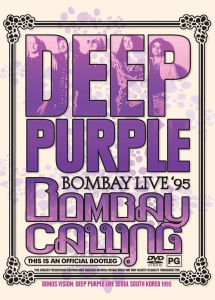
DEEP PURPLE – Bombay Calling – Bombay Live ’95 (2003 iTunes)
There are very rare circumstances under which I will pay for a download from iTunes. I’ve made my case for physical product here over the years many, many times. When it’s a band that I obsessively collect, like Deep Purple, I make an exception. Bombay Calling is an interesting live release. It says “Official Bootleg” right there on the cover art, but I’m not really sure what constitutes an official bootleg anymore. I look at this as the soundtrack to a DVD that Deep Purple released in 2000, also called Bombay Calling. That’s essentially what this is — the audio to Bombay Calling, the DVD. In contains the entire show.
This concert was recorded on April 18 1995, which eagle-eyed fans will realize is well before thePurpendicular album. Bombay Calling was recorded not long after “the banjo player took a hike” and Purple carried on without Ritchie Blackmore. Joe Satriani stepped in for a short while, but it was Dixie Dregs guitar maestro Steve Morse that took the Man in Black’s place permanently. This concert was recorded at the very start of Morse’s tenure, and features a few songs they would drop from the set a year or two later. It also features a brand new tune they were working on called “Perpendicular Waltz”, later changed to “The Purpendicular Waltz” on the album.
There is one earlier concert available from this period, which is Purple Sunshine in Ft. Lauderdale Florida, exactly two weeks prior. That one is truly is an official bootleg, taken from audience sources and released on the 12 CD box set Collector’s Edition: The Bootleg Series 1984-2000. The setlists are slightly different. When they hit India for this concert, a new song called “Ken the Mechanic” (retitled “Ted the Mechanic”) was dropped, as was “Anyone’s Daughter”. They were replaced by long time favourites “Maybe I’m a Leo” and “Space Truckin'” from Machine Head.
Special treats for the ears on Bombay Calling include Steve Morse’s incendiary soloing on “Anya” (which would be dropped from the set in 1996). His feature solo leading into “Lazy” is also excellent, and of course very different from what Ritchie used to do. Jon Lord’s keyboard solo is among the best I’ve heard, and even features a segue into “Soldier of Fortune” from Stormbringer. The solo segments that Deep Purple did often allowed them to play snippets from songs from the David Coverdale period of the band, and this one was unexpected and brilliant.
I love a good, raw live performance captured on tape, and Deep Purple don’t muck around. This one is kind of special, coming from that transitional period when Steve Morse was just getting his feet wet. Considering how different he is from Ritchie Blackmore, this smooth switcheroo is quite remarkable. The band had changed, but into something just as good. How many other groups can make that claim?
3.5/5 stars
Since you can’t take a picture of a non-physical product, here are pictures of the 2 CD set that I burned from the iTunes download!
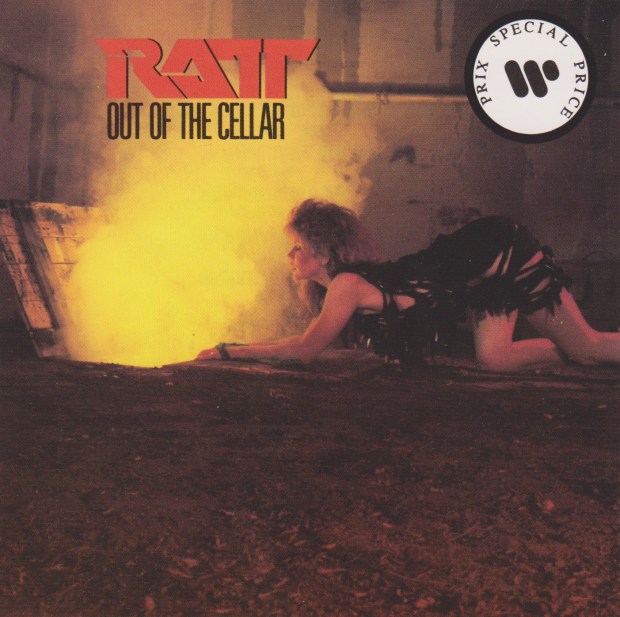
Out of the Cellar was my first Ratt album, acquired in a trade from next door neighbour George. Considering how big Ratt were at the time, I expected it to be better. In the 80’s, I felt like Out of the Cellar was a handful of singles padded out by filler. I haven’t played the whole album in years (at least five), so this review is coming from a fresh perspective. Dusting off the CD, I note on the credits the name of producer Beau Hill — never one of my favourites.
One of the aforementioned singles, “Wanted Man”, opens the album on an up note. The cowboy motif has been popular in hard rock at least since David Lee Roth wore buttless chaps. Tough, slow and menacing is “Wanted Man”. Everything about it is classic hard rock. Finger-blurring solos, thick backing vocals (courtesy of Juan Crocier mostly), and a big chorus are all it takes in the world of Ratt. “Wanted Man” has always been a high point from Out of the Cellar, and it remains just as cool today.
“You’re in Trouble” kinda smells funny, as rock songs with funky bass often do. Great chorus, but the rest of the song fails to generate any sort of fist-pumping. This is easily forgotten since the third track is the big one. “Round and Round”…what is it about this song? It’s still irresistible today. Why? Everything clicks. It is the perfect formulation of Robbin’s riffing, Warren’s picking, and Steven’s sneer. Bobby and Juan keep the pulse tough and punchy. It’s just one of those magical songs from that era that still has the goods.
Moving on, “In Your Direction” is suitable for an album track. Ratt referred to their sound as “Ratt N’ Roll”, because according to them, it was their own sound unlike other bands. That may be so, but unfortunately Ratt N’ Roll is pretty limited as far as genres go. If you cross “Wanted Man” with “You’re In Trouble”, you get something like “In Your Direction”. Ratt albums have always suffered from too many soundalike songs. Smoking solo though — very Eddie-like. “She Wants Money” is pretty good. These old melodies are coming back, as are old memories. “She Wants Money” is one of the strongest non-singles on Out of the Cellar.
Frustratingly, “Lack of Communication” is a good song that lacks a good chorus. “Lack of communication, back off!” Something’s not clicking there, which is too bad because the rest of the song was really decent. What we need now is another single. “Back For More” was always outstanding for a Ratt song. The acoustic intro was the only soft moment, on an album composed 100% of rockers. “Back For More” is punchy and memorable, a pretty great example of Ratt N’ Roll because it doesn’t sound too much like the other songs.
Stormy guitars and cool Pearcy vocals keep “The Morning After” rocking ’til dawn. “I’m Insane” ain’t too bad, another nondescript pedal-to-the-metal Ratt N’ Roller. “Scene of the Crime” is another fairless faceless Ratt song, which closes the album. It’s a fairly limp ending, and there’s nothing about the production that really aids or abets the album.
Listening to Out of the Cellar today is much the same as it was in the 80’s. It has enough high points to give credit where credit is due, but given the chance to listen to it or a “best of” CD, you’re going to go with the compilation. It’s too bad Ratt couldn’t have tightened up some of these songs a bit first, in the writing stage.
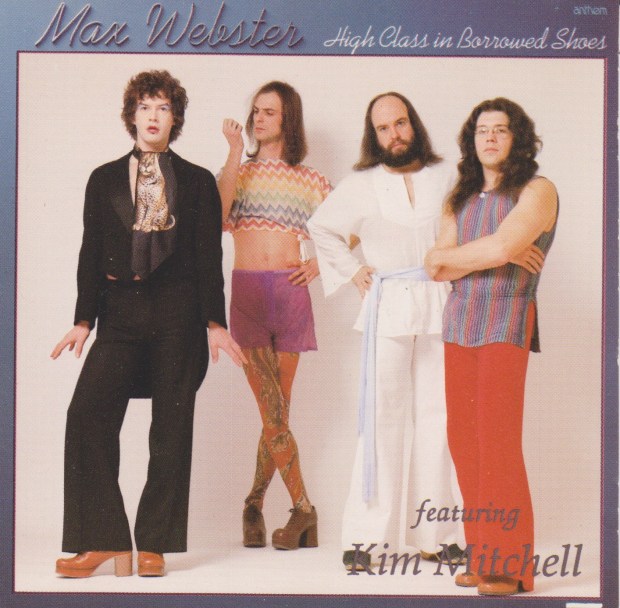
MAX WEBSTER – High Class in Borrowed Shoes(1977 Anthem)
It’s only the second Max Webster album, but the band were so tight and perfect that they got three radio classics off it. “Diamonds Diamonds”, “Gravity” and the title track are all three radio staples, and “On the Road” a live classic that Kim Mitchell occasionally plays unplugged. Every fan has a favourite Max album, and I think I probably know a couple who would put High Class in Borrowed Shoes as numero uno.
The album opens with the impressive “High Class in Borrowed Shoes”, a blaster that sounds to me like a Canadian Van Halen! Max had tamed some of their wackier tendencies (“Toronto Tontos”, anyone?) and focussed their chops. Not that the new Max (now featuring legendary drummer Gary McCracken) was normal by any definition. Just listen to the lullaby-like “Diamonds Diamonds”. Great song, but very different for a rock band. Its dreamlike mood is heightened by the surreal lyrics by Pye Dubois. Not to mention there are only six lines to the words!
“Gravity” would make my top five Max tracks in a heartbeat. “What do I know? I sat under a cloud. I looked up, afraid to look down.” Kim sounds like a little boy speaking the words, to great effect. The chorus is a big one, backed by a Kim’s riffing. I have no idea what this song is about, but to me the line “Forget that fear of gravity, get a little savagery in your life,” says everything. Don’t be afraid to take chances. As Pye’s friend Neil Peart once said, just roll the bones. That’s what it means to me, anyway.
Proving he has always been capable of tender ballads, “Words to Words” is one of Kim Mitchell’s first. The keyboards of Terry Watkinson keep it just a little left of center, but Kim’s acoustic work is impeccable and excellent. Pye Dubois’ lyrics are magical and stirring. It’s hard to overstate just how quality this song is. However ballads are usually best followed by scorchers, and that’s “America’s Veins”. Killer solos, smoking drums, and a chorus built for the concert stage: it’s here in one complete package.
“Oh War!” is an incredible monument of rock. AC/DC did a song with a similar vibe called “Little Lover”, but “Oh War!” is a completely different animal. The gonzo solos are more in the “Z” section of the rock aisle, as in “Zappa”. And check out the words! “‘Cause I say fuck you instead of thank you, your choice under your breath.” Yes, that’s what Uncle Kim, Canada’s favourite king of the summertime, just said! OK, so it wasn’t going to get on the radio with those words…but damn, it should have been. This song could have been almost as big as “Battle Scar” had it been.
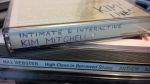
I have a tape here of Kim Mitchell doing “On the Road” live in the MuchMusic studios, acoustically, on their Intimate and Interactive show. This is what you might call “campfire rock”, but that sells it far too short. “On the Road” is more than a song that would sound good played live around a fire, it has genuine soul that you can feel. It’s an incredible song, and once again, I wonder why Max Webster wasn’t friggin’ huge. “Rain Child” is next in line, which I would describe as a slow burner. Terry Watkinson’s keys take center stage, never intruding. “Rain Child” is a classic album track, and perfect for winding down the album.
Max Webster went mad on the last track, “In Context of the Moon”. This is the second of four “Moon” songs on the first four records: “Coming Off the Moon”, “Beyond the Moon”, and “Moon Voices” are the others. “In Context” can’t be described easily, because it spans many styles and tempos in just five measly minutes! How?! You have to play this one a few times just to get everything that is happening. It’s certainly one of the most challenging pieces of music Max have recorded. The four musicians must have rehearsed the shit out of this one. Anyway, at all times, it smokes. Whether it’s the bright intro guitars, or the metal riffs that follow them, or the sheer madness (including bass solo) that ensues, “In Context of the Moon” is always riveting. It’s just non-stop even though by the time you get to the end of it, you’ll wonder how you got there!
Final note: My good buddy T-Rev, who has guest written here a couple times before, met Gary McCracken after he moved to Sarnia. He was working at Fastenal when in came a guy to pick up an “order for Gary McCracken.” T-Rev pondered a bit before enquiring, “I hope you don’t mind me asking, but were in a band called Max Webster?” Yes, he had. It was that Gary McCracken, and he was cool. I love little stories like that. Gary McCracken was Trevor’s biggest influence as a young drummer!
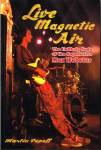
Popoff’s awesome book
There is nothing more to be said in just a single review. For the whole enchilada, get the book from martinpopoff.com! And be sure to get High Class in Borrowed Shoes for your collection.
1986 was the year it all went down. If you were a Van Halen fan, it was time to choose.
Of course, nobody really had to choose between Van Hagar and David Lee Roth. It’s not like every fan had only $10 to spend on albums that year. Fans did choose anyway, and even today almost 30 years later, we still argue about who’s best: Diamond Dave or the Red Rocker?
No matter who you sided with, there is no question that David Lee Roth stormed into 1986 with a killer new band and album.
Steve Vai! That’s enough right there to make for an incendiary band — just ask David Coverdale. Before Little Stevie Vai was a household name, he had earned the respect of Frank Zappa who hired him on after Joe’s Garage. He made his Zappa debut on Tinseltown Rebellion, before being snagged by Graham Bonnet in 1985 for Alcatrazz’s Disturbing the Peace. In that band, he had the unenviable task of replacing a Swedish guitar player you may have heard of called Yngwie J. Malmsteen. Needless to say, Steve Vai was already experienced in filling big shoes by the time David Lee Roth made contact.
Billy Sheehan! A lot of people think he’s the world’s greatest bass player, period. Eight finger lead bass, baby! Three albums with Talas didn’t do much in terms of sales, but the material was strong enough that one song was re-recorded for the Roth album.
Gregg Bissonette! Once you learn how to properly spell his name, you will recognize Bissonette on loads of album credits. Joe Satriani come to mind? How about Spinal Tap? For your information, Gregg Bissonette is still alive, and is still the current Spinal Tap drummer.
Combine those three virtuosos with the greatest frontman of all time, and you have best new band of 1986.
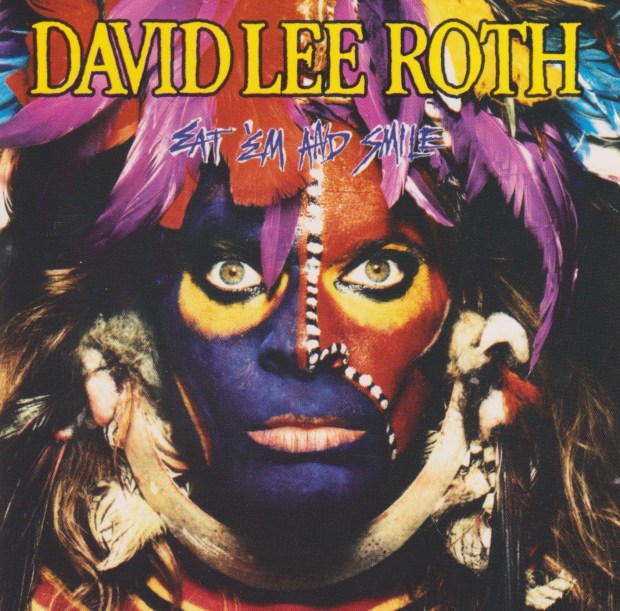
Van Halen’s 5150 came out in March, going to #1. That’s a hard act to follow. Eat ‘Em and Smile, however, ending up standing the test of time. I would argue that even though it’s not Van Halen, it’s still the best Van Halen album since 1984….
As if to say “Eddie who?”, the album opens with Steve Vai’s trademark talking guitar. I’m talkin’ about-a-“Yankee Rose”! Here’s the shot heard ’round the world indeed. Lyrically, musically, and instrumentally, this song truly is the spiritual successor to classic Van Halen. David Lee was still in prime voice, and does he ever pour it on! Sassy as ever, Roth sounds exactly how he should: the showman in the rock and roll circus. And let’s not forget Billy and Gregg. Sheehan’s slinky bass on the outro is space age groove.
“Shyboy” is an atomic bomb. Billy brought in this song from Talas, but there is no question that Dave’s version is vastly superior. I have no idea how Vai makes his guitar create these sounds. When he goes into syncopation with Billy on the fastest solo of all time, your head may be blown clean off. Please, do not attempt to listen to “Shyboy” in the car, without testing it at home first. As Steve’s guitar flickers from left to right, Billy’s bass is the fastest, baddest groove on record. “Shyboy” is of such high quality that I do not think any self-respecting rock fan can live without it. Virtually every trick that Steve had at the time was in this one song.
One thing that was special about Van-Halen-with-Dave was their fearlessness in doing odd covers, such as “Big Bad Bill” or “Oh Pretty Woman”. Dave took that with him, and included oldie swing covers like “I’m Easy”. Horn laden and with Steve’s expert licks, it should be no surprise that they nail this one. It’s much in the spirit of Dave’s solo EP, Crazy From the Heat, only better.
Perhaps the most outstanding song on Eat ‘Em and Smile would be “Ladies Nite in Buffalo?” Dave has always said he loves disco and dance music. This is the most perfect melding of that world with rock. Vai is rarely so funky, and there is no question that Dave has the vibe right. Smooth and steamy, “Ladies Nite in Buffalo?” is a tune perfectly in synch with activities of the nocturnal persuasion. Who else but Dave would be perfect to deliver this message?
“Goin’ Crazy” was a great track to make into one of Dave’s typically high flying music videos. It’s party rock time, with a tropical vibe. “Goin’ Grazy” worked particularly well when Dave re-released it in Spanish, as “¡Loco del calor!”. I used to consider this tune a bit of a throwaway, but it has certainly endeared itself over the years. Another meticulously perfect Vai solo doesn’t hurt, and Billy’s bass popping helps end side one on an up note.
Now there is a story here that needs to be told. Billy Sheehan was in Canadian progressive rock band Max Webster for “about three weeks” according to lead singer Kim Mitchell. Upon joining Dave’s band, he introduced them to Kim Mitchell’s solo track “Kids In Action”, which they decided to cover. Bill called Kim up to ask him for the lyrics, because they couldn’t quite make them all out. Kim supplied the words, and Dave recorded the song. However, it was dropped at the 11th hour, for another cover — “Tobacco Road”. David Lee Roth’s version of “Kids In Action” has yet to be released or even bootlegged. Not that I am complaining about “Tobacco Road”, another old cover! Yet again, the reliably awesome Steve Vai just sells it. There is no question that the whole song just smokes, but getting to hear Stevie playing this old blues? Pretty damn cool.
That’s nothing. You thought “Shyboy” was fast? Check out “Elephant Gun”! Billy’s fingers didn’t fall off, but mine would have. “I’ll protect you baby with my Elephant Gun”, claims Dave. Nudge, wink! Steve Vai’s been known to write blazing fast songs, and “Elephant Gun” is so fast it’s almost showing off. Wisely though, things get slow and nocturnal once again on “Big Trouble”. That’s a title Dave recycled from an old unused Van Halen song. (That song became “Big River” on A Different Kind of Truth.) Steve’s guitar melodies and solo on this are particularly celestial. Roth uses his speaking voice, spinning a tale as only he can. “Bump and Grind” is a perfectly acceptable album track, a sleaze rocker as only Dave can do. If I am interpreting the lyrics correctly, Dave is a dance instructor in this one. “Shake it slowly, and do that Bump and Grind”.
Much like “Happy Trails” ended Diver Down on a jokey note, Dave ends his first solo album with a cover: “That’s Life”, the song that Sinatra made famous. Coming from the guy who did “Just a Gigolo”, we know he can do that kind of thing very well. The first time I heard the album years ago, I shrugged and said, “Another one?” Now, older and fatter, I sez it’s all good! Zop-bop-doop-zooby-dooby-doo indeed. Funny thing though. When I think of Diver Down, I think of a fun but fairly shallow album of half covers. When I think of Eat ‘Em and Smile, I don’t question the integrity of it. I don’t know why I seem to hold that double standard.
In this writer’s humble opinion, Eat ‘Em and Smile was David Lee Roth’s finest moment as a solo artist. It was not nearly as well known as 5150, OU812, or any of Van Hagar’s albums, and that is almost criminal. The talent in this band, pound for pound, outweighed anybody else going at the time, including Van Halen. Shame they couldn’t make it last.

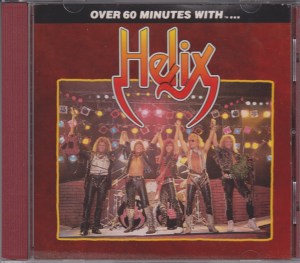 HELIX – Over 60 Minutes With… (1989 Capital)
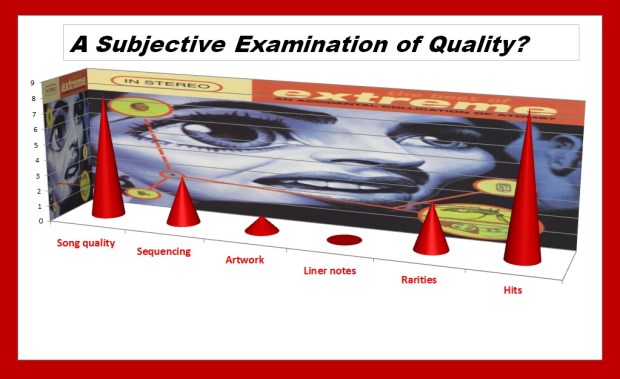
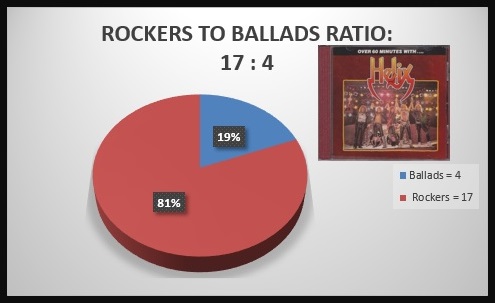 Thanks to Geoff over at the 1001 Albums in 10 Years for the “Excel”lent inspiration!






















 mikeladano.com