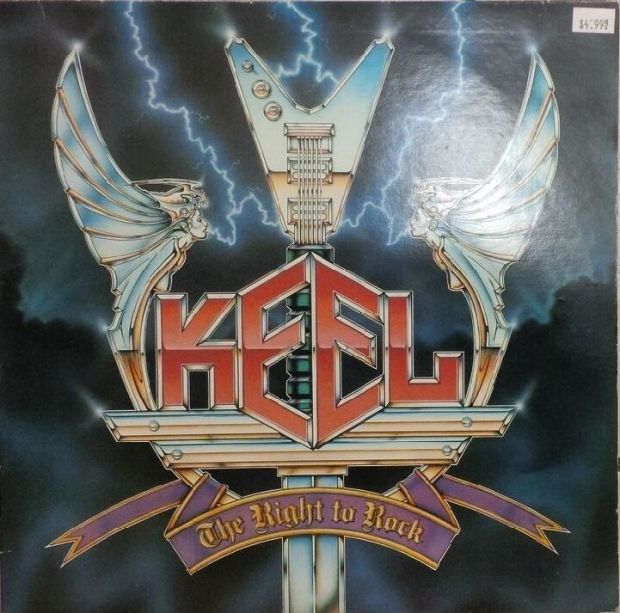
From the Gene Simmons Song Factory, heeeeere’s Keel!
Like many Gene Simmons productions, Keel’s The Right to Rock bears his name on a few writing credits. The rest of the songs are basically reworkings of tracks from Keel’s first album Lay Down the Law. That album, like Ron Keel’s debut with Steeler (featuring one Yngwie J. Malmsteen) were on Shrapnel. For the A&M Records debut, they pulled out the big guns. They got Gene Simmons in all his wig-ness, and put out a very corny but tremendously fun music video.
It is “America 1989”, and rock and roll is outlawed. “Those who are apprehended suffer severe consequences.” Can our young teenage Keel lookalike get away from the rock police? Quiet Riot did something similar with their “The Wild and the Young” video a year later. It’s corny fun.
The song too is corny fun. I guess it’s a classic now. It has that stock heavy metal riff that you need: something Motley Crue or the Scorpions would be comfortable with. It has that rebellious rock theme that was so prominent in the 80’s. It has a shoutalong chorus. “You got it! The Right to Rock!” Hey, I grew up in a Catholic school. I know what this is about. “Don’t let anyone tell you how to live your life!” I had a teacher call me out on the first day of school for wearing a Judas Priest T-shirt. I could relate to this song in a big way when I was 13.
It should be noted that Gene Simmons, as a producer, is not known for his sonics. The Right to Rock sounds pretty good for the period, but the drums ring shallow and weak. There’s not much presence for the bass guitar, and the backing vocals are the typical rock mush. That’s what you get with Gene behind the console.
“Back to the City” has a good Priest-like chug to it. I think Keel were going for something middle of the road with their music, like Priest-meets-Scorps-meets-Crue-meets-Kiss. If so, this hit the mark. Ron’s vocals are overwrought but that’s his style. If you don’t like that kind of vocal, you won’t like Keel.
Kinda stinky is “Let’s Spend the Night Together”. You know, I still gotta give the guys credit. They have made this into a pretty fine pop metal song. If you didn’t know the song, you’d assume it’s an original, in the pop metal genre. So from that perspective, I think it’s kinda cool. Stinky and cool — like good gorgonzola.
“Easier Said Than Done” was written by Simmons/Weissman, the same team responsible for much of the Animalize album. The lyrics even reference “Russian Roulette”, a song title Gene had been toying with for years. (A song called “Russian Roulette” was finally release on Sonic Boom.) So, guess who “Easier Said Than Done” sounds like? That’s right — it is a dead ringer for Simmons-style Kiss. And it’s actually a pretty good song. The problem is Ron’s Gene impression. I can’t help but chuckle at his dead-on Gene vocals. I dare you to refrain from a giggle yourself. Same deal with “So Many Girls, So Little Time”. Kiss fans will recognize that’s a line recycled from the Kiss song “Burn Bitch Burn”.
Onto side two, “Electric Love” is a Keel original, but you immediately notice that the song isn’t as immediate as the two previous Simmons tunes. “Speed Demon”, another original, sounds exactly as the title implies. Quality-wise, it’s only at “Priest outtake” level (Defenders of the Faith era). Then it’s back to Simmons outtakes, with “Get Down”, the weakest of the Simmons songs by a long shot. “You’re the Victim (I’m the Crime)” is a Gene-like title, but this too is a Keel tune. It’s in the same vein as “Speed Demon”, and the same level of quality.
It’s fun to revisit The Right To Rock periodically…but sparingly.
RECORD STORE TALES MkII: Getting More Tale #406: All of the Aerosmith…
The following challenge was posted to me by reader chrisjcombs:
“I humbly request an entry that ranks —- in order of your preference —- Aerosmith’s entire discography. I would love to see where you’d place albums like Rock in Hard Place and Night in the Ruts when lined up against the likes of Just Push Play, Nine Lives, Get A Grip, etc.”
Having recently re-listened to virtually all of the Aerosmith, in order for my Box of Fire series of reviews, I had to oblige.
In order to give some ground rules to Chris’ request, I will have to stick to studio albums. I don’t own A Little South of Sanity, so for the purposes of this list, I will exclude live releases. I also don’t have all the different greatest hits, so I’ll leave those out too. What’s left is 15 studio albums. Since I’ve reviewed most of these albums already, I won’t be adding too much in terms of commentary. Let’s give’r!
After some deliberation here’s all of the Aerosmith, from worst to best:
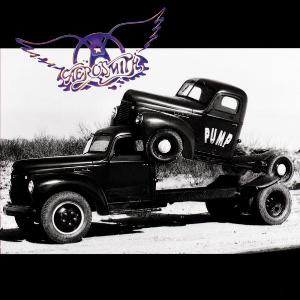
I think Nine Lives is a real underdog of an album — a latter-day gooder, that often gets lumped in with shit like Just Push Play. Pump, in my opinion, is Aerosmith as close to a peak as possible, and very close indeed to the top of the pyramid. Sonically and song-wise, I think Pump is as F.I.N.E. fine as anything the did in the 1970’s!
I hope you enjoyed this list, and thanks to Chris for the suggestion!
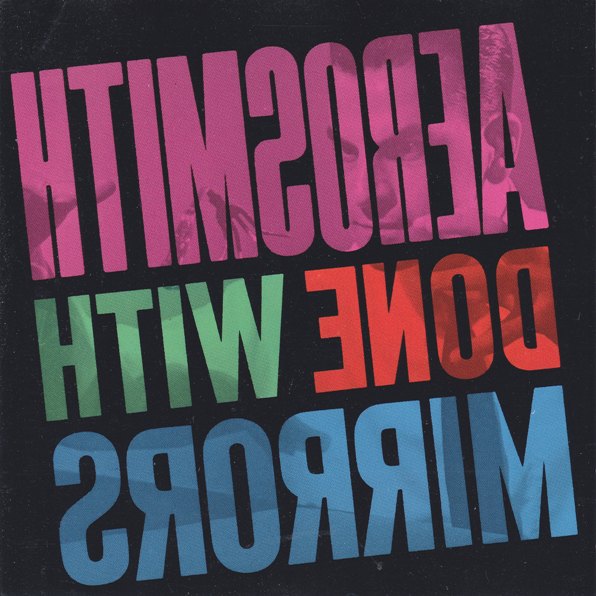
This review comes by request of, well, several readers. Done With Mirrors was Aerosmith’s first record on their new deal with Geffen. That means it wasn’t included in the massive 13 disc Box of Fire that I reviewed recently. I intended to get around to Done With Mirrors anyway, but the reader anticipation adds an interesting sort of pressure.
I know some people hold this album in high esteem. “36 minutes of classic Aerorock,” said one reader. I know that Done With Mirrors is a bit of a cult favourite album in some ways. The band ignore all but one song in their live sets, but some fans have loved it since it came out. I think it’s possible that some readers, knowing my love for underdog albums, are hoping I’m going to come out with some really appreciative glowing observations about the album.
The fact of the matter is, I’ve never been a fan of this album. “Let the Music Do the Talking” is probably my second favourite Aero-tune ever, right after “Chip Away the Stone”. As an album, I have always found Done With Mirrors to be so-so at best, and I’ve never really warmed up to it over the years. Why is that?
I decided to do something different for this review, and listen to the album as background music while working on something else. I came away with some strong impressions, so I immediately gave it another listen. Rather than go song-by-song, I’d rather just talk about the feeling I get from the album now.
I used to think the production (by Ted Templeman) sucked. I think it could use some embellishment, but hot damn! Aren’t Joey’s drums sounding fucking awesome? Yes they are. I’d say Joey’s the MVP on Done With Mirrors, as he is so rock solid consistent right through!
I used to think the songs (all but “Let the Music Do the Talking”) were pretty much just crap. I think anyone would have to admit that these are not the catchiest tunes Aerosmith have ever written in their storied career. They do, however, rock. They rock hard. “My Fist Your Face” is exactly what it sounds like — a fist right in your face!
I used to think that Steve and the band sounded tired compared to the earlier material, or what came after. I still think that’s true, but even tired, Aerosmith were capable of blowing out the speakers with bluesy riffs and Steve’s scats. If you pay attention to the lyrics, you’ll hear that Steve’s as sassy as ever. I love the name-dropping of “Joe Perry, oooh Mr. Style.”
Compared to, say, Pump, Done With Mirrors doesn’t fare too well. Letting it stand on its own and just enjoying it as a batch of rockers, it’s actually not as bad as I remembered. Maybe all these years I just haven’t been letting it in.
Big surprise: How swampy and cool “She’s On Fire” is. No idea why it never clicked with me before. I can say the same for a few songs on this album. While very few would make my own personal road tapes, there aren’t any to skip. It’s a fair chunk of solid, hard rocking Aerosmith. No ballads, no fluff, no embarrassing forays into other genres.
Finally, gotta love the cover art and double meaning. I’ve always been fond of the packaging way before hearing the album.
For Tommy Morais’ excellent 4/5 star review of this album,click here, and to skip directly to the comment that started it all,click here!
GUEST REVIEW by academic and rock fan “Jesse A. Jones”*
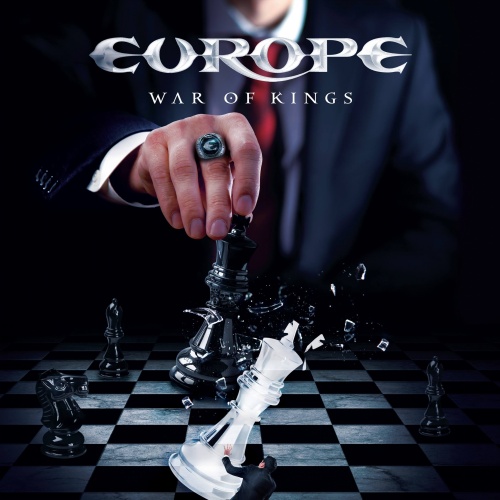
EUROPE – War of Kings (2015 UDR)
The Swedish rock band Europe stormed onto the charts in the mid 1980’s with uplifting keyboard oriented pop rock, written by singer and founder Joey Tempest, a golden fluffy-haired gifted soul. Then their slide down the charts began. Albums like Out of This World sold fewer and fewer copies and the band finally broke up in the early 90’s, amid rumours that even their own mothers now preferred The Hives.
Unfortunately for fans and the band, these would be the last great albums Europe would make! The fact that mainstream rock magazines still praise Europe is shocking nonsense. It’s hard to believe anyone buys that stupidity! There has not been a real “Europe” in 26 years! It’s a conspiracy involving many producers, record label execs, musicians, writers, FIFA and the worldwide media cartel as a whole. The Bilberbergers know but say nothing, while the Rothschilds remain silent. I have proof written on the back of a beer mat that in 1994 Matt Groening was forced to rewrite a Futurama episode that obliquely referenced the scandal. Shadowy elements of the secret world government have stifled independent thought and critical opinions, ensuring we will all remain unquestioning and loyal, to both our governments and rock bands alike!
Well, ladies and gentlemen it is my sworn duty to tell you the truth and I will not be silenced, or my integrity bought for 30 pieces of record company silver!
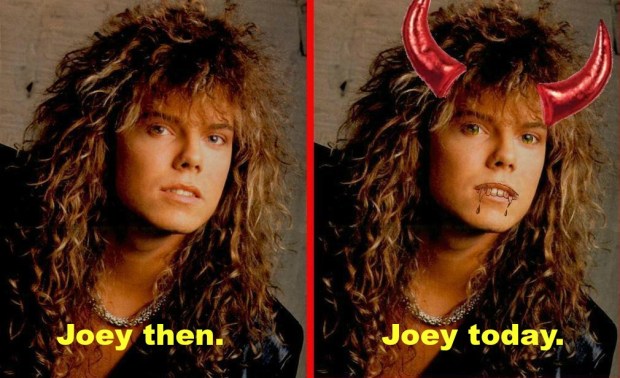
The problem is the Europe of today has nothing in common with the real group Europe that topped the charts in 1987. Literally. Committing a conspiracy of great scale, they have been secretly and knowingly touring with an imposter singer since 1989! Their last horrible and fake albums (lifeless and without soul) were not written by the real Joey Tempest. Without Joey’s talent and unique abilities, the band is a lost joke; twisted and sad – imagine, it would be like Deep Purple without Nick Simper – just unthinkable!
The truth remains shrouded in mystery. The only details now known, thanks to a covert informant “C.A.”, is that the imposter Joey forced out the real Joey sometime in 1989, using a complex web of lies and half-truths. Plastic surgeons and vocal coaches helped the fake Joey in his goals, and were paid off for their silence, or disappeared. Some say that the real reason that the late celebrity plastic surgeon Dr. Fredric Brandt suffered from depression was keeping this whole thing secret. Then, having successfully replaced Joey without anyone noticing, Europe continued to tour with a new voice and face fronting the band, raking in millions. It is quite remarkable that very few fans have noticed this imposter. “Joey’s” voice changed on 1991’s Prisoner’s in Paradise album but the complicit media have either ignorantly or purposely covered it up. Fans have wondered why Joey’s hair style and hair colour changed on that album, assuming it was just a superficial change. Little did they know that the head and face behind the hair had also changed! Joey would NEVER let his hair go flat like that! Wake up people!
Europe with the imposter have made a semi-successful go of it, edging themselves towards world domination, even placing third in Sweden’s Got Talent in 2013, but for an unknown, sinister purpose. True fans, distinguishable from the herd by their password ‘Cherokee – marching on the trail of tears’, who know and appreciate the talents of the real Joey, have wondered what happened, but no-one listens. As for the fake fans, how could YOU do this to the real Joey? How could YOU not even notice this shadow of a Joey up there on stage singing fake odes to “Carrie”? Shame on the fans, and most of all shame on the band for not stopping this charade 26 years ago!
Just look at the songs here! “Children of the Night”. The real Joey would never have written a song about “children of the night”, “California 405” is the highway that O.J. Simpson was chased down – a definite clue that there was something more going on here than meets the eye! Why would Europe specifically reference that notorious highway unless they were implying some sort of wrongdoing behind the scenes?
Just listen to the song “Praise You” on this album. As if the real Joey would have written “Praise You”! This rude, obscene imposter has terrible lyrics and evil facial expressions. He is a demonic devil from hell who only cares for himself, not the fans and certainly not the spirit of the original Joey – with the voice, face and hair of an angel. The real Joey gave the fans everything he had. His reward was being ousted by an imposter who now receives all the love and praise from ignorant and deceived “fans” who are too stupid to notice the difference. His only goal in this world is to lie and fool as many fans as possible while he laughs raking in the money! No talent, no soul, no voice! That’s the fake Joey right there. Just listen to War Of Kings, it’s as if he and the whole band are actively setting out to destroy the affection of the fans and ruin the legacy of the band as a whole. Well I won’t sit idly by and let this happen! No sir!
Some will say, “Well you are wrong. His hair and voice change with style and age.” No. Look at his eyes. They are not the same eyes, you can see the yawning chasms of hellfire deep in those pupils. Joey tried to warn you what was happening. Read the lyrics to “Stranger on the Track”! Make sense now? Joey was warning you that “danger” was on his back and nobody listened. Joey stood for love and the truth! Long live love! Long live the truth! One day Joey will return and prove this all to be true, with the original angelic voice of Europe!
It is hard though to bear this burden, sometimes even I start to doubt, but then I only have to look down at the words tattooed on my thigh; words of inspiration, words of power, the real Joey’s words and I find the strength to go on, in his name.
Rock now, rock the night
‘Til early in the morning light
Rock now, rock the night
You’d better believe it’s right.
No rating
* Professor Emeritus of Applied Conspiracy at the University of Punkeydoodles Corners and author of ‘Paul Is Dead: The Amazing Beatles Conspiracy’, ‘Lennon Lives! Why John Isn’t Dead’ and ‘George! Satan’s Favorite Beatle’.
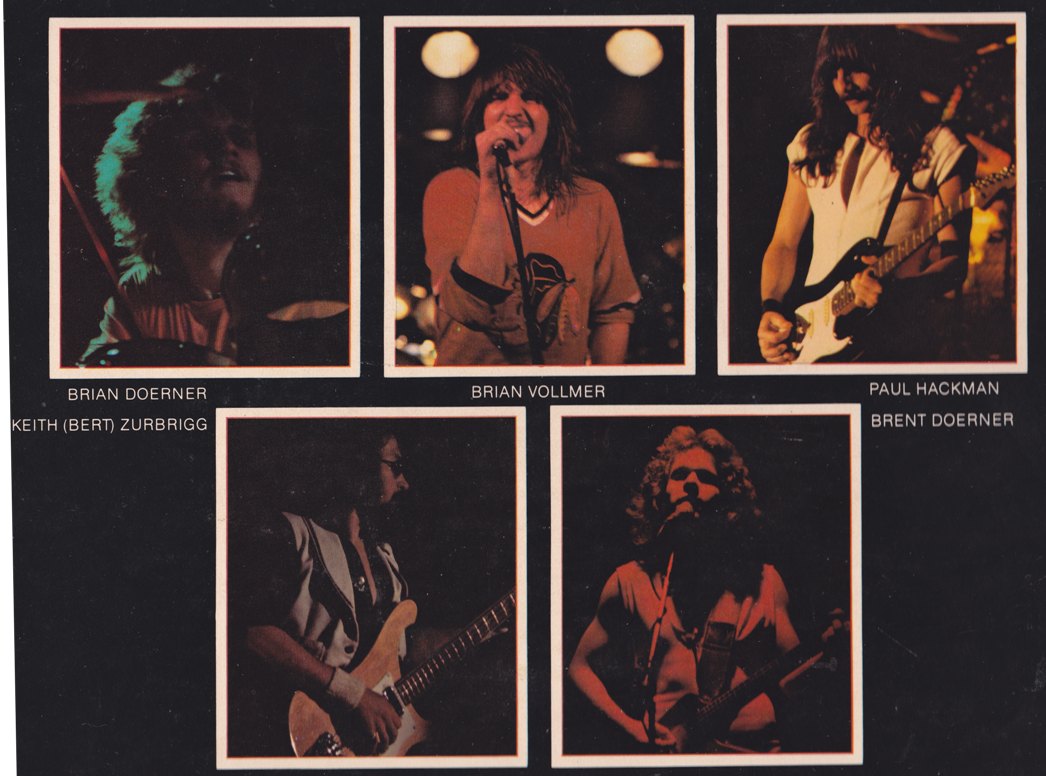
Having already done it once themselves, why not do it again? Once again Helix with manager Bill Seip raised the funds to record an independent album. Drummer Brian Doerner was gone, replaced by Leo Niebudek. On bass, Keith “Bert” Zurbrigg hung around long enough to record one new song (“It’s Too Late”). He was replaced by the young, talented and troubled Mike Uzelac. He was only 17 when he first joined Helix. He told them he was 19.
Sticking to the same formula as Breaking Loose, there is really no deviation in sound. Some members have changed but little else. The band still managed to come up with enough good material to fill an album to follow the first. I don’t know if the track “Breaking Loose” was a leftover from the first album or not, but quality-wise there is nothing “leftover” about it. I would call it a typical Helix party rocker: a fast one, often used back in the day to open their sets. The lyrics are the kind of thing that Helix were about: the weekend!
“4 O’clock Friday afternoon, Punch that time clock, now you’ll be home soon, Your week’s all done, now it’s time to roll, You’re like a time bomb about to explode.”
Vollmer reminds us “You only got two days, so make it last,” a philosophy I heartily agree with. Brent Doerner and Paul Hackman lay down a pair of ripping guitar solos for the icing on the cake. Then “It’s Too Late” is the kind of melodic mid-tempo rocker that their first album was loaded with. Surely something like “It’s Too Late” could have worked on the radio, and I think that was the intent. That takes away nothing from the song, which is classy with quality.
“Long Distance Heartbreak” at almost seven minutes is Helix’s longest song ever. In the early days they tended to experiment with their songwriting, coming up with the odd mini-epic. Like many Helix classics, this one reads as a road song. Thin Lizzy they were not, but Vollmer captures the heartbreak in their lyrics while Doerner and Hackman take care of the guitar drama.
Helix get even more serious for a moment with “Time For a Change”, and “Hangman’s Tree” also brings a few issues to the table. “Time For a Change” is sadly even more valid today.
“Everyday there’s a new headline, Another war and another lie, When will we learn to stop this killing while we can?”
It’s interesting that Helix didn’t seem to know their direction yet, but still infused every song with their bare honesty. They were riding a line between a party band and a more serious, more experimental rock band. In the end they chose the route that they were intended for, but that takes nothing away from these early songs. “Time For a Change” and “Hangman’s Tree” are unexpectedly ambitious for a young bar band from Canada. In each case, it is the guitar work that elevates the songs.
“It’s What I Wanted” lightens the mood, a mid-tempo rocker with a great melody. I don’t know why it is, but these melodic rock songs really sound like home to me. They conjure images of a more innocent time, when the world seemed smaller to me. They capture and bring back hazy, happy pictures of Kitchener in the late 70’s.
Brent Doener comes back with his only lead vocal on the track “Mainline”. Sounds like Brent was having no trouble getting satisfaction back then. “She keeps me happy, what can I say?” he sings, lamenting that his lady keeps him up all night and late for work in the morning! “Pick up my cheque at the end of the day, I find I’m down a couple hours’ pay.” So in essence, “Mainline” is about choices. You can either have tons and tons of sex at all hours of the day, or get to work on time. It’s your choice, people!
“Women, Whiskey & Sin” is pretty simple in its message. This smoking track is more like Helix would evolve on later albums like No Rest For the Wicked. “Ain’t no laws to hold us back on a Saturday night,” sings Brian Vollmer. (Hate to tell ya Brian, there actually are laws about some of the things you boys were doing back in the day!) Then “Thoughts That Bleed” is a proggy, slow closer with lots of dynamics, similar to how Helix ended the first album with “Wish I Could Be There”.
Ultimately there is no question that Helix made the right move to drop some of these softer, more progressive moments and focus on the heavy metal side of their sound. It got them signed to Capitol Records and secured their biggest hits. That leaves these first two albums as evidence of an earlier, more naive Helix willing to stretch out a bit more.
Long before they gave you an ‘R’, Helix earned a reputation as the hardest working band in Canada, year after year in the cold dirty clubs of the Great White North. Formed in 1974, Helix had a number of lineup changes before they even recorded their debut. If you want to get technical about it, even on their first album, Helix only had two remaining original members in singer Brian Vollmer and bassist Keith “Bert” Zurbrigg. Helix really solidified when they eventually acquired guitarist Paul Hackman, and twin brothers Brent (guitar) and Brian Doerner (drums).
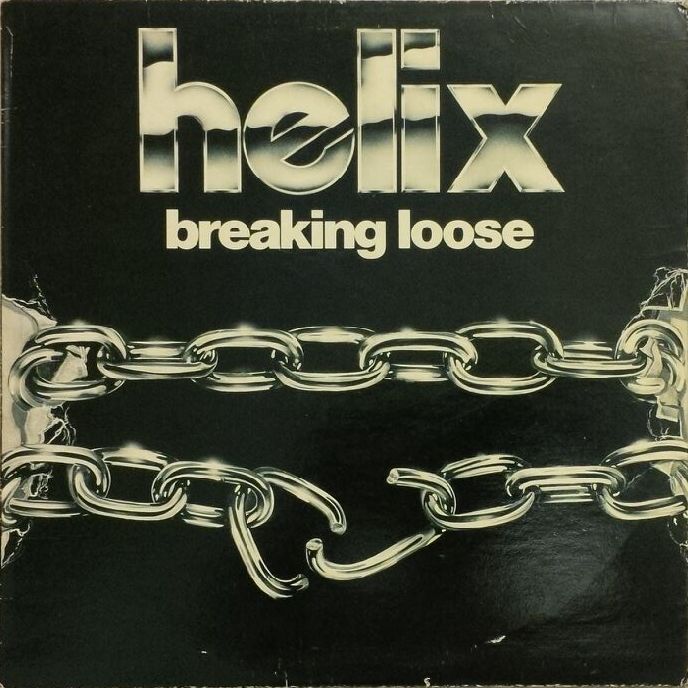
Manager Bill Seip, who eventually guided Helix to a major label deal with Capitol Records in the early 80’s, was an early believer. Under his leadership, they managed to scrape together enough cash to record an independent album — something very few bands did back then. They released it on their own “H&S Records”, for Helix & Seip. What is remarkable about the album they created, Breaking Loose, is how great it still is today. I know people, very respected in the local rock community, who will tell you this is Helix’s best album.
Breaking Loose isn’t metal, but what it lacks in firepower is made up for in class, ambition and natural talent. Brian Doerner is one of the most respected drummers around, having acquired an extensive discography over the decades. As for Brent Doener and Paul Hackman, together they forged a guitar partnership that would take them up to the big leagues. They are not Downing & Tipton, nor are they Smith & Murray. Doerner & Hackman (R.I.P.) were in a hard rocking bar band, and Helix were damn good for their demographic. What they brought to the table was ability, but not flash. Both were capable of writing songs on their own, as the writing credits on Breaking Loose attest to.
Having toured extensively, Helix worked up a number of originals. The entire album is written by the trio of Doerner, Hackman and Vollmer, in various permutations. Even then, Brian Vollmer had a remarkable voice: power with just a tiny bit of grit, but also the ability to sing clean. The production on the album is flat by today’s standards, but perspective and context are everything. For a self-financed album in 1979, it sounds incredible! Though it lacks the oomph of Helix today, it’s perfectly listenable.
Starting with the mid-tempo “I Could Never Leave”, Helix right away hit you right off the bat with one of their catchiest tunes. You’ll notice the nice backing vocals, Brent being particularly audible. “Don’t Hide Your Love” has a similar vibe, that being hard rock with an emphasis on catchy melodies. Maybe Helix were aiming for the radio, but the songs aren’t wimpy by any stretch.
“Down in the City” is a Vollmer ballad, and a pretty good one too. The lyrics are cringe-worthy, but the music had ambition. It starts as a pretty, folky acoustic song and eventually builds with more guitars into something different. Plenty of guitars to go around. Then like night and day it’s onto “Crazy Women”, written and vocalized by Brent, otherwise known as “The Doctor”. Doerner has a quirkier writing style, which is a good thing, because it helped Helix stand out a little more from the pack. “Crazy Women” has plenty of guitars of course, but also has a neat drunken stumble to it.
Brent closed side one, and opened side two with a legendary song that helped them get a following on the west coast: “Billy Oxygen”. It’s still a favourite to this day, a short fast rocker about a guy named Billy Oxygen, captain of a starship called an ES-335, looking to meet some aliens to party with. Out of this world? Wait until you hear the band playing the shit out of it! Brian’s drumming reminds me of a good jazz drummer — fast, accurate, and hard! Keith Zurbrigg throws down a little bass, playing off with Brent and Paul in a three-way solo for the ages.
If you don’t like “Billy Oxygen”, then I’m not sure if we can be friends. The impact this song had on me cannot really be measured, as I played it on repeat ad-nauseum. As I recounted in Record Store Tales Part 2 (!), this tune even inspired me to do some writing of my own:
When I was in University I tried my hand at bad, bad science fiction short stories. Suffice to say, none of it survives today with good reason. However, Helix had a little moment in my fiction: My spaceship was called an ES-335, named after Billy Oxygen’s ship in the song. And only a little while ago did I learn that ES-335 wasn’t the name of a spaceship at all. An ES-335 was a Gibson guitar.
“Here I Go Again” is not the Whitesnake song, but another one of those melodic rock songs that seemed a bit contrived to get some radio play. That’s just speculation on my part, but I’m glad it was “Billy Oxygen” that did get the airplay. That’s not to say anything negative about the fine “Here I Go Again”. There isn’t a weak song on this album, but two other highlights are definitely “You’re A Woman Now”, featuring female backing vocals and a structure that builds into something dramatic, as if it’s Helix’s own “Stairway To Heaven”. “Wish I Could Be There” brings back the outer space theme, and has acoustic and heavy sections, sort of Helix’s foray into prog rock.
I should note that both “Wish I Could Be There” and “Billy Oxygen” made the Sausagefest countdown a few years ago, a lofty achievement indeed. “Billy” even cracked the top five. Musical scholar Scotty Geffros holds both songs in high esteem, and voted for them accordingly, as did I. Our host, Iron Tom Sharpe also voted for “Billy”.
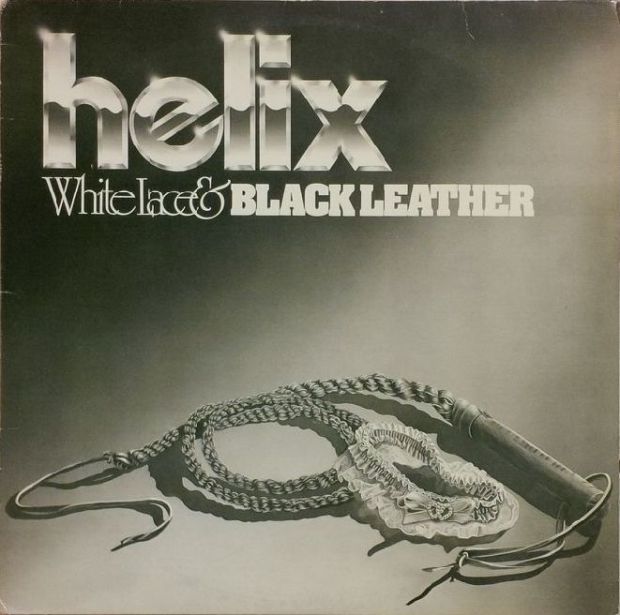
This lineup only lasted for one album, both Brian Doerner and Keith Zurbrigg departed shortly after this, leaving Vollmer the sole original member. Their legacy of the lineup is this debut album, something any band would be proud of. Unfortunately, CDs are hard to find. Capitol did a bare-bones but fine CD reissue in 1992, with both Breaking Loose and the second album White Lace & Black Leather, on one disc. That release was called The Early Years, but it went out of print many years ago. Brian Vollmer did a CD reissue of each individually, but both are now sold out.
Now, fair warning: I have to disclose that I am biased when it comes to this band. I’ve met them a number of times, and I have the phone numbers of two guys who played on this album. For another perspective, I asked Scotty Geffros, who has a Masters degree in Rockology, about his relationship with Breaking Loose:
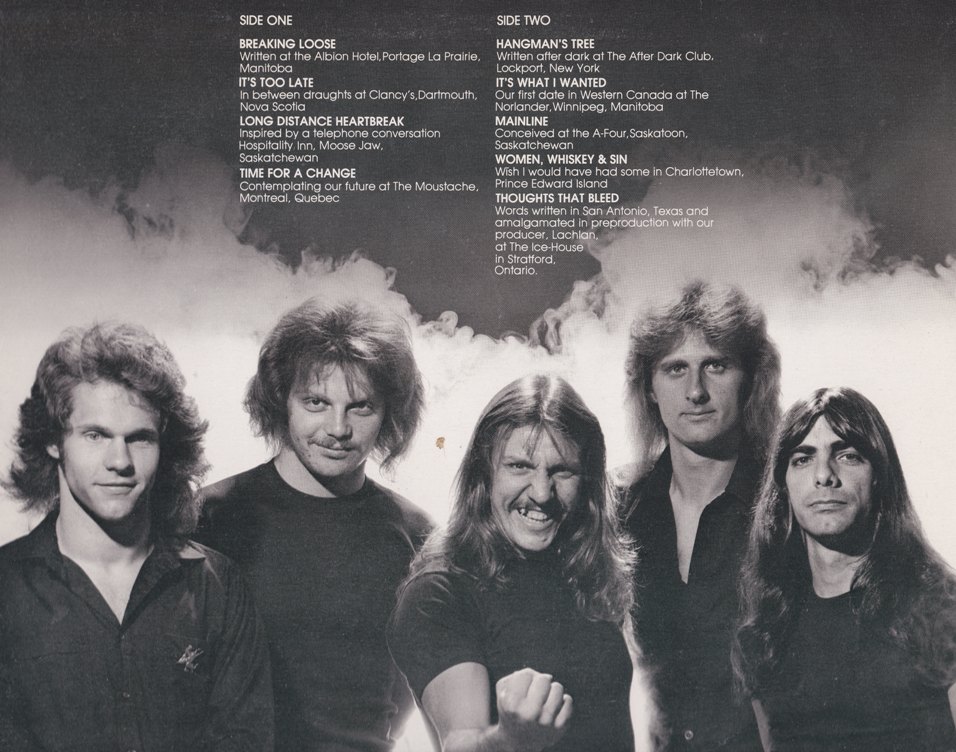
After being handed this album, as a youngster of maybe 9 or 10, I remember examining the cover first…and seeing the photos of the band on the back, and wondering why the singer had a Blackhawks jersey on? I was told by my father to listen to “Billy Oxygen” and quickly went to the turntable to give it a spin. Low and behold, instant love. From catchy tunes like “Here I Go Again”, to more epic works like “Wish I Could Be There”, this album grabbed me and holds up today as a really good, albeit under-appreciated record.
[Note: I was wondering the same thing. Brian, why are you wearing a Blackhawks jersey?]
I’d go a step further than Scott and call it really great. Being completely honest though, the only complaint I have about this album would be that some of the lyrics were a little weak. Young band…first album…I’ll forgive them. If you can too, then I suggest you hear Breaking Loose at your earliest convenience.
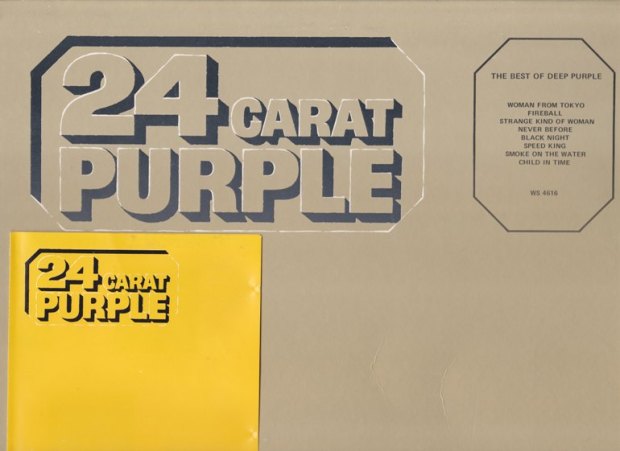
I can’t resist reviewing this golden oldie, the first compilation released by Purple Records in 1975. Purple had not yet broken up — that wouldn’t happen for another year — but most of the members on this record had left the band. It’s rarely a good sign when a band in their final death throes release a compilation album.
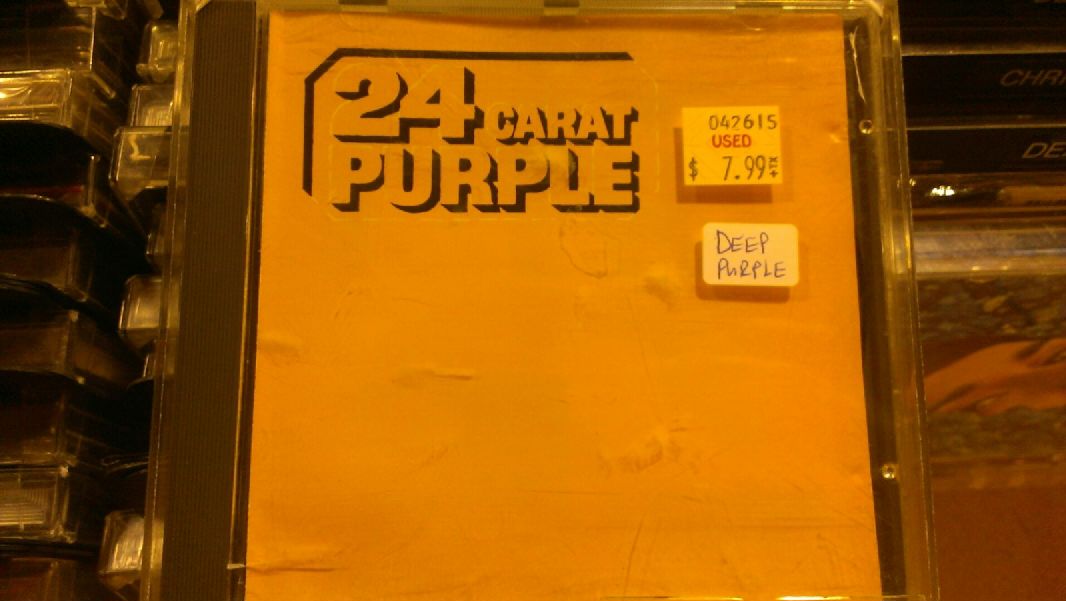
This CD is extraordinarily rare in these parts. When I first started managing the Record Store at which I spent most of my years, I put my name in “reserve” for any used copies that may come in. That was April 1996. Here we are in June 2015, and I only just got it on CD. I did get it on vinyl in the late 90’s, even though I have all the songs, because I enjoy having significant greatest hits albums in my collection. (See point 4, “Historical significance”, in Getting More Tale #367.) Unfortunately, as was the case with many CD issues from the late 80’s, the cover art isn’t even near the same colour as the original golden LP. The CD renders it to a dark, pee-stain yellow.
Saucy Aaron, from the KeepsMeAlive, texted me last month from Toronto, in Sonic Boom on Spadina. “Cool Purple comp,” he texted. “Very short though.” He sent me a pic with a $7.99 price tag, and I told him to snag it! That’s the kind of guy he is. He saw a Purple compilation CD and texted me a photo, unsure if I’d even care, on the off-chance that he’d be helping out a fellow collector. And he did! All it needed was a new jewel case.
Because I have all the songs elsewhere, I haven’t played 24 Carat Purple in a long time. It’s interesting that this, their first kinda-official hits album, only focuses on the Ian Gillan years, even though another version of Purple was currently functioning. I suppose that makes sense, from a contemporary point of view.
“Woman From Tokyo” is a great track to get the party started. I’ve only seen Purple once, on the Purpendicular tour. I recall that this was tune that really got the dudes in their mid-40’s bouncing. Now I’m in my mid-40’s, and I’m still bouncing to it. It’s a nice, safe Purple single. Jon Lord’s piano solo is, well, bouncy! I defy you to sit perfectly still with this song playing.
More to my taste is the accelerated blast through the clouds that is “Fireball”. To me, this track has it all — the perfect Purple mixture of adrenaline, speed, musicianship and that organ! The live “Strange Kind of Woman” brings things back to a moderate pace. Most of the time, I would be opposed to a live track substituting a studio version on a “hits” set, but Made in Japan was more popular than many of their studio albums! This live take, complete with Ian laughing through some of the lines, is probably my favourite anyway. Because Purple were as much a live act as an album band, one can easily make arguments for including live tracks of this stature.
“Never Before”, on the other hand, may have been a single but it’s nobody’s favourite Purple song. Of all their singles, perhaps it is the most ordinary. But at 4:00, it was about the right length to squeeze in before “Black Night” on a side of vinyl. “Black Night” was the real treat for fans in 1975, since this was the live version released only as a B-side before. This electric version is a must-own for its ferocity. It was recorded at the final show of the three that were taped for Made in Japan. Feedback-laden and ragged, this version of “Black Night” kills the others.
Side two of the record was devoted to long bombers, with “Speed King” coming in shortest at 5:50. That means this is the full-on version of “Speed King” complete with intro, which was edited off American copies of Deep Purple In Rock. For some listeners, this intro (purely 50 seconds of instrumental guitar-fucking and drum-wailing, followed by a mellow organ passage) would be completely new to them. Normally you would expect a record label to plop on an edited single version.
Made in Japan is the source for the last two tracks, “Smoke on the Water” and “Child in Time”. The mathematically inclined have probably already calculated that this means 24 Carat Purple is actually 57% live! I think that’s OK in the long run. Consider: “Smoke on the Water” in its live incarnation was released as a successful single. The live “Child in Time” contains, according to my friend Uncle Meat, “the greatest guitar solo of all time.” Since he said it, it must be true, and therefore inclusion of these two live versions is forgiven.
I feel like giving this long-deleted album a number rating is kind of meaningless. Yes it was a great listen, but it’s just a compilation from a band that most people agree are an albums band.
AEROSMITH – Box of Fire Bonus Disc (1994 Sony, only included in the Box of Fire)
Sony did a sonic makeover to the Aerosmith catalogue in ’93, using their new Super Bit Mapping technique. Each CD received a well due remastering job, and improved packaging, as you have seen here throughout this series. In 1994 these albums were released again inside the near-definitive Columbia box set, Box of Fire. Back when I was working in the Record Store, we stocked this one for over $200 brand new. I remember looking at that sealed box longingly, wishing I could peer inside.
The bonus CD included in Box of Fire was an added little reward for those fans who waited to shell out for the full box, rather than buy the CDs individually. In defense of Sony for the double-dip, I distinctly remember them announcing in advance the the future box set would include all the albums and additional goodies. Because of that, I did indeed wait to shell out for Box of Fire. I bought it used, at the store that Joe Big Nose manages today. It was in good shape. I just needed to replace a few broken CD trays, and the outer plastic sleeve was also missing (not a huge deal). I later found that plastic sleeve at another one of our outlets, and the owner “Billy Bob” gave it to me himself! (Thanks man, you have no idea how much that makes an OCD collector like me happy.)
The Bonus Disc has five tracks.
1. “Sweet Emotion” (1991 remix by David Thoener). Remember the music video they released in late 1991 to promote the Pandora’s Box set? That video featured a remix of “Sweet Emotion”, and it was released as a limited as a limited CD single. It’s a little longer and has a few things mixed louder.
2. “Rocking Pneumonia and the Boogie Woogie Flu”. A later track (1987) from the Less Than Zero soundtrack. I’m always in favour of getting one of Aerosmith’s numerous soundtrack contributions on an Aerosmith disc. I hate buying a soundtrack for one or two songs. Wanna know what Aerosmith sound like produced by Rick Rubin? This old rock n’ roll cover indicates, it’s kinda dry.
3. “Subway”. A cool instrumental jam from the Draw the Line sessions, but originally released on the 1991 “Sweet Emotion” CD single.
4. “Circle Jerk”. Another instrumental from the same period. Most fans who collect Aerosmith already had this one. It was the unlisted “hidden” bonus track at the end of Pandora’s Box. These two jams are simple and unadorned. They were unreleased for a reason, although they both could have evolved into cool heavy rock songs.
5. “Dream On” (MTV Anniversary). This live version from 1991, complete with orchestra, was from an MTV thing later released on a CD of its own. I’d rather have the song on this. It’s a brilliant version, best appreciated by the Aerosmith connoisseur.
The Bonus Disc is housed in a simple cardboard CD sleeve. This slips into a gap inside the Box of Fire, easy to miss and sometimes missing! If you’re buying a Box of Fire, make sure it’s intact.
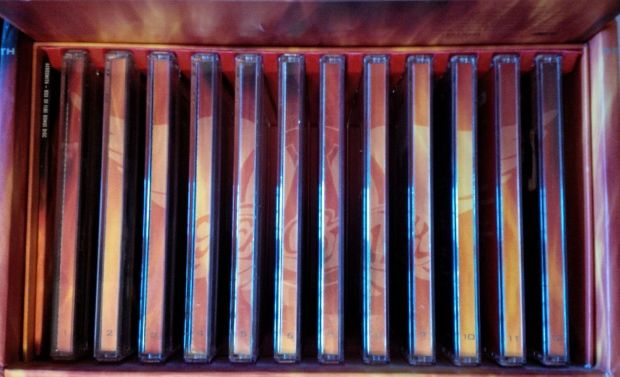
Wrapping up this exhaustive look at the Box of Fire and all the albums inside, there is very little left to add. The packaging is cool; a sturdy box with orange flame emblazoned all over. The front door opens “garage style”, with a little plastic “match” as a handle, painted to look as if burned. Each CD, housed in its own jewel case, slides easily in and out. It’s a simply lovely way to display your Aerosmith collection, open or closed — when lined up, the CD spines form an Aerosmith logo! Each disc is numbered 1-12 (except the Bonus Disc), and can be differentiated from the regular retail versions by the numbered spines. If you bought these albums separately, they do not have the numbers or the coordinated spines that form the Aerosmith logo. That’s how you can tell the difference!
I’m glad to have taken the time to listen to the entire Box of Fire, in sequence, from start to finish. That’s something I haven’t done since I first bought it.
4/5 stars (for Bonus Disc and Box of Fire overall)
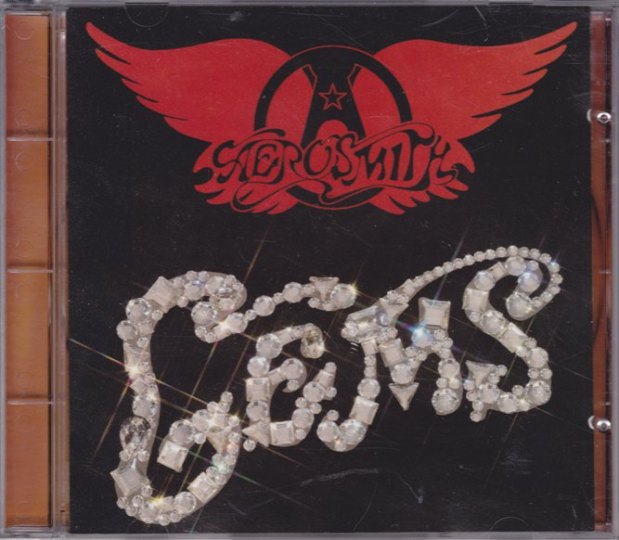
It’s impossible to view the 1988 compilation Aerosmith Gems as anything but purely a companion piece to 1980’s Greatest Hits. It purposely avoids overlap with that prior album, while providing a slice of the heavier side of ‘Smith. Since Greatest Hits pretty much included all the major greatest hits, Gems tends to focus on underplayed fan favourites.
Let’s check ’em off one by one.
1. “Rats in the Cellar”. I’m on record for liking albums to start with a corker! This one has an absolutely furious pulse, which in turn will set your pulse racing!
2. “Lick and a Promise”. Solid album cut and underplayed favourite.
3. “Chip Away the Stone”. Here is the reason I first bought Gems! This amazing Richie Supa song was only available on a 7″ single, and in live form on Live! Bootleg. Getting a CD copy on an Aerosmith album is a no-brainer winning reason for fans to buy Gems. “Chip Away the Stone” was accompanied by an awesome music video, ensuring that a new generation of Aero-fans got acquainted with it, in the wake of Permanent Vacation. This song can’t be topped!
That’s Richie Supa in the music video too, with the ‘stache.
4. “No Surprize”. Decent album cut from Night in the Ruts. A laid-back Aero-rocker.
5. “Mama Kin”. Believe it or not, good ol’ “Ma’ Kin” wasn’t on Greatest Hits! Including it on Gems was another no-brainer, since Guns N’ Roses put it on their Lies EP in ’88, instantly ensuring that millions of kids were hearing it.
6. “Adam’s Apple”. I’m always in favour of Joe Perry breaking out his slide guitar.
7. “Nobody’s Fault”. Brad Whitford’s apocalyptic metal stomper always deserves more exposure.
8. “Round and Round”. Same with this one. The songs are like a reflection of each other.
9. “Critical Mass”. From Draw the Line, when Aerosmith were reaching critical mass themselves. Regardless of the chemicals in their veins, “Critical Mass” retains the trademark Aero-groove.
10. “Lord of the Thighs”. Concert favourite, and about damn time we got a song from Get Your Wings!
11. “Jailbait”. Whoah nelly, hold on to your hats! Just when you thought Aerosmith were so wrecked they couldn’t even stand up, they surprised with the vintage-sounding “Jailbait”. Since material from Rock in a Hard Place was included, my only disappointment is that “Lightning Strikes” is nowhere to be found on Gems.
12. “Train Kept a Rollin'”. Closing with this one is natural. Aerosmith introduced this Yardbirds song to a new generation of rock fans in ’74, and then they did it for me in ’88!
I do need to address the elephant in the room, regarding the Box of Fire box set, in which Gems was included. I’m not really sure that throwing in an entire greatest hits album consisting of music that is on the other CDs, all but one song, was necessary. Couldn’t the soul exclusive, “Chip Away the Stone”, have just been included as a bonus track on one of the other CDs?
But that’s not the fault of Gems, an otherwise fine companion piece to Greatest Hits.
4/5 stars
Come back tomorrow for the final review in this Aero-series!
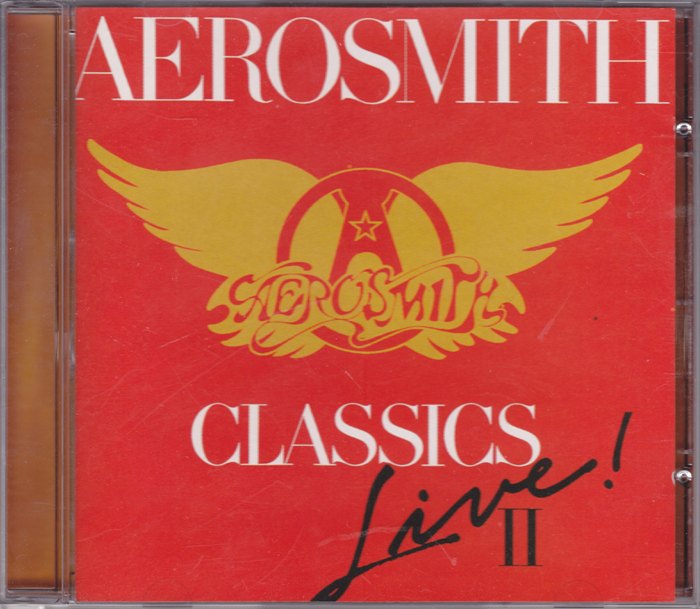
Hot on the heels of Classics Live came Classics Live II! Today you can get them together in one set, because they really are companion albums with no overlap between them. All songs here were recorded by the classic lineup of Steven Tyler, Joe Perry, Brad Whitford, Tom Hamilton, and Joey Kramer, and there are a couple neat surprises in the tracklist.
“Back in the Saddle” always works as an opening track, especially since this one comes from the 1984 Aerosmith reunion tour. They truly were back in the saddle, though just as wasted as ever! It has its sloppy moments and sour notes, but more energy than some of the previous live stuff. This rendition will never be considered a definitive live take of the song, but it does document that oft-forgotten mid-80’s period.
“Walk This Way” opens with the announcement that it was Tom Hamilton’s birthday! That would make it their New Year’s Eve gig in Boston in ’84. Joey’s drums are a little “thuddy” sounding, and I put the blame on producer Paul O’Neill (Savatage) who doesn’t always capture a drum sound to my tastes. “Movin’ Out” is one of my underdog favourites from the first Aerosmith album and I’ll always dig its slow, heavy drawl. It’s so great to hear Tyler sing that familiar ad-lib that he does live: “No-one knows the way but Joe Perry.” Following that is “Draw the Line”, another brilliant classic done live all loosey-goosey. “Same Old Song and Dance” follows that same tradition, with a teasing opening to make the crowd go nuts.
“Last Child” brings the funk as always, but my favourite has to be “Let the Music Do the Talking”. Although it was recorded before Done With Mirrors, this was the first new Aerosmith song to get a live release. Of course it’s technically a Joe Perry Project song, but Aerosmith’s version kicks that one in the ass. This live one is pretty awesome. Closing the album with “Toys in the Attic” guarantees that the ending is just as exciting as the beginning. Killer version.
The coolest thing to me about Classics Live II is that even though it’s called II, it doesn’t sound like a second volume of a live album. Considering that “Walk This Way”, “Back in the Saddle”, “Toys in the Attic” and “Same Old Song and Dance” are all on here, it could easily have been the first volume. It is easily the equal of part I.
 KEEL – The Right to Rock (1985 A&M)




























 mikeladano.com