deluxe edition

REVIEW: Lenny Kravitz – Are You Gonna Go My Way (deluxe & vinyl editions)

It’s Epic Review Time!  The fourth review from Mike and Aaron Go to Toronto…Again!  Yet another score from Sonic Boom!  I bought this one new, for $24.99.  Warning:  image heavy!

LENNY KRAVITZ – Are You Gonna Go My Way (2013 Virgin deluxe edition, 1993 vinyl edition)

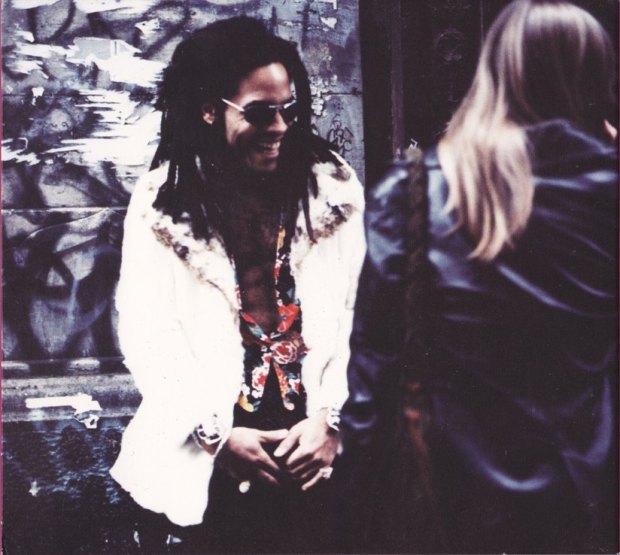
IMG_20141021_205756Man, I love this record.  This was the last legitimately great Lenny Kravitz album.  I’m pleased that with a fresh 2013 remastering job, it still sounds vital and raw.  Back in those days, Lenny was recording on vintage equipment all but exclusively.  In the included interview track, Kravitz discusses the collection that he and drummer Henry Hirsch had acquired, including gear that dated back to the 1940’s and 50’s.  The upkeep of said equipment is a nightmare, he states, as you can imagine.  The results that it yielded, especially on Are You Gonna Go My Way, justify the antique gear and maintenance costs.

I first got this sucker on (clear vinyl) LP back in ’94, which came with a stellar 8-song bonus CD.  I didn’t even have a good way of playing vinyl back then.  My turntable was pretty crap, so I never actually played the LP.  I got Are You Gonna Go My Way on CD a bit later, used, when I started working at the Record Store.  Now I can discard that old CD, because this deluxe renders it obsolete.  (But not the vinyl; more on that in a bit.)

Hopefully everyone knows the energetic title track, a massive smash hit single.  The simple repeating guitar riff is nothing but classic.  The track itself is basic blues-based classic rock, albeit with the tempo maxed out.  This track convinced that Lenny was ready, willing and able to be a rock hero, filling the shoes of his forebears such as Zeppelin and Hendrix.  Yet it was actually the second single, the organ-based ballad “Believe”, that shows what Lenny is truly capable of.  I consider this his best song, bar none.  The 2001 influenced video was so cool, but the delicate song stands on its own.  Its ending is epic in quality.

The other singles on the album included the frighteningly good soul-rock song “Is There Any Love In Your Heart.”  The guitar riff is pure rock, the falsetto vocal pure soul.  The song is deceptively angry.  Though Lenny does not sound enraged, the lyric is pretty clear:

“Babe you say I’m the only one, 
But you’re fucking all my friends,
Baby all that you care about,
Is Gucci and Mercedes Benz, 
You’re just the kind that’s up on all the latest trends.”

The last single from Are You Gonna Go My Way was the gentle love song, “Heaven Help”.  The amazing acoustic track was softer than I generally liked, but it’s hard not to.  It spawned a five-track CD single (or EP?), which we’ll get to shortly.

KRAVITZ ARE YOU GONNA GO_0006Singles aside, the album is loaded with incredible deep cuts.  One of the best is the emotional “Sister”, which really knocks you out by the end.  “Sugar” boats some cool, funky retro horns.  “Eleutheria” is reggae; I can’t think of a better way to describe it.  It’s also a standout, and probably could have been a single in its own right.  “My Love” is psychedelic, while “Just Be A Woman” is simply lovely.  There is plenty of variety on Are You Gonna Go My Way, without sounding fragmented.  It still sounds completely unified.

There’s only one tune I still don’t like, which is “Black Girl”.  It’s one of the softer numbers, but I just don’t find it catchy at all.  But it’s the only one.

KRAVITZ ARE YOU GONNA GO_0004The deluxe edition is jam packed with value.  Disc one boasts seven bonus tracks, all of astounding quality for B-sides.  These tracks had been previously issued on the aforementioned “Heaven Help” single and vinyl edition, so I am well familiar with each.  The upbeat “Ascension” should have been a hit.  “All My Life” is as strong as any of the album cuts.  “Brother” is the funkiest thing here, and maybe should have been included for that reason.  “Someone Like You” is a cool, 60’s-style droning rock song, a bit more upbeat than “My Love”.  “For the First Time” is a quiet slow dance, so for that reason, I can see why it was excluded.  On an album, it could kill momentum.  On a dance floor, it would result in many babies being conceived later in the evening.

Without a doubt, the most hilarious moment is the song “B-Side Blues”, a dirty spontaneous sounding song with spiteful lyrics.  In the words, Lenny complains that he’s been working hard, and only has six days off.  Yet the record company wants new songs!  This is what Lenny presumably gave them.  “Take this song and shove it up your ass,” croons Lenny.  Fortunately there’s enough Zeppelin-y blues here to keep the party going.  “Top 40, yeah!”

The second CD has some great hotel room acoustic recordings.  Sounds like cassette to me!  “Believe” is one I had previously, on the vinyl edition.  The rest are new to me, but every bit as raw and plaintive as the acoustic “Believe”.  Then there are some fantastic unfinished songs and demos.  I could not believe the quality of his throw-aways.  I don’t know if these tunes surfaced later on or not, but they certainly should.  “Work Like the Devil” has elements that sound like “Are You Gonna Go My Way”, but it’s definitely not the same song.  It only has about half the lyrics in place, but damn.  If it was on the album, it would have been a highlight.  Most of these demos are loud rock jams.  “Getting Out” though is a pure funk jam, sounding similar to Zeppelin’s “The Crunge”.  The best of these songs is the instrumental “Blood/Papa (A Long and Sad Goodbye)” which, once you get past the name is a 10 minute slow jam.  In my opinion, this one doesn’t need to be finished.  I think it’s perfect as-is.

KRAVITZ ARE YOU GONNA GO_0005

The last three songs are rough demos of songs written for the album Vanessa Paradis, which Lenny wrote and produced.  These are a bit soft for my tastes.  They are very unlike the rest of the material on this deluxe edition.  I know that “Lonely Rainbows” was on the album, but I don’t know if the other two were used under different names.

Finally, I want to mention two songs that I know of that are missing from this deluxe.  From the vinyl’s bonus CD is a live version of “Sister”.  This take is absolutely epic and it sends shivers up and down my spine at the end.  Just an incredible, raw live performance.  I assume somebody made a decision that live stuff wasn’t going to be on the deluxe.  That means you’re also missing the live medley of “Freedom Train/Always On the Run” from the “Heaven Help” single.  Too bad.  I think most fans would rather have those than the BBC interview.  The interview is good, don’t get me wrong, but it’s also 15 minutes long.

I wholeheartedly recommend this deluxe edition of Are You Gonna Go My Way to anybody who wants to check out Lenny Kravitz on the harder side of rock.  You will not be disappointed with either the album, or the deluxe.  In the meantime, I suggest die-hard collectors find the vinyl too, just for that astounding live version of “Sister”.

4.5/5 stars

REVIEW: KISS – Love Gun (2014 Deluxe Edition)

NEW RELEASE

KISS – Love Gun (2014 Universal Deluxe edition, originally 1977 Casablanca)

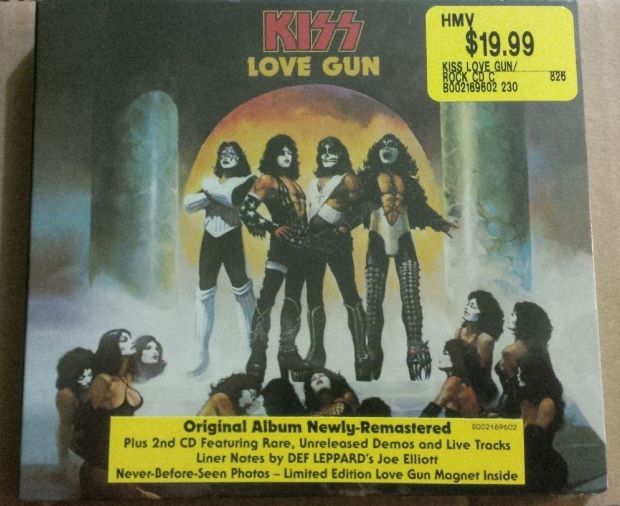
Mrs. LeBrain picked this CD up for me on Friday November 7 at the local HMV store, an adventure in itself that we will tell in a future Getting More Tale installment.  Love Gun is the first ever Kiss Universal “Deluxe Edition” to be released, hopefully the first of many.  You can understand why it would have been chosen first.  In 2012 they already released the newly remixed Destroyer (Resurrected), and the second most beloved studio album in Kisstory may well be Love Gun.

Like other Universal deluxes, Love Gun is a 2 CD digipack, with liner notes, rare photos, a fresh remastering and bonus tracks.  One of these bonus tracks is previously released.  The demo “Reputation” was only released a few short months ago on the commemorative Kiss 40 compilation.

First, let’s talk about disc one, the remastered Love Gun.  This sounds about as definitive as it gets.  The cymbals sound nice and crisp to me, not fizzling out in the distance.  I am very pleased with the sound.  You can see that it is not overdriven.  You can hear plenty of nuance in the instruments.  I hope this is about as close as you can get to the sound of listening to Love Gun in the studio control room.

GOT LOVE FOR SALE

2014 remaster of “Got Love For Sale”

For a more detailed review of the original Love Gun album, you can check out my original from my 2012 Kiss review series.  I rated it 5/5 stars.  From that review, “The classics here are among Kiss’ all time best. ‘Shock Me’, ‘I Stole Your Love’, and ‘Love Gun’ are still played in Kiss’ set circa 2012…’Tomorrow And Tonight’ and ‘Christine Sixteen’ were on Alive II.”  On the other hand I also said, “there’s a little bit of filler on here. I’m not a big fan of ‘Almost Human’ even though Gene is, and some people dislike ‘Hooligan’ although I love it. I could also take or leave ‘Got Love For Sale’.”  Since writing that, I’ve changed my tune on “Got Love For Sale” which I like a lot more today.

And yes, I did have “And Then She Kissed Me” played at my wedding.  I’m very proud of that fact.

The rarities here include some goodies that I have never heard before.  “Much Too Soon” is a slower Beatles-esque rock ballad.  Although I think it’s a pretty cool Gene Simmons experiment, it was clearly not suited to the heavier material on Love Gun.  If Gene had released it on his 1978 solo album, it would have been one of the stronger tracks.  The aforementioned “Reputation” is another decent tune from the Love Gun sessions.  In my review for Kiss 40, I said, “You can hear that aspects of this song later made it into other Gene Simmons compositions such as ‘Radioactive’.  This is one of those song titles I’d read about for years, but have never heard until now.  Cool.  While the song is definitely a demo, and not quite as good as most finished Kiss songs, it does boast a cool dual guitar solo and rocking piano a-la ‘Christine Sixteen’.”  The third and final unreleased song is called “I Know Who You Are”, which is actually a demo version of “Living In Sin” from Gene’s solo album, with a different chorus.  The verses are the same, and I think I might prefer it to the overly funky “Living In Sin”.

IMG_20141108_091221

Other unreleased goodies on the deluxe are 1977 demos of familiar songs.  “Plaster Caster” is pretty tight in terms of how the final version went.  Paul’s “teaching demo” of “Love Gun” is interesting.  He’s naming and recording the chords from the song as he goes, presumably to show the other members how to play it.  It’s in inessential track, interesting only to fans, but cool nonetheless.  This leads directly into an unreleased band demo of the song.  You get to hear the evolution in motion.  This band demo is all but identical to the final version, right down to the shimmering Frehley chord effects.  Then there’s a great instrumental demo for “Tomorrow and Tonight”.   Of the demo tracks, this is probably the greatest treasure.  I love hearing the bare guitars and drums of the four classic Kiss guys just playing together as only they can.  Ace Frehley’s solo is a work in progress but some of the key hooks are already in place.

Three 1977 live unreleased tracks are also quite the treat.  These are from December 20 1977, in Landover Maryland.  This was the second of a two night stand there.  If you ever wished the Alive II album wasn’t as polished sounding as it is, then you will be happy with these three tracks.  Yes, you get “Love Gun” four times, but who freakin’ cares?  It’s “Love Gun”.  You also get “Christine Sixteen” and Ace Frehley’s “Shock Me” complete with guitar solo.  So suck on that.

LOVE GUN DELUXE_0006The final audio bonus is a 7-minute Gene Simmons interview from 1977, from a radio station in Montreal Quebec.  It’s an interesting interview, but I’d be happier if more demos were on the CD rather than an interview.  However, let’s be honest — reasonable Kiss fans know that the Simmons/Van Halen demo of “Christine Sixteen” was not going to be on here.  Like Eddie and Alex want that to happen.

The packaging is great, with commentary from the musicians and writers involves, and artist Ken Kelly.  (These comments are re-printed from other sources.)  Also included is Ken Kelly’s original concept for the cover art, which was rejected for not being as grand and large as Kiss felt they were.   Finally there’s a two page essay by Joe Elliott of Def Leppard, who says he’s seen them play “Love Gun” live over 40 times, so I’d say he’s qualified.  Elliott waxes nostalgic about the days when bands used to release two albums a year.

A final note:  The Love Gun deluxe edition is supposed to come with a fridge magnet, but many have been opened and found to be missing the magnet.  I have already contacted Universal about a replacement.

4.5/5 stars

REVIEW: Judas Priest – Redeemer of Souls (2014 deluxe edition – Disc 2)

NEW RELEASE

Part 2 of 2: Yesterday I reviewed disc 1 of Redeemer of Souls.  Today, the bonus disc!

JUDAS PRIEST – Redeemer of Souls (2014 deluxe edition)

Sometimes a bonus CD is made up of obvious castaways.  Other times, such as with the most recent Black Sabbath album, the bonus disc contains some serious gems.  I don’t know why everybody wouldn’t just go and buy the “deluxe” editions to get the bonus CDs, relatively cheap as they are.   For whatever reason, deluxe editions with bonus CDs flood the stores today.  Thankfully, Judas Priest put just as much effort and passion into these five songs as they did the 13 on disc 1 of Redeemer of Souls.

JPROS_0002“Snakebite” inhabits an 80’s-like Priest vibe.  Dare I say it?  This would have sounded at home on Ram It Down, but it’s better than that.  “Tears of Blood” on the other hand reminds me of “The Sentinel”.  This is one of my favourite songs on the whole Redeemer of Souls set.   There’s no reason a song like this shouldn’t be a single.  I don’t know how songs like this are selected for a bonus CD on a deluxe edition.  Granted, disc 1 of Redeemer is topped to the brim in quality.

Still in an 80’s Priest mold, “Creatures” boasts a catchy chorus within a heavy song.  (The title “Creatures” is short for “Creatures of the Night”, so I’m pretty sure they shortened it to avert lawsuits by G. Simmons.)  What is it that has injected this youthful rediscovery of classic Priest melodies and riffs?  Has Richie Faulkner re-ignitied the passion for writing those kinds of songs?

“Bring It On” is quite different from the other songs on Redeemer, but it certainly shares classic metal traits with them.  I could imagine a song like this going over quite well live.  Once again I ask, how does a strong contender like this get sent to the bonus CD?  “Bring It On” is a fist-pumper, pure and simple.  It’s uncomplicated by flourishes or production.

Finally, as if “Beginning of the End” wasn’t a proper album closer, comes “Never Forget”.  This quiet ballad is lyrically a poignant open letter of thanks to the fans:

We’ll play on to the end,
It’s not over, not over my friends,
We are together tonight,
Reunited for all our lives,
And we thank you all for it,
We will never forget.

Truthfully, this song gives me chills.  I think Priest get their point across.

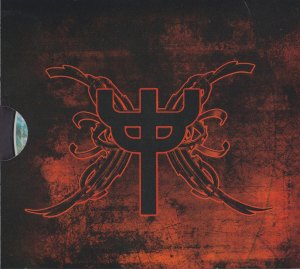
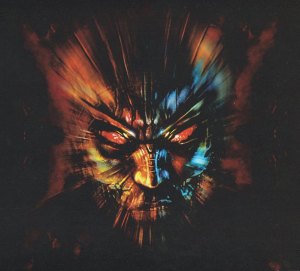
JPROS_0003Before making closing arguments, I just want to briefly talk about the packaging and production.  I’m on record as being a fan of Mark Wilkinson, and his work here is primo.  Drawing on past characters as the Angel, Painkiller, and even Marillion’s Torch, here comes the Redeemer of Souls.  The art looks great on the embossed, metallic-looking outer cover.

Glenn Tipton and Mike Exeter produced Redeemer of Souls, and by and large I think they did a fantastic job of capturing all that is good about Judas Priest.  I find the mix to sound muddy.  Maybe the CD was mixed too loudly, or perhaps I’m just not playing it loud enough.  All I know is that I have a hard time hearing subtleties.

If Redeemer of Souls goes down as the final Judas Priest studio album, let it be known that it is a dignified statement.  The band clearly worked hard on it (not that they didn’t for Nostradamus).  Early feedback from fans is that they are by and large very happy with it.  This was in spite of some uninspiring early song previews.  When you listen to Redeemer of Souls, you will understand that it is not about individual songs so much as about the entire body of songs.  All 13 (or 18) tracks are part of a whole that is best enjoyed whole.

4.75/5 stars

REVIEW: Judas Priest – Redeemer of Souls (2014 deluxe edition – Disc 1)

NEW RELEASE

Part 1 of 2:  Today, the album, tomorrow the bonus CD!

JUDAS PRIEST – Redeemer of Souls (2014 deluxe edition)

Whenever a classic metal band loses a key original member this late in the game, fans would be forgiven for being skeptical.  When KK Downing quit in 2011, the shockwaves could be felt on every metal message board in the world.  KK said, “There were at least 21 reasons why I decided to quit,” and you have to respect the man’s wishes.  It was hard to be optimistic about the future of Judas Priest (if there was to be any), but the band responded by hiring young Richie Faulkner (ex-Lauren Harris) who proceeded to inject a fresh bolt of electricity.

Filling a role on stage is one thing, and Faulkner did that ably (as proven on the band’s live Epitaph blu-ray).  He also brought his own sound to the table.  Creating new music is much harder to do.  Faulkner has a writing credit (with Rob Halford and Glenn Tipton) on every track of Judas Priest’s new album Redeemer of Souls, and the result is possibly Priest’s strongest since Painkiller in 1990.  Those who felt indifferent to 2008’s double Nostradamus CD should find plenty to like here.

JPROS_0007“Dragonaut” opens the album with a track almost reminiscent of  Rob’s solo band Halford.  For me the most important thing about this song is the classic sounding Priest guitar solos.  It’s almost like they said, “Do you doubt us?  Check out the new kid.”  The solo break has a harmony section similar to “Freewheel Burning”, but both shredders (Tipton and Faulkner) have plenty of time to burn.  “Dragonaut” is a good track, but compared with others on the album, it’s just one of many.

The title track is not that dissimilar to Nostradamus, sounding pretty much as latter-day Priest are expected to sound.  Perhaps that’s why it didn’t blow me away when it was first previewed a while ago.  Now that it has had time to grow on me, I consider it a favourite.  It has a chorus, a riff, and a beat you can bang your head to.  What more do you want?  More solos?  OK, no problem.  Sounds like Glenn has that under control!

If you missed the classic sound of Priest of old, then “Halls of Valhalla” may please you, as it sounds as if it could have been written for Painkiller (think “Hell Patrol”).  Faulkner nails the classic Priest vibe, but it’s the riffs here that truly feel classic.  Regardless of past experiments in sound and direction, there are certain guitar parts that simply sound Priest-ish, and Redeemer of Souls is loaded with them.  Halford throws in a couple screams, while Scott Travis and Ian Hill create the patented Judas Priest back beat.  “Halls of Valhalla” is the strongest song thus far.

“Sword of Damocles” is rhythmically different; the band slow it down a bit to let the song stomp.  The chorus here is top-notch, and the track has a lot of light and shade to it.  Even though it’s only five minutes in length, I’m inclined to use the word “epic” to describe it.  Meanwhile “March of the Damned” has a bit of a groove to it, something not always associated with Judas Priest.  The riff has some “Metal Gods” in its DNA, but melodically I’m thinking of Ozzy.  Regardless, it’s a great mid-tempo groover that would be an obvious single.  Then a really nice guitar harmony introduces “Down in Flames”, which is nothing like its intro.  Judas Priest can do heavy music of every type, and “Down in Flames” is Priest doing hard rock.  It’s the heavy side of hard rock, but the catchy chorus leaves no doubt.  Richie and Glenn trade off solos just like KK used to do, and I’m glad Priest have discovered some new chemistry guitar-wise.

At the midway point of the album comes “Hell and Back”.  A ballady intro is merely a fake-out, soon one of those grinding British Steel riffs takes over.  This one doesn’t boast one of the best choruses, but luckily the riffs and groove are entertaining enough.  It definitely sounds like classic Judas Priest in style.  It also has a killer outro.

JPROS_0005“Cold Blooded” might be considered the “power ballad”.  This one took the longest to grow on me, due to a similarity to some of the slower material on the Demolition CD.  I like it more now; the verses and choruses are really strong.  I think there will be a lot of people who pick this song as a favourite.  The solos absolutely smoke.

Priest usually like to lay down one or two breakneck speed metal workouts.  “Metalizer” is one of those fast tracks, like “Painkiller” or “Demonizer”.  This requires a couple Halford screams, and Rob delivers, insomuch as his voice will allow.   Think Rob sucks now?  Let’s hear you scream at age 62!  Then, “Crossfire” also has a classic Priest vibe, but I’ll be damned if the “quiet” guitar lick in the song isn’t eerily similar to “I” by Black Sabbath.  Who sang for Black Sabbath on the last two dates of their Dehumanizer tour?  Rob Halford.

Regal riffing opens “Secrets of the Dead” which is yet another outstanding track.  This one reminds me of “Laid to Rest”, off the first album by Rob Halford’s Fight.  It doesn’t sound like Fight; it sounds like Judas Priest, but there is a clear similarity to the earlier song.  I also hear a little bit of “Night Comes Down”, from Defenders of the Faith.  Then, what better to follow a slow track than something fast and metallic?  “Battle Cry” is pure, classic metal.   There is nothing that sucks about “Battle Cry”; it lays waste to the landscape and features one of Rob’s best vocals on the album.

The land has been scorched.  Nothing remains but the fires and ashes of the past — so “Beginning of the End” is a perfect end to this CD.  It is a slow and mellow epic with texture.  I firmly believe that an album should feel like a journey with a beginning, middle and end.  A song like this feels like an album closer by destiny.

After 13 tracks of timeless heavy metal, it is understandable if you’re exhausted by the sheer power of it all.  It’s over an hour of pretty much non-stop quality metal, so it is hard to believe that there’s yet more!  On the deluxe edition, that is.  Five more to be exact and we’ll be taking a close look at them tomorrow.

As for the basic version of Redeemer of Souls?

4.75/5 stars

REVIEW: Deep Purple – Made In Japan (4CD/1 DVD box set) Part 3

NEW RELEASE: Part 3

This box set is so massive, I needed to review it in three installments.  The first two can be found here:
DEEP PURPLE – Made In Japan Part 1
DEEP PURPLE – Made In Japan Part 2

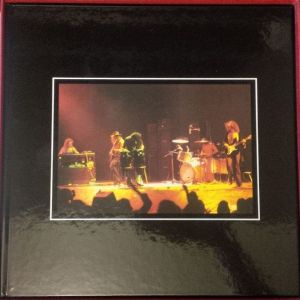
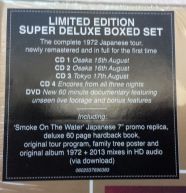
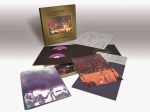
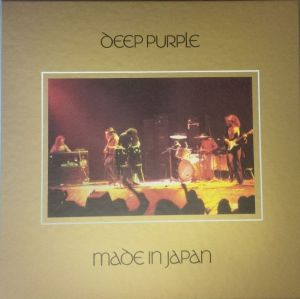
DEEP PURPLE – Made In Japan (2014 limited edition Super Deluxe box set)

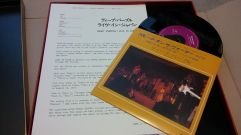
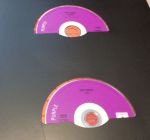
“Smoke on the Water” Japanese 7″ promo.  This is a reproduction of a rare Japanese promo single from 1972, sleeve and all.  It is pressed on heavy 70 gram vinyl, a treat indeed.  It features the promotional single edit of the studio version, and an edit of the Made In Japan version on the other side.   The studio edit is available on plenty of releases, such as Singles A’s and B’s.  The live edit is one that I don’t think I owned prior to this.  I actually enjoy something like this; it’s interesting to see where and how they did the edits, from a technical point of view.

Including a 7″ single in a box set of this size is something I wholeheartedly support.  Not only do I love the vinyl format, but when you spend this much money ($115 Canadian) in one place, you deserve something extra.  A lot of the stuff included in box sets these days, even in this box set, amounts to nothing more than paper.  Music trumps packaging, so I’ll always take something like a bonus vinyl, especially when it has an exclusive track on it.

Interestingly, on this printing, the times for the two tracks are reversed.  The live version is the longer, not the shorter as the label suggests.


LORDDVD:  Made In Japan: The Rise of Deep Purple MKII and more.

This hour-long documentary consists of new and archival footage and interviews, assembled into a narrative.  Old footage of Deep Purple MKI begins our story.  The shortcomings of this lineup led the core members of Ian Paice, Jon Lord, and Ritchie Blackmore to seek new bandmates.  They had gone as far as they could musically with Nick Simper (bass) and Rod Evans (vocals).  In stepped Roger Glover and rock’s greatest screamer, Ian Gillan.  Then, the big albums:  In Rock, Fireball, and Machine Head.

Strangely, it was a tax loophole that led to Machine Head. It was expected that the fortunes of the band would only rise, but British tax laws would keep them all paupers.  If they became tax exiles, and wrote and recorded in mainland Europe, they would not be taxed.  This led them to Montreux, Switzerland.  According to Claude Nobs, they were planning on recording an album called Made In Switzerland.  Nobs invited them to record at the local casino, and the circumstances of this have been well documented.  A Frank Zappa concert that night was attended by Deep Purple and Nobs.  Someone fired a flare gun into the bamboo ceiling, and the place went up in smoke.  This DVD has the audio of Zappa asking the audience to leave!

The place did indeed burn to the ground.  Luckily Deep Purple had not yet moved in their gear, or it too would be gone.  Next they tried recording in a small theater, but noise complaints caused them to move again.  It took almost a week to find the Grand Hotel, which was closed for the winter.  Perfect.  The results speak for themselves.  Machine Head is the classic Deep Purple album.  But according to Blackmore, it was Made In Japan that made them a phenomenon.  It was a live album that they didn’t want to do, but could not have regretted doing.

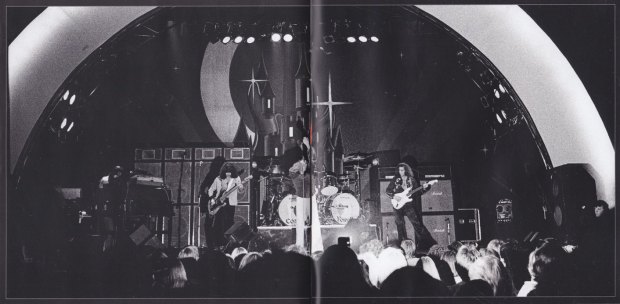
Bruce Dickinson, James Hetfield, Lars Ulrich, and more show up to discuss the impact of Made In Japan on themselves.  Dickinson points out that the remarkable thing is that Made In Japan is 100% live.  There are no overdubs.  Martin Birch managed to capture it raw.  There’s a lot of great footage here; live footage, showing the interplay of the band.

IMG_20140607_062755

Next, the band headed to Rome to record the difficult Who Do We Think We Are.  Made In Japan had not even been released in America yet, only Japan, until mass importing of the record forced the label to release it.  Unfortunately at the height of their powers, Ian Gillan and Ritchie Blackmore had a massive falling out.  Ian resigned.  Blackmore and Paice almost formed a trio with Phil Lynott.  Glover was fired, which was a condition Blackmore set to stay in Deep Purple.  A final Japanese tour was the last commitment of the band.  Glover describes a cold atmosphere, and the tension in the air.

Glenn Hughes appears next, remembering a Trapeze gig attended by members of Deep Purple.  He sussed out the reason for their attendance.  Still, he did not expect to be asked to join.  It was an emotional time for Glover.  He saw his Deep Purple albums on top of the charts, yet with magazines printing pictures of their new lineup featuring David Coverdale and Glenn Hughes.  Hughes reveals he was mistakenly sent awards for albums like Who Do We Think We Are.  Glover felt deeply hurt but strove to be a professional.

As a Deep Purple fan who owns a lot of Deep Purple on video, I enjoyed this documentary.  Although it has some footage that I had before, it also had a lot that I didn’t, such as interviews that were new to me.  Footage from Japan is a highlight.  “Smoke on the Water” is presented almost in full (from the 17th), though it is very lo-fi.

Extras include a music video for “Smoke on the Water”, made up of footage from the documentary.  “The Revolution” is a short film about rock music and counter-culture, focusing on Deep Purple while at Montreux in 1971.  Much of this footage is in the main documentary.  A bearded Gillan rips his way through “Speed King”, and the band are interviewed.  There’s also a short German documentary from 1972, subtitled of course.  I enjoyed the description of their stage attire:  “intentionally scruffy hippie uniforms”.  Finally, there is a 1973 performance of “Smoke”, but now I’ve really heard the song too many times.  It’s the best footage though: full colour, pro-shot.  Roger is wearing bright red platform shoes.

This DVD was adequate.  The main documentary feature was re-watchable.  “The Revolution” and the German doc, not so much.  It’s too bad that the video content is only tangendentally related to Made In Japan.  The DVD is really not much more than a supplement to the main feature.

IMG_20140603_173713Final words:  The box set is rounded out by an excellent booklet, a reproduction of the Japanese tour program, a family tree, and a reproduction press release.  Ultimately these things are just pieces of paper.  Nobody would go out of their way to buy a reproduction of a press release.

As a boxed set of music, Made In Japan is a home run.  This is the way they should have released it back in ’93, instead of the incomplete Live In Japan.  I’ll hang onto my old 2 CD anniversary edition of Made In Japan, because I believe in keeping the original mix of something.  It’s an historic piece, not to be discarded.  When I want a briefer Deep Purple live experience, I’ll play that version of Made In Japan.  When I want the full Monty, I’m listening to this box set.  Not only is it the best release sonically, but it is the only complete release of all three Japanese shows.

As a celebratory boxed edition of a classic, I’m less satisfied.  The DVD and the papers inside are things I will get less enjoyment from.  If the DVD had included a feature on the making and remixing of this edition, I would have been more interested.

Still, I’m happy.

For the music:  5/5 stars

For the box overall:  4/5 stars

REVIEW: Deep Purple – Made In Japan (4CD/1 DVD box set) Part 2

NEW RELEASE: Part 2


This box set is so massive, I needed to review it in three instalments.  The first one can be found here:

DEEP PURPLE – Made In Japan Part 1

IMG_20140607_062429DEEP PURPLE – Made In Japan (2014 limited edition Super Deluxe box set)

Disc 3:  Tokyo, August 17 1972.  Finally we arrive at the third night.  The band were comfortable by the time they hit Tokyo, but the sound from the venue wasn’t as desirable as the two nights in Osaka.  That’s the main reason that most of the Tokyo show was not used on Made in Japan originally.  Yes, sonically this is not as crisp nor clear.  It seems like a noisier mix, with Gillan’s voice more difficult to make out.  However, we have heard plenty of Deep Purple recordings worse than this, and this is still Deep Purple MkII at the top of their game.

The band tune up and say hello before “Highway Star”, a quaint reminder of the way concerts used to be compared to today.  Like the other two renditions of “Highway Star”, this is an electric performance.  Jon’s organ solo was the highlight for me, Ritchie’s blistering frets notwithstanding.  Gillan tells the crowd that the song is about somebody named “Fat Larry” and his automobile.

“Smoke on the Water” begins with Ritchie teasing a bit of “God Save the Queen”.  Jon and Ritchie fall out of sync a bit in the beginning of the song, but they quickly lock back into place.  Of the three, this is my favourite version of “Smoke on the Water”, just because it is different.  The band are looser and willing to play around a bit more.  Blackmore’s solo is a highlight as he travels all over the musical landscape.

Always epic, “Child in Time” is greeted by polite applause, a true show of Japanese appreciation.  While the August 16 Osaka version may well be Uncle Meat’s favourite because of the guitar solo, I think this one is pretty special due to Jon’s keys.  Either way, we’re splitting hairs here.  It’s “Child in Time” performed live in Japan in 1972!  To talk about favourites at this point is to be speaking in nanometers.

IMG_20140603_173412“The Mule” has an entertaining intro; Ian Gillan tells the monitor guy, “Can we have everything louder than everything else?”  This is the version from the original Made In Japan.  The intro was so legendary that Lemmy paid homage on the live Motorhead album, Everything Louder Than Everyone Else.  The song goes absolutely mental at the 2:20 point, before Ian Paice breaks into his drum solo.  Not a lot of drummers are interesting to listen to soloing for five minutes.  Paicey is.

“Strange Kind of Woman” is another track that is never exactly the same twice.  Gillan and Ritchie improvise together, a reminder of a day and age when they (mostly) got along.  It’s hard not to smile.  According to Ian, this song is about “Terrible Ted” and his “awful lady”.

Diving into newer material from Machine Head comes “Lazy”; always interesting since it too relies on a lot of improvisation.  This is the version used on Made in Japan originally, and Jon’s solo (dipping into “Louie Louie”) is familiar and fun.  That Hammond howls, and then Blackmore enters.  This is one more Deep Purple long bomber.  The vocal doesn’t even start until six minutes in!

Finally, “Space Truckin'”.  One more amusing song intro:  Ian says that this song is about what would happen if space travel and rock and roll ever met, which has not happened.  Therefore, this song does not exist.  But it sure does slam!  The crowd clap along, obviously into it.  I love every pick scrape, every drum roll, and every scream.  Deep Purple can simply do no wrong at this point.  The only flaw is distracting audience (or perhaps crew) noise.  You can hear people speaking Japanese around the 13:00 mark.

IMG_20140603_174039Disc 4: Encores.  This CD comprises all the encores from all three shows.  “Black Night” was played first, at all three shows.  “Speed King” was played twice, on the 1st and 3rd nights.  On the 2nd night the band played Little Richard’s “Lucille” at absolutely breakneck pace.  For many years, these encores were largely unavailable.  “Black Night” from the 3rd night in Tokyo was released (edited) as a B-side, and then re-released on many compilations such as Power House (1977).  The other encores didn’t receive release until the 90’s or later.  Now, finally, all the tracks from Japan are collected in one set.  I could barely keep track of where to find all the songs from the Japan shows, spread as they were over multiple releases.  Now it’s all in one place, as it should be.

After tuning up, Blackmore noodles for a bit.  Then “Black Night” crashes to a start.  This song is almost a respite for the audience, after a track like “Space Truckin'”.  If you remember from Part 1 of this review, Gillan had a case of bronchitis that he was recovering from.  He couldn’t stand his performance on the 15th, but you’ll be hard pressed to tell on “Black Night”.

Ian says “good luck, good night,” but it’s just a clever ruse.  Much applause results in a return and a noisy take of “Speed King”.  There’s quite a bit of feedback, sour notes and noise coming from the guitar.  Blackmore was either struggling with it, or abusing it.  A knackered Ian Gillan is out of breath at times.

MIJThe second version of “Black Night”, from the 16th, is quite different.  It’s quite ragged and feedback-laden, and this version reveals human errors that, to me, only add to the live experience.  Deep Purple were taking things over the top at these concerts, and sometimes things fall apart.  It’s rock and roll.

Once again, the applause of the audience brings Deep Purple back to the stage.  Their insane cover of “Lucille” was a pleasant surprise.  Deep Purple had been playing this for ages, since Gillan first joined the band.  Another version (from London) can be heard on In Concert ’72.  That is probably the superior version, though this is no slouch.  Almost half of it is just intro!  It is stretched over eight minutes.  It keeps getting faster and faster, until they’re playing at Ludicrous Speed.

The final show in Tokyo is sonically different, as mentioned at the start of this review.  That’s most obvious on this CD when you go straight from Osaka to Tokyo.  This time, Deep Purple are introduced in Japanese, before Ian asks for the monitors to be turned down.  This is the version used on B-sides and compilations numerous times before, and it is my favourite, probably due to familiarity.  This mix allows Jon’s organ to shine a lot better.  It is also unedited, which of course is a bonus.

And finally the journey ends with “Speed King”.  The band tune up for the last time in Japan, and dive in.  Once again, they’re off the rails.  I don’t know where Gillan got the energy.  Even though he’s tired, he’s still wailing.  Jon Lord’s solo is especially enjoyable.  I’m exhausted by the end of it.  This has been a lot of Deep Purple to digest.  But we’re not done yet.

To be concluded.

REVIEW: Deep Purple – Made In Japan (4CD/1 DVD box set) Part 1

NEW RELEASE: Part 1

IMG_20140607_062032DEEP PURPLE – Made In Japan (2014 limited edition Super Deluxe box set)

Giving you the kind of detailed review that you have come to expect from me is no mean feat when it comes to a massive set like this. This 5 disc (plus 7″ single) Made In Japan reissue was an epic undertaking to absorb. Just as much as reviewing Machine Head‘s 5 disc deluxe edition last year was a huge task, Made In Japan was its equal!

Because of this, I’ve decided to split the review into three: Today we’ll look at the first two CDs. Then the third and fourth CDs, the DVD, the 45, and everything else.  Enjoy this first installment.

Disc 1:  Osaka, August 15 1972.  “Good morning!” jokes Ian Gillan as the band arrive on stage.  A few moments of quiet as the band plug in and strum, and then…the opening drum beat to “Highway Star”.  The first of three shows has begun!

Gillan says he was suffering from bronchitis on this first night, and you can indeed hear a bit of extra rasp in the man’s voice.  Gillan says he hates these performances, but I think the extra rasp only adds to the furious “Highway Star”.  Both Ritchie Blackmore and Jon Lord are on fire, ripping through their parts with great aggression.  Blackmore makes a few mistakes during the solo, but who cares?  Right from this opening salvo, you can hear the nuances and details of this new remix.  Reading the liner notes, you realize that the biggest difficulty in remixing this album was that everything was bleeding through Gillan’s vocal mike.  I’ll be damned if it tarnishes the listening experience though.

Before you can catch a breath, “Highway Star” has ended and they’re into “Smoke on the Water”, which had yet to become the classic concert favourite that it is today.  Ritchie plays around a bit on the intro, as the crowd claps along.  Clearly, they know the song.  “Smoke” lacks the furious energy of “Highway Star”, but it is still an incredible performance.  Once again, Ian Gillan’s raw voice only adds to the experience (but it’s not even that bad).  “Smoke” is the only track from this show that was used on the final album Made In Japan.

Ian introduces “Child in Time” as a “sad story”, but nobody was mourning that night in Osaka.  One thing I enjoy about “Child in Time” is that it is never played the same twice.  Jon in particular changes up his opening melodies all the time, and this version is quite different from the one they debuted a mere three years prior at the Albert Hall.  Somehow, bronchitis and all, Gillan still manages to scream his way through this monster.  At times, Ritchie’s solo sounds like it’s drifting into “Lazy”.

IMG_20140607_062642According to Ian’s intro, “The Mule” is a song about Lucifer.  This track from Fireball is essentially an excuse for Ian Paice to do a five minute drum solo.  Nothing wrong with that; it’s Ian Paice after all.  Gillan’s voice is a bit shaky at times, but I think that only adds to it.  I enjoy that Allmusic refers to “The Mule” as an instrumental, proving once and for all that they don’t know what they’re talking about.

It’s all long-bombers from there.  “Strange Kind of Woman” is extended with Ian and Ritchie’s usual interplay, and a gonzo guitar solo.  “Lazy” is never short, nor is “Space Truckin'” which exceeds 20 minutes (complete with flubbed lyrics).  They are all stellar.  I found the intro to “Lazy” quite enjoyable, because after a brief noisy organ bit, Jon teases the crowd by stopping.  It becomes dead silent  for long enough that you’ll wonder if the CD stopped.  That’s something you never hear on a live album these days; a silent crowd.  Before “Strange Kind of Woman”, Ian begs the audience for a few moments to tune up.  It pays off in the end, he says!  All this talk is preserved on the box set version of Made In Japan.

I found the remix on this disc to be great.  I love that I can hear every conga on “Space Truckin'”.  I haven’t played my old 3 CD remixed Live In Japan (1993) set in a few years, so I haven’t compared the two mixes, but this is so good, I don’t really have a reason to play Live In Japan anymore.

IMG_20140607_062555Disc 2:  Osaka, August 16 1972.  Once again, “Highway Star” gets the proceedings off to a bang.  Gillan’s voice is still raspy, but a new day has given it strength.  The band sound more confident, as if they lacked any in the first place.  It is, after all, the second Osaka show that made up the bulk of the original Made In Japan album.  Once again, the remix is a joy.  I believe in hanging on to an original mix of an album, that’s just the way I am.  The original Made In Japan might not sound “better”, but it is an historical document of the circumstances of its making.  It has its own sonic charm, and I think both can co-exist happily in my collection.  (The ’93 mix, I’m afraid, will be retired in favour of this new 2014 mix.  Interesting how they remix this album every 21 years.)

Not actually Made in Japan

Once again, “Highway Star” is followed by “Smoke on the Water”.   Ritchie plays with the opening riff, but in a completely different way from the first concert.  Later on, there’s a couple bum notes, and perhaps that’s the reason they used the version from the day before on the original album.  The solo is a little loose too.

“Child in Time” is the adventure that it always is, and this version is familiar because it’s the one from the original Made in Japan.  The song is truly a rollercoaster; that word applies here as well as any other.  There are times it feels like it’s coming off the rails, but Glover and Paice keep it locked.  Uncle Meat tells me that the original Made in Japan is his favourite live album “of all time.”  (Perhaps it is also one of Dream Theater’s, since they did a song-for-song cover of the album.)  Meat also says this is the “greatest guitar solo of all time,” right here on “Child in Time”.

“The Mule” was not used on the album; instead the version from the next night (in Tokyo) was selected.  Same with “Lazy”.  “Strange Kind of Woman” and “Space Truckin'” from this concert were used on Made in Japan.  I couldn’t tell you why “The Mule” wasn’t used, it sounds great to me.

I very much enjoyed Ian’s “Strange Kind of Woman” intro.  After explaining the song’s inspirations Ian says, “Why I’m talking such a lot is ’cause, like, we gotta tune up again…’Cause there’s a big time change from England you see, and the guitars are still not recovered from it.”  After they are all tuned, Ian drops his famous line, “I have to announce that next week, we’re turning professional.”  Through to his ungodly ending scream, “Strange Kind of Woman” is a corker.

Lord’s organ intro to “Lazy” is different from the first night, but just as interesting.  “Space Truckin'” is the familiar version we know and love from the original Made In Japan, and it’s still astounding how this band could jam!  Who cares that Gillan’s “Yeah, yeah yeah yeah!” is flat.  That’s part of the action!

We’ll stop here for now, and pick up the rest tomorrow.  Already, it’s apparent why a comprehensive set like this one was necessary.  It’s because even if the setlist is the same, Deep Purple never play the exact same concert twice.  Some of Ian’s song intros are by rote, but that’s where the similarities end.  Deep Purple weren’t content to crank out the same jams and solos night after night, and that’s why a box set like Made In Japan is an important document of this band in their prime.

To be continued.

REVIEW: Black Sabbath – 13 (deluxe, Best Buy, all 5 bonus tracks)

BLACK SABBATH – 13 (2013 Universal deluxe, Best Buy, and Spotify editions)

Last year, Uncle Meat gave us his detailed review of Black Sabbath’s 13.  (His rating:  3.25/5 stars.  Check out his full review for the scoop on the first CD of this metal monolith.)  Having had almost a year to live with it myself, I think it’s time I got around to reviewing the songs he didn’t:  the bonus tracks!

The deluxe and Best Buy editions have “Methademic,” “Peace of Mind,” and “Pariah.”  “Methademic” is cool for being a fast-paced heavy rocker, something I associate more with a Dio kind of sound.  It’s a good track, good enough that Sabbath play it live.  Geezer’s got a serious groove going on with the bass part, and Brad Wilk is playing with furious drive.  You wouldn’t consider this song to be as good as any on the first CD of 13, but it’s a great bonus track.

“Peace of Mind” is of equal quality to “Methademic.”  This time Sabbath have gone back to doomy, but Ozzy’s vocal melody takes it to a special place.   All it’s missing is that looseness that only Bill Ward could provide.  It sounds so authentically Black Sabbath, but if you concentrate on the beat, you can hear that the loose swing of old is not there.  Having said that I enjoy “Peace of Mind” very much, especially when it picks up after the 2:15 mark.

My favourite of this trio of songs is “Pariah.”  It occupies a mid-paced groove which chugs along nicely.  Tony has a couple cool riffs in it, but once again Ozzy’s vocal seals the deal.  Tony’s guitar solo is icing on the cake.  I love when he has a chance to slow down and play bluesy, as he does here.

Japanese fans, and Best Buy shoppers have their own exclusive bonus track, and it’s the one with the best title:  “Naïveté in Black.”  You have to love that.  This smoker is similar to “Time Machine,” from Dehumanizer.  I don’t know why a song this good was left to Best Buy, because it’s better than the other three.  It’s definitely unique among the 13 songs for sounding more like Dio-Sabbath than Ozzy-Sabbath; perhaps that’s the primary reason.  Count me as a big fan of “Naïveté in Black.”

Finally even Spotify have a bonus track, which is “Dirty Women,” live.  This is with Tommy Clueftos on drums, from the same show as the recent Gathered In Their Masses live DVD (but not the CD).  I am fortunate enough to have an excellent quality copy of the song burned to a CD, the perfect final bonus track to 13.

But that’s not all folks.  With the deluxe box set edition, there’s a DVD as well.  There is a brief documentary about the reunion and recording of the new album.  There are quite a few humorous moments, but I do not consider this to be much of a bonus.  All this stuff is available for free on youtube.  I don’t value a physical copy of something like this as much as I value a physical copy of a song.

Best moment:

Fan – “I came all the way from Croatia!”

Ozzy – “Where the fuck is that?”

The deluxe set is large and very nice to look at, but I considered it sparse in terms of worthwhile goodies.  There are lots of large glossy photos, but they’re not up to handling repeatedly.  There’s a print of the “God Is Dead?” single art, a 2 CD set (minus “Naïveté in Black”), and 13 on double 180 gram vinyl LPs.  Everything is lovely and fragile.  There’s also far too much room in the box itself for everything, so things move around inside.  That’s a bit of a design flaw just to save on some extra cardboard packaging.

The Best Buy set came with a T-shirt, which I have kept in-package.  You can find pictures of both versions below.

4.5/5 stars (for 13 as a whole)

Best Buy:

This slideshow requires JavaScript.

Deluxe:


REVIEW: Rainbow – Rising (2011 Deluxe Edition)

“There’s no sun in the shadow of the wizard, See how he glides, Why he’s lighter than air”

RAINBOW RISING_0001RAINBOW – Rising (2011 deluxe edition)

I believe I’m well on record for being a connoisseur of deluxe editions.  I love to collect all the extra music, check out the liner notes, and feast on unreleased tracks.  The problem with Rainbow Rising is that no extra unreleased songs or demos survived. So, what you’ll get is three different and complete versions of Rainbow Rising, plus a tour rehearsal version of the quintessential Rainbow song, “Stargazer”. If you don’t want to hear the whole album three times in a row, plus a fourth version of “Stargazer”, then don’t buy this disc. Just stick with the regular CD.

The three versions of the album inside include a previously unreleased rough mix. This one is especially interesting because a lot of these song versions run slightly longer than the original album versions. Therefore, you will hear some valuable performance stuff that you haven’t heard before. The other two versions of the album include the “LA Mix” and “New York Mix”. The liner notes don’t go into detail here, but the original LP and CD versions of Rising had different mixes, and now they’re both here in one place. The differences are subtle, but those intimate with the album will recognize slightly different keyboard, vocal, and guitar parts. Previous to this, I had only owned the original CD edition, which was the “LA Mix”. Later CD editions had the “New York Mix” which I haven’t heard until now.RAINBOW RISING_0006

Lastly there is a tour rehearsal version of “Stargazer” from Pirate Sound, where Deep Purple rehearsed Come Taste the Band. It is surprisingly lo-fi considering where it was recorded. It sounds like somebody taped it on a hand held cassette deck. Not very listenable unfortunately, and kind of baffling why something this lo-fi would have been included at all. You can barely hear Dio at all at some points.  Still, there was room for it and why waste plastic, right?

This album itself is probably Rainbow’s best. That’s just my opinion. The renowned Martin Popoff ranked Down to Earth higher, but he did rank Rising highest of the Dio-era. I think five of these six songs are incredible. The only one I’m not especially fond of is “Do You Close Your Eyes”, which I just find doesn’t fit the overall darker direction of the album.  It would have sounded better on Blackmore’s Rainbow.  “Tarot Woman”, the album opener, is one of the most incredible songs Dio’s ever done. It’s absolutely a highlight of his storied career.  Cozy’s drum pounding is monumental throughout. “Light In The Black” is just furious jamming throughout. Incredible playing. And of course “Stargazer” is purely epic. The lyrics are cool and the keyboards just take the whole thing to another level. If I could only play one Rainbow song for the rest of my life, it would be “Stargazer”.

RAINBOW RISING_0004

The liner notes don’t the mention any sources or history about the three different mixes at all, and I don’t really know anything about it. There is, however, a great interview with keyboardist Tony Carey, supplemented by an old one with Cozy Powell. The packaging, including cover art from Ken Kelly (Kiss Destroyer), looks amazing in digipack form.

While normally Rainbow Rising would be a 5 star winner, hands down, I left this deluxe edition feeling slightly disappointed. It is what it is, but I think I would have preferred some different bonus material. Maybe some live stuff. If no outtakes or extra songs exist in the vaults, there’s only so much you can include I guess.

5/5 stars for Rising
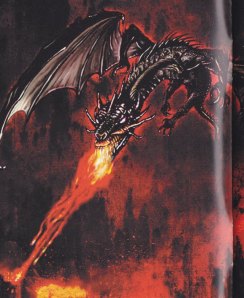
4/5 stars for Deluxe Edition
REVIEW: Black Sabbath – Live…Gathered In Their Masses (CD/DVD/Blu-ray box set)

NEW RELEASE

BLACK SABBATH – Live…Gathered In Their Masses (2013 CD/DVD/Blu-ray box set)

Any time a classic rock band releases new music and goes back on tour, there has to be a live album to go with it these days.  Actually, to be more accurate in the current age it’s more likely to be some kind of CD/DVD combo pack.  This deluxe of Live…Gathered In Their Masses contains 1 CD, 1 Blu-ray, and 2 DVDs.

The visual program opens with a collage of pre-gig ritiual.  The band arrive, and get ready in their own dressing rooms, the cameras offering a brief intimate glimpse.  Before too long, the air raid sirens of “War Pigs” brings us to the stage.  The Blu-ray looks absolutely gorgeous.  Every line on every face is visible, every grain on Tony’s Gibson SG, and the stage is gorgeously lit.  It’s a beautiful disc to watch in 1080p.  I couldn’t help myself; I sat there playing air drums, and putting my hands in the air when Ozzy commanded.  It was fun!

Ozzy hops about, but most exciting visually is unofficial member Tommy Clufetos.  I wonder if it’s intentional, but he definitely resembles a young Bill Ward circa 1976 (as long as he keeps his shirt on).  And Tony?  He smiles, a lot.  You would too if you’ve been through what he has I imagine!  Ozzy’s already dumped a bucket of water over his head before they get to the second song, a sludgy “Into the Void”.  I think the temptation is often to play this song a little faster live, but this version is very much in pace with the deliberately slow original.

My cell phone ring tone these days is that riff from “Loner”, one of the best songs from 13.  Unfortunately, the fact that this is a new song means Ozzy’s rivited to one place on stage, concentrating on the words, glancing at the floor.  Even so, Ozzy remains a mesmerizing presence.  Another bucket of water, and Ozzy’s the cheeleading frontman again.  The bonus interview on the disc, by the way, reveals why Ozzy really douses himself in water!  (You probably don’t want to know.)  “Snowblind” then erupts, Ozzy hitting the high notes with cracking but real voice!  (That’s the part that counts.)  Tony’s extended guitar solo is a stunner in itself.

The rain and tolling bells of “Black Sabbath” sound great on blu-ray, though I was hoping to hear more stuff going on behind me in the 5.1 mix.  “Black Sabbath” is the standard workout, no surprises here.  Likewise, “N.I.B.” is very much the traditional Sabbath version, even down to each note of Tony’s solo.  Ozzy somehow manages to still be menacing behind the mic.  “Methademic” is one of the new songs again, but oddly it’s a only bonus track on the deluxe versions of 13.  This is a song that resembles Dio-era Sabbath and would have sounded at home on Dehumanizer or The Devil You Know.  With Ozzy behind the mic, it’s still classic Sabbath.  I think it’s a great number, only weakened live by Ozzy struggling through the wordy lyrics.

Oz doesn’t seem to have trouble with the old favourite “Fairies Wear Boots”.  His wail of “Allllllright now!” looms, and out comes the water again!  “Symptom Of the Universe” then stomps on the stage.  This is the song that Clufetos can really sink his chops in.  He’s obviously not Bill Ward, but I like his interpretation of Bill’s parts.  They’re as close to the mark as any other Sabbath drummer’s parts, if not more.  Tommy gets an extended drum solo too, during “Symptom”, not bad for an unofficial member!  Mrs. LeBrain called the solo “Sweet!”

GATHERED IN THEIR MASSES_0004A drum solo naturally suits “Iron Man” to segue into.  “Iron Man” is wooden, Clufetos unable to cop Bill Ward’s loose feel.  It’s still “Iron Man”, a song Black Sabbath have probably played live at every show since ’72, but it’s not definitive.  Only when the song gets up to speed does it become the beast it should be.  Another new song, the deliberately vintage sounding “End of the Beginning” takes over, but it’s not the song I would have chosen to play at this point of the set.  Not only is it too similar to “Black Sabbath” but it slows the set down too much so close to the end.  It does pick up, but I feel it would have worked better closer to the start of the show.

Ozzy then teases out that they will only play one more song, unless the crowd goes “extra crazy”.  This “final” song is the storming “Children of the Grave.”  The audience bounces like a wave in sync with the classic tune, led by an energized Ozzy.  I detected some clever editing here to make it appear that Ozzy is jumping around more than he actually is, but that’s video.  One pretty thing about this song is the appearance of Tony’s old cream Gibson SG, paint cracked and chipping.  Blu-ray allows you to see every scratch in the paint.

The crowd goes “extra crazy” and then Ozzy says they’ll play one more song.  It’s “God Is Dead?”, the excellent first single from 13.  Clufetos nails the stuttering drum roll, but Ozzy’s back to reading lyrics off the floor, which is distracting.  But does anyone actually believe it is the last song; that they won’t play “Paranoid”?  Of course they play it, and the riff from “Sabbath Bloody Sabbath” too.  It’s the quintessential closer, ending the concert as a party, not a session of pure doom!  Clufetos and Ozzy are quite animated on “Paranoid”, and of course Ozzy reminds the crowd that they are “number one”!  I just wish Tommy would pull up his pants.  Fuck, I wish I could fit into that size!

The DVD and Blu-ray versions contain three bonus tracks.  “Under the Sun” is a nice one to pull out of the hat.  Ozzy handles the difficult vocals without issue.  How does he do it?  You can hear his voice cracking from time to time; it sounds live.  “Dirty Women” is a personal favourite of mine.  This is an interesting version.  It’s the one that Spotify have as their own exclusive bonus track to 13.  I already had an audio copy of this bonus track, but Blu-ray is cool, too.  It’s a damn great rendition of a lost classic from Technical Ecstasy.  “Electric Funeral” is the big surprise, a song I don’t think I’ve ever heard played live.  Ozzy really struggles with the words on “Electric Funeral” but it’s a treat.

Elsewhere on the disc, there are more bonus features.  I have to say the Blu-ray menu is an annoying, repeating tolling bell.  Leaving the menu running unattended for more than 60 seconds is an excersize in testing your patience.  In the bonus features, the Sabbath interview is typically low key.  You know what to expect:  a difficult to understand Ozzy, and a soft spoken Tony, with occasional comments from Geezer.  There’s not too much here in the way of revelations.  Vegetable juice and food have replaced vodka and a line before the show, although Geezer still drinks wine.  How scandalous!  I don’t know who the interviewer is, but he’s very good at getting the band involved and in good humour.

Lastly there’s a feature called “Show Day”.  This is a behind the scenes look at the goings-on in the 24 hours before the show in Melbourne.  I love it!

Ozzy:  “You know what I was looking at, the old re-runs of the Twilight Zone.”
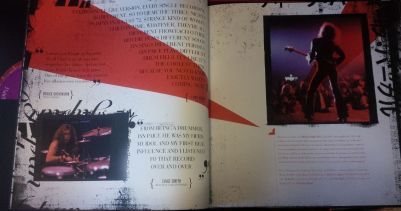
Geezer:  “You told me that about 40 times.”

Ozzy:  “Sorry.  Trying to make conversation.”

Tony:  (Laughs.)

Even Joe Perry and Steven Tyler show up backstage.  I enjoy watching Joe and Tony chatting…what a meeting of guitar greats in one room.

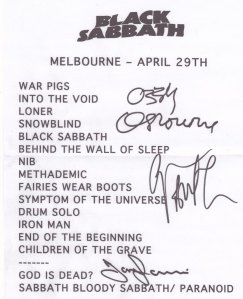
The packaging for this box set is loaded with goodies.  I always enjoy some complimentary guitar picks.  There’s one here from Tony, and one from Geezer.  There’s also a replica concert ticket, setlist, and a small poster.  Nothing to get too excited about, but when you buy an expensive box set it’s nice to get these added touches as a bonus.  There’s also two DVDs included with the same content as Blu-ray.  That’s extraneous to me, I may never play them, so they’re sealed.  I don’t have a problem with that, but I do wish they didn’t edit the CD version of the concert down to fit on one CD.  I’m pleased that the CD version contains all the new songs, but for the price of this set relative to the cheap cost of a CD, I don’t know why they couldn’t just make it a 2 CD set.  That part is disappointing.  When I buy a deluxe edition, I want the whole thing on CD.

That niggle aside, Black Sabbath Live…Gathered In Their Masses is worth:

4.5/5 stars