dream theater

REVIEW: Dream Theater – “Hollow Years” (1997 CD single)

DREAM THEATER – “Hollow Years” (1997 Warner Music Germany)

I always found something about 1997’s Falling Into Infinity to be underwhelming.  Yes, we had the stunning Doug Pinnick cameo in “Lines in the Sand” and a wickedly heavy “Burning My Soul”, but the album didn’t have the same impact or longevity as Awake or Scenes From a Memory.  It wasn’t for lack of effort.  They recruited Desmond Child and Kevin Shirley, and released singles.  The album never broke the top 50 in Canada and received mixed reviews.  A later-released demo version of the album revealed what the band would done if not influenced by Shirley and Child.  One of those demos was first released on the 1997 “Hollow Years” single.

First track on this single is a 4:15 edit of “Hollow Years”, with more than a minute and a half edited out.  The shame is that it didn’t become an instant hit.  With the Spanish guitar melody and subtle keyboard accents, it could have and should have done better for the band.  There is a very pretty piano melody after the chorus by Derek Sherinian, in his last of two outings with Dream Theater.  Yet it’s still Dream Theater, not some ballad band.  John Myung’s fretless bass sets it apart, and Mike Portnoy is always Mike Portnoy no matter the style of music.  The premature fade on the edit version, however, is extremely annoying.  Even if you don’t already know the song, it sounds like a premature fade.  The ending is so good; a song highlight!  The full length version, uncut and as intended, is really the only version to listen to.

“You Or Me” is a version of “You Not Me” from the album, before Desmond Child helped them tweak it.  It opens with the sound of a radio changing stations, and then a cool synth rhythm.  John Petrucci’s riff soon kicks in, and it’s clear Dream Theater were trying new things that might be perceived as more appealing.  Ultimately, the version that ended up on the album is probably the better of the two.  It’s definitely catchier.

The final track is “The Way It Used To Be”, a long non-album song with a Marillion-like guitar melody.  It could have been lifted directly from Seasons End.  Petrucci is the star on this one, as he also employs cool harmonics.  Definitely a cool and valuable bonus track.  If it wasn’t almost eight minutes long with plenty of musical prowess, it might have been a worthy hard rock hit on its own.

Great little CD single, but those edit versions are never as cool as they are collectible.

3.5/5 stars

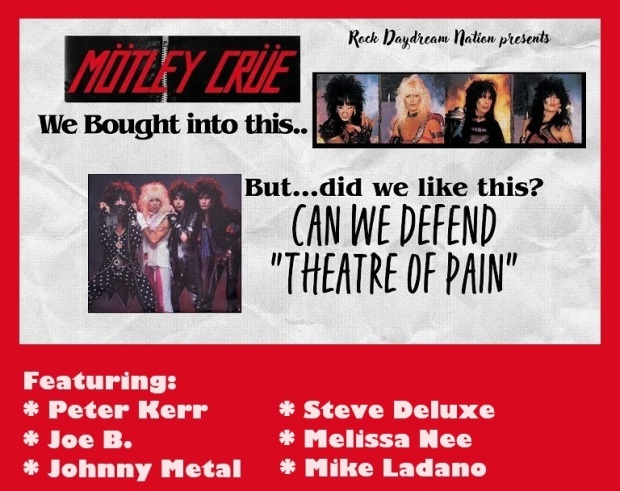
Rock Daydream Nation: Mötley Crüe – can we defend Theatre of Pain?

This’ll get the trolls out!  Nothing gets the Motley fans in a tizzy more than critiquing a favourite album, or praising a later one with the wrong lead singer.  Our rock heroes are not infallible, and Theater of Pain might be the best example of this.  After two screamin’ and bangin’ hard rock/heavy metal albums, Motley made a slight change of image & sound, and left us in a Theater of Pain….

Peter Kerr of Rock Daydream Nation assembled a killer crew for this topic. With Joe B., John Clauser, Steve Deluxe, Melissa Nee and myself, we talk memories, impressions then and now, and most importantly, the songs.  We discuss every elephant in the room, from the tragic car crash that ended a life, addictions, and direction (or lack thereof).  This tumultuous period of Motley history is full of drama, superstardom, great music videos, and tragedy.

I’m excited to watch this show that I was proud to be a small part of.  Theater of Pain is one of my favourite musical topics, and I think we fairly covered all the bases here, and them some.  How do you feel about Theater of Pain?

Debuts at 8:00 AM E.S.T. on May 22 2024.


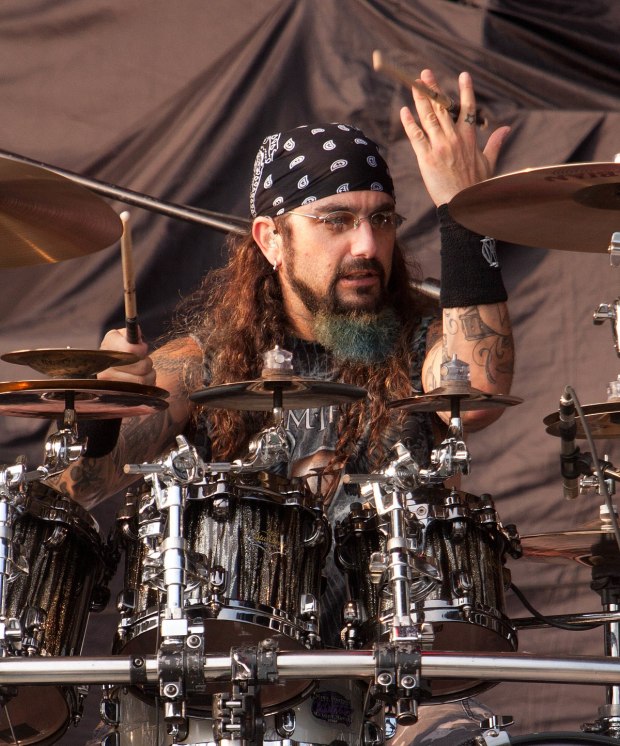
NEWS: Mike Portnoy rejoins Dream Theater after a 13 year absence!

I did not see this coming! Mike Portnoy is back in the band he co-founded 40 years ago, Dream Theater.

Ex-drummer Mike Mangini was a great fit, and he was beloved by fans, myself included.

But there is something about having the founding guy, and a chief writer, back in the band.  Dream Theater are heading into the studio to make their first album with Portnoy in 14 years.  As for Mangini, he seemed to accept this change as inevitable.

“I understand Dream Theater’s decision to get Mike Portnoy back at this time. As was said from day one, my place was not to fill all the roles that Mike held in the band. I was to play the drums in order to help the band carry on.  My main role of keeping our live show working tightly on a nightly basis was an intense and rewarding experience.  Thankfully, I got to experience playing music with these iconic musicians, as well as some fun times laced with humor. I also really enjoyed spending lots of time with the crew. And then there’s the Grammy win, which was amazingly satisfying.”

Given the amount of time and effort it took to find Mangini, and the amount of work Mangini himself put into the band, this never seemed like an event we could assume would eventually happen.  But it has — and Dream Theater will be bigger than ever for it.

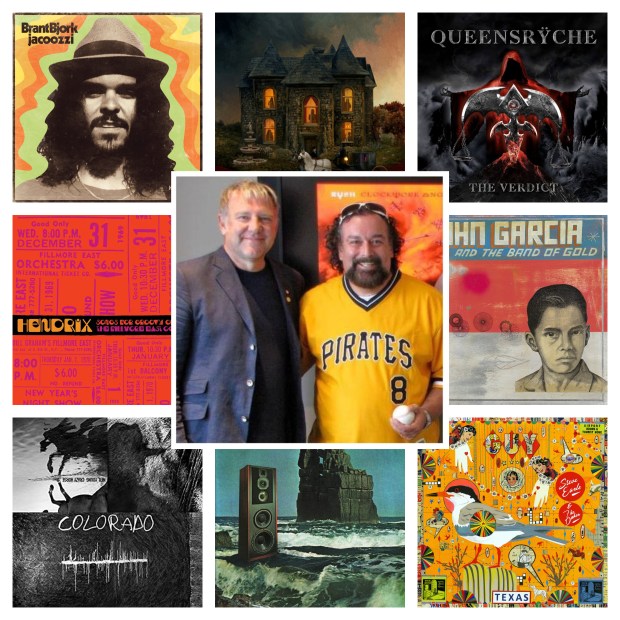
Iron Tom’s New Sh!t That Ain’t Bad 2019

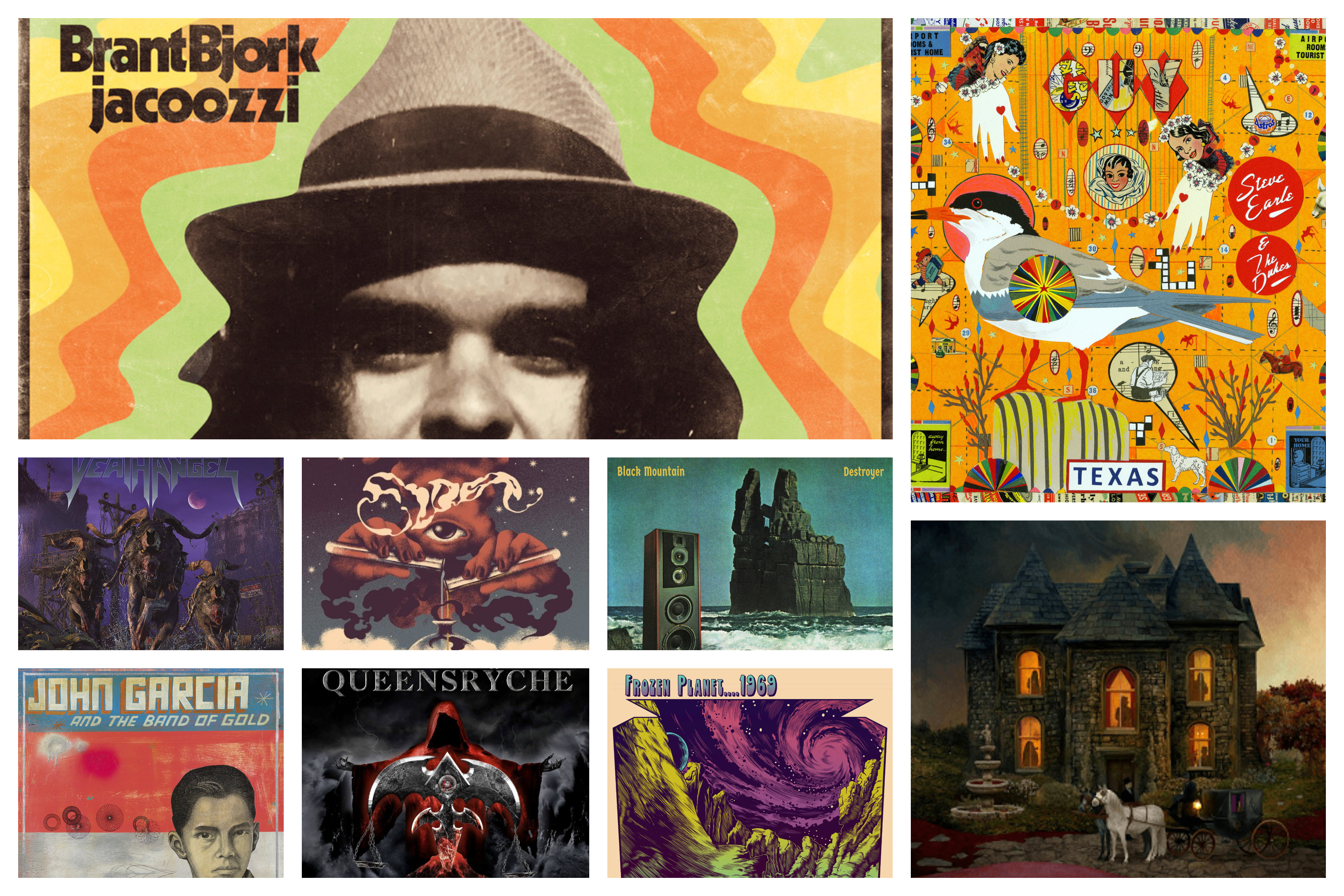
Whether you know it or not, the only list you should care about every year is Iron Tom Sharpe‘s.  If you only listen to 20 albums this year…make them these 20.


  • Brant Bjork – Jacoozzi
  • Steve Earle – Guy
  • Opeth- In Cauda Venenum
  • Death Angel – Humanicide
  • John Garcia – John Garcia & The Band Of Gold
  • Elder – Gold and Silver Sessions
  • Queensryche – The Verdict
  • Black Mountain – Destroyer
  • Neil Young & Crazy Horse – Colorado
  • Redscale – Feed Them To The Lions
  • Frozen Planet….1969 – Meltdown On The Horizon
  • Green Lung – Woodland Rites
  • Tool – Fear Inoculum
  • King Gizzard and the Lizard Wizard – Infest the Rats’ Nest
  • Ian Blurton – Signals Through the Flame
  • Valley Of The Sun – Old Gods
  • Jimi Hendrix – Songs For Groovy Children
  • Villagers of Ioannina City – Age of Aquarius (Thanks Johnny Cheddar)
  • Church Of The Cosmic Skull – Everybody’s Going To Die
  • I concur with Meat…The Talking Heads are still the shit!
  • Add Dream Theater (Distance Over Time)…just listening to it now again.  It needs to be included.

Not a great year overall…nothing truly blew me away…these are merely ones that people should check out. – Iron Tom


Uncle Meat’s “Aftab Patla” Top Ten Lists of 2019

Uncle Meat is out of the starting gate with the first list of Top Tens in 2019! Meat submitted three complete lists — Movies, TV shows, and music. We’ll save music for last. Please wish Meat a hearty “Aftab Patla!” and dig into his lists below.

MOVIES

1. Once Upon a Time in Hollywood
2. Uncut Gems
3. Doctor Sleep
4. Fighting With my Family
5. It Chapter 2
6. The Avengers: Endgame
7. Joker
8. Long Shot
9. Captain Marvel
10. The Irishman


TV SHOWS

1. Succession
2. Mindhunter
3. Barry
4. Euphoria
5. Chernobyl
6. Hot Ones
7. True Detective
8. Stranger Things
9. Rick and Morty
10. Truth Be Told


And finally the main event.

ALBUMS

1. Tool – Fear Inoculum
2. Dream Theater – Distance Over Time
3. The Dip – The Dip Delivers
4. King Gizzard and the Lizard Wizard – Infest the Rats Nest
5. Death Angel – Humanicide
6. Lennon Claypool Delerium – South of Reality
7. Flaming Lips – Live at Red Rocks
8. Opeth – In Cauda Venenum
9. Joe Jackson – Fool
10. Everyone needs to go and listen to everything The Talking Heads have ever done. Everyone.

“I had to improvise on my number ten album,” says Meat!  We hope you enjoyed his lists.  


REVIEW: Rush – A Farewell to Kings (2017 super deluxe edition)

RUSH – A Farewell to Kings (2017 Anthem 3CD/1 Blu-ray/4 LP super deluxe edition, originally 1977)

And the men who hold high places,
Must be the ones who start,
To mold a new reality,
Closer to the heart,
Closer to the heart.

Today’s rock fans have a new reality of their own:  a market flood of “anniversary” or “deluxe” reissues far and wide.  The floodwaters are murkier when multiple editions of the same reissue are available, or when reissues are deleted in favour of new reissues!

2017 represents 40 years of Rush’s fine sixth album A Farewell to Kings.  An anniversary edition was guaranteed, but choose wisely.  For those who need the brilliant new 5.1 mix by Steven Wilson, you will have to save up for the 3CD/1 Blu-ray/4 LP super deluxe edition.  Only that massive box set contains the Blu-ray disc with Wilson’s mix.

To frustrate fans even further, A Farewell to Kings had a 5.1 reissue back in 2011, as part of the Sector 2 box set.  That 5.1 mix (by Andy VanDette) has received heavy scrutiny from audiophiles.  Steven Wilson, however, is well known for his work in the 5.1 field, and his work on the 40th anniversary mix lives up to his reputation.  His crisp mix is deep but unobtrusive.  It is occasionally surprising but always stunning, and over seemingly way too soon.  The separation of instruments is done with care, and without robbing the music of its power.  Rush albums were fairly sparse back then but Wilson managed to make a full-sounding mix out of it.

Powerful is A Farewell to Kings indeed.  Though the title track opens with gentle classical picking, before long you’re in the craggy peaks of Mount Lifeson, with heavy shards of guitar coming down.  Young Geddy’s range and vibrato are remarkable, though for some this is the peak of Geddy’s “nails on a chalkboard” period.

11 minutes of “Xanadu” follows the trail of Kublai Khan.  “For I have dined on honeydew, and drunk the milk of paradise!”  Neil Peart’s lyrics rarely go down typical roads, and “Xanadu” surely must be listed with Rush’s most cherished epics.  Volume swells of guitar soon break into new sections unfolding as the minutes tick by.

“Closer to the Heart” is the most commercial track, never dull, never getting old, never ceasing to amaze.  “Woah-oh!  You can be the captain and I will draw the chart!”  Poetry in motion.  “Closer to the Heart” may be the most timeless of all Rush songs.

“Cinderella Man” and “Madrigal” live in the shadow of “Closer to the Heart”, always there but not always remembered.  (Ironically enough, both these tracks were covered by other artists in the bonus tracks.)  “Madrigal” acts as a calm before the storm:  a cosmic tempest called “Cygnus X-1”.  Another great space epic by Rush cannot be quantified in language.  As it swirls around (even better in 5.1), you’re transported across the universe by the black hole Cygnus X-1.  Peart hammers away as Lifeson and Geddy riff you senseless.


The blacksmith and the artist,
Reflect it in their art,
They forge their creativity,
Closer to the heart,
Yes closer to the heart.

Next, Rush forged their creativity on the road.  They recorded their London show on February 20, 1978 at the Hammersmith Odeon.  Previously, 11 songs from this show were released as a bonus CD on the live Rush album Different Stages.  This newly mixed version adds intro music, the missing three songs and the drum solo.  (The missing songs were “Lakeside Park”, “Closer to the Heart”, and all 20 minutes of “2112”.)  Because this set has all the songs in the correct order, the old Different Stages version is obsolete.

Opening with “Bastille Day”, the London crowd is into the show from the start.  They cheer for the familiar “Lakeside Park”, which is followed by “By-Tor & the Snow Dog”.  This early Rush material is as squealy as Geddy has ever sounded.  He’s pretty shrill but Rush are tight.  It gets more adventurous when “Xanadu” begins, and from there into “A Farewell to Kings”.  Hearing Rush do all this live helps drive home just how talented they are.  The powerful set rarely lets up, as it relentlessly works its way through early Rush cornerstones.  “Working Man”, “Fly By Night” and “In the Mood” are played in quick succession, but is “2112” that is the real treasure here.  Anthems of the heart and anthems of the mind; classics all.

Philosophers and plowmen,
Each must know his part,
To sow a new mentality,
Closer to the heart,
Yes, closer to the heart.

What about bonus tracks?  You got ’em.  As they did for 2112, Rush invited guests to contribute bonus covers, and each does their part.  Headlining these are progressive metal heroes Dream Theater with their own version of “Xanadu”.  Dream Theater really don’t do anything small, so why not an 11 minute cover?  Mike Mangini is one of the few drummers who could do justice to such a song — well done!  Big Wreck do a surprisingly decent take on “Closer to the Heart”.  Not “surprisingly” because of Big Wreck, but “surprisingly” because you don’t associate Big Wreck with a sound like that.  Ian Thornley ads a little banjo and heavy guitars to “Wreck” it up a bit.  His guitar solo is shredder’s heaven.  The Trews’ take on “Cinderella Man” is pretty authentic.  Did you know singer Colin MacDonald could hit those high notes?  He does!  Alain Johannes goes last with “Madrigal”, rendering it as a somber tribute to the kings.

The last of the bonus tracks is a snippet of sound called “Cygnus X-2 Eh”.  This is an extended and isolated track of the ambient space sounds in “Cygnus X-1”.  Steven Wilson speculated it might have been intended for a longer version of the song.


Whoa-oh!
You can be the captain,
And I will draw the chart,
Sailing into destiny,
Closer to the heart.

Box sets like this always come with bonus goodies.  The three CDs are packaged in a standard digipack with extensive liner notes and photos.  Four 180 gram LPs are housed in an upsized version of this, with the same booklet in massive 12″ x 12″ glory.  The LP package alone is 3/4″ thick!

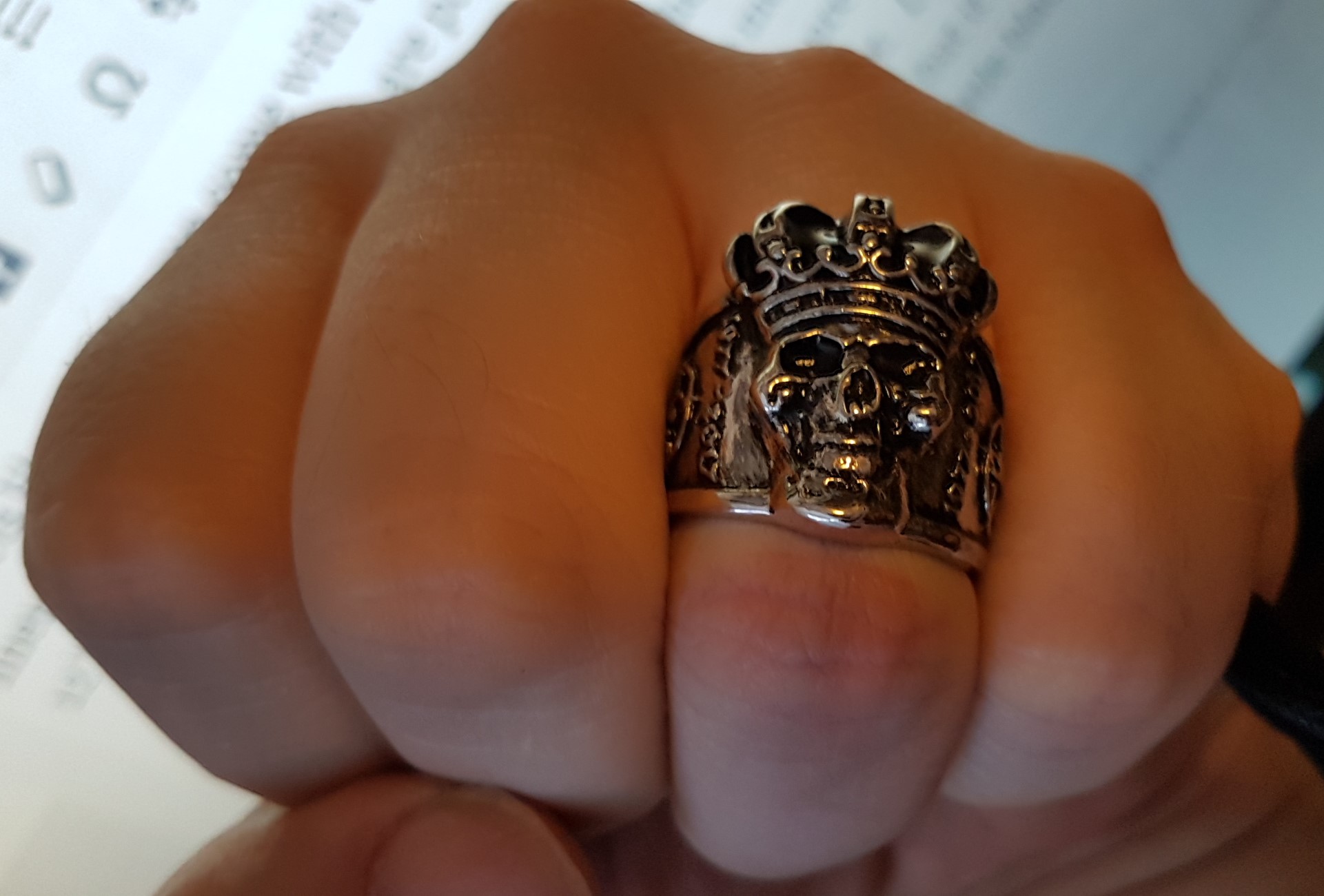
A reproduction of the 1977 tour program is here in full glossy glory.  This contains an essay called “A Condensed Rush Primer” by Neil.  Additionally, all three members have their own autobiographical essay and equipment breakdown.  Alex Lifeson’s is, not surprisingly, pretty funny.  Things like this make a tour program more valuable and as a bonus, this is a great addition to a box set.  Digging further, there are two prints of Hugh Syme pencil sketches.  These works in progress are interesting but it’s unlikely you’ll look at them often.  The turntable mat is also just a novelty.  Perhaps the goofiest inclusion is a little black bag containing a necklace with a Rush “king’s ring” attached to it.  Wear it to work next casual Friday!


Whatever edition of A Farewell to Kings you decide to own (the most logical is the simple 3 CD anniversary set), you can rest assured you are buying one of the finest early Rush albums.  If you have the wherewithall to own the super deluxe with 5.1 Steven Wilson mix, then let the photo gallery below tempt you.

4.5/5 stars

REVIEW: Liquid Tension Experiment – Liquid Tension Experiment (1998)
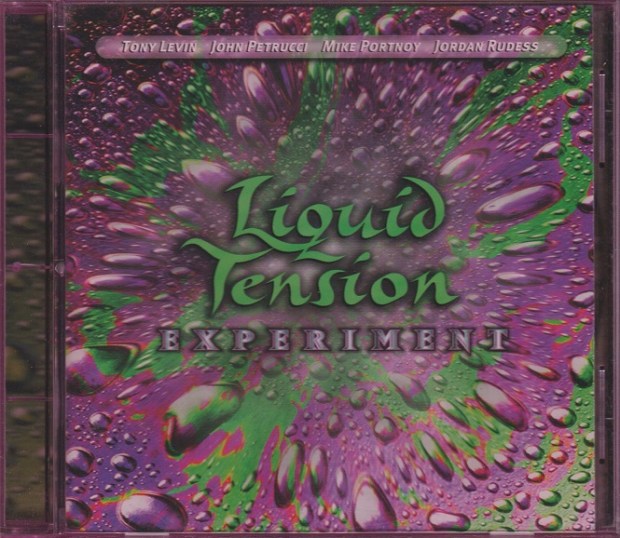
LIQUID TENSION EXPERIMENT – Liquid Tension Experiment (1998 Magna Carta)

Liquid Tension Experiment is a supergroup on Magna Carta, which should tell you much.

Featuring not one, not two, but three guys from Dream Theater, plus Tony Levin, Liquid Tension Experiment is the progressive fan’s dream band.  Granted, keyboardist Jordan Rudess wasn’t in Dream Theater yet when they did this CD, but that’s where people know him from today.  Drummer Mike Portnoy and guitarist John Petrucci are the other driving forces behind Liquid Tension Experiment.

To use phrases like “mind blowing”, “insane”, “incredible” or “the shredder’s wet dream” don’t even begin to touch what the album Liquid Tension Experiment is about.  The liner notes by Mike Portnoy reveal that this project was assembled based on a wish list of players and their availability.  Rudess and Levin were on the list but guitarists just weren’t available, so that’s how Petrucci stepped in.  Together they had six days to write and record this album.  That it turned out so incredibly well says volumes about these guys as musicians.

Liquid Tension Experiment is not just an instrumental album with wicked playing.  The compositions are strong enough to make the album rise well above similar projects.  Magna Carta is loaded with insane projects by the best players in the world, but how many of those albums are good for repeated listenings?  The melodic and tonal sensibilities of Petrucci in particular really keep the album grounded, in a way that even lay people can enjoy.  Levin adds the Chapman Stick and a new agey flavour to the lighter material.  Check out “Osmosis” for a fine example of this.

Most of the album is heavy jammin’. It’s Mike Portnoy, and he does that so well. Together, they create a challenging sound but one with enough hooks that anyone can get into it. You might not realize how many time changes, weird chords and tempos you’re being exposed to, but you are, and you’ll be far better for it.

Together the album consists of nine songs and one spontaneous jam that exceeds 28 minutes! In fact, the tape ran out while recording, so the tail end of the song is from a DAT tape that Portnoy always runs when rehearsing. According to the notes, this piece ironically called “Three Minute Warning” was 100% improvised. “Not a single beat or note was discussed beforehand.” And no fixes or overdubs were made after the fact. It’s over 28 minutes of pure improvisation, and it came out brilliant. Everybody needs some of that in their life, to experience what pure free-form musical genius sounds like.

Must-hear pieces include “Paradigm Shift”, “Osmosis”, “Freedom of Speech” and “Universal Mind”.  It goes without saying that the 28 minute jam is essential as well.

This self-produced album also just sounds incredible.  The sonics are huge, but when the layers are peeled back, you can hear everything so clearly.  The Chapman Stick also adds a huge palette, sometimes heavier than lead and others lighter than a feather.  I’m sure the excellent audio is partly due to the mixing skills of one Kevin “Caveman” Shirley.  Don’t hesitate to pick up Liquid Tension Experiment if you see it.  There was also a second album made called 2, but this is the one to get if it crosses your path.

5/5 stars

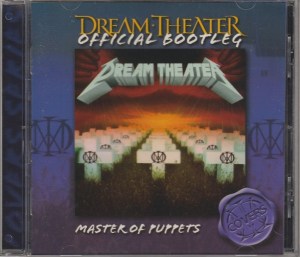
REVIEW: Dream Theater – Master of Puppets (2009)

DREAM THEATER – Master of Puppets (2009 Yste Jam)

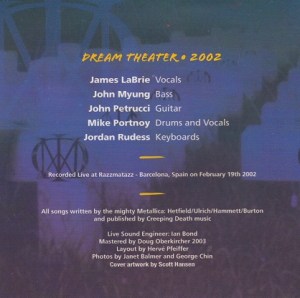
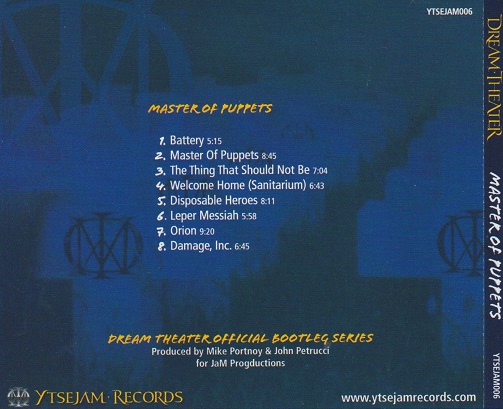
From Dream Theater’s acclaimed self-released series of covers albums, we have before us Master of Puppets.  This was recorded in Barcelona back in 2002.  Just as advertised, it’s Dream Theater doing the whole album live, in sequence, and pretty authentically too.

Dream Theater are a very different band from Metallica.  This is bound to be interesting.

The most obvious difference is that Metallica have two guitar players, while Dream Theater has one and a keyboard player.  On this, Jordan Rudess does aggressive keyboard solos where Kirk Hammett may have laid down one with his axe.  He also plays the acoustic parts on keys.  From time to time, you forget it’s a keyboard.  In short, Rudess turns the prospect of Metallica with keyboards into a lesson on forgetting your assumptions about keyboards!

James LaBrie fits the silhouette of a young James Hetfield.  He sings a convincing Metallica cover indeed!  He cuts loose and goes for it.  Metallica requires a gritty singer, going for it 110%.  LaBrie handles it.  For Dream Theater, doing these cover albums (from a wide variety of bands in fact) must be a lot of fun.  They would have the chance to sing and play in a way that isn’t the usual for them.  Guitarist John Petrucci does not often get to riff on something for five minutes straight like Metallica do.

Lars haters are naturally going to ask “What do Metallica songs sound like with a real drummer?”  Hey, I’m no Lars hater.  (He can play better than I can…)  But in answer to that question I can only respond “fucking awesome”.

Dream Theater cover Master of Puppets without drawing attention to themselves.  Mike Portnoy does not grandstand and overplay.  Nobody does.  If the effort was to do an authentic version of Puppets, as close to note for note as possible, then I say mission accomplished.  Beat for beat, this is stunningly true to the original album.  The keyboards are the most obvious deviation, and that’s minor.  In anything, Dream Theater draw attention to the fact that these are great heavy metal songs.  Are they Metallica’s best-ever set of songs?  Some prefer Kill ‘Em All, some Ride the Lightning.  Any way you slice it, Puppets is metal immortal, a very important record in anyone’s collection.  Dream Theater painstakingly learned the album front to back so they could play it live for a few thousand people.  They did that because it’s a great album on any day.

Dream Theater’s live covers albums (and many, many other releases) can be found on their own Ytse Jam Records website.  Check out the multitude of stuff available (though some are out of print now) and try not to drain your bank accounts.

5/5 stars


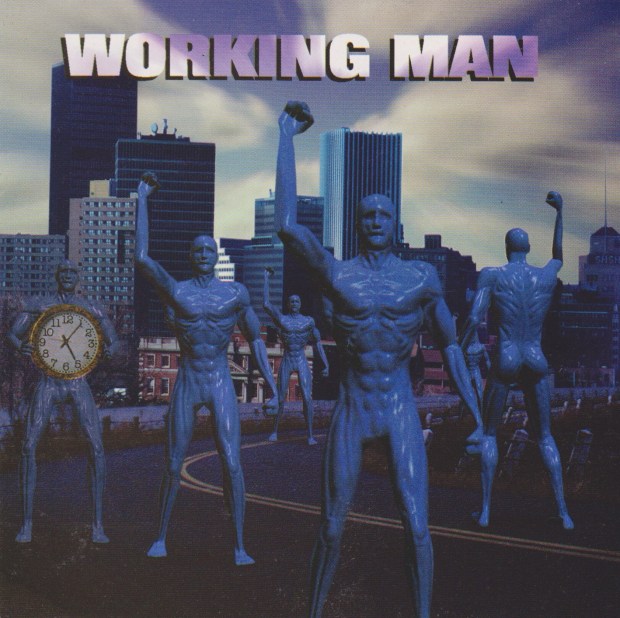
REVIEW: Working Man (Tribute to Rush, 1996)

Scan_20160821WORKING MAN (1996 Magna Carta tribute to Rush)

This CD was released in 1996, and almost immediately the music press started reporting that Rush were trying to have it taken off the shelves.  One of our former owners at the Record Store, the infamous Tom, said:  “I can see why they were trying to do that.  Because it’s too fucking good.”

It actually is.  There are few tribute albums worth listening to all the way through.  How many can you name:  Encomium, the Zeppelin tribute?  The Sabbath tributes Nativity in Black?  Do you listen to those front to back?  That’s the best and only way to enjoy Working Man.  So numerous are the progressive rock and hard rock names here that we may have trouble keeping track of them all.

Sebastian Bach hails from the Great White North, so it is only appropriate for him to open this CD with the title track.  He also passionately stuns on “Jacob’s Ladder” a bit later on, utilising the power and range he is known for.  What names on these songs!  Mike Portnoy and Billy Sheehan play drums and bass respectively; two guys often cited as the best in the world on their instruments!  If that wasn’t enough, ex-Ozzy guitarist Jake E. Lee shreds the hell out of “Working Man” while John Petrucci from Dream Theater goes for the throat on “Jacob’s”.  Take a minute to absorb all that.

Seamlessly, “Working Man” develops into “By-Tor and the Snow Dog” with James LaBrie of Dream Theater in peak voice.  Sheehan and Portnoy handle the rhythm for most of the album, so you can be assured that the chops of Mr. Lee and Mr. Peart are served well here by the next generation of players.  Dream Theater fans will lose their shit completely.  But there is so much more here than just progressive rockers letting it fly.  A youthful and impressive Jack Russell from Great White takes on the galloping “Analog Kid” from Signals and wins.  Have no fear or doubts: this may seem strange, but Russell’s version of “Analog Kid” may well be one of the best Rush covers you’ll ever hear.  (Especially when Billy Sheehan and guitarist Michael Romeo do a synched-up dual bass/guitar solo!)

Other highlights:

  • The late Mike Baker of Shadow Gallery has no problems with “The Trees”, an excellent version.
  • Steve Morse (Deep Purple, Dixie Dregs, Flying Colors) takes the main guitar part for “La Villa Strangiato”, causing spontaneous head explosions.
  • Blue-eyed soul singer Eric Martin (Mr. Big) does a fine job of the light “Mission”, though it sounds very different from the shred-rock elsewhere.
  • A bang-on “Closer to the Heart” performed by Fates Warning is a must-have for fans.
  • James LaBrie and his old bandmate in Winter Rose, Rich Chycki, reunite on the classic “Red Barchetta”.  A little added Can-Con for rock fans.

And best of all, Devin Townsend screaming his balls off, all over “Natural Science”.  Without a doubt, Townsend has the most unorthodox interpretation, but it’s Devin Townsend, so you must expect the unexpected.  This guy is an underrated national treasure, and along with James Murphy (Death, Testament) on guitar, Stu Hamm on bass, and Deen Castronovo on drums, all walls are shattered.  “Natural Science” is undoubtedly the most different track here, and consequently it’s the most exciting.

The only mis-fire:

  • “Anthem”, with Mark Slaughter and George Lynch.  Slaughter’s voice is too shrill.  (I cannot handle when he shrieks “Come on!  Yeah!” at the start.)  George’s Eastern-flavoured shredding is also overdone and misplaced.

That means out of 13 tracks, 12 of them are keepers.

For an added layer of authenticity, the CD was mixed by Terry Brown himself, in Toronto.  Prices fluctuate wildly, but fans of Rush, Dream Theater, Sebastian Bach or Devin Townsend would be wise to pick this up if found in their travels.

4.5/5 stars


REVIEW: King’s X – Ear Candy (1996)

quiz

Complete studio albums (and more!), part 8


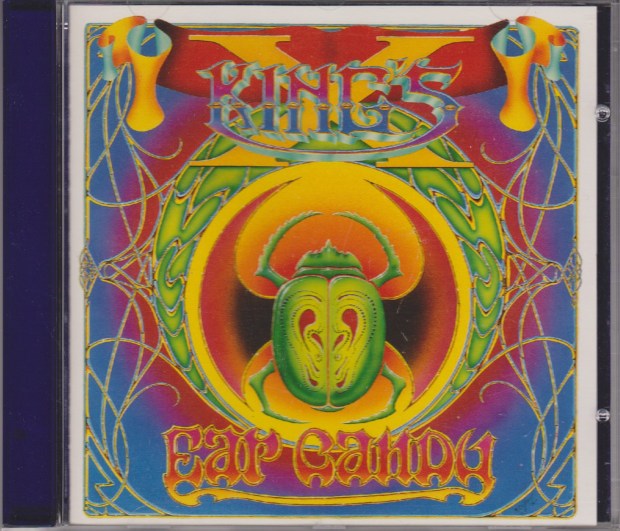
Scan_20151015KING’S X – Ear Candy (1996 Atlantic)

This is actually the album that sparked this review series in the first place.  I had to re-rip it to my PC.  Enamoured, I forged on with an entire series of King’s X, because they deserve it!

By the time King’s X hit album #6, any hope of them being a mainstream success was in the distant past.  1994’s Dogman was an artistic triumph, and considerably heavier than past albums, but still nothing.  King’s X even played the noteworthy, critically acclaimed opening set at Woodstock ’94 (more on that next time), to no avail.

Ear Candy was their last album for Atlantic and I don’t know if it was record company pressure or simply natural creativity, but it was different for the band yet again.  The heavy tunnel-vision sound of Dogman was severely toned down, in favour of melodic composition.  Canadian hitmaker Arnold Lanni was on board for production, his only outing with King’s X.  (The Canadian connection was manager Ray Danniels who was handling King’s X for a brief time.)  Even guitarist Ty Tabor had stepped back up to the microphone, after being notably absent on Dogman‘s lead vocals.  Some fans naturally rejected some of these changes.  For others, Ear Candy was a high water mark.  The 90’s were a confusing time!

This reviewer is in the high water mark category.  Although Ear Candy eschews progressive rock tendencies in favour of catchy tunes, I don’t think the end result was a bad thing.

“Step up and step aboard, your seat is to the left. Leave all your bags and tighten up your metal belt.” That voice is Ty Tabor’s and what better way to usher in his vocals with the first song on the album? “The Train” is a duet between he and Doug Pinnick who sings on the choruses. Classic King’s X trademarks are in place: harmonies, sweet 60’s melodies, hard guitars, and soul. The train is departing on a journey called Ear Candy, and it is a welcoming song.  Continuing with the 60’s vibe, “(Thinking and Wondering) What I’m Gonna Do” is sweet and summery.  Acoustic guitars, tabla, and Doug’s soulful throat are the focus.  Drummer Jerry Gaskill refuses to play anything simple, and so his drums and percussion are spare but unorthodox.  Backwards Tabor guitars add to the psychedelic trip.

One of the draws to King’s X has to be Doug’s 8 and 12 basses.  “Sometime” (another Doug song) has some of the baddest, lowest, most ass-rumbling bass you’ve ever heard.  You have to love the sound of those big phat strings shakin’.  Mid-tempo and sweet, “Sometime” is hard enough but with those Beatles-like harmonies.

There was one single released from this album, the very rare “A Box”.  (This single had a bonus track called “Freedom” that is missing the LeBrain HQ rock library.)  A brilliant selection for a single, “A Box” has that “Goldilox” sound from the first King’s X album. Pinnick had been dealing with his own personal issues and you can hear this in the words. Also worth noting: the drum sound. Arnold Lanni has a knack for finding a killer snare drum sound. Just listen to Our Lady Peace’s first album Naveed. Jerry’s drums have never sounded better than they do on Ear Candy. That snare just snaps!  Then “Looking For Love” blasts.  Doug is not seething in anger, but you can hear it between the lines.  “Religion burned me at the stake,” and  “I guess I lost my faith,” sings the once-devout Christian.  You can also hear it in the tempo; straining at the lead.  Then, following “Looking For Love” is possibly the album highlight…possibly.  Because next is Ty’s “Mississippi Moon”, which is impossible to hate.  Ty sometimes writes these pleasant, 60’s-pop-like songs in his solo material, and with King’s X.  The layered vocals are like a little sugar on top.  Just delightful.  The only stumble is “67”, which is plenty chunky but not memorable.  The freakout guitar noise outro is pretty cool though.

That sounds like a side closer, and the next song “Lies in the Sand (The ballad of…)” would work nicely as a mellow start to a second side.  Ty ballads are sometimes very special, and “Lies in the Sand” is special indeed.  His earnest singing and playing are basically the song; the other two guys take a step back and just let the song pulse.  Things pick up again with “Run”, with Doug sounding cast-down and dejected, but bouncing back again.  The pain also runs through “Father”.  “My brother’s on crack, my sister’s a wreck, our mother she tried, our fathers are lies.”  But the message is clear:  “Every one of us loves every one of us.”  Blood is thicker than water.

Jerry Gaskill takes a rare lead vocal on the ballad “American Cheese (Jerry’s Pianto)”.  The 60’s are recalled once again with a very Beatles-like piano pop ballad.  This sets up “Picture”, possibly the most upbeat pop rock moment on Ear Candy.  It has a drive to it, and instrumental integrity, which takes it levels high and above most examples of pop rock.  Doug sounds happy, and the band rock with glee.  It’s a great precursor to “Life Going By”, the finale.  It has a quality that sounds like a bookend to “The Train” at the start of the album.  Tabor weaves a bright tapestry of acoustic and chiming electric guitars, and also takes the lead vocal for this last song.  Layers of harmonies take us out on a sweet, soulful note.

What an album.  What’s not to like?  Fear not the pop, for King’s X took it back to heavy for 1998’s Tape Head….

5/5 stars

Shortly after Ear Candy, progressive rock fans who craved a little more got their wish partly fulfilled.  Doug Pinnick did an excellent guest appearance on the hella-cool song “Lines in the Sand”, from Dream Theater‘s Falling Into Infinity album from 1997.  Doug sang accompanying vocals with James LaBrie, lending the song an additional edge.  A 10 minute long-bomber, “Lines in the Sand” definitely supplied a taste of the heavy complex rock that fans may have missed.  Even if Doug was just a small part of it, he was an integral part.

KING’S X review series:

Part 1 – Out of the Silent Planet (1988)
Part 2 – Gretchen Goes to Nebraska (1989)
Part 3 – Kings of the Absurd (split bootleg with Faith No More)
Part 4 – Faith Hope Love by King’s X (1990)
Part 5 – “Junior’s Gone Wild” (from 1991’s Bill & Ted’s Bogus Journey soundtrack)
Part 6 – King’s X (1992)
Part 7 – Dogman (1994) + bonus “Pillow” promo single review