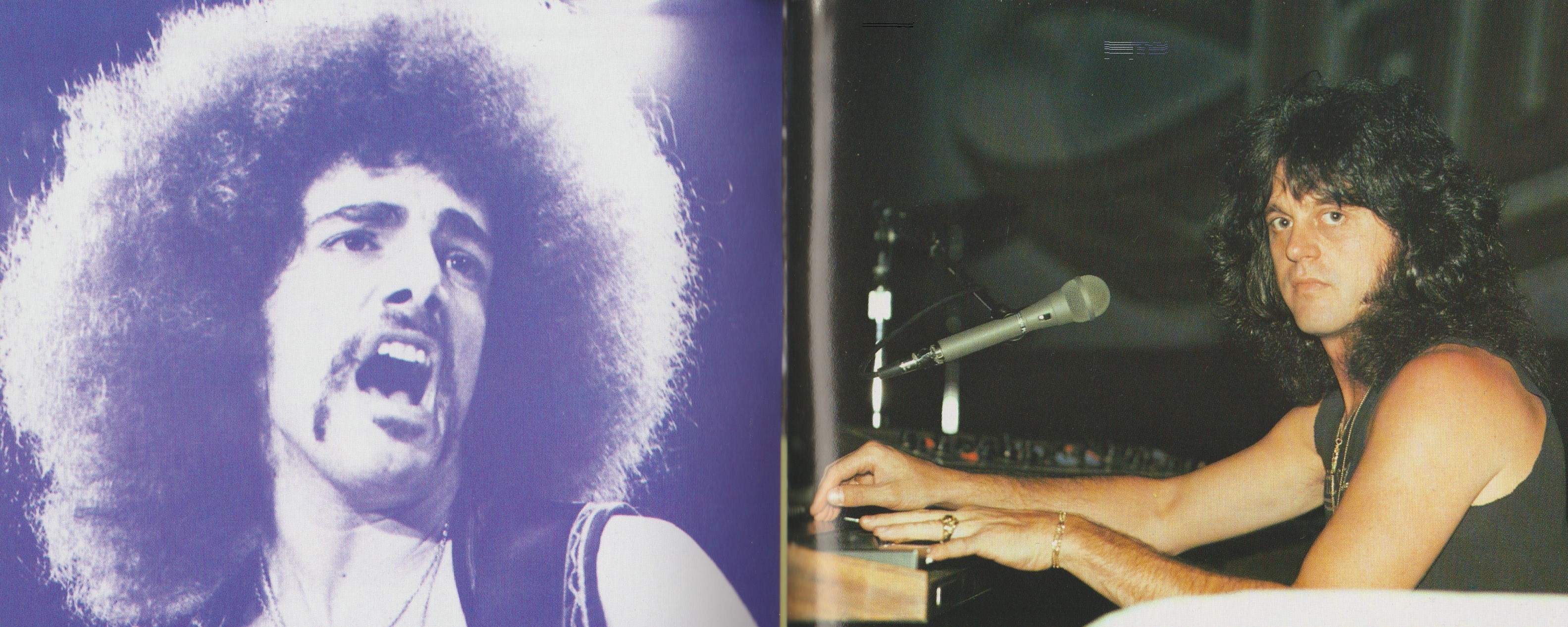
George Tickner

REVIEW: Journey – In The Beginning (1979 CBS cassette)

JOURNEY – In The Beginning (1979 CBS cassette)

Journey began scoring hits when they acquired powerhouse vocalist Steve Perry on Infinity (1978) and Evolution (1979).  Why not issue a compilation sourced from the band’s first three Perry-less records, with new cover art that ties into their present?  Seems like a no-brainer.  And so we have Journey’s first compilation album (and a double length at that) called In The Beginning.  Thank you Tim Durling for gifting this copy for the collection and for review.

In The Beginning contains five of the seven tracks from Journey’s self-titled debut.  It begins with three.  As on the original LP, “Of A Lifetime” opens.  The long organ and guitar-drenched opening gives way to a slow and passionate Gregg Rolie lead vocal.  Were Iron Maiden influenced by this song when they wrote “Strange World” for their own debut?  Probably just coincidence, but it can be heard.  The main hook in “Of A Lifetime” was the unmistakable guitar hook.  At this early stage, Journey boasted two guitar players:  Neal Schon and the late George Tickner.  They have to share the spotlight with an absolutely raging Aynsley Dunbar on drums and Rolie tearing it up on the synth.  Undervalued bassist Ross Valory also must be mentioned, playing concrete but melodic foundations under the feature players.

George Tickner’s instrumental “Topaz” goes second, starting slow and then taking on a jamming, progressive jazz rock fusion vibe.  This complex track is not to be taken lightly.  Just absorb every different section as they hit you.  Once again, Dunbar is a monster.  Third is “Kohoutek”, the memorable Schon/Rolie instrumental that was also track three on the debut album.  On vinyl, in both cases, it closed Side One.  It’s another challenging track with a cool galloping section.  (There’s a reason I’ve heard Dunbar referred to as an octopus – he sounds like he’s playing with eight arms!)

Rolie’s “On A Saturday Night” from album #2, Look Into the Future is a completely different style from the first three progressive sprawls.  Under four minutes with a bopping piano, this is just great rock and roll!  Tickner was out and the band was reduced to a quartet with Schon as the sole six-stringer.  Shades here of where the band would head once they figured out their future direction.  Schon’s solo is an example of melodic composition.  The Beatles cover “It’s All Too Much” from Look Into the Future follows.  It fits this new concise straightforward Journey sound, and it is quite excellent.  Rolie was the perfect guy to sing a George Harrison song, and the backwards ending is suitably trippy.  The blues “In My Lonely Feeling/Conversations” takes us back to the debut album.  This Rolie/Valory composition scorches with passionate fretwork.  Not surprisingly, the bass is the foundation.  Also from the debut, “Mystery Mountain” closes side one.  A short, but jamming track with subtle use of the wah-wah pedal.

Opening (cassette) Side Two, “Spaceman” from Next (album #3) was a melodic single.  Journey were honing in on that simple pop rock ballad.  “Spaceman” is one of their first.  As it did on album, “People” follows “Spaceman”, featuring synth and acoustics.  Very psychedelic for Journey.  The back to album #2, “Anyway” rocks hard and slow, like a monumental Whitesnake track from the 70s.  (Dunbar later joined Coverdale & Co. for 1987.)  From the same record, “You’re On Your Own” switches from slow and bluesy verses to a pounding chorus, enabled by Aynsley.  There’s a Beatles influence here in “I Want You (She’s So Heavy”).

We’re into the last tracks here, as vinyl listeners would have been flipping to side four for “Look Into the Future”, a brilliant ballad and one of the band’s early best.  “Nickel and Dime”, a legendary jam from Next feels like a throwback to the first album and for good reason:  it’s a leftover Tickner co-write!  And finally, In The Beginning closes with the epic “I’m Gonna Leave You”, the same song that closed the debut Journey.  Coupling some killer organ with with a heavy riff, this bluesy rocker also boasts some of Rolie’s best vocalizin’.  Legendary!

For those who only know Journey as a lovin’, touchin’, squeezin’ band of crooners and balladeers, this compilation would come as a shock to the system.  But a shock can be a good thing.  In The Beginning is a great way to get many of the key tracks from the first phase of Journey in one purchase.  This stuff doesn’t usually make it onto regular Journey compilations.  It’s a good set to own.

4/5 stars

REVIEW: Journey – Time3 (1992 box set)

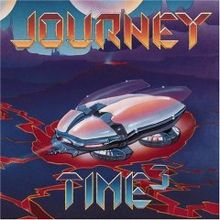
scan_20161015-2JOURNEY – Time3 (1992 Sony 3 CD box set)

Very few box sets satisfy the way that Journey’s Time3 satisfies.  When it was released in 1992, Journey wasn’t even a functioning entity anymore.  Sony’s box set still represents the kind of care and attention to detail that makes for an extraordinary listen.  It is arranged (mostly) chronologically with ample rare and unreleased material.  What is most remarkable is how great this rare and unreleased material is.  Aerosmith did a similar looking box set in 1992 as well (Pandora’s Box), but their set isn’t as steady a listen as Time3 is.  Time3‘s ample wealth of worthwhile rarities rank it easily as the superior set.

From start to bitter 80’s breakup, every Journey member from 1975 to 1986 is included.  George Tickner, Aynsley Dunbar, Robert Fleischman, Randy Jackson, Mike Baird and anybody else you may not have known were in Journey are represented in this box.  There are ample liner notes and photos explaining the roots and branches.  (Humorously the notes claim the early Journey instrumental “Nickel & Dime” may have been the prototype that Rush ripped off for “Tom Sawyer”.)  Valuable early rarities include the unreleased jazz rock number “Cookie Duster” and an excellent vocal track called “For You” recorded  with Robert Fleischman singing.  Fleischman might be best known as the original singer for Vinnie Vincent’s Invasion a decade later, but in Journey he turned in a pretty powerful pop rock song.  This was just before Steve Perry joined the band as its first full-time lead singer.  Keyboardist Gregg Rolie took care of the vocals before Perry joined, in addition to performing several smoking organ solos included herein.

There is a distinct change between the early progressive jam rock tracks and “For You”.  When they hired on a lead singer, it was with the intention to get a big break, and Steve Perry was the final ingredient.  With Perry they recorded brilliant classics such as “Patiently”, “Anytime” and the unforgettable “Wheel in the Sky”, which unfortunately is only included here as a live version.  Indeed, the Journey box set’s only weakness is a substitution of (non-rare) live versions for studio originals.  “Lights” is another such substitution.

Just as the band were making this prog-to-pop transition, drummer Aynsley Dunbar left.  His style was more progressive and frankly too highbrow for the direction Journey were going.  He was replaced by another total pro, the feel-oriented Steve Smith, a jazzbo at heart who can play R&B like nobody’s business.  “Too Late” from 1979’s Evolution is a perfect example of what he did to the Journey sound, as things simplified.

scan_20161015-4

With Smith behind the kit, the hits kept pouring in.  “Lovin’ Touchin’ Squeezin'” (also included live), “Any Way You Want It”, “Line of Fire” and many more burned up speakers across America.  The band very quickly went from “point A” to “point B”, but also with several exceptional looks backward.  Some of these lesser known gems include “Little Girl” from a rare Journey soundtrack album called Dream, After Dream done for the Japanese market.  There is also the live “Dixie Highway” from Captured that shows off some serious instrumental chops.  A rare highlight is the soulful and unreleased cover of “Good Times”, with full-on horn section, from 1978.  It’s one of the songs that make it worth buying a box set like this.

Rolie left after Dream, After Dream and did not appear on the one new Journey song on Captured:  “The Party’s Over (Hopelessly in Love)”.  This brilliant pop rocker pointed the way towards the next era of Journey.  From The Babys came new keyboardist (and sometimes guitarist and singer) Jonathan Cain.  Cain forever brought Journey into the 1980’s, with modern keyboard accompaniment and serious writing abilities.  He has since become an indisposable member of the band, as important as founding guitarist Neal Schon himself.  Jon Cain’s first was the Escape album, which has sold nine million copies to date.  Not a bad little debut.  With “Don’t Stop Believin'” , “Stone in Love” and the smash ballad “Open Arms”, Journey ascended to the top of the mountain.  These tracks are all included as their studio originals.

There are a number of notable and great rarities from this period included in Time3.  “Natural Thing” was the soul-laden B-side to “Don’t Stop Believin'”, but feast your ears upon “La Raza Del Sol”, which snuck out as the progressive flipside of “Still They Ride”.  This blazingly recalls the arrangements of the early years with an unusually contemoplative lyric.  Check out Schon’s flamenco guitar solo.  There is the understated and brilliant rocker “Only Solutions”, from the 1982 Tron soundtrack.  These are valuable songs, that any Journey fan should enjoy completely.  Moving forward, “All That Really Matters” is a synthy demo with Jon Cain on lead vocals.  It doesn’t sound like Journey, but Cain fans will find it interesting.  Two more soundtrack songs are indispensable:  “Only the Young” from Vision Quest, and “Ask the Lonely” from Two of a Kind (both 1983).  Each song was significant enough to include on 1988’s Greatest Hits, so fans are well acquainted with both.  It’s incredible to think that Journey had songs of this quality to give to soundtracks.

scan_20161015-5

Towards the end, as bands often do, Journey began falling apart.  Steve Perry had a hit solo debut Street Talk (1984) and he returned to Journey more confident, imposing a soul/R&B direction upon the band.  Steve Smith and founding bassist Ross Valory were out.  Randy Jackson and Mike Baird were in.  Raised on Radio took forever to record and underwhelmed fans upon reception.  A live version of “I’ll Be Alright Without You” with the new members indicates that Journey had sanded off the rough edges.

Even at the end, there were still interesting happenings.  The liner notes reveal that even as the band was ending, they were winning awards.  Journey performed at the 1987 Bay Area Music Awards with a different singer — Michael Bolton.  One has to wonder where that could have gone.  The last music on this set chronologically comes in the shape of two unreleased instrumentals called “With a Tear” and “Into Your Arms”.  They were recorded in 1986 but not used for Raised on Radio, and so they were finished in 1992 by Schon and Cain for this box set.  Sadly these instrumentals are better than most of the tracks on Raised on Radio.  One is a ballad, and one is a rocker, but both are exceptional.  Journey started life with instrumentals, and so it’s fitting that Schon and Cain polished off the box set with a couple as well.

scan_20161015

This box set was reissued a number of times, but for the money you can’t beat the original 1992 printing with the long box and large booklet.  The liner notes are ample but the rare photos may even top them.  From the earliest days there are pictures of the band with original guitarist George Tickner and drummer Prairie Prince.  Prince was invited to join permanently, but chose to join the Tubes instead, a band he found more creative.  He was replaced by Aynsley Dunbar who recorded the first LP.  Also pictured within are some truly impressive hair styles, clothes, and moustaches.

With tracks this strong from start to finish, great packaging, and such a wealth of rare material, it seems Time3 should be an easy 5/5 stars.  However, that niggling issue of live tracks (particularly “Wheel in the Sky”) replacing studio cuts is really devious.  It’s unnecessary.  It all but forces casual buyers to also own Greatest Hits for the studio versions.  It seems very calculated.

Otherwise, proceed.

4.5/5 stars

scan_20161015-3


REVIEW: Journey – Look Into the Future (1976) #200wordchallenge

200 word


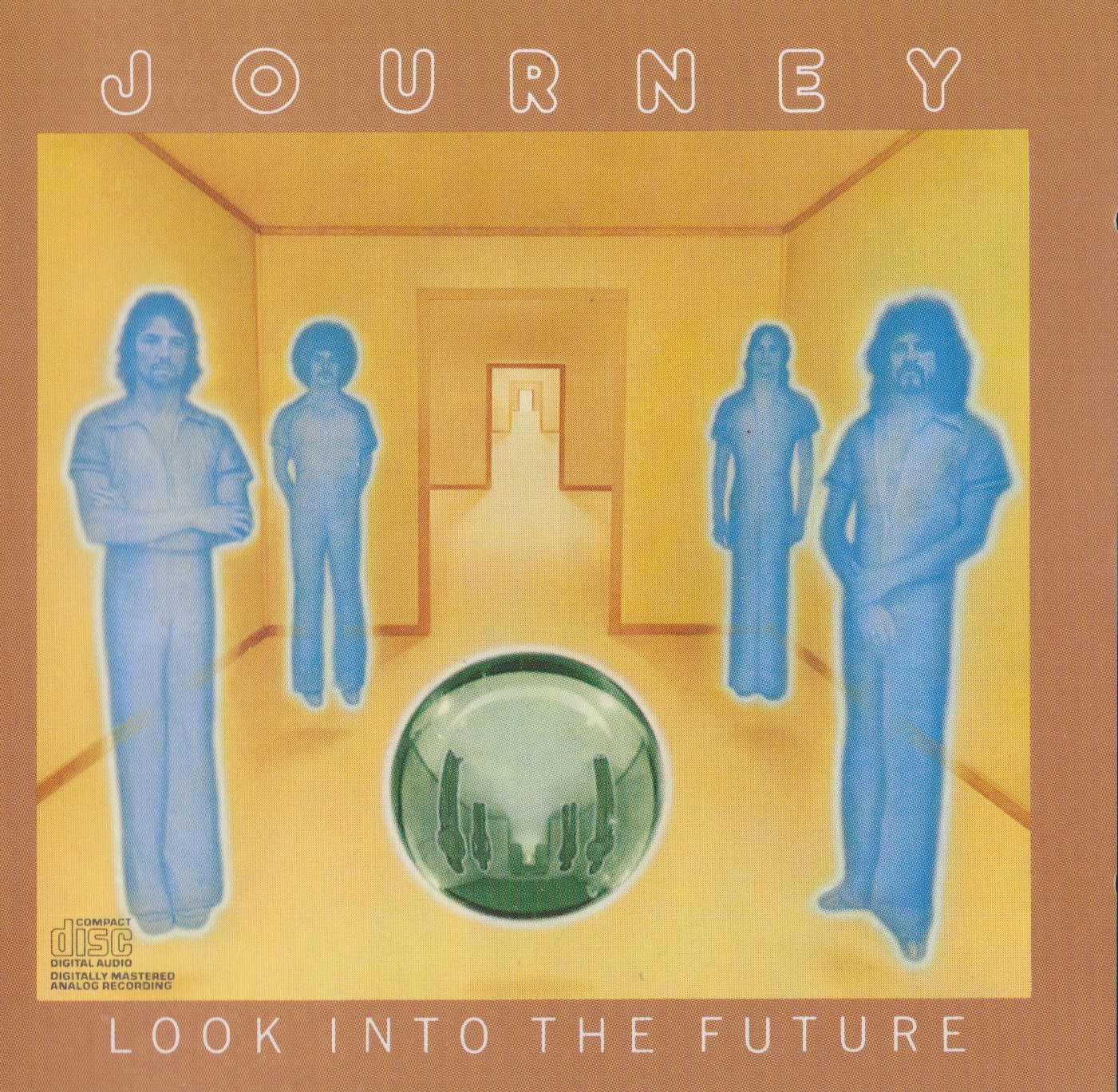
Scan_20160825 (2)JOURNEY – Look Into the Future (1976 CBS)

Journey began life as a progressive rock band that plied instrumentals and vocals.  Keyboardist Gregg Rolie (ex-Santana) was in charge of vocalizin’, and Look Into the Future is the second album from this era.  Guitarist George Tickner left the band after their debut, leaving Journey a quartet with Neal Schon (also ex-Santana) handling all guitars himself.  Tickner still has writing credits on two songs.

There are hints towards the rock and roll machine that Journey would one day become, most notably the Beatles cover “It’s All Too Much” which they adapted to their style.  By and large you can look forward to a decent, soulful album with a focus on musicianship.   All songs on this album are vocal, ranging from slower blues ballads (“Anyway”) to long blow-outs (“I’m Gonna Leave You”).  Songwriting is a tricky craft to master, and at this point Journey’s songs were more prototypes than full-fledged compositions.  There are even fledgling metal riffs, such as “She Makes Me (Feel Alright)”, probably the best track on the album besides the Beatles cover.

While this album will never be as highly esteemed as Escape or Frontiers, check it out if you’ve wondered what Journey were like before Steve Perry.

3/5 stars

Scan_20160825