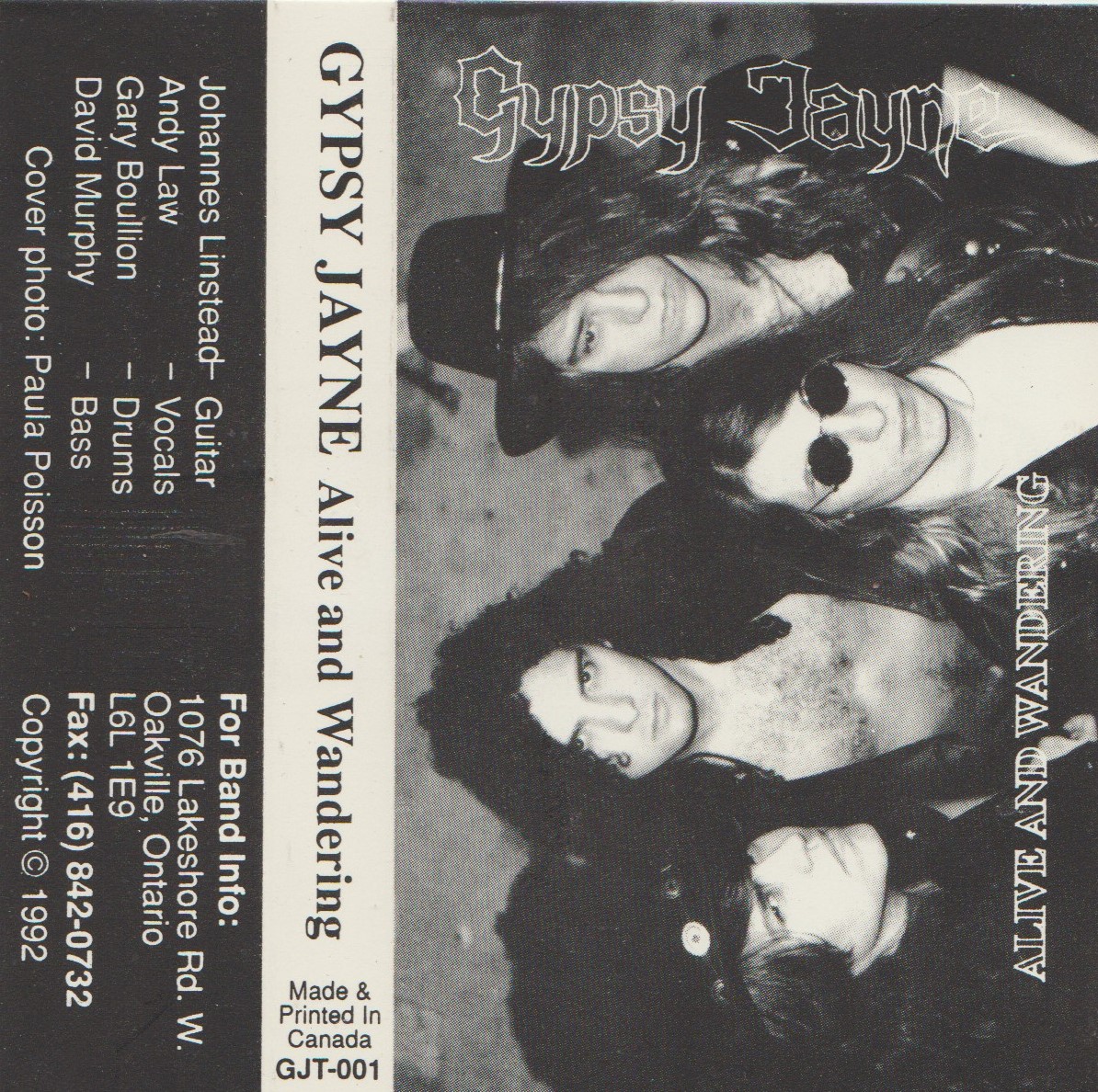
GYPSY JAYNE – Alive and Wandering (1992 independent cassette)
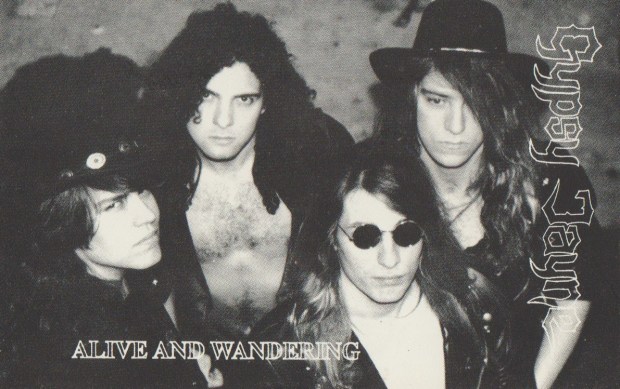
There is still way too much music that was only released on tape. Gypsy Jayne (formerly Wildside) were from Oakville Ontario. What they lacked in originality, they compensated for in classically trained guitarist Johannes Linstead. He ‘s a Juno nominee with several flamenco albums today. Back in the early 90s, he shredded the electric. We talked about this band briefly during Record Store Tales, but they deserve a closer look. They were a solid quartet, with a great singer and musicianship. All that exists of Gypsy Jayne today is their sole cassette: six songs and a guitar instrumental.
It’s easiest to compare Gypsy Jayne to Illusions-era Guns N’ Roses; they probably had a similar set of influences. Their namesake song “Gypsy Jayne” opens the tape with a mid-tempo Izzy-like vibe and a hell of a chorus. Singer Andy Law had a good glam rock voice, but it’s clear right away the guitarist is something special. The solo is carefully composed and serves the song. “Whiskey Blues” also has a Guns vibe, particularly the Axl-ish vocals. The guitar playing is more Van Halen than Slash, but the song smokes. “As Good as it Gets” boasts some cool slippy slidey intro guitars before going full Guns. Great tune, blistering solo. Influences are quickly forgotten as the song repeatedly kicks your ass.
Beginning side two, it’s a new version of “Ready, Willing and Able”, the song they recorded as Wildside on Raw M.E.A.T. #1. Sleazy rock, L.A. infused. You can’t tell these guys are from an upper class town in Canada, except perhaps by the schooled guitar approach. “So Wild” takes it slow, crawling in your ear canal and letting the groove do the work. “Leave You Now” is acoustic nostalgia, a song about “Chasing all our dreams” and “living crazy nights, lazy days.” For composition, this could be Jayne’s best song.
“Leave You Now” by Gypsy Jayne
The final track is “Romanza”, a lovely solo classical guitar piece by Linstead. This foreshadowed where he’d be going in his future. It’s a nice coda, like Randy Rhoads would have done.
This one’s going to be hard to find — there is no listing on Discogs.
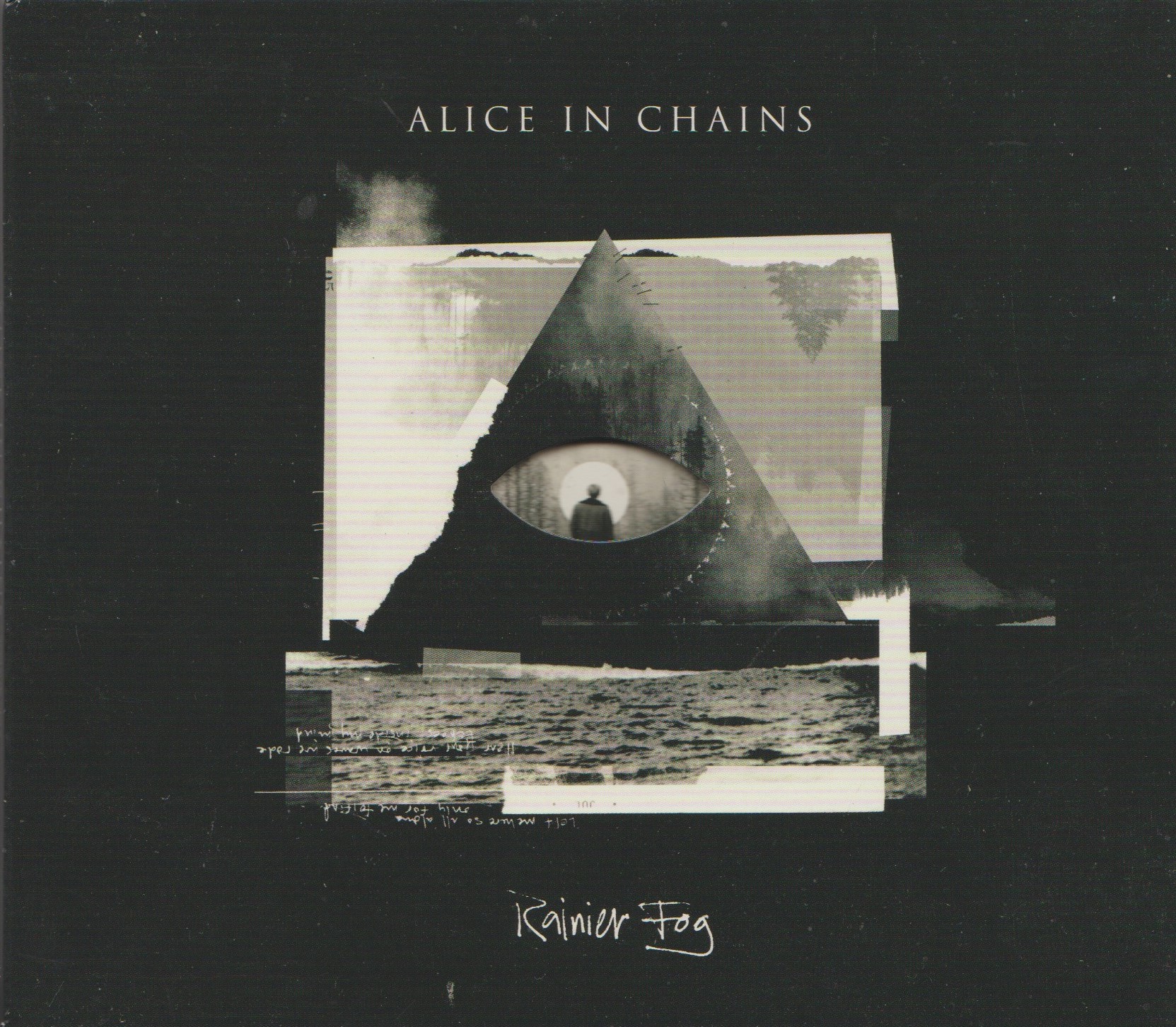
It’s always disappointing when you give a new album a fair shot, but it refuses to stay in your skull. Such is the case with the latest Alice In Chains, Rainier Fog.
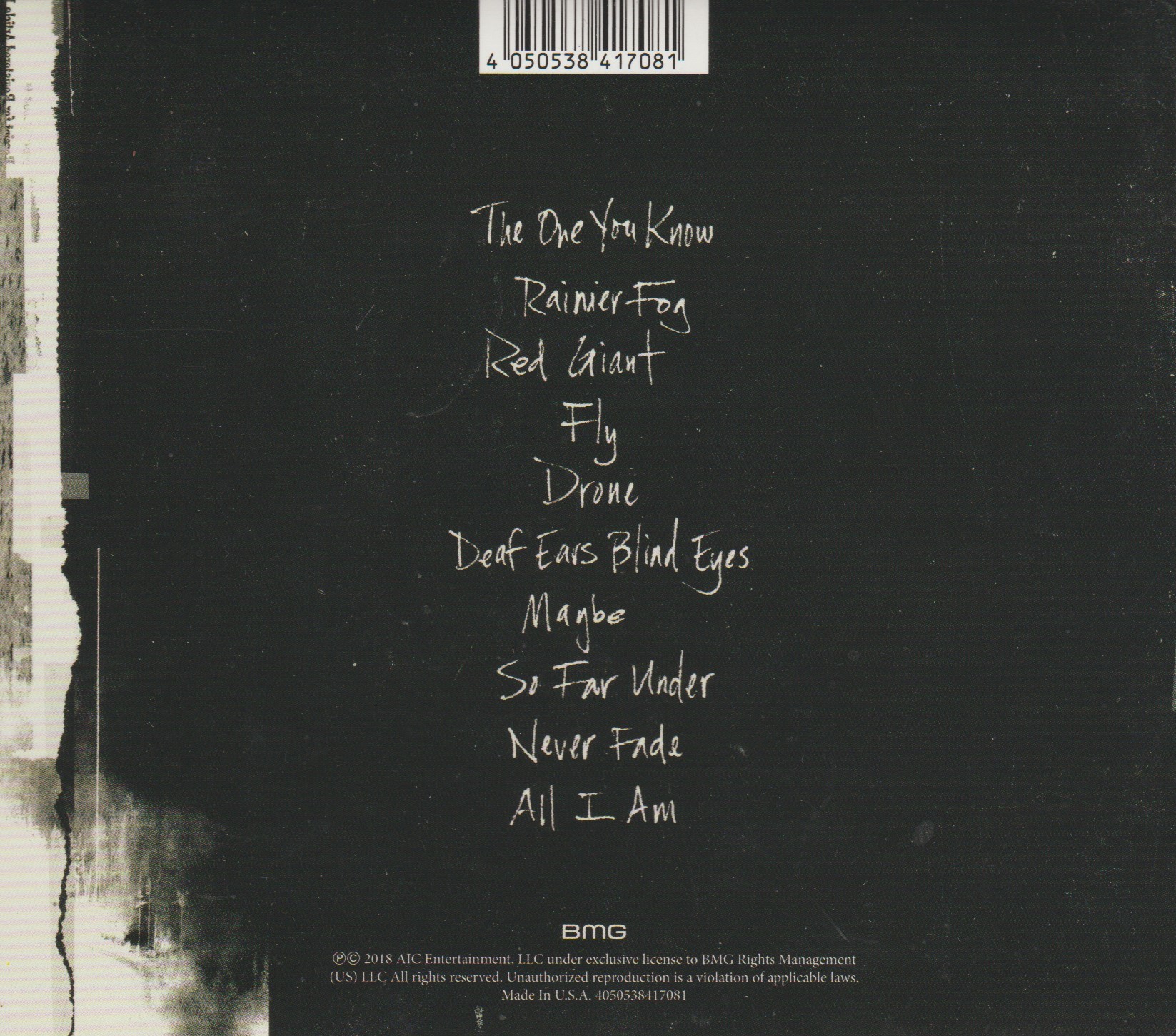
It’s especially disappointing since their last platter, 2013’s The Devil Put Dinosaurs Here, was so crushingly perfect. It’s hard to put a finger on exactly why Rainier Fog lacks the same impact. It’s not singer William Duvall — this is his third album with Alice In Chains, and he’s done an admirable job every time out. It’s also not the fault of the lead track, “The One You Know” which is a terrific starter. “Rainier Fog” is also slammingly good. From there on, the songs are less memorable, with the exception of “Never Fade” which has a chorus that goes on for miles.
What’s the issue? Is it that we’ve heard all this before? Ever since the passing of Layne Staley, Alice In Chains lost that certain “fucked up” quality to their music. Staley seemed to bring an unschooled approach, completely unafraid to make unconventional music. Rainier Fog is terribly conventional by comparison with Dirt. There are verses, choruses, melodies and all the accoutrements. And they are all good ones. Little guitar hooks snake in and out of verses, cool as hell. Riffs are constructed from the strongest mortar. These foundations support a collection of well written songs. But most of them refuse to stick. It’s baffling.
Perhaps Rainer Fog is one of those albums that doesn’t click until the 100th listen. They exist and when they do, they often become favourites. If that happens here, we will line up Rainier Fog for a re-review.
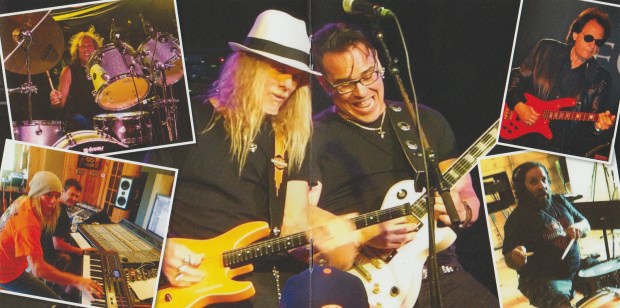
“Supergroups” are everywhere these days. Four By Fate is best known for its former members of Frehley’s Comet: Tod Howarth and John Regan. When they first formed, they also contained drummer Stet Howland (W.A.S.P.) and guitar master Sean Kelly. Pat Gasperini replaced Kelly, and A.J. Pero played drums on half the album before his untimely death. The band was completed by ex-Skid Row skinsman Rob Affuso.
Relentless is a beefy album, with 13 tracks including a handful of covers. The opener is John Waite’s “These Times Are Hard For Lovers” (co-written by maestro Desmond Child), and it’s decent. Frehley’s Comet fans will recognise Howarth’s lead vocals, though this band is harder than the Comet. Blasting through “Moonshine” and “Hangin’ On”, they got a nice heavy drum sound. It’s good to hear Affuso on an album again. Track four, “Levee Breach” is the first of six with A.J. Pero. It’s a little like a Stone Temple Pilots clone.
The next cover is a remake of “It’s Over Now” from the Comet’s 1988 album Second Sighting. Nothing is ever as good as the original, but if you wanted a heavier version of that power ballad, here ya go. (You can really hear those low piano keys.) Onto “Follow Me”, another one that sounds grungy. They went with such a “modern” sound on this album. Some might have expected more influences from the pop-smart 80s, the era most of these guys were rockin’.
“On My Own” has a cool Howarth riff and some befitting hooks. Grunge emerges again on “I Give”, and a partly acoustic song called “Don’t Know” is similarly dark and out of the 90s. Relentless almost sounds like an album written in 1994 or 1995, and not recorded until 2017. Then suddenly, “Back in the 80’s” has a Dio-like chug, and of course A.J. Pero on drums. Then it’s “Rock & Roll Hoochie Koo”, a really fun Derringer cover. They close the album on a strange patriotic ballad (two versions) called “Amber Waves”
The strength in Relentless is the musicianship. Howarth and Gasperini make a formidable guitar team, and we all know the reputations of guys like A.J. Pero and Rob Affuso. Musically, Four By Fate can face off against the big boys.
I didn’t have any childhood friends who were into Aerosmith. I had to get into them on my own.
Well, that might not be entirely true. Next door neighbour George may have been into them, but the rest of us ignored Aerosmith because they were “the band with the singer with the weird lips”. They weren’t “metal” enough to be in my wheelhouse at that young age. There wasn’t much Aerosmith being played on MuchMusic in the early 80s. Maybe “Lightning Strikes”, but that was about it. The music video with the greasers didn’t appeal to us metal kids. The Joe Perry Project didn’t do it for us either. The video with the pink saxophone? (“Black Velvet Pants”.) Not metal enough! We were strict metal heads as kids, and pink saxophones were not metal.
What was it that finally caught my Aero-attention? Joe Perry’s plexiglas guitar.
This all seems silly from an adult perspective, but we were just kids. We loved metal, not just for the music but also that all-important image. Videos were so important to us. A band not only had to sound cool, but they had to look it. Aerosmith didn’t look cool to us, with the tights and the lips. That changed in early ’86.
Ironically enough the video was called “Let the Music Do the Talking”. It was and is a killer song. I didn’t know, or care about its history as a song by the Joe Perry Project. What caught my eye was that guitar. A transparent guitar? I’d never seen anything like that before. My best friend Bob and I were obsessed with unusual guitars.
“I have to tape this and show it to Bob,” I said.
The video itself was pretty cool. A group of bootleggers snuck a camera into a concert to make their own video. It was a glimpse at an adult activity we’d yet to experience: the live concert. “Let the Music Do the Talking” made concerts look just as cool as we imagined they would be. There was even a twist ending. And like that, Aerosmith began to chip away the walls around me. Once they got me to pay attention, I was loving the song! Sure it wasn’t “metal”, but it was fast and rocked hard. The singer may have looked kind of weird, but the guitar player was cool as hell! I’d never seen anyone use a slide before. Watching Joe Perry hammering away at that clear guitar gave me a million new air guitar moves.
What came next was “Walk This Way” with Run DMC, Permanent Vacation and mainstream recognition. Before long everybody was into Aerosmith (again). “Angel” came out when I was really into ballads, and it was a fantastic ballad. On a kid’s allowance, I wasn’t able to get the album for many years, but Aerosmith were still on my radar.
Only a year after Permanent Vacation came the song that I grew to love the most. What came out a year after Permanent Vacation, you may be asking?
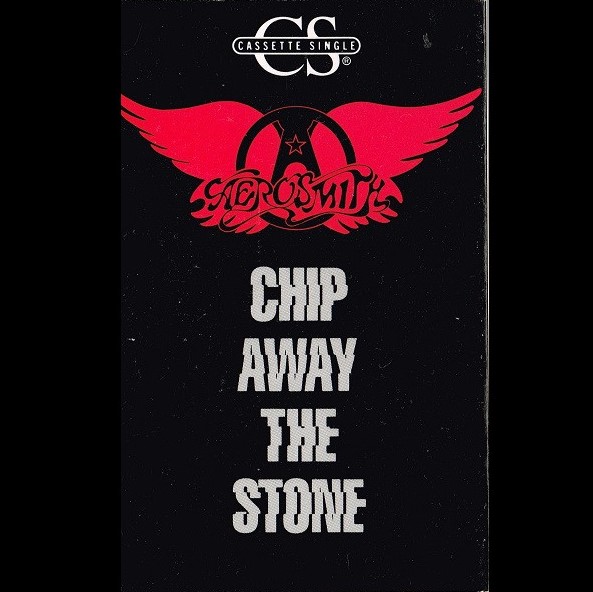
Many people didn’t catch the 1988 release of Gems. It was on their former record label Columbia and didn’t get a lot of notice. What Gems had wasn’t a new song, just an obscure one dusted off: “Chip Away the Stone”.
Written by Richie Supa, “Chip Away the Stone” is one of a few hit songs the guitarist gave to Aerosmith. Others like “Amazing” might be more well-know, but “Chip Away” is special. When the music video hit in late ’88, Supa was featured in it via archival footage (look for the guy with the moustache). If anyone knew “Chip Away” in ’88 prior to Gems, it would have been through their album Live! Bootleg. The studio version was only available on a rare single! If you were a kid living in Kitchener in the late 80s, good luck finding it, or even knowing it existed. For us, and the majority of fans, “Chip Away the Stone” was a brand new song.
I was getting into piano in rock songs around this time too. “Chip Away the Stone” had just a hint of boogie-woogie and it hit the right chords for me. Even though I was expanding my musical horizons slowly but surely, the music video still had a huge impact. Considering it was made up of old live footage, it was surprisingly well edited, fresh and cutting-edge. The shots of the piano were spliced to look like somebody was playing on one super-long piano keyboard. I assumed it was Richie Supa playing piano: the credits are unclear. Either way, that video got me deeper into Aerosmith. Way deeper.
Today my two favourite songs are “Chip Away the Stone” and “Let the Music Do the Talking”. I have plenty of others — “Seasons of Whither”, “F.I.N.E.”, “Draw the Line” — but those first two just stick with me. Part of that is nostalgia, but the other is that they are just great fucking songs.
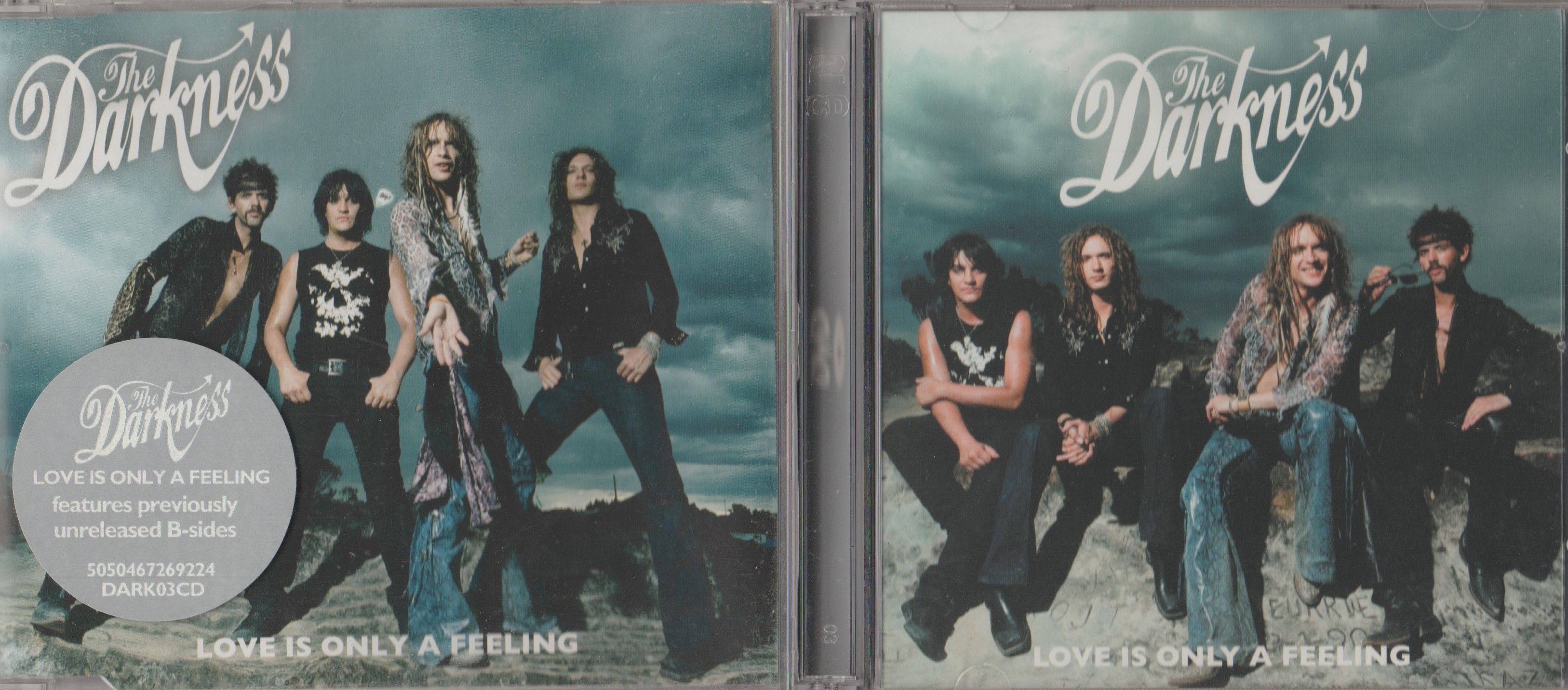
THE DARKNESS – “Love Is Only a Feeling” (2004 Warner UK CD and DVD singles)
Collecting singles isn’t as easy as just buying the single anymore. Which versions are out there, with what tracks? The Darkness’ singles are usually interesting for the different bonus tracks and variations out there. Their hit ballad “Love Is Only a Feeling” was available on CD, DVD and 7″ vinyl. You only need the CD and DVD to get all the tracks, but there’s a catch: the DVD is in PAL format (common in Europe), so you need a player that can decode it.
No problem. LeBrain HQ has a collection of frankenstein multi-media tech that can convert the most popular physical formats into something easier to play! It’s not a pretty setup but it gets the job done. All the tracks from all the versions of “Love is Only a Feeling” can be compiled in a single file folder!
As far as ballads go, The Darkness didn’t wimp out with “Love is Only a Feeling”. The Lizzy-like intro harmonies meld into an acoustic mandolin verse. A bombastic band like the Darkness is at home with a bombastic ballad, but early Darkness didn’t use a lot of frills and extraneous instrumentation. “Love is Only a Feeling” doesn’t go overboard, but sticks to pretty a traditional rock arrangement. You can blast it out the car windows — no problem.
The first of the single B-sides is “Planning Permission”, an unpolished song that almost stands with the ones that did make it onto Permission to Land. It could use a little more tightening up but the roots of a good song are there. Next is the bizarre “Curse of the Tollund Man”. It might even be considered educational. The actual mummy of the Tollund Man was found buried in peat as described in the song. It sounds like the Darkness were really trying to write a Queen B-side. It’s amusing but all over the place.
The music video for “Love is Only a Feeling” is the main feature of the DVD single. I’m a sucker for mountaintop videos. “Love Is Only a Feeling” is almost as epic as the Bon Jovi and Guns N’ Roses clips that came before . Then, they take it over the top by going under the ground, in a cave! A behind-the-scenes video reveals safety ropes, helicopters and elevated platforms to heighten the drama.
The real reason to seek the DVD single is to acquire the final bonus track, “Get Your Hands Off My Woman” live at the Astoria. The action-packed track features Dan Hawkins on all guitars, so Justin can jump around and do the splits. Vintage live Darkness with the original lineup is scarce, as far as official releases go. This live Darkness is full speed, filmed in the raw. It doesn’t matter if you get it for watching or just listening. It’s a great version.
If you’re fortunate enough to play DVDs from multiple regions, the singles are usually dirt cheap on Discogs. This one even came with a poster! DVD singles were a fad and never really caught on. They can, however, patch some holes in your Darkness collection.
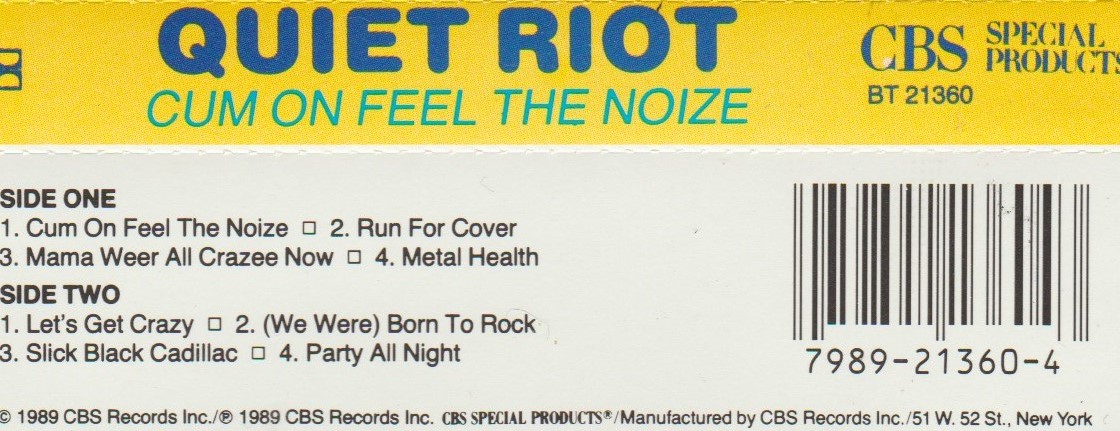
QUIET RIOT – Cum On Feel the Noize (1989 CBS cassette)
From the same line as the previously reviewed Trouble Shooters by Judas Priest, here’s a tape-only Quiet Riot compilation. Like the Priest tape, Cum On Feel the Noize has nothing more recent than five years. For Quiet Riot, that unfortunately means you’re only hearing songs from two albums! (Nothing from the first two which were only released in Japan.)
The title track (and Slade cover) “Cum On Feel the Noize” goes first, muddy tape hiss and all: this cassette has seen better days! It’s an edited version (roughly 3:10), so perhaps something you don’t have in your collection. The speedy album track “Run For Cover” then delivers the scalding hot metal. Two more big hit singles follow: “Mama Weer All Crazee Now (another Slade cover) and “Metal Health” (sometimes subtitled “Bang Your Head” in case you didn’t know the name). These two hits will keep the party flowing, and that’s it for side one.
Proving they had more than just a passing interest in mental health, “Let’s Go Crazy” kicks off side two with a bang. Frankie Banali is the man — his drums really sell this one. “(We Were) Born to Rock” is another solid number, all rock no schlock. “Slick Black Cadillac” is a shrewd inclusion. Gotta have a car song for the road. Then “Party All Night” finishes it off with a pretty clear message.
As a party tape, Cum On Feel the Noize would have done the trick. You should probably just own Metal Health and Conditional Critical instead, but this is a fun tape and would have been enough Quiet Riot for most folks.
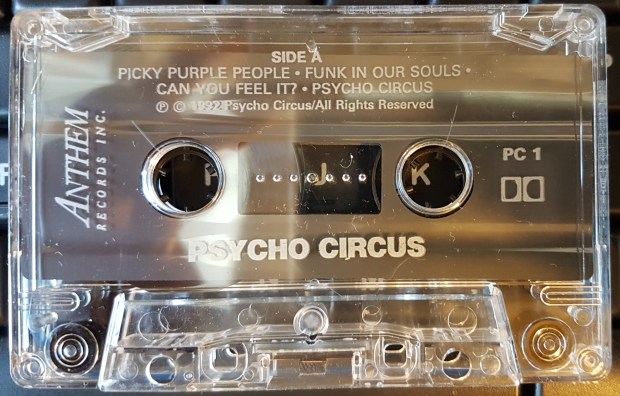
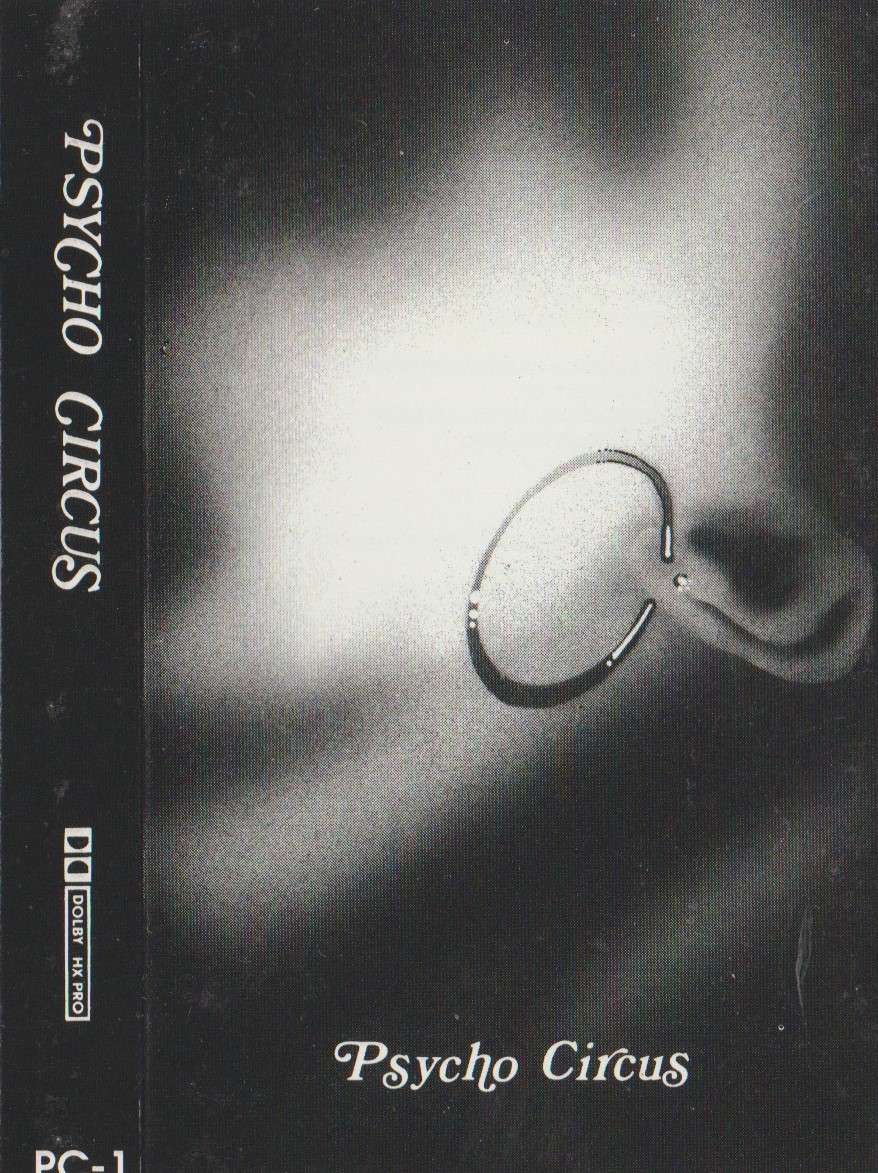
PSYCHO CIRCUS – Psycho Circus (1992 indi cassette EP)
Psycho Circus put out their one and only album in 1993. They were a talented band who avoided grunge cliches and instead dove into funk-metal and a darker Faith No More sound circa The Real Thing. The album was split down the middle between the two sides. Decades later I found an earlier indi cassette, released after they signed with SRO Management, the team behind Rush.
It’s quite clear this band had musical chops. Opening track “Picky Purple People” is killer. Faux-horns, massive bass and busy drums are relentless. This is a goofier side of the band, but well executed. If the Chili Peppers and Faith No More had a baby, it would sound like “Picky Purple People”. Next is “Funk in Our Souls”, a track that was re-recorded for the album later. The cassette version sounds more bass heavy. It’s more enjoyable for that reason, not to mention the smoking guitar solo. “Can You Feel It?” was also re-recorded for the album, but this is one of those darker songs that eschew the funk. Singer Vince Franchi hits unreal notes. His voice is versatile. It’s Faith No More without the twisted mind.
The final track didn’t make it onto the CD. “Psycho Circus” opens with traditional circus music, a full six years before Kiss did the same thing with their own song called “Psycho Circus”. Maybe they should try suing Kiss? It would be fun to see! That’s the only similarity. This is another funky track, and though the circus music is a bit silly, the chorus rocks.
The tape comes with a nice J-card and full lyrics. In a way it’s a better listen than the album. It doesn’t have as many great songs, but it also has less filler.
Kiss frontman Paul Stanley seems emboldened by the monumental success of their End of the Road tour. Why “emboldened”? Because they’re pulling it off with only half the original band. Ace Frehley has not shown up to sing “Shock Me” and Peter Criss seems happily retired. Tommy Thayer and Eric Singer remain in the greasepaint and the spotlight. It’s proof that the majority of the masses don’t know or don’t care who is in a band anymore. The “fans” who refer to Thayer and Singer as “scabs” have had no impact on ticket sales with their boycotts.
Many bands have toured successfully in recent years without key members. AC/DC made headlines by replacing Brian Johnson with Axl Rose. Deep Purple are going strong with only one original member. Queen sell out with Adam Lambert taking Freddie Mercury’s place on stage, and bring home terrific reviews to prove it. Kiss too are doing just fine.
Would they be able to do it with even fewer original members? Like, say, none? Paul Stanley thinks so. He’s said so before and recently he raised the idea again:
“I think that Kiss has served a huge purpose and brings incredible joy to people on the End Of The Road tour. The shows are packed, and not only with the early followers of the band, but people who have heard the legend of what this band does live. And it’s something that’s more than music. It really is a preaching of self-empowerment and the idea that anything that you’re willing to work hard for, you can probably attain. And the idea of celebrating life. Things that may seem simplistic or overtly simplistic, but actually have a timeless depth to them. So when bands continue, ultimately the people in ’em need to change or have to, because of circumstances.
“So that’s a long explanation for me feeling that I would have an enormous amount of pride in knowing that we can continue the band once I’m not there anymore. That would be the ultimate test of its credibility and the role, I think, that it serves.
“I didn’t invent the wheel. I am the product of all the people who I looked up to, all the musicians who I respected, and it was kind of like a stew, and then I added my own ingredients to it. But there are other people who are out there who wouldn’t necessarily imitate me any more than I imitated my heroes. But there are people out there, I’m sure, who are well equipped to pick up the flag and run with it.”
Paul is correct to say that bands must sometimes change out of necessity. He is actually the best proof of this. Paul cannot sing anymore and has been miming a huge percentage of his lead vocals on this tour. We won’t go down that rabbit hole this time. Suffice to say, if this wasn’t the End of the Road, Paul couldn’t really continue singing lead in Kiss.
But replacing him? That’s a whole other bowl of Cheerios.
The idea of Kiss going on without Paul and Gene – let’s call the hypothetical band “Kiss II” – would certainly cross a line with me. Bands with one or two original members is one thing. Many bands have replacement members far more important than the originals. Phil Collen is a key member of Def Leppard, vastly more so than his predecessor Pete Willis. Same with Roger Glover and Ian Gillan in Deep Purple. Adrian Smith in Iron Maiden. The list goes on and on.
Could a Kiss II be a viable prospect with Eric Singer the longest serving member? With Tommy Thayer as band leader?
No. Paul and Gene control Kiss. The other guys have just been hired guns ever since the originals left. Kiss may have started as four guys, but for the last few decades it’s the vision of just two. (In the 80s, just one, as Gene went Hollywood.) You could imagine Paul and Gene controlling a Kiss II band from behind the scenes, but that is a hollow prospect. Imagine Stanley and Simmons discussing new costumes and approving setlists for a Kiss II tour without them. Would you pay to see that?
I wouldn’t.
Kiss have already gone down in history, many times, for their accomplishments. Making the band immortal with all parts replaceable might also be historic, but not in a good way. There are guys out there who can sing better than Paul, and play better than Gene. Tribute bands have all the moves down pat. But you can go see a tribute band for $10. Kiss II would be, in essence, an “official” tribute band and with Paul and Gene behind the scenes they’d be charging a hell of a lot more than $10 per ticket.
I think Paul has lost perspective. Kiss has been successful, against the odds, in replacing Peter Criss and Ace Frehley. But there was precedent for that. Kiss made fantastic albums without either. That doesn’t mean you can remove Paul or Gene from the picture and still call it Kiss. Paul and Gene have always been the ones with the drive and the vision. They are not so easy to replace. Can you picture some replacement guy imitating Paul’s stage raps? There might have been a brief window in the late 80s when Kiss could have gone on without Gene, only Paul, since he had become the captain of the ship for a while. However that ship sailed long ago and it’s all but impossible to imagine the band without them both.
No, Kiss II is a lousy idea. It’s just a way to milk naïve fans in this era of hologram and nostalgia tours. Would they sell tickets? Sure, they’d sell some. These hologram tours are proof that people will pay to see anything. Would it be good? Hell, no!
THE DARKNESS – One Way Ticket to Hell… and Back (2005 Atlantic)
It was pins and needles, waiting for the new Darkness album in 2005. First Mutt Lange was said to be the producer. Then it was Roy Thomas Baker, who got a test drive on the 2004 remake of “Get Your Hands Off My Woman…Again”. With guys like that at the control panel, you knew the Darkness were going to do something epic. Unfortunately, some people just wanted more of the same Permission To Land style of fun but hard rock. Those folks didn’t want flutes, strings or gui-boards.
“The new Darkness…sucks,” said one of my bosses when I walked in to work at the Record Store one afternoon in late December. We had just received our shipment. “In one song, all he does is sing, ‘I love what you’ve done with your hair,’ over and over again,” complained the boss, who loved raining on my parade. My opinion of the album was the polar opposite.
There’s little question that the band took it too far. Justin Hawkins was knee-deep in drugs and an infatuation with the 80s. One Way Ticket to Hell …And Back is like a busy, manic snapshot of that period in time. The band fired off in all directions, with pompous and bombastic kitchen-sink production backing them up. Bassist Frankie Poullain was also out (the usual “creative differences”) and replaced by the uber-talented Richie Edwards.
The over-production is certainly an issue, especially when so many were attracted to the raw sound of the Darkness. The shrill title track opens with flutes and Gregorian monks, and then Justin takes a snort. “The first line hit me like a kick in the face. Thought I better have another just in case.” A nice thick riff is joined to a soaring multi-layered chorus for that classic Darkness formula. Then the acoustics and a sitar kicks in, because what else do you need on a song about excess? The coke and money must have been flowing right through that recording studio. (At least they saved a little money on the sitar. They didn’t have to hire a player, since Justin could do it. They did hire a flautist.)
“And I love what you’ve done with your hair!” screams Justin on the song that is (obviously) called “Knockers”. It’s pure pop rock with piano, keyboards and slide guitar for that necessary excess. “Is It Just Me?” (a single) strips things down to the basics, because you have to have a few songs like that too. Then we get hysterical on “Dinner Lady Arms”, a Def Leppard song at heart. Justin’s soaring high chorus was far beyond the Leps, but Phil Collen could have written that riff.
Permission to Land ended its first side with a ballad (“Love is Only a Feeling”) and so the formula was repeated here. “Seemed Like a Good Idea at the Time” is similar but just as good, embellished with strings and piano. The most epic song, however, is “Hazel Eyes”. The side two opener boasts full-on bagpipes and an indescribable high-pitched Celtic chorus! Everything gels. The pompous overindulgence, and the pure Darkness sound, are mixed to chemical perfection. It also features that signature Eddie Graham drum fill. Boom-boom-boom-boom, BAP!
There’s a brief stumble here. “Bald” is an amusing song, rocking slow and hard, but lacking that je ne sais quoi that could have made it unforgettable. Then Justin swerves a little too far into pop with the disco-like “Girlfriend“, complete with gui-board solo and the highest notes known to humankind. A brilliant single it is, but perhaps an example of the Darkness going too far off course on an album that is already overflowing with excess. Then again, perhaps it’s actually the right song for an album like this. Where else would you put it?
As we close in on the end, “English Country Garden” fires on with a speedy piano rock jam. It’s like taking a Queen LP and turning the speed up to 45. Finally “Blind Man” is the closing ballad to takes things to their logical ends. You will hear no discernible rock instruments, just the strings and woodwinds of an orchestra, for almost the whole thing. That was really the end way to end an album this bombastic. Appropriately, Justin’s vocals are similarly taken to the extreme.
You have to admire The Darkness for just going for it. They could have done Permission to Land Part II, just by leaving out the excess. They didn’t. We knew they were going to go balls to the wall when they were briefly working with Mutt Lange. You don’t work with Mutt Lange unless you want every note under the microscope. There are a lot of notes on One Way Ticket, and each one sounds like it was painstakingly created in sterile perfection. And that’s fine. That’s one method of getting there. One Way Ticket was the “experimental” second album, and like any other, it’s both baffling and charismatic in extreme measures.
Not all great bands make it, and Feel was a great band. Formerly Russian Blue, Feel were active on the Toronto rock scene in the early 90s. When things went grunge, they adapted their melodic rock to the times. The result was dark, not-quite-mainstream hard rock that could appeal to both sides of the aisle. Their album This (get it? Feel This?) had a number of memorable tracks. They also released a home video for lead song “I Become You”.
The video arrived personally autographed by all four band members; a nice touch. In addition to being a top quality song, “I Become You” is also a slick looking, well-edited music video. It utilises tricks like slow and fast motion, still photos, and plenty of camera movement. The result is a briskly paced video with a band always in motion. The guitar solo segment is particularly good. Feel were television ready, if only the chips had fallen differently. Frontman Joe Donner had the chops and certainly appeared ready to be the next rock sensation.
4/5 stars
Make sure you watch the video to the end, as I added some bonus content! In 1993 Feel released a sampler cassette called A Taste Of…. I included the “Introduction” track at the end of the video, as it has a sampling of the album and even an unreleased riff that didn’t make it. Check it out and let me know what you think of Feel!