Hot on the heels of the fallout from our Decline of Western Civilization Part II: The Metal Years critique, I was invited back on Peter Kerr’s Rock Daydream Nation along with John Clauser and Steve Deluxe, to review the debut album by Tuff. I’d never heard What Comes Around Goes Around before, so it was a little “tuff” for me to get up to speed with the other guys. I listened to the album intensely for a week, and then we recorded this show. It is a show of which I am extremely proud.
The goal here was to be fair and honest. I think we were. I will tell you one thing: one of our panel members went in with a negative perspective, but had it changed after playing the album today. I highly recommend you check out this excellent episode. Even if you don’t like the band Tuff, or the hair metal genre in general, what we have here is a thoughtful and sometimes hilarious discussion about music that, for a little while at least, was one of the most popular genres in the world.
This is what Peter has to say about the show.
Rock Daydream Nation featuring John Clauser (My Music Corner), Michael Ladano (Grab a Stack of Rock) and Steve Deluxe (Rock and Metal Invasion) talk about Hair Metal in the 90s and specifically the Tuff debut album What Comes Around Goes Around (1991)…
For those who like it saltier, stay tuned for my written review which goes up tomorrow. It’s a little spicy.
Part Six-point-five of a series on KICK AXE!
Thank you to JEX RUSSELL for donating this to the collection.
KICK AXE – “Piece of the Rock” (from Rock the World – 2005 remaster) (2005 Amber Interactive)
The Kick Axe discography, though small, is difficult to complete! There are the first two albums released on Pasha in the US, and the third album on Roadrunner in the US. Rock Candy reissued the first two albums with bonus tracks, and the third without, so they’re fairly easy to get. Then we also have a fourth independent album, an early independent single, a live track released by Playboy, and two songs on the original 1986 Transformers soundtrack (under a different name). That’s about it, right?
Nope!
One important song almost slipped through the cracks. When Kick Axe were working on Vices with Spencer Proffer, the producer was considering using the band to help write the next Black Sabbath album. Additionally, Ian Gillan was out of the band, and they needed a singer. Kick Axe’s George Criston was one of the singers considered, though Kick Axe didn’t want to lose their main man. “Piece of the Rock” was one of the songs written for the Sabbath project. Though Sabbath didn’t use it, like “Hunger”, it was recorded and released by King Kobra on their debut Ready to Strike. As a result, the Kick Axe version went unheard for almost two decades.
That version, harder than King Kobra’s, is actually available on an obscure Kick Axe remaster that pre-dates the Rock Candy versions. Strangely enough, it ended up on a reissue of Rock the World, an album it had nothing to do with.
The plot thickens. Rock the World was remastered by Kick Axe’s Ray Harvey…who was not in the band when it was recorded, and is not on the album aside from the bonus track!
Kick Axe Career Retrospective
Things get crazier still – and this is something that isn’t documented anywhere, even on Discogs. Upon listening, some songs are actually longer! “Rock the World”, for example, opens with two seconds of pick-handling that is not on the original album. The Fleetwood Mac cover “The Chain” has a much longer intro (almost double its original length), with a short section restored. “Red Line” is also significantly longer. Considering the Rock Candy release has no bonus tracks, this version might reign superior. Ray Harvey clearly decided to re-edit some of these tunes as well as remaster. There does not seem to be a remix. The remastering isn’t as loud as the Rock Candy version, though it still sounds fabulous.
Where Rock Candy exceeds is in liner notes and packaging. The Amber Interactive version doesn’t have the original artwork, and actually looks really cringe! The back cover is a computer generated sword handle with a metal “X”. Need I remind you, an axe is not a sword! The front cover artwork is atrocious, even compared to the low budget looking original. It does have the lyrics to “We Still Remember”, which is interesting in itself. See how many references to other bands you can find. “In the days of the haze, the colour was deep purple.” “We ride the killing machine.” “And the wind it cries Mary.” “We won’t get fooled by helter skelter.” References within references.
“Piece of the Rock” should have been released by Kick Axe back in the day, but here it stands on an album! It sounds completely finished for release, with the lush backing vocals fully overdubbed and ready for radio. The other nice thing is that it gives you an old school Kick Axe song on an album that was largely more complex and less instantly accessible. That’s not to say that Rock the World is weak album. Our review will attest to that (links at bottom).
This version of Rock the World deserves an extra half-point for the bonus track and lengthier versions of existing songs. Extra unadvertised value is always good. Shame they couldn’t use the original art (licensing issues), but small gripe.
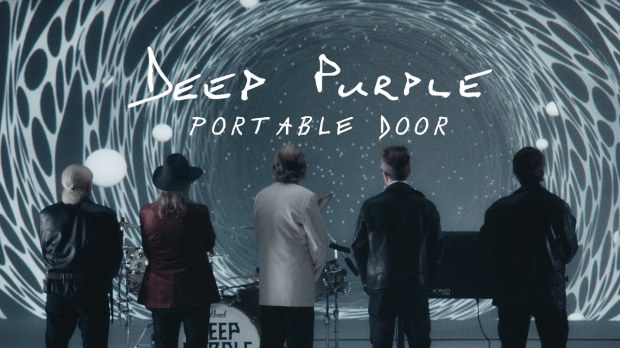
Deep Purple’s first new album with Simon McBride on guitar will be out July 19. Called =1 (“equals one”), it is largely a mystery what the album will sound like. Many predicted a return to “hard rock” after the last three more progressive albums. The first single “Portable Door” is not all that different from the Steve Morse era. Don Airey’s organ really dominates the solo section, as it should be. Simon’s guitar work is sublime but not showcased as some had hoped. He has this one cool lick in the riff that is really electrifying, but we want more Simon!
Ian Gillan? Reliable as ever, his voice has worn in like suede. He can still sing the hooks. Haters call him “over and done” – fans don’t care. Ian Paice is the backbone, always smooth, always identifiable, infallible. With Ian Paice on drums, Deep Purple will always sound like Deep Purple. His work here is busier than the we’ve become used to…which is just fine!
How does “Portable Door” stack up against recent Purple singles? It doesn’t have that instant “wham!” of “Vincent Price”, and it doesn’t have the hooks of “Johnny’s Band”. It’s a strong, workmanlike latter day Deep Purple single that will grow with increasing listens.
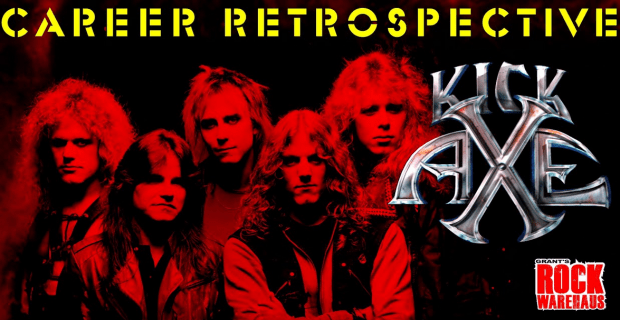
This weekend on Grant’s Rock Warehaus, we tackled a band that needs and deserves more attention: Canada’s Kick Axe!
“Nobody’s talking about Kick Axe!” said Grant. We aim to change that with this show. Please give it a watch! What are your favourite Kick Axe songs?
This show almost didn’t happen. I wanted an expert on Kick Axe, so I asked Derek Williamson of Thunder Bay Ontario, who saw Kick Axe live back in the day and also interviewed the guitarist Larry Gillstrom. He stonewalled me three times, so we decided to do it without him.
Show notes are below, if you want the Cole’s Notes version, but you’ll have to watch the video to get our album rankings.
Formed 1976, Regina Saskatchewan as “Hobbit”.
Original lineup:
Victor Langen, bass, vocals
Gary Langen, drums
Larry Gilstrom, guitar
Ray Harvey added on guitar.
Moved to Vancouver BC, Gary Langen leaves band replaced by Brian Gillstrom, Charles McNary hired as vocalist.
1981 – Playboy Street Rock – live track called “Reality is the Nightmare”.
1981 – Weekend Ride / One More Time (Harvey on vocals).
Produced by Bill Henderson and Brian Too Loud McLeod of Chilliwack.
Wrote “Heavy Metal Shuffle” which opened Vices later on. Attempted to record an album but never released it.
McNary replaced by George Criston, who brought in power, range and soul as well as a unique sound.
1984 – Signed to CBS in Canada, approached Spencer Proffer to produce because they wanted the same sound as Metal Health by Quiet Riot. Proffer liked the band personally and thought highly of their musicianship. Album Vices released on Pasha in the US.
Recorded existing material (2 songs re-written with Proffer) in Hollywood at S.I.R. 30 Days in the Hole – a cover, like Cum On Feel the Noize, but not intended to be a hit, just a showcase for their talents. Released on the soundtrack to Up the Creek.
Ran into Tony Iommi and Geezer Butler – supposedly approached Criston to replace Ian Gillan in Black Sabbath. Proffer was working with both bands.
Vices is their best album. Proffer intended it to be a concept album about vices. Not a bad song. Bangin’ backing vocals. Music video for On the Road to Rock made major impact in Canada, with the comedic video attracting attention. The Vices mascot was one of my first “rock buttons”.
Vices did not perform to expectations, but Kick Axe wrote three songs for the next Black Sabbath album: “Wild in the Streets”, “Hunger”, and “Piece of the Rock”, later recorded by W.A.S.P. and King Kobra. Kick Axe did not want to lose Criston to Sabbath. “Piece of the Rock” is one of the rarest Kick Axe tracks, only released on a 2005 issue of Rock the World.
1985 – Second album – Pasha wants band more streamlined for radio. Brought in Pasha staffer Randy Bishop to help on lyrics. Co-wrote 5 songs and co-produced Welcome to the Club. Some of the heaviness is blunted, in favour of better song structure and melodies. Recorded at Metalworks in Toronto. Cover art by Hugh Syme, which the band never understood the meaning of.
Band brought in cover of Joe Cocker’s version of “With A Little Help From My Friends”. Rik Emmett, Lee Aaron, Andy Curran, Alfie Zappacosta and more on backing vocals. Very cool music video made of the recording session.
Pretty solid album, though not as banging throughout as the original. The cover tune is completely different, but really excellent.
The band and Proffer blame lack of sales on parent label Epic. No support. Toured with Autograph, Krokus, Night Ranger, Helix and Triumph.
1986 – Ray Harvey returns home to deal with family matters. Joins Rock & Hyde as touring guitarist (Bob Rock & Paul Hyde).
The Transformers soundtrack released. Hunger, and Nothing’s Gonna Stand In Our Way released as Spectre General. All done by Proffer, without knowledge of the band. Due to pseudonym used, no benefit to band happened.
Still signed to CBS in Canada. Next album picked up by Roadrunner in US.
Rock the World (initially “Fuck the World”) recorded as four piece. Self-produced primarily by Larry due to lack of funds provided by CBS. Recorded at Right Trak in Vancouver. Also forced to mix the album themselves. The cover tune this time is The Chain by Fleetwood Mac.
Band breaks up – sherrifs seize equipment due to unpaid debts. Later immortalized in the song Rocking Daze on Kick Axe IV.
2002 – Kick Axe reunite with Gary Langen returning, this time on lead vocals. George Criston remains active in country and more soulful music. Has expressed no interest in returning to rock. Has not participated with reissues. Has worked as a guitar tech for Sarah McLachlan, Dido, Avril Lavigne, and k.d. lang.
2004 – Kick Axe IV self produced. Best song Rockin Daze written by Brian Gillstrom. Decent album but not memorable long-term except for Rockin Daze. Gary Langen has a style of voice reminiscent of Phil Naro.
2008 – Gary Langen leaves band, replaced by Daniel Nargang.
2023 – Run to the Thunder, first new song in decades, to be followed by new album.
EUROPE – The Final Countdown (1986, 2019 Rock Candy remaster)
When Europe set in to do The Final Countdown, some changes were necessary. The drum seat went from Tony Reno to Ian Haughland, a guy that Joey Tempest liked partially because his drum kit looked like Alex Van Halen’s. Some new songs, such as “Carrie” and “Ninja” had already been road-tested on the Wings of Tomorrow tour. The record label was gunning hard and hooked them up with Journey producer Kevin Elson for the third album. What Elson brought to the music was not drastic change, but the essentially improvements that made the record what it is today.
Record? In this case, CD. In 2019, Rock Candy reissued The Final Countdown with six bonus tracks: the same three live ones from the 2001 Epic remaster edition, plus three extra. For that reason, let’s take a second deep dive: It has been over 10 years since we last reviewed it.
With the ominous boom of synth, the anthemic title track opens The Final Countdown with regal, grand intentions. The track was cut down from seven minutes to just five, and for that reason it was able to become the hit it was. Today you hear it on TV commercials and shows such as Arrested Development (in hilarious fashion). Back then, it was pushing the envelope about how much keyboard was acceptable in hard rock or heavy metal. Europe really started as a metal band on their first album. Yet here we are, with those big gongs of synth provided by new member Mic Michaeli. When the trumpet-like main keyboard melody enters the fray, it’s all but over. Your mind is now hooked! The wicked John Norum guitar solo remains one of his catchiest and most memorable, with plenty of fret-burning action. The lyrics tell the story of abandoning the Earth for Venus due to catastrophe. Corny, but pretty unusual for its time. “The Final Countdown” remains one of those career-defining songs that live forever.
“Will things ever be the same again?” begs Joey Tempest, before the chorus. For the band, no. Superstardom hit soon thanks to this unforgettable anthem. Though their fortunes would fade and they would never hit these heights again, they wrote themselves into rock history with one song.
Straight-ahead party rocker “Rock the Night” was the infamous video that featured Joey Tempest using a ketchup bottle as a makeshift microphone. Great song though, with that kind of shout-along chorus that Bon Jovi were also becoming experts in. But listen to Ian Haughlaand’s drums! Absolutely pounding. All the elements come together in perfect balance here, with the keyboards taking a back seat to John Norum, who continues to burn on the solo. His tone on this album was unique and very tasty.
“Carrie” was born on tour as a simpler arrangement with just Joey and Mic on stage. When recorded for the album, it was a full band arrangement. A little heavy handed, a little over-dramatic perhaps. It too was a huge hit. It still sounds good today, largely thanks to Joey’s impassioned vocal performance. The man was at the peak of his powers, and it shows here. Very few singers can do what Joey does on “Carrie”.
The rock returns on “Danger on the Track”, a tale of Joey fleeing from the strangers on his back. And he was so right, apparently, but we won’t get into that! This is clearly an album track, not up to the standards of the previous three singles, but still good enough for rock and roll. It’s “Ninja” that surpasses the singles, with a ripping tale of the era of the ninja. It has the rhythmic chug that the other songs don’t, and plenty of John Norum’s addictive, dramatic runs.
The final song written for The Final Countdown was one of its best: the side two opener “Cherokee”. It seems odd for a band from Sweden to sing about a dark period in American history, but the lyrics aren’t too far off the mark. They were based on a book Joey saw while working in America. This is probably the second most anthemic song on the album behind “The Final Countdown”. It has a big keyboard hook too, and a chorus that sticks for days.
“Time Has Come” is only the second ballad, but it has some heavy guitars to keep it from going too soft. Once again, Norum’s solo is a highlight, being a key part of the song’s melodicism. Moving on to “Heart of Stone”, a memorable mid-tempo track, John Norum continues to shine. This cool song boasts a killer chorus to boot. There are cool stabs of organ a-la Deep Purple ’84. You wouldn’t call it a heavy song, but “On the Loose” sure is. This scorcher is among Europe’s best blasts. It’s just a simple song about teenage frustration and energy. This might have been the song that made me a John Norum fanboy in the first place.
Album closer “Love Chaser” is a melancholy mid-tempo romp. It has a bouncy beat and keyboard hooks, and it ends the album just perfectly. It even has a keyboard melody at the start that recalls “The Final Countdown” a bit, providing the album with a nice set of bookends. Sadly this would be John Norum’s last appearance with Europe until a 1999 reunion. He was replaced by Kee Marcello, who appears in all the music videos aside from “The Final Countdown” itself.
The first set of bonus tracks are the three live songs that appeared on the 2001 Epic remaster. These are taken from the Final Countdown World Tour VHS from the Hammersmith Odeon in 1987, and feature Marcello on guitar, though this information is not included in the otherwise excellent booklet. It is audibly him. “The Final Countdown”, “Danger on the Track” and “Carrie” are the three tracks included, though there is a clear opportunity here to do a 40th anniversary edition with the entire show on disc 2. These are solid live versions, and it does sound pretty live especially in the lead vocals. Joey Tempest is one of the most impressive singers in hard rock, and though the press was trying to build a rivalry with Bon Jovi in 1986-87, Joey was clearly the superior singer.
The first of the new bonus tracks is a rare 1986 re-recording of “Seven Doors Hotel” from their debut. There are now drapes of synths over the piano opening, but the song still scorches hot as ever. John’s guitar is doubled effectively for a more Lizzy-like approach. It was clearly too heavy for The Final Countdown album but it could have been an excellent B-side.
Speaking of B-sides, a special B-side remix of “Rock the Night” is another rarity brought back to light. This version could have been better than the original, but falls short of the mark. It does not actually sound like a remix at all, but a completely different recording, at least vocally. If you wanted to hear this song a little heavier, then this version might do it for you, except for the annoying looping of hooks. “Rock now, rock now, rock now, rock the night!” “What do you want? What do you want?” Stop looping the hooks, please! It sounds so artificial. This version is a minute and a half longer than the original. It’s a slog, but it didn’t have to be.
Finally, the excellent B-side “On Broken Wings”, previously available on compilations, has been restored to the album as it always should have been. It’s a hard rocker, a driving song, and could have fit very well on side two. It would have been one of the faster songs, yet with another memorable Europe chorus.
This new Rock Candy remaster sounds sharp and vibrant. An excellent remastering of a stone cold classic. The booklet includes an interview with Joey Tempest on the making of the album. Until they issue an expanded edition for the 40th anniversary (let’s hope), then this is the version to buy, hands down.
CINDERELLA – Live Train to Heartbreak Station (1991 Mercury Japan EP)
Japan sure loves the rock! That’s one reason they get such cool exclusives. (There are other reasons too, involving incentive to purchase domestic product rather than the less expensive US imports.) Live Train To Heartbreak Station, recorded in Little Rock Arkansas, is one such exclusive. A six song EP released in 1991, this was issued to support the Heartbreak Station tour. I was fortunate enough to witness a show on the Canadian leg of that tour, which suffered from poor ticket sales, an early harbinger of the grunge to come….
Having seen it live, this sounds purely authentic. I’m sure there are overdubs, 90% of live albums do have overdubs. However they are hard to definitively detect. Tom Keifer’s patented screech is right there, in your face, still in its glory days. The band is solid, augmented by organ and keys in the background. You can also hear the two female backing vocalists that the band were using at the time.
This EP consists of six tracks, two from each of the band’s three albums in existance at the time. All six songs were singles, although not all were hits. Even though it was not a hit, I think it’s safe to say that “The More Things Change” belongs on an EP like this It’s a great song in the opening slot. They also sequence the two ballads (“Don’t Know What You Got” and “Heartbreak Station”) right in the middle of the EP, side by side. I like that idea, get ’em out of the way. I think that was a smart move, albeit the girly audience screams can get old pretty fast. But man, the harmonies on “Heartbreak Station” are so sweet. I don’t care if the girlies loved it, that’s just a great song. Synth replaces John Paul Jones’ string section; a fair compromise for the live setting.
After the two ballads, the band cranked out their two best known rockers: “Shake Me” and “Gypsy Road”. Man, this takes me right back to that summer of 1988. I can remember a time when I thought “Gypsy Road” was the best thing since sliced bread. And you know what? It still ain’t bad!
This is still one of the best, if not the best, Cinderella live packages on the market due to the vocal problems that Keifer would experience later on. It’s a shame it’s just an EP, but context is important. This was just a taster, a sampler. Don’t forget Slaughter and Ozzy both released live EPs at the same time – it was the thing to do, I guess.
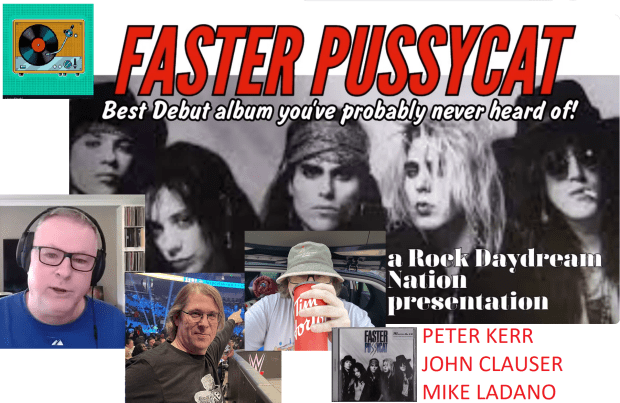
Sort of a followup to our controversial roundtable discussion on The Decline of Western Civilation Part II: The Metal Years, this time Peter Kerr invited me back to talk about a band I never listened to before: Faster Pussycat.
John Clauser went into this show with a negative opinion after some not-so-great live gigs. I went in with almost virgin ears. I knew the songs Faster Pussycat had in the movie, and I liked them. Peter challenged John and I to listen to the whole album and discuss our conclusions. The results may surprise you!
See if you can spot my subtle jab at Tuff singer Stevie Rachelle who accused us all of being “probably Rush fans” when he didn’t like our Decline episode.
Here’s Peter’s description of the episode:
Rock Daydream Nation featuring John Clauser (My Music Corner/The Contrarians) and Mike Ladano (Grab a Stack of Rock) go back to 1987 and put a spotlight on the self titled debut album from ‘Faster Pussycat’. Is this the best Hard Rock Debut album you’ve never heard of? Part classic rock with a dash of glam with a hint of blues…. We do a song by song analysis and talk all things Faster Pussycat…Remember, don’t change that song and check out the show! (There is even a Faster Pussycat video on the show)
I bought the CD specifically for this show, and my written review will go up Monday the 11th. Enjoy the show!
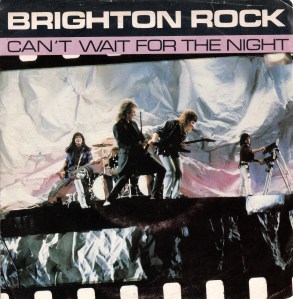
BRIGHTON ROCK – “Can’t Wait for the Night” (Remix) / “We Came To Rock” (1986 WEA single)
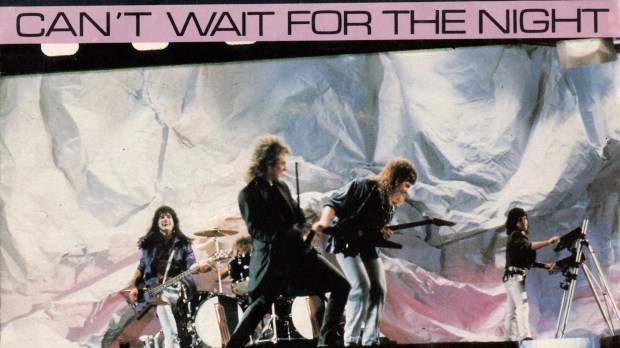
Niagara Falls’ Brighton Rock had a knack for rockers and ballads in equal measure. Though “ballad” was often whispered as if it were a dirty word, Brighton Rock released a couple as singles over their career. “Can’t Wait For the Night” was the first. With a soft keyboard backing, the guitar melody by Greg Fraser sketches out the hook of the song. Gerry McGhee shows a tender side to his voice, while unleashing the scream on the chorus. His voice takes on a third texture as the chorus goes out, a grittier version.
On the 7″ vinyl format, the song was given a remix and an edit. It was taken down from 4:25 to 3:56, and labelled as the “single mix with guitar solo”. Presumably all that means is that the guitar solo wasn’t chopped for the edit, since the album version seems to have the same solo. The edited music is mostly outro, and it’s hard to discern exactly what the remix adds. Keyboards and guitars seem to be the same. Vocal is the same. But here it is; the “single remix with guitar solo”!
On the B-side is the rocker “We Came to Rock”, which to me was always the “first single” because of the great music video they used to play on Much. This dramatic little number mesmerized us as kid. It began soft and ballady, with keyboards and the sound of violins seemingly being plucked on the verses. Then, Gerry McGhee released the beast that was his scream on the captivating chorus. McGhee’s voice had tremendous diversity within single songs, and this is a prime example. Finally you get to Greg Fraser’s solo, which as always was a composition unto itself. This is the standard album version. Simply awesome as-is! It is one of those rare songs that is a treat to play on repeat.
This awesome little picture sleeve single isn’t hard to find nor expensive to buy. Highly recommended.
4.5/5 stars
Tomorrow on a Grab A Stack Special Edition, new co-host Len Labelle and I go through our entire Brighton Rock collections. Don’t miss this!
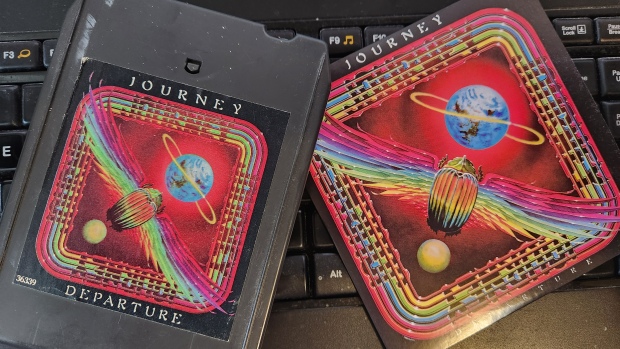
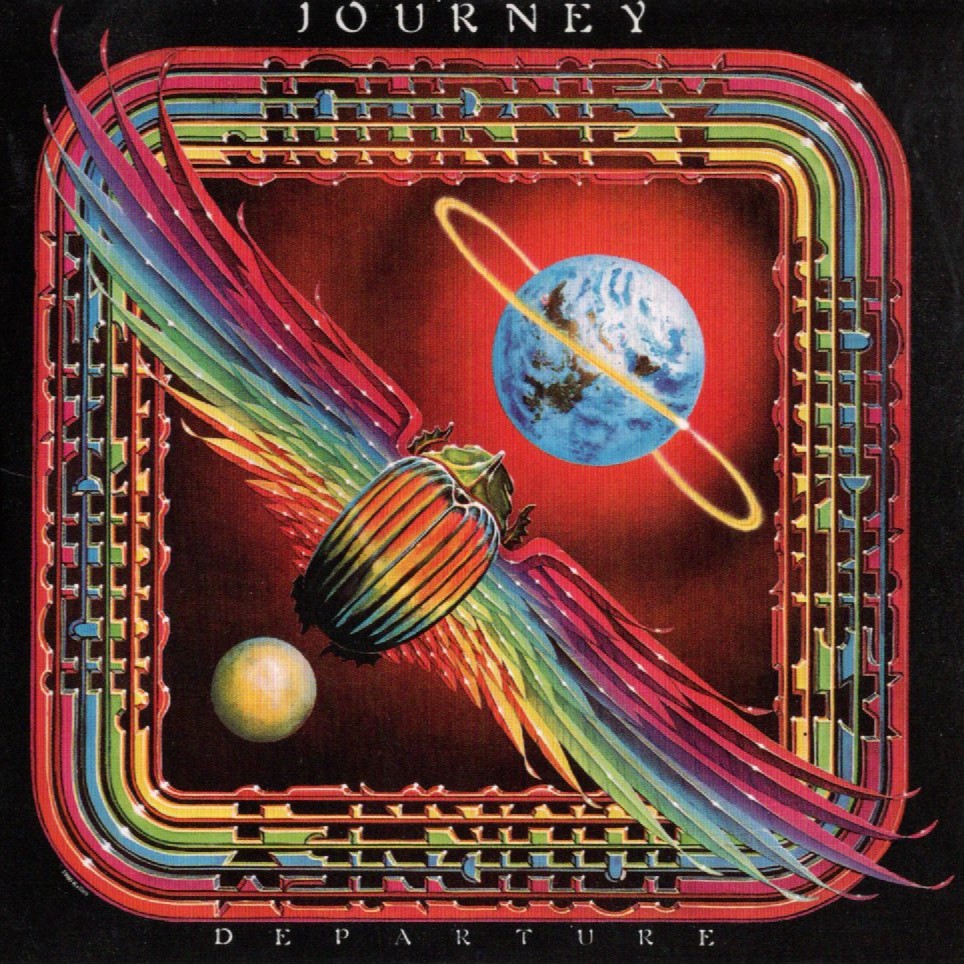
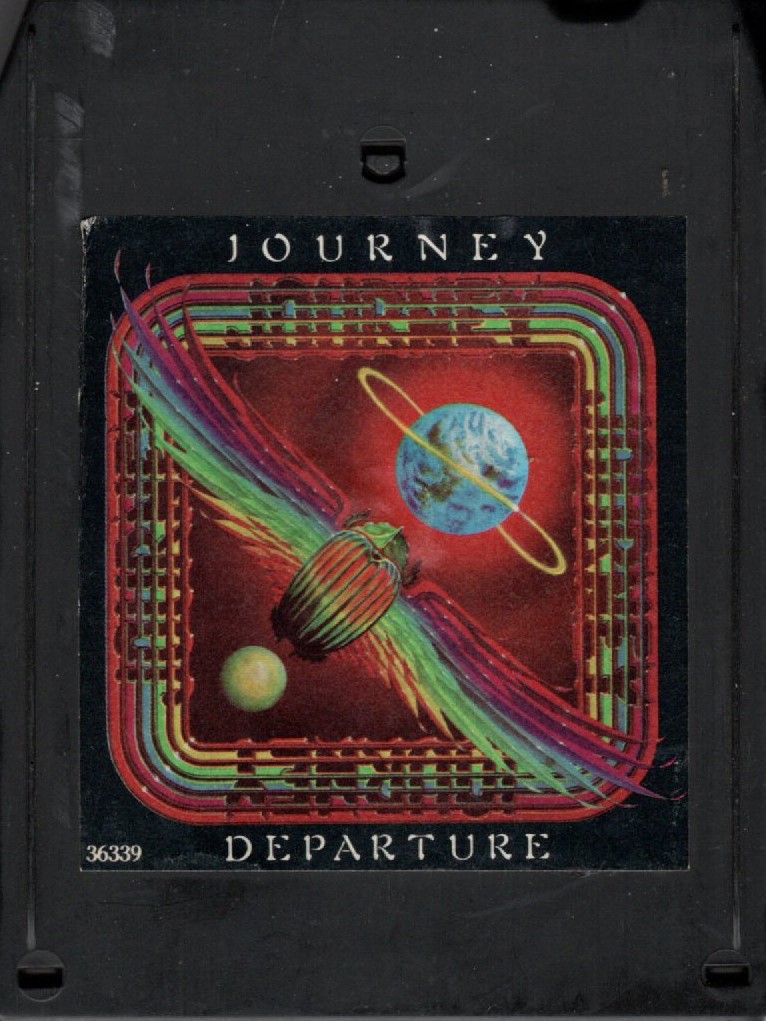
JOURNEY – Departure (1980 CBS 8-track, Remastered 2010 Sony CD)
CD from the set 3 Original Album Classics
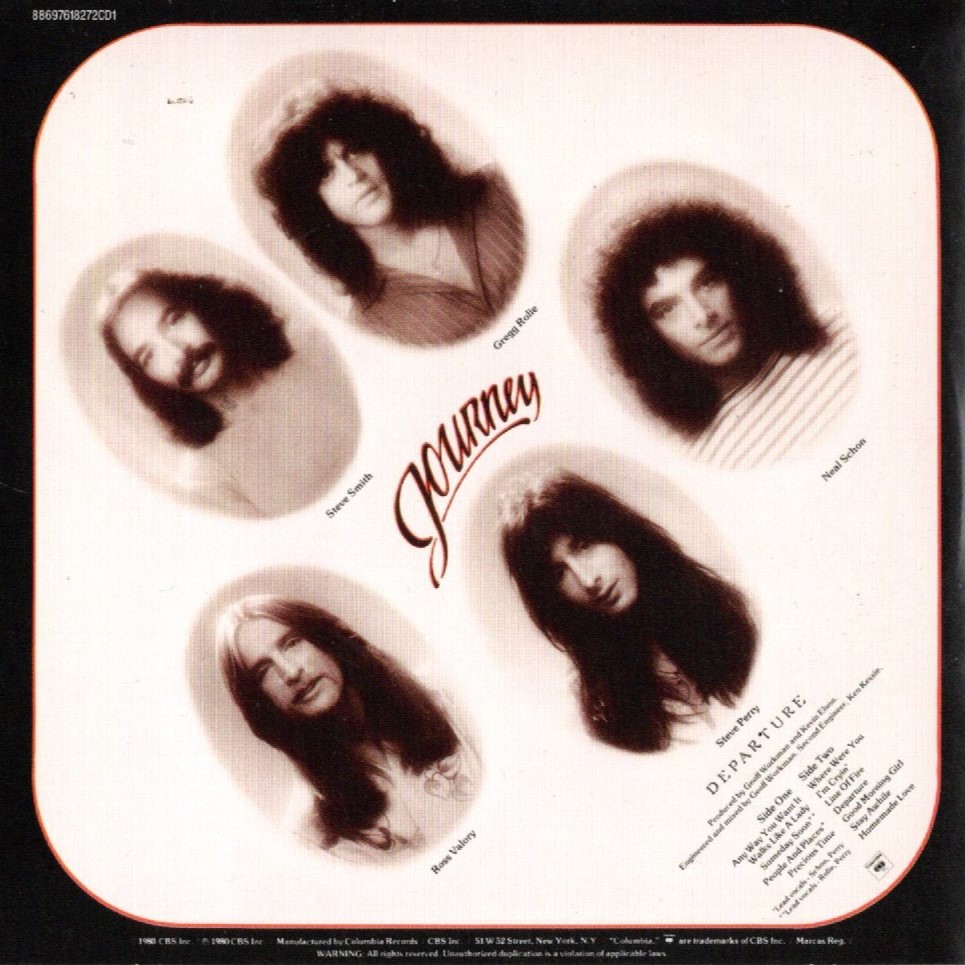
Changes were afoot in Journey, and alluded to on Departure. Aside from the Japan-only soundtrack Dream, After Dream, this was the last stand for Gregg Rolie. While he would also appear one more time on the Captured live album, he was not there for the new studio track included. For all intents and purposes, Departure is his “last album”, to use an inaccurate but easy term. For the man who once was Journey’s only lead singer, Departure only has one of Rolie’s lead vocals, and only two co-writes. (In the discography, Departure directly followed 1979’s compilation of early material, In the Beginning, featuring early material and a large number of Rolie vocals.)
With Steve Perry leading the charge, Departure commences with the party anthem “Any Way You Want It”. Those who don’t know it, know it. It has been featured in the Simpsons, twice! A rare honour, and mega-exposure, for good reason. Perry’s impeccably arranged chorus is irresistible. Rolie’s organ is the perfect accompaniment to keep in the realm of classic rock and roll. Of course Schon’s solo is also tasty as heck, but this song is know for its party-hardy chorus. For those who like to dig deeper, Ross Valory’s pulsing bassline goes underappreciated today, and Steve Smith’s smooth cymbal work is often taken for granted.
A surprising twist is taken on track two, the laid back blues pulse of “Walk Like A Lady”. Sounds like Smith is playing with brushes, and Neal really plays it classy. Then, a jab of organ and the players are off to indulge themselves. “Oooh yeah!” shouts Perry, as if enjoying the jamming himself. Soulful harmony vocals by the band really take this out on an authentic note.
Third song, third musical direction: power balladeering! Rolie sings a duet with Perry backing him on “Someday Soon”, a melancholy but punchy ballad. Though it was not a single, perhaps it should have been. There’s a cool, unique angelic vocal section near the end that nicely complements Steve Smith’s drum fills.
“People and Places” is like an exercise in creative vocal arrangements, if not showing off. Neal Schon sings lead with Steve Perry on this complex track. It’s more like the Dream, After Dream material than a lot of Departure. If only the modern Journey were unafraid to create more unique music like this. It still has room for a powerful melody and some warming cascades of guitar. This song moves directly into “Precious Time”, which has a vibe like the still-in-the-future track “Liberty”. Lyrically it foreshadows the “Line of Fire” on side two, and also has Rolie on harmonica. It turns into a more typical Journey rocker by the midpoint. Lots of tasty Schon guitars to be savoured here.
Unusually for an album of 1980, Departure had 12 tracks: five on the first side, and seven on the second. This is where we’d flip.
The big concert rocker “Where Were You” kicks off the back end of Departure. This one pounds the pavement with beats, riffs and boppin’ piano. It too could have been a single, though it did open their concerts on tour. Then, a completely different mood drops: “I’m Cryin'” hits like a cold wave of grief, though not without its musical thrills. Soon it’s over and the rockin’ “Line Of Fire” brings the party back. There’s no better way to describe it than a fast, good time rock and roll song. “So don’t go sayin’ Steve is a liar!” warns Perry to some young lady who done him wrong. “Bye bye bye Susie, so long girl!” (He sure got over what was bothering him on “I’m Cryin'” pretty fast.) Take note of Schon’s technical solo work here.
“Departure” / “Good Morning Girl” is softly progressive, with strings and light guitar, and little else. This is over quickly, and then it’s the ballad “Stay Awile”, one of the sweetest songs Steve Perry or Journey have ever done. Once again, listen to the bass and drums for a different perspective. Perhaps the only thing better than Perry’s lead vocals are when he does it live.
Fortunately, Journey had the wisdom to end the album on a rocker: “Homemade Love”. Some of Perry’s worst words accompany some of his most acrobatic singing. Still, at least it’s a good jam to go out on, with some fretboard burning fingerwork by Neal.
Interesting, the 8-track tape might have what would be called a bonus track here: a reprise of “Line of Fire”. It’s here mostly for timing reasons; there are no songs split between tracks anywhere on this album. So, 8-track buyers got an uninterrupted listen, plus a reprise of “Line of Fire”. Information is scarce, but it would be fun to hear the tape this way,
On remastered CD, we got some slightly more interesting bonus tracks than 8-track offered. “Natural Thing” is a bluesy B-side, which was later released as the B-side to “Don’t Stop Believin'”. Chronologically though, it is from this era and is as strong as any similar material on the album. Funny how some tracks don’t make the cut when others do. If you were told this was a standalone single, you wouldn’t have a reason to doubt it. The CD also includes “Little Girl” from Dream, After Dream which is a difficult album to find and Rolie’s studio farewell. It is a string-laden power ballad, very progressive, and far darker than anything on Departure.
Departure features an unusually rougher sound than other Journey albums. The production seems unpolished despite the complexities of some tracks, with the vocals sometimes occupying a strange space that’s not quite in front of the music. Still, a classic album is a classic album and there are so few flaws with Departure that it’s easy to dismiss them all.
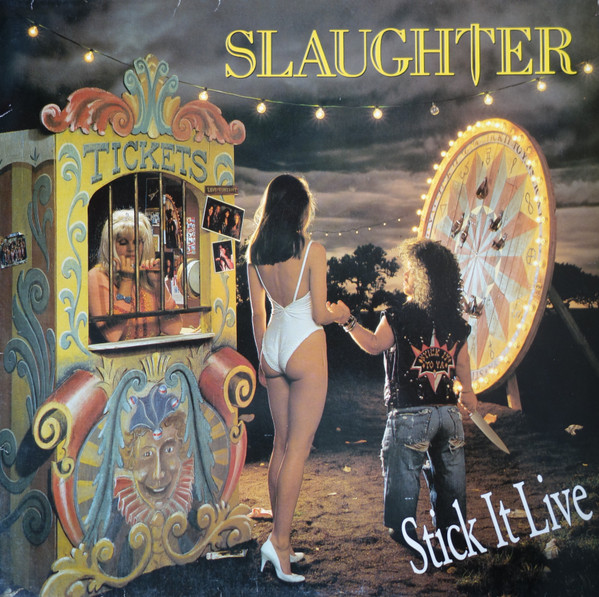
Slaughter were hot on the heels of their self-titled debut with a quickie live EP. They were on the road so long, they still touring while the EP came and went on the front racks of the record stores! The band were on fire in 1990 and 91, and Stick It Live was necessary to satisfy demand for more Slaughter. However…
I absolutely hate listening to a live album when you can hear two or three tracks simultaneously of the lead singer. Here, you can hear several Mark Slaughters singing together at once. Come on, Slaughter. We’re not stupid. And the thing is, from seeing them live opening for Cinderella, I know they don’t need the overdubs. The review that I wrote for my school paper at the time said, “Mark Slaughter has proved that his high-pitched wail is not studio trickery.” Well, you can’t tell that by this live EP!
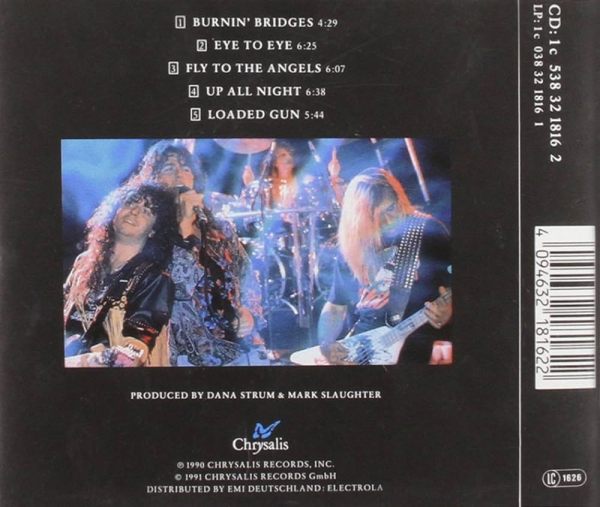
Take the opening track, “Burning Bridges”. At several points you can hear several Marks singing at once. Why was this done? Did the live recordings suck? Was it because the record company forced it? Or because it was the fashion at the time? I dunno. A live album (or EP) is an historical document, so too many bands feel they have to make them “perfect”. When in reality, perfect should have been as-is. Documentary style. My favourite live albums are often bootleg quality.
“Eye To Eye” follows “Burning Bridges”, opening with some stupid Crue-esque spoken word bit about an “ancient book of wisdom” and other unrelated nonsense. It’s a shame because “Eye To Eye” was one of their best songs. Once the song gets going, it’s fine, but you can still hear two or three Marks on the pre-chorus. From there it’s into rote versions of the two big singles, “Fly to the Angels” and “Up All Night”. The set ends with a high octane “Loaded Gun”, their album closer as well. One issue to the overall listening experience is that the songs fade in and out, which may or may not be to your taste.
One fascinating note: Mark goes out of his way to tell the audience that “Fly to the Angels” was not about suicide because “it sucks”! Judas Priest were fighting for the musical lives in their infamous “suicide trial”, and Ozzy Osbourne was dealing with similar accusations of promoting suicide to the young and vulnerable. An interesting artefact of 1990-91.
2/5 stars. A pretty fine live set otherwise spoiled by the dreaded studio trickery.

 Part Six-point-five of a series on KICK AXE!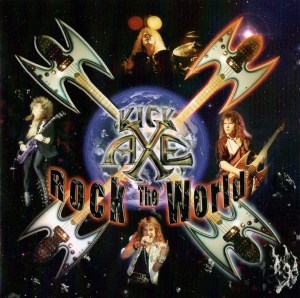












You must be logged in to post a comment.