hard rock

REVIEW: Queensryche – Operation: Mindcrime II (2006)

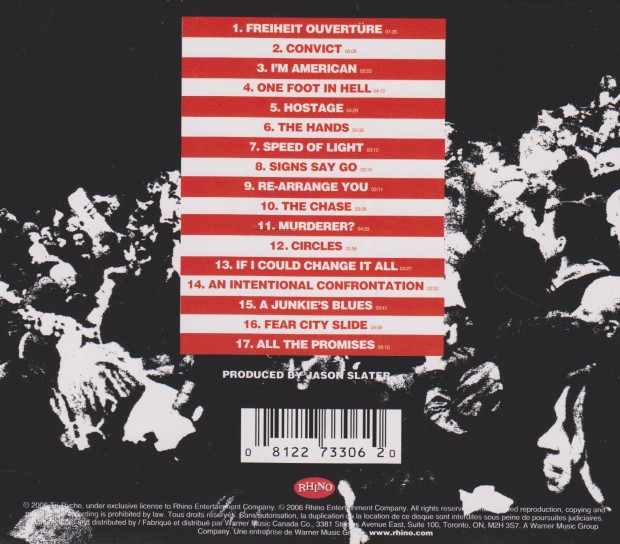
QUEENSRYCHE – Operation: Mindcrime II (2006 Rhino)

10 years ago, when this project finally saw the light of day, a lot of fans were expecting it to be 1988 all over again. However, there were many reasons why they shouldn’t have.

1. Longtime guitarist/songwriter Chris DeGarmo, such an integral part of the original Mindcrime, had been out of the band for quite some time.
2. Geoff Tate’s voice didn’t have that high-note power it once had.
3. The band never intended to pretend it was still 1988. This album is a continuation, 18 years later, and as such the music has changed somewhat as well. Β The albums are meant to complement each other, not duplicate each other.

Scan_20160510 (2)The story picks up with Nikki, the anti-hero from the original Mindcrime, finally being released from prison, 18 years after the events of the first album. He begins to piece together his memories of what happened. He decides to pay Dr. X a visit (“X marks the spot”, goes the lyric), who is deliciously played by the late Ronnie James Dio. Β For die-hard Dio followers, this wasΒ a real treat. Dio sings as if in a stage production, which I’ve never heard him do before. Pamela Moore reprises her role of Sister Mary, playing a larger role and appearing on more songs. She’s a great complement to Geoff Tate, who clearly revels in the chance to do something dramatic like this.

New second guitar player Mike Stone (ex-Criss) gels very nicely with Michael Wilton, playing dual guitar leads that Queensryche of old would have been proud of. At the same time, modern technology has creeped into the production in the form of sequencers and samples, to remind us that this was 2006. Β Still, Eddie Jackson’s bass had never been recorded this well before; he should be very proud of his rumble. Scott Rockenfield’s back to playing some serious metallic drumming as well, leaving behind some of his tribal influences forΒ the moment.

So, the actual sound of Mindcrime II is amazing. The songs however are not up to the very high standards that Mindcrime I set. There is no “I Don’t Believe In Love” or “Eyes Of A Stranger”, although some songs like “The Hands” come pretty close, with an amazing metallic riff and great chorus. (Did anyone else notice a few bars of music from “I Don’t Believe In Love” within “The Hands”? Listen again.) “I’m American” is lyrically fantastic, and angrier than anything Queensryche has done since Q2K. “Chase” is the one featuring Dio, and the one I keep coming back to.

The thing about Queensryche albums is, they do tend to get better with time. Β Maybe they were always slightly ahead of the curve, or more likely they just take a few listens to absorb. Β It’s been a decade now, and few of the Mindcrime II songs remain lodged in the my brain. Β Meanwhile, I could hum any song from the first one. Β In particular, the second side of Mindcrime II really takes a drop. Β Tracks like “Fear City Slide” do not have the impact of “I Don’t Believe in Love”, and the closer “All the Promises” fails to deliver. Β It’s a concept album after all, and the last song is like the last scene in a movie. Β It should be memorable.

Will Mindcrime IIΒ ever become classic like the original? Doubtful. As soon as you name something with a “II” behind it, you’re painting yourself into a corner, but Queensryche have done about as good a job as the fansΒ could have expected. Β It seems many fans have warmed up to it over the years, though it certainly cannot be considered equal with the original.

3/5 stars
Scan_20160510 (4)

REVIEW: Blue Murder – Blue Murder (1989)

BLUE MURDER – Blue Murder (1989 Geffen)

For some, expectations were high.

On paper, it was genius. Β  Teaming up the legendary drummer Carmine Appice with anyone will turn heads, but John Sykes, the ex-Thin Lizzy and Whitesnake guitar genius? Β Sign us up. Β Add in ex-Black Sabbath singer Ray Gillen, and the Firm’s Tony Franklin on bass, and that right there is an interesting combo. Β Two words were buzzing around the camp, and they were “blues” and “jams”. Β When the band did start jamming the blues, they realized that Ray Gillen didn’t have much to do during the long instrumental breaks they were producing. Β The decision was made to cut Ray and trim the band down to a classic power trio, with Sykes singing lead. Β The trio format was fairly unique among rock bands in the late 80’s. Β (Ray hooked up with another new blues-rock band, Jake E. Lee’s Badlands.)

Adding to the hype machine behind the new christened Blue Murder was the tapping of up and coming producer Bob Rock. Β Coming off of some hit albums by Kingdom Come and The Cult, it was assumed Rock would do the same for Blue Murder. Β They hiked up to Little Mountain Sound in Vancouver and recorded the album, dedicating it to Phil Lynott.

Unfortunately it was pretty clear after a few listens that despite the hype and big names, Blue Murder was not the supergroup debut that it should have been. Β Indeed, the lineup expired after one record.

Sykes’ singing was not the issue. Β His vocals on songs such as “Riot” and “Ptolemy” are more than adequate. Β Power and range were not an issue for Sykes. Β Perhaps his unique guitar stylings were too associated with the mega-selling Whitesnake 1987, because the sonic connections are obvious. Β Too much ‘Snake, not enough Lizzy. Β The songs are not all bad either, though many could use some minutes trimmed from them. Β At nine songs and 52 minutes, Blue Murder does have the instrumental chills that Sykes wanted to get across, but at the cost ofΒ diluting the impact with meandering rock songs. Β Other issues must fall at the feet of Bob Rock. Β Though Blue Murder earned the producer a nomination at the Juno awards in 1990, the muddy sound is very far indeed from what Rock can do. Β “Sex Child” is a perfect example of this. Rock strove to give Carmine a big drum sound, but there are also excessive keyboards and layers of vocalsΒ all occupying the same sonic space. This robs it of the groove. Β It’s a chore to finish the whole album in a sitting, due to some of these problems.

There are three album highlights that are possibly worth the expense to rock historians. Β They are the singles “Valley of the Kings” and “Jelly Roll”, and the epic “Ptolemy”. Β At 7:50, “Valley of the Kings” had to be severely editedΒ down for a single/video. It has all the progressive rock qualities that you know these guys are capable of, and who isn’t a sucker for lyrics about pharoahs and pyramids? Must credit must also be given to Tony Franklin, who makes it sound as if the fretless bass is easy to play! You don’t hear enough fretless in hard rock, and Franklin is one of the world’s very best. Period.

Interestingly, “Valley of the Kings” was co-written by then-Black Sabbath singer Tony Martin. You can absolutely hear parallels to Sabbath’s Headless Cross released the same year – an album that also had some fretless bass on it thanks to Lawrence Cottle!

“Jelly Roll” was a music video, fitting the slot for some good time summer acoustic rock. Β Instead of going ballad, Blue Murder went to the bayou. Β The tricky slide licks recall Whitesnake, but unfortunately towards the end, the song sinks into typical ballad territory. Β It sounds like two songs melded together, but I like the first part best.

The final keeper is the progressive epic “Ptolemy”. Β Unfortunately the lyrics don’t have much to do with the actual mathematician and astronomer who lived almost 2000 years ago. Β Instead the song is about tomb robbing;Β unrelated toΒ Ptolemy of Alexandria. Β This is a shame since they could have written about Ptolemy’s musical studies (Harmonics), or his influence on the concept of the universe of a series of spheres that create music. Β Fortunately the musical qualities of the song enable us to overlook the words.

There areΒ also-rans worth checking out: Β particularly a track called “Billy” which is the most Thin Lizzy of all the tunes. Β You could imagine, if Phil had lived, that he could have recorded “Billy” for a mid-80’s Thin Lizzy album. Β Unfortunately most of the material resides in Whitesnake territory, especially the carbon-copy ballad “Out of Love”, andΒ the closer “Black-Hearted Woman” which recycles Whitesnake riffs.

Too bad. Β Loads of potential, but blown in the delivery.

2.5/5 stars

Scan_20160501 (2)

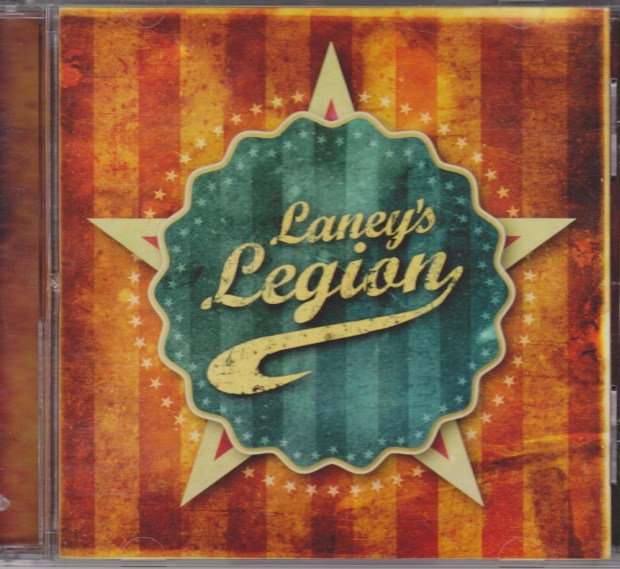
REVIEW: Laney’s Legion – Laney’s Legion (2014)

Scan_20160430LANEY’S LEGION – Laney’s Legion (2014 Ferris Records)

Sweden’s Chris Laney has some serious vocal and guitar chops, lemme tell ya. Β This debut CD by his band Laney’s Legion boastsΒ heavy, world-class tunage marked with powerful lungs and guitar thrills! Β You want high octane? Β “On and On” will hit the spot. Β With slick production, “On and On” is a relentless intro, full speed ahead, sails to the wind, crack open a beer and let’s fucking do this.

“Taste of Your Tongue” goes a bit Nickelback on the verses, but they’re forgotten when you hit the vintage 80’s rock chorus, whichΒ rescuesΒ the song from residing in Chad Kroeger’s backyard for too long. Β Similarly, “Poptastic”, a tribute to rockin’ out with your Kiss albums, is all about the chorus hooks. Β It has an 80’s snarl like good Poison-Crue-Jovi. Β “We’re still good friends of metal, Priest and Helloween”, sings Laney. Β “I’m talkin’ bout Van Halen – 1984!” Β Hey man, I get that. Β His heart is in the right place, although I don’t refer to Van Halen as “poptastic” myself, I get what he means. Β The opening guitars are reminiscent of Van Hagar.

It’s all good though, because “Beneath the Surface” has a heavier groove and takes you to a more bangin’ headspace. Β The guitar solo, presumably by Rob Marcello, is pure nirvana. Β Since this album is a celebration of an era when an album was a collection of hard rockers and power ballads, “Bleed Within” is the expected softie. Β Like a perfect post-HysteriaΒ Def Leppard ballad, “Bleed Within” combines the layers of backing vocals with the acoustic strumming to meld into sweet candy perfection.

Now, speaking of backing vocals, we should really take a closer look at the credits. Β “Let’s Get it On”, a heavy Ratt-like number, boasts some interesting names. Β Tomas Γ…kvik, Mathias Blom, and…Jompa Wilmenius? Β “Let’s Get it On” is a stellar track, loads of guitars and groove…but those backing vocals! Β That’s the key! Β Jompa is the secret weapon of hard rock gang vocals. Β Now, I will say that “Let’s Get it On” reminds me of a couple songs…can’t place them…but some of these hooks are familiar from the days of old. Β “Hollow” continues with the hard rock shred, with hint of Foo Fighters (think choppy, like “Everlong” in the guitars).

“Lady Luck” is the only song I didn’t connect with. Β Too modern, perhaps? Β It’s not a bad song, but similar to things that in Canada are quite overplayed on the radio. Β (That’s not Laney’s fault; that’s more Cancon‘s fault!) Β “Assassin of Our Love” returns to more comfortable territory, a solid power ballady track with hints of early Bon Jovi circa “Runaway”. Β Laney then proclaims “No One Can Stop Us”, rocking out Dokken style and advising “You’ve gotta get your shit together”! Β Again, special attention must be played to the classy and impressive solo work. Β “Legion” finishes the album by going a bit more metal. Β Savatage could have performed Legion, although the production clearly differentiates it from Savatage. Β We know where their heads are at by the credits though: “Thanks to Robert John ‘Mutt’ Lange for the inspiration.”

Laney’s Legion is an impressive CD. Β It is impeccably produced, and arranged to a “T”. Β It occupies a curious place in the space-time continuum. Β If hard rock never fell to grunge in 1991-1992, perhaps albums like this would be commonplace today. Β It’s rare to hear such focus on the hard rock-isms that were popular long ago, but with today’s recording tech. Β It’s a cool mesh, but the bottom line is, this is a better album than most of the Bon Jovi or Def Leppards in the last couple decades.

4.5/5 stars

But 10/5 stars on the backing vocals*
* Much gratitude to Jompa for sending me this CD. Β He’s a great internet friend, and he though I’d like it. Β He was right!

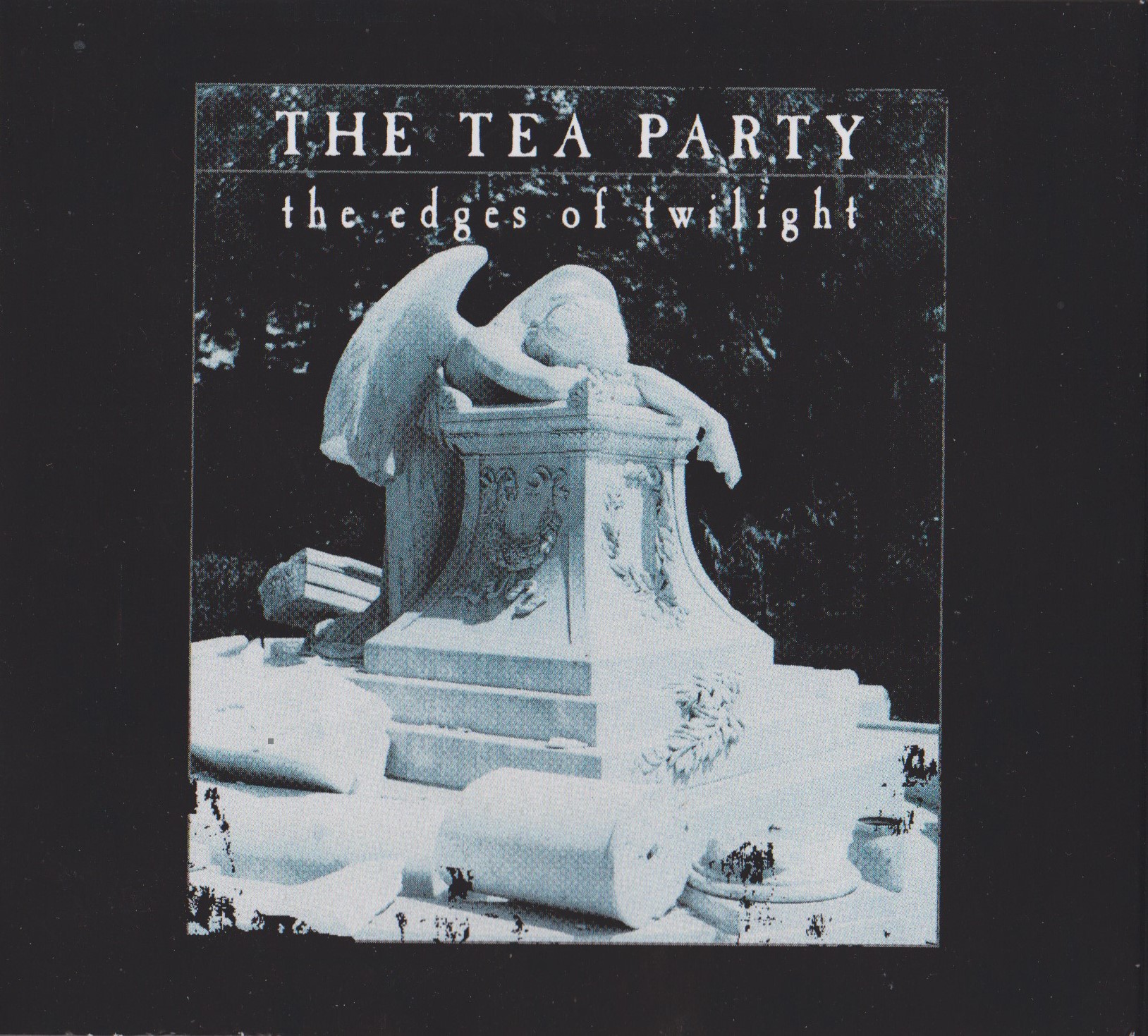
REVIEW: The Tea Party – The Edges of Twilight (20th anniversary deluxe edition)


Scan_20160409THE TEA PARTY –Β  The Edges of Twilight (20th anniversary Universal deluxe edition, originally 1995)

The Tea Party have long been slagged as derivative. Β “They sound too much like the Doors!” screams one corner. Β “Zeppelin copy-cats!” cries another. Β The first complaint isn’tΒ true; singer Jeff Martin has a Morrison-like vibe but the Tea Party sound nothing at all like the Doors. Β The second carries some weight to it, especially when it’s 1995’s The Edges of Twilight we’re talking about.

Due to an early connection with folk singer Roy Harper, a cover of “Train Kept a-Rolling”, and exotic world music influences, the Tea Party have long been compared to the mighty Led Zeppelin. Β This was cranked up a notch on The Edges of Twilight. Β From dirty electric blues, folksy English-sounding ditties, and and wealth of stringed instruments from all around the world, the Tea Party just went for it. Β Though many praise the band’s prior album Splendor SolisΒ (their major label debut) as a high water mark, Twilight exceeds it in almost every way. Β I seem to remember reading that the album had something like 50 different instruments on it. Β The sheer ambition and skill involved in pulling off an album this complex has to be admired.

That all sounds very heady and sophisticated, but the first single and opening track “Fire in the Head” rocks plenty hard. Β A perfect 50/50 mix of the exotic and heavy sides of the Tea Party, “Fire in the Head” is savoury. Β The Zeppelin comparisons are unavoidable, but because Jeff Martin is not that kind of singer, it has a darker more ominous ambience. Β “The Bazaar” thenΒ takes it up a notch and into North Africa. Β Still heavy, but with the world music more prominent, “The Bazaar” too was a single and a hit. Β Let’s face it, the last major band to combine Gibson Les Pauls and world music in this way was in fact Led Zeppelin. Β Is that a reason to criticize the Tea Party? Β The answer is no, because they did not choose to do something easy. Β They took the hard road with The Edges of Twilight.

There are many excellent songs on the album, including another single “Sister Awake”, one of the most complex tracks. Β There are heavy electric blues tracks like “Turn the Lamp Down Low” and “Drawing Down the Moon”, and fully acoustic songs like “Shadows on the Mountainside”. Β The best tracks are the most pompous. Β Similar to the singles from the CD, tracks such as “Walk With Me” and “Coming Home” are big and bold with loud choruses. Β Though not a single, “Walk With Me” is a fan favourite and considered one of their must-haves.

But that’s not all! Β After several minutes of silence (oh, the 1990’s!) there is a hidden unlisted bonus track! Β “The Edges of Twilight” is a poem written and spoken by Roy Harper backed with music by Jeff Martin. Β Having a guy like Harper in the band’s extended family lent them credibility that other bands could not hope for. Β And then there’s even another hidden snip of music. Β After another silence is a few seconds of a rehearsal of the song “Correspondences”.

Harper also appears on the bonus CD, on a song called “Time” which originally appeared on the 1996 Alhambra EP. Β This is a full-on 70 minute Tea Party track with Roy Harper singing instead of Jeff Martin. Β Ballady and somber, and then explosively electric, “Time” is a triumph that deserves a second look. Β (Other tracks lifted from that EP are acoustic versions of “Inanna” and “Silence”.) Β The bonus disc is otherwise loaded with demos, acoustic versions and alternate versions, and live takes. Β With the exception of “Time”, this is all purely supplemental stuff and mostly interesting to fans of the band. Β TheΒ demo versions are remarkable for how near-complete they are. Β The band did not need to tinker much with arrangements in the studio.

There are ample liner notes and photos. Β Co-producer Ed Stasium praises the CD and says it is one of the top five he has ever been involved in. Β Serious praise, but the album deserves it. Β The Tea Party took a detour after this into the world of electronica, with 1997’s Transmission. Β 20 years later, The Edges of Twilight remains the most impressive Tea Party album and the most heady mix of world music and rock and roll.

4.5/5 stars

REVIEW: Ace Frehley – Origins Vol. 1 (2016)


Interview by Mitch Lafon

NEW RELEASE

Scan_20160424 (4)

ACE FREHLEY – Origins Vol. 1 (2016 e One)

FACT #1: Β Covers albums rarely have enough fuel in the tank to get an engine running.

FACT #2: Β Ace Frehley has never done a covers album before.

The main thing is that Ace Frehley is still alive and making music. Β He’s never been the most prolific writer in Kiss, hence this diverse assortment of covers. Β In the pot are songs from bands that influenced Ace, a fewΒ Kiss covers (including one that Ace never played on originally), and a guest shot by Paul Stanley (among others). Β Sometimes it’s hard to feign interest in a covers album, but these factors make Ace’s enticing. Β Not to mention, it’s a clean and sober Ace playing these songs.

Ace and drummer Scot CooganΒ play everything on Cream’s “White Room”, with Coogan singing the bridges. Β This guitar-heavy version takes what Clapton did, and “Aces”Β it up. Β It’s guitar solo nirvana, though the Stones’ “Street Fighting Man” takes a few minutes to get to that same point. Β Ace has always done well with Stones covers, and it seems he can identify with songs like “Street Fighting Man” due to his rough past. Β It’s a fun excursion but the solos are the draw. Β Imagine the Stones but with the bright fun Gibson stylings of Ace Frehley. Β Hendrix’s “Spanish Castle Magic” is a natural choice since Ace’s speak-sing style always seemed influenced by Jimi. Β Purists may scoff, but Ace’s take on “Spanish Castle Magic” is pretty enjoyable and guitar-heavy (John 5 on guest guitars).

The online hype focused on Paul Stanley’s return to Ace’s orbit. Β While Ace plays all the guitars, Paul ably takes all the vocals on Free’s “Fire and Water”. Β As Kiss fans are well aware, Paul has suffered from some serious vocal issues in the last few years. Β Live, Paul can be a bit of a mess. Β In the studio, he makes it work. Β Paul lacks the power he had back in the Kiss days, but his singing here is great considering. Β It’s over far too quickly. Β Paul singing Rodgers is quite a moment.

Ace is well suited to Thin Lizzy, a band you don’t think of as influential to Kiss since they were contemporaries more or less. Β “Emerald” has gone down in history of one of Lizzy’s heaviest favourites. Β Predictably, the highlight of “Emerald”Β is the solo section. Β Lizzy were a two-guitar band,Β so Ace got Slash to come in and solo back and forth, answering each other like Gorham and Robertson. Β The two go toe-to-toe in a blur of Gibson Les Pauls.

Led Zeppelin had a serious impact on young Kiss, and Ace’s covering of “Bring it on Home” is inspired and transformational. Β Lord knows what guitar effects Ace has up his sleeve, but he nails this Zep classic without any missteps. Β Ace sings the bluesy intro, but drummer Scot Coogan ably handles the higher main vocal.

Scan_20160424 (3)One of the most notorious and difficult songs to cover without sounding like an asshole is “Wild Thing”, 51 years old and still inspiring cover versions. Β Lita Ford makes a surprise appearance on both lead guitar and vocals, and she sounds amazing on both counts. Β There is just no good reason to cover “Wild Thing”, because the Troggs did that definitively in 1966 and that’s that. Β More significant is Frehley’s update to his own “Parasite”, a song originally from 1974’s Hotter Than Hell. Β Gene Simmons sang it originally, though Ace wrote it. Β  Speaking of “definitive”, it’s very tempting to think of this as Ace’s conclusive statement on “Parasite”. Β After all,Β Hotter Than Hell was sonically pretty disappointing. Β Plus Ace had 40+ years to grow as a guitarist since then, and believe it — Ace blows the doors off “Parasite”. Β This is a song worth buying the CD for.

Unfortunately “Parasite” is book-ended by two songs that didn’t need remakes, the first being “Wild Thing” and the second “Magic Carpet Ride”. Β Ace does inject it with his trademark fun style, but it’s all very unnecessary. Β Brilliant playing though.

A second Kiss update is “Cold Gin”, featuring Mike McCready of Pearl Jam. Β Like “Parasite”, Gene Simmons sang the original, but “Cold Gin” was one of the first stone cold classic Ace-written Kiss tunes. Β Ace has every right to try and reclaim it as his, a difficult task since the Kiss Alive! version is the only one you will ever truly need. Β Now with Ace doing the vocalsΒ and more soloing added, this version can perhaps be considered the second most important take — the one with Ace singing.

A pretty standard Kinks cover (“Til the End of the Day”) works fine. Β You can trust Ace to know how to treat the Kinks. Β The final and possibly biggest surprise is the final Kiss cover. Β The odd thing about it is that Ace never played on the original version of “Rock and Roll Hell”. Β This tune came from the batch that Kiss wrote with Bryan Adams and Jim Vallance in the early 80’s. Β It was recorded for 1982’s Creatures of the Night, the album that Ace didn’t participate in, before leaving the band. Β He appeared on the cover, he appeared in the videos, and fans didn’t know any differently, but Ace didn’t play or write anything on Creatures. Β In fact Ace never heard “Rock and Roll Hell” until recently. Β When coming up for ideas of songs to cover for Origins Vol. 1, Ace’s label rep Ken Gulick burned Ace a CD of tracks to listen to for consideration. Β (The CD contained two Who songs, two Cheap Trick songs, and mind-blowingly, two by Rush.)* Β Because Gulick felt that Ace had some unfinished business with Creatures of the Night, he also included two songs from Creatures on the CD. Β The ballad “I Still Love You” was the other track. Β Frehley apparently went bonkers for the Simmons-sung “Rock and Roll Hell”, and now we finally get to hear what might have been if Ace hadn’t left Kiss when he did. Β Perhaps if Ace was in good enough shape, Simmons could have given him “Rock and Roll Hell”Β to sing, and it would have sounded something like this. Β Matt Starr’s drums are given a similar echoey treatment to replicate Eric Carr’s sound from the original LP.

Does this close the book for Ace making amends with his Kiss past? Β I sure hope note. Β Vol. 1 implies a Vol. 2. Β If Ace were to continue covering Kiss tunes he never had the chance to sing in the studio, that leaves “Strange Ways”, “Comin’ Home” and possibly more that he could consider updating with his stamp. Β Although Origins has some “blah” moments as most covers albums do, among the highlights are undoubtedly the Kiss tracks. Β They push the album out from being a mere curiosity, to a must-have for any Kiss fan.**

4/5 stars

Scan_20160424 (2)

* Source – Ultimate Classic Rock

** Made a double must-have by the low low price. Β I paid $12.88 at Wally World (plus I scored a “holy shit, jackpot” load of rare Star Wars figures). Β HMV were charging $15.99, and had him filed under “Ace Freshley“. Β HMV – the music store – has Ace’s name spelled wrong. Β Yet one more strike against the once-mighty HMV chain! Β See below for the evidence.
For Jon Wilmenius’ excellent review of this album,Β click here. Β 

GUEST CONCERT REVIEW: The Sword 04/12/2016 by UNCLE MEAT

Part two of a two part series. Part one: High Country album review

GUEST CONCERT REVIEW by UNCLE MEAT

THE SWORDTHE SWORD – London Music Hall, London Ontario 04/12/2016

I don’t think we ever found out the name of the first band that played on this night.Β  They had some great riffy moments, nothing too spectacular but a good way to warm up the crowd.Β  Seconds after they finished their set, Tom turned to me and said, Β β€œNever too old to enjoy a Rock Show.” Β A month earlier we had enjoyed another Rock Show, catching ZZ (that little band from Texas) Top when they rode into town. Ironically enough, tonight was all about seeing The Sword, another band of Texans who actually cite ZZ as a major influence. Six degrees of integrity, or something like that. Thus begins yet another musical journey, and yes Thomas is right.Β  In our 40’s and still lovin’ the Rock Show.

I had the pleasure of seeing The Sword once before as openers for Kyuss Lives: Relentless hard-rock riffing personified. Β We realized that this would be quite the different experience.Β  Not only because they were playing a headlining set, but more importantly, we were seeing a completely different band than they were just a few years ago.Β  Debuting in 2006, The Sword released four great metal albums.Β  Albums that I definitely enjoyed, but apart from a few exceptional tracks, to me they were just another metal band.Β  While I can still appreciate a good thrashing once in a red Satanic moon, the genre as a whole has kind of taken a nostalgic back seat for me.Β  Before their latest album High Country was released, I didn’t LOVE The Sword. Β When I read comments from The Sword that basically stated that this new album would reflect more of who they really are, and that if they made another similar β€œmetal” album it wouldn’t be authentic, it instantly intrigued me.Β  From the first listen I connected with the polarizing High Country in a serious way.Β  So much so that I actually over-played it and had to put it away for a bit.Β  However β€œmetal” fans had a different take on it.Β  Almost every review I read was negative and most of them could have been summed up with three words: “not heavy enough”.Β  That’s OK,Β cement-heads.Β  They didn’t make this album for you.Β  They made this album for themselves, and apparently me.Β  Several songs on High Country tap into the 70’s soft-rock genre (Ambrosia/Little River Band/Bee Gees) that I am a huge sucker for.Β  Thank you The Sword.

Since this is the home of Record Store Tales, I should include this.Β  While we were in London we stopped by the Record Store Tom used to own in London.Β  I don’t think the name of this particular chain can be mentioned around these parts, but I swear it doesn’t rhyme with “Pete Rose Con”.Β  Anyways, I witnessed first-hand that while record stores are a dying breed, there are still gems to be mined out there.Β  Tom’s face lights up as he finds a new copy of a Spiritual Beggars CD being sold new, at a used record store.Β  Irony ensues as we find out that the store manager that ordered in that particular CD was a guy Tom trained 20 years ago.Β  Sowing the seeds of Rock. Β But I digress.

Second opening band Royal Thunder took the stage and began doing a…umm…sound check?Β  Considering there was a fair crowd in the London Music Theater at this point, this was something I haven’t seen very often, if at all.Β  After their first song which understandably sounded pretty shitty, the female lead singer goes on a bit of a tirade about problems at the border and that Canadian cops are assholes.Β  Aha!Β  Live sound check explained.Β  Royal Thunder had some great groove moments, but too many scattered riffs going nowhere. Β And too much β€œplinkilly plinkilly” with the guitars going on; it overall needed some more beef to it.Β  Female lead singer/bass player certainly had some good pipes on her, but and I quote from Tom, β€œI liked their sound check better than most of their set.”  To me they kinda sounded asΒ if Bonnie Tyler developedΒ an affinity for Satan and became the singer of Concrete Blonde.Β  I also enjoyed that the drummer looked like our friend Tyler GenerouxΒ or 1971 Ian Paice, and he played like 1971 Bill Ward.Β  In all reality their whole set acted as a glorified sound check for The Sword anyways.Β  Step aside…this is High Country.

The lights go down and before The Sword come out, Christopher Cross’s “Ride Like the Wind” blares through the theater and it’s a glorious confirmation to me.Β  This band is making a statement right away. Β High Country’s opening track “Unicorn Farm” plays as the hombres walk on stage.Β  Launching into the album’s next track, Empty Temples, all sound issues have been corrected and they sound great.Β  It’s during this song that it hits me.Β  The Sword is one of my favorite bands and I don’t know even the first name of any band member on stage. Β I can still tell you off the top of my head that the classic lineup of Ratt is Stephen Pearcy, Juan Croucier, Bobby Blotzer, Warren DiMartini and Robbin Crosby. Β I even know how to spell them.Β  But I have to use Google to find out the names of the members of one of my favourite bands.Β  That’s just freakin’ stupid.

Lead singer John D. Cronise (who also plays rhythm/lead guitar) never had your typical heavy metal voice, so their new direction sits right in his wheelhouse.Β  His partner in axemanship, Kyle Shutt, is the most rambunctious one in the band, and these two guys trade rhythm/lead guitar with the grace and prowess of combos like Adrian Smith/Dave Murray or any or all of the twin guitar combinations within the under-appreciated Thin Lizzy, and the great Wishbone Ash.Β  Watching these guys together was a pure joy.Β  Perhaps the most interesting musician on stage was bass player Bryan Richie, realizing early on that the standing synthesizer and keyboard foot pedals surrounding him make it possible for them to play some of the more eclectic material from High Country on stage. The band’s new direction has basically made him the most important member of the band, for live performances. Last but not least, in the immortal words of David St. Hubbins…β€œGreat drummah…great drummah”.Β  Fittingly enough, he even has a Spinal Tap-esque name.Β  His name is Santiago β€œJimmy” Vela III.Β  You just can’t make that shit up.Β  But seriously, he was a very solid drummer.Β  Every few songs he would ride that cowbell all the way to Valhalla!Β  There is just something about the cowbell that cuts clean through, especially with live music. Β It’s powers certainly worked on Tom and I, as we often found ourselves screaming ROCK SHOW!!…ROCK SHOW!!, in appreciation of The majestic Sword.

Staying mostly within the hallowed fields of High Country, more aggressive tracks “Ghost Eye” and “Suffer No Fools” actually conjured up a mini mosh-pit, which thankfully faded away as fast as it started.Β Β  Who needs that bullshit anymore.Β  Stand-out track “The Dreamthieves” was executed perfectly with background vocals and keyboards abound.Β  The mind-blowing portion of the night comes when they play the robust “Mist & Shadow”, putting everyone in a rock and roll haze.Β  I have been calling this song β€œThe ‘Layla’ of hard rock” since I first heard it, and the patience in the composition and performance of “Mist &Β Shadow” defines not only this show for me but what this band has become.

The Sword left and subsequently returned to the stage for their encore.Β  This is when I believe the band made its most profound statement of the night.Β  I am sure that the metal fans wanted to hear their classic riffer “How Heavy This Axe”: Β Great heavy tune off their second album that I wanted to hear as well.Β  Almost seemed to be what they should do.Β  Instead, they chose to play the two tracks on High Country that are the most un-metal songs of not only the album, but their career.Β  It was a brilliant choice and the message was clear.Β  A message that became clearer as the lights come on and America’s “You Can Do Magic” starts playing.Β  The look on some of the stunned faces around me in the crowd were pretty comical, and made me almost me feel proud of this band for not taking the easy way and going through the motions with just another metal album.Β  This is what happens when musicians know who they are and what they want to become.Β  Maybe the message is that once you get to this magical place that The Sword are in musically…You can do magic.Β  You can playΒ anything that you desire.

665/666 stars

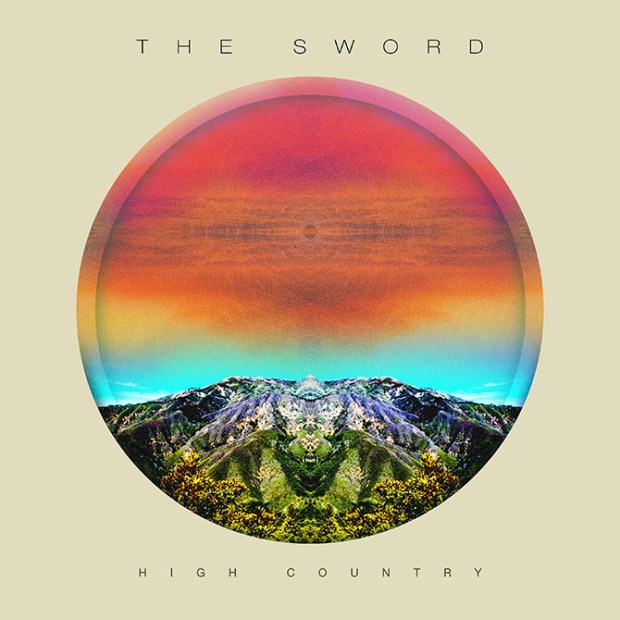
REVIEW: The Sword – High Country (2015)

Part one of a THE SWORD two-parter. Epic conclusion comes tomorrow!

THE SWORD – High Country (2015 Razor & Tie)

Right, so let’s get to it! Β The brief intro “Unicorn Farm” sounds like Queens of the Stone Age discovering synthesizers for the first time, or The Sword’s version of Β “Sunday Afternoon in the Park” by Van Halen. Β Then “Empty Temples”, the first real song, sounds like The Cream gone stoner metal. Β The truth is these songs do not sound as if recorded in 2015. Β They inhabit a netherworld between 1975 and 2015, where the two are one. Β The sonics have the quality of today, the grooves are as valid as anything in the Fu Manchu catalogue, but the songs are out of the 70’s. Β “High Country” is Sabbath meets the EaglesΒ in its metally groove.

The laid-back psychedelic metal of “Tears Like Diamonds” isΒ right up my alley. Β Lead vocals by John D. Cronise are relaxed and somehow hypnotic in an Ozzy-like fashion. Β “Mist and Shadow” on the other hand is swampy and blues-laden. Β Of course it’s as heavy as weapons grade plutonium, but it still resides in some swamp in the deep south. Β Either way it’s an album highlight.

Progressive synth with crazy drums up your alley? Β “Agartha” is the instrumental for you, like something out of an old Tom Baker-era Dr. Who, but amped and hard to resist. Β Continuing with the synth, “Seriously Mysterious” is impossible to categorize and very difficult to describe. Β Synth rock with balls? Β That’s the best I can do. Β Again I can’t help but think that 1984-era Van Halen must be an inspiration, somewhere. Β This is the “I’ll Wait” of the album.

We gallop off with “Suffer No Fools”, plenty heavy enough and this time sounding inspired byΒ another album from 1984, but this one’s called Powerslave. Β This is only an instrumental, which in a way is too bad, but not reallyΒ because it’s awesome. Β “Early Snow” then takes inspiration from the slowest and heaviest Sabbath grooves. Β Even lyrically, you could imagine Ozzy howling about the days getting shorter and leaves falling from the trees. Β Then the horns blast in. Β What the fuck? Β Chicago/Sabbath! Β This is absolutely insane stuff! Β Into “The Dreamthieves”, riffs and melody coalesce perfectly into a sweetly pummelling song. Β The mixture of guitars, sweet vocals and keys render it strangely Ghost-like. Β The riff and guitar solo section seem directly inspired by Judas Priest’s version of “Green Manalishi”. Β “Dreamthieves” is classic, and instantly so.

Watch out for the “Buzzards”: straight heavy rock, but at the same quality level as the rest of the album. Β The final instrumental, “Silver Petals” showcases the acoustic guitar, much like how Savatage would throw an acoustic thing right after something heavy. Or right before something heavy: Β “Ghost Eye” is certainly that. Β A jagged Dio-ish riff precedes some quiet picking and melodic vocals, but it is quickly back to the heavy again. Β The penultimate track “Turned to Dust” is quiet and spare, though dramatic. Β Finally make way for “The Bees of Spring”, a strange Deep Purple circa 1968-ish track that is as great as it is bizarre. Β Hippie-era Purple with Rod Evans on vocals is the perfect description. Β It could have fit right in on their self titled record.

There is little question that High Country is a great album. Β It has diverse influences, but a cohesive sound. Β It packs in more great riffs per minute than most bands can write in a single album. Β  Instrumental excellent is a given. Β How do you rate something like that?

4.5/5 stars

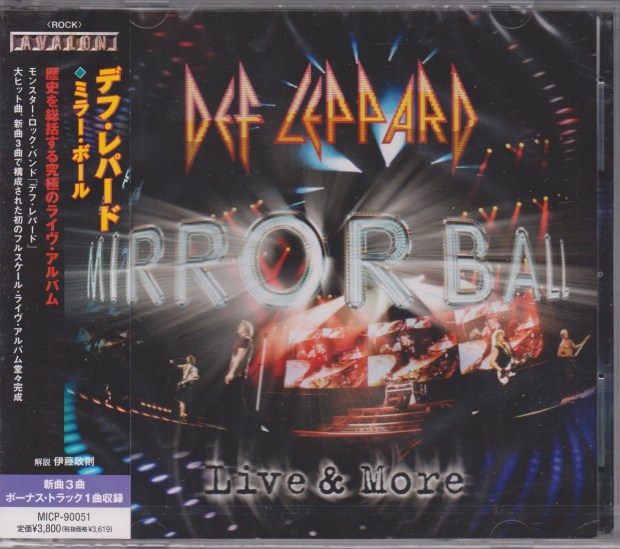
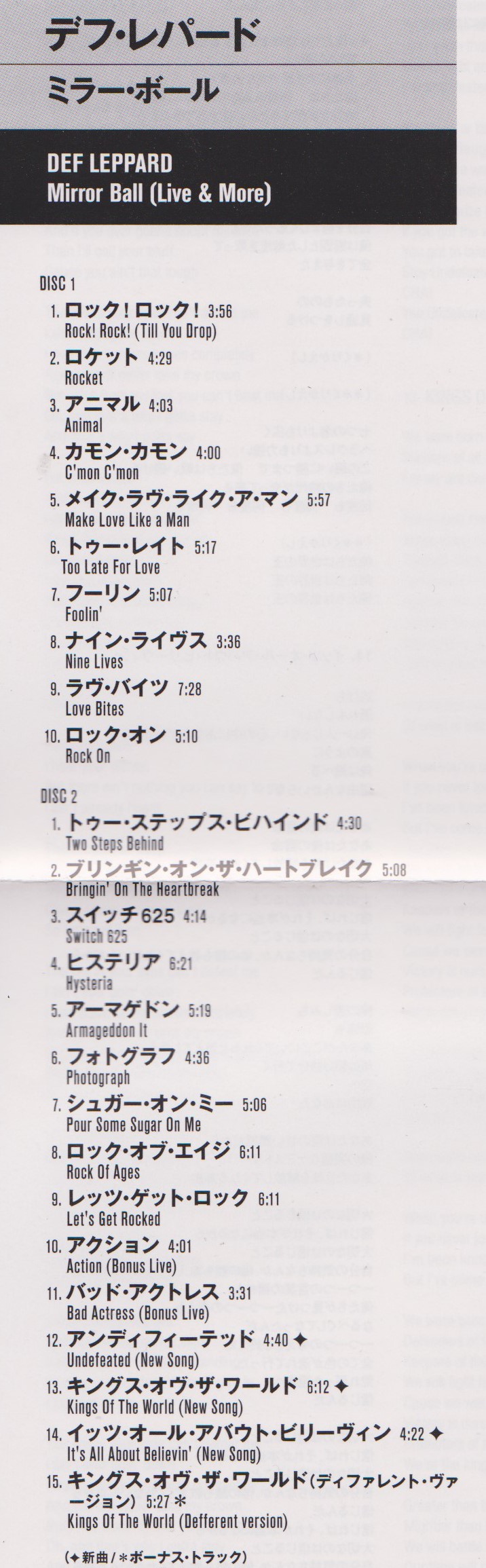
REVIEW: Def Leppard – Mirrorball: Live & More (2011 Japanese with bonus track)

The Best Fucking Collaboration Week Ever, Pt. 2
Β Down to the nitty gritty! Β This is the second last review in this series. Β Mike and AaronΒ have been doing simultaneous daily reviews of albums that theyΒ have sent to each other. This one was gifted to Aaron when Mike upgraded to the Japanese edition. Β Enjoy!

DEF LEPPARD –Β Mirrorball: Live & More (2011 MarqueeΒ Japan)

Def Leppard hyped this baby as their “first official live album”. Β First official live album? Maybe, but the astute collector had already been aware of a 1984 live album included with the deluxe 2 CD edition ofΒ Pyromania. Β  For vintage 80’s Leppard thrills featuring Steve Clark, that’s the ultimate go-to live CD. Β More obscurely, after the Euphoria album, Def Leppard issued an entire live album’s worth (11 songs) of MP3 files for free, which are no longer around. You can read our review of that untitled release right here.

Scan_20160302 (5)Regardless, this is the first stand-alone Leppard live album (double live, in fact) that you can walk into a store and buy. Β  The domestic version comes with a bonus DVD, with behind-the-scenes stuff and music videos (“Nine Lives” and “C’mon C’mon” from the Sparkle Lounge album).

Upon inserting Mirrorball into the car drive and hitting “play”, the first thing I was impressed with was Joe Elliot’s voice. The singer is often the member who suffers most from the ageing process. Β Singers like Joe who basically screamed for the first few albums don’t always have the ability to do it convincingly anymore. Β The “old voice” is usually gone. Β However here it is, right in the opening of “Rock! Rock! (‘Til You Drop)”. It recurs many times over the course of the album.

All the hits are here, even the ones you’d rather forget like “Let’s Get Rocked” and “Make Love Like a Man”. The set leans heavily of course on Pyromania and Hysteria, with most of the singles being rolled out: “Rock Of Ages”, “Foolin'”, “Photograph”, “Animal”, “Hysteria”, “Love Bites”, “Sugar”, and “Armageddon”. Album classic “Too Late For Love” is also present, as is theΒ perennialΒ medley of “Bringing On The Heartbreak/Switch 625”. “Heartbreak” has a nice acoustic intro, different from the one that Leppard used to do back in the 80’s (see: Live in the Round in Your Face).

Then, you get a few boring tracks. Β Some of these, such as cover tunes, I have no idea why they still play them live. Β Do they not have enough old originals that fans are clamouring for? Β Did we really need covers on Leppard’s first official live album? No. But there’s “Rock On” anyway. Β I hate that song. Β And The Sweet’s “Action” is here, again, which I guess has almost become a Def Leppard song itself. Β For other dull content, the B-side-later-A-side “Two Steps Behind” also appears, a song which was never more than a throw-away to me.

As far as more recent material goes: Two songs from Adrenalize, none from Slang, none from Euphoria, none from X.

At least they included three songs from the latest album, Songs From the Sparkle Lounge: The awful,Β derivativeΒ  heard-it-all-before “C’mon C’mon”, as well as a smokin’ version of “Bad Actress” and the single “Nine Lives” (without Tim McGraw!). Β Regardless of what’s included and what’s not (you can make your own wishlist of tunes!), Mirrorball does represent the Def Leppard live experience well. Β They are bang-on, every track. Β These five guys have really grown together as a band. Β It doesn’t sound like much fixing was done; indeed it doesn’t sound like much needed to be done. Β Four of them can sing well enough, so the trademark Leppard layers are well represented live.

Onto the new studio songs: None are very special, but at least two rock: “Undefeated” is the catchiest, even though it hasΒ derivativeΒ “Sugar”-like moments that don’t help. Β It has a thick Zepp-y chorus riff though, and that gives it some heft. Β “It’s All About Believin'” also rocks, but Sav’s “Kings Of The World” is too soft. Leppard need to stay away from the ballady-stuff. Β They’ve got more than enough now.

As is the norm, those lucky Japanese fans got a bonus track. Β It is the descriptively titled “different version” of “Kings of the World”. Β What’s different? Β It doesn’t appear to be a demo, but it is a shorter version, piano-based with most of the instrumentation stripped off and an acoustic guitar solo. Β My preference is to the more bombastic and Queen-like album mix.

For a first official one, Mirrorball is a pretty good live album. It could have been a lot better. It should have been better,Β considering. Β However they did do better,Β when they released the next live package, Viva Hysteria!Β  Β That one scratches virtually every musical itch you have. Β And don’t forget, you can pick up that aforementioned deluxe edition of Pyromania for a youthful,Β smokin’ set.

3/5Β stars


REVIEW: Killer Dwarfs – Reunion of Scribes Live 2001

The Best Fucking Collaboration Week Ever, Pt. 2
Β Mike and AaronΒ are doing simultaneous daily reviews of albums that these two intrepid music reporters have sent to each other. Buckle up, buttercups, it’s gonna be a blast!


“You guys do like to drink, don’t ya? Β You are Canadian aren’t ya? Β Most of us are Canadian in here, except for there’s one guy that I know of. Β Security!” Β —Β Russ Dwarf

Scan_20160313KILLER DWARFS – Reunion of Scribes Live 2001 (2002 Bullseye)

Aaron scored this for cheap at his “junk shop” and passed it down to me. Β It was the only Killer Dwarfs CD I was missing — and for good reason. Β I had the chance to hear it once, at the Record Store, while I was working for a stretch in Hamilton. Β  I didn’t think much of it then. Β Has anything changed?

The Killer Dwarfs quietly went extinct after their final studio album, 1992’s Method to the Madness. Β 10 years later, the band reunited including Mike (Hall) Dwarf, who had actually left the band prior to 1992. Β This is a full reunion of the classic lineup: Β The Dwarfs Russty, Mike, Darrell and Bad Ronbo. Β Let’s “Go DuNK” and see what the Killer Dwarfs 2001 sounded like. Β At one hour and 11 minutes, Reunion of Scribes is the longest Killer Dwarfs album to date.

Strangely enough for a Canadian band, the concert begins with a recording of “The U.S. Air Force” (also known as “The Wild Blue Yonder”) before the band emerges with a limp version of their own “Dirty Weapons”. Β What’s the problem? Β It’s certainly not Russ Dwarf, who sounds vintage strong. Β  The guitar is too thin,Β and blemished with sour notes here and there. Β Hey, it’s been a long time since Mike was a Dwarf! Β The drums also sound disconnected from the song from time to time. Β Chock it up to a bad recording? Β (At the Docks, in Toronto.) Β “Stand Tall” also suffers: the guitar needs to be front and center. Β The sound of the band suddenly becomes sparse and weak every time Mike Dwarf stops playing the riff in order to lay down a solo. Β The bass isn’t fat enough to fill the gap.

Another weakness to this recording is a concentration on songs from 1988-1992. Β There’s nothing at all from their first self-titled album, even their first single “Heavy Mental Breakdown”, the song that helped put them on the map. Β Instead the Dwarfs focused onΒ moreΒ radio-friendly later music for this set. Β Of that tunage, most of the hits are here: Β “Stand Tall”, “Keep the Spirit Alive”, “Dirty Weapons”, “Doesn’t Matter”, “Hard Luck Town”. Β Their first big label single, “We Stand Alone” is missing from the set, which instead includes lots of notable album cuts. Β The best of these include “Believe in Me” from their second album Stand Tall. Β Russ Dwarf’s ageless voice delivers hard-edged numbers like “Starting to Shine”, “Last Laugh”, “Nothin’ Gets Nothin'”, and “Comin’ Through” with all its usual intensity.

The most emotional moment (for fans) has to be the ballad “Doesn’t Matter”. Β “Roll the dice and play the game, forΒ the fortune and the fame.” Β The Dwarfs did roll the dice, at least they tried. Β “Doesn’t Matter” is a pretty simple lyrically: Β get out there and give’r.* Β The live recording doesn’t deliver its full power, but I doΒ get the feels to hear them return to Toronto and play this song for their friends.

Most of these songs are still high-quality hard rock workhorses. Β While Russ Dwarf brings it all and then some, the poor recording renders Reunion of Scribes an album that will only get infrequentΒ plays at LeBrain HQ.

2/5 stars

* The Killer Dwarfs are the only band I can think of who actually used the word “give’r” in a song lyric.

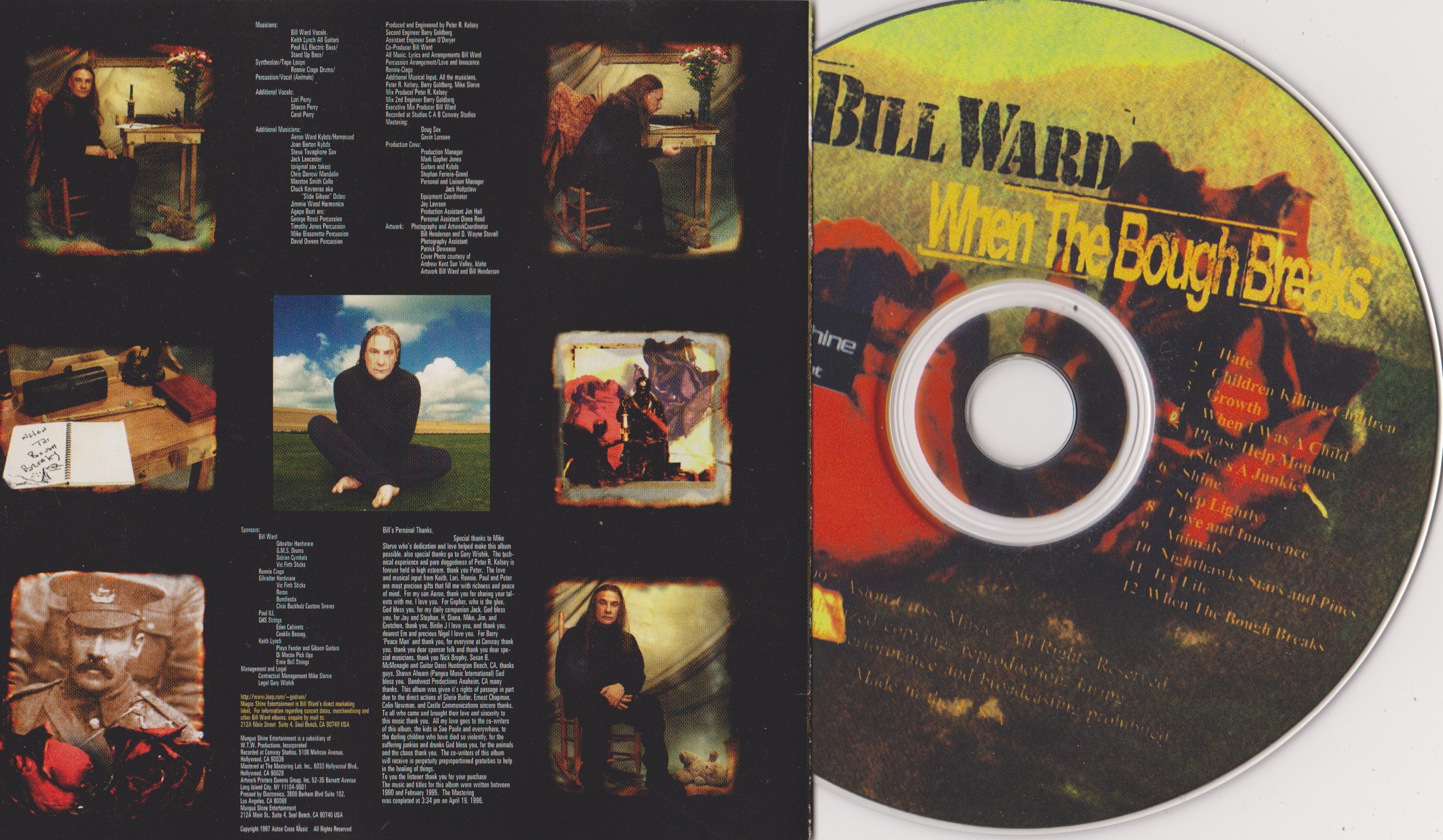
REVIEW: Bill Ward – When the Bough Breaks (1997)

BILL WARDΒ – When the Bough Breaks (1997 Purple Pyramid)

If anybody in Black Sabbath is an under-sung genius, it must be poor Bill Ward, the drummer on the outs with the legendary band. Β Not only did he release the cult classic Ward One: Along the Way, but also its lesser known followup When the Bough Breaks. Β Much more than just a drummer, Ward writes music and lyrics. Β He also sings lead on every song, unlike its guest-laden predecessor. Β What he didn’t do on When the Bough Breaks was plays drums — at all. Β Maybe there is something to this talk from Ozzy about Bill not being able to hack it?

Folks who know little about Bill or Sabbath usually assume it’s all doom and gloom. Β Track 1’s song title is “Hate”, but fear not, Bill has not changed his tune. Β Hate is the easy way, not the right way, is the message. Β Meanwhile there’s a cool sax lick and chunky guitar, and I swear that Bill must have arranged the drum parts because even though it’s not him, it sounds like him. Β Ronnie Ciago does a fine job on the skins, all over the album. Β Then, “Children Killing Children” is clumsy lyrically, but backed by lovely music and a heartfelt vocal performance. Β A pretty ballad with mandolin, dobro, cello and violins is not what many would expect, but When the Bought Breaks is a mellow listen as a whole, andΒ it can’t be pigeon-holed.

“Growth” maintains the soft trend, but it also cascades into massive waves. Β Bill sings with a high, whispery quavering voice. Β It lends itself best to quiet drama, interspersed with maniacally heavy rock. Β That’s what “Growth” is, with a progressive bent and female backing singers. Β It seems to form part of a suite, “When I Was a Child” emergingΒ directly from it. Β Though the title misleads, this is actually one of the heaviest tracks — a sludgy heavy metal blues born from the steel mills of Birmingham. Β The childhood theme is continued with “Please Help Mommy (She’s a Junkie)”. Β It also continues the blues with swampy dobro…before it transforms in a space age gospel-soul-metal slam dance. Β It has a hell of a lot more life and rock and roll than anything Ozzy’s produced since then. Β The sludge remains on “Shine” which I like to think of as ending a side. Β Oddball Bill rock is the best way to describe it.

Scan_20160309 (4)


“Step Lightly” has a soft touch to it but the heavy guitars leave no doubt. Β A potentΒ mixture of influences and genres, “Step Lightly” defies categorization except to say it’s rock, but it’s a lot of things. Β “Love and Innocence” is a strange name to a brief percussion instrumental, and it’s an intro to the song “Animals”. Β A drummer’s wet dream, “Animals” is a heavy percussion blast withΒ less emphasis on guitar. Β A fine song, “Animals” is only hampered by a weird tribal-y front section. Β “Nighthawks Stars and Bars” commences as we wind down. Β This beautiful song feels like dusk, serenaded by saxophone. Β Bill wrote a lovely soul ballad here, and the ladies singing on it are incredible. Β “Try Life” is Floyd meets Lennon with a teeny tiny sprinkle ofΒ Sabbath, creating a lightΒ concoction of classy progressive rock balladry.

One last epic, the slow building title track (almost 10 minutes) leaves no doubt in mind that Bill Ward is a unique talent. Β Of all the Sabbath solo records, Bill’s have been the most ambitious. Β  They’ve also been the fewest. Β Bill’s long awaited Beyond Aston has no release date, but another solo album called Accountable Beasts was finally released in 2015. Β  Meanwhile, of Beyond Aston, Bill says it’s his best since Master of Reality in 1971!

Of When the Bough Breaks, I can only close with this. Β It takes time. Β It takes a lot of listening time invested, to pay back its full dividends. Β When it does, you’ll be glad you bought it. Β Of note however, there are multiple pressings and the one I have has liner notes and lyrics so tiny, that I fear I might irreparably damage my own eyes if I try to read them.

4.5/5 stars

Scan_20160309 (2)