heavy metal

REVIEW: Judas Priest – Rocka Rolla (50th Anniversary Remixed and Remastered)

For my original Rocka Rolla (1974) review, click here.

JUDAS PRIEST – Rocka Rolla (1974 Gull, 2024 Exciter Records Remixed and Remastered)

How did he do it?!  Somehow, by some digital miracle of the master tape gods, producer Tom Allom has remixed Rocka Rolla, and transformed it from one of my least favourite Priest albums of all time, to one of my favourites.

Generally I can’t get into the remixed versions of albums.  Even if the remix is objectively a better release, such as Rush’s Vapor Trails or Marillion’s Radiat10n, I always find myself coming back to the flawed originals.

Not this time.

For context, Tom Allom didn’t originally produce Rocka Rolla, and this is not the first remix of it.  Rodger Bain produced, but his name appears smaller than Allom’s on the new back cover.  The Rocka Rolla (full album) remix that appeared on Hero, Hero (1981) was helmed by Bain, less effectively.  Tom Allom is best known for producing the run of Judas Priest albums from Unleashed in the East (1979) to Ram It Down (1988).  What he has done with Rocka Rolla is somehow give it a makeover to sound more like a real 1970’s Priest album.  Sonically, it now has thickness.  There’s a real beefiness to the mix, but not in the sense that you immediate say “oh yeah, this is different.”  It just sounds like the album always sounded that way, and you just got your stereo system upgraded.

The track listing is unchanged.  “One For the Road” still opens with a groove, but now that groove hits different.  You can better appreciate the guitar fills at the end, and the songs goes well past its old fade-out.  This is a trick that remixed album should do more often.

“Rocka Rolla” remains a metal delight, but there is new shimmer to Rob’s vocals and the song chugs with more edge.  It’s all very objective and subtle, but once again Tom Allom took a Priest classic and made it sound like it was always this weighty.

The “Winter” suite is the most altered of any of the tracks.  Notably, Allom chose to separate the tracks from the suite format, and leave them as individual songs.

John Hinch’s drums sound crushingly Bonham-like on “Winter” itself, and the backing riff far more weighty.  The biggest change is that it no longer fades into KK’s guitar showcase “Deep Freeze”.  You can hear more of KK at the end, with some experimental playing that was inaudible before.  The track fades out past its previous point, and “Winter Retreat” stands on its own as a song.  In the 70s, Priest were experimenting with acoustics and psychedelic sounds from time to time.  “Winter Retreat” can now join those songs as something that sonically fits in better.  Finally, “Cheater” always was its own song really, and now it’s just heavier.  Rob’s harmonica is more prominent, which of course recalls the heaviness of Black Sabbath.

Moving on to side two, “Never Satisfied” finally has the punch it always felt like it had inside:  A little more echo on this this vocal line, a lot more weight behind the drums, more texture on the guitars, and a few things made audible for the first time.   We now have the definitive version of this song.  With the impressive soloing mixed in just right, this becomes a long, jammy Priest thumper as it always should have been.  If Rocka Rolla sounded like this when I was a kid, I would have got it immediately.

“Run of the Mill” takes time to build as it always has.  It has a long instrumental section, with some mindblowing guitar playing, and now it’s all finally hitting right.  The bass isn’t just sitting there.  It’s picking you up and taking you along with the groove.  The keyboards in the background are more ominous.  Everything about this is just so much better than the original.

Perhaps the only song that still bores, for the first half anyway, “Dying to Meet You” is similarly upgraded but benefits less from the treatment.  That is until it picks up midway in the “Hero, Hero” section.  This part of the song still cooks, but has a different, more spare feel.  Finally, the light instrumental “Caviar and Meths” really benefits from the remix treatment.  The drums, once again, really add atmosphere to it.

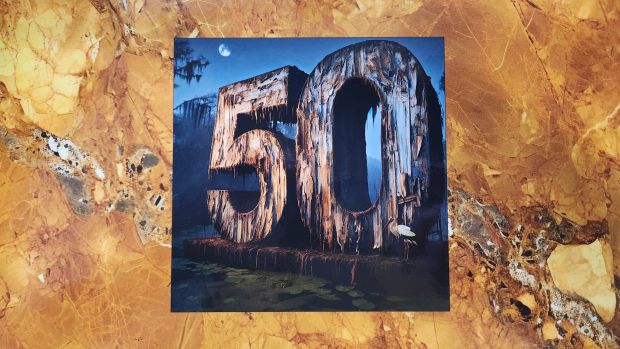
As an added attention to detail, the front cover of Rocka Rolla is now as three dimension as the music.  The water drops are now tactile.  You can feel the bumps with your fingers.  A perfect topper.

What did Tom Allom do with these master tapes?  Did he conjure some kind of heavy metal spell and make a two dimensional album sound big and beefy?  Only Allom knows, but now I do believe in magic.

4.5/5 stars
REVIEW: Deep Purple – “Lazy Sod” (2024 CD single)

“Recently, a young journalist asked me how many songs I had written in my life. I replied that the last time my assistant counted, twenty years ago, it was over 500. I felt quite accomplished until she pointed out Dolly Parton’s 5,000 songs, calling me a lazy sod.” – Ian Gillan

DEEP PURPLE – “Lazy Sod” (2024 Ear Music)

Since Deep Purple’s =1 album was my #1 album of 2024, it should be no surprise that I love the single “Lazy Sod”.  It exemplifies what Simon McBride brings to Deep Purple on this new album.  His smooth playing is loaded with feel and perhaps he adds just a tad more hooky riffiness into the band.  “Lazy Sod” is a fantastic track, a shorty at 3:40, even loaded with solos by Simon and Don Airey.  No fat, just like those old Deep Purple Machine Head firecrackers from the early 70s.

Back when we reviewed the =1 box set, we speculated why a live version of “Highway Star” with Simon McBride wasn’t included.  Same with “Lazy”.  Here they are.  “Highway Star” (Milan, October 17 2022) is pretty damn energetic and features the Simon stuff that we were waiting for.  His sound might be likened as somewhere between Steve Morse and Ritchie Blackmore, but what he brings to the table fits perfectly, without copying either.

“Lazy” (Sofia, May 23 2022) is the lengthy one, at 8:33.  Don Airey opens it with some meandering organ soloing, before playing some more familiar notes.  Then it’s Simon’s turn, sending out a delightfully original solo for “Lazy”.  He throws it back to Don like a game of ball, and Don slays it some more.  “Fun” doesn’t begin to sum it up.  There are old Deep Purple versions of “Lazy” where it does not sound like they are having fun.  This does, for Don and Simon in particular.  The rest of the band have to be able to feed off that.  Ian Gillan doesn’t enter the picture for over five minutes.  He turns in a performance more like a lounge singer, but with some screams towards the end.

Another great single from the Purples.  Thanks for keeping the format alive.  It’s limited to 2000 copies but hopefully that’s enough for the collectors who want it.

4/5 stars


REVIEW: Accept – Blind Rage (2014 Japanese import)

ACCEPT – Blind Rage (2014 Nuclear Blast / Japanese bonus track)

Accept finally proved they didn’t need Udo Dirkschneider with Mark Tornillo.  He has had a steady run of reliable albums that continues to this day.  2014’s Blind Rage was his third with the German metal legends.  Blood of the Nations and Stalingrad are hard to beat, and Blind Rage comes in third.

The album debuted at number one on the German albums chart.  It Accept’s last album with guitarist Herman Frank and drummer Stefan Schwarzmann, and produced generically by Andy Sneap.  Sneap gets a great sound, but as we’ll see, there’s too much formula and same-sameyness to the songs as the album goes on.  Fortunately, the album gets off to a good start.

“Stampede” is a quintessential opener!  Breakneck speed, but with melodic harmonies on guitar.  Wolf Hoffman certainly knows how to write riffs and guitar melodies.  Mark Tornillo is in great voice, growling low before hitting you with those screams, punctuated sparingly.  A tad generic with that shouted “Stampede!,” chorus but the screams and the tempo make it worthwhile.

The lyrics on “Dying Breed” are cringe worthy, I’m so sorry to say.  Some sample lines so you get the idea:

  • “Long ago a sabbath black cut through the purple haze.”
  • “Screaming with a vengeance that we will forever hear.”
  • “The zeppelin led it’s voyage thru skies of purple deep.”
  • “And in a land down under highway to hell was paved.”
  • “An iron fist cut the deck and drew the ace of spades.”

I am on record as disliking these kinds of references within lyrics.  Fortunately, Mark sings it with conviction, and the song itself is pretty awesome.  Guitar melodies are very much like a national anthem.  There’s another shouted chorus, “We’re the last of a dying breed!” but let’s hope metal doesn’t die prematurely.  Wolf throws in some classical-influenced guitar thrills to compensate.

The best song on the album is the desperation-drenched “Dark Side of My Heart”  Melancholy metal with a stunning chorus.  You can’t help but sing along, and all this is augmented by stunning guitar melodies by Wolf.  Accept always keep things moving, but it’s so much better when it’s melodic, and this is the most melodic song on the album.

The first slow song on the record is track #4, “Fall of the Empire”.  It takes a little longer to sink in, but the chorus is melodic enough.  However, Accept’s penchant for those low pitched gang choruses is already starting to wear.  Wolf’s solo here is really different, with a nice dry tube-y tone and some really unusual melodic choices.

Crank up the afterburners for “Trail of Tears”, a song about the trials of the Native American.  “Who are the savages now?” asks Tornillo.  The drums by Schwarzmann are phenomenal.  Another high speed blur of modern metal, and one that sticks in the brain afterwards.  Classical influences can still be heard in Wolf’s melodies.

Guitar harmonies take center stage for “Wanna Be Free”.  Slower, more deliberate, dark and with a message.  “No more crime and poverty,” “No more human trafficking”.  Fairly simple, but that’s often the goal of these kinds of songs.  Keep it positive, and not political.  Though the guitars are always enticing, this might be the first one you feel like skipping.

Nuclear war is always a hot topic for metal bands, ever since Black Sabbath popularized it in the 1970s.  In “200 Years”, nuclear war has devastated the planet to population zero:  “200 years after mankind”.  We’re back to the stone age just as prophesied.  “I do not know with what weapons World War III will be fought, but World War IV will be fought with sticks and stones.”  That’s a quote often attributed to Albert Einstein.  Great topic, great song, with a neat little exotic interlude by Wolf in the middle before the solo.

Skipworthy “Bloodbath Mastermind” is just generic metal.  Yes, it bangs, but there are no exceptional hooks.  Pass.

Ear fatigue setting in, “From the Ashes We Rise” repeats the grooves that are becoming monotonous.  We realize now that the Japanese 12 song track listing is just too long.  This album should have been a simple, traditional 10 songs.  Having said that, at least “From the Ashes We Rise” has melody, while “Bloodbath Mastermind” did not. Ultimately it sounds like a knockoff of another song on the album.  A good knockoff, at least.

Back to quality, “The Curse” is a little more unique, and focused once again on melody.  It’s a little somber, which is a nice change of pace after so much defiant headbanging.  Some memorable hooks; different from the rest of the album.  A highlight.

The closing track on the standard album is the Priest-like “Final Journey”, the guitar solo of which creatively features a very recognizable melody lifted from Grieg’s “Morning Mood”.  Good closer, lots of building tension in the guitars.

The Japanese closer is “Thrown to the Wolves” which is fine, just like many of the album tracks, though like many of them, plagued with generic riffing and melodies.  Catchy enough, just…not unique enough.

Blind Rage is a solid album, but Accept’s repeated use of certain elements such as those low-pitched choruses makes some songs really hard to remember and differentiate.  Of the 12 songs, there are probably 10 keepers.  It’s not a bad album by any means, but the formula is starting to set in and it takes many listens to really separate the songs in your mind.  A little editing would have been wise.

3.5/5 stars


My Music Corner: Up to the Limit Episode 14 – Accept: Blind Rage (2014)

NOTE: My text review of Blind Rage by Accept will go up in the coming days.

Johnny Metal and John the Music Nut have been breaking down, in detail, every Accept studio album.  I jumped on board with Blind Rage, the third album with Mark Tornillo.  I chose this album since I had the Japanese import and I wanted the two Johns to have a chance to cover a rare bonus track on their show.

In this episode, we break down the album track by track, with a high level of agreement between us.  The Music Nut then goes through the tour in detail, discussing all the songs that were played live, and how often.  Some are still played live today.

If you want a sneak preview into my Blind Rage review, watch this episode, as I tried something new here:  reading my review aloud (not easy).  I may have even done some singing.

Check out the show, and look for my text review in a few days.

#1165: Zero the Hero (The True Story of My Favourite Album of All Time)

RECORD STORE TALES #1165:  Zero the Hero
The True Story of My Favourite Album of All Time

1984.

It wasn’t I that owned Born Again by Black Sabbath.  That would have been Bob Schipper, who had all manners of metal in his cassette collection.  I knew very little about Black Sabbath when I first discovered music at the end of 1984.  Though Ian Gillan was not the lead singer by the time I became interested in bands like Black Sabbath, he was for all intents and purposes the lead singer to me.  Magazine coverage of Black Sabbath goings-on were beyond my reach, and this would be the last Sabbath album for a few years anyway.  To me, Black Sabbath were:  the two guys with the moustaches, the guy with the long black hair, and the drummer…who looked completely different in the music video for “Zero The Hero” than he did on the Born Again cassette cover.  How was I to know that original Sabbath drummer Bill Ward had been replaced by a guy named Bev Bevan?  I was just starting out on my rock journey.  I had the puzzle pieces in my hands, but no picture to guide the assembly.

It all started when Bob came over one day raving about this song called “Zero the Hero”.  “You gotta hear it!  It goes, ‘Whatcha gonna be, whatcha gonna be, Zero the Hero!'”  Bob was right that the chorus was pretty cool and memorable.  The effects on Gillan’s voice on the chorus lent it a metallic sheen.  He let me borrow the tape a bit to listen.  I enjoyed it.  Master of Reality was another one we listened to together.  He liked a song called “Children of the Grave”, especially the spooky outro.  Born Again had some spooky stuff on it too.  This would come in handy a little later on.

As I discovered bands, I tended to hear the stuff that most popular in my own neighborhood.  W.A.S.P., Iron Maiden, Kiss, Judas Priest, Van Halen, ZZ Top.  I heard some of The Police as well, but my closest friends were rockers.  Metal heads.  There was a serious division in music back then:  Heavy Metal vs. New Wave.  You couldn’t like both.  To us, everything that wasn’t metal was “New Wave”.  If you liked Corey Hart, you were a “Waver”.  If you liked Tears For Fears, you were a “Waver”.  In our neighborhood, you didn’t want to be a Waver.   Basically a Waver would be a slur along the lines of “gay” or whatever the kids were saying back then.  I remember “hurtin’ eunuch” was a phrase that kids like Jeff Brooks would throw around at kids like me.

Anyway, I threw myself into metal full-time and counted Black Sabbath as one of the bands I liked.  I didn’t own any Black Sabbath, but I could name two songs that I liked.  I think Ozzy Osbourne had something to do with the band, and that singer with the black hair was also in Deep Purple.  I was learning.  I didn’t know his name, and I didn’t realize that Ronnie James Dio was also in Black Sabbath (mind blown there) but I was piecing that puzzle together.  I had a few of the edges together, and now I would work on the body:  collecting the music.

In the mid-80s, Bob and I were too old for going trick or treating at Halloween time.  Instead we gave out candy at Bob’s house.  We wanted to go all out and really make a cool “haunted house”, and for that you needed sound effects.  Instead of spending valuable allowance money on one of those corny Halloween tapes, we made our own.  We did this by looping the scary bits of Black Sabbath songs.  Bob especially liked that haunting whisper at the end of “Children of the Grave”.  We made loops, maybe 10 of them, adding in our own bits via an external microphone.  Then we would loop “The Dark” a few times, until the side was full.  Bob would go home and eat lunch, and come back later that afternoon to work on more Halloween stuff.  We were very resourceful and creative.  To this day I have never used pre-made Halloween sounds.  I always made my own by looping bits of songs.  It worked.  Kids would either go straight to our house for candy like a bee to honey…or they would run past terrified!

[Bob and I learned from this experience when a young girl cried at our house.  If we saw anyone really really little approaching, we would kill the sounds and turn on the lights.  It wasn’t our goal to make kids cry.]

I managed to record the music video from the Pepsi Power Hour one afternoon.  I called Bob over to watch it with me.  It was (and remains) one of the weirdest things I’ve ever seen in my life.  A Frankenstein looking guy and a Franken-Hitler guy appear to be resurrecting a dead body as…a nerd?  They force fed him eggs with ketchup, while he grinned the whole way through.  Then, a horse walked backwards down a flight of stairs in a mansion.  Meanwhile, scenes of the band playing live were cut in, and you could hardly see Gillan’s face.  It was weird…and heavy.  We hated it.  But I loved it.

Finally one day in highschool I said to myself, “Why the heck haven’t I taped Born Again off Bob Schipper yet?”  I wanted that song “Zero the Hero”.  I popped over one afternoon and borrowed it.  I put it in deck “A” of my Sanyo dual deck ghetto blaster, with a Maxell blank 60 in “B”.  I hit “dub” and began recording.  For whatever reason (and I tried a couple times), I could not get a good copy of that tape.  It wasn’t the best blaster in the world that I was using, but there was so much warble in the copies I made, I got fed up.  I called Bob and asked if I could just buy the tape from him.  I knew it wasn’t in regular rotation at his house.  He said “OK” and I gave him $2 or $3 for it.

I was finally able to listen to Born Again properly.  I liked a few songs such as “Trashed”, “Disturbing the Priest”, “Born Again” and “Keep It Warm”.  It played better on my Walkman, so that’s where most of my listening happened.  That meant it was often on the way to the cottage, or at the cottage, where I used my Walkman most.

I don’t know when Born Again became my favourite album of all time.  I really don’t.  The tape grew on me through the years, but the poor quality of that old WEA cassette made listening hard.  It probably elevated to “among my favourites” when T-Rev found me a vinyl copy in 1995, a full decade since I first became acquainted with it.  A decent CD reissue followed a few years later, and then it hit serious heavy rotation.

Keep it warm, rat:  I love this album for all its flaws and overreaching.  It brings me back to that bedroom, dubbing scary music with Bob.  It brings me back to listening on my Walkman at the cottage at night.  It brings me back to that place where I escaped all the bullies and teachers, and was alone with my own imagination.

Yes, Born Again is my favourite album of all time.  I play it more often than I should, sometimes twice in a row.  No remix or reissue could make me love this album more.  I am Born Again!

THREE-VIEW: Ratt – Out of the Cellar (1984, 2024 40th Anniversary edition)

RATT – Out of the Cellar (1984 Atlantic, 2024 40th Anniversary edition)

Shame, shame, shame on Ratt.

In 2020 they released a beautiful Atlantic Years box set, featuring bonus tracks including one for Out of the Cellar.  In 2024, they coughed up Ratt Rarities, with a bunch of unreleased Ratt tracks.  And now, mere months later, we are given another reissue of Out of the Cellar, this one featuring lenticular cover art and one more unreleased Ratt song.  This song could have been released on a 7″ single on its own, but if you want that, you have to buy the vinyl album all over again.  If you want the unreleased song on CD, you have to buy Out of the Cellar one more time.  I believe this is my fourth or fifth copy of Out of the Cellar now.  This is just exploitative of the fans.  Pearcy must need another swimming pool.

Is the one song worth re-buying the album again?  Fortunately the answer is yes.  “Reach For the Sky” is a 1983 Cellar demo written by Stephen Pearcy, Robbin Crosby, and Marq Torien of Bulletboys.  It sounds remarkably finished.  The guitar harmonies feel very latter-day Thin Lizzy, upon which the guys build a pretty cool song.  Though not as slick as Cellar, it sounds fully produced and ready to release.  Amazing that songs like this can remain buried for 40 years, and was never resurrected for an album even though the title was used in 1988 for the album Reach For the Sky.  While this one song didn’t warrant an entire album re-release, at least we got it.

The album itself remains solid four decades after the fact.  Opening with cowboy themed “Wanted Man”, the five Ratt Rodents were off to a compelling start.  The disorienting sound of backwards drums heralds in “Wanted Man” is an inventive way to make their introduction.  A simple, slow, chomping riff is menacing enough, while Stephen Pearcy growls though various Western metaphors.  “By the road, you will hang, it’s your neck from this Ratt gang.”  The capable harmonies of the band and especially Juan Crocier help nail the melodies that Pearcy alone can’t.  Nice solo work.  A great track worthy of a multiplatinum album.

“You’re In Trouble” is a little different.  Juan’s clunky bass still sounds a bit out of place, though the choruses rule.  But “Round and Round”?  Still a total sleaze rock triumph.  A keen sense of melody, rhythm and vibe mixed together with a sweaty Stephen Pearcy.  Brilliant solo work from Warren DeMartini, and perfectly layered harmonies under the production of Beau Hill.  Every element punches, from the simple but memorable riff and those echoey choruses.  Dated to the period, but tasty for all ages.

A nice choppy guitar bodes well on “In Your Direction”, a slinky number that serves Stephen’s style well.  Decent song, but with only one trick.  “She Wants Money” is more fun, a fast upbeat blast on a familiar theme, with Robbin “King” Crosby on lead guitar.  It’s hard not to headbang along with the melodic fun of “She Wants Money”.  That ended side one on the original record.

The second side opens “Lack of Communication”, a biting track just missing one key ingredient:  a real chorus.  The saw-like riff smokes, the verses are great, but it never resolves into a definitive hook.  It’s basically just the riff with some words over it.  “Lack of communication, back off!”

“Back For More” is a little disjointed but salvages it with a killer chorus.  Screamin’ Pearcy and the rodent choir give it the final polish.  Brilliant solo work here by Warren.  Then, one of the best non-singles is the blazing fast “The Morning After”.  It has a bit of a Quiet Riot vibe.  Juan’s bass is furious while Pearcy sings it for melody.  “I’m Insane” is mindless fun; just bad boy rock with the popular “I’m crazy” theme that their pal Ozzy was milking for millions.  Finally the album closes on “Scene of the Crime” which has a neat guitar hook that unfortunately is all but unrelated to the rest of the song.  Some cool melodies with the patented Ratt harmonies here.  Still, solid enough song that if they had been looking for another single, it could have been “Scene of the Crime”.

This reissue doesn’t have any additional packaging or liner notes besides the new lenticular cover.  The lenticular art  is nice, but it’s not solidly anchored to the packaging.  It feels like a symbol for the half-arsed nature of this reissue.

3.5/5 stars

RE-REVIEW: Van Halen – A Different Kind of Truth (2012 CD/DVD set)

VAN HALEN – A Different Kind of Truth (2012 Universal CD/DVD set)

When this album was released in 2012, we all wanted Van Halen to win.  Eddie had been through some tough times, but he finally did what the fans demanded:  get back together with David Lee Roth, and record a new album.  Sure, we all lamented that Michael Anthony was gone, but it was new bassist Wolfgang Van Halen that made it happen.  Without Wolf, there would be no final Van Halen album.  Just VHIII, and we know how most of you feel about that.

Working with new producer John Shanks in neutral territory, Van Halen managed to crank out a new album in just three years, starting with jams in 2009.

Wolf knew that Van Halen had to get back to a “classic” sound for their first new album with DLR since 1984.  In addition to new music, Wolf dug back into Van Halen’s archive of unreleased material, and picked seven songs that rework and re-write.  Roth called it a “collaboration with the past”, which is a good way of putting it.  No, it does not sound exactly like old Van Halen; that would be impossible.  It does, however sound like Van Halen with Roth.

Opener “Tattoo” was the first single and weakest track.  It’s also the only one with audible keyboards (by Dave), though just for texture.  Roth said the multi-layered chorus was inspired by artists such as Rhianna, but that chorus is actually the annoying part of the song.  Eddie’s fills and Dave’s verses are fine and entertaining, as is Wolfie’s fuzzy bass.  The chorus is the weak link, perhaps even worse than the lyrics:  lines such as “tramp stamp tat” and “mousewife to momshell”.  I like tattoos as much as the next guy, but I’ll never use the word “momshell” except when discussing this album.

The real banger is the second single, “She’s the Woman”, a pretty close approximation of the original Van Halen song (pre-debut album).  Wolfie’s playing is monstrous, with a catchy circular bassline that proved the kid had the talent to be in this band.  His dad must have loved jamming with him.  Ed’s solo really brings us back to classic Van Halen, while Alex’s drums have that sound that we all missed.  I hate to say it, but this rendition is probably superior to the original lineup’s version.

“You And Your Blues” has that choppy Eddie guitar we love, and those “ahh, ahh” backing vocals that scream Van Halen, even without Mike.  Dave’s lower voice works well on the verses, though he is stretched out on the high notes in the chorus.  A great Van Halen album-quality song.    (If you’re fortunate enough to have a CD/DVD combo set, you’ll be treated to a cool acoustic version of “You And Your Blues” with loads of storytelling from Roth.)

“China Town” has some of the best shredding on album.  From Wolfie’s crazy capo bass to the lightning fast tempo, all four members of Van Halen are on fire.  If any song can be said to take the classic sound and launch it into orbit, it’s “China Town”, and Wolf is the star.  The bass is not overly high in the mix, but when you listen to it and isolate it in your head, you realize that this guy has brought a new side to Van Halen:  bass shred.  Additionally, it’s a great song in every way.

Going back to 1984 and an instrumental section called “Ripley”, “Blood and Fire” was reworked in 2000 for an aborted reunion with Roth.  Interestingly “Blood and Fire” actually sounds more like Hagar era Van Halen.  It does contain one of Dave’s favourite concert phrases:  “Well look at the all of the people here tonight!”  If this track had been on 5150, it would have fit like a glove, though it would have been one of the more rocking tunes.  Edward himself is the star on this one, as he rips, shreds, and tears as if it really was 1984 again.

“Bullethead” sounds new, and also goes back to the 2000 sessions.  Van Halen speed and Dave “charasma” are held together by the rhythm section of Al and Wolf.  It contains the lyric “Got a different kind of truth”, from which the album takes its title.  Ed’s effect-laden solo is no less cool, though nobody will list “Bullethead” in their top 20 Van Halen songs.  A cool album track it is, but that’s all.

One of the coolest tunes would have to be “As Is”.  Opening with some Alex drum intensity, it breaks into a slow heavy riff, before finally accelerating into a powerhouse Van Halen smokeshow.  That running riff sounds so classic, you could swear they injected Ed with youth serum.  He sounds like a man reborn, both in terms of shred but also in fun.  Ed gets to play with many different sounds and tempos on “As Is”, while Dave also gets to enjoy himself with singing and that spoken word stuff he does so well.  Most of this is done very fast.

This sounds like a natural side break.  “Honeybabysweetiedoll” (another 2000 track) comes across like a side two opener.  Ed is experimenting with new sounds, like he used to, and you’ve never heard Ed sound or play like this before.  He goes for a middle-eastern vibe, but with the kind of intensity that other bands do not have the mettle to muster.  Dave’s lyrics about soccer moms don’t quite hit the spot where the music is concerned, but nobody’s listening to this song for the lyrics.  It’s the guitar that makes the biggest impact here.  You can imagine the Ed diehard fans just pounding their fists in celebration when they heard what Ed was up to, before they tried to figure out how he got that sound.

“The Trouble With Never” might be the only track that doesn’t seem like it goes anywhere.  You also miss Michael Anthony the most on backing vocals here.  It’s just a song.  Not a great one, not a bad one…but with one hell of a cool bassline.

“Outta Space” originated in the mid-70’s as “Let’s Get Rockin'”.  The riff is classic even though it never made an album before.  Dave sings in his highest voice, which is actually cool after a lot of lower pitched songs.  As you’d expect for a song originally called “Let’s Get Rockin'”, it smokes from start to finish, top speed and loaded with cool Eddie licks.  It’s fun to hear the rhythm guitar drop out during his solo, just as it used to in 1978.  Ed wasn’t fond of that sound, but it certainly evokes an era and a vibe.  It’s like a warm sweater.  Maybe Ed would appreciate that sometimes the absence of a guitar can also speak.

Dave plays acoustic guitar on the fun “Stay Frosty”, an old song that certainly recalls “Ice Cream Man” in every way.  There’s one lyric that Dave liked to point out:  “If you wanna be a monk, you gotta cook a lot of rice.”  Hey, it’s not untrue.  Let me put it this way:  If you imagined a sequel to “Ice Cream Man”, it’s “Stay Frosty”.  Not quite as good, but hits all the same beats that you want to hear.

“Big River” sounds like an older song.  It has a cool curly guitar opening, before laying into this awesome guitar/bass groove.  More a groove than a riff.  Dave’s lyrics and singing are top notch on this song.  Classic Van Halen. The surprise is that halfway through the song, for the solo section, it transforms into a completely different groove.  This section has some of Eddie’s best playing too.  It reverts back to the original riff for the last third of the song.  All the while Wolfie is playing the most incredible bass fills, but never stepping on his dad’s toes.  Think about that for a second.  In the mix, you have the greatest guitar player in the world playing over this awesome riff, but the bass player still manages to throw a whole bunch of cool fills in there, without getting in the way.  That’s a band, and that’s family, and that’s talent.  If this song had been on an album like Fair Warning, people would still remember it today.

The closing song “Beat’s Workin'” starts with a cascade of Alex Van Halen drums, gone gonzo.  It then breaks into a fun riff and a good time album-ender.  A song called “Beats Workin'” should sound like a celebration.  I get a bit of a Max Webster vibe, though heavier, along with a hint of Aerosmith.  Once again the rhythm guitar drops out when Eddie goes solo, but then Wolf gets a moment in the spotlight too.  His fuzz bass tone is very much unlike Michael Anthony’s.  There’s a moment here when he and Alex are just playing while Ed does his thing, and it feels beautiful, especially now, knowing the family will never be reunited.  But let’s not get too somber.  It’s a party, after all.

The bonus DVD also includes acoustic versions of “Panama” and “Beautiful Girls”.  They are alright.  Valuable to have in your collection.  You might not go back to listen to them very often.  Another reason to own this physically is the lyric sheet, with cool sketches for each song.  This is a Dave touch.

Final thoughts:

  1. The album cover, though a cool picture of a train, just doesn’t feel like classic Van Halen.  Then again, what does?  They’ve had so many different kinds of covers.
  2. The production on this album slams.
  3. Though Eddie is the star, and we’re all listening to every note he plays, it doesn’t sound like an EVH solo album like VHIII did.  It sounds like a real band album.
  4. John Shanks and David Lee Roth did the best they could with what remains of Dave’s voice, and did a fine job of it by doing more of that speak-sing thing.
  5. The flow on this album is excellent.  There is hardly any filler, and every song works in its given slot, especially the closing trio of “Stay Frosty”, “Big River” and “Beats Workin'”.

4.5/5 stars


COMPLETE VAN HALEN REVIEW SERIES:

VAN HALEN – Zero (1977 Gene Simmons demo bootleg)
VAN HALEN – Van Halen (1978 Warner)
VAN HALEN – Van Halen II (1979 Warner)
VAN HALEN – Women and Children First (1980 Warner)
VAN HALEN – Fair Warning (1981 Warner)
VAN HALEN – Diver Down (1982 Warner)
VAN HALEN – 1984 (1984 Warner)
VAN HALEN – 5150 (1986 Warner Bros.)
VAN HALEN – OU812 (1988 Warner)
VAN HALEN – For Unlawful Carnal Knowledge (1991)
VAN HALEN – LIVE: Right here, right now. (1993 Warner Bros, plus “Jump” live single)
VAN HALEN – Balance (1995 Warner – Japanese version included)
VAN HALEN – Balance (1995) Review by Derek Kortepeter
VAN HALEN – Best Of Volume I (1996 Warner)
VAN HALEN – 3 (Collectors’ tin 1998)
VAN HALEN – The Best of Both Worlds (2005 Warner)
VAN HALEN – A Different Kind of Truth (2012)
VAN HALEN – Tokyo Dome Live in Concert (2015)
VAN HALEN – Tokyo Dome Live in Concert (2015) Review by Tommy Morais

+

VAN HALEN – Rock & Roll Hoochie Koo (1975 radio broadcast
VAN HALEN – “Best of Both Worlds” (1986 Warner 7″ single)
VAN HALEN – Live Without a Net (1987 VHS/DVD)
VAN HALEN – Selections from LIVE: Right here, right now. (1993 Warner promo EP)
VAN HALEN – “Can’t Get This Stuff No More” / “Me Wise Magic” (1996 Warner promo singles)
VAN HALEN – “Can’t Stop Loving You” (Parts 1 & 2, inc. collector’s tin)
VAN HALEN – “Right Now” (1992 cassette single, Warner)
VAN HALEN – Video Hits Volume I (1998 DVD)
VAN HALEN vs. JOHN LENNON – “Imagine A Jump” mashup by “Mighty Mike”

RECORD STORE TALES Part 186:  The Van Halen Tin
GETTING MORE TALE #657: Operation: Van Halen (Derek’s Story)

REVIEW: Aerosmith – “F.I.N.E.” (AOR Mix) (1989 Promo)

Thanks to Ash Geisler for this CD!  It is a welcome addition to my collection!

AEROSMITH – “F.I.N.E.” (AOR Mix) (1989 Geffen Promo PRO-CD-3806)

“AOR” equals “Album Oriented Rock”, a radio format established in the 1960s that essentially means “classic rock” by today’s standards.  Therefore, this Aerosmith single would be a remix aimed specifically at those kinds of radio stations.  Frequently and historically, many of these remixes are barely different at all from the album version.  Additionally, “F.I.N.E.” from 1989’s Pump album was not really considered a single.  It wasn’t available to buy commercially, and it wasn’t made into a music video.  It was a radio single only.  At 4:08, this track is not edited.

“F.I.N.E.”, which was track 2 on the album, is considered one of Aerosmith finer rock moments from the Geffen years.  It was always focused on a biting heavy Aero groove, a melodic Tyler vocal, and that irresistible chorus of “It’s aaaaaaaalright!”  This remix is hardly different at all.  If anything, the bass might be coming through more clearly.

If you have a look at the waveform file below, you can see there isn’t much difference, though some are visible.  The AOR mix is at top, the original 1989 CD file at bottom.

I don’t feel there’s any point in rating a promo CD single like on a scale of 5, because what’s the point?  This CD is valuable as a collectible to fans and hoarders alike.  It has an exclusive remix, and whether you can hear a difference isn’t the point to a collector.   Sometimes obscure AOR mixes get reissued on greatest hits or box sets, but to date, this one has not.

“Joe Perry says I’m aaaaallright!”

Thanks again to Ash from Australia for sending me this CD which I shall file with my Pump collection!

REVIEW: Bruce Dickinson – “Resurrection Men” (2024 CD single)

BRUCE DICKINSON – “Resurrection Men” (2024 BMG CD single)

The Mandrake Project is a dense album.  It takes a lot of time to absorb and understand.  The concept goes way over my head, but the songs are heavy and the direction is metal.  Bruce Dickinson is nothing if not ambitious, and of course that means taking the new album on the road.  His live band this time out includes the always reliable Dave Moreno on drums, and Whitenake bassist Tanya O’Callaghan.  Bruce has released two singles from the album with exclusive B-sides, and the second is “Resurrection Men”.

“Resurrection Men” is long for a single, at almost six and a half minutes.  It is loaded with drama, and the acoustic intro really sets a mood.  Then it goes into something more western, like from a Clint Eastwood film, with interesting percussion.  That soon subsides and we go full electric.  This song lunges all over the place, from slow grinding verses to quiet bass-driven parts, and a powerhouse chorus.  Ultimately it’s not really single material, but that’s one thing that makes this release so interesting.  It’s also impressive how Bruce continues to sing with such lung power.

Live from Sao Paolo comes “Afterglow of Ragnarok“, the first single from The Mandrake Project.  A song about “what happens after the end of the world,” according to Bruce.  It is tight, and does not deviate far from the original cut.  The live setting is unforgiving, but even without multitracked vocals, Bruce nails it.  The stage energy is palpable, and Moreno kills it on drums.

The most exciting track is the very first live version of “Abduction” from Tyranny of Souls.  This one absolutely smokes, with breakneck pace, lightning drum fills, and melodic guitar harmonies.  A lot of solo Bruce stuff could almost be considered Iron Maiden made modern, louder and more intense.  “Abduction” falls into that category.  This live version has some really cool guitar solo work, very different from Roy Z’s on the album.

It is truly wonderful to see artists such as Def Leppard, Deep Purple, and Bruce Dickinson releasing physical singles with actual B-sides in 2024.  Keep it up.

4.5/5 stars
 

REVIEW: Deep Purple – =1 Access All Areas (2024) [Part Three- The DVD]

Part Three of a Three Part Series

Part 1:  =1 (the album)
Part 2:  =1 (the live album)
Part 3: =1 Access All Areas (DVD)


DEEP PURPLE – =1 Access All Areas (2024 Edel DVD)

Here we have a simple and straightforward one hour bonus DVD.  No bonus features other than subtitles, so let’s dive in and watch Deep Purple hit the road!  This documentary, unlike past ones, is not about the making of the =1 album.  This is about Deep Purple on tour, and is more like a fly on the wall look at the band in their environment.  We seem them relax, practice, drink and work.

We begin with Steve Morse, and his sad necessity to step down from Deep Purple after 28 years in the band.  Roger Glover explains that Steve came in at a time (1995) when Deep Purple needed to reinvent themselves, which is what they did.  Then, we transition to Deep Purple live on stage with Simon McBride, and “No Need to Shout” from the bonus live 10″ records included in this box set.  Don Airey calls it a “fresh start”, and Ian Paice contemplates on how a new member creates new energy in the Purples.  Roger praises Simon’s “cool” personality.  The important thing, with any new Deep Purple member, is to musically just be themselves.  Don jokes that Simon “brought the average age of the band down to 74.”

Time to hit the road.  Ian Gillan talks about the routine, and the tour begins (to the tune of “Hush”).  Hotels, breakfasts, limousines…and security tips from Gillan!  It takes about three hours to set up the stage and start checking the PA.  Drums are tuned and cymbals are attached to the kit.  The guitar tech talks about the adjustment from Steve Morse to Simon McBride, and a different brand of guitars.  We also get a good look at Don Airey’s keyboard rig.  In a cute touch, Don keeps a bobblehead of his old boss, Ozzy Osbourne, on his keys.  Finally the band turns up and sound checks.  Don Airey tells Ian Paice a funny story about Gary Moore messing with his keys.  The band have a quiet, very English sense of humour, but they are often seen laughing and kidding around.
During soundcheck, we get to hear Purple working on a new song:  “Old-Fangled Thing”, which ended up on =1.  Airey says he really enjoys soundchecks because it gives them a chance to play things like bossa novas, and entertain the crew.  We move on to the 02 arena with Blue Oyster Cult opening, and other gigs with Jefferson Starship, who Purple seem to get along with famously.

There is a hilarious bit in Don Airey’s keyboard solo.  He takes a wooden shim, and sticks it in the keys to hold them down.  As a single note plays.  A waiter with a glass and bottle emerges.  Don pours himself a glass of wine as he takes a brief break.  It’s all so very quaint and gentlemanly funny.  Don’s son is actually the band’s stage manager, and it has allowed him to see more of his dad than he ever would at home.

The documentary then jumps to another day, and the 10 minute wait before showtime.  Backstage, Roger Glover takes a crack at Ritchie Blackmore’s violent aversion to cameras.  Ian Paice jokes about the palpable tension in the air, as the band continue to joke around and laugh, whiling away the last minutes before stage time.  Paicey picks up a pair of bananas, plays a drum roll, complains the bananas are not properly balanced, and tosses them aside.  That’s the wildest party moment in the Deep Purple dressing room.

Finally the waiting is over.  The whole day revolves around the 90 minutes on stage, remarks Gillan.  The band take the stage while Holst’s “Mars: Bringer of War” assaults the crowd in preparation.  “Highway Star” (which, incidentally, is not included on the live records in the box) rolls out the thunder, and Simon McBride brings his own style to it.  The documentary runs through a few live clips to give you a taste of the set, including the beautiful ballad “Nothing At All”.

When Deep Purple hits Berlin, Ian Paice has the idea to play a bit of “Let the Good Times Roll”.  A young horn section is brought in, and it sounds great to everyone.  We are treated to a clip of a soundcheck of “Hush” with the horns.

Show over, it’s off to the hotel, get a tea, and into bed with a book for Ian Gillan.  Paicey prefers a glass of wine after a show, “because I’m allowed”.

Though it’s never overtly stated, one can’t help but notice the contrast in this documentary to the war stories of old.   We remember the tales of on-stage and backstage blowups, food trays thrown about…but not any more.  Now Deep Purple is five older gents who love playing together and don’t seem to mind each other’s company too much.  That’s nice to see.  And it’s still entertaining enough for an hour.

As a bonus DVD in a box set, this one’s easily a 5/5.

The box also came with art prints, a lanyard, guitar picks, a nice T-shirt and more, all seen in this unboxing video below.