NEW RELEASE: Part 2
This box set is so massive, I needed to review it in three instalments. The first one can be found here:
DEEP PURPLE – Made In Japan Part 1
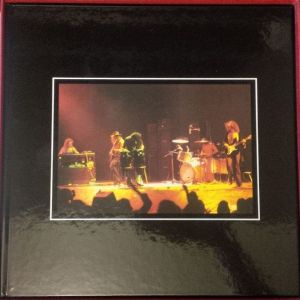 DEEP PURPLE – Made In Japan (2014 limited edition Super Deluxe box set)
Disc 3: Tokyo, August 17 1972. Finally we arrive at the third night. The band were comfortable by the time they hit Tokyo, but the sound from the venue wasn’t as desirable as the two nights in Osaka. That’s the main reason that most of the Tokyo show was not used on Made in Japan originally. Yes, sonically this is not as crisp nor clear. It seems like a noisier mix, with Gillan’s voice more difficult to make out. However, we have heard plenty of Deep Purple recordings worse than this, and this is still Deep Purple MkII at the top of their game.
The band tune up and say hello before “Highway Star”, a quaint reminder of the way concerts used to be compared to today. Like the other two renditions of “Highway Star”, this is an electric performance. Jon’s organ solo was the highlight for me, Ritchie’s blistering frets notwithstanding. Gillan tells the crowd that the song is about somebody named “Fat Larry” and his automobile.
“Smoke on the Water” begins with Ritchie teasing a bit of “God Save the Queen”. Jon and Ritchie fall out of sync a bit in the beginning of the song, but they quickly lock back into place. Of the three, this is my favourite version of “Smoke on the Water”, just because it is different. The band are looser and willing to play around a bit more. Blackmore’s solo is a highlight as he travels all over the musical landscape.
Always epic, “Child in Time” is greeted by polite applause, a true show of Japanese appreciation. While the August 16 Osaka version may well be Uncle Meat’s favourite because of the guitar solo, I think this one is pretty special due to Jon’s keys. Either way, we’re splitting hairs here. It’s “Child in Time” performed live in Japan in 1972! To talk about favourites at this point is to be speaking in nanometers.
 “The Mule” has an entertaining intro; Ian Gillan tells the monitor guy, “Can we have everything louder than everything else?” This is the version from the original Made In Japan. The intro was so legendary that Lemmy paid homage on the live Motorhead album, Everything Louder Than Everyone Else. The song goes absolutely mental at the 2:20 point, before Ian Paice breaks into his drum solo. Not a lot of drummers are interesting to listen to soloing for five minutes. Paicey is.
“Strange Kind of Woman” is another track that is never exactly the same twice. Gillan and Ritchie improvise together, a reminder of a day and age when they (mostly) got along. It’s hard not to smile. According to Ian, this song is about “Terrible Ted” and his “awful lady”.
Diving into newer material from Machine Head comes “Lazy”; always interesting since it too relies on a lot of improvisation. This is the version used on Made in Japan originally, and Jon’s solo (dipping into “Louie Louie”) is familiar and fun. That Hammond howls, and then Blackmore enters. This is one more Deep Purple long bomber. The vocal doesn’t even start until six minutes in!
Finally, “Space Truckin'”. One more amusing song intro: Ian says that this song is about what would happen if space travel and rock and roll ever met, which has not happened. Therefore, this song does not exist. But it sure does slam! The crowd clap along, obviously into it. I love every pick scrape, every drum roll, and every scream. Deep Purple can simply do no wrong at this point. The only flaw is distracting audience (or perhaps crew) noise. You can hear people speaking Japanese around the 13:00 mark.
 Disc 4: Encores. This CD comprises all the encores from all three shows. “Black Night” was played first, at all three shows. “Speed King” was played twice, on the 1st and 3rd nights. On the 2nd night the band played Little Richard’s “Lucille” at absolutely breakneck pace. For many years, these encores were largely unavailable. “Black Night” from the 3rd night in Tokyo was released (edited) as a B-side, and then re-released on many compilations such as Power House (1977). The other encores didn’t receive release until the 90’s or later. Now, finally, all the tracks from Japan are collected in one set. I could barely keep track of where to find all the songs from the Japan shows, spread as they were over multiple releases. Now it’s all in one place, as it should be.
After tuning up, Blackmore noodles for a bit. Then “Black Night” crashes to a start. This song is almost a respite for the audience, after a track like “Space Truckin'”. If you remember from Part 1 of this review, Gillan had a case of bronchitis that he was recovering from. He couldn’t stand his performance on the 15th, but you’ll be hard pressed to tell on “Black Night”.
Ian says “good luck, good night,” but it’s just a clever ruse. Much applause results in a return and a noisy take of “Speed King”. There’s quite a bit of feedback, sour notes and noise coming from the guitar. Blackmore was either struggling with it, or abusing it. A knackered Ian Gillan is out of breath at times.
 The second version of “Black Night”, from the 16th, is quite different. It’s quite ragged and feedback-laden, and this version reveals human errors that, to me, only add to the live experience. Deep Purple were taking things over the top at these concerts, and sometimes things fall apart. It’s rock and roll.
Once again, the applause of the audience brings Deep Purple back to the stage. Their insane cover of “Lucille” was a pleasant surprise. Deep Purple had been playing this for ages, since Gillan first joined the band. Another version (from London) can be heard on In Concert ’72. That is probably the superior version, though this is no slouch. Almost half of it is just intro! It is stretched over eight minutes. It keeps getting faster and faster, until they’re playing at Ludicrous Speed.
The final show in Tokyo is sonically different, as mentioned at the start of this review. That’s most obvious on this CD when you go straight from Osaka to Tokyo. This time, Deep Purple are introduced in Japanese, before Ian asks for the monitors to be turned down. This is the version used on B-sides and compilations numerous times before, and it is my favourite, probably due to familiarity. This mix allows Jon’s organ to shine a lot better. It is also unedited, which of course is a bonus.
And finally the journey ends with “Speed King”. The band tune up for the last time in Japan, and dive in. Once again, they’re off the rails. I don’t know where Gillan got the energy. Even though he’s tired, he’s still wailing. Jon Lord’s solo is especially enjoyable. I’m exhausted by the end of it. This has been a lot of Deep Purple to digest. But we’re not done yet.
















 mikeladano.com