Just tweeked it a little bit.
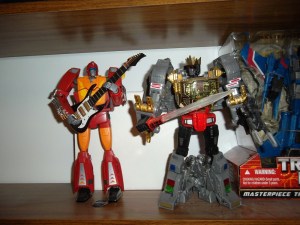

RUSH – “The Pass” (1990 single)
The discussion came up during Thanksgiving. I had the laptop up at the cottage, and the whole family listening to the 80’s Weekend on our favorite rock station, 107.5 Dave FM. As part of it, they played “Time Stand Still” by Rush.
I asked my sister Kathryn, “Is this your favourite Rush of the 80’s?”
“No,” came the answer. “I prefer ‘The Pass'”.
So that got me thinkin’. Yeah, “The Pass” was an awesome song! Sure it’s not “YYZ” or “Subdivisions” or one of those better known 80’s anthems, but it stands up. I enjoyed the production, with the emphasis on Geddy’s bass as the main hook. I always preferred this song to the first single from Presto, “Show Don’t Tell”. I was disappointed that “The Pass” was not one of the Rush singles chosen to be on their compilation, Chronicles. “The Pass” is well crafted song, lyrically relevant, emotional yet tough.
4/5 stars

Part 5 in my series of Iron Maiden reviews!

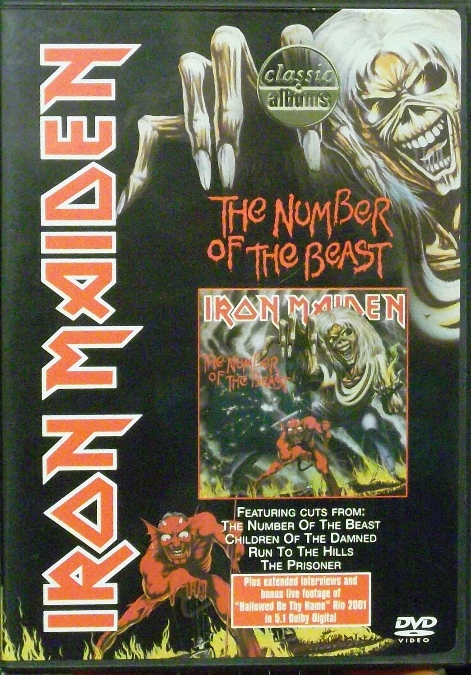
IRON MAIDEN – The Number Of The Beast (1982, 1996 bonus disc)
One of Maiden’s greatest album covers happened to house a great album inside. There was a segment of Maiden fans that were very much against the replacement of Paul Di’Anno, but Bruce Dickinson was undeniably the right man for Iron Maiden. Formerly known as the ridiculously monikered “Bruce Bruce” of rival band Samson, Dickinson fit in quickly and triumphantly.
From the first song, “Invaders” (a history lesson on the Norman invasion), The Number Of The Beast does not disappoint. “Invaders” is a storming opening, but not nearly the quality of the next number: “Children of the Damned”. Along the lines of the older “Remember Tomorrow”, this song proved why Bruce was the man for the job. The dramatically powerful music is only enhanced by Bruce’s wail. They nicknamed this man “Air Raid Siren” for a reason. “Children of the Damned” still sends shivers up my spine…
Another classic, “The Prisoner”, follows. Significantly, this is the first Adrian Smith co-write on the album, and in Iron Maiden. He has three co-writes on the record, and Adrian’s writing lent a melodic hard rock side to the band. His composition style is unique from the other members of the band, and identifiable. “The Prisoner” starts with that famous intro: “We want information… information… information!” The band had McGoohan’s permission to use it, and effective it is! It’s a catchy, singalong Maiden song, the kind of thing that worked great live. And Bruce really delivers on that chorus.
Charlotte the Harlot makes her return on “22 Acacia Avenue”. The lyrics boast, “You can tell her that you know me, you might even get in free.” But it’s not as simple and straightforward as that anymore, as Maiden have grown musically, so have they lyrically. Another character, perhaps a family member, turns up and asks Charlotte, “isn’t it time you stopped this mad life?” But if you’re not paying attention to that because the song rocks so hard, I understand. This one too bears the stamp of Adrian Smith who was no doubt responsible for those terrific riffs.
With the addition of Smith and Dickinson, the band had obviously grown and intensified. But the next two songs, opening side two, blew the doors off. “The Number of the Beast” and “Run To the Hills” were a double whammy: two awesome singles in a row that would help send the band off into immortality. I’m not saying that with a shred of hyperbole. If you’re reading this and don’t know these two songs, then I don’t know what’s wrong with the world!
I won’t dwell on either song. Yes, “Run To the Hills” is one that I never need to hear again, but I’m sure glad I heard it the first time. It’s the song that got me into the band. I absolutely loved the video for “The Number of the Beast”, and those chiming opening guitars. Then Bruce screams, and we’re off to the races. Great song, awesome video, funny too. This is the kind of image that people have of Maiden, that persists forever: Bruce, long red hair flowing like a precursor to Axl, that fringe of his in front, and those spiked armbands. Classic!
“Gangland”, the only unremarkable song on the album, is a co-write between Adrian and drummer Clive Burr! My understanding is that with 20/20 hindsight, Steve would have preferred to have “Total Eclipse” on the album instead. “Gangland” does have a good bridge, but is otherwise pretty stock.
Finally, “Hallowed Be Thy Name”. I remember this was misspelled “Hallowed By Thy Name” on the old cassette that my buddy Bob had, so I thought that really was the name. “Hallowed” was to be Steve’s new 7 minute epic, something he’d become known for. “Hallowed” is one of the best epics, and something that absolutely required the vocals of Bruce Dickinson to bring to complete fruition. Bruce nails that mournful slow opening, and then absolutely lets rip with some pretty intricate words. Seriously, do you ever try to sing along at album speed? I always trip up words somewhere.
“Mark my words, believe my soul lives on don’t worry now that I have gone, I’ve gone beyond to seek the truth.”
And to sing it at his volume with that much emotion? Unbelievable.
And that’s the album. The 1998 remasters tacked on “Total Eclipse” as a bonus track, and it’s here on my bonus disc. This was the B-side to “Run To the Hills”. My younger sister actually had this single and I don’t know why. (Kathryn, comment below please!) “Total Eclipse” was actually performed live, and can be found on the Eddie’s Archive box set. It’s a mid-tempo rocker with a fast breakdown in the middle, come solo time. It’s catchier than “Gangland”, and is also co-written by Clive Burr, with Dave Murray and Steve Harris!
The bonus CD this time only has two tracks. That’s all they released at the time, two singles, two B-sides. The second B-side is a stunning live version of “Remember Tomorrow” with the new guy singing. I always prefer Di’Anno, because he co-wrote the song, for his voice, and made it legendary to start with. But Bruce is no slouch. Much like Dio used to sing Ozzy’s stuff with more skill and range, so does Bruce in this case.
You’ll notice one guy is absent in the writing credits: Bruce Dickinson. Due to lawyers and rigamarole with his old band, Samson, he wasn’t legally able to write with Maiden. Don’t worry though, he’ll make up for it on the next album!
I don’t want to give Beast a perfect 5/5 score for two reasons. One, “Gangland”. Two, better things were still to come. There has to be room for improvement. Therefore:
4.7/5 stars


RECORD STORE TALES PART 99: Cover Thief!
Because our cases were kept empty, thieves didn’t have a lot to steal. Some stole empty cases thinking they were getting the disc, true. Some, however, just wanted the cover. That’s all.
They’d leave the case behind and just steal the booklet. You could understand why, in some circumstances. Usually it would be, say, the new Beyonce CD that loses its cover mysteriously. I imagine today, perhaps Ms. Perry or Ms. Rihanna would go missing from their cases. In rare cases, it might be, say, the cover to And Justice For All that goes missing, because it’s a badass picture.
The creepiest thing that ever happened was when the cover to Kathryn Ladano’s CD got stolen. I think I know who stole it, too. And I think it was the one known as Wiseman. He was always telling me my sister is hot. Why he would do this, I do not know. The fact that I never punched him proves I’m a nice guy.
One day, the cover just went missing. Poof. Gone. A Recital of Works for Bass Clarinet, cover only, disappeared into thin air. You got the bare minimum of cover thieves rocking the classical section of the store, too.
With Wiseman giving me all the creepy talk about my sister, I think it was him. Gaaah!
To Wiseman: You only hurt the artist, you know! Your creepy ways only means my sister couldn’t sell that CD anymore! Jerk.

This review is a re-press from keepsmealive; please drop by their site too!

Miles Davis was once quoted as saying “…I’ll just walk into the ocean and die, if I lose my tone.” All musicians, whether they admit it so freely or not, are seeking that elusive tone that defines them. Granted, Kathryn Ladano has a slight advantage in that the bass clarinet has not been an instrument of choice for most musicians. But therein, also, lies the challenge, and she handily tames the beast. Her tone is clearly the product of long practice, natural creativity and, most importantly, soul.
Part soundtrack to, perhaps, a playfully dystopian horror film, part sound/texture experiment, but all done with intention and purpose, Open reveals mastery behind apparently random strings of notes. For those conditioned by mainstream jazz and pop to expect chordal resolutions, most tracks on this record will not satisfy. And fair enough. From the outset it’s musically made clear that Open is not here to hold your hand. But play it through, especially on quality headphones, until your understanding of the pieces (if you’ll pardon the play on the title) opens. Once it does, there are treasures around every corner, in the low growls, the trills and flutters, the engaging uncertainty of what might happen next.
Scattered throughout, other instruments including xylophone, guitar, piano and a double bass, competently attempt to add to the melee. But it’s Ladano’s clarinet that soars. We’re tugged to and fro at varying paces and volumes, always with the understanding that what you find here, through your willing investment of time and thought, is your own discovery. Real jolts come as well, as after the first five truly hypnotic improvisation tracks comes the startling drum crash intro of Art Show (Improvisation), probably the most mainstream jazz-like song of the tracks here. Later, there’s the wonderful silliness of Evil Kirk, complete with spoken word quotations of Star Trek’s Captain Kirk (provided with obvious glee by Ladano’s brother, Mike).
Open will surely not be for everyone, but for those willing to strap in and hold on, it will reveal itself to be the conceptually strong, musically thoughtful record that it is.
Kathryn Ladano, known to Dave FM listeners as the sister of LeBrain (from Stump LeBrain Week), chimed in yesterday with some insightful words about music in general. If you’re a fan of improvised music, you may have heard Kathryn jammin’ on the bass clarinet on two continents!
We sat down and asked her 10 questions about music. Check out the final five below.
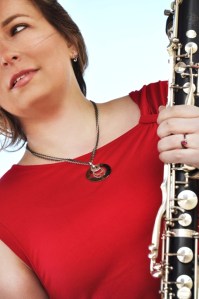
6. What do you think about the state of popular music today? Is the quality declining or improving over the last 20 years?
I think much popular music today is crap, and by popular music, I mean the stuff we’re hearing on the radio today. There are plenty of really great bands and artists out there, but we’re just not hearing them because they’re rarely played on commercial radio. I think it’s safe to say that the quality of popular music over the last 20 years has really declined. I think there was a time when certain artists were more concerned with evolving their sound and exploring new territory, and today it seems to be predominantly about just creating commercial hits. I think a lot of bands are also guilty of milking their success by trying to keep replicating the same album over and over without putting much care into diversifying or experimenting. However, that being said, i’m not sure we can place all the blame on commercial artists. Record companies obviously want to make money, and i’m sure a lot of artists are discouraged from trying anything different. Ultimately though, how many bands today have a series of albums in which you can hear a very clear, deliberate change and evolution in sound and style? Not very many, and definitely not Nickelback!
7. What do you think the role of computers should be in music today? Some people feel they rob the music of a live feel, due to the ease of making corrections and adding tracks.
I actually think computers can play a very interesting role in music today. There are some interesting programs out there such as Max/MSP which allow a performer to combine their acoustic sound with the electronic and be able to manipulate it on the spot. I think this can create a lot of interesting sonic possibilities and can really enhance a performance. I’ve played around a little with electroacoustic composition, such as my piece “Open Strain”, and I think for me, the joining of live, acoustic sound, and processed, or pre-recorded electronic sounds is what I enjoy the most, both as a performer and as a listener. That being said, I have been to concerts in which all you’re watching is someone sitting at a laptop, and visually, it’s just not very interesting. When I go to a live performance, I want to see the artists displaying some kind of expression, and sitting at a laptop just doesn’t do it for me.
8. What popular bands today are carrying the flag for intregrity in music?
Radiohead is for sure doing this. Their sound has evolved so much from their first album to their last, and you can tell that they are actively exploring new territory and are not simply concerned with producing commercial hits. I think it’s great that they have maintained such an impressive level of success and popularity too – obviously there is still a large market out there for more progressive music that perhaps record companies are neglecting to acknowledge. People will always disagree about what you should be more concerned about – creating music for yourself, or creating music for the public. For me personally, I think I create for myself first, and the bands I admire the most are the ones that appear to also take that approach.
9. Is it possible to make a living simply out of creating music anymore? Or has that day come and gone? How does one do this as a viable living?
It is, but it certainly isn’t easy. Times have definitely changed though and artists are relying more and more on social media to promote themselves. You don’t need a record label anymore to release a CD, and many artists are doing their own recordings and promotion. There are a lot of great sites out now too that help promote independent artists such as reverbnation and soundcloud which allow artists to build their fan bases gradually without big money behind them. Also, I know of several artists who are funding their albums with fan donations. I think the big problem though is time. It takes time to promote yourself and tour, and get your name out there – and it’s difficult to have both an income and the necessary time to work on your craft. People do it though. Ultimately if you’re determined enough and are willing to make the necessary sacrifices, I think it can be done.
10: Some bands like Radiohead have taken the unusual step of giving away albums (In Rainbows) for free digitally. What do you think this does to the value of music? And do you prefer have an album digitally or physically?
I think Radiohead wanted to try something different in response to the changing music industry. When that album was released, I went out and purchased a physical copy without a second thought. I personally still much prefer to have a physical album in my hands. I continue to go out and buy them and build my collection. Yes, I use itunes and own digital music, but the vast majority of my digital music collection is duplicated in physical form. I have very conflicting ideas about all of it. On the one hand, I think Radiohead offered their album for free as a way of countering piracy and trying to control the value of their music. But on the other hand, it takes so much time, energy, money, and resources to create one track which is only valued at 99 cents on itunes. As a buyer, i’m happy to pay that small amount to get a song that I want, but as an artist, I only receive 75 cents or less when someone buys one of my tracks. It’s worth it if people buy your tracks constantly, but in my genre, that just isn’t reality. I make more selling copies of physical CDs, but that isn’t what most people want anymore. *
Kathryn Ladano is a name you might not have heard before, unless you caught Stump LeBrain Week on Dave FM, or you’re a fan of free improvisation. She’s the sister of LeBrain, is a world-class bass clarinest player, but originally came from a rock background. We sat down and asked her 10 questions about music. Check out the first five below.

1. What were your earliest musical influences? I know you listened to a lot of John Williams, pop music, and hair metal like Bon Jovi. How do you go from that to a 10 minute improvisation on bass clarinet?
My earliest musical influences really don’t have a lot of impact on me today in terms of my professional career. I mean, I was into the 80’s hair bands and pop music for the most part growing up. However, it’s true that movie music really spoke to me and I was intrigued by the connection between music and visual images. This is true of 80’s music videos too actually, and I would often (and still do) picture images in my mind when I hear a song. For movie music, I was fascinated by the fact that a certain musical treatment could greatly enhance the emotional impact of a movie scene. I didn’t really understand why, but the idea of it really made an impression on me. As a teenager, I realized that it was the “weirder” soundtracks in particular that affected me the most. For example, the opening music of Planet of the Apes did such a great job of making you feel like you were on another planet, and it’s still one of my favourite examples of movie music. However, I think the soundtrack that affected me the most and opened my ears the most was 2001: A Space Odyssey. In particular, the compositions by György Ligeti — Atmospheres, Lux Aeterna, Requiem, etc… I think that early exposure to highly dissonant music and seeing how brilliantly it could enhance a scene in film really opened my eyes and my ears to the experimental, and Ligeti is still one of my favourite composers today.
2. As a listener, what type of LeBrain reader would be likely to appreciate your music? Is there a track on [your album] Open that is more accessible than others?
That’s a difficult question to answer. If I speak very generally, I would say probably readers that enjoy progressive rock and more avant-garde music would enjoy the album. I tried to throw in everything I could because I wasn’t sure when i’d have a chance to make another one, so the album features a fairly wide variety of sounds and styles. The most accessible tracks are “Something I Can’t Know” (a jazzy sounding trio for bass clarinet, piano, and drums), and “Art Show” (a more upbeat sounding trio for bass clarinet, guitar, and drums). However, the track that has gotten the most airplay is “Further Reflection” (a duo for bass clarinet and percussion that features a very atmospheric opening and minimalistic ending).
3. What do you think about “jam bands” such as the Grateful Dead or Deep Purple who often would go up on stage and improvise for 20 minutes with no script?
I think the concept is fantastic! Essentially, this is what we do as free improvisors. You pretty much throw musical genre out the window and just focus on sound, using your ears as your guide. I also really admire bands that can come up with a meaningful and interesting improvised piece that lasts as long as 20 minutes as it can be very difficult to do. When there is no script and no plan, the form and the personality of the piece can be difficult to find, and the more players you have, the more directions there are to take the music. Granted, bands like this don’t always succeed at creating a successful 20 minute improvisation, and it can be a lot for an audience to absorb, but the basic idea of making it up on the spot and just using your ears and your instinct to guide you is something I would welcome more of in popular music.
4: Bands that do 20 minute jams were extremely popular in the late 60’s and early 70’s, but today they are not mainstream anymore. Why do you think that is?
It seemed that there was a lot of musical experimentation and exploration happening in the 60’s and 70’s and for some reason, much of that stopped in the 80’s. I think audiences changed and they wanted different things in their music. Today, I really wonder how audiences would respond if more artists started incorporating long jams and improvisations into their music. It seems that it’s not something that people want anymore, and it’s too bad. Popular music has changed and I think audiences no longer expect the unexpected – most people just want to hear their standard three chord songs – unfortunately that seems to be all the modern ear is capable of absorbing. Music and popular culture moves in waves though, so I’m hopeful that at some point more experimental live performances will come into fashion again.
5. What should the role of visuals be in live music?
I am personally very intrigued by this concept and that of interdisciplinary art in general (mixing more than one art form together). I think visuals can greatly enhance music as I said before regarding film music, and it’s an area that I have been exploring a lot lately. For example, last year I directed Wilfrid Laurier University’s Improvisation Concerts Ensemble in a performance of a live, improvised soundtrack to the classic silent film Nosferatu. The ensemble created musical pieces within the context of the film that was unlike anything they had done before without visual imagery. I think adding visuals opens doors to new ideas and greater creativity and allows a musician to react and respond to something other than just what they’re hearing.
By my sister. 


 mikeladano.com