Neil Peart

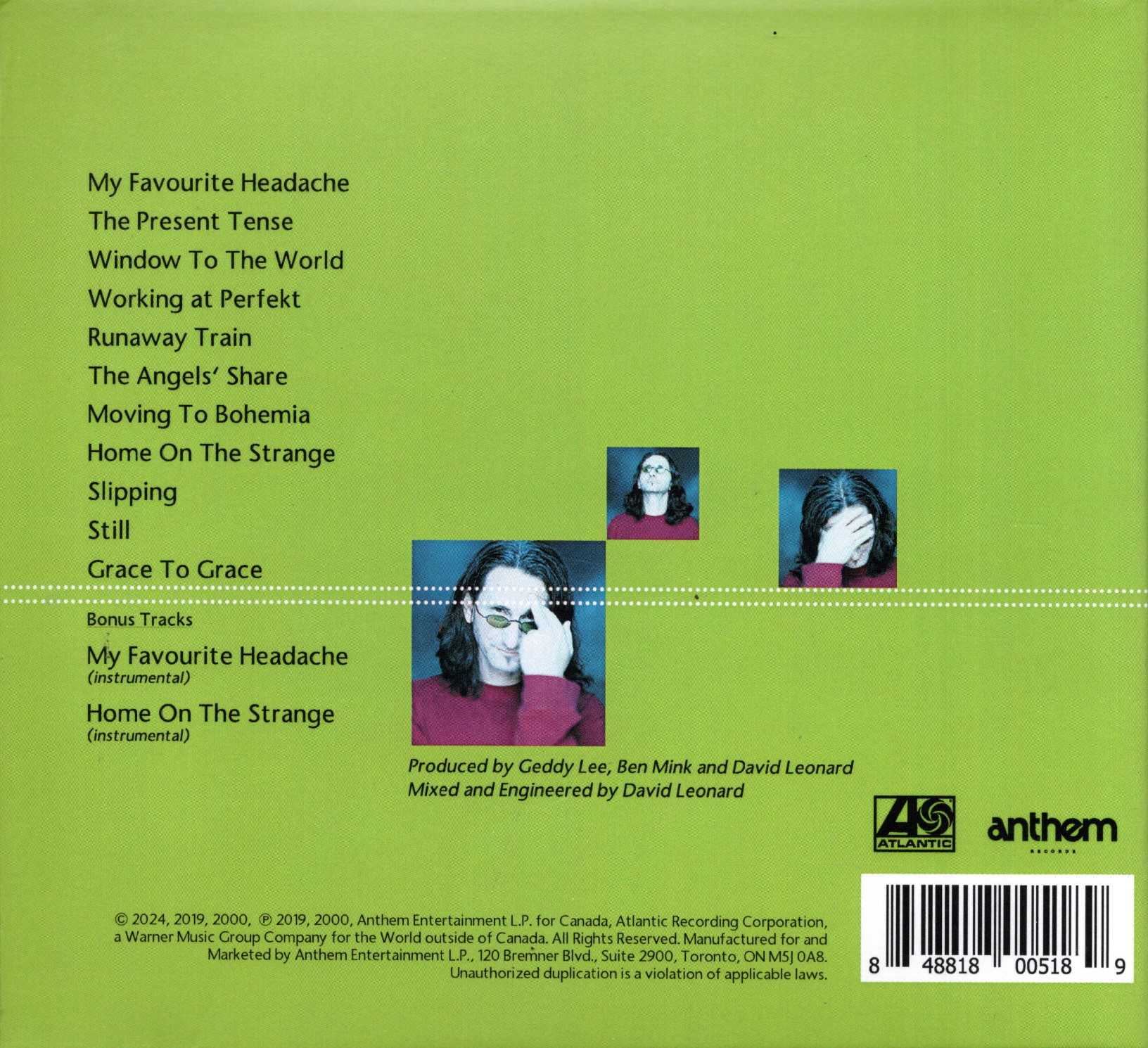
RE-REVIEW: Geddy Lee – My Favourite Headache (2000, 2024 reissue with bonus tracks)

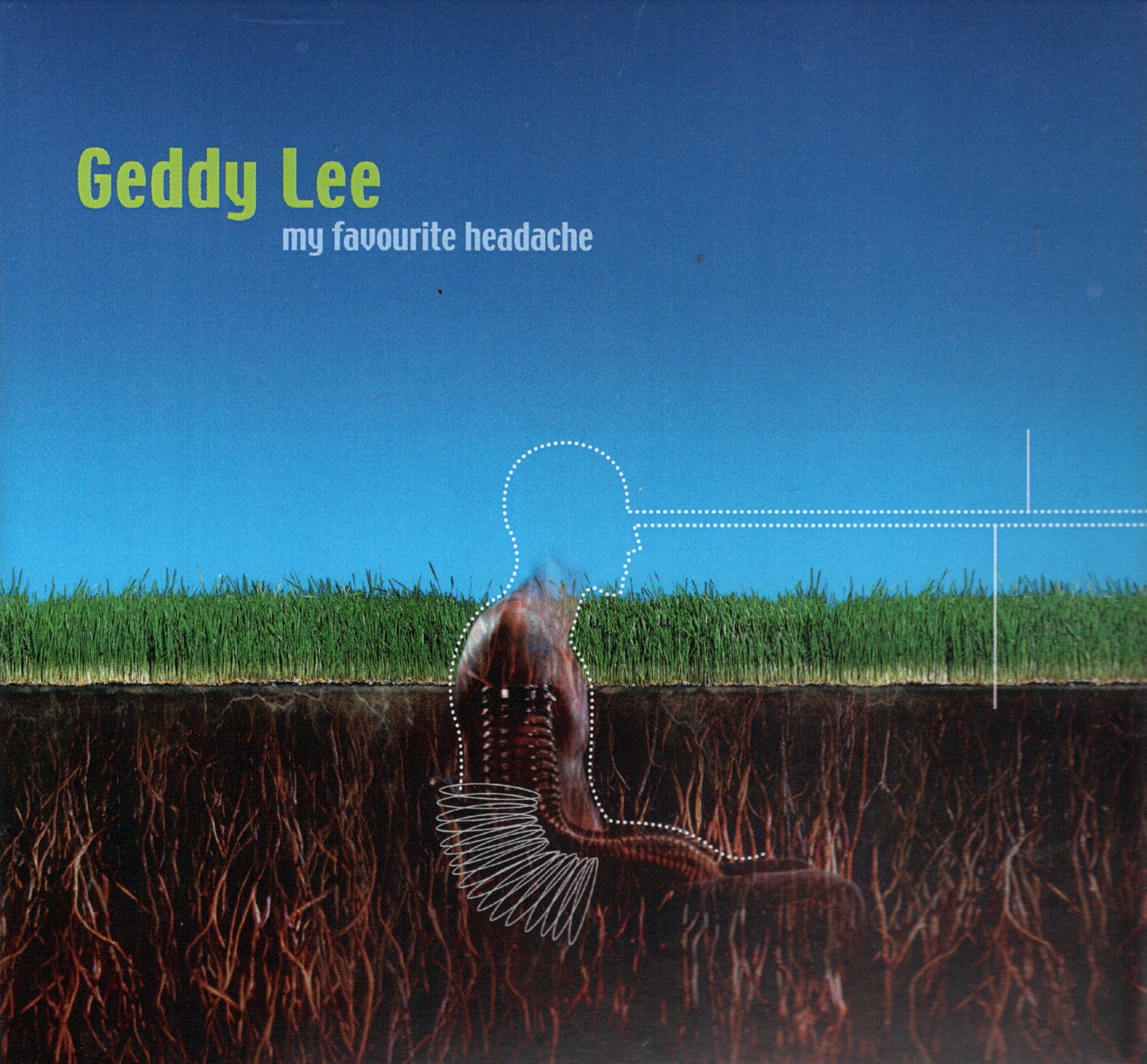
GEDDY LEE – My Favourite Headache (2000 Atlantic, 2024 Anthem reissue)

As a Rush fan, Geddy Lee’s solo album My Favourite Headache never quite clicked.  The lyrics seemed inferior and the music immemorable.  In 2024, Geddy reissued the album with two bonus demo tracks.  This is a perfect time to revisit the album and see if time has been kinder than I was in my original review.  It has been a number of years since last listen; perhaps even a decade.

The phrase “my favourite headache” means making music to Geddy Lee.  The art of crafting songs is a headache, but he would not trade it for the world.  That is what the title means.  For historical context, this album was made when Rush were on a serious hiatus.  Neil Peart was dealing with tragic loss and nobody knew if the band would ever reunite, including Neil.  From that soil grew My Favourite Headache, which Geddy recorded with drummers Matt Cameron of Pearl Jam and Soundgarden, and Jeremy Taggart of Our Lady Peace (on one song).  Geddy plays the lion’s share of instruments with Ben Mink and other guests also contributing.

As it should, “My Favourite Headache” opens with some heavy bass, Geddy’s fingers flying.  Then, it degenerates into a dissonant and hard guitar riff with throws the listener for a loop:  it’s not at all like Rush.  It might be the bass player and singer from Rush, but this does not sound like Rush.  Which is good; which is the point.  It takes a moment to adjust.  “My Favourite Headache” slows to a lush section with piano, violins and violas by Mink.  The lyrics are fascinating.  “I watch TV, what do you want from me?”  There is a lot to unpack here now that Geddy is able to express himself verbally in his music.

More Rush-like is “The Present Tense”, a song about living in the now.  It bounces from heavy choruses to softer acoustic verses, which is perhaps a different approach from a Rush one.  Perhaps by doing something more streamlined, Geddy wrote a catchier song here.  His bass sings full, but not over-dominant.  Cameron is an apt companion on drums; while not attempting to play like Peart, he is more than capable of navigating the tricky changes and fills.

“Window to the World” has a more exotic feel in its light chords, and Geddy uses his bass to deliver some delightful trills and hooks.  It has some of those jarring dissonant guitars from the title track, but not as prominent.  This song is melodic, largely easy to digest, and it delightfully careens from soft to hard, with interesting keyboard textures.

Heavier is “Working on Perfekt”.  This might be the most enticing of all Geddy’s songs.  Tense verses are broken by a sparser chorus.  Electronic sounds aside, this is a very Rush-like song.  You can almost image what Alex and Neil would do with it, but as Geddy’s song, it is rich in tones and deep, tense hooks.

“Runaway Train” is one of the brightest, most upbeat songs.  Mink’s keys and violins add a light, airy feel above Geddy’s hammering bass.  His playing is always eloquent and entertaining, if you choose to focus on the bass.  Between the electronics and Mink’s rich contributions, there is a lot you can listen to.  Or just enjoy the song.  It’s a good one.  Perhaps I misjudged this album before.

The first mistep might be “The Angels’ Share”, which some may love, but fails to launch for me.  It’s a lighter song, but Geddy’s bass ensures it’s like lead.  Ben Mink provides some really interesting soloing and backing, but the song itself never quite takes off.  In hindsight it sounds like Clockwork Angels-era Rush.  While we are in this perceived rut, Geddy throws his worst lyric out in the next song:  “Say goodbye to suburbia, you don’t have to cut the lawn.”  That’s from “Moving to Bohemia”, which is actually a pretty catchy song.  It’s pretty upbeat for this album, and Geddy’s bass playing is at its most thumping.

Geddy turns up the funk on the magnificently weird “Home on the Strange” (with Taggart on drums).  What the hell is this?  It’s crazy, it’s like Geddy pulled out all funkiest records in his collection and combined them.  The lyrics here are also quite fun:  “He’s a Canadian icon, he sleeps with his clothes on.”  Is it autobiographical?  “And he don’t like change, you may think he’s deranged, but he’d rather be home, home on the strange.”  Once you get used to its groove, this song won’t let go.

Back to the light, with “Slipping”, which relies on acoustics and piano for a gliding kind of feeling.  This is followed by “Still”, which is unusually sparse and simple.  An acoustic ballad, with an upbeat tempo, it’s a beautiful song.  It certainly sounds autobiographical.  “Still halfway up that hill, my fingers may bleed but I’ve got to get there still.”  This song strikes me as the best, musically and lyrically, on the album.  Strange that it never jumped out at me before.

Closer “Grace to Grace” remains an exceptional song, and one that really ends the album on familiar territory.  A burning guitar and driving bass are the focus, as if to say “Hey guys, I’m always going to rock.  Thanks for joining me on this trip.  Here’s a song I think you’ll like.”

Of course, on this new reissue, Geddy treats us to two previously unreleased demo versions.  If you haven’t bought the album before, you may as well go for this edition.  True, I usually criticize albums for being a bit on the long side, and My Favourite Headache is a bit long, but demo bonus tracks are added value that you don’t have to include if you just want to listen to the “album” for the experience.  There doesn’t seem to be any recording information about these two demos, “My Favourite Headache” and “Home on the Strange”.  These are full realized arrangements, though without all the vocals.  “My Favourite Headache” might surpass the album track for its live sounding rawness.  Maybe it should have been an instrumental with only a chorus?  The demo is great.  Same with “Home on the Strange”.  These tracks are worth the listen, and the re-buy.

Ultimately, My Favourite Headache requires the listener to set aside any thoughts of Rush, no matter how much Geddy and his bass will always sound like Rush.  It’s a challenge, but once you get there, it is easier to appreciate the songs and the experiment.  It takes time to absorb, as it is actually a very dense production, even for Geddy.  Ben Mink’s contributions are priceless textures that help transport yourself away from a Rush mindset.  Listen to those; focus on Mink and appreciation will come.

3.5/5 stars

Check out my autographed copy of My Favourite Headache by clicking the thumbnail.
Check out Grant Arthur and Davey Cretin as they get this album all wrong on the Warehaus tonight.  8 PM EST June 23 2025

REVIEW: Rush – Rush 50 (2025)

RUSH – Rush 50 (2025 Mercury)

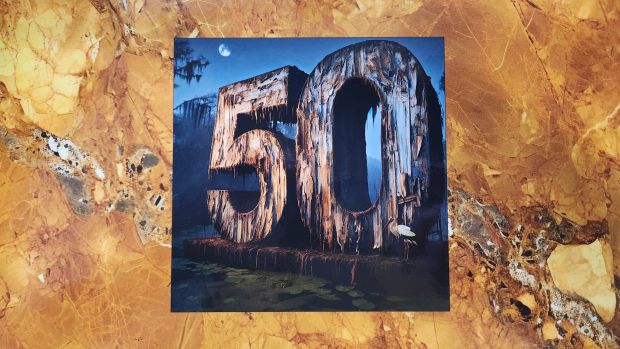
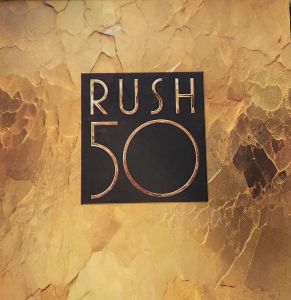
Don’t try to do any math and figure why Rush 50 is out in 2025 instead of 2024.  What matters is:  Rush 50 is out.  It is stunning, both sonically and visually.  The box art by Hugh Syme fits right in that Rush mold, akin to Chronicles.  That’s to say nothing of the hardcover book inside, which we will discuss later on.  The design is excellent.  In the back, the CDs peek out of thee sleeve like golden coins.  It’s just a really cool looking, and sounding, box set.  The remastering here is terrific.  Geddy’s bass is wonderfully separate from the guitars, and you can really hear the details as you remember them.  Brilliant job here.

Rush 50‘s four discs follow roughly chronologically.  They include a generous number of live tracks, which is not at all to the detriment of this set.  Some of the live tracks come from other box sets, from live albums, and some are rare or unreleased versions.  “Garden Road” is one long desired by Rush fans, though “Fancy Dancer” is conspicuous by its absence.  (Don’t assume this is the last collection that Rush will release.)

In the days of downloading via Bittorrent, I found crappy vinyl rips of Rush’s first single “Not Fade Away” / “I Can’t Fight It”.  I burned them to a CD, and lamented that this would likely be the only “physical” copy of the single that I would ever own.  15 or 20 years later, this new anthology-style box set Rush 50 includes the single as the first two tracks on disc one.  To finally have these songs, officially, physically, and sounding so full and rich compared that that old CDr, it scratches that itch that I have as a collector.  If I could afford that first single, I’d have it already.  This will do even better, because it’s clean and digitally perfect.  It’s also quaint.  The almost psychedelic echo on “Not Fade Away” is a detail I didn’t remember.

Similarly, about 15 years ago Rush released the “Vault Edition” of the track “Working Man” for a limited time on iTunes.  I burned that to a CD too.  Now it is here physically, along with another “Vault Edition” of “The Trees” that I was unaware of.  Now we have both on CD.  Itch scratched once again.

Wisely, Rush made sure some of the biggest hits that people want are studio versions:  “Closer to the Heart”, “Tom Sawyer”, and “Subdivisions” for example.  Joe Average, who just wants a cool box set instead of all the albums, often ends up complaining when bands out live versions instead of studio versions of the songs they really wanted.  (Trust me, I worked at the Beat Goes On for 12 years.)  The other thing is, the live versions they did select are superb.  Let me tell you, the Bonham-esque drums on the jammy “Before and After (live)” sound absolutely massive.  It’s certainly appropriate for a band of this reputation to include so many live versions.  Most of disc two is live.

With equal wisdom, Rush ended this box set with the last songs plays at the their last ever concert.  Going back to the very beginning, Rush end the anthology with those final live takes of “What You’re Doing/Working Man”, with just a smidgen of “Garden Road”.  It’s an emotional way to end the journey, and this box set is indeed a journey.  That’s the wonderful thing about anthology style sets.


The remarkable Hugh Syme worked overtime to produce the art for the hardcover book.  Yes, not only do you get words and photos, but also brand new double-page artwork for most of the songs on Rush 50.  It is the kind of box set that will give you enjoyment every time you listen to it, because you can crack open that book and just study.  My study has barely begun; I have not really been able to look at each and every piece of art yet.  Rest assured though, Hugh Syme provides all the justification for the price of this set, with the book alone.  If this were a hardcover sold in a store on its own, it would probably be at least $60 bucks as a book.

A massive career like Rush’s deserves a massive box set.  You won’t believe it until you hold it in hand.  This thing is monolithic; a purchase that will not be regretted.

5/5 stars

REVIEW: Rush – “Caravan” / “BU2B” (2010 CD single)

RUSH – “Caravan” / “BU2B” (2010 CD Anthem single)

“Parts one and two of Clockwork Angels, a work in progress”.

That’s pretty monumental.  Rush were releasing two key tracks from their forthcoming studio album, a full concept album this time, well in advance.  Two years in advance.  Notably, this was a full concept album start to finish.  In the 70s, Rush were more known for half concept, half non-conceptual records.  The bands that Rush inspired like Queensryche and Dream Theater had done full concepts.  Now the original masters were taking a shot.

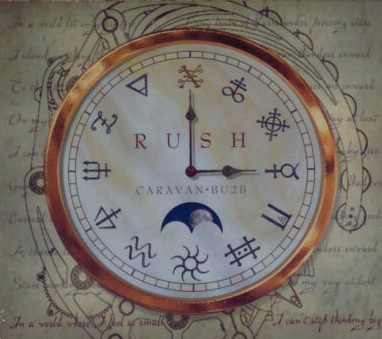
On the final album, “Caravan” is track one and “BU2B” is track two.  On this single the order is swapped.  “BU2B” (“Brought Up to Believe”) opens, although its intro changes on the album version.  “BU2B” absolutely slams.  “I was brought up to believe that the universe has a plan…”  Perhaps it opens this single because it sums up the overall album concept.  In a fictional world run precisely by a “Watchmaker”, a rebellious protagonist feels pulled in a direction different from that assigned to his life.  Questioning his reality, he embarks on his own adventures despite his mandated mundane role in society.  Musically, after the metallic riff has done its business, Neil Peart takes the spotlight a moment as the song shifts.  Geddy lays down the heavy bottom end while Alex strikes hither and yon with lightning-like licks.  Clearly a classic in the making.

“Caravan”, the final album opener, sounds pretty much the same as the record.  It establishes the setting, “in a world lit only by fire…”  The riff is a major feature, a deliberate, descending rock monster that feels just right in the guts.  The lyrics paint a picture of a steampunk world, half explored, with alchemy and ancient knowledge.

Clockwork Angels wound up as one of the greatest final albums by any band anywhere any time.  This single is a nice add-on, a reminder of the long careful gestation period that created a masterpiece.

4.5/5 stars

REVIEW: Rush – Working Men (2009)

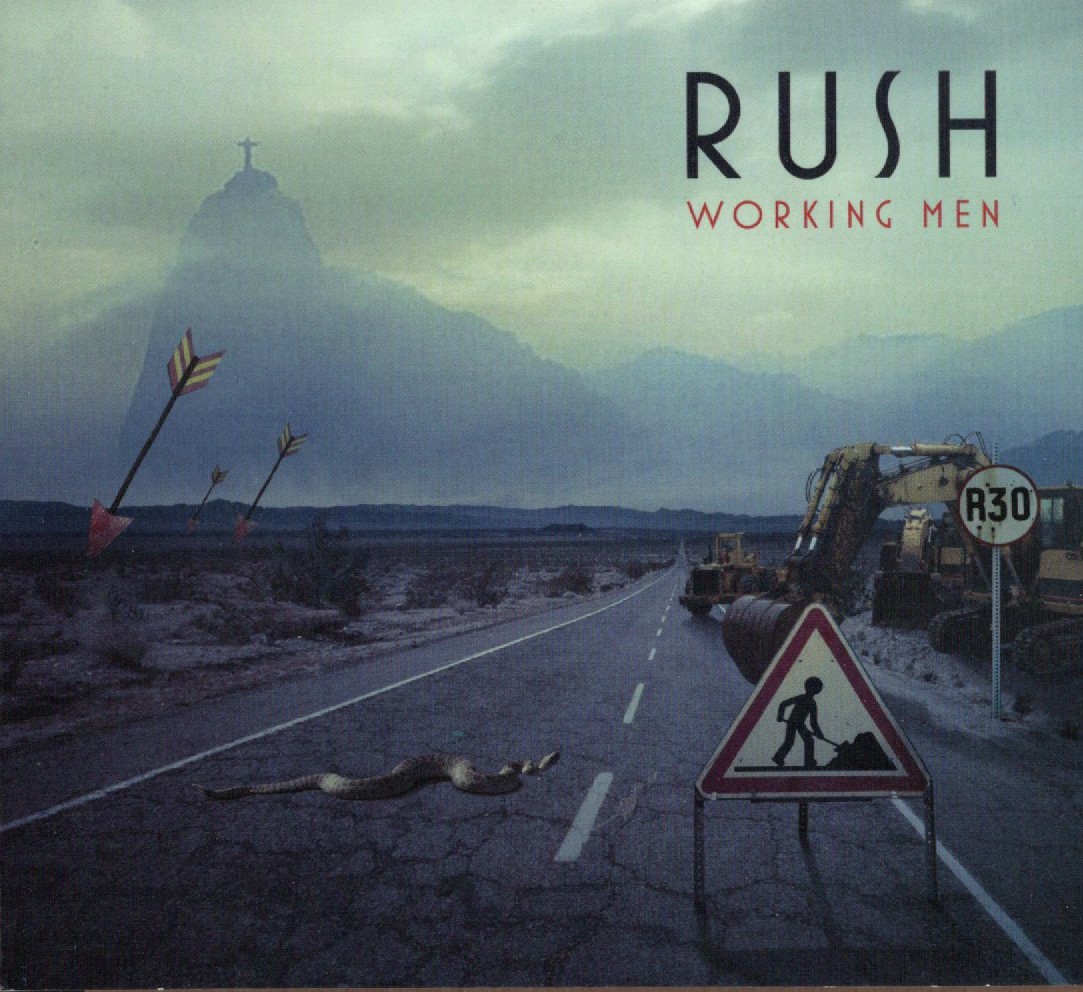
RUSH – Working Men (2009 Anthem)

Rush weren’t really known as a “cash grab” kind of band.  That’s why the Christmas 2009 release of Working Men was so surprising to fans.

12 tracks, all but one previously released on live Rush albums of recent vintage. It is not difficult to figure out that this disc was created to keep Rush product on the shelves while the band was on break during the Christmas season. While the music is excellent (obviously), it is hard to imagine a Rush fan that would play this single-disc album before listening to the actual live albums that the tracks were sourced from.  This is Rush’s version of You Wanted The Best by Kiss, but with only one unreleased recording instead of four.

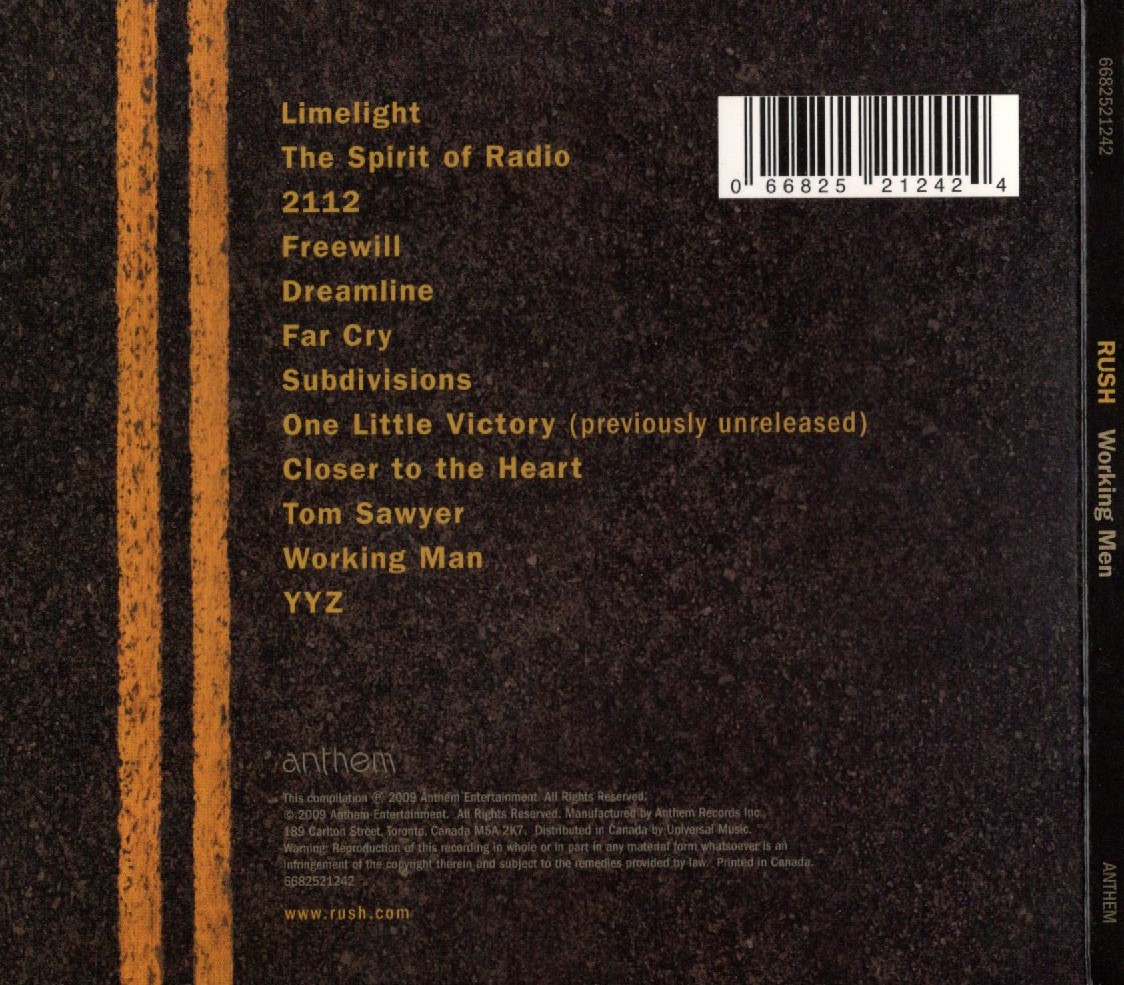
Here’s a tracklist, and a breakdown of where these tracks were lifted from:

1. “Limelight” (From Snakes & Arrows Live)
2. “The Spirit of Radio” (From R30)
3. “2112 Overture/The Temples of Syrinx (From Rush in Rio)
4. “Freewill” (From Snakes & Arrows Live)
5. “Dreamline” (From R30)
6. “Far Cry” (From Snakes & Arrows Live)
7. “Subdivisions” (From R30)
8. “One Little Victory” (From the R30 tour) (Previously Unreleased)
9. “Closer to the Heart” (From Rush in Rio)
10. “Tom Sawyer” (From Snakes & Arrows Live)
11. “Working Man” (From R30)
12. “YYZ” (From Rush in Rio)

“One Little Victory”, a stormy firecracker of a version, is the lone previously unreleased song. Is that one song worth your $15? You decide. Unfortunately “One Little Victory” is basically all you’re going to get for your money. There is no booklet and there are no liner notes to speak of. The cover art, once again by Hugh Syme, is quite nice, hinting at past works.

The songs fade-in and fade-out, rather than flow as a seamless listen. The selections lean heavily on oldies as opposed to newer tracks, which does not really reflect what a Rush concert was about at that time. Clearly, this was to entice consumers who wanted songs they have heard frequently on the radio. At least the running order is well sequenced for maximum firepower.

This release is not particularly for anybody except completists and Rush diehards. Everyone else would be well advised to spend their money on Rush In Rio, R30, or Snakes & Arrows Live.

2/5 stars, not for the music, but just because it’s a bit of a Christmas cashgrab.


REVIEW: Rush – Rare Rush (bootleg)

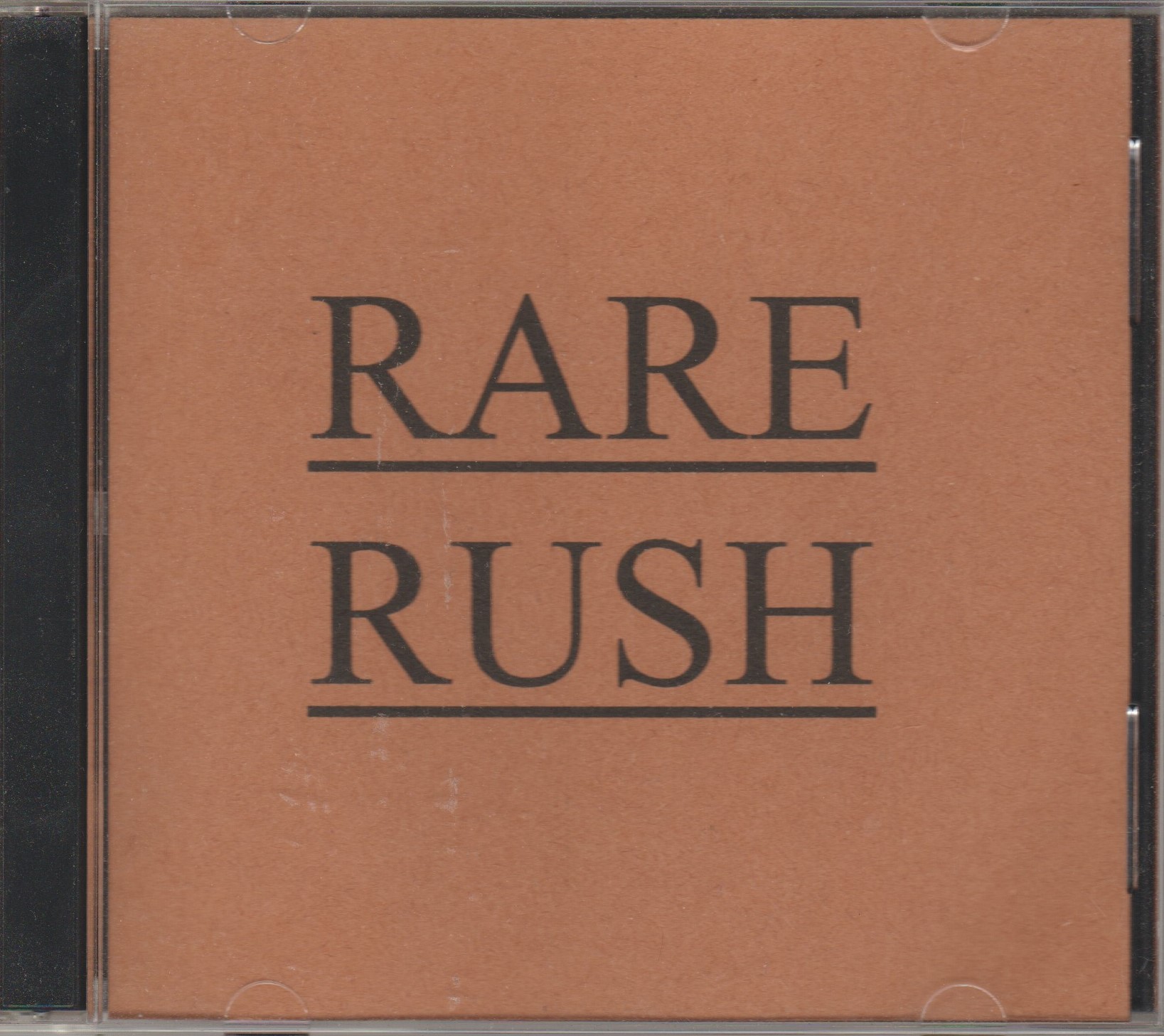
RUSH – Rare Rush (2002 home made CD set from acquired downloads)

Once upon a time there was a cool, but doomed, Rush fansite.  This site had countless downloads for free, and was shut down in short order.  While it was up, I grabbed all the studio rarities that they had, and one official live track I was missing.  This compilation is made from all of it.

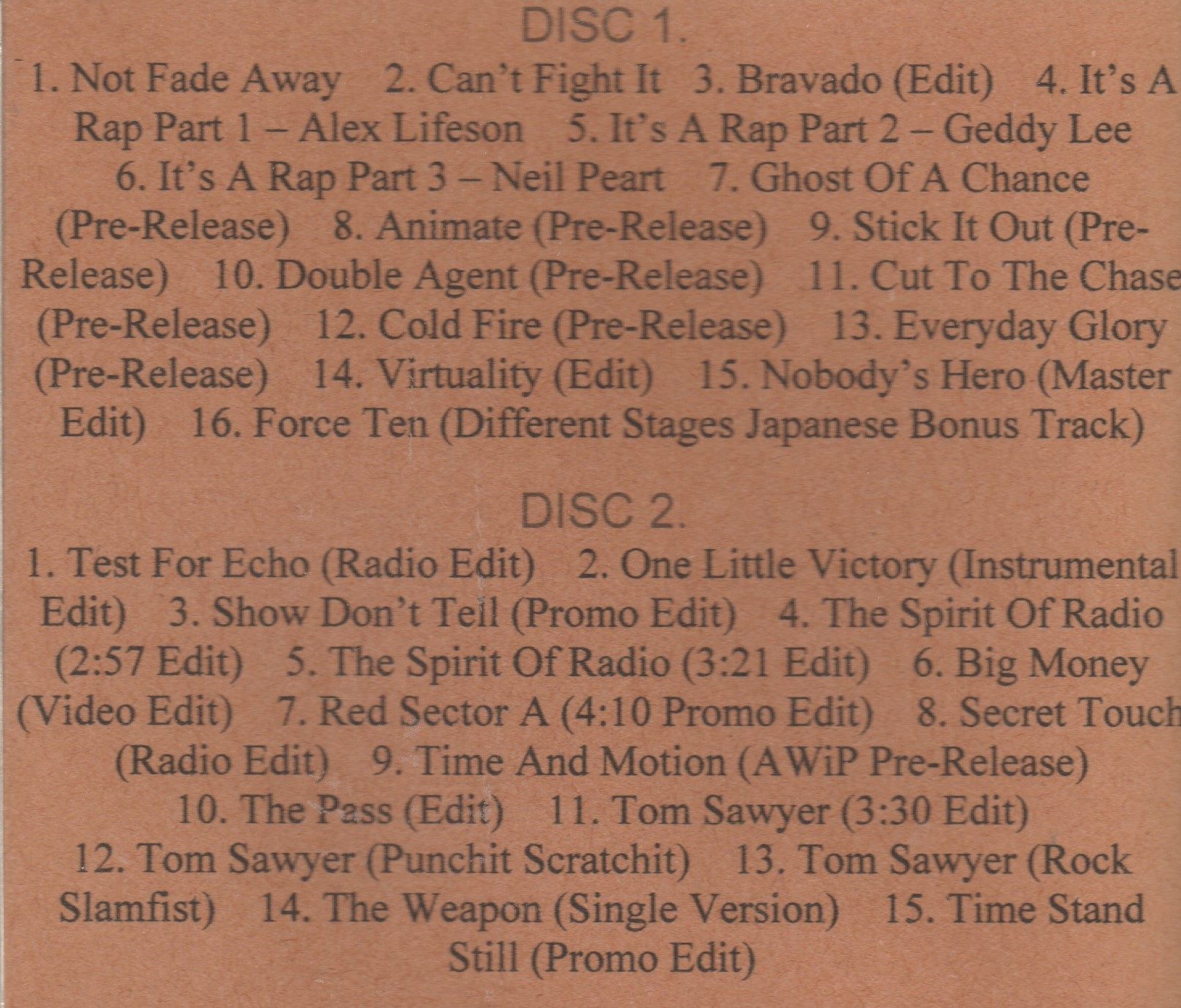
The rarities begin at the start, with the only two tracks featuring John Rutsey on drums.  They are significant ones.  “Not Fade Away” and “Can’t Fight It” were their very first single on Moon records in 1973.  It’s early Rush, more rock n’ roll, and way more high pitched.  These are very basic recordings, copied from vinyl.  “Not Fade Away” is the old Buddy Holly classic, but harder and with Geddy Lee walkin’ that bassline.  “Can’t Fight It” is an original, co-written by Lee and Rutsey.  It’s a simple but busy rocker.  Alex cuts loose some solos, Rutsey goes bananas on the kit, and Geddy holds it all down with a little bit of flash.  One listen to this and you’d know Rush were going places.  There’s an electricity on the single that carried over to the first album.  They were kids but they could play.

An edit of “Bravado” from Roll the Bones sounds like a CD single was the source.  What a song.  Is it a ballad?  Who cares.  It burns.  Neil kills it with a drum roll beyond perfect, right at the start of the fade-out, which is why you need the full-length original.  It also contains one of the most poignant Neil Peart lyrics:  “And when the music stops, there’s only the sound of the rain.”

Next is the three part interview “It’s a Rap”, from the Roll the Bones era.  Alex’s portion comes from a 7″ single, Geddy’s from a rare European CD single, and Neil’s from the more common one.*  Neil’s is probably the most interesting.  He discusses the controversial rap section from the “Roll the Bones” single, which was his idea. Robbie Robertson and John Clease were two people they thought of to deliver the rap, before Geddy did it himself.  Speaking of Geddy, his interview has the best quote:  “I don’t know how we got this image.  Maybe we wore too many robes in the 70s.”

The “pre-release” tracks here from Counterparts are slightly different in the mix.  The differences are very subtle.  Some more prominent keyboard here, a less double-tracked vocal there.  “Ghost of a Chance” has unique Lifeson fills in the last part of the song.  These tracks will be fun for any fan of Counterparts (a great album).  Some of the best songs have these “pre-release” tracks.  From “Animate” through “Double Agent”and finally “Everyday Glory”, these are awesome tunes.  “Cold Fire” absolutely smokes.  Unfortunately these tracks are not as clear as others, as they came (as I recall) originally from a rare promo cassette.

An edit of “Virtuality” from the (honestly dreadful) Test for Echo album is a drag.  I don’t like to speak ill of the dead but “Net boy, net girl” is not one of Neil Peart’s best lyrics.  In the 90s there was a trend of internet-themed songs, and none of them were really any good.  Moving onto “Nobody’s Hero”, which is a “master edit” (not sure what that is).  It’s only short by about 20 seconds at the end as it fades early.

The only live track on here, “Force Ten”, comes from the very rare and expensive Japanese import for Different Stages.  It could possibly be the only Japanese bonus track that Rush have.  Much like the album itself, this track is awesome and harder hitting than its studio counterpart.

Disc 2 opens with a radio edit of “Test for Echo”, one of the best tunes from that album.  Really cool is an instrumental mix of “One Little Victory”, though it’s so fuckin’ overdriven.  Vapor Trails reduced to mp3 (especially back then) is a harsh sound.  This is very brickwalled.  But as an instrumental, it’s worth suffering through.  Compare that to the crisp “Show Don’t Tell” (promo edit) that follows.  Now you have depth and texture.

Vintage vibes return on an old “Spirit of Radio” edit — two of them actually.  One is 2:59, the other 3:23.  They crackle of old vinyl.  Consider that the original is almost five minutes!  Radio edits are what they are — chopped to cram more songs in between commercial breaks.  “Shatter the illusion of integrity, yeah.”

Some high-tech songs shake it up a bit.  “Big Money” and “Red Sector A” are edited and truncated (“Big Money” for a music video).  “Red Sector A” is missing a whole minute of music from the middle, which you definitely miss.  The edit is just yucky, as is the one at the start of “Secret Touch” from Vapor Trails.  I’m realizing that, on its own, I can listen to Vapor Trails.  But I cannot listen to them one song at a time on a mix CD like this.  That overdriven mix is too drastic for a compilation.  (This is why Rush remixed tracks for their own Retrospective 3 album.)

“Time and Motion” is a “work in progress” pre-release, and it’s harder to listen to than the album version from Test For Echo.  More enjoyable is an edit of “The Pass” (Presto).  This brilliant, minimalist Rush tune was the start of a new kind of sound for them.  An awkward edit of “Tom Sawyer” cuts the song down to 3:32, a real shame.  Here’s thing:  “Tom Sawyer” was Rush tightening things up; making them concise.  There was no fat to trim on that song.  Everything that was there belonged.  This edit is a butcher job, cuts all over the place, an absolute travesty.

Next we arrive at the remixes.  The “Punchit Scratchit” and “Rock Slamfist” mixes of “Tom Sawyer” come from a promo single for the Small Soldiers soundtrack.  They’re pretty terrible.  Nobody needed to overdub somebody going “rock! rock!” over it.  There’s a neat loop repeated in both mixes, but most fans will call these tracks “abominations”.  Don’t forget that these were done for a kid’s movie.

Saving one of the best for last, it’s “The Weapon” featuring Joe Flaherty as “Count Floyd”!  Fans of SCTV know who that is.  The 7″ single this originated from goes for about 45 bucks on Discogs.  Definitely an item reserved for those with an all-expenses paid Rush card!  It really is a treasure though, considering the importance of SCTV to Rush over the years.  Joe Flaherty on a Rush single — yes, I want that.

The compilation ends on an up note, with an edit of “Time Stand Still”; though a bit choppy.  It stands as a reminder that Rush are not serviced well by single edits.  Indeed, any edit on this set is noticeably inferior to its album counterpart.  These particular Rush songs were honed in the studio to the necessary elements already.  Further thinning did not need to happen and only hinders enjoyment.

But, they’re rare, is the thing.  And collectors live for anything different from the album versions.  It’s part of our disease.  I won’t say “go and track down these promo singles”.  No, don’t do that.  That’s expensive.  I just hope you found this information interesting.  There are definitely treasures worth spending money on, among these downloads.  But sellers know that, and charge according to what they feel they can soak you for.  It’s unfortunate but owning this stuff physically is hard to prioritise, and for that reason, most of us will have to settle for downloads and bootlegs.


* Neil’s interview is the only one that I own physically on CD single.

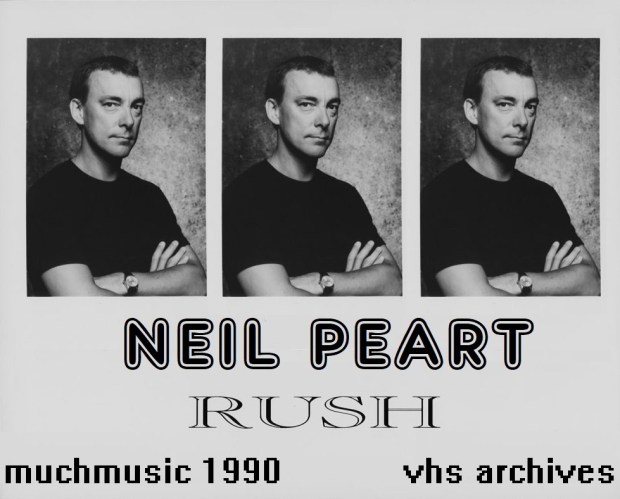
VHS Archives #84: Neil Peart on lyrics (1990)

I enjoy this interview with Neil Peart, because it touches on something that I love about music:  A good lyric is open to vast interpretation by the listener.  Inevitably, we are going to derive our own meaning from the lyrics regardless of what the writer intended.  Take this review by my buddy Aaron Lebold.  “Distant Early Warning” had a meaning completely unique to him.  Meanwhile, it had a very different meaning to me.

In this clip from the Presto tour, Neil Peart discusses crafting lyrics with MuchMusic. It’s a brilliant lesson from The Professor so pay attention!

#808.5: “Rare Rush”

Many years ago…I think I was still living with my parents…there was an amazing website with mp3s of just about everything Rush that you could imagine.  The site went down soon after, and I was unable to download any full concerts.  What I did get was all the singles and bonus tracks they had available.

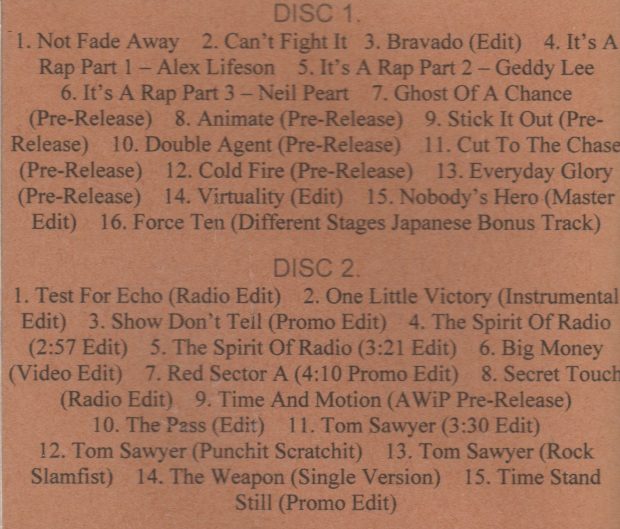
I burned these tracks to a double CD and called it Rare Rush.  I printed the tracklist on brown paper so it would somewhat match with Chronicles.

Most of these tracks are alternate versions, some from promo releases.  The website had all the details, so they are now lost.  However I know some of these are very special versions.  “The Weapon” is the famous single version featuring Count Floyd (Joe Flaherty).


The quality varies from track to track depending on the original source (some are from cassette).  All are interesting to obsessive Rush fans.

Who wants to read a review of Rare Rush?

Scan_20200115 (2)

#808: Remembering Neil – Ten of his Best

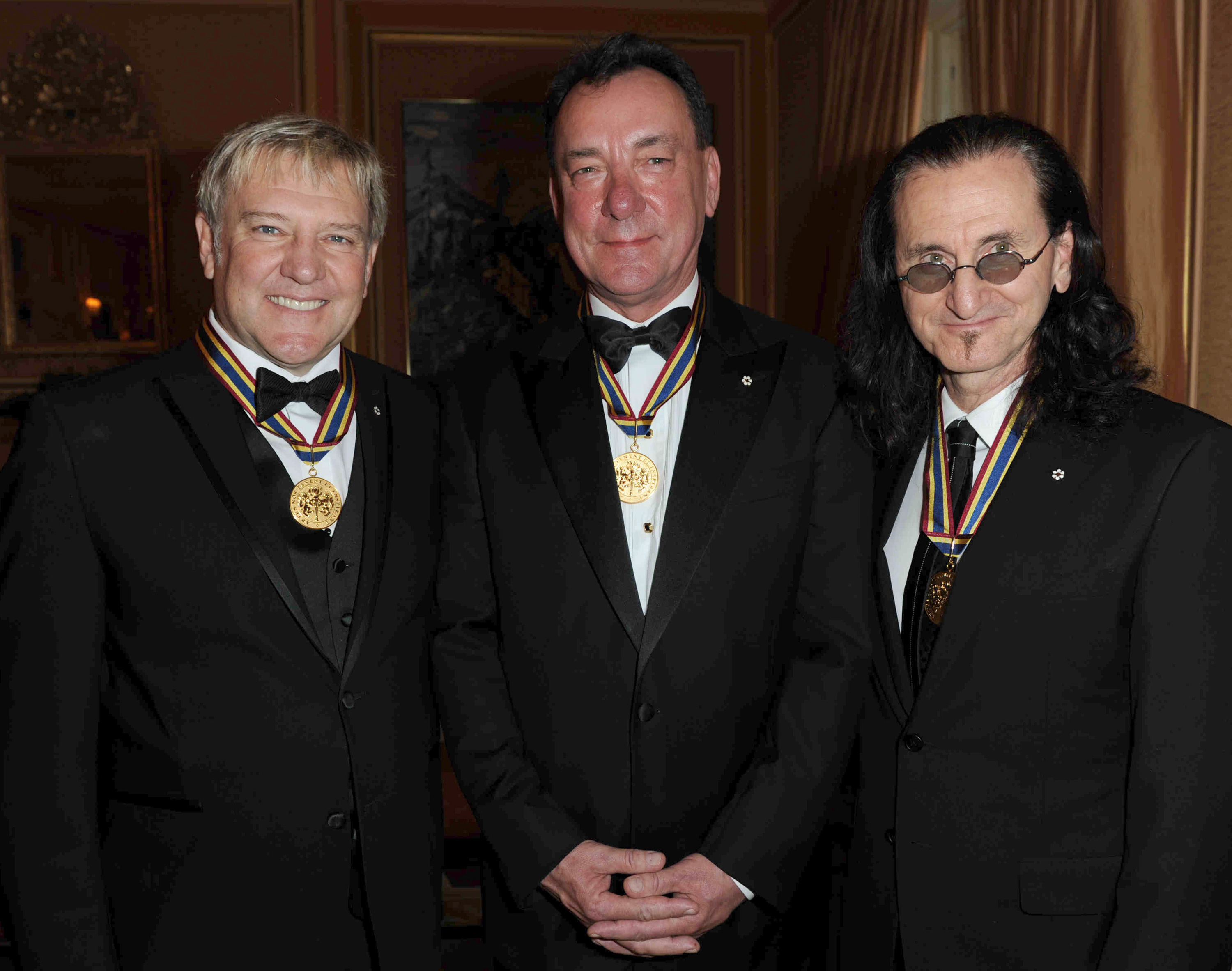
Forever I’ll be grateful for Neil Peart.  If there was ever one shining example of a rock star you’d want to emulate, it was Neil Peart.  He was a giant.  Musically he was untouchable.  Considering Rush have 19 studio albums and other odds and ends in their discography, it’s a daunting task to make a list of the best.

Probably half the list fell together immediately.  The other half was agonizing.  Focusing on songs, not necessarily solos, made it a simpler task.  Any one of Neil’s big live solos are essential listening anyway.  “The Rhythm Method” on Different Stages comes highly recommended.

At one point I had nine tracks and needed one more.  I asked Facebook for help.  Facebook responded with so many great runners-up that I have to list them.

  • “War Paint” (T-Rev)
  • “The Pass” (Leo)
  • “Afterimage” (Leo)
  • “The Body Electric” (Jamie)
  • “Xanadu” (Jamie)
  • “Mystic Rhythms” (Jamie)
  • “Animate” (Jamie)
  • “Between the Wheels” (HMO)
  • All of Hemispheres (Uncle Meat)
  • “Natural Science” (Scotty G)

A good showing for Presto tunes there, notably.  T-Rev always loved that album.  Ultimately I used none of these suggestions and completed the list below.  A list that I believe are the 10 best songs to represent Neil Peart.

All of these songs (above and below) will enrich your lives.  Enjoy.  And rest in peace, Neil Peart OC (Order of Canada), one of our proudest native sons.


Novelty #11: 

The Hockey Theme

I use the term “novelty” with a caveat: really, only because the song is 70 seconds long.  Neil’s arrangement of the classic Hockey Night in Canada theme written by Dolores Claman deserves note as one of very few tracks credited to him as a solo artist.  This track shows off his roots and his ability to make anything sound heavy!  Yet dig in and listen to his meticulously arranged drum part.  He put just as much creativity into this as he did any of Rush’s originals.


#10:

“One Little Victory”

A victory indeed!  Neil suffered immeasurable tragedy in the late 1990s when he lost both his wife and daughter.  He disappeared on a motorcycle, remaining out of sight for five years, the wind on his back as he sought healing.  His return was “One Little Victory” from Vapor Trails with a crescendo of power drumming.  It’s Rush saying, “He’s back, baby.  The Professor is back!”


#9:

“Bravado”

This track from Roll the Bones is a personal favourite.  Well, they all are, but this one is for just one moment in time. At 3:50 of the song, Peart performs a drum roll that I can only describe as pure ecstasy.

And if the music stops, there’s only the sound of the rain.


#8:

“Red Sector A”

80s Rush rules! Neil was using more and more electronic percussion, but to no less lethal effect. Give this number from Grace Under Pressure a spin.  The programmed pulse of synth topped by the crashing clank of Neil’s electronic drums give this track a digital, otherworldly feeling.  By this time, Peart’s cymbal work was just as interesting as what he was doing elsewhere on the kit.  Listen to him ride that beat and accent it with the perfect touch.


#7:

“The Spirit of Radio”

This enduring track from Permanent Waves is a lyrical and rhythmic triumph.  It’s easy for cynics to mock descriptive phrases like “Invisible airwaves crackle with life, bright antennae bristle with the energy.”  But there is no denying the truth that is “Emotional feedback on a timeless wavelength, bearing a gift beyond price, almost free.”  Music.


#6:

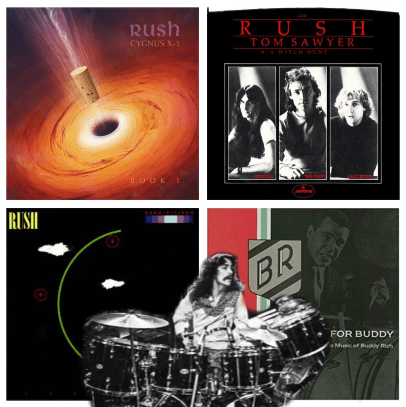
“Cygnus X-1”

A Farewell to Kings was Rush during their progressive peak, a stream of albums with side-long concepts.  “Cygnus X-1” utilises such Peart favourites as bells.  And it’s 11 minutes about a black hole.


#5:

“Cotton Tail”

In 1994, Neil Peart organized the Buddy Rich tribute album Burning For Buddy, uniting the Buddy Rich Big Band with drummers such as Dave Weckl, Steve Smith, Matt Sorum, Simon Phillips, and of course Neil with his debut in the jazz section.  His groove on “Cotton Tail” is unlike anything he’s done in Rush. It’s unreal that he could master both rock and jazz like this.


#4:

“Vital Signs”

80s Rush rules!  Introducing reggae vibes seems natural in hindsight given Neil’s willingness to explore new rhythms.  Peart’s creativity knew no bounds.  His delicate touch on the Police-like “Vital Signs” (from Moving Pictures) is so good that it should probably be higher on this list.  But there are some key tracks still to come.


#3:

“YYZ”

Rush’s most famous instrumental.  This number showcases all three of Rush’s members.  Of course Neil Peart’s drums are in integral part of it all.  And there’s a reason they call him “The Professor”.  According to minds more musical than mine, “The piece’s introduction, played in a time signature of 10/8, repeatedly renders “Y-Y-Z” in Morse Code using various musical arrangements.”


#2:

“Subdivisions”

This track from Signals exemplifies Neil’s philosophy of drums as an active part of the composition of a song.  Every beat matters; everything the stick hits is a hook.  Never before have the drums been so integral a part of what makes a song truly great.


#1:

“Tom Sawyer”

The quintessential Neil Peart song.  Iconic, untouchable.  Barenaked Ladies even quoted his famous drum part in their song “Grade Nine”. When people think of Rush 100 years from now, it’ll be the image of them jamming “Tom Sawyer” at Le Studio, with Neil framed by that big window and snowy landscape behind.


Epilogue:  Meanwhile, in England…

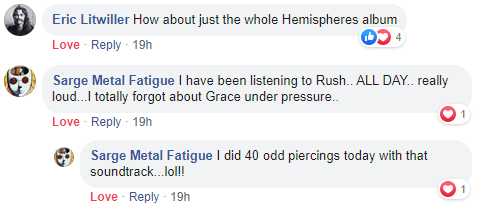
Sarge from the piercing shop Metal Fatigue in Bournemouth tells us “I have been listening to Rush…ALL DAY.  Really loud.  He added, “I did 40-odd piercings today with that soundtrack!!”  Absolutely brilliant.

The Ghost Rider is Gone – Rest in Peace Neil Peart (1952-2020)

“Endlessly rocking…”


This afternoon I was in the mood for some Rush music.  It had been a while.  Maybe a month since I last played Rush.  Signals, I chose.  A personal favourite.  Still craving more, I picked the followup album Grace Under Pressure.  That complete, I finally, and strangely, went for Vapor Trails.  I say “strangely” because Vapor Trails was a special album for Neil Peart.  After suffering the terrible twin tragedies of losing his daughter and his wife, Neil Peart took a step back from music to take care of himself.  There was a time in the late 90s and early 2000s when the reality was that there wasn’t a Rush.  And we weren’t sure if there ever would be one again.  But then Neil made a pretty epic comeback on Vapor Trails and I like to think of it as “his” album in my mind.

The fortitude of the man, to come back after such loss, was inspiring.  What strength.

Halfway through Vapor Trails, during the track “Secret Touch”, this happened.

The greatest rock drummer of all time…

Is gone.

Like a vapor trail.

I say “greatest of all time” because I can, confidently.  There will be those who disagree, and there will be others to put them back in their places.  He might also be the greatest lyricist in rock history, though that’s a far more wide open field.  Some of his lyrics hit home in emotional ways.

We are young,
Wandering the face of the earth,
Wondering what our dreams might be worth,
Learning that we’re only immortal,
For a limited time.

Neil Peart was a star I always identified with:  an introvert with his nose in a book.  Yet on stage he was a dynamo.  He did things with two sticks that most drummers cannot.  He paved the way for the Portnoys and all the greats that followed.  His lyrics of alienation resonated within the subdivisions.  And he was reportedly also one of the nicest, most down to earth human beings to those whom would he would let in.

Personally speaking, it was “Subdivisions” that hooked me.  The singer kind of weirded me out, with the glasses, nose and high-pitch.  It took me a while to accept Rush into my life.  I was 21 years old when it finally happened.  It had so much to do with the drums, and the percussive mini-compositions within every song.  Seeing Neil Peart interview Jean Chrétien on MuchMusic solidified my belief that this was an intelligent rocker, far different from all the others.  By this time, he was also writing articles in Macleans magazine.  His travel book The Masked Rider became an immediate favourite, as Neil painted verbal pictures of African savannas from the seat of a bicycle.

Brain cancer is an evil bitch.  It’s the same monster that took down our beloved Gordon Downey, and now it has taken from us someone deeply dear.  Neil accompanied me on many of my most impactful life moments.  My first relationship & accompanying breakup, my job at the Record Store, finishing school, all of it.  Neil was there with beats and words to raise the spirits higher.  I tended to take the words my own way.  Which is how Neil would have wanted it.

Rush are one of the few bands, unlike Kiss or Motley Crue, that went out with class.  They simply played their final shows and retired without making a big fuss.  We all knew it was a big deal, and they did too — but they didn’t act like it.   Neil Peart went back home to spend time with his new family, something everybody was happy for him to do.  After all that tragedy, it was a delight to see that Neil has picked up the pieces and made a new clan.  And now that family is shattered, in incomprehensible pain.

The song that got me into Rush was “Subdivisions”, but instead of posting that track here, I have chosen “Dreamline” from Roll the Bones. Rest in peace Neil, and thank you for albums that will always be close to my heart.

Fuck cancer.


Uncle Meat has a few words to add.

One likes to believe in the freedom of music,
but glittering prizes and endless compromises
shatter the illusion of integrity.

His lyrics were as good as his drumming. And that is saying alot. Neil Peart was the opposite of a rock star. He wanted nothing to do with any of that bullshit. When Neil Peart joined Rush after their first album he turned Rush from just another rock band, into the greatest rock band of all time. Many life long friendships have been founded and cemented within the musical and lyrical gifts he gave us. A big long hug to all of you (and you know who you are)…

What a fucking beast he was.

RIP Mr. Neil Peart


#775: Eleven

GETTING MORE TALE #775: Eleven

It was eleven years ago this weekend that life changed forever.

On August 31 2008, I dressed up in a tux, gathered a hundred of our closest family and friends, and got married.  It was the best decision I’ve ever made.

We didn’t get to celebrate ten years.  At this time last year, Jen’s mom was terminally ill.  We were at her bedside.  I know what she would have said to us if she knew what day it was.  “You guys go out, have a nice dinner, on me.  Enjoy yourselves.”  That’s just who she was.  But we didn’t feel much like eating or celebrating.

I think “mum” would appreciate that this year, we are going to celebrate #11.  We’re going to remember her, and we’re going to be thankful that we have each other.  Making #11 our year to celebrate seems appropriate for us; we’re the couple that is 1) always late, and 2) rarely doing anything the “normal” way.

In order to do things right, I’ll be taking a break from mikeladano.com but we will all re-convene back here after Labour Day.

It’s a well deserved break!  We have some general ideas but the plan is just to take it easy and go with the flow.  I just bought a 2 terabyte external hard drive, so I’ll actually be able to take all my music with me, in the car and on the laptop.  I couldn’t do that eleven years ago!

Here are some songs that mean the most to Jen and I.  Turn ’em up and we’ll catch up again next week.


Stompin’ Tom Connors – “Sudbury Saturday Night”

As told in Record Store Tale Part 20: I Believe in a Thing Called Love:

It started with Stompin’ Tom. I think I had told her that I had a stack of new movies, a huge bag of chips & a case of Red Bull, and was ready for the weekend or something. She responded, “Sounds like you’re ready for a Sudbury Saturday Night.” So right then and there, boom! She was speaking my language.


The Darkness – “I Believe in a Thing Called Love”

I was into The Darkness in a big way.  As told in Record Store Tales Part 80, these guys were absolutely one of my favourites when we met.  “I Believe In A Thing Called Love” was a major feature at the wedding reception.


Guns N’ Roses – “Patience”

This was one of Jen’s favourites from the reception. When it played, all the couples slow-danced together. She thought it was a really sweet moment, and a lot of those couples are still couples today!


The Beatles – “Revolution”

When I asked Jen to pick a song she liked, this was the first one she named.


Van Halen – “Why Can’t This Be Love”

Before we met, Jen actively disliked Van Halen (classic rock in general). Today this is one of her favourite songs. Rock radio had a lot to do with that.


Neil Peart – “The Hockey Theme”

Before I met Jen, I’d never heard this theme in my life.  Today, I can name pretty much every Maple Leaf and dozens of other players too.  I can’t believe she’s done this to me!  But don’t you dare call me a “hockey fan”.


The Traveling Wilburys – “Handle With Care”

No story, we just love this song.


Johnny Cash – “In My Life”

I’m sure everybody plays this at their weddings, don’t they? We knew that, so we chose Johnny Cash’s version. Let me tell you, that was a really cool moment, in the church signing the registry to this song. I hope my buddy Tom appreciated that, being such a huge Cash fan. I was psyched for him to hear it at a wedding instead of the usual.

I hope you enjoy some of our songs too.