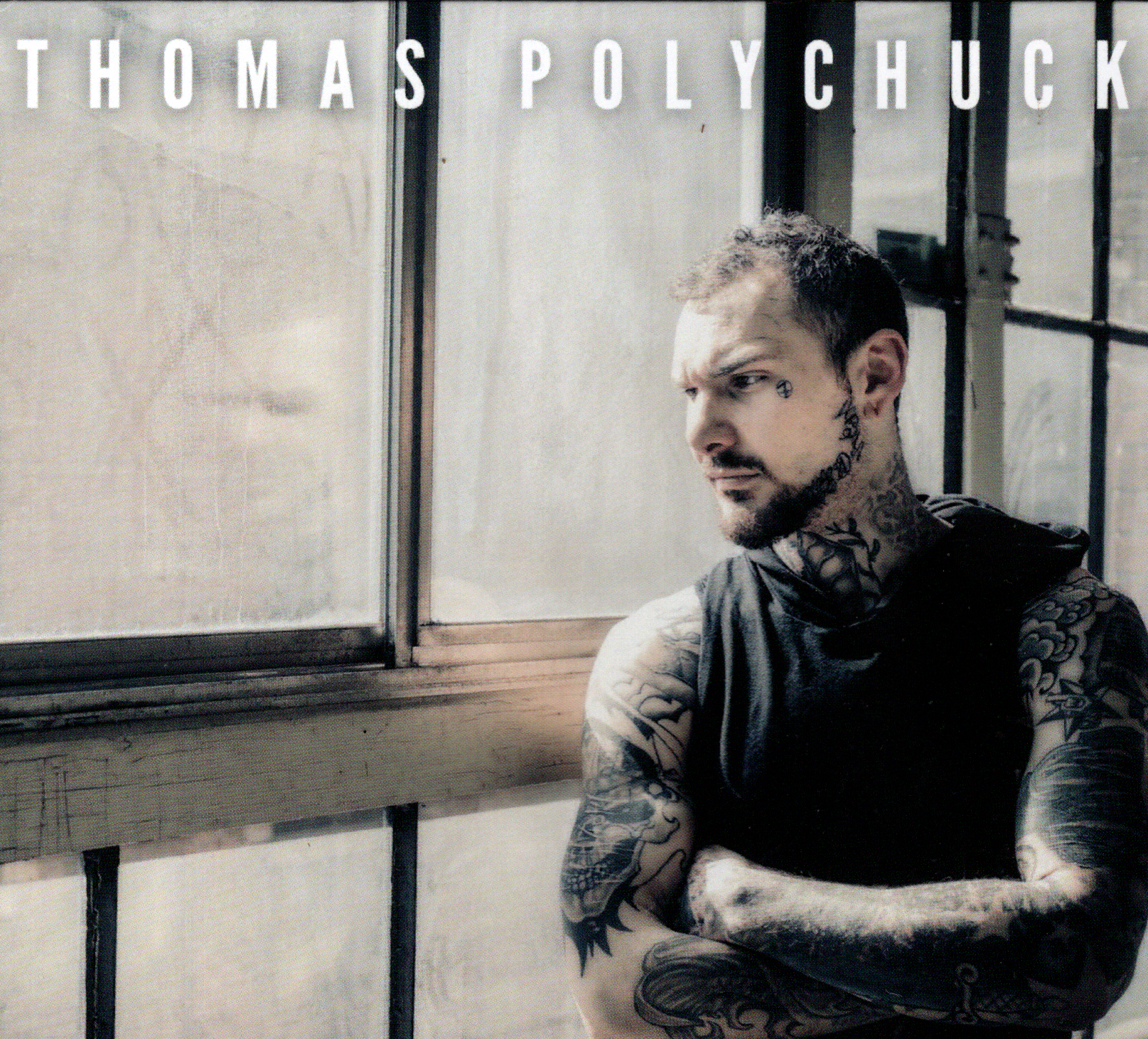
Out of the gates, Thomas Polychuck’s new instrumental solo album impresses. With former Dream Theater keyboard player Derek Sherinian on almost every track, the direction is instrumental progressive rock. Derek has plenty of room to shine, frequently playing off with the guitar and providing loads of those vintage Dream Theater hooks.
The opener “Genèse” commences the album very much like the familiar bands we love so much, with big guitars. It then goes on its own fun tangents. This fascinating track has guitar melodies and a really cool interlude with flute sounds. Anyone who enjoys instrumental guitar rock will dig this track. Sherinian adds loads of texture on keys.
Simon Phillips gets things going on “The Cyclone” with a cool tribal sounding drum intro. Then Polychuck and Sherinian get jamming on a funky little groove, incorporating jazz, shredding, and rock riffing. You can hear things reminiscent of Richie Kotzen’s solo work in the notes. Derek and Thomas sound like they’re having a blast soloing with each other. It sounds very live, however they achieved it.
Polychuck goes full jazz on “Dieze11”, a lovely piece with soft guitar and piano. The soft drums are a nice change of pace, and the busy bassline has room to breathe. The main feature is the guitar, which lingers nowhere for very long, before darting off in another direction. The result is that it feels like the guitar is telling a little story.
Back to the shred, “1316” breaks off at a speedy pace, like a metal rocket fuelled by guitar. Derek continues to complement the music with keyboard textures that explore different sounds and voices. Though the guitars are cranked up, you can still hear jazz note choices in the solos. Then, suddenly it breaks into a Rush-like groove from the mid-80s.
“Construct” gets even heavier, but fortunately Polychuck has the wisdom to lay down a more melodic guitar line overtop the heavy chords. Between the guitar and keyboards, there are a lot of tasty bits here to grab on to. “They Carry On” is another jazz number with upright bass by Maciek. Picture a smoky jazz club at night. Not too loud, and totally authentic. Polychuck allows the bass to have its moment. It is followed by the awesome “Reality”, an anthemic guitar number with some very nice melodic elements.
The unexpected ballad “Sign From Beyond the Veil” is the most beautiful track on the album. With subtle organ by Chris Madden, Polychuck’s guitar sings softly of hopeful feelings. A very uplifting track, with a vibe like classic Joe Satriani. Soft though it may be, there are a lot of interesting guitar sounds going on.
The final track is a driver called “Retold Story” featuring Brian Tichy on drums. The drums kick on this one, and Polychuck goes once again for a storytelling guitar style. He goes from fast to slow, mood to mood, never staying too long in one place, but always offering interesting sounds and licks.
Having heard Polychuck’s earlier music, with influences across the board from pop to dance to metal, and now here with hardcore progressive rock and authentic jazz, one wonders where he can go next? Classical, country, blues? The sky is the limit for this talented musician. This album would be cherished by lovers of musicianship, and those moments when progressive rock meets jazz. An unexpected treat to finish 2024 with a flourish.
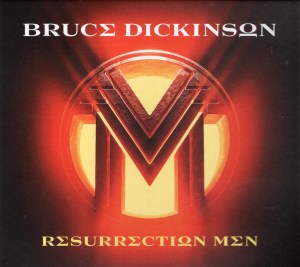
BRUCE DICKINSON – “Resurrection Men” (2024 BMG CD single)
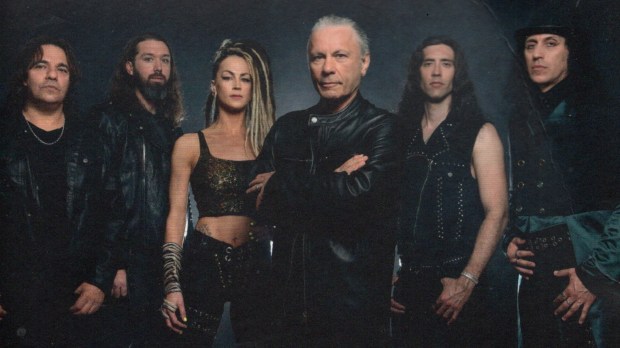
The Mandrake Project is a dense album. It takes a lot of time to absorb and understand. The concept goes way over my head, but the songs are heavy and the direction is metal. Bruce Dickinson is nothing if not ambitious, and of course that means taking the new album on the road. His live band this time out includes the always reliable Dave Moreno on drums, and Whitenake bassist Tanya O’Callaghan. Bruce has released two singles from the album with exclusive B-sides, and the second is “Resurrection Men”.
“Resurrection Men” is long for a single, at almost six and a half minutes. It is loaded with drama, and the acoustic intro really sets a mood. Then it goes into something more western, like from a Clint Eastwood film, with interesting percussion. That soon subsides and we go full electric. This song lunges all over the place, from slow grinding verses to quiet bass-driven parts, and a powerhouse chorus. Ultimately it’s not really single material, but that’s one thing that makes this release so interesting. It’s also impressive how Bruce continues to sing with such lung power.
Live from Sao Paolo comes “Afterglow of Ragnarok“, the first single from The Mandrake Project. A song about “what happens after the end of the world,” according to Bruce. It is tight, and does not deviate far from the original cut. The live setting is unforgiving, but even without multitracked vocals, Bruce nails it. The stage energy is palpable, and Moreno kills it on drums.
The most exciting track is the very first live version of “Abduction” from Tyranny of Souls. This one absolutely smokes, with breakneck pace, lightning drum fills, and melodic guitar harmonies. A lot of solo Bruce stuff could almost be considered Iron Maiden made modern, louder and more intense. “Abduction” falls into that category. This live version has some really cool guitar solo work, very different from Roy Z’s on the album.
It is truly wonderful to see artists such as Def Leppard, Deep Purple, and Bruce Dickinson releasing physical singles with actual B-sides in 2024. Keep it up.
DREAM THEATER – “Hollow Years” (1997 Warner Music Germany)
I always found something about 1997’s Falling Into Infinity to be underwhelming. Yes, we had the stunning Doug Pinnick cameo in “Lines in the Sand” and a wickedly heavy “Burning My Soul”, but the album didn’t have the same impact or longevity as Awake or Scenes From a Memory. It wasn’t for lack of effort. They recruited Desmond Child and Kevin Shirley, and released singles. The album never broke the top 50 in Canada and received mixed reviews. A later-released demo version of the album revealed what the band would done if not influenced by Shirley and Child. One of those demos was first released on the 1997 “Hollow Years” single.
First track on this single is a 4:15 edit of “Hollow Years”, with more than a minute and a half edited out. The shame is that it didn’t become an instant hit. With the Spanish guitar melody and subtle keyboard accents, it could have and should have done better for the band. There is a very pretty piano melody after the chorus by Derek Sherinian, in his last of two outings with Dream Theater. Yet it’s still Dream Theater, not some ballad band. John Myung’s fretless bass sets it apart, and Mike Portnoy is always Mike Portnoy no matter the style of music. The premature fade on the edit version, however, is extremely annoying. Even if you don’t already know the song, it sounds like a premature fade. The ending is so good; a song highlight! The full length version, uncut and as intended, is really the only version to listen to.
“You Or Me” is a version of “You Not Me” from the album, before Desmond Child helped them tweak it. It opens with the sound of a radio changing stations, and then a cool synth rhythm. John Petrucci’s riff soon kicks in, and it’s clear Dream Theater were trying new things that might be perceived as more appealing. Ultimately, the version that ended up on the album is probably the better of the two. It’s definitely catchier.
The final track is “The Way It Used To Be”, a long non-album song with a Marillion-like guitar melody. It could have been lifted directly from Seasons End. Petrucci is the star on this one, as he also employs cool harmonics. Definitely a cool and valuable bonus track. If it wasn’t almost eight minutes long with plenty of musical prowess, it might have been a worthy hard rock hit on its own.
Great little CD single, but those edit versions are never as cool as they are collectible.
SAVATAGE! This Florida metal band reigned from 1979 to 2002, and is now back ready to unleash a new album called Curtain Call! They never received the recognition they deserved over the course of 12 mostly excellent albums. Let’s fix that here and now!
We begin our story with tragedy, but also triumph. Lead guitarist Criss Oliva was killed by a drunk driver, almost ending the band permanently, and shattering the soul of his brother Jon. Jon Oliva was not even a member of the band anymore, having abdicated the mountain king throne to new singer Zack Stevens a year prior. Undaunted, Oliva wrote and recorded almost all the instruments on the next Savatage album Handful of Rain. Even though bassist Johnny Lee Middleton and drummer Steve “Doc” Wacholz are pictured inside, they did not play. Jon did. Joining him on lead guitar was former Testament master-shredder Alex Skolnick. An immensely powerful team up. They produced a somber album, but not without power and thrills. The title track, available as a 5:25 extended edition or the standard 5:02 version, boasts acoustic verses and a powerful chorus that will stay with you for days.
The final Savatage epic from the final Savatage album. Jon Oliva was back on lead vocals. Zack Stevens departed to form his own band, Circle II Circle. This song utilizes a powerful, relentless riff and a host of backing singers taking care of a complicated vocal counterpoint. Different lyrics and melodies all overlap to form a cohesive and weighty segment of an already powerful song. With piano and guitars intertwined with equal emphasis, Savatage may have taken their new operatic metal style to its peak here. Though a comeback is planned, the band has remaining largely inactive ever since. Regardless, at least they finished their first life in style, and with masterful progressive metal music.
Though this song commences with a corny keyboard bit and a ballady melody, it is far from that! The battle grunts of the “warriors” soon join in with a sharp metal riff. An alloy of iron and titanium, “Warriors” boasts a relentless chorus. The verses are fun too. “Armed to attack! The soldiers react!” Not poetry, but it matters not when Oliva screams. This is simply heavy metal, down to the basics, and executed with youth and naivete. The thing is: it’s really good and catchy!
A shorty, at under four minutes. The tempered steel of Criss Oliva’s riff is the main hook. Much would improve later on, such as Jon’s lyrics and the band’s writing skills, but they had everything they needed from the get-go. There’s a slower breakdown in the middle that only serves to re-ignite the powerful riff later on. Oliva’s shrieking was already in place, fully formed and under his complete control. Because the song is so short, you just have to go back and play it one more time.
Producer/manager Paul O’Neill was working with a little band called Badlands in 1989, featuring former Black Sabbath singer Ray Gillen on lead vocals. He made a hell of an impression before Badlands as a backing vocalist on “Strange Wings” by Savatage! This song, which boasts a powerfully simple riff, contains one of Savatage’s mightiest choruses! A melancholy metal song with oodles of power, “Strange Wings” is one of Savatage’s top deep cuts. There are many to choose from, but Ray’s singing on this one sets it apart. His voice, mixed with Jon Oliva’s, offers a rare metal duet of stainless steel.
A classic Criss Oliva riff, backed by the haunting screams of brother Jon! This song introduced Savatage to the metal masses. Few songs can top the power of its mighty riff, or the unholy notes that Oliva hits on the chorus. Not overly complex, but neither is it simple. After Criss’ solo, Jon simply lets loose with the howls of a banshee gone mad! Many would rank this song much higher than #5. Perhaps the Metal Man is one. It is extremely difficult, since Savatage have so many songs of different flavours. Of their era of pure metal majesty, this song is tops.
4.“The Wake of Magellan” from The Wake of Magellan (1999)
Savatage have utilized counterpoint vocals numerous times on their albums from Handful of Rain to Poets and Madmen. It is arguable that “The Wake of Magellan” is their most effective use of the technique. Multiple vocal parts and lyrics overlap over each other, with uncountable Zacks singing complementary parts over each other. Fortunately, the melodies are strong enough to stand out in the storm! While the band and orchestra cooks behind, Zack Stevens sings all the parts, overdubbed for simultaneous power. The first layer: “Don’t see the storms are forming, don’t see or heed the warning, don’t hear the sound of tyrants, surrounded by the silence.” Then a second Zack joins, singing the same. A third Zack emerges overtop, singing the extremely fast and challenging lines: “Columbus and Magellan and De Gama sailed upon the ocean in a world of ignorance with thoughts so primitive. That men were killed with no more will than that they simply had the notion, but in this world of heartless men this thing they never did.” Imagine singing that live, which the band had to do, at machine gun speed! Another Zack doubles those lines. Then a fifth Zack joins: “Don’t hear it, don’t hear it…” Then another Zack: “Got to keep it underground, pretend you never heard a sound.” More Zacks join with the lines “If they find it, kill it, blind it,” and “Lord tell me what is to be,” until all the voices coalesce together in the line “They whisper, and I…” Has there ever been a more epic song in any genre?
New singer. New lease on life. Zack Stevens was sometimes compared to Geoff Tate when he first debuted in 1993 on Edge of Thorns. The first single from the first album of a new era, combining the metal of Savatage’s early years and the piano epics of the previous two records. The brilliant title track from Stevens’ debut still raises goosebumps on the arms. An apex of this style of metal, “Edge of Thorns” has no dull surfaces. Every edge cuts deep, the scarlet blood stains lingering in your heart forever. “I have seen you on the edge of dawn, felt you here before you were born. Balance your dreams upon the edge of thorns…but I don’t think about you anymore.” Yet he clearly does. This theme recurs through the album on songs like “Conversation Piece”. Another genius Criss Oliva guitar solo is the cherry on top. Few bands can meld their different styles from separate eras together like Savatage did on “Edge of Thorns”. A masterpiece of a song.
I’ll never forget hearing that opening piano figure. Loosely, Jon Oliva plays: “ding, ding, ding…” Then as he plays the notes become stronger and the tempo more steady. Suddenly the band crashes forth and “Gutter Ballet” careens through your stereo, into your soul. Savatage had never incorporated piano like this before, and by breaking new ground they broke down walls. No longer were they a simple heavy metal band. The doors to a whole new world of concept and drama had opened. Welcome to the Gutter Ballet. This track combines an epic piano melody with incendiary guitar riffs, an orchestra, and street-smart Oliva/O’Neill lyrics about the nasty gutters of New York City. “Balanced on their knives, little parts of lives, such a strange reality. Kill the unicorn, just to have its horn, soon he’s just a fantasy…” And the Criss Oliva guitar solo! A composition unto itself, backed by strings. Power, emotion, skill and fire combined together into one incredible song. An epic song that few bands could top. Few…except Savatage.
Within the context of the Streets story, the main character D.T. Jesus witnesses a luminous spirit emerge from a dying homeless man, that he follows up several flights of stairs to a roof of a building. D.T. opens his heart, and hears the voice of God. “Believe” is the perfect ending to an epic emotional journey. With all the power that Savatage can muster — overblown, dramatic, and pompous — “Believe” ends the rock opera (and this list) properly. Interestingly, it retains an epic section that was lifted directly from “When the Crowds are Gone”, as the two albums share a genesis. So epic is this segment, that Savatage had to re-use it. Then later, on the Savatage album Handful of Rain, part of it was re-used again, along with other parts of “Believe”. “Believe” ends this album on the bright up-note that you want a story to end with, your soul awash with light and musically uplifted. “I’ll be right there, I’ll never leave, and all I ask is believe”
QUEENSRŸCHE – The Verdict(2019 Century Media 2 CD “Masterpiece Edition”)
The Todd La Torre era of Queensryche is now three albums deep. There’s no more mucking around. When drummer Scott Rockenfield went on personal leave, they didn’t let that stop them from writing and recording The Verdict. La Torre, a capable drummer in his own right, took on the challenge quite seamlessly.
So what’s the verdict on The Verdict?
The first Todd album (2013’s Queensrÿche) was safe and too brief. The second (2015’s Condition Hüman) was a lot to digest. The Verdict may have struck a better balance. They’re still exploring their own brand of metal, bringing in a few new sounds without departing from their core direction. They sound more comfortable in their own shoes. Don’t expect a progression into new musical territory. That’s not what The Verdict is. It’s a full-force metal album with nuance, complexity, and plenty of guitar harmonies. That’s what Queensryche do now. The writing is sharpened, and the songs sound assembled with care.
The album requires a few listens to sink in. The immediate standout here is a track called “Light-Years”, a song written by bassist Eddie Jackson who seems to come up with amazing songs out of the blue. Regal, riff-laden metal with bravery and hooks. This song should surely go down as a future Ryche classic. (Jackson also wrote “Propaganda Fashion” and co-wrote a bunch of others.) Another impressive song is the ballady “Dark Reverie” contributed by Parker Lundgren. Todd really kicks it in the ass with his outstanding vocals. The longest track “Bent” is dark and epic. The only real weakness on this album is a lack of diversity, which they seem to be trying to avoid lest they end up with another Dedicated to Chaos.
The balance is clear. The complexity of Condition Hüman is tempered by sharper hooks and melodies on The Verdict. They’ve cranked out a lot of music over the last six years and they’re sounding more confident today. Speaking of “a lot of music”, the consumer has choose between the standard single 10 track CD or the double “Masterpiece Edition” with rarities and new recordings.
For many fans, this will be their first chance to own the songs “46° North”, “Mercury Rising”, and “Espiritu Muerto”. To get those, you had to buy the (previously reviewed) vinyl box set version of Condition Hüman. Fans will also be thrilled by the four live songs from 2013’s Queensrÿche. One of them, “Eyes of a Stranger”, could only be found on the (previously reviewed) Japanese version. These, of course, all feature Scott Rockenfield on drums, his only appearances in this set.
The percussion on the two new recordings is handled by touring drummer Casey Grillo. If he ends up a permanent member one day, nobody can say, but these are his very first recordings with Queensryche. They are acoustic versions of “I Dream in Infrared” (from Rage for Order) and “Open Road” from (Queensrÿche). Both are quite excellent. It would be cool to get more of these acoustic renderings. (Geoff Tate did four on his Queensryche’s Frequency Unknown album.)
The “Masterpiece Edition” (9000 copies) comes packed in a nice big box similar to the one from 2013’s Queensrÿche. Additional goodies inside include an iron-on patch, a Verdict fridge magnet, and bottle opener. Now your kitchen can finally be complete. Just extra fluff, really — buy it for the songs.
As we gear up for this year’s release of the next Queensryche album The Verdict, let’s look back at a different edition of their last album Condition Hüman. For our original 2015 review of Condition Hüman, click here!
QUEENSRŸCHE – Condition Hüman (2015 Century Media 2 LP, + 7″ single coloured vinyl box set)
It is almost customary now. When a band comes out with a new album, there has to be a crazy deluxe edition with vinyl and CD. The best of these editions are the ones that include exclusive music. In the end, all the posters and booklets in the world add up to only paper. Exclusive music is the thing of real value.
Queensryche did well with their Condition Hüman deluxe. It was available in a variety of colours. This one is yellow, number 659/1000. There’s a cool turntable mat inside, and a double sided poster. For music, the album is split onto two coloured 180 gram vinyl records, including the Japanese bonus track “Espiritu Muerto” on Side D. (The D-side is also etched with the Queensryche logo in the empty space.) For your convenience, the entire album including Japanese bonus track is duplicated on the CD inside. Then for the diehards comes the true exclusive: two more songs on a 7″ single, not on any other version of the album. This is the real reward for spending the extra money on the deluxe.
“Espiritu Muerto” chugs heavily along, punishing the skulls of unbelievers. On the 7″ record, the two exclusive songs are fairly non-descript. “46° North” is B-side-ish, like a leftover written for Empire but dropped in favour of something more commercial. “Mercury Rising” is on the other side, with a vaguely psychedelic metal vibe and science fiction lyrics.
Condition Hüman itself is a strong metallic album, though with hindsight perhaps too “metal” for its own good. There was a time, not so long ago, when fans would have begged and pleaded with Queensryche to write just one new song in the vein of Condition Hüman. Now that we have two albums solidly back in the metal genre, it would be nice to hear real diversity in Queensryche again.
That said, Condition Hüman is a damn fine album for what it is. The Queensryche of today, fronted by Todd La Torre, has been determined to retain trademark elements from Queensryche’s 80s heyday. That includes strong riffs, dual harmony solos, and screamin’ vocals. These are all delivered with gravy on top.
The vinyl experience of Condition Hüman is actually superior to that of CD. It was always a long album, with the standard edition being 53 minutes of pretty relentless stomping. On vinyl, you’re forced to pause and flip the record three times before even getting to the single. These brief respites allow you to breath and absorb. What I’ve absorbed is that Condition Hüman is still a damn fine collection of songs, if a bit too single-minded. One gets the impression from this album that, though good, Queensryche can still do better.
4/5 stars
LP-A1 Arrow Of Time
LP-A2 Guardian
LP-A3 Hellfire
LP-A4 Toxic Remedy
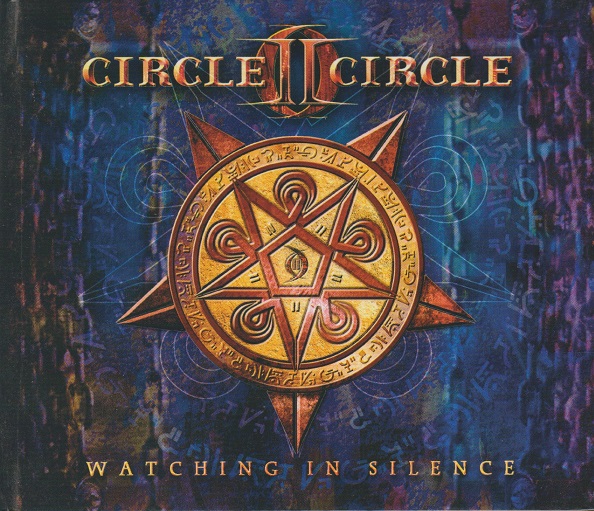
There are some good reasons why Circle II Circle’s debut album, Watching in Silence, is a dead ringer for Savatage. First and most obviously, singer Zach Stevens is best known from the Florida progressive metallers. When he left the band to form Circle II Circle, he had some Sava-help too. Jon Oliva and Chris Caffery wrote or played on every single song. Oliva co-produced. They’re just a helpful kind of band.
Fans of Stevens-era ‘Tage will adore Watching in Silence from start to finish. It has the heavy, it has the soft, and it has the drama. There are even the layered operatic vocal arrangements (“Forgiven”), though used sparingly. Circle II Circle utilise keyboards and piano, but don’t go for the full-on conceptual direction that Savatage did.
Though the album can drag from time to time, there are a number of exceptional tracks. “Into the Wind” is the first to boast one of those unforgettable Stevens choruses. The single “Watching in Silence” has the patented Sava-power, composed in equal measure of riffs, piano and killer vocals. The easiest comparison is to “Edge of Thorns“, Stevens’ first single with Savatage. Virtually every song has a memorable chorus to go with it.
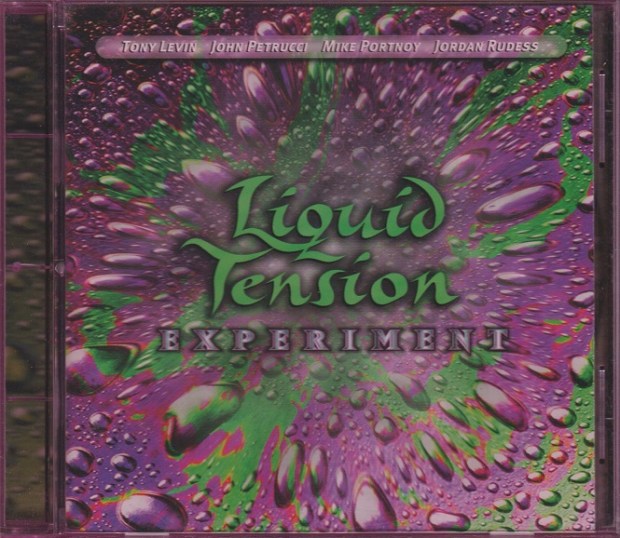
LIQUID TENSION EXPERIMENT – Liquid Tension Experiment (1998 Magna Carta)
Liquid Tension Experiment is a supergroup on Magna Carta, which should tell you much.
Featuring not one, not two, but three guys from Dream Theater, plus Tony Levin, Liquid Tension Experiment is the progressive fan’s dream band. Granted, keyboardist Jordan Rudess wasn’t in Dream Theater yet when they did this CD, but that’s where people know him from today. Drummer Mike Portnoy and guitarist John Petrucci are the other driving forces behind Liquid Tension Experiment.
To use phrases like “mind blowing”, “insane”, “incredible” or “the shredder’s wet dream” don’t even begin to touch what the album Liquid Tension Experiment is about. The liner notes by Mike Portnoy reveal that this project was assembled based on a wish list of players and their availability. Rudess and Levin were on the list but guitarists just weren’t available, so that’s how Petrucci stepped in. Together they had six days to write and record this album. That it turned out so incredibly well says volumes about these guys as musicians.
Liquid Tension Experiment is not just an instrumental album with wicked playing. The compositions are strong enough to make the album rise well above similar projects. Magna Carta is loaded with insane projects by the best players in the world, but how many of those albums are good for repeated listenings? The melodic and tonal sensibilities of Petrucci in particular really keep the album grounded, in a way that even lay people can enjoy. Levin adds the Chapman Stick and a new agey flavour to the lighter material. Check out “Osmosis” for a fine example of this.
Most of the album is heavy jammin’. It’s Mike Portnoy, and he does that so well. Together, they create a challenging sound but one with enough hooks that anyone can get into it. You might not realize how many time changes, weird chords and tempos you’re being exposed to, but you are, and you’ll be far better for it.
Together the album consists of nine songs and one spontaneous jam that exceeds 28 minutes! In fact, the tape ran out while recording, so the tail end of the song is from a DAT tape that Portnoy always runs when rehearsing. According to the notes, this piece ironically called “Three Minute Warning” was 100% improvised. “Not a single beat or note was discussed beforehand.” And no fixes or overdubs were made after the fact. It’s over 28 minutes of pure improvisation, and it came out brilliant. Everybody needs some of that in their life, to experience what pure free-form musical genius sounds like.
Must-hear pieces include “Paradigm Shift”, “Osmosis”, “Freedom of Speech” and “Universal Mind”. It goes without saying that the 28 minute jam is essential as well.
This self-produced album also just sounds incredible. The sonics are huge, but when the layers are peeled back, you can hear everything so clearly. The Chapman Stick also adds a huge palette, sometimes heavier than lead and others lighter than a feather. I’m sure the excellent audio is partly due to the mixing skills of one Kevin “Caveman” Shirley. Don’t hesitate to pick up Liquid Tension Experiment if you see it. There was also a second album made called 2, but this is the one to get if it crosses your path.
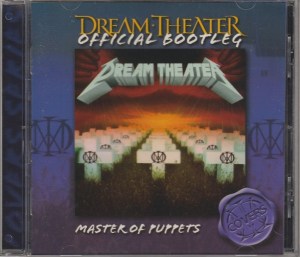
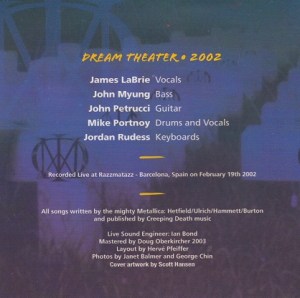
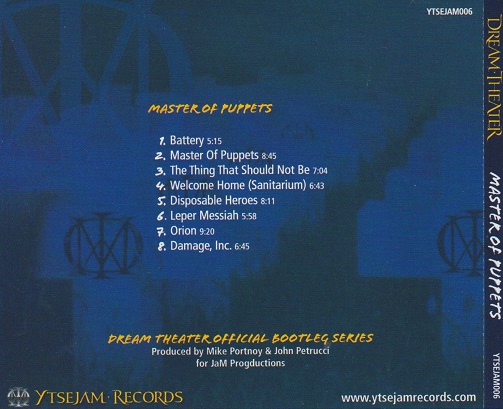
From Dream Theater’s acclaimed self-released series of covers albums, we have before us Master of Puppets. This was recorded in Barcelona back in 2002. Just as advertised, it’s Dream Theater doing the whole album live, in sequence, and pretty authentically too.
Dream Theater are a very different band from Metallica. This is bound to be interesting.
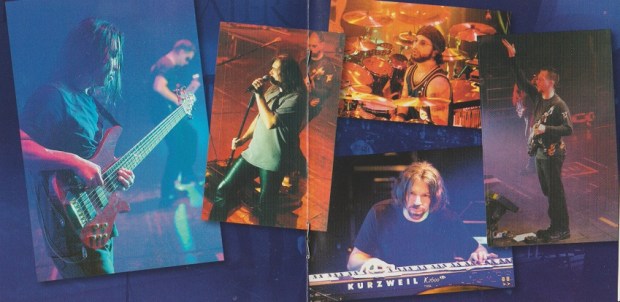
The most obvious difference is that Metallica have two guitar players, while Dream Theater has one and a keyboard player. On this, Jordan Rudess does aggressive keyboard solos where Kirk Hammett may have laid down one with his axe. He also plays the acoustic parts on keys. From time to time, you forget it’s a keyboard. In short, Rudess turns the prospect of Metallica with keyboards into a lesson on forgetting your assumptions about keyboards!
James LaBrie fits the silhouette of a young James Hetfield. He sings a convincing Metallica cover indeed! He cuts loose and goes for it. Metallica requires a gritty singer, going for it 110%. LaBrie handles it. For Dream Theater, doing these cover albums (from a wide variety of bands in fact) must be a lot of fun. They would have the chance to sing and play in a way that isn’t the usual for them. Guitarist John Petrucci does not often get to riff on something for five minutes straight like Metallica do.
Lars haters are naturally going to ask “What do Metallica songs sound like with a real drummer?” Hey, I’m no Lars hater. (He can play better than I can…) But in answer to that question I can only respond “fucking awesome”.
Dream Theater cover Master of Puppets without drawing attention to themselves. Mike Portnoy does not grandstand and overplay. Nobody does. If the effort was to do an authentic version of Puppets, as close to note for note as possible, then I say mission accomplished. Beat for beat, this is stunningly true to the original album. The keyboards are the most obvious deviation, and that’s minor. In anything, Dream Theater draw attention to the fact that these are great heavy metal songs. Are they Metallica’s best-ever set of songs? Some prefer Kill ‘Em All, some Ride the Lightning. Any way you slice it, Puppets is metal immortal, a very important record in anyone’s collection. Dream Theater painstakingly learned the album front to back so they could play it live for a few thousand people. They did that because it’s a great album on any day.
Dream Theater’s live covers albums (and many, many other releases) can be found on their own Ytse Jam Records website. Check out the multitude of stuff available (though some are out of print now) and try not to drain your bank accounts.
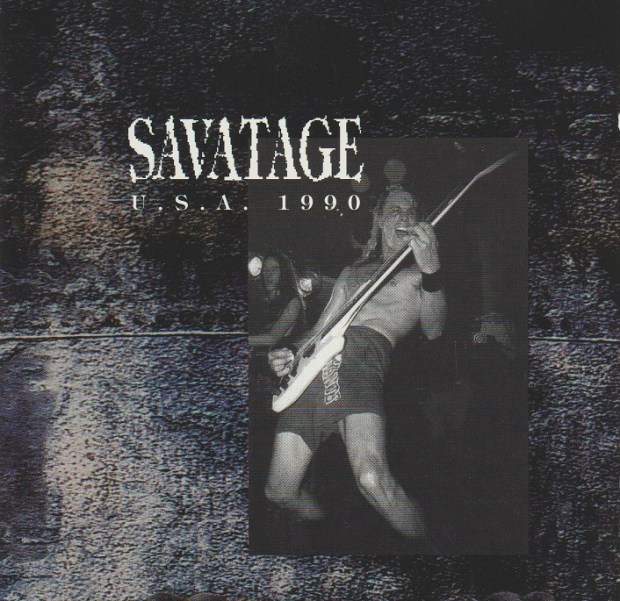
SAVATAGE – U.S.A. 1990 (1994 Live Storm bootleg CD)
When a bootleg live CD just has a picture of the bass player on the front, you know you’re not in for a perfect listening experience (Motorhead, Kiss and Iron Maiden bootlegs excepted). Nothing against Johnny Lee Middleton of course, but it would make more sense to put Jon or Criss Oliva on the cover. U.S.A. 1990 (released 1994) comes from Live Storm in Italy, where many bootlegs originated. It seems to consist of songs from multiple shows, due to the repeating “Of Rage and War” and “Hounds”.
Repeat aside, U.S.A. 1990 focuses on early heavy tracks with not a single ballad. Fans of early ‘Tage are going to love getting live versions of “The Dungeons are Calling” and “City Beneath the Surface” from the Dungeons are Calling EP (1984). There is also the amazing riff-tastic title track from Sirens (1983), to this day still one of their best tracks. Interestly enough, this very same version of “Sirens” was released officially (and in official sound quality) as a bonus track on the long deleted Music For Nations pressing of Sirens. You can tell when Jon screams “Danke schön! Hello Deutschland! You are metal!” It’s the same version…but wait a sec! Last I checked, Deutschland is not in the U.S.A.! Such is the charm of a bootleg release.
“Hounds” from Gutter Ballet (1990) is ominous and evil-sounding, made more so by Jon’s blood curdling screams and howls. He calls it “doom music”. Also from 1990, “She’s in Love” is just speed on top of riffs on top of screams. Gutter Ballet was an ambitious album, and part of that was a three-song suite about insanity. From that suite “Thorazine Shuffle” is lifted, a classic example of Criss Oliva’s style of snaky guitars. “Of Rage and War” brings another menacing riff, and a topical lyrical message:
Better listen to me you son of a bitch, Better disarm those missiles sleeping in the ditch, You have no goddamn right to do the things you do, The world would be a better place if we were rid of you!
“Sirens” is the centerpiece, a stormy metal drama loaded with waves of guitar crashing against the rocks, wrecking everything in their way. Jon’s shrieks warn away the meek and timid. Only the strong will survive the “Sirens”. You will find no refuge in the “Hall of the Mountain King” either. This castle of stone shall offer no protection from the riffage pouring down. Madness reigns, so just go with the groove and get your stomping boots on. The final track is the upbeat rager “Power of the Night”, the title track from their 1985 album. It’s a string of lyrical cliches backed by some serious heavy rock. Raise the fist of the metal child! Unfortunately the track is cut short.
U.S.A. 1990 is a fairly common bootleg, so if you find one in the $7-8 range, take a shot.
 THOMAS POLYCHUCK – Thomas Polychuck (2024 Deko)











 mikeladano.com