ray gillen

Top Ten SAVATAGE Tracks Ranked – A Collaboration with the 80sMetalMan

SAVATAGE!  This Florida metal band reigned from 1979 to 2002, and is now back ready to unleash a new album called Curtain Call!  They never received the recognition they deserved over the course of 12 mostly excellent albums.  Let’s fix that here and now!

This list is part of a collaborative effort with 80sMetalMan!  You can check his list here.


10. “Handful of Rain” from Handful of Rain (1994)

We begin our story with tragedy, but also triumph.  Lead guitarist Criss Oliva was killed by a drunk driver, almost ending the band permanently, and shattering the soul of his brother Jon.  Jon Oliva was not even a member of the band anymore, having abdicated the mountain king throne to new singer Zack Stevens a year prior.  Undaunted, Oliva wrote and recorded almost all the instruments on the next Savatage album Handful of Rain.  Even though bassist Johnny Lee Middleton and drummer Steve “Doc” Wacholz are pictured inside, they did not play.  Jon did.  Joining him on lead guitar was former Testament master-shredder Alex Skolnick.  An immensely powerful team up.  They produced a somber album, but not without power and thrills.  The title track, available as a 5:25 extended edition or the standard 5:02 version, boasts acoustic verses and a powerful chorus that will stay with you for days.


9. “Morphine Child” from Poets and Madmen (2001)

The final Savatage epic from the final Savatage album.  Jon Oliva was back on lead vocals.  Zack Stevens departed to form his own band, Circle II Circle.  This song utilizes a powerful, relentless riff and a host of backing singers taking care of a complicated vocal counterpoint.  Different lyrics and melodies all overlap to form a cohesive and weighty segment of an already powerful song.  With piano and guitars intertwined with equal emphasis, Savatage may have taken their new operatic metal style to its peak here.  Though a comeback is planned, the band has remaining largely inactive ever since.  Regardless, at least they finished their first life in style, and with masterful progressive metal music.


8. “Warriors” from Power of the Night (1985)

Though this song commences with a corny keyboard bit and a ballady melody, it is far from that!  The battle grunts of the “warriors” soon join in with a sharp metal riff.  An alloy of iron and titanium, “Warriors” boasts a relentless chorus.  The verses are fun too.  “Armed to attack!  The soldiers react!”  Not poetry, but it matters not when Oliva screams.  This is simply heavy metal, down to the basics, and executed with youth and naivete.  The thing is:  it’s really good and catchy!


7. “Sirens” from Sirens (1983)

A shorty, at under four minutes.  The tempered steel of Criss Oliva’s riff is the main hook.  Much would improve later on, such as Jon’s lyrics and the band’s writing skills, but they had everything they needed from the get-go.  There’s a slower breakdown in the middle that only serves to re-ignite the powerful riff later on.  Oliva’s shrieking was already in place, fully formed and under his complete control.  Because the song is so short, you just have to go back and play it one more time.


6. “Strange Wings” from Hall of the Mountain King (1987)

Producer/manager Paul O’Neill was working with a little band called Badlands in 1989, featuring former Black Sabbath singer Ray Gillen on lead vocals.  He made a hell of an impression before Badlands as a backing vocalist on “Strange Wings” by Savatage!  This song, which boasts a powerfully simple riff, contains one of Savatage’s mightiest choruses!  A melancholy metal song with oodles of power, “Strange Wings” is one of Savatage’s top deep cuts.  There are many to choose from, but Ray’s singing on this one sets it apart.  His voice, mixed with Jon Oliva’s, offers a rare metal duet of stainless steel.


5. “Hall of the Mountain King” from Hall of the Mountain King (1987)

A classic Criss Oliva riff, backed by the haunting screams of brother Jon!  This song introduced Savatage to the metal masses.  Few songs can top the power of its mighty riff, or the unholy notes that Oliva hits on the chorus.  Not overly complex, but neither is it simple.  After Criss’ solo, Jon simply lets loose with the howls of a banshee gone mad!  Many would rank this song much higher than #5.   Perhaps the Metal Man is one.  It is extremely difficult, since Savatage have so many songs of different flavours.  Of their era of pure metal majesty, this song is tops.


4. “The Wake of Magellan” from The Wake of Magellan (1999)

Savatage have utilized counterpoint vocals numerous times on their albums from Handful of Rain to Poets and Madmen.  It is arguable that “The Wake of Magellan” is their most effective use of the technique.  Multiple vocal parts and lyrics overlap over each other, with uncountable Zacks singing complementary parts over each other.  Fortunately, the melodies are strong enough to stand out in the storm!  While the band and orchestra cooks behind, Zack Stevens sings all the parts, overdubbed for simultaneous power.  The first layer:  “Don’t see the storms are forming, don’t see or heed the warning, don’t hear the sound of tyrants, surrounded by the silence.”  Then a second Zack joins, singing the same.  A third Zack emerges overtop, singing the extremely fast and challenging lines:  “Columbus and Magellan and De Gama sailed upon the ocean in a world of ignorance with thoughts so primitive.  That men were killed with no more will than that they simply had the notion, but in this world of heartless men this thing they never did.”  Imagine singing that live, which the band had to do, at machine gun speed!  Another Zack doubles those lines.  Then a fifth Zack joins:  “Don’t hear it, don’t hear it…”  Then another Zack:  “Got to keep it underground, pretend you never heard a sound.”  More Zacks join with the lines “If they find it, kill it, blind it,” and “Lord tell me what is to be,” until all the voices coalesce together in the line “They whisper, and I…”  Has there ever been a more epic song in any genre?


3. “Edge of Thorns” from Edge of Thorns (1993)

New singer.  New lease on life.  Zack Stevens was sometimes compared to Geoff Tate when he first debuted in 1993 on Edge of Thorns.  The first single from the first album of a new era, combining the metal of Savatage’s early years and the piano epics of the previous two records.  The brilliant title track from Stevens’ debut still raises goosebumps on the arms.  An apex of this style of metal, “Edge of Thorns” has no dull surfaces.  Every edge cuts deep, the scarlet blood stains lingering in your heart forever.  “I have seen you on the edge of dawn, felt you here before you were born.  Balance your dreams upon the edge of thorns…but I don’t think about you anymore.”  Yet he clearly does.  This theme recurs through the album on songs like “Conversation Piece”.  Another genius Criss Oliva guitar solo is the cherry on top.  Few bands can meld their different styles from separate eras together like Savatage did on “Edge of Thorns”.  A masterpiece of a song.


2. “Gutter Ballet” from Gutter Ballet (1989)

I’ll never forget hearing that opening piano figure.  Loosely, Jon Oliva plays:  “ding, ding, ding…”  Then as he plays the notes become stronger and the tempo more steady.  Suddenly the band crashes forth and “Gutter Ballet” careens through your stereo, into your soul.  Savatage had never incorporated piano like this before, and by breaking new ground they broke down walls.  No longer were they a simple heavy metal band.  The doors to a whole new world of concept and drama had opened.  Welcome to the Gutter Ballet.  This track combines an epic piano melody with incendiary guitar riffs, an orchestra, and street-smart Oliva/O’Neill lyrics about the nasty gutters of New York City.  “Balanced on their knives, little parts of lives, such a strange reality.  Kill the unicorn, just to have its horn, soon he’s just a fantasy…”  And the Criss Oliva guitar solo!  A composition unto itself, backed by strings.  Power, emotion, skill and fire combined together into one incredible song.  An epic song that few bands could top.  Few…except Savatage.


1. “Believe” from Streets: A Rock Opera (1991)

Within the context of the Streets story, the main character D.T. Jesus witnesses a luminous spirit emerge from a dying homeless man, that he follows up several flights of stairs to a roof of a building.  D.T. opens his heart, and hears the voice of God.  “Believe” is the perfect ending to an epic emotional journey.  With all the power that Savatage can muster — overblown, dramatic, and pompous — “Believe” ends the rock opera (and this list) properly.  Interestingly, it retains an epic section that was lifted directly from “When the Crowds are Gone”, as the two albums share a genesis.  So epic is this segment, that Savatage had to re-use it.  Then later, on the Savatage album Handful of Rain, part of it was re-used again, along with other parts of “Believe”.  “Believe” ends this album on the bright up-note that you want a story to end with, your soul awash with light and musically uplifted.  “I’ll be right there, I’ll never leave, and all I ask is believe”

Youtubin’: Badlands – “Dreams in the Dark”

When this video debuted on MuchMusic in spring of ’89, everybody but Harrison Kopp (who was not born yet) and John Hubner (who was not Canadian) said “Wow that singer really sounds like David Coverdale from Whitesnake!” The VJs said it and the kids said it. Do you agree? Does Ray Gillen resemble Coverdale in any way? Do you hear it too? Let us know in the comments.

VHS Archives #118: Ray Gillen & Jake E Lee of Badlands (1991)

Badlands made a great second record together, but the timing was all wrong.  If coming out in the summer of ’91 against Van Halen, Metallica, Skid Row, and Guns N’ Roses didn’t mean certain doom, then Kurt, Eddie, Layne and Chris would finish them off. On the road to promote the Voodoo Highway album, Jake E. Lee and Ray Gillen dropped by MuchMusic to chat.  The former Ozzy guitarist and former Sabbath vocalist might have had a sense that the album wasn’t getting the push that the debut received, but they don’t let on in this interview.  A goofy Jake plays with Ray’s head while Ray tries to answer a question.

Topics:

  • Jake not being very good at returning phone calls (the formation of the band)
  • Diversity in music
  • “The Last Time” music video

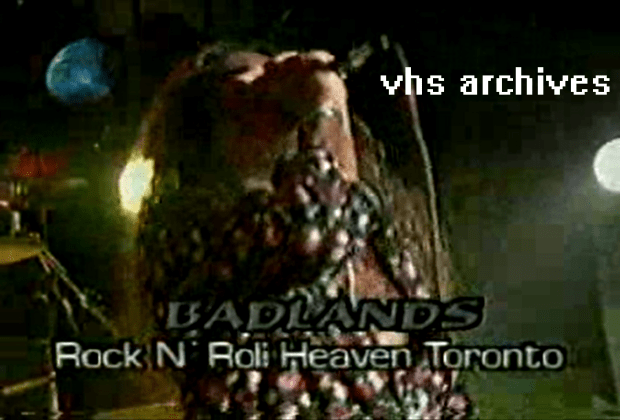
VHS Archives # 79: Badlands interview (1989)

Badlands were one of the hottest new rock acts of 1989, notable because they were bringing in this influence called “the blues” that had been absent from the scene lately.

Find out what Ozzy thought of the blues when Jake E. Lee and Ray Gillen sit down with MuchMusic at Rock N’ Roll Heaven! Raw video of their live set included.

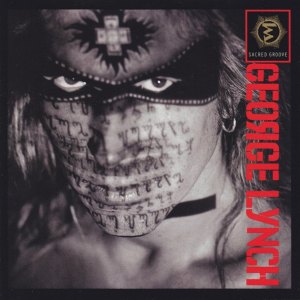
REVIEW: George Lynch – Sacred Groove (1993)

It’s a shame I lost my original 1993 review of this album.

LYNCH_0001GEORGE LYNCH – Sacred Groove (1993 Elektra)

If you like Dokken but never followed George onto the Lynch Mob, then this album is for you.

George Lynch is a very talented shredder, capable of playing a wide variety of styles.  Sometimes he hits, sometimes he misses, but on Sacred Groove he makes the mark every time.  Sacred Groove was designed as a solo project shortly after the second Lynch Mob album.  The idea was to work and write with different singers and musicians, and George loaded up on some great singers.  Glenn Hughes, anyone?

John Cuniberti, who co-helmed many Joe Satriani albums, produced this opus and lent it some serious sonic excellence.  The opener “Memory Jack” is a collaboration between producer and guitarist, but this is little more than a sound collage to kick off a killer instrumental called “Love Power From the Mama Head”.  This isn’t to say that “Memory Jack” does not contain some shredding licks, because it does…but they are not the focus.  The sound collage itself is the focus.  Into “Love Power”, George lays down some serious riffy rhythm guitars.  This is topped with a very Satriani-esque guitar melody.  “Love Power” is constructed very much like a Satch rock instrumental track, with memorable guitar melodies and song structures.

There is a very cool moment in the guitar solo in “Love Power From the Mama Head”, at exactly 4:47.  While George was essentially assaulting his guitar with the whammy bar, he accidentally dropped the instrument on the studio floor.  “Shit!” said George, while producer Cuniberti ran over and stopped George from picking it up.  The producer then kicked the guitar for added effect!  Cuniberti assured George it would sound cool, and it kind of does!  The guitar just stops on this weird chord-like sound, before they punch out of that and into more shredding.  It’s different and spontaneous and I love shit like that.

“Flesh and Blood”, contender for best track on the album, is the first vocal, featuring Badlands’ Ray Gillen (R.I.P.).  It’s a Dokken stomper for sure, but with Ray Gillen’s bluesy Coverdale-isms all over it.  Killer.  The lyrics were co-written by George’s ex-Dokken bandmate Jeff Pilson, who also co-wrote and plays bass on the next track, “We Don’t Own This World”.

Now here’s the interesting thing about “We Don’t Own This World”.  Lyrics by: Don Dokken?  The fuck?

George, Don and Jeff had planned to reunite on this one song, that Don supplied the lyrics for.  Don however cancelled or chickened out (either/or) and didn’t make it to the session.  It just so happened that the Nelson twins, Matthew and Gunnar, were in town and eagerly sang on the track in Don’s absence.  With their harmonies, “We Don’t Own This World” sounds nothing like Dokken, except in basic ways.  It’s the most commercial track on the album; a pop rocker.  The vocals soar over one killer melody, and the solo is one of George’s best.  If this song had come out only two years sooner, it would have been a hit single.  The Nelsons have done some cool music over the years, and not gotten a lot of credit for it, so this song is pure delight.

I still think of CDs as “albums” with distinct sides, and on the cassette version “I Will Remember” closed Side One.  This instrumental ballad has a vaguely dark tropical feel, although it is an electric guitar song.  George’s solos are sublime and I love his unexpected timing on certain notes.  He has flawless chops mixed with feel…a rare combination.

LYNCH_0002

Side Two’s opener is an epic in two parts, but it’s as close to a skip as this album gets.  The problem is vocalist Mandy Lion, of WWIII.  You either like his glass-garling-elfin-metal voice or you do not.  I do not.  However, “The Beast” Parts I and II are such a slamming groove that I tend to block out the words and the voice singing them.  This is another track where the original vocalist slated could not do it.  Udo Dirkschneider wanted too much money and Rob Halford was too busy, but Mandy Lion would do it.  He showed up at the studio in the heat of summer wearing head to toe black leather.

“The Beast” could be a dirty sex anthem, I guess, but it’s far too heavy for the 50 Shades crowd.  I dig when halfway through, George breaks out his newly-bought sitar.  (I remember seeing pictures of George in Metal Edge magazine buying it!)  If only Mandy would have chosen to shut up at this moment.  Bassist Chris Solberg comes in and grooves through to a false ending, and then it’s “Part II (Addiction to the Friction)” — a 10 minute track in total.  Thankfully a huge chunk of it is instrumental.

The regal Glenn Hughes raises the bar any time he opens his mouth.  His two songs were the first new Hughes singing I had heard since Black Sabbath.  I detect some fragility in his voice here.  I think this may be from a period where Glenn was recovering from addictions.  Regardless, he sounds a lot better today, whatever the reasons are.  That’s not to say he’s bad here, because he’s still the best singer on the album.  You just feel he’s not giving it everything like he does today.

“Not Necessary Evil” is Glenn’s first song, a Dokken groove with Hughes’ soulful signature style.  This one too had hit single potential, but only in an alternate timeline in which Rock never fell to the Grunge Hordes in 1991.  “Cry of the Brave” is his second track, a slower and more soulful rock track.  This is a song about injustice to the American Indian (reading the lyrics, I’m assuming specifically Leonard Peltier), and it’s worth noting that Glenn wrote the lyrics by himself.

The album closes with a final instrumental called “Tierra Del Fuego”, and if you couldn’t guess, that means George breaks out the flamenco guitar.  There’s also a guest electric guitar soloist named Daryl Gable.  If I remember the story correctly, Daryl Gable was a lucky fan who was selected to have a guest shot on the album.  How cool is that?  And he’s pretty good, too!  I have to admit I like these dusky tropical flamenco things, so I consider “Tierra Del Fuego” to be a very successful album closer.  But fear not, there’s plenty of electric guitar too!

Sacred Groove is pretty damn near flawless.  If only they could have got Udo instead of Mandy, eh?

4.5/5 stars

REVIEW: Savatage – Hall of the Mountain King (1987)


HALL OF THE MOUNTAIN KING_0001SAVATAGE – Hall of the Mountain King (1987, 2002 Steamhammer remaster)

Man, I just love Hall Of The Mountain King! Who can forget that classic video…the little elf running through the mountain trying to steal the King’s gold! Any time in the past that I have thrown an “80’s metal video” party, that one was the star of the night.

Elf or no elf, the album is solid front to back.  Savatage have many different styles, from thrash to ballads to progressive metal, and have housed three different singers over the course of their long but too brief career! Hall Of The Mountain King falls into the first era with original lead howler Jon Oliva, and captures them at their most “metal”.  Which isn’t to say that other influences aren’t audible.  Progressive rock was definitely starting to creep in.  You can tell by the rendition of Grieg’s “In the Hall of the Mountain King” (here listed as “Prelude to Madness”).  When metal bands start playing classical pieces, you know that rock operas aren’t far behind (and they weren’t: four of them, to be exact).

One important factor that separates Hall from earlier and later ‘Tage albums is the riffage of Criss Oliva (RIP.) By this time, working with producer Paul O’Neill, the writing was becoming very focused and the riffs and melodies very sharp. I don’t think the riffs had ever been honed to an edge like this on Savatage albums before.  They are just crushing.  Criss of course passed away in the early 90’s, and his riffs were never to be heard again. This, in my humble metal heart, is the absolute best of Savatage’s early metallic phase.

There are no bad songs on this album, though “Prelude To Madness” runs a little long and is a tad too synth-heavy. But since it segues right into the title track, we’ll forgive Savatage.

The metal on this album begins with a groove called “24 Hours Ago”.  Jarring riffs, great bass lick and patented Oliva screams — what an opener. Just rips your head off!  “Beyond the Doors of the Dark” is where the album really begins, in my opinion. This is just an awesome, heavy rocker with a riff of carbon steel as only Savatage could forge. One of their all-time best songs.  Joining it is “Legions”, another Sava-classic.  Again, it’s dark and riffy, with great lyrics and melodies from Jon. Definitely makes my desert island.  Closing side one is a bit of a surprising song: “Strange Wings”.  This one is more hard rock, but it’s certainly great. The late Ray Gillen (ex-Black Sabbath & Badlands singer) duets here, and raises the bar up another notch. His vocal soars. Both singers kill it.  Manager Paul O’Neill, who also produced the first Badlands album, was was managing both that band and Savatage!

“Hall of the Mountain King” is the song most people know Savatage for.  Its riff will drill its way into your head, and that is a promise.  I fell hard for this band, and it all started with this one song.  You might want to skip that long intro, unless you’re dying to hear Grieg played by a metal band (and even if you do, Ritchie Blackmore’s Rainbow also covered the same Grieg piece on Strangers in Us All).

HALL OF THE MOUNTAIN KING_0004Tempo slides back a notch on “The Price You Pay”, this one’s a little more Dokken. Yet with another great Criss riff, and more great vocal melodies from Jon, it’s not filler.  “White Witch” isn’t either, but it’s the weak link.  This is thrash metal like old-school ‘Tage. Reminds me of “Skull Session” or songs of that ilk…fast Savatage with Jon screaming his face off.  Then finally “Last Dawn” is a Priest-like instrumental intro to “Devastation”. The riff to “Devastation” is awesome. Chris was at the top of his game, riff wise, in 1987.  What a way to end the record. So memorable, and classic ‘Tage.

Special shout-outs go to bassist Johnny Lee Middleton and drummer Steve “Dr. Killdrums” Wacholz for some damn fine metal performances. And, of course, producer/manager/co-writer/arranger Paul O’Neill. He changed the band forever, and Hall Of The Mountain King was just the beginning.

The 2002 Steamhammer version contains two live bonus tracks.  From Cleveland in ’87 come “Hall of the Mountain King” and “Devastation”.   While the vintage recordings aren’t as beefy as the album itself, they are a very nice add on.  “Are you metal?” asks Jon.  Yes, yes we are!

Don’t miss this classic. If you enjoyed it, pick up Power Of The Night and Sirens.

4.5/5 stars

REVIEW: Badlands – Badlands (1989)

BADLANDS_0003


BADLANDS – Badlands (1989 Atlantic)

When this album came out I bought it immediately. Well, as soon as it was made available by Columbia House music club, that is.  I remember that I described it to a work friend named Mark as “raw bluesy shit”, and I still stand by that three word description. With an emphasis on raw. For 1989, this kind of production was unheard of. You can hear everything on this album, you can hear Jake’s fingers talking. Very little embellishment going on here.

Badlands were almost a supergroup of sorts: Ray Gillen (ex-Black Sabbath), Jake E. Lee (ex Ozzy Osbourne), Eric Singer (also ex-Black Sabbath, now in Kiss) and Greg Chaisson (ex-nobody significant). Jake had always complained he didn’t have an outlet to play the blues in Ozzy’s band, so this is his version of the blues, and it’s hard as hell!  The band also had a vision of an album with two sides: a first harder rocking side, and a second bluesier side with longer songs.

“High Wire” kicks Badlands off with Jake’s raw, stripped back guitar sound.  Producer Paul O’Neill (Savatage, Trans-Siberian Orchestra) was also managing Badlands, and his production work here is completely different from the layers that he is better known for.  The effects are stipped back, and Jake’s guitar is very different from The Ultimate Sin.  A groovy exciting track, “High Wire” is driven by the riff and Gillen’s authoritative Coverdale-esque lead vocals.

The single “Dreams In The Dark” is next, the closest thing to a commercial song that this album gets. It has a strong chorus, instantly memorable, but you’ll be forgiven for thinking this is a Whitesnake outtake at first.  A brief instrumental precedes my favourite song, “Winter’s Call”.  It is as close is you’ll get to a ballad on this album, and only because its intro is slow and acoustic. However once that first riff kicks in, there’s no looking back. Eric Singer’s drum patterns are complex and hard hitting.  The song itself is atmospheric and still kicks my ass all these years later.  It’s infectious, like an old Zeppelin number.  I hear sitar!

A pair of rockers finish side one, “Dancing On The Edge” (an accelerated raw rocker with a great chorus) and “Streets Cry Freedom” a steamy, slower tune like a classic Coverdale prowl.  Both songs are standouts.

Side two starts with a serious rocker, “Hard Driver”, but from there it is on to the long, slower bluesy numbers that the band talked about. “Rumblin’ Train” is the bluesiest number, and “Devil’s Stomp” is as heavy as the title implies. “Seasons” is a slow moody one, brilliantly dramatic thanks to Gillen’s emotive vocal. The cassette/CD bonus track was called “Ball & Chain” and it finishes the album on a another hard bluesy note.  (Yes, back then when they couldn’t fit all the songs on an LP, they’d still include it on the cassette version and call it a “bonus track”.)

Badlands made a couple more albums, but this one is my favourite.  Martin Popoff himself rates this one a 10/10.  I gotta agree with the man on this one.  On a 5 scale…

5/5 stars

BADLANDS_0004

REVIEW: Black Sabbath – Seventh Star (deluxe edition)

SAM_2138

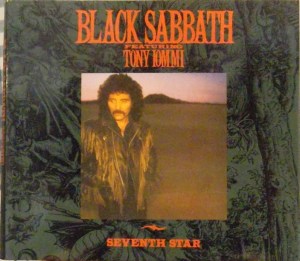
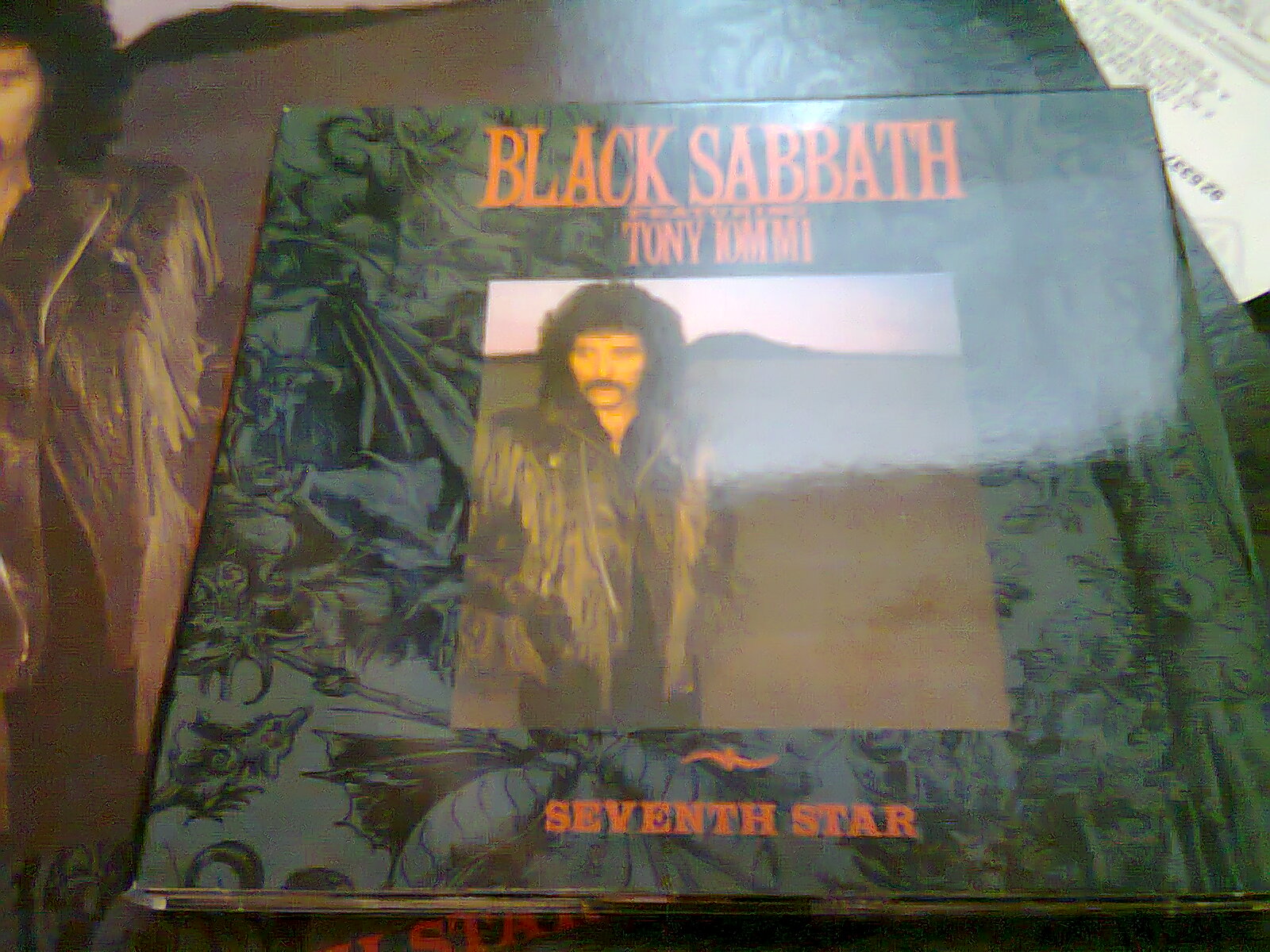
BLACK SABBATH featuring TONY IOMMI – Seventh Star (2011 deluxe edition)

The only Black Sabbath album with Glenn Hughes on vocals. The only one released under the somewhat silly name “Black Sabbath Featuring Tony Iommi”. The first one to feature no original members except Tony himself, with Geezer and Bill departing after the disasterous hiring of a new singer named Dave “Donut” Donato, a male model. That bore no fruit, and Iommi instead toiled away on what he intended to be his first solo album….

Finally, Seventh Star has been given the Deluxe Edition treatment. I’ve been waiting for some kind of official release of the music video remix of “No Stranger To Love” for 25 years. Finally it is available on this Deluxe Edition, along with a pretty good live show featuring the late Ray Gillen on vocals. I already have a Ray show on bootleg (a very common one called The Ray Gillen Years) but this is a completely different show, with a different setlist.

SAM_2184

Seventh Star as an album probably never should have been released under the Black Sabbath name. It’s truly a solo album that Warner Bros didn’t want to release as a Tony Iommi album. So here it is, an official Sabbath album. If that didn’t occur, would Sabbath as an entity even have continued in the 1980’s? I doubt it. Sabbath here consisted of:

Tony Iommi – guitars
Glenn Hughes – lead vocals
Dave “The Beast” Spitz – bass  (*brother of Dan)
Eric Singer – drums
Geoff Nicholls – keyboards

Only Iommi and Nicholls remain from previous Sabbath lineups. You know Glenn Hughes of course from his soulful wail in Deep Purple, and Eric Singer from his later work in Kiss. Here, the five musicians coalesce into a more commercial version of Black Sabbath. The hard hitting riffs are still there, the frenetic solos, the mystical lyrics, the pounding drums. Yet these songs are more melodic. Glenn infuses them with a soulful touch never heard before on a Sabbath album. Whether that is to your taste, only you can decide. Personally I love almost every song on this album. I find the standouts to be “In For The Kill”, “Seventh Star”, “Angry Heart”, and “No Stranger To Love”. Only “Heart Like A Wheel” bores me, a slow blues that doesn’t really go anywhere.

As mentioned, the video version of “No Stranger” is included, which I have never found anywhere else. For years I had it on VHS and I thought there were female backing vocals. This remaster reveals that it’s actually Glenn — I could never hear them clearly enough before to discern this.

The remastering on this CD is quite excellent. The drums have a fullness that wasn’t there before. The guitar absolutely sizzles. The liner notes are nothing new, just recycled from a previous edition of the CD, as are the included photos.

The bonus live show with Ray Gillen on vocals exists due to Glenn’s vocal and drug problems.  Ray Gillen was hired when it was clear that Hughes was in no shape to tour.  This CD reveals that Ray was really trying to be Ronnie James Dio. Personally I find Ray’s renditions of the Sabbath classics to be very overwrought, especially on “Black Sabbath”. Only two songs from Seventh Star are played. (You can get Ray’s version of “Heart Like A Wheel” on the Ray Gillen Years bootleg, as well as “Sweet Leaf”.)

While Ray’s tenure in Black Sabbath was brief, it was still important historically.  Ray did one tour and recorded an album.  There are some singers in Sabbath’s history that are not documented at all.  (One TV broadcast exists with Dave Walker singing “Junior’s Eyes”, and there’s a demo of Dave Donato singing an early version of “The Shining” called “No Way Out”.)   This live show, while not stellar, is an important piece of the Sabbath puzzle. It is the first (but not final!) official release of any Ray Gillen material with Sabbath.  The sound quality is slightly better than bootleg which is fine by me.

This remaster is not for Sabbath snobs. You know the kind. “Sabbath suck without Ozzy!” or “Dio is the best!” Sabbath’s history is far longer and richer than that, and there’s room for all kinds. Just one question:   Is Headless Cross going to get the deluxe treatment too?…may as well wish for the moon!

4/5 stars

Yup…that’s Star Trek TNG’s Denise Crosby in the “No Stranger To Love” video!

NOTE: If you like this album, Hughes and Iommi hooked up twice more: On the Iommi solo albums The DEP Sessions, and Fused.