rock music

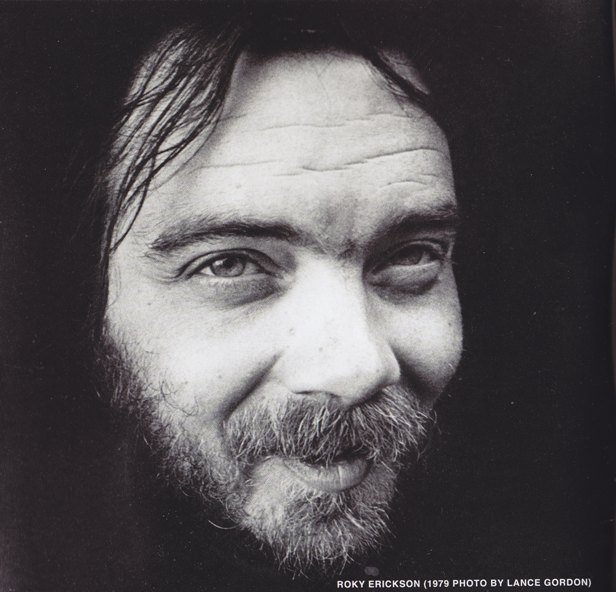
R.I.P. Roky Erickson (1947-2019)

He didn’t have an easy life, so we hope he will rest in peace.  Roky Erickson was a songwriter extraordinaire, an innovator, and an influencer.   He impacted a young Dave Grohl and befriended ZZ Top’s Billy Gibbons.  He was a founder of the psychedelic rock movement with the 13th Floor Elevators.  He also suffered from schizophrenia and endured horrific electro-shock therapy.

Roky Erickson eventually got the right treatment and made a return to recording and touring.  Yet it’s his 60s and 70s material that remains immortal.

Recommended listening:  The Evil One on CD, which is essentially two albums combined into one.  Every single song is amazing, but here’s “Mine Mine Mind” (produced by Stu Cook of CCR).  You can tell he was haunted.  Rest in peace, Roky.

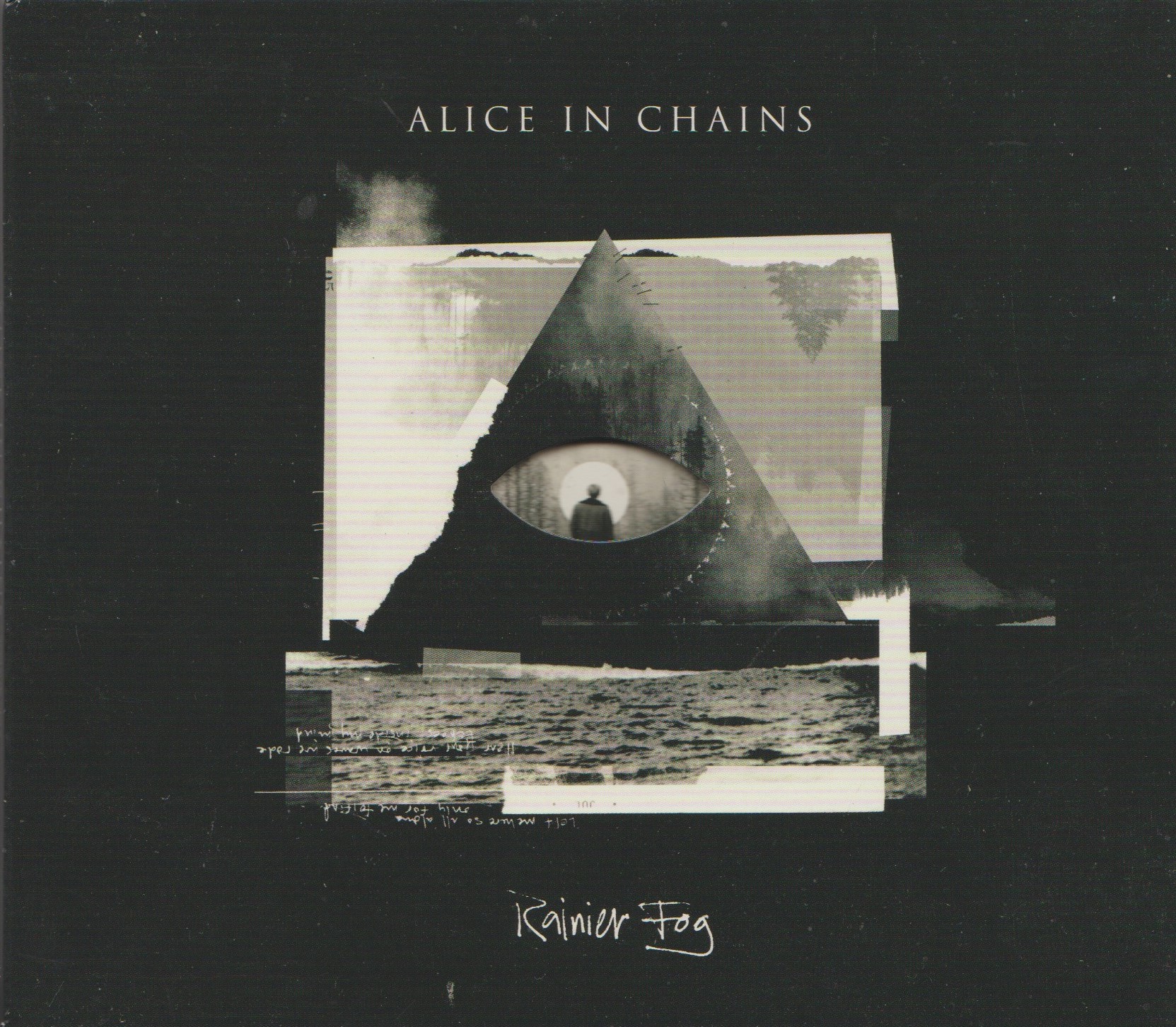
REVIEW: Alice in Chains – Rainier Fog (2018)

ALICE IN CHAINS – Rainier Fog (2018 BMG)

It’s always disappointing when you give a new album a fair shot, but it refuses to stay in your skull. Such is the case with the latest Alice In Chains, Rainier Fog.

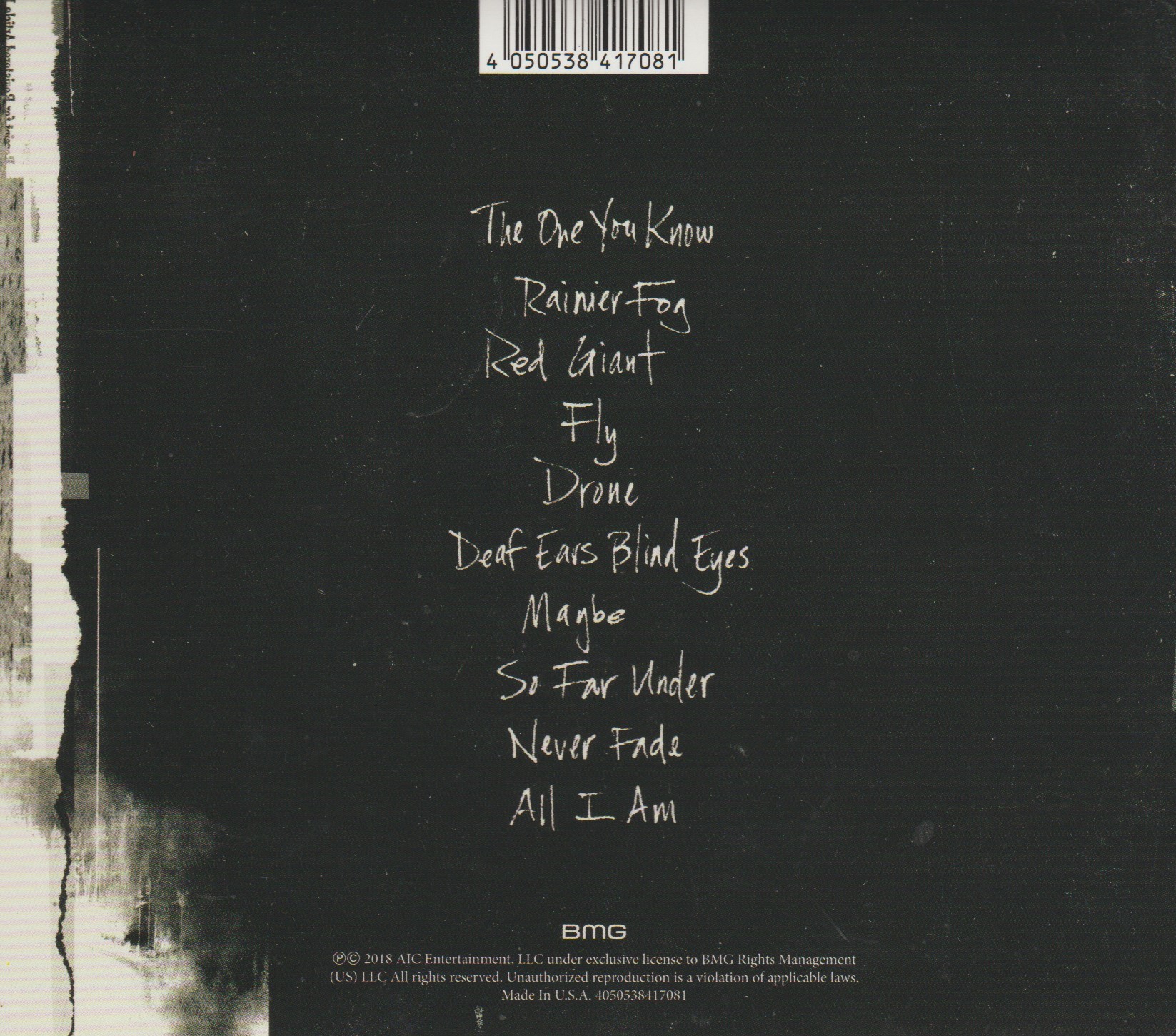
It’s especially disappointing since their last platter, 2013’s The Devil Put Dinosaurs Here, was so crushingly perfect.  It’s hard to put a finger on exactly why Rainier Fog lacks the same impact.  It’s not singer William Duvall — this is his third album with Alice In Chains, and he’s done an admirable job every time out.  It’s also not the fault of the lead track, “The One You Know” which is a terrific starter.  “Rainier Fog” is also slammingly good.  From there on, the songs are less memorable, with the exception of “Never Fade” which has a chorus that goes on for miles.

What’s the issue?  Is it that we’ve heard all this before?  Ever since the passing of Layne Staley, Alice In Chains lost that certain “fucked up” quality to their music.  Staley seemed to bring an unschooled approach, completely unafraid to make unconventional music.  Rainier Fog is terribly conventional by comparison with Dirt.  There are verses, choruses, melodies and all the accoutrements.  And they are all good ones.  Little guitar hooks snake in and out of verses, cool as hell.  Riffs are constructed from the strongest mortar.  These foundations support a collection of well written songs.  But most of them refuse to stick.  It’s baffling.

Perhaps Rainer Fog is one of those albums that doesn’t click until the 100th listen.  They exist and when they do, they often become favourites.  If that happens here, we will line up Rainier Fog for a re-review.

3/5 stars

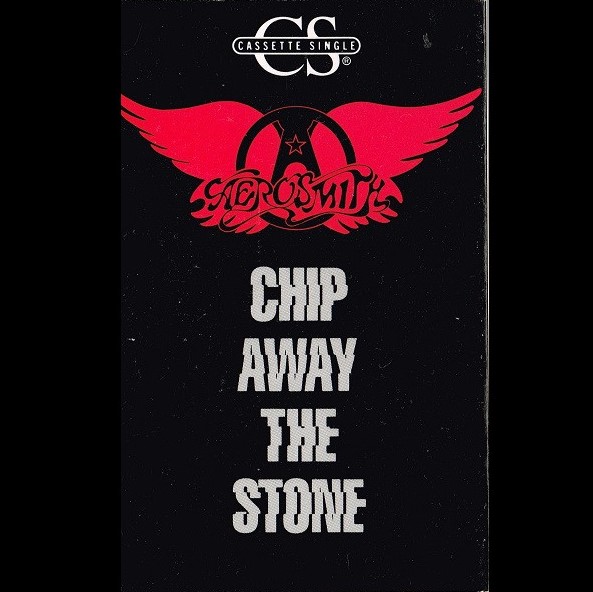
#752: Chip Away the Stone

GETTING MORE TALE #752: Chip Away the Stone

I didn’t have any childhood friends who were into Aerosmith.  I had to get into them on my own.

Well, that might not be entirely true.  Next door neighbour George may have been into them, but the rest of us ignored Aerosmith because they were “the band with the singer with the weird lips”.  They weren’t “metal” enough to be in my wheelhouse at that young age.  There wasn’t much Aerosmith being played on MuchMusic in the early 80s.  Maybe “Lightning Strikes”, but that was about it.  The music video with the greasers didn’t appeal to us metal kids.  The Joe Perry Project didn’t do it for us either.  The video with the pink saxophone?  (“Black Velvet Pants”.)  Not metal enough!  We were strict metal heads as kids, and pink saxophones were not metal.

What was it that finally caught my Aero-attention?  Joe Perry’s plexiglas guitar.

This all seems silly from an adult perspective, but we were just kids.  We loved metal, not just for the music but also that all-important image.  Videos were so important to us.  A band not only had to sound cool, but they had to look it.  Aerosmith didn’t look cool to us, with the tights and the lips.  That changed in early ’86.

Ironically enough the video was called “Let the Music Do the Talking”.  It was and is a killer song.  I didn’t know, or care about its history as a song by the Joe Perry Project.  What caught my eye was that guitar.  A transparent guitar?  I’d never seen anything like that before.  My best friend Bob and I were obsessed with unusual guitars.

“I have to tape this and show it to Bob,” I said.

The video itself was pretty cool.  A group of bootleggers snuck a camera into a concert to make their own video.  It was a glimpse at an adult activity we’d yet to experience: the live concert.  “Let the Music Do the Talking” made concerts look just as cool as we imagined they would be.  There was even a twist ending.  And like that, Aerosmith began to chip away the walls around me.  Once they got me to pay attention, I was loving the song!  Sure it wasn’t “metal”, but it was fast and rocked hard.  The singer may have looked kind of weird, but the guitar player was cool as hell!  I’d never seen anyone use a slide before.  Watching Joe Perry hammering away at that clear guitar gave me a million new air guitar moves.

What came next was “Walk This Way” with Run DMC, Permanent Vacation and mainstream recognition.  Before long everybody was into Aerosmith (again).  “Angel” came out when I was really into ballads, and it was a fantastic ballad.  On a kid’s allowance, I wasn’t able to get the album for many years, but Aerosmith were still on my radar.

Only a year after Permanent Vacation came the song that I grew to love the most.  What came out a year after Permanent Vacation, you may be asking?

Many people didn’t catch the 1988 release of Gems.  It was on their former record label Columbia and didn’t get a lot of notice.  What Gems had wasn’t a new song, just an obscure one dusted off:  “Chip Away the Stone”.

Written by Richie Supa, “Chip Away the Stone” is one of a few hit songs the guitarist gave to Aerosmith.  Others like “Amazing” might be more well-know, but “Chip Away” is special.  When the music video hit in late ’88, Supa was featured in it via archival footage (look for the guy with the moustache).  If anyone knew “Chip Away” in ’88 prior to Gems, it would have been through their album Live! Bootleg.  The studio version was only available on a rare single!  If you were a kid living in Kitchener in the late 80s, good luck finding it, or even knowing it existed.  For us, and the majority of fans, “Chip Away the Stone” was a brand new song.

I was getting into piano in rock songs around this time too.  “Chip Away the Stone” had just a hint of boogie-woogie and it hit the right chords for me.  Even though I was expanding my musical horizons slowly but surely, the music video still had a huge impact.  Considering it was made up of old live footage, it was surprisingly well edited, fresh and cutting-edge.  The shots of the piano were spliced to look like somebody was playing on one super-long piano keyboard.  I assumed it was Richie Supa playing piano:  the credits are unclear.  Either way, that video got me deeper into Aerosmith.  Way deeper.

Today my two favourite songs are “Chip Away the Stone” and “Let the Music Do the Talking”.  I have plenty of others — “Seasons of Whither”, “F.I.N.E.”, “Draw the Line” — but those first two just stick with me.  Part of that is nostalgia, but the other is that they are just great fucking songs.

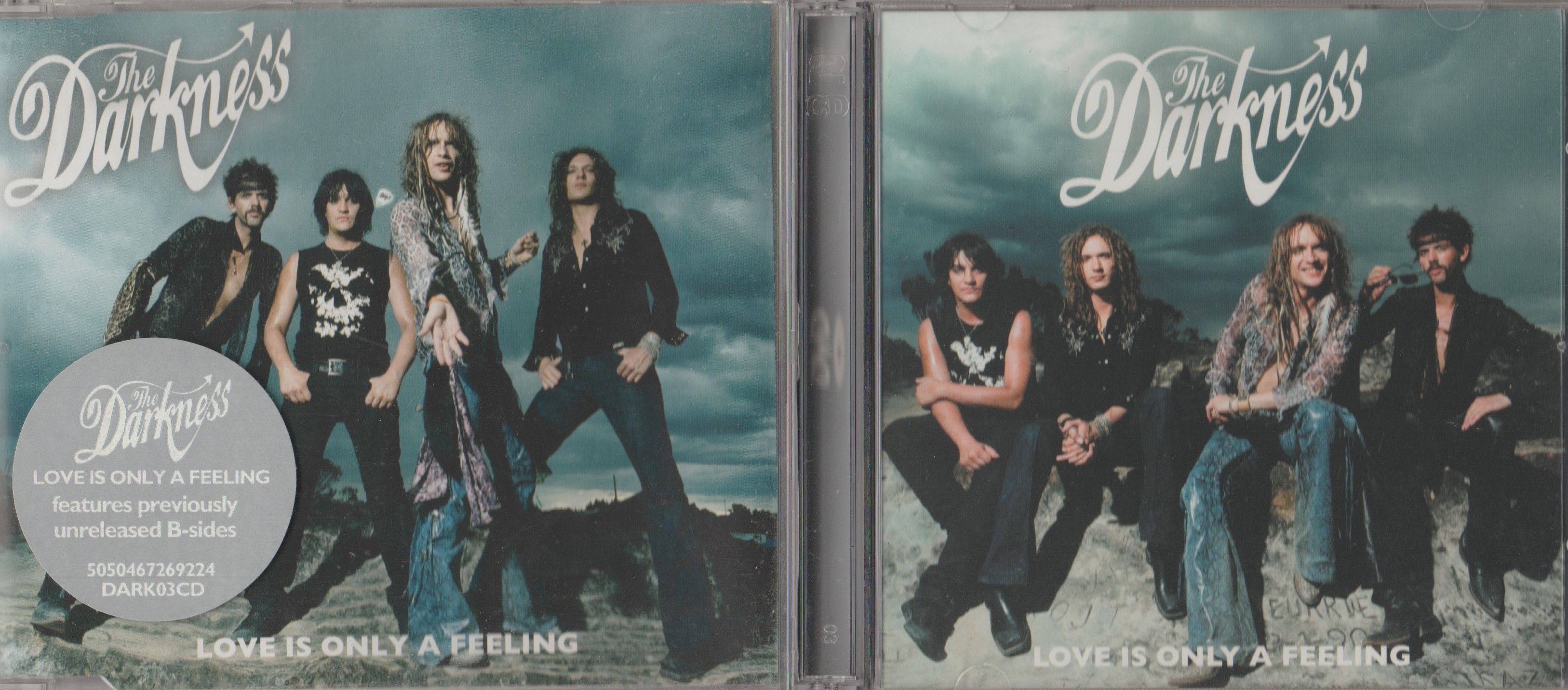
REVIEW: The Darkness – “Love Is Only a Feeling” (CD and DVD singles)

THE DARKNESS – “Love Is Only a Feeling” (2004 Warner UK CD and DVD singles)

Collecting singles isn’t as easy as just buying the single anymore.  Which versions are out there, with what tracks?  The Darkness’ singles are usually interesting for the different bonus tracks and variations out there.  Their hit ballad “Love Is Only a Feeling” was available on CD, DVD and 7″ vinyl.  You only need the CD and DVD to get all the tracks, but there’s a catch:  the DVD is in PAL format (common in Europe), so you need a player that can decode it.

No problem.  LeBrain HQ has a collection of frankenstein multi-media tech that can convert the most popular physical formats into something easier to play!  It’s not a pretty setup but it gets the job done.  All the tracks from all the versions of “Love is Only a Feeling” can be compiled in a single file folder!

As far as ballads go, The Darkness didn’t wimp out with “Love is Only a Feeling”.  The Lizzy-like intro harmonies meld into an acoustic mandolin verse.  A bombastic band like the Darkness is at home with a bombastic ballad, but early Darkness didn’t use a lot of frills and extraneous instrumentation.  “Love is Only a Feeling” doesn’t go overboard, but sticks to pretty a traditional rock arrangement.  You can blast it out the car windows — no problem.

The first of the single B-sides is “Planning Permission”, an unpolished song that almost stands with the ones that did make it onto Permission to Land.  It could use a little more tightening up but the roots of a good song are there.  Next is the bizarre “Curse of the Tollund Man”.  It might even be considered educational.  The actual mummy of the Tollund Man was found buried in peat as described in the song.  It sounds like the Darkness were really trying to write a Queen B-side.  It’s amusing but all over the place.

The music video for “Love is Only a Feeling” is the main feature of the DVD single.  I’m a sucker for mountaintop videos.  “Love Is Only a Feeling” is almost as epic as the Bon Jovi and Guns N’ Roses clips that came before .  Then, they take it over the top by going under the ground, in a cave!  A behind-the-scenes video reveals safety ropes, helicopters and elevated platforms to heighten the drama.

The real reason to seek the DVD single is to acquire the final bonus track, “Get Your Hands Off My Woman” live at the Astoria.  The action-packed track features Dan Hawkins on all guitars, so Justin can jump around and do the splits.  Vintage live Darkness with the original lineup is scarce, as far as official releases go.  This live Darkness is full speed, filmed in the raw.  It doesn’t matter if you get it for watching or just listening.  It’s a great version.

If you’re fortunate enough to play DVDs from multiple regions, the singles are usually dirt cheap on Discogs.  This one even came with a poster!  DVD singles were a fad and never really caught on.  They can, however, patch some holes in your Darkness collection.

4/5 stars


REVIEW: Psycho Circus – Psycho Circus (1992 cassette)

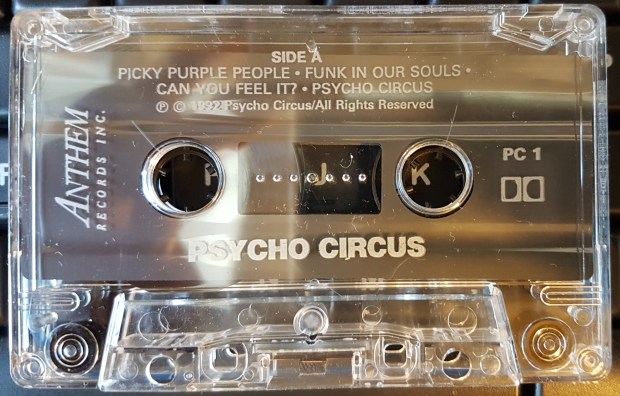
PSYCHO CIRCUS – Psycho Circus (1992 indi cassette EP)

Psycho Circus put out their one and only album in 1993.  They were a talented band who avoided grunge cliches and instead dove into funk-metal and a darker Faith No More sound circa The Real Thing.  The album was split down the middle between the two sides.  Decades later I found an earlier indi cassette, released after they signed with SRO Management, the team behind Rush.

It’s quite clear this band had musical chops.  Opening track “Picky Purple People” is killer.  Faux-horns, massive bass and busy drums are relentless.  This is a goofier side of the band, but well executed.  If the Chili Peppers and Faith No More had a baby, it would sound like “Picky Purple People”.  Next is “Funk in Our Souls”, a track that was re-recorded for the album later.  The cassette version sounds more bass heavy.  It’s more enjoyable for that reason, not to mention the smoking guitar solo.  “Can You Feel It?” was also re-recorded for the album, but this is one of those darker songs that eschew the funk.  Singer Vince Franchi hits unreal notes.  His voice is versatile.  It’s Faith No More without the twisted mind.

The final track didn’t make it onto the CD.  “Psycho Circus” opens with traditional circus music, a full six years before Kiss did the same thing with their own song called “Psycho Circus”.  Maybe they should try suing Kiss?  It would be fun to see!  That’s the only similarity.  This is another funky track, and though the circus music is a bit silly, the chorus rocks.

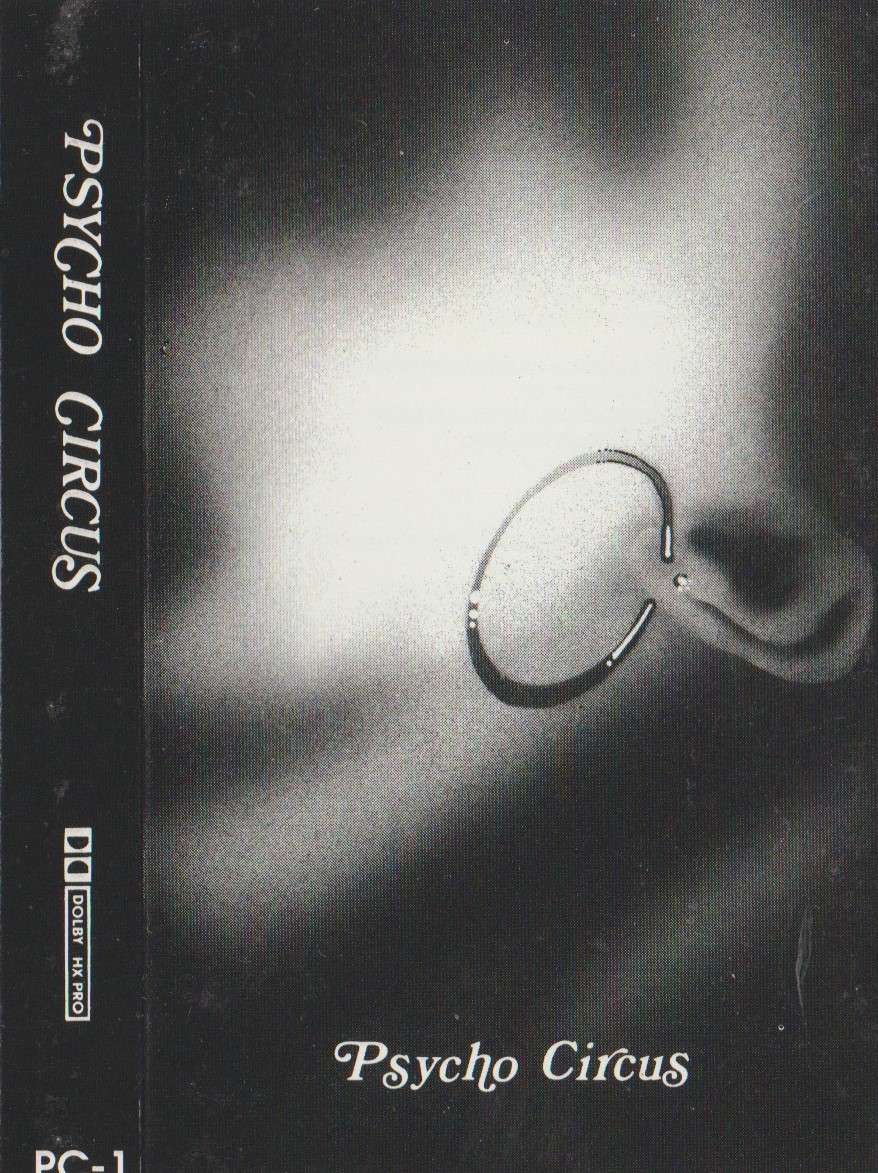
The tape comes with a nice J-card and full lyrics.  In a way it’s a better listen than the album.  It doesn’t have as many great songs, but it also has less filler.

3/5 stars

REVIEW: Queensrÿche – The Verdict (2019 “Masterpiece Edition”)

QUEENSRŸCHE – The Verdict (2019 Century Media 2 CD “Masterpiece Edition”)

The Todd La Torre era of Queensryche is now three albums deep. There’s no more mucking around. When drummer Scott Rockenfield went on personal leave, they didn’t let that stop them from writing and recording The Verdict. La Torre, a capable drummer in his own right, took on the challenge quite seamlessly.

So what’s the verdict on The Verdict?

The first Todd album (2013’s Queensrÿche) was safe and too brief.  The second (2015’s Condition Hüman) was a lot to digest.  The Verdict may have struck a better balance.  They’re still exploring their own brand of metal, bringing in a few new sounds without departing from their core direction.  They sound more comfortable in their own shoes.  Don’t expect a progression into new musical territory.  That’s not what The Verdict is.  It’s a full-force metal album with nuance, complexity, and plenty of guitar harmonies.  That’s what Queensryche do now.  The writing is sharpened, and the songs sound assembled with care.

The album requires a few listens to sink in.  The immediate standout here is a track called “Light-Years”, a song written by bassist Eddie Jackson who seems to come up with amazing songs out of the blue.  Regal, riff-laden metal with bravery and hooks.  This song should surely go down as a future Ryche classic.  (Jackson also wrote “Propaganda Fashion” and co-wrote a bunch of others.)  Another impressive song is the ballady “Dark Reverie” contributed by Parker Lundgren.  Todd really kicks it in the ass with his outstanding vocals.  The longest track “Bent” is dark and epic.  The only real weakness on this album is a lack of diversity, which they seem to be trying to avoid lest they end up with another Dedicated to Chaos.

The balance is clear.  The complexity of Condition Hüman is tempered by sharper hooks and melodies on The Verdict.  They’ve cranked out a lot of music over the last six years and they’re sounding more confident today.  Speaking of “a lot of music”, the consumer has choose between the standard single 10 track CD or the double “Masterpiece Edition” with rarities and new recordings.

For many fans, this will be their first chance to own the songs “46° North”, “Mercury Rising”, and “Espiritu Muerto”.  To get those, you had to buy the (previously reviewed) vinyl box set version of Condition Hüman.  Fans will also be thrilled by the four live songs from 2013’s Queensrÿche.  One of them, “Eyes of a Stranger”, could only be found on the (previously reviewed) Japanese version.  These, of course, all feature Scott Rockenfield on drums, his only appearances in this set.

The percussion on the two new recordings is handled by touring drummer Casey Grillo.  If he ends up a permanent member one day, nobody can say, but these are his very first recordings with Queensryche.  They are acoustic versions of “I Dream in Infrared” (from Rage for Order) and “Open Road” from (Queensrÿche).  Both are quite excellent.  It would be cool to get more of these acoustic renderings.  (Geoff Tate did four on his Queensryche’s Frequency Unknown album.)

The “Masterpiece Edition” (9000 copies) comes packed in a nice big box similar to the one from 2013’s Queensrÿche.  Additional goodies inside include an iron-on patch, a Verdict fridge magnet, and bottle opener.  Now your kitchen can finally be complete.  Just extra fluff, really — buy it for the songs.

4/5 stars

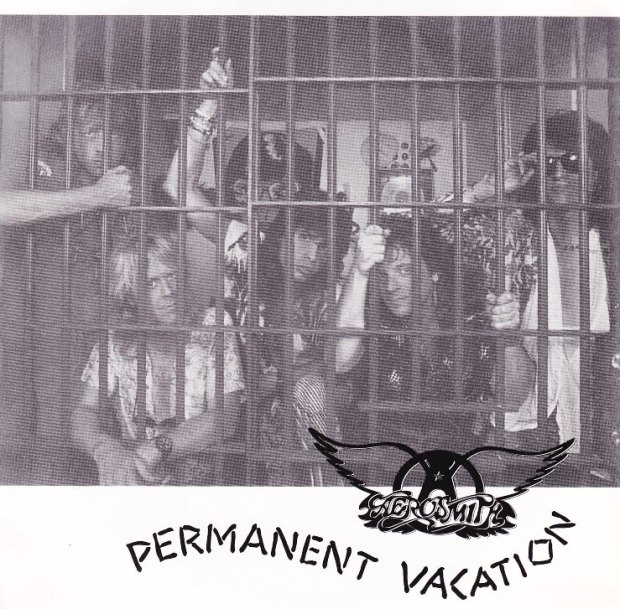
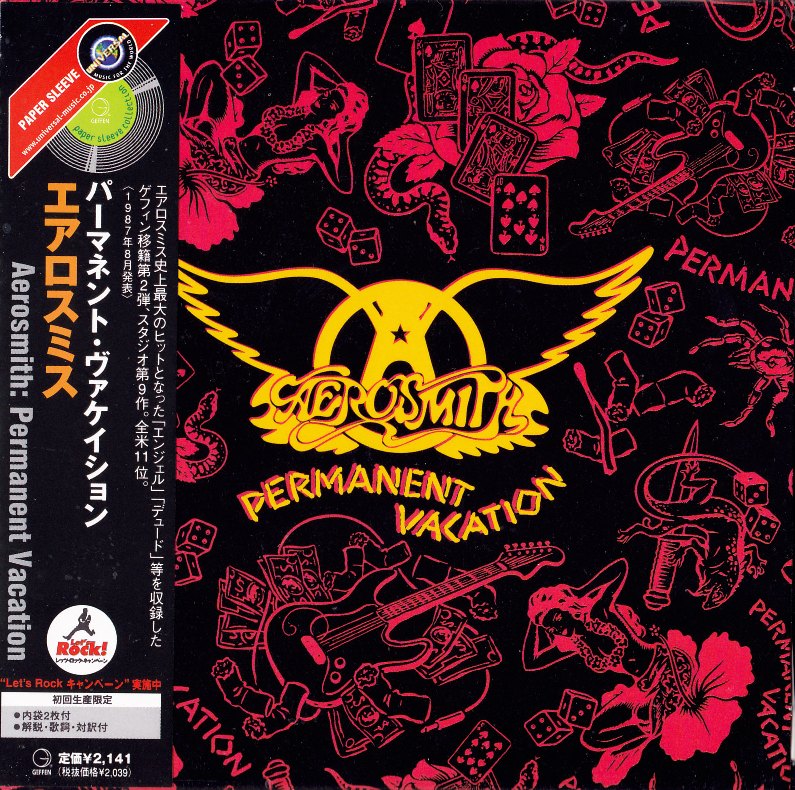
Just Listening to…Aerosmith – Permanent Vacation

This revisit is due to your Heavy Metal Overlord, who told me that Permanent Vacation is his favourite go-to album for reunited Aerosmith.  Due to the tremendous respect (and fear) I have for HMO, I decided that I needed to give it another listen.

My conclusion after hearing it again is that I had it dead wrong in my album review.  Yes, there are a couple filler songs.  “St. John” and “Girl Keeps Coming Apart” still don’t resonate with me.  But, man, there are some bangers on Permanent Vacation.  I didn’t remember how awesome “Heart’s Done Time” really is.  I forgot about the cool Beatles cover “I’m Down”.   I didn’t give due credit to the terrific title track. But most important of all is “Magic Touch”.  Is Joe Perry playing a whammy bar in the beginning?  What a song.  Could it be the best song on the album?  It certainly has a chorus that goes on for miles.

Permanent Vacation, as an album, might be overshadowed by its own singles “Dude”, “Angel” and “Rag Doll”.  But I’ll be damned if “Angel” doesn’t still make the hair on my arms stand up to this day.

I’ve been unfair to Permanent Vacation. It’s far better than I thought it was.


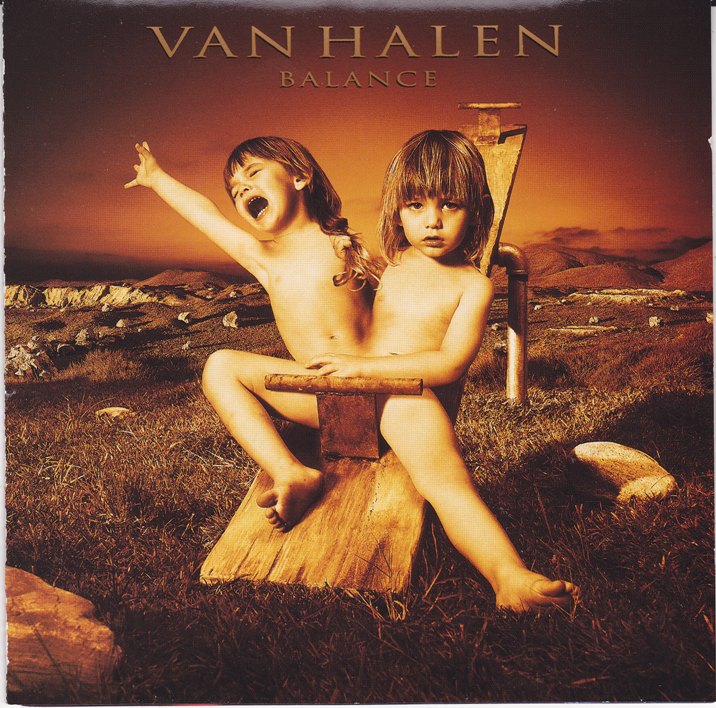
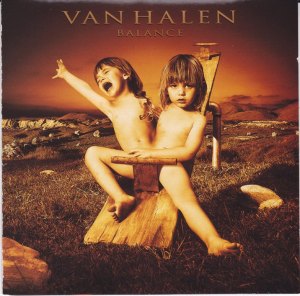
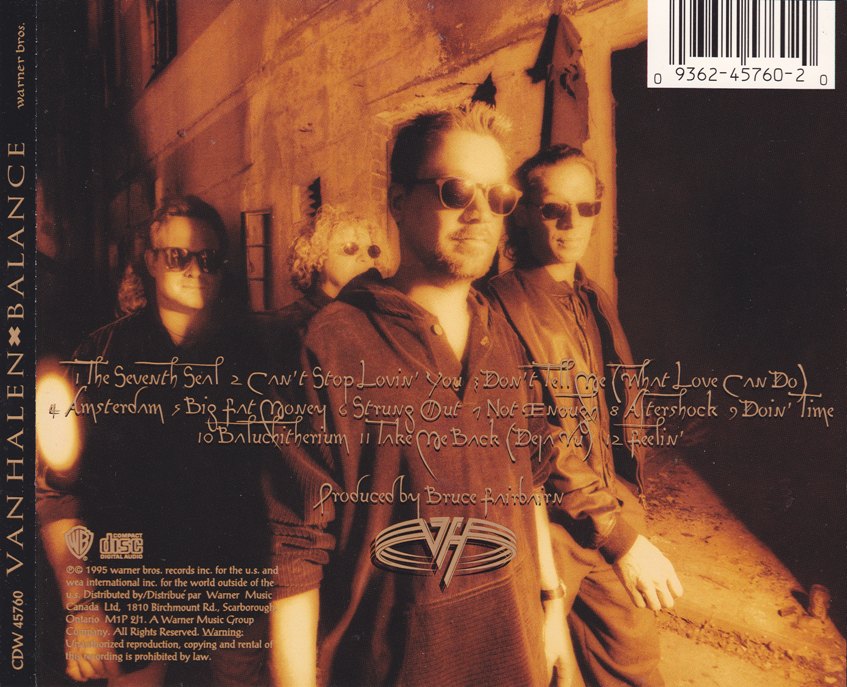
GUEST REVIEW: Van Halen – Balance (Derek vs. LeBrain)

VAN HALEN – Balance (1995 Warner)

By DereK

I was perusing Mike’s blog like I sometimes do (what can I say, I’m a fan). I stumbled upon his review for a Van Halen record that means a lot to me, and frankly, is the one I love the most among all of the Hagar years AND Roth years. I was really surprised with just how harsh Mike was on what I’ve always regarded as the pinnacle of Van Halen’s creativity and musicality.

After discussing it with Mike, I decided to write somewhat of a rebuttal to his 3.75/5 review.  I plan to try to explain why this record means so much to me as a Van Halen fan and professional composer/musician. I will quote from the original review to make this sort of sound like a discussion rather than me just being a dick and touting my opinion as better. If anything, I just want detractors of this record to give it another view and possibly a second chance.

Ready? Let’s go!


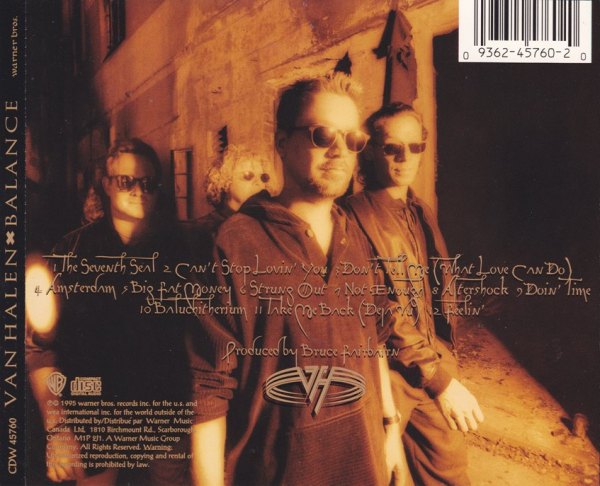
Balance takes Van Halen into a highly polished, commercial direction. This is “balanced” with heavier grooves and a couple more “serious” lyrics.   The result turned out to be one of Van Halen’s most pop outings.
Right off the bat I will disagree with you Mike. I argue that this is Van Halen’s most EXPERIMENTAL outing since Fair Warning. The melodic phrasing and song structures on some of these songs are incredibly progressive, and additionally, I believe that there are enough instrumental pieces that push what people’s perception of the band could be.

As for the polish, that isn’t a negative, the band has never sounded better. The way Alex tuned his drums is brilliant and crisp, Eddie’s tone never sounded more varied (at least until Van Halen III), and the band sounded incredibly tight and focused (Mike’s bass in particular is fucking blistering). The record being heavy is 100 percent a positive as well, as this applies not only to the slamming instrumental but also the lyrical content.

This is hard rock, metal, and avant-garde with pop overtones. Not pop.

This is “The Seventh Seal”, and Sammy’s voice is in top form. Michael Anthony’s bass rolls and hits the notes at just the right moments. This is truly a great song, completely different from Van Halen of old, but surely a triumph.

No argument from me here. The Buddhist monks chanting in their low vocal register leading into Sammy’s fever dream about the End Times as described in the book of Revelation is a beckoning call to fans that Van Halen is in its most mature incarnation. Balance is established right off the bat as a theme involving spirituality, but that isn’t the only type of Balance pursued in the record. I see many of these songs as mirrors of one another, focusing in on a true sense of balance. I will extrapolate on this as I go on.

“Can’t Stop Loving You”, is an embarrassing foray into pop. While Van Halen wrote pop stuff before (“Love Walks In”), this song lacks cojones of any kind. The guitar is really thin, Alex Van Halen cha-cha’s his way through the drum fills, while Sammy sings a lyric that David Lee Roth would have used to wipe his ass.

Hoo boy. As I have already stated, I think the production on Balance is brilliant so we won’t retread that issue here. I always found this song to be sad, to me it is about the kind of longsuffering love that only couples who have been together for decades will understand. It shows an evolution in Van Halen’s views on love, which before were often juvenile in the sense that it was more about the start of the relationship before things get hard. The theme of commitment never really factored into the equation until this track, just the hormones in your body exploding when love is raw and new to you. David Lee Roth could never have come up with something like this, ever.

“Don’t Tell Me (What Love Can Do)” is anything but a love song. Sammy tackles drugs, faith, youth in crisis, and the 1990’s. Hagar has never sounded more foreboding, or mature for that matter. Eddie’s riff is simple, but dark and rhythmic. Michael locks onto the riff, creating this unstoppable wall of groove.

We agree here, this song is fucking genius in its execution and is the closest to metal Van Halen get until they write “Humans Being” a little later. Also here is where we begin to see the theme of Balance, which I argue permeates the record, take shape. The prior track is about a fulfilling love, this track is about the absence of love and how the dejected react in situations of pure despair. Pay attention, pretty much every song on the record has a directly opposing relationship to the song that it follows.

There is nothing wrong with this mid-tempo rocker (“Amsterdam”) with spare Eddie riff, except the lyrics.

Look the lyrics are in a party song, which as I recall, are not required to be Shakespeare. Do you really think that any DLR era gems known for partying like “Take Your Whiskey Home” are any more profound? Lyrics aside, this song is setting up another element of Balance by exploring sins of the flesh and addictive behaviors that can be found in so many cities. It is about losing control and giving into your desires, especially in this case with regards to alcohol and drugs. This is one part of the Balance equation, as the next track deals with sins of a different kind. Greed.

I’ll give VH a C for trying, but “Big Fat Money” is a C+ at best.

“Big Fat Money” is a raucous psychobilly freakout of a song. Every member of the band loses their fucking mind by giving all their energy into this burner of a track. Sammy shreds his vocal chords as he rapid-fires phrases, Eddie brings up-tempo blues and ragtime sounds to the forefront, Alex plays double-time almost punk rock beats, and Michael Anthony just slays you with his furious basslines. Furthermore, the element of Balance in relation to the prior track is the other most focused-upon sin in society (Greed). The song shows the destructive nature in a way, however, as you feel like the lyrics hint at somebody losing their mind to their desires that began in Amsterdam and continued to spiral downwards into pure insanity. The balance is the lure of desire and then the destructive after-effects of such desire.

“Strung Out” is a jokey opener to the ballad “Not Enough”.

I look at this track as an example of “chance music.” Much like the music of John Cage and other contemporaries of his, the aleatoric nature of “Strung Out” is based on numerous factors. It is essentially Eddie fucking around with piano strings, but it isn’t a joke in my opinion. If anything, it shows Van Halen willing to ask their listeners what music is, and more importantly, what they should define Van Halen as. It is in every way an experimental, not pop, foray into a new direction.

That fades into “Not Enough”, another ballad… Tunes like this made Van Halen seem completely out of touch with what was happening in the 1990s. Within months of its release, Shannon Hoon would overdose, Layne Staley locked into a dance of death with smack, and Richey Edwards of the Manic Street Preachers went missing (presumed dead) after suffering long bouts of depression.
OK, a lot to unpack here. “Not Enough” isn’t a conventional ballad at all. It is about love and, more importantly, the loss of love. It doesn’t show a band out of touch at all, if anything, it shows that they are more in tune than ever. “Not Enough” is about the heart wrenching aspect of loss of someone you love. Period. The music video is somber and yet it also gives you hope. Eddie’s chorus-washed solo is a work of genius and as a whole the song remains the most mature expression of love and loss that I can possibly find in their catalogue.

As for the mentions of Layne Staley and Richey Edwards, I feel that I must interject that Alice In Chains and Manic Street Preachers are two incredibly important bands in my life. Layne spoke to my pain as a longtime sufferer of mental disorders and Richey looked at the world in the same cynical way that I do (plus as a Welsh-American, the Manics are a part of my culture and thus very important on another level to me). This is frankly a low-blow to the album that is unwarranted and patently false.

 “Aftershock” is another hard rocker, nothing embarrassing here, good riff, good melody, good song. 

As a drummer this is one of my all-time favorite songs to jam to. The entire song just blows the roof off of everything in its vicinity and remains a testament to just how hard Van Halen can rock. It also, however, brings in that same element of Balance that I speak of. “Not Enough” is about the raw and compassionate feelings of loss, namely in a relationship, but Aftershock is about the rage and bitterness that is likely to follow in the grieving process of a relationship. Both essential. Both a part of Balance.

A pair of instrumentals follow, an interesting touch seeing as Van Halen didn’t do too many instrumentals post-Dave. “Doin’ Time” is Alex messing around on the drums, which segues straight into “Baluchitherium”. 

These two songs are another part of me arguing about the experimental nature of this record. To devote so much time to instrumentals, especially the way they are structured here, is to push the band out of the Billboard 100 arena and into the “thinking” arena. The band is showing they are incredibly versatile and willing to take risks. Furthermore, guitar and drums are naturally instruments needed in order to balance out the equation of a rock band. Taken a step further, the instruments are played by brothers who are in many ways needed in their personal and professional lives to achieve balance.

Nothing on this record is haphazardly added.

“Take Me Back (Deja Vu)” is a pop song that I don’t mind at all, accented with acoustic guitar. 

It’s a brilliant song with brilliant instrumentation and vocals from Sammy. Also, it fits into the balance equation as it is about longing for better times. The reminiscing for the good times is here because the next track is all about the ugly of the present times.

“Feelin’” is a morose song but with an epic, powerful chorus. It is very different from anything the band had done prior.

The song is a masterpiece. Sammy is singing of a world on fire in every aspect of society as we know it. The song twists and turns with dazzling instrumentals and lyrics that are screamed at the heavens. It is the band completing its evolution into the mature incarnation of the band once known for wanting to “Dance the Night Away”. This would be the last song on the record unless you got it in Japan (more on that in a second), and it brings everything to a close. It is the end of the record, and unfortunately, the beginning of the End for the Hagar years.

If you’re lucky enough to be in Japan, there was one bonus track: this is the groove laden, oddball “Crossing Over”.  It’s a song about the afterlife and lyrically it’s probably the best tune of the bunch.

I am often called an experimental composer, so I suppose it is no surprise that I love this song and was so disappointed that it took me years after purchasing Balance to find it. I believe that this track completes the cycle started in “The Seventh Seal”. Notice how I talked about every song on the record being related in a balanced symmetry? I believe that “Crossing Over” is the mirror to “The Seventh Seal”. The album opens with nightmares of spiritual chaos, and this track is the completion of such chaos.


So, what do I have to say in closing? This record shows Van Halen at its highest possible output of creativity, and most importantly, its ability to show a deep philosophical approach to its writing never seen before or since. Balance is the culmination of everything that Van Halen was destined to be, and for that reason, it is the best record they ever wrote. Even if you disagree 100 percent with me, or just really hate Sammy Hagar, give this one another chance.

You might be surprised what you find.

5/5 stars
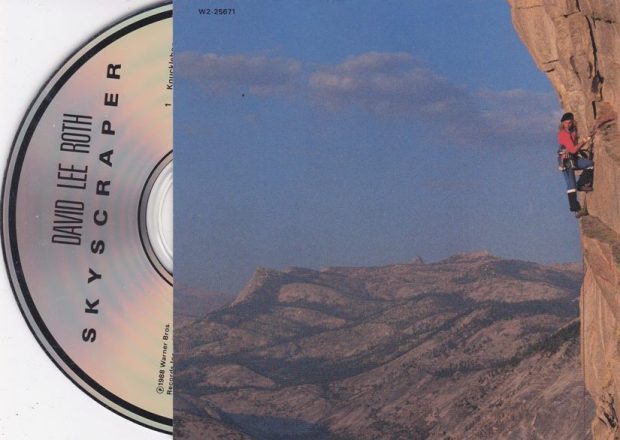
Just Listening to…David Lee Roth – Skyscraper

Just Listening to…David Lee Roth – Skyscraper

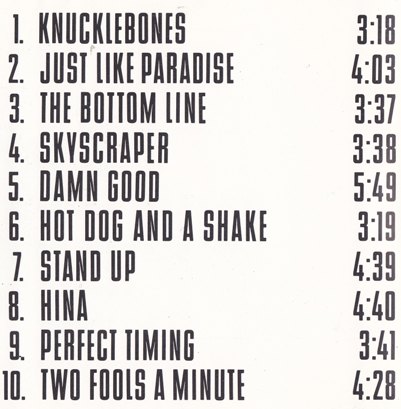
This is the first Just Listening post for an album I’ve already reviewed in full.  I tackled David Lee Roth’s Skyscraper back in 2013, rating it 4/5 stars.  However a recent conversation with singer/songwriter Derek Kortepeter led me to try to listen with new ears.

It started with Derek’s message to me.  “Unpopular opinion:  Skyscraper is better than Eat ‘Em and Smile,” he said.  “Better songs, better guitar, tons of awesome synth…when you have tracks like ‘Perfect Timing’ and ‘Knucklebones’ how can you go wrong?”  Derek says “Perfect Timing” might be his favourite song on the album.

Derek definitely has some good points.  It’s easily arguable that Skyscraper has better guitars.  Steve Vai was in the co-producer’s chair, and he layered his guitar parts as if he was building one of his own solo albums.  They’re very dense, yet melodically intertwined.  As for the synth, he has a valid observation with some songs like “Skyscraper”.  That song verges on progressive rock; it’s got so much going on, including synth and layered Roth vocals.  However I think the synth was overdone on tracks like “Stand Up“, which doesn’t even have Billy Sheehan on bass.

Skyscraper is an almost absurd album in some respects, with Dave pouring on that “charasma” to the nth degree.  There are so many “woo’s” “wow’s” and “oh’s” that you could make an entire song of just that.  Steve Vai was the star on Skyscraper, and as I said in my original review, how much you like Skyscraper will depend on how much you like Steve Vai.  I like Steve; I think his music and playing is fascinating.  Rock fans often don’t want “fascinating”, they just want the riffs and the choruses.  Eat ‘Em and Smile was much more about the big guitars and choruses, but it’s also just a fabulous record.  Skyscraper is colder sounding by comparison, and often drifts into experimental pop rock excursions.  It also suffers for the lack of Billy Sheehan, who wasn’t given a lot of creative freedom.  Where there should be bass, often you will hear synth.

Sorry Derek, you have made some really great points, and Skyscraper really is a great album.  It’s brave and fun and experimental, but it’s also cold with little bit of filler (“Stand Up”).   I’ll always rate it high…but not as high as Eat ‘Em and Smile.

REVIEW: Whitesnake – 1987 (30th Anniversary Edition box set)

WHITESNAKE – 1987 (30th Anniversary Edition Rhino box set)

Back when I reviewed the original “Deluxe” edition of Whitesnake’s 1987, I said, “Great album, but this reissue could have been so much better.”  And so here we are.

Let’s get right down to it.  You already know the story of Whitesnake 1987 or you wouldn’t be here.

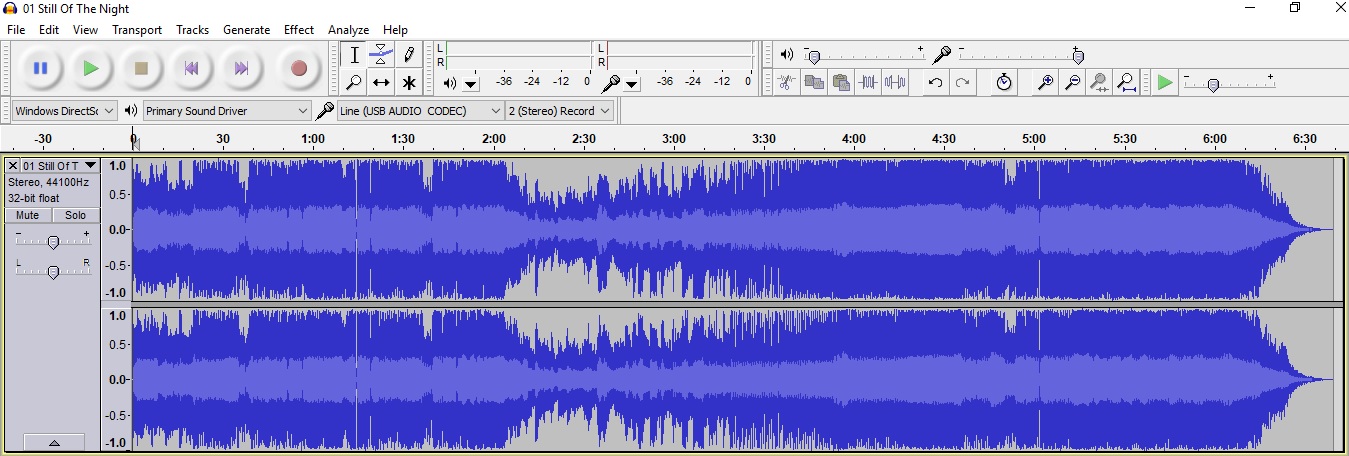
The main feature is the 2017 remaster of 1987, which actually sounds pretty great.  In this day and age, if you’re seeking the warmth of a vintage vinyl experience, you can go and have that experience for far less money than this box set costs.  For a compact disc, this might be as good as we’ve gotten so far.  If you look at the Audacity waveforms below, you can see the 2017 remaster (top) has roughly the same levels as a previous one from Whitesnake Gold.

I’m still hanging on to my original UK version of 1987, but for compact disc, this is probably it.


David Coverdale wanted to adapt Whitesnake to the 1980s with this album, and this lineup with John Sykes, Neil Murray, and new drummer Aynsley Dunbar was certainly able to deliver.  The album was always loud, especially compared to their 70s output.  Sykes provided the squeals that the kids wanted.  David was back in top voice.  The album they delivered is legendary for how it changed Whitesnake’s fortunes.

The running order on this box set is not the original UK or US, but the combined running order as used on the previous 20th anniversary edition.

“Still of the Night” blows the doors in, a tornado in the night, mighty and sexy too.  Whitesnake had never been this aggressive before, but “Give Me All Your Love” lulls the listener back to something easier to digest on first listen.  “Give Me All Your Love” was a successful single because it’s melodic pop rock with guitars.  But then the band scorch again with “Bad Boys”, top speed right into your daughter’s headphones!  Whether it was Aynsley Dunbar or just the songs that they wrote, the pace is high gear.

“Is This Love”, a song that David was writing with Tina Turner in mind, was another massive hit.   John Kolodner (John Kolodner) insisted that they keep it for themselves, and he was right as he often was.  For a big 80s ballad, “Is This Love” really was perfect.  It tends to work better in a stripped back arrangement, since the original is so specifically tailored to that era.  Still, Sykes’ solo on it has to be one of his best.

Speaking of hits, “Here I Go Again” is the one that Sykes didn’t want to do, and look what happened.  That humble pie probably tasted no good to Sykes when he found himself fired by Coverdale after the album was completed.  His replacement, Adrian Vandenberg (Vandenberg) actually played the guitar solo, so dissatisfied was Coverdale with the one Sykes produced.  “Here I Go Again” was of course a minor hit from Saints & Sinners, but deserving of a second shot in America with production more suited to their tastes.  Don Airey on keyboards; though Whitesnake did without an official keyboardist this time.

“Straight For the Heart” is a great also-ran that perhaps could have been another single if they kept trottin’ them out instead of stopping at four.  High speed but with incredible hooks, it’s impossible not to like.  “Looking For Love” is the second ballad, but actually originally unreleased in the US.  It’s toned down from the style of “Is This Love”, and Neil Murray’s bass is pronounced.  He was a huge part of the groove on this album, if you really settle in and listen to the rhythm section.  His bass has a certain “bop” to it.  “Children of the Night” returns the tempo to allegro and the lyrics to dirty.  I can’t imagine too many fathers of the 80s wanted their daughters to go to the Whitesnake concert if they heard David cooing, “Don’t run for cover, I’m gonna show you what I’ve learned, just come a little closer, come on an’ get your fingers burned.” Another UK exclusive, “You’re Gonna Break My Heart Again” cools it down slightly, but that Sykes riff is hot like a torch!

“Crying in the Rain” is held back to second-last in this running order, even though it opened the US album.  Another re-recording, “Crying in the Rain” was suggested by Kolodner because he knew Sykes could give it that massive blues rock sound that it had in the live setting.  Again, he was right.  “Crying in the Rain” is massive — perhaps the most sheerly heavy piece of rock that Whitesnake ever dug up.  Finally the CD closes with the last ballad, “Don’t Turn Away”, which closed the US version.  It’s a fine song indeed, and a really good vibe on which to end Whitesnake 1987.


The second CD in this set is called Snakeskin Boots:  Live on Tour 1987-1988.  Presumably, these are recordings from throughout the tour, assembled into a CD-length running order.  The “boots” in the title implies bootleg quality, but it certainly sounds better than that.  Soundboards maybe?

The studio lineup of Whitesnake dissolved and David got Vandenberg in, followed by Vivian Campbell (Dio) and the rhythm section of Rudy Sarzo and Tommy Aldridge (Ozzy Osbourne).  This new lineup was not based in the whiskey blues of the old band(s), but in the flashy stylings of the 1980s.  Vivian and Vandenberg were both capable of shredding your brain.  That’s generally how they do it on these recordings.  Opening with “Bad Boys”, the manic tempo is maintained while the guitars reach for the stratosphere.
Sounds like it was a hell of a show, rolling into the groove of “Slide it In” and “Slow An’ Easy”, and the good news is the 1987 band can play the 1984 songs too.  David Coverdale is the ringmaster, the veteran, confident and in prime voice.  All the songs are from either 1987 or Slide it In, with only one exception:  the slow blues “Ain’t No Love in the Heart of the City” from the original 1978 Snakebite EP.  Sounds like Vivian Campbell accompanying David on this slow, classy blues.  No Deep Purple in the set; but my old pal Rob Vuckovich once said he went to the Toronto show on this tour bearing a flag that said “PLAY PURPLE”.  He also claimed David acknowledged it by saying, “We’re not playing any of that!”

“Here I Go Again” comes early on the CD, fourth in line, and it’s excellent.  “Guilty of Love” is a nice surprise, and “Love Ain’t No Stranger” is more than welcome at the party.  “Is This Love” is well received, and works well in the live setting without too much extra production.  Adrian can’t top the Sykes solo, though he gets within very close range.  Vivian and Adrian get a feature solo with a keyboard backdrop, and it’s quite good — more like an instrumental than just a solo.  It leads into a brutally heavy “Crying in the Rain”; Tommy Aldridge literally beats the shit out of it!  The CD closes on “Give Me All Your Love” with David substituting the word “baby” in the opening line with “Tawny”!

There’s little question.  For most fans, the major draw of this box set will be this live CD.  If that is you, you will not be disappointed by Snakeskin Boots.


Disc three in this monolith of a box set is the 87 Evolutions.  This is an interesting concept but not one that you will be craving to have a listen regularly.  This disc is intended for deeper study.  These tracks are the album’s songs in various stage of demoing.  “Still of the Night” for example starts as a living room demo, with David slapping his knees for drums, and only the most basic of lyrics.  Then this demo fades seamlessly into a more advanced full band arrangement, with the lyrics still unfinished.  There’s a funky middle solo section here that is more jam than song, but a blast to hear.

That is the kind of thing you can expect to hear on 87 Evolutions.  No need to spoil what you should enjoy discovering yourself.  This is for the hardcore of hardcore fans, those that want every squeal that ever came from Sykes’ axe.  You are gonna get it.  Incidentally, I think I prefer David’s original, rough slow bluesy version of “Give Me All Your Love” to the glossy pop song it became.

This disc ends with a “Ruff Mix” of the completed “Crying in the Rain” from Little Mountain studios.  All the parts are in place, the mix just needed that modern bombast that David was aiming for.


The fourth and final CD, 87 Versions, is a collection of alternate remixes released on various singles, and brand new remixes as well.  These are really cool bonuses.  The 2017 mix of “Still of the Night” has a really dry sound, allowing you to really hear the spaces between the instruments.  A lot of these remixes have a different balance of instruments, so you will hear different things yourself.  There are two remixes of “Give Me All Your Love” on this CD:  the 2017 with the original Sykes solo, and the highly coveted alternate with “new” solo by Vivian Campbell.  There are also two remixes of “Here I Go Again”, including the old “Radio Mix” with a completely different group of musicians and a much more pop arrangement.

Among these remixes is something called the 1987 Versions:  Japan Mini-Album, proving that Japan always get the best stuff.  This apparent EP contains the B-sides and bonus tracks that you couldn’t get on the album.  “Standing in the Shadows” was another song re-recorded for 1987, though left as a B-side.  “Looking For Love” and “You’re Gonna Break My Heart Again” are also included, since back then you could only get them in the UK.  “Need Your Love So Bad” was a previous Whitesnake B-side, remixed in 1987 for a new B-side!  It’s an absolutely stunning ballad, quiet with only keyboard accompaniment.

With all these tracks included, pretty much every track associated with the 1987 album and singles is covered.


Whitesnake: The Videos is the fifth disc, a DVD.  It’s really just an add-on, nothing substantial (like a 5.1 mix).  First on the menu:  “More Fourplay”, the classic MTV videos that set the world on fire in 1987.  Some behind the scenes footage too.  MTV was a huge part of this band’s success (hopefully Tawny gets paid a royalty from this reissue?).  These glossy videos are…well, they didn’t age as well as the album did.  Why does Rudy always lick his bass?  You just gotta laugh at “Here I Go Again”; the pretentious image of the three guys (Viv, Adrian, Rudy) playing keyboards passionately side by side…utterly silly.  But yet iconic.  “Is This Love” has the band playing on evening rooftops, Rudy wielding a double-neck bass.  Why?  Doesn’t matter; in 1987 we thought it was awesome.  “Give Me All Your Love” is a notable video, being a “live on stage” type, but also with the brand new guitar solo cut by Vivian.  For his solo, Viv chose to play on the wang bar a bit too much, but at least David let him do one.  It remains Vivian’s only studio appearance with Whitesnake, ever.  Unannounced but cool just the same, “Love Ain’t No Stranger” (from Slide It In) is used in whole as the end credit song for the “More Fourplay” segment.

Next up is a 28 minute documentary about the making of the album.  David has clear recollections and is always a delight to listen to. (Some vintage Coverdale interview footage is actually from a MuchMusic piece with Denise Donlon.) Interestingly, he claims that the “Still of the Night” riff is one that he found in his mother’s attic, that he wrote back in the tail of Deep Purple.  “Still of the Night” could have been a Purple song, but it took John Sykes to make it what it became.  We then move on to the assembly of the touring lineup, dubbed the “United Nations of Rock”.  Tommy and Rudy are also interviewed in vintage clips, with Tommy proudly proclaiming that they want to bring musicality back to rock and roll.

The “Purplesnake Video Jam” (whut?) video of “Here I Go Again” is basically a brand new music video using alternate footage from the time.  The mix is similar to the old single mix, but spruced up.  Finally there is the “’87 Tour Bootleg”, and woah!  It’s pro-shot multi-camera footage.  You only get half of “Crying in the Rain”, and all of “Still of the Night”.  Why not more?  Is this a tease for some kind of upcoming DVD?  The footage reveals a band of their time, but a good band.  Not the best Whitesnake lineup ever (Sykes gets that), but a good lineup with something special together.  They were tight, they could all play their nuts off, and present a high energy 80s stageshow, especially Rudy.  By the end of “Still of the Night”, David is actually dodging panties being thrown at his head.  I kid you not.


As per usual, any box set worth its own respect is packed with added stuff usually made of paper.  In this case, a nice hard cover booklet, a smaller softcover lyric book, and a poster.  Posters have to be the biggest waste of money in a set like this.  Who’s going to hang it?  I’m probably never even to unfold mine once.
Now that you have all the details, you should be able to decide if this box set needs to be in your collection.  It needed to be in mine.  And guess what — Slide it In is next!

5/5 stars