After Randy Rhoads died, Ozzy really seemed to have gone into a tailspin. He just seems to have been completely miserable at the time and he really tries to bury the albums he made in this period. Speak Of The Devil, a live album featuring Brad Gillis (Night Ranger) on guitar, was not even included on Ozzy’s 2002 reissue program and went out of print.
Ozzy owed his label a live album, and had actually recorded one too (Randy Rhoads Tribute). With fresh wounds from the loss of Randy, Ozzy didn’t want to do a live album at all. So a compromise instead; Speak of the Devil (Talk of the Devil overseas) consisted entirely of Black Sabbath songs. At the same time, Sabbath was releasing their own double live album, Live Evil. This direct competition poured fuel over an already volatile feud.
I always hate to compare Ozzy’s versions of Sabbath songs with the originals. Ozzy’s have always sounded different because of the guitar players he’s chosen to use over the years. These Gillis versions are about as authentic as Ozzy’s been, until the fortuitous discovery of Zakk Wylde five years later. Gillis is a flashier player than Iommi, but without Randy’s intricate classical bent.
You absolutely cannot argue with the track list (from the Ritz, in New York). This is Sabbath boiled down to its black core. These are the desert island songs, and I love that “Never Say Die” and “Symptom of the Universe” were included. Through the classics, Ozzy sounds tremendously drunk. Colossally smashed, not quite completely out of his fucking head yet, but close. Still lucid, not yet totally annihilated. His voice takes on an angry shade when he starts reminiscing about the the groupies at the old Fillmore East (“The Wizard”). (Sounds like a naughty word was awkwardly edited of out this ramble, too.)
I do love a moment when, just before breaking into the aforementioned “Wizard”, Ozzy says to somebody (a roadie?) “Hey, what’s happenin’ man?”
The vocals sound like they’ve been sweetened in the studio. They’ve been double tracked, or manipulated to have that effect. I’m normally not a fan of that kind of thing, but it’s still a great listen. There’s some annoying feedback at points…it doesn’t bother me too much, hell, when I first heard this album (on cassette) in 1991, I couldn’t even hear the feedback, for the shitty fidelity of cassette tape. I’m sure Ozzy considers the album to be sonically embarrassing, that seems to be his modus operandi.
Of note, “Sweet Leaf” did not manage to make the original CD release, but has been restored to this version, its CD debut. It was on the original cassette version, a cassette-and-LP-only “bonus track” at the time. (Aaron, that means you gotta buy remastered or LP.)
Band lineup: Osbourne/Gillis/Sarzo/Aldridge/Airey.
Back then in the olden days, you were actually expected to type that whole url into your browser!
RECORD STORE TALES Part 204: An Introduction to sHEAVY
MARCH, 2000. Saturday night. One of our store owners was throwing a house party. Tom, being the usual musical selector at parties, put a cassette on for me. He rewound to the beginning and hit “play”.
“Mike,” he said, wild-eyed with excitement. “One of my customers gave me this tape. It’s the new Ozzy. It’s not out yet. This is a bootleg copy.”
This intense, guitar heavy distortion faded in. The voice, also distorted and processed, was a dead ringer for a young Ozzy!
“Ozzy’s singing great, isn’t he?” Tom inquired mischievously.
“That’s not Zakk Wylde on guitar,” I retorted. “I’d know if it was Zakk, and that guy’s not Zakk.”
Tom faltered. “That’s, uhhh, the new guy.”
I called bullshit. “This isn’t Ozzy. It sounds a hell of a lot like early Sabbath, and it’s really good, but it’s not Ozzy.”
“Fuck!” Tom spat out. “I can’t believe you got it so fast. When I heard it, I truly thought it was new Ozzy at first. At least the way the new Ozzy should be, you know what I mean? Hear all that fuckin’ Sabbath going on there?”
I did indeed hear all the Sabbath going on. In fact, of all the bands that people hyped to me as being “Sabbath-y”, this band came closest.
The band is from St John’s, Canada, and they are called Sheavy. They kicked serious ass. The album we were listening to was 1998’s The Electric Sleep. The song: “Virtual Machine”. Often found on many bit torrent sites as a “lost” Black Sabbath reunion song. It is not. It is Sheavy, and that’s how close they nail the vintage Black Sabbath sound.
The singer is a fellow named Steve Hennessey, and according to the CD booklet, he once had an audition with Tony Iommi and Black Sabbath’s then-producer, Bob Marlette! What could that have been for? An Iommi solo album, or Sabbath itself? The CD doesn’t reveal. “Special thanks to Tony Iommi, Bob Marlette, Ralph Baker and Paul Loasby for the audition and an experience I will never forget,” is all it says! He nails every inflection that Ozzy used to do, it’s that uncanny.
I marveled at the music, and decided to buy it the next day. I ordered it from Amazon along with Jalamanta, the first solo album from then-Fu Manchu drummer Brant Bjork. (Even though I worked in a record store, there was no point in trying to order obscurities like these through our supplier.) When they arrived, I was blown away by both. I occasionally brought Sheavy to the store to play at work, and many people asked if this was the new Sabbath or the new Ozzy. “Nope,” I’d say. “This is a band from Newfoundland and Labrador called Sheavy. They’re awesome.”
Unfortunately for a Canadian band, their albums were really hard to find! A little while later, I picked up the next album, Celestial Hi-Fi, on Japanese import, from HMV. The bonus track “Nine December” is an asskicker that made it worth the extra cash. They’re just an awesome band, and they grew past the Sabbath-clone tag after a couple albums. Unfortunately, toiling away in relative obscurity for almost 20 years has taken its toll, and the band’s future is uncertain. For that reason I’m grateful they’ve left many great albums behind.
Uncle Meat is back to tell us about the new Sabbath — the standard 8 track retail version. When I get the deluxe and Best Buy editions, I’ll do my own. Until then, please welcome Uncle Meat for his insightful take on one of the most anticipated albums of the last 33 years.
BLACK SABBATH – 13 (2013 Universal)
What is your favorite Black Sabbath album? How many times do you think that question has been asked over the last 30 years or so? Before today, I would have said my personal favorite would be a tie between Volume 4 and Heaven and Hell(cop-out answer I know). Expectedly, that has not changed after listening to the long-anticipated “reunion” album simply titled 13. There is a case to be made that this is one of the most anticipated albums of all time. So does this album live up to that hype?
The true answer to that question lies within you as the listener of course. Personally, I always find that something truly great will build momentum with every listen. With that in mind, my first listen to 13 was one of pleasant surprise. It has been a long time since Black Sabbath (or Heaven & Hell for that matter) has released something that I have connected with. Even Dehumanizer, which I believe to be the last relevant Sabbath album, went in a direction that was not really what I wanted to hear from Black Sabbath. My theory is that with Dehumanizer, they were trying to “reclaim the throne” so to speak. Being overly heavy just for the sake of being heavy, and losing the diversity and groove that made them true rock royalty. It appears Rick Rubin has brought back at least some of that old Black Sabbath magic.
Rick Rubin’s legacy is almost as iconic as Black Sabbath themselves. He has been responsible for the re-birth of several artists such as Slayer, Beastie Boys, Red Hot Chili Peppers, Johnny Cash et al. The first thing that struck me about 13 was the bass sound. Geezer has never sounded better and is hot in the mix, complimenting and adding to every track. I also really like Tony Iommi’s guitar sound on this album. More than a few times I found myself reminded of that classic Iommi riff sound. Brad Wilk’s drums are great, and this could be nit-picking, but there is no doubt that Ward’s drum style is missed here on a few tracks. Even Ozzy gets a passing grade here but I suspect that has a lot more to do with Rubin rather than a resurgence of Ozzy’s voice. I was pleasantly surprised as well by the vocal melody lines on the album as a whole.
TRACK 1 – “END OF THE BEGINNING”
The guitar parts in the verses paint an almost too-reminiscent picture of Black Sabbath‘s “Black Sabbath”. But overall this track is strong throughout its 8:07 running time. Definitely a great start to the album. Ozzy hits some notes at the end of this song that I find hard to believe even came out of the man. Steroids?
TRACK 2 – “GOD IS DEAD?”
I was not thrilled about this song when it was released prior. Not that I dislike this song, just nothing special here to me. Next.
TRACK 3 – “LONER”
Good track. They are somewhat ripping themselves off here to be honest, and that’s OK ’cause every band with longevity does it to an extent. Main riff is VERY reminiscent of “N.I.B.”, and also Ozzy’s “Alright now” and “Come on, Yeah!” made me genuinely smile. Anyone remember Barry Horowitz? Patting himself on the back?
TRACK 4 – “ZEITGEIST”
More self-pilfering, this is the the “Planet Caravan” of the album. Don’t particularly like that song to begin with. There are more strong vocals from The Madman here though. But, still glad it’s the shortest song on the album (4:37).
TRACK 5 –”AGE OF REASON”
This track is in a tie right now with upcoming Track 7 (oh the drama!) as my favorite tune on the album. Not only are the best riffs of the album on this song, I found myself loving the progressions here. They remind me of the diverse song-writing on Sabotage, for example. “Age of Reason” also contains a CLASSIC Tony Iommi solo. This cannot be under-stated. One kick-ass monster Tony Iommi solo!
TRACK 6 – “LIVE FOREVER”
The second shortest track on the album at 4:49, this is a good little song; and a great main riff on this track. Very reminiscent of one of my favorite Sabbath songs, “Cornucopia” and even Brad Wilk seems to channel some Bill Ward in the open crash cymbal playing on this song.
TRACK 7 – “DAMAGED SOUL”
This is what we have been waiting for. This is Sabbath being Sabbath better than all the bands that try, intentionally or un-intentionally, to be Sabbath. [Wait until you see tomorrow’s story — LeBrain] This is what I want from my Black Sabbath. Doom meets gloom meets the blues. There is something wonderfully sloppy about the guitar on this song. Like a cross between Iommi and Keith Richards. We even get some Ozzy harmonica in there. Love the bridge in this song and the harmony vocals that come with it. The last third of this song is just lovely. Yes… I said lovely. Check it out. I must take back a proclamation made earlier in this review. This is my favorite track on the album. It’s that simple.
TRACK 8 – “DEAR FATHER”
The last track on the album is solid. Once again there are some great drums on this song. It builds momentum as well, getting more majestic as it goes along. The last track on the album has a very fitting ending. The track ends with the thunder, rain and tolling of the bell that started off their very first album 43 years ago.
The bottom line is this: Black Sabbath have released a very relevant album in 2013. I had my doubts if that was possible, and I am sure the presence of Rick Rubin was a big part of this being a very good if not great album. Even without Bill Ward, there is life and inspiration within 13. I find the ending of this album (hopefully) very fitting. They have made an album which will be rightly recognized as something special, and this should be the end for Black Sabbath. A glorious end indeed.
A solid 3 ¼ / 5 stars
Look for Mike Ladano’s upcoming review of the super duper extra-special royale deluxe version … containing several more tracks … coming soon.
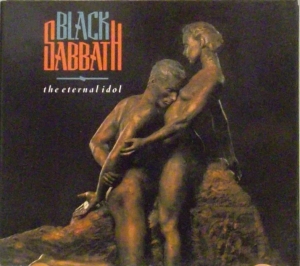
BLACK SABBATH – The Eternal Idol (2010 deluxe edition)
The years of chaos were seemingly coming to an end as Black Sabbath stabilized into a solid core of Tony Iommi, Geoff Nicholls, and new lead singer Tony Martin. The drum and bass positions would continue to swirl for another year, right up until the Headless Cross tour. Getting to this point was not without struggle, and this new Deluxe Edition illustrates this beautifully.
I’m going to sidestep the issue of “Does The Eternal Idol really deserve the Deluxe Edition treatment?” and just be glad it’s out. There are, after all, two B-sides here that were ridiculously expensive to acquire on 12″ vinyl. Those songs, “Some Kind of Woman” and the original version of “Black Moon” (which would later be re-recorded on Headless Cross) finally complete the Eternal Idol picture. And they’re not bad songs either, particularly “Black Moon”. “Strange Kind of Woman” I haven’t wrapped my head around yet. It’s this uptempo boogie rocker, and aside from “Blue Suede Shoes” I don’t think I’ve ever heard Black Sabbath boogie before. But it’s not bad, Tony’s playing is awesome, but maybe…ill advised is the term I’m looking for?
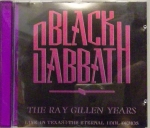
The bonus disc is the entire album’s original recording with former vocalist Ray Gillen (their seventh singer) before he was replaced by Martin (their eigth). This had been mostly available on a very common bootleg called The Ray Gillen Years, but missing a couple tracks. Now, the entire album as recorded by Gillen can be heard, and in much better sound quality. Gillen was a very different type of singer, bluesier, very Coverdale-esque. He later reappeared with his Sabbath-mate Eric Singer in Jake E. Lee’s Badlands.
I can still remember keeping up with the Sabbath story via their music videos on MuchMusic. I was surprised when I saw that the “new” singer, the bearded Glenn Hughes, had been replaced by the much cooler looking Tony Martin. Skeptical, I watched the video for the first and only single “The Shining”. Lo and behold, the song was awesome! The riff (which goes back to an old unreleased Sabbath song from 1984 called “No Way Out”, featuring a lineup of Iommi, Geezer Butler, Bill Ward and David “Donut” Donato) was powerful and epic. As good as any riffs Sabbath had done with Ronnie James Dio. The new chorus shimmers with intensity. This new singer rocked! Unfortunately, Martin would spend his entire career with a “mini-Dio” or “Dio-clone” tag. The similarities are that Martin has a similar range and equal amount of power, but not the grit, and a different character. Fortunately for him, Martin would stick around for 5 albums, but never shook the “replacement singer” tag.
Aside from “The Shining”, I find The Eternal Album to lack lustre. “Glory Ride” is the only other song that was single-worthy, a great romp that reminds me heavily of “Strange Wings” by Savatage (a song that featured Ray Gillen on backing vocals, coincidentally!) The rest of the songs…well, they ain’t bad, I guess. They’re just unremarkable, which is not good for a band that has seldom been anything but. “Born To Lose” is fast and furious, as is “Lost Forever”. “Scarlet Pimpernel” is one of those atmospheric Sab instrumentals that they were known for in the early days, and its inclusion was very wise. However, the songs so tend to meld into one another, with only “The Shining” and “Glory Ride” making my personal Sabbath road tapes.
I mentioned the creation of this album was chaotic. Aside from the replacement of the lead singer position mid-album, there were also two drummers: Eric Singer departed to be replaced by ex-Sabbath drummer Bev Bevan! But by the tour, Bevan would be replaced by ex-The Clash drummer (Dr.) Terry Chimes. Dave (brother of Dan) Spitz partially recorded the bass to be replaced by ex-Rainbow and Ozzy bassist Bob Daisley. Daisley was gone before the video for “The Shining” was filmed, to be replaced by a mystery man who nobody bothered to catch the name of. You can see him in the video. The story goes, they needed a bassist for the video and pulled this guy off the street. For the tour, Jo Burt filled the bassist slot. Neither Chimes nor Burt would stick around to the next album, Headless Cross.
Did you get all that?
The Eternal Idol was a crucial step towards solidifying Black Sabbath once again, after the chaos of the previous years, but it would be the next album, Headless Cross, that was a resounding return. A much more solid album, Headless featured the new nucleus of the two Tonys and the legendary Cozy Powell on drums. Session bassist Lawrence Cottle (a great fretless player) was replaced for the while by Cozy’s longtime rhythm partner, Neil Murray. That lineup of Powell, Murray, Iommi and Martin (always with Geoff Nicholls on keys) would prove to be one of the most stable in the band’s history and the one that I saw when I first saw Sabbath live in 1995 on the Forbidden tour.
Anyway, I’m going off on a tangent. My point was to show that this album was really not the “comeback” that it could have been, but merely a step towards rebuilding Black Sabbath. You have to admire Tony Iommi for not giving up. The Eternal Idol is not for those fans who just like Ozzy, or just like Dio. Eternal Idol is for the metal maven who wants to know every chapter in the band’s history. Otherwise, I can’t recommend it, except for the two songs “The Shining” and “Glory Ride”. Purchase accordingly.
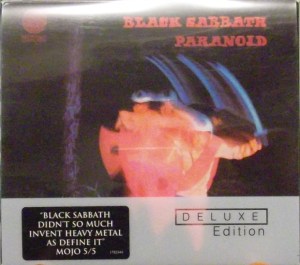
BLACK SABBATH – Paranoid (2009 deluxe edition, 3 discs)
Wow, how many times have I bought Paranoid now? I would guess that this might be my sixth purchase of this album. I mean…it’s Paranoid.
And what is Paranoid? Only one of the most important rock albums of all time. Regardless of the genre it helped spawn, this album is more important than just being a heavy metal album. This is an important rock album. I highly doubt any died-in-the-wool metal fan has not heard this album, but in case you’re young/been living on the moon, I’m happy to discuss these incredible tracks.
First up to bat is the unmistakable sludge of “War Pigs”. “Generals gathered in their masses…just like witches at black masses…” Bonus point to lyricist Geezer Butler for rhyming “masses” with “masses”! Joking aside, this is simply an incredible song, one which history has proven (as great as Dio was) that only Ozzy Osbourne can sing correctly. Then, the brief punk rock explosion of “Paranoid”. This was the first and only song I learned to play on guitar, simple are the chords. But it is no less powerful for its simplicity!
The haunting “Planet Caravan” is a perfect example of Sabbath at their softest and darkest. Ozzy’s distorted vocals send chills up the spine, while Geezer’s bass carries the melodic side. I didn’t like this song as a kid (I hated the soft ones) but I sure grew to appreciate it since. Iommi’s jazzy solo proves what an incredible player the man was and is. In case you were falling asleep, Black Sabbath wake you up with the next track, “Iron Man”. Everyone knows “Iron Man”, a monolithic slab of prototypical heavy metal!
“Electric Funeral” opens with Iommi’s Gibson puking wah-wah and distortion from the speakers, but like many Sabbath songs of the period, the track takes a careening turn into a fast section, before returning to its sludgy roots. Bill Ward, one of the most underrated drummers ever, plays creatively throughout, his use of cymbals and fills endlessly interesting.
“Hand Of Doom” is another one with different sections and tempos, and more of Ward’s jaw-dropping creativity on the tubs. Ozzy howls like a banshee, the band behind him providing a heavy, frightening backdrop.
“Rat Salad” is a personal favourite, the album instrumental, and really a Bill Ward showcase. You want to hear what Bill Ward could do? This is the track to listen to, although Iommi is not to be underestimated. His howling Gibson sends shivers up the spine.
“Fairies Wear Boots” closes the CD, the perfect mixture of riffage and melody. All the while, Geezer and Ward continue to provide a rhythm section as interesting as the guitars and vocals. Once again, Sabbath show their compositional prowess by creating a catchy, riffy heavy metal song with interesting sections and changes. It is another perfect track, on an album of nothing but.
Liner notes and photos: A+. Awesome job. Lots of cool photos, facts, and figures that I was not previously aware of.
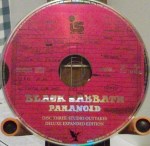
Packaging: C-. I have a 2CD/1DVD Clash set from this series where all three discs are packaged with a plastic tray to hold them in. Not so with Paranoid! Cost cutting may be the reason, but disc 3 slides into a cardboard sleeve while the other two discs have plastic trays.
Remastering: A+. My understanding is that this is a brand new remastering. That would be remastering #3 for Paranoid. (1996 Castle remasters, Black Box remasters.) Like the Black Box version, this sounds great, very clear, very powerful, very authentic. Can you tell the difference between this version and the Black Box version? Not really!
Bonus material: B+. Maybe it’s not anybody’s fault, but the bonus material is somewhat disappointing Most are alternate takes with different lyrics or no lyrics at all. I guess that’s all that was available. Still, it’s not something I will listen to often. Including the DVD, keep in mind you’re going to be hearing these songs three times each! The alternate lyrics are interesting to say the least, but when you’re so used to hearing these songs a certain way, it is a little jarring.
The DVD is an A. On this DVD, you get the original 1974 quad mix. Collectors rejoice, and people who are hoping for a 5.1 remix are going to have to keep waiting. I love the fact that we’re finally getting reissues of classic 1970’s quad mixes. Deep Purple have been releasing some as well. Personally I hope to hear some of the old Alice Cooper quad mixes some day, too.
Not a perfect reissue, but it is what it is. The packaging is the one thing that could have been improved easily. The extra material, well, if this is all Sabbath have in the vaults, then so be it!
(Note: For completists, there’s still an early version of “War Pigs”, ( then titled “Walpurgis”) with different lyrics, from BBC Radio 1, 4/26/70, but you can get it on Ozzy’s The Ozzman Cometh CD.)
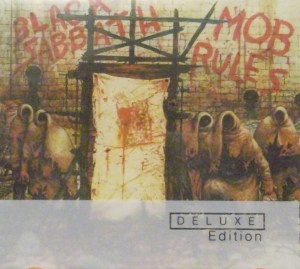
The entire Dio-era catalogue of Sabbath has now been reissued so many bloody times! First there was the original CD issues, then the Castle remasters in 1996, then the Dio years boxed set (The Rules of Hell), and now these deluxe editions. I’m feeling lightly pillaged. But buying these is optional…unless you’re a die-hard like me. If you’re not, stick to the Dio box. If you are a die-hard, plunge forward.
The big reason to buy this set is the Live at Hammersmith Odeon bonus disc. Folks, when Rhino announced this live album in 2007, I jumped on it immediately. The CD sold out immediately, only 5000 copies were ever made. Limited and numbered (I got #3723), even if it sucked it was bound to be worth a fortune in the future right? Well not necessarily. Now it’s been included as a bonus disc. (It’s also seen a vinyl reissue.) So, for me this sucks — my Rhino issue is no longer as desirable to collectors. For you, it’s awesome. Now you can have this blistering live album, way better than Live Evil!
All the other expected perks are here, including bonus tracks: the soundtrack version of the title track, and a B-side (“Die Young”, live) from a 12″ single. It also has extensive liner notes that cover the recording, the tour, and the Hammersmith disc. Throw in some photos and a great remastering job, and you have (hopefully!) the last copy of Mob Rules that you will ever need to buy.
Mob Rules itself is very much a brother record to Heaven and Hell. You have that big dramatic epic (“The Sign of the Southern Cross”), the speedy opener (“Turn Up The Night”) and everything else in between (“Voodoo”). It’s not quite up to the lofty standards of H&H, although it does follow the blueprint quite closely. I find the closer (“Over & Over”) to be the weak link in an otherwise pretty damn strong chain.
I think the title track, “The Mob Rules”, is probably one of the greatest heavy metal songs ever written. Furiously paced, with Dio’s pipes in fine form, it an energized trip. “The Sign of the Southern Cross” is, as far as I’m concerned, pretty much an equal track to “Heaven and Hell”. Its riff is simply earth-shattering. Once again, Dio’s pipes are unequaled.
Even something like “Country Girl”, a lesser known track, blows me away. Iommi pulls another memorably powerful riff out of his bag of tricks, while Ronnie wails away…about what, I’m not sure. But it sure is fun to sing along. “Slipping Away” is another personal favourite due to Geezer’s fluidic bass solos. “Falling Off the Edge of the World” smokes, another fast Iommi riff that bores its way into the brain. You’ll be exhausted by the end of it. Really, the only mis-step is the album closer, “Over and Over”, which I find a bit too dull and slow for an album as great as Mob Rules.
Pick it up to help complete your Sabbath collection, and to hear the awesome Live At Hammersmith Odeon.
BLACK SABBATH – Black Sabbath (2009 deluxe edition)
I have been a little slow reviewing all my Sabbath deluxe editions. I got this one for Christmas, 2010. Bad LeBrain!
What can I say? The most iconic metal album of all time has been given the deluxe edition treatment, and deservedly so.
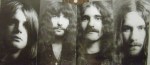
First of all, before I talk about the music, this edition just looks beautiful in its digipack. The scariest most haunting album cover of all time is printed crisply on cardboard and it looks amazing. Open it up to find photos of a hippy-dippy looking Black Sabbath, just a bunch of kids. The booklet inside has truly great liner notes and more photos of the young foursome. There is one photo of Oz playing keyboards in the studio — strange, none of his keys show up on this album. I’d love to know the story behind that photo.
Musically, of course this album is incredible. Simple, sparse, raw, and haunting. This is the kind of music that can only be made by four guys psychically locked-in with each other, knowing what notes are coming next, anticipating them and reacting to them. Bill Ward’s drumming is thrifty and wonderful, perfectly off-time and magically working with Geezer Butler’s fluidic basslines. Geezer’s bass, in turn, is locked in with Iommi’s guitar, providing melodic accents while Tony plays the rock solid demonic riffs from hell. Meanwhile, Ozzy is on top of it all, a man possessed, his words ringing loud and powerfully along within the spaces of the songs. This is the kind of album that can only be created by four guys playing live in a room together. Modern “rock” (quotes intended) bands cannot do this kind of album.
Every song is, of course, a classic, from the opening thunder of “Black Sabbath” to the wallowing solos of “Warning” and the haunting “Sleeping Village”. “N.I.B.” has one of the catchiest bass intros of all time, amp hum buzzing away in the background as you can hear Geezer’s fingers pluck away. Truly, a classic album, all killer no filler.
And no wonder. The band was tight, playing these songs night after night after night until they had them down pat. I once read that Sabbath were doing 8 sets, 45 minutes each, in the bars each gig. That makes you a tight band, and the bonus disc proves this. Alternate takes of key tracks on the second disc prove that the band had these songs down to a fine science. Casual fans won’t even be able to pick up on the differences, they are so tight. The biggest difference is in the alternate take of “Evil Woman”. Flutes? Methinks Tony still had a bit too much Jethro Tull in his system!
There are also some instrumentals with the vocal tracks stripped off. These are interesting from an analytical point of view. The title track really allows you to hear the instruments playing against each other, Tony’s guitar puking mounds of distortion all over the tapes.
Lastly you get both “Wicked World” and “Evil Woman”. Depending on where you lived, one track was subbed for the other on the original album and the first CD issues. All later remasters of this album contained both songs, including this one.
Interestingly, the demos that Ozzy released on his own Ozzman Cometh compilation are not included here. Pick that album up as well for some very rough early versions of some of these tracks, with different lyrics as well.
5/5 stars. Every metal fan in the world needs this album, absolutely no excuses.
Once upon a time Black Sabbath were the most vital metal band around, but not in 1995. The 80’s and early 90’s were much rougher, with a rotating lineup of singers, drummers, and bass players. Only original member Tony Iommi and longtime keyboardist Geoff Nicholls weathered the storm consistently.
Bill Ward and Geezer Butler were both playing in Black Sabbath again in late 1994, but by 1995 both had bailed (for the umpteenth time) again. That left Iommi with Nicholls and singer Tony Martin not knowing what was going to happen next. There were rumours in the press that Ice T (yes, Ice T) would be soon joining Sabbath.
That didn’t happen (thank God!) and the lineup here is nothing but pure heavy metal pedigree. It is also a reunion of the 1989-1991 Tyr band. Neil Murray and Cozy Powell were back on bass and drums. This would be Murray’s second and Powell’s third Sabbath album. Murray and Powell, of course, also did time together in Whitesnake, forming a rock solid rhythm section that only great chemistry can produce.
So what happened? What went wrong? Why does Forbidden suck so bad?
The reasons are threefold. One, the album was rushed out amid much confusion within the band. Rumours of Ozzy’s return abounded and Martin didn’t know if he was in or out. Morale sucked. Second, the record company insisted on a more “current” sound. Thus, the album was produced by Body Count’s Ernie C, and I guess that is the connection to Ice T, who guest raps on the opening track. Third, I think the album was recorded in roughly a week and doesn’t really sound finished. Rather, it sounds like a demo sonically and song-wise, with all the filler songs that don’t normally make it to a released album.
Powell, normally a thunderous drummer, is reduced here to a dry hollow whollop thanks to Ernie C’s crummy production. It’s too bad because Cozy is playing some serious awesome drums that you can’t hear properly. The entire album suffers, the vocals sound raw and rushed, and the songs smack of second rate tunage. Granted, everybody knows that Iommi has bags and bags of tapes full of riffs, and some of these riffs are great. However, a riff cannot make a song, and without decent vocal hooks, this Sabbath album is as flat as they come.
It is truly a shame that Tony Martin had to go out with this as his final Sabbath album, after years of loyalty and being dumped twice! I saw them on this tour, and they were great. Shame they were supporting a terrible album.
Highlights:
“Can’t Get Close Enough” is close indeed to being a great song, but not quite. It has a great mellow intro and then this incredible distorted riff kicks in, but the vocal track is slightly underwhelming.
“Kiss of Death” is the closing epic, and best song on the album. Cozy’s drum rolls are like the thunder of Valhalla by the time you get to the choruses and outro. The song reaks of anger and betrayal. “Nothing you can do will hurt me, I am indestructible,” sings Martin over a slow, powerful riff. Wonder if he knew the writing was on the wall as far as his tenure in the band went.
And that’s it. “Rusty Angels” and “Forbidden” have great riffs but are otherwise not noteworthy. “I Won’t Cry For You” had potential as a ballad, but is inferior in every way to similar songs like “Feels Good To Me”, for example. This album is so dead, so lifeless, not even the grim reaper on the cover can be bothered to stand up.
I know some critisized the cover of this album as being too cartoony, but once you open it up and get the full picture, it is much better. The reaper is sitting next to a tomb, and out from the tomb are the ghosts of all five Sabbath members, Ice T, Ernie C, and lots of ghouls and goblins, done in MAD Magazine type charicatures. It’s a rare fun cover from a band that usually takes its doomy image far too seriously.
Shame that the album isn’t as fun. In the 15 years (and counting) since I bought it, I can usually count on it as a sleeping aid. It’s just that boring.
1/5 stars
OF NOTE: Japanese version had a bonus track, a short 2 minute song called “Loser Gets It All”. It is, sadly, the best track on the album. The good news is that you can get it on a compilation album called The Sabbath Stones if you can’t find the Japanese version.
Side one
1. “The Illusion of Power”
2. “Get a Grip”
3. “Can’t Get Close Enough”
4. “Shaking Off the Chains”
5. “I Won’t Cry for You”
Side two
6. “Guilty as Hell”
7. “Sick and Tired”
8. “Rusty Angels”
9. “Forbidden”
10. “Kiss of Death”
Sadly, my concert review for this show no longer exists. Ye olde floppy discs don’t exist anymore, and the site that once hosted the review (sabbathlive.com) no longest exists. Therefore I’m forced to re-write this as a Record Store Tale.
RECORD STORE TALES PART 136: Black Sabbath July 22 1995
July 22, 1995. Tom, myself, and a few of the boys decided to go see Black Sabbath. They were playing Lulu’s Roadhouse, the world’s longest bar, with Motorhead opening. It felt like a step down for both bands, but the place was packed.
We arrived just before Lemmy hit the stage. They ripped into a scorching set to promote their latest album, the high-octane Sacrifice. I remember Lemmy introducing the title track: “Don’t try to dance to this one or you’ll break both your fucking legs!” At the end of their set, Motorhead promised to return (and they did a year later).
I remember Tom and I being blown away by Motorhead. I didn’t own any — this show officially was what made me a fan. I kicked myself for not really paying attention to them earlier, but better late than never eh?
Motorhead remain today one of the best bands I’ve seen.
But I was there to see Black Sabbath. We moved closer to the front of the stage to be in position. We chose a spot perfectly between where the two Tony’s would be, right up front.
The crowd was getting a little drunk and restless. A fight started…well, I hesitate to really call it a fight, it was over before it started. We all turned around to see this big huge dude headbutt this little tiny Kurt Cobain looking guy. Knocked him out cold. Then the big guy realized everybody was watching and hastily made an exit.
Then, Black Sabbath: Tony Iommi, Tony Martin, Cozy Powell, Neil Murray, and Geoff Nicholls. What we didn’t know was that Cozy only had seven more gigs after this one. Then he would be replaced by another Sabbath vet, Bobby Rondinelli. And of course little did I know that I’d never see Cozy live again in any band: He was killed in a car accident 3 years later.
They hit the stage to the classic Martin-era opener, “Children of the Grave”. Sabbath’s set was sprinkled with tunes from the Ozzy era (“War Pigs”, “Iron Man”, “Paranoid”, “Sabbath Bloody Sabbath”, “Black Sabbath”) and the Dio era (“Heaven and Hell”, “Mob Rules”) and many of his own tracks. They played three from the lacklustre new record, but at least three of the better songs: an awesomely dramatic “Kiss Of Death”, the explosive “Can’t Get Close Enough”, and the filler song “Get A Grip”.
It was just before “Get A Grip” that the stagediving began. Tom vacated the stage area right away. “Get a grip is right!” he said to me. “I’m out of here.” Two songs later I followed him. This drunk girl started grinding me from behind, so I took the first chance to slip away and catch up with Tom.
The one song I really came to see was “The Shining”, one of the best Martin-era tunes, and his first single with the band. Sabbath delivered. They also played two from Headless Cross including “When Death Calls”. Neil Murray played the chiming bass intro to this song that I’d never heard before. It was the only unfamiliar song. I resolved to get Headless Cross as soon as possible. (It took two months for Orange Monkey Music in Waterloo to get it from Europe.)
Vague memories:
Tony Martin was a so-so frontman. Much of the time, he would spread his arms Christ-like and shake his thinning hair. He talked a lot and I remember he had small, beady but friendly looking eyes. He did the best he could. He sang his ass off, although he had lost a fair chunk of his range.
I remember Iommi ditched his SG for an unfamiliar red guitar during the overdriven “Can’t Get Close Enough”.
I could barely see Cozy, which is my biggest regret.
I was pleased that Sabbath played a well-rounded set with new stuff.
Little did I know that the end was near. Not only was Cozy soon to be out, but promoters cancelled much of the end of the tour. Sabbath headed over to Japan, threw “Changes” into the set (OMG!) but were done by the end of the year. For the first time in a long time, Sabbath were put on ice while Tony (Iommi) worked on a solo album with Glenn Hughes.
Meanwhile, the lawyers were conspiring to create a new/old Sabbath lineup. By 1997, Ozzy was back, and the band now featuring founding members Osbourne, Tony Iommi, Geezer Butler, and new drummer Mike Bordin of Faith No More.
I’m glad to have seen Sabbath with Martin. He did five albums, and I like three of them. I think he did the best he could under difficult circumstances. He’s a talented guy, so it’s great to have seen this lineup especially since Cozy would be gone so soon!
This is one of the last Sabbath albums I got, because it was pretty scarce in the mid-90’s. I paid about $25 for a US import, thanks to Orange Monkey Music in Kitchener, the only store that was able to get it. (They were not, however, able to get me Seventh Star, then only available from Japan.)
While Headless Cross is lopsided to keyboard-heavy melodic numbers, I consider it a really underrated album. I like it a lot better than the previous one, Tony Martin’s debut as Sabbath singer, The Eternal Idol. I can’t say I adore it as much as Born Again, my favourite album of all time by anybody. I can’t say I prefer it to Seventh Star, but it’s pretty close.
It’s a short one, a mere 7 tracks plus intro “The Gates of Hell”, but most of the songs are in the 5-6 minute range. The intro then segues into one of the most powerful Sabbath songs of the entire catalog: “Headless Cross” itself. Cozy Powell kicks this one in the nuts. If you love Cozy’s drumming, you will love “Headless Cross”. It pulsates before it explodes in the chorus with Tony’s youthful scream. In the 1980’s most bands needed a singer who could shatter glass and Tony M delivered. If that’s not your thing, then just walk away, because you won’t like the rest of this review.
Another riffy number shows up next, “Devil & Daughter”, which also showcases Tony Iommi’s underrated soloing. Martin scorches through the song with bravado and lung power to spare. Its only flaw is that Geoff Nicholls’ keys are mixed way too high, as they are on almost every song on Headless Cross.
“When Death Calls” is a slow burner that I witnessed Sabbath perform live in 1995 on the Forbidden tour. It has three distinct sections: the mellow verses featuring Lawrence Cottle’s chiming fretless bass, the heavy choruses, and the scorching “Don’t look in those sunken eyes…” section. This one section, as far as I’m concerned, makes the song. Take it out and you don’t have enough to keep it interesting. And best of all, who shows up to play the guitar solo? Does he sound familiar to you?
I should hope so. It’s Iommi’s mate Brian May! A heavier Brian May than you were hearing at that period of the 1980’s, and his solo totally makes the song that much more special. By the time Martin proclaims that there’s no tomorrow, “just an evil shadow” at the end, you’re probably exhausted from rocking so hard.
And that’s side one, a decidedly dark affair. The mood brightens a little on side two. The hard rock song “Kill In The Spirit World” boasts song damn strong verses before it melds with a spooky chorus. Then Tony nails it with a hauntingly bluesy solo. I’m sure this song was derided by skeptics at the time for its pop tendencies; meanwhile Dio got away with songs like “Mystery”. I think there was definitely a double standard in how fans treated Sabbath in the late 80’s. Their albums were a lot better than given credit.
Another hard rock song follows: “Call of the Wild”. It’s not as good as “Kill In The Spirit World”, but it has a good pulse and it’s pretty decent. Reportedly this song was to be called “Hero” until Ozzy released one with the same title a few months prior. The lyrics are pretty lame:
In this last macabre hour, witches cry
And turn to dust before the moon
Many spirits are lost forever but one survives
To call the tune of Lucifer
There’s one pretty-much universal criticism of Headless Cross, and that’s the lyrics. The above is a glaring example of Martin specifically trying to write “Satanic” lyrics, something he admitted to. It feels contrived because it was, and in fact it loaned Sabbath less credibility than when Ronnie was singing about neon knights, and Ian was singing about getting trashed.
“Black Moon” is next, actually a re-recorded B-side from The Eternal Idol. As such, it’s not that remarkable. The riff is cool, as Tony wrings out something bluesy while Cozy pounds out a passable groove.
The album closes with the haunting, acoustic “Night Wing”. This is where Cottle’s fretless bass really plays a role. I love fretless and this song has some strong sections with great bass. It’s odd to hear fretless bass on a Sabbath album, but I like different. Tony’s guitar solo is a scorcher, as he seemingly loses control and then reels it back in. And then as if to make a point, he composes a simple but appropriate acoustic solo. And then another electric one.
You know, looking back, 1989, it was the era of the guitar hero. And nothing wrong with that. I love Van Halen, I love Satriani, Vai, Morse, all those guys. But it truly is a shame that in the 80’s, the guitar kids ignored Tony Iommi. A guitar hero — nay! legend! — was playing better than ever and the kids didn’t buy Headless Cross.
‘Tis a shame.
Lawrence Cottle was a studio cat, and arguably never an official member of Black Sabbath, but Joe Siegler’s got him listed and that’s good enough for me. You could hardly see him in the music video for “Headless Cross” as he is always in the background, blurry. But Sabbath fans were soon in for a treat that many did not appreciate: the arrival of Neil Murray on bass. Neil and Cozy had become a formidable rhythm section in Whitesnake, and now they were back together, the two guys who did Slide It In (the US version anyway).
The Black Sabbath lineup of Iommi/Martin/Powell/Murray/Nicholls bears the dubious distinction of being the third-longest lived behind the classic Ozzy and Dio (with Appice) lineups. They did three tours and two albums (Tyr and Forbidden). The hiring of these musicians was hoped to bring the credibility back. Unfortunately, that didn’t happen.
As mentioned, this lineup recorded the next album, Tyr, before breaking up in the face of the first reunion with Ronnie James Dio, and it was this lineup that I saw in 1995, thus far the only time I’ve seen the band.
If Headless Cross were remixed today, to just tone down the keyboards a tad, I think it would help a lot. But I do like this album. Sabbath had written some great songs (all songs are credited to the band), and Tony Martin was at the absolute peak of his voice.


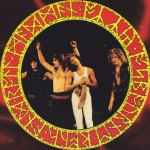 I always hate to compare Ozzy’s versions of Sabbath songs with the originals. Ozzy’s have always sounded different because of the guitar players he’s chosen to use over the years. These Gillis versions are about as authentic as Ozzy’s been, until the fortuitous discovery of Zakk Wylde five years later. Gillis is a flashier player than Iommi, but without Randy’s intricate classical bent.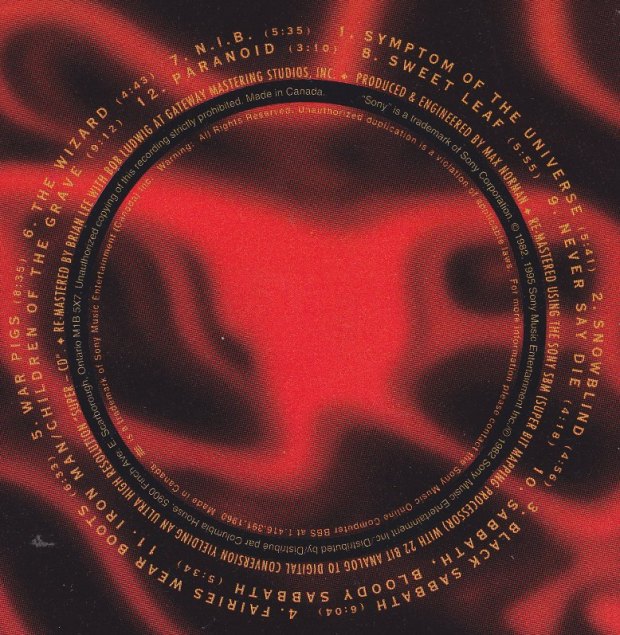

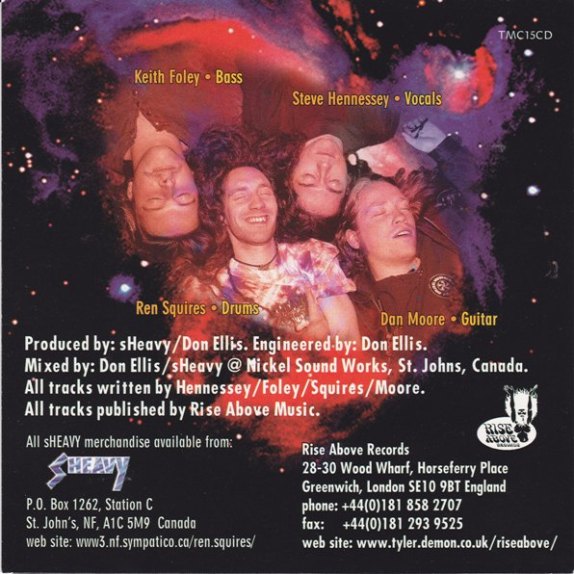
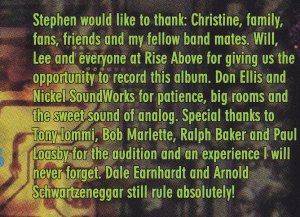 The singer is a fellow named Steve Hennessey, and according to the CD booklet, he once had an audition with Tony Iommi and Black Sabbath’s then-producer, Bob Marlette! What could that have been for? An Iommi solo album, or Sabbath itself? The CD doesn’t reveal. “Special thanks to Tony Iommi, Bob Marlette, Ralph Baker and Paul Loasby for the audition and an experience I will never forget,” is all it says! He nails every inflection that Ozzy used to do, it’s that uncanny.











 mikeladano.com