Reviews

RE-REVIEW: KISS – Ace Frehley (1978 solo album)

The KISS RE-REVIEW SERIES Part 14:  

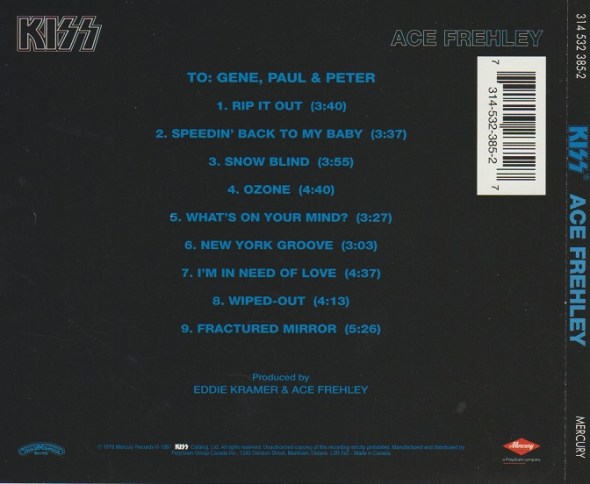
 Ace Frehley (1978 Casablanca solo album, 1997 Mercury remaster)

Of the four members of Kiss, Ace Frehley felt he had the most to prove on his solo album.  He’d only had two lead vocals with Kiss, and usually only contributed a couple songs to each album.  Could he write and sing an entire solo album?  Some in the Kiss camp had their doubts.

Ace regrouped with his favourite Kiss producer, Eddie Kramer, and crucially got a newcomer named Anton Fig to play drums.  Anton, from South Africa, has a long and fruitful career but a huge chunk of it was with Ace, and it started right here.  Ace Frehley played almost everything else himself.  Will Lee (Anton’s future bandmate on the Late Night with David Letterman show) played bass on three tracks.  Ace also wrote the majority of the songs by himself, proving he wasn’t reliant on Gene and Paul.

“Rip It Out” is one of the great Ace album openers.  He used it to open his Frehley’s Comet shows in the 1980s, and on album, it really sets the right scene.  Ace was singing great, but more importantly, he had a chance to really let his guitars shine.   Listen to the main riff — you can clearly hear an acoustic guitar mixed in with the electrics.  In Kiss, Ace’s job was to solo and complement the rhythm guitars.  Now Ace could play with multi-layered guitars and effects.  “Rip It Out” really sounds like a statement of intent.  Listen very carefully to the number of guitar parts happening in the mix, from slides and squeals to solos.

Ace has a knack for a pop melody, and “Speeding Back to My Baby” has that side to it.  It’s pop rock complete with female backing vocals, but with serious crunch.  Frehley is the master of guitar crunch, so even when we call a song “pop”, it really rocks.  Check out Frehley’s partly backwards stoppy-starty guitar solo too.

The heavy side of Ace is explored on “Snow Blind”, a mean rocker with a nasty riff.  The solo section is to die for.  “Ozone” too is heavy, and possibly better known as a cover by the Foo Fighters.  There weren’t any questions about the subject matter:  “I’m the kind of guy who likes feelin’ high,” sings Ace in the opening line.  Gene would not have approved, but note the combined use of electrics and acoustics once again.

Ace ended the first side with another triumphant pop rocker:  “What’s On Your Mind”.  It is tracks like this that helped Ace’s solo album become a clear fan favourite.  The guitar riff has punch, but when doubled with acoustics, it rings like a bell.  From brilliant guitar licks to the unforgettable melody, Ace nailed it with “What’s On Your Mind”. It also bookends the first side very well with “Rip It Out”.

The big hit, still getting radio play today, was the Russ Ballard cover “New York Groove”.  Ballard originally gave his demo to the band Hello, but it was Ace that made it an important song.  Ace took the words (written by an Englishman!) and adapted his persona to them.  His lovable rough and tumble New York personality fit the song to a “T”.  It’s a bit cheesy, but Ace can take cheesy and make it cool.  The stompy beat was created using studio experimentation, Eddie Kramer the mad genius who would record anything and everything to get just the right sound.

A pair of rock tracks, “I’m In Need of Love” and “Wiped Out”, fill the middle of side two.  Ace’s echoey guitar slides on “I’m In Need of Love” deliver the prime hooks.  It’s an excellent example of what Ace can do with an electric guitar.  Meanwhile, “Wiped Out” is like a sequel to the surf rock classic “Wipe Out”, and not Ace’s last foray into surf rock either.  His intricate picking here would cause a lesser player’s fingers to fall off.  Check out that wacka-ja-wacka stuff too, funky and cool.

Ace saved the most impressive track for the last, and the first in his so-called Fractured Quadrilogy:  “Fractured Mirror”.  This instrumental features shimmering six and twelve strings working in tandem.  Ace and producer Eddie Kramer went to great lengths to get the guitar sounds on this song.  One technique included playing the figure on a doubleneck guitar, but only using the pickups on the open-tuned second neck.  The pickups to the neck that Ace was actually playing on were turned off.  Once overdubbed, this gave the guitars a bell-like chime, and fans spent years trying to figure out just how Ace did it.  Now you know.

This album was a turning point for Ace.  It gave him confidence.  It ushered in a slew of Ace Frehley lead vocals in Kiss.  And eventually, it set him up for his departure, as nothing he did in Kiss was as artistically freeing as his first solo album.

Today’s rating:

5/5 stars

To be continued…
Original mikeladano.com review:  2012/07/19


RE-REVIEW: KISS – Peter Criss (1978 solo album)

The KISS RE-REVIEW SERIES Part 13:  

 Peter Criss (1978 Casablanca solo album, 1997 Mercury remaster)

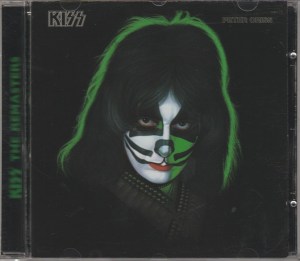
Peter Criss’ dreams of superstardom died with his first solo album.

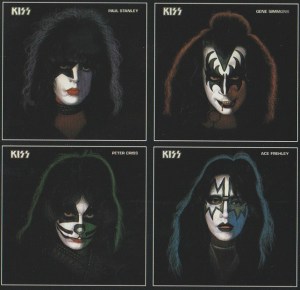
To assuage egos and blow off steam, all four Kiss members agreed to record and release solo albums simultaneously.  This was done under the Kiss banner to unify them, but each member had complete creative freedom on their own.

A project like this had never been attempted before by anybody, and Casablanca records gambled on all four being equally huge.  They gambled wrong.  Peter Criss’ album was the biggest casualty.  It sold the poorest and charted at a lowly #43 (Billboard).  He assumed he was the star of the band due to “Beth” being their biggest single.  He set out to make an album like that, but Kiss fans were not likely to buy an R&B ballad album.

Criss hired Ringo Starr producer Vini Poncia (his first of a few Kiss collaborations), and wrote part of the album with his old Chelsea partner Stan Penridge.  He had a band of studio musicians, but was unable to play drums on the whole album due to injury.  For those tracks he used Allan Schwartzberg who also played on Gene Simmons’ solo LP.

There was a clear R&B direction, the stuff that Peter loved and couldn’t play in Kiss.  There are horns a’plenty and cool non-rock grooves.  Opening track “I’m Gonna Love You” pointed the way:  mid-tempo, loads of soulful backing vocals, easy beats and raspy singing.  His drums fit the sound perfectly.  “You Matter to Me” brought 70s synth into the mixture.  Easy listening light rock ballads go down smooth but don’t leave you feeling satisfied.

“Tossin’ and Turnin’”, the old 1961 R&B hit, was the only tune played live by Kiss on the 1979 tour.  Peter’s version of course does not sound like Kiss, but it’s a lively version suited to his style.  Another ballad, “Don’t You Let Me Down”, is a tender song but lighter than light.  Absolutely too soft for Kiss, but one of the stronger Penridge/Criss compositions that might have worked well covered by an easy listening artist.  Unlike “That’s the Kind of Sugar Papa Likes”, which is not a good song at all.

Criss played all the drums on side one.  Schwartzberg was on most of side two, opening with the quiet yet epic ballad “Easy Thing”.  It has a slow build into something big and orchestrated, and for this album it works.  Sean Delaney’s “Rock Me, Baby” brings things back to rock and roll, but with a mediocre track that wouldn’t be good enough for Kiss.  “Kiss the Girl Goodbye” was another soft and light ballad, pleasant enough but far from outstanding.  Penridge’s guitar is a delight, but the only delight.  “Hooked on Rock and Roll” on the other hand is a standout akin to “Tossin’ and Turnin’”, a little bit of an autobiographical track about the Catman.  “Every morning at the break of dawn, you could see him dragging home his drums.”

The final track, and one of the most polarizing, is Sean Delaney’s “I Can’t Stop the Rain”.  Some love it, some hate it, but one thing for sure:  it’s one of most bombastic ballads Peter’s ever recorded.  Piano, orchestration and stellar guitar by Elliot Randall (Steely Dan) make for a huge ballad.  Love it or hate it, “I Can’t Stop the Rain” is schlocky and bittersweet.

When Peter’s album failed to sell, Casablanca rushed out two singles.  The other Kiss members only got one each.  Neither “Don’t You Let Me Down” nor “You Matter to Me” made any impact.  The fallout from this album was that Peter Criss was perceived as out of touch by his band and his fans.  He was hoping to become a blue-eyed soul star, but his image never recovered.  From this point on, Peter’s dedication to rock was always under scrutiny, and his time in Kiss truly began to tick away.

Today’s rating

1.5/5 stars

To be continued…

Original mikeladano.com review:  2012/07/17


REVIEW: Deep Purple – Limitless (2017 Classic Rock exclusive CD)

DEEP PURPLE – Limitless (2017 exclusive CD included with Classic Rock #234, April 2017)

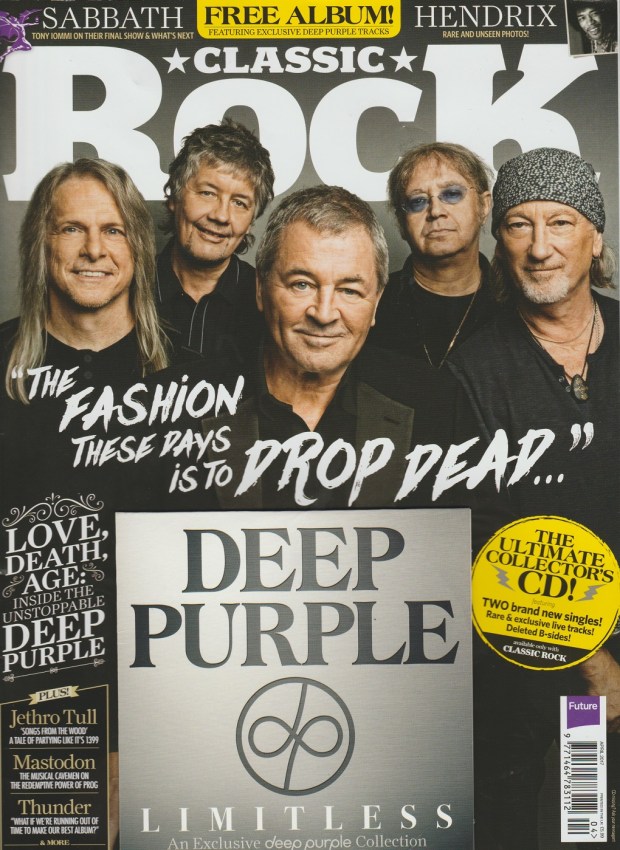
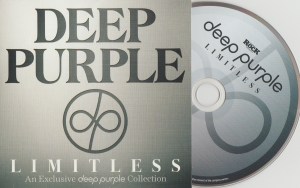
You have to hand it to the folks at Classic Rock.  It’s a quality publication that also manages to give out quality free cover-mount CDs.  With all the attention on Deep Purple these days due to their newly released album Infinite, Classic Rock have done the band up in style.  The CD is not just for beginners either.  Limitless (get it?) has a bunch of material from recent vintage and one exclusive track too.  That’s right — one track on this CD is exclusive to Classic Rock, so get on it, collectors!

At 43 minutes, Limitless has the ideal run time for a great listen through.  If you want to check out some new Deep Purple right off the bat, then just dive in.  Tracks 1 and 2 are the first two singles from Infinite:  “Time For Bedlam” and “All I Got is You”.  Both tracks are excellent, and fine samplings of what the current Deep Purple lineup (est. 2003) sound like.  With Steve Morse and Don Airey, the band have gone from strength to strength.  The instrumental prowess on these songs will easily demonstrate why Deep Purple are universally lauded.

Going back one album prior, we have two tracks from the Now What?! period.  The single version of “All the Time in the World” is a nice ballad for inclusion, though I think “Vincent Price” blows everything else on that album away.  Also included is the rock and roll “First Sign of Madness”.  The liner notes state this song is taken from the “Above and Beyond” CD single.  That doesn’t actually appear to be the case, but ” First Sign of Madness” was included as a bonus track on many editions of the Now What?! album.

The second half of Limitless is dedicated to live material, all classics.  “No One Came” from 1971’s Fireball is one of Purple’s most lethal grooves, and is lifted from the deluxe “Gold” reissue of the Now What?! album.  Gillan’s voice strains hard on this one.  A fun version of “Strange Kind of Woman” comes from the double live 2015 Wacken set.  It’s pure delight.  Next, “Perfect Strangers” is always welcome aboard, and this live version comes from the parallel double live 2015 Tokyo release.

Finally the set draws to a close with the Classic Rock exclusive track, a live tape of “Black Night” from Milan, July 21 2013.  Many of the live tracks on the Now What?! reissue come from that gig, but “Black Night” is previously unreleased.  It’s a jamming version, over seven minutes and Morse-heavy.  And there are more live tracks from that gig in the Deep Purple Infinite box set version, which looks just fantastic.

And magazine isn’t bad either!  The Deep Purple interview reveals some of the lighter side of the legendary Gillan/Blackmore relationship, tempered by the passage of time.  Incidentally, the magazine gives Infinite 7/10 stars.  That’s not bad for a band about to hit their 50th anniversary in a year’s time.  Check it out, and enjoy the 8-track CD Limitless while you read along!

4/5 stars

RE-REVIEW: KISS – Double Platinum (1978)

The KISS RE-REVIEW SERIES Part 12:  

kiss-logoDouble Platinum (1978 Casablanca, 1997 Mercury remastered edition)

As 1977 turned into 1978, Kiss were buying mansions, and buying time.

Their next big project was a rock and roll first.  Four solo albums, all under the Kiss banner, simultaneously.  It had never been done before.  As each of the four members toiled separately on their albums, Casablanca Records and Sean Delaney put together the next Kiss package:  Double Platinum was intended to keep the band on the charts in the meantime.

The first Kiss “greatest hits” album is the most legendary.  Sparing no expense, the two records were housed in a brilliant gatefold sleeve, embossed in shiny silver foil.  Kiss made their hits package really look like one, and the 20 included songs meant fans would get a cross section of hit material from all six Kiss studio albums.

Therein lay the challenge.  Kiss studio albums were, at best, uneven sounding.  Their early work was marred by studio inadequacies.  Producer Delaney chose to remix (with Mike Stone) a number of the old Kiss tracks, in an attempt to bring everything up to the level of DestroyerDestroyer was considered the benchmark, the best sounding Kiss album.  Using it as the high water mark, Delaney and Stone attempted to bring the rest of the material to that level.  Remixed were “Firehouse”, “Deuce”, “100,000 Years”, “Detroit Rock City”, “She”, “C’mon And Love Me”, “Hard Luck Woman”, “Calling Dr. Love”, “Let Me Go, Rock and Roll” and “Black Diamond.”

Most casual buyers don’t want remixes when they buy a hits package, but many won’t even be able to tell the difference.  Some are more obvious.  “Hard Luck Woman” has a longer acoustic section.  “She” now has the “Rock Bottom” intro.  “Black Diamond” is rearranged so that it ends where it begins and repeats to fade.  By and large, these remixes are not obtrusive.  They enable a great song flow.

And what songs!  “Detroit”, “Beth”, “Deuce”, “Hotter Than Hell”, “Cold Gin”, “Firehouse”, “Makin’ Love” and more, with very few important exclusions.  The only track that earns scorn from many is “Strutter ‘78”, a re-recording done especially for Double Platinum.  It was done up with a late-70s production featuring compression and shakers.  The “disco era” was on the horizon.  Today, Gene Simmons questions why the re-recording was made.  To sell records, is the answer.

Double Platinum is the album to buy instead of Alive! if you would like to start your Kiss collection with a broad sampling of studio classics.  It’s still an enjoyable front to back listen for anyone.

Today’s rating:

5/5 stars

Original mikeladano.com review:  2012/07/14
Review of foil embossed CD reissue:  2012/11/22

Official apology to Robert V Conte

In my November 2012 review I called the CD liner notes by Conte “shitty” and then added a snarky “Who?”  I knew who he was (I own lots of books with his name inside) and I didn’t need to be bitchy.  His liner notes to the 1997 remastered editions are what they are, and what he was paid to do.  Robert, I hope you accept this apology for what was a dumb comment on my part.

REVIEW: Deep Purple – In Rock (Anniversary edition)

In collaboration with 1001albumsin10years

DEEP PURPLE – In Rock (1970, 1995 EMI anniversary edition)

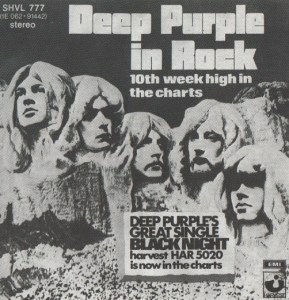
Deep Purple In Rock:  The title speaks mountains about the music.  They didn’t want there to be any question regarding what kind of band Deep Purple were.  The first version of the band, Deep Purple Mk I, made three psychedelic but still clearly rock and roll albums.  Wanting to rock harder, they ditched singer Rod Evans and bassist Nick Simper, and brought aboard Ian Gillan and Roger Glover.  However the first album released by Deep Purple Mk II was…Concerto for Group and Orchestra?  There was also a wishy-washy gospel rock single called “Hallelujah” that went nowhere.  Indeed, there was some confusion in terms of public perception.  In Rock was designed from the start to reaffirm.

With In Rock, producer Martin Birch commenced a long and fruitful relationship with Deep Purple.  The single was a track called “Black Night” which, oddly enough, wasn’t on the album.  It was a response to a record label request for a single, so the band nicked the bassline from Gershwin and wrote a simple rock track with nonsensical lyrics.  It was an immediate hit.  Appropriately, the original single version of “Black Night” is included on this 25th anniversary edition of In Rock.

The B-side to “Black Night” was an edited version of opening album track, “Speed King”.  The full length version was even edited down for some releases of the In Rock album, except in the UK.  Almost a minute of noisy instrumental freakout explosively starts the full enchilada.  This leads to a calming, light Jon Lord organ, misleading you into thinking the onslaught is over.  Think again.

“Speed King” is a quintessential Deep Purple track, cementing their instrumental prowess and lyrical credentials.  The sheer velocity of the track alone packs a whallop, but the sonics are just as powerful.  “Speed King” has a deep, gut-punching heaviness.  There is also a long instrumental section, custom built for the jam-loving audiences of the era.  The words are cut and pasted from classic rock and roll hits in one stream of consciousness.  The best word for “Speed King” is “exhausting”.  Listening through feels like you just finished a sprint.  The band were trying to capture the same vibe as Jimi Hendrix’s “Fire”, but overdid it just a smidge!

And what of that new singer?  Ian Gillan didn’t get to do much screaming in his previous band (with Glover), Episode Six.  In Deep Purple, his unmistakable wail sets world records for pitch and volume.  Without Ian Gillan, there would be no Bruce Dickinson, and therefore Iron Maiden could never have existed as we know it today.  In Rock features Ian at his peak powers.   Nobody can touch In Rock, not even Bruce in his prime.

“Bloodsucker” is a vintage, grinding organ-based groove.  In Rock has a very bass-heavy mix, but clear and defined.  This helps the low growling Hammond combine with Roger Glover’s pulsing bass to form a wave of sound.  Ride that wave on “Bloodsucker”, with a cool double-tracked Gillan vocal that keeps the thing slightly off-balance.  Drummer Ian Paice can never be underappreciated, and in 1970 he was one of the hardest hitters on the field.  “Bloodsucker” leaves  massive Yeti footprints because  of that beat.

One of the most important songs in the Deep Purple canon is “Child in Time”, a 10 minute composition of light and shade that transforms as you listen.  As it begins gently, Ian Gillan gets to utilize the soothing side of his voice.  “Child in Time” is almost a lullaby…until it is not.  Wait for the ricochet.  This album is called Deep Purple In Rock after all.  Not Deep Purple In Bed or Deep Purple At Church.

In 1970, this would have been the moment you get up and flip the record.  To do that, you would have to peel yourself from the floor.

The second side of In Rock features lesser played tracks, but no less impressive.  “Flight of the Rat” takes off amidst a Blackmore guitar rocket riff.  Though fast, it is a step off the pedal from “Speed King” and with enough vocal melody to keep one hanging on.  Lord and Blackmore both solo, fighting to be champion but with no clear winner.  All the while, Glover and Paice keep the pulse going through the time changes.  Then it is “Into the Fire”, a rarely played unsung classic that the band resurrected on tour in 2000 and 2014.  Bopping heavily along, “Into the Fire” will burn if you let it.  Then the drums of “Living Wreck” fade in, with a incredibly deep natural echo that you feel in the bones.  The snare sound rings sharp.  “Living Wreck” was actually one of the first tracks taped, and just listen to Ritchie Blackmore’s tone on the lead solo!  This is truly a triumph of studio recordings.

Finally “Hard Loving Man” closes In Rock with one of the heaviest Purple riffs in their history.  Deep Purple invented the heavy metal chug on “Hard Loving Man”.  Meanwhile Jon Lord contributes to the sludge by hitting as many keys simultaneously as he seemingly can!  What a track, and much like “Speed King” at the start, it leaves you beaten and out of breath.

No Deep Purple album has come close to In Rock for brute strength.  The band and Martin Birch truly captured something special in the studio, back when that meant finding the right amp for the right instrument in the right room.  It’s much like alchemy, only real.  In Rock is an artifact of the way they used to do it, and evidence of why it can’t seem to be repeated.  The monument on the album cover was an apt indicator of what the new Deep Purple sounded like.

The 25th anniversary edition contains a wealth of bonus material, interspersed with amusing studio chat, such as:

Jon Lord (singing):  “I smashed the microphooooone.”

Martin Birch:  “Are you going to hit it again?”

Jon Lord:  “I don’t think so.”

In addition to the original single “Black Night”, there is a fascinating alternate take of “Speed King”.  The band were toying with a version featuring piano instead of organ, which completely changed its character.  This version was recorded and accidentally released on a single instead of the proper one.  Here it is as a bonus track, showing you a work in progress and what could have been.

Then we have a Roger Glover remix of “Cry Free”, one of the earliest songs recorded (30 takes total) but ultimately rejected.  It was first released on the 1977 posthumous Deep Purple album Power House, one of many releases that EMI put out during the period the band were broken up.  Glover oversaw remixes of many of Deep Purple’s reissues beginning here.  The differences are subtle but not unnoticeable.  Glover also remixed “Black Night” (more on that later), “Flight of the Rat” and “Speed King” (including intro) for these bonus tracks.  They might be described as “fuller sounding”.  “Black Night” was expanded to include a previously unheard outro.  Then there is “Jam Stew”, an instrumental with a chicken-pickin’ lick that has been all but forgotten.  It was played for the BBC once with improvised vocals; that version can be found on BBC Sessions 1968-1970.  Ritchie used the riff later in 1970 for a side project album called Green Bullfrog.

With these bonus tracks, the In Rock anniversary edition is expanded from 43 to 78 minutes.  For fans that needed every last morsel, there was still one more release to be found.  To coincide with the anniversary edition in 1995, EMI released a limited and numbered CD single of “Black Night”.  (How many made?  I don’t know, but I have #2908.)  This three track single has two versions not on the In Rock CD:  a single edit of the “Black Night” Glover remix, and a “matching mix” by Glover of “Speed King”.  This “matching mix” seems to be an edited remix without the noisy intro.  They’re not essential except to the collector.

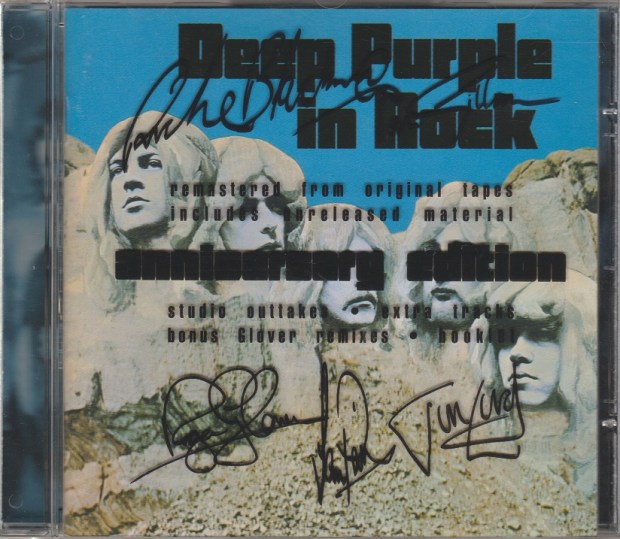
To date, this 1995 anniversary edition is still the only expanded edition of In Rock.  With the rare photos and expansive Simon Robinson essay inside, it is the obvious definitive edition, 22 years reigning strong.  They even tried to get Ritchie Blackmore involved with the reissue.  He offered one quote for the booklet:  “This is my favourite LP along with Machine Head.”  Be very careful if seeking out a mint condition copy of this CD.  The jewel case itself is very special.  The autographs and notes on the front cover are not on the front cover.  They are etched into the plastic of the jewel case.  Mine is safely enclosed in a scratch proof plastic sleeve, but finding an original jewel case intact will not be an easy task on the second hand market.

6/5 stars

Yes, 6/5 stars

MOVIE RE-REVIEW: KISS Meets the Phantom of the Park (1978)

A huge thanks to old buddy Scott who hooked me up with a DVD rip of this movie, taken from the original VHS release.

The KISS RE-REVIEW SERIES Part 11:  

Meets the Phantom of the Park (1978 Hanna-Barbera TV movie)

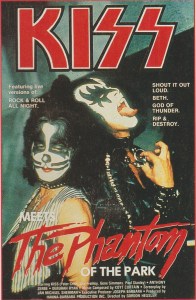
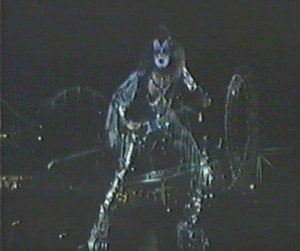
A monster-sized, semi-transparent Gene Simmons prowls above a rollercoaster.  Ace Frehley and Peter Criss fly about on a floating amusement park ride, and Gene says “hello ladies” from the top of the rollercoaster.  Paul Stanley dances up a storm, all to the tune of the original “Rock and Roll all Nite” from Dressed to Kill.  This is how it all happened on October 28, 1978 when NBC broadcast the TV movie Kiss Meets the Phantom of the Park.

The sheer hubris of Kiss and their enablers in 1978 was out of control.  The band had always intended to conquer TV screens, and silver ones too.  When Gene hyped the proposed Kiss movie as the best thing since either Jaws or Star Wars, skepticism would be justified.   Kiss had a ready-made image for spinoffs, and Marvel comics had first dibs on illustrated Kiss.  But their ambition caught up with their abilities with Kiss Meets the Phantom of the Park.  Nobody in the band could act.  The script was being changed on a daily basis.  The special effects were a joke.  Stunt doubles looked nothing like the real Kiss.  Jokey fight scenes are accompanied by cartoony music from the Hanna-Barbera archives.

There is a superior European cut of this film called Attack of the Phantoms.  The cartoon fight music is replaced by actual Kiss songs, and it is generally just a better version.  It can be found in the Kissology II DVD set.  The cut that most of us saw on television has been issued on VHS, but never DVD.  For a complete breakdown of every difference between every version of Kiss Meets the Phantom, be sure to get Dale Sherman’s thoroughly incredible reference book, Black Diamond 2.

It is summer in sunny California at Magic Mountain amusement park.  Over the loudspeakers, an announcement is made:  “Kiss is in concert, starting tonight, for three great nights!”  The security guy, Sneed,  is worried about a riot.  Park owner Calvin Richards only sees dollar signs.  And there is a third party too:  Abner Deveroux (the acclaimed actor Anthony Zerbe in his most embarrassing role ever).  Deveroux built the rides and all the park’s robotic animatronics, but things are starting to break down.   Devereux fancies himself a scientist and can’t deal with his budget cuts while money is being spent promoting the Kiss concert.  Throw in a group of thugs (Chopper, Slime and Dee) and you have a potentially dangerous situation.  When Devereux’s assistant Sam goes missing, his girlfriend Melissa goes looking for him.  And, for some reason, she needs Kiss’ help.

Minute after agonizing minute, we sit through clumsy dialogue and wooden lines, as we wait and wait for Kiss to finally show up.  A creepy tour of Devereux’s underground robot-filled laboratory reveals he’s completely nuts, always a good thing to have in the designer of a kids’ amusement park.  He has the will and the means to exact his revenge on those who cross him…and he also has the missing Sam!  But when will Kiss show up?  Not for an incredibly slow moving 30 minutes…and that’s not including commercials.

Kiss’ grand entrance (to the tune of “Rocket Ride” from Alive II) is the first time the audience is given one vital piece of information.  Kiss, apparently, have superpowers.  They can shoot laser beams from their eyes, breath fire, teleport and more.  Why they have chosen to use their powers for rock and roll is never revealed  beyond “you got to have a party”.

The concert continues with “Shout it Out Loud” and “Black Diamond”.  Peter Criss’ drum kit elevates and fireworks explode.  When the movie first aired, it was the first time kids could could see what a Kiss concert was like from the comfort of home.  The concert footage is far too short, but all is not well with the park.  Abner Devereux is fired from his job (yet he’s not removed from the premises, and continues to work in his underground lab)!  He sets into motion a plan to get his revenge…on Kiss!   Fortunately, Paul can shoot a star thing out of his eye that lets him read minds.

“You’re looking for someone.  But it’s not Kiss.”

When Gene seemingly attacks two security guards at night, Kiss is questioned in the classic “pool scene”.   There used to be an urban legend that Peter Criss did voices for cartoons such as Superfriends.  The origin of this is Kiss Meets the Phantom.  Supposedly Peter Criss refused to overdub his lines (as is standard procedure for any show due to the flawed nature of on-location audio) so voice actor Michael Bell was called in.  Many fans never knew Peter Criss’ real speaking voice for years, since Bell’s was the only one we heard.  Worse, Ace Frehley barely had any dialogue at all, beyond yelping “Ack”.  The writers who were hired to follow Kiss around to get a feel for their personalities didn’t pick up much from Ace beyond odd noises.  Lines has to be added for Ace at the last minute when he flipped out over his lack of verbiage in the film.  Therefore, he also got “Hi, Curly!”  Most of Gene’s lines are just lion-like roars.

The plot thickens:

Calvin Richards:  “Look, someone vandalized our park last night, smashed some of our buildings, and injured a few of our guards.  Well Gene, they think it was you.”

Guard #1:  “Think!?  It was him!”

Guard #2:  “Or his twin!”

Peter Criss:  “Gene’s brother was an only child.”

Paul Stanley:  “Easy, Catman, they are serious.”

The best part is that Guard #1 is played by the then-unknown Brion James of Blade Runner and Fifth Element fame.

When Melissa returns (still looking for the missing Sam), Kiss reveals to her the truth behind their powers:  They possess talismans that grant them superhuman abilities…and now an eavesdropping Devereux knows, too!  The second Kiss concert goes off without a hitch.   An exciting “I Stole Your Love” features the band descending from elevating side stage platforms.  The song is edited for length, but Gene blows fire at the end.  What Kiss don’t know is that Devereux has sent Sam, who he now controls, to steal their talismans!

After the concert, Gene, Paul, Peter and Ace are joined by Melissa, heartbroken over Sam.  Neither Gene, nor Paul, nor Ace and Peter attempt to sleep with her.  No, instead, they serenade her to a very special version of “Beth”.  Some in fandom feel that this version is the best ever version of “Beth”.  It has Peter Criss’ vocal from the album, and a single acoustic guitar.  (Paul mimed this guitar part for the movie, though Peter felt it should have been Ace.)  Meanwhile, Sam is thwarted from stealing the talismans by a force field, but Kiss can sense that something is up.  They decide to check out the park and look for Devereux.

Cue that funky fight scene music, white cat!  Four white cat-like people get the drop on Kiss!  “They’re not real, they’re robots!” says Paul.  “It’s all unreal!”  The cats are followed by samurai, wielding lightsaber-like swords. But Devereux is not so easily beaten.  Sam, now equipped with a ray gun from Devereux, has stolen the talismans!  Kiss follow him into the spooky Chamber of Thrills, where they are attacked and captured by even more robots.  These campy fight scenes are either intolerably awful, or the highlight of the movie, depending on your point of view and level of intoxication.

The climax is an epic battle between Kiss and their evil robotic alter-egos, built by Devereux!  Devereux sends the phony Kiss-bots on stage to use music to incite the crowd to riot and destroy the park.  Changing the words to “Hotter Than Hell”, the Kiss-bots almost succeed.

It’s time for everyone to listen good,
We’re taking all we can stand,
You’ve got the power to rip down these walls,
It’s in the palm of your hand!

Rip, rip, rip and destroy!
You know the hour’s getting late.
Rip, rip, rip and destroy!
Break it down and seal your fate.

Can the real Kiss recover the talismans, beat the bots and retake the stage?

Other Kiss tracks heard in the movie include “Christine Sixteen” and “God of Thunder”, but let’s face it, Kiss Meets the Phantom is a shit-show.  It was an opportunity for fans to see Kiss on TV, but it did little to convert anyone to the Kiss cause.   The concert footage is fantastic, although songs are severely edited.  Its greatest value today is as a camp classic, but without a beverage of some kind, it is a lethargic undertaking.  The fact that Anthony Zerbe has this movie on his resume is astonishing; the fact that Kiss have yet to release this version on DVD is not.

1978 was a rocky year for the Kiss army.  Though the Alive II tour started the year on a high, and the Marvel comic was a pretty cool thing, fans were now being fed more product.  Double Platinum (up next) left some feeling exploited for their dollars, and Kiss Meets the Phantom could be considered a complete write-off.

Today’s rating:  1/5 stars

To be continued…

Original mikeladano.com review:  2012/08/09

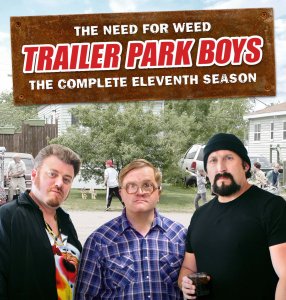
REVIEW: Trailer Park Boys – Season 11 (2017)

TRAILER PARK BOYS – Season 11 (2017 Netflix)

Thank you Netflix for saving the Trailer Park Boys.  It hasn’t been smooth sailing, but ever since the Boys returned to Sunnyvale with the excellent Season 8 (remember Orangie?), the show has continued unhindered by cast defections.  Season 11 is the first without Lucy Decoutere (Lucy) and Jonathan Torrens (J-Roc).  After already losing such favourites as Trevor (Mike Jackson) and Ray (Barrie Dunn), I can understand why some fans may have said enough’s enough.  Every show has its peak.  For some that would be the first three seasons of Trailer Park Boys.  For others, we have rolled with the changes.  Not all fans were unanimous in the acceptance of newer characters such as Col. Dancer, Don/Donna, and Candy.  For this season, those characters have been dropped.  The core park residents are now Ricky, Julian and Bubbles accompanied by Randy, Lahey, Sarah, Cory, Jacob and Trinity.  Little baby Motel is around, as is Barb Lahey.

Continuing a storyline from Season 10, Julian has vanished.  Bubbles is doing well now, having gone legit selling his own brand of organic pizza sauce.  It’s a hit, and a restaurant owner is willing to pay wholesale.  He has the whole park working together growing vegetables, contributing to the well-being of Sunnyvale and its residents.  All is well, but Bubbles does miss Julian.  Jim Lahey is sober and supervising, having truly changed this time.  He and Randy are planning to get married, while Randy is vying to get on the police force.  The absence of Lucy and J-Roc is explained satisfactorily.

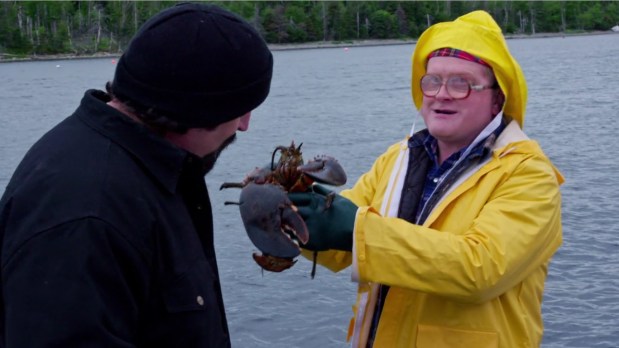
When Ricky and Bubbles (now mobile with his own little truck) discover that Julian is now a lobster fisherman (or is he?) living in a shipping container, they go to confront him.  Ultimately, Julian’s return brings what it always does:  crime back into the park.  Snoop Dogg calls and wants weed, and lots of it.  Julian decides to hijack Bubbles’ pizza sauce business and convert it to a grow op.  As usual, Bubbles is driven near to the breaking point as the stress builds.

In Season 10, there was a revelation that Lahey may in fact be Ricky’s real father.  This is fully addressed in Season 11, via a lightsaber dual (hockey sticks and brooms subbing in for laser swords) and dialogue taken directly from The Empire Strikes Back.  Director Bobby Farrelly (Bobby fucking Farrelly!) must be given credit for the perfect Star Wars homage in Episode 4, “Darth Lahey”, right down to the action beats.  Brilliant stuff — a highpoint episode for this show.

There are cameos by celebrities and past characters. Look for Susan Kent from 22 Minutes, and NHLer Nathan MacKinnon, first overall draft pick and rookie of the year.  A few old adversaries have returned as well, to cause problems for our three lovable idiots.  Speaking of idiots, Ricky and Julian manage to bring the stupidly to new levels, but simultaneously, Ricky has a Yoda-like ability to trick cops.    Meanwhile, they have also managed to keep up with modern technology.  Cell phones, cameras and GPS now figure into the plots.  There are references to the Walking Dead and changing times.  This manages to keep the series feeling fresh.

After 11 seasons, it is understood that a show rarely hits the highs it once did.  Season 11 is a worthy effort; not in the Top Five, but certainly good enough at this point.

4/5 stars


RE-REVIEW: KISS – Alive II (1977)

The KISS RE-REVIEW SERIES Part 10:  

kiss-logoAlive II (1977 Casablanca, 2006 remastered edition from Alive! 1975-2000)

Kiss in 1977 were a band of four different personalities, and those personalities were beginning to drift apart. There was talk of allowing members some time to do solo albums and blow off some steam. There was a Kiss movie happening (Kiss Meets the Phantom of the Park), not to mention Love Gun and its accompanying tour.  Kiss Alive! was the album that made them a household name, so why not try to buy some time with another live release?  The band had amassed three more studio albums in the interim.

Eddie Kramer was hired once again to recapture the magic.  Shows (and soundchecks) in L.A. were recorded, and older tapes from a pre-Love Gun Japanese tour were dusted off.  They had lots of material to work with, and so it was decided that Alive II would have no crossover with tracks from Alive!, a value-conscious move that  fans appreciated.  They were still short enough songs to make a full double live, so studio time was booked at Electric Lady to record new songs too.  As with the previous Alive, much fixing and re-recording was done to the live tracks.  Some of the soundchecks were used with audience noise overdubbed.  Two songs (“Hard Luck Woman” and “Tomorrow and Tonight”) were actually re-recorded completely.  Knowing now what we didn’t know then, this certainly explains why Alive II sounds more sterile than the first, and why you can hear Paul Stanley singing backup vocals to his own lead vocals.

Alive II has always been viewed as sort of a poorer cousin to Alive!  It’s hard to blame the studio tampering, because Alive! was done the same.  For whatever reasons, it’s a lot more noticeable on Alive II, although not to the point of distraction.  Alive II simply does not have the same oomph, the same fire bleeding through.  Even with tracks like “Detroit Rock City”, “Shout it Out Loud”, “God of Thunder” and “I Stole Your Love”, it’s hard to compete with Alive! for sheer ferocity.

As is their penchant, some songs like “God of Thunder” are much faster live.  “God of Thunder” could be the heaviest version of that track on tape.  “Ladies Room” and “Dr. Love” are also faster and harder.  “Makin’ Love” blows away the album version, and “I Want You” comes close.  Ace Frehley’s vocal slot on “Shock Me” is a welcome treat and obvious highlight, featuring Ace’s big solo spot.  As for Peter Criss, “Hard Luck Woman” is a nice electric version, but “Beth” underwhelms.  Singing “Beth” to backing tapes is a “who cares” moment anyway, but Peter doesn’t nail it either.

The real point of interest on Alive II is side four, the studio side, for two reasons.  One is that it’s a surprisingly strong side even though only one of these songs has gone on to be a classic today.  Paul Stanley has dismissed these tracks as schlock, but fans don’t always agree.  The second is that Kiss’ internal problems had come to a head, and once again members were secretly replaced on recordings by outsiders.

Ace Frehley wasn’t around, except to record his own song (“Rocket Ride”), which has become a second-tier Kiss classic.  Maybe to spite Kiss, he played all the bass and guitars on it.  Ace’s track is immediate, Kiss-like and perfect for his persona.  With Peter Criss in the pocket, Ace lays down some seriously wild effects-laden six-string magic.  But that was it.  Ace was focussed on his forthcoming solo album.  The wheels were already in motion and songs were being written.   To keep things from falling apart and maintain a facade of unity, Kiss decided that all four of them would release solo albums, unified, under the Kiss banner.

Meanwhile, Paul and Gene came up with a few tracks for side four.   Replacing Ace Frehley on lead guitar was the man who he nudged out of the job in the first place — Bob Kulick.  Paul and Bob had maintained a friendship in New York ever since his 1973 Kiss audition.  Bob was asked to come in on the sly and record uncredited.  His task was to play like Ace would have done it, a difficult task.  “Ace wouldn’t play that note”, someone would say from the control booth as Bob struggled to come up with the enigmatic “right” vibe.  But he did it, and now that we know the truth, fans hold Bob’s work in high esteem.

Paul Stanley’s “All American Man” (Stanley/Sean Delaney) has the goods:  a signature guitar hook, a memorable chorus and a killer solo that we only know now was actually Bob.  “All American Man” is a natural extension of where Kiss were headed with Love Gun.  Gene had the next two tracks, “Rockin’ in the U.S.A.” and “Larger Than Life”.  “Rockin’ in the U.S.A.” sounds like Gene writing his own “Ballad of John and Yoko”, but a hard rock version.  As for “Larger Than Life”, you can guess what body part Gene’s talking about.  “Larger Than Life” works because of the combination of Gene’s “monster plod” riff with Bob’s sweet guitar lightning.  Finally a cover of the Dave Clark Five hit “Any Way You Want It” closes Alive II, quick and catchy.  Kiss have a way of adapting their blocky rock style to covers and making it work.  Suddenly the Dave Clark Five sound like Kiss, rather than vice-versa.

Alive II arrived in stores on October 14 1977, exactly two weeks ahead of the much-hyped movie Kiss Meets the Phantom of the Park.  There are some who would consider this the end of the beginning.  But Kiss weren’t done releasing albums before the big solo projects came to fruition.  We know today that making Alive II was a financial move rather than an artistic one, but the reality is it was conceived as a product.  At least it was a quality product.  As usual, Kiss and Casablanca rewarded fans with goodies inside the original LP.  It had a gatefold cover, a booklet entitled “The Evolution of Kiss”, and temporary tattoos.  Good luck finding those intact.  Our recommended edition:  The four disc 2006 box set Alive! 1975-2000.  The set contains four volumes of Kiss Alive, deliciously remastered, with each album fit onto a single CD without losing any songs.  There’s even a bonus track:  the single edit of “Rock and Roll all Nite”, from the original Kiss Alive!  This 3:23 version is from the 7″ single, edited down from the 3:59 Alive! album version.  It was the first CD release of that version.

Today’s rating:

4.5/5 stars


Uncle Meat’s rating:

4/5 steaks 

Meat’s slice:  Alive II is an album that for me, gets kinda lost in the shuffle amidst the Kiss discography.  Not because it’s not a good live album, but more that it’s very much Alive-lite.  There are definite highlights on this record of course, but it doesn’t pack the consistent hit-parade punch as the first “live” record.  I also have never really understood why side four was all studio tracks.   Kiss did get a minor hit out of “Rocket Ride” though, a pretty good Ace tune here, and a sign of things to come with an Ace song on the charts.  The other studio tracks feature some good guitar work, but not memorable overall.  If Kiss has played any of these songs live at all I would be surprised, but I’m sure LeBrain will have some Turkish B-side thingy that will prove me wrong.  [I don’t. – LeBrain]

I was wond’ring aloud (purposeful and cheap Tull shout-out there) earlier about the whereabouts of a good “God of Thunder” cover in an earlier review, but perhaps that cover is right here.  Kiss plays it live here in double time and I like the feel of it.  “Shock Me” shines on this album.  So do a few other Kiss classics.  I just see a few unnecessary garnishes on this plate.

Favorite Tracks:  “Shock Me”, “Detroit Rock City”, “Shout it Out Loud”, “God of Thunder”, “I Stole Your Love”

 Forgettable Tracks:    Side four


To be continued…

Original mikeladano.com review:  2012/07/12


REVIEW: Deep Purple – “All I Got is You” (2017 EP)

NEW RELEASE


DEEP PURPLE – “All I Got is You” (2017 Edel EP)

Infinite isn’t even out yet and we already have two CD singles in our hands!  Deep Purple are wasting no time in getting the new music out there.  The last single, “Time for Bedlam” had four tracks, including three brand new pieces of music.  “All I Got is You” has five tracks, two of which are brand new.  These singles are well worth buying, and won’t be obsolete when the album is released.

Age has done little to blunt the cutting edge.  “All I Got is You” has old and new elements.  It sounds like Deep Purple, but not like prior Deep Purple.  Its jazzy intro misleads, for this is a pissed off song.  It is difficult to describe except to say it’s busy, but still barely commercial enough for a single.  As usual, Steve Morse and Don Airey’s instrumental work stuns the senses.  If these new singles are what we have to judge by, the new album will be typical Morse-era Deep Purple:  still them, still restless.

The bonus material is varied.  “Simple Folk” is a lovely little guitar instrumental, reminiscent of the ballad “Never A Word” from Bananas (2003).  Don’t be surprised if the melody shows up elsewhere in the future.  It’s too good to relegate to a CD single, and it is exclusive too.  Also exclusive:  an instrumental mix of “Above and Beyond” from the last album Now What?!.    Instrumentals of songs you know well are always an interesting ride.  It is fun to listen to the music you couldn’t hear before, under the lead vocals.  “Above and Beyond” was of course a single in its own right in 2013.  Then, even better, we have the first take of the first single “Time for Bedlam”, complete with Bob Ezrin’s talking (and praise).  This too is an instrumental version, but if you ever wanted to hear what Deep Purple sound like completely unleashed in the studio, give it a spin.  I think I like it better than the actual single.

The only bonus track that will be re-released later on is the live version of “Highway Star” (yes, another one) that will be included on in the Infinite box set version.  That set will contain lots of vinyl including three 10″ records that together will comprise The Now What?! Live Tapes Vol. 2.  Sharp readers will recall that Vol. 1 came out with the deluxe “gold” edition of the Now What?! CD.  As for “Highway Star”?  Well, this one is 6:09 long and was recorded August 8 2013 in Denmark.  I don’t know how else you can differentiate versions.  My Deep Purple folder has 58 listings for “Highway Star” (albeit some of those would be the studio version on compilations).

As fans gear up for the Infinite album (and box set), they would be advised to get these singles too.  There is enough extra material on them to complement the album nicely when it’s finally out on April 7.

4/5 stars

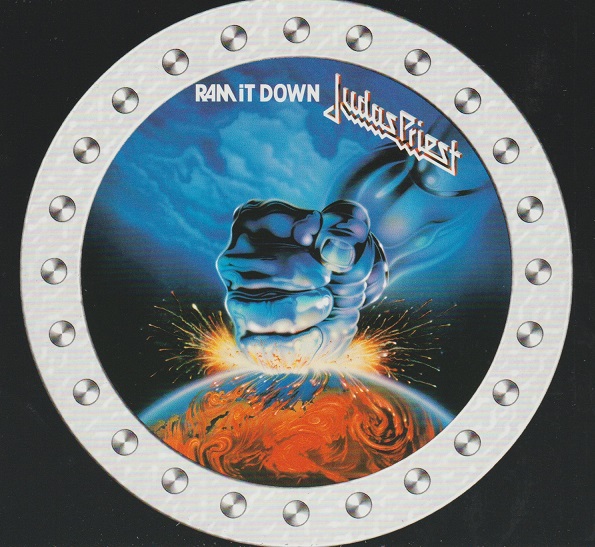
REVIEW: Judas Priest – Ram It Down (Remastered)

JUDAS PRIEST – Ram It Down (Originally 1988, 2001 Sony remaster)

Judas Priest seemed pretty lost in the late 80s.  They were bigger than ever, but they lost focus of their musical direction.  Producer Tom Allom had cursed them with a robotic plod, far removed from the lively firepower of yesteryear.  When they released Turbo in 1986, they had gone as far down those roads as possible.  It was am ambitious departure, but 100% a product of the 1980s.

For Turbo, Priest had written enough songs for a double album.  Twin Turbos, as it was to be called, was supposed to reflect all facets of metal, but the record comany got cold feet and a single disc was issued.  It contained the most techno-commercial tracks, while Priest held onto the rest for another day.  That day came in 1988 when Priest (again with producer Tom Allom) released Ram It Down, largely made up of Turbo outtakes.  The album was hyped as a return to the heavy Priest of yore, and this was at least partly true, but fans were unconvinced by it.  In comparison with Turbo, yes, Ram It Down was heavier.  But Priest had gone as far as they could with Allom.  Ram It Down was too sterile and bogged down with filler.

Certainly the title track opens Ram It Down on a thrash-like note.  As if to silence to critics, it was a proud metal statement with an opening Rob Halford scream that curdles the brain.  The weakness is drummer Dave Holland on his final Priest outing.  Only when Scott Travis joined Priest in 1990 did they acquire a drummer who could play the kind of beats at the speed they needed.  On Ram It Down, Priest were held back by the drummer and clunky production, two mistakes they fixed on 1990’s Painkiller.  The lyrics also seem dumbed-down for the 80s.  “Thousands of cars, and a million guitars, screaming with power in the air,” is cool but cliche.

“Heavy Metal” is more of the same lyrically, an ode to the power and glory of power chords.  Rob Halford’s performance is fantastic, and the man has rarely sounded as fantastic as he does on Ram It Down.  You can’t say the same for the words, the highschool equivalent of poetry.  On the music front, Priest were now following rather than leading.  They were on the same clunky metal trip as bands such as Scorpions at the same time.  There audible Kiss and Whitesnake influences on the album, with Rob sometimes sounding like he was trying to write a Gene Simmons tune.  “Love You to Death” on side two sounds right out of the Demon’s closet.  The embarrassingly terrible  “Love Zone” and “Come and Get It” both sound as if Coverdale co-wrote them on the sly.  Whether Priest were consciously copying other bands or just lost, who knows.  (“Love Zone” is one of the few songs that Halford almost seemed to write gender specific.  “With your razor nails and painted smile” are not specifically referring to a female, but certainly that was the general assumption.)

There are definitely a few cool tracks that deserve mention.  The first is “Hard as Iron” which had to be one of the fastest Priest songs to date.  It’s still held back by the production, but has some serious energy to it.  Like metal espresso injected right into the brain!  The other standout is “Blood Red Skies”, a forgotten highlight of this album and indeed of the Priest catalog in general.  (I actually used “Blood Red Skies” in a poetry project for school.  A girl liked it so much she asked for a copy of the lyrics.)  Using the synth effectively, “Blood Red Skies” paints a Terminator-like future with humans hunted by beings with “pneumatic fingers”, “laser eyes” and “computer sights”.  Halford  pours power and anguish into it, as a human freedom fighter.  “As I die, a legend will be born!”  Cheesey?  Absolutely.  Priest perfection?  Yes indeed!

There are also two mis-steps on Ram It Down that must be addressed.  The first and most obvious is “Johnny B. Goode”, from the 1988 movie Johnny Be Good starring Anthony Michael Hall and some guy named Robert Downey Something.  This track should have been kept off the album.  As a novelty single, sure, you can dig it.  It’s a stereotypical cliche-ridden metal cover, and that’s fun for a goof.  As a Priest album track, it only serves to completely destroy any momentum that Ram It Down managed to build.  Then there is “Monsters of Rock”.  This awful excuse for a song is only 5:31 long, but seems twice that.  It is the prototype for the even more awful “Loch Ness” from Angel of Retribution.  Most buyers probably didn’t finish listening to the album because of this bloated and aimless track.

The Priest Re-masters collection had two bonus tracks per studio album.  Ram It Down provides two completely unrelated but great tracks:  live versions of “Bloodstone” and “Night Comes Down”.  The liner notes don’t state when they were recorded, but live versions of either are always welcome in any Priest collection.  It’s interesting that bonus tracks from these actual sessions, such as “Red, White and Blue”, were used on other CDs but not Ram It Down.

Priest may have known Ram It Down wasn’t the metal album they hoped to make.  They cleared house afterwards.  Dave Holland and Tom Allom were done, and there is no question that Painkiller was superior to Ram It Down because of that.

2/5 stars