Thank you Netflix for saving the Trailer Park Boys. It hasn’t been smooth sailing, but ever since the Boys returned to Sunnyvale with the excellent Season 8 (remember Orangie?), the show has continued unhindered by cast defections. Season 11 is the first without Lucy Decoutere (Lucy) and Jonathan Torrens (J-Roc). After already losing such favourites as Trevor (Mike Jackson) and Ray (Barrie Dunn), I can understand why some fans may have said enough’s enough. Every show has its peak. For some that would be the first three seasons of Trailer Park Boys. For others, we have rolled with the changes. Not all fans were unanimous in the acceptance of newer characters such as Col. Dancer, Don/Donna, and Candy. For this season, those characters have been dropped. The core park residents are now Ricky, Julian and Bubbles accompanied by Randy, Lahey, Sarah, Cory, Jacob and Trinity. Little baby Motel is around, as is Barb Lahey.
Continuing a storyline from Season 10, Julian has vanished. Bubbles is doing well now, having gone legit selling his own brand of organic pizza sauce. It’s a hit, and a restaurant owner is willing to pay wholesale. He has the whole park working together growing vegetables, contributing to the well-being of Sunnyvale and its residents. All is well, but Bubbles does miss Julian. Jim Lahey is sober and supervising, having truly changed this time. He and Randy are planning to get married, while Randy is vying to get on the police force. The absence of Lucy and J-Roc is explained satisfactorily.
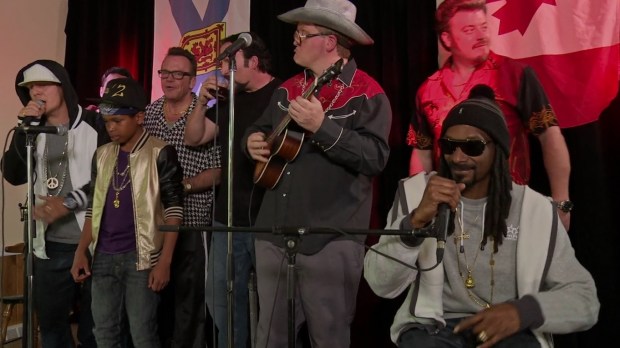
When Ricky and Bubbles (now mobile with his own little truck) discover that Julian is now a lobster fisherman (or is he?) living in a shipping container, they go to confront him. Ultimately, Julian’s return brings what it always does: crime back into the park. Snoop Dogg calls and wants weed, and lots of it. Julian decides to hijack Bubbles’ pizza sauce business and convert it to a grow op. As usual, Bubbles is driven near to the breaking point as the stress builds.
In Season 10, there was a revelation that Lahey may in fact be Ricky’s real father. This is fully addressed in Season 11, via a lightsaber dual (hockey sticks and brooms subbing in for laser swords) and dialogue taken directly from The Empire Strikes Back. Director Bobby Farrelly (Bobby fucking Farrelly!) must be given credit for the perfect Star Wars homage in Episode 4, “Darth Lahey”, right down to the action beats. Brilliant stuff — a highpoint episode for this show.
There are cameos by celebrities and past characters. Look for Susan Kent from 22 Minutes, and NHLer Nathan MacKinnon, first overall draft pick and rookie of the year. A few old adversaries have returned as well, to cause problems for our three lovable idiots. Speaking of idiots, Ricky and Julian manage to bring the stupidly to new levels, but simultaneously, Ricky has a Yoda-like ability to trick cops. Meanwhile, they have also managed to keep up with modern technology. Cell phones, cameras and GPS now figure into the plots. There are references to the Walking Dead and changing times. This manages to keep the series feeling fresh.
After 11 seasons, it is understood that a show rarely hits the highs it once did. Season 11 is a worthy effort; not in the Top Five, but certainly good enough at this point.
– Alive II (1977 Casablanca, 2006 remastered edition from Alive! 1975-2000)
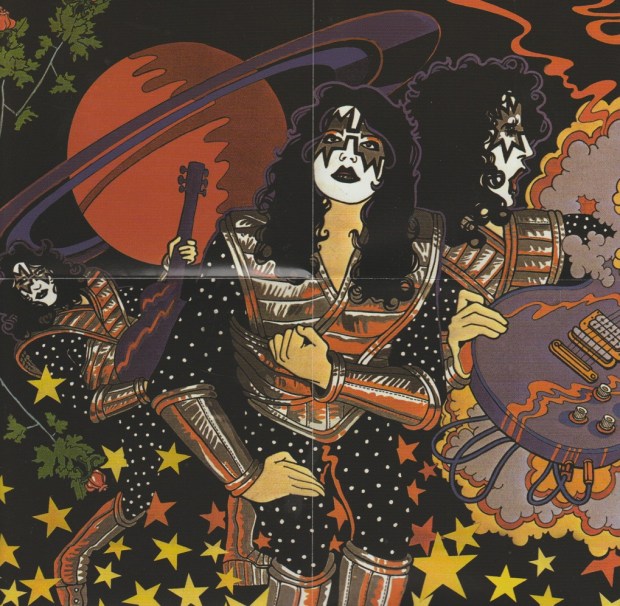
Kiss in 1977 were a band of four different personalities, and those personalities were beginning to drift apart. There was talk of allowing members some time to do solo albums and blow off some steam. There was a Kiss movie happening (Kiss Meets the Phantom of the Park), not to mention Love Gun and its accompanying tour. Kiss Alive! was the album that made them a household name, so why not try to buy some time with another live release? The band had amassed three more studio albums in the interim.
Eddie Kramer was hired once again to recapture the magic. Shows (and soundchecks) in L.A. were recorded, and older tapes from a pre-Love Gun Japanese tour were dusted off. They had lots of material to work with, and so it was decided that Alive II would have no crossover with tracks from Alive!, a value-conscious move that fans appreciated. They were still short enough songs to make a full double live, so studio time was booked at Electric Lady to record new songs too. As with the previous Alive, much fixing and re-recording was done to the live tracks. Some of the soundchecks were used with audience noise overdubbed. Two songs (“Hard Luck Woman” and “Tomorrow and Tonight”) were actually re-recorded completely. Knowing now what we didn’t know then, this certainly explains why Alive II sounds more sterile than the first, and why you can hear Paul Stanley singing backup vocals to his own lead vocals.
Alive II has always been viewed as sort of a poorer cousin to Alive! It’s hard to blame the studio tampering, because Alive! was done the same. For whatever reasons, it’s a lot more noticeable on Alive II, although not to the point of distraction. Alive II simply does not have the same oomph, the same fire bleeding through. Even with tracks like “Detroit Rock City”, “Shout it Out Loud”, “God of Thunder” and “I Stole Your Love”, it’s hard to compete with Alive! for sheer ferocity.
As is their penchant, some songs like “God of Thunder” are much faster live. “God of Thunder” could be the heaviest version of that track on tape. “Ladies Room” and “Dr. Love” are also faster and harder. “Makin’ Love” blows away the album version, and “I Want You” comes close. Ace Frehley’s vocal slot on “Shock Me” is a welcome treat and obvious highlight, featuring Ace’s big solo spot. As for Peter Criss, “Hard Luck Woman” is a nice electric version, but “Beth” underwhelms. Singing “Beth” to backing tapes is a “who cares” moment anyway, but Peter doesn’t nail it either.
The real point of interest on Alive II is side four, the studio side, for two reasons. One is that it’s a surprisingly strong side even though only one of these songs has gone on to be a classic today. Paul Stanley has dismissed these tracks as schlock, but fans don’t always agree. The second is that Kiss’ internal problems had come to a head, and once again members were secretly replaced on recordings by outsiders.
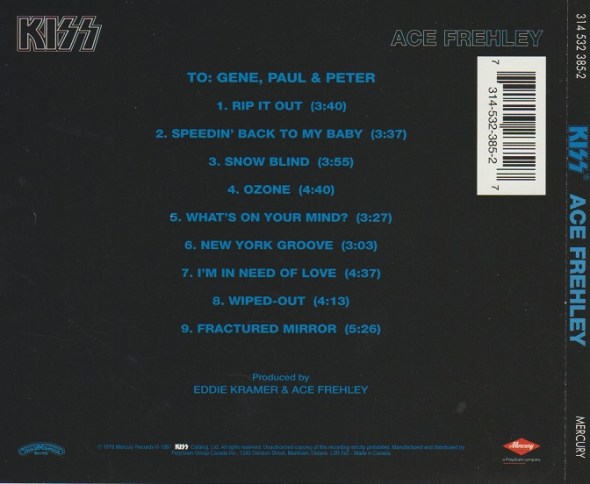
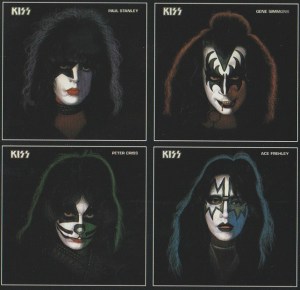
Ace Frehley wasn’t around, except to record his own song (“Rocket Ride”), which has become a second-tier Kiss classic. Maybe to spite Kiss, he played all the bass and guitars on it. Ace’s track is immediate, Kiss-like and perfect for his persona. With Peter Criss in the pocket, Ace lays down some seriously wild effects-laden six-string magic. But that was it. Ace was focussed on his forthcoming solo album. The wheels were already in motion and songs were being written. To keep things from falling apart and maintain a facade of unity, Kiss decided that all four of them would release solo albums, unified, under the Kiss banner.
Meanwhile, Paul and Gene came up with a few tracks for side four. Replacing Ace Frehley on lead guitar was the man who he nudged out of the job in the first place — Bob Kulick. Paul and Bob had maintained a friendship in New York ever since his 1973 Kiss audition. Bob was asked to come in on the sly and record uncredited. His task was to play like Ace would have done it, a difficult task. “Ace wouldn’t play that note”, someone would say from the control booth as Bob struggled to come up with the enigmatic “right” vibe. But he did it, and now that we know the truth, fans hold Bob’s work in high esteem.
Paul Stanley’s “All American Man” (Stanley/Sean Delaney) has the goods: a signature guitar hook, a memorable chorus and a killer solo that we only know now was actually Bob. “All American Man” is a natural extension of where Kiss were headed with Love Gun. Gene had the next two tracks, “Rockin’ in the U.S.A.” and “Larger Than Life”. “Rockin’ in the U.S.A.” sounds like Gene writing his own “Ballad of John and Yoko”, but a hard rock version. As for “Larger Than Life”, you can guess what body part Gene’s talking about. “Larger Than Life” works because of the combination of Gene’s “monster plod” riff with Bob’s sweet guitar lightning. Finally a cover of the Dave Clark Five hit “Any Way You Want It” closes Alive II, quick and catchy. Kiss have a way of adapting their blocky rock style to covers and making it work. Suddenly the Dave Clark Five sound like Kiss, rather than vice-versa.
Alive II arrived in stores on October 14 1977, exactly two weeks ahead of the much-hyped movie Kiss Meets the Phantom of the Park. There are some who would consider this the end of the beginning. But Kiss weren’t done releasing albums before the big solo projects came to fruition. We know today that making Alive II was a financial move rather than an artistic one, but the reality is it was conceived as a product. At least it was a quality product. As usual, Kiss and Casablanca rewarded fans with goodies inside the original LP. It had a gatefold cover, a booklet entitled “The Evolution of Kiss”, and temporary tattoos. Good luck finding those intact. Our recommended edition: The four disc 2006 box set Alive! 1975-2000. The set contains four volumes of Kiss Alive, deliciously remastered, with each album fit onto a single CD without losing any songs. There’s even a bonus track: the single edit of “Rock and Roll all Nite”, from the original Kiss Alive! This 3:23 version is from the 7″ single, edited down from the 3:59 Alive! album version. It was the first CD release of that version.
Today’s rating:
4.5/5 stars
Uncle Meat’s rating:
4/5 steaks
Meat’s slice:Alive II is an album that for me, gets kinda lost in the shuffle amidst the Kiss discography. Not because it’s not a good live album, but more that it’s very much Alive-lite. There are definite highlights on this record of course, but it doesn’t pack the consistent hit-parade punch as the first “live” record. I also have never really understood why side four was all studio tracks. Kiss did get a minor hit out of “Rocket Ride” though, a pretty good Ace tune here, and a sign of things to come with an Ace song on the charts. The other studio tracks feature some good guitar work, but not memorable overall. If Kiss has played any of these songs live at all I would be surprised, but I’m sure LeBrain will have some Turkish B-side thingy that will prove me wrong. [I don’t. – LeBrain]
I was wond’ring aloud (purposeful and cheap Tull shout-out there) earlier about the whereabouts of a good “God of Thunder” cover in an earlier review, but perhaps that cover is right here. Kiss plays it live here in double time and I like the feel of it. “Shock Me” shines on this album. So do a few other Kiss classics. I just see a few unnecessary garnishes on this plate.
Favorite Tracks: “Shock Me”, “Detroit Rock City”, “Shout it Out Loud”, “God of Thunder”, “I Stole Your Love”
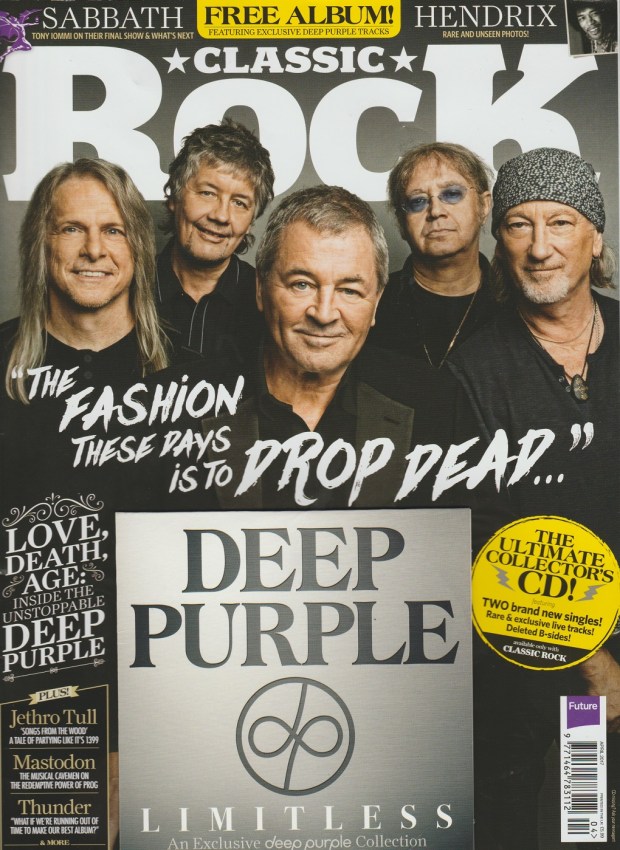
Infinite isn’t even out yet and we already have two CD singles in our hands! Deep Purple are wasting no time in getting the new music out there. The last single, “Time for Bedlam” had four tracks, including three brand new pieces of music. “All I Got is You” has five tracks, two of which are brand new. These singles are well worth buying, and won’t be obsolete when the album is released.
Age has done little to blunt the cutting edge. “All I Got is You” has old and new elements. It sounds like Deep Purple, but not like prior Deep Purple. Its jazzy intro misleads, for this is a pissed off song. It is difficult to describe except to say it’s busy, but still barely commercial enough for a single. As usual, Steve Morse and Don Airey’s instrumental work stuns the senses. If these new singles are what we have to judge by, the new album will be typical Morse-era Deep Purple: still them, still restless.
The bonus material is varied. “Simple Folk” is a lovely little guitar instrumental, reminiscent of the ballad “Never A Word” from Bananas (2003). Don’t be surprised if the melody shows up elsewhere in the future. It’s too good to relegate to a CD single, and it is exclusive too. Also exclusive: an instrumental mix of “Above and Beyond” from the last album Now What?!. Instrumentals of songs you know well are always an interesting ride. It is fun to listen to the music you couldn’t hear before, under the lead vocals. “Above and Beyond” was of course a single in its own right in 2013. Then, even better, we have the first take of the first single “Time for Bedlam”, complete with Bob Ezrin’s talking (and praise). This too is an instrumental version, but if you ever wanted to hear what Deep Purple sound like completely unleashed in the studio, give it a spin. I think I like it better than the actual single.
The only bonus track that will be re-released later on is the live version of “Highway Star” (yes, another one) that will be included on in the Infinite box set version. That set will contain lots of vinyl including three 10″ records that together will comprise The Now What?! Live Tapes Vol. 2. Sharp readers will recall that Vol. 1 came out with the deluxe “gold” edition of the Now What?! CD. As for “Highway Star”? Well, this one is 6:09 long and was recorded August 8 2013 in Denmark. I don’t know how else you can differentiate versions. My Deep Purple folder has 58 listings for “Highway Star” (albeit some of those would be the studio version on compilations).
As fans gear up for the Infinite album (and box set), they would be advised to get these singles too. There is enough extra material on them to complement the album nicely when it’s finally out on April 7.
JUDAS PRIEST – Ram It Down(Originally 1988, 2001 Sony remaster)
Judas Priest seemed pretty lost in the late 80s. They were bigger than ever, but they lost focus of their musical direction. Producer Tom Allom had cursed them with a robotic plod, far removed from the lively firepower of yesteryear. When they released Turbo in 1986, they had gone as far down those roads as possible. It was am ambitious departure, but 100% a product of the 1980s.
For Turbo, Priest had written enough songs for a double album. Twin Turbos, as it was to be called, was supposed to reflect all facets of metal, but the record comany got cold feet and a single disc was issued. It contained the most techno-commercial tracks, while Priest held onto the rest for another day. That day came in 1988 when Priest (again with producer Tom Allom) released Ram It Down, largely made up of Turbo outtakes. The album was hyped as a return to the heavy Priest of yore, and this was at least partly true, but fans were unconvinced by it. In comparison with Turbo, yes, Ram It Down was heavier. But Priest had gone as far as they could with Allom. Ram It Down was too sterile and bogged down with filler.
Certainly the title track opens Ram It Down on a thrash-like note. As if to silence to critics, it was a proud metal statement with an opening Rob Halford scream that curdles the brain. The weakness is drummer Dave Holland on his final Priest outing. Only when Scott Travis joined Priest in 1990 did they acquire a drummer who could play the kind of beats at the speed they needed. On Ram It Down, Priest were held back by the drummer and clunky production, two mistakes they fixed on 1990’s Painkiller. The lyrics also seem dumbed-down for the 80s. “Thousands of cars, and a million guitars, screaming with power in the air,” is cool but cliche.
“Heavy Metal” is more of the same lyrically, an ode to the power and glory of power chords. Rob Halford’s performance is fantastic, and the man has rarely sounded as fantastic as he does on Ram It Down. You can’t say the same for the words, the highschool equivalent of poetry. On the music front, Priest were now following rather than leading. They were on the same clunky metal trip as bands such as Scorpions at the same time. There audible Kiss and Whitesnake influences on the album, with Rob sometimes sounding like he was trying to write a Gene Simmons tune. “Love You to Death” on side two sounds right out of the Demon’s closet. The embarrassingly terrible “Love Zone” and “Come and Get It” both sound as if Coverdale co-wrote them on the sly. Whether Priest were consciously copying other bands or just lost, who knows. (“Love Zone” is one of the few songs that Halford almost seemed to write gender specific. “With your razor nails and painted smile” are not specifically referring to a female, but certainly that was the general assumption.)
There are definitely a few cool tracks that deserve mention. The first is “Hard as Iron” which had to be one of the fastest Priest songs to date. It’s still held back by the production, but has some serious energy to it. Like metal espresso injected right into the brain! The other standout is “Blood Red Skies”, a forgotten highlight of this album and indeed of the Priest catalog in general. (I actually used “Blood Red Skies” in a poetry project for school. A girl liked it so much she asked for a copy of the lyrics.) Using the synth effectively, “Blood Red Skies” paints a Terminator-like future with humans hunted by beings with “pneumatic fingers”, “laser eyes” and “computer sights”. Halford pours power and anguish into it, as a human freedom fighter. “As I die, a legend will be born!” Cheesey? Absolutely. Priest perfection? Yes indeed!
There are also two mis-steps on Ram It Down that must be addressed. The first and most obvious is “Johnny B. Goode”, from the 1988 movie Johnny Be Good starring Anthony Michael Hall and some guy named Robert Downey Something. This track should have been kept off the album. As a novelty single, sure, you can dig it. It’s a stereotypical cliche-ridden metal cover, and that’s fun for a goof. As a Priest album track, it only serves to completely destroy any momentum that Ram It Down managed to build. Then there is “Monsters of Rock”. This awful excuse for a song is only 5:31 long, but seems twice that. It is the prototype for the even more awful “Loch Ness” from Angel of Retribution. Most buyers probably didn’t finish listening to the album because of this bloated and aimless track.
The Priest Re-masters collection had two bonus tracks per studio album. Ram It Down provides two completely unrelated but great tracks: live versions of “Bloodstone” and “Night Comes Down”. The liner notes don’t state when they were recorded, but live versions of either are always welcome in any Priest collection. It’s interesting that bonus tracks from these actual sessions, such as “Red, White and Blue”, were used on other CDs but not Ram It Down.
Priest may have known Ram It Down wasn’t the metal album they hoped to make. They cleared house afterwards. Dave Holland and Tom Allom were done, and there is no question that Painkiller was superior to Ram It Down because of that.
JUDAS PRIEST – Turbo 30(2017 Sony Legacy 3 CD set)
It is sheer delight to see Judas Priest’s once maligned Turbo to finally see some vindication. There was a time this album was shied away from completely. They played no tracks from it on the 1990-91 Painkiller tour. In 1990, Priest finally pulled themselves out of a slide into dangerously commercial territory. For a long time, Turbo was considered a musical detour that did more harm than good. However the frost thawed quickly and Priest began to put the title track back into the set around 2001 for their Demolition tour with Tim “Ripper” Owens. Today there is no longer any shame in cranking Turbo while hoisting a tall cool one.
The 30th anniversary edition of Turbo contains a freshly remastered edition and two live discs. The sound is greatly improved from the 2001 version from the Priest Re-masters series. As you can see by the waveform below, the 2001 version at bottom was a victim of the “loudness wars”, and much of the dynamic range was lost by pushing it to overdrive. The 2017 version at top has more peaks and valleys. The new version wins for overall for having more warmth.
What the 2017 version does not have are the two bonus tracks included on the Priest Re-masters version. They were a live version of “Locked In” (which would be somewhat redundant here) and an unreleased studio track called “All Fired Up” which sounds like a Ram It Down outtake. For a complete review of Turbo and these bonus tracks, please refer to our review of the Turbo 2001 CD edition. The rest of this review will focus on the two live CDs inside Turbo 30.
The Fuel For Life tour that followed Turbo was one of Priest’s biggest. Their stage featured a riser that “transformed” from a race car to a robot that would lift Glenn Tipton and KK Downing in the air with its claws. It was commemorated by an album (Priest…Live!) and a separate home video from a concert in Dallas, Texas. This new double live comes from a show in Kansas on May 22 1986. It is 100% superior to Priest…Live! by every measure and could supplant that 30 year old album in your collection.
The set list varies a little from Priest…Live! but hits the same key tracks. The ballsy synth ballad “Out of the Cold” still opens the set, a brave move even in 1986. It is certainly the most unexpected of all Priest’s openers, so bravo. “Locked In” is restored to its spot in the set; it was not on Priest…Live! A version from an unknown concert (the liner notes are vague) was on the prior edition of Turbo as a bonus track. “Locked In” isn’t a major track but still important due to its place as part of the “Turbo Lover” music video duology. This live version is the best yet, loaded heavy with plenty of guitar thrills not present on the studio original. From there it’s on to “Heading Out to the Highway”, nicely in the pocket. Rob Halford’s screams are ferocious. Next is the march of the “Metal Gods”, another version far more lively than the one on Priest…Live! Seems there is much less mucking around with the recordings this time.
“Breaking the what? Breaking the what? Breaking the what?” It’s that silly yet tried and true song intro. Post-British Steel, you just can’t have a Priest live concert without “Breaking the Law”. But always remember, that in the dead of night, “Love Bites”. From 1984’s Defenders of the Faith, “Love Bites” was very different for Priest but still a set highlight. (Incidentally, British Steel and Defenders of the Faith are the other Priest albums that had recent triple disc deluxe editions with live albums.) Then more from Defenders: Two killers in a row, “Some Heads are Gonna Roll” and “The Sentinel”. Two songs that fans never tire of, and some credit must be given to the mighty guitar duo of Tipton and Downing. Their trade-offs are sublime, and Halford curdles the blood.
Back into new material, “Private Property” was one of Priest’s more obvious grasps for a hit. It’s far from a must-have, but better at least than the version on Priest…Live! A mere five minutes later you will be transported to the “Desert Plains”, a Point of Entry deep cut that was excluded from Priest…Live! It is far faster live and stay tuned for a long voice-shredding breakdown by Halford. (Rob was clean at this point in his life. Rob Halford recommends vocal rest between shows, menthol eucalyptus gum, and herbal tea to maintain a strong voice.) A frantic “Rock You All Around the World” from Turbo ends the first disc with a filler track that is again better here than on the prior live album.
Screaming for Vengeance brings the fury for disc two, “The Hellion” (taped intro) and “Electric Eye” bring the focus clearly back to heavy metal, just in time to go for a spin with “Turbo Lover”. This song is now a beloved classic, finally appreciated for its sharp songwriting and adventurous production. Downing and Tipton pushed synths into heavy metal in a big way, but with integrity and ingenuity. Better run for cover indeed, and fast…for next is “Freewheel Burning”, a natural for keeping with the theme of turbos and the like.
As the disc roars to its close, we are treated to some serious historic Priest. The oldest track is “Victim of Changes”, from the immortal Sad Wings of Destiny (1976). This most dramatic of Priest compositions is always welcome in the set, yet was not on Priest…Live! probably to avoid overlap with 1979’s Unleashed in the East live album. This one boasts a blazing hot guitar solo and some of Rob’s most impassioned wailing. This stretches out for nearly nine minutes of pure metal brilliance at its most vintage. But the vintage metal gift-giving is not over, because “The Green Manalishi” (1979’s Hell Bent for Leather, via Peter Green’s Fleetwood Mac) delivers the greatest of all riffs.
It’s nothing but the hits from there: “Living After Midnight”, “You’ve Got Another Thing Coming”, and “Hell Bent for Leather”, the standards that everyone knows. “Another Thing Coming” is stretched out with Rob’s annoying back-and-forth with the crowd, but it is what it is. “Heavy metal communication”, he calls it. Nobody is buying this CD for another version of that song anyway.
“You don’t know what it’s like!” So get this package, the triple CD set, and you will!
DAVID LEE ROTH – A Little Ain’t Enough (1991, Warner, digipack promo CD version)
First Billy Sheehan was gone – fired by the “note police”. Then Steve Vai was out, to join David Coverdale in his merry international band of Whitesnake, replacing Vivian Campbell. David Lee Roth lost his two biggest guns in the space of a year. What next? Replacing Billy was Matt Bissonette, brother of drummer Gregg. Matt is a fantastic bassist, but there is only one Billy Sheehan, so naturally the band was bound to sound different. Replacing Steve Vai was much harder.
Filling the guitar slot, but not the shoes, was new young guitar prodigy Jason Becker (from Cacophony, with Marty Friedman), and veteran axeman Steve Hunter (ex-Alice Cooper). Becker was beginning to feel the effects of amyotrophic lateral sclerosis (ALS). Fans must have known something was wrong when Becker was not seen on tour. Becker kept his diagnosis private for the time being. Roth tapped Joe Holmes (future Ozzy guitarist) and stated that he needed musicians who could “fly” on stage. It was hard for fans to become attached to his new band, even wielding the firepower of two guitarists, with all these changes.
Roth’s first post-Vai album, A Little Ain’t Enough, failed to ascend the commercial heights of Eat ‘Em and Smile or Skyscraper. “Good”, but not “great”. Not enough of that Dave “charasma”. Just a collection of songs, not a fierce sexed up power-packed ride through. Roth hooked up with producer-du-jour Bob Rock at Little Mountain studios. Rock endowed Roth with a generic sound, contrasting the high-tech Skyscraper. Dave seemed to be trying to take a step back towards his Van Halen roots. Roth insisted that he and his band stay in the shittiest Vancouver hotel they could find. Prostitutes, dealers, criminals, the works. He wanted a dirty rock album and you can’t make one of those with a $20 room service hamburger in your stomach, as per the method of Diamond Dave.
A Little Ain’t Enough wasn’t the return to dirty raw rock Roth that had hyped.
Lead single “A Lil’ Ain’t Enough” was plenty of fun, a top notch Roth party song. “Was vaccinated with a phonograph needle one summer break, then I kissed her on her daddy’s boat and shot across the lake.” Perfect for summer. Second track “Shoot It” was just as fun, a big horn section delivering all the big hooks.
The one-two punch of those openers was slowed by following them with “Lady Luck”, a rock blues track written by Dio’s Craig Goldy. Good song, but the firepower and excitement of the previous two was missing. “Hammerhead Shark”, the fourth track, had more energy but not the killer hooks. What it does have is some killer shredding by the guitar duo of Hunter and Becker, with Hunter on the slide and Becker on the quick pickin’. “Tell the Truth” is another blues, slower this time, and was also released as an instrumental remix with dialogue (from a movie?) dubbed over. Side one closed with a real Van Halen-like corker called “Baby’s On Fire”. As the title suggests, it’s red-hot and loaded with smoking playing.
Side two is a mixed bag. “40 Below” is a fun track, with shades of Halen but more focused on bluesy guitars. “Sensible Shoes” was a single, a slinky blues that appealed to some that normally wouldn’t buy a David Lee Roth album. The slide guitar is the main feature. “Last Call” is another one reminiscent of classic Van Halen, and “Dogtown Shuffle” dips back into noctural blues rock. Good songs – not great, but good.
Jason Becker only contributed two of his own songs to the album: the final two, “It’s Showtime!” and “Drop in the Bucket”. These happen to be two of the best tracks. “It’s Showtime!” is 100% pure Van Halen, smoking down the highway, so try to keep up. It’s the kind of high speed rock shuffle that they invented and mastered. Meanwhile “Drop in the Bucket” serves as a cool, smooth ending to the album. Its impressive guitar work is only a glimpse at what Becker was capable of.
ALS be damned, Jason Becker refused to go down without a fight. As the disease took his voice and his hands, he began composing music on a computer. He uses a system that tracks his eye movements, much like Steven Hawking. This way, Becker has managed to stay active musically and has inspired thousands with his efforts.
It’s a shame that Becker’s only album with David Lee Roth was a bit middle of the road. It wasn’t the full shred of early Roth, nor as diverse as Dave can get. In his efforts to make a straight ahead rock album, Dave shed some of what makes his music special. The musical thrills are lessened on what is probably the most “ordinary” album in his catalog.
– Love Gun (1977 Casablanca, 2014 Universal reissue)
By the late 1970s, Kiss had achieved more than most bands do in an entire career. In 1977, Marvel comics released the first ever Kiss comic. Famously, as a publicity stunt, each Kiss member had a vial of blood drawn, and poured into the red ink. “Printed in real KISS blood” proclaimed the front cover. Can you imagine such a thing in 2017? In 1978, the toy company Mego marketed the first set of Kiss action figures. The phenomenon of Kiss was almost eclipsing the music. Perhaps it would have completely, if Kiss didn’t continue to release excellent albums on a biannual basis. Their first album of 1977 was the legendary Love Gun. Even the Ken Kelly cover art depicts Kiss as demi-gods of some kind. Inside, the merchandising spilled over to the album. Kiss were determined to give their fans a little extra, and so the album was packed with little cardboard “love guns” that you could assemble yourself…accompanied by a Kiss merch mail-away form.
The music brightly outshone all the flash and trimmings. Again with Eddie Kramer in the producer’s chair, Kiss sought to make a focused heavy rock record. Their material had rarely been stronger. Paul Stanley was becoming handy at writing opening tracks that defined what an album was going to sound like. “I Stole Your Love” cranked it fast with one of Paul’s most thunderous riffs. The tribal sounding drums by Peter Criss are an apt example of what made him great at the time. Criss was not a technical drummer, but he had the right feel and a knack for the perfect fill. Ace Frehley soars in and dive bombs with an unforgettable lightning solo. Gene Simmons is there in the back, adding the thump. “I Stole Your Love” in a mere three minutes encapsulates everything about Love Gun that makes it great.
Gene Simmons’ demon character had another side; that of the “creepy old man”. “I don’t usually say things like this to girls your age, but when I saw you coming out of school that day, that day I knew…I knew!…I’ve got to have you, I’ve got to have you!” Probably from the perspective of a highschool senior, but still, it came from Gene’s mouth. The less said about the words the better, for “Christine Sixteen” is one of Gene’s most perfect musical moments. Eddie Kramer provides the piano for a vintage rock and roll sound. A Kiss classic it is, and Peter once again has the perfect fills for the song.
Moving on to “Got Love For Sale”, the lecherous Simmons now “has love, will travel”. Uptempo sleeze is perfect for Kiss’ friendly demon, but Frehley is the real star here. Speaking of whom, the Space Ace finally worked up the courage to sing his first lead vocal on his trademark Kiss song “Shock Me”. On the prior tour, Ace nearly electrocuted himself on stage when he touched a railing that wasn’t grounded properly. “Shock Me” is a humorous reference to this. Any Frehley track has a unique flavour. He attacks his Gibson and assembles chords and riffs in a style all his own. “Shock Me” showed he could sing too, finally adding a fourth voice to a Kiss album. For the first time, Love Gun has all four Kiss members singing lead. The first side was bookended by another Paul Stanley track, the killer “Tomorrow and Tonight”. Piano and Motown-style female backing vocals give the track a classic feel, and Paul once again came up with a sweet candy-coated chorus. Echoing a previous hit, Paul sings “We can rock all day, we can roll all night.”
The most well known track from Love Gun is the title track itself. It has been in the set regularly since 1977 and is generally considered one of Paul Stanley’s best songs (if not his very best). All the ingredients click perfectly. “Love Gun” kills and cannot be improved upon. Even if, when you think about it, “Love Gun” is a metaphor for “penis”, and the lyrics amount to singing, “You pull the trigger of my…penis, penis, penis”. Substitute “penis” every time Paul sings “Love Gun” and see. Paul Stanley is an absolute genius, because he has gotten stadiums full of thousands of people to sing an ode to his cock, and that’s cool.
“See Ronnie? His dick is the gun!”
Peter Criss only had one track on Love Gun, a Stan Penridge co-write called “Hooligan”. It was good enough to get some live performances, though it and Gene’s “Almost Human” occupy the lower rungs of the Love Gun album. The best thing about both “Hooligan” and “Almost Human” is that both perfectly fit the personas that sing them. Peter has always emphasized his tough street upbringing, but as the lovable cat character, and that’s “Hooligan”. “Almost Human” is 100% the sex-crazed demon, almost a theme song. The bass thumps, but there is some interesting percussion stuff happening too. Simmons continues looking for love in “Plaster Caster”, his encounter with the legendary Cynthia Plaster Caster. One can assume that Gene Simmons’ wang is among those on her display. “A token of my love for her collection.” “Plaster Caster” rocks hard (pun intended) and has balls (also intended).
Love Gun surprisingly closes on a Phil Spector classic, “And Then She Kissed Me” (gender reversed) by the Crystals. Paul Stanley helms it, a romantic number perfect for Kiss content at weddings. The Kiss-ified version is almost comically guitar heavy, but Kiss have managed a number of unusual covers over the years. Adapting it to their sound, Paul owns “And Then She Kissed Me”, especially when topped by an awesome and appropriate solo.
The Love Gun tour that followed this album is one of Kiss’ most legendary: the dual staircases, levitating cat drums, and of course the big Kiss logo in behind. Kiss were huge. A gallup poll put Kiss as the most popular band in America, over Zeppelin, Aerosmith and the Stones. When bank accounts inflate, so do egos. With success comes cost. Though the Love Gun period is all but universally lauded, it was also the last unified album before some members became liabilities.
Today’s rating:
5/5 stars
See Ronnie? His dick is the gun!
Uncle Meat’s rating:
3.5/5 steaks
Meat’s slice:This was Peter Criss’ last album with Kiss for a long time. Love Gun is a hit and miss record in Meat’s opinion. Or maybe better put…hit and somewhat miss. I think there are simply too many forgettable songs on this album. “Then She Kissed Me”, “Hooligan”, “Got Love For Sale”, “Tomorrow and Tonight” and “Almost Human” are all average at best. That’s half the album right there. There are also standout songs. Obviously the title track is a Rock and Roll classic now, the album’s opener “I Stole Your Love” is a hot tamale, and I have always loved the catchy “Christine Sixteen”, especially that chorus.
However, Love Gun is a very significant Kiss album simply because of one song. I don’t know a Kiss fan that doesn’t love “Shock Me”. The debut of Ace Frehley as a “singer-songwriter” so to speak, made many wish he would have sung a few more before things all fell apart. Some of the songs coming up in the next few albums, including his solo album, are some of Kiss’ best material in my opinion.
Maybe they just ran out of ideas. Should have been half an album of Ace songs instead.
– Rock and Roll Over(1976 Casablanca, 1997 Mercury remastered edition)
Kiss were at a crossroads. What to do next? Destroyer, produced by maestro Bob Ezrin, introduced a new Kiss to the world: glossy, indulgent, polished and augmented with plenty of highbrow non-rock instruments. Would they explore that road and see where it lead? If they had, an entire alternate KISStory would exist today. Instead they chose to get back to basics.
Producer Eddie Kramer, who made Kiss Alive! so unforgettably thunderous, was called up again. Kramer and Kiss departed for the Star Theater in Nanuet, New York to record. The idea this time, as opposed to Destroyer, was to go for a live Kiss sound, but on a studio album. The theater setting was intended to help capture that. Peter Criss’ drums were recorded in a bathroom for the perfect ambience. Rock and Roll Over followed Destroyer by a mere seven months, maintaining Kiss’ record of two albums per year. As promised, it was a return to the core Kiss sound: loud guitars and hard rock. They had learned a trick or two from the Destroyer experience. Rock and Roll Over was tighter and sharper than the first three Kiss albums.
The acoustic intro to Paul’s “I Want You” lulls you into a false sense of calm. Then it completely explodes with one of Paul’s most passionate tunes. In three minutes, Kiss laid waste once again. A second Paul scorcher, “Take Me” was written with Kiss road manager and coach Sean Delaney. The words are simple and c-c-c-catchy: “Go baby, you make me feel ah, ah, ah, ah yeah! Oh, baby, you make me feel ah, ah, ah, ah yeah!” Elsewhere, Paul asks “Put your hand in my pocket, grab on to my rocket,” just so there is no confusion.
Gene Simmons’ “Calling Dr. Love” (based off a demo called “Bad Bad Lovin”) was a single and a perennial concert classic. You either like Gene or you don’t. “Calling Dr. Love” won’t change any minds, but it will satisfy those who can’t enough of the sex-crazed demon. It does boast a fiery Ace Frehley guitar solo, one of his most memorable. Gene’s second track “Ladies Room” is just rock and roll, a lesser-known Kiss classic, but catchy as sin. The LP’s first side was closed with a Peter Criss song, co-written with his Chelsea bandmate Stan Penridge. “Baby Driver” is not listed among Kiss’ best tracks, but there isn’t much wrong with it. It’s basic, it slams, and Peter screams his throat out. Not a standout but worth a spin or two.
Gene’s “Love ‘Em and Leave ‘Em” is the lovely kind of sentiment that many Kiss songs were built on. This ode to groupies and hotel sex was not the first and not the last, but it had a memorable bop and catchy chorus. “Mr. Speed” (Stanley/Delaney) is a standout with the kind of rock and roll guitar riff that Paul specializes in. This killer track could and perhaps should have been a timeless concert classic, probably ahead of other tracks. (It was also used on the soundtrack to Keanu Reeves’ 1994 action movie Speed.) Simmons’ “See You In Your Dreams” was less timeless and memorable, so later on Gene took a shot at re-recording it. The Rock and Roll Over version makes for the kind of song that is good for filling the spaces between better songs.
Speaking of better songs, Paul’s “Hard Luck Woman” is undeniably one of his best. The lush acoustic six and twelve string guitars ring pure and clean. Paul wanted to give the song to Rod Stewart to sing, as it has a light “Maggie May” aura. Wiser minds prevailed and the song was kept for Kiss, and given to Peter Criss to sing as a followup to “Beth”. Peter of course nailed it and “Hard Luck Woman” reigns as one of the best tracks Peter was given to sing, if not the best. It might not have been as big as “Beth” but that means little; it is the far superior song.
Closing the record, Paul Stanley’s “Makin’ Love” ends Rock and Roll Over on the same kind of fast and furious riffing that it began with. “I Want You” and “Makin’ Love” are bookends, starting and finishing Rock and Roll Over with hard guitars and good times. Sean Delaney co-wrote “Makin’ Love” and his contributions to KISStory have too often been swept under the carpet. Delaney had three co-writes on Rock and Roll Over. Peter Criss had one, and Ace Frehley didn’t have any at all.
Rock and Roll Over gave Kiss another platinum album to hang on the wall. Their success, and their sound, had solidified. There was nowhere to go but up.
Today’s rating: 4.5/5 stars
Uncle Meat’s rating: 5/5 steaks
Meat’s slice:This time let’s start with the negative, as small and nitpicky as that is in the case of this album. I’m not a big fan of “See You in Your Dreams”. Not awful, but just kinda bland in comparison to the rest. “Baby Driver” could also be lumped in with that for the same reason.
The other thing I could say about this album is that since Kiss were the “Kings of the Night Time World” at this point, this is where the lyrics started to get their most misogynistic or what have you. Songs like “Ladies Room” and “Love ‘Em and Leave ‘Em” are tunes I really like, however I can see that these were the gateway drug to some of the ridiculous lyrics in Kiss songs in the 80s and 90s.
I love everything else about this album. Rock and Roll Over was my favorite Kiss studio album as a kid, and it’s just a shade under Dressed to Kill now on my Kiss albums list. This seems to make sense now, since both albums were created in similar fashion: Kiss under the gun and needing to write and record an album fast. Good Rock and Roll instincts there.
My favorite ever Kiss ballad is on this record too. “Hard Luck Woman” is an extremely catchy song, and could be my favorite song on the album. I recall that somewhere around 2002, I was very drunk in a bar and ended up singing “Hard Luck Woman” on karaoke, and probably had not heard the song in many many years. I sang the first 2/3rds, however well a pissed me could muster. The end of the song surprised me and I had no idea what to sing and left in the middle of the track. Not long after a girl came up to me and said, “I have never heard anybody sing that Garth Brooks song on karaoke before”. She seemed so taken aback at my insistence that “Hard Luck Woman” was a Kiss song. Maybe it was because I started freaking out on this poor girl. “Hard Luck Woman” indeed.
DUST – Hard Attack(1972) / Dust(1971) (2013 Sony Legacy)
fans know the names of Richie Wise and Kenny Kerner. This production team laid down the first two Kiss records, and although their production was not the best, they were the first. But where did they come from? A little trio called Dust. Wise was the singer and guitar player. Kerner was the manager, co-producer and co-writer. They released two records as Dust, also featuring legendary Derringer bassist Kenny Aaronson and drummer Mark Bell. These two albums, Hard Attack and Dust, were remastered and compiled as one CD by Sony in 2013 (presented in reverse order).
The cool thing is the Dust albums actually sound better than the Kiss albums.
Dust were a hard rockin’ band, distinguished by having loads of slide and pedal steel guitars (handled by Aaronson). Dust were travelling the same roads as other bands such as Aerosmith, Cream, Free or Zeppelin, but with less of an identity. The songs were good. “Stone Woman” is slippery slick blues rock, while “Goin’ Easy” is a laid back southern acoustic blues. And they could get heavy. “Love Me Hard” is the kind of proto-metal that Budgie, Sabbath and Purple were doing on the other side of the Atlantic.
3.5/5 stars
This was a 200 word review in the tradition of the #200wordchallenge.
Kiss had “made it”. Alive! put them where they wanted to be: on the charts and headlining concert stages coast to coast. The financial pressure was off and they didn’t have to simply crank out new albums to keep the band afloat. They could now take their time and make something that was more thought out; a statement.
The first issue to deal with was Kiss’ past sonic inadequacy in the studio. Prior albums produced by Kenny Kerner & Richie Wise, and Neil Bogart did not capture the full-on Kiss thunder. They failed to shred the speakers. They needed somebody “big time”, to give them the punch they desperately needed. That somebody was Canadian producer extraordinaire Bob Ezrin. Ezrin had been an instrumental guiding force for Alice Cooper. Now it was Kiss’ turn to receive the platinum Ezrin magic touch.
Ezrin agreed to work with Kiss, reportedly influenced by a neighbor kid who liked to discuss music. “The kids from school love Kiss,” the boy told Ezrin. “The problem is, their records sound so shitty. But the band is so good we buy the records anyway.” Working with Kiss wasn’t much different from working with Cooper. These were not schooled musicians. Ezrin had to take them to boot camp. Keeping the drums in time was a challenge. Peter Criss had difficulty maintaining a steady tempo, so Ezrin would beat a briefcase to keep him in time. He wore a conductor’s coat and tails, and pushed the rest of the band like a drill sergeant. Even the mighty demon Gene Simmons was chastised, for finishing a take before the producer instructed him to stop. And when Ace Frehley didn’t show up because he had a card game? Shenanigans were not tolerated. When Ace wasn’t available when he should have been, Ezrin’s buddy Dick Wagner (Alice Cooper) was there. For the first time, a Kiss member was replaced on album by an outside uncredited musician.
One innovative technique that Ezrin brought in to thicken up Kiss’ sound was using a grand piano to back up the big guitars. The end result doesn’t sound like piano and guitars, but one solid wall of rock, like Phil Spector channelled through Bob Ezrin. Where Kiss used to rely on rag-tag recordings they now had a big glossy sound to play with. Ezrin was also fond of sound effects and orchestration, and he brought both to Kiss.
The opening track “Detroit Rock City” was a slam-dunk intro to the new Kiss sound. After an extended start with the sound of a fan driving to a Kiss concert, the band thundered into focus. That trademark riff chainsaws through, before Paul Stanley’s powerful pipes take command. What a song. The new Kiss had arrived, shiny and sleek, souped up and fueled, as if they were a brand new band.
“Detroit” faded out into “King of the Night Time World”, an outside song brought in for completion by Ezrin and Paul Stanley. They turned it into something that worked for a Kiss album, albeit very different from their past. As for Paul, he contributed a fast hard rocker called “God of Thunder”. Though reports sometime differ in the details, ultimately the song fit Gene Simmons’ demon persona better and the song was given to him to sing. It was slowed to a monster plod, and a few lines were changed to suit. (“Make love ’til we bleed” was changed to “Hear my words and take heed”.) And those little demonic voices? Bob Ezrin’s kids, playing with walkie-talkies.
“Great Expectations” (based on Beethoven) has to be the most bizarre song on the album and one of the weirdest that Kiss have attempted. A lush ballad with strings and choirs and Gene Simmons in crooner mode, it is definitely different. Even one of the rockers, “Flaming Youth” written by Frehley/Stanley/Simmons/Ezrin, is different for Kiss. It’s a rock song…with calliope. (Picture circus music.) Gene’s “Sweet Pain” had female backing vocals like an old Motown single. These are all interesting experiments, but none of those three songs have become live concert classics.
Bob Ezrin tricked the band into writing “Shout it Out Loud”. He realized they needed one more song, so he told the band that they had lost the masters to “Great Expectations” and needed a replacement. Gene and Paul hurriedly wrote “Shout it Out Loud” with the producer and had another instant classic. Like “Rock and Roll all Nite” before it, “Shout” was an anthemic rallying cry that a concert audience could get behind.
The album closer was a track called “Do You Love Me”, another tune brought in by outsiders (Kim Fowley) to be finished by Kiss. Though on the surface “Do You Love Me” is a bit repetitive and dull, it was later covered by Nirvana. There must be something to it that struck a chord.
There was still one more song on the album, a throwaway. It was used as a B-side to “Detroit Rock City”, as the band didn’t have much faith in it. Peter Criss had brought forward a love song called “Beck”, named for a girl named Becky, written by Stan Penridge for their old band Chelsea. The song needed work, including a new title. Ezrin revamped it completely, and the result was one of Kiss’ all time biggest hits: “Beth”. Tender and accessible, the only Kiss member on “Beth” was Peter Criss himself. Dick Wagner played acoustic and Bob Ezrin played piano. The orchestra finished it off. Eventually, radio stations started flipping the “Detroit” single and playing “Beth”. This led to Casablanca reissuing “Beth” as a single A-side, Kiss’ highest charting ever.
With the help of “Beth”, Destroyer maintained Kiss’ stardom and opened up the doors for any future musical experiments they could fathom. Its cover showed Kiss in an apocalyptic landscape, in full super hero mode for the first time. Artist Ken Kelly created something that helped define Kiss as larger than life…and larger than life they did become.
That wasn’t the end of the story for Destroyer. For years it became the benchmark that Kiss albums were measured against. In 2012, Bob Ezrin revisited the backing tapes and produced an alternate mix called Destroyer: Resurrected. This featured some previously unheard music such as an alternate Ace Frehley guitar solo for “Sweet Pain” (Dick Wagner played the original solo).
Destroyer is far from the definitive Kiss album. In fact, it is more like a one-off, an experiment that was never fully revisited. Some of its songs are less than classic. Others are so classic that you can’t imagine the world without them. The bottom line for Kiss was that Destroyer propelled them further towards their goal of becoming the hottest band in the world.
Today’s rating:
3.5/5 stars
Uncle Meat’s rating:
4/5 steaks
Meat’s Slice: The general consensus of casual Kiss fans is that this is their greatest studio album. Let’s examine this. I’ll start with the iconic.
“SHOUT IT OUT LOUD” – On May 22, 1976, this song went number one in Canada, the band’s first ever number one song. 40 years later and “Shout it Out Loud” might be the Kiss song with the longest shelf life. One of two perfect “live concert” songs on Destroyer. The other?
“DETROIT ROCK CITY” – Thin Lizzy-esque two-guitar rock fest. Sitting on the same shelf as “Shout it Out Loud”. Iconic indeed. Unperishable. Even has a movie named after it. I have never seen it. Maybe it’s finally time to do so.
“BETH” – If any other member sang “Beth” it wouldn’t have been the same song, or had the same success. Peter Criss has a special rasp in his voice that can both rock and schmaltz it up. Like Rod Stewart, or that goof that sings for Slaughter. I personally wish “Beth” would “fly to the angels” up in the sky, but this song did do one good thing for me. My grandmother refused to get me anything Kiss related until I pointed out to her that “Beth”, on the radio in the car at the time, was actually Kiss. So thanks for that at least.
“DO YOU LOVE ME” – Perhaps this song is more iconic in my own mind specifically, since it is in my Top Five Kiss songs. Classic Paul Stanley stuff here.
“GOD OF THUNDER” – Unique in every way for the time. A lot of Ezrin tricks in this track including backwards drumming. I still have not heard the great cover of this song I always thought I would from some Metal band. There’s still time….
No wonder the casual Kiss fan believes this is the best of all of the Kiss studio albums. It is a great collection of songs that are still loved today. But everything else on Destroyer not listed above is average at best, or much worse than that. Maybe it’s because Kiss was too busy getting music lessons from Bob Ezrin while in the studio. Maybe it’s simply that Kiss was tired of being looked at as a “joke” and wanted to get more serious, hence getting some more respect from the mainstream press. Now again, this is my opinion and I’m sure that some might vehemently disagree with me about some of the deeper Destroyer tracks. The best of which I think is “Flaming Youth”. “King of the Night Time World” is pretty good, but borrowed from another song. “Great Expectations” is blah stuff except for the melody stolen from Beethoven. “Sweet Pain” sucks. And “Rock and Roll Party” is just unnecessary filler, very much like “Inside”, the ending track on 5150. Might as well take the needle off the record as soon as the song starts and put on something else immediately.
Let’s use this analogy.
A couple raises 10 children. Three of their children become world leaders. Two others become successful doctors. But half of their kids are in jail, some for unspeakable crimes against humanity. Can you call them the best family overall because half of them are special? Destroyer is definitely not the greatest Kiss album.