Reviews

REVIEW: Deep Purple – InFinite (2017 deluxe box) Part 1 of 2

This is Part 1 of a double-sized Deep Purple deluxe InFinite box set review!

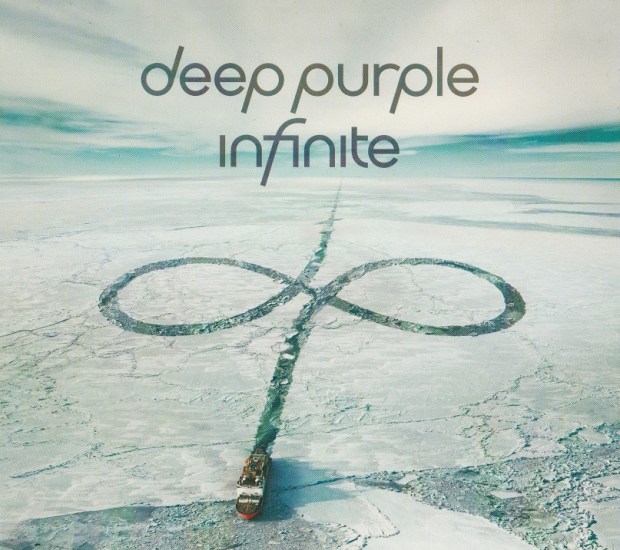
DEEP PURPLE – InFinite (2017 Edel)

49 years and still kicking it.  The Deep Purple of today is a very different band from the Deep Purple of 1968.  There is only one original member; drummer Ian Paice.  This matters not.  Ian Gillan and Roger Glover are the singer and bassist you remember from “Smoke on the Water” (1972).  Guitarist Steve Morse is a certified genius, and longstanding member for 22 years running.  Don Airey is still the “new guy”, but the former Rainbow/Ozzy/everybody keyboardist was the only man on Earth who could have replaced the late Jon Lord.  He’s done it for four albums straight, sometimes sounding exactly like Jon, and others like nobody else.

So if you didn’t know already, now you do:  There is no question that 49 years later, Deep Purple are still THE legitimate Deep Purple.  This isn’t like, God forbid, Quiet Riot.  Or Bobby Blotzer’s Ratt.

Deep Purple seem to work with producers in spurts.  They did two albums (Bananas and Rapture of the Deep) with producer Mike Bradford.  Now they have done two with the legendary Bob Ezrin!  As soon as Ezrin’s name enters the conversation, the bar is raised.  Ezrin is a full-on collaborator, with co-write credits on each song.  He is an educated musician with an impeccable ear.  His credits (The Wall!) speak for themselves.  Deep Purple is a very different band from Pink Floyd, but Ezrin gels with them in exciting ways.

We have already reviewed the first two singles (“Time For Bedlam” and “All I Got is You“), so for deeper impressions you can check those out.  “Time For Bedlam” opens the new album InFinite, quite successfully.  It’s reminiscent of “Pictures of Home” from Machine Head, which should catch listeners and keep them hooked.  “All I Got is You” (track 3) is the superior of the singles, smooth but smouldering hot.

The balance of InFinite, like much of the Steve Morse era of Deep Purple, takes a few solid listens to absorb.  The songs are challenging but rewarding.  Songs that are rock and roll can suddenly have highbrow instrumental sections.  Gillan and Glover’s lyrics are more biting than ever, enticing the listener to check them out over again.

“Hip Boots” has a vibe like “Lick It Up” from The Battle Rages On but better.  Don Airey really does sound perfect within Deep Purple, as this monster is largely powered by the good old Hammond organ.  Airey’s also the star of “One Night in Vegas” (working title:  “Something Else Or What”), with both organ and piano sounding oh-so-Purple.  (Bob Ezrin is also credited for additional keyboards on the album, but this sounds more likely to be Airey on both parts.)  Gillan’s lyrics as a storyteller are as amusing as always, going back to tracks like “Anyone’s Daughter”.  The first non-descript song is “Get Me Outta Here”, but perhaps more listens will increase the appeal.

An early favourite is “The Surprising”, a dramatic and quiet flight of progressive fancy.  The subtle but awesome drum work of Ian Paice unobtrusively creates a perfect backdrop for Don and Steve’s interplay.  Challenging “The Surprising” for dominance is the next track, “Johnny’s Band” (working title:  “Jig”).  It’s easily the most fun of the new songs, and the one with the instantly memorable chorus.  Then “On Top of the World” (working title:  “Slow Heavy”) is probably the most different of the tracks, containing a poetry section over a progressive backdrop.  Otherwise it’s just a smoking jam, with an oddly premature fade-out.  Steve Morse dominates “Birds of Prey” with his smooth stylings.  The track is a slow but excellent journey through the sand dunes of progressive rock.

The only questionable choice on InFinite is covering The Doors’ “Roadhouse Blues”.  It’s wonderful to hear Ian Gillan on the harmonica again.  (What was the last time?  “Hush” in 1988?)  But covering a beloved classic is dangerous 99.785% of the time (there are studies that have been done.*)  Fortunately Deep Purple are an exceptional jam band, so it’s not a total disaster.  Covering “Roadhouse Blues” is like another band covering “Smoke on the Water”.  It’s a “who cares?” moment.  I like to think of “Roadhouse Blues” as a bonus track on an otherwise excellent album.  The InFinite box set has the album on CD, and a 2 LP gatefold version, so you can listen any way you please.

4/5 stars

Check back soon for Part 2 of this review — the extras from the deluxe box set!  They include a DVD and three 10″ records that make up The Now What?! Live Tapes Vol. 2.  (Vol. 1 was a bonus CD on the Now What?! reissue.)

* No there weren’t.  


Further reading on more Deep Purple InFinite related releases (each with exclusives):

DEEP PURPLE – Time For Bedlam (2017 Edel EP)

DEEP PURPLE – All I Got is You (2017 Edel EP)

DEEP PURPLE – Limitless (2017 exclusive CD included with Classic Rock #234, April 2017)

MOVIE REVIEW: Accidental Courtesy (2016)

ACCIDENTAL COURTESY (2016 PBS)

Directed by Matthew Ornstein

I’ve done it, and you have probably done it too:  Getting in an argument online with a total stranger over racially charged politics.  We live in new times.  It’s the era of Trump, Trayvon, and Mike Brown.  We live in the years of racial profiling and travel bans.  Just when we think we’ve made amazing strides including the first black US president, we seem to be heading backwards just as fast.

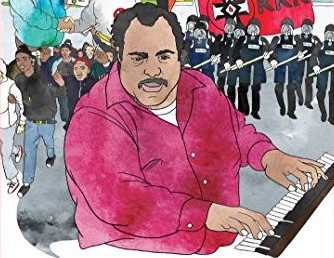
Daryl Davis is a musician.  Most notably, he was the keyboardist in Chuck Berry’s band.  He’s played with B.B. King, Muddy Waters, Jerry Lee Lewis, the Platters, and knows all the greats.  He’s a very talented but also intelligent and compassionate man.  Upon watching Accidental Courtesy, I wondered if music really is his first calling.  It seems that Davis’ true talents may just be sitting down and talking.  “When two enemies are talking, they’re not fighting,” says Daryl.

Although this movie is about a musician, it’s not about the music.  Music does play a small role.  The first time Davis experienced race-related hate, he was the only black child in an otherwise white marching band, and didn’t understand why things were thrown at him.  He thought, maybe they were playing the music poorly.  His parents had to explain to him, “They don’t like you because of the colour of your skin.”  Life was never the same after that.

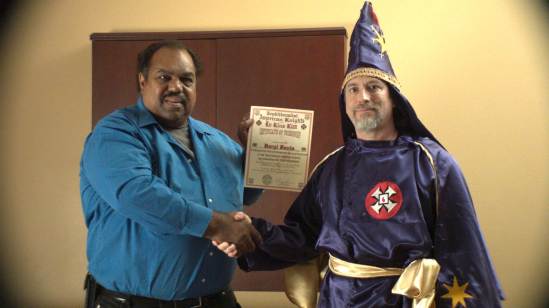
Accidental Courtesy isn’t about his music career, but about what Daryl Davis has done with the Ku Klux Klan and other white supremacists.  Since 1990, Davis has sat with various members of the KKK, both high ranking and rank-and-file.  Very few people can rival Davis for his knowledge of the Klan’s history and practices, so much so that Klan members have even approached him to learn.  Over long periods of time, after truly and sincerely befriending Davis regardless of his race, 26 Klansmen eventually turned in their robes to him and gave up the Klan.

It’s bizarre to see men who don’t believe in the mixing of races show up at Davis’ wedding to a white woman, to celebrate with him.  His friendship with them trumped their belief system.  It’s strange to see a black man invited into a KKK home, and vice versa.  It’s certainly unusual to see a fully robed KKK wizard sitting and shaking hands with a black man, simply enjoying conversation and company.

In the film, Davis also sits with the Southern Poverty Law Center, who seem less moved by his “person to person” method of combating hate.  They prefer to use a bigger stick.  What was surprising is how much flak he took from representatives from Black Lives Matter in Baltimore.  Here, he was mocked by two dropout activists for “only” converting 26 KKK members since 1990.  What was especially shocking was that the Black Lives Matter reps refused to continue to the conversation.   To them, he was worse than a white racist; to them he betrayed the cause.  All these white supremacists were willing to sit down and shake hands with Davis, but Black Lives Matter gave him the most difficult time.  They actually got up from the table and berated and belittled him before cutting the conversation off completely.  He was even treated with more respect by the KKK leader who refused to acknowledge the holocaust and said that blacks should be grateful to whites for freeing them.  It’s troublesome to think on what that means.

Certainly not everyone approves of the methods of Daryl Davis.  But in this day and age of social media, it’s more important than ever to talk.  Not online, not on Facebook, Daryl advises.  In person, where people can get to know each other, see each others faces and expressions, actually get to know one another.  Talk to each other, instead of talking at each other.  In this film, Davis asks questions, but rarely lectures.  Davis’ technique is simply to ask what makes people tick.  “How can you hate me when you don’t know me?” is a good opener.  He finds out what makes them think the way they do.  There is always more to the story than appears on the surface.  There is always a root cause.

Some felt Daryl did more harm that good with his methods.  Some feel he has betrayed his own people.  But, as Daryl says in the film, whites and blacks and people of all races must share America together.  That’s why we have to talk and figure out how to co-exist.  If he could convince an Imperial Wizard to hang up his robes, that is one small step to making the world a better place.  Black Lives Matter and the Southern Poverty Law Center have their own methods.  That does not negate the inroads that Davis made, just by talking.

There doesn’t seem to be much accidental about Daryl Davis’ courtesy.  It’s all very much on purpose.  Davis has a rich tapestry of friends behind him, some of whom have given up on hate.  If they can, why can’t everybody?

4/5 stars

RE-REVIEW: KISS – Paul Stanley (1978 solo album)

The KISS RE-REVIEW SERIES Part 16:  

  Paul Stanley (1978 Casablanca solo album, 1997 Mercury remaster)

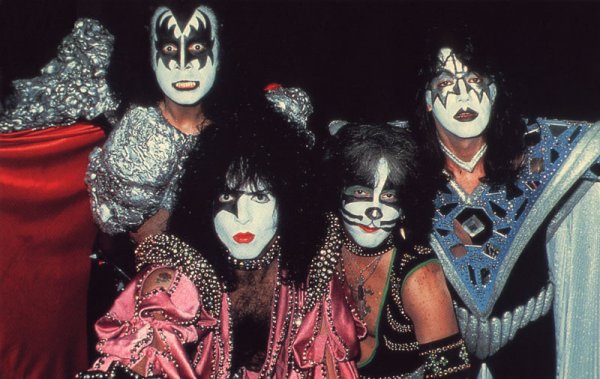
With the benefit of 20/20 hindsight, we know that Paul Stanley was capable of pretty much running Kiss by himself.  During much of the 1980s, Gene Simmons’ participation in Kiss had a severe drop.  Paul took the reins and the band more or less sounded like Kiss.  With that in mind, it’s no surprise that Paul’s 1978 solo album was also very Kiss-like.  Of the four, Paul’s album had an “if it ain’t broke, don’t fix it” attitude.  His solo songs sound very much like his Kiss songs.  Co-producing with Paul was Kansas producer Jeff Glixman.

Paul had an “ace” in his pocket, so to speak.  On lead guitar was shredder Bob Kulick.  Previously, Bob auditioned for Kiss but was squeezed out at the last minute by Ace Frehley.  He also played ghost guitar on the studio tracks of Alive II.  Now he was out of the shadows on Paul’s album, and his work here absolutely stuns.  It’s a feedback-laden monster of rock.

Paul’s songs are often overblown, and usually loud.  “Tonight You Belong to Me” is one such track:  melodramatic, riffy and loud.  It rocks hard.  It has loads of hooks, killer playing, and lead vocals that slay.  Few singers could touch Paul Stanley in his prime.  If that riff sounds familiar, the Hellacopters ripped it off for the intro to a song appropriately titled “Paul Stanley” (from 1999’s Grande Rock).

“Move On” is upbeat, Kiss-like rock and roll augmented with female backing vocals.  It’s the only song that Kiss played live on their 1979 tour.  It probably fits that standard Kiss mold better than any other tune on the album.  “Ain’t Quite Right” brings things down with a dark acoustic ballad, quite different from past songs Paul has written.  Its sad sound was fairly new territory for an upbeat rocker.

Hold on tight for “Wouldn’t You Like to Know Me”.  If this song was covered by a pop-punk band (pick one:  Sum 41, Blink 182, any of that ilk) it could be huge today.  It’s loud, brash and incredibly rocking, but Paul outsings any punk-pop upstart.  When Paul released his solo One Live Kiss album/video in 2008, “Wouldn’t You Like to Know Me” was one of its highlights.  Kudos must be given to drummer Richie Fontana for kicking it in the nuts.

One of rock’s most legendary (and hardest hitting) timekeepers plays drums on the massive “Take Me Away (Together As One)”.  You don’t associate Carmine Appice with Kiss, but there he is one of Paul’s songs.  It’s a bombastic arrangement of electrics and acoustics, and one of Paul’s most devastating tracks.  Carmine turns it from “stun” to “kill” with his dominating presence.  At 5:26 this is the longest song on the album and as close as Paul gets to epic.

Side two is just as vigorous as side one.  “It’s Alright” has a bright shimmer, plenty of hooks and guitars.  It easily could have been a Kiss classic.  “Girl if you want me to stay satisfied, girl if you want me to stay for the night, it’s alright.”  Sure sounds like Kiss to me.  The guitars have a very “rock and roll” vibe, a classic progression.  Paul has a knack for riffs like this, and “It’s Alright” is one of the best.

Paul’s single was the schlocky piano ballad “Hold Me, Touch Me (Think of Me When We’re Apart)”.  Fans will either love it or hate it.  It’s a song that could have been an AM radio hit on a 70s light rock station.  Lionel Richie could have recorded it.  The guitar solo cooks, and that is all Paul.  He handled all the guitars on this song.  Love it or hate it, it was the second most successful solo Kiss single after Ace’s “New York Groove”.

As the album draws to a close, “Love in Chains” hits hard with punchy drums and choppy guitars.  But it’s just a jab, compared to the closer “Goodbye”, which finishes things off with a flourish and hot riffing.  There is a cool descending guitar part, a superior chorus, and some seriously cool and busy bass by Eric Nelson.  “Goodbye” is a brilliant closer, and it held that slot on Paul’s 2006 solo tour.

Paul’s was the second shortest of the solo albums (only Peter’s being shorter), but it packed more punch than any except Ace Frehley’s.  Everybody has their favourites, and Ace’s album is always held in high esteem.  Ace stepped out of his box and delivered.  Meanwhile, Paul stuck to what he does best, and nailed it.  It’s a “safe” solo album, but lethal when it clicks with you.

5/5 stars

To be continued…

Original mikeladano.com review:  2012/07/22

RE-REVIEW: KISS – Gene Simmons (1978 solo album)

The KISS RE-REVIEW SERIES Part 15:  

 Gene Simmons (1978 Casablanca solo album, 1997 Mercury remaster)

Given Gene’s demon persona, certainly some fans would have expected his solo album to be the heaviest and darkest.  Imagine their shock upon finally hearing the finished disc!  Musical flights of fancy and whimsical songs dominate Gene’s record, as the demon was determined to do something very different.  His album has the most guest stars, the most diverse songs, and the most split of personalities.

Even the “evil” sounding choirs that open the album are more whimsical than demonic.  This soon gives way to a guitar riff, and the first song “Radioactive”.  The audio compression gives it a disco-like beat, but “Radioactive” is a rock and roll track.  It is one of the songs featuring guests Joe Perry and Bob Seger, not to mention a slew of backing vocalists.  It’s also the one track that Kiss played live on tour in 1979.

The demon sounds like he’s prowling for ladies on “Burning Up With Fever”.  If you’re wondering about that funky bass line, it was played by Neil Jason.  In a surprise move, Gene didn’t play bass on his solo album, only guitar.  This lends the whole LP a funkier-than-expected sound.  This plus the ample backing vocals almost makes Gene Simmons sound like an R&B/rock hybrid from time to time. “Burning Up With Fever” is a bad tune for a sexed-up demon, but not one of his finest either.

Some of Gene’s solo songs were oldies that predated Kiss.  Others were of more recent vintage.  The folksy ballad “See You Tonite” sounds like one of the older tunes.  It’s a good one; good enough that Kiss recorded it live in 1995 for their MTV Unplugged appearance.  In a strange twist, some of the best tunes on Gene’s solo platter are the ballads.  Jeff “Skunk” Baxter played on this one and “Burning Up With Fever” as the cavalcade of guest stars continues.  Even Katey Sagal (Married With Children) sings on the LP.

“Tunnel of Love” and “True Confessions” are two of Gene’s non-descript exploits, fairly ordinary songs given a huge boost by the larger than life production (by Gene and Sean Delaney).  The backing vocals are immaculately arranged.  “Tunnel” features Joe Perry and Donna Summer.  Helen Reddy sings on “True Confessions”.  Unfortunately these two songs are more notable by who appears on them rather than how good they are.

Gene was dating Cher at that time, so it’s not really a surprise that Cher appears on “Living in Sin” (as the groupie on the phone).  This side two opener has a bit of that rock and roll spirit missing on other songs, though very corny.  The ballads on side two are better.  “Always Near You/Nowhere to Hide” has some of Gene’s best singing, showing off that high falsetto.  Gene couldn’t get the Beatles to appear on his album, so he did the next best thing and had Mitch Weissman and Joe Pecorino from Beatlemania sing on “Always Near You/Nowhere to Hide”.  This melancholy song is one of Gene’s most ambitious.

“Man of 1000 Faces” is big and bombastic, orchestrated for maximum impact.  It has more in common with Destroyer than anything else Kiss has done, but even more overblown and bombastic.  It also suits Gene’s persona perfectly.  “I can put on any face, you won’t know me but it’s no disgrace.  The king of night, he understands!”  Then “Mr. Make Believe” is laid back and acoustic, and also another fantastic song.   Gene’s ability with ballads should not be understated.  “Mr. Make Believe” is the most Beatles-esque of Gene’s solo tracks.

“See You In Your Dreams” is a remake of the Kiss song from Rock and Roll Over.  Apparently Gene thought it could have been recorded better, but the more basic Kiss version is much more appealing.  Rick Neilson from Cheap Trick plays guitar on it, but Michael Des Barres’ backing vocals are obtrusive and irritating.

And that leaves only the final track.  Some stop playing the album before track 11, others consider it an indispensable part of Gene’s solo statement.  But there it is:  “When You Wish Upon a Star”, the song whose lyrics meant so much to Gene that he recorded it for the last track of his album.  It was not intended as a joke, but many see it as such.

Gene’s solo album can’t be dismissed as garbage, not with the great tunes it has (especially the ballads).  However it’s so scattershot and just plain strange that it’s hard to really just enjoy.  It’s interesting to study and dissect.  Not so much fun to play in the car.

2.5/5 stars

To be continued…

Original mikeladano.com review:  2012/07/20

REVIEW: Stryper – Fallen (2016 Japanese import)

STRYPER – Fallen (2016 Frontiers, Marquee Japanese import)

As far as this writer is concerned, Stryper are the reunion kings.  Their 80s output featured fantastic singles like “Calling to You” and “Free”, but many of the albums were uneven and not as rocking as you knew they wanted to be.  Since their heavy-as-hell (pun intended) comeback album Reborn (2005), Stryper have been off the leash.  It seems they gave up trying to fit in to any specific mold and are just trying to be true to themselves through their music.  2016’s incredible Fallen could be the pinnacle of the reunion era.

Unabashedly Christian, the opening track “Yahweh” happens to be one of the most potently epic slices of rock I’ve heard.  A choir sings “Yahweh, Yahweh…” while lead wailer Michael Sweet spits out of his words as few singers in metal can do.  His range is still remarkable and he has lost none of his lung capacity.  There are Maiden-esque riffs, latter-day Metallica grooves, and some seriously epic solo work by Sweet and guitarist Oz Fox.  And that’s all in just the first 6:21 of the album.  It’s strange to say, but you could compare “Yahweh” to similar epic tracks by Ghost.

“Yahweh” may be the most impressive track on a very good metal album, but it’s certainly not the only one.  The cool descending riff that accompanies “Fallen” bites into your flesh, while Sweet’s chorus lifts the ceiling.  There is also material that sounds like old school Stryper, such as “King of Kings”, “Big Screen Lies” and “Pride”.  These songs boast big and classic sounding choruses and riffs.  Stryper even snuck in a Black Sabbath cover (not their first) of “After Forever”.  The words fit Stryper like a leather studded glove:

Perhaps you’ll think before you say that God is dead and gone,
Open your eyes, just realize that He is the one,
The only one who can save you now from all this sin and hate,
Or will you still jeer at all you hear? Yes, I think it’s too late.

A lot of people forget how Christian that particular Sabbath lyric is!  Very amusing how much flack metal took from the church in the 80s, all the while “After Forever” dated back to Master of Reality in 1971!  Granted, I’m certain that most Catholics wouldn’t appreciate the line “Would you like to see the pope on the end of a rope, do you think he’s a fool?”

Whether you are a believer (it’s not a requirement) or just a worshipper at the altar of St. Halen, Stryper serves up plenty of hot metal on Fallen.  The modern grooves of “Heaven” and “Let There Be Light” are two that should appeal to many, and long time fans of Stryper will go bananas for the emphasis on melodies and choruses.  And Stryper didn’t forget their ballad fans, either.  “All Over Again” is a typical bombastic Stryper ballad, but not with the extra saccharine they used to utilize in the 80s.  And if that is too bombastic for you, check out the acoustic version included as a Japanese exclusive bonus track.  I think I prefer the bare acoustic version, but I’m also getting tired of getting acoustic versions as my Japanese bonus tracks.  It seems the go-to bonus track lately has been the acoustic version.

Rest assured, Stryper have not Fallen.  Quite the opposite. They continue to soar on mighty wings of metal.

5/5 stars


STAR WARS: The Last Jedi – Teaser Trailer “Just Breathe”

“Reach out…what do you see?”

Balance has been a major theme in Star Wars stories of late, from The Force Awakens to Rebels. Looks like this will play out in Star Wars Episode VIII: The Last Jedi.

REY!
LUKE!
LEIA!
KYLO!
FINN!
POE!
BB-8!
R2-D2!
PHASMA!

Set your hyperdrives to December 15 2017.

REVIEW: Trailer Park Boys – Season 10 (2016)

TRAILER PARK BOYS – Season 10 (2016 Netflix)

There is a reason we missed reviewing Season 10 of Trailer Park Boys when it came out last year.  A dark cloud hung over the season.  Mike Smith (Bubbles) was incorrectly arrested on domestic violence charges; charges that were swiftly dropped.  The damage was done, and this caused Lucy Decoutere to leave the show.  Even though Season 10 was quite great, we just couldn’t produce the gumption to write it up.  Better late than never.  With this long over and resolved, let’s take a fresh look at Season 10.

As usual, much has changed between seasons at Sunnyvale.  Julian now owns the park and is happy with his two girlfriends (Bambi and Dakota — shades of Charlie Sheen here), and his own casino/bar.  The house band:  Bubbles and the Shitrockers.  Ricky runs his Drugs Store, with all the weed and edibles you can imagine.  His daughter Trinity has been raising baby Mo with Jacob Collins, proud parents now ready to get married and make it official.  All this baby stuff has made Lucy itch for another one, so she’s been getting Ricky to bang her non-stop.  J-Roc is raising his son M.C. Flurry, and has brought back a new girlfriend from Mexico.  Randy’s supervising the park, and Lahey has left.  He’s living in a camper in a park next door, and “pacing” his drinking.  He’s using a breathalyzer to keep himself at a steady 0.120 blood alcohol level…but does he have the discipline to maintain that?

There’s a new three-headed nemesis in town.  Fresh out of jail is former park owner Barb Lahey, and she has backup.  Donna/Don (Leigh MacInness) has also been hardened by jail time.  And they’ve brought the tough-as-nails Candy (Candy Palmater), with her bright pink baseball bat to make sure they get their way.  They are determined to get the park back, and it looks like they have the legal means to do so.  So now the boys need lawyer money.

It’s illegal schemes again, one involving ripping off a former caveman, now “Denture King”.  This side-splitting sequence will leave you wondering how far they’re willing to go to save the park.  They need money bad.  Julian’s been letting everyone drink for free at his bar, and nobody’s paying the lot fees.  Finally Julian decides to turn Sunnyvale into a “all-inclusive” vacation resort.  Bubbles puts together an online ad, which goes viral and catches the attention of Jimmy Kimmel himself.

The first half of Season 10 is actually a little dull.  It’s a bit of the same old, same old.  Breaking the law, almost getting caught.  Bad luck and dumb fuck-ups.  Once the special guests arrive, the season takes on a whole new life.


A fleet of gangsta cars pulls into the park.  It’s Snoop Dogg, Doug Benson, and Tom fucking Arnold!  Snoop and Doug are there for the “all you can smoke” weed, but Tom has come for the superfan experience.  Turns out he’s a huge fan of the show (remember, Trailer Park Boys is a “documentary” on Julian!) and has a bucket list of things he wants to do at Sunnyvale:  driving the Shitmobile, sleeping in Bubbles’ shed, and banging Lucy!  “I can’t believe it!  We’re in Sunnyvale fucking Trailer Park!  I’ve seen every episode of your show, man!  It’s even shittier in real life!  I love it!”

As for Ricky, he’s happy just to “get high as fuck with Snoopy Doggy Dogg Dogg”!

As you can imagine, the presence of Snoop and his posse leads to many hilarious scenes and encounters.  Will J-Roc lose his shit completely upon meeting his idol?  Will Ricky be able to say Snoop’s name right?  The one thing fans would have expected out of a Snoop Dogg guest shot is seeing him rap with J-Roc or Bubbles, and you won’t be disappointed.  Episode 8 “The Super Bling Cowboy” has the musical scene you’ve been hoping for.  In fact it’s safe to say that Season 10 changes completely upon meeting Snoop.  The arc of the season takes a back seat to the guest stars, and some of that big star millionaire money might resolve a few plots.  However, at the same time, there is some ambitious writing going on.  Early on, we learn that Jim Lahey has a secret that he’s been hiding all along, that only Barb knows about.  This secret provides Barb some blackmail leverage, but it’s also setting up a storyline that will run for at least three seasons including this one.  Jim’s secret was explored in Season 11, but not fully resolved, presumably leaving it to also impact Season 12, coming in 2018.  (Post your fan theories in the comments!)  This kind of multi-season story arc has never been attempted on Trailer Park Boys before.

Keeping a show like the highly formulaic Trailer Park Boys fresh can’t be easy after 10 years.  Snoop, Doug Benson and Tom Arnold helped distinguish Season 10 as one of the most fun.  You can always count on Ricky, Julian and Bubbles to put themselves in some pretty ridiculous situations, and usually drag everybody else into their web of shit.  The guest stars offer a temporary pause to that, and allow our characters to have a bit more fun than usual.  And when they have fun, so does the audience.  However the ending has a sad note, accompanied by a familiar melancholy song.  It’s a strangely emotional denouement.  “There’s a voice, that keeps on calling me.  Down the road, where I always seem to be.  Every stop I make, I see my old friend…”

Maybe tomorrow, they’ll want to settle down…in the end, it’s about the characters, who are just a big family we’ve now known for 10 seasons.  Randy said it best:

“I love you Ricky!  I love you like a brother. I don’t like you at all, but I love you!”

4/5 stars


RE-REVIEW: KISS – Ace Frehley (1978 solo album)

The KISS RE-REVIEW SERIES Part 14:  

 Ace Frehley (1978 Casablanca solo album, 1997 Mercury remaster)

Of the four members of Kiss, Ace Frehley felt he had the most to prove on his solo album.  He’d only had two lead vocals with Kiss, and usually only contributed a couple songs to each album.  Could he write and sing an entire solo album?  Some in the Kiss camp had their doubts.

Ace regrouped with his favourite Kiss producer, Eddie Kramer, and crucially got a newcomer named Anton Fig to play drums.  Anton, from South Africa, has a long and fruitful career but a huge chunk of it was with Ace, and it started right here.  Ace Frehley played almost everything else himself.  Will Lee (Anton’s future bandmate on the Late Night with David Letterman show) played bass on three tracks.  Ace also wrote the majority of the songs by himself, proving he wasn’t reliant on Gene and Paul.

“Rip It Out” is one of the great Ace album openers.  He used it to open his Frehley’s Comet shows in the 1980s, and on album, it really sets the right scene.  Ace was singing great, but more importantly, he had a chance to really let his guitars shine.   Listen to the main riff — you can clearly hear an acoustic guitar mixed in with the electrics.  In Kiss, Ace’s job was to solo and complement the rhythm guitars.  Now Ace could play with multi-layered guitars and effects.  “Rip It Out” really sounds like a statement of intent.  Listen very carefully to the number of guitar parts happening in the mix, from slides and squeals to solos.

Ace has a knack for a pop melody, and “Speeding Back to My Baby” has that side to it.  It’s pop rock complete with female backing vocals, but with serious crunch.  Frehley is the master of guitar crunch, so even when we call a song “pop”, it really rocks.  Check out Frehley’s partly backwards stoppy-starty guitar solo too.

The heavy side of Ace is explored on “Snow Blind”, a mean rocker with a nasty riff.  The solo section is to die for.  “Ozone” too is heavy, and possibly better known as a cover by the Foo Fighters.  There weren’t any questions about the subject matter:  “I’m the kind of guy who likes feelin’ high,” sings Ace in the opening line.  Gene would not have approved, but note the combined use of electrics and acoustics once again.

Ace ended the first side with another triumphant pop rocker:  “What’s On Your Mind”.  It is tracks like this that helped Ace’s solo album become a clear fan favourite.  The guitar riff has punch, but when doubled with acoustics, it rings like a bell.  From brilliant guitar licks to the unforgettable melody, Ace nailed it with “What’s On Your Mind”. It also bookends the first side very well with “Rip It Out”.

The big hit, still getting radio play today, was the Russ Ballard cover “New York Groove”.  Ballard originally gave his demo to the band Hello, but it was Ace that made it an important song.  Ace took the words (written by an Englishman!) and adapted his persona to them.  His lovable rough and tumble New York personality fit the song to a “T”.  It’s a bit cheesy, but Ace can take cheesy and make it cool.  The stompy beat was created using studio experimentation, Eddie Kramer the mad genius who would record anything and everything to get just the right sound.

A pair of rock tracks, “I’m In Need of Love” and “Wiped Out”, fill the middle of side two.  Ace’s echoey guitar slides on “I’m In Need of Love” deliver the prime hooks.  It’s an excellent example of what Ace can do with an electric guitar.  Meanwhile, “Wiped Out” is like a sequel to the surf rock classic “Wipe Out”, and not Ace’s last foray into surf rock either.  His intricate picking here would cause a lesser player’s fingers to fall off.  Check out that wacka-ja-wacka stuff too, funky and cool.

Ace saved the most impressive track for the last, and the first in his so-called Fractured Quadrilogy:  “Fractured Mirror”.  This instrumental features shimmering six and twelve strings working in tandem.  Ace and producer Eddie Kramer went to great lengths to get the guitar sounds on this song.  One technique included playing the figure on a doubleneck guitar, but only using the pickups on the open-tuned second neck.  The pickups to the neck that Ace was actually playing on were turned off.  Once overdubbed, this gave the guitars a bell-like chime, and fans spent years trying to figure out just how Ace did it.  Now you know.

This album was a turning point for Ace.  It gave him confidence.  It ushered in a slew of Ace Frehley lead vocals in Kiss.  And eventually, it set him up for his departure, as nothing he did in Kiss was as artistically freeing as his first solo album.

Today’s rating:

5/5 stars

To be continued…

Original mikeladano.com review:  2012/07/19


RE-REVIEW: KISS – Peter Criss (1978 solo album)

The KISS RE-REVIEW SERIES Part 13:  

 Peter Criss (1978 Casablanca solo album, 1997 Mercury remaster)

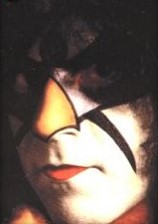
Peter Criss’ dreams of superstardom died with his first solo album.

To assuage egos and blow off steam, all four Kiss members agreed to record and release solo albums simultaneously.  This was done under the Kiss banner to unify them, but each member had complete creative freedom on their own.

A project like this had never been attempted before by anybody, and Casablanca records gambled on all four being equally huge.  They gambled wrong.  Peter Criss’ album was the biggest casualty.  It sold the poorest and charted at a lowly #43 (Billboard).  He assumed he was the star of the band due to “Beth” being their biggest single.  He set out to make an album like that, but Kiss fans were not likely to buy an R&B ballad album.

Criss hired Ringo Starr producer Vini Poncia (his first of a few Kiss collaborations), and wrote part of the album with his old Chelsea partner Stan Penridge.  He had a band of studio musicians, but was unable to play drums on the whole album due to injury.  For those tracks he used Allan Schwartzberg who also played on Gene Simmons’ solo LP.

There was a clear R&B direction, the stuff that Peter loved and couldn’t play in Kiss.  There are horns a’plenty and cool non-rock grooves.  Opening track “I’m Gonna Love You” pointed the way:  mid-tempo, loads of soulful backing vocals, easy beats and raspy singing.  His drums fit the sound perfectly.  “You Matter to Me” brought 70s synth into the mixture.  Easy listening light rock ballads go down smooth but don’t leave you feeling satisfied.

“Tossin’ and Turnin’”, the old 1961 R&B hit, was the only tune played live by Kiss on the 1979 tour.  Peter’s version of course does not sound like Kiss, but it’s a lively version suited to his style.  Another ballad, “Don’t You Let Me Down”, is a tender song but lighter than light.  Absolutely too soft for Kiss, but one of the stronger Penridge/Criss compositions that might have worked well covered by an easy listening artist.  Unlike “That’s the Kind of Sugar Papa Likes”, which is not a good song at all.

Criss played all the drums on side one.  Schwartzberg was on most of side two, opening with the quiet yet epic ballad “Easy Thing”.  It has a slow build into something big and orchestrated, and for this album it works.  Sean Delaney’s “Rock Me, Baby” brings things back to rock and roll, but with a mediocre track that wouldn’t be good enough for Kiss.  “Kiss the Girl Goodbye” was another soft and light ballad, pleasant enough but far from outstanding.  Penridge’s guitar is a delight, but the only delight.  “Hooked on Rock and Roll” on the other hand is a standout akin to “Tossin’ and Turnin’”, a little bit of an autobiographical track about the Catman.  “Every morning at the break of dawn, you could see him dragging home his drums.”

The final track, and one of the most polarizing, is Sean Delaney’s “I Can’t Stop the Rain”.  Some love it, some hate it, but one thing for sure:  it’s one of most bombastic ballads Peter’s ever recorded.  Piano, orchestration and stellar guitar by Elliot Randall (Steely Dan) make for a huge ballad.  Love it or hate it, “I Can’t Stop the Rain” is schlocky and bittersweet.

When Peter’s album failed to sell, Casablanca rushed out two singles.  The other Kiss members only got one each.  Neither “Don’t You Let Me Down” nor “You Matter to Me” made any impact.  The fallout from this album was that Peter Criss was perceived as out of touch by his band and his fans.  He was hoping to become a blue-eyed soul star, but his image never recovered.  From this point on, Peter’s dedication to rock was always under scrutiny, and his time in Kiss truly began to tick away.

Today’s rating

1.5/5 stars

To be continued…

Original mikeladano.com review:  2012/07/17


REVIEW: Deep Purple – Limitless (2017 Classic Rock exclusive CD)

DEEP PURPLE – Limitless (2017 exclusive CD included with Classic Rock #234, April 2017)

You have to hand it to the folks at Classic Rock.  It’s a quality publication that also manages to give out quality free cover-mount CDs.  With all the attention on Deep Purple these days due to their newly released album Infinite, Classic Rock have done the band up in style.  The CD is not just for beginners either.  Limitless (get it?) has a bunch of material from recent vintage and one exclusive track too.  That’s right — one track on this CD is exclusive to Classic Rock, so get on it, collectors!

At 43 minutes, Limitless has the ideal run time for a great listen through.  If you want to check out some new Deep Purple right off the bat, then just dive in.  Tracks 1 and 2 are the first two singles from Infinite:  “Time For Bedlam” and “All I Got is You”.  Both tracks are excellent, and fine samplings of what the current Deep Purple lineup (est. 2003) sound like.  With Steve Morse and Don Airey, the band have gone from strength to strength.  The instrumental prowess on these songs will easily demonstrate why Deep Purple are universally lauded.

Going back one album prior, we have two tracks from the Now What?! period.  The single version of “All the Time in the World” is a nice ballad for inclusion, though I think “Vincent Price” blows everything else on that album away.  Also included is the rock and roll “First Sign of Madness”.  The liner notes state this song is taken from the “Above and Beyond” CD single.  That doesn’t actually appear to be the case, but ” First Sign of Madness” was included as a bonus track on many editions of the Now What?! album.

The second half of Limitless is dedicated to live material, all classics.  “No One Came” from 1971’s Fireball is one of Purple’s most lethal grooves, and is lifted from the deluxe “Gold” reissue of the Now What?! album.  Gillan’s voice strains hard on this one.  A fun version of “Strange Kind of Woman” comes from the double live 2015 Wacken set.  It’s pure delight.  Next, “Perfect Strangers” is always welcome aboard, and this live version comes from the parallel double live 2015 Tokyo release.

Finally the set draws to a close with the Classic Rock exclusive track, a live tape of “Black Night” from Milan, July 21 2013.  Many of the live tracks on the Now What?! reissue come from that gig, but “Black Night” is previously unreleased.  It’s a jamming version, over seven minutes and Morse-heavy.  And there are more live tracks from that gig in the Deep Purple Infinite box set version, which looks just fantastic.

And magazine isn’t bad either!  The Deep Purple interview reveals some of the lighter side of the legendary Gillan/Blackmore relationship, tempered by the passage of time.  Incidentally, the magazine gives Infinite 7/10 stars.  That’s not bad for a band about to hit their 50th anniversary in a year’s time.  Check it out, and enjoy the 8-track CD Limitless while you read along!

4/5 stars