Reviews

REVIEW: KISS – Kiss Rocks Vegas (3 CD/1 Blu-ray Japanese import)


NEW RELEASE

KISS – Kiss Rocks Vegas (3 CD/1 Blu-ray Japanese import, 2016 Eagle Rock)

Kiss put on a hell of a show for their nine gig run in Las Vegas.  You could argue that spectacle is 50% of the Kiss experience.  That said, the audio has to hold up, and it does.  I gave it two spins before review: one at home and one in the car, and only after that did I put on the Blu-ray.  As expected, Paul Stanley’s voice is the chink in the armour.  But it is the only one.  This is one of the most musically capable versions of Kiss ever, and vocally they can’t be touched.  When Tommy Thayer, Eric Singer, and Gene Simmons start to harmonize together, it becomes a far stronger beast.  This is how Kiss have adapted to Paul’s current vocal shortcomings, and on a whole it works.  Check out “Tears Are Falling” for a version of a song that gets a serious boost thanks to these guys singing backup.  Now get ready to rock for the next 80 minutes.  Of note, some of Paul’s stage raps are trimmed for time on the CD version, as is Gene’s “bass solo”/blood spitting/flying.  The video has the whole enchilada.

The audio is clear; Gene’s bass nicely audible and in the pocket.  With the 5.1 surround sound cranked, let’s dive into the Kiss Blu-ray, a fine shining example of hi-def rock video.  You can try to count the sparkles on Paul’s guitar, when they open with “Detroit Rock City”.  Their stage looks like a cross between the Creatures-era tank stage and a Dalek.  Giant screens ensure everybody gets a good view, which is a good thing since there is so much going on.  From “Detroit” into “Creatures” itself,  and then “Psycho Circus”, Kiss started the show with three of their classic openers from three different eras!  On screen it’s clear Paul Stanley is still in excellent physical shape.  He doesn’t look like someone who’s had a double hip replacement.   He hops around a bit, plays guitar between his legs, and dances up a storm as always.

IMG_20160904_191221

Kudos must be given to Tommy Thayer, who takes many of the flashier solos from 80’s Kiss and adapts them to the style of the 70’s that Kiss tend to ply most.  Tommy’s re-imagining of guitar solos and giving them a Frehley-like vibe is one reason to check out new live versions of these Kiss classics.  Never to be underrated is Eric Singer, a talent to be reckoned with in this band.  His beats are always perfect, but so is his voice.  As usual, he sings “Black Diamond” towards the end of the show, with respect and class.

Other setlist highlights:

Gene’s “War Machine” from Creatures (Gene blows fire at the end).  Paul’s “Tears are Falling” from Asylum (“Some of you weren’t born in 1985!” says Paul, accurately observing his audience).   “Lick It Up”, featuring Kiss’ sometimes-segue into “Won’t Get Fooled Again”.  “Hell or Hallelujah”, from Monster.  “God of Thunder” with its flying Gene, and playing way up high on a tiny little platform.  Paul running out to sing on a catwalk suspended over the crowd on “Love Gun”.  All of this is served up with lights, lasers, explosions, levitating platforms and larger-than-life sparkle.  Kiss still deliver it.

Admittedly, when there is so much great live Kiss from the past out there, it’s hard to get excited about a new one.  (Why watch a 2016 live version of “War Machine” when you can watch one from 1983, 1984, 1988 or 2004?)  The added bonus that makes the whole thing hard to say no to is a seven song acoustic set.  This is a makeup-free event in a packed conference room.  A few more rarities are served up here, such as “Love Her All I Can”.  The loose atmosphere is refreshing.  They goof around a bit on “Christine Sixteen” (in harmony!) and Paul helps with some forgotten words on “Goin’ Blind”.  Just don’t go and compare these with the acoustic ones on MTV Unplugged.  That was 20 years ago.  Controversially, Eric sings “Beth”.  The mitigating factor is that this is a small event for fans and not part of the main Vegas concert.  It’s worthwhile to get a version of this release that contains the acoustic portion on the bonus CD.

The Japanese release is an interesting one.  Instead of one CD, the Vegas concert is split over two.  This is probably because the concert is close to the 80 minimum maximum that a CD can hold, and the Japanese usually adhere to a higher manufacturing standard.  They also included a nice T-shirt in a shiny, embossed box.

As usual, any time Kiss release new product, fans will bitch that they’re over the hill.  They’ll complain that there are only two original members left, and that Paul’s voice is but a shadow of what it once was.  While these things are indeed true, Kiss have found a way to continue on with two talented members helping Paul out with the vocal burden.  If you don’t like it, fair play.  But let the rest of us continue to enjoy Kiss without your negativity.

3.5/5 stars

CD 1
1. “Detroit Rock City”
2. “Creatures of the Night”
3. “Psycho Circus”
4. “Parasite”
5. “War Machine”
6. “Tears are Falling”
7. “Deuce”
8. “Lick it Up”
9. “I Love it Loud”

CD 2
1. “Hell or Hallelujah”
2. Tommy guitar solo
3. “God of Thunder”
4. “Do You Love Me?”
5. “Love Gun”
6. “Black Diamond”
7. “Shout it Out Loud”
8. “Rock and Roll All Night”

CD 3 – Kiss Acoustic
1. “Comin’ Home”
2. “Plaster Caster”
3. “Hard Luck Woman”
4. “Christine Sixteen”
5. “Goin’ Blind”
6. “Love Her All I Can”
7. “Beth”


REVIEW: KISS – Deadly Demos (1995 bootleg)

First of a Kiss two-fer.
Scan_20160808KISS – Deadly Demos (1995 Firehouse Records bootleg)

Some Kiss fans are willing to pay money for every burp and fart that Gene or Paul have committed to tape.  Deadly Demos (or Deadly Kisses according to the CD itself) definitely has some material that is difficult to listen to quality-wise.  It also has some decent versions of rare tracks that Kiss fans are seeking.  When it comes to collecting Kiss, the band occasionally cough up official versions of heavily bootlegged rarities.  The Kiss Box Set gave us a number of these tracks, as did Kiss 40 and the Love Gun deluxe edition.  That may sound generous, but there are so many more Kiss demos out there that the band could easily compile onto a few CDs worth of decent tracks.  Gene has always said “don’t worry, they’re coming”.  Impatient fans have had to settle for shoddy unofficial discs like Deadly Demos to get their fix.

“Nowhere to Run”, originally from Kiss Killers, is an early version of the song, but the demo is unfortunately hampered by the too-fast tape speed.  This can easily be fixed digitally, but the track suffers from high static and low clarity.  It’s too bad because the demo version sounds fiery.  “Secretly Cruel” (Asylum) is better and rocks harder than the album version.  Because these are demos, you have to expect a certain lack of clarity, but it’s cool hearing slightly different arrangements and lyrics.  “Nobody’s Perfect” is a great little song that didn’t appear officially until 2009’s Sonic Boom, heavily re-written, but the chorus was intact a long time ago.  Another Gene demo “It’s Gonna Be Alright” just has a drum machine and simple guitar part, but it would be one of Kiss’s pop rock classics if they ever decide to commit it to album.

A Paul demo (“Get All You Can Take” from Animalize) breaks up the Gene party, but it is an instrumental version.  It has a heavy Zeppelin sound without the vocals, but the sound quality is pretty poor.  When these guys were recording demos like this, it was mostly just to get the idea down onto tape so you could show the others what your idea was.  Fidelity was not considered essential, and a lot of these tapes had been copied many many times before they were finally digitized onto CD.  “Thrills in the Night” is probably from the same source.  You can hear other music leaking through too.  The sound is atrocious, but what is cool here is that it gives you an idea how Paul Stanley writes.  The music and melody are all but complete, but the lyrics are not, so Paul sings it in “doo doo doo” vocals.  It’s incredible how intact the song already was at this stage, including a guitar solo that is clearly by Mark St. John.  An earlier song, Paul’s “Deadly Weapons” from the Kiss Killers period would have been a fun hard rocking addition to that LP.  Some of the lyrics were used on Gene’s “Love’s A Deadly Weapon” from Asylum, which is the reason it has a Stanley/Simmons/Swenson/Beech writing credit.  Paul and Gene weren’t writing together for pretty much all of the 80’s, but Gene lifted some words from “Deadly Weapons”.

Populating the demos from the late 80’s, “Hide Your Heart” is outstanding, very close to the album cut, and has decent audio.  However the real holy grail is “Sword and Stone”, the track Paul wrote but was recorded by Bonfire for the Shocker soundtrack.  Having it on bootleg is not as good as having an official quality release, but this will have to do for now.  Kiss really should have put out this version on something back when it was recorded.  They shouldn’t have given it away.  As such it’s become a fan favourite over the years.  (Maybe Kiss should considering re-recording some of these old songs and releasing an album like Van Halen did.)

Other interesting tracks include “Let’s Put the X in Sex”, which isn’t even a demo.  This sounds flat out like a bad remix of the album version.  There are three “Let’s Put the X in Sex” remixes on this disc.  These are supposed to be promotional dance-y remixes done to get the song some club play.  While it’s nice to get tracks like this, the disc is called Deadly Demos, not Deadly Misc. Rarities.  Come on people.  The sound quality isn’t even a vinyl rip, so the origin of these remixes is questionable.  A much better (though still not a demo) inclusion is “Hard Luck Woman” performed on Leno by Kiss and Garth Brooks in 1994, to promote the Kiss My Ass tribute album.  From the same period, it’s Gin Blossoms and Kiss doing “Christine Sixteen”, on Letterman.  There are a few other live tracks, from unknown (broadcast) origins, but you can tell it’s Eric Singer on drums, so it must have been the 90’s.

The most infamous Kiss outtake of all time is the song “Feels Like Heaven”, which Peter Criss actually recorded himself on his second solo album, Let Me Rock You.  It’s an urban funk/soul combo but what exists on tape is just a snip of the song.  The reason it is so infamous is that Gene ends the song with a pretty crude statement that I won’t even reproduce here!  (And I’m a guy who’s written multiple articles about poop and pee!)   Oh Gene, you smooth talker you.

In order to rate a disc like this, you have to remember that it doesn’t simply boil down to numbers.  There are some valued tracks here, such as “Sword and Stone” and “Deadly Weapons”.  There is also a lot of material that will strain you just to listen to it.  As always, spend your money appropriately.

2/5 stars


MOVIE REVIEW: Searching For Sugar Man (2012)

Looking for something to watch on Netflix this weekend? Look no further.

SIXTO

SEARCHING FOR SUGAR MAN (2012 Sony)

Directed by Malik Bendjelloul

Like the rest of the world outside of South Africa (and Australia), I had never heard of the American singer Sixto Rodriguez.

If I had, I could all but guarantee I would have been a fan.  With a rare songwriting ability often compared to Bob Dylan, the artist known only as Rodriguez released two albums in the early 70’s.  He sounded something like Dylan hanging out with Neil Diamond and Johnny Cash, with the sadness of Nick Drake.  His voice, like those of Dylan and Cash, communicated volumes of emotion.  After he was dropped by his label, he disappeared completely.  What he did not realise is that change was coming to South Africa that he would one day be a part of.

They think his music first arrived in Apartheid-era South Africa via a bootleg tape that made the rounds.  Cold Fact (1970) and its followup Coming From Reality (1971) were of a remarkable quality, but with socially conscious lyrics that struck a chord.  Rodriguez became immensely popular among the people, who were tired of racism and felt Rodriguez’ music was valid to their country.  Some songs were banned completely.  The government didn’t like it, and scratched the songs out of the records so they could not be played.  But no government lasts forever.

Nobody in South Africa even knew who Rodriguez was.  Even his full name wasn’t obvious.  His albums had credits with names such as “Jesus Rodriguez” and “Sixth Prince”, but nothing confirming the artist’s identity.  The story was he killed himself in a spectacular fashion, on stage.  The tale wasn’t consistent.  In one version, he doused himself with gasoline and set himself alight.  In another, he shot himself on stage.  These stories helped propel his popularity in South Africa to a level beyond even Elvis or the Beatles.  And he had no idea any of this was happening.

Hard core fans and musical detectives were determined to find out what happened to Rodriguez.  They followed the money, but nobody was paying the artist for South African CD reissues.  They poured through his lyrics for clues as to his whereabouts.  References to Amsterdam were misleading, and clues scarce.  “How did Rodriguez die?” was the only question on the searchers’ list.  Imagine their surprise when Rodriguez’ daughter in Detroit Michigan discovered the searchers online, and contacted them to tell that Rodriguez was alive and well and living modestly in the city!  Many South Africans thought this impossible, and fully expected it to be a hoax.  Only when he arrived and played a series of concerts in the country did they realise this was no impostor.  It was akin to Elvis returning for a comback today.

Searching For Sugar Man maintains the mystery.  That seems to be the way Rodriguez wants it.  Now that his fame in South Africa has finally caught up with him, he gives most of his newfound wealth away to family and friends.  The voice is intact, and so is the mystique.  The movie has given him a second chance in music, and he has returned to the stage for the first time since a brief tour in Australia in 1979, where he maintained a small pocket of fandom.  Rodriguez will be playing the Centre in the Square in Kitchener Ontario, on Sept 10.

5/5 stars

A rare of example of bass clarinet in popular music.

REVIEW: Megadeth – Countdown to Extinction (Remixed & Remastered) #200wordchallenge

200 word


Scan_20160826MEGADETH – Countdown to Extinction (2004 Remixed & Remastered edition, originally 1992)

Dave Mustaine is a visionary, there is little question of that. He knows what he wants with each record and goes for it. With this one, “precision” was the word of the day. Recorded digitally, Countdown to Extinction is perfection embodied. Not one bum note, every beat is metronomically correct. So what could possibly be improved on a remaster?

This excellent series of Megadeth remasters are actually all remixed from the original tapes. This was done with Dave himself at the helm, still the perfectionist. Countdown being flawless already, I’m sure he didn’t have to do much remixing. You can hear some changes and some additional effects added here and there, and some different takes of instrumental tracks. In general though, the differences are the kind only diehards will notice. This CD sounds three-dimensional even on the cheapest of sound systems.  Dave Mustaine, this is your Sgt. Peppers!

I won’t even bother discussing the tunes. You know them all anyway.  “Symphony of Destuction”, “Sweating Bullets”, “Foreclosure of a Dream”…they are all excellent examples of technically sharp and aggressive heavy metal.   For bonus tracks, you get one hard-to-find B-sides and some interesting demos, but not the coveted rare Trent Reznor remix.

4.5/5 stars


Scan_20160826 (2)

REVIEW: Journey – Look Into the Future (1976) #200wordchallenge

200 word


Scan_20160825 (2)JOURNEY – Look Into the Future (1976 CBS)

Journey began life as a progressive rock band that plied instrumentals and vocals.  Keyboardist Gregg Rolie (ex-Santana) was in charge of vocalizin’, and Look Into the Future is the second album from this era.  Guitarist George Tickner left the band after their debut, leaving Journey a quartet with Neal Schon (also ex-Santana) handling all guitars himself.  Tickner still has writing credits on two songs.

There are hints towards the rock and roll machine that Journey would one day become, most notably the Beatles cover “It’s All Too Much” which they adapted to their style.  By and large you can look forward to a decent, soulful album with a focus on musicianship.   All songs on this album are vocal, ranging from slower blues ballads (“Anyway”) to long blow-outs (“I’m Gonna Leave You”).  Songwriting is a tricky craft to master, and at this point Journey’s songs were more prototypes than full-fledged compositions.  There are even fledgling metal riffs, such as “She Makes Me (Feel Alright)”, probably the best track on the album besides the Beatles cover.

While this album will never be as highly esteemed as Escape or Frontiers, check it out if you’ve wondered what Journey were like before Steve Perry.

3/5 stars

Scan_20160825


REVIEW: Two – Voyeurs (Japanese bonus track) #200wordchallenge

The #200wordchallenge continues!  The complete review for the original Two Voyeurs CD can be found by clicking here.

200 word


TWO – Voyeurs (1998 DML Music Japan)

Rarity acquired!  After many years of searching, I snagged a mint condition Japanese copy of Rob Halford’s album as Two with John 5.  It was priced affordably and included the obi strip, always important to collectors.  The Japanese copy has a second booklet with pictures of the band, missing from the original CD.  Rob and John casually enjoying coffee in front of a wall of X-rays?  It’s in here!

The bonus track is called “In My Head” and it’s surprising how different it is from the album at large.  It still sounds like the industrial metal of Two, but criss-crossed with dirty blues.  It’s like Two meets the Black Keys, in a wormhole from before the Black Keys even existed.  Rob has occasionally shown a penchant for mixing the blues in with his heavy metal.  Witness “A Little Crazy” from the first Fight album.  John takes a really cool and inventive solo break on this track complete with plenty of slide.  Had this track been on the original album, it might have had more appeal with the rockers, though that’s admittedly a long shot.

It’s not easy to find, but worth finding for the industrial blues of “In My Head”.

4/5 stars

REVIEW: Ratt – Ratt & Roll 8191 (1991) #200wordchallenge

200 word

It’s the #200wordchallenge!  Rock journalist Mitch Lafon has challenged me to up my game.  Back in his print days, Mitch used to have a strict 200 word quota — no more no less.*  It separated the wheat from the chaff.  Click the link to see all the entries.

Scan_20160822RATT – Ratt & Roll 8191 (1991 Atlantic)

Ratt used to claim that their music was so unique that it deserved the title “Ratt n’ Roll”. This 19 track compilation is the one to get to test that theory. With all the key songs, including two from the first EP and a newbie, Ratt & Roll 8191 (Yes, that’s the actual title) will provide all the spills, thrills and chills that Ratt are known for. And in fact, it makes for a heck of a 77 minute CD. You’d think that would be overkill. You’d be wrong. Sleezy hard rock, flashy 80’s guitars, big drums and hooks are in store for you.

So “You Think You’re Tough”? Spin this CD “Round and Round”. Before you know it, “You’re in Love”. Get down and “Dance” just like “Way Cool Jr.”! Soon you’ll be “Back For More”, in fact it’s only “One Step Away”. Or one click away, rather, but keep in mind that “Nobody Rides For Free”. Still, Ratt & Roll can be found affordably. If you’re loaded with cash, look for a Japanese version with a 3″ bonus EP from MTV Unplugged featuring guest Michael Schenker!

If you don’t pick up this album, “Shame Shame Shame” on you.

4.5/5 stars

Scan_20160822 (2)

*Not including title or score

REVIEW: AC/DC – Live (Remastered 2 CD collector’s edition)

AC/DC – Live (1992, 2003 Epic remastered collector’s edition)

AC/DC and their label did something very clever for their first live album with Brian Johnson in 1992.  Instead of putting out a full-on and expensive double live album (well over $30 on CD in the 90’s) they allowed fans to choose a more economic option.  A single “highlights” version of AC/DC Live was released simultaneously with 14 of the 23 tracks on one disc.  AC/DC must have been one of the first bands to release a “collector’s edition” of an album with an extra CD at a higher price.

Of course to a real AC/DC fan, the single disc is for rookies.  Sure, its firepower can’t be denied, but anybody with the dollars and a hard-on for AC/DC shelled out for the double.  Their last live release was 1978’s If You Want Blood You’ve Got It with Bon Scott, a mere single disc.

Here’s the only serious flaw with AC/DC Live (either version).  Like The Razors Edge, it was produced by Bruce Fairbairn.  Why would AC/DC need a studio guy like Fairbairn to produce a live album?  Astute fans have picked apart the release and compared it to bootleg recordings from the same shows.  Like most live albums, even AC/DC succumbed to post-concert studio overdubs.  This is not particularly obvious on one listen, but it was always suspected due to the clean and near-perfect sound of AC/DC Live.  Where is the raunch?  Mixed out and overdubbed.   That’s unfortunate.  More bands should just pick the version of a song they like best, suck it up and put it on the album as-is.

Since 1992, AC/DC have released a lot of live material, both current and from the Bon era.  Notable is Live at River Plate (2012), another double, with Phil Rudd on drums.  A valid question would be, “How badly does a fan really need AC/DC Live in 2016?”  With so much to choose from, especially on DVD, AC/DC Live serves today as an historic document.  The Razors Edge album was a huge comeback for a band that never stopped, the tour was massive, and the resultant album is a document of this period.  With period hits like “Moneytalks” and “Heatseeker”, there are a few songs you won’t get live on some other releases.  (These two are even on the single CD version.)  There are also a couple nice long extended Angus jams, if you’re into the solos.  Lastly, AC/DC Live is the only live album with then (and present) drummer Chris Slade.  While no one will deny that Phil Rudd is “the man” when it comes to AC/DC, Chris Slade is well-liked and deserves his place in history.  He’s even on the album cover.

Scan_20160815 (2)

Of note, the original (non-remastered) printing of AC/DC Live came with a neat bonus:  a little Angus $1 bill, like the ones they used to drop on the crowd during “Moneytalks”.  This memento was not included in the remaster, so when I traded my original copy in for a remaster I said “fuck it” and kept the $1 bill.  It’s too cool to throw away, and I’m sure many of those old Angus bills have been lost or destroyed since.

Ever so lucky, the Japanese fans received a bonus track:  “Hell Ain’t A Bad Place to Be”.  Fear not, everyone else.  This track was included on the live 1992 “Highway to Hell” single, which is fairly common.  Worth tracking down; it’s also on the Backtracks box set.

3.5/5 stars

REVIEW: Lionheart – Hot Tonight (1984)

LIONHEART – Hot Tonight (1984 CBS, 2008 Kreshendo reissue)

Are you fan of Iron Maiden?  The early stuff, circa their first LP?  If so, read on — but don’t get your hopes up.

If you’re a long-time reader, you may remember Lionheart from Record Store Tale Part 133: Die For Love.  A used copy, a Japanese import, came into the store in 1996, and I stupidly passed on it.  The story went:

“$20 used, but with my discount more like $15.  Still, I ended up passing on it.  I only really liked the one song, and I had other stuff to buy that week including the new Scorpions and King’s X.  So, I made a judgement call and threw it on the shelves.  I put a sticker on it that said “Dennis Stratton ex-Iron Maiden” and it sold in a couple weeks.

What I forgot to mention in that Record Store Tale was that some customer who claimed to be a “huge Iron Maiden fan”, who had “all the albums” didn’t know who Dennis Stratton was.  He saw the sticker on the disc and claimed we had it wrong.  Little did he know, he was shopping in the store managed by LeBrain.  And LeBrain was not wrong.

Yes, Dennis Stratton was in Iron Maiden for a little while.  He played on the legendary first album, and Lionheart was hyped as a “New Wave of British Heavy Metal” supergroup because the guy that was in Def Leppard before Rick Allen (Frank Noon) was also in Lionheart for a little while.  There were stupid amounts of lineup changes before and after the album, which also featured Rocky Newton who later ended up in M.S.G.  The singer was a hearthrob named Chad Brown who had a voice, though not a particularly unique one.

Their debut album release was a keyboard-inflected 80’s rock record with lots of attempts at concert-ready songwriting.  That means lots of synth.  The drums are hot, echoey samples and the keyboards are ubiquitous.  It’s all very sterile and smacks of ambitions unachieved.  There are attempts at Queen-like harmony vocals, but underwhelming attempts.  They were clearly trying to write songs with epic qualities that would impress the musically inclined.  The opening track “Wait for the Night” has shades of Phenomenon (particularly a song called “Kiss of Fire”), another “metal” supergroup from around the same time.  Phenomenon however had Glenn Hughes singing.  Chad Brown can sing, but his voice doesn’t have enough character.  He sounds exactly like a guy singing in a Foreigner tribute band, or perhaps Coverdale-Lite.

The best song is, by far, the single “Die For Love”.   The music video is legendary cheese.  I love videos where bands have to embark on some kind of adventure.  Remember when Queensryche had to defeat the Queen of the Reich?  Or Grim Reaper vs. a man-beast in “Fear No Evil”?  (For more on this subject, check out Record Store Tales Part 206: Rock Video Night.)  Lionheart had something like this for their “Die For Love” clip.  I know if I ever need somebody to rescue a damsel in distress from a weird creepy doctor, I’m picking the rescue team with no shirts under their jumpsuits!  Look at Dennis fucking Stratton!  He takes a dude out with a kick, while riffing on his guitar.  Talk about multi-tasking; where do you see this kind of skill set today?

Unintentionally funny video aside, “Die For Love” wins as a song.  With an unforgettable chorus, backed with a memorable riff and great performance, the track gets full marks.   Just like a stopped clock must be right twice a day, everything clicked on “Die For Love”.   For most people, it won’t make buying the album worthwhile.  Given my history with the song, and then letting the Japanese import slip through my fingers in ’96, I don’t regret buying this album for one song.

Even the title track, the decent and hard rocking “Hot Tonight” doesn’t save the album.  Ultimately, when you put the album away and try to recall how the songs went, they have completely evaporated.  Only “Die For Love” and parts of “Hot Tonight” and “Nightmare” still linger in my memory banks.  No focus.  Everything on this disc has been done by someone else, only better.  Whether it be Styx, Night Ranger, Whitesnake or any of the other bands that Lionheart sometimes sounds like, it’s all been done.

2/5 stars

REVIEW: Journey – Captured (1981)

Scan_20160722JOURNEY – Captured (1981 Columbia, 1996 Sony SBM remaster)

Captured was a turning point for Journey.  After this, they went from mega to uber-mega.  It was their first live album, and their last with founding keyboardist and singer Gregg Rolie (who actually sang lead in Journey on their first three albums, before they discovered Steve Perry).  When Rolie left and Journey hired on Jonathan Cain, they went in an even more radio-friendly direction.  The live album captured (pun intended) the end of the Rolie era with basically every hit they had.  They were more of a rock and roll band back then, and this album shows it.

The scorching heat of “Where Were You” is the perfect track to prime the rock n’ roll BBQ.  Journey’s brand of rock is driving, but polished to a shimmery gleen.  This is partly due to the impeccable pipes of Steve Perry.  I’m not sure if Steve has even heard of a bum note, let along sung one.  But Perry was only one of two singers in Journey, and Rolie has his first lead on the mid-tempo pleaser “Just the Same Way”.  Although he is not comparable to Perry, he’s no slouch and the different singers gave Journey more dimension.

Blazingly fast, the gleeful “Line of Fire” is the hardest rocker on the album. “So don’t go sayin’ Stevie’s a liar!” he sings, and the crowd goes nuts. But Journey are probably better associated in the public eye with tender ballads. “Lights” live is a definitive version. It merges into another beautiful ballad, “Stay Awhile”. Perry’s singing here is so splendid, so perfect, so soulful and powerful that it’s hard not to just be amazed. Not to be outdone is Neal Schon with one of his most memorable guitar solos on “Lights”. A pretty version of “Too Late” makes it a trilogy.

Scan_20160722 (3)One of the coolest treats on Captured is a new song, “Dixie Highway”, that was never recorded on a studio album. Boogie with Journey down the Dixie Highway and listen to that blazing musicianship, more progressive rock at times than radio friendly AOR. Then it’s the Rolie/Perry duet “Feeling That Way”, an out-and-out classic. The combined sheer lung power on that stage that night could not be measured by science. It is said by some that all the canines within the city of Detroit suddenly perked their ears simultaneously at that moment, with a spill-off effect happening in areas of close proximity across the border in Canada. The University of Marysville is currently investigating these reports, hoping to calculate numerically just how much Steve and Rolie sang their fucking balls off that night.

Rolling right into “Anytime” and “Do You Recall”, the listener is treated to some lesser-recognized Journey classics that are as good or better than their biggest hits. “Do You Recall” in particular boasts the kind of melodies and smooth rock grooves that radio hits are made of. With that out of the way for now, they go into a blues jam with “Walk Like a Lady”. According to Steve Perry, “We got two of the best blues players in the whole world here tonight. Two of the best! We got Mr. Gregg Rolie on the Hammond B-3 and Mr. Neal Schon on the Stratocaster!” After a blazing Schon solo, Journey blast into “La Do Da”, another one of their lesser-known rock blitzes.  Bass solos!  (By Ross Valory!)  Drum solos! (by Steve “Machine Gun” Smith!)  And then the listener is rewarded for their patience with a string of their biggest hits:  “Lovin’, Touchin’, Squeezin'”, “Wheel in the Sky”, and “Any Way You Want It”.
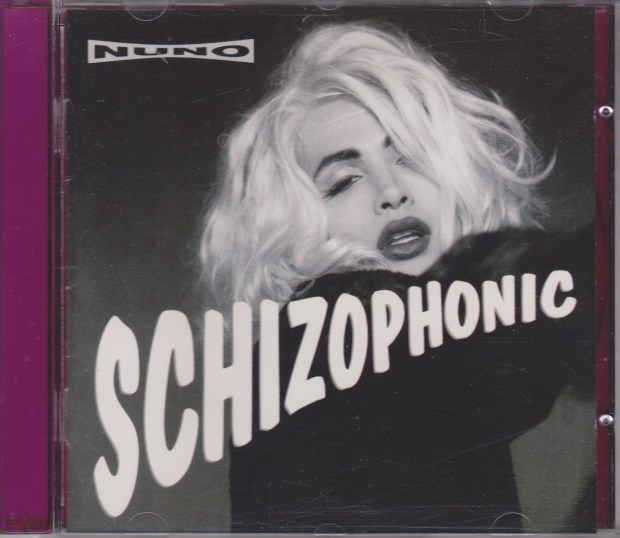
That’s a hell of a double live album right there.  No, Journey’s Captured is not remembered on the same level as Live and Dangerous, Frampton Comes Alive, or Kiss Alive (I or II).  Captured is certainly great, but somehow falls ever so shy from achieving the same lofty heights as the aforementioned.  It’s difficult to pinpoint exactly why it’s not quite up there.  Perhaps it’s the perfectionist style of the band, because it’s certainly not Steve Perry.

It’s not over though:  Journey included a new song, and their first ever without Gregg Rolie on keys.  Studio cat Stevie “Keys” Roseman filled in, on the ironically piano-based “Hopelessly in Love”.   This unsung classic is one of the strongest Journey songs in the canon.  It’s too bad that it rarely gets pulled out for compilations, instead residing at the end of a near-forgotten live album.

4/5 stars