Reviews

REVIEW: Sammy Hagar – Sammy Hagar / I Never Said Goodbye (1987)

Scan_20160705SAMMY HAGAR – Sammy Hagar / I Never Said Goodbye (1987 Geffen)

Remember when everybody in the Van Hagar camp just loved each other?  Things were so happy in Van Hagar, that Sammy released a solo album in 1987 and nobody got mad.  Hell, Eddie himself co-produced it and played bass!   Hagar was obligated to do another solo album to get out of his contract with Geffen, and so the self-titled Sammy Hagar was recorded quickly.  Sammy apparently forgot he released another album also called Sammy Hagar in 1977, so this one was re-titled I Never Said Goodbye.   (I still call it Sammy Hagar.)

There was something particularly weird about this release on cassette. I had a version, purchased from Columbia House around 1989-1990, with a bizarre cover. The J-card was designed to fold around outside the cassette shell. I’m not sure why to this day, and I’ve never seen another copy like it. The artwork was obviously designed to fold on the outside rather than the inside, but I’ll never figure out why.

All the members of Van Halen even appeared in Sammy’s video for “Hands and Knees”.  The plot was simple, and perhaps a foreshadowing of things to come.  A bored Hagar calls his bandmates (including nextdoor neighbor Eddie) to jam, but nobody’s interested.  Instead, Hagar jams with a group of robots!  “Hands and Knees” was an odd choice for a first single, being a dark and slow mood tune.  The video guaranteed attention, and still garners a chuckle today (albeit a sad one, knowing these guys aren’t pals anymore).  I love Michael Anthony’s huge brick of a cell phone.  The video was better than the song, though it does have a killer of a chorus.  It’s clear if you listen that Eddie Van Halen is one damn fine bassist too.  Are you surprised?

One thing about this album, though:  it’s really commercial.  Like way, way more pop even than 5150.  It’s no surprise that some writers like the esteemed Martin Popoff have slagged this album.  The production has an airy 80’s feel, not enough oomph.  The opening track “When the Hammer Falls” is a hard rocker, but it could have been thicker with more meat.  Not that it would have helped too much.  The chorus on this one is pretty weak, which is too bad since the riff is good enough for rock and roll.

The second single, which Van Halen used to let Sammy play live acoustically, is “Give to Live”.  Van Halen’s version can be found on 1993’s Live: Right here, right now.  Hagar’s studio original is unabashedly pop, bombastic…and good.  I admit I still enjoy this very cheesy ballad.  Hagar is rarely profound, and neither is “Give to Live”, but it’s a nice song indeed.

A shitty synth (?) horn section urinates all over “Boy’s Night Out”. Speaking of synth, “Returning Home” is all but unpalatable. This is one of Sammy’s UFO yarns, a story of a guy returning back to Earth to find it wrecked. “I saw the ruins, once the smoke cleared, once upon returning home.” It’s just sunk by all this terrible synthesizer junk and programming. The UFO has crashed into the damn mountain!

ALIENS

The second side surprisingly opened with some blues jamming:  “Standin’ at the Same Old Crossroads”.  And that would be Sammy on the slide guitar.  “Crossroads” leads directly into “Privacy”, a “Radar Love” re-write that is better than “Radar Love”.  Maybe I’m just sick of “Radar Love”, but “Privacy” has some smoking playing on it, proving again that Hagar is actually a pretty badass soloist.  Side two on a whole is actually much better than the first.  “Back Into You” is a vintage-style Hagar radio rocker.  Journey must have wished they wrote “Back Into You”.  The keyboard overdubs aren’t necessary but hey, it was the 80’s and this is a great little AOR rocker.

Another tune that Hagar played live with Van Halen was “Eagles Fly”.  He actually presented the song to the band for 5150, but it was turned down.  A live Van Halen version can be found on the 1993 single for “Jump (Live)”.  He did it acoustically on stage, but the studio version is bombastic and big like “Give to Live” is.  It’s a pretty impressive tune, for pop rock.   David Lauser’s drumming makes the song, I’m a sucker for that rat-a-tat-tat!

The album ends on a ho-hum note, the soul-funk of “What They Gonna Say Now”, sort of this album’s “Inside” to close it out.  Just not good enough.  If you want to hear Eddie Van Halen playing bass up close and personal, he’s very audible here, but he’s not a flash bassist.  He plays with the groove for the song.

It’s tempting to think of this album as a collection of tracks that were not right for Van Halen, and that’s mostly true.  A lot of it, however, just wasn’t good enough for Van Halen.  “What They Gonna Say Now” could have been a Van Halen track, but it would have been the weakest tune on 5150 if so.

2.5/5 stars

REVIEW: Skid Row – Revolutions Per Minute (2006)

Scan_20160614SKID ROW – Revolutions Per Minute (2006)

Skid Row did a pretty good job of replacing the irreplaceable Sebastian Bach on their fourth LP, Thick Skin.  It earned a more than healthy 4.25/5 stars, in part due to the charismatic vocals of Johnny Solinger.  For their second album with Johnny, they re-teamed with producer Michael Wagener, but had mixed results in repeating the magic.

Revolutions Per Minute is heavy enough; there was no issue of the band going soft.  There was a dip in quality from the songwriting department, strongly dominated by bassist/leader Rachel Bolan.  Strangely, they chose to pad out the album with a cover (The Alarm’s “Strength”) and a remix.  It’s worrisome when the best song is a cover.  There’s a distinct pop-punk vibe on many songs, which one has to trace back to Bolan.  Dave “Snake” Sabo has two co-writes, and Scotti Hill a mere one.

“Disease” is very Skid Row, nothing outstanding, but a strong enough way to open the album.  The punk-like “Another Dick in the System” is better.   With Solinger scraping the ceiling with his screamy high notes, it’s reminiscent of old Skid Row circa Slave to the Grind.  “Pulling My Heart Out from Under Me” follows with an 80’s Elvis Costello vibe to the guitars.  This one is quite a departure from Bach-era Skid Row, and a decade later I’m still not sure if I like it.  You can’t fault a band for experimenting, but if the results aren’t good enough, that’s a tough call.  I’m not sure if “Pulling My Heart Out from Under Me” is good enough.  The worst of the punk influenced songs is “White Trash”, which is so indescribably bad that I won’t even try.  It’s not funny and not good.  Back to something that sounds like Skid Row, “Nothing” is one of those tunes that you could imagine was written in 1988 for the debut album.

Scan_20160614 (2)Influences collide on “When God Can’t Wait”.  Johnny Solinger is a country guy, and Rachel Bolan is a punk guy.  It seems 1+1 does indeed =2, and the sum total of punk and country is rockabilly.  I have to admit to liking this one, even though I’m still not sure if it’s any good.  I definitely prefer it to the next tune, “Shut Up Baby, I Love You” which doesn’t have much going for it aside from the full-metal tempo.

Strangely, the best original song is “You Lie” which begins as nothing but pure country.  Only after the twangy guitar solo does it accelerate into rock territory, but it’s the country part that rules.  The final track is a “Corn Fed” remix, which adds slides, harmonica and accoutrements.  At least that ends the album on a good notes.  The CD does start to drag a bit with two lacklustre songs, “Love is Dead” and “Let it Ride”, so the remix of “You Lie” is a smart way to end it.

You get the feeling that Skid Row had potential for a great album, but only came up with enough good songs for an EP.

2/5 stars
REVIEW: Marillion – Barrowlands, Glasgow, Scotland. 4 December 1989. (FRC-005)

By request of J.

Scan_20160615MARILLION – Barrowlands, Glasgow, Scotland. 4 December 1989. (FRC-005 – 2002 Racket Records)

Marillion have always been an innovative band, not just musically, but also the ways they interact with their fans.  In 1992, they started offering mail-order exclusive live albums to the diehards.  The first one, Live in at the Borderline sold out quickly.  Live in Caracas took a few years to sell out; I have an original copy of that one.  The third, Live in Glasgow, also sold out quickly.  Today I own a remastered and reissued version, Barrowlands, Glasgow, Scotland, released in 2002 as part of Marillion’s Front Row Club.

The Front Row Club was a subscription service.  Sign up for a year, and Marillion would mail you a live album every two months.  Some were single discs, like Barrowlands, and some were doubles.  They were sourced from all parts of Marillion’s history.  Subscribers could choose to opt out of releases they didn’t want, for example I didn’t need a second copy of Caracas.  There were 43 Front Row Club releases in total, and I have them all (excepting the optional Caracas).  (For a review of FRC-006:  River, click here.)

In 1989, Marillion were showing off the new guy, Steve “H” Hogarth on vocals, guitars and keyboards.  If they were to get a cold reception, Scotland would have been the place.  After all, former singer Fish was a proud Scot, and replacing a singer is always dicey.  Fortunately for Marillion, fans embraced Steve H very much, and the Barrowlands show is evidence of that.

Opening with the brand new classic, “King of Sunset Town”, it sounds like Marillion had them in the palms of their hands from the first notes.  This releases was recorded from the desk onto cassette tape, and it sounds remarkably good considering!  “Sunset Town” has the instrumental adventures that fans expect, but with a passionate vocal very unlike Fish.  Singing along, the fans were already familiar with the new material.  The drums sound amazing in the Barrowlands, and Steve Rothery’s solo had the fans screaming.

There are only eight tracks from Barrowlands — apparently, somebody forgot to flip the tape as the band played.  Instead, two songs from a show in Bradford were added to the end.

“Slàinte Mhath” (or “Slange” as it is spelled phonetically on the back cover) is a beloved fan favourite. It was one of the songs that H felt more comfortable singing.  The crowd grew quiet.  This was an important song to get right.  No worries there.  “And you listen, with a tear in your eye, to their hopes and betrayals, and your only reply is slàinte mhath.”  (Cheers, good health.)  The line is greeted with a few excited screams.  While he was nothing like Fish, H managed to raise the hair on my arms.

“Good evening Glasgow!  It’s very nice to meet you.  We waited a long time for this!”  It must have been a tremendous relief for H to be accepted in Glasgow.  Two new singles follow “Slàinte”: “Uninvited Guest” and the ballad “Easter”. These are songs that remained in the setlist for tour after tour, and they do not vary much from other live takes. It is interesting to listen to these fresh versions, new to the band as they were to the crowd. “Easter” is youthful and beautiful.

Hogarth seemed drawn towards the Clutching at Straws material. “Warm Wet Circles”/”That Time of the Night” were performed for a few tours after, and Steve did them very well.  It’s a 10 minute slab of progressive rock with labyrinthine lyrics as only Fish could write.  Hogarth nailed it.

“On promenades where drunks propose to lonely arcade mannequins,
Where ceremonies pause at the jeweller’s shop display,
Feigning casual silence in strained romantic interludes,
‘Til they commit themselves to the muted journey home.”

I mean come ON!

And that’s it for old songs.  More were played that night, but the tape didn’t get them.  Too bad, because they included “Market Square Heroes”, “Incommunicado”, “Kayleigh” and lots more.  Barrowlands goes on with “Holloway Girl”, which boils with a dark intensity.  Marillion and Mark Kelly are very good at using keyboards for texture, and this is a good example.  Also dark and powerful is “Seasons End”, introduced by the Christmas carol “Oh Come Emmanuel”.  This early warning about global warming is a reminder that this is not some new theory.  We’ve known about global warming for decades.  Marillion turned that into a pretty epic quality track.

That’s it for the Barrowlands tracks.  “Berlin” and “The Space” are added to make it an even 10.  There’s a shift in sound quality as it gets a little clearer, but it’s not obtrusive.  “The Space” is a very apt way to end a CD.

Rating something like this…it’s almost “What’s the point?”  There are 43 of these bloody Front Row Club albums.  You can’t get them anymore.  You have to look at this as a good but incomplete set of some of the earliest live Marillion with Hogarth.  When we’re talking about a band with probably 100 live albums or more, it all becomes a little hard to see the forest for the trees!

3.5/5 stars?

Scan_20160615 (2)

REVIEW: The Legendary Klopeks – Straight to Hell (2002)

STRAT

Happy Canada Day! Here is your Can-Con for this holiday: The Legendary Klopeks. According to bassist Mike Lukacs, “We used to always play Shannon [Larratt]’s Canada Day BME BBQ every year. Always liked that.”

For a review of the Klopeks’ first album Homicidal Suicidal Klopekticidal by Aaron at the KMA, click here!

THE LEGENDARY KLOPEKS – Straight to Hell (2002 Pink Skull)

Once upon a time, in Niagara Falls Ontario, there was a band.  This was a band unlike any other.  They were fronted by future Guinness’ World Record holder Sweet Pepper Klopek.  Sayeth the Huffington Post, “Sweet Pepper Klopek…has set many Guinness World Records [and] managed it again by lifting a 5.4 kilogram, or 12-pound, sledgehammer suspended from two huge fish hooks plunged through his cheeks.”  Mixing punk rock, wrestling and humour, their best album is the 24 track Straight to Hell.

Every song ends with the words “fuck you!” and almost all are under three minutes.  There are also several tracks only a few seconds in length, and yes, even they end with “fuck you”!  Some sample song lyrics:

“Where’s my soup?  Fuck you!” (“Where’s My Soup”, 10 seconds)

“Touch my dink in the ditch.  Fuck you!”  (“Touch My Dink in the Ditch”, 12 seconds)

“Turtlenecks and armpits.  Fuck you!”  (“Turtlenecks and Armpits”, 20 seconds)

For the record, “Where’s My Soup” has long been this writer’s favourite Klopeks tune.  For a while I considered getting a “Where’s My Soup” tattoo.  A tattoo shop in St. Catharines Ontario used to offer free tats to anyone getting Klopek ink.  And I did consider it, but ultimately decided against.  After all, how did I know that in 10 years time, my favourite song wouldn’t be “Terry and the Ass Pirates”?  Or “Bush Party Hand Job”?  Or “She Fell Off the Couch” which has an actual guitar solo?

The fact of the matter is, every song is fast, brittle, vulgar and incredibly fun.  The lyrics are fuck-laden beyond conception.  The Big Lebowski himself has never dropped so many F-bombs in just 33 minutes. Nothing is taken seriously. Most songs start with bass noodling via Lemon Kurri, moving on to Sweet Pepper screaming like a man possessed. Regardless, these are actually really good punk songs! There is nothing polite or safe on this CD — that’s why they called it Straight to Hell!  No apologies.  “When it’s all said and done and I’m dead and gone, life’s a fuckin’ game, and fuck you I won!”

5/5 stars
Scan_20160622 (3)

REVIEW: The Tea Party – Transmission (1997)


Scan_20160526THE TEA PARTY – Transmission (1997 EMI)

Tea Party fans are often split on Transmission.  There is little doubt that the previous Edges of Twilight album was a high water mark.  With over an hour of exotic and varied folks-blues-rock hybrids, it’s a favourite for many.  The band took a stark turn on Transmission, embracing electronics.  Jeff Martin produced the album himself, and you could not expect a more opposite album to Twilight.  Thanks to the opening single “Temptation”, the album was another hit.  Most fans seemed OK with the changes.

At first, it doesn’t seem like anything is unusual in Tea Party land.  “Temptation” (the album version anyway) opens with a fair bit of exotic strumming on some sort of stringed instrument, as the Tea Party often do.  Then the samples and looped drums kick in, and they are huge!  Middle Eastern exotics, radio noise, keyboards and a killer riff all combine with loops to create a new kind of Tea Party.  So far so good — the experiment paid off.

Martin had a penchant for odd song titles on this album, like “Army Ants”.  Vocals furiously distorted, this makes for a heavier Tea Party.  Jeff Burrows is providing some excellent drum backbeats, but at times they are buried under other sounds.  The title track “Transmission” is way better though, burning like electronic incense.  Static, loops and acoustics return for “Psychopomp”, one of the five singles they released.  While it takes a while to get there, “Psychopomp” boasts a powerfully melodramatic chorus, Martin roaring as he does.  “Gyroscope” has a spinning sound, one of the more hypnotic tracks (and also a single).  One of the more impressive singles was the ballad “Release”.  This was eventually given an EP of its own which we’ll look at another time.  A basic keyboard/drum ballad, it is simple and bleak but hard to forget.  It almost reminds of early 80’s Robert Plant.

There isn’t a lot of variety and distinction between the songs.  “Alarum” repeats the formula:  Electronic effects, exotic sounds, roared-out chorus.  This was the disappointing factor with Transmission.  The band had established themselves with a diverse sound, but that sound is narrowed on Transmission.  All the same ingredients are there, but they are focused by the electronic lens, which sharpens them but also bleaches them to all one colour.  “Babylon” is one of the exceptions, with drum & bass elements, and off-kilter song structure.  It was appropriately given a very bizarre music video.  An interesting experiment, but not as affective a song as something simpler like “Release”.

The Tea Party had some fun in other ways too. They like hidden bonus tracks, but this time they didn’t stick one at the end. They stuck an instrumental (dubbed “Embryo”) at the end of track 8 (“Babylon”). It’s actually a cool little piece of music.

Since the Tea Party are an ever-evolving band, it was safe to assume they would not stay in the electronics lab forever. Their next album, Triptych, was different again. Transmission remains their most loop-heavy album to date.  At least they did it at the right time — The Prodigy’s massive mainstream album The Fat of the Land was released mere months before.  The public were ready and hungry for computer-precise beats and samples, and the Tea Party delivered a unique hybrid with their own brand of rock.  For the most part, it worked.

3/5 stars

Scan_20160526 (2)

REVIEW: The Tragically Hip – Man Machine Poem (2016)

NEW RELEASE

Scan_20160620THE TRAGICALLY HIP – Man Machine Poem (2016 Universal)

The title Man Machine Poem reveals something about the new Tragically Hip.  The first song is entitled “Man”, and the last one “Machine”.  This album is an epic poem — the “Man Machine” poem.  It has a flow like a singular body of work, even though it is made up of individual songs.  Like most Hip albums of late, it is a brooding work thick with power in its quiet grooves.

Sounding a bit like like classic Radiohead, “Man” opens the CD on a suitably weird note.  Droning piano, strange echoey vocals…and I’m hypnotised immediately.  Granted, the subconscious mind keeps trying to find meaning in the music.  Now we all know the terrible news.  That in mind, we’re not going to treat this album like a funeral.  Brain cancer be damned, Gord Downie is doing that final tour, you know the one?  The one that nobody has been able to buy tickets for except on StubHub for many times their original value.  In other words, it’s a heavy atmosphere and you keep searching for hints and clues that are not there.  “Man” is a brilliant track, showing that the Hip were continuing to push their own limits.

Just about every track on Man Machine Poem is brilliant.  The first single “In A World Possessed by the Human Mind” sounds like something Bono wishes he had written.  The fuse smoulders, but the song blasts open brightly on the chorus.  Each song has its own character, but hard to define.  “What Blue” is simply lovely, a summery track that is hard to forget.  “In Sarnia” sounds more like “in the country”, but friends from back that way say that’s not too far from the mark.  Passion turned up to 10, Gord lets it all out.  The song is slow and quiet; all but Gord.

The days of “Little Bones” and “New Orleans is Sinking” are long behind now.  The Hip don’t write albums like that anymore, but what they do create still has innate power.  Listen to the acoustics and the slides blending with the electric guitars and steady beat of Johnny Fay.  The Hip run like a well oiled…gotta say it…Man Machine.  The older, wiser, and less loud Tragically Hip still rock, cranking it up when necessary.  “Here, in the Dark” is a fine example of placing the explosive charges in the exact right spots.  So is the growling “Hot Mic.”  The energy is palpable.  Even on a song called “Tired as Fuck”, there is energy in the air.

Man Machine Poem has an epic feel to it, from the strange start to the drawn out dramatic ending.   It’s temping to say something like “best Hip album in years!” but they’ve never stopped making great albums.

4.5/5 stars


REVIEW: Motley Crue – Quaternary (1994 Japanese EP)

MOTLEY CRUE – Quaternary (1994 Elektra Japanese EP)

For me, undoubtedly the most heavily anticipated new album of 1994 was the new Motley Crue.  Originally titled ‘Til Death Do Us Part, the self-titled ’94 Crue disc was their first with new singer/guitarist John Corabi.  They holed up with producer Bob Rock and knuckled down, creating what could have been the most important album of their careers.  The long wait (five years between studio albums) and cryptic remarks from the studio indicated that this would be the heaviest Motley album ever, and their most ambitious.  The new, serious Motley for the 90’s had, as always, written plenty of extra material too.

In addition, producer Bob Rock had an idea for getting creative juices flowing.  He asked each of the four members of Motley Crue to write and record a solo track with no input from the other members.  This was slightly historic:  the first time Nikki Sixx, Mick Mars, Tommy Lee or John Corabi had done anything solo.  With all the numerous outtakes recorded for the Motley Crue LP, there was now plenty of extra material to put out as a bonus EP.

Scan_20160612A mail-away coupon inside the Motley Crue CD alerted fans that five more tracks were available by mail order only.  20,000 copies of the original EP were pressed.  They included all four solo tracks and a new Motley Crue song called “Babykills”, featuring fifth Beatle Billy Preston on clavinet!

Still, the lucky fans in Japan didn’t have to mail away for anything.  They were able to buy Quaternary right on their store shelves, and because it’s Japan, they also got bonus tracks.  The Japanese version of Quaternary was not a five song EP, but more like a nine-song mini-album.  I had no idea such a thing existed until finding one at Sam the Record Man in Toronto in the summer of 1996.   It still has the price tag:  I paid $49.99, for a total of three songs that I did not have before.

Today, every one of these songs can be found on the box set Music to Crash Your Car To: Volume II, along with even more bonus mixes.

Quaternary commences with industrial noises and studio dialogue:

Tommy Lee:  “I can’t play with fuckin’ clothes on man, this is bullshit.”
Bob Rock: “Play naked.”
Tommy Lee: “Fuckin’ jeans on, a fuckin’ shirt…what up with that?”
Bob Rock: “What, do you work in a bank?”

The industro-rap metal of Tommy Lee’s “Planet Boom” is a track he had been working on for years. An early version made its debut in the background on the 1992 home video release Decade of Decadence. Even though the words “industro-rap” and “Tommy Lee” don’t really sound good together, “Planet Boom” kicks ass. Tommy played all the instruments, utilising a simple, detuned Sabbathy riff and a relentless drum loop. The strength of his vocal came as a surprise, as did the song in general. A few years later it was remixed for Pamela Anderson’s movie Barb Wire. (Stick with this original.)

After a brief studio discussion with Mick Mars about hemorrhoids (?), his blues instrumental “Bittersuite” blows your ears off. Motley fans know that Mick Mars is the most musically talented member, considered an underrated and under appreciated rock god. The blues-rock of “Bittersuite” isn’t as satisfying as I imagine a pure blues offering to be, but there is no doubting Mick’s talent here. Both as a writer and a player, Mick hit it out of the park (Chris Taylor played drums). Mick’s goal was to pay tribute to rock-blues greats like Beck, Hendrix and Blackmore. Mission accomplished. His guitar tone is beautiful and so are his emotive licks.

Nikki Sixx goes third, with another industrial-metal cross. “Father” is one angry fucked up track. It’s heavy and direct, on-trend for 1994, and very abrasive. The riff and song are simple, but Nikki’s anger leaks through. “Father — where were you?” Backwards guitars, electronics and loops on top — you can tell Nikki and Tommy were listening to the same kinds of music at the time!

New kid John Corabi goes last, and in the liner notes he says that “Friends” is his first piano song. He meant to go acoustic, but “Friends” just came out of him. It’s a pretty Queen-like ballad with lovely harmonies in the middle. Although Mick Mars’ song is probably a greater technical achievement, “Friends” is my favourite of the solo tracks. When a guy like Corabi gets going on a ballad, it’s usually going to be amazing anyway. Throw in the Queen elements, and I’m just a sucker for it! It’s really a shame that Motley did not continue with John beyond this. The potential for greatness was always there.

After more studio chatter, we break into “Babykills”, the Billy Preston collaboration. “Babykills” is fun and funky hard rock, probably the heaviest thing Preston ever played on. Unfortunately his part is little more than an added topping. Great tune though; probably far too good to lie hidden away on an obscure mail-order EP.

An impromptu jam that seems to be called “I Just Wanna Fuck You (In the Ass)” ends the original EP on a jokey note.  “What the fuck do you want, for fuck all?”

Scan_20160612 (3)

As mentioned, the Japanese had bonus tracks.   These are tracks that did not make the finished Motley Crue album, since they had recorded so much extra material.  “10,000 Miles Away” is a cool blues ballad, showing off more of Mick’s fine fingerwork.  It was obviously too much of a standard sounding song to fit in with the experimental Motley Crue album.  Not that the album stood a chance in hell after grunge cleared the decks, but you do wonder if it would have been better received if some of these more digestible songs were included on it.

The one track on the Japanese release that is easy to skip is the Skinny Puppy remix of “Hooligan’s Holiday”.  This track was already available on the “Hooligan’s Holiday” single and it’s since been re-released in other places too.  It’s long — over 11 minutes.  Dave “Rave” Ogilvie remixed it with Dwayne Goettel and cEvin Key, so it is of possible interest to Skinny Puppy collectors.  The thing that bugs me about it is that it strikes me as lazy.  The song is pretty much the same as always for the first three minutes, and then the remixing begins.  The whacked out and frankly boring remixed part goes on for almost seven more minutes, before transitioning back to the standard song.  In other words, what Skinny Puppy did here was edit out the middle section and guitar solo of the song, drop in seven minutes of remixed barf, and then put the ending back on.

Two demos round out the CD:  “Hammered” (which did make the album) and “Livin’ in the No” (which did not).  The “Hammered” demo is structurally the same as the album version, no radical departures.  It sounds like much of it is live in the studio, and it’s clear that Motley were focusing on grooves.  It’s all about the four guys being locked in.  Finally “Livin’ in the No” is in the standard hard rock mold.  Again, a track like this fits in less well with the unorthodox LP, but might have made it more accessible for fans.  Even so, a guy like Vince Neil would never have been able to sing “Livin’ in the No” and make it sound good.

There is little question that the Motley Crue album deserves its 5/5 star rating.  This being a collection of outtakes, the same cannot be expected.  Still, it does deserve a very respectable:

4/5 stars

Get the complete EP including all Japanese bonus tracks on Music to Crash Your Car To: Volume II. That set also contains more remixes originally from single B-sides of the era: “Misunderstood” (Guitar Solo/Scream Version), “Hooligan’s Holiday” (Derelict Version), “Misunderstood” (Successful Format Version), “Hooligan’s Holiday” (Brown Nose Edit).

Scan_20160612 (5)

REVIEW: I Mother Earth – Dig (1993)

THREE REVIEWS FOR THE PRICE OF NONE!
For Aaron’s review click here.
For Boppin’s review, click here!

I MOTHER EARTH – Dig (1993 Capitol)

Toronto rock fans were ecstatic when local heroes I Mother Earth signed with Capitol and went to record a debut album with Mike Clink (Guns N’ Roses).  The goal was to take I Mother Earth’s long and meandering jams and turn them into recordable songs, and this was a success.  With an intense mixture of metal, alternative, funk, world music and everything else, the debut album Dig was a head-turner.  Loads of exotic percussion mixed with funky bass turned it into slow-burning hit.  Eventually the record buying public pushed the album gold, with comparisons to Blind Melon and Jane’s Addiction.

The opening music, “The Mothers”, introduces a psychedelic bent that continues through the album.  “Listen! To the Mothers!” yells lead howler Edwin, with echoey 60’s guitar behind him.  This is all a fake-out:  “Feel heavy!” are the first words of the next song, “Levitate”, heavy as plutonium plated bullets.  The intense grinding riff and groove of “Levitate” are the perfect example of early I Mother Earth:  heavy, rhythmic and intense.  Edwin’s voice at the time was compared to Perry Farrell, but the two artists are easily distinguished.

The debut single “Rain Will Fall”, not that dissimilar from “Levitate”, focused on the intense heavy rock side of the band.  The complex beats and out-there lyrics are still there, but there is no denying the forward momentum of “Rain Will Fall”.  Either stay out of its way or get swept away; it’s your choice.  Edwin whispers the lyrics until the full-lunged chorus.  They really liked writing about themselves: “Four brothers make the Mothers, four brothers form the one!”  (Drummer Christian Tanna was responsible for all lyrics.)  But check out that funky wah-wah guitar, bass and percussion!  It’s worth noting that guitarist Jagori Tanna played all the bass on the album at the time.  Original bassist Franz had left and been replaced by Bruce Gordon, but that’s Jag playing all the funky shit on this CD.  “Rain Will Fall” has a long open jam section that shows off this incredible playing.

Time to get trippy.  “So Gently We Go” sounds like a 60’s Carlos Santana slow jam.  It was one of four successful singles from the album, in edited form, since the album track is seven minutes.  It’s a delightful journey of joyous vocals, psychedelic flower dancing and hippie jams.  Things turn intense on “Not Quite Sonic”, the most accessible of the album’s tracks.  Choppy guitars and percussion set the groove, then the bass drops in the low end.  “The sights are embryonic, say what you want, I’m not quite sonic.”  No idea what Christian is writing about, but Edwin sings it like he means it.  You can understand how this became a bit of a hit when it was released as a single.  It was great to hear music on the charts that really celebrated skilled playing and composition.

Super-fast paced funky guitar that sounds like Flea playing bass (jumping around joyfully naked) opens up “Production”, the most challenging of the songs. The sheer speed would knock most people for a loop, but I didn’t see that beat-poetry section coming! “Lost My America” is easier to swallow:  Big and grand Cult-like choruses, backed by laid back dusky verses.

The centerpiece of the album is the epic and heavy as fuck “No One”.  More than any, this one song combines all the band’s elements for maximum effectiveness.  The groove will initiate spontaneous leg-stomping, impossible to stop once started.  Edwin is on full intensity with his vocals.  I had this song on an early preview sampler cassette, and I played it relentlessly during the summer of ’93, treating locals to it quite loudly through the car speakers.  “No one leaves the caravan,” sings Edwin, but who would want to leave?  By the time the song has expired seven minutes later, if you are not dripping with sweat, then you haven’t been listening properly.

The album begins to wind down from “No One” to the end.  There are no more mindblowing songs, though plenty of jaw-dropping playing.  “Undone” is the quietest song on the album, stripped down and punctuated by congas and Edwin’s raspy singing.  Then “Basketball” is the funkiest of them all, blazingly fast, and hard to hold on to.  The final two songs, “And the Experience”, and “The Universe in You” blend together in my mind.  Is Dig perhaps overly long?  Ear fatigue sets in.   Your senses have been assaulted with a lot of notes and words to absorb and by this point, it’s overwhelming.  (And there were two more songs dropped from the album, “Subterranean Wonderland” and “Love from Revolution”, the former of which later turned up on a compilation CD called Earth, Sky and Everything in Between.)  “The Universe in You” ends the album on a bluesy Sabbath note, very epic indeed.

Dig is a mighty debut album indeed, but at well over an hour in length, perhaps they should have hung onto some of these tracks for B-sides.

4/5 stars

Scan_20160529 (3)

REVIEW: Wes Craven’s Shocker – The Music (1989)


MOVIE SOUNDTRACK WEEK

Scan_20160607Wes Craven’s SHOCKER – No More Mr. Nice Guy – The Music (1989 SBK)

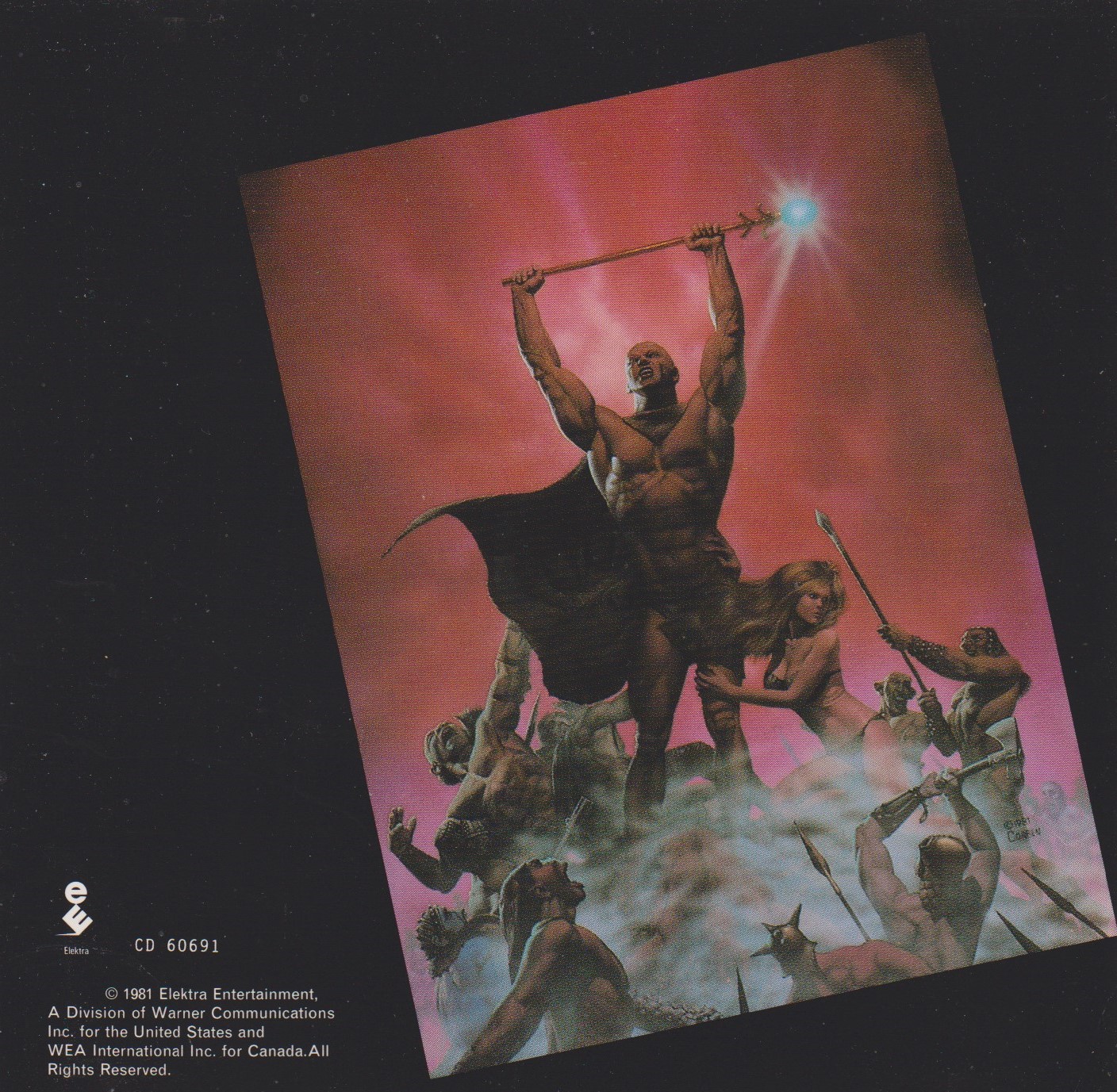
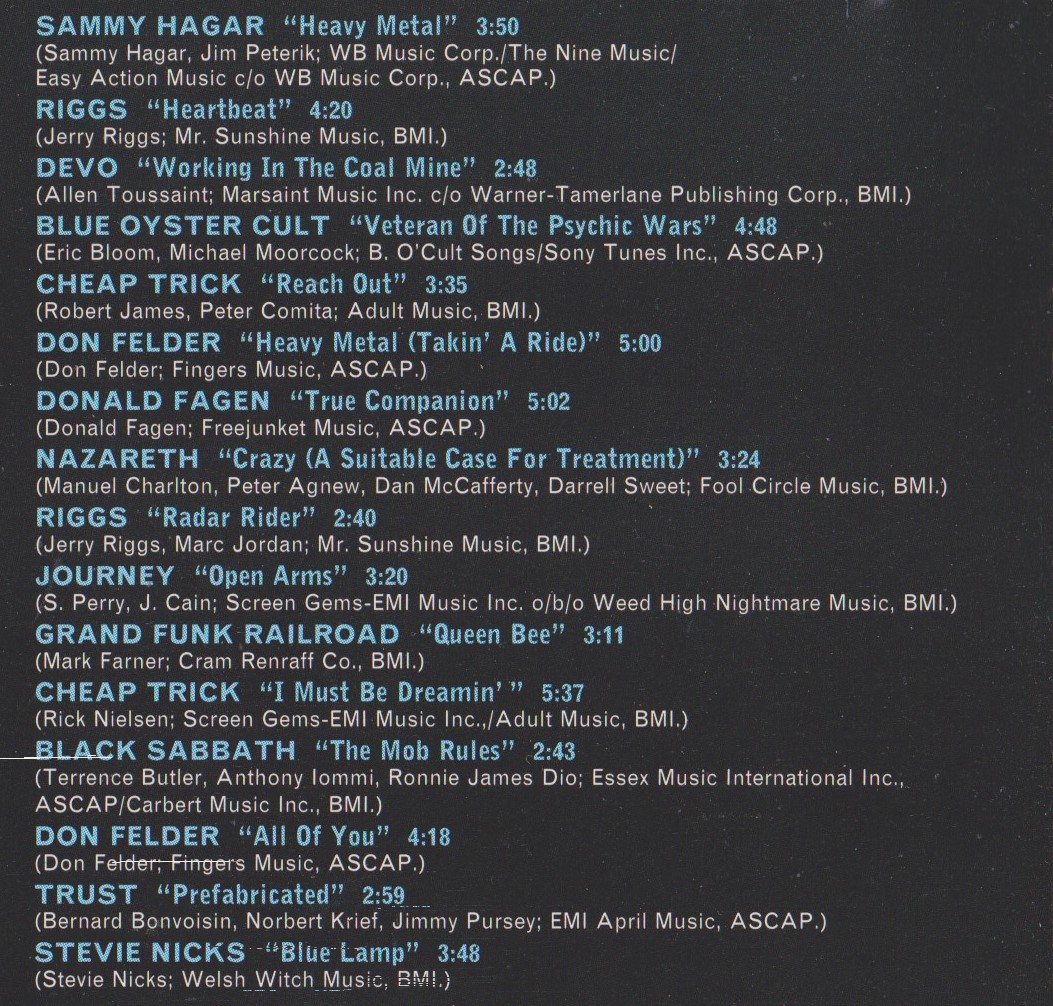
1989’s slasher film Shocker was Wes Craven’s attempt to introduce a new character to the pantheon of horror.  Unfortunately, Horace Pinker and the movie he rode in on were quickly forgotten.  Also forgotten was the heavy metal soundtrack, so let’s have a gander and see what you may have missed.

Ever heard of The Dudes of Wrath?  This temporary “supergroup” consisted of various members from track to track, but the best song they did was “Shocker” itself.  With lead vocals by Paul Stanley and Desmond Child, it’s a must-have for Kiss maniacs.  If that’s not enough, Vivian Campbell, Tommy Lee and Rudy Sarzo also play on it.  It’s like a collision of some of those bands — Kiss, Dio, Motley.  The anthemic outro will slay you.

Desmond’s writing is all over this album, and he co-wrote a track with Alice Cooper that ended up being recorded by Iggy Pop called “Love Transfusion”.  Sub out the saxophone for guitars and you could easily imagine this being a Trash B-side.   In fact I wouldn’t be surprised at all if the backing track is from the Cooper sessions, because this sounds exactly like an Alice Cooper song with Iggy Pop overdubbed.  All the musicians are guys from the Trash album.  Do the math.

It’s hard to imagine a weirder team up than Desmond Child and Megadeth.  Dave Mustaine was deep into the powders at the time, and he recorded “No More Mr. Nice Guy” with a three piece Megadeth.  The late Nick Menza had joined the band already, but Marty Friedman was yet to be hired.   Most Megadeth fans are familiar with this track, since it was re-released on their Hidden Treasures EP.  Certainly not the band’s finest moment.

Paul Stanley reappears in a writing capacity on “Sword and Stone”, performed by Bonfire.   Paul wrote it for Kiss’ Crazy Nights LP with Desmond Child and Bruce Kulick.  If it had been on Crazy Nights, it might well have been the best tune on there.  Paul’s demo has yet to be released in an official capacity, but it’s been heavily bootlegged.  Bonfire’s version is fantastic, but it only makes me hungry for a fully recorded and mixed Kiss version.  One day….

Another version of The Dudes of Wrath appear on side two, this time with Alice Cooper on vocals.  “Shockdance” sounds like little more than a slowed down variation of the “Shocker” riff, with Alice and actor Mitch Pileggi rapping over it. Just terrible stuff, actually. Thankfully Desmond redeemed it a little bit with the song he wrong with Dangerous Toys, “Demon Bell”. Like Guns N’ Roses galvanized and electroplated, “Demon Bell” slays.

Voodoo X were the band of Jean Beauvoir, who Kiss fans know from his many co-writes and guest appearances on their records. He only made one record as Voodoo X, and his song “The Awakening” is damn fine indeed. At first you’re thinking, “Oh it’s just another crap ballad”. Then a riff kicks in, and it blasts right off. It’s a bit like 80’s Kiss meets Top Gun. The last band up is Dead On, pretty pedestrian thrash metal, and one of the few songs without any involvement of Desmond Child. The angry elf vocals are hilarious, but the song is almost a parody of bad metal. The album ends with a reprise of the title track “Shocker” from the first side. Basically what this means is that you get to hear Paul Stanley singing for another two or three minutes, when he was really able to hit some seriously high notes. Cool!

The worst track is probably the ballad “Timeless Love” by Sandi Saraya.  Guess who wrote this putrid sappy swath of heartbreak?  Desmond Fucking Child!

Shocker isn’t the greatest soundtrack, but it’s a hell of a lot better than the movie that spawned it!

2.5/5 stars

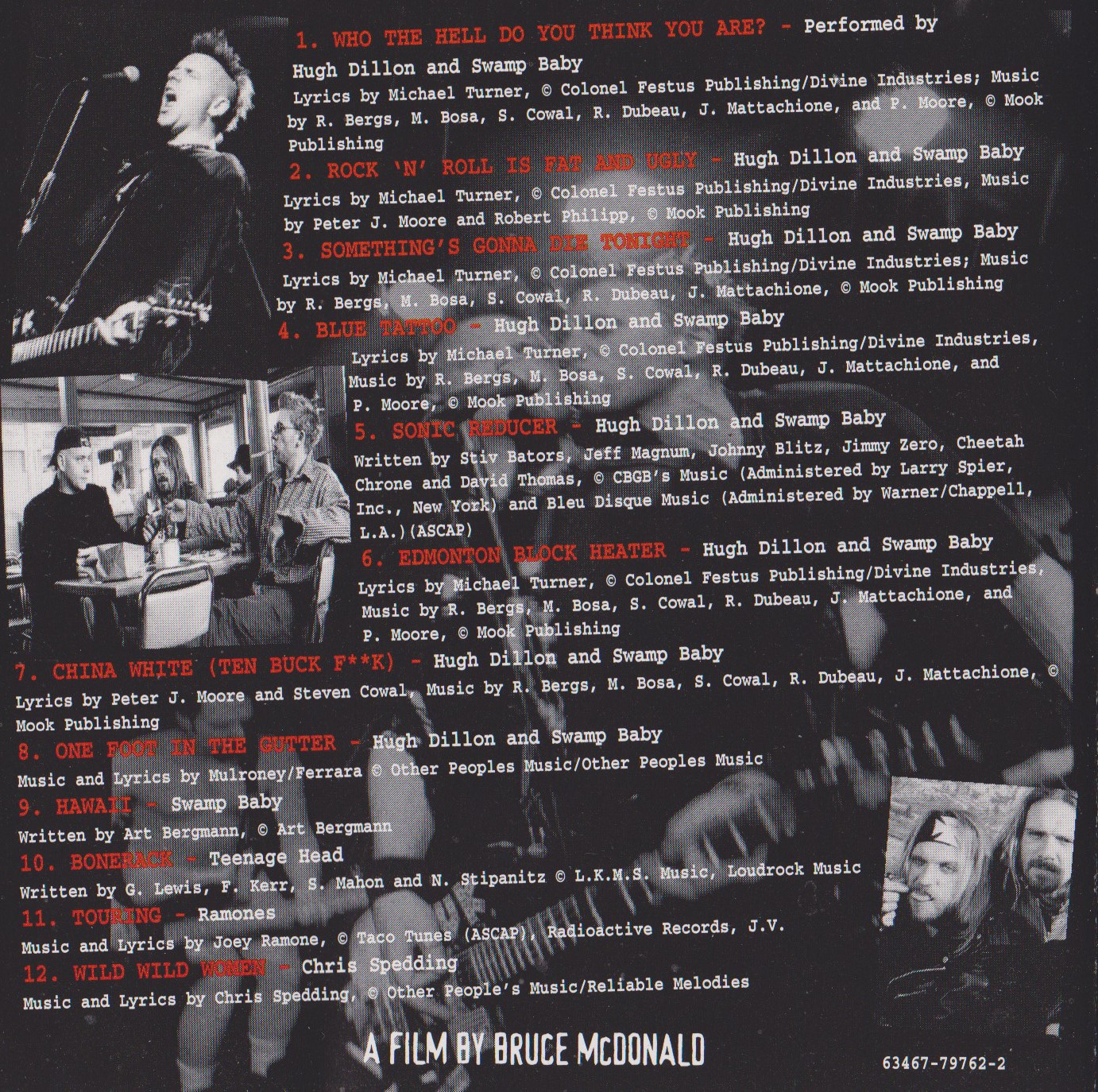
The helpful back cover doesn't even tell you who's on it.

The helpful back cover doesn’t even tell you who’s on it.

REVIEW: Helix – “(Gene Simmons Says) Rock is Dead” (2016 music video)

HELIX – “(Gene Simmons Says) Rock is Dead” (2016 music video from the forthcoming album Rock It Science)

“I don’t need no god of thunder to tell me what is great.” — Brian Vollmer

Helix are back once more, with a new greatest hits album called Rock It Science.*  You gotta have a new song on a new greatest hits (teased previously as “Mystery Track”), and this new song is timely and sharp.  Gene Simmons does indeed say that rock is dead.  In fact he’s been saying that for over 25 years.  I have a M.E.A.T Magazine interview with Gene from 1990 where he professes that rock is indeed dead.  And he’s still saying it now.  But Brian Vollmer retorts, “Don’t believe it when Gene Simmons says rock is dead!”

Sure, lots has changed, but Helix keeps going.  It’s not the 80’s anymore.  Very few can sell 2,000,000 copies of an album today.  It’s hard to make a living just by selling records.  You have to diversify.  Everything has changed — but like many things, the more they change the more they stay the same.  Rock is not dead.  In many respects, rock is more popular than ever.  Helix are still producing great quality music, and “Gene Simmons Says) Rock is Dead” is one more gem for their rock crown.  Daryl Gray and “Fritz” Hinz are still there on the rhythm section.  Chris Julke and Kaleb Duck handle the axes just fine.  This could have been on an album like Back for Another Taste.

As far as the video goes, Brent Doerner directed this one.  The Gene impersonator is bang-on — I hope Helix don’t get sued for this!  The video celebrates the old school.  It’s performed at Speed City Records in London, Ontario.  (Look for cool posters of bands such as Gob and VoiVod, who Gene slammed in the 1990 M.E.A.T interview.)  I really dig Daryl Gray’s Helix logo bass guitar.  That looks like a bitch to play.  Brent captured the fun side of the band in the video.  It’s not glossy, but I think it does the trick.

There’s no release date yet, but Rock It Science should be available to purchase soon.  Check out the CD cover, also designed by Brent Doerner.

Rock is dead?  Hardly.  Gene’s been wrong before, and he’s wrong again.

4/5 stars

ROCK IT

*The title It’s ROCK Science, Not Rocket Science was a working title for 2009’s Vagabond Bones.