Reviews

REVIEW: Tesla – The Great Radio Controversy (1989)

TESLA – The Great Radio Controversy (1989 Geffen)

Tesla came right out of the box with two great studio albums in a row.  Their debut Mechanical Resonance is close to perfect.  Two years later they came into their own even more with The Great Radio Controversy which saw them stretch it out further.  The dropped some of the more overt heavy metal influences that were heard on “Modern Day Cowboy” and went for the roots.  The Great Radio Controversy provided Tesla with their biggest hit, “Love Song”, the track that got me into the band for good.

1989-90 was peak power ballad time and I loved ’em as much as any lonely highschool boy would.  Bob Schipper was the Tesla fan first, but once I decided to take the plunge, I went all the way and got both albums on CD instead of cassette.  Though the big hit was the ballad, The Great Radio Controversy is a tougher album overall than the debut.  Once hooked by “Love Song”, other tunes made themselves immediately prominent.  Unfortunately the ballad probably didn’t convey an accurate image of Tesla to the general public.

Tesla were great at writing hooks, and opener “Hang Tough” hits right away with a killer little bass intro by Brian Wheat.  This hard-hitter is a killer song with dual guitars, and Jeff Keith just givin’ ‘er at the microphone.  It’s a defiant tune with the kind of shouted chorus that a concert crowd could get behind.  Guitars galore courtesy of Mssrs. Hannon and Skeoch.  Continuing the lyrical theme of “hangin’ in there”, it’s “Lady Luck”.  The punchy chorus, “Lady Luck took a walk,” has a Def Leppard vibe circa Pyromania.  Jeff Keith’s convincing rasp is like a blunt instrument for delivering hooks.

The first track that really showed Tesla were a cut above the Hollywood trash was “Heaven’s Trail (No Way Out)”, a track ahead of its time.  With a grungy, chunky groove and acoustics layered with electrics, wah-wahs and slides, it’s Tesla doing their own thing.  It has one foot in southern rock and another in molten lead.  At this point, Frank Hannon and Tommy Skeoch were on their way to “serious guitar duo” status.

Tesla lighten up a bit on “Be a Man”, catchy and simple enough for the radio.  Nicely composed for easy consumption, complete with a considerably canorous guitar solo.  The skies grow dark again quickly on “Lazy Days, Crazy Nights” which sounds like it should be a party rocker, but is not.  “I’m doing fine right here on borrowed time,” sings Jeff on this memorable dirge.  Things get hot again on “Did it For the Money”, a slammin’ track with another riff reminiscent of a certain British band from Sheffield.  They don’t slow down on “Yesterdaze Gone”, the side closer, which is only faster and more intense.

A solid side-opening “Makin’ Magic” brings the tempo back to centre.  Chugging along with guitarmonies aloft, this is a nice rocker to reset the tone.  This leads into another single, “The Way It Is”, which is a light rocker but not quite a ballad.  Tesla’s southern side shines through.  It sounds like a celebration with a little bit of Skynyrd on the side.

I have one memory regarding “Flight to Nowhere”.  It was September of my last year of highschool, and for the yearbook, they wanted to take a big aerial photo.  I believe we stood in the football field spelling the letters “GRCI” while a plane flew overhead taking the pictures.  I remember standing near my friend Danesh, who also owned a CD of The Great Radio Controversy.  This song came to our minds as we jokingly imagined doomy scenarios of plane crashes and our imminent deaths.  “Goin’ down!  I’m on a flight to nowhere!”  Anecdote aside, this killer track is a deep cut tragically ignored over the years.  As it blasts through the skies powered by the chug of electric guitars, it only gets more intense.  My favourite line to repeat:  “Now the headlines read all across the lands, ’bout the motherfuckers gettin’ way outta hand.”  It seemed to genuinely apply to the world we lived in, as Iraq invaded Kuwait and created a powderkeg in the middle east.  More importantly it captured my youthful anger at the situation the world found itself it.  Motherfuckers.

The one weakness that The Great Radio Controversy has is its length.  We’re on track 11 and only now getting to “Love Song”.  Like “Little Suzi” on the previous LP, this one opens with a unique acoustic instrumental passage.  It is a mini composition of its own, unrelated to “Love Song” with a vaguely neoclassical vibe.   Yet it’s still a part of it, as one seems incomplete without the other.  Either way, “Love Song” is a powerhouse, a definitive power ballad, and one of the best from a period that suffered from a glut of them.  Midway it goes to a whole new level with a gut-busting Frankie Hannon lead.

Everything after this unfortunately feels like anti-climax because of the massive presence “Love Song” has on the second side.  “Paradise” is a good tune, which actually sounded better when it was redone acoustically on the next album Five Man Acoustic Jam.  The original is a tad overwrought, like heavy-handed Aerosmith.  The final song is, appropriately enough “Party’s Over”.  The riff bounces from the left speaker to the right in a cool effect, and once again I’m reminded of another five-member band from across the pond with the same management (Q-Prime).

Though song for song, The Great Radio Controversy seems the equal of Mechanical Resonance, it’s just a hint more uneven due to its longer running time.  Minor quibble.  Tesla had made two outstanding rock albums in a row by now and were still growing.   Some say The Great Radio Controversy is the best Tesla album.  I say, you be the judge.

4.25/5 stars


TV REVIEW: American Dad – “First, Do No Farm”

AMERICAN DAD! – “First, Do No Farm” (Season 17, episode 14)

American Dad continued to expand its sonic palette in 2020.  In a season that already included The Weeknd, the show pulled off its biggest musical “get” in 2020 with Weird Al Yankovic.

The setup:  Stan Smith thinks his daughter Hayley is getting “soft”.  Fed up with her overly sensitive and lazy ways, he takes inspiration from the humble farmer.  Stan bulldozes the family home and sets up a “micro farm” on the property, with only a shed for everyone to live in.  Everyone adopts the Waltons-like surname “Boy”.  “Steve-Boy”, “Jeff-Boy”, and “Mom-Boy” for example.  Creature comforts are banished.  Violators are shunned.  Needless to say, Roger the alien is the first to be shunned.  He soon takes up with the “varmints” — rabbits.

This, reasons Stan, will make Hayley-Boy “farm tough”.

To make a short story shorter, Stan screws up big time by building a secret basement with all the food, TV and video games you could desire.  He too is shunned, and moves in with Greg across the street.  But he has already created a monster in Hayley.  Yes, she got tough, but she also lost her heart, turning into a cold, farm working machine.  This is not what Stan intended, and so he must undo what has he done.  With sabotage.  Varmint sabotage.  Rabbitage!

“Let’s do it!” says Roger.  “And do we contact Weird Al’s people?  See if he’s interested in ‘Rabbitage’ as a song idea?”

Cue up Weird Al Yankovic with my favourite Beastie Boys parody yet!

As Al says, he didn’t write the lyrics, but he sure did nail that vocal part!  “Listen all a-y’all it’s a rabbitage!” wails Al, as Roger and his rabbit allies destroy the farm.  Sure makes you wish they recorded a full song, doesn’t it?  Pretty cool collaboration.  Roger, dressed as a rabbit, destroying that farm in sync with Weird Al, is worth a repeat watch.

In the B-story, Klaus the goldfish has joined Scientology, which involves unsubtle Battlefield Earth jokes.  South Park did it first and better.  Scientology jokes are like shooting ducks in a barrel.  Fun, but way too easy.

4/5 stars for the episode

10/5 stars for “Rabbitage”


REVIEW: Triumph – “Spellbound” (1984 special promo 12″)

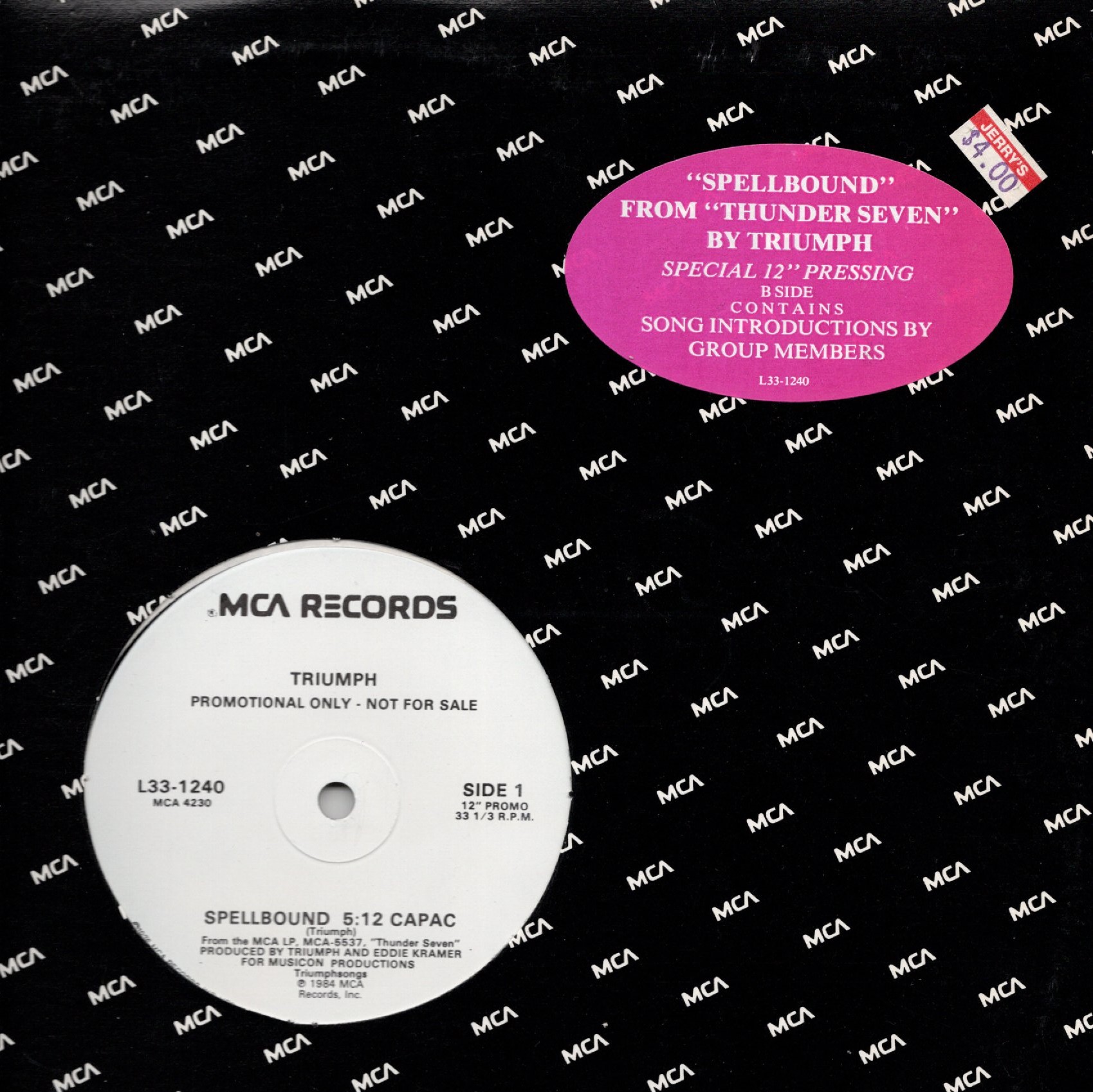
TRIUMPH – “Spellbound” (1984 MCA 12″ radio promo disc)

1984’s Thunder Seven was a big one in Canada, with “Spellbound” and “Follow Your Heart” both hitting the top 100 singles chart.  Triumph singles rarely offered up much in the way of non-album material, but the odd curiosity could be found.  This Triumph single for “Spellbound” was acquired by a friend, from Jerry’s Records in Pittsburgh back in 2013.

On the A-side, the standard 5:12 single version of “Spellbound” without edits.  You can really hear why this was a hit in 1984.  Triumph had learned to marry keyboard and guitar riffs for a bigger radio-ready sound.  With Gil Moore on lead vocals, “Spellbound” had huge chorus.  The track was also made into a cool video.

The B-side was specially designed for radio airplay.  Each track on Thunder Seven is given a brief special intro by the three band members.  You could look at this as an interview disc.  It’s nine minutes in length and not without value.  By listening we learn that “Spellbound”, for example, changed much from conception to release.  It was once titled “White Lies” before it was rewritten.  “Time Canon” was made up of 18 parts over 66 tracks.  Amazing stuff.  Their Canadian accents are adorable.

An excellent purchase for Triumph fans who have it all and need a little more.

4/5 stars

REVIEW: The Stone Gods – Silver Spoons & Broken Bones (2008)

THE STONE GODS – Silver Spoons & Broken Bones (2008 Pias UK)

…and from the ashes of the beast came The Stone Gods, and they did lay waste to the land.

The “beast” from whose ashes that the Gods rose was The Darkness, an extremely talented band who were looked upon (either fairly or unfairly, you decide) as a novelty act. They split in twain, with singer Justin Hawkins forming the very Darkness-sounding Hot Leg. The rest of the band (guitarist and brother Dan Hawkins, drummer Ed Graham, and bassist Richie Edwards) stuck it out and renamed themselves The Stone Gods. Edwards, a fine singer in his own right, dropped the bass and became the frontman. New member Toby MacFarlaine was brought in on bass.

The lead single “Burn The Witch” was shocking in its metal ferocity.  This was not expected from 3/4 of the Darkness.

What made this band special is twofold. First, the undeniable writing talents of Dan and the band, proving that Justin was not the be-all and end-all of the Darkness.  Second, the voice of Richie Edwards. He truly has his own unique voice, something unusual in today’s soundalike music scene. It is part Bon Scott, part Halford, with a little bit of early raspy Joe Elliot thrown in, and 100% awesome. As a frontman, he was no Justin, but who is?  (Nobody!)

The band stuck solidly to a hard rock/heavy metal direction.  Ed Graham’s got his trademark cave-man drum fills, and it fits like a glove.  Dan’s guitar howls and shrieks like a thing possessed.  Above it all, Richie wails.  These songs rock.  Some, like “Defend or Die” and “Burn the Witch” are scorchers.  Others are hard rock classics.  Three tracks in particular fully qualify as Darkness-level rock anthems.  “Where You Comin’ From”, “Start of Something”, and “Wasting Time” each boast numerous hooks and arena-level choruses.  A track like “Wasting Time” has suitable weekend-ready lyrics.

My friends have all joined the rat race
It’s all suits, shirts and novelty ties
I’m not a fan of retirement plans
I refuse to change my way of life

Just about every song here is a winner; no losers.  It is important to note, however, that the album takes a turn for the lighter around the halfway point.  Indeed, the first three songs are a pure metal bludgeon.  After that, a few early-Def Leppard moments are thrown in (“Making It Hard”).  However it is never out of place, never too soft, never embarrassing.  It is simply a good time.  A well-rounded rock album with fists-a-flying, then a smoke break, and then some ass-kicking.  If you’re wondering why it sounds so good, I blame Canadian engineer Mike Fraser, who just nailed it.

Shortly after the album’s release, Ed Graham departed and was replaced by Robin Goodridge of Bush fame.  That’s him in the video for “Start of Something”. This great lineup recorded a yet-to-released second album.  But the Hawkins brothers could not be kept apart.  Robin returned to Bush, and the Darkness have enjoyed a very successful second era with brothers Dan and Justin back in action together once again.

Dan has indicated that the second Stone Gods album will eventually see release. If so, then this debut truly was the “Start of Something”.

5/5stars


REVIEW: Lou Reed – Metal Machine Music (1975)

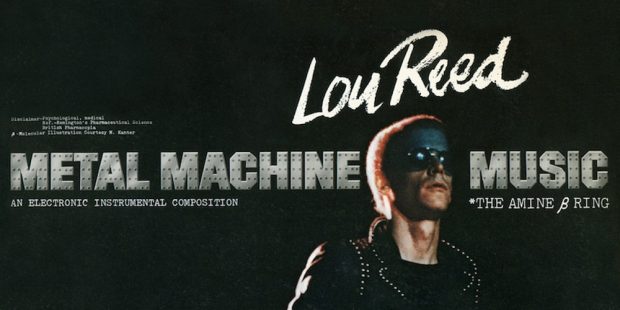
LOU REED – Metal Machine Music (1975 RCA)

Not as bad as advertised.

Music doesn’t have to be written.  Music doesn’t have to be made with conventional instrumentation.  Music doesn’t have to have a beat.  Hell, it doesn’t even have to have a sound.  Lou Reed knew this.  Whether it was simply a middle finger, or a larger experiment, his Metal Machine Music double album defied everyone and everything to become a cult classic.

The fluttery, echoey mess of sounds drone on dissonantly.  Metal Machine Music was initially issued as a two record set, with four tracks at roughly 16 minutes apiece.  The fourth side featured an endless loop, which meant that you could listen to Metal Machine Music for eternity, if you so chose.  There is very little variation in sound over the course of an hour, but interestingly, nothing is repeated and everything is unique.  The random nature of these sounds ensures that recurring “hooks”, or “melodies”, or just “collections of noises that sound good together” never recur.  There are certain peaks and valleys; seconds of slow action before quick snakey violence.

It sounds alien, jittery, intelligent, deep, scary, spontaneous, yet created with deliberate intent all at once.  You are reminded of a signal from a neutron star deep in space, as scientists search for patterns in the noise.  It is not only brilliant and stupid, but it is also the fine line in between.  Why a double album?  Why not just a single LP with the infinite groove at the end?  Why not just a single track?  Therein lies the middle finger aspect of Metal Machine Music.

There have been reams and reams of words written about Metal Machine Music by those far more literate than I, such as David Fricke and Lester Bangs.  It has been performed live by Reed and it has been covered by chamber ensembles.  It regularly makes both extremes of “Best Of” and “Worse Of” lists.  It was released in stereo and quadrophonic, and even on DVD replicating the locked groove and quad mix.  The demand for Metal Machine Music, which was originally deleted after a brief three-week release, has been immense.   From curious onlookers to audiophiles, there is a release of Metal Machine Music for you.  You can boast that you listened to the whole thing.  There is obviously something to it; something our primitive brains can perceive and feed off.  Whether it provides you with nourishment, or if you can’t finish the album, it will leave you with a strong impression.

/5 stars


REVIEW: Here Comes Jim – Where Evil is Afraid (1999)

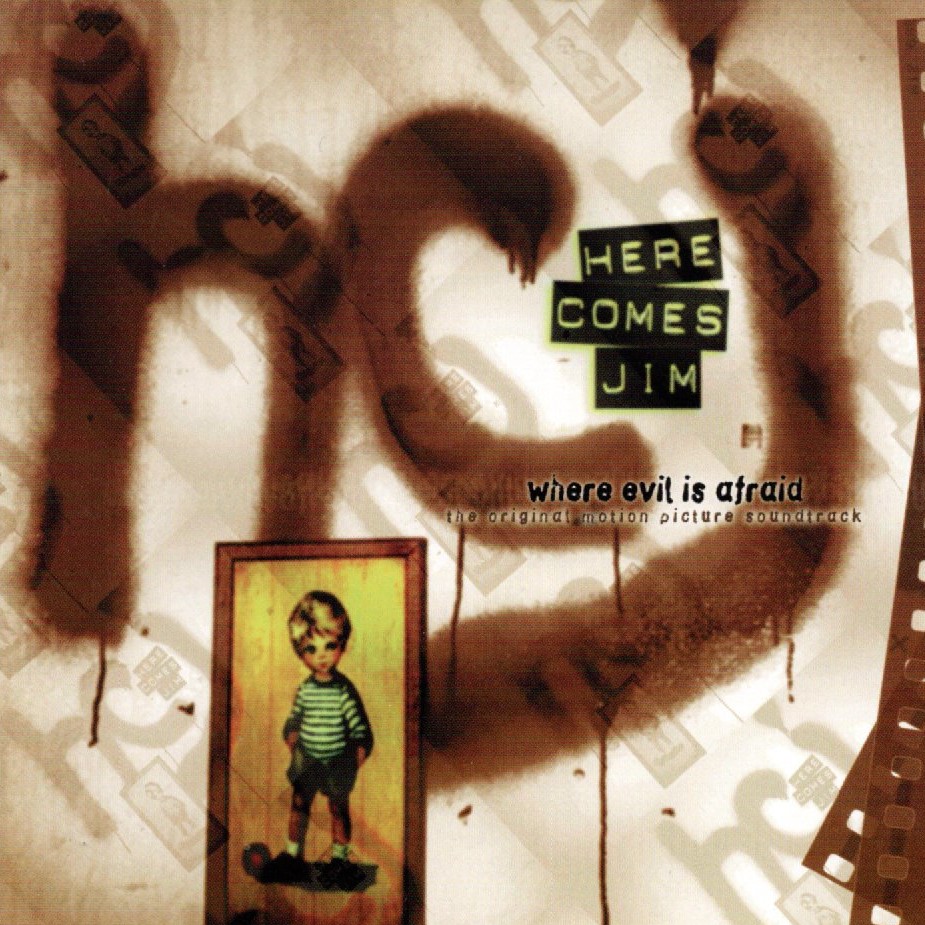
HERE COMES JIM – Where Evil is Afraid – The Original Motion Picture Soundtrack (1999 Dark Star)

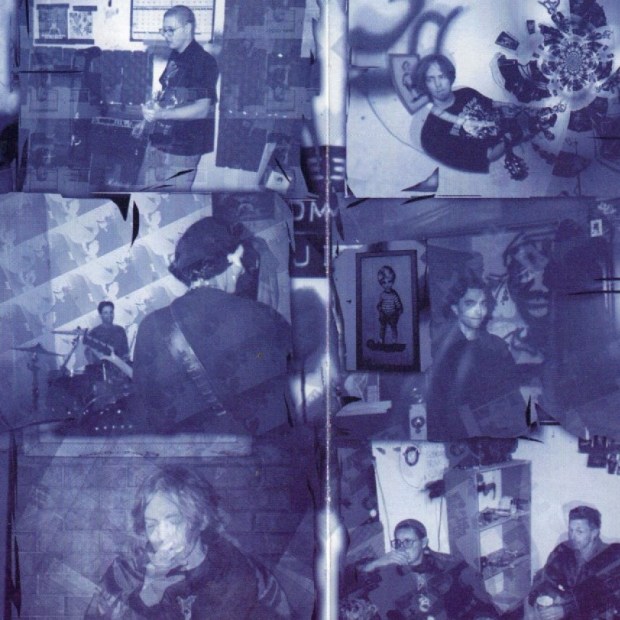
Full disclosure:  I used to know this quartet from Cambridge, Ontario Canada.  They were great.  When I first encountered Matt Greenhough and company, Faith No More had broken up and I was looking for something to replace them in my life.  Something heavy, non-mainstream and with bonkers lead vocals.  Here Comes Jim both terrified and delivered!  I wore their T-shirt, I played the CD in store, I flew the flag.  I loved this band.

That was 21 years ago.  I’m no longer the angry young man.  I wonder how this album sounds today?

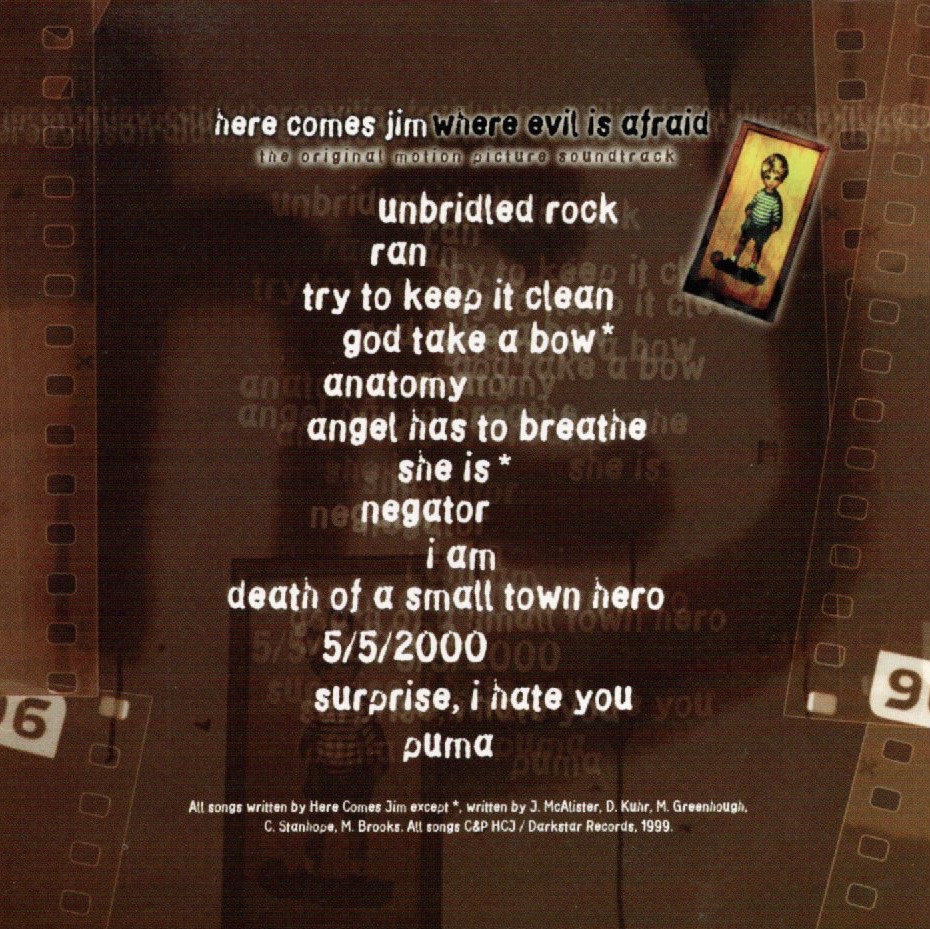
It’s still sounds fucking great!  It’s noisy — lots of guitars fucking around.  “Unbridled Rock” meanders around but comes in to focus on the chorus.  The cowbell is a nice touch.  As remembered, the vocals really range from quiet sombering to full-on rage.  “Ran” combines a melodic sensibility with a noisy guitar drowning.  It’s a brilliant and unafraid mix of ingredients.

All the songs come flooding back even though I haven’t played this album in almost 20 years.  “Try to Keep it Clean” was always a favourite.  Melodic guitars and vocals against a cloudy backdrop.  Matty G (that’s what we called him) did the clean and shouty vocals equally well but he’s especially good when he’s singing clean.  He has a good handle on melody, but then at other times he just doesn’t give a shit about melody.  Sometimes it’s about volume, sometimes about atmosphere.  Many of the songs…float.  “Angel Has to Breathe” is one such song, hanging uncomfortably over you.  That is until the powerful chorus of “Who will save my soul?  Who will take my shit and go?”

One of my biggest favourites 20 years ago was the slamming “She Is”, perfect for thrashing out on air guitar.  The verses turn quiet and melodic, before the crash of distorted guitars return for an amazing chorus.  Then the next track negates all that with “Negator”, an absolutely insane thrash-o-matic scream-fest…with a drum solo!

“Negator” sample

Fun fact:  the feedback-laden instrumental track “5/5/2000” refers to an old book from the 1980s that claimed the world would end on that date, due to an alignment of the planets.  All I could think was, “Shit…we have to survive Y2k and then yet another doomsday scenario in May?  Come on!  Who comes up with this?”  The song is far more entertaining than the book from which it took its name.

I may not be an angry young man anymore but I get what I liked about Here Comes Jim beyond the friendship.  They wrote good, stabbingly aggressive, intelligent rock far off the beaten path.  I remember putting tracks like “She Is” and “Negator” on mix tapes and (later) CDs.  There are no songs that suck.  Only songs that rock.  Listening to Here Comes Jim is like going into the ring for 10 rounds and coming out with a concussion.

4/5 stars


REVIEW: Jim Crean – The Book of Cryptids Volume II (2020)

JIM CREAN – The Book of Cryptids Volume II (2020 Dark Night Records)

Jim Crean, hard rock singer extraordinaire from Buffalo, New York, has issued another covers album called The Book of Cryptids Volume II.  Many will shy away at the thought of a covers album, but Crean always picks interesting covers off the beaten track.  The Book of Cryptids Volume II works because A) these are not songs you typically hear covered, and B) Jim kicks ass on them all.

It’s a varied album.  “Medusa” by Anthrax opens heavily and melodically.  You might wonder how a hard rock singer like Crean tackles Anthrax.  Without difficulty!  Jim has a bit more rasp, but where Joey Belladonna gets aggressive, Jim pays more attention to the notes.  It’s a fine trade-off.  Second in line is the seldom-covered Aerosmith classic “Kings and Queens”, which is right up Jim’s alley.  Sounds like a banjo is thrown in for texture during the verses.  For an even deeper cut, check out the flawless version of Def Leppard’s “Mirror Mirror”.  It ticks all the boxes from dual guitars to throbbing bass.  Old raspy Def Leppard is well suited to Jim, who wrenches some panache from the chorus.  An ace performance.

Gowan’s “A Criminal Mind” is definitely an unexpected cover.  The only band known for covering it is Styx — featuring Lawrence Gowan.  Jim Crean could be the only other singer to dare tackle it?  This song might be a bit of a sacred cow in some quarters, but Jim does an admirable job of it.  Not vastly different, but with its own unique vocal colours.

Keeping with a synthy 80s plot twist, “Silent Running (On Dangerous Ground)” is the old Mike + the Mechanics hit.  Cool guitar solo on this track that stays pretty true to the original.  Then “Cry For Freedom”, the White Lion slow burner from 1989, is another surprise.  Crean has covered White Lion before, but “Cry For Freedom” is a special song.  Not a ballad yet not a rocker, it leans heavily on the beat and the vocal.  Then it has a guitar burn-up near the end, and this one sounds exactly like Vito Bratta.

A keyboardy piano ballad called “Love Is” (Vanessa Williams) …well, let’s just say it takes balls of steel to put it on the same album as an Anthrax song.  Fortunately Jim makes it cool, but not as cool as the earlier “Criminal Mind”.  But then it’s a whole different ball park:  Mother Love Bone, and “Star Dog Champion”.  Again, a song that might be considered sacred in some quarters.  Jim’s voice is well suited to it, and this “Champion” is fully enjoyable.

We begin to draw to a close on the Scorpions early dark ballad, “When the Smoke is Going Down”.  It’s another song that Crean is capable of bending to his will.  Brilliant vocal on this one, especially considering that Klaus Meine has to be a top-five metal singer.  Coming down from that climax, the final denoument is surprisingly authentic to the original:  the Stones’ “Gimme Shelter”.  This is one of those mountainous peaks that only fools dare to climb.  Yet Crean’s winning streak continues unabated.  The sonics are so close to the Stones, and everything sounds completely natural.  How the hell do you replicate Charlie Watts’ drums on “Gimme Shelter”?  Dunno, but it sounds really good!

All this said, you’re still skeptical, right?  Covering “A Criminal Mind” and “Gimme Shelter”?  A healthy dose of skepticism is warranted when reading a glowing review of a covers album.  To me, covers are worth listening to when you enjoy the spin that another artist puts on the song.  In this case it’s Jim’s voice, a classic hard rock voice that I like a lot.  So I’m cool with hearing “A Criminal Mind”, because I like the way Jim sings.

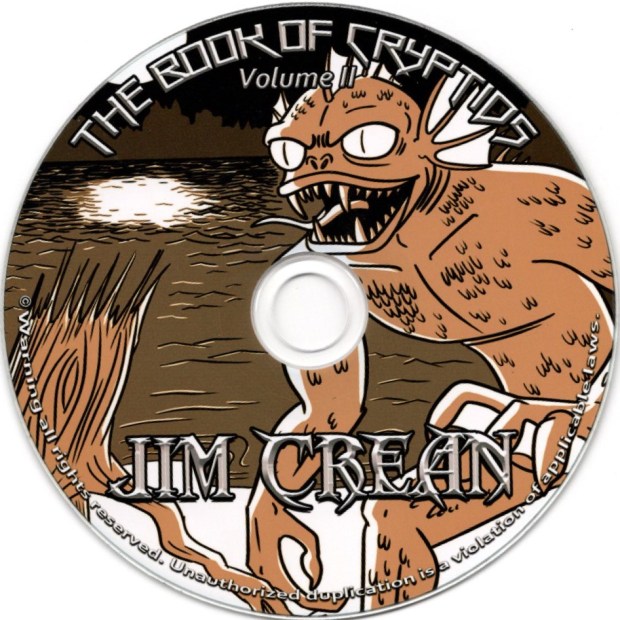
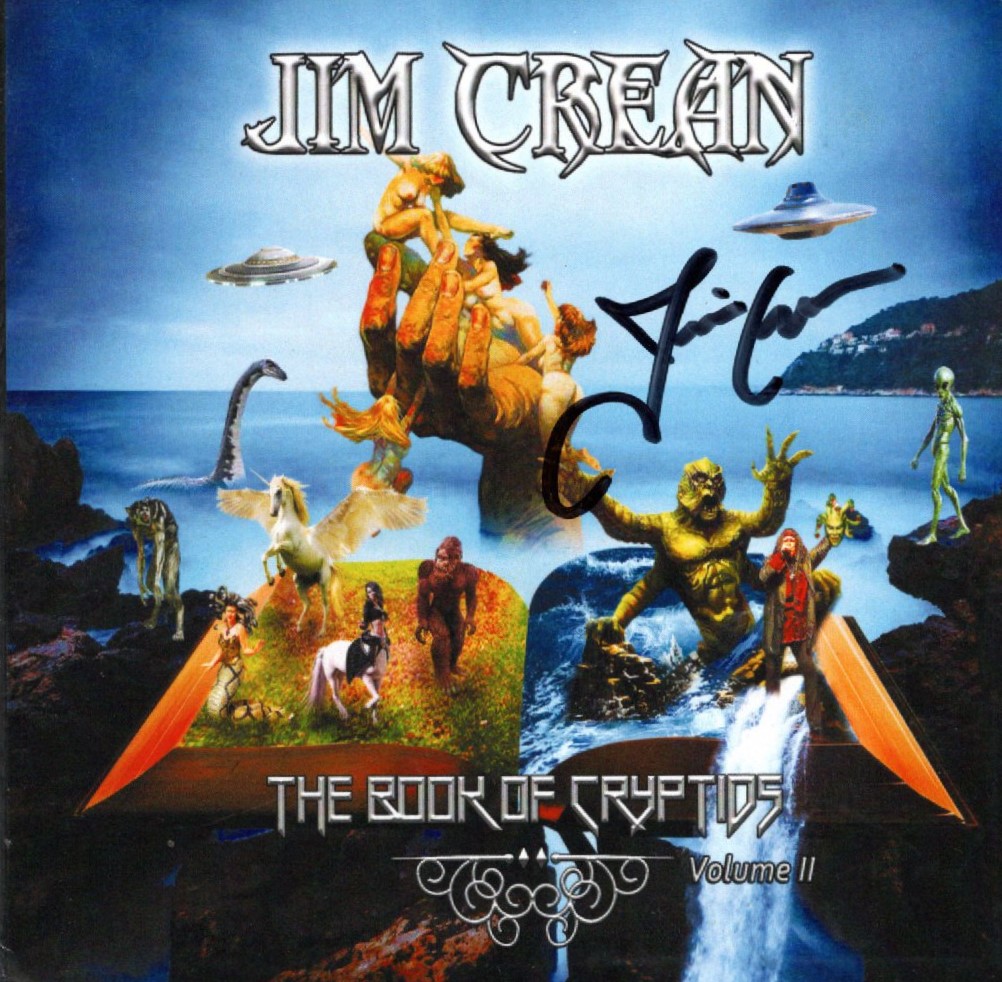
Consider this.  We’re 10 months into a worldwide pandemic and gigs have dried up.  Some artists, like Jim Crean, are recording and releasing music, and we should be supporting that.  He gives you good value for the money.  This copy came signed, with a custom Jim Crean guitar pick and signed photo.  Not to mention some quality covers of great songs off the beaten track.  The Book of Cryptids Volume II comes with cool artwork of various cryptozoological specimens including a kraken, Bigfoot, some sirens and an alien.  You can buy this package direct from the artist, so you know the money goes to the right people.  Check it out — guaranteed a few of these tracks will put a smile on your face.

4/5 stars

THREE-VIEW: KISS – Best of Solo Albums (Japanese CD)

 – Best of Solo Albums (Originally 1979, 2020 Universal Japan CD)

Third review for this Kiss compilation here, but why?  A couple reasons.  For one, it’s the first-ever official CD release of this album!  It took 41 years for them to finally put out a CD, and yet only in Japan.  More remarkably, there is one track here that I’ve never heard before in this particular version.

That song is the incredible Paul Stanley epic “Take Me Away (Together As One)”.  On Paul’s solo disc, it fades away at the end of side one at 5:35 in length.  Here, it goes to 5:48, no fade, right to the end of the track.  It’s an ending I’ve never heard before.  This song isn’t even on the more common European version of Best of Solo Albums, just the Japanese.  And apparently the CD has an unreleased version without the fade.

“Oh boy!” you exclaim.  “I have to buy this import just to get 13 seconds of music I never heard before?”

No.  You don’t have to buy it.  I did, because I wanted a copy of this album on CD.  When I discovered the longer version of the track, I was ecstatic to unexpectedly get something extra for my money.

There’s no need to review this album track by track again.  I’ve done it twice, and I’ve also reviewed all four solos albums twice each.  There’s really no need to run through all the songs again, although this tracklist is quite different.  Unlike the European version, these songs are not arranged in three-track blocks for each member.  Additionally, seven of the European tracks were substituted with others.  That’s more than half the album!

Gene Simmons:  Instead of “Mr. Make Believe” and “See You In Your Dreams”, Japan used “See You Tonite” and “Living In Sin”

Paul Stanley:  “Move On” was replaced by the unreleased version of “Take Me Away (Together As One)”.

Ace Frehley:  “Speedin’ Back to my Baby” was removed in favour of the instrumental “Fractured Mirror”

Peter Criss:  All three of the Cat’s songs – “You Matter To Me”, “Tossin’ and Turnin’”, and “Hooked on Rock and Roll” were replaced!  I guess Japan didn’t care for those as much as they did “Don’t You Let Me Down”, “Rock Me Baby” and “I Can’t Stop the Rain”.

For me, I prefer the running order that Europe used, with each member of the band getting three songs in a chunk.  However, there are plenty of songs that I prefer on the Japanese version, such as “See You Tonite”, “Take Me Away (Together As One), “I Can’t Stop the Rain” and “Don’t You Let Me Down”.

It’s interesting that the solo albums are by and large panned by the masses, but nobody can agree on the “Best Of“.  Maybe those albums weren’t so bad after all, at least when you distil them down to the essential tracks.  The Japanese CD will become my preferred listening experience for two main reasons:  it sounds better than the vinyl, and I like more of the songs.  It would sound even better if I had an MQA decoder, a new-ish hi-resolution CD format from Japan, which will unlock an even better sounding version of the album, if you have a few grand to spend on upgrading your system.  If not, enjoy the disc and stellar packaging, with not one but two different covers to display.

4/5 stars


REVIEW: Loudness – Buddha Rock 1997-1999 Music Clips DVD

Part Four of Four – Buddha Rock 1997-1999

LOUDNESS – Buddha Rock 1997-1999 Music Clips (1999 Rooms DVD, from the box set Buddha Rock 1997-1999)

The complete Buddha Rock 1997-1999 set comes with the three Loudness albums from that brief era, and also a bonus DVD with the accompanying music videos.  On the back some are listed as “full size” and others “short size” — let’s find out what that means and what Loudness videos looked like in the late 90s.

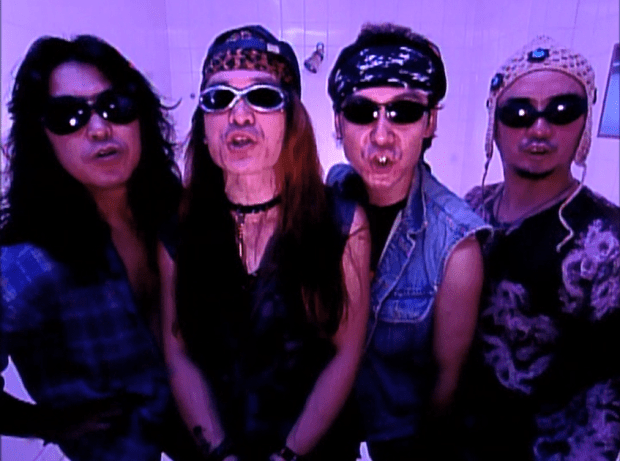
“Ghetto Machine” opens, with Loudness including a shaven-headed Akira Takasaki performing in a darkened room.  The added static interferance reminds us we are in the 90s when bands like Loudness didn’t have much budget and covered it up with tricks like this.  Masaki appears cold with his big fur hat, but it’s fun to see this version of Loudness on video.  “Evil Ecstasy” has cleaner production, but this is one of the “short size” videos — it’s only about 90 seconds of a pretty cool song.  Too bad because this video is much more watchable.  The funkier “San Francisco” is also one of these short versions, as is “Creatures”.  All of these videos appear to be taped at the same time.  The section of “Creatures” used focuses on the guitar solo.  That’s cool at least.  “Katmandu Fly” is the “full size”, but it’s also only a minute-long instrumental so to call it “full size” is kinda cheatin’.

Moving on from the Ghetto Machine album, all the rest of the videos are “full size”.  From Dragon, it’s two of the best tracks:  “Dogshit” and “Crazy Go Go”.  This time Loudness are playing in a huge, uber-clean garage.  As “Dogshit” demonstrates, Akira was now into his “fly sunglasses” phase.  It looks like the band are having fun here, which makes it an enjoyable watch.  Great song too.  “Crazy Go Go” is more straight ahead, with lights and struttin’ stage moves instead of goofing around.

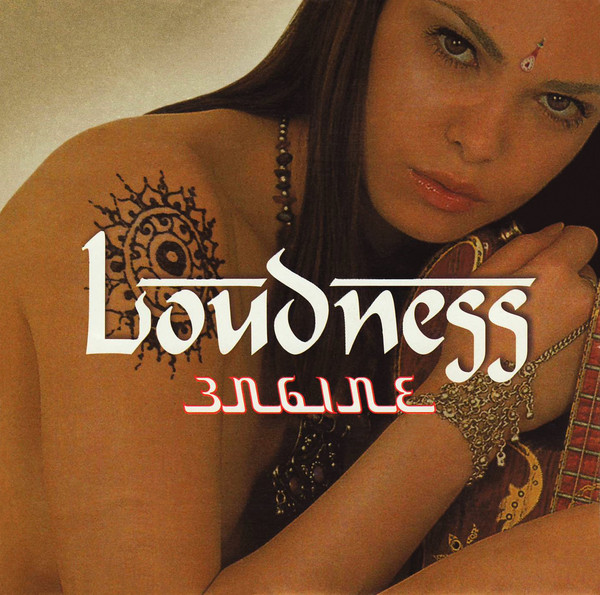
Apparently they only did one video for the final Masaki album, Engine.  “Black Biohazard” is that song; not a tune that impressed on prior listens.  (Also strange how “Black Biohazard” is the only song not in capital letters on the cover.)  This video is made from grainy outdoor concert festival footage.  From this we can ascertain that live, Masaki was a capable frontman with a cool rock star stage persona.

At 25 minutes, this DVD can not be considered more than a bonus for buying the Buddha Rock box set.  It is not the main draw.  The fundamental reason to get Buddha Rock is to acquire the three albums Ghetto Machine, Dragon and Engine in one place with ease.  As a bonus feature, the Music Clips disc does what it does.  “Dogshit” is the best video by a wide margin, and it remains unclear why “short size” videos were included, unless that’s all that was ever made for those particular songs?

The Buddha Rock box set also comes with photos, complete lyrics (in English) and liner notes (in Japanese).  It’s the obvious way to go to cover those years, an era which ended with the Engine album in 1999.  At Masaki’s urging, Akira Takasaki reunited the original Loudness lineup and released Spiritual Canoe with Minoru Niihara at the microphone.  That put an end to the Masaki Yamada era, which started with member turnover before solidifying on these three albums with Naoto Shibata and Hirotsugo Homma on bass and drums respectively.  Great musicians both who helped Loudness explore new and weird directions at the end of the 90s.

Music Clips DVD:  3/5 stars

Buddha Rock 1997-1999 box set:  3.5/5 stars  (the sum of the whole is greater than its parts)

REVIEW: Loudness – Engine (1999)

Part Three of Four – Buddha Rock 1997-1999


LOUDNESS – Engine (1999 Rooms, from the box set Buddha Rock 1997-1999)

The Masaki Yamada era of Loudness ended with the 1990s.  Masaki felt (correctly) that Loudness would be best off reuniting with its original lineup in the year 2000, and so Engine is the last album to feature Yamada, drummer Hirotsugo Homma and bassist Naoto Shibata.

As with the previous two Loudness albums (also included in Buddha Rock), Akira Takasaki’s penchant for experimentation is at the forefront.  “Soul Tone”, the opening instrumental, makes that much clear with its atypical exotic guitar drones in place of a song.  Then Akira cranks up the string harmonics on the bizarrely rocking “Bug Killer”, a 90s song if there ever was one.  He must have been listening to Rage Against the Machine.  The track descends into guitar mayhem by the end.  It’s incredible to think how Akira transitioned from an 80s guitar hero compared to Eddie and Yngwie, to a 90s master borrowing from Morello and the Middle East.

“Black Biohazard” chugs unremarkably just like much of the 90s did.  Leaning on a groove, “Twist of Chain” has certain 80s delicious metal elements hidden under the distortion.  It’s the kind of song that makes these lost albums really worth hunting down.  Similarly, “Bad Date/Nothing I Can Do” buries its hooks under vocal distortion.  Unfortunate that they didn’t just let it loose.  “Apocalypse” fails to build on this with a forgettable alterna-dirge.  “Ace in the Hole” has more going on, with a menacing far East vibe.  The guitars are like razor blades.


A sudden left turn on the partly acoustic “Sweet Dreams” almost sounds like a great lost Stone Temple Pilots song from some unknown era.  “Asylum” focuses on the bass, as a lot of the album does, choosing a heavy psychedelic feel.  A long guitar solo section is the track’s highlight.

Without warning, the oddly titled “Burning Eye Balls” goes to acoustic exotic Zeppelin territory.  This refreshing change is followed by “Junk His Head”, a pretty straightforward headbanger that does away with the distorted vocals.  Hirotsugo Homma lays down a killer beat on this one.   The penultimate instrumental track “2008 (Candra 月天)” doesn’t have any particular hooks to relay which is unfortunate since previous Loudness instrumentals have at least been interesting.  This leaves it to the closing track “Coming Home” to make final impressions, of which it makes few.  It has echoes of the old Loudness track “So Lonely” but without much of the feeling or structure.

These three final Masaki-era Loudness albums all have some cool tracks; enough at least to assemble a good single-disc compilation.  Owning all three is for fans only.  It is fun to sit and listen to a band evolve, and watch them try on all kinds of different hats.  If that’s your obsession too, pick up Engine and check out the complete Buddha Rock box set while you’re at it.

2.5/5 stars