MOVIE REVIEW: Jodorowsky’s Dune (2014)

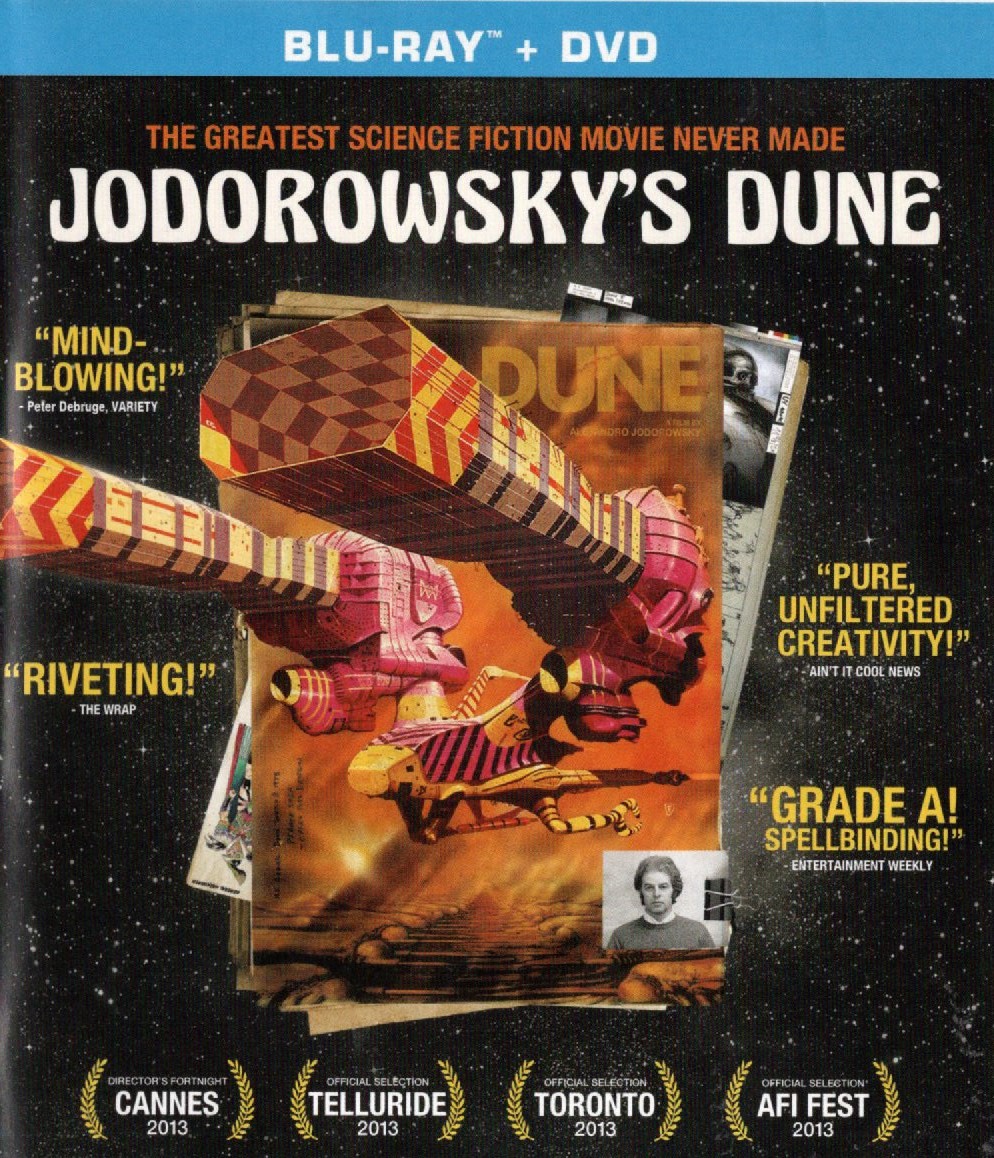
JODOROWSKY’S DUNE (2014 Sony Pictures)

Directed by Frank Pavich

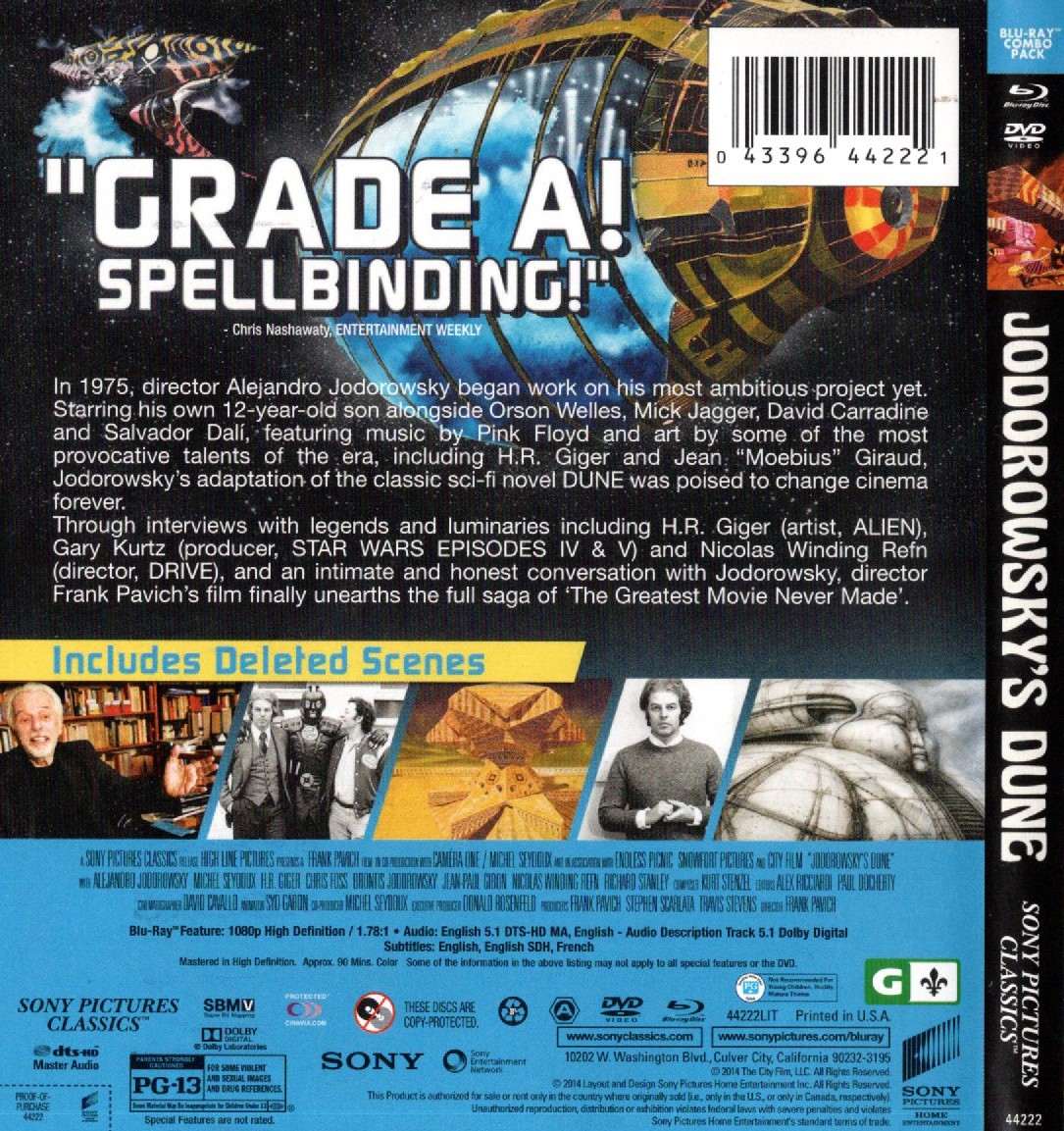
What do Alien, Star Wars, Raiders of the Lost Ark, Flash Gordon, Masters of the Universe, The Terminator, and Blade Runner all have in common? They all bear the imprint of Alejandro Jodorowsky’s attempt to make a film version of Frank Herbert’s Dune in the mid-70s. 2001: A Space Odyssey was the definitive space movie, and Star Wars was just a gleam in Lucas’ eye.  Dune, considered by many to be unfilmable, was perfect for Jodorowsky.  The Chillean-French director was considered a madman, albeit one with a sky-high imagination.  Of Dune, he sought to give the audience a druggy trip without the drugs.  But he also sought to make so much more – “a prophet”, he described it.  Something that would change the consciousness of the audience, and the future of movies.  Free the imagination, the mind, the soul.  He saw it as something much bigger than making a film, and so he assembled a team of “spiritual warriors” to join him in making his vision real.

His warriors included the Swiss genius H.R. Giger, known for his biomechanical style. Comic artists Chris Foss and Jean “Mœbius” Giraud were on board.  (Ian Gillan fans will recognize Foss’ style from the cover of his Clear Air Turbulence album.) Special effects genius Dan O’Bannon sold all his possessions and moved to France to work with the team. Pink Floyd and Magma were assigned to do music for specific planetary settings. Mick Jagger, Orson Welles, Salvador Dali, David Carradine and Udo Kier signed on, with Welles to play the grotesque Baron Harkonnen. Jodorowsky convinced him by offering to hire his favourite French chef for his catering.  As the key character of Paul Atreides, the messiah of Dune, who could he cast but his own son Brontis?  The boy went through gruelling physical and mental training for  the role.

The team assembled what is now known as the Dune book, an incredibly detailed shot-by-shot storyboard, several inches thick, and filled with images that found full motion and sound later on in the aforementioned films.  Giger’s designs are especially recognizable, including one that foreshadows his famous Alien Xenomorph.

Jodorowsky used Herbert’s Dune as the basis for his own, but began to drastically change the storyline.  Some of his original ideas were brilliant, but his ending is completely baffling.  In an “I am Spartacus!” moment, Paul dies, which does not happen in the book.  Suddenly his consciousness transfers to the people of planet Arrakis, who all proclaim to be Paul.  The planet comes back to life, with green jungles and blue oceans appearing.  Arrakis then breaks orbit, and shoots through space to share its new joined consciousness with the universe.  Heady stuff perhaps, but a sharp change in direction to Herbert’s more serious science fiction style.  Jodorowsky believed in his story, with an unbelievable passion.  He is visibly angered at what comes next.

When movie executives told him that the film had to come in at 90 minutes, it was the beginning of the end.  No, he said.  Eight hours, or 20 hours, he would make the movie he needed to make!  Studio executives don’t like hearing such things, and fearing budget overruns, cancelled the Jodorowsky version of Dune.  His team scattered, with many such as Giger, O’Bannon and Foss meeting soon again on Ridley Scott’s Alien.  The Dune project was handed to David Lynch, who Jodorowsky believed was the only other person who could have realized the movie the right way.  It filled him with feelings of dread that soon turned to glee when he saw just how bad Lynch’s Dune turned out.  Yet he knew, it had to be the movie executives who ruined it.

This is the story of Jodorowsky’s Dune, a documentary film by Frank Pavich.  You will be stunned by the images that this team created, and by Alejandro’s deep passion for making his art.  This is your own chance to see what might have been.  Blu-ray recommended.

4.5/5 stars

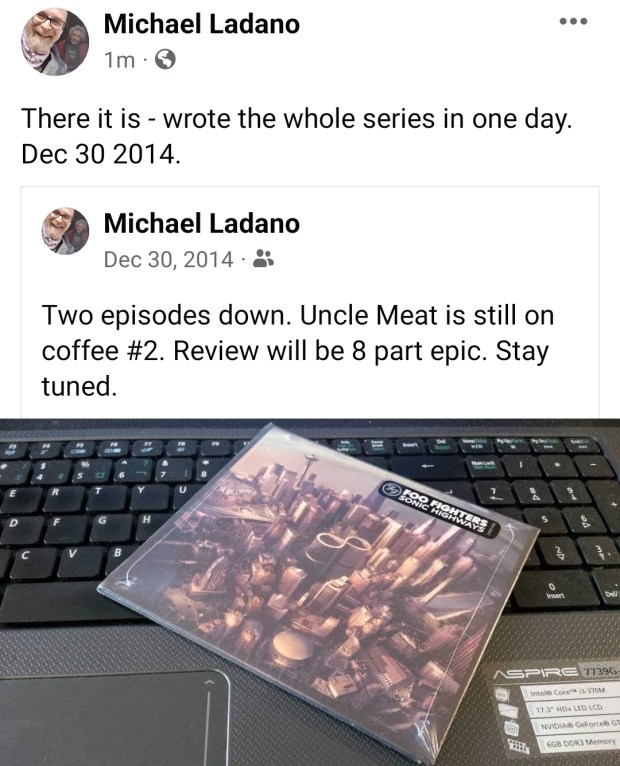
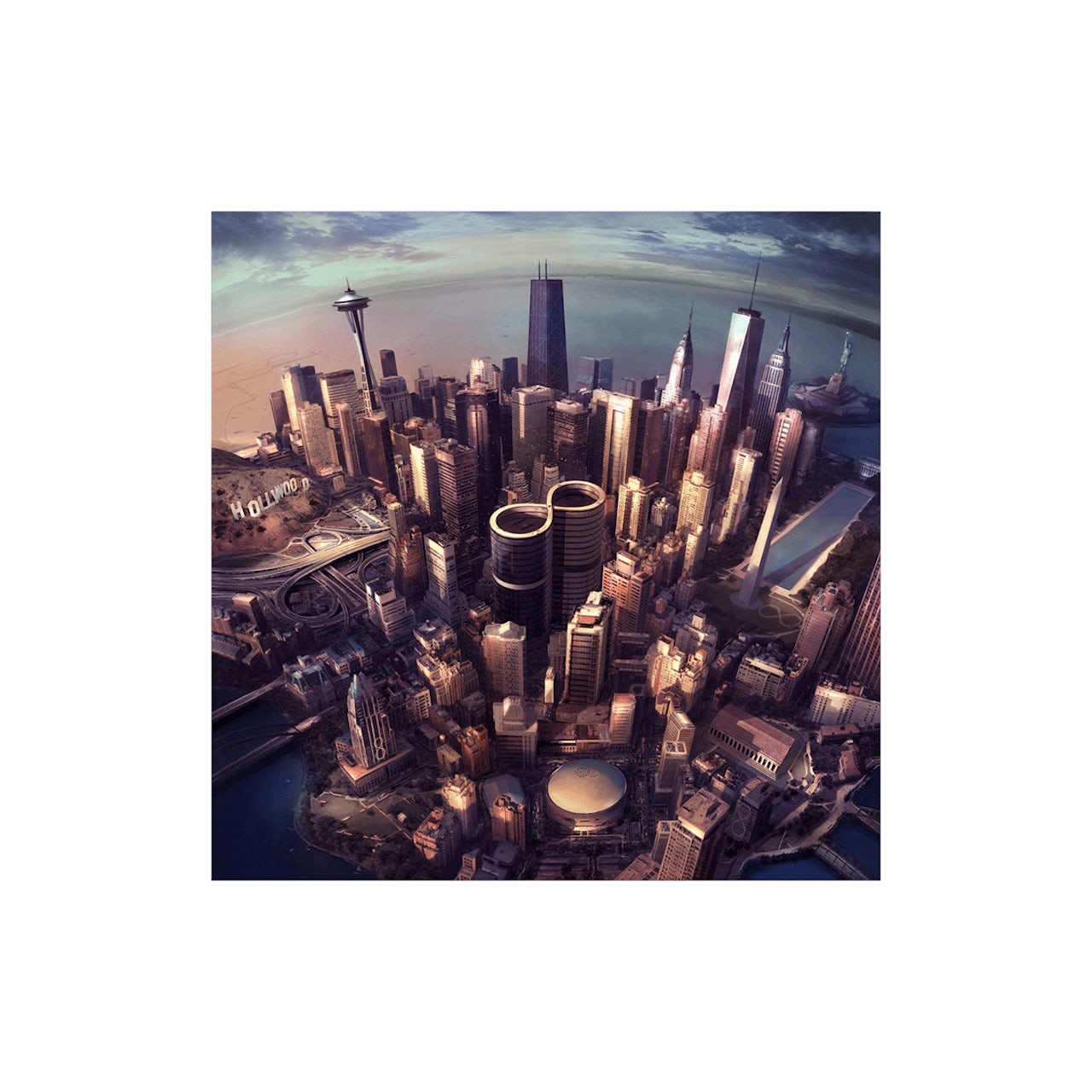
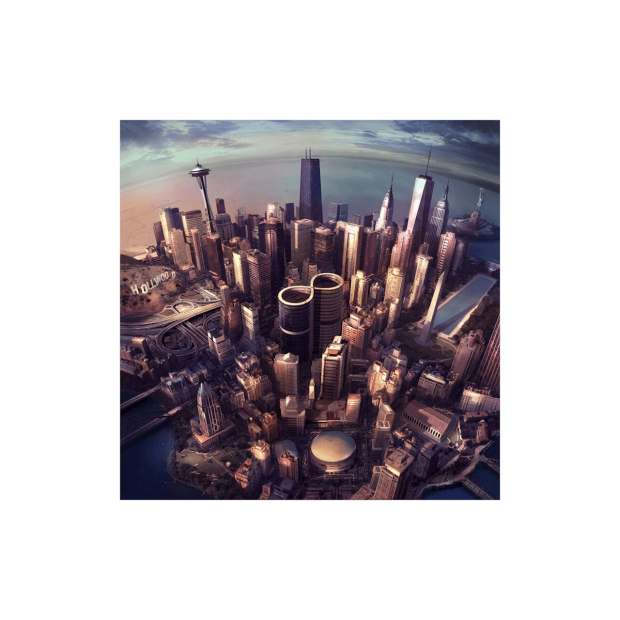
REVIEW: Foo Fighters – Sonic Highways – summary

The Meat Man was always pushing.  “Watch this, listen to this.”  To his credit, he introduced me to a lot of music this way.  He wasn’t so open to my suggestions, but Roky Erickson is a personal favourite now that I discovered through Meat, by watching the Foo Fighters’ Sonic Highways series.  Most of things he pushed me to watch or listen to never stuck.  A few, like the Moody Blues and Roky, did stick through multiple years.

Over the Christmas holidays of 2014, he pushed again and we spent an entire day watching the Sonic Highways series.  I took down his comments, and wrote eight reviews on the fly in a single day.  Eight hours of viewing, eight hours of writing.  I resented a lot of his pushing, but this time, the push was really worth it.

I wanted him to return in the new year to help me finish and get the series posted.  What he realized then, and I did not, was that the series was already finished.  It didn’t need any polishing.  Sure, it could have used some more connective tissue but the key words were all there.  I waited and waited for his return, but he was simply not interested in revisiting.  So the reviews sat there unpublished for nine years, until I finally decided to post them now.

I’ve never written a song by song review of an album before so this was something that only ever happened once.  I’m grateful that I did it and I hope you enjoy it.  I owe Meat a thanks for pushing me this time.  I haven’t played the album since.


Sonic Highways 1 – Chicago “Something From Nothing”


Sonic Highways 2 – Washington – “The Feast and the Famine”


Sonic Highways 3 – Nashville “Congregation”


Sonic Highways 4 – Austin – “What Did I Do?/God as my Witness”


Sonic Highways 5 – Los Angeles – “Outside”


Sonic Highways 6 – New Orleans – “In the Clear”


Sonic Highways – 7 Seattle – “Subterranean”


Sonic Highways 8 – New York – “I am a River”


4/5 stars (album)

5/5 stars (series)


REVIEW: Foo Fighters – Sonic Highways 8 – New York – “I am a River”

FOO FIGHTERS – Sonic Highways 8 – New York – “I am a River”

New York City.  The end of our journey, and the very last song on Sonic Highways.

We’ve had a hell of an education so far.  New York is the final stop, the “greatest city in America” according to Grohl.  If you make it there, you can make it anywhere, says LL Cool J.  Every style of music could be heard just by turning the dial.  Tin Pan Alley, Billy Holiday, Woodie Guthrie, Lou Reed, New York Dolls…the scene was eternal and endless.  The streets, and the recording studios, were tight and crammed with people.

CBGB’s, Max’s Kansas City, the folk singer-songwriter scenes all formed a potent mix of styles.  The Ramones and Dead Boys emerged, as did the hip hop scene.  Hip hop started in New York, in the Bronx, but soon spread to Brooklyn and Queens and Long Island.  Guys like the Beastie Boys made the jump from punk rock to hip hop, because the attitude was the same.  “Rap seemed like a party, and then Public Enemy came out,” says Grohl.  They introduced a militancy that hadn’t existed in rap before.  Chuck D was influenced by the things he saw around him in the aftermath of the Vietnam war.

Woodie Guthrie did something similar.  He “wrote what he saw” which is something Dave Grohl tried to do, for a change, on “I am a River”.  Dave noticed that things are all connected, the stories and the people.  “I am a River” also refers to an underground river that runs beneath Electric Lady studios.

Jimmy “Shoes” Iovine became one of the most powerful men in music, and he was right there recording John Lennon and Elton John in the late 70’s.  Electric Lady studios, built by Hendrix, was the place for artists like Kiss, Bowie and Zeppelin to record.  But Dave chose the Magic Shop, in Soho.  Owner Steve Rosenthal has a collection of vintage keyboards to use (and bands like Coldplay did use them).  So did Norah Jones, Arcade Fire, and David Bowie.  The Magic Shop isn’t in the nicest part of town, but it does have an incredible sounding drum room.  Butch Vig recorded Sonic Youth’s Dirty there.  The room even has a Neve board.

When MTV stopped playing rock and roll, the Magic Shop had to do something to survive.  Now, the main income in made in another room, restoring old classic recordings for permanent storage.  The future, says Steve Rosenthal, is “cloudy”.  He doesn’t know if recording studios are obsolete in the face of laptops and easy home recording.  The final interview presented is with President Obama, who thinks it’s more important to produce art than to consume it.  “It’s all about the garage band, the juke joint, the jazz club.  It’s about people rejecting what’s already there to create something entirely new.”  It’s the American dream he says.  Play some rock and roll, take a chance, and make it.  Obama refers to “musical rivers” that connect us, bringing us back full circle.

Finally, “I am a River” closes the Sonic Highways series and album.  It has a long, slow and meandering Floydian intro, and a pleasant easy melody.  Dave mentions the “water” beneath the “subway floor”.  It’s your typical Foo Fighters closer. It builds from quiet to more epic, with choruses of shimmering guitars.   It’s nothing new for Foo Fighters, but it is basically everything you expect for a closer.  A youth string section joins them to end the album in style.

As an album, we applaud the Foo Fighters for the concept and vision of what into making it.  Without the TV series, however, we would have no inclination about what makes each song different.  Sonic Highways would remain “just another Foo Fighters album,” all but interchangeable with the last two.  That’s unfortunate.

Episode 4.5/5 stars

Song 3.5/5 stars

Album 4/5 stars

Series 5/5 stars

REVIEW: Foo Fighters – Sonic Highways 7 – Seattle – “Subterranean”

A HUGE thank you to Uncle Meat, who found the original writeup for this episode of Sonic Highways in his email.  Now the series is posted complete.  Thank you!!


FOO FIGHTERS – Sonic Highways – 7 Seattle – “Subterranean”

Seattle. The home of Nirvana and the birthplace of the very first Foo Fighters demos. It’s a place Dave is intimately familiar with.

Low black clouds, rain and long isolated winters really informed a lot of the gloom Seattle was known for. Dave didn’t know anything about the city before he moved there. “It’s really cold,” a young Dave says on an old home movie. Today, it is a place for both bright and dark memories. It’s become more commercialized, too.

Robert Lang studio is a weird, stone building that a killer drum sound. No walls are parallel and all surfaces are uneven. Robert Lang would trade studio time to help pay excavating costs, and he’s still not done building it. It has rooms deep underground. He almost got buried alive a couple times. A neighbor’s wall collapsed. It was also the last place Nirvana recorded. Since Nirvana, Death Cab for Cutie, Dave Matthews Band, and the Presidents of the United States of America recorded there for the vibe. Foo Fighters returned a few times.

Seattle didn’t have much going for it in the 1970’s except for Heart. Even Heart weren’t really associated with Seattle, because they were always out touring. A new wave/punk scene started bubbling under, as it tends to. But rock bands didn’t tend to stop in Seattle; it was too far out of the way. The scene had to create itself, because that was the only way for live music to exist there. Sub-pop records put out records by the Melvins, Green River, Soundgarden, Mudhoney and more. There was no thought of commercial success.

The bands were sloppier than what was on MTV, and the scene was typified by small sweaty shows with loads of audience interaction. Nirvana were actually latecomers and didn’t even have a name with they started recording. They weren’t expected to go anywhere, but they quickly found their footing. Meanwhile, bassist Nate Mendel was playing with Sunny Day Real Estate, who later became 1/2 of the first Foo Fighters lineup. Dave Grohl recorded about 40 songs towards the end of Nirvana, by himself, which were not meant for public consumption. The songs range from hilarious crap to future Foo Fighters hits. They weren’t meant for Nirvana either, since Kurt already wrote songs so naturally.

Nirvana exploded. So did Pearl Jam, Alice in Chains, and Soundgarden. Seattle became the place to be, and grunge became the fashion. It became a commercial business. When Kurt died, Dave had to discover his love of music. As for Seattle, new people and new scenes soon took the place of the old, though the old still persists and inspires.

“Subterranean” was recorded in that studio deep underground. Hawkins played the drums, and Dave the cymbals, in order to get better separation. Dave makes a great “lead cymbalist”. Regardless of the setting, the band make recording look like a shitload of fun. Ben Gibbard from Death Cab joins them on guitar for this Beatles-vibed ballad. There’s also some Floyd in the grooves. It’s good to get a slow song at the stage of the album, and it fits the gloomy mood of Seattle. You might even read some Layne Stayley influences into the lyrics about being “deep in the dirt”.

Episode 4.5/5 stars

Song 4/5 stars


Sonic Highways 1 – Chicago “Something From Nothing”


Sonic Highways 2 – Washington – “The Feast and the Famine”


Sonic Highways 3 – Nashville “Congregation”


Sonic Highways 4 – Austin – “What Did I Do?/God as my Witness”


Sonic Highways 5 – Los Angeles – “Outside”


Sonic Highways 6 – New Orleans – “In the Clear”


Sonic Highways – 7 Seattle – “Subterranean”


Sonic Highways 8 – New York – “I am a River”


REVIEW: Foo Fighters – Sonic Highways 6 – New Orleans – “In the Clear”

FOO FIGHTERS – Sonic Highways 6 – New Orleans – “In the Clear”

New Orleans.  Streetcars, paddlewheels, big brass and the Foo Fighters.  Let’s rock!

The city is alive with music, all day and all night.  It starts with the jazz, Louis Armstrong all the way down to Harry Connick Jr.  Little Richard transformed it into rock and roll.  Dr. John was born there, and was mentored by Louis Armstrong.  Preservation Jazz Hall was the historic place to be, but could it stand up to the full blast of the Foo Fighters?  The streetfront venue picks up all sorts of crowd noise, from horses to passing musicians.  It’s all part of the charm.

In this installment, Dave speaks to Allen Toussaint, born and raised in New Orleans, in a segregated city.  It was actually illegal for black and white musicians to share a stage together.  “It just seemed jive to me,” says Dr. John, who played with who he wanted to play with regardless of the consequences.   Allen Toussaint wrote one of his biggest hits, “Summer Nights” which was directly inspired by the New Orleans sky at night.  Also from New Orleans came the “first family of funk”, the Meters.  The funk they produced was a new form for New Orleans – the Meters sound.

The Foo Fighters were invited to play the Jazz Festival, an historic event that couldn’t even happen until the end of segregation laws.  Until then, a jazz festival in New Orleans was simply not possible.  It’s an honor to be invited.  New Orleans was a cultural mecca, rich with distinct influences from around the Gulf of Mexico, and Africa as well.  Dave’s also invited to the Hall’s piano player’s house to eat and jam with his family.  It’s a really old fashioned traditional way of life.  Music is more important to the people of New Orleans than any of the other cities they visited.

When Katrina hit, seven of the eight members of the Preservation Hall band lost their homes.  It had a devastating effect but also brought people together.  The people learned to appreciate music just a little bit more.

It’s hard to get Grohl back into the Preservation Hall to work on the chunky, Motley riff of “In the Clear”.  The French quarter has its charms, and he’s busy hanging at the bar across the street with Nate Mendel!  Once they get their shit together, “In the Clear” emerges as a singalong hard rock track.  The lyrics reflect the perseverance  of the city, but the music doesn’t have any of its rich cultural sheen.  For a song inspired by New Orleans, and jamming with these local musicians, it would have been nice for them to shed a bit of the rock.  You can’t hear any influence of the old.

Episode 4/5 stars

Song 2/5 stars (Meat)

Song 3/5 stars (LeBrain)

REVIEW: Foo Fighters – Sonic Highways 5 – Los Angeles – “Outside”

FOO FIGHTERS – Sonic Highways 5 – Los Angeles – “Outside”

L.A.  Home of Pat Smear and the Germs.  Pat wouldn’t live anywhere else.  It’s Hotel California!

Lots of people went to L.A. to make it.  Very few did.  The first that did in the 1960’s had sunny, California sounds.  Then came the excess and rock and roll stylings of Motley Crue.  To a young Duff McKagan, straight off the bus from Seattle, it was “the wild west”.  The desert itself attracted the artist types and a hippy mentality.  Foo Fighters recorded The Color and the Shape there, but on a day off, Dave went into the desert to find an obscure studio called Rancho de la Luna.  It was home of the “desert scene” there.  Daniel Lanois helped set it up.  It’s the weirdest studio you’ve ever seen, loaded with weird, creepy and quaint nicknacks.  It’s tiny. How the fuck are the Foo Fighters going to fit in that room?

That little room necessitates all five players to be in close quarters.  No room for pianos this time, so it has to be a bare arrangement.  In the desert, there is nothing to distract the artists.  Except Joe Walsh, who shows up to lay down a quintessential solo, blowing the mind of Taylor Hawkins, who just gushes.  “That was so fuckin’ RAD!”

Meanwhile, guitarist Pat Smear is eager to hit his old home town.  Rodney Bingenheimer was the DJ you wanted to impress back then, if you wanted to make it big.  He was the first to play Pat on the radio.  He was known as the “mayor of Sunset Strip”, knowing everybody and owning the coolest clubs.  Iggy Pop played there.  Paul Stanley would check it out to see what bands were coming up.  Joan Jett and Lita Ford were regulars.  They formed the Runaways in L.A., and struggled with the sexist assholes and persevered.  Pat Smear ended up as one of their groupies.  Pat formed the Germs with the very disturbed Darby Crash, who influenced Nirvana’s frontman (and Smear’s future bandmate) Kurt Cobain.  They were also the band who convinced Duff McKagan to play music.

As a footnote, Darby Crash purposely overdosed on heroine, in order to be remembered as famous.  Even this backfired when John Lennon was killed the following day, meaning nobody would ever remember the death of Darby Crash.

Josh Homme of Queens of the Stone Age was born in Palm Springs, “on the edge of civilization”.  Mario Lalli, Scott Reeder, and other cornerstones of the stoner rock scene would take a generator out into the desert and play concerts by word of mouth.  They’d take mushrooms and put on a show.  According to Scott Reeder, “there was nowhere for you to play, where you could get that fucked up.”  The environment was “lawless and free”, and that was the beginning of Kyuss.  They were the antithesis of what was happening in metal at the time: the precision and speed. This was more about making a big, heavy detuned noise.  According to Grohl, Kyuss “blew my fucking mind.”  He bought extra copies of Blues for the Red Sun just to give to people.

“Outside” doesn’t sound as much like Foo Fighters as much; Grohl’s voice has a thinner sound this time.  The lyrics recall the openness of the desert.  “There’s a long straight road, out of the cold.”  The chorus is really memorable.  There are certain guitar licks that sound like they were lifted from past Foo Fighters songs such as “Everlong”.  It’s really special on that Joe Walsh solo, where he makes two notes sound more important than any others in the whole song.

Episode 5/5 stars because Kyuss

Song 4/5 stars

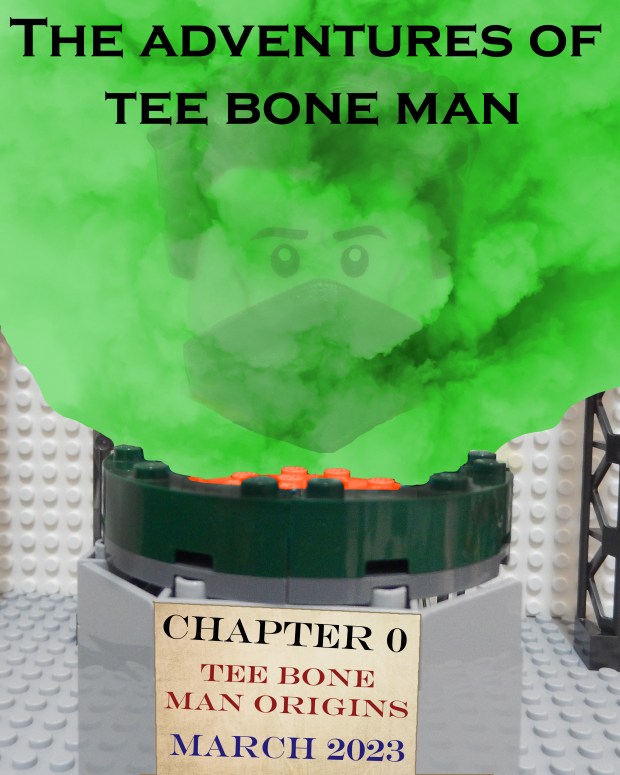
Tee Bone Man: Origins

THE ADVENTURES OF TEE BONE MAN CHAPTER ZERO:  ORIGINS

The Northern tundra of Canada is host to a certain romantic quality.  While Thunder Bay Ontario is considered a crossroads of the nation, it is not what you would call a popular tourist destination.  Cold 11 months of the year with a short summer known as July, Thunder Bay is for the rugged.  The weathered.  The tough.  Composed of big rocks, large rocks, giant rocks, and trees, the landscape is beautiful and dangerous.  The town of Thunder Bay itself is dark and bleak most of the year.  The Canadian tundra is harsh.

Yet over a decade ago in this location, an eccentric businessman and Scotch enthusiast, William W. Roderick Stewart III, broke ground and built an experimental new distillery, specializing in single malt whisky.  Top secret new formula.  If only it were Scotland, they could call it true Scotch.  The dark Thunder Bay soil, reasoned Stewart, led to exceptional wheat and rye.  The pure, clean spring waters of the North allowed him to create an especially potent single malt whisky.  In theory.  There were many sceptics in Thunder Bay, but just as many who were excited about the prospect of local whisky.  Stewart III had a spotty track record of wild theories, insane experiments, and the odd success amongst a sea of failures.  As he aged, he became more and more eccentric and experimental.  Now at the age of 90, rumours were that he was considering finally retiring.  Then he suddenly announced the opening of his long-awaited Thunder Bay distillery to the public, just as his first batch was ready.  Nobody could predict his moves.

Another announcement came just as winter was setting in Thunder Bay:  a wild contest, to win a guided tour of the grand opening of the distillery!  Stewart Distilleries dropped four invitations randomly over town.  Four lucky winners, and four guests, would get to taste the first whisky and see how it’s made.

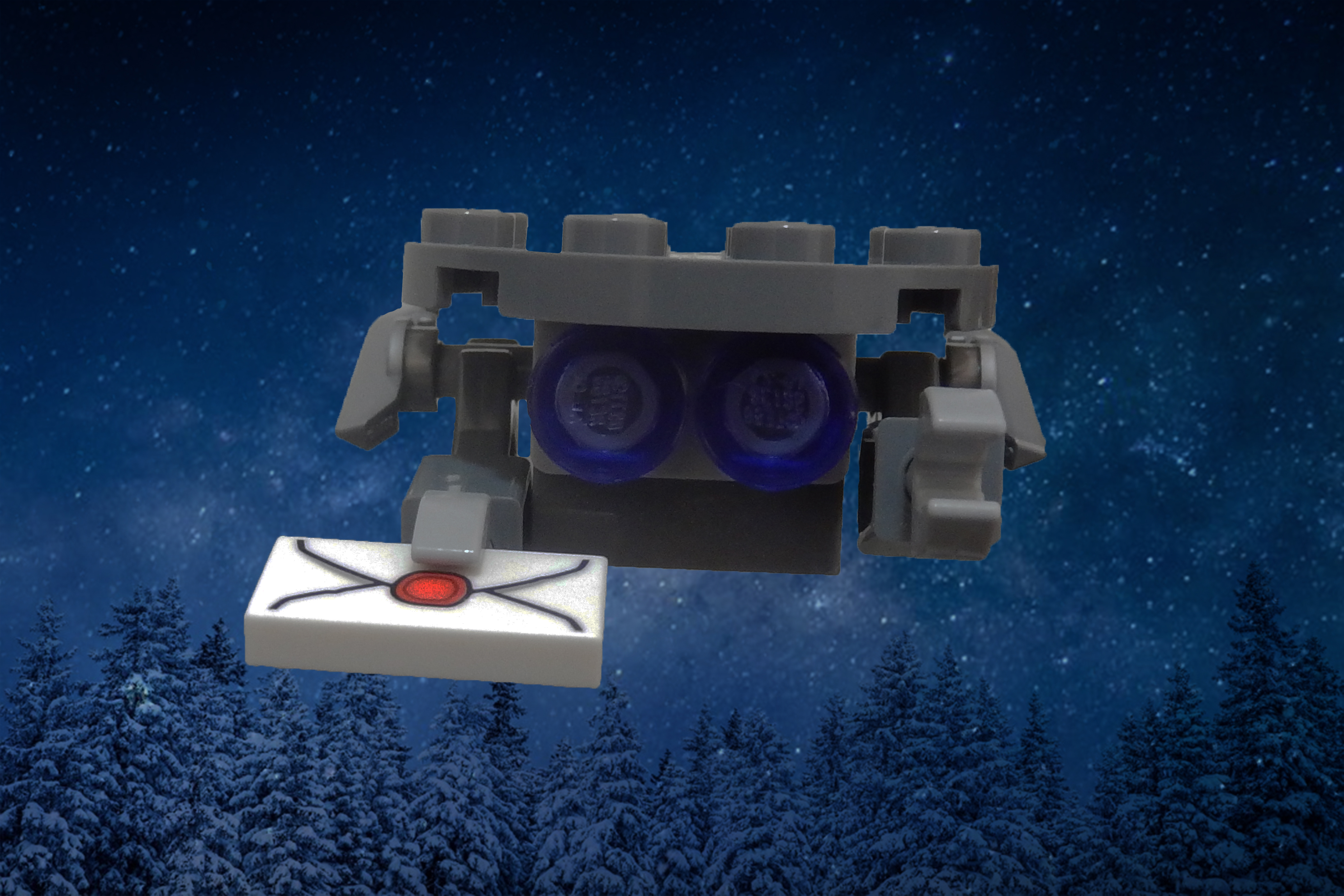
In the middle of the night, the drones bearing one secret ticket each flew in separate directions over the darkened town, and dropped their treasures.
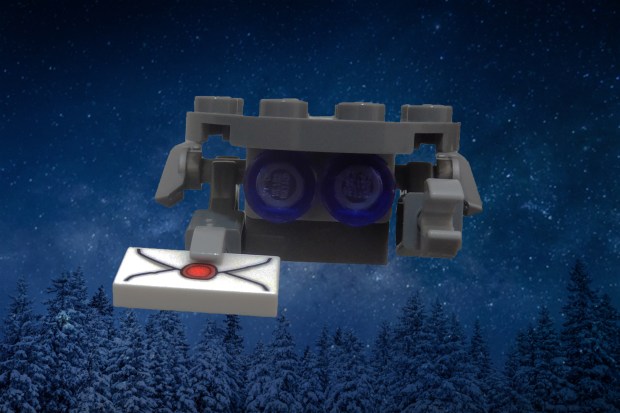

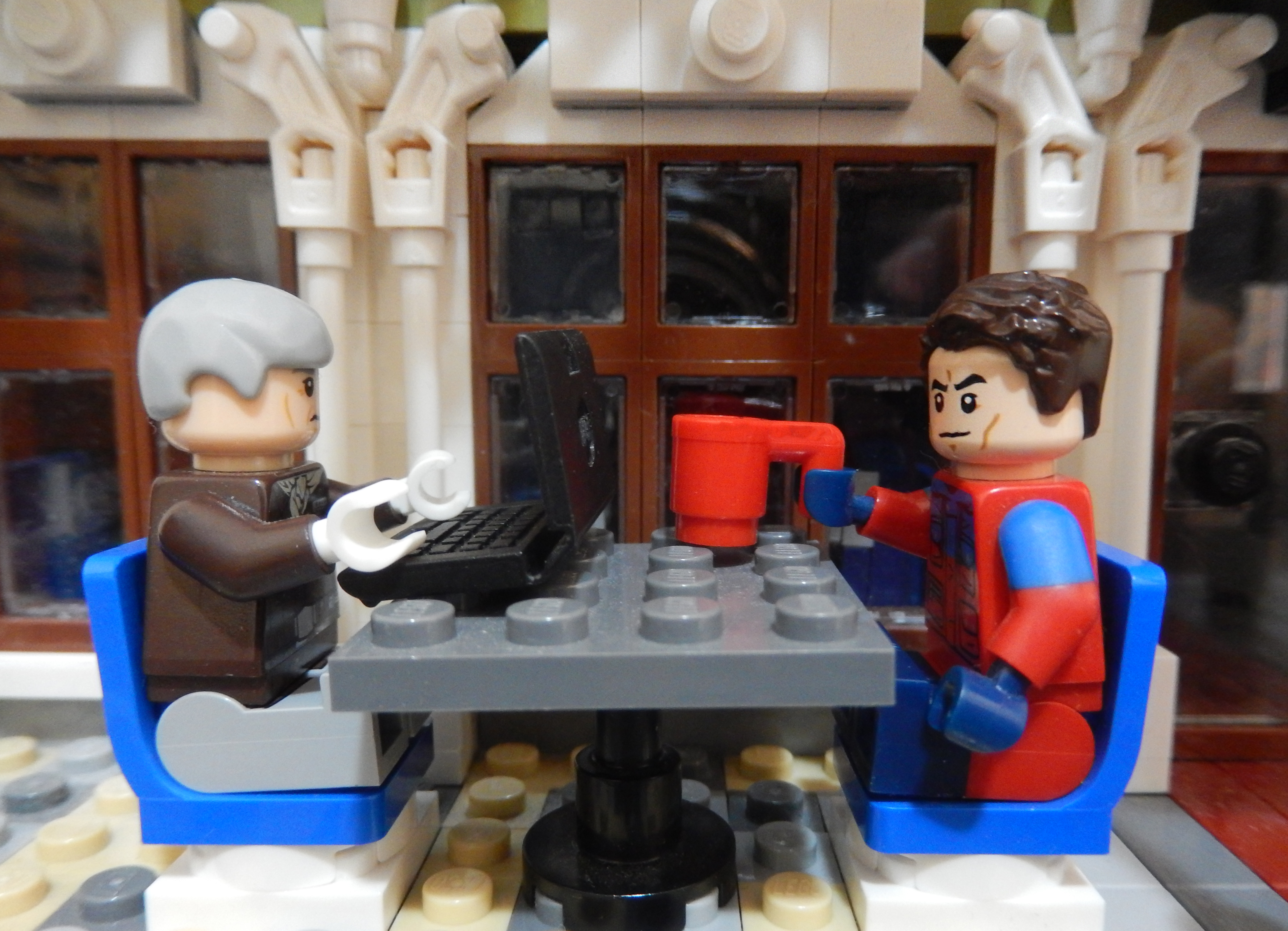
“You see this, buddy?” asked Deke to his best friend, Tee Bone.  Together they sat in a quiet cafe, enjoying the cold morning.  “That distillery is opening soon, and they dropped four tickets by drone over town for a special tour.  Think we should try looking?”

Tee Bone glanced at his friends’ newspaper and saw the story he was referring too.  His eyebrows raised in sudden interest.

“Really?  That’s pretty cool, actually,” said Tee Bone in surprise.  “I do love Scotch!…what are the odds of winning though?”

Deke scanned the newspaper for the info.  “Just four tickets for the whole town.  Each ticket holder gets to bring one guest.”‘

“Perfect!” exclaimed Tee Bone.  “Let’s go for a ride.”
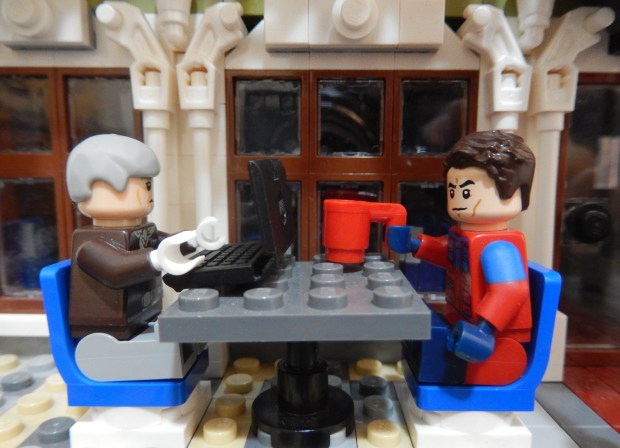
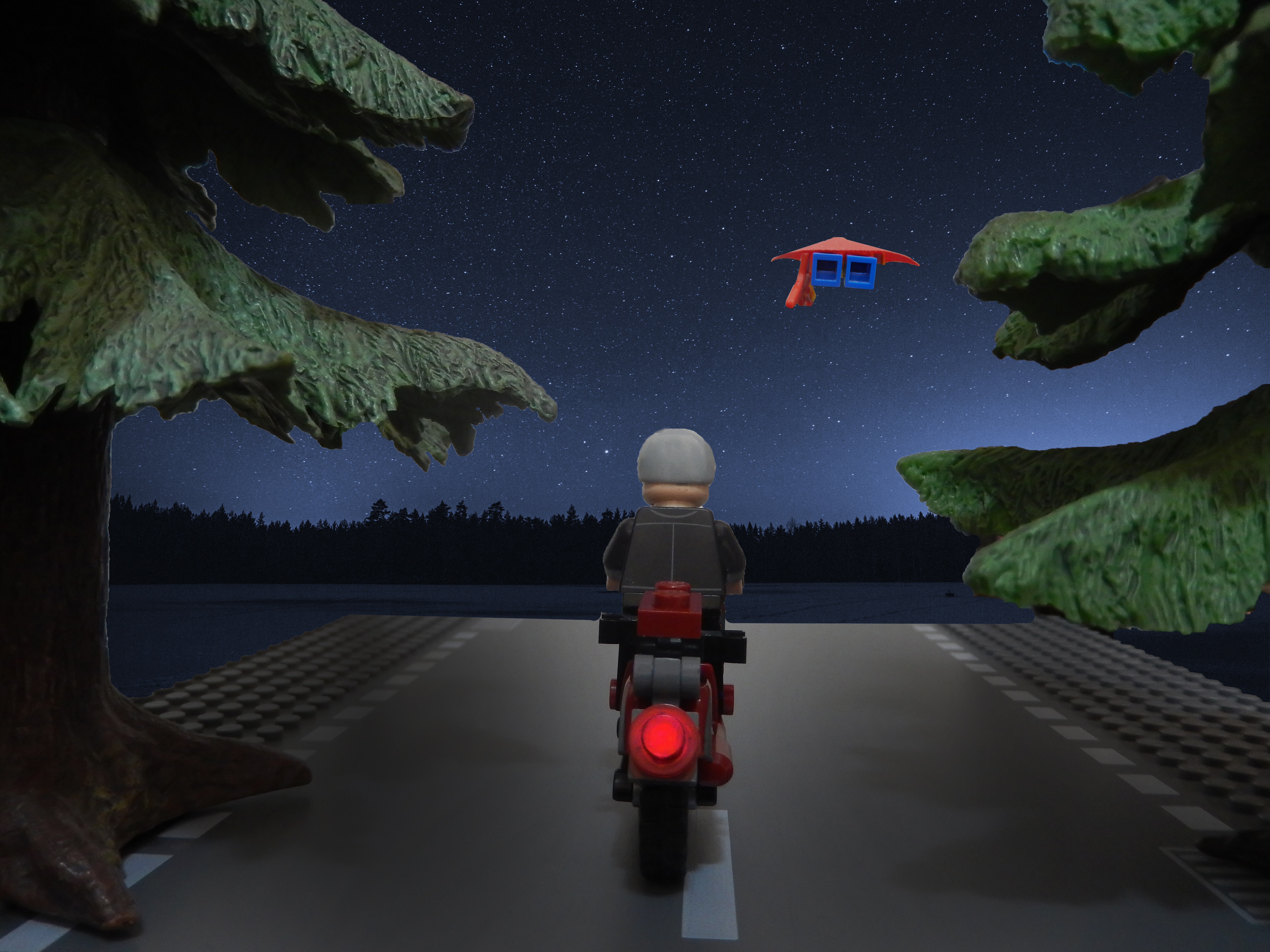
The two friends finished their coffees and stepped outside the cafe, where Deke’s motorcycle awaited.  They donned their helmets and mounted the bike, Deke driving and Tee Bone on the back.  Strapped to Tee Bone’s body was his favourite red electric guitar, safely in a leather travel case, which he was rarely if ever separated from.  He had it with him today because he and Deke had planned to jam in Deke’s garage later on, but now they had other plans!  With a mighty roar, the bike zoomed down the street towards the forest by the old current river.

The day was starting to warm, but the two men had no luck searching for the special tickets.  They combed the forest, splitting up to cover more ground.  They agreed to meet back at the start by noon, and sure enough as the midday approached, Tee Bone and Deke met up where they started.

“Nothing eh?” asked Tee Bone.

“Nothing,” answered Deke.  “The newspaper said the tickets were bright red, so we know what we’re looking for at least.”

“Let’s not give up!” said Tee Bone.  “I really wanna win this.”

Though they were not discouraged, they certainly didn’t know where to try next.  Thunder Bay wasn’t terribly small.

“I got an idea,” said Deke.


The two men exited the hobby store with a brand new drone in hand.

“We’ll be able to see a red ticket sitting in white snow much more easily with this,” said Deke with confidence.  Tee Bone nodded in agreement.

“Did it have to be on my credit card though?” asked Tee.

“Well, you’re the real Scotch maniac, so my answer would be yes,” said Deke smugly.

Tee Bone sighed.  “Alright, well let’s get it in the air and see what we can see.”

Within the hour, Deke had surveilled the nearby neighborhood.  He began to guide the drone back to him so they could move on and try another area.  It was then that they spotted a flash of red caught by the drone’s camera eye.

“Wait!  Wait!  Go back!” shouted Tee Bone in excitement.  “I saw something on that rooftop!”

“You’re right man!” said Deke as he steered the drone to a rooftop they were standing directly under.  “It was up there the whole time!  It’s the secret ticket!”  At that exact moment, a giant black squirrel could be seen picking up the ticket in his mouth and running off with it.

“Oh, shit.” said Tee Bone.

The squirrel with the ticket jumped off the roof and darted over to a nearby tree.  The two men ran to the base of the tree.  The squirrel was several branches up, ticket firmly and brightly in his mouth.

“Can you climb?” asked Deke.

“At my age?” laughed Tee Bone.  He looked around for anything to use as a projectile.  There was nothing.

“I hate to do this, but I really want that ticket.  Can you go grab my distortion pedal from your bike’s side compartment?” asked Tee Bone.

“What for?” questioned Deke.  “You’re not going to try to throw it are you?”

“I’m going to try to throw it.”

“Jesus,” answered Deke as he ran back to the bike to get the distortion pedal.

Now Tee Bone had it in his right hand, and he was wound up ready to throw.  He aimed with a steely eye.  He could see the squirrel’s black glassy eye staring back at him, ticket still in mouth.

“Little rat bastard,” said Tee Bone as he launched the pedal at the squirrel.

He missed wildly, going way too high.  However, as the pedal hit an upper branch, it startled the animal which dropped the ticket and fled.  The pedal fell to the ground, broken but fulfilling its purpose.

“Yes!!!” said Tee Bone.  “A worthwhile exchange!  We’re going to the distillery buddy!”  Tee Bone hugged his best friend who was surprised at the sacrifice of the pedal for the ticket.  He scooped up the pedal’s remains and tossed it in his bike’s compartment.

“Well done, pal.  I didn’t think it would work.  Now let’s check out the details on the ticket.  The newspaper was light on details,” said Deke as he read the ticket aloud.

“To the finder of this ticket:  You are cordially invited by William W. Roderick Stewart III to the grand opening of Stewart Whisky Distilleries…” Deke stopped reading the ticket a moment.  “Dude, the tour is today!  We found this ticket just in time!  It’s two hours from now!”  He continued reading.  “It’s on the outskirts of town.  Let’s get on the bike and get there early.”
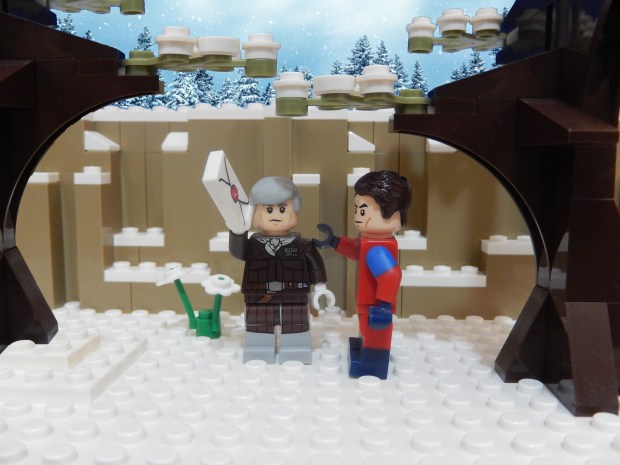

Tee Bone and Deke stood outside the distillery gates, guitar still strapped to Tee’s back.  It was starting to darken, and the sky threatened rain.  The two were not looking at the sky however, for before them stood what could only be called a castle.  A palace build of stone, with turrets and parapets.  It was huge, imposing, and strangely beautiful.  The two men just admired the building silently.

A few strangers began to arrive in pairs.  An elderly couple, a mother and daughter, and finally two men in sunglasses and crisp business suits arrived at the gates.

“Hey Deke,” said Tee Bone.  “Imagine owning this place.  Imagine the parties we could throw here.”

“No kidding eh?  That Stewart guy must be loaded.”

“Oh he is!” answered Tee Bone.  “He’s one of the top ten wealthiest men in the world.  But this must have cost him plenty.”

“I’ll say,” said Deke.

The gate creaked open with a loud squeal.  An old man and two attendants stood before them at the gate.  It was none other than William W. Roderick Stewart III himself!  A man with his money would be expected to be wearing the fanciest of designer suits, but no, he stood before them in little more than sneakers, jeans and a Led Zeppelin T-shirt, topped by a leather jacket.

“Welcome!  Welcome to my home, you lucky lucky winners!  Welcome to Stewart Whisky Distilleries, and my personal residence!”

“Wait a minute,” asked Deke.  “You live here?”

The old man laughed and smiled.  “Of course my boy!  It’s fully furnished with guest rooms, kitchens, laundry, all the accoutrements!”  He leaned in close and nudged Deke in the side.  “I have to live here; do you know what this place cost?”  Deke chuckled in response.

“Please, come in!” he welcomed all the guests.  He spied Tee Bone’s guitar on his back and smiled.  “I like this one!” he said pointing to Tee.  The elderly couple went in first, followed by the mother and daughter, and Tee Bone and Deke.  The old man held out his hand and stopped the two men in suits.

“Stop,” he said firmly.  He got directly into the suits’ faces, and sneered.  “These two are not welcome here.  Get the hell out!”

“What’s the problem, old man?” snickered the first suit.  “Getting too senile to remember that we had a ticket and are entitled to this tour?”

“You can stop with your condescension for one thing, son,” said the old man in response.  “I know who you are.  You were sent here by MegaScotch Corp. weren’t you?  Trying to steal my secrets again aren’t you?  I’m not so old that I don’t recognize you.”  Stewart gestured to his two attendants.  “Eject these men, please and thank you.”  The two attendants gruffly and firmly escorted the suits out the front gate and locked it behind them.

“I apologize,” said Stewart to the guests.  “You must understand, competition is fierce.  What I am doing here is completely new, never attempted before!  You’ll see.  Please, join me.  Through these doors, please.”

A massive pair of stainless steel doors stood before them.  Stewart opened them with a wave of a hand, and they slid open with hardly a sound.  “Come in!” he gestured.

Tee Bone and Deke gasped at the sight before them, a huge distillery, with massive shining vats full of whisky goodness.  Pipes and tanks were closely monitored by numerous technicians in lab coats.  They scurried around like mice, attending their various tasks, keeping watch over the many dials, consoles, gauges and monitors.
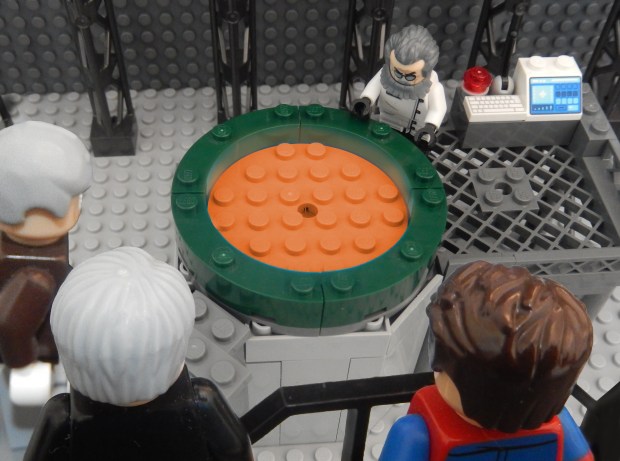
 

“This is where the magic happens!” said Stewart.  “Technology is the future and our business must adapt!  Here within these walls I have created innovative, radical, unprecedented formulas that will eventually take Scotch to new levels.  Would you like a wee dram?”  All the guests nodded eagerly.  Stewart made a gesture, and soon an attendant was at his side with a cart, bearing seven glasses of whisky.

“This is my newest formula, going to market next week,” announced Stewart with pride.  He and the six guests each hoisted a glass.  “Slainte!” he cheered as they downed their shots.

“Wow!” gasped Tee Bone with surprise and a little bit of burning pain in his throat.  “That’s some whisky!  I can see why those guys were trying to get in here,” said Tee Bone.  A nice buzz was setting in already.  “This stuff is great.  I’ll be buying a case next week for sure!”

“Perhaps you won’t need to buy it,” said the old man slyly, “but we’ll see.”  Tee Bone gave the man a questioning stare.

“Excuse me, Mr. Stewart?” asked the mother in attendance.  “But what’s that?”  She pointed to another pair of stainless steel doors with the universal symbol for radiation painted in bright yellow upon them.

“What’s that?” answered the eccentric old man.  “That is the future!”

“Is this dangerous?” asked the woman with more concern.  “Are we being exposed to radiation right now?”

The old man hemmed and hawed but took his time answering.  He shrugged.  “No.  Maybe a little.”

“A little?  How much is a little?” she asked, becoming more and more serious.

“Those walls are lined with three feet of lead and seven more feet of reinforced concrete.  Don’t worry about radiation.  Look at me!  I’m perfectly fine!  And I live here!”  A bead of sweat rolled down his nose.

The woman put down her glass.  “You know what, this has been fun, lotsa luck, we’re gone.  Come on, we’re leaving!” she said to her daughter.  An attendant escorted them out.

“I think we’re done too,” said the elderly couple.  “Thanks for the drink.”  Another attendant showed them to the door.

The old billionaire harrumphed.  “How about you two?” he asked Tee Bone and Deke.  “You scared too?”

They looked back at each other and shrugged.

“Nah, we’re good, let’s finish the tour,” said Tee Bone.

“Fearless!” said the old man in approval.  “Just the kind of man I’m looking for.”

“Ah. OK,” answered Tee Bone with a slightly worried tone.  “What’s going on here?  You’ve been acting weird towards me ever since I walked through those gates.  You wanna explain?”

The old man paused a moment.  “Come with me to my office.  Let’s jam,” he invited.

“Jam?” asked Deke.  “What do you mean jam?”

“Well, this Led Zeppelin shirt isn’t just for show you know.  I used to be young like you.  I was there at Olympic Studios, watching them record just after they changed their name from the New Yardbirds.”  The old man paused, considering his next words very carefully.  “In fact, it’s quite possible you were there too.”

“I was just an infant,” answered Tee Bone, “I appreciate that we both like good rock music.  However I’d prefer some answers over a jam session.”

The old man motioned them to follow him.  “You brought a guitar, you must want to jam.  Come upstairs.  You need to see what I have in my office.  You’re going to love it.  Trust me!  Come with me, please.  All your questions will be answered soon.”

The two friends shrugged and followed the old man up a staircase to a large second floor office.

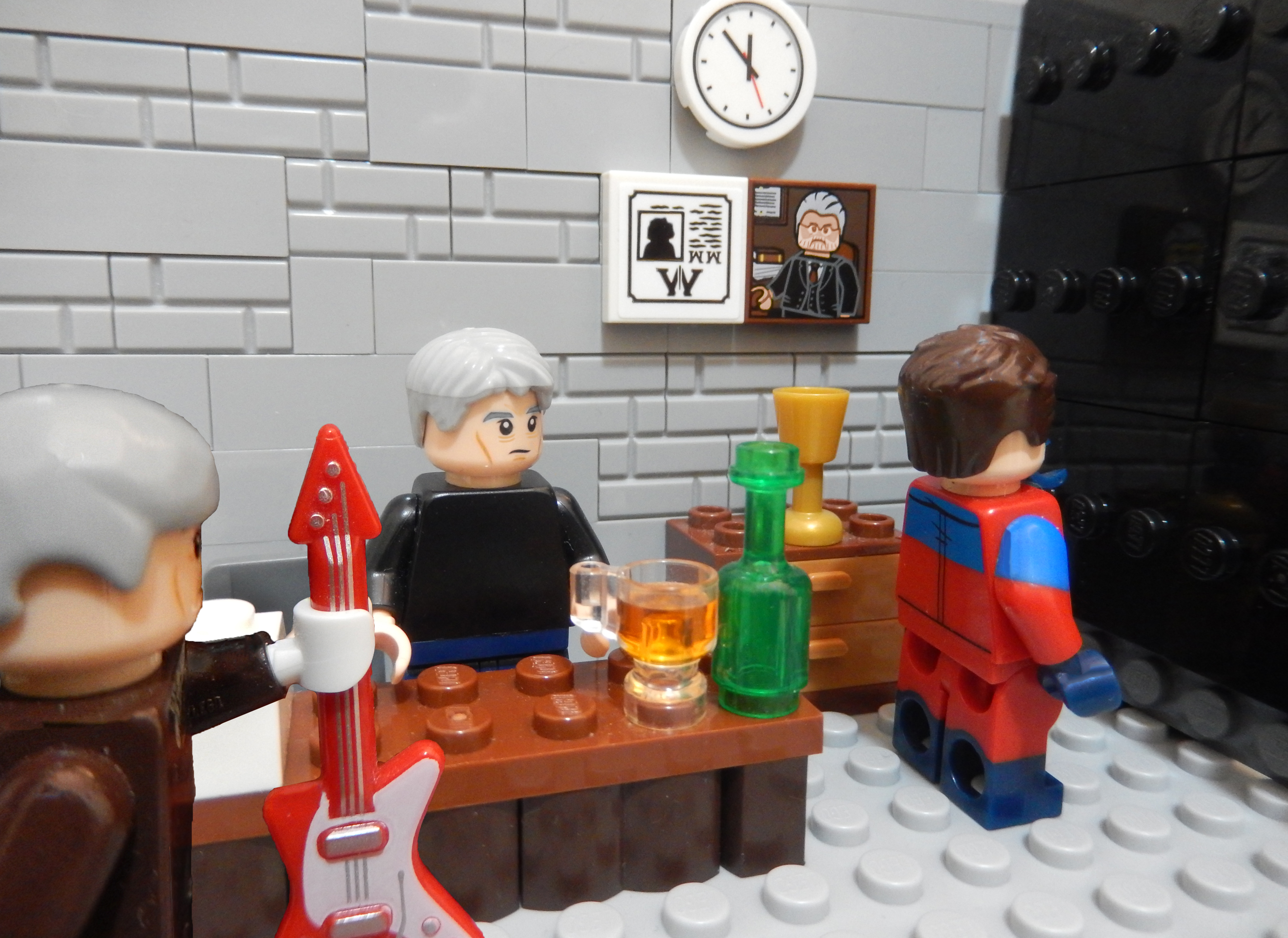
“I refuse to take elevators,” said the old man.  “Keeps me in shape!  Please, come in!”  He opened a door to a lavish office.  The glass walls offered a perfect view of the distillery below.  On the opposite wall was something else entirely.  The two friends gasped!  They had never seen anything like what stood before them now.  Adorning the entire wall was an array of amplifiers.  Tee Bone grinned sheepishly, took the guitar off his back and unzipped the case.

“Wow!” he said unable to find better words.  “I had no idea you were this serious about music.”  He admired the wall of amps.  “All Marshalls.  Highly modified though.  I…I can’t quite identify all the electronics here.  What have you done to the amps?”
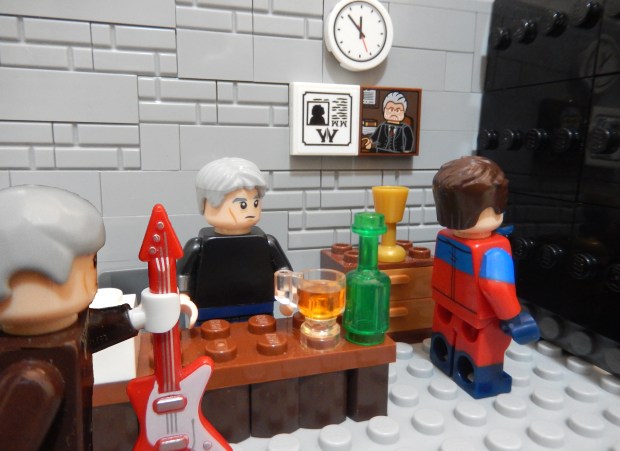
“Be my guest, plug in, give it a try!”  Stewart handed him a cord, which Tee Bone plugged in with a loud buzz.  He was taken aback at the sheer power he now held in his hands.  He hit a power chord and was nearly knocked flat off his feet.  He loosened up with a Van Halen riff:  “Runnin’ With the Devil”.  He smiled as he enjoyed the rich tone blasting him back in his face.  He attempted some two handed tapping.  Then some clean picking.  Everything he attempted sounded great!

“I don’t know what you’ve done here, but the tone is so warm, so clean, and so powerful!” he yelled over the sound of his guitar.

“That’s the nuclear power you’re hearing!” answered Stewart.

Tee Bone’s mouth dropped open.  “Nuclear?” he asked.  “This sucker’s powered by nuclear?”

“Yes, of course my boy!  They’re 100% nuclear.  What do you think I’m brewing here?  The future!  And the future is nuclear!  Soon I’ll be presenting to the world the first whisky brewed by nuclear distillation!  The excess power from the reactor powers my whole amplifier rig!  It will change the way we record rock music.  In 10 years there won’t be a guitarist in the world without a miniature nuclear-powered amp in his gear.  Wait until you hear the sustain you can get with it!”

Tee Bone put down his guitar.  “OK, this is getting really weird.  I’m not sure how comfortable I am anymore.”  Deke nodded in agreement.  “The fact that you built a nuclear reactor in your home to brew whisky and power your amplifiers is beyond eccentric and borders on psychotic.”

The old man sighed.  There was a long silence as he looked down at his desk.  “It’s time I come clean,” said the old man, dropping his excitable persona and taking on a dark, serious tone.  “I’m sorry I have misled you, Tee Bone,” he said grimly.

“I never told you my name,” said Tee Bone with concern.

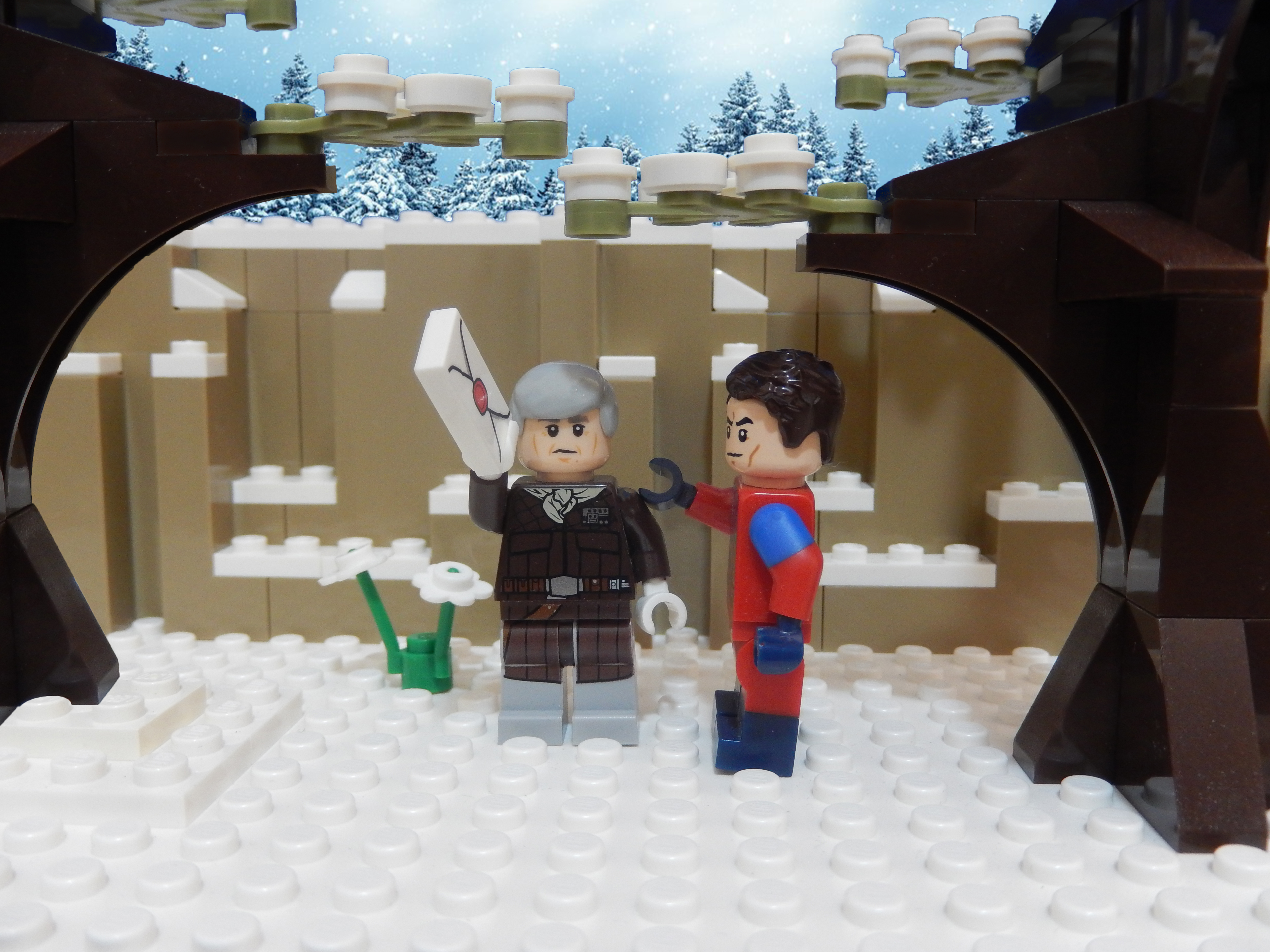
“I know you haven’t.  Neither has Deke.  I’ve been watching you two a long time.”  He took a deep breath, and sighed. “I planted that ticket on the roof,” he confessed.  “The other three tickets were found legitimately by the other winners.  I tracked you down, and planted your ticket where you could find it.  Boys, I want you to take over this place.”

“What?” Deke and Tee Bone simultaneously shouted.  “Us?  Why us?  We don’t know anything about distilling single malt whisky.  We just know about drinking it,” said Tee Bone.

The old man grinned a huge grin.  “This isn’t about the whisky.  I can teach you that.  What I can’t teach you is heart.  And you boys have heart.  I’ve watched you two for years.  I’ve…even seen a glimpse of your futures.  You are the right men for the job.  I know it in my soul.  Tee Bone and Deke, I want you to take my place.”

The two sat in the office, stunned.  “I don’t know what to say,” answered Tee Bone.

“Just say yes!” smiled the old man.

As Deke was about to open his mouth with another question, an alarm sounded.  Red lights began to flash all around the distillery.  Attendants and technicians ran away from their stations.

“Oh no,” said the old man.  “MegaScotch Corp. are back.”

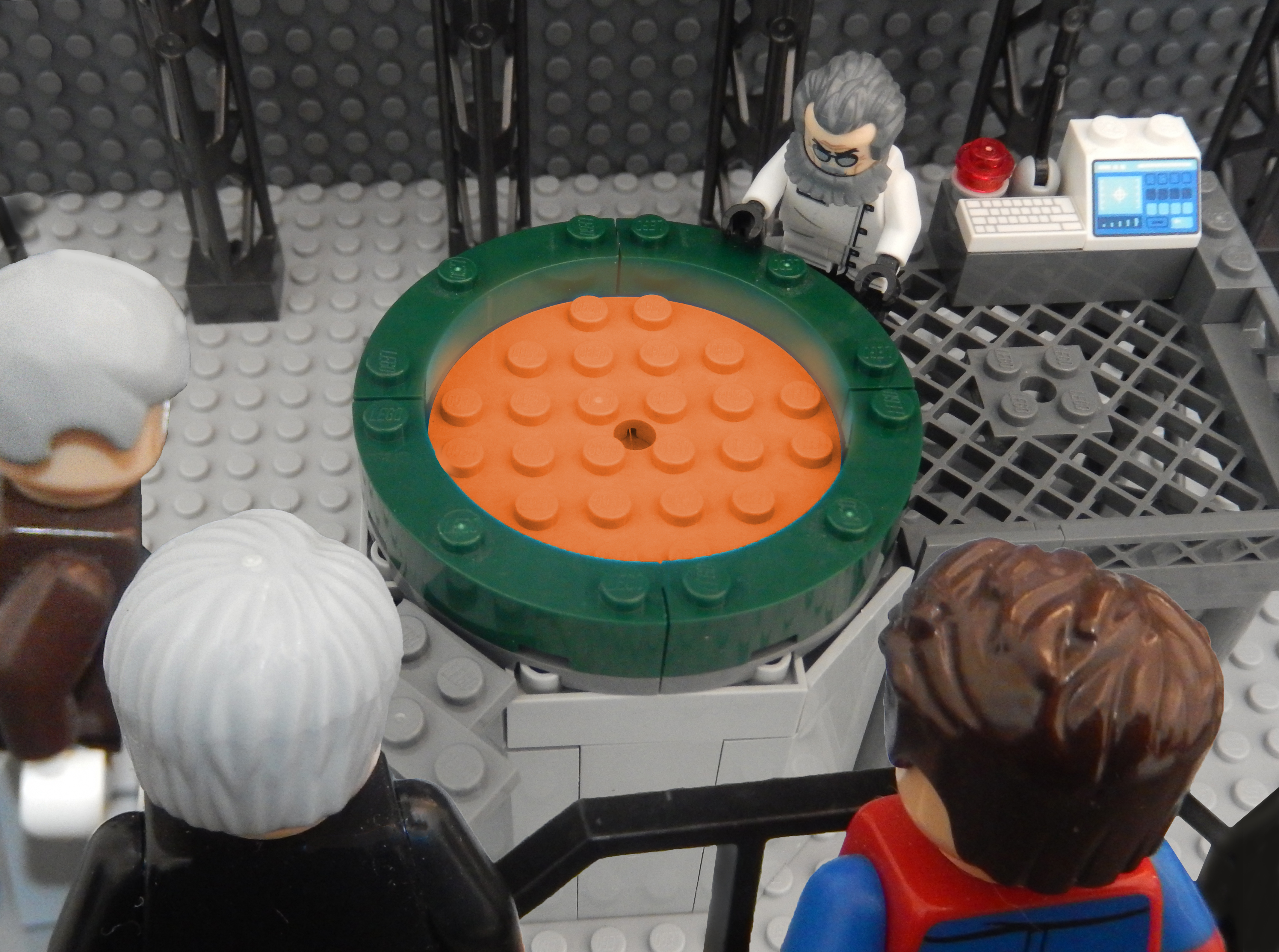
An explosion rocked the distillery.  Smoke.  Rubble.  Sirens.  The sprinkler system sprung into action.  Glass shattered.  Tee Bone, Deke and Stewart were thrown from their second floor vantage point.  The three landed in a vat of whisky, marked by the universal symbol for radiation.  The three men floated in it, helplessly doomed to drown.  Stunned by the explosion, they bobbed in the vat, while smoke streamed overhead.  Stewart was bleeding from an impact to the head.  Deke was stunned unconscious.  Tee Bone was knocked out but still holding onto his guitar, which miraculously was still plugged into the nuclear amplifiers.  A second explosion rocked the castle and a jolt of nuclear energy blew out the wall of amps above.  Without warning, atomic nuclei flowed through the cable into Tee Bone’s guitar.  Zapped awake, the man screamed in pain.  But the pain was soon met and overpowered by another feeling: that of growing strength.  The energy flowed into the guitar, through his fingers and into his blood.  Like alchemy, the nuclear powered amps reacted with the whisky, amplifying its power beyond measure.  This power flowed unchecked into Tee Bone’s heart, his liver, his lungs, his brain, his every organ.  He became like a living dynamo.  He began to float, not just in the whisky, but above, into the air!

“What…is…happening?” asked Tee Bone, but no one could answer.  As electricity jolted from the guitar to his fingers, he saw that he was now hanging in mid air over the vat.  Deke and Stewart didn’t have much time left.

By pure instinct and nothing more, Tee Bone floated down to his friend and the eccentric madman who had caused this in the first place.  Lifting with all his might, he carried the two men and flew through a hole in ceiling, outside to safety.  Deke blinked awake.  Stewart lay wounded, bleeding.
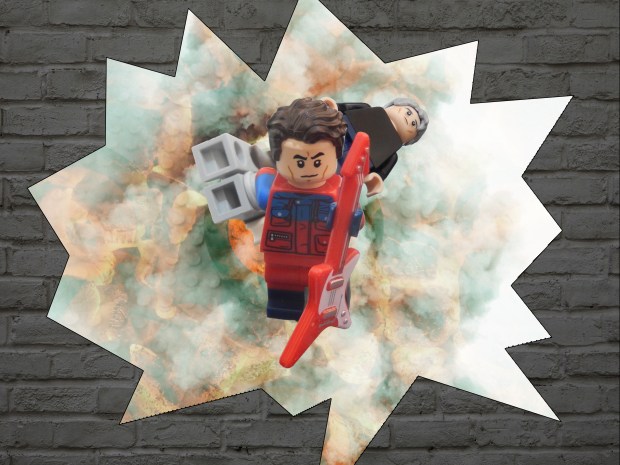
“What the hell just happened?” asked Deke to Tee Bone.  “Dude…you’re glowing.  Like literally glowing.”

Tee Bone looked down at his hands and they were indeed glowing, as little bolts of electricity darted from one finger to another.

“I’m fine.  Stay here.  I gotta find the MegaCorp guys who did this!  Take care of Stewart!”

Deke cradled the old man in his arms as Tee Bone launched himself in the air.

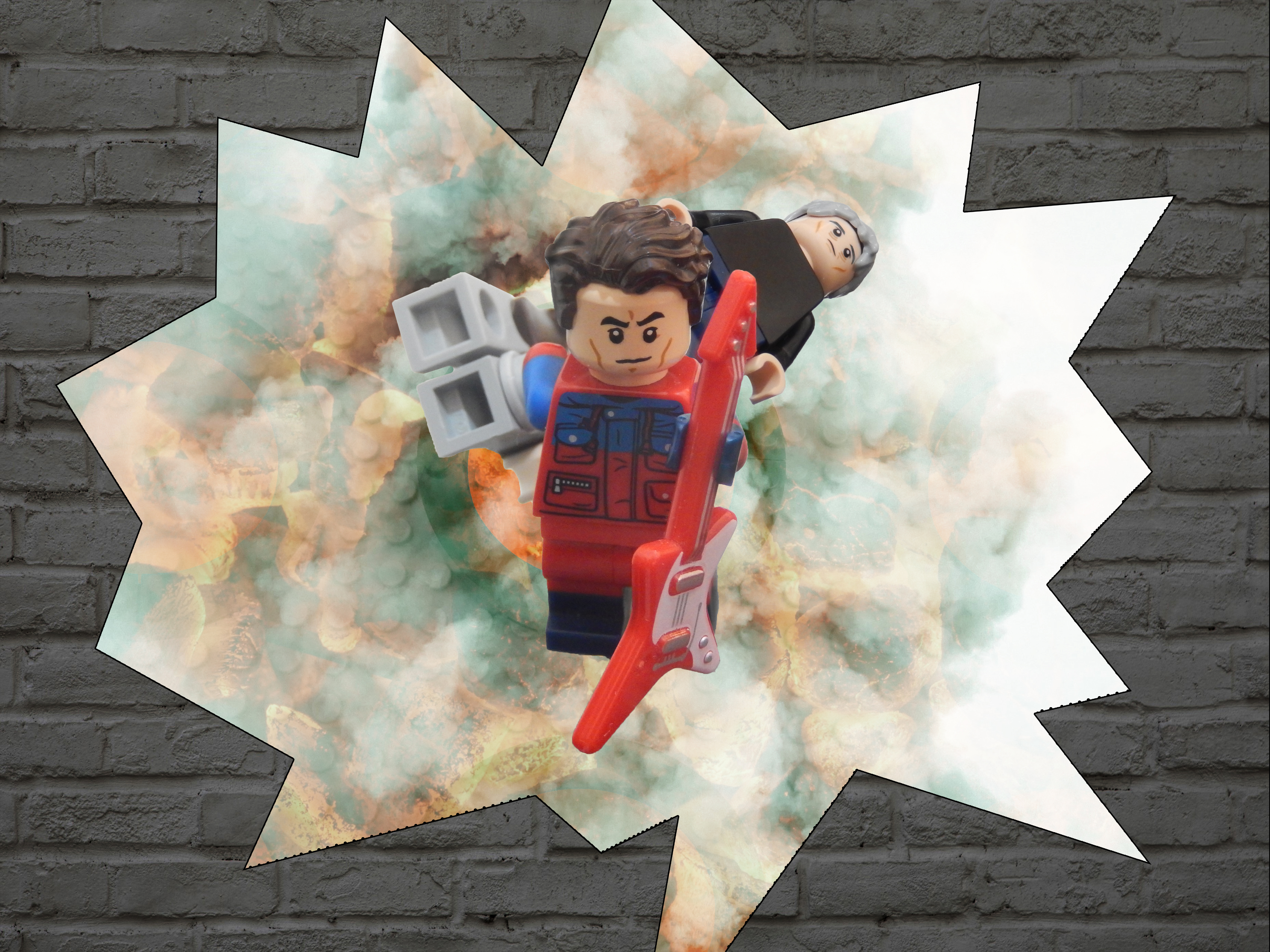
“I can flyyyyyyyyyyyyy!” he screamed as he soared.  From up high he saw the two men in the suits running away from the scene of their sabotage.  They weren’t going to get away with it.  Not if Tee Bone had anything to say about it.

Tee Bone found that flying was as instinctive as walking.  He climbed, and dove upon the two suits.

“Let’s try something,” said Tee Bone with guitar still in hand.  He pulled a pick from his jeans pocket and lined his fingers up for a perfect power chord.  He aimed his axe at the fleeing men, and strummed.  A stream of Scotch-powered energy blasted from his guitar directly at his targets.  The blast knocked one of them right off his feet.  The other kept running.

“Not so fast!” commanded Tee Bone from the air.  “You been Thunderstruck!”  A second chord, even more powerful this time, created a crater where the second man once stood.  He was thrown against a tree and knocked cold by the sheer power.

“Wow,” said Tee Bone.  “Talk about a gear upgrade!”  He turned and swiftly flew back to his friend and the old man.

Deke sat on the ground attending to the fallen Stewart.

“What the hell man?” asked Deke to his best friend.  “You can…fly now?”

“Apparently,” answered Tee Bone, as he successfully attempted his first landing; a little stiff but not bad.  “Can’t you fly?”

Deke lay Stewart down on the ground, stood up and stretched his arms skyward, and jumped.  “Nope.  I got zilch.  How come you can fly and I can’t?”

“I honestly don’t know man, I was knocked out too!  How’s the old man?”

Stewart was awake now, but seriously wounded.  “I’m fine,” he answered.  “Better than ever, right as rain!”  He coughed up blood.  “Well, that’s a lie…I’m dying boys.  But I’m OK with that.  I wanted you two to run my business for me.  Yet I see something even more remarkable has happened.  Just as I knew!  My distillery is destroyed.  The nuclear reactor…ruined.  But the castle walls remain intact.  Strong, they were designed to be impenetrable!  I had many enemies.  Too many spies and saboteurs and the like, after my secrets.  Now you two will guard them.  All my technology.  All my advancements…I pass them on to you now, Tee Bone and Deke.”

The old man coughed up more blood.
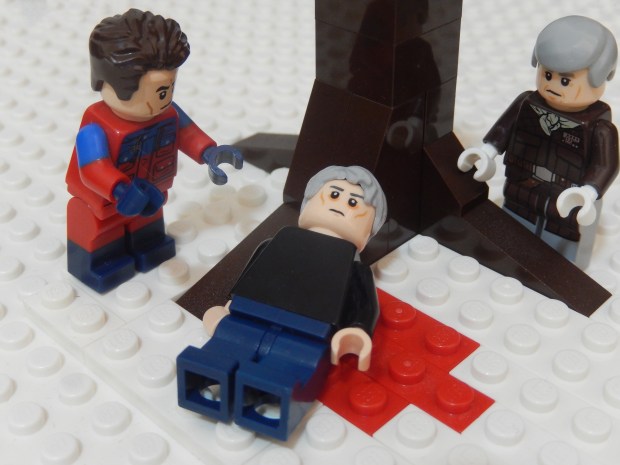
“Easy Stewart,” said Deke in a calming voice.  “Paramedics are on their way, just hang in there, don’t try to speak.”

“No!” sputtered the old madman.  “No…this is too important, you must listen to me.  The legal documents are all drafted, in your email and waiting for you to sign.  I’m passing this castle…my palace, my home…and all it contains, onto you.”  He turned to look at Deke.  “I sense great potential in you Deke.  Super potential.  Find all my technology inside my vaults.  My designs.  Learn from them.  Use them.  Create mighty weapons to defend yourselves.  Guide Tee Bone.  He serves a higher purpose now.”  He coughed, knowing his end was near, but determined to say what he needed to say.  “Tee Bone, you have been granted great power, and you must use it wisely.  I can see your heart.  It is a heart of rock.  You must defend rock and roll from the forces of evil.  I know they are coming.  They will sense your power, and they will seek you out too.  You must not allow them to win.  This isn’t about Scotch anymore, this is about you and your potential.  You can do great things.  You can save the world.  Tee Bone…”  The old man went into a coughing fit.  “You can save rock and roll.”  The two tried to comfort him, but the paramedics were still far and time was short.

The old man sat up one last time.

“Tee Bone…Deke…there are more things in Heaven and Earth, than are dreamt of in your philosophy.  They will be coming.  You…must…be prepared…for…the Devil…is in…the details.”

With a gasp, the old man passed into another world.  Tee Bone and Deke cradled his body.  Tee Bone shed a tear.  He would never be the same again after this day.


Six months later.

Together, and with the help of all the remarkable technology they had discovered in Stewart’s archives, the castle had been restored.  The old distillery was gone.  The reactor dismantled.  In its place, the two had designed a rock solid base of operations.  Deke had converted the reactor room to a killer garage, for his bike and racks upon racks of storage, waiting for new gadgets for him to invent.  He’d been studying the old man’s tech for half a year now, and had some pretty innovative ideas of his own.

In the living room of the castle, Deke had finished setting up the brand new stereo.

“It was awful nice of Paul from PS Audio to send us these FR-30 loudspeakers.  You know how much they cost?  $30 grand a pair, man.  That’s US dollars.  Not including the shipping.”

“Well, I did save him from a Sasquatch,” answered Tee Bone.  “He did kinda owe us.  I didn’t even know they had Sasquatches down there in Colorado.  Are you ready to give them a trial run?” asked Tee Bone as he pushed a couch into position, across from Deke’s armchair.

“I think so,” said Deke.  “I just need you to pick an album to listen to first!”

Tee Bone smiled and leafed through the record racks.  “I know exactly the one.  It just came from Amazon last week.  I thought, considering recent events in our lives, I’d go with a super hero theme.  Put on LP one, side two, track two, if you will!”

Deke looked at the sleeve and grinned.  “Good pick man!”  He removed the Iron Man 2 soundtrack LP from its sleeve and dropped the needle on track two.  The scream of AC/DC’s Brian Johnson flooded the room with the best audio the two men had ever heard in their lives.

“I was caught, In the middle of a railroad track!  Thunder!” sang Johnson and AC/DC.  The FR-30 speakers filled the room with sound, as if the band was right there in the room with them.  Just as Paul McGowan had promised, it was the best sound either man had ever heard.

“Holy shit!” mouthed Tee Bone to Deke silently.

“You been…Thunderstruck!” screamed Johnson as the two men rocked and rolled to the music.  Tee Bone began to dance across the room.  With a hoot, he kicked off his socks, which landed somewhere over by the LP rack.

“This is awesome!” said Deke.  “I can’t believe this all happened because we fell into a vat of radioactive hooch!”

“But don’t forget, Deke,” cautioned Tee Bone, “With great rock, comes great responsibility.”  Deke nodded in understanding.

“I was thinking of starting to wear a cape,” said Tee Bone.  “Maybe come up with a superhero name.  How does ‘Tee Bone Man’ sound?” he asked.

Deke gave it the thumbs down and made a farting noise with his mouth.  “Lame!”

“Oh, like it’s worse than ‘Superdekes’?  Just for that, I’m wearing a cape next time.” guffawed Tee Bone Man.

“Whatever!” said Superdekes.  “Listen man, get the Scotch, we have to do something.”  Tee Bone went over to the bar and grabbed the finest bottle of Scotch he owned.  It was a bottle of 2018 Stewart brand Scotch.  Tee Bone smiled in memory of the crazy old man who made all this possible, as he poured two wee drams.  He handed Deke his glass.

Superdekes stood up straight.  “This is for you, Stewart,” he said as he raised his glass.  He looked around and then announced, “I hereby dub this castle ‘Deke’s Palace’!”

Tee Bone was about to drink, but then put his glass down.  “Hey!  I thought we agreed on ‘Tee Bone’s Pad & Scotch Emporium’?”

“Nope!  Too late, I called it!  Welcome to Deke’s Palace buddy!”

The two men smiled and hugged.  At that exact moment, the record began skipping.  “Thunder…thunder…thunder…” skipped Johnson.

Both heroes knew what that meant.  Superdekes sprang into action.  “Danger vibes coming through on the turntable!” said Dekes.  “Time to rock!  Let’s suit up.”  He grabbed a black motorcycle helmet from the wall.

“Sasquatch sighting again?” said Tee Bone Man as he strapped a black Van Halen mask to his face, and put on a fresh pair of socks.

“Looks like it,” answered Deke, checking a scanner he kept strapped on his utility belt.

“Alright, let’s fly!” commanded Tee Bone Man.  “Oh wait…you can’t,” he snickered in mischief.

“Yeah yeah,” said Deke.  “Hah hah.  I’ll be on my bike, meet me at these exact coordinates.”  He showed Tee Bone the location on the screen.

“Let’s rock!” screamed Tee Bone Man as he launched himself through a window.  Superdekes was not far behind on his motorcycle and with a backpack packed full of new gadgets.  Both men knew that this was their lives now:  saving people, stopping bad guys, saving rock and roll, and hopefully having a good time doing it.

For the Adventures of Tee Bone Man and Superdekes were only beginning!
 

THE ADVENTURES OF TEE BONE MAN:  PHASE ONE

Chapter Zero:  Tee Bone Man – Origins (by LeBrain)

Chapter One: A Friend in Need (by LeBrain)

Chapter Two: Hell Freezes Over (by Harrison Kopp)

Chapter Three: Hell Ain’t A Bad Place to Be (by LeBrain)

Chapter Four: Tee Bone Man and the Rink of…Doom? (by Aaron KMA)

Chapter Five: The Super Duper Vault (by John T. Snow)

Chapter Six: Tee Bone Man Goes to Camp (by LeBrain)

Chapter Seven:  The Revenge of Common Knowledge (by LeBrain)

Chapter Eight:  Tee Bone & Deke’s Time Travelling Adventure (by 80sMetalMan)

Chapter Nine:  Castle Communications (by Harrison Kopp)

Chapter Ten:  The Case of the Lost Iron Maiden Socks (by LeBrain)

Chapter Eleven:  A Tee Bone Man Christmas (by all five of us)

Chapter Twelve:  Lost In Space (by John T. Snow)

Chapter Thirteen:  Clip Show (by LeBrain)


THE EXTENDED LEBRAINIVERSE

The Adventures of Edie Van Heelin’:  Edie vs. Tommy Lee in the Bouncy Castle of Doom! (By LeBrain)

The Adventures of Edie Van Heelin’:  Edie and the Quest for the Lost Lego (By LeBrain with Harrison Kopp)

The Adventures of Edie Van Heelin’:  Edie Van Heelin’s Canadian Vacation (By LeBrain)

The Adventures of Edie Van Heelin’:  Edie Van Heelin’s Canadian Vacation Part 2 (By LeBrain) Coming Soon


The Writer’s Room: Chapter One

The Writer’s Room:  It’s Beginning to Look a Lot Like a Tee Bone Man Christmas


REVIEW: Foo Fighters – Sonic Highways 4 – Austin – “What Did I Do?/God as my Witness”

FOO FIGHTERS – Sonic Highways 4 – Austin – “What Did I Do?/God as my Witness”

Austin.  Classic riffs such as “Smoke on the Water”, “Bohemian Rhapsody” and “Stairway” ring out from the studio hall.  “Just something new I’m working on!” somebody says.  Time to record another new Foo Fighters song in another city.

Austin is a little pocket of “different” in Texas.  Gibby Haynes from the Butthole Surfers is not the kind of guy you expect to come out of Texas.  Willie Nelson, though, seems like a natural.  He returned to Texas from Nashville to become an artist in his own right, and in turn he helped but Austin on the music map.  It was now OK to have long hair, and cowboy boots.

Austin City Limits was their version of Grand Ole Opry.  It was the stage you had to be on.  It was one of the few TV shows that made bands sound good instead of weak and thin.  Artists from all genres have played it.  Though Austin City Limits have since moved to a new facility, the old one is still there, and that’s where Grohl wants to set up and play.

Austin was home to the Moving Sidewalks, which housed Billy Gibbons of ZZ Top.  It was also home to the 13th Floor Elevators, adding a psychedelic edge to the music scene.  Roky Erickson of the Elevators invented it, and was behind numerous aggressive spaced-out rock songs.  Townes Van Zandt was another cornerstone of the scene, and Steve Earle went to Austin looking for him.  Jimmie Vaughan formed the Fabulous Thunderbirds there, even though he was told there was no point in forming a blues band.  Stevie Ray came along at age 17 to play with Albert King.  Gary Clark Jr. started out as a kid who started hanging out at Austin City Limits, but could play the blues like devil hisself.

As always, punk came alone.  The Big Boys, the Jesus Lizard, the Butthole Surfers presented an unorthodox but creative front.  These guys listened to both punk and funk, and tried to combine both.  South by Southwest (SXSW) became a critical music festival that gets 10,000 applications from bands a year, to play in only 2300 slots.  The challenge now is that since the scene has grown so much, and got so commercial, how do you keep Austin weird?

Grohl is psyched to find an old piano under a tarp in the studio that had been played by everyone from Jerry Lee Lewis, Fats Domino, and Tom Waits.  He had to have it on the album.  Indeed, it’s right there at the beginning of the song, which soon transmutates into something more typical for Foo Fighters.  There is a lyrical reference to the “13 floor”, and the urethane wheels of the skateboards that were central to the Austin punk scene.  Regardless, “Where Did I Go?” is pretty stock, coming to life a bit more in the second section, “God as my Witness”.  The structure is not unlike “Layla”, and ends better than it starts.  It’s almost gospel at the end, as if the Nashville carried over into the Austin.  Gary Clark Jr. throws down a great classic rock lead on a Gibson SG.

Episode 4/5 stars

Song 3.5/5 stars

REVIEW: Foo Fighters – Sonic Highways 3 – Nashville “Congregation”

FOO FIGHTERS – Sonic Highways 3 – Nashville “Congregation”

Nashville.

“Wow, Kevin Costner has played the Grand Ole Opry.  Rad.” – Pat Smear

Dave sits down to play an acoustic at the legendary Bluebird Cafe.  It’s a daunting task for a rock drummer, to sit and play bare acoustic songs by himself on that historic stage.  He was admittedly a fish out of water, but in a “refreshing way”.  Nashville, according to Foo Fighters, is the coolest city in America.  Dolly Parton says Nashville is all about the songs.  It was the “Hollywood of music, for the south” according to The Black Keys’ Dan Auerbach.  Steve Earle, who arrived in 1974, says Nashville is “university for songwriting.” However some artists like Willie Nelson had to leave Nashville in order to find solo success.

It’s big, big business; a country “hit factory”, from Dolly Parton to Carrie Underwood.  Johnny Cash to Kenny Rogers and Lady Antebellum.  By the time you get to Brad Paisley and Taylor Swift, it doesn’t sound much like what it used to anymore.  Zac Brown is an exception.  Dave Grohl thought it was pretty cool that Zac would barbecue food for his audience before the show.  Brown on the other hand really wanted Grohl to produce them.  And Dave had never even heard one song before, but grew to love his “outsider” stance and lightning guitar licks.  He could be in Slayer, says Grohl, he’s so fast.  He started out picking intricate classical lines on a nylon string guitar.

Grohl became such a fan that he decided to record at Brown’s own studio, one of the oldest in town.  It is a huge beautiful building; a church built in 1901.  The wood paneling inside lends it a cottage-y feel, but it’s also wormy wood that has great acoustics.  The drum sound is once again massive and deep, but the band didn’t have the song ready until they got there and Dave figured out the arrangement in the studio.  Dave was inspired by a beam in light through one of the old church’s music — no shit.

It’s a suitable inspiration.  Cash sang gospel, so did the deeply religious Elvis.  Blues was also an influence to later Nashville artists.  Jukeboxes were a big inspiration.  Pianist Tony Brown first turned on to country via a George Jones song on a jukebox.  Emmylou Harris told him to check it out; the song brought him “to his knees”.  The single was an important format.  An album was essentially just a compilation of previously released singles.

Foo Fighters lead guitarist Chris Shiflett is a country-head, and he had the best time in Nashville.  The barbecue food looks incredibly succulent.    “Congregation” is surprisingly Journey-like, but with Lizzy harmony guitars.  Arena rock: it’s the choice of notes.  The middle section then goes into an odd, jazzy guitar part played by Zac Brown.  “Open your eyes, step into the light!”  This is definitely a hard rock anthem.

Episode 4.5/5 stars

Song 4.5/5 stars

#1043: Music From the Elder – Winter 1986

An expansion upon #579:  Entering the Asylum


RECORD STORE TALES #1043: Music From the Elder – Winter 1986

As much as we teased him, and as much as he may have deserved it, George Balazs was something of the elder statesman of music on our street.  An awkward kid with big glasses, big hair, and knobby knees, George was an outcast from every group.  Yet, George was passionate about music to a degree that pushed the rest of us further in as well.

George fancied himself a bass player, and Gene Simmons was his idol.  He posed like Gene, he sang like Gene, and just really wanted to be Simmons.  He surely gave it a shot, but to most of us, he was a joke.  An awkward, porn-obsessed older kid who dressed in the full metal regalia with studded wristbands and bandannas.  What he did have going for him was a pretty good record collection.

I don’t know where he got the money, working at Long John Silver’s down the street, but George always had a steady stream of new records coming in.  Sam the Record Man, Dr. Disc, or Encore Records was his supplier.  George always had a hustle going on, selling old comic boys or toys.  He always felt like he was making money, even though he was buying the comics at retail price and selling them for half that.  I got my entire GI Joe collection from him that way.  George was acquiring complete collections of Iron Maiden, Judas Priest and Lee Aaron vinyl.  Kiss was nearly complete:  By the start of 1986 he finally acquired Kiss Killers, and only needed Double Platinum and The Elder.

George always made it well known how good his Kiss collection was.  We all knew what he needed.  He made sure that was publicly known.

Meanwhile, I was in grade eight, a miserable year of fake friends and emboldened bullies.  There was a newer kid in class, named Joe Ciaccia (pronounced “chee-chaw”).  In casual conversation, Joe boasted that he already had a complete Kiss collection.  I suspected he was lying to impress me, but I pressed him on it.  If his was complete, maybe he’d sell his copy of The Elder to George.  I was being selfless here.  Even though I had started getting Kiss albums myself, I was thinking only of George.  I knew George would allow me to record it, once acquired.

I informed George that I knew someone who had The Elder, and George nearly leaped out of his shoes.

“WHO?” he asked.

“Joe Ciccia, this kid at school.  He says he has all the Kiss albums.”

“Bullshit,” said George.  “There hasn’t been a copy of The Elder for sale in this town in two years.”

“Well he says he has it,” I insisted.  I was instructed to broker a trade, and so I did.

On a slushy Sunday afternoon in the dead of winter, I loaded up my Sanyo ghetto blaster with batteries and my Kiss Asylum tape.  With Bob Schipper and George Balazs, we trudged off in the snow, blasting “King of the Mountain”.  I can still remember holding that stereo as steady as I could, while Eric Carr pounded out the drum intro.  Asylum was their newest album, and my copy was only a few months old.

George was adamant that we were going to Joe Ciccia’s place, and not leaving without The Elder.  The address and time were set up.  “I don’t care what he wants for it, I’m not leaving without that record.”  The Elder was all but legendary.  None of us had heard any of the music, except George, who had seen the music video for “A World Without Heroes” once.  He loved the song.  He could not wait to get that record in his hands and on his platter!  No matter the cost.

It wasn’t a long walk, it just took forever with that slush all over the ground.  It was a wet, dark Canadian winter day, and we were on a mission.

Joe lived on Breckenridge Drive, the same street as Brian Vollmer and Ian Johnson.  Joe was about to inherit a certain crown from Ian – the king of lies.

We arrived at Joe’s apartment and buzzed.  No answer.  Buzzed again.  No answer.  It became clear that, as I had suspected.  Joe was all talk and no Elder.  We waited outside in the cold a while, but there was no sign of Joe.  We were at the right place at the expected time, but Joe was hiding.  As expected, George was partly crushed and mostly pissed off.  Joe dodged me at school the next day.  George kept pestering me to arrange a second hookup with Joe, thinking he still had that copy of The Elder that he wanted so badly.  I realized Joe was full of shit and told George my unfortunate opinion.  The record was not there, period.  Joe was telling stories, trying to act cool and impress me at school.  Then he got caught in the lie, not realizing that George was going to go apeshit and do whatever he had to do to get this record, and he hid.  This was after going so far as to arrange a trade and giving me the address.  He really went all the way before his lie could take him no further.

George did get a copy of The Elder a  short time later, and he still taped me a copy.  It was a strange album to me, with a lot of music that didn’t sound like rock, but I liked it because it was Kiss.  Songs like “The Oath”, “I” and “Odyssey” were immediately appealing.

What happened to Joe?  He was one of the first kids to have a girlfriend at school.  I seem to remember it being quite scandalous for our little Catholic school.  He was making out with Sharon Burns, a girl we’d known since Kindergarten.  Then we graduated and I never saw him again.

When I think of Joe I’ll always remember him for two things:  the colossal Kiss lie, and making out with Sharon on a religious retreat at Mount Mary.  Things you just never forget.