
Sunday Chuckle: Past Lives
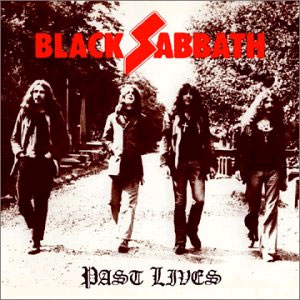
This one goes out to reader Harrison, who asked why I haven’t reviewed Black Sabbath’s Past Lives yet.
Here’s why!
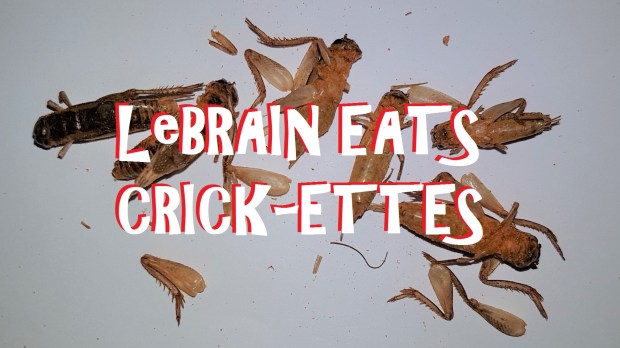
This is what happens when Mrs. LeBrain parks the laundry cart too close to my CD tower spinner. This got caught on the cart, and riiiiiiiip!
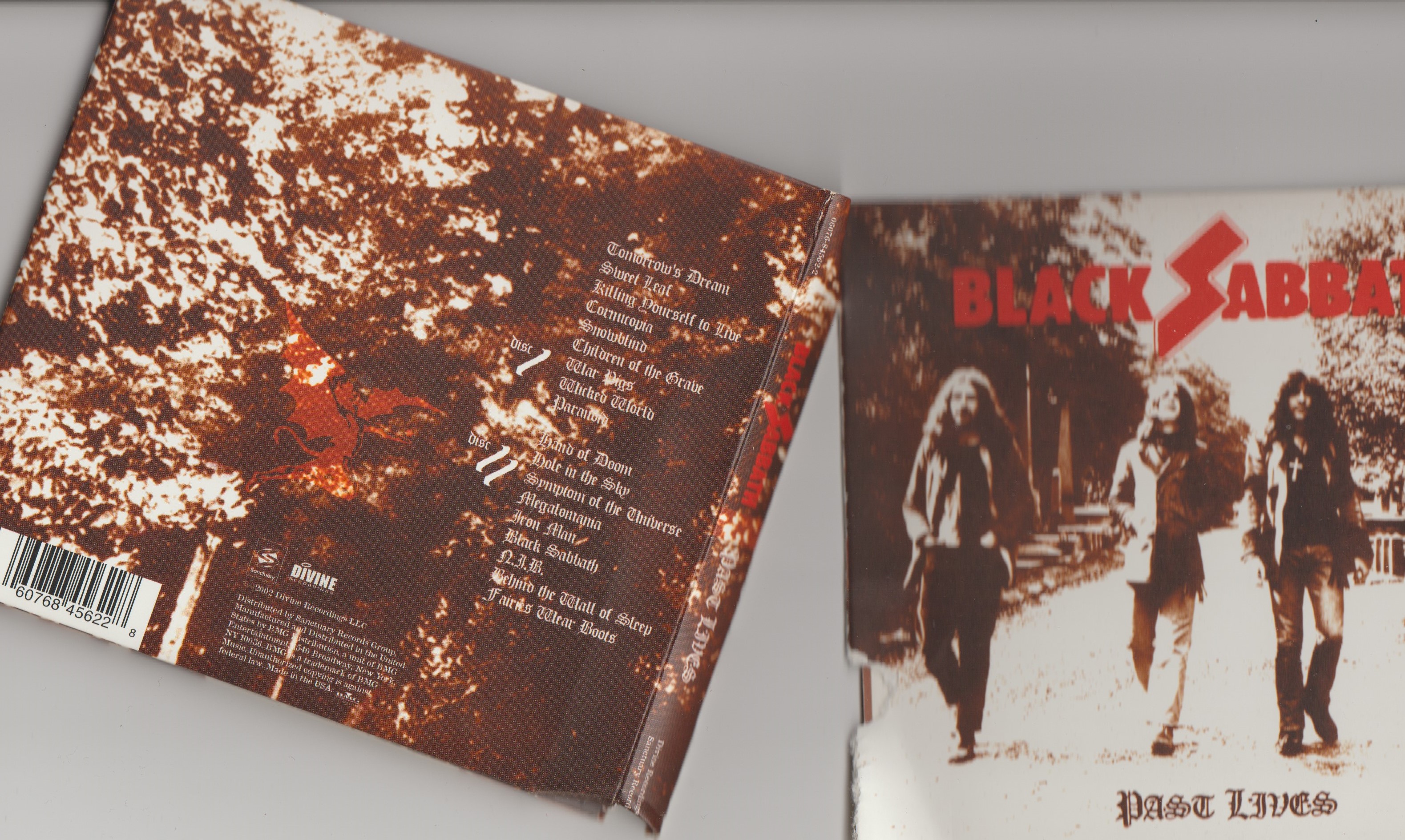
Note: the guitar pick inside was undamaged, and I have since bought a new case.
Share this rock:

#615: “Shhhh! Be quiet, we’re recording!”
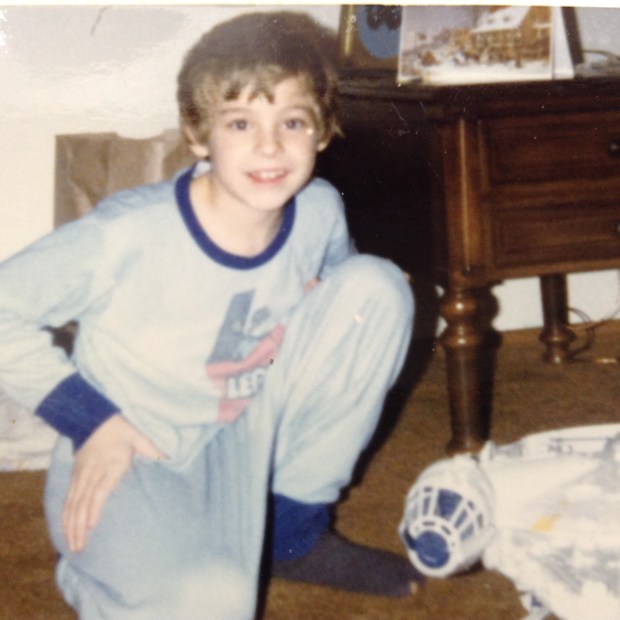
A prequel to Getting More Tale #344: Childhood Recording Sessions.
GETTING MORE TALE #615: “Shhhh, be quiet, we’re recording!”
Kids today have it easy! Want a song? Just copy and paste a file. There’s no skill in it. Not like we had to do it when we were really young.
My old Sanyo tape deck didn’t have audio in and audio out jacks. It didn’t have a dual tape deck. It had a headphone plug and that was it. You couldn’t record anything except with the built-in microphone.
Like kids of the 80s always would, we improvised and did the best with the equipment we had. Recording back then required planning and discipline for pretty shoddy results.
How did we do it? In the most primitive way imaginable.
Step one: Phone a friend who also had a tape deck.
No dual tape deck? No problem, all you needed was a friend who also had something to play music on. Come on over!
Step two: Shhhhhh! Be quiet!
We’d find a space in the house without a lot of commotion. In our house, that was the basement. We’d set up two tape decks, facing each other, about three or four feet apart. One for playing, one for recording.
We’d tell all parents and younger siblings to “be quiet” and “stay out”! Once this message was received we could begin recording. Press “record” on one tape deck and “play” on the other. Then, very very quietly, step out of the room let the tapes run until the whole side was recorded, open air style, in glorious mono.
The end product was usually awful, but as pre-teens we didn’t know any better. You could usually hear us whispering at the start or stop.
This is how I first got Styx’s song “Mr. Roboto”. It’s how I made copies of my Quiet Riot Metal Health tape for my friends. I sold them for $1 per copy. I thought I was some kind of entrepreneur! I even recorded the audio of Star Wars off the TV so I could listen to it, before we had a VCR.
Hard to imagine this was the best we could do, but for years we made it work!
Share this rock:

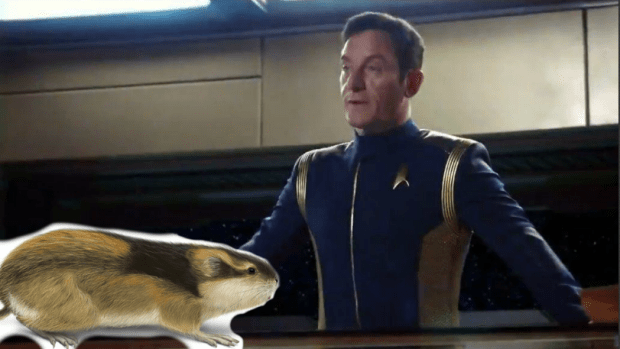
WTF Comments: Discovery of the Lemming edition
Star Trek: Discovery is a controversial series. Reviews have been very mixed, and fans are split.
Before reviewing, I watched every Discovery episode twice. Even three times for some. My review is rather positive — 3.5/5 stars — and hopeful for the future of the show. Discovery is not perfect. Not only is there room for improvement, but things that simply must improve. But Star Trek has a history of poor first seasons. Remember The Next Generation in 1987? Nobody liked Next Generation best in 1987. It had a rough, rough start.
My review received lots of great comments. Nobody agreed with my full assessment, just bits and pieces here and there, but comments were helpful and completely relevant.
All but one! Enjoy this WTF Comment from Dick Dirk. 
He blocked me shortly after.
In the words of William Shatner, “It’s just a TV show! Get a life!”
Share this rock:


REVIEW: Circle II Circle – Watching in Silence (2003) #200wordchallenge

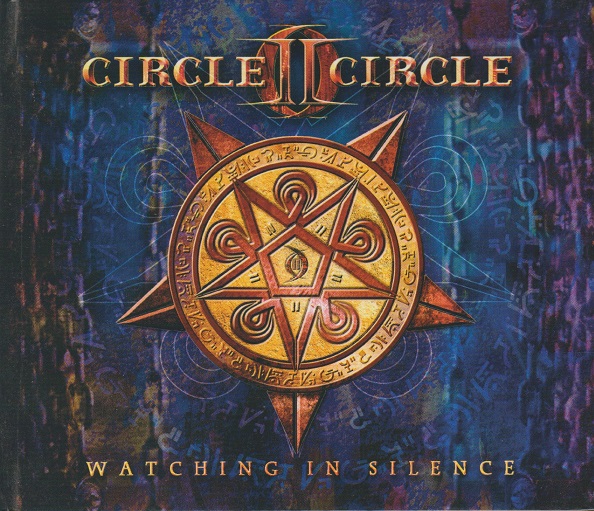 CIRCLE II CIRCLE – Watching in Silence (2003 AFM)
There are some good reasons why Circle II Circle’s debut album, Watching in Silence, is a dead ringer for Savatage. First and most obviously, singer Zach Stevens is best known from the Florida progressive metallers. When he left the band to form Circle II Circle, he had some Sava-help too. Jon Oliva and Chris Caffery wrote or played on every single song. Oliva co-produced. They’re just a helpful kind of band.
Fans of Stevens-era ‘Tage will adore Watching in Silence from start to finish. It has the heavy, it has the soft, and it has the drama. There are even the layered operatic vocal arrangements (“Forgiven”), though used sparingly. Circle II Circle utilise keyboards and piano, but don’t go for the full-on conceptual direction that Savatage did.
Though the album can drag from time to time, there are a number of exceptional tracks. “Into the Wind” is the first to boast one of those unforgettable Stevens choruses. The single “Watching in Silence” has the patented Sava-power, composed in equal measure of riffs, piano and killer vocals. The easiest comparison is to “Edge of Thorns“, Stevens’ first single with Savatage. Virtually every song has a memorable chorus to go with it.
3.5/5 stars


Share this rock:

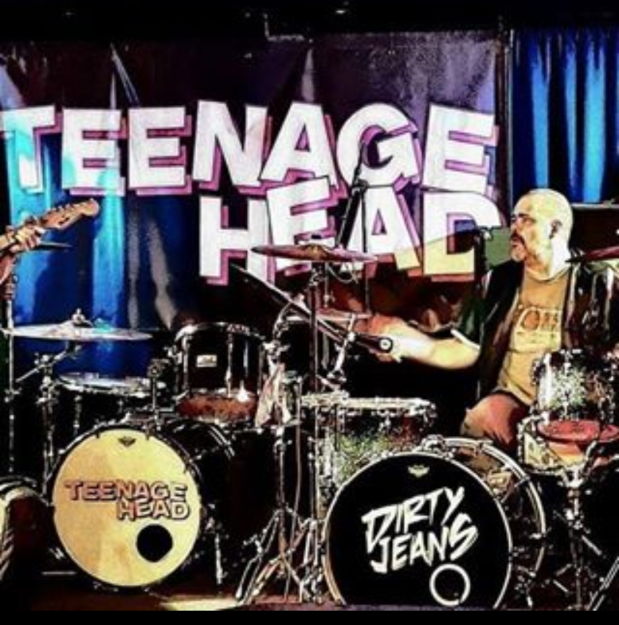
Happy Birthday Uncle Meat!
Let’s all wish a happy birthday to Uncle Meat! Good pal, Jedi Master, and rock and roll contributor Uncle Meat is one year older with more metal in his body than ever before. (A plate in his leg!)
Happy birthday Meatmaster General! A man actually made of metal!

Share this rock:


REVIEW: Greta Van Fleet – From the Fires (2017)
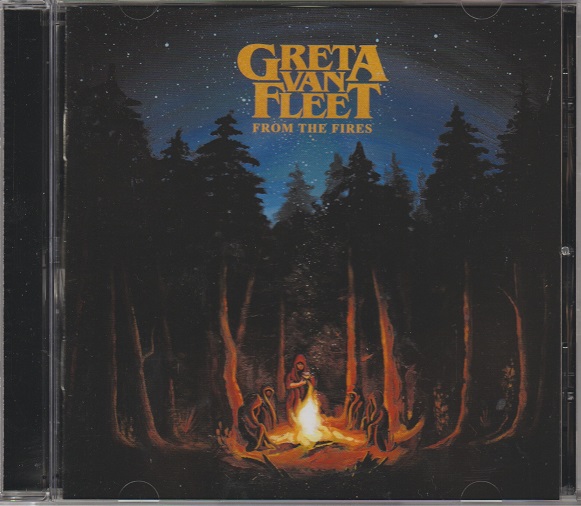 GRETA VAN FLEET – From the Fires (2017 Republic Records)
Got 32 minutes to kill? I have just the thing.
Frankenmuth, Michigan’s Greta Van Fleet won’t be disappearing any time soon, not with the release of their new “double EP” From the Fires. Double EP? For simplicity’s sake, we’ll just call it an album. From the Fires has all four songs from their last EP, Black Smoke Rising, along with four new tracks. Whatever you want to call it, if you missed Black Smoking Rising, then you’ll wanna get From the Fires ASAP!
Of course you will get their smash hit “Highway Tune”, which is still as exciting as the day we first heard it. Current single “Safari Song” is first on the new CD. Greta’s biggest influence is the mighty Zeppelin, and “Safari Song” certainly has that bluesy Zep stomp. Lots of “oh mamas”. This mid-tempo rocker is quickly becoming a favourite of the airwaves.
The new “Edge of Darkness” sounds less like Zeppelin, although singer Joshua Kiszka bleeds Robert Plant. “Edge of Darkness” recalls newer blues rock bands, but the voice immediately sounds like Plant. Then “Flower Power” brings us back to hippy-era acoustic Zeppelin. It’s more than a little derivative, but this band is young and only starting out. Joshua Kiszka really blasts on the slow soulful “A Change is Gonna Come”. What a singer — someone to keep an eye on!
Some of Greta’s more dramatic tunes appear closer to the end. “Meet on the Ledge” has a plaintive, epic quality. Then “Talk on the Street” goes upbeat, with a brilliant thrilling rocker. These new tunes indicate that Greta is indeed still growing, and we haven’t heard what they’re capable of yet. Yes, they can do vintage 1969 Led Zeppelin to a “T”, and they have the acoustic bases covered too. The songwriting is growing, and their musicianship is already there. Their playing sounds like a group who have several records under their belts already.
“Black Smoke Rising” has become a personal favourite Greta tune. This closer boasts incredible vocals, melody and riffs. It’ll put goosebumps on your arms if you let it. It sounds very little like Led Zeppelin. It actually recalls Triumph more than anyone, and that’s just fine.
Now is the time to get some Greta Van Fleet. This release has all their studio recordings; a compact 32 minutes. Double EP? Van Halen had classic albums shorter than this. From the Fires is an album. Get it!
4.5/5 stars

Share this rock:

#614: Believe It Or Not
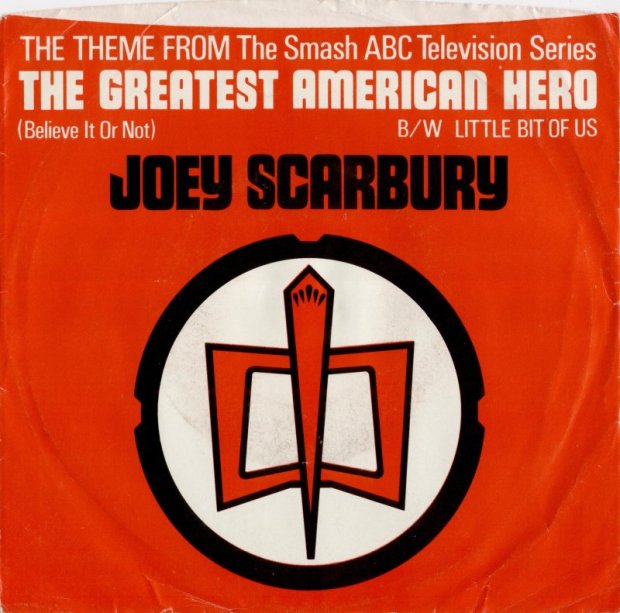
GETTING MORE TALE #614: Believe It Or Not
Who doesn’t love lists of musical firsts? I’ve done my own, but here’s a record that I forgot to include.
It wasn’t my first record. As a kid, I had read-along story records: Star Wars, E.T., The Black Hole, and more. The E.T. record was cool because it was read by Drew Barrymore. I also had John Williams’ music soundtracks, like Indiana Jones.
My first “metal” album was Quiet Riot’s Metal Health. I had it on cassette. It changed my life. Going back even further, Styx’s Kilroy Was Here was the first rock album that I ever bought, but technically it wasn’t my first “rock” record. Technically. It all depends on how you define “rock”, but for the purposes of this article we’ll include soft rock under the umbrella.
In 1981 there was a new TV show that, by all signs, looked like it was going to be awesome. It was about a goofy superhero. He couldn’t fly straight, and he looked silly with his blonde curly hair in a red skintight outfit. His landings were always crash landings, and what kid doesn’t find a grown man falling down absolutely hilarious? The premise was that aliens gave the protagonist this super-suit, but he lost the manual and doesn’t know how it’s supposed to work. Funny, right?

Sadly, the program called The Greatest American Hero never lived up to the premise or the TV ads. We kids swiftly lost interest in it. Magnum P.I. occupied our TV time, and The A-Team and Knight Rider were only a couple years away. The Greatest American Hero was quickly forgotten, except for one minor detail.
The Greatest American Hero had a terrific theme song. Theme songs are important. I can hum the themes for the A-Team, Knight Rider and Magnum P.I. Can you? The Greatest American Hero had an even more memorable theme song: “Believe It Or Not”.
I didn’t know the name of the guy who sang it, I just knew I liked the song. I told everyone it was my favourite song. So one day, my Aunt from Calgary came for a visit and gave me a copy of the single. I was elated! The singer was somebody I never heard of called Joey Scarbury, and now I had the record and I could play it any time I wanted! I did, over and over.
The names meant nothing to me then, but “Believe It Or Not” was written by Mike Post, who also wrote – surprise surprise! – Magnum P.I. and the A-Team! Though Mike Post is mostly known as a TV composer (The Who have a song called “Mike Post Theme”), he even produced Van Halen III! “Believe It Or Not” must be one of his most well remembered songs. It didn’t hurt when it was spoofed on Seinfeld back in the 90s. Remember George’s answering machine? “Believe it or not, George isn’t at home…” Since then, it’s been used and re-used again in TV shows and commercials.
I remember as a kid, flipping over the record to listen to the B-side, which I immediately hated. The ballad “Little Bit of Us” was not for me. I tried playing it at different speeds to see if it would make the song any better. It didn’t and I never played it again.
I don’t actually know what happened to the record. I know I lost the sleeve (it wasn’t a picture sleeve, just a plain white one) and filed the record in with another 45. From there, it disappeared.
I may have outgrown “Believe It Or Not” but playing it today still brings a smile to my face. Not enough to try and re-watch an episode of the Greatest American Hero, and definitely not enough to track down more Joey Scarbury music. Just enough for some nostalgic rememberings.
Share this rock:

TV REVIEW: Star Trek: Discovery – Season 1, Chapter One (2017)
 STAR TREK: Discovery Season 1, Chapter One (episodes 1-9 CBS All Access 2017)
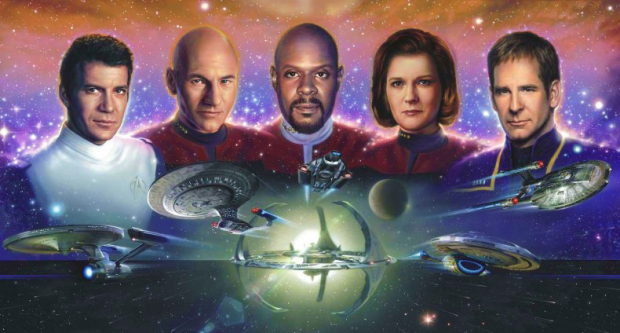
The difficulty in adapting Star Trek to a new generation, while still being commercial enough for 2017’s television screens is enormous. Creator Gene Roddenberry had rules he wanted adhered to within the Star Trek universe. Perhaps most difficult was his “no conflict” mandate. Roddenberry reasoned that when humanity reaches the technology in Star Trek’s future, there will no longer be need for Earthly conflict. Food replicators mean nobody will go hungry. Warp drive means infinite access to resources. Antimatter provides unlimited energy. All Earth’s problems are solved. Exploration is the new adventure. This was true of the original Star Trek in 1966, and Star Trek: The Next Generation in 1987.
After Roddenberry died in 1991, Star Trek’s new “Great Bird” Rick Berman introduced conflict in clever ways, side-stepping Roddenberry’s mandate. For dramatic purposes, 1993’s Star Trek: Deep Space Nine was set on an alien space station on the frontier. It was run by a mixture of humans and aliens, and hosted a virtual space city of diverse travellers and residents. Then Star Trek: Voyager broke the mold again in 1995. A starship’s bridge was the main setting once again, but this time they were stranded on the other side of the galaxy with a crew made up of Starfleet officers and Maquis rebels. The last Star Trek series under Berman’s control, 2001’s Enterprise, was a prequel set 100 years before Captain Kirk. The Federation, Star Trek’s peaceful governing body, did not yet exist. It was a transitional period between the Third World War and the familiar Star Trek we remember.
The first five
Over the past 50 years, Star Trek has been popular, but was surpassed by other franchises in financial success. Star Wars and the Marvel universe both dwarf Star Trek today. Some poor theatrical movies, such as Star Trek: Generations (film #7, 1994) and Star Trek: Nemesis (#10, 2002) did not help. By this time, Star Trek’s continuity had become so huge and entangled that writers struggled to come up with new ideas that a) hadn’t already been done, and b) didn’t contradict established Trek history.
JJ Abrams wisely rebooted Star Trek in 2009 by creating an alternate timeline. Mr. Spock (Leonard Nimoy) was thrust back in time with a Romulan named Nero (Eric Bana), triggering a series of events (including the premature death of Captain Kirk’s father, George Kirk) that re-wrote Star Trek history. This allowed a clean slate based on the original classic trio of Star Trek: Kirk, Spock and McCoy. Largely, it worked. Star Trek (film #11, 2009) did the trick. 2013’s Star Trek Into Darkness (film #12) tried again by re-doing Star Trek II: The Wrath of Khan in this new timeline. That was less successful. Re-doing the gimmick of destroying the Enterprise in 2016’s Star Trek: Beyond (film #13) was far too soon and really seemed to derail the series. It was the third destruction of the Enterprise on screen and it hadn’t been earned yet.
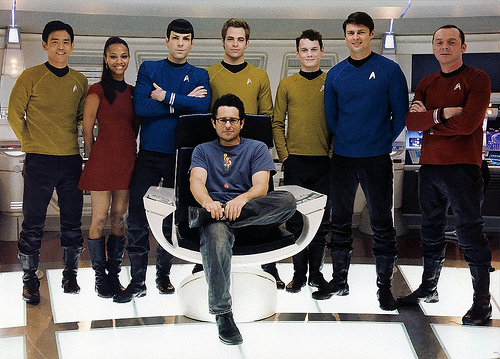
JJ Abrams and crew
The JJ Abrams universe is continuing with the 14th Star Trek film, somehow resurrecting George Kirk (Chris Hemsworth) and perhaps undoing that timeline completely. We shall see.
Meanwhile and with less fanfare, Star Trek has returned to television. This seems an even bigger challenge than making a good Star Trek movie. After all, television is nothing like it used to be. Reality shows, serialised dramas, and sitcoms own TV now. Attention spans are shortened and cerebral tales are fewer to be seen. What does a new Star Trek look like, and what would the story be?
Fans haven’t been shy about what they wanted to see in a new Star Trek TV show. Most would have loved a series set far into the future, as far beyond Picard as Picard was from Kirk. But Star Trek isn’t being made for fans. Today it needs to appeal to anyone and everyone, and simply not alienate too many fans. So instead, we are getting another “prequel” series set before the time of Kirk. 10 years prior, in fact, and set in the original universe. And as an added twist, the main character was to be Spock’s never-before-mentioned…adopted sister?
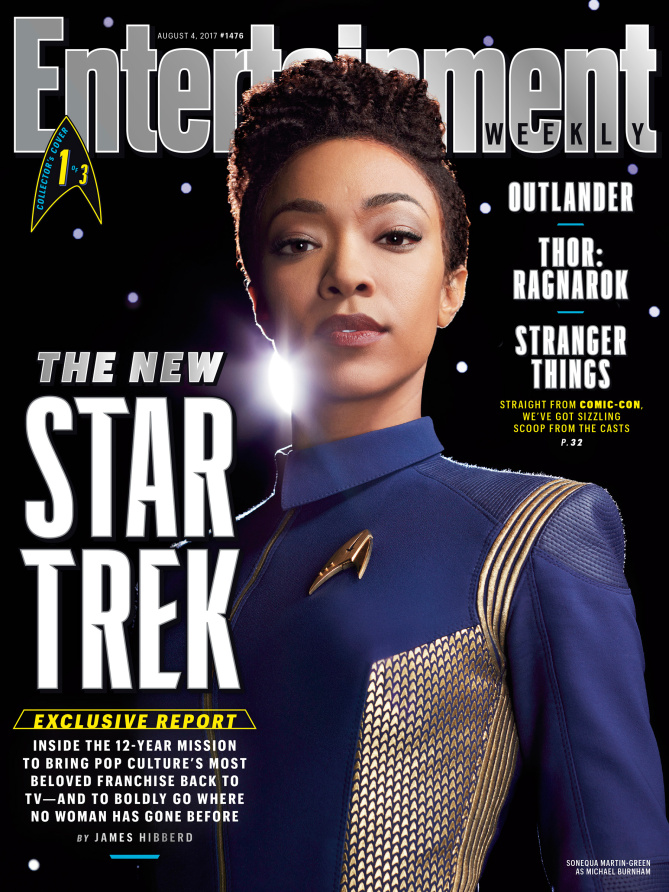
Sonequa Martin-Green as Michael Burnham
Fans shit the bed.
Star Trek: Discovery has faced (and continues to face) a lot of scepticism. After all, this is hallowed ground. You can’t just piss all over the history. 50 years of Trek, and we’ve never heard of Michael Burnham, the girl raised as a step-sister to Spock?
Fear not. Trek lore has not only been respected in Discovery, but enhanced. The Vulcan-centric episode “Lethe” is an emotional backstory to who Michael Burnham is, and even colours in the blanks behind Spock and Sarek’s estrangement. It does so in such a way to soften even the hardest fan’s heart.
Burnham’s parents were killed in a Klingon attack, and she was raised on Vulcan by Sarek (James Frain) as his ward. She was trained in the Vulcan ways, with logic as a tool to govern her human emotions. This background also sets up her fall from grace. Burnham is not the typical Star Trek main character. In the series pilot “The Vulcan Hello”, first officer Burnham commits mutiny on board the USS Shenzhou. Her actions in the first two episodes (including “Battle at Binary Stars”) set up the balance of the series: war with the Klingons!
Being a mutineer making some pretty obvious blunders in spite of her supposed excellent Starfleet record, Burnham is a difficult character to like. Fortunately, actor Sonequa Martin-Green was the right one for the job. Formerly as Sasha on The Walking Dead, she was little more than a background character. Martin-Green was largely untested, until now. She has done an excellent job in her first half-season on Discovery. She remained cold and difficult to like, until finally thawing a little bit in episode 4, “The Butcher’s Knife Cares Not for the Lamb’s Cry”.
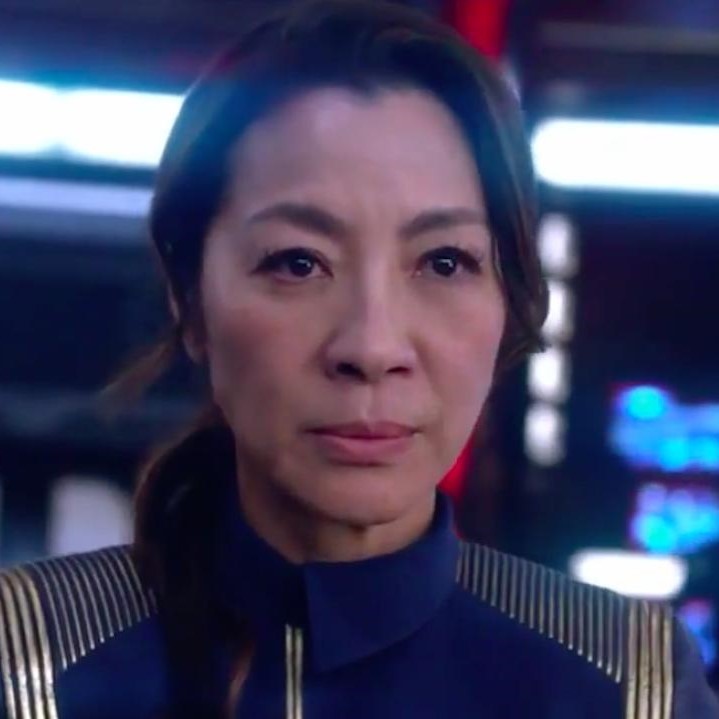
Michelle Yeoh as Captain Georgiou
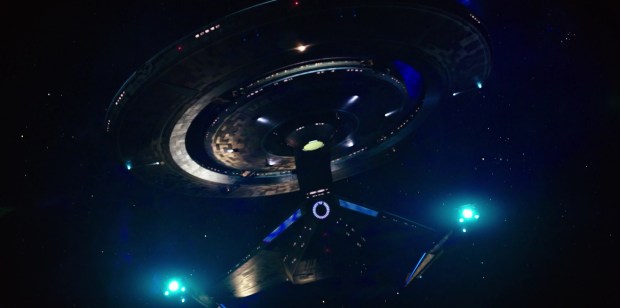
Being difficult to like is intentional. Discovery is not like other series. It begins on the USS Shenzhou, captained by Phillipa Georgiou (Michelle Yeoh), a cool new ship with its bridge under the saucer section instead of on top. Georgiou and first officer Burnham begin as scientists and explorers, but Burnham’s mutiny creates war and a new reality. Episode 3, “Context is for Kings”, introduces Burnham’s new surroundings: The USS Discovery NCC-1031. The titular ship doesn’t even appear in the first two episodes.
The USS Discovery’s on-screen design is based on old concept paintings by Ralph McQuarrie, for the first Star Trek movie. You’ll notice its Star Destroyer-like main hull. McQuarrie designed all the ships in Star Wars too, and because this starship design is decades old, the USS Discovery fits the classic starfleet look. This ship is bad ass. The USS Enterprise, under command of Christopher Pike, is out there somewhere, but the Discovery is fresh off the line. It has all the latest gadgets. It’s a black project and a testbed for new technology, now needed desperately. Over 8000 Federation citizens have died in the war in the first six months. Defeat is not an option, and Discovery is rolled out to unleash war-winning technological breakthroughs. It’s the Manhattan Project of the 2250s. Top secret, high level shit going on here, folks.
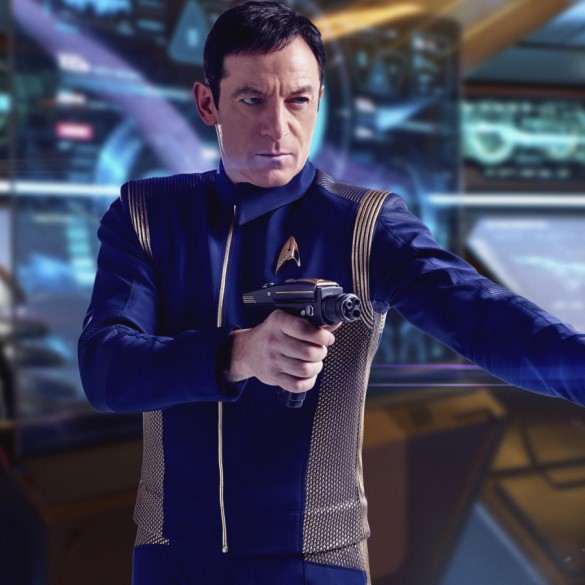
Jason Isaacs as Captain Lorca
How did Burnham, a mutineer, get such a cool assignment? Well, first off, it might not seem that cool once you see what Discovery is up to. And second, her captain, Gabriel Lorca (Jason Isaacs) is not a typical Starfleet captain. He is single-minded and obsessed: victory is the only option and he will stop at nothing, no matter how unethical, to win the war. Lorca is damaged goods, but he’s also very smart and because it’s a black project, he manages to operate under the radar with minimal oversight. Bottom line: He thinks Burnham will be useful, and so he uses her. If you are stationed on Discovery, that means Lorca thinks you’re useful.
This setup enables some very different Trek dynamics. Do you think the crew of the Discovery are happy to have a mutineer on board? One who was responsible for the war in the first place? Highly unlikely. First officer Saru (Doug Jones) is one of her old shipmates from the Shenzhou. Saru, a Kelpian, comes from a planet where his species are only food for other species. Kelpians can sense the coming of death, and let’s just say that Saru’s spidey-senses start tingling when Burnham pops back in his life. Doug Jones embodies the alien Saru perfectly, who is the series’ placeholder for a Spock or Data. In a cool touch, Jones’ height is made abnormally alien with a pair of hooves.

Anthony Rapp as Lt. Stamets
Michael Burnham begins with only one friend on board, her geeky roommate Cadet Tilly (Mary Wiseman). Tilly warms up to the audience when she confides that she’s going to be a captain one day, but she has a lot to learn first. Burnham and Tilly work in engineering under Lt. Paul Stamets (Anthony Rapp), Star Trek’s first openly gay main character (not counting John Cho’s Mr. Sulu, based on George Takei’s original Sulu who wasn’t written or portrayed as gay).
I want to pause here and say something that probably doesn’t need to be said. It took 50 years for Star Trek to finally have an openly gay main character. Star Trek has been so far ahead in many respects over the years, but way behind in this one way. And I love it. It’s been done so well. As an added bonus, Stamets’ relationship with Dr. Culber (Wilson Cruz) is critical to the overall plot of the first season. Without getting too much into spoilers, they are both put into impossible situations because they care about each other. Rapp and Cruz have turned their characters into favourites, and it’s way overdue and I love it.
Rapp’s Stamets could be the show’s most important character. He was essentially drafted to serve aboard the Discovery, as the inventor of the top secret and experimental “spore drive”. It is an organic propulsion system and if Stamets can refine it, Discovery will be able to be anywhere in the known universe in a blink — it is a game changer. But it requires super-computing the likes of which doesn’t exist…unless Stamets can think outside the box.
Presiding over this is Captain Lorca; no-nonsense all the way. He’s been given this ship, its crew of “polite scientists”, and a blank cheque. His orders: end the war in victory. Lorca has his own deeply buried demons. These come to light in “Choose Your Pain”, in which he is captured by the Klingons.
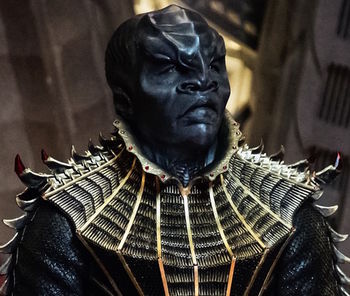
Chris Obi as T’Kuvma
Ah yes, the Klingons. They are Star Trek’s most iconic villains…and in some cases, heroes. They have an established culture, design and hierarchy. Star Trek: Discovery takes its least successful leaps with the Klingons. New ship, costume and makeup designs are really out of place. Remember, this series takes place 10 years before Captain Kirk and “The Trouble With Tribbles”. Klingons looked like humans in that era. It’s a complicated mess of contradictions, but Discovery should not have made it worse by adding in yet another new Klingon design.
The Klingons are problematic in more ways than one. The momentum of the show screeches to a halt any time we cut to Klingon drama. Until recently on the show, they spoke Klingon with English subtitles almost all the time. This changed in the last episode. Never before on Star Trek have we had to endure this much Klingon language. On original Trek, Next Generation, and Deep Space Nine, they had esteemed stage actors saying these lines mostly in English, and it was all very Shakespearean and perfect. Christopher Plummer played a Klingon, fer frak’s sakes. The first bald Klingon, I might add, and now on Discovery, they all seem to be bald. And also bland. The Klingons, with the exception of one, have not been remotely interesting. The exception is L’Rell (Mary Cheiffo), a master of deception and spies.

Mary Chieffo as L’Rell
It is L’Rell who tortures Captain Lorca in “Choose Your Pain”, an important episode that also introduces Lt. Ash Tyler (Shazad Latif) and Harry Mudd (Rainn Wilson). Mudd is a fan favourite character, going back to season one of the original series. As a con man played by Roger C. Carmel in 1966, he is remembered as both comedy relief and a threat. When we meet him on Discovery, he’s a prisoner of the Klingons. Wilson was a casting boon. His Mudd is more dangerous and deadly than Carmel’s, but no less enjoyable. Count on seeing more of Harcourt Fenton Mudd, particularly in the series’ best episode “Magic to Make the Sanest Man Go Mad”.
That episode, “Magic to Make the Sanest Man Go Mad” can also be used to highlight a show weakness. That is recycling previous used Star Trek story devices. “Magic to Make the Sanest Man Go Mad” features a time loop that is very similar to one in The Next Generation’s “Cause and Effect”. There are others as well. A planet that changes the personality of an alien character: “Si Vis Pacem, Para Bellum” is like “The Other Side of Paradise”. You can keep going.
However there have also been sparks of originality. Lt. Stamets’ spore drive opens up some new concepts previously unexplored in Trek, inspired by more recent discoveries in the quantum field. A few episodes challenge ethics in the face of emergencies. The format of a serialised story is unusual in Star Trek. Long story arcs were previously used in Enterprise and Deep Space Nine, but not to this degree. This is what audiences today are familiar with. Sonequa Martin-Green is now an expert thanks to her time on The Walking Dead.
Star Trek: Discovery will return in January for Season 1, Chapter Two. It has also been renewed for a further season beyond this. This mid-season break will give them a chance to address some problems. Pacing is an issue when we cut to Klingon scenes. The language issue might have been rectified recently with the introduction of a universal translator. It would also be nice to settle some continuity problems, especially visually. Will we see traditional Starfleet uniforms, for example? We know they are being used around this period, due to their appearance in 1965’s pilot episode “The Cage”, which actually takes place two years prior to Discovery in the timeline. (This also raises the possibility of a future meeting between Captains Lorca and Pike, and a reunion of Spock and Burnham.)
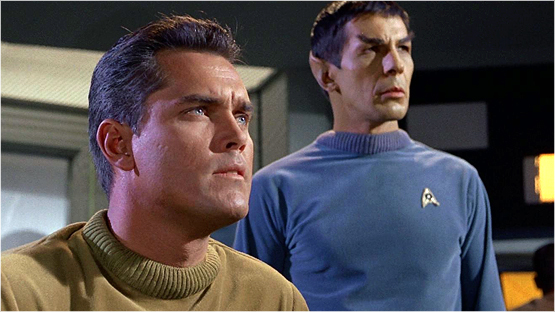
Jeffrey Hunter and Leonard Nimoy as Captain Pike and Mr. Spock, in original uniforms (1965)
Star Trek series typically have a bumpy first season as kinks get worked out. If we assume this pattern will continue, then Discovery should turn out to be an exciting show for Trek fans. Certainly the space battle action scenes have been highlights. Let’s see more of that.
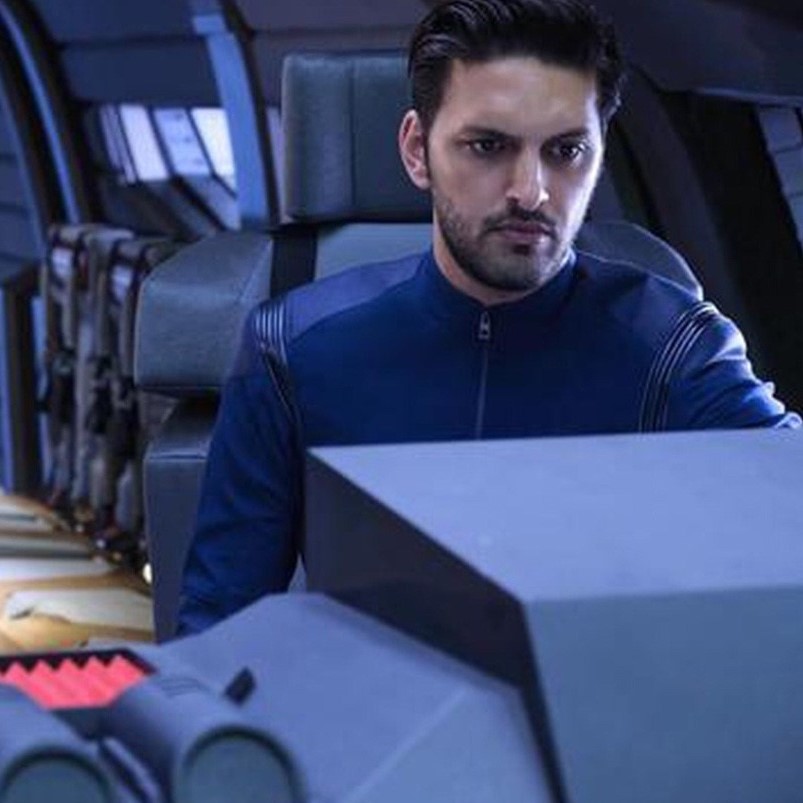
Shazad Latif as Lt. Tyler
Let’s also see more of characters like Dr. Culber, Paul Stammets, Captain Lorca, and Ash Tyler. Tyler, by the way, is one of the most controversial characters. There are fan theories (too many spoilers to discuss!) that suggest Tyler may not be who he thinks he is. Season 1, Chapter Two promises that his backstory will be further revealed, including his torture at the hands of Klingon L’Rell.
Even if certain continuity problems are never addressed, Discovery has made it an exciting time to be a Star Trek fan again. Old Star Trek always had its problems with continuity, far too many to list. If we can accept those, then let’s remain open minded.
Yes indeed, it is a great time to be a Trek fan. In 1987, I remember fans thought The Next Generation was stiff, and we complained that it copied original Trek a bit too closely at times. Everyone thought Jonathan Frakes looked like he was supposed to be Shatner. Their pajama-like uniforms and Wil Wheaton made us all cringe, remember? You hated Wesley too — don’t lie just because he’s on Big Bang Theory.
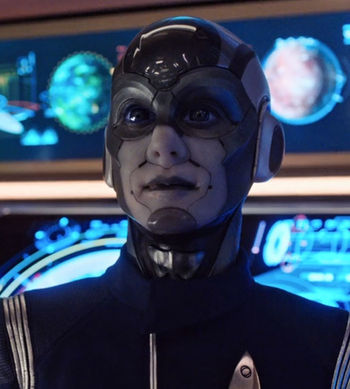
Sara Mitich as Airiam
Today, The Next Generation is revered by some as the best series of them all — or certainly the one with the best captain, right Patrick Stewart fans? Things change, and we know we have two seasons for them to get things running right. I’d like to see more of the background cyborg character, Lt. Commander Airiam (Sara Mitich). We already know there are episodes coming directed by Jonathan Frakes (Star Trek: First Contact and Star Trek: Insurrection). And we expect that Lt. Stamets’ experiments with the spore drive has opened some kind of portal to the Star Trek “mirror universe”…where good is evil and evil is good. Can you picture a bearded Stamets? Lorca, perhaps. Or would the mirror Lorca be the good one?
See? It’s a great time to be a Trek fan.
This could just be the excitement talking, but I think Discovery is getting better and the best is still coming.
3.5/5 stars
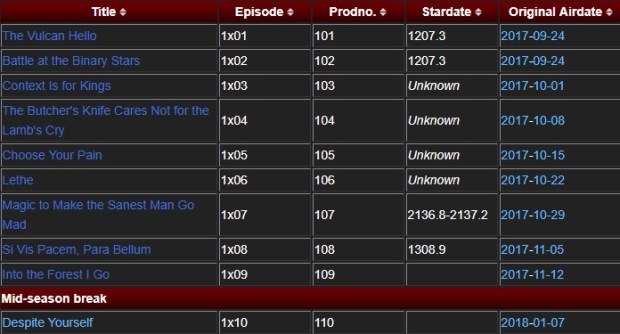
Star Trek: Discovery episodes from Memory Alpha, the Star Trek Wiki
Share this rock:

Sunday Chuckle: Bum Gum
I was brainstorming some stories this week when I suddenly remembered one involving best buddy Bob, one of the Jedi masters who instructed me in the ways of rock.
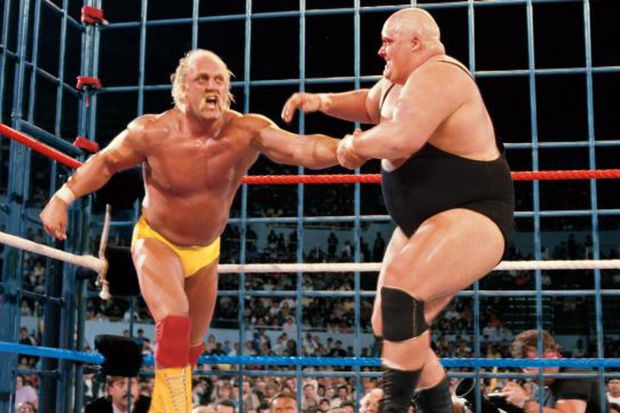
It was early 1986, and Bob and I were gearing up for Wrestlemania II: Hulk Hogan vs King Kong Bundy in a cage match! We went to the park and wrestled in the snow. We pretended to be Hogan while one of the snowbanks was King Kong Bundy.
Another kid from the neighborhood showed up, Billy Seabrook. Neither of us liked Billy Seabrook. He wrestled a bit with Bob, who bodyslammed him into a snowbank. Suddenly Seabrook dropped his pants and said “Look at this!” There was a piece of poo in his underpants.
Bob started making fun of him for pooing his pants, and that was when Billy claimed it was just a piece of gum that he saved there.
Bum Gum. I don’t think that’s an actual thing!

 mikeladano.com