At the the 11th hour of the 11th day of the 11th month in 1918, the Armistice was signed, ending the fighting in the Great War. At least, they called it the Great War, or “The War to End All Wars”. Today we just call it World War I, because even greater horrors followed.
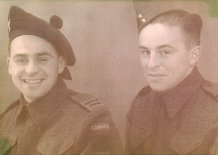
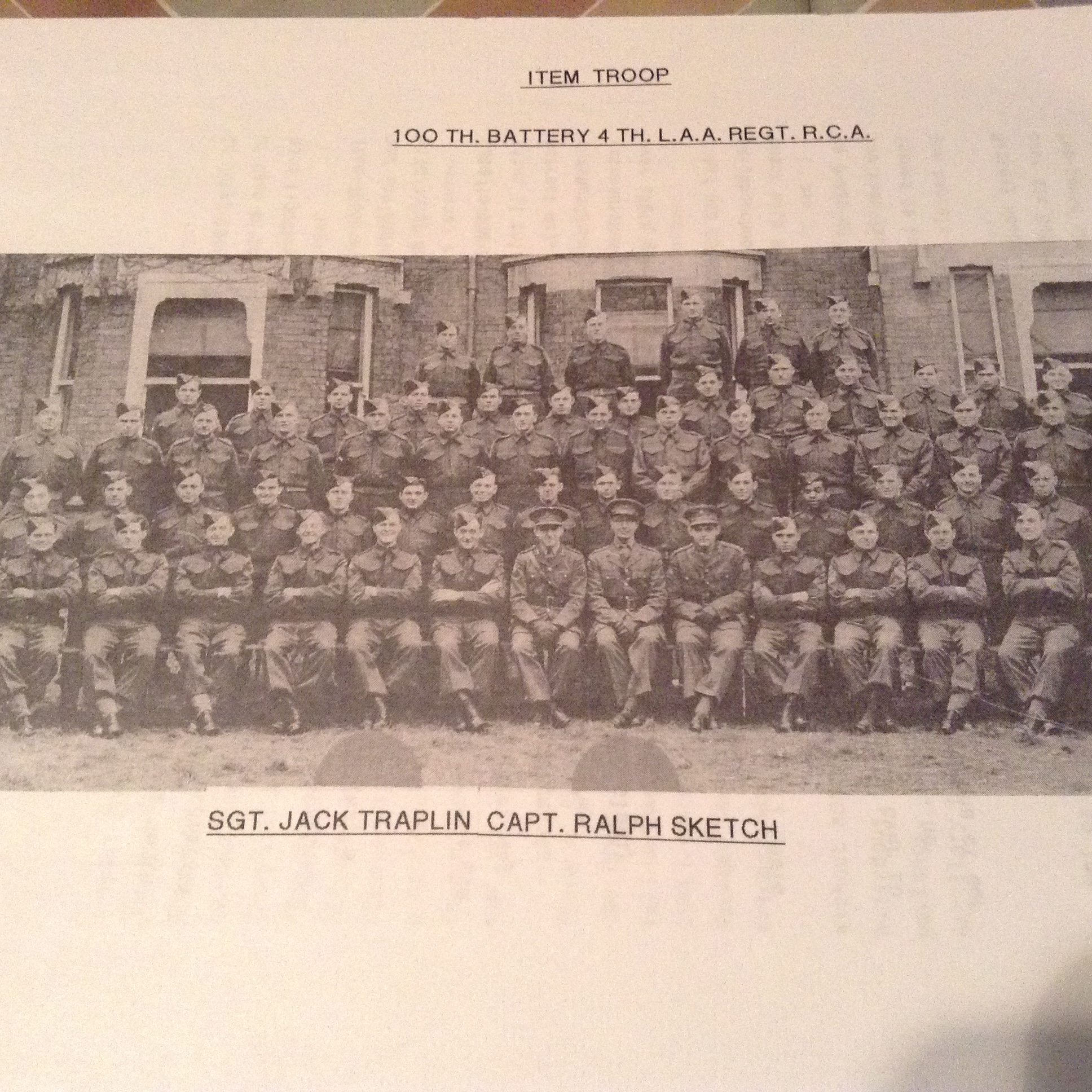
My grandfather “Sam” (Crawford) fought in World War II, helping bring an end to the evil of Hitler and Nazi Germany. I think my grandfather would be disgusted today to see Nazis being referred to as “very fine people”. What did he fight for, if we are to casually welcome that evil back to the streets?
“Gar” and “Sam” Winter
We can never forget the sacrifices those soldiers made. My grandfather survived and came home to raise a family with my grandmother. His brother wasn’t so lucky. He lived, but was injured in the trenches and he never walked right again.
I tend to think of the veterans and the soldiers of the present year round. My wife goes out of her way to thank veterans any time she sees one in uniform. I think of them every time I am free to write whatever I want to, in this great land of Canada. Had the Nazis won, there would be no freedom here. On November 11, at 11am, we have a moment of silence to honour all the soldiers from every war in which they fought and died for our freedom. That is an important tradition to keep. But I think we should think of them more often.
“Sam”
My grandfather rarely told war stories around the kids, but I do remember one night when he told my dad about looking up and seeing a Panzer tank coming. “I shit my pants,” he said and I think he was being truthful. Imagine those young guys — kids, really — in a country far from home, running from a tank. The bravery is awesome. I can’t even imagine.
My grandfather died (cancer) when I was too young to appreciate what he did. I knew he fought, and I got to watch him lay a wreath at the cenotaph every November 11. I didn’t understand the significance of what it means to be a soldier until I was older. If I were a little older, I would have tried to get him to tell me about it.
Bryan Adams’ 1987 album Into the Fire has the best song about Remembrance Day that I know. This very special track was made into an emotional music video. In 2014, The Trews came out with something almost as good: a song called “Highway of Heroes”. The Highway of Heroes is an actual highway (the 401), given this nickname for the stretch of road on which the bodies of fallen soldiers are brought home. The Trews’ song is a touching tribute.
Check out these two songs and remember why you’re even able to listen to them. Because of the Heroes.
Chuck Mosley, the guy who Cared a Lot, has passed away at age 57 due to his struggles with addiction.
Chuck wasn’t the first Faith No More singer (even Courtney Love was there before him) but he was the guy who put them on the map with two excellent, outrageous albums: We Care a Lot and Introduce Yourself. Without Chuck, it is entirely possible there might not be a Mike Patton, who was a huge fan already when he took over the frontman role. After Faith No More, he spent some time with Bad Brains and as a solo artist.
Chuck was different to the end. Never one to make safe music. We will miss you, Chuck.
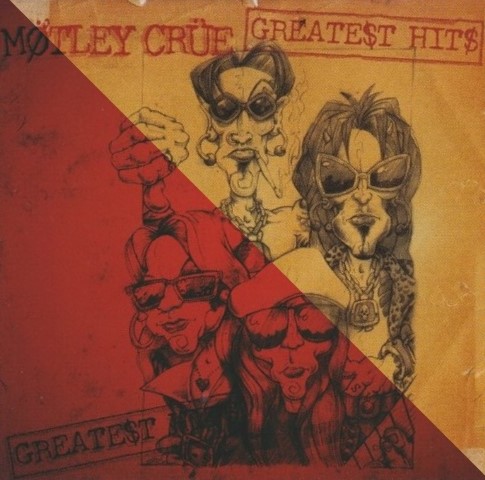
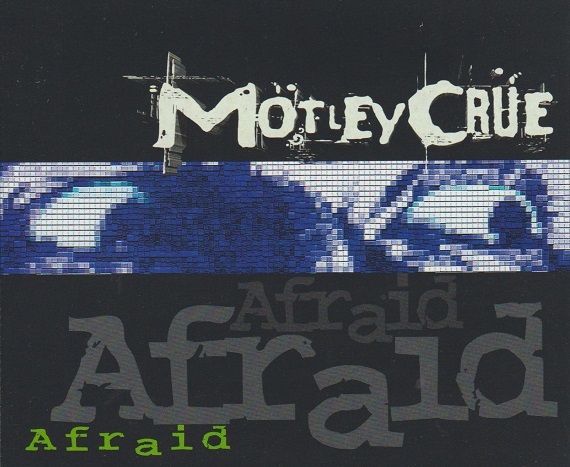
Most fans will agree that Motley Crue’s 1997 reunion album Generation Swine was, at best, disappointing. The Crue tried to right the ship by returning to producer Bob Rock. Together they came up with two new songs, “Bitter Pill” and “Enslaved” that recalled better days. We discussed the wherefores and origins of 1998’s Greate$t Hit$ album in Getting More Tale #611: Afraid, on which the two new songs were released. As you’ll read here, the 1998 issue of Greate$t Hit$ is better than its 2009 update.
Both “Bitter Pill” and “Enslaved” bring Motley’s sonics back to their previous setpoint with Vince Neil, Decade of Decadence. The combo of Motley plus Bob Rock produces the kind of results you expect: punchy, heavy rock tunes with hooks. Neither is as memorable as “Primal Scream”, but serve their function. If this lineup had stayed together perhaps they could have taken it further, to the next stage of evolution. Tensions between Vince and Tommy Lee eventually erupted. Tommy left the band to pursue his own sanity and a side project called Methods of Mayhem.
The ’98 Greate$t Hit$ also offered up one other cool bonus: a previously unreleased remix of “Glitter”. It’s softer and more electronically processed, but a very cool alternate version. Dropped into this running order, Greate$t Hit$ turns out to be a remarkably fun and consistent listen. It would be a highly recommended way to get a broad assortment of great Motley and some rarities too.
Then, as part of the promotional cycle for a later, better reunion album (2008’s Saints of Los Angeles), Greate$t Hit$ was updated and reissued. Including its previous incarnation, the 2009 Greate$t Hit$ became the fifth Motley Crue best-of compilation (not counting box sets and rarities compilations).
So what’s the difference?
13 tracks overlap between the two: “Too Fast For Love”, “Looks That Kill”, “Smokin’ In The Boys Room”, “Home Sweet Home”, “Wild Side”, “Girls, Girls, Girls”, “Dr. Feelgood”, “Kickstart My Heart”, “Don’t Go Away Mad (Just Go Away)”, “Without You”, “Primal Scream”, and “Afraid”. The 13th track is “Shout At The Devil”. In 2009 they used the original version, where on the old CD it was “Shout At The Devil ’97” (a re-recording from Generation Swine).
Three tracks were previously released as “new” songs on other greatest hits CDs: “Primal Scream” (Decade of Decadence), “Sick Love Song” and “If I Die Tomorrow” (Red, White & Crue).
Two tracks were from the newest Motley platter, Saints Of Los Angeles: The title track, and a brand-new remix of “The Animal In Me” featuring more keyboards.
Zero tracks from the albums Motley Crue or New Tattoo are included (neither album had all four original members).
There are 19 songs total included, which is a beef-up from the 1998 version, which had 17 songs. “Bitter Pill” and “Enslaved” were excluded, but both are available on Red, White & Crue (2005). The remix of “Glitter” from the 1998 version is not and is now deleted.
The songs on the update, unlike the 1998 version, are mostly in chronological order. The exception is “Afraid” which is shuffled out of place with “Sick Love Song” for reasons unknown. The flow of the album is OK, with the kickass “Too Fast For Love” starting the proceedings. The mixture of rockers to ballads is engineered for high octane, and the ballads only kick in when needed. The album only runs out of gas towards the end: “Sick Love Song” isn’t very good didn’t require a second look here. “Bitter Pill” should have been kept instead. The final track “The Animal In Me” is just too slow for a closing song. “Saints Of Los Angeles” would have been more appropriate to close this set.
Even though the 2009 update has 19 songs compared to 17, the ’98 version wins due to the inclusion of “Bitter Pill” and “Enslaved”. It’s more enjoyable listen from start to finish, with better flow and song order. The ’09 Greate$t Hit$ smacks of an obvious cash grab. Check out the liner notes. They haven’t even been updated. The essays are 10 years out of date, the notes refer to the “two new songs” (which aren’t there), and the back cover artwork still reflects “Bitter Pill”. Essentially, the only changes to the packaging are the colours with a new slipcase added, displaying a newer band photo from the Saints sessions.
1989: A clean and sober Motley Crue take over the world. Dr. Feelgood climbs to #1 and the band rivals Bon Jovi and Def Leppard in the popularity stakes.
1990: Motley continue to tour and rock them all, while announcing their next album will be a “greatest hits”.
1991:Decade of Decadence is released, keeping Motley on the charts. The new single “Primal Scream” is well received.
1992: In a shock announcement, Vince Neil is fired from the band. Unfortunately Motley are not the only rock band to lose their singer at the beginning of the 90s.
1993: Vince Neil’s solo debut Exposed is greeted by warm reviews. Motley continue to toil in the studio with new singer John Corabi.
1994: Five years after Dr. Feelgood, the re-imagined Motley finally return with the self-titled Motley Crue. Corabi blows ’em away, but the album fails to sell. Motley is forced to do a scaled down tour while the CD dropped off the charts.
This was the state of the Crue in the mid 90s. They had released an incredible album. Today, many fans rate it in the top three, or even at the #1 spot. My near-legendary Record Store cohort T-Rev agrees. “To me, they sounded more like a hard rock band than a hair metal band, because of that album.”
Absolutely true. They stepped far beyond the preconceived notions of Motley Crue. Guitars were detuned, lyrics were topical or personal. Tracks like “Smoke the Sky” might have passed for Soundgarden. On the other side of the coin, “Misunderstood” was an epic power ballad featuring an orchestra and Glenn fucking Hughes. There wasn’t a weak track in the bunch, but plenty of variety.
Most fans didn’t embrace it at the time, and instead moved on to current bands. Back then, nobody was interested. No Vince, no Motley? No way. Corabi was absolutely the right guy at the right time. Motley added his rhythm guitars and songwriting abilities, not to mention far more aggressive singing. The band had only gotten better. But by recording an uncompromising album with an unknown singer, they were indeed taking a chance. It didn’t pay off. When I was working at the Record Store, there was a giant pile of unsold Motley Crue CDs taking up space. They sat next to an equally tall pile of David Lee Roth’s Your Filthy Little Mouth. All the kings seemed to have been usurped.
At the Record Store, I first befriended the aforementioned T-Rev. The fact that both of us loved the Motley album didn’t hurt. T-Rev was the only person I knew who appreciated what they did. He loved that huge overproduced drum sound. Back in 1989, everybody had a Motley Crue T-shirt in the highschool halls. In 1994, we couldn’t get anyone to listen.
Through 1995 and 1996, magazines reported that Motley were back in the studio, working on a followup with Corabi. Bob Rock was back in the producer’s chair and the band wrote new songs such as “Personality #9”, “Let Us Prey”, “La Dolce Vita” and “The Year I Lived In A Day”. Things seemed to be going well, but record company pressure was intense. Bob Rock’s style was now passé and he was fired. Engineer Scott Humphrey was promoted to producer, and electronics began to dominate.
The pressure was not only on Motley Crue, but focused directly on John Corabi. Elektra records were eager to get Vince Neil back, a true “star”. John was getting frustrated in the studio while this was going on. Nothing he sang seemed to be good enough for Motley Crue anymore. He was asked to sing like Oasis or the Sisters of Mercy. John suggested that he just play rhythm guitar while they get Vince Neil to sing. Somehow, this made its way into the rumour mill. Before John Corabi was eventually fired, T-Rev and I had heard that Motley were considering this very same five-piece lineup. What a glorious sounding thing that could have been.
Ultimately the band fired John and got Vince back. They attempted to piece together the album that they’d been recording and re-recording and re-re-recording again. Mick Mars was frustrated as well, as his guitar parts kept getting rejected and remixed. In particular, Mars did not function well with Scott Humphrey.
Personally speaking, I lay these problems at the hands of Scott Humphrey. I read the book The Dirt, and that’s certainly where the band lay most of the blame. Have a look at Humphrey’s credits though. Lots of records loaded with electronics, like Rob Zombie’s Hellbilly Deluxe and Tommy Lee’s solo stuff. Humphrey started out as a keyboard player and programmer, and I think that high-tech style does not work with Motley Crue. That’s my personal opinion, never having met Scott Humphrey. I did, however, have a customer at the Record Store who knew Scott Humphrey, who is actually from Kitchener Ontario.* “Motley Crue were the problem,” he told me. “They were messed up on drugs.” They were also unfocused musically.
On January 27 1997, the reunited original Motley Crue performed on the American Music Awards. Mere months after being teased by a similar Van Halen reunion on the MTV Awards, I was relieved that Motley were playing a song rather than just standing there. But what the hell song was it?! Some strange, techno-y version of “Shout at the Devil”? It was strange, unexpected and underwhelming. Hey, cool, it was a fresh spin on an old classic. But…why?
We soon found out. The album Generation Swine came out on June 24 1997. As usual, T-Rev and I got it a few days in advance. “It sucks!” he warned me. Of the first single “Afraid”, he said “It sounds more like Def Leppard than Motley Crue.”
“Afraid” is the best song on the album, which does frankly suck. In a single stroke Motley went from one of their best albums, to one of their very worst. It was astounding how desperate they sounded, trying to incorporate these influences that have nothing to do with Motley Crue. The loops and samples and effects ruined many of the songs, but some just weren’t that good to begin with. This considered, it was an even bigger surprise that Nikki Sixx and Tommy Lee were singing lead vocals too. Sixx’s silly opener “Find Myself” was a nauseating faux-punk novelty song. Generation Swine was also unfocused in the extreme, and the muddying effects didn’t help. The electronic treatments on the drums rendered them limp, compared to the massive sound of 94’s Motley Crue. Absolutely everything on Generation Swine was inferior to Motley Crue.
Three CD singles were released for “Afraid”, which was remixed so many times trying to get it right, that they used some of the various versions as bonus tracks. The album version is fine enough, and in this one instance, the electronics enhance the song. I’d rather hear “Afraid” with the effects than without.
What did other fans think? When Generation Swine was new, one of my customers wanted to hear it before buying. “I saw that Vince Neil is back. Have you heard it?” he asked me, and I told him the truth. He was sceptical of my review, but changed his mind upon hearing it. “It doesn’t sound like them,” he said, and he’s right. I then cajoled him into listening to the 1994 album. He didn’t want to, because it didn’t have Vince Neil, but agreed to give it a shot.
Guess which album he bought? Motley ’94.
At least there’s some redemption, if only temporarily. During the Christmas season of 1998, T-Rev once again called me up to tell me about Motley Crue. There was a new compilation out, called Greate$t Hit$ [review coming tomorrow]. This time, there were two new songs: “Enslaved” and “Bitter Pill”. Both were produced by Bob Rock.
“The new songs aren’t bad,” said T-Rev. “A lot better than Generation Swine. Not as good as ‘Primal Scream'”
Right again, T-Rev. Not bad. An improvement, but not as good as what they did the first time out. That was enough for me to buy the CD. Not for Trevor, though.
I think Motley Crue were on the right track with “Enslaved” and “Bitter Pill” after the failure of Generation Swine. They obviously knew that album didn’t work, so they went back to the last thing that did. Both songs are growers, and still raise a smile to hear. Unfortunately Motley Crue blew it again. Tommy Lee and Vince Neil had a dust-up at an airport, and Lee split. He was replaced by former Ozzy Osbourne drummer, Randy Castillo.**
Fans like T-Rev and myself always supported the 1994 album, and today we’ve been justified. More and more fans have realised the quality of that CD, and increasingly hold it in high esteem. There’s something about that CD, and I’m afraid that Motley Crue never came close to touching it since.
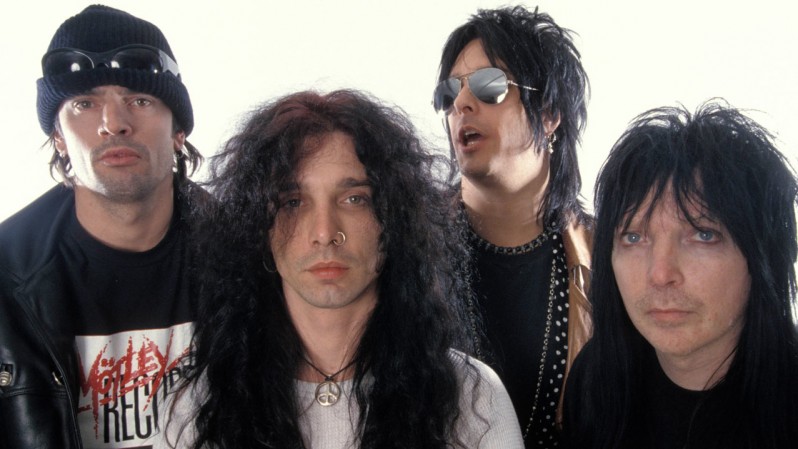
Tommy Lee, John Corabi, Nikki Sixx & Mick Mars
* Fun fact! T-Rev’s mom dated Scott Humphrey!
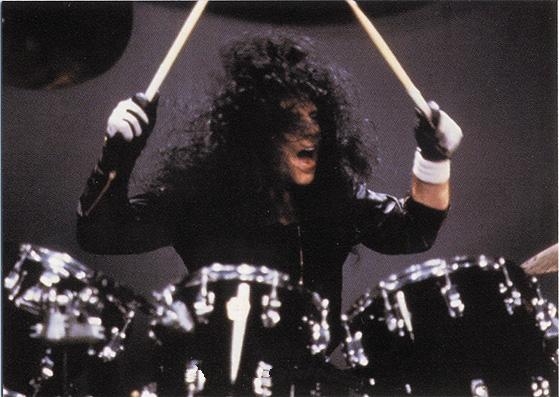
** In a very sad turn of events, Castillo never got to tour with Motley Crue. He became ill and died of cancer on March 26, 2002 at age 51. His replacement, Hole’s Samantha Maloney, did the tour and resultant live video.
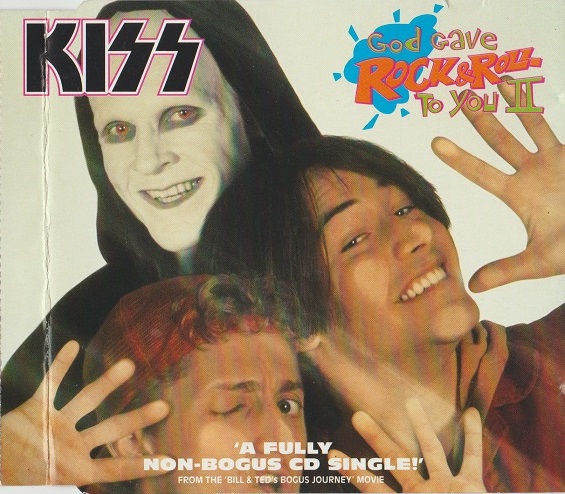
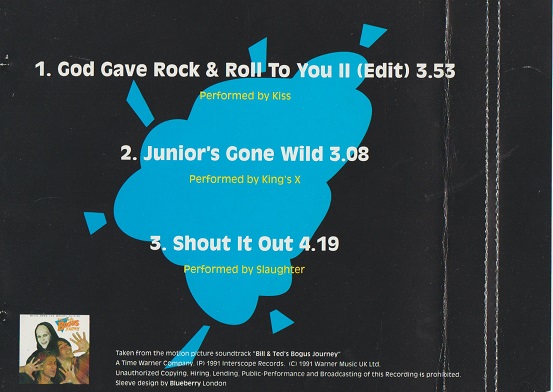
– “God Gave Rock & Roll to You II” (1991 Interscope single)
Kiss’ Hot in the Shade tour wasn’t a sellout, but it was well received by fans who appreciated that a bunch of older songs were back in the set. The tour was unfortunately highlighted by the June 15, 1990 date in Toronto, igniting a feud with Whitesnake. Kiss were third on a four-band bill, with David Coverdale, Steve Vai and company in the headlining slot. Paul Stanley used his stage raps to complain that Whitesnake wouldn’t let them use their full setup, including a giant sphinx. When Whitesnake hit the stage, it was to a chorus of boos. Steve Vai later stated that it was the first time he had ever been booed. Vai once even walked onstage to the sound of people chanting “Yngwie! Yngwie! Yngwie!”, but he had never been booed until the incident with Kiss in Toronto.
When the tour wrapped up in November, Kiss took a few months off before gearing up again in the new year. It was to be another album, another tour, but suddenly real life interfered.
Eric Carr hadn’t been feeling well. Flu-like symptoms turned out to be heart cancer. Simultaneously, Kiss received an offer to record a song for the sequel to Bill & Ted’s Excellent Adventure. Carr underwent surgery in April, with chemotherapy following. Having little choice, Kiss recorded without him. Eric Singer, who had performed so well on Paul Stanley’s solo tour, filled in on drums. Eric Carr, in a wig, was able to play for the music video taping. He gave his all, and did a full day’s shoot, with excellent (pun intended) results.
Unfortunately a rift was developing, with Eric Carr feeling shunned and excluded from Kiss. He was afraid he was going to be replaced, permanently, and his relationship with the band was strained. Although everybody hoped Eric would make a full recovery, he passed away from a brain haemorrhage on November 24, 1991. Eric Carr was 41.
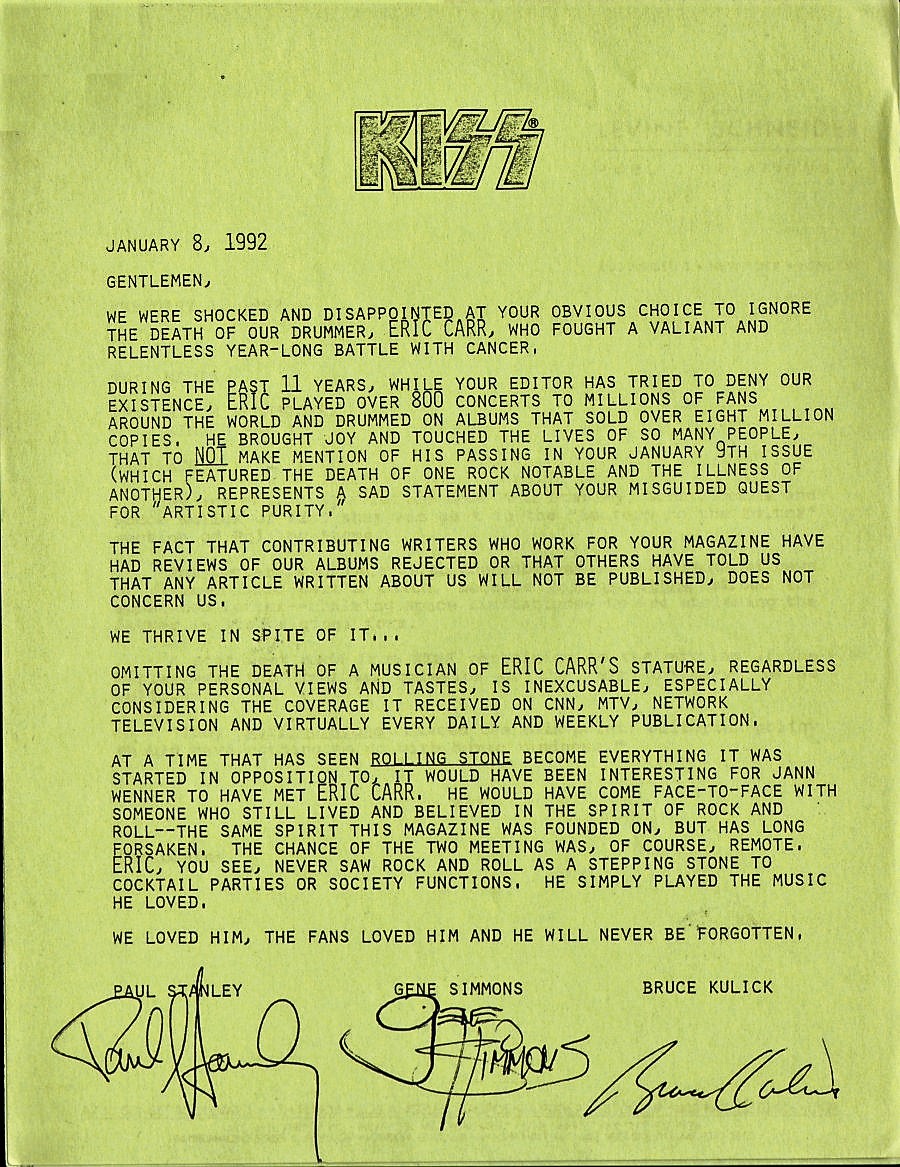
On the same date, Freddie Mercury of Queen succumbed to AIDS. Carr’s death was barely mentioned in the news, including Rolling Stone magazine who missed it completely, prompting a harsh reply from Kiss:
If anything positive came from Eric Carr’s death, it was that Kiss were going to put all that anger and frustration back into the music. The music was to be their Revenge.
It started with “God Gave Rock & Roll to You II”, a re-imagining of an old Argent song for the Bill & Ted movie. Eric Carr may not have been well enough to play drums, but that didn’t stop him from singing. His vocals on “God Gave Rock & Roll to You II” were his last. The song wouldn’t be the same without Carr, as he can be heard sweetly harmonising with Paul Stanley. Eric Singer wasn’t credited on the single, or the final soundtrack for Bill & Ted’s Bogus Journey. It simply says “performed by Kiss”.
“God Gave Rock & Roll to You II” was important for two more reasons. First, and very significantly, it was produced by Bob Ezrin. Ezrin was responsible for the two albums that some consider Kiss’ best, and Kiss’ worst. It had been 10 years. A Kiss-Ezrin reunion was very big news for fans. It indicated that Kiss meant business this time. Secondly, “God Gave Rock & Roll to You II” was the first Paul Stanley/Gene Simmons (with Bob Ezrin and Russ Ballard) co-writing credit since 1985, and their first shared vocals in ages upon ages.
Although it didn’t make waves in 1991, “God Gave Rock & Roll to You II” has become enough of a favourite to make it onto 2015’s Kiss 40 compilation, and continue to be played live. It shows off what Kiss can really do. Yes, they can sing! Yes, they can play! This lineup could do it particularly well. It’s appropriate that Eric Carr went out on a good Kiss track. And Eric Singer was the right guy to continue.
There are three released versions of “God Gave Rock & Roll to You II”: The single edit (3:57), the soundtrack version (5:23) and the final 1992 version that was later released on the next Kiss album (5:19). The single edit cuts out too much of the grand, pompous arrangement, including the epic opening.
In an ironic twist, the version of “God Gave Rock & Roll to You II” that is in the movie has a guitar intro solo by Steve Vai. The same guy whose band got booed in Toronto thanks to Kiss.
The CD single is rounded out by two more songs from the Bill & Ted soundtrack, by Slaughter and King’s X. The King’s X track, “Junior’s Gone Wild” (previously reviewed in our mega King’s X series) has never been one of their better tunes, but as a non-album rarity, a nice one to have. Just don’t judge King’s X by this one track. Slaughter turned in something better, a fun party tune called “Shout It Out”, also a non-album recording. Slaughter, of course, were one of Kiss’ well-received opening acts on the Hot in the Shade tour. And what was their Kiss connection? Mark Slaughter and Dana Strum were in a band with Kiss’ old guitar player, called the Vinnie Vincent Invasion!
As work proceeded on the next LP, the world suddenly changed. Hard rock was out, and grunge took over MTV. This single bought Kiss a little bit of time, but it was going to be the longest gap between Kiss albums yet — three years. Revenge had to wait a little longer.
GETTING MORE TALE #610: 25 Years Ago – Digital Compact Cassettes
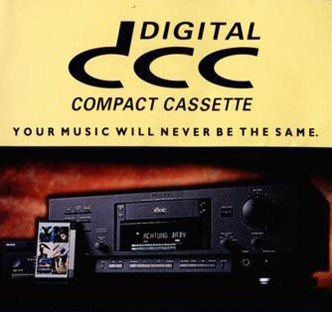
Every once in a while, you stumble upon some old obsolete media format that you never knew existed in the first place. 25 years ago, the Digital Compact Cassette was announced by Philips and Matsushita. Philips and Sony launched the CD together, but this time Philips sought a new partner for its Digital Compact Cassettes. It was designed to replace the standard audio cassette in a way that CD hadn’t yet: it was recordable. It was a direct rival to the Minidisc and DAT tape, neither of which caught traction.
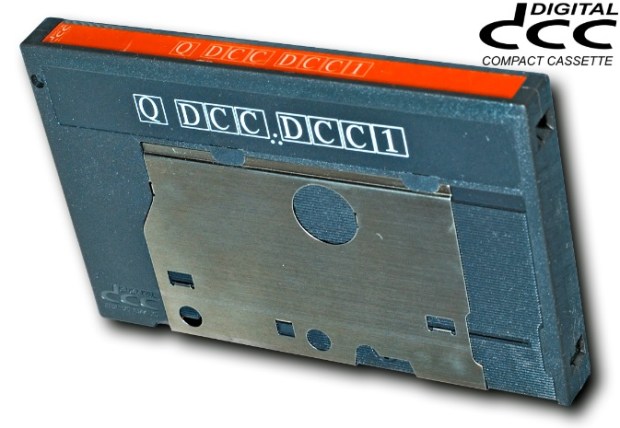
The 1992 Digital Compact Cassette player had one benefit that the other formats lacked. Players were backwards compatible. You could play all your old tapes on them as well as the new DCC tapes. The tapes themselves looked much like cassettes but with spool holes on one side only. An added feature was a sliding metal guard, similar to those on floppy discs, to protect the tape inside. Different players were marketed, including components for your home system, portable Walkman-like devices, and car tape decks. Signalling the shape of things to come, there was even one player that could connect to a desktop PC.
Another benefit to the new format was that players used fixed magneto-resistive heads, which didn’t require any demagnetizing. They were more resistant to wear and tear. Cleaning was something you still needed to do with these players, and more frequently. Unfortunately for DCC, there was already a lot of competition on the market, and the Sony Minidisc appeared to be winning.
The new Digital Compact Cassettes were not a huge technological step ahead. The cassettes ran at the exact same speed as a standard audio tape, and were the same width. The tape used was the same grade as VHS tapes. They could hold a maximum of 120 minutes, about the same as the max for an audio cassette tape, though no 120 minute DCC tapes were ever made. By comparison, a DAT tape could hold three hours, and a Minidisc 80 minutes (same as an audio CD).
Each DCC tape had 18 tracks, or nine per side. The main eight tracks held the audio information, while the ninth could be encoded with the metadata: track names, numbers, lengths and so on. This allowed the player to be able to find any spot on the tape that you wish. There was even copy protection available. If a tape was encoded as a “protected original”, in theory you couldn’t make a copy.
Ultimately, the desire for a digital but recordable audio format was fulfilled by CD itself. A DCC player could range from $600 to $1700, and with so many people still buying CD players, that wasn’t a viable price. Recordable CDs fit the bill, once they came down in price in the late 1990s (formerly about $200 per single CD-R). The cassette format died its well-deserved death. Digital Compact Cassettes are barely a footnote, but the magneto-resistive heads have since become a crucial component of PC hard disc drives. Even rejected tech can often lead to another.
There’s one final footnote to the story of the Digital Compact Cassette. The film covering of those new innovative tape heads found usage in an unlikely place: brewery filters. The microscopic holes in the material turned out to be perfect for nice clean and clear beer. And you have old obsolete cassette tech to thank!
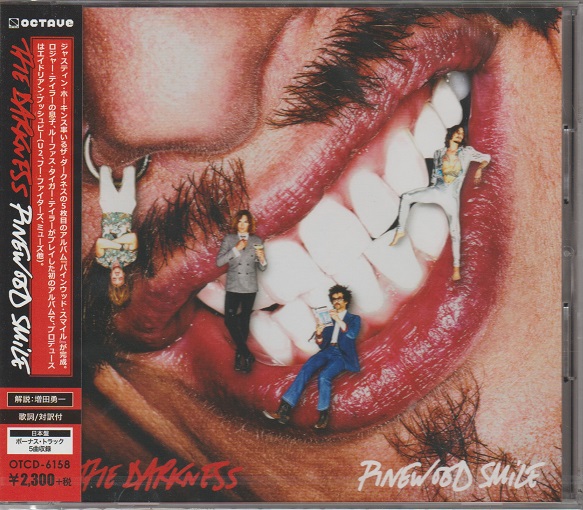
THE DARKNESS – Pinewood Smile (2017 Canary Dwarf Japanese printing)
Please welcome Rufus Tiger Taylor to the drum kit! Son of Roger Taylor (the guy from The Darkness’ biggest influence, Queen), I think we can assume this kid knows his way around a drum set. It’s the third drummer in three albums for The Darkness. Original member Eddie Graham was on board for Hot Cakes (2013), but he was replaced by Emily Dolan Davies for Last of Our Kind (2015).
The Darkness are The Darkness are The Darkness — don’t expect them to ditch the operatic vocals or bombastic arrangements. Pinewood Smile is more of what fans love, perhaps turned up just a little bit louder than before. Indeed, the second track “Buccaneers of Hispaniola” sounds like The Darkness have been listening to a lot of Queen II on maximum volume. “Japanese Prisoner of Love” has similar epic Queen inspirations, but melded to a momentous thrash metal riff.
Their penchant for humour remains unabated. “And we’re never gonna stop shitting out solid gold!” sings Justin Hawkins on one radio-ready rock tune. “Southern Trains” features the truism “There are fucking assholes everywhere.” We must assume the trains in the south of England are shite: “Fuck you, southern trains, we’re not getting anywhere!”
Of course, what would a Darkness album be without a few ballads? It can’t be all heaviness and gloom. “Why Don’t the Beautiful Cry?” is a quite lovely acoustic Darkness ballad. Bright and sunny “Happiness” is the gleeful mood of early Darkness returned. There are a number of exceptional diverse tracks as well, that defy categorisation. “I Wish I Was in Heaven” and “Lay Down With Me Barbara” stretch out, incorporating different elements both hard and soft, but always catchy as the plague. The standard album closer “Stampede of Love” is a folksy “Blackbird”-ish duet with Justin and Dan Hawkins…but stay tuned for a manic unlisted coda!
On to the bonus tracks — four on the deluxe edition, five on the Japanese. These are a little stranger than the standard album tracks. What is a “Uniball”? Ummm…it’s when you have to have one testicle surgically removed. Yes, The Darkness wrote a heavy metal song about it. B-side worthy “Rack of Glam” is a decent pun with a punchy chorus. “Seagulls” is quite exceptional, highlighted by mandolins and a slight celtic flavour. Maybe the subtitle “Losing My Virginity” is why it ended up as a bonus track. Also brilliant is “Rock in Space”, the most pompous and bombastic track of the group.
The Japanese exclusive track is a demo of “Why Don’t the Beautiful Cry?”, which is a real treat. Stripped back to just the basic acoustic arrangement, you can really just listen to Justin and Dan harmonising. No drums, no bass. Even though it’s just a demo, you can choose which version of “Why Don’t the Beautiful Cry?” is your favourite, because both have merits.
What Pinewood Smile lacks, compared to previous Darkness albums, is an immediately loveable pop rock standout track. Something like “She Just a Girl, Eddie” or “Last of Our Kind”. Pinewood Smile doesn’t have those kinds of songs, but hopefully this means we’ll still be listening to it a year or two later.
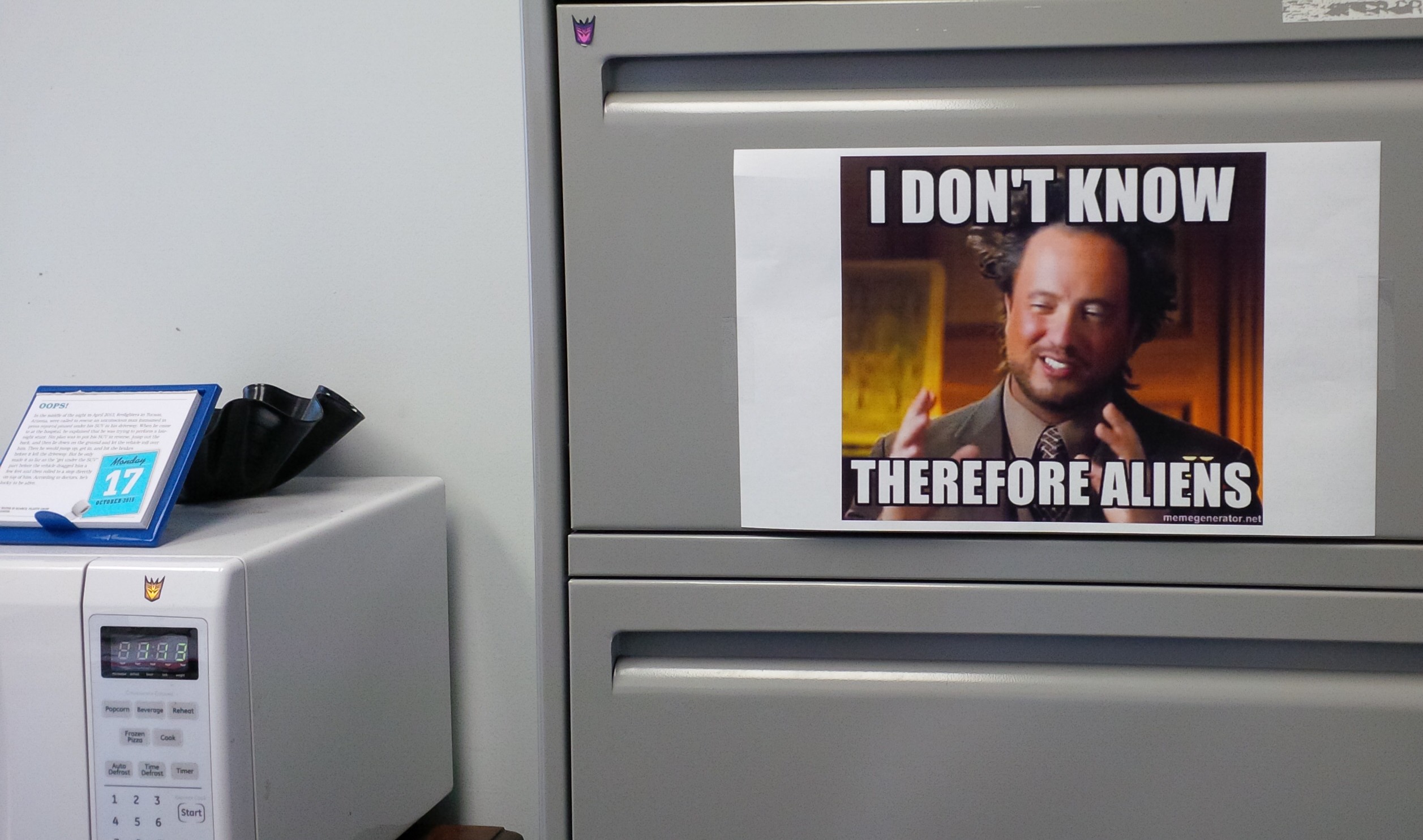
Buddy Chris and I had a running joke about UFO “expert” Giorgio Tsoukalos. Everything seemed to explained by…aliens! Could it be…aliens? I came into work one day to find this taped to my file cabinet. I love it!
My first real job at age 17 was packing groceries. I worked at Zehrs, the big grocery store in town. It was hard work, but a good job to have. They paid well and you could make a career there if you wanted to. Several people had been there 10 years or more, had security, and were making decent money. The neat thing for me was the Zehrs store was in the same mall that I later worked in at the first Record Store! My dad worked there at the bank. Best friend Bob worked in the Zehrs bakery. The mall was like a second home.
The grocery store had a dress code. No running shoes, just plain black shoes. No jeans, just brown pants and white shirts. A brown clip-on tie and apron with box cutter in the pocket was issued to us upon hiring.
Facial hair grooming was strict. I was there when one guy showed up looking unsatisfactory, was written up and sent home to shave. No stubble allowed. No beards, no sideburns.
The only facial hair we were allowed to have was…
A moustache.
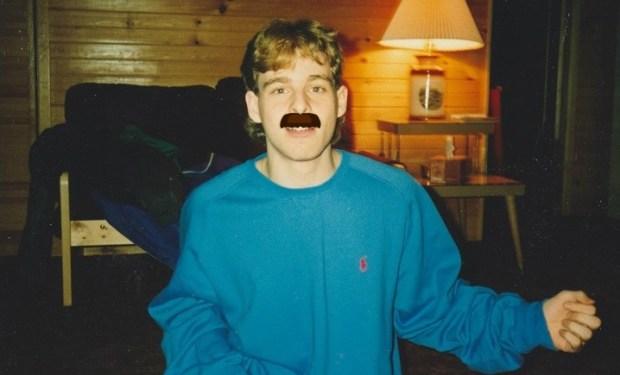
So many guys there had moustaches. The guy who trained me had one. One of the managers, and even a few of the guys my age had moustaches. I am not a fan of moustaches, but given the lack of options, one day I showed up with a stupid little blonde growth on my upper lip.
“Is that…are you…growing a moustache?” asked the girl I liked. Her name was Kathleen. Kathleen Fitzpatrick. She was really nice, but every guy there liked her. Guys with higher seniority would work on her lane, kicking me off. They’d stick me with one of the older ladies. Everybody preferred to pack for Kathleen and I was low man on the totem pole.
I wore that moustache once. One day. Truth be told, I never felt comfortable in a moustache, but imagine this scenario: what would have happened if Kathleen liked my moustache? How history could have turned out differently. I could have been a moustache guy all this time! I’d probably drive a Camero and listen to a lot of April Wine.
I’m glad it didn’t go that way. Wherever you are Kathleen, I think I owe you a debt of gratitude. Maybe.
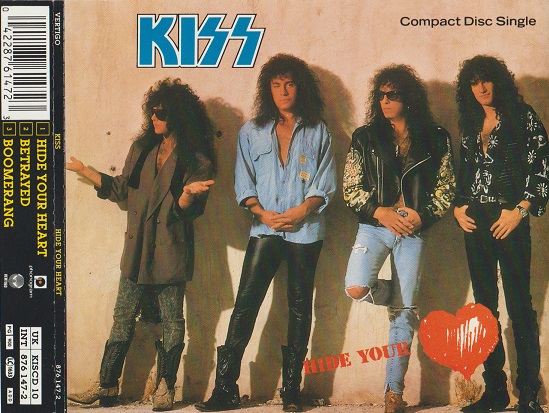
Kiss took the unusual step of waiting six months before going out on tour to support Hot in the Shade. Bands were having trouble selling out arenas. In the meantime they released singles and videos. “Hide Your Heart” came first in October of 1989. It did alright; for fans the best part of “Hide Your Heart” was seeing Paul Stanley playing guitar again in the music video. The CD single was nothing special; just the Paul Stanley A-side, backed by two Gene Simmons B-sides, as had become the norm. “Betrayed” and “Boomerang” were among the better Simmons tracks to chose from Hot in the Shade.
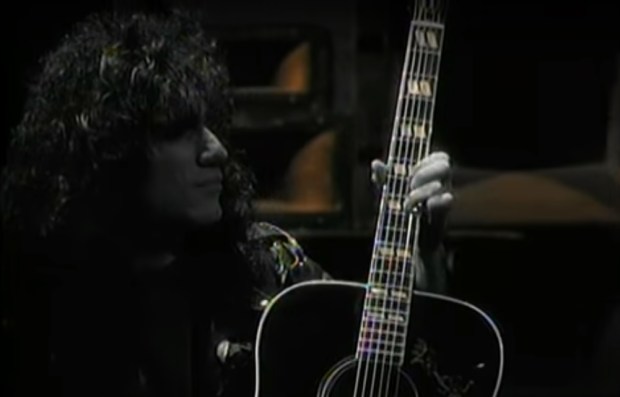
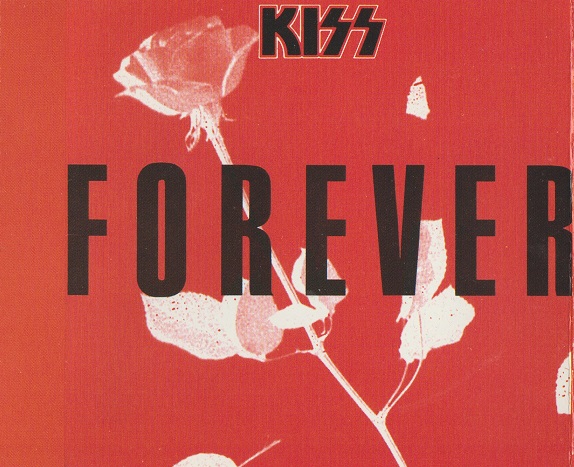
In January of the new year, they dropped what they hoped to be the big single, “Forever”. The excellent music video was an MTV hit, going to #1, while the single went to #8 on the U.S. Billboard Hot 100. One reason the video was so well received is that it was a rare back-to-basics look at the band. It was just four guys playing together in a room. No girls, no gimmicks, no dancing. Featuring exceptional performances by Eric Carr and Bruce Kulick, “Forever” was one of those rare ballads with integrity. Having Bruce’s old Blackjack buddy, Michael Bolton, in the writing credits didn’t hurt.
Ace Frehley wasn’t impressed though. In the July 1990 issue of Guitar for the Practising Musician, he dismissed it as pop. He wasn’t wrong, but that doesn’t make “Forever” bad.
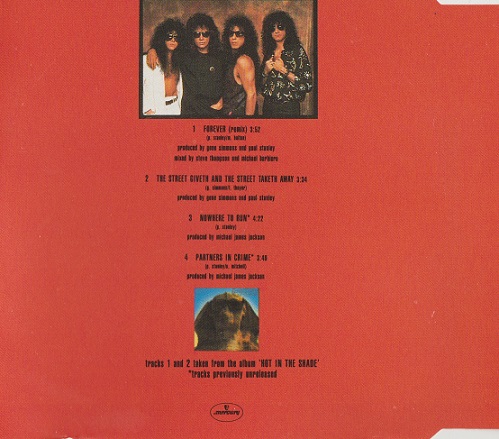
The single for “Forever” received a wider release on all three major formats (CD, vinyl and tape), and was expanded to EP length with four tracks. It also received something very rare for Kiss: a single exclusive remix, by Steve Thompson and Michael Barbiero. It has some difference in levels and echo. However, every CD copy of this single has a flaw, a skip at 1:40 that shouldn’t be there. It’s not even a damaged CD; if you look at the track times, the single version is encoded few seconds shorter. In other words a faulty master was used on every CD single. You won’t find one without the skip. Vinyl and cassette don’t have the flaw.
Fortunately this oversight was fixed when Kiss released their box set a decade later. The correct remixed single version without flaw was remastered and included in the set.
The included B-sides are an interesting mix. From the Hot in the Shade album, there’s the Gene Simmons throwaway “The Street Giveth and the Street Taketh Away”. The other two are, strangely, two of Paul’s “new” tracks from Kiss Killers. The logic here was the Kiss Killers was (and still is) unreleased in North America. At least this gave us an easy way to get the amazing “Nowhere to Run” on CD.
Too bad about that flaw on the CD version. Otherwise this isn’t a bad little single.













 mikeladano.com