


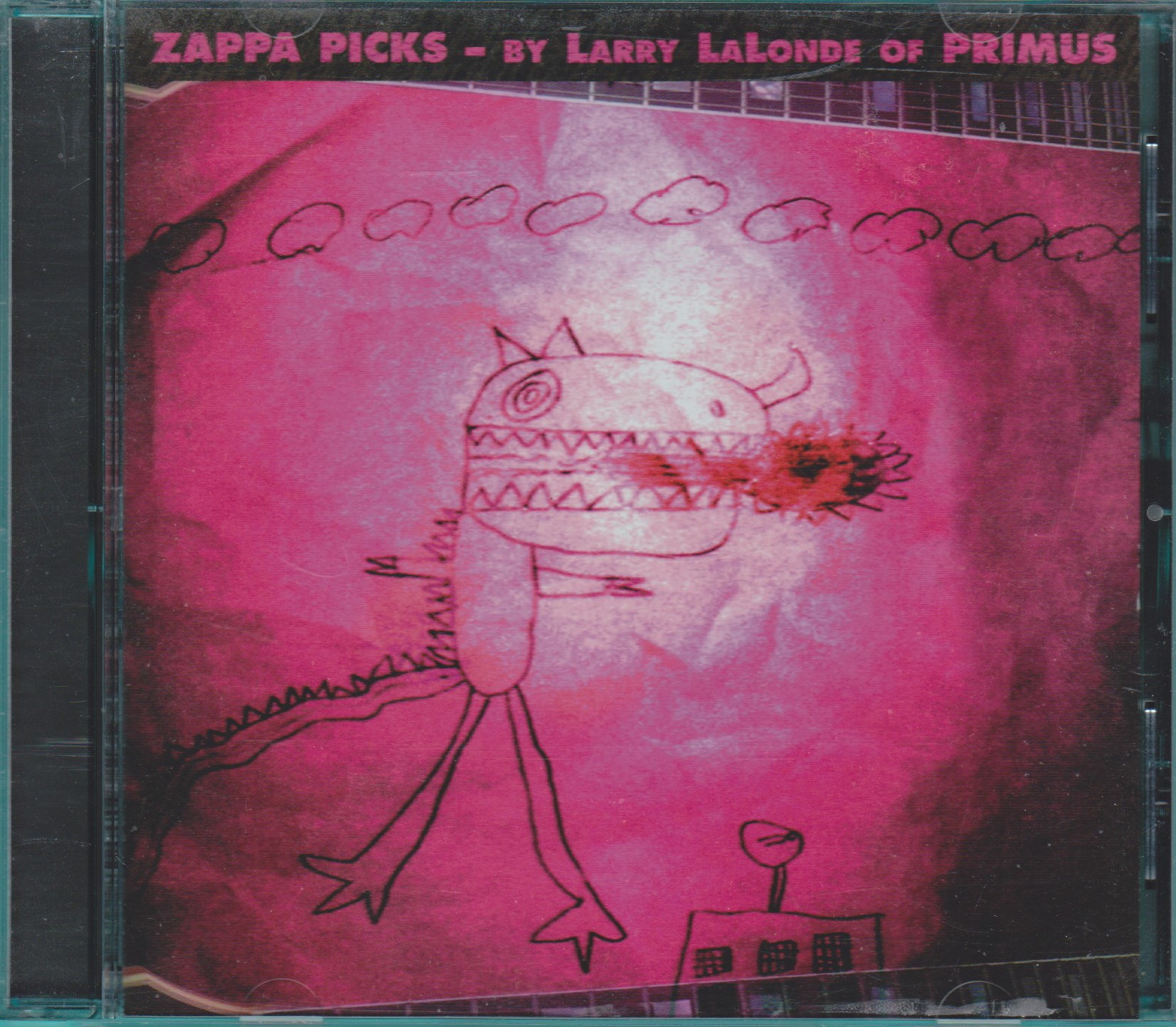
 FRANK ZAPPA – Zappa Picks – by Larry LaLonde of Primus (2002 Rykodisc)
This was a cool idea for a series. I love the concept. Big name fans of Zappa compiling their own Zappa disc. I only know of one other disc — a Zappa Picks by Jon Fishman of Phish. I prefer Primus to Phish, so getting Larry LaLonde’s instalment of Zappa Picks seemed like a good idea. LaLonde assembled an eminently listenable, endlessly entertaining and humorous Zappa album. And of course the playing is still stunning, because it’s Zappa.
What I like about this album is that you get a lot of great and challenging tunes that aren’t on the Simply Commercial hits album. In fact I think there’s only one song that appears on both! The CD is sequenced in such a way that it sounds like an actual album in terms of flow. Songs merge into each other seamlessly and the pacing is perfect. I’m discovering a lot of music I missed, because I simply don’t have all the Zappa albums. Who does?
This is spacey fun. It’s guitar nirvana. It’s percussive. There is a wealth of material both instrumental and vocal. It’s weird all the way to the edges of comprehension. It stretches every genre you can think of. It’s anything but boring.
Highlights:
5/5 stars


 SAMMY HAGAR – Sammy Hagar / I Never Said Goodbye (1987 Geffen)
Remember when everybody in the Van Hagar camp just loved each other? Things were so happy in Van Hagar, that Sammy released a solo album in 1987 and nobody got mad. Hell, Eddie himself co-produced it and played bass! Hagar was obligated to do another solo album to get out of his contract with Geffen, and so the self-titled Sammy Hagar was recorded quickly. Sammy apparently forgot he released another album also called Sammy Hagar in 1977, so this one was re-titled I Never Said Goodbye. (I still call it Sammy Hagar.)
There was something particularly weird about this release on cassette. I had a version, purchased from Columbia House around 1989-1990, with a bizarre cover. The J-card was designed to fold around outside the cassette shell. I’m not sure why to this day, and I’ve never seen another copy like it. The artwork was obviously designed to fold on the outside rather than the inside, but I’ll never figure out why.
All the members of Van Halen even appeared in Sammy’s video for “Hands and Knees”. The plot was simple, and perhaps a foreshadowing of things to come. A bored Hagar calls his bandmates (including nextdoor neighbor Eddie) to jam, but nobody’s interested. Instead, Hagar jams with a group of robots! “Hands and Knees” was an odd choice for a first single, being a dark and slow mood tune. The video guaranteed attention, and still garners a chuckle today (albeit a sad one, knowing these guys aren’t pals anymore). I love Michael Anthony’s huge brick of a cell phone. The video was better than the song, though it does have a killer of a chorus. It’s clear if you listen that Eddie Van Halen is one damn fine bassist too. Are you surprised?
One thing about this album, though: it’s really commercial. Like way, way more pop even than 5150. It’s no surprise that some writers like the esteemed Martin Popoff have slagged this album. The production has an airy 80’s feel, not enough oomph. The opening track “When the Hammer Falls” is a hard rocker, but it could have been thicker with more meat. Not that it would have helped too much. The chorus on this one is pretty weak, which is too bad since the riff is good enough for rock and roll.
The second single, which Van Halen used to let Sammy play live acoustically, is “Give to Live”. Van Halen’s version can be found on 1993’s Live: Right here, right now. Hagar’s studio original is unabashedly pop, bombastic…and good. I admit I still enjoy this very cheesy ballad. Hagar is rarely profound, and neither is “Give to Live”, but it’s a nice song indeed.
A shitty synth (?) horn section urinates all over “Boy’s Night Out”. Speaking of synth, “Returning Home” is all but unpalatable. This is one of Sammy’s UFO yarns, a story of a guy returning back to Earth to find it wrecked. “I saw the ruins, once the smoke cleared, once upon returning home.” It’s just sunk by all this terrible synthesizer junk and programming. The UFO has crashed into the damn mountain!

The second side surprisingly opened with some blues jamming: “Standin’ at the Same Old Crossroads”. And that would be Sammy on the slide guitar. “Crossroads” leads directly into “Privacy”, a “Radar Love” re-write that is better than “Radar Love”. Maybe I’m just sick of “Radar Love”, but “Privacy” has some smoking playing on it, proving again that Hagar is actually a pretty badass soloist. Side two on a whole is actually much better than the first. “Back Into You” is a vintage-style Hagar radio rocker. Journey must have wished they wrote “Back Into You”. The keyboard overdubs aren’t necessary but hey, it was the 80’s and this is a great little AOR rocker.
Another tune that Hagar played live with Van Halen was “Eagles Fly”. He actually presented the song to the band for 5150, but it was turned down. A live Van Halen version can be found on the 1993 single for “Jump (Live)”. He did it acoustically on stage, but the studio version is bombastic and big like “Give to Live” is. It’s a pretty impressive tune, for pop rock. David Lauser’s drumming makes the song, I’m a sucker for that rat-a-tat-tat!
The album ends on a ho-hum note, the soul-funk of “What They Gonna Say Now”, sort of this album’s “Inside” to close it out. Just not good enough. If you want to hear Eddie Van Halen playing bass up close and personal, he’s very audible here, but he’s not a flash bassist. He plays with the groove for the song.
It’s tempting to think of this album as a collection of tracks that were not right for Van Halen, and that’s mostly true. A lot of it, however, just wasn’t good enough for Van Halen. “What They Gonna Say Now” could have been a Van Halen track, but it would have been the weakest tune on 5150 if so.
2.5/5 stars


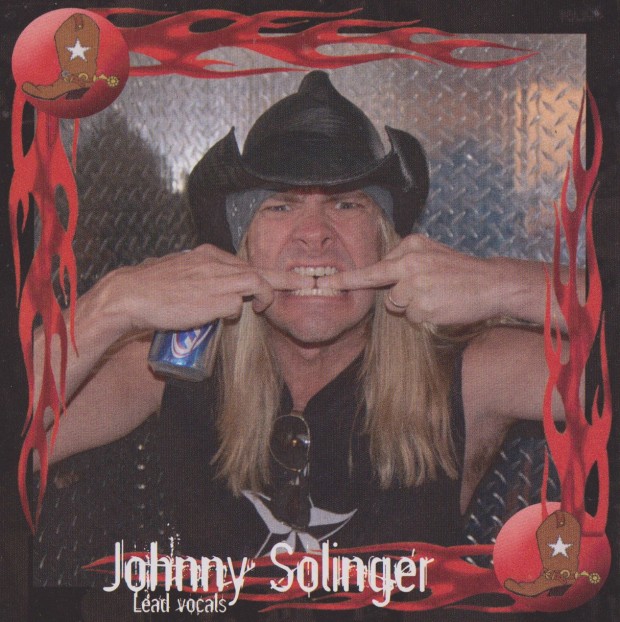
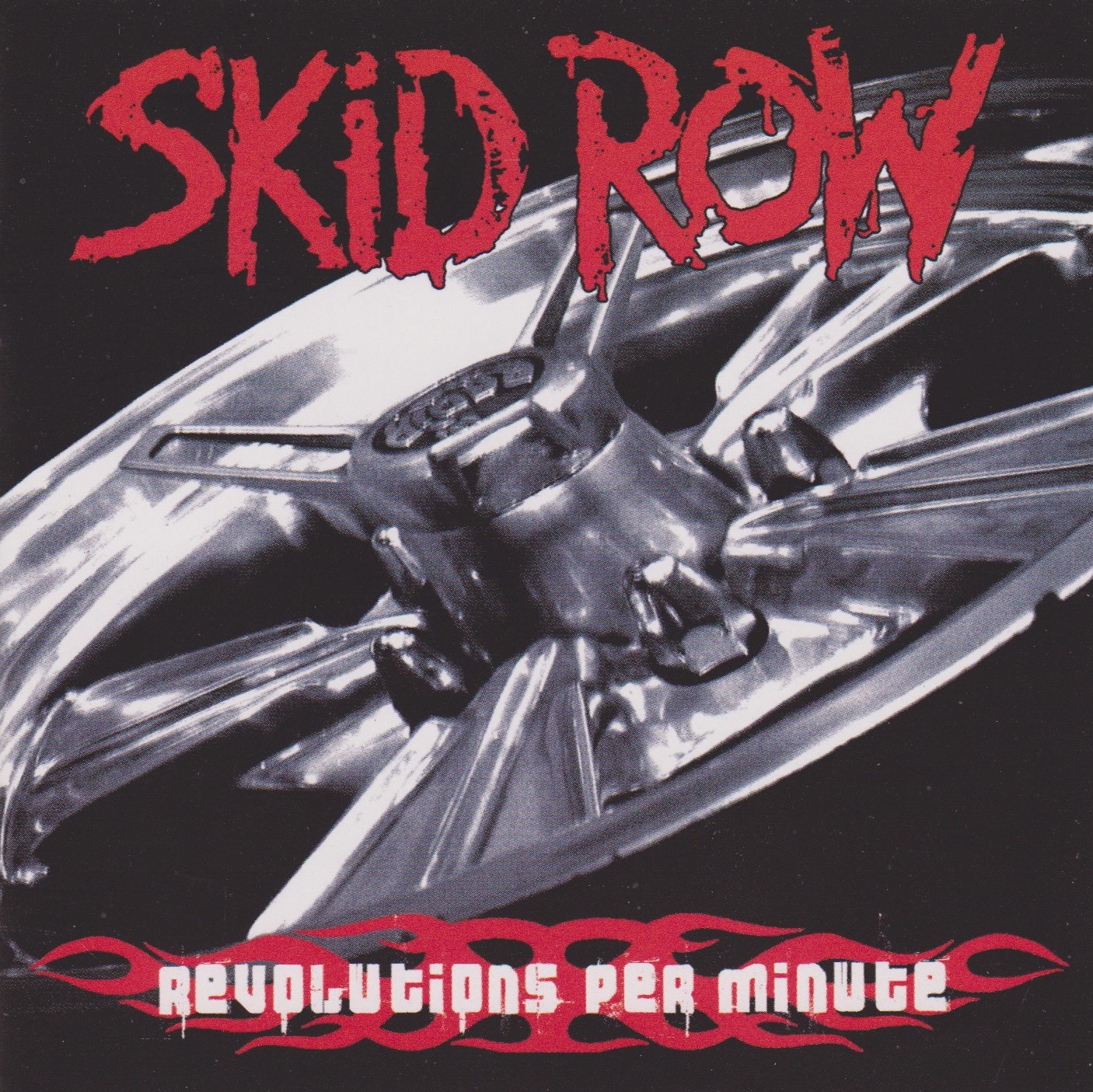 SKID ROW – Revolutions Per Minute (2006)
Skid Row did a pretty good job of replacing the irreplaceable Sebastian Bach on their fourth LP, Thick Skin. It earned a more than healthy 4.25/5 stars, in part due to the charismatic vocals of Johnny Solinger. For their second album with Johnny, they re-teamed with producer Michael Wagener, but had mixed results in repeating the magic.
Revolutions Per Minute is heavy enough; there was no issue of the band going soft. There was a dip in quality from the songwriting department, strongly dominated by bassist/leader Rachel Bolan. Strangely, they chose to pad out the album with a cover (The Alarm’s “Strength”) and a remix. It’s worrisome when the best song is a cover. There’s a distinct pop-punk vibe on many songs, which one has to trace back to Bolan. Dave “Snake” Sabo has two co-writes, and Scotti Hill a mere one.
“Disease” is very Skid Row, nothing outstanding, but a strong enough way to open the album. The punk-like “Another Dick in the System” is better. With Solinger scraping the ceiling with his screamy high notes, it’s reminiscent of old Skid Row circa Slave to the Grind. “Pulling My Heart Out from Under Me” follows with an 80’s Elvis Costello vibe to the guitars. This one is quite a departure from Bach-era Skid Row, and a decade later I’m still not sure if I like it. You can’t fault a band for experimenting, but if the results aren’t good enough, that’s a tough call. I’m not sure if “Pulling My Heart Out from Under Me” is good enough. The worst of the punk influenced songs is “White Trash”, which is so indescribably bad that I won’t even try. It’s not funny and not good. Back to something that sounds like Skid Row, “Nothing” is one of those tunes that you could imagine was written in 1988 for the debut album.
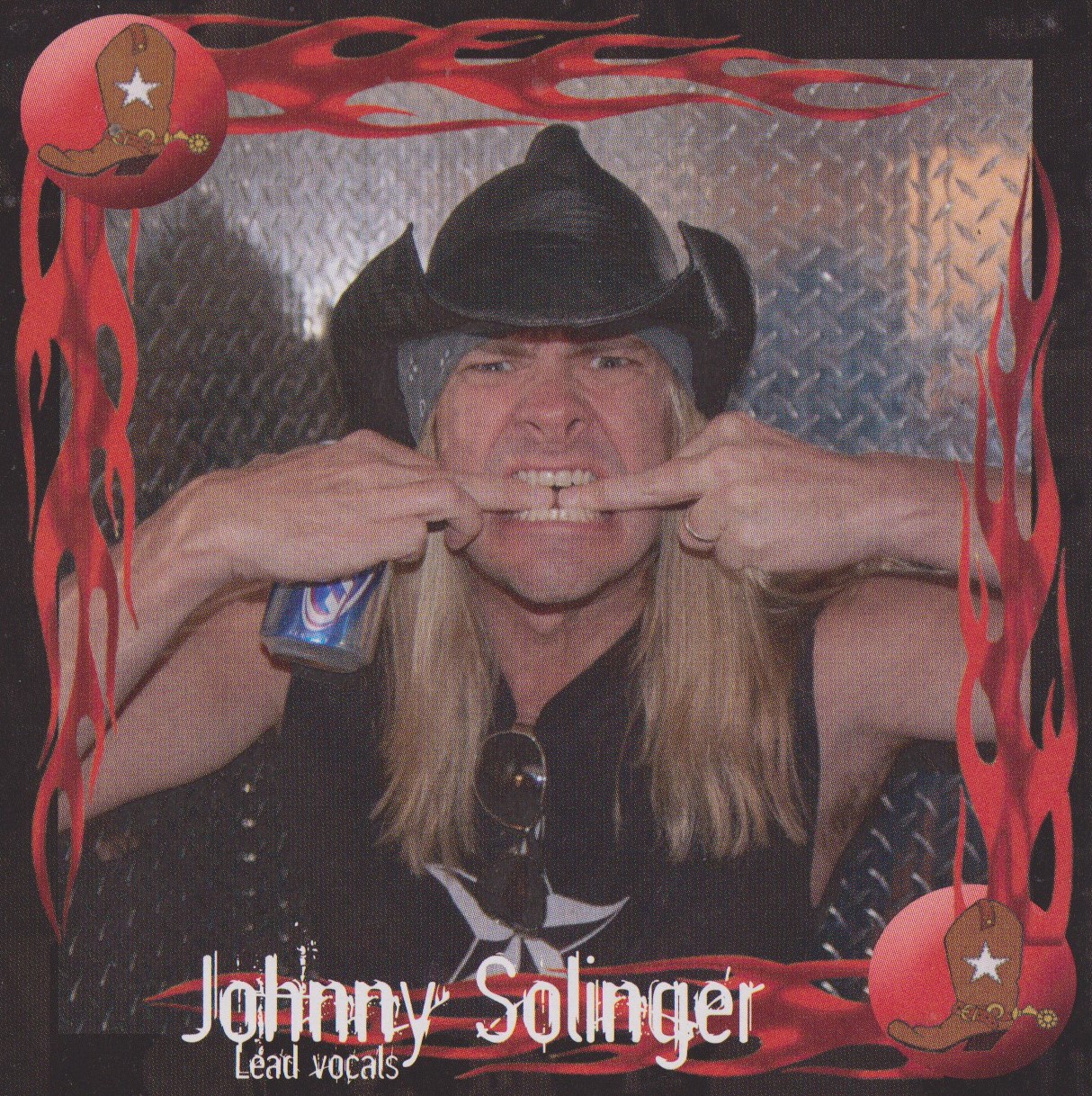 Influences collide on “When God Can’t Wait”. Johnny Solinger is a country guy, and Rachel Bolan is a punk guy. It seems 1+1 does indeed =2, and the sum total of punk and country is rockabilly. I have to admit to liking this one, even though I’m still not sure if it’s any good. I definitely prefer it to the next tune, “Shut Up Baby, I Love You” which doesn’t have much going for it aside from the full-metal tempo.
Strangely, the best original song is “You Lie” which begins as nothing but pure country. Only after the twangy guitar solo does it accelerate into rock territory, but it’s the country part that rules. The final track is a “Corn Fed” remix, which adds slides, harmonica and accoutrements. At least that ends the album on a good notes. The CD does start to drag a bit with two lacklustre songs, “Love is Dead” and “Let it Ride”, so the remix of “You Lie” is a smart way to end it.
You get the feeling that Skid Row had potential for a great album, but only came up with enough good songs for an EP.
2/5 stars


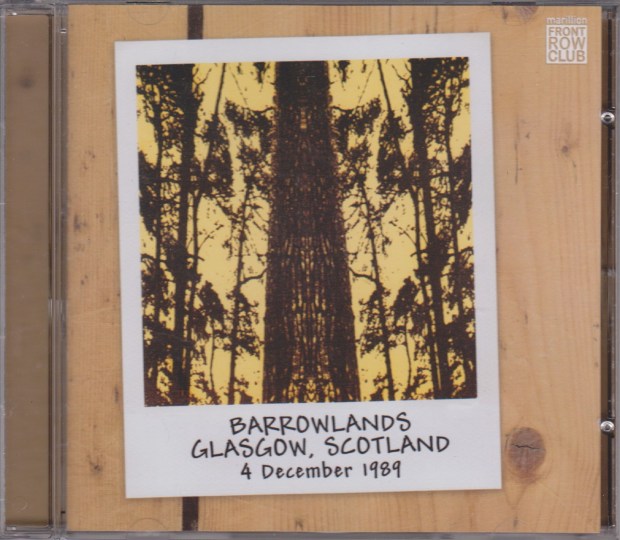
By request of J.
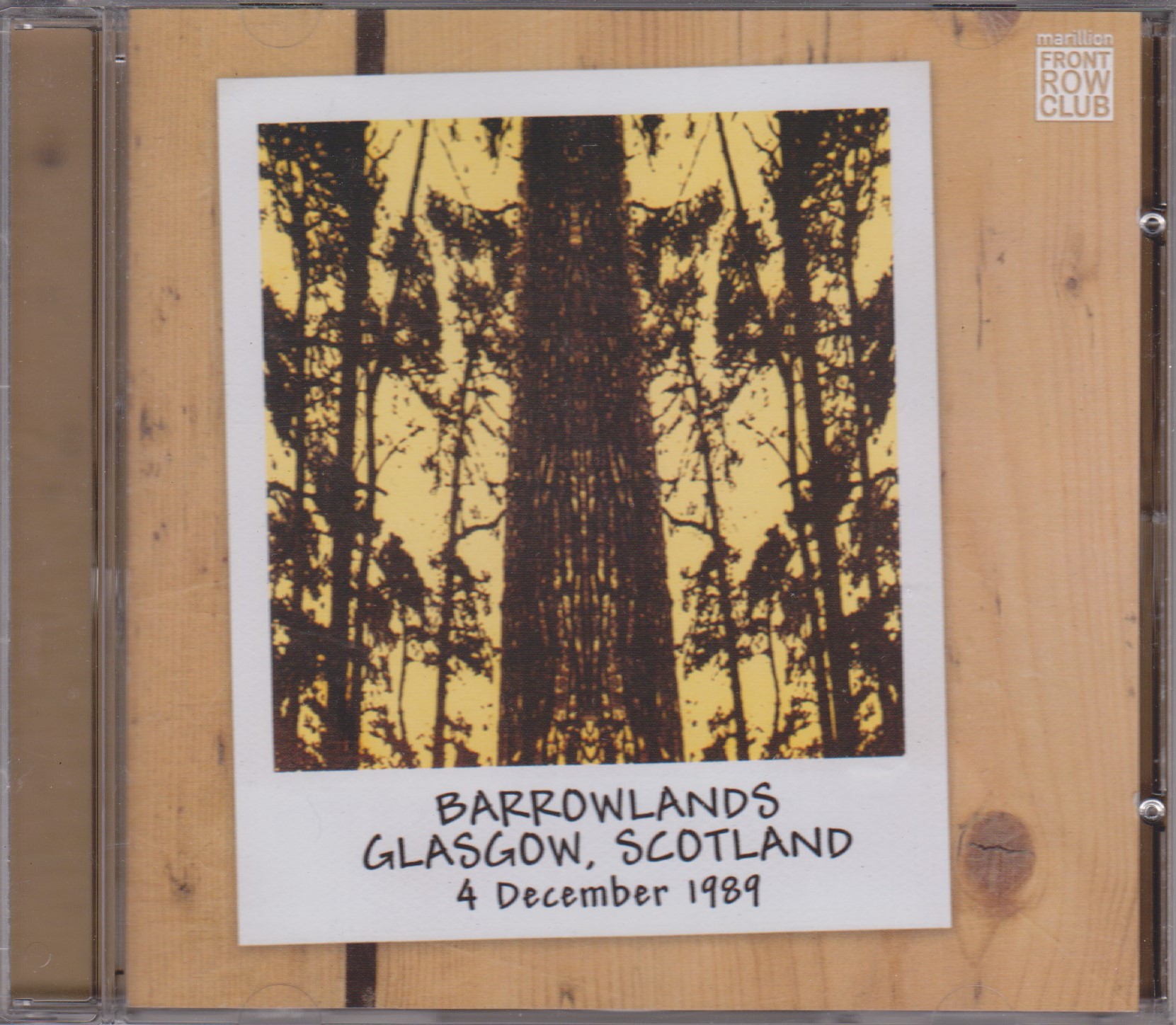 MARILLION – Barrowlands, Glasgow, Scotland. 4 December 1989. (FRC-005 – 2002 Racket Records)
Marillion have always been an innovative band, not just musically, but also the ways they interact with their fans. In 1992, they started offering mail-order exclusive live albums to the diehards. The first one, Live in at the Borderline sold out quickly. Live in Caracas took a few years to sell out; I have an original copy of that one. The third, Live in Glasgow, also sold out quickly. Today I own a remastered and reissued version, Barrowlands, Glasgow, Scotland, released in 2002 as part of Marillion’s Front Row Club.
The Front Row Club was a subscription service. Sign up for a year, and Marillion would mail you a live album every two months. Some were single discs, like Barrowlands, and some were doubles. They were sourced from all parts of Marillion’s history. Subscribers could choose to opt out of releases they didn’t want, for example I didn’t need a second copy of Caracas. There were 43 Front Row Club releases in total, and I have them all (excepting the optional Caracas). (For a review of FRC-006: River, click here.)
In 1989, Marillion were showing off the new guy, Steve “H” Hogarth on vocals, guitars and keyboards. If they were to get a cold reception, Scotland would have been the place. After all, former singer Fish was a proud Scot, and replacing a singer is always dicey. Fortunately for Marillion, fans embraced Steve H very much, and the Barrowlands show is evidence of that.
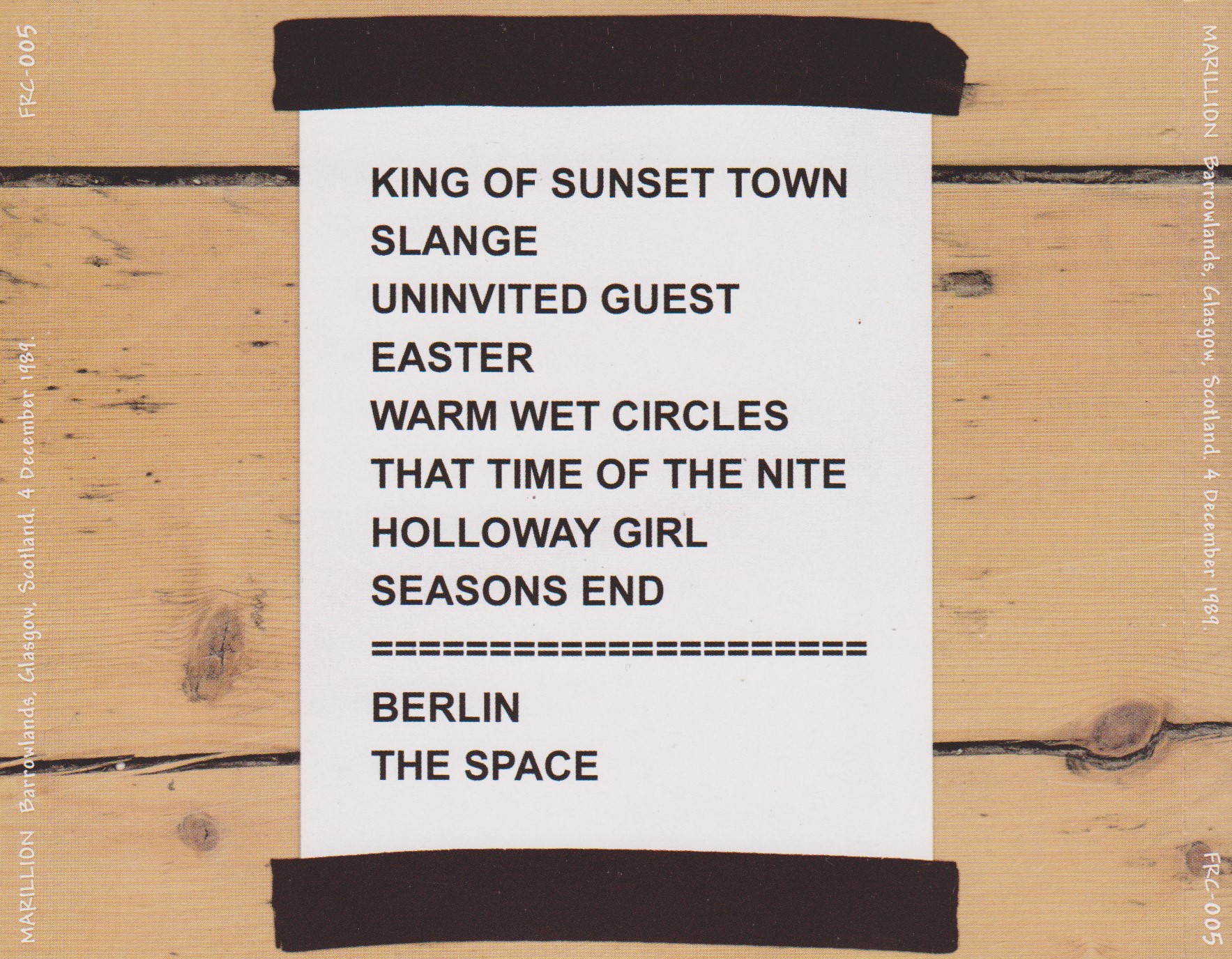
Opening with the brand new classic, “King of Sunset Town”, it sounds like Marillion had them in the palms of their hands from the first notes. This releases was recorded from the desk onto cassette tape, and it sounds remarkably good considering! “Sunset Town” has the instrumental adventures that fans expect, but with a passionate vocal very unlike Fish. Singing along, the fans were already familiar with the new material. The drums sound amazing in the Barrowlands, and Steve Rothery’s solo had the fans screaming.
There are only eight tracks from Barrowlands — apparently, somebody forgot to flip the tape as the band played. Instead, two songs from a show in Bradford were added to the end.
“Slàinte Mhath” (or “Slange” as it is spelled phonetically on the back cover) is a beloved fan favourite. It was one of the songs that H felt more comfortable singing. The crowd grew quiet. This was an important song to get right. No worries there. “And you listen, with a tear in your eye, to their hopes and betrayals, and your only reply is slàinte mhath.” (Cheers, good health.) The line is greeted with a few excited screams. While he was nothing like Fish, H managed to raise the hair on my arms.
“Good evening Glasgow! It’s very nice to meet you. We waited a long time for this!” It must have been a tremendous relief for H to be accepted in Glasgow. Two new singles follow “Slàinte”: “Uninvited Guest” and the ballad “Easter”. These are songs that remained in the setlist for tour after tour, and they do not vary much from other live takes. It is interesting to listen to these fresh versions, new to the band as they were to the crowd. “Easter” is youthful and beautiful.
Hogarth seemed drawn towards the Clutching at Straws material. “Warm Wet Circles”/”That Time of the Night” were performed for a few tours after, and Steve did them very well. It’s a 10 minute slab of progressive rock with labyrinthine lyrics as only Fish could write. Hogarth nailed it.
“On promenades where drunks propose to lonely arcade mannequins,
Where ceremonies pause at the jeweller’s shop display,
Feigning casual silence in strained romantic interludes,
‘Til they commit themselves to the muted journey home.”
I mean come ON!
And that’s it for old songs. More were played that night, but the tape didn’t get them. Too bad, because they included “Market Square Heroes”, “Incommunicado”, “Kayleigh” and lots more. Barrowlands goes on with “Holloway Girl”, which boils with a dark intensity. Marillion and Mark Kelly are very good at using keyboards for texture, and this is a good example. Also dark and powerful is “Seasons End”, introduced by the Christmas carol “Oh Come Emmanuel”. This early warning about global warming is a reminder that this is not some new theory. We’ve known about global warming for decades. Marillion turned that into a pretty epic quality track.
That’s it for the Barrowlands tracks. “Berlin” and “The Space” are added to make it an even 10. There’s a shift in sound quality as it gets a little clearer, but it’s not obtrusive. “The Space” is a very apt way to end a CD.
Rating something like this…it’s almost “What’s the point?” There are 43 of these bloody Front Row Club albums. You can’t get them anymore. You have to look at this as a good but incomplete set of some of the earliest live Marillion with Hogarth. When we’re talking about a band with probably 100 live albums or more, it all becomes a little hard to see the forest for the trees!
3.5/5 stars?
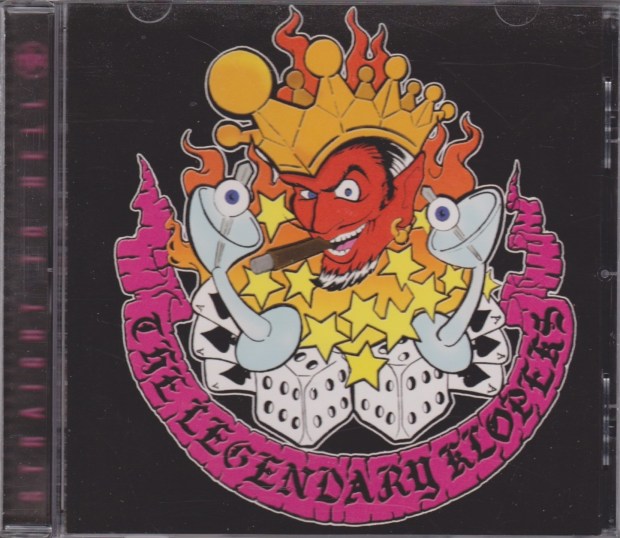
Happy Canada Day! Here is your Can-Con for this holiday: The Legendary Klopeks. According to bassist Mike Lukacs, “We used to always play Shannon [Larratt]’s Canada Day BME BBQ every year. Always liked that.”
For a review of the Klopeks’ first album Homicidal Suicidal Klopekticidal by Aaron at the KMA, click here!


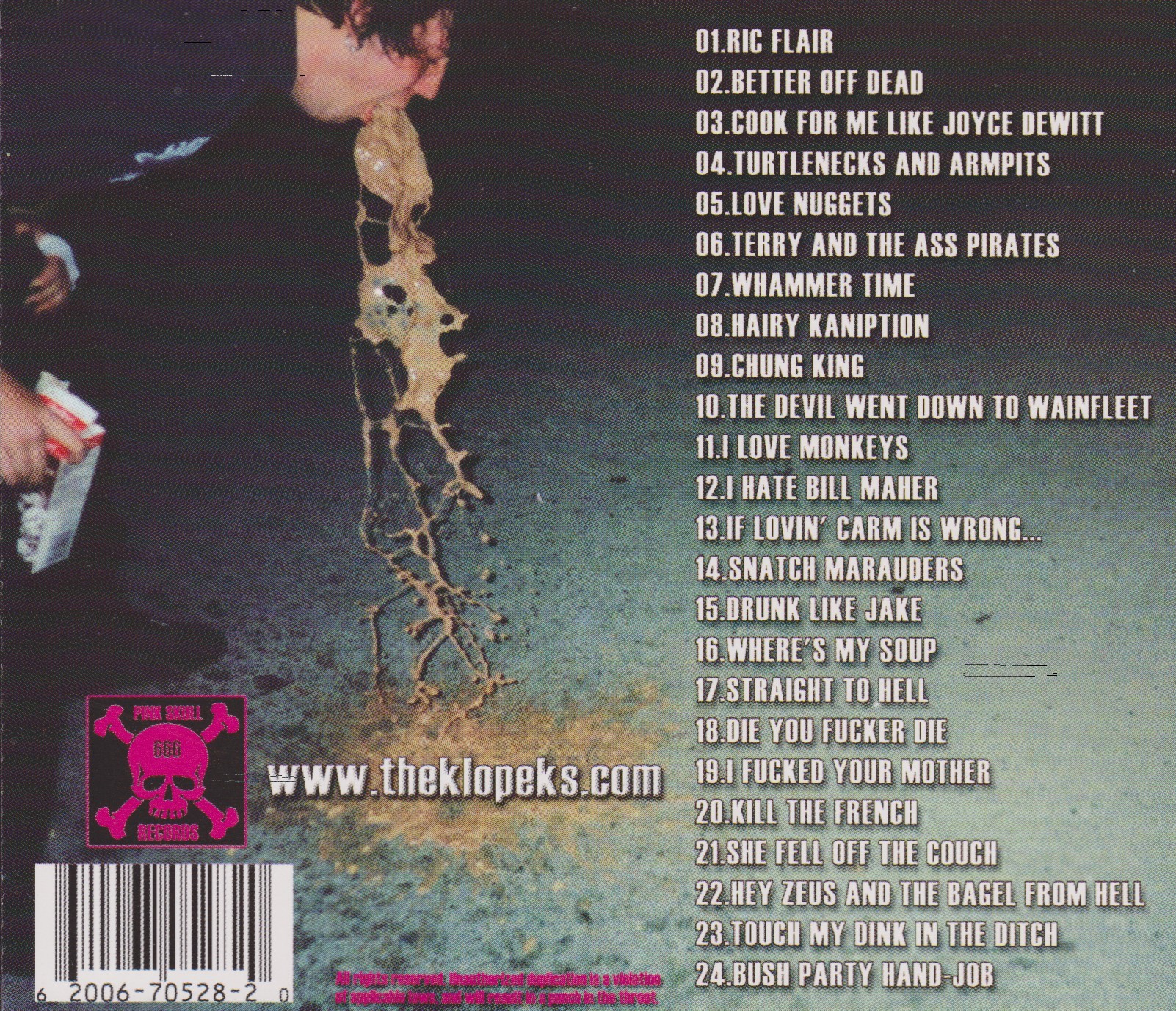
THE LEGENDARY KLOPEKS – Straight to Hell (2002 Pink Skull)
Once upon a time, in Niagara Falls Ontario, there was a band. This was a band unlike any other. They were fronted by future Guinness’ World Record holder Sweet Pepper Klopek. Sayeth the Huffington Post, “Sweet Pepper Klopek…has set many Guinness World Records [and] managed it again by lifting a 5.4 kilogram, or 12-pound, sledgehammer suspended from two huge fish hooks plunged through his cheeks.” Mixing punk rock, wrestling and humour, their best album is the 24 track Straight to Hell.
Every song ends with the words “fuck you!” and almost all are under three minutes. There are also several tracks only a few seconds in length, and yes, even they end with “fuck you”! Some sample song lyrics:
“Where’s my soup? Fuck you!” (“Where’s My Soup”, 10 seconds)
“Touch my dink in the ditch. Fuck you!” (“Touch My Dink in the Ditch”, 12 seconds)
“Turtlenecks and armpits. Fuck you!” (“Turtlenecks and Armpits”, 20 seconds)
For the record, “Where’s My Soup” has long been this writer’s favourite Klopeks tune. For a while I considered getting a “Where’s My Soup” tattoo. A tattoo shop in St. Catharines Ontario used to offer free tats to anyone getting Klopek ink. And I did consider it, but ultimately decided against. After all, how did I know that in 10 years time, my favourite song wouldn’t be “Terry and the Ass Pirates”? Or “Bush Party Hand Job”? Or “She Fell Off the Couch” which has an actual guitar solo?
The fact of the matter is, every song is fast, brittle, vulgar and incredibly fun. The lyrics are fuck-laden beyond conception. The Big Lebowski himself has never dropped so many F-bombs in just 33 minutes. Nothing is taken seriously. Most songs start with bass noodling via Lemon Kurri, moving on to Sweet Pepper screaming like a man possessed. Regardless, these are actually really good punk songs! There is nothing polite or safe on this CD — that’s why they called it Straight to Hell! No apologies. “When it’s all said and done and I’m dead and gone, life’s a fuckin’ game, and fuck you I won!”
5/5 stars

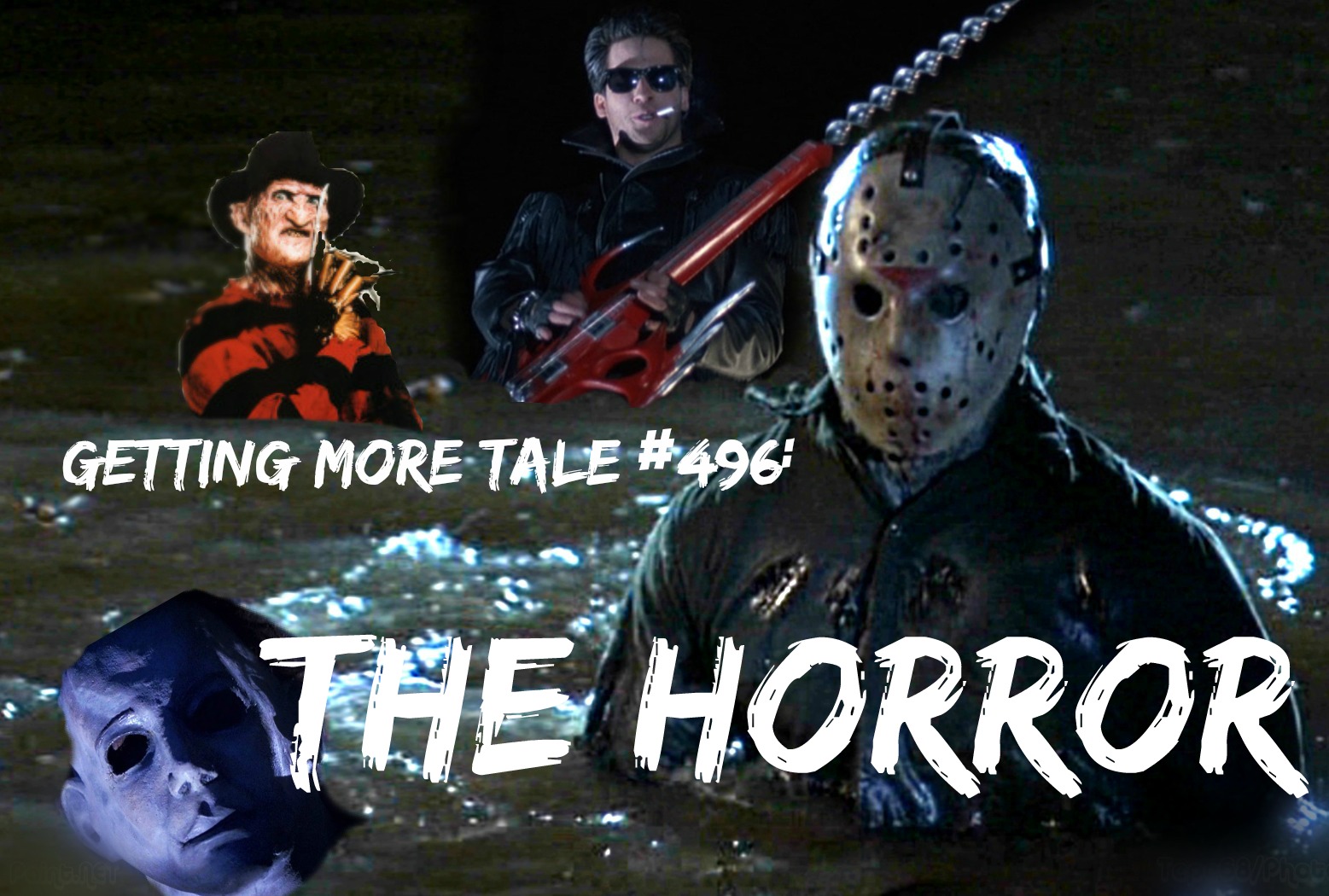
GETTING MORE TALE #496: The Horror
It was a rite of passage: When the youth began renting restricted horror movies!
In the mid-80’s, my best friend Bob was obsessed with horror movies. He found them funny. He liked pausing and going slow-mo any time a rubber prosthetic was being hacked off a victim by the killer. We enjoyed laughing at the ridiculous situations. Don’t go into the woods at night, for god’s sake, and don’t trip over every twig and branch when you’re running away from the bad guy!
Of course, there were always rock and roll connections. Via the soundtracks, you’d get exposed to a few cool rock tracks. The first horror movie Bob and I watched together was a perfect example of this: John Carpenter’s adaptation of Stephen King’s classic Christine. We’ll circle back to the music. But the language! Oh my. We had never heard swearing woven into such intricate dialogue before! King truly is the master of the art of profanity. We learned new ways to swear from that movie. Some favourites:
“Yeah try it you little bald fuck, and I’ll knock you through the wall! FUCK!” – Buddy Repperton
“OK, that’s the last time you run that mechanical asshole in here without an exhaust hose!” – Will Darnell
“I knew a guy had a car like that once. Fuckin’ bastard killed himself in it. Son of a bitch was so mean, you could’ve poured boiling water down his throat and he would’ve pissed ice cubes.” – Will Darnell
We watched Christine, rewound the tape, and watched it again, twice in a row. I still love that movie today. It’s not my favourite horror of all time (that would be The Shining, also based on Stephen King) but it does come in second. My dad and uncle didn’t mind me watching it, because the car involved in the film was a 1958 Plymouth Fury. Such things seemed to matter to adults.
I always preferred comedy to horror, but Bob and I were a team, so we compromised and usually rented two or three movies at a time. Strangely enough, it’s really only the horror films I remember today. I couldn’t tell you what comedies we rented, but I remember Friday the 13th, do I ever!
We would ride our bikes up to Steve’s TV on Frederick Street. It’s still there, too, in the same spot but stocked with the latest and greatest tech. In the 80’s, it was a growing business and had the largest collection of videos for sale and rent that I’d ever seen. Bob and I would discuss and pick out a couple horror films and a comedy. We’d bring them back by bike and rent more. The first time we did this, Steve’s TV asked for a note from our parents to rent an R rated movie. Minor delay! We’d just have to make another trip on our bikes.
We rented the first Friday the 13th, and the second. I somehow missed the third and fourth (I am pretty sure I was at the cottage on vacation those weekends) and jumped right onto the poor fifth movie (A New Beginning), which didn’t even have Jason in it. As I started highschool, Jason finally returned in Part VI (Jason Lives) and our movie renting continued. When the Friday the 13th movies were done, we did the Freddie movies, and the Halloween films. We even did the third Halloween, the one that had nothing to do with the rest of the series.
We rented so many that eventually Steve’s TV had nothing left we hadn’t seen. We started checking out a new store, Jumbo Video. They had a cool horror section that looked like a haunted castle. We rented everything there, too. Jeff Goldblum’s remake of The Fly was one. I remember a really terrible movie called Madman Marz, but there were many more that I can’t remember at all. As highschool went on, we ran out of horror movies to rent at Jumbo. We temporarily began renting ninja movies (Bob was taking Karate at the time) but it was horror that we really liked.
An automated video rental place opened up. It was a small room full of vending machines that dispensed videos! They had a small selection of horror, so Bob and I began to eat those up too. The Fly II was one of the first we rented from that automated store, and it was just awful. Clearly, we were exhausting the horror movie stock in Kitchener Ontario. There was nothing left for us to rent.
The rock and roll connections with a lot of these films were really interesting to us, since we were both exploring hard rock at the same time. Christine, our first horror experience, had an incredible soundtrack of oldies: Little Richard’s “Keep-A-Knockin’”, “Not Fade Away” by Buddy Holly, and of course the newbie “Bad to the Bone” by George Thorogood. As much as we were obsessed with the movie, we obsessed over that song. Playing it over, and over, and over again. A bit later on, Alice Cooper appeared in a couple films, also providing music for Prince of Darkness and Friday the 13th Part VI. Horror went hand in hand with our rock obsession, but in the long run, “there could be only one”. For me, rock won out. Horror films still bring a chuckle, but the days of obsessively trying to watch them all are long gone. Do they even make good horror movies anymore? I don’t even know. They do still make great rock and roll, that’s for sure.

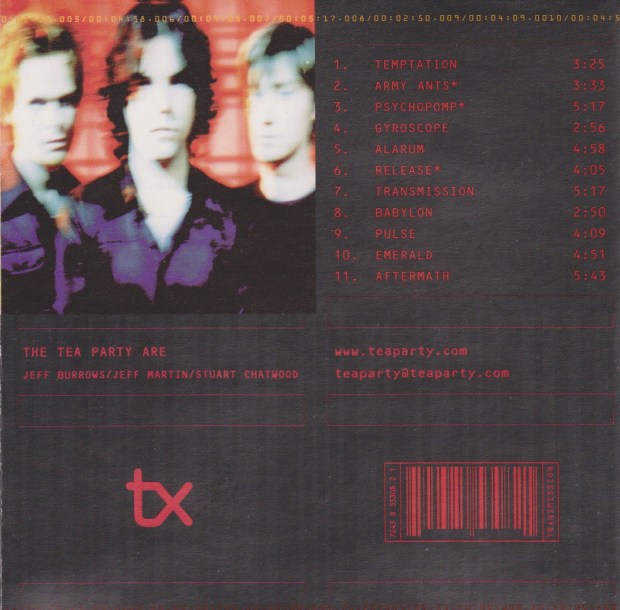
 THE TEA PARTY – Transmission (1997 EMI)
Tea Party fans are often split on Transmission. There is little doubt that the previous Edges of Twilight album was a high water mark. With over an hour of exotic and varied folks-blues-rock hybrids, it’s a favourite for many. The band took a stark turn on Transmission, embracing electronics. Jeff Martin produced the album himself, and you could not expect a more opposite album to Twilight. Thanks to the opening single “Temptation”, the album was another hit. Most fans seemed OK with the changes.
At first, it doesn’t seem like anything is unusual in Tea Party land. “Temptation” (the album version anyway) opens with a fair bit of exotic strumming on some sort of stringed instrument, as the Tea Party often do. Then the samples and looped drums kick in, and they are huge! Middle Eastern exotics, radio noise, keyboards and a killer riff all combine with loops to create a new kind of Tea Party. So far so good — the experiment paid off.
Martin had a penchant for odd song titles on this album, like “Army Ants”. Vocals furiously distorted, this makes for a heavier Tea Party. Jeff Burrows is providing some excellent drum backbeats, but at times they are buried under other sounds. The title track “Transmission” is way better though, burning like electronic incense. Static, loops and acoustics return for “Psychopomp”, one of the five singles they released. While it takes a while to get there, “Psychopomp” boasts a powerfully melodramatic chorus, Martin roaring as he does. “Gyroscope” has a spinning sound, one of the more hypnotic tracks (and also a single). One of the more impressive singles was the ballad “Release”. This was eventually given an EP of its own which we’ll look at another time. A basic keyboard/drum ballad, it is simple and bleak but hard to forget. It almost reminds of early 80’s Robert Plant.
There isn’t a lot of variety and distinction between the songs. “Alarum” repeats the formula: Electronic effects, exotic sounds, roared-out chorus. This was the disappointing factor with Transmission. The band had established themselves with a diverse sound, but that sound is narrowed on Transmission. All the same ingredients are there, but they are focused by the electronic lens, which sharpens them but also bleaches them to all one colour. “Babylon” is one of the exceptions, with drum & bass elements, and off-kilter song structure. It was appropriately given a very bizarre music video. An interesting experiment, but not as affective a song as something simpler like “Release”.
The Tea Party had some fun in other ways too. They like hidden bonus tracks, but this time they didn’t stick one at the end. They stuck an instrumental (dubbed “Embryo”) at the end of track 8 (“Babylon”). It’s actually a cool little piece of music.
Since the Tea Party are an ever-evolving band, it was safe to assume they would not stay in the electronics lab forever. Their next album, Triptych, was different again. Transmission remains their most loop-heavy album to date. At least they did it at the right time — The Prodigy’s massive mainstream album The Fat of the Land was released mere months before. The public were ready and hungry for computer-precise beats and samples, and the Tea Party delivered a unique hybrid with their own brand of rock. For the most part, it worked.
3/5 stars
 mikeladano.com