GETTING MORE TALE #433.999: The Aftermath (of the Top 15 on the 15th)
That “1537” guy can get to be a bit much sometimes. “Oh you have to listen to this!” or, “Be sure to read that!” He’s so demanding of our collective time and attention. The fact that he writes good shit (jatstorey.com) about music with great visuals to boot, well, that’s just window dressing isn’t it?
Back in September, over 20 writers put down our Top 15 of “all time” lists for posterity. These lists were mostly albums with a few anomolies…like Mr. 1537’s. No, he wouldn’t be content to sit with the sheep and do a plain ordinary list. No, he had to stand out from the crowd (as usual) and do something a little different.
Mr. 1537 (just ’37 to his friends) did the Top 15 music books of all time for his list. It was a quite excellent list featuring the likes of the Stones, the Beatles, the Crue, Hawkind, Chuck Klosterman, and more. The one that jumped out at me was Mick Wall’s Sympton of the Universe. Historically speaking, Black Sabbath are a fascinating band. How many dozen members have Sabbath had over the decades? The count varies, depending on criteria, but regardless it’s an extremely interesting history. For a while it was impossible to find anything decent in print. Mr. 1537 assures us, Mick Wall did right by Sabbath:
“This is a wonderful rollicking tale of the underdog having its day, being neutered by excessive drug use and some appalling choices, triumphing again and then falling prey to being used as pawns in a father/daughter struggle of mythic proportions.”
That right there is a perfect tagline for a rock book, isn’t it?
As mentioned, Mr. 1537 can get to be a bit much sometimes, always trying to convince us to spend more of our money on music (specifically vinyl). Like we need encouragement? Music fans have wishlists as long as the day. We don’t need more added to them, do we?
In steps Mr. 1537 again. Look what just arrived in the bloody mail.
It’s Symptom of the Universe, by Mick Wall! My very own brand new copy! Now, I suppose he’ll expect me to read it. See what I mean? Just a bit too much sometimes!
All joking aside, I can’t wait to get my face into this book. There is still a lot of Sabbath history that is foggy, and I’m eager to see what research Mick Wall has to clarify the mudification! The 1980s in particular are a puzzling period, featuring band members from the Clash, Deep Purple (x2), Lita Ford, and just about everybody else. Wall covers all of this.
Thank you, 1537. I suppose I should send that parcel of Lego I’ve been sitting on for like 6 months?
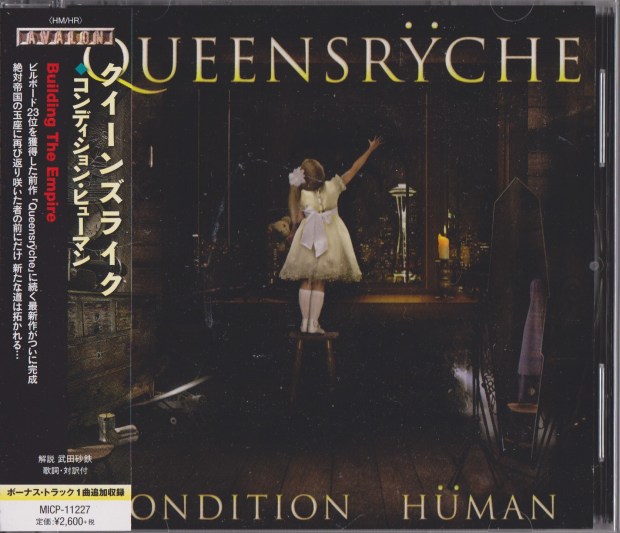
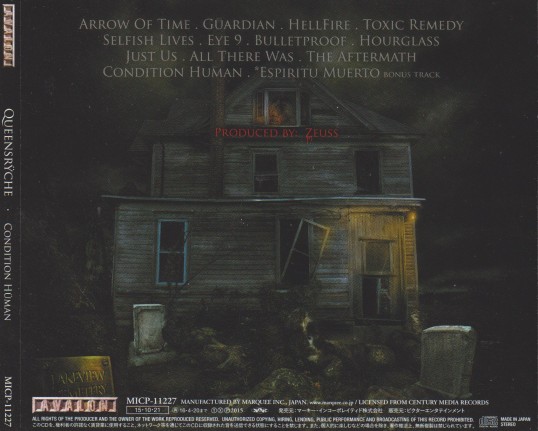
QUEENSRŸCHE – Condition Hüman (2015 Century Media Japanese edition)
As if it was not abundantly clear on their last album (2013’s self-titled), Queensryche seem to have no intentions of abandoning their heavy metal roots again. Furthermore when you have a significant lineup change, such as a new lead singer, you can’t just stand still. You have to keep progressing forward. The ‘Ryche used their last album to re-ground their sound, but for a followup you need more than that. Condition Hüman pushes the boundaries out once more, but not without keeping the metal intact.
Indeed, “Arrow of Time” sounds as if the quintet had been ingesting nothing but classic Iron Maiden for breakfast. Swift and viscous, “Arrow of Time” gets the job done in the requisite four minutes but not without exploring the exotic side of metal riffing. Imagine an alternate reality where Queensryche did not go in the highly technological direction of 1986’s Rage for Order album. Envision instead a timeline in which they followed The Warning (1984) with an album that continued to progress, but also go heavier at the same time. That album would have been Condition Hüman. “Hellfire” demonstrates this as well; the song would have fit on a heavier version of Rage.
“Guardian” demonstrates this even more clearly. With the vintage-style screams and vocalizations (Todd La Torre for MVP), metal riffing, but also Mindcrime-like progressive rock, Queensryche have hit upon a satisfying balance. Songwriting credits are various combinations of all five band members; all but “Eye 9”, written solely by bassist Eddie Jackson (a first, I think). The album has a cohesive sound, like five guys all pulling in the same direction. The production, by Zeuss, is punchy. Queensryche have always employed elements such as sound effects and programming, and Condition Hüman has these fixtures as well.
Moving on, “Toxic Remedy” is Mindcrime-like, but denser and massive sounding. Pay attention to the way Todd La Torre layers his vocals on “Toxic Remedy”. He has arranged the vocals in his own way; this is not a carbon copy of something else. “Selfish Lives” is the same. Yes, there are hooks and melodies that sound very Queensryche, but Todd is showing off his own personality more than before. And he’s not taking the easy way out on any of it! Sounds like he is really pushing his own limits, especially on “Selfish Lives”. It’s quite remarkable how lucky Queensryche were to find a compatible guy like Todd, who is also able to stretch it out.
Another album highlight is the rhythmic “Eye 9”, the aforementioned Jackson composition. This Queensryche-meets-Queens of the Stone Age track blows the doors wide open in terms of direction by putting the rhythm first. It sounds like Queensryche, yet nothing like any prior Queensryche, simultaneously. “Bulletproof” puts a new slant on the Queensryche power ballad, keeping the emphasis on the power. La Torre makes it his own — listen to the last note he sings. Sends chills up the spine. Speaking of chills, crossing the acoustics with the heavy chunky riffing on “The Hourglass” did exactly that. There are Pink Floyd influences coming up to breathe from time to time on Condition Hüman. This is most obvious on “Just Us”, which is also very much like the slightly psychedelic acoustic side of Led Zeppelin. Queensryche have never done anything like “Just Us” before. “Silent Lucidity” this is not. The soulful singing at the close of the song is also unlike anything on a prior Queensryche song.
For fans of the technical, fast side of Queensryche, “All There Was” will scratch that itch. With that pulsing technological rhythm and “Needle Lies” tempo, you are in for a ride. Don’t forget the blazing guitar histrionics. The final album track is “Condition Hüman” itself, 7:48 of dramatic progressive metallic rock. Check out the “Astronomy Domine” section after the fifth minute, just before it goes into that deliberate Mindcrime riff. If I had to pigeonhole the sound of this album, it would be “progressive metallic rock”, but pigeonholes are lazy. Still, as Commander Pavel Chekov once said, “If shoe fits…”
Holding out for the Japanese edition of the album, the bonus track “Espiritu Muerto” is the bonus track worth waiting for. Going sludgy for 3:40, but topped with a soaring chorus, the bonus track is in the mold of the album but different just the same. It’s a long album though, and adding more material (even if good) can sometimes push a CD just a bit too far in terms of attention span. “Espiritu Muerto” is close to this line, but because it has enough personality of its own, it’s worth staying around for.
If any of these songs sound intriguing to you, check out Condition Hüman. Fans who wonder where Queensryche could have gone had they adhered to heavier roads will find much to enjoy. They have never taken the easy way with any of their albums, but it is hard to imagine a fan of early ‘Ryche who won’t find something here to love.
Happy Halloween, folks! And what better way to celebrate this day than with the king of horror rock, Alice Cooper?
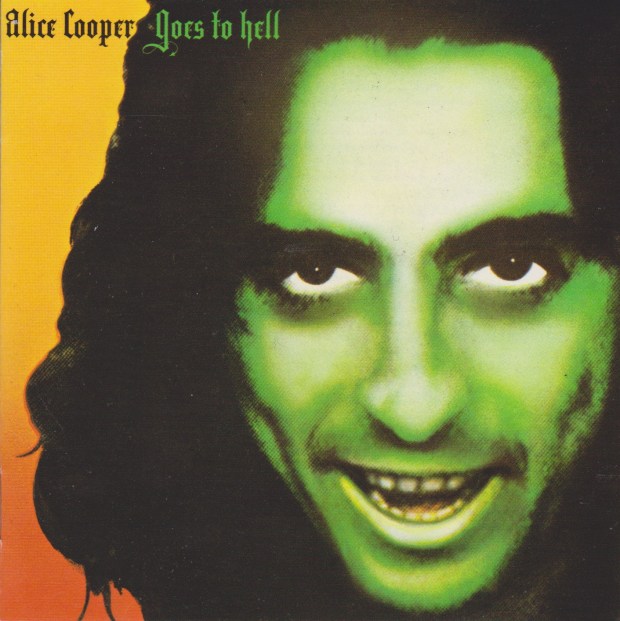
ALICE COOPER – Alice Cooper Goes to Hell(1976 Warner)
Last time, he welcomed you to his nightmare. Now, journey with Alice as he takes you straight to hell! Subtitled (in the inner booklet) as “A Bedtime Story”, Alice Cooper Goes to Hell is another concept album, to follow a concept album. Steven is back. It’s a pretty mad concept, and one that ties into not only Nightmare, but also Nightmare 2, decades later. Steven will fall asleep, and follow Alice down a dark endless staircase, “the pit where he doesn’t want to go, but has to.”
Written and produced by Alice, Bob Ezrin, and Dick Wagner, Goes to Hell features a backing band with a name you might recognize: The Hollywood Vampires. It’s not the same band, obviously (Johnny Depp was 12 years old), but it does demonstrate just how long Alice has been using that name for a band. Among the many musicians herein, you will recognize many: Steven Hunter, Dick Wagner, Tony Levin, and Allan Schwartzberg are probably in your record collection many times (credited or otherwise).
Goes to Hell doesn’t have the fire, or the reputation, of Welcome to My Nightmare. It is the beginning of a long slide that did not fully right itself until after Alice had kicked the booze for good. It is, however, an under-appreciated album with fun and nuance in the dark shadows. The title track is one song that still graces the live stage. Here, Alice seems to be paying for his crimes committed. “For criminal acts and violence on the stage, For being a brat refusing to act your age, For all of the decent citizens you’ve enraged, You can go to hell!” You’ll never have so much fun on the road to H-E-double-hockeysticks, this side of an AC/DC album. Quintessential Alice, this is, and indispensable too. Anyone who has ever liked the biting humour and celebrated riffs of Alice Cooper will love “Go to Hell”. Bob Ezrin adds the usual accompaniment to the mix: horns, keys, and gang vocals condemning Alice to hell!
A full three years before Kiss, Alice Cooper went disco. If you like disco rock metal music, then “You Gotta Dance” to this one. This is a track that some Alice fans would probably love to bury, but it has its moments. Steve Hunter plays a wicked funky guitar solo. There is always instrumental integrity. “I’m the Coolest” slows the pace to a jazzy drawl. At this point I imagine the character of Alice is meeting various people down in hell, perhaps the man in charge himself. “Didn’t We Meet” suggests this. “To look at you, deja vu, chills me to the core.” Then, “They say you’re the king of this whole damn thing.” These three tunes are all quite a departure from hard rock, but Alice has always been so diverse. The hit ballad “I Never Cry” (#5 in Canada) is very pretty, unusually so for Alice. It is, according him, an “alcoholic confession”, and not the only moment on the album that touches on his drinking.
The first side of the album has some great tracks, but only the first (“Go to Hell”) really rocks. Side two is similarly diverse and dark. “Give the Kid a Break” is a campy musical number, with Alice pleading his case before the judge. “I don’t know why I’m down here, I don’t deserve to roast or bake.” Predictably, things don’t go well, since the next song is called “Guilty”! “Guilty” is the hardest rocker on the album, and one of the only songs to be played live occasionally through the decades. Not that all the other songs on the album suck; Alice just sounds right when he’s rocking like he always has. And the lyrics rule:
Just tried to have fun, raised hell and then some, I’m a dirt-talkin’, beer drinkin’, woman chasin’ minister’s son, Slap on the make-up and blast out the music, Wake up the neighbors with a roar, Like a teenage heavy metal elephant gun.
If you call that guilty, then that’s what I am. I’m guilty, I’m guilty!
This is right up the alley of a tune like “Escape” from the last album. It’s a shot in the arm and just when you need it.
With “Wake Me Gently”, we are back in ballad land, and it is unfortunately the longest song on the album. It sounds like an Ezrin creation, but in comparison to his other works, it is among his lesser creations. The string section is the highlight. Then he turns up the funk again for “Wish You Were Here”, with the help of Wagner on funky gee-tar. “Havin’ a hell of a time my dear, wish you were here.” Sounds like Alice has more than enough of hell by now. Steve Hunter plays the blazing Lizzy leads at the end of the song.
In a surprising-but-not turn, Alice pulls “I’m Always Chasing Rainbows” out of the hat, an old Vaudeville song (1917) once performed by Judy Garland in 1941. It actually works within the concept of the album, and predictably, Alice perfectly camps it up. It blends splendidly into “Going Home”, with Steven finally escaping his nightmare. Was it a nightmare? “I wonder what happened to Alice,” he ponders. This is pompous, overdone Ezrin, just the way you like it. Orchestration and thunderous percussion lend themselves well to this dramatic close.
It’s pretty clear that the reason Alice Cooper Goes to Hell is not as fondly remembered as Welcome to My Nightmare is the sudden change in direction to balladeer. There are only three rocking songs on an album of eleven tracks, and Alice was always primarily a rock artist, albeit an experimental one. You still found his records in the “rock” section of your friendly neighbourhood record store. Three rockers aside, the rest is a diverse assortment of music, well put together and played. Clearly, that has to be the key. But there is more to it than that. Nightmare seemed a more celebratory affair. It felt lively; it felt alive. Goes to Hell sounds less so. Alice’s lungs seemed weakened, just a smidge, from how they used to bellow.
Alice Cooper Goes to Hell is worthy of praise, not derision. Just remember — it’s not a rock album. At best it’s rock opera. Proposed analogy: Goes to Hell is Alice’s Music From the Elder. They even have the same producer!
I started highschool in 1986, and the best days of the week were Thursdays. They called it “Game Day”. Thursdays were shortened, and we all got to go home at 2:45 instead of 4:45. Not only did that mean I would be able to catch the start of the Pepsi Power Hour, but it also meant extra time to goof around!
My best friend Bob and I were walking home from school one Thursday afternoon. A few days earlier he found something that we dubbed “the Killerang”. It was actually just a piece of red plastic from a grocery store’s pop bottle plastic crate. It was kind of shaped like an elongated “E”. An inner slat from one of those cases had come out and found its way onto the road by which we were walking. Bob threw it away assuming it was junk, but when he did, that sucker took off and flew, better than a boomerang! We saw it land far away in a vacant lot. We both stared at each other at the unexpected aerodynamics of this plastic fork. We ran after it knowing we’d found a cool toy to play with! The Killerang.
Then one Thursday, Bob brought the Killerang to school so we could mess with it on the way home. Killerang in hand, Bob and I stopped at a park by a local public school that was still in class. We were going to use their schoolyard to see how far we could get this thing to fly. Off in the distance was a class of kids watching a football game. Way, way off in the distance. It is on that field that two fates collided.
Bob wound up and threw the boomerang. He didn’t throw it hard but again it caught air and took off. We ran to collect it, and it was my turn.
“Don’t throw it too hard,” Bob advised. “It really flies.”
“OK,” I said as I wound up.
I threw the boomerang a little too hard. I watched as it flew…and flew…and flew…on its way to the distant football game.
“Oh no,” I muttered as the boomerang continued its flight. By its trajectory, it was going to hit one of the kids in the crowd.
There was one kid on that field that could not be missed even from that distance. He was huge. He was a giant. I watched as my boomerang felled that giant, striking him directly in the back of the neck. His arms went wide and he collapsed to the ground.
“Holy shit,” said Bob as I cried “Oh no!”
“You have to go apologize,” said Bob, stating the obvious. I’d never apologized to a giant before.
Sheepishly, and possibly with a huge and sudden dump in my pants, I went over to the football field to apologize to the giant.
Fortunately the giant, whom I learned one addresses as “Phat Curtis”, was the forgiving type. He did not kill me (this much is obvious). He did not stomp me, nor did he piledrive me into the ground. You don’t get a name like “Phat Curtis” for being small, but thankfully he wasn’t a vengeful giant. (His real name was Curtis Bernard.)
A year later, Phat Curtis started highschool, and it was there that I learned he was a drummer. In fact he had a reputation as the most talented drummer in school. Later on he added five and six string bass to his musical repertoire. He went on to play with my sister in various ensembles, and became a customer at the Record Store too. He was always looking for live albums with good bass. Didn’t buy much stuff, but he sure kept me busy every time he came in.
Maybe that was his revenge? To haunt the Record Store of the guy who boomeranged him in the back of the neck? To make that Record Store guy run around the store looking for live albums with good bass, but not make a sale? Could that be it? If so, I cannot say that Phat Curtis put me in as much pain as I put him in. However at least I can boast that single-handedly took down a giant!
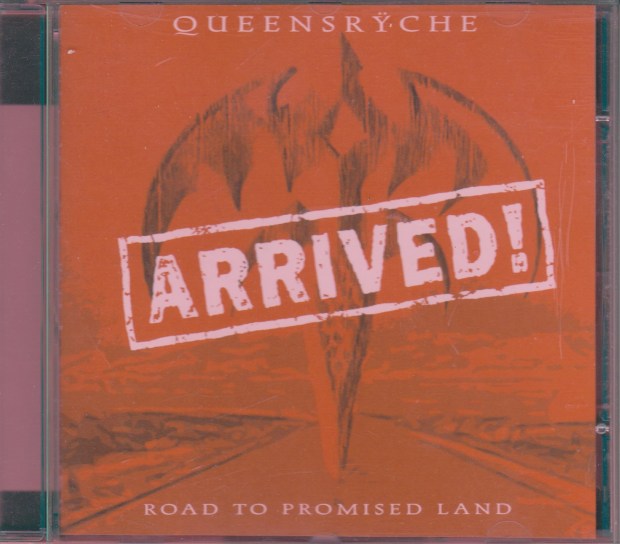
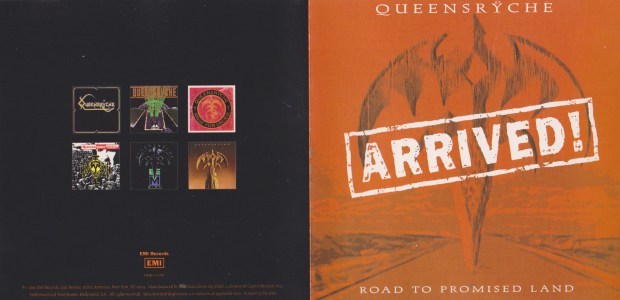
QUEENSRŸCHE – Road to Promised Land (1995 EMI promotional “best of” CD)
20 years ago, good buddy T-Rev let me know this little treasure had arrived in his store (first discussed in Record Store Tales part 120). Released to promote the 1995 Promised Land tour, Queensryche’s Road to Promised Land AKA Arrived! was a neat little greatest hits package released well before their actual Greatest Hits several years later. This is a promo CD released by EMI in the United States, and it covers every Queensryche release to date.
From the original EP is not “Queen of the Reich”, but “The Lady Wore Black”. The ballad starting the set is an odd but explainable choice. Queensryche were playing “The Lady Wore Black” on tour, but Geoff Tate didn’t enjoy singing “Queen of the Reich” and tried to avoid doing so. Being so full of powerful metal drama, even as a ballad, “The Lady Wore Black” can work as an opener. Then “Take Hold of the Flame” follows, one of the best Queensryche songs of all time (from the first LP The Warning). Unfortunately that is the only inclusion from The Warning, although it is certainly a must. Geoff Tate used screams as a art form on this song like no other. You want metal drama? They opening tracks are Metal Drama 101.
Two tracks are selected from Rage For Order, and they are fairly obvious choices: “Walk in the Shadows” [“WALK WITH MEAT!“] and “I Will Remember”. It is a given that both are high quality songs, from an album that can be difficult to pick individual hits. The opening part of the CD feels rushed, with the critical first EP and two albums giving up only four songs. Keep in mind that these albums now make up a large bulk of Queenryche 2015’s set, although that wasn’t the case in 1995 with their original singer.
From the brilliant landmark concept album Operation: Mindcrime are three selections: “I Don’t Believe in Love”, “Eyes of a Stranger” and “Revolution Calling”. Once again these are fairly obvious choices, being the three singles from the album. Strangely, “Eyes of a Stranger” was not edited down and is the full 6:39 cut, complete with album outro. Their most successful LP yet, Empire, was also give three inclusions. “Best I Can”, “Jet City Woman” and “Silent Lucidity” were three great singles. I wonder why the title track “Empire” wasn’t used? I think it’s more identifiable than “Best I Can”.
Rolling into Promised Land for the final three tracks, it is plain sailing to hear the evolution of the band over their first decade. Although the metal got tuned down in favour of more drama and radio-friendly elements, one thing that never changed was their urge to experiment. Indeed, the first Promised Land single “I Am I” features plenty of daring sounds. (This version of “I Am I” fades out rather than skipping directly into “Damaged”.) From cello (by Chris DeGarmo) to tribal percussion to innovative vocal effects, “I Am I” proved that Queensryche could rock progressively in the increasingly alternative 1990’s. Lyrically, they were as serious as ever but more personal. The ballad “Bridge” was about DeGarmo’s relationship with his father. Finally, the heavy-as-plutonium “Damaged” closes the CD abruptly. That’s the problem with these record company assembled promo CDs. They are not designed to play as an album. They are designed for radio use and store play. In other words the only real consideration is including all the individual tracks you want to plug. Like “I Am I”, “Damaged” too was edited for radio. They shaved three seconds off in fades, because normally these songs flow together on album.
Rating a CD like this is kind of pointless, because it was never meant to be sold. But let’s say you don’t own any Queensryche, and you saw this used while wandering the shops. Would it be a good Queensryche purchase for somebody looking for a good overview of the classic years?
What’s the biggest musical rip off you’ve ever seen?
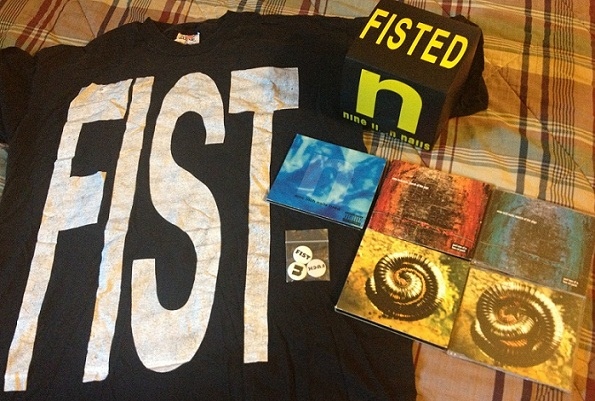
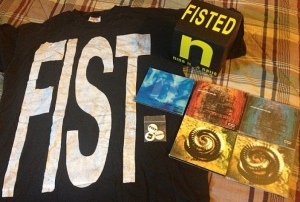
The Nine Inch Nails unofficial Fisted box set comes to mind.
This set, supposedly limited to just 1000 pieces, retailed for about $200 in the mid-90’s. It included five CDs:
Fixed (EP)
March of the Pigs parts I and II
Closer to God parts I and II
Those singles are available on their own, for much less. The box also included an unauthorized T-shirt that said “FIST” on the front, and “F%@#” on the back. No Nine Inch Nails logos anywhere to be found on that. It came in a cheap black plastic box with the Nine Inch Nails “n” logo and the word “Fisted” on top…except it’s not really the Nine Inch Nails “n” logo. The official one is backwards. This is just a normal “n”. They were hoping you wouldn’t notice that. This package was assembled by Phantom Imports, who must have been laughing their asses off at the ridiculous amount of markup.
This is a great example of a collectible that is not. The artist labels had no involvement and certainly did not set the pricing. The shirt and box have no logos on them. Anybody can go and print a T-shirt that says “FIST” and “FUCK” on it. All this for $200. Even if you were missing those five singles (which any real Nails fan was not) there is no reason to buy this.
We had an incomplete copy of this come into one of our stores, but it was missing the shirt and the other goodies. Looking to make a few extra bucks, we stuffed the box full of other albums and singles and jacked the price up. That was a decision made by a franchise owner. I don’t think he had an easy time selling this box, which was really just a plastic box with a random selection of CDs in it by the time we put it up for sale. A rip off box set made even more so.
I’ve seen others just as irritating as this. One was a “deluxe” version of Pink Floyd’s The Wall. This was the 2 CD set, packed into a wooden carving of a wall. It looked cool, but it also looked like something a skilled woodworker could make in his or her shop at home. It was painted white with the Wall logo scrawled across it. Around $200 for that too, somewhere at a store in Hamilton ironically called Cheapies.
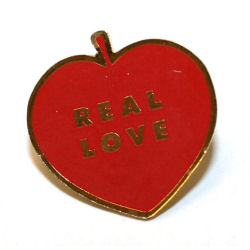
Probably made by the same company was a commemorative Beatles single for “Real Love”. It came in a red box with a heart on it, with a button “Real Love” inside that looked like a cross between a heart and an apple. We ordered this one in, new, and our cost was about $40. It sat and sat and sat there for months. It wasn’t authorized any more than the Nine Inch Nails box was. We didn’t realize we’d brought in a lemon until it was too late. We had to be told by a customer who was a Beatles collector. “These things aren’t worth anything,” he said. “They’re not issued by the Beatles. It’s a made-up collectible.” We should have known, but it’s hard when you’re ordering this shit from a distributor’s catalogue.
Have you ever run across a rip off like these in your travels? Or worse, have you ever bought one?
Happy Saturday, folks. Hope you’re having a rocking weekend.
I have been working diligently on a new series of reviews. I’m very excited to bring you this next artist. But can you guess who it is, just by the haircuts below? Leave your guess in the comments and prove who knows their rock!
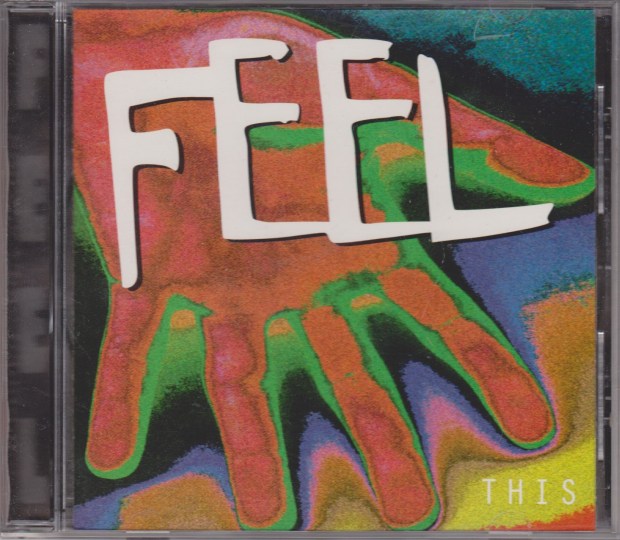
Russian Blue followed their critically acclaimed demo tapes with a full length CD, but perhaps it was the long wait that killed their chances. Between 1991 and 1994, the entire musical landscape had turned itself upside down. A name change was in order to suit the new climate, and after using the name Deadmoon for a little while, they settled on Feel. Simple: one word, one syllable, and trendy. Would they be able to maintain a level of quality over a full-length CD?
Almost. There is very little dead weight on Feel This.
“I Become You” is brutalizing, menacing, grooving detuned grunge. The presence of the bass is felt on this heavy recording. What Feel had that was different from other bands was the Axl-like screech of frontman Jo E. Donner. Indeed, when Donner multi-tracks his high voice with his lower register, the overall feeling is very Axl. Donner bellows forcefully, blowing out the speakers but not without help. Guitarist Richard Gauci and drummer Mike Willerding were capable of playing challenging rock. The drum patterns are busy and and Gauci is able to both shred like a hero, and also create the kind of noise that you needed to do in the 90’s. The band were between bassists. Robo was no longer in the band, so there are a couple session players on the CD.
Several smouldering tracks in a row occupy the first half of the album. “What You Made of Me”, “Wild Eye” and the lengthy “Brotherhood” all boast heavy guitar and vocal hooks. Wimps need not apply; Feel go for the throat even with a slower tempo. The songs sound well thought out, with attention given to every shriek and guitar noise manipulation. The bass grooves are absolutely key to all of this. Rumbling and shaking like a good Soundgarden line, they deliver the bass chills that fans of such sounds love. But was it all too similar to the chilly winds that had blown in from Seattle? Feel had been growing heavier and groovier on the demo tapes already, so I believe this to be a natural evolution that happened independently from the Seattle scene. Witness other Canadian bands such as I Mother Earth, who also evolved on their own into something that fit into that 90’s box.
The centerpiece of the album has to be “I Am Your Mind”. Long with a droning, irresistible chorus and cool lyrics — what’s not to like? This tune takes only one listen to bore its way deep into your medial temporal lobe. Building dramatically, every guitar hook will sink in hard, only for Donner to hit everything home with his powerful larynx. Everything is perfect — a song of this quality could easily have been on Badmotorfinger or Superunknown. Hyperbole? I don’t think so.
The second half of the CD has fewer highlights. After being slammed in the face with so much heaviness, Feel were wise to put on an acoustic number next. “Ain’t Nothin’ Wrong” is good, and shows off the band’s Zeppelin influences especially in the vocals. It’s just that Feel unplugged doesn’t have the kick that Feel does fully electrified. On the other hand, another listener might say it’s the best track. The first skipper is “Under My Wing”, too slow and boring. Not enough Sabbathy slow, just stuck in the wrong gear. Back to the groove is the killer “Drip Sweet Blood”. Making use of trendy 90’s vocal distortion, Donner blows the speakers especially around the 3:15 mark with another hair-raising bellow — just awesome. “Stand on Walls” sounds something like a Skid Row outtake. It’s nothing outstanding, but it’s only 3:38. Closing the disc is “All”, which was formerly known as “Black” on the second Russian Blue demo. The psychedelic intro from the demo was axed, tightening up the song and amplifying its power. Alternating from soft to loud, “All” kind of does have it all, at least for 1994.
Feel could have got themselves off to a great career with This as a debut album. Unfortunately I think by 1994 it was already too late.
Since March 2012, LeBrain has been bringing you the rock on a daily basis.
I’ve been writing about music for a long time. Over the years, I accumulated an immense catalogue of music reviews. I saved them up, and gradually expanded and polished them up for publishing here at mikeladano.com. On top of that, I also had an incredible stock of Record Store Tales to post. Some of these had been gathering dust for well over a decade. Including new content I’ve stirred into the mix, it took over three years to burn through all the old reviews and stories. I am now dry. I had a few movie reviews left in the hopper, but these are abandoned now, because this is (mostly) about the rock.
It’s much easier for me to revise and expand an old review, than it is to write a new one. It’s actually an enjoyable process for me to revisit and fix up an old writing. You’d be hard-pressed to tell an old polished up review from a brand-new one unless I pointed it out. The huge amount of stuff that I had built up to publish enabled me to post content every day. In fact, in my old “theme song” video I boasted that mikeladano.com was “updated daily!”
I can no longer keep going at that pace. It’s just not possible; not if I want to maintain a level of quality. Listening to music takes time, articulating thoughts into words takes more time, and adding the photos, videos and anecdotes takes even more time. I love writing about music and sharing my music collection with you. I can’t deny that this hobby is hard work, albeit a labour of love.
So, without any shame, I am now announcing that the pace of new content here is slowing down. I don’t plan on using a schedule, but you can count on new reviews and stories here about one every other day. I hope you continue to read and enjoy. This will hopefully enable me to spend more time posting and responding to comments.
Music is an important part of my life, and yours too, I’ll wager, or you wouldn’t be reading this. Coming home from work every day and sitting down to review music because I “have to”, to keep up the pace, isn’t what I wanted to do. I don’t want to work on reviews because I “have to” maintain an inhuman pace. You might not have noticed but I feel the more recent reviews I’ve written have been rushed. I think the quality may have suffered in favour of quantity.
No longer. You can count on the same brand of music reviews, the same kind of stories, and the odd “WTF” here and there…just not on a daily basis. I’m taking tomorrow off!
Shit. I guess this means I need a new theme song video.

















 mikeladano.com