Sorry for the lack of rock!

Sorry for the lack of rock!
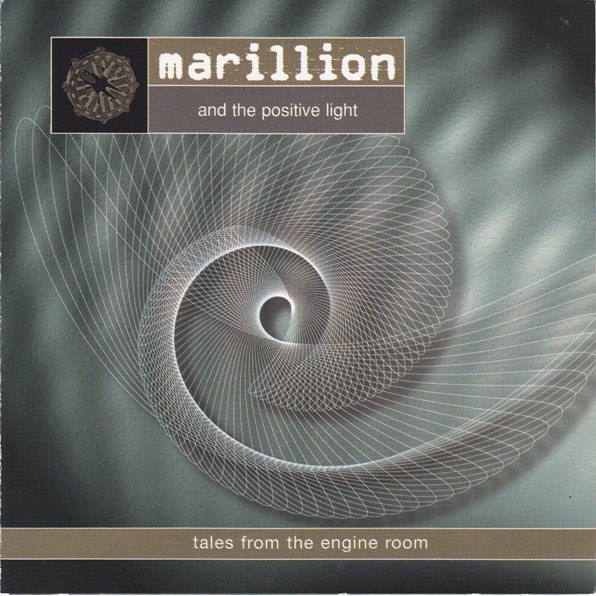
 MARILLION and the POSITIVE LIGHT – Tales From the Engine Room (1998 Big Eye)
Remix projects: Often dicey, usually over-indulgent cash-grabs. I always give Marillion the benefit of the doubt where integrity is concerned. In the liner notes, singer Steve “H” Hogarth says that the art of the remix at its best is to produce a cerebral trip, and I think that was the aim here. He refers to this as a “reconstruction” and that sounds about right.
Having just completed the This Strange Engine album, Marillion handed over the master tapes to The Positive Light (Marc Mitchell and Mark Daghorn) for creative reconstruction. The duo had impressed them with some early work on “Estonia” so they decided to go all-in. That track is the first on the CD, Tales From the Engine Room. It’s a swirly, heavenly version but not a drastic departure. Hogarth’s vocal isn’t chopped to bits, the melodies remain the same, and the overall structure is unchanged. It is as if the body of the song were played by Jean Michel Jarre instead of Marillion.
“Estonia” folds neatly into “The Memory of Water”. This experiment turns the song into a light dance number. It’s not nearly as great as the pounding “Big Beat Mix” on the Radiat10n CD. This version just kind of circles around without going anywhere. It’s always risky, extending a three minute song to almost ten! Sorry Positive Light, I have to give you a D on “The Memory of Water”.
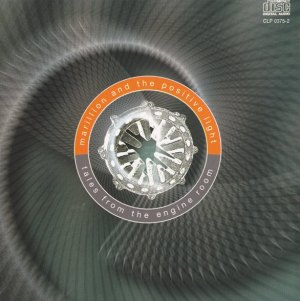 If you like long bombers then you’ll love “This Strange Engine”, all 20+ minutes of it! That’s not too much of a stretch, since the original is over 15. Of this one, Hogarth says, “[it] reduced me to tears. I would advise you to listen to it on a Walkman whilst walking through the town on a Saturday afternoon. It makes everyone move in slow motion!” While it is cool, it has never given me that exact effect. It really starts to swell into dramatic waves when it gets into that “tall tales of Montego Bay,” section. A solidly trippy remix.
Onto “One Fine Day”, which was never one of the strongest tracks. With the Positive Light, it acquires a trippy jazzy slant. I don’t know what “Face 1004” is, except perhaps a Positive Light original? It bears no resemblance to the fine Marillion song “Man of 1000 Faces”, but it’s a beat-heavy dance track much in the style of the rest of this CD.
The original CD ended with track 5; reissues also contain “80 Days”. Since there’s no point in buying an incomplete version, you may as well look for the reissue. “80 Days” is far removed from its jaunty, celtic origins. Now replete with electronic beats and tribal singing, it is still a celebration of touring the world.
Tales From the Engine Room turned out to be an apt title for a successful experiment. The Positive Light took the songs down to their cores without losing what made them the songs that they are. They re-presented the tunes in a new way, in a different genre. While this is far from an essential purchase, it will be appreciated by fans of latter-day Marillion.
3/5 stars


RECORD STORE TALES MkII: Getting More Tale
#413: Just for the record, Meat’s gonna put it down
By special request of Aaron at the KMA, yesterday I ranked all the Marillion studio albums in order of preference (see #412: Just for the record, I’m gonna put it down). It’s not an easy thing to do, because any band with two distinct phases (and lead singers) is going to have lovers and haters of both, as well as fans who can accept both equally.
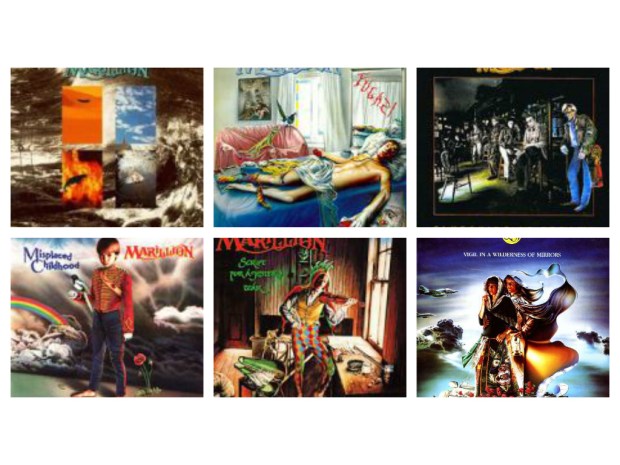
During Sausagefest weekend 2015, I discussed my already-completed list with Uncle Meat, who also wanted to take part. He has his own feelings about Marillion’s discography. In fact he only listed six albums. Meat is very much a “Phase One” fan, a follower of Fish who had a hard time accepting the changes that occurred after Seasons End. It’s important to note that Seasons End was mostly written (musically) with Fish. After that album, the band had to come up with new material for the new singer, and that is when they started to write very differently from before. It’s not Steve Hogarth’s fault, in Meat’s eyes, just the way the band wrote for and with him.
Here are Uncle Meat’s top Marillion albums, without commentary. He’s going top down:
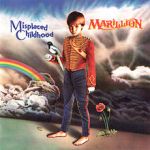 1. Misplaced Childhood (1985)
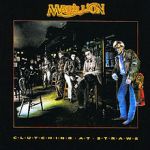 2. Clutching at Straws (1987)
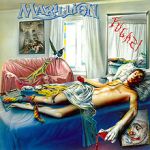 3. Fugazi (1984)
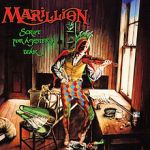 4. Script For A Jester’s Tear (1983)
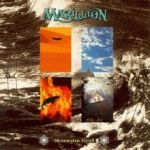 5. Seasons End (1989)
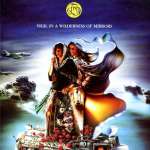 6. Vigil In A Wilderness of Mirrors – Fish (1990)
How’s that for a “Big Wedge”? More Marillion tomorrow!
RECORD STORE TALES MkII: Getting More Tale
#412: Just for the record, I’m gonna put it down
By special request of Aaron at the KMA.
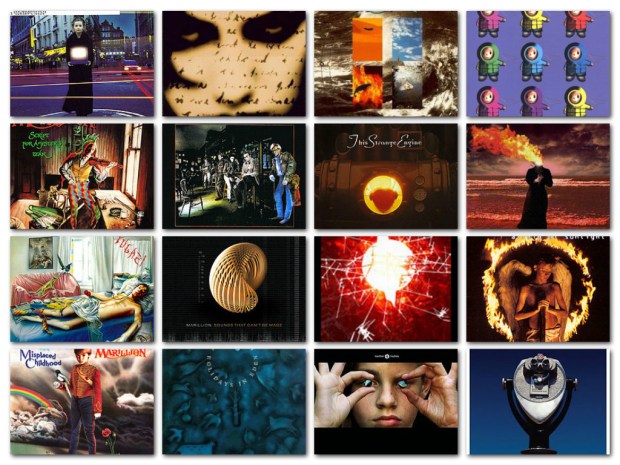
Marillion have 16 studio albums: Four with original poet and singer Fish, and 12 (going on 13) with Steve “H” Hogarth. (I’m not counting the album of acoustic versions called Less Is More.) Like any band who have had more than one beloved singer, it is very difficult to try to arrange their albums in any sort of rated order. How can you compare an album like Brave to Fugazi? They are nothing alike. They share similar DNA, and the ambition to play intelligent rock music, but to say one is better than the other? I wouldn’t want to do that.
But I must. This was a request. I have to oblige.
Starting from the bottom, here are Marillion’s studio albums from weak to strong.
 16. Somewhere Else (2007). Following an album like Marbles (2004) is damn near impossible. Somewhere Else has never completely clicked with me and it remains foggy in my memory. Incidentally, the vinyl version has three live bonus tracks and a slightly shuffled song order, as well as a warm sound that benefits the listening experience.
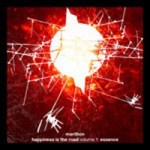
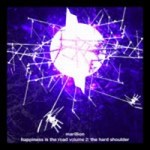 15. Happiness is the Road (2008). Consisting of a massive eight sides of vinyl (!), Happiness is the Road is broken into two albums: Essence, and The Hard Shoulder. While both discs contain memorable songs such as “This Train is My Life”, the set is too sprawling and slow to be enjoyed frequently. (The vinyl version contains bonus live tracks from the album Happiness is Cologne.)
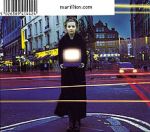 14. marillion.com (1999). I love that the band were digging into trip-hop and writing catchy poppy songs, but as a whole the album doesn’t rank higher than…
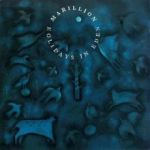 13. Holidays in Eden (1991). Some like it, some consider it too commercial. I fall into the second category.
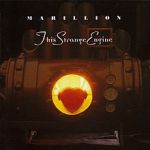 12. This Strange Engine (1997). I still like this mostly acoustic album (I own three copies), but it’s a departure. Iron Tom Sharpe calls this “the one that sounds like Hootie and the Blowfish”. It retains progressive moments but also stretches out into celtic folky sounds and tropical celebrations.
 11. Anoraknophobia (2001). A decent album, a bit long winded but a progression over 1999’s marillion.com
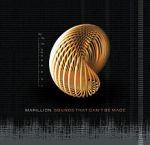 10. Sounds That Can’t Be Made (2012). I think Marillion really grabbed this album by the balls. It’s fearless.
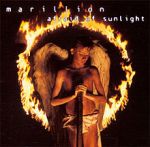 9. Afraid of Sunlight (1996). This middle grouping of albums on the list are really so close it’s meaningless. It’s splitting hairs to put them in a meaningful order. Afraid of Sunlight scores high due to the excellent title track.
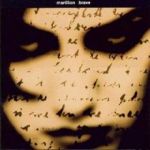 8. Brave (1994). This is where Marillion-with-Hogarth really came into their own. It is still one of the most ambitious Marillion albums and an emotional roller coaster of a concept record. There’s also a heavy 10 minute jam released as a B-side called “Marouette Jam” that necessitates buying of the remastered 2 CD edition.
7. Seasons End (1989). The most difficult album of a career is gonna be the first album with the new singer. By retaining their classic sound with a few new twists and a new charismatic frontman, Marillion successfully rode through the transition.
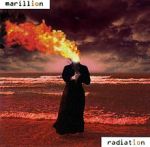 6. Radiation (1998). I love this noisy reject of an album. It’s brilliant.
5. Script For a Jester’s Tear (1983). Fish finally makes his first appearance on this list with the very first Marillion album. Genius poetry but complicated tunes make this one a jagged-edged favourite.
 4. Marbles (2004). Marillion’s first double CD studio album, never wearing out its welcome. Like Brave, but grilled to perfection and with all the accouterments.
3. Fugazi (1984). Fugazi is not an easy album to get into, with a pugnaciously opaque second side. The first side is pure genius.
2. Misplaced Childhood (1985). The record company shit their pants when they heard that Marillion were doing a concept album for their third record. The band had written two 20+ minute pieces of music tentatively titled “side one” and “side two”. After honing it live, they unleashed Misplaced Childhood to the stunned masses.
1. Clutching At Straws (1987). It not difficult to put Clutching at Straws as #1. It is one of Marillion’s most beloved, and Fish’s favourite. The dark poetry and sharp songwriting makes it a timeless perennial favourite, never stale, and always revealing new facets to its personality. An utter classic.

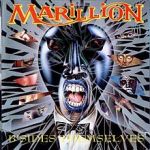 Marillion have numerous live albums (I lost count but well over 50 or 60) and greatest hits with exclusive material to boot. Ranking those is all but meaningless. Having said that, one essential purchase for a serious Marillion fan is their first double live, The Thieving Magpie (1988). This epic contains a full performance of Misplaced Childhood, as well as non-album cuts like “Freaks”. Another great record to own is B’Sides Themselves (also 1988), containing some of Marillion’s most memorable B-sides. These include the 18 minute epic “Grendel”, and more concise classics such as “Tux On” and “Market Square Heroes”.
Dig into some Marillion and see what the frak you’ve been missing!

RECORD STORE TALES MkII: Getting More Tale
#411: Stop Playing ‘Beth’ – The Post-Sausagefest Countdown
Perhaps the only bigger production than going to Sausagefest is coming home from Sausagefest. At least when you’re travelling with Uncle Meat.
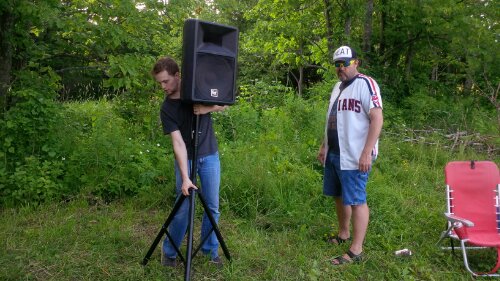
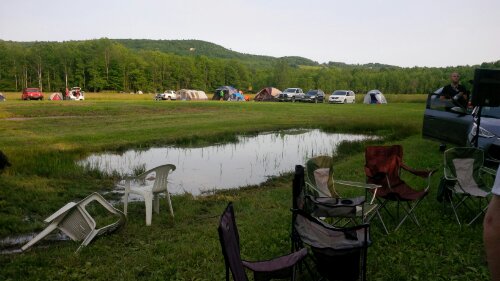
As we have previous years, Uncle Meat rode up with me. This time he slept in my car too. This pretty much left me responsible for him. I roused bright and early from a restful slumber on Saturday morning to evacuate my bladder. Imagine my surprise when I found, at 6:30 in the morning, Uncle Meat, Bucky and Matt still up from the night before. They were just starting to fall asleep when I took my morning shit. I then went back to sleep in my tent for a few more hours.
Our Saturday morning tradition is to hit up the Flying Spatula in Flesherton for our breakfast fill-up. Sebastien, driving his 4×4, stopped by my tent and asked if I was riding up with him. Ready for some bacon and eggs, I hopped on board with Seb, while Meat snoozed away in my car’s passenger side seat.
My first controversy of the weekend was not waking Meat up for breakfast. Being that he had only gone to bed a couple hours before, I thought I was doing him a favour. Apparently not. “Breakfast before sleep!” he said. Apparently that’s the Meat priorities.
Saturday went off without a hitch, breakfast arrangements aside. I will post the full 78 song countdown (plus a couple odds n’ ends) in the days ahead. Saturday night was loaded with long bombers, such as “Rime of the Ancient Mariner” (13 minutes), the live “Child in Time” from Made In Japan (12 minutes), and “Shine On You Crazy Diamond” (25 minutes). The excellent countdown (dubbed “the greatest songs of all time”) ended after midnight.
Sunday morning, I found I had the most difficult job of all. It took me an hour and a half (close to two hours) to wake Uncle Meat from his slumber. As the others were packing up their tents and heading off into the sunrise, I found I had a passenger unwilling or unable to rouse himself. “If you let him sleep in your car again next year, then there will be nobody to blame but you,” said Troy.
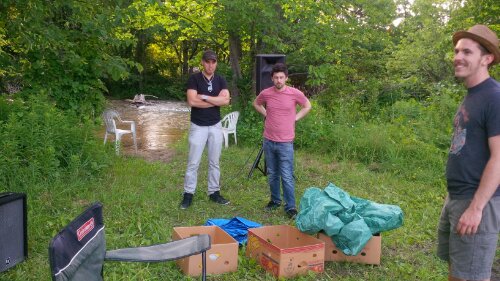
I cranked “I Stole Your Love” at max volume. No reaction. Tom threw a 12-pack of socks at his head (photo above). No reaction. I played Kiss’ “Beth”, followed by the 1988 Eric Carr re-recording. Still nothing. Only when I put the car in drive and started moving it around did Meat finally decide to wake himself. I took him on a drousy “drive of shame” to visit all the people who had no trouble waking up. “I have a boner” he announced. Yes, it’s true — Uncle Meat woke up with wood.
After telling us all about his boner, he kept shouting “Stop playing ‘Beth’!” even though the song was no longer playing. This continued when we pulled into our first stop, Top of the Rock, for him to get his first coffee. “Stop playing ‘Beth’!” he shouted in a barely-there voice, any time somebody was in his vicinity.
“Stop playing ‘Beth’!” he shouted, when his roomate Zack also pulled into Top of the Rock. Zack informed us, “That’s just him. He’ll just keep repeating it unless he gets something new in his head.” Zack paused and said, “Watch. Rododendron!”
“Rhododendron!” shouted Meat, parroting his roomate. “Rhododendron! Stop playing ‘Beth’!”
And that was it pretty much the rest of the ride home. A selection of brief statements, repeated ad nauseum: “Rhododendron!” “Stop playing ‘Beth’!” “Coffee!” Repeat.
The weekend more than made up for the ride home. Sebastien and I shot lots of footage, including underwater stuff with his GoPro. For the first time ever, we will be combining footage and doing the annual videos together. Be patient, this will be worth it.
Three albums I must own, after this year’s Sausagefest:
Stop playing “Beth”? Never, man! Stay tuned….


RECORD STORE TALES MkII: Getting More Tale
#410: Doing it Right
I’ve complained about the way I was treated toward the end of the Record Store Days, but that was a small part of my life there. In the beginning before we grew too big for our britches, it was a wonderful place to be. There were a lot of things we did right, and there are hundreds of great memories of that era.
What did we do right, or differently, to make it so special for us?
I’ve somehow managed to find great places to work with amazing people. Today I work with another completely different crew, and each and every one of them is awesome. I’ve never seen a more diverse bunch and that keeps it fun and interesting every day!
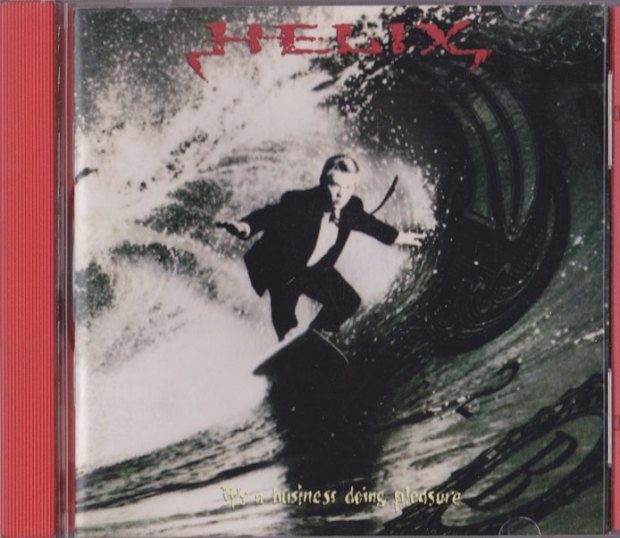
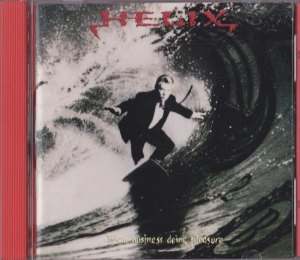 HELIX – It’s a Business Doing Pleasure (1993 Aquarius)
This is a good album — but it’s utterly ridiculous to see Amazon sellers asking $125 for a CD that I used to sell in store for $8.99.
After the death of guitar player Paul Hackman, killed in a tragic bus accident prior to this, Helix decided to carry on, somehow. Before the crash that prematurely ended the talented guitarist’s life, he and Brian Vollmer had been working on two separate projected discs. Brian had written songs with Marc Ribler, as he did on the previous record Back For Another Taste, which were earmarked for a solo album. Meanwhile, Hackman was writing music for the next Helix album. When it came time to pick up the pieces and carry on, there wasn’t much written for Helix. Although he regrets doing it today, Brian Vollmer decided to use the Ribler songs for the Helix record.
Vollmer recorded the album with Ribler, bassist Rob Laidlaw, and former Helix drummer Brian Doerner. Having spoken to Doerner about this album, I know he felt it was strong and underrated. I would have to agree. Vollmer also needed a new Helix band to take the album on tour. Greg “Fritz” Hinz and Daryl Gray remained on board. Though they did not play on the album, they are pictured inside. For the vacant guitar slots, they recruited former Brighton Rock guitar maestro Greg Fraser. Even more exciting to fans was the return of Brent “the Doctor” Doerner. This was easily the most exciting band lineup since the 1980’s.
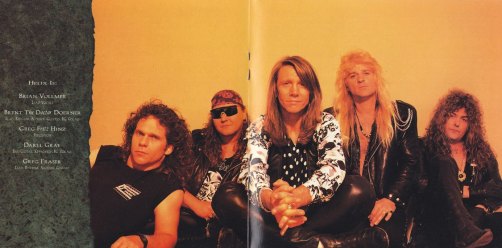
The record was a definite change of pace, due to its genesis as a Vollmer solo album. Starting off, it’s instantly noticeable a Nashville influence . Almost every song has that terrific old school Fender guitar sound, but with a rock n’ roll edge–a little like Mark Knopfler. The songs are by and large a lot softer and more radio-ready, but also significantly more melodic and memorable. “Classy” is a good word to describe the direction.
The first single “That Day Is Gonna Come” is upbeat, a tribute to the life of Paul Hackman. Next to “Billy Oxygen”, I think it’s possibly the best song they’ve ever done. It received an excellent music video loaded with Brian’s own video-8 footage recorded over the years on the road. Just about every major Helix members appears in the footage. It’s hard not to get nostalgic. Have you been to any of those towns? This is the best video Helix have made yet.
“Tug Of War” would have made a great hit, but sadly the record company weren’t behind the album enough to push it. Vollmer and Fraser did an acoustic rendition of this ballad live on MuchMusic, a recording I’m glad to have on VHS. The album version is more bombastic but just as good. “Wrong Side of the Bed” and “Can’t Even Afford to Die” are both upbeat acoustic rock tunes with lush backing vocals. Think John Cougar meets Helix. Lyrically, Brian was writing about subjects people could relate to, rather than pining over Joan Jett. Being broke, being hurt, but keepin’ on keeping on. Still upbeat but a little harder is “Misery Loves Company”. There are some dirty guitars and driving piano, but we’re still driving in the country. Even without a heavy rock band behind him, Brian’s voice keeps it in the realm of Helix.
“Look Me Straight in the Heart” was supposed to be a video. This power ballad is a duet with Brian and Canada’s Metal Queen, Lee Aaron. The video funding was pulled when Aaron couldn’t appear in the clip with Vollmer. It’s too bad, because it’s a great song and I love hearing Lee Aaron belt it out. Lee Aaron and Brian Vollmer singing a ballad? How could it not have balls! (Just enough.)
“Trust the Feeling” is largely forgettable balladry, but “Love is a Crazy Game” is haunting and quiet. There is a heavier, electric version on the B-Sides CD, and it’s hard to choose which is best. This one is certainly more unique. Of course, you can’t have too many ballads in a row, and they were pushing it with three, but thankfully “Sleepin’ in the Dog House Again” will wake you from your slumber. Kim Mitchell dropped in to play one of his typical gonzo guitar solos, topping off the only real ass-kicking rocker on the album. The closing song “Mad Mad World” (not the Tom Cochrane tune) is one of the best. Who doesn’t love whistles? Humorous lyrics and a great chorus help to end the album in style.
Some lamented that Helix “softened up” on the album; others admired the growth and maturity. Brian Vollmer called the record “a huge mistake on my part, and I take full credit for the blunder. The really sad thing about it all was that I was really proud of all those songs on the album and they were wasted because they did not fit under the Helix name.”
I’d hate to think of those songs wasted, because here I’ve been enjoying them for over 20 years. Perhaps under another name they could have been hits, perhaps not. In the end, this album helped Helix stay a band. It gave them something of quality to release in the wake of their greatest tragedy. It allowed the band to get out and play supporting it. Ultimately, those who were unhappy about the direction would satisfied by the heavy songs on the next album, 1998’s half-ALIVE.
I’d be happy if this album got a little more recognition, so here’s me doing my part.
5/5 stars


Epic review time!!
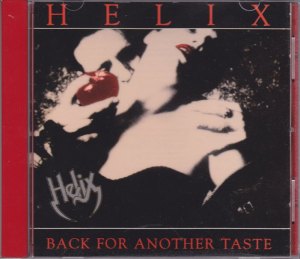
HELIX – Back For Another Taste (1990 Capitol)
Helix’s Back For Another Taste was easily their best album since No Rest for the Wicked. It was also their last for Capitol. As such it received a neat, very limited vinyl release with a special cover commemorating the last (planned) printing of Capitol vinyl. I wish I had bought it when I had the chance. I recall seeing it at Sam the Record Man (owned by Gil Zurbrigg, brother of original Helix bassist Keith Zurbrigg) in downtown Kitchener. I didn’t have a good way of playing records back then, so it didn’t seem worth it.

Special release aside, Back For Another Taste will always be associated with some hard times in Helix. Brent “the Doctor” Doerner, with the band since LP #1, decided to move on from rock and roll. Although lead howler Brian Vollmer saw the departure coming, it still hit hard. Doerner stuck around long enough to record some rhythm guitars and solos for the new album. His brother Brian Doerner played drums on three tracks, as he often has on past Helix albums. (Helix mainstay Fritz Hinz played on the rest). The songs were written by Vollmer and guitarist Paul Hackman, with the exception of two. Vollmer took a trip down to the US to work with Marc Ribler who helped him hone his songwriting chops.
Helix presented themselves as a four-piece in promo photos and music videos, for the first time. Doerner would prove hard to replace over the years, with American Denny Balicki taking over for the tour. He was Helix’s first American member. He made notable appearances in a one-hour MuchMusic special called “Waltzing With Helix”, a documentary on Helix’s European tour with Sacred Reich, and opening for Ian Gillan. (Also in that documentary: a kid I grew up with in the neighborhood called Brian Knight. He was a Helix roadie at the time. Brian Vollmer misspelled his name in his book as “Brian McKnight“. Whoops!)
Back For Another Taste was produced by Tony Bongiovi, who gave the band a raw, more kicking sound in the studio. It was clear from track one “The Storm” that Helix meant business again. A mean sounding gritty groove-rocker, “The Storm” was unlike anything they’d done before. It was a completely un-wimpy lead single and a surprising one at that, since it’s not a very commercial. The new four-piece Helix sound great here, with Hackman able to really dig in and play, while bassist Daryl Gray gets more room to groove.
The really impressive track on the album was “Running Wild in the 21st Century”. When every other band seemed to be softening it up, Helix seemed to go full-on metal. An edgy music video featuring London’s “Snake the Tattooed Man” won Helix some acclaim and recognition. Snake was a friend of the band, and when the idea came up for a music video, Vollmer said “I know the perfect guy for this.” (I myself encountered Snake at the Record Store, in Part 118 of Record Store Tales.)
“Running Wild” is a killer track, pure Helix adrenaline with their trademark smooth backing vocals. In the lyrics, Brian seems confident of rock and roll’s future survival. Once again Paul Hackman confidently handles the guitars, allowing his personality to really shine.
Right up the alley of old Helix rockers is “That’s Life”, a classic sounding tune that’s great for drinking to. Just you try not having fun while hoisting a frosty to “That’s Life”! But Helix are more than just a party band, always have been. “Breakdown” is the long dramatic slow one. Vollmer had been going through some rough times: divorce, having to work at a convenience store to pay the rent, getting mugged, and then heave-ho and re-locating to London Ontario. “Breakdown” must come from those times, because you can hear the desperation and the determination. This track is the closest Helix ever got to re-capturing the golden sound of their first album, Breaking Loose. But you gotta end side one on a party rocker, doncha? So “Heavy Metal Cowboys” is that track and it sounds exactly how you expect. Hackman throws down some slide guitar for good measure.
The title track is quintessential Helix. “Back For Another Taste” indeed, this track could have been right at home on Wild in the Streets. It’s dirty and rocking, just like you like it. The stretching out a bit, the pop side of Helix emerges on “Rockin’ Rollercoaster”. I immediately noticed a higher rating on the 10-point Catchiness Factor scale (c), than other songs on this album. But then it’s even higher on “Midnight Express”, a real singalong! I really like these two songs, and even the ballad “Good to the Last Drop” really impressed.
Marc Ribler wanted to write a song called “Can’t Eat Just One”, but Vollmer found the title cumbersome, so he suggested “Good to the Last Drop” instead. What came from this was a hit ballad with heaps of class and all the right ingredients – a solid 9 on the Catchiness Factor scale. The music video received a swanky remix with extra keyboard overdubs, and that’s the version I go for. (It’s on many Helix best-of’s, but not this CD.)

“Give It to You” wasn’t exactly a new song. An earlier version (more raw) surfaced on 1989’s Over 20 Minutes With…Helix compilation. I prefer the raw version, but it’s still a great dirty lil’ Helix number. “Pull the trigger of my honey gun.” Oh, Brian. “Special delivery, just for you!”
So Helix stretched out on this album a bit, and went back to their roots while exercising their melodic songwriting muscles. They went heavier, they went softer, they went dramatic, and they revisited some of their pop roots. What’s left? Faster, faster, faster!
“Wheels of Thunder” is probably the fastest, heaviest Helix track of all time and it closes Back For Another Taste on a killer note. Dr. Doerner handles the solo on this one, and Fritz is absolutely thrash metal mad. The only Helix track that might be faster is “Jaws of a Tiger” (also from Over 20 Minutes With…Helix), but we’re splitting hairs. What a ballsy way to end the album.
There were some cool singles available, but most interesting was the cassette single for “Good to the Last Drop”. That had an unreleased B-side, a song called “S.E.X. Rated”. This is a completely different version from the one that later appeared on the album B-Sides. This one has Paul Hackman, and that’s significant.
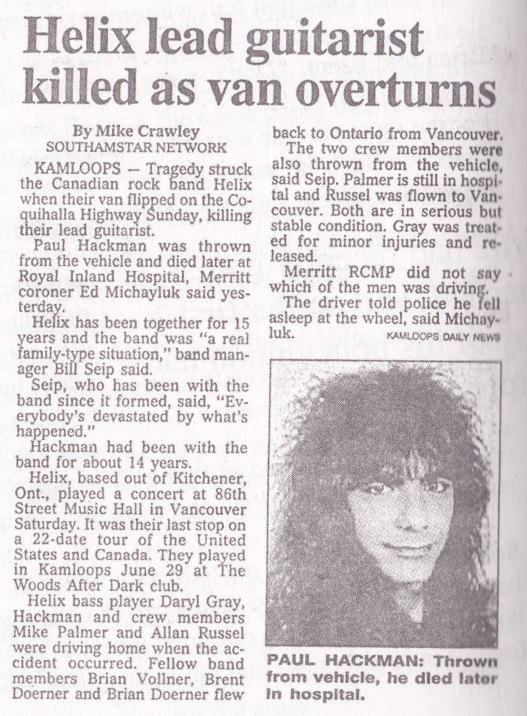
In July of 1992, Fritz Hinz was injured (slipped disc) and unable to tour, so Brian Doerner returned for a few western Canadian dates. As a bonus, so did his brother Brent. After a final date in Vancouver the band headed home. Paul Hackman elected to travel home in the tour van with bassist Daryl Gray, while the rest of the band booked flights. Hackman, not wearing a seat belt, went to sleep. Then, according to reports, the van veered off the road and down an embankment when the driver fell asleep at the wheel. Three men were thrown from the vehicle, and Hackman was killed. Daryl Gray suffered minor injuries and flagged down help. 20 cars passed the frantic, bleeding bassist before someone stopped.
Back For Another Taste was Paul’s final recording.
5/5 stars








 mikeladano.com