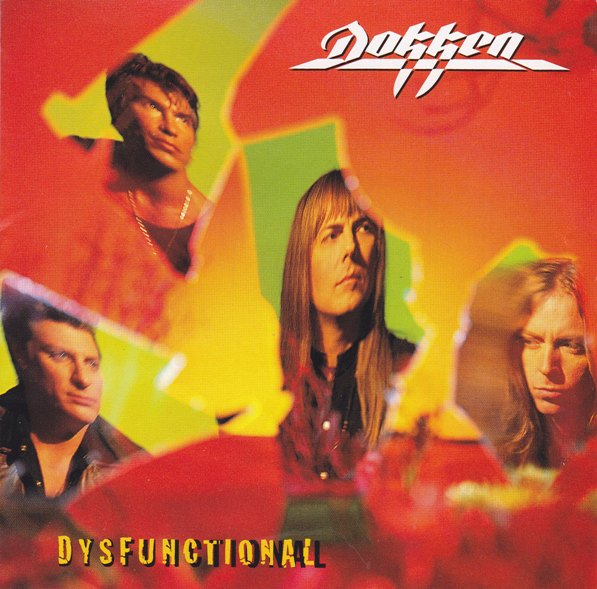
No matter how good the band may have been, when Dokken reunited for a new album in 1995, it was a no-win scenario. They always seemed to be one of those bands that critics loved to hate. I read a ridiculous review of Dysfunctional that said, “If Don Dokken fell in a forest, would he make a sound? And if he did, could they get George Lynch to solo over it for an hour?” What a stupid review. The album deserves a lot of praise, because when Dokken did reunite, the music was as strong as ever. They had discovered modern groove, added onto their lush harmony vocals, and it managed to sell 300,000 copies.
Dysfunctional was conceived originally as the second Don Dokken solo album, which just happened to have Mick Brown and Jeff Pilson on it. (Jeff had recently split from Dio.) The record company persuaded Don to call up George Lynch and make it a true Dokken album. Originally George was just supposed to come in and re-do the guitar solos, but Don wanted George’s rhythm. That was smart. George ended up with writing credits on most of the songs in the process.
I have to admit that when this came out, a new Dokken album was the last thing I expected to see. Deep into the grunge years, Dokken came out flying with a modern melodic hard rock record with warmth, depth and awesome production values (by Don and Michael Wagener). Raging solos, great ballads, glorious riffs, and those Dokken harmony vocals mark one of the best Dokken albums of their career. It’s certainly lots better than the ones I’ve heard that followed it.
There are lots of highlights. No songs suck, but some are better than others. The best tune was the 7-minute single, “Too High to Fly”. I don’t know who came up with the riff, whether it was Don or George, but this song kicks ass. Jeff Pilson gets into a wicked bass groove, dominating the verses. Don’s lead vocal is among his most impassioned and the band is smoking. This is a shoulda-been Dokken classic. I am given to understand that it is the only song from Dysfunctional that is still played live from time to time.
Other favourites include “Inside Looking Out”, which shares the same grooving direction. “Long Way Home” is like classic Ye Olde Dokken and could have fit in on Back for the Attacknext to “Mr. Scary”. On the softer side, I really like the understated “Nothing Left To Say”, a classy acoustic ballad. Jeff Pilson’s backing vocals coupled with strings create a timeless atmosphere. Then there’s the album epic: “The Maze”, a lush, multi-part progressive song with harmony vocals piled on top of harmony vocals. It doesn’t get thicker than this! The record closes on “From The Beginning”, an ELP cover and another classy acoustic song.
I don’t need to tell you how great George Lynch is. The record company were right to get him involved. He helped make this album really special. And that’s not to say that “Wild” Mick Brown or Jeff Pilson don’t bring it, because both of them did and then some. Just that George has a very unique sound. There is only one George Lynch.
Dysfunctional is a compulsory purchase if you have ever liked Dokken. It is a shame that the title proved true. George bailed after the dismal followup album (Shadowlife) and Pilson wasn’t far behind. Sad.
RECORD STORE TALES MkII: Getting More Tale #368: On Call in Canada – What are your rights?
I was wary to post more on this subject, but here goes! The last time I brought this subject up, it resulted in behind-the-scenes fallout with two guys that used to work under me at the Record Store, who did not agree with my stance. They did get me thinking though, and since that time I have tried to find out more about worker’s rights in Ontario on this specific issue…and I finally got my answer!
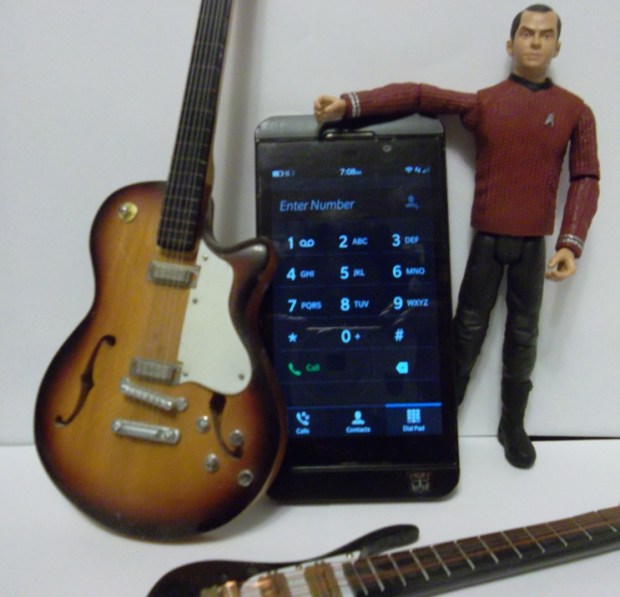
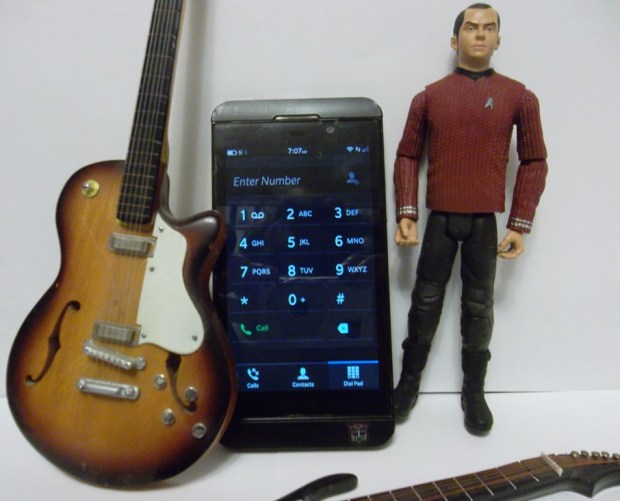
My question was this: Can an employer order you to use your own personal cell phone, for work (specifically retail) purposes, without compensation or prior agreement?
Some additional details to fill in the blanks:
1. I was a store manager. Managers were required to make themselves available when needed.
2. I bought my cell phone myself in May of 2000. It was purchased after getting lost on a weekend trip up to Huntsville in the middle of the night. I decided, “Well, I never want to feel that isolated again,” so I went to the Bell store at the mall with my buddy T-Rev and selected a phone. That phone lasted me until 2006, which wasn’t bad at all.
3. I did allow work to call my cell phone in the past. I did not keep the number secret and I posted it so that I could be called in case of emergency. This was my secondary contact number, because most of the time the phone was shut off. My landline was my primary contact. My cell wasn’t even all that helpful, much of time. There was no cell phone reception up at the cottage, where I spent most of my summer weekends, but for years this was not a problem.
4. Not all store managers even had cell phones. Joe aka “Big Nose” did not have a cell phone that I knew of. If he did, he was smart enough not to tell anyone about it. I was a friend of his and I didn’t have his cell number, if it existed.
So when my direct supervisor stormed in on the morning of December 19, 2005 after a weekend crisis while I was out of the house for an hour and unavailable on the phone, they demanded that I leave my personal phone on “from now on”. I have always assumed that I must have had some rights on that issue. Allowing work to call my cell is one thing, but being ordered to leave my phone on 24/7?
Since I had been looking for an “exit strategy” for a while, I used this cell phone disagreement as a justification in my mind to give them my notice. I did not feel “entitled” to any special treatment, I simply wanted to be treated fairly. But I had no fight left in me, and I wanted out more than I wanted to stay. But if I had stayed…could they have made me keep my cell phone on 24/7?
A legal source informed me that no, an employer cannot order you to use a cell phone that they didn’t pay for. End of story. Period.
“You did nothing wrong,” said the lawyer. “You’re weren’t working for the Fire Department.” And I finally know that I was right.
I have no regrets today, and the store that I used to work for continues to thrive. I am glad for that; the store was a huge chunk (28.5%) of my life on Earth. The parting was done amicably, and I am proud of everything we achieved as a team. I am left with these wonderful Record Store Tales to remember one of the most exciting and interesting times in my life!
RECORD STORE TALES MkII: Getting More Tale #367: Greatest Hits 2 A sequel to#364: Greatest Hits
The last time we talked about greatest hits albums, I listed seven reasons that die-hard fans usually shun them. Readers came up with some of their own, and also arguments to defend greatest hits albums. I usually advise fans to buy key studio albums rather than compilations, depending on the person. Yet I still own a few hundred greatest hits albums. There have to be good reasons.
And what about you? How many do you own? What are your favourites? Why did you buy them? I asked myself those three questions too. #1. I don’t know. #2. There are many, but Double Platinum and Killers by Kiss are up there. #3. Let’s talk about that in depth…I broke it down into seven points:
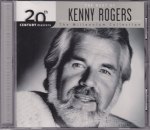
1. There are some artists that I barely know. Neil Diamond or Kenny Rogers, for example. There might be a handful of songs I like, but not enough that I have heard to take the plunge and buy an actual album. Or, I know it’s an artist that I don’t want many albums from. I have a feeling that I only want one or two CDs, so one of them is usually a greatest hits. I collect a lot of music, but I can’t collect everybody. Sometimes I’ve done the research to know that I need one or two CDs and nothing more.
2. Exclusive tracks are often dangled as bait. But sometimes greatest hits albums are stuffed with exclusive radio edits and remixes that aren’t obviously credited. Kiss’ Double Platinum is one such album. Aerosmith’s Greatest Hits had a number of special edits of songs. Collectors like myself often look for such versions. They make for an enjoyable way to hear a familiar song with a slightly different slant.
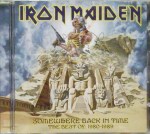
3. Artwork. Younger folks might not understand why this matters, but I come from the age of physical product. With some bands, you don’t want just the music. You want all the album covers too; they are sometimes as important as any other aspect of the music. Iron Maiden is the first, obvious example. I own several Iron Maiden greatest hits discs simply because I wanted to own all the Eddies. There is a certain satisfaction in viewing them all lined up in order.
4. Historical importance. Some greatest hits albums are just historically important. Best of Van Halen Volume I for example – even if I didn’t buy it for the two new songs, I would have wanted it for the significant role it played in breaking up Van Hagar! You might want to own Their Greatest Hits by the Eagles for the fact it’s the top selling hits album of all time.
5. Sometimes, I actually do listen to greatest hits! Sure, not often by comparison. But if I’m in the car with the Mrs., she might prefer a Deep Purple greatest hits set to a 5 disc version of Made in Japan. I own ‘em, so if they’re good I may as well play ‘em. Also, If I’m going somewhere and I only have an hour or so to listen to music, a greatest hits album often scratches whatever itch I have.
6. Gateway music. My entrance into the world of Thin Lizzy was one CD (Dedication: The Very Best of).
That point is the most important one. Using a greatest hits album to delve further in the discography is such an excellent experience. My first two Deep Purple’s were greatest hits. Now my Purple collection is of a prodigious size. I don’t even know how many I have. 100 maybe? More? And it keeps growing!
My first Floyd? Echoes: The Best of Pink Floyd. My first Rush? Chronicles. First ZZ Top? Greatest Hits. See where I’m going with this? These are bands that, today, I am still collecting. I still buy whatever’s coming out. Which brings me to my last point.
7. Personal history. I’ve developed a relationship with some of those greatest hits albums over the years, even if they have been superseded by better ones. Something about the familiarity, I suppose. But even though all my first greatest hits albums were on cassette, I still went and bought CD copies of them all. In some cases, vinyl too!
What are your favourites? Does it bother you to own multiple copies of the same songs? If your favourite band came out with a greatest hits album tomorrow, would you consider buying it? Let me know!
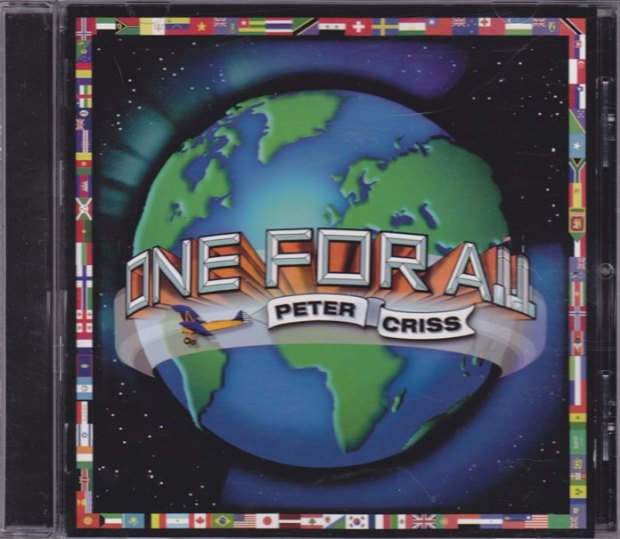
PETER CRISS – One For All (2007 Silvercat Records)
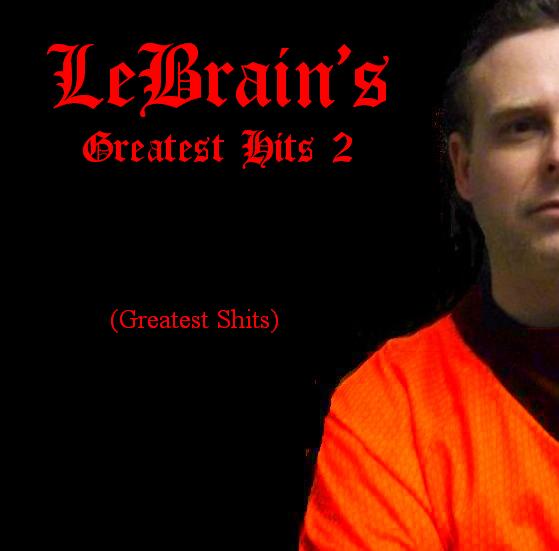
I decided to be lazy tonight, and write an easy review on a shitty album. It’s easier to tear something down than to build it up. I dove into my Peter Criss folder, and grinned as I selected his 2007 post-Kiss reunion solo album, One For All. Peter re-teamed with his Criss bandmates, Mark Montague and Mike McLaughlin. He also called in some favors from the Letterman Show’s Will Lee and Paul Shaffer.
And then everyone took a giant shit, recorded it, and they called it an album. A long, drawn out and painfully slow and tuneless album. One For All consists entirely of slow, slow numbers. Call ’em ballads, call ’em whatever you want. It’s 100% schlock, 0% rock. Peter: I am telling you right now man, and I’m sorry to have to be the one to say this, but your voice is gone. It’s done. It’s not pleasant to listen to anymore, especially when you try to reach notes so far out of your range that you’re whispering. Note accuracy is also a problem. It seems to be that if Peter didn’t hit the notes, but was in the general vicinity of them, that was a take. I am guessing at the quality control standards; I wasn’t there in the studio with Peter, who self-produced this bad boy. Not a good idea there, Pete m’boy.
The best tune is the title track and opener, “One for All”, on which Peter is backed by the mighty All Boys Choir from the Church of Transfiguration. Their voices (which unfortunately don’t come in until close to the end) save this song and make it something a little more special. It makes you wish they were singing on more of the album! Also, any time backup singer Jen Johnson is audible, then everything’s fine.
Worst tunes: A tie between “Send in the Clowns” (yes, that “Send in the Clowns”) and “Space Ace”. I’m not going to insult your intelligence and tell you what “Space Ace” is about. Now that Peter has written songs about himself (“The Cat” from his EP) and Ace, I’m waiting for him to come up with “Star Child” and “The Demon”. Milk it Peter, for all its worth. May as well, since everybody else is too.
Quality control beef from the lyric sheet: the song “Doesn’t Get Better Than This”.
Remember George, and his guitar, John and Paul, and Ringo Star.
Seriously, they spelled Ringo Starr’s name wrong in a song about the Beatles!
Sorry Peter. This album gets the dreaded LeBrain Shit-Bomb.
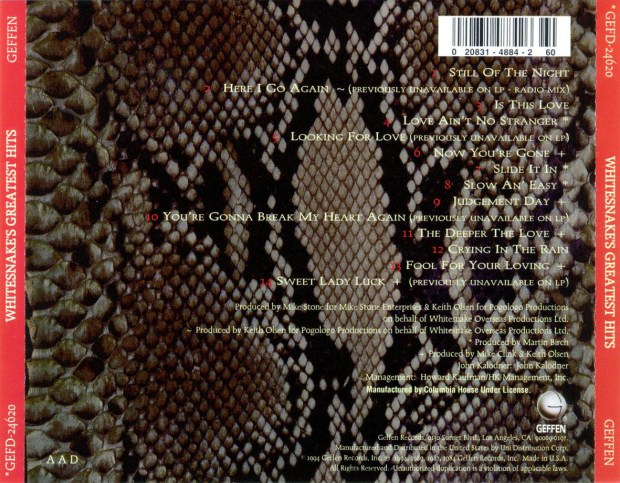
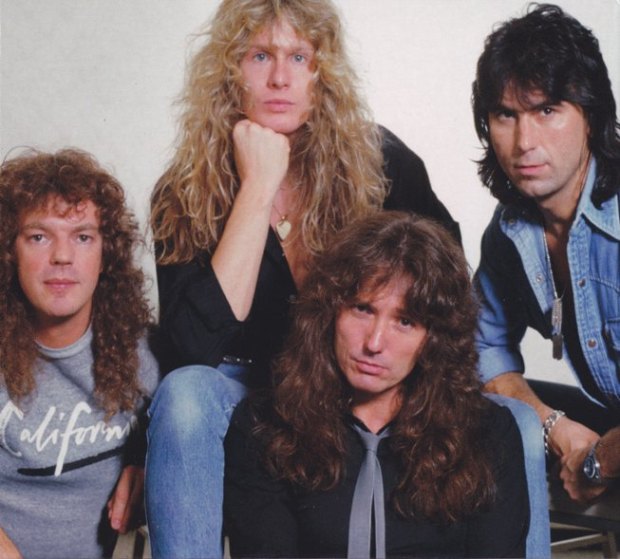
I don’t own this CD. Never have, actually. I gave it enough in-store play (only while working alone!) that I have no problem reviewing it. This Greatest Hits CD dates back to 1994, the year I first started working at the Record Store. As such, it was the first ever official Whitesnake Greatest Hits CD, the first of many. The band had been broken up for about four years at that point. Even by 1994 standards, it was only an OK release. It did contain some rare tracks, but was limited to Whitesnake’s 1984-1989 Geffen output only. For budget-priced collections, I would recommend the cheaper 20th Century Masters – The Millennium Collection because it still has all the hit singles from that period at a lower price. For fans who need more, the much better Whitesnake Gold or Silver Anniversary Collection make a more complete picture with more rarities and deep album cuts. These of course weren’t available in 1994. Today music buyers have a lot more to choose from.
One inclusion that some listeners may not enjoy about Greatest Hits is the version of “Here I Go Again” chosen. This is not the well-known album version that most people have heard. This is the “single remix” with different guitar solos (by guest Dan Huff) and more keyboards. Some radio stations do play it from time to time, but I think most casual buyers would listen to this and say, “I don’t like it as much”. And nor do I, but it is a rarity.
Otherwise, this album (like 20th Century Masters) contains every hit single from the period, and nothing from the blues-based records before. It does feature some other cool rarities: the B-side “Sweet Lady Luck” featuring Steve Vai, “Looking For Love”, and “You’re Gonna Break My Heart Again”. However, with the many compilations and remasters released since 1994, these songs are no longer hard to find. “Sweet Lady Luck” was even released on a Steve Vai boxed set!
Rounding out this selection of hits and rare tracks are deeper album cuts. These are include the glossy Kashmir-esque “Judgement Day”, “Crying in the Rain ’87”, “Slow Poke Music” and the wicked “Slide It In”. They help balance out the ballad-y hits that Whitesnake were adept at writing.
Interestingly, when this album was released, David Coverdale assembled a new, shortlived Whitesnake and toured for it. That version of Whitesnake included former members Rudy Sarzo and Adrian Vandenberg, both of the 1987-1990 version of the band. It also included drummer Denny Carmassi (Coverdale-Page) and guitarist Warren DeMartini (Ratt). Shame that no live recordings from this version of the band have never been released. The band disolved for several year again after this, only to reform in 1997 with a new lineup including Carmassi and Vandenberg.
This album is only mildly better than 20th Century Masters, but is inferior to the more recent, more comprehensive compilations I have mentioned. Buy at a sensible price point.
Sensitive readers might be best advised to not read on, unless on an empty stomach.
Regular readers have already met Joe aka “Big Nose”, the most unique Record Store manager in the history of record stores. Still there today, slinging CDs to the masses, Joe is a phenomenon. The only thing he likes more than baseball might be taking a pee with the door wide open. He is a very different person, with a heart of gold and a bladder of steel.
However, sometimes when you gotta pee, you just gotta pee…door or no door.
Joe was living in an apartment in Waterloo with a couple guys. One morning after a long night of partying, Joe awoke to find his path to the washroom blocked by passed-out bodies. When you gotta pee, you gotta pee, so Joe improvised.
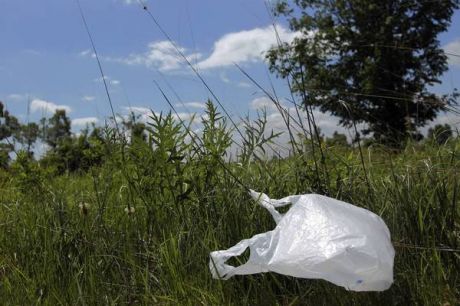
He fashioned a piss bag from an old plastic grocery bag he found on the floor. After relieving himself into the bag, he tied it off securely and looked for a way to get rid of it. The only easily accessible option was the window, so out it went, onto the lawn below.
I believe that Joe enjoyed this new method of relieving oneself, because he tells me that he launched more than one piss bag out the window over the course of the next few days. Until the landlord complained.
“I keep finding these grocery bags outside,” said the landlord. “Stop throwing them on the grass!”
If only he knew!
But that’s Joe. He seems to get some kind of perverse enjoyment out of relieving himself in the least labor-intensive way. In fact it has been confirmed that me that the stories are true: Joe has indeed shit in the shower. Way back in Record Store Tales Part 41, I wrote that somebody I knew claimed to shit in the shower. Today, an informant named “Uncle Meat” has since told me that this is true. Joe would either poop directly into his hands and drop the deuce into the toilet; or if it was a smaller shit, he would simply mash it down the drain with his foot. I had long considered these tales to be nothing more than myths. But the stories were so bizarre, I really wanted them to be true. Just so I can say I know a guy who proudly shits in the shower, you know?
Even though Joe is just a lil’ different from the average bear, he’s always been a solid, stand-up trustworthy guy. He is a man of integrity and a serious who-gives-a-shit attitude when it comes to the norms of society. I just don’t want to share an apartment with him, or need to use the shower at his place.
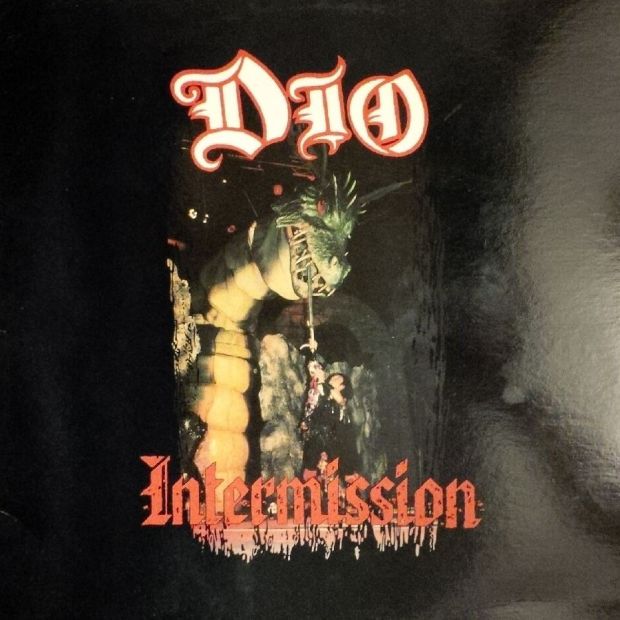
Intermission was Dio’s live EP, bridging the gap between Sacred Heart and Dream Evil. At the time it came out, Dio was very busy with the Hear N’ Aid project as well as replacing Vivian Campbell on guitar. Maybe that’s why he opted for just a Dio EP to tide fans over. For a long time this unavailable on CD; it has recently been reissued in its completion as bonus tracks on the deluxe edition of Sacred Heart. Good news, I’m sure, for those fans without the equipment to play vinyl.
The band was in a transitional period. They had recorded the five live tracks with Vivian, but replaced him with Craig Goldy in the middle of the tour. For years, fans were wondering who played on Intermission. Goldy’s picture is on the back, but the solos are clearly Vivian. There were no credits either, but today we know that Vivian is indeed the guitar player on the live tracks. And so is Craig! They overdubbed Goldy over Campbell on the live rhythm guitar parts! Why he decided to do this, aside from spite, I have no idea, but I strongly dislike tampering with live recordings. (Yes, that makes me a hypocrite since I rated Kiss Alive! a 6/5!)
Goldy plays all guitars on the soul newbie, “Time To Burn”. This new studio cut was a really excellent one; a mid-tempo burner (no pun intended). He co-wrote it, probably contributing that cool riff. The song has melody to spare and is definitely a diamond among Dio’s early solo material. It sounds similar to the Sacred Heart era, but with a higher level of songwriting quality.
As far as I’m concerned, they may call it an EP, but this is essentially an album, clocking in at 32 minutes. That makes it slightly longer than Van Halen’s Diver Down. It may only have six tracks, but one is a 10 minute medley of Dio and Rainbow classics. “Man on the Silver Mountain” sounds incredible; Ronnie was singing powerfully on this tour, and despite the tampering the band does sound great.
The Dio songs sampled here include obvious choices like “We Rock” and “Rainbow in the Dark”, but the two biggest hits (“Holy Diver” and “Last in Line”) are absent. Diligent fans already had live versions of those two on the last Dio single B-sides. The more puzzling inclusion is “King of Rock and Roll” which was already released live on the last album! Ultimately though I’m satisfied with the songs selected on this EP. The vinyl used to be frequently played around these parts, though it has no been collecting dust since the reissue of the songs on the deluxe Sacred Heart. It remains a great sounding mini-album, if you will!
RECORD STORE TALES MkII: Getting More Tale #365: SuperShadow
“Legendary Iconic SuperShadow Ultra Infinite Mega Genius”
“As you would expect, all information about the world famous and legendary SuperShadow (SS) is above top secret (classified at the highest level).”
“Heralded by fans as the most important, influential and ingenious Star Wars expert in history, SuperShadow completely revolutionized the way Star Wars movies are created. SuperShadow.com played a crucial and pivotal role in the development of the Star Wars prequel trilogy. Man fan ideas submitted at SS.com were integrated by George Lucas into the final scripts and screenplays of The Phantom Menace, Attack of the Clones, and Revenge of the Sith….Lucas has acknowledged many times in public that SuperShadow is the best thing to ever happen to Star Wars.”
Beginning around the time of Star Wars Episode I: The Phantom Menace, a new online “source” began “leaking” plot information for future Star Wars movies. When he started out in 1998/1999, a lot of the rumours he was posting were legit leaks based in reality, albeit copied from other sites. By Episode II, he went completely crazy with ludicrous “leaks” that were obviously fabrications. This “source” went by the online name SuperShadow and he claimed to be close, personal friends with George Lucas. He wrote that he had cameos in the movies, which he also claimed to co-write. As if Star Wars alone wasn’t enough, Shadow also said that he was going to persuade his buddy George to include new music from Guns N’ Roses in Episode III!
Star Wars and Guns N’ Roses – two of the most secretive brands in the world, and apparently SuperShadow has inside scoops to both! I’m sure Axl wasn’t even aware of this guy’s existence. I’m not sure which is the more absurd of the two claims: that he was friends with George Lucas, or that he could get Axl Rose to release new music!
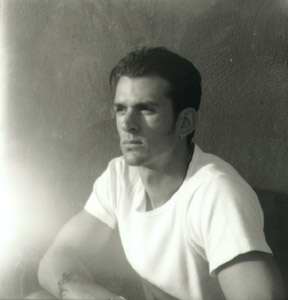
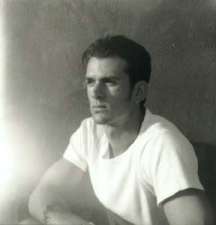
Online sleuths traced his website, supershadow.com, to a person named “Mickey Suttle” in North Carolina. Nobody knows if that’s a real name or an alias. SuperShadow quickly built up both a legion of followers, and a much larger number of haters. He posted a picture of himself with chiseled looks in a white T-shirt, and also a picture of a mystery nameless “girlfriend”. Every day, SuperShadow would tell his fans how much he “scores”. (Apparently, 24/7.)
SuperShadow infuriated many fans with his wild claims and “quotes” from his friend George Lucas. Shadow eventually caught the attention of Lucasfilm, who were quick to put out official statements clarifying that Shadow had “absolutely no relationship with Lucasfilm or George Lucas.” They also had to issue cease and desist orders when SuperShadow started soliciting fans for money, to access special “spoilers” and plot outlines for future movies. Today, supershadow.com no longer exists.
I read the SuperShadow drama with amusement, and wondered how a guy like that had convinced thousands of fans that he was indeed an insider with intimate knowledge of the inner workings of George Lucas’ mind. It seemed like a massive, obvious piss-take to me. I thought he had to be a joke, and everybody was falling for it. In fact I couldn’t see how anybody could view the SuperShadow website as anything but one huge prank, up until he started asking for money. It was either a gigantic joke that nobody got, or the guy was just an obsessed, lonely megafan. But nobody had ever succeeded in unveiling the real SuperShadow/Mickey Suttle, so I wondered if I could try to draw him out myself.
Setting my plan in motion, I set up a fake MySpace page for SuperShadow. It was the first; there were no others, official or fake.
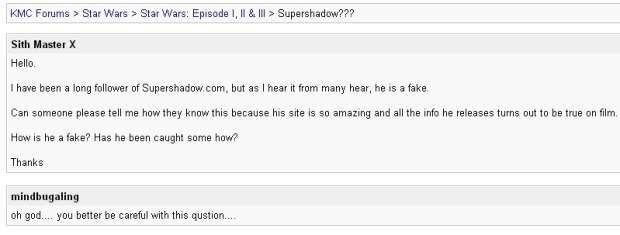
By the time my fake SuperShadow began making his first posts, fandom had already found him. He received “friend requests” daily from “believers” and “non-believers” alike. I could hardly fathom that people were buying this. All I did was put up the same picture from the official SuperShadow site and some fake information and posts. “SuperShadow” made waves on the Star Wars message boards, and Shadow’s fans and haters announced that they had “discovered” his MySpace account.
I wanted to try an experiment on the internet. I decided to spread a false rumour to see if fandom would pick up on it, and they did. I told one guy who had been sending me questions that “SuperShadow” was in fact several people who set up the site as a big spoof. Sure enough, within a few dayss I found information on various wiki-type sites that “Supershadow” could be a collective made up of several people who had pulled a massive prank on the internet.
It was funny for a few months, but then two more fake SuperShadow MySpace accounts showed up. One was “Supershadows” and the other was “SSupershadow”. Having lost interest myself, I told the guy who had been interrogating me earlier that I was just goofing and had nothing to do with SuperShadow. I was surprised when he asked me if he could take over the account! He wanted to see if he could suss him out, himself. So I gave him the password, and passed the fake account on to a new nerd, who continued with the fake posts and pictures. I lost interest then. It was amusing while it lasted, and I saw how quickly rumours spready on the web.
I never succeeded in drawing out the “real” SuperShadow, or finding out if it was just a massive joke that went way too far. I can however finally confess: I, LeBrain, was the REAL fake SuperShadow!
Below: a sample of SuperShadow’s Q&A-style posts.
Q:SS, this site is like a fine wine, gets better with time. (SuperShadow: Excellent analogy.) Anyway I have a question: 1) How did you and George Lucas become close friends? (SuperShadow: In early 1994, Lucas watched one of my brilliant extra-terrestrial documentaries on the A&E TV cable channel. Lucas contacted me to congratulate me on the best documentary of its kind ever produced. He completely agreed with my position that the Citix Black Ops project had secretly implanted microscopic alien life forms into the minds of the world’s population. Lucas wanted to learn more so I told him all about the mysterious truth about extra-terrestrials. I told Lucas that I was sort of a Star Wars fan kinda. He invited me to Skywalker Ranch and we discussed the prequel trilogy. I spent several weeks at Skywalker Ranch in 1994 hashing ideas with Lucas that would be integrated into the prequel-trilogy plot line. We have been close friends ever since.)
Thanks for joining me this week for Purple Week at mikeladano.com. Today is Part 5 and the last album for now. But don’t worry, I don’t think we’ve seen the last of Deep Purple around these parts…
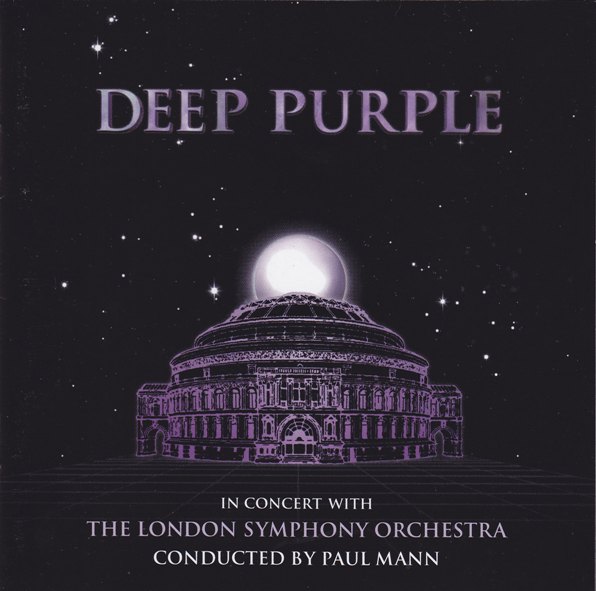
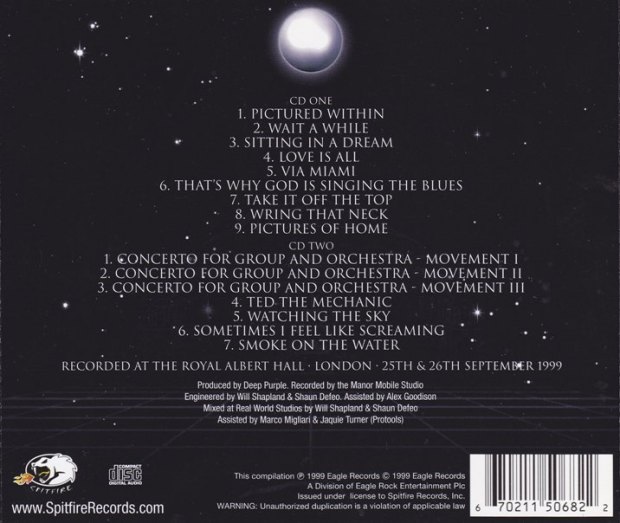
DEEP PURPLE – In Concert with the London Symphony Orchestra conducted by Paul Mann (1999 Eagle Records)
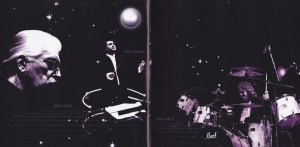
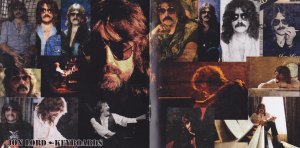
The original Concerto for Group and Orchestra (1969) was Jon Lord’s baby. The rest of the band didn’t care too much for it, and it had only ever been performed twice. The Albert Hall recording became a successful live album, and it was performed once more in Los Angeles. Soon after, the original score was lost, permanently. Even if Deep Purple wanted to (and let’s face it, if Blackmore were in the band he’d probably say no), it could never be performed again without the sheet music.
I’ll let Jon Lord take it from here. From the liner notes to the CD:
“Marco de Goeij, a young Dutch composer…had decided to re-create it by listening to the recording and watching the video. Over and over and over again. A task of mind-bending complexity, dexterity and musicality, which then only left me the far simpler job of filling in what he had been unable to decipher, re-creating what I could remember of my original orchestration, and in part, as those who know the work will hear, re-composing where I felt it needed it.”
Conductor Paul Mann had independently been searching for the original lost manuscript. When Jon informed him of the re-created one, Mann was on board with the London Symphony to do it once more. Deep Purple now had a new guitar player, Steve Morse, who undoubtedly would have to bring his own slant to the guitar solos. For Jon and the fans, it’s the stuff of wishes come true.
Since the Concerto was really Lord’s project, it seems like a fair compromise for each of the members of Deep Purple to also get a moment or two to showcase their solo work. In fact many musicians from those solo works are welcomed to the stage, including the Steve Morse Band, Ronnie James Dio, Mickey Lee Soule (ex-Rainbow and ex-Gillan), Sam Brown, and more. Deep Purple fans are generally open to different styles of music, and this album showcases those styles in a professional, classy format.
Once again at the Albert Hall, the set commences with a disc highlighting the solo careers. Lord’s “Pictured Within” (with Miller Anderson) and “Wait a While” (with Sam Brown) begin the proceedings with a quiet, powerful pair of songs backed by Jon’s piano and dramatic strings. These versions are, dare-I-say-it, superior to the original studio versions.
From there, Roger Glover’s solo career gets a looksee, with “Sitting in a Dream” and the irresistibly bouncy “Love is All”, my favourite. Ronnie James Dio reprises his vocals from the original Butterfly Ball versions, sounding as great as he did nearly 30 years prior! It really is impossible not to like “Love is All”, which of the two is especially fun.
In 1988, Ian Gillan and Roger Glover did a project together called Accidentally on Purpose, a quirky tropical pop rock album. “Via Miami” is one of the more upbeat tracks from that album. Ian’s “That’s Why God is Singing the Blues” features his solo band’s guitarist Steve Morris (not Morse!) Both it and “Via Miami” spark and roll along joyfully.
Steve Morse (not Morris!) is up next with the Dixie Dregs’ “Take it Off The Top”. It’s the Steve Morse Band and the Kick Horns. It’s always a pleasure to listen to Dave LaRue, Van Romaine, and Steve Morse playing together, but to hear them at the Albert Hall? That’s a venue suitable to the genius they wrench from strings and wood. Graham Preskett joins on violin to dual Morse with string acrobatics.
Ian Paice’s spotlight song is a horn-laden jazz version of Purple’s “Wring That Neck”. This is my kinda jazz, the kind with a rock beat you can swing to! The violin solo lends it a bluegrass feel, too. The first CD ends with a powerfully heavy “Pictures From Home”, originally from the immortal Machine Head record, performed by Deep Purple with the London Symphony. It’s a powerful, dramatic song on which for the full Deep Purple to enter.
Disc two features the entire Concerto from start to finish, all three movements, roughly 50 minutes in length. This truly was Lord’s baby, the piece that kept him up nights in 1968 and 1969 writing little black notes on white paper. It made Deep Purple a unique property when it was released on LP 1969, but had not been heard live in 30 years. Purple fans will be in seventh heaven with this de-extinction. Indeed, Morse’s guitar is different, but he hits the right notes at the right time while still playing within his style. Otherwise, I’ll be damned but I can’t tell the difference.
What can I say of the Concerto itself? I think it’s pretty cool, and I’ve always geeked out to stuff like this. Jon envisioned it as “rock band meets orchestra” — at first they say hello, and play around, then they start shouting at each other, and before long it’s all-out war! Speaking of shouting, my favourite is probably Movement II, which has Gillan’s all-too-brief but oh-so-perfect vocal.
The disc concludes with three more (three Morse?) of recent vintage. “Ted The Mechanic” and “Sometimes I Feel Like Screaming” are two of the best songs from Purpendicular, and “Watching The Sky” is probably the heaviest song from Abandon. I personally feel that all the Abandon material was better live than on album, and “Watching The Sky” maintains that. Unfortunately none of the Abandon songs were really that great.
Of course, “Smoke On The Water” ends the album with guests returning, including Ronnie James Dio who takes a verse. “What do you think Ronnie!” Then the Elf himself is up at the microphone singing “Smoke on the Water” with Blackmore’s old band Deep Purple. I shouldn’t need to tell you that this is one of my all-time favourite live versions of “Smoke”.
This album, which ended up being one of Lord’s last with Purple, was really a special gift to the fans. It is a beautifully crafted live performance containing some of the rarest of the rare gems in the extended Purple canon. An event like this will never happen again. There is a DVD of this show, but beware, it is only about 2/3 of the set. What a disappointment that DVD version was. You want every moment, but you won’t get it.
If you do hunger for more after this, then you can binge on The Soundboard Series 12 CD boxed set. It consists of 6 shows, two of which featured full live performances of the Concerto, with guests such as (yup!) Ronnie James Dio. There is also Live at the Rotterdam Ahoy which lacks the Concerto portion, but makes up for it with a more extensive set of classic rockers, including Dio’s own “Rainbow In The Dark” and “Fever Dreams”!…But that’s another review.
5/5 stars. For the true fan, and anybody who’s not afraid to expand their listening territory.
It’s Purple Week at mikeladano.com! It’s all Deep Purple and Deep Purple alumni, all week. This is Part 4…and once again we’re going Epic Review Time. It’s Deep Purple Mk III’s lead throat, David Coverdale & Whitesnake! This is almost a new release; it’s about four months old.
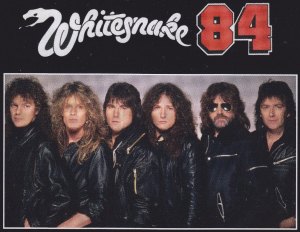
WHITESNAKE – Live in ’84 – Back to the Bone (2014 Frontiers Deluxe edition DVD/CD)
David Coverdale has been pretty good to the fans, in terms of giving them live archival releases from the periods they care about. In addition to cranking out studio and live releases with the current Whitesnake lineup, David has issued deluxe editions of certain albums along with the long awaited 3 disc set Live at Donnington 1990. Now it’s the 30th anniversary of the Slide It In album, so David has issued a live retrospective set from that period too. A CD and DVD set documenting the John Sykes years is almost a guaranteed slam dunk in itself, but how does it stack up when we break it down? Let us take a look at the DVD and CD portions in detail.
Super-Rock Japan ’84
The main program of the release is on the DVD, and the main focus of the DVD is Super-Rock Japan ’84. It is an 11 song set taken from Japanese television. This is the legendary four-piece lineup: David Coverdale, John Sykes, Cozy Powell, and Neil Murray. There is no doubt that even though the band had been trimmed down, they sounded powerful. I just really hate when an interview is inserted right between the first and second song. There’s no reason to ever interrupt a song on a live video, but editors do it all the time! It’s interesting seeing Whitesnake in a single-guitar lineup, but there is obviously a backstage keyboard player (Richard Bailey). The chops of John Sykes are such a welcome addition to the Whitesnake sound. He has a “chug” that few other guitar players have. Cozy Powell is as on-point as ever, but David Coverdale’s young lungs are remarkable. At peak power, David prowls the stage and humps the microphone in complete control.
The highlight of this portion of the set is “Crying in the Rain”, almost but not quite like it would be performed on Whitesnake 1987. I also enjoyed Sykes’ guitar solo. Sykes makes some of the best guitar faces in rock, and he resembles a young David St. Hubbins with his shaggy mane. “Soldier of Fortune” (an abridged version) was a pleasant surprise. On the other hand, Cozy’s looong overblown drum solo would be more appropriate to his time in E.L.P. (Emerson Lake & Powell). David must have been taking care of business backstage.
The video quality here is very good for an 80’s television broadcast. Sound quality, also good. David states in the liner notes that they weren’t able to find the master audio tapes, so this hasn’t been touched up too much. I’m satisfied; in 1984 we didn’t have 1080p TVs in widescreen.
Only three songs from this were included on the CD: “Love Ain’t No Stranger”, “Ready An’ Willing”, and “Slow An’ Easy”. That’s too bad. I would have paid a little more to get a 3 disc version with a full CD of this show. Just sayin’.
Jon Lord’s Final Whitesnake Performance
The passing of Jon Lord has been the biggest loss in rock, in recent memory. This truly is a treasure. From Swedish television and shot with multiple cameras, this looks even better than the Japan footage. Shame it’s only four songs. To have Jon there raises the bar several notches. It’s a five-piece lineup, although the cameras spend so little time on Jon that you’d wonder if the keyboardist is offstage again! (Jon’s wearing a white shirt in a black-topped band; he should be easy to spot but he’s not.) “Gambler” goes directly into “Guilty of Love”, and it’s so strange to hear it with only one guitar. With guys like Sykes and Powell in the band, they are very active on stage and the energy is plentiful. “Love Ain’t No Stranger” is so much better with Jon than without. You cannot understate how much difference that big bad Hammon organ makes. Then David tells the audience that they are “Ready An’ Willing” for some sweet satisfaction! From this brief four song set, I can at least conclude that Swedish television in the 80’s was better than Canadian television. Strangely, on the CD, it is included as one solid 16 minute track with no breaks.
Slide It In Slide Show
This is actually a cooler feature than you might think. These contain some snippets of writing demos for Slide It In. In some, David’s talking to someone, and there’s a single guitar. In others there is a full band, but the lyrics are not there yet. You can hear some of the classic riffs taking shape. The rest of the audio has vintage interviews with David and live music. Unfortunately at times the “slideshow” portion of this turns into little more than a lyric video, defeating the purpose of having a photo slideshow. The real treasure here is a live version of the B-side, “Need Your Love So Bad”, with just David and Jon. I am disappointed that it is not on the CD. Something that rare really should be.
Snakeskin Boots: The Best of the Bootlegs
The main feature on the CD consists of bootleg and soundboard tapes. I love bootleg recordings, and who can fault a band for beating the bootleggers and releasing the tapes officially? Tapes were cleaned up as much as possible to make them listenable (David suggests the car as a good setting). These songs were sort of arranged in the order of a live concert, so it still begins with “Gambler” and “Guilty of Love” like all the other sections. “Gambler” sounds pretty good, only slightly muffled but with a hard pulse. Sykes’ solo on “Guilty of Love” sends electric chills up the spine. It’s great to hear the band so young and ferocious!
Cheeky David tells the crowd that the Slide It In album title does not refer to a banana! “Love Ain’t No Stranger” is always a pleasure to hear, especially sung by a young David, and Sykes is shreddin’. Then another cheeky intro: “I’d like to give you a toast. If it’s in deep, and if it’s in long, and if it’s in hard…it’s indecent!” That has to mean “Slow An’ Easy” is up next. I will never tire of this excellent song. “Walking in the Shadow of the Blues” is a nice surprise, but “Ready An’ Willing” is overplayed.
Sykes is given a couple minutes on his own to introduce “Crying in the Rain” with some bluesy soloing. As great as this song is, this long version makes it clear why Whitesnake is a two guitar band. They sound very bare when John again takes a long solo in the middle, and Neil Murray is left to fill the space. David always wanted two guitar players, while John would have preferred not to share the spotlight. “Soldier of Fortune” closes this portion of the CD, a nice version of the old Deep Purple classic.
The rest of the CD is dedicated to the three tunes from Super-Rock Japan that they chose to include, and the four songs from Jon Lord’s final Whitesnake show. If you have a look at the tracklist you’ll notice that this means there’s a lot of repeat.
In closing
None of Coverdale’s archival releases or deluxe editions have been perfect. Live in ’84 – Back to the Bone is probably the best of them yet.






















 mikeladano.com