Canadian rock

REVIEW: Helix – “(Gene Simmons Says) Rock is Dead” (2016 music video)

HELIX – “(Gene Simmons Says) Rock is Dead” (2016 music video from the forthcoming album Rock It Science)

“I don’t need no god of thunder to tell me what is great.” — Brian Vollmer

Helix are back once more, with a new greatest hits album called Rock It Science.*  You gotta have a new song on a new greatest hits (teased previously as “Mystery Track”), and this new song is timely and sharp.  Gene Simmons does indeed say that rock is dead.  In fact he’s been saying that for over 25 years.  I have a M.E.A.T Magazine interview with Gene from 1990 where he professes that rock is indeed dead.  And he’s still saying it now.  But Brian Vollmer retorts, “Don’t believe it when Gene Simmons says rock is dead!”

Sure, lots has changed, but Helix keeps going.  It’s not the 80’s anymore.  Very few can sell 2,000,000 copies of an album today.  It’s hard to make a living just by selling records.  You have to diversify.  Everything has changed — but like many things, the more they change the more they stay the same.  Rock is not dead.  In many respects, rock is more popular than ever.  Helix are still producing great quality music, and “Gene Simmons Says) Rock is Dead” is one more gem for their rock crown.  Daryl Gray and “Fritz” Hinz are still there on the rhythm section.  Chris Julke and Kaleb Duck handle the axes just fine.  This could have been on an album like Back for Another Taste.

As far as the video goes, Brent Doerner directed this one.  The Gene impersonator is bang-on — I hope Helix don’t get sued for this!  The video celebrates the old school.  It’s performed at Speed City Records in London, Ontario.  (Look for cool posters of bands such as Gob and VoiVod, who Gene slammed in the 1990 M.E.A.T interview.)  I really dig Daryl Gray’s Helix logo bass guitar.  That looks like a bitch to play.  Brent captured the fun side of the band in the video.  It’s not glossy, but I think it does the trick.

There’s no release date yet, but Rock It Science should be available to purchase soon.  Check out the CD cover, also designed by Brent Doerner.

Rock is dead?  Hardly.  Gene’s been wrong before, and he’s wrong again.

4/5 stars

ROCK IT

*The title It’s ROCK Science, Not Rocket Science was a working title for 2009’s Vagabond Bones.


#491: My First Tragically Hip Experience, by Scotty G (Guest Shot)

HIP

GETTING MORE TALE #491: My First Tragically Hip Experience, by Scotty G

As fans know, Gordon Downie of the Tragically Hip was recently diagnosed with terminal brain cancer.  It is devastating news.  Downie, living his life as an artist, has decided to go out as an artist and do a farewell tour in support of the new album Man Machine Poem.  As writers, we have been trying to come up with a way to honour the man without dwelling on the negative.  With that in mind, in a multi-site event, we have several posts for you today to honour the man and the legend, Mr. Gord Downie.  Mikeladano.com’s contribution  is this guest shot by the King of Rock Knowledge, and fellow ‘Fester, Scott.  He is what I like to refer to as a “Jedi Master of rock”, the kind of man that can pass down stories and legends to the next generation.  Scotty had the chance to see The Hip back in the early, early days and…well see for yourself!  Please welcome Mr. Scotty G!


My first Hip experience was around 1988 or so, just prior to the release of Up To Here (1989). Somewhere after the Spoons and Rough Trade, and possibly prior to Sass Jordan, (I cant remember) at a Canada Day concert at Molson Park in Barrie, the Tragically Hip hit the stage.

Obviously young and lacking a whole lot of support, they carried their amps on stage themselves, placed them on chairs and started to play. I was kind of familiar with “Last American Exit” from the video, but that was it. They hit the stage and I was BLOWN AWAY. Mid-set, after really rocking one out, Gord called out to the crowd and asked if anyone had a dime? Literally, the crowd pelted the stage with change.  Gord grabbed the coin of choice and proceeded to tighten a screw in his mic stand. He thanked the crowd for the help, and they blasted into another tune.

Months later, with this show still in the forefront of my mind, Up To Here was released and with it came more opportunities to see the Hip in many small venues. One in particular, the Highlands in Cambridge*, always offered up good opportunities to meet bands and in this case a couple of us were welcomed into the dressing room where Gord very politely obliged our fan talk.  Joint after joint flew from Johnny Fay’s expert rolling fingers. Although it’s a long time ago, I have a good memory of it. I have to add that I am still amazed that he gave us the time of day, and seemed cool with having two 17 or 18-year-olds sitting in the dressing room asking silly questions while the band got stoned….

I got to see the Hip many times after that, and look back on those early performances with fondness. I never saw them live after the Road Apples tour, but will always recall the welcome that Gord and the band gave two young fans after a great show in Cambridge. He is a cool shit….

SCOTTY G

* I saw the London Quireboys at Highlands in Cambridge in December 1990 

REVIEW: A Rebel Few – As the Crow Flies (2016)

A multi-site event: Let us introduce you to A REBEL FEW.

KeepsMeAlive – Aaron’s review
BoppinsBlog – Boppin’s interview with ADAM SHORTREED of A REBEL FEW
BoppinsBlog – Boppin’s review

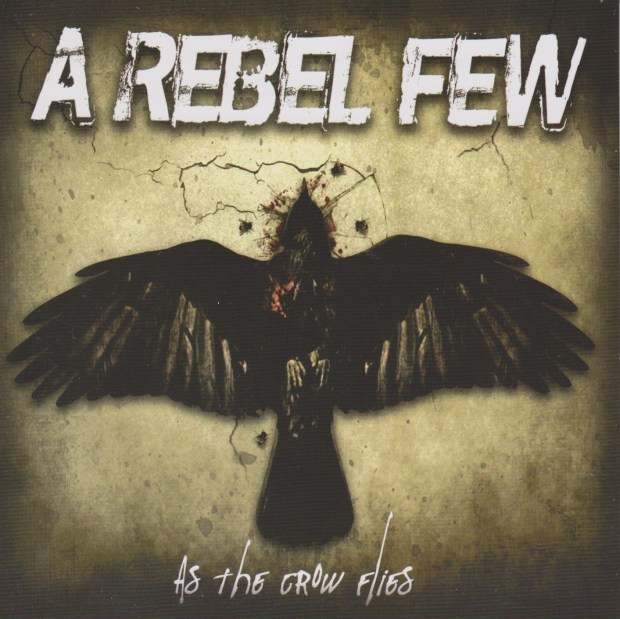
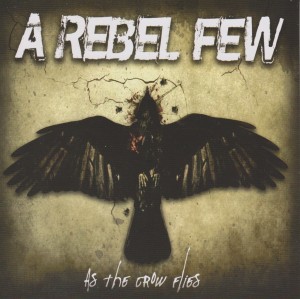
Scan_20160422A REBEL FEW – As the Crow Flies (2016 A Rebel Few)

Now here’s a local success story in the making!  Four guys with nine songs headed south to record their debut album in Texas with producer Sterling Winfield, whose name you might recognize.  He has Pantera, Damageplan, and Hellyeah albums on his resume, so it seems obvious that A Rebel Few were going for a heavy sound.  What they ended up with is one of the best sounding indi heavy rock albums you’ll likely get to hear.

There are Pantera influences, and you can hear some Zakk Wylde too.  What sets these guys apart is singer Raposo (just Raposo).  He’s more than just another melodic growler.  The world is full of those.  We have enough.  Raposo has depth and control, as well as expression.  He can do a smooth voice, not just the growls.  He’s world class.  He fits the band, who combine shredding with riffs, groove, heavy bass and drums.

All the songs are good, but there are some that really stand out.  “A Rebel Few” hits the highway with anti-matter propulsion, so furious it is.  Many of the riffs on this album sound Sabbathy in origin, and “Born Again” is one such moment.  “Empires Fall” is radio-ready riff rock.  There is some seriously good shit on this album, and it’s all crunchy and heavy on the low end.  What it lacks in originality, is made up for by the vocals.  Listen carefully; you will hear a serious amount of vocal quality that you don’t get out of the general rock herd.  When Raposo really gives’er, he almost sounds like a young John Bush.

This album will give you a burst of energy like one of those awful caffeine drinks…but good for you!  If you are not air-drumming or air-bassing or air-guitaring along, then you are not doing it right.  This review is taking longer than average to write, because you can’t type while you’re furiously air-drumming along with Chris Spiers.   As for the air-guitar part, I find lead shredder Barry Marton on his way to developing into a monster.  He can play it bluesy, he can play it slick.  The raw material is there and you can hear glimmers of depth between the blurs of notes.

The big surprise is saved for last, and it’s a doozy.  “Pure Revolution” would be a good title for a speedy rock number, but it’s just the opposite.  Touches of piano and light guitar introduce the only power ballad on the album, and it’s a good’er.  Maybe calling it a power ballad isn’t right, but it has ballady moments, and also powerful riffs, so why not?  There are heavy Dio guitar chugs, but also those quiet spaces where the vocals really get to come out.  Either way, it’s a kick-ass song.

Get this CD.  Use your fingers, Google the band “A Rebel Few”, and do what you gotta do to get this music in your ears today.

4/5 stars

REVIEW: The Tea Party – The Edges of Twilight (20th anniversary deluxe edition)


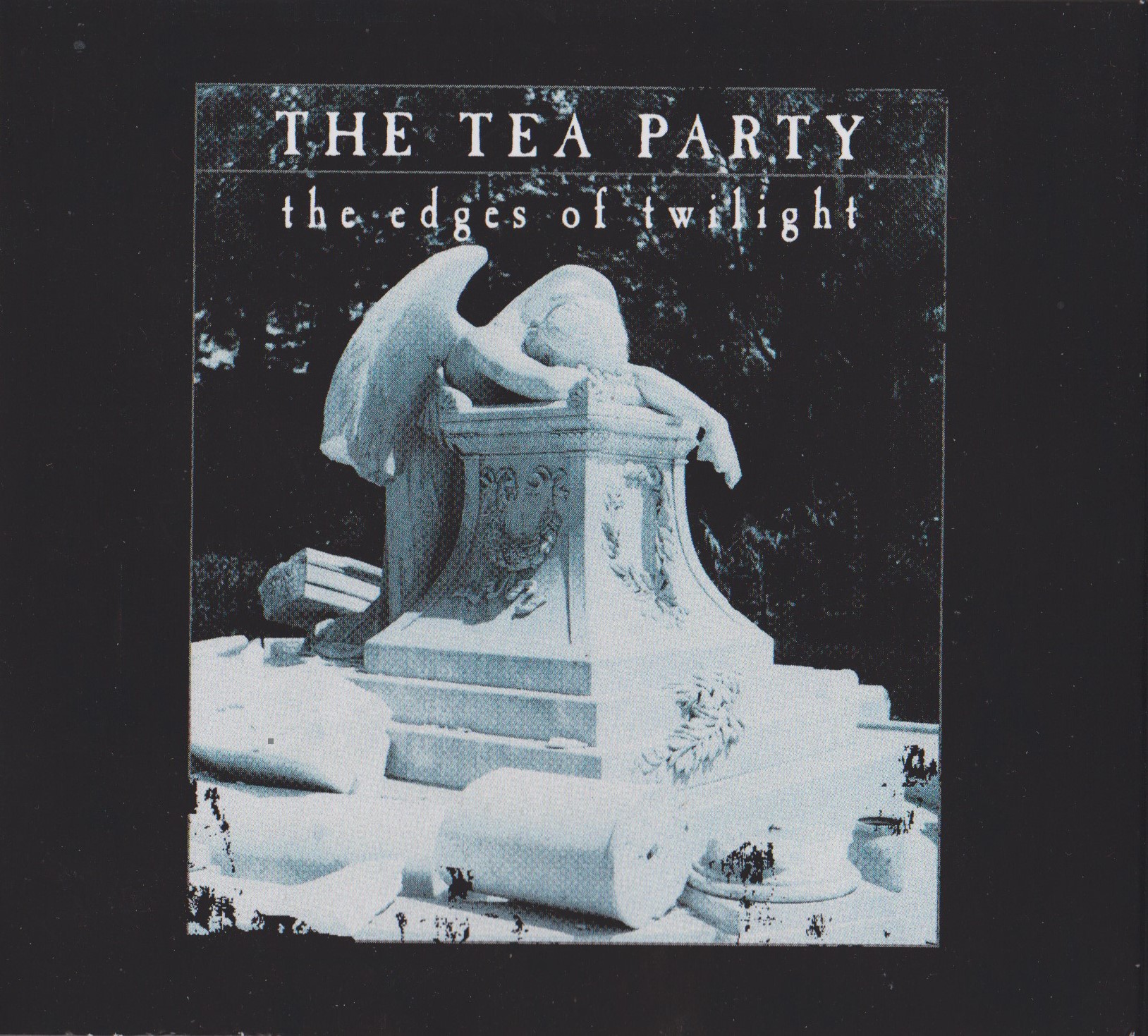
Scan_20160409THE TEA PARTY –  The Edges of Twilight (20th anniversary Universal deluxe edition, originally 1995)

The Tea Party have long been slagged as derivative.  “They sound too much like the Doors!” screams one corner.  “Zeppelin copy-cats!” cries another.  The first complaint isn’t true; singer Jeff Martin has a Morrison-like vibe but the Tea Party sound nothing at all like the Doors.  The second carries some weight to it, especially when it’s 1995’s The Edges of Twilight we’re talking about.

Due to an early connection with folk singer Roy Harper, a cover of “Train Kept a-Rolling”, and exotic world music influences, the Tea Party have long been compared to the mighty Led Zeppelin.  This was cranked up a notch on The Edges of Twilight.  From dirty electric blues, folksy English-sounding ditties, and and wealth of stringed instruments from all around the world, the Tea Party just went for it.  Though many praise the band’s prior album Splendor Solis (their major label debut) as a high water mark, Twilight exceeds it in almost every way.  I seem to remember reading that the album had something like 50 different instruments on it.  The sheer ambition and skill involved in pulling off an album this complex has to be admired.

That all sounds very heady and sophisticated, but the first single and opening track “Fire in the Head” rocks plenty hard.  A perfect 50/50 mix of the exotic and heavy sides of the Tea Party, “Fire in the Head” is savoury.  The Zeppelin comparisons are unavoidable, but because Jeff Martin is not that kind of singer, it has a darker more ominous ambience.  “The Bazaar” then takes it up a notch and into North Africa.  Still heavy, but with the world music more prominent, “The Bazaar” too was a single and a hit.  Let’s face it, the last major band to combine Gibson Les Pauls and world music in this way was in fact Led Zeppelin.  Is that a reason to criticize the Tea Party?  The answer is no, because they did not choose to do something easy.  They took the hard road with The Edges of Twilight.

There are many excellent songs on the album, including another single “Sister Awake”, one of the most complex tracks.  There are heavy electric blues tracks like “Turn the Lamp Down Low” and “Drawing Down the Moon”, and fully acoustic songs like “Shadows on the Mountainside”.  The best tracks are the most pompous.  Similar to the singles from the CD, tracks such as “Walk With Me” and “Coming Home” are big and bold with loud choruses.  Though not a single, “Walk With Me” is a fan favourite and considered one of their must-haves.

But that’s not all!  After several minutes of silence (oh, the 1990’s!) there is a hidden unlisted bonus track!  “The Edges of Twilight” is a poem written and spoken by Roy Harper backed with music by Jeff Martin.  Having a guy like Harper in the band’s extended family lent them credibility that other bands could not hope for.  And then there’s even another hidden snip of music.  After another silence is a few seconds of a rehearsal of the song “Correspondences”.

Harper also appears on the bonus CD, on a song called “Time” which originally appeared on the 1996 Alhambra EP.  This is a full-on 70 minute Tea Party track with Roy Harper singing instead of Jeff Martin.  Ballady and somber, and then explosively electric, “Time” is a triumph that deserves a second look.  (Other tracks lifted from that EP are acoustic versions of “Inanna” and “Silence”.)  The bonus disc is otherwise loaded with demos, acoustic versions and alternate versions, and live takes.  With the exception of “Time”, this is all purely supplemental stuff and mostly interesting to fans of the band.  The demo versions are remarkable for how near-complete they are.  The band did not need to tinker much with arrangements in the studio.

There are ample liner notes and photos.  Co-producer Ed Stasium praises the CD and says it is one of the top five he has ever been involved in.  Serious praise, but the album deserves it.  The Tea Party took a detour after this into the world of electronica, with 1997’s Transmission.  20 years later, The Edges of Twilight remains the most impressive Tea Party album and the most heady mix of world music and rock and roll.

4.5/5 stars

REVIEW: Killer Dwarfs – Reunion of Scribes Live 2001

The Best Fucking Collaboration Week Ever, Pt. 2
 Mike and Aaron are doing simultaneous daily reviews of albums that these two intrepid music reporters have sent to each other. Buckle up, buttercups, it’s gonna be a blast!


“You guys do like to drink, don’t ya?  You are Canadian aren’t ya?  Most of us are Canadian in here, except for there’s one guy that I know of.  Security!”  — Russ Dwarf

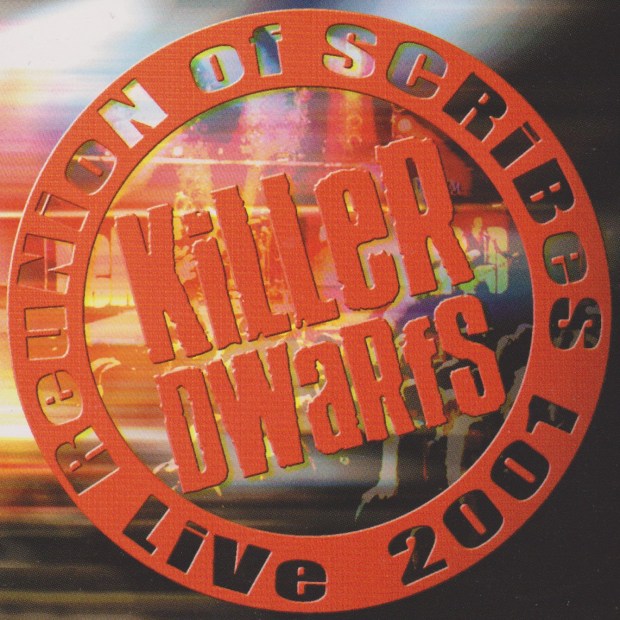
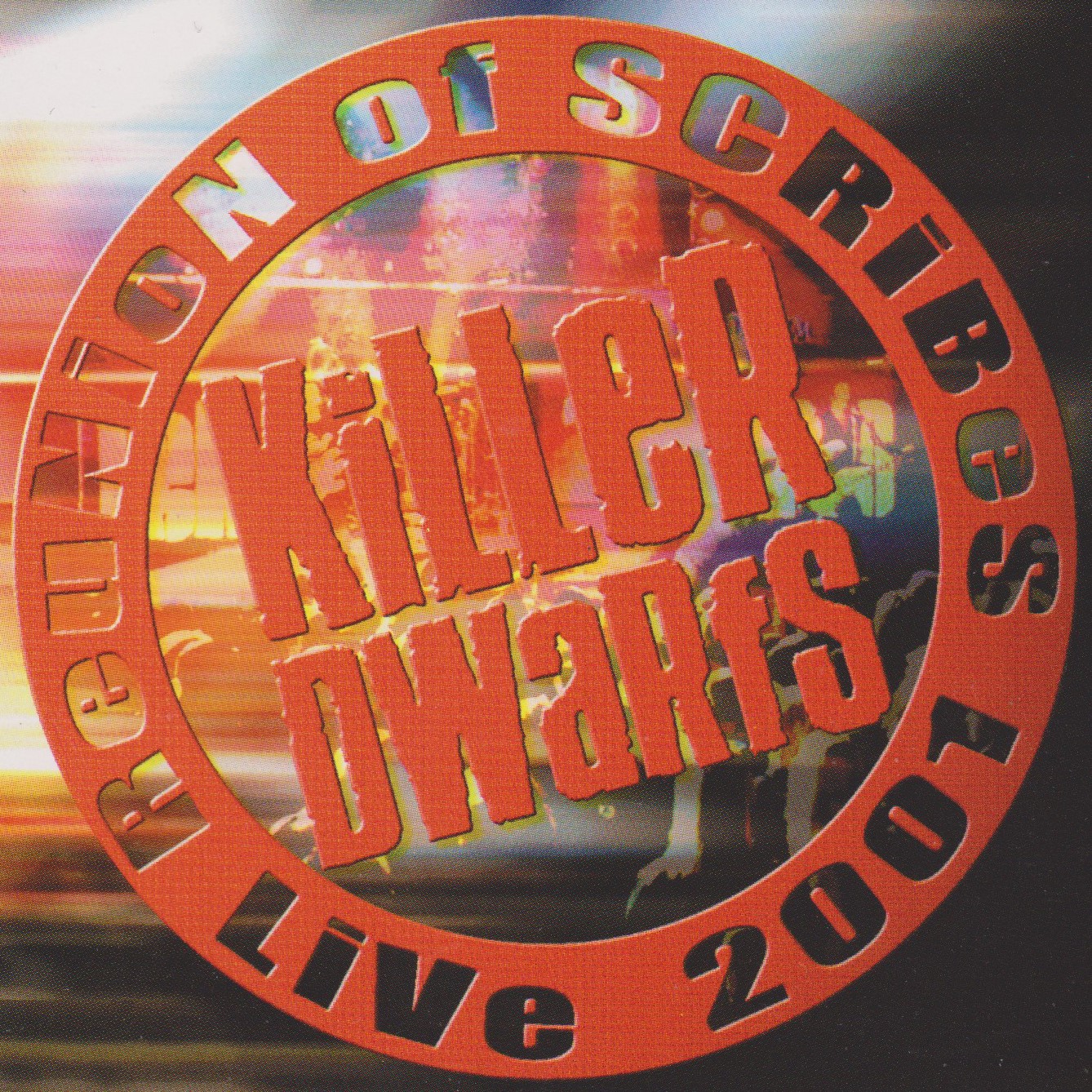
Scan_20160313KILLER DWARFS – Reunion of Scribes Live 2001 (2002 Bullseye)

Aaron scored this for cheap at his “junk shop” and passed it down to me.  It was the only Killer Dwarfs CD I was missing — and for good reason.  I had the chance to hear it once, at the Record Store, while I was working for a stretch in Hamilton.   I didn’t think much of it then.  Has anything changed?

The Killer Dwarfs quietly went extinct after their final studio album, 1992’s Method to the Madness.  10 years later, the band reunited including Mike (Hall) Dwarf, who had actually left the band prior to 1992.  This is a full reunion of the classic lineup:  The Dwarfs Russty, Mike, Darrell and Bad Ronbo.  Let’s “Go DuNK” and see what the Killer Dwarfs 2001 sounded like.  At one hour and 11 minutes, Reunion of Scribes is the longest Killer Dwarfs album to date.

Strangely enough for a Canadian band, the concert begins with a recording of “The U.S. Air Force” (also known as “The Wild Blue Yonder”) before the band emerges with a limp version of their own “Dirty Weapons”.  What’s the problem?  It’s certainly not Russ Dwarf, who sounds vintage strong.   The guitar is too thin, and blemished with sour notes here and there.  Hey, it’s been a long time since Mike was a Dwarf!  The drums also sound disconnected from the song from time to time.  Chock it up to a bad recording?  (At the Docks, in Toronto.)  “Stand Tall” also suffers: the guitar needs to be front and center.  The sound of the band suddenly becomes sparse and weak every time Mike Dwarf stops playing the riff in order to lay down a solo.  The bass isn’t fat enough to fill the gap.

Another weakness to this recording is a concentration on songs from 1988-1992.  There’s nothing at all from their first self-titled album, even their first single “Heavy Mental Breakdown”, the song that helped put them on the map.  Instead the Dwarfs focused on more radio-friendly later music for this set.  Of that tunage, most of the hits are here:  “Stand Tall”, “Keep the Spirit Alive”, “Dirty Weapons”, “Doesn’t Matter”, “Hard Luck Town”.  Their first big label single, “We Stand Alone” is missing from the set, which instead includes lots of notable album cuts.  The best of these include “Believe in Me” from their second album Stand Tall.  Russ Dwarf’s ageless voice delivers hard-edged numbers like “Starting to Shine”, “Last Laugh”, “Nothin’ Gets Nothin'”, and “Comin’ Through” with all its usual intensity.

The most emotional moment (for fans) has to be the ballad “Doesn’t Matter”.  “Roll the dice and play the game, for the fortune and the fame.”  The Dwarfs did roll the dice, at least they tried.  “Doesn’t Matter” is a pretty simple lyrically:  get out there and give’r.*  The live recording doesn’t deliver its full power, but I do get the feels to hear them return to Toronto and play this song for their friends.

Most of these songs are still high-quality hard rock workhorses.  While Russ Dwarf brings it all and then some, the poor recording renders Reunion of Scribes an album that will only get infrequent plays at LeBrain HQ.

2/5 stars

* The Killer Dwarfs are the only band I can think of who actually used the word “give’r” in a song lyric.

REVIEW: Russ Dwarf – Wireless (2013)

The Best Fucking Collaboration Week Ever, Pt. 2
 Mike and Aaron will be doing simultaneous daily reviews of albums these two intrepid music reporters have sent to each other. Buckle up, buttercups, it’s gonna be a blast!

Aaron’s review: Russ Dwarf – Wireless

RUSS DWARFS – Wireless (2013 Smoothline)

I don’t know where Aaron finds this stuff up in Owen Sound, but here is a pristine digipack CD of Russ Dwarf (of Killer Dwarf) and friends doing acoustic versions of old Killer Dwarfs classics.  Wireless is a great name for such a venture, and the friends list includes Ron “Bumblefoot” Thal (ex-Guns N’ Roses) and Glen Drover (ex-Megadeth).  Holed up in a studio in Newmarket, Ontario they laid down some pretty cool acoustic renditions of these numbers.

“Keep the Spirit Alive” remains irresistible today in acoustic form.  That’s because a good song has a lifespan.  A great chorus and memorable lyrics plus a pinch of magic made “Keep the Spirit Alive” a minor hit.  It’s one of the most purely enjoyable Dwarfs tunes and works well as an acoustic spirit booster.  Russ can still hit all the notes.  From the same album (Stand Tall, 1986) comes “Stand Tall”, which also makes the acoustic transition successfully.  A pretty incredible guitar solo (it’s not clear who is playing what) ensures this isn’t just “KD Lite”.

1988’s “I’m Alive” was an upbeat morale booster in its band arrangement.  Acoustically it’s the campfire version of the same thing.  The musical arrangements on Wireless do not deviate very far from the originals.  There are no radical re-imaginings.  What makes Wireless special for fans is Russell Graham’s earnest and still strong vocals, and of course the impressive six-string slinging of Drover and Bumblefoot.  The harder rock songs transition into an acoustic versions well enough, but ballads like “Doesn’t Matter” really shine.  A touch of piano and a vintage Russell vocal are the perfect topping.  A lot of this sounds live in the studio.  It doesn’t sound like a lot of time was spent mucking around fixing things in the mix, or sweetening things up.   What it sounds like, more or less, is Russ singing live in your living room.

The one thing that I did not think would work acoustically was “Comin’ Through”, the angry barnstormer from Dirty Weapons (1990).   It exists acoustically as a semi-epic and righteous twister through the plains of Canada.  “Crazy fuckin’ people living in the past, can’t you see that ain’t gonna last?” sings Russ with all the grit of the original.  Whatever Mr. Dwarf is doing to maintain his voice…well, good on you sir!  “Dirty Weapons” itself is mournful and slow rather than aggressive.  Interestingly, Russ arranged this album in chronological order.  The last three songs are from the final Dwarfs studio album Method to the Madness (1992).  That puts a nice bow on it, serving as a reminder that the Killer Dwarfs were still writing great tunes right to the end.  I can’t think of a better tune to end with than “Driftin’ Back”.

I quite liked Wireless and recommend it to any fan of the mighty mites known as Killer Dwarfs who wants to check out some quieter versions of their best material.  No new songs, sadly.  That would have been bitchin’.

3.5/5 stars

Spot the Mitch

Spot the Mitch

REVIEW: Big House – Big House (1991 BMG)

STRAT

Thanks for joining us for Canadian Rawk Week!


BIG HOUSE – Big House (1991 BMG) Not to be confused with the country band also called Big House.

BIG HOUSEBig House hit the ground running out of Edmonton, Alberta in 1991, but it was hard to take them seriously at the time.  The hair and headbands were pretty silly, and they had annoying song titles such as “Refuse 2 Run” and “Nothing Comes 4 Free”.  I acknowledged they had a pretty cool single “Dollar in My Pocket (Pretty Things)”.  This was lifted from a prior EP called Pretty Things, very hard to find.  They also claimed to be former punk rockers.  Drummer Sjor (pronounced Shore) Throndson once stated that the band used to have mohawks when they were teenagers, but shaved them off and had a change of musical direction.  With that, the silly hair and the dumb name, it was pretty easy to ignore Big House.

Then a co-worker at the Record Store named Kam talked me into listening to it.  The year was 2005 and my feelings quickly turned from indifference to delight.  Big House, for all their flaws, were actually pretty good!  Every song on this album has swagger. It doesn’t sound like a debut album at all, and perhaps that’s due to the experience of having done a prior EP. The band, and singer Jan Ek in particular, make this sound like a second or third album.

“Dollar in My Pocket” made for a good first single, but what a cheesey video. I still cringe at the 30 second mark, when Sjor glances flirtingly down towards his pants on the line, “I got a dollar in my pocket for you.” Fortunately, just a taste of their punk background shine through in the melodies, making this song a bit more unique than the crowd in 1991. Jan Ek has a good scream going on, and lungs of power. They had a knack for writing catchy guitar licks like the one in “Dollar in My Pocket”. The song is all about attitude, so “come along, you can have it if you want it, baby.”

The first chunk of the CD was top-loaded with singles. “All Nite” was a minor hit, a Motley-Poison mixture of rock thrills. Generic, but with that knack for melody once again, not to mention the leathery lungs of Jan Ek. Those two factors elevate the song beyond the morass of crap swimming in the seas of cheese in 1991. Another decent rocker, the Kiss-like “Refuse 2 Run” stays the course before you’re up for the next single, the ballad “Baby Doll”. Generic acoustic sentimental tacky stuff is this, but why do I like it? Maybe that quiet moaning slide guitar? Sounds a lot like Cinderella. Truthfully it’s not bad, but it’s really not that different from any of a hundred ballads. Thankfully “Can’t Cry Anymore” has some noisy guitar and plenty of attitude, especially in the punk rock blowout ending. Once again, it’s remarkable what a handle Big House had on writing great rock melodies. “Can’t Cry Anymore” is one of many on this disc.

Scan_20160220 (3)

“Devil’s Road” sounds like the opening of a second side, and a strong opening it is. “So make the music faster, for the spells we’re castin'” sings Jan Ek on the fine choruses. None of these songs are particularly fast, but they all rock in one way or another. For example “Nothing Comes 4 Free” is slow, but has a menacing vibe and the requisite hooks on the chorus. The closest they get to filler is “Happiness” but even that is not bad. It’s an unusual cross of pop melody with classic rock guitars — Cheap Trick meets Kiss, perhaps?

Final track “Angel on My Arm” is a celebratory tough little rocker, but the penultimate track “L.A.” is my favourite of them all. It seems Mr. Ek’s girl has left to go to L.A. and a be big movie star, and isn’t coming back. But then Jan gets a long distance call from L.A. It seems she mis-dialed and got Jan when she expected to get “Jack”.  He responds incredulously, “Jack who?! Jack Palance? Jack Nicholson? Jack…Jack who?!” It’s great fun! Listen to that bouncy bass. That’s pop punk, baby. So are those unabashed “la-la-la-la” pop hooks. Just a killer, instantly likeable fun song is this. “I been drinkin’ with every damn girl in town,” sings Ek after the disappointing phone call. “If I seem a bit too forlorn, I’ve been loving her too long.” People, I’m serious: This song is a triumph of songwriting and execution. You are free to disagree, but all I know is that I have played this song on repeat countless times. In fact I’m doing it now. I’m already on spin #3 for this session.

Silly name and album cover aside, I suppose it all works as a package. It’s no wonder the band never made it big with a cover this horrible; imagine my shock when I saw that it was done by none other than Hugh Syme, master of many Rush records. And this faceless cover conceals within it one of the best hard rock albums of the era. Sadly that era died before Big House could make a second album, but let’s celebrate that we have this one. Just like we are glad for the first two Skid Row albums, or New Jersey by Bon Jovi, I’m happy now to have Big House in my, err, house.

4.5/5 stars

Scan_20160220 (4)

REVIEW: Barstool Prophets – Last of the Big Game Hunters (1997)

STRAT

Welcome back to Canadian Rawk Week!

Scan_20160223 (3)


Scan_20160223BARSTOOL PROPHETS – Last of the Big Game Hunters (1997 Mercury)

This album, the third and final by the Barstool Prophets, was the one that got me into the band.  You can blame T-Rev for that.  Unfortunately this album was also the last for the Prophets.  They never really hit the big time, even though it was certainly deserved.  Their biggest claim to fame is that they had to change their name from their original, The Wallflowers.  Some guy named Jakob Dylan owned that one.  Therefore, their first album was called Deflowered!

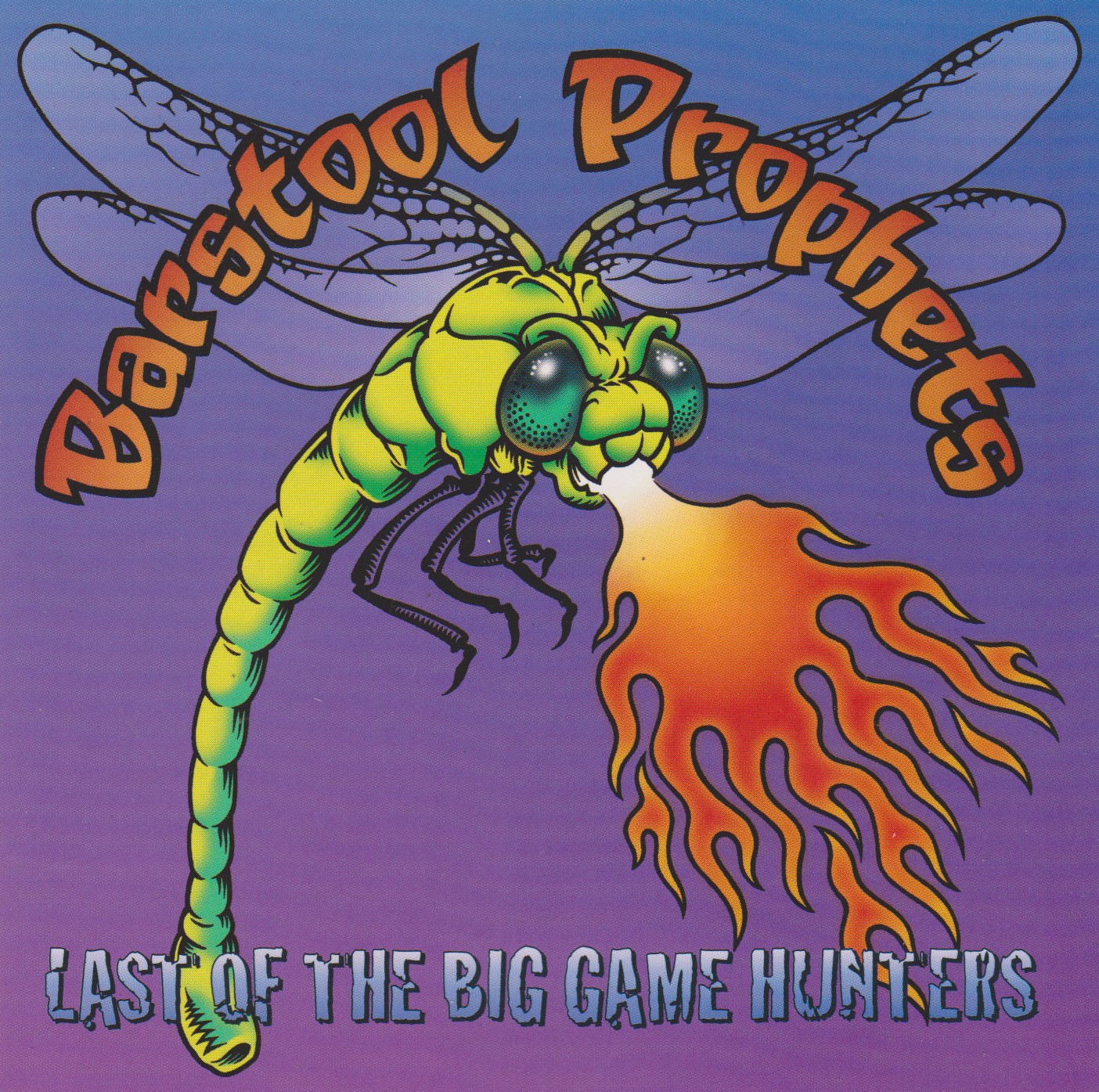
Barstool Prophets is a better name anyway.  It’s more descriptive of this band.  Picture solid Canadian bar rock, with the poetic lyrics to rival the Tragically Hip.  Both bands are similar, and fans of one should definitely check out the other.  For this CD, they got Joe Hardy (ZZ Top) to produce, and the result is a stellar collection of great sounding, upbeat yet rocking tunes.

I have a promo CD of this with a white cover.  I also have the correct cover art for the retail version.  The reason for this is, when I was living with T-Rev in our shitty apartment, some assholes stole his CD changer out of his Jeep, including his copy of this CD.  The cover art was safely inside the apartment, but without a CD to go with it, it was a kind of useless thing.  He gave the cover to me to augment my fairly plain promo CD.

Scan_20160223 (2)


The brief title track sets the stage perfectly.  Witty words, guitars panned hard to the right and left, and an understated groove.  That’s all you need, baby.  According to the liner notes, “Barstool Prophets wrote the songs, Graham Greer wrote the words, and they slapped them all together.”  The album and songs sound much more cohesive than that implies.  “Last of the Big Game Hunters” is hooky, radio ready, tough and smart.    It’s also short and to the point, as is the following song “Upside Down”.  From experience, I can tell you that these songs work great on the road.  I have done many, many cottage road trips with this CD in the deck.  The first half of the disc is mostly rockin’ with some mellowness creeping in on the second.  It all seems to work brilliantly.

My favourite song has always been the bulletproof “Vigilante”.  This is about as intense as the Prophets get both musically and lyrically.  Edgy but low-key spoken verses give way to the blistering chorus.  Most people will have to research Bernard Goetz (I did),  who is named in the incendiary bridge:

“I am prepared to carry out, without hesitation,
A cold and calculated act of intense dedication.
I am the store clerk forced once too often to his knees,
I am the few disgruntled Postal Service employees,
I am the widowed wife, left alone to carry on,
The grieving father, I, whose one and only child is gone.
I am the hand of Justice, with finger poised to test,
I am a bigger badder better bane than Bernard Goetz.”

It’s a powerful song.

Graham Greer shares one specific interest with me, which is UFOlogy. There are two songs on the album referencing them. The first is “Weird and Wonderful”, which musically is as fast as metal. The reference is vaguely to Betty and Barney Hill, one of the first documented UFO abduction cases:

“A family driving on a lonely stretch of highway,
Returning sadly from a very pleasant holiday.
Just then the starry night is filled with blinding light,
They’d later testify they’d never seen a greater sight.”

The gist of the song is that some things are just weird and wonderful; futile to explain. I prefer searching for the answers, but perhaps the Barstool Prophets have it right.

“Running Out” mellows things down a bit, with a melodic mid-tempo groove.  It’s the radio hit “Friend of Mine” that you might remember though.  What a great song.  Shall we call it a ballad?  I guess?  Whatever — it doesn’t matter.  It’s a blunt song anyone can relate to, about what true friendship means.  “My views and dreams and favourite songs will shift and turn with the passing of time, but one thing for certain is you’d always be a friend of mine.”  Even on the ballad (?), their knack for rhythm shines through.  This is a great band — just the rhythm section players alone are interesting to isolate and listen to.  The also goes for “Tangled Up”, an acoustic song that follows.  Weaving words and rhythms seems to be this band’s forté.  And they do it with an uncanny ability to write melodies too.  Just astounding.  How did these guys not become the biggest thing ever?  Maybe it’s because it’s just too easy to compare them to The Tragically Hip.  I daresay, Barstool Prophets wrote songs that were just as edgy and just as smart, but twice as catchy in the melody department.

About the only lull in the proceedings is “Five Wheel Highway”, a low-key slow grind on the pavement.  It’s also the second longest song.  It’s loaded with a harmonica hook, but it’s not enough to keep me interested.  “More” brings us back to center, with a solid album quality track.  It’s upbeat and it has those guitar jangles that I dig.  “Hungry Joe” is amusing, a man who “lived in a dream, where he was a ladies man supreme.”  Joe seems to get what he deserves, but the song is just another catchy one that probably sounded great live.  “Get Along” then is a stomping body slam.  It’s interesting lyrically and dramatic musically.  Good mixture for cerebral rock and roll.

Back to UFOs one last time for “Thrusters”.  Slow picking leads to quavering vocals:  “I have spent many nights, staring at the sky…”  It’s an unorthodox song, with no real chorus.  “I know they’re coming back for me, but how much longer will they be?”  I think it’s a haunting song, and it builds beautifully.

Last of the Big Game Hunters is still a fine album indeed.  I’d put it on my top records of 1997 easily.  Thanks T-Rev for getting me into it!

4.5/5 stars

#471: Canadian Rawk

STRAT

GETTING MORE TALE #471: Canadian Rawk

What do you think of when you read the words “Canadian rock”?  Perhaps you imagine the vocal shrieks and drum thrills of Rush?  If you have a negative impression of Canadian music, no doubt your mind drifts to the sultry sounds of Nickelback.  Landmark artists from the golden age that you know would include Neil Young, the Guess Who, Bachman-Turner Overdrive, Joni Mitchell, Steppenwolf and countless more.

Canada has always had an inferiority complex when it comes to our southern neighbours, the Americans.  In the music world, this is manifested in “CanCon”.  Simply put, Canadian radio broadcasters must play at least 40% Canadian content.  Starting in 1968, fears that American artists would flood our airwaves resulted in the first CanCon rules.  If you have ever bought a Canadian CD, perhaps you have seen the letters MAPL on the back.  MAPL is an acronym that determines if content does indeed qualify as Canadian.
MAPL

M:  Music.  Did a Canadian write the tune?
A:  Artist.  Is the primary artist a citizen of the Great White North?
P:  Performance.  Was the recording made in Canadian, in a Canadian studio?  Or for live albums, was the concert on Canadian soil?
L:  Lyrics.  Separate from the music qualifier, this determines if the lyrics were written by a Canadian.

Controversy erupted in 1991.  Bryan Adams had the biggest record of his career, Waking Up the Neighbors, which was co-written by Robert John “Mutt” Lang and recorded overseas.  Under the MAPL rules (since tweaked to avoid this situation), Adams did not qualify as CanCon.  His manager Bruce Allen was quite vocal against these rules.  Allen was never one to mince words, but he sparked a discussion on CanCon rules and how they ultimately hurt Canadian artists.  Flooding the airwaves with Canadian songs that weren’t that good was one issue commonly discussed. Another was that some international artists qualified for CanCon by recording in Canada with some of our most in-demand hit-makers such as Jim Vallance or Bruce Fairbairn.   Finally, these rules implied a lack of confidence in the strength of our own music.

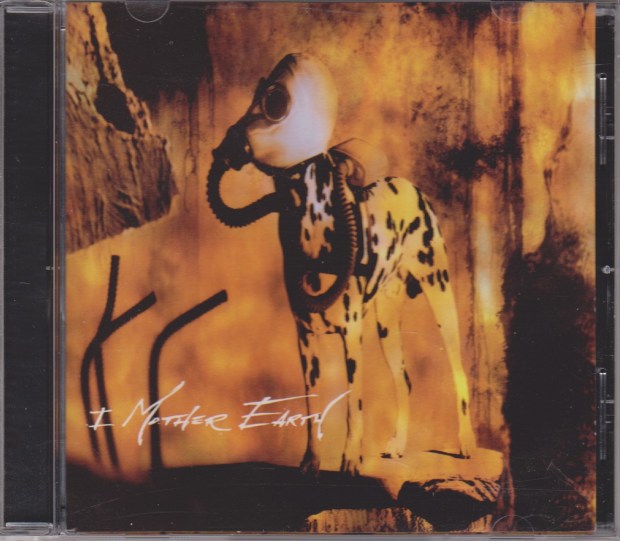
Some feel that there is a stigma in being Canadian.   Though controversial, some feel there is such thing as a “Canadian sound”.  While this is obviously not universal, I do think there is something to it.  There is a commonality in Canadian bands that defies description.  To my ears, the Tragically Hip sound Canadian.  BTO and the Guess Who sound Canadian.  So does Bryan Adams.  I can’t explain it nor do I want to open that can of worms.  I think the roots of Canadian rock, going back to Neil Young and the Guess Who, are basic folksy traditional origins.  I think this has somehow been passed on in our DNA.  This is not always considered a good thing.  The alternative rock band I Mother Earth put out their debut album Dig in 1993, utilizing Mike Clink as producer and hoping to break open in the American market.  They were hyped as “the next Jane’s Addition”, but they did not want to be openly identified as Canadian in promo materials.  They felt that there was indeed a Canadian stigma and they would have more success if their citizenship wasn’t brought up.  M.E.A.T Magazine covered this story but were firmly in the pro-Canadian camp.

Here at mikeladano.com, we don’t have to follow CanCon rules, but Canadian content has dominated regardless.  I believe that our music is strong enough to stand proudly on its own.  We have so much talent in this country.  So many incredible songs have emerged from the frozen tundra.  Countless incredible, under-appreciated, creative artists:  VoiVod, Paul MacLeod, Sloan, Death From Above 1979, Blue Rodeo, Strapping Young Lad, the Trews, Sarah Harmer, Big Sugar…the list truly is endless because great new performers emerge every day.  When I worked at the old Record Store, we were fiercely proud Canadians.  We put a little Canadian flag sticker on the header cards of every Canadian artist.  A lot of customers would say, “I didn’t know that singer was Canadian!”

This week, join me each day for a close look  at some good Canadian Rawk albums that you may have missed over the years.  Trust me, you do not want to miss these reviews or you may miss a future favourite record.  Grab a Timmies or a wobbly pop and get ready to rock!


REVIEW: Sons of Freedom – Sons of Freedom (1988)


SONS OF FREEDOM – Sons of Freedom (1988 Slash records)


“Never retract, never retreat, never apologise…get the thing done and let them howl.”Nellie McClung 1873-1951


Once considered the saviours of Canadian rock, Vancouver’s Sons of Freedom powered their way onto the national scene in 1988 with “The Criminal”, one of the straight-up rockingest tracks to ever emerge from the tundra.  They maintained momentum long enough to beat Nirvana in the college radio charts in 1991 (#1 debut vs a #2 for Nirvana), but Sons of Freedom didn’t fit into a nice “grunge” pigeonhole.  They were too different, too weird, too Canadian.  By 1995 and a mere three albums, they called it a day, but were not forgotten.

What a track “The Criminal” was, certainly sounding very little like 1988.  The bleak music video didn’t look much like the competition.  Crammed into a tiny rehearsal space, the three clean-shaven, short-haired musicians (all named Don for real!) and one long-hair with a British accent (named Jim Newton at first, but he changed his name on every single album!) didn’t look like other bands on the rock scene.  They hooked up with Slash Records, and Faith No More’s producer Matt Wallace, and made a starkly heavy record.  They may have appealed to the same audience as The Cult, a superficial comparison, but Ian Astbury was considered an “honorary Canadian” by many rock fans (he lived in the Great White North for six years in the 1970’s and Cult bassist Jamie Stewart later made his home on the Toronto scene).  But in 1988, the Cult had never recorded anything as relentless as “The Criminal”.

We got love, we got love, we got justice from above.

If any band in Canadian rock history defined the phrase “ahead of their time”, it had to be Sons of Freedom.  “The Criminal”, with its emphasis on that singular groove and strangely hypnotic vocals, could have lead the charge in the 1990’s.  There are solos, but they are clang-and-bang, not shred.  They even had a quote by a Canadian female rights activist on the cover!  Why didn’t they catch?  Maybe it was the fact that they didn’t stand still and repeat themselves.  Maybe it was the singer changing his name to James Jerome Kingston.  Whatever it was, Sons of Freedom didn’t make the impact they rightfully could have.  They even had a song called “Fuck the System”!

The three Dons (Binns, Short and Harrison) lay down massive and strange bass-heavy grooves all over this debut album.  They sound more like industrial machinery than musicians on some tracks.   “Super Cool Wagon” has the concrete foundation needed to flatten all comers, but also boasted a weird “Ah-ooh-ah-ooh-ah-ay” vocal with no words!  That’s the album opener — nearly four solid minutes of heavy rock with nothing but ah’s and ooh’s for lyrics!  Amazing tracks like “Mona Lisa”, “This is Tao” and “Shoot Shoot” are based on the same template.  Smashing monolithic grooves, expertly recorded by Wallace, are topped by the unusual and melodic vocals of James Newton.  The vocals allow you to grasp onto the song, while the undercurrent of the groove carries you away.  I blame Don Binns for the sheer inertia of the grooves, since his bass work sounds to be the driving force of them.

Other tracks explore different directions.  “Dead Dog on the Highway” slows it down but adds a strangely funky Don Harrison guitar lick on top.  “The Holy Rollers” drones on slower than slow, the Smiths on Quaaludes, but again you are dragged along with it.  Pay attention to what is going on beneath the groove, as dischord rules with a balanced fist.  “Judy Come Home” is almost radio-friendly, but “Is It Love” has a stuttery groove that could have been hit material in the right climate.  “Fuck the System” is hard-hitting good-time punk and one of the only songs to have a rocky riff.  The final track “Alice Henderson” is the Sons’ version of an epic as it chugs without rest, leaving nothing but wreckage and waste behind.

Ultimately, I suppose nothing bonds bandmates like a good first name.  The three Dons emerged a few years after Sons of Freedom split, backing Lee Aaron (then simply “Karen”) in a new band called 2preciious and a later industrial project called Jakalope!

3.5/5 stars

Scan_20160120 (3)