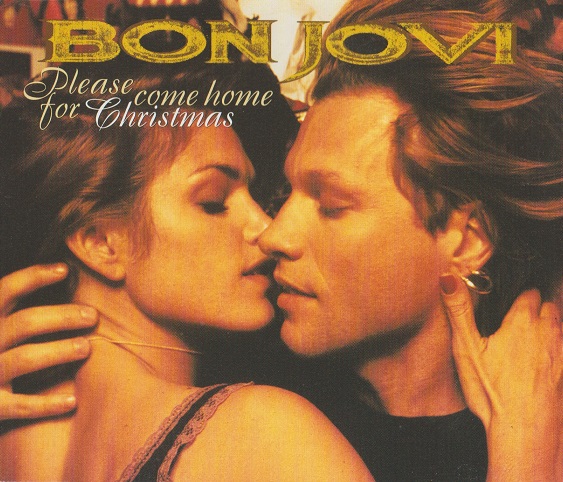
BON JOVI – “Please Come Home for Christmas”(1994 Mercury single)
Christmas of ’94 was a good one for Bon Jovi. Their first greatest hits record Cross Road was a smash, returning Bon Jovi to the charts. It spawned two hit singles: “Always” and later on, “Someday I’ll Be Saturday Night”. With all that going on, it is understandable if you missed another Bon Jovi single that was just under the radar.
“Please Come Home for Christmas” is billed as a Bon Jovi single, but in actuality it’s a Jon Bon Jovi solo track. It was first released exclusively to the album A Very Special Christmas 2 (1992), billed to Jon Bon Jovi and not performed with the band. By ’94, “solo” and “band” Bon Jovi were becoming blurred. Jon’s solo track “Blaze of Glory” was on Cross Road even though it’s from Jon’s first solo album. Nowhere on the “Please Come Home for Christmas” single is it indicated that this is a Bon Jovi solo recording, further blurring the lines.
None of that really matters; Bon Jovi is Jon’s band and this single gathers together his first three Christmas recordings in one place. It’s actually a great value.
The old Charles Brown seasonal classic has been covered over and over, notably by the Eagles. Jon’s version isn’t bad either. You either like Bon Jovi or you don’t. If you like Bon Jovi then this will probably be right up your alley.
Next up, one of the B-sides from Keep the Faith and an original song too: “I Wish Everyday Could Be Like Christmas”. This has the vibe of Keep the Faith, with full production by Bob Rock. Why can’t everybody be kind to each other every day like they are on Christmas? It ain’t easy to write an original Christmas song, and Jon did an excellent job on this one. I’ve always preferred it to “Please Come Home for Christmas”.
Finally, from the first Very Special Christmas album (1987), it’s a live take of “Back Door Santa” (Clarence Carter). That means it’s from the Slippery When Wet tour. Vintage Bon Jovi with cheesy keyboards right out “Social Disease”. It’s not good but it’s here! Meaning, Bon Jovi fans don’t have to look for A Very Special Christmas to complete their collections.
Two for three decent songs isn’t bad. All are non-album tracks, so that’ll make this single worth it to you.
Do you remember your first Guns N’ Roses? I sure do. I skipped Appetite and went straight to GN’R Lies. We were heading to the cottage one spring weekend and my parents offered to buy me a new cassette. “Patience” hadn’t even been released as a single yet. I knew no songs. But I was intrigued by the idea of a half-acoustic EP. I fell in love with the acoustic guitar around that time, and I wanted to check out Lies as my first Guns. I’m kind of proud that my first Guns wasn’t Appetite.
The acoustic side was the second; first I was assaulted by the jet-propelled electric “live” side. Which wasn’t really live. It was recorded in the studio with crowd noise dubbed in from the 1978 Texxas Jam. If you listen to the vocals, knowing that Axl is always in motion on stage, you can tell they are not live. This is, of course, with 20/20 hindsight. This electric side was a reissue of the first Guns EP, Live ?!*@ Like a Suicide. Fans had been paying ridiculous amounts of money to acquire it, so Guns decided to beat the dealers by simply reissuing it with some new songs on top.
“Reckless Life” dated back to Hollywood Rose. Even though it’s not from Appetite, it sure could have fit on that album. It had the energy and the hooks to make it. It speaks to the strength of the album that songs like “Reckless Life” were left off. A slick and groovy tune, “Move to the City”, is also included on Lies. It’s obviously different from the direction of Appetite (horns!), but not all that dissimilar to the Illusions albums. The electric side is rounded out by a couple covers, something we later learned that Guns really excel at…or fail completely. There is no in-between with Guns N’ Roses covers. They either rule or suck. Both covers on Lies rule: “Nice Boys” (Rose Tattoo) borders on punk, foreshadowing the future. Finally, Axl announces that “This song is about your fuckin’ mother!” Not exactly the kind of thing parents enjoy, but a killer track: “Mama Kin” introduced many youngsters to the Aerosmith classic for the first time.
That first side felt dangerous. We were used to bands like Def Leppard. Suddenly this guy is talking about our fuckin’ mothers? Live ?!*@ Like a Suicide aka “side one” is also catchy as fuck, so we kept going back for round two, three, and more.
It was actually quite genius of them to pair Live ?!*@ Like a Suicide with four acoustic tunes on side two. The contrast works, and when you flip the record it feels fresh when you drop the needle again. In fact it’s easy to just flip back to side one and listen again. The quality of the acoustic songs didn’t hurt. The side progresses from softest to hardest. “Patience” is first, which eventually became one of Guns’ greatest hits. You didn’t hear acoustic guitar solos often back then, or a ballad with no drums. Even though ballads were all the rage, few bands had a song like “Patience”. The brilliance of “Patience” isn’t the melody or the whistling. It’s the minimalist arrangement.
I still remember my dad watching the “Patience” video with me. “That guy’s not a very good guitar player!” he scoffed as Slash solo’d. He never liked Guns N’ Roses.
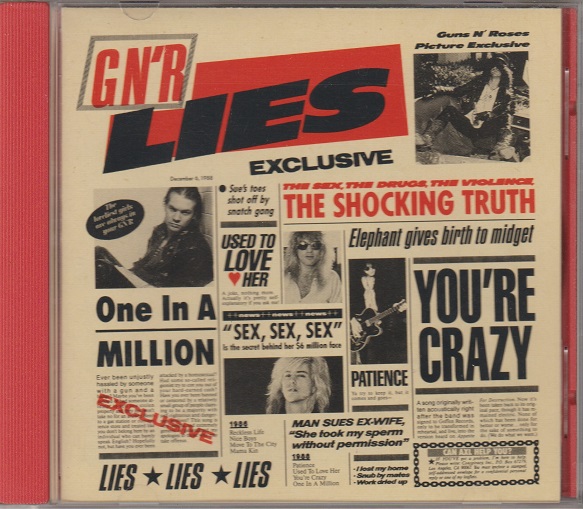
“Used to Love Her” was always a bit of a novelty, but even so, a good novelty track. “A joke, nothing more,” according to the cover. It’s about a dog, in case you didn’t know. “Used to Love Her” is upbeat, catchy and easy to sing along to. Regardless of what my dad may think, Slash’s (electric) solo work on it is tops.
One of the most interesting songs is “You’re Crazy”, a re-recording of the Appetite for Destruction favourite. The cover states that it was originally slow and acoustic, before being cranked up on Appetite. Because it’s unique, the Lies version is the better of the two. It was notorious in the highschool halls for its refrain of “You’re fuckin’ crazy.”
Even more notorious however was the closer, and for good reason. Certain words in certain contexts are unpalatable. Context is the key. It matters who is saying the word, and why. Words in themselves are not offensive, it is their usage that can be hurtful. “One in a Million” is an ugly, angry song. Axl’s pissed off at the cops, religion, and seemingly homosexuals and the black community as well. Some of the harshest words are levelled at foreigners:
Immigrants and faggots, They make no sense to me. They come to our country, And think they’ll do as they please. Like start some mini-Iran, Or spread some fucking disease. And they talk so many God damn ways, It’s all Greek to me.
Later on, Axl has the gall to state, “Radicals and racists, Don’t point your finger at me. I’m a small town white boy, just tryin’ to make ends meet.” Here we are in 2017, three decades later, and the world is still infested with angry, small town white boys. Although Axl smugly apologized for the lyrics in advance on the front cover, “One in a Million” can’t be excused that easily. Axl has since worked with gay and African American artists…hell, Slash’s mom was African American. As a fan of the music, I would like to hope that Axl has learned more about the world since 1988. We are shaped by our experience, and I hope Axl has had more positive ones.
Moving on from the lyrics, the interesting thing about “One in a Million” is that it was album debut of Axl Rose’s piano, on a song solely written by Axl. It’s simple and guitar based, and Slash’s acoustic solo is utterly fantastic.
Finally, one of the most appealing aspects of GN’R Lies is the cover. Taking a cue from Jethro Tull, the cover looks like a newspaper replete with dirty articles. Open it up, and there’s a naked woman inside. “The loveliest girls are always in your GN’R L.P.” says the headline. I quickly folded up the cover to hide it from my parents.
Lies was a good stopgap for Guns, considering the five year gap between Appetite and Illusions. It demonstrated growth, and cool roots. It will always be remembered for “Patience”, but also a couple ill-advised words that had lasting repercussions.
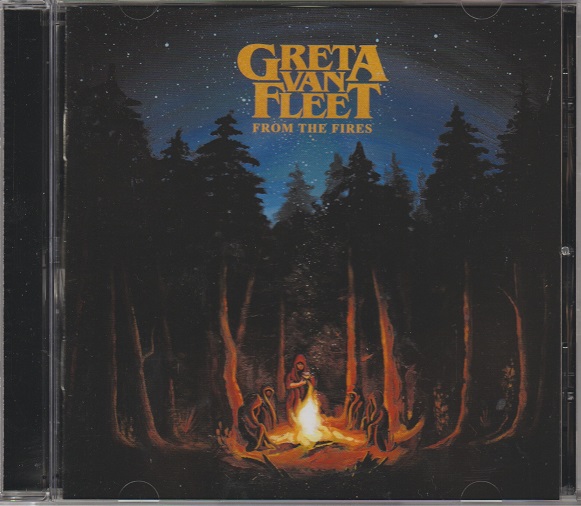
GRETA VAN FLEET – From the Fires (2017 Republic Records)
Got 32 minutes to kill? I have just the thing.
Frankenmuth, Michigan’s Greta Van Fleet won’t be disappearing any time soon, not with the release of their new “double EP” From the Fires. Double EP? For simplicity’s sake, we’ll just call it an album. From the Fires has all four songs from their last EP, Black Smoke Rising, along with four new tracks. Whatever you want to call it, if you missed Black Smoking Rising, then you’ll wanna get From the Fires ASAP!
Of course you will get their smash hit “Highway Tune”, which is still as exciting as the day we first heard it. Current single “Safari Song” is first on the new CD. Greta’s biggest influence is the mighty Zeppelin, and “Safari Song” certainly has that bluesy Zep stomp. Lots of “oh mamas”. This mid-tempo rocker is quickly becoming a favourite of the airwaves.
The new “Edge of Darkness” sounds less like Zeppelin, although singer Joshua Kiszka bleeds Robert Plant. “Edge of Darkness” recalls newer blues rock bands, but the voice immediately sounds like Plant. Then “Flower Power” brings us back to hippy-era acoustic Zeppelin. It’s more than a little derivative, but this band is young and only starting out. Joshua Kiszka really blasts on the slow soulful “A Change is Gonna Come”. What a singer — someone to keep an eye on!
Some of Greta’s more dramatic tunes appear closer to the end. “Meet on the Ledge” has a plaintive, epic quality. Then “Talk on the Street” goes upbeat, with a brilliant thrilling rocker. These new tunes indicate that Greta is indeed still growing, and we haven’t heard what they’re capable of yet. Yes, they can do vintage 1969 Led Zeppelin to a “T”, and they have the acoustic bases covered too. The songwriting is growing, and their musicianship is already there. Their playing sounds like a group who have several records under their belts already.
“Black Smoke Rising” has become a personal favourite Greta tune. This closer boasts incredible vocals, melody and riffs. It’ll put goosebumps on your arms if you let it. It sounds very little like Led Zeppelin. It actually recalls Triumph more than anyone, and that’s just fine.
Now is the time to get some Greta Van Fleet. This release has all their studio recordings; a compact 32 minutes. Double EP? Van Halen had classic albums shorter than this. From the Fires is an album. Get it!
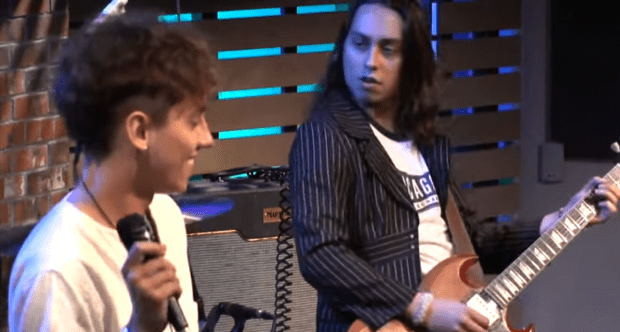
Boppin heard a rumour that Bon Jovi was coming to town. Then an anonymous source informed us that a super-secret private concert was taking place Friday night right here in Kitchener Ontario. The list of talent:
Bon Jovi’s Richie Sambora, Foreigner’s Lou Gramm and Stephanie Calvert of Starship.
Backed by an all-star cast of legendary rockers and potential surprise guest performers:
Howard Leese
-Guitar- Heart, Bad Company, Rock and Roll Hall of Fame
Hugh Mc Donald
– Bass- Bon Jovi
Doug Aldrich
– Guitar- Whitesnake, Dead Daisies, Dio
Jay Schellen
– Drums- Asia, Yes
Michael Ross
– Keys- Lita Ford Band, Missing Persons
Robin McAuley
– Vocals- MSG/Survivor
Andrew Freeman
– Vocals- Offspring, Last in Line
Paul Shortino
– Vocals- Rough Cutt, Quiet Riot
Mark Boals
– Vocals- Yngwie Malsteen, Dokken
And then our sources tell us that Bret Michaels showed up!
Richie played guitar, but also sang lead vocals without one. According to our source:
“He did both. He was out for the middle bit of the show. He did two Bon Jovi songs, “Dead or Alive” and “Livin’ on a Prayer” and then a super extended (self serving if I’m honest) rendition of “Respect Yourself”. General consensus was that he was the low point of the night!! Even his back up singers, Robin McAuley, Mark Boals, Paul Shortino and Stephanie Calvert looked confused by the end. The night was amazing. So much energy and so much sound.”
Our source also enjoyed Robin McAuley. “He was awesome. ”
Enjoy these photos! Thanks to Krista Ward, our anonymous source!
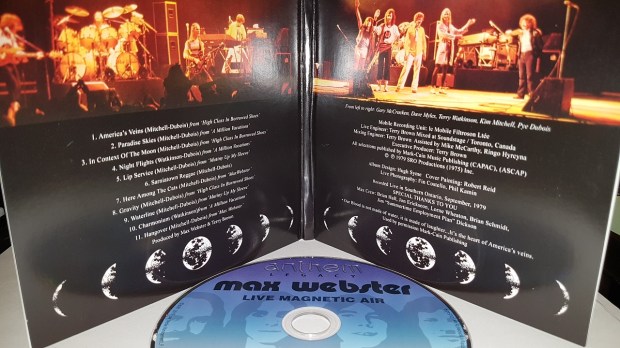
MAX WEBSTER – Live Magnetic Air (originally 1979, 2017 Anthem remaster)
So you’re the canker banker? They’re just Max Webster, here to thin the thickness of your skin.
Any good 70s act worth their salt had to have a solid live album. Max released theirs after four studio albums, a good basis for a fulfilling concert set. The 10 songs (plus one reggae jam) only begin to scratch the surface of their bizarre and rocking history, but a good 10 songs they are.
Want some rockers? Tap into “America’s Veins”. 70s radio rock? Take a lift up into the “Paradise Skies”. Looking for some progressive rock? You’ll find it “In Context of the Moon”. The adventurous and quirky arrangements of some tunes are a direct contrast to the catchiness of others. “Gravity” blends quirky and catchy into one successful gestalt. “Charmonium” both challenges and pleases the ears at once. Whether you’re soaring on “Night Flights” or biting into “Lip Service”, there is no filler on Live Magnetic Air.
One expects great playing on any Max Webster platter. Live Magnetic Air has plenty of that gonzo Kim Mitchell guitar work that he is known for. Terry Watkinson’s keys explore different tones within single songs, never getting boring. Yet it’s Gary McCracken’s drum work that seems to really shine, especially on the 2017 remaster from The Party boxed set.
It is difficult to throw too much praise at Max Webster, because surely they deserve it. They were not as famous as Rush and not as worshipped as Zappa. But those are the kind of names thrown about when speaking of Max Webster. Each Max album is loaded with amazing material, but if you were looking to start with something, why not make it Live Magnetic Air? The party atmosphere and ace selection of songs are the basic ingredients of a classic live album. Now that it’s finally been properly mastered for CD, you can hear it the way you were always meant to. For those who just wanna rock, the guitars have the crunch. The discerning fan will enjoy the new clarity and depth that this remaster offers, without overdriving the levels.
Once again we wholeheartedly recommend The Party boxed set, but if you find Live Magnetic Air on vinyl, pick it up and hear what some genuine “Sarniatown Reggae” sounds like.
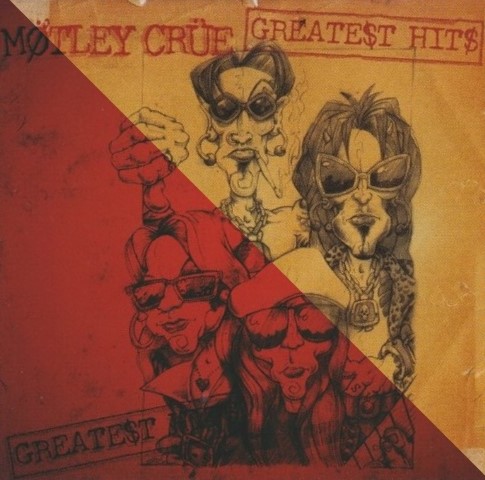
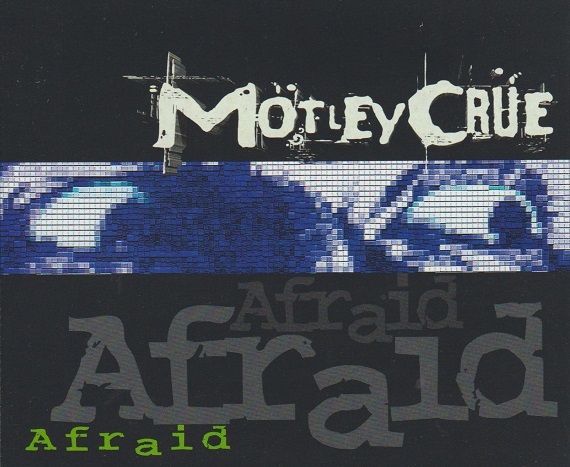
Most fans will agree that Motley Crue’s 1997 reunion album Generation Swine was, at best, disappointing. The Crue tried to right the ship by returning to producer Bob Rock. Together they came up with two new songs, “Bitter Pill” and “Enslaved” that recalled better days. We discussed the wherefores and origins of 1998’s Greate$t Hit$ album in Getting More Tale #611: Afraid, on which the two new songs were released. As you’ll read here, the 1998 issue of Greate$t Hit$ is better than its 2009 update.
Both “Bitter Pill” and “Enslaved” bring Motley’s sonics back to their previous setpoint with Vince Neil, Decade of Decadence. The combo of Motley plus Bob Rock produces the kind of results you expect: punchy, heavy rock tunes with hooks. Neither is as memorable as “Primal Scream”, but serve their function. If this lineup had stayed together perhaps they could have taken it further, to the next stage of evolution. Tensions between Vince and Tommy Lee eventually erupted. Tommy left the band to pursue his own sanity and a side project called Methods of Mayhem.
The ’98 Greate$t Hit$ also offered up one other cool bonus: a previously unreleased remix of “Glitter”. It’s softer and more electronically processed, but a very cool alternate version. Dropped into this running order, Greate$t Hit$ turns out to be a remarkably fun and consistent listen. It would be a highly recommended way to get a broad assortment of great Motley and some rarities too.
Then, as part of the promotional cycle for a later, better reunion album (2008’s Saints of Los Angeles), Greate$t Hit$ was updated and reissued. Including its previous incarnation, the 2009 Greate$t Hit$ became the fifth Motley Crue best-of compilation (not counting box sets and rarities compilations).
So what’s the difference?
13 tracks overlap between the two: “Too Fast For Love”, “Looks That Kill”, “Smokin’ In The Boys Room”, “Home Sweet Home”, “Wild Side”, “Girls, Girls, Girls”, “Dr. Feelgood”, “Kickstart My Heart”, “Don’t Go Away Mad (Just Go Away)”, “Without You”, “Primal Scream”, and “Afraid”. The 13th track is “Shout At The Devil”. In 2009 they used the original version, where on the old CD it was “Shout At The Devil ’97” (a re-recording from Generation Swine).
Three tracks were previously released as “new” songs on other greatest hits CDs: “Primal Scream” (Decade of Decadence), “Sick Love Song” and “If I Die Tomorrow” (Red, White & Crue).
Two tracks were from the newest Motley platter, Saints Of Los Angeles: The title track, and a brand-new remix of “The Animal In Me” featuring more keyboards.
Zero tracks from the albums Motley Crue or New Tattoo are included (neither album had all four original members).
There are 19 songs total included, which is a beef-up from the 1998 version, which had 17 songs. “Bitter Pill” and “Enslaved” were excluded, but both are available on Red, White & Crue (2005). The remix of “Glitter” from the 1998 version is not and is now deleted.
The songs on the update, unlike the 1998 version, are mostly in chronological order. The exception is “Afraid” which is shuffled out of place with “Sick Love Song” for reasons unknown. The flow of the album is OK, with the kickass “Too Fast For Love” starting the proceedings. The mixture of rockers to ballads is engineered for high octane, and the ballads only kick in when needed. The album only runs out of gas towards the end: “Sick Love Song” isn’t very good didn’t require a second look here. “Bitter Pill” should have been kept instead. The final track “The Animal In Me” is just too slow for a closing song. “Saints Of Los Angeles” would have been more appropriate to close this set.
Even though the 2009 update has 19 songs compared to 17, the ’98 version wins due to the inclusion of “Bitter Pill” and “Enslaved”. It’s more enjoyable listen from start to finish, with better flow and song order. The ’09 Greate$t Hit$ smacks of an obvious cash grab. Check out the liner notes. They haven’t even been updated. The essays are 10 years out of date, the notes refer to the “two new songs” (which aren’t there), and the back cover artwork still reflects “Bitter Pill”. Essentially, the only changes to the packaging are the colours with a new slipcase added, displaying a newer band photo from the Saints sessions.
1989: A clean and sober Motley Crue take over the world. Dr. Feelgood climbs to #1 and the band rivals Bon Jovi and Def Leppard in the popularity stakes.
1990: Motley continue to tour and rock them all, while announcing their next album will be a “greatest hits”.
1991:Decade of Decadence is released, keeping Motley on the charts. The new single “Primal Scream” is well received.
1992: In a shock announcement, Vince Neil is fired from the band. Unfortunately Motley are not the only rock band to lose their singer at the beginning of the 90s.
1993: Vince Neil’s solo debut Exposed is greeted by warm reviews. Motley continue to toil in the studio with new singer John Corabi.
1994: Five years after Dr. Feelgood, the re-imagined Motley finally return with the self-titled Motley Crue. Corabi blows ’em away, but the album fails to sell. Motley is forced to do a scaled down tour while the CD dropped off the charts.
This was the state of the Crue in the mid 90s. They had released an incredible album. Today, many fans rate it in the top three, or even at the #1 spot. My near-legendary Record Store cohort T-Rev agrees. “To me, they sounded more like a hard rock band than a hair metal band, because of that album.”
Absolutely true. They stepped far beyond the preconceived notions of Motley Crue. Guitars were detuned, lyrics were topical or personal. Tracks like “Smoke the Sky” might have passed for Soundgarden. On the other side of the coin, “Misunderstood” was an epic power ballad featuring an orchestra and Glenn fucking Hughes. There wasn’t a weak track in the bunch, but plenty of variety.
Most fans didn’t embrace it at the time, and instead moved on to current bands. Back then, nobody was interested. No Vince, no Motley? No way. Corabi was absolutely the right guy at the right time. Motley added his rhythm guitars and songwriting abilities, not to mention far more aggressive singing. The band had only gotten better. But by recording an uncompromising album with an unknown singer, they were indeed taking a chance. It didn’t pay off. When I was working at the Record Store, there was a giant pile of unsold Motley Crue CDs taking up space. They sat next to an equally tall pile of David Lee Roth’s Your Filthy Little Mouth. All the kings seemed to have been usurped.
At the Record Store, I first befriended the aforementioned T-Rev. The fact that both of us loved the Motley album didn’t hurt. T-Rev was the only person I knew who appreciated what they did. He loved that huge overproduced drum sound. Back in 1989, everybody had a Motley Crue T-shirt in the highschool halls. In 1994, we couldn’t get anyone to listen.
Through 1995 and 1996, magazines reported that Motley were back in the studio, working on a followup with Corabi. Bob Rock was back in the producer’s chair and the band wrote new songs such as “Personality #9”, “Let Us Prey”, “La Dolce Vita” and “The Year I Lived In A Day”. Things seemed to be going well, but record company pressure was intense. Bob Rock’s style was now passé and he was fired. Engineer Scott Humphrey was promoted to producer, and electronics began to dominate.
The pressure was not only on Motley Crue, but focused directly on John Corabi. Elektra records were eager to get Vince Neil back, a true “star”. John was getting frustrated in the studio while this was going on. Nothing he sang seemed to be good enough for Motley Crue anymore. He was asked to sing like Oasis or the Sisters of Mercy. John suggested that he just play rhythm guitar while they get Vince Neil to sing. Somehow, this made its way into the rumour mill. Before John Corabi was eventually fired, T-Rev and I had heard that Motley were considering this very same five-piece lineup. What a glorious sounding thing that could have been.
Ultimately the band fired John and got Vince back. They attempted to piece together the album that they’d been recording and re-recording and re-re-recording again. Mick Mars was frustrated as well, as his guitar parts kept getting rejected and remixed. In particular, Mars did not function well with Scott Humphrey.
Personally speaking, I lay these problems at the hands of Scott Humphrey. I read the book The Dirt, and that’s certainly where the band lay most of the blame. Have a look at Humphrey’s credits though. Lots of records loaded with electronics, like Rob Zombie’s Hellbilly Deluxe and Tommy Lee’s solo stuff. Humphrey started out as a keyboard player and programmer, and I think that high-tech style does not work with Motley Crue. That’s my personal opinion, never having met Scott Humphrey. I did, however, have a customer at the Record Store who knew Scott Humphrey, who is actually from Kitchener Ontario.* “Motley Crue were the problem,” he told me. “They were messed up on drugs.” They were also unfocused musically.
On January 27 1997, the reunited original Motley Crue performed on the American Music Awards. Mere months after being teased by a similar Van Halen reunion on the MTV Awards, I was relieved that Motley were playing a song rather than just standing there. But what the hell song was it?! Some strange, techno-y version of “Shout at the Devil”? It was strange, unexpected and underwhelming. Hey, cool, it was a fresh spin on an old classic. But…why?
We soon found out. The album Generation Swine came out on June 24 1997. As usual, T-Rev and I got it a few days in advance. “It sucks!” he warned me. Of the first single “Afraid”, he said “It sounds more like Def Leppard than Motley Crue.”
“Afraid” is the best song on the album, which does frankly suck. In a single stroke Motley went from one of their best albums, to one of their very worst. It was astounding how desperate they sounded, trying to incorporate these influences that have nothing to do with Motley Crue. The loops and samples and effects ruined many of the songs, but some just weren’t that good to begin with. This considered, it was an even bigger surprise that Nikki Sixx and Tommy Lee were singing lead vocals too. Sixx’s silly opener “Find Myself” was a nauseating faux-punk novelty song. Generation Swine was also unfocused in the extreme, and the muddying effects didn’t help. The electronic treatments on the drums rendered them limp, compared to the massive sound of 94’s Motley Crue. Absolutely everything on Generation Swine was inferior to Motley Crue.
Three CD singles were released for “Afraid”, which was remixed so many times trying to get it right, that they used some of the various versions as bonus tracks. The album version is fine enough, and in this one instance, the electronics enhance the song. I’d rather hear “Afraid” with the effects than without.
What did other fans think? When Generation Swine was new, one of my customers wanted to hear it before buying. “I saw that Vince Neil is back. Have you heard it?” he asked me, and I told him the truth. He was sceptical of my review, but changed his mind upon hearing it. “It doesn’t sound like them,” he said, and he’s right. I then cajoled him into listening to the 1994 album. He didn’t want to, because it didn’t have Vince Neil, but agreed to give it a shot.
Guess which album he bought? Motley ’94.
At least there’s some redemption, if only temporarily. During the Christmas season of 1998, T-Rev once again called me up to tell me about Motley Crue. There was a new compilation out, called Greate$t Hit$ [review coming tomorrow]. This time, there were two new songs: “Enslaved” and “Bitter Pill”. Both were produced by Bob Rock.
“The new songs aren’t bad,” said T-Rev. “A lot better than Generation Swine. Not as good as ‘Primal Scream'”
Right again, T-Rev. Not bad. An improvement, but not as good as what they did the first time out. That was enough for me to buy the CD. Not for Trevor, though.
I think Motley Crue were on the right track with “Enslaved” and “Bitter Pill” after the failure of Generation Swine. They obviously knew that album didn’t work, so they went back to the last thing that did. Both songs are growers, and still raise a smile to hear. Unfortunately Motley Crue blew it again. Tommy Lee and Vince Neil had a dust-up at an airport, and Lee split. He was replaced by former Ozzy Osbourne drummer, Randy Castillo.**
Fans like T-Rev and myself always supported the 1994 album, and today we’ve been justified. More and more fans have realised the quality of that CD, and increasingly hold it in high esteem. There’s something about that CD, and I’m afraid that Motley Crue never came close to touching it since.
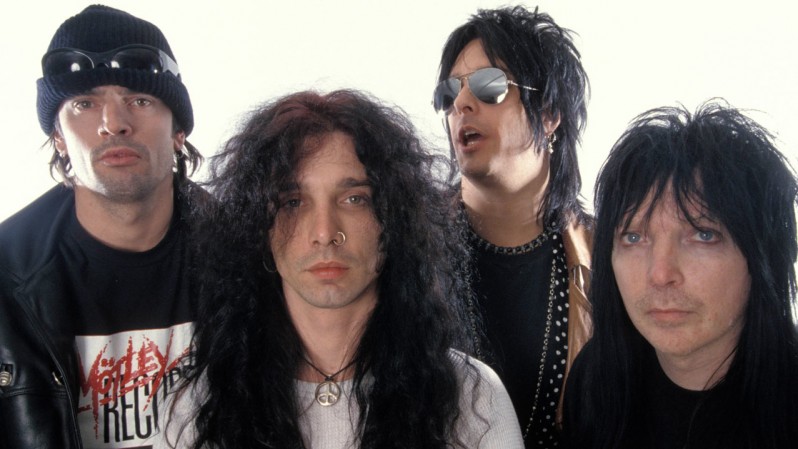
Tommy Lee, John Corabi, Nikki Sixx & Mick Mars
* Fun fact! T-Rev’s mom dated Scott Humphrey!
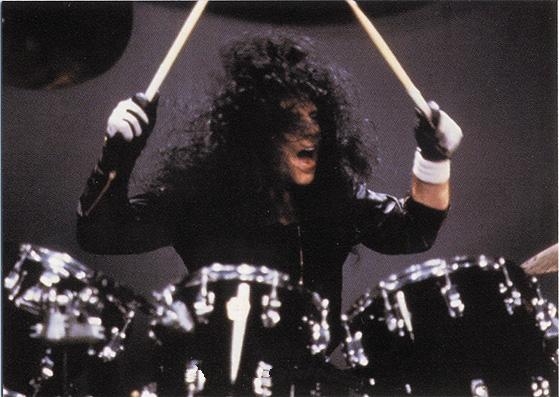
** In a very sad turn of events, Castillo never got to tour with Motley Crue. He became ill and died of cancer on March 26, 2002 at age 51. His replacement, Hole’s Samantha Maloney, did the tour and resultant live video.
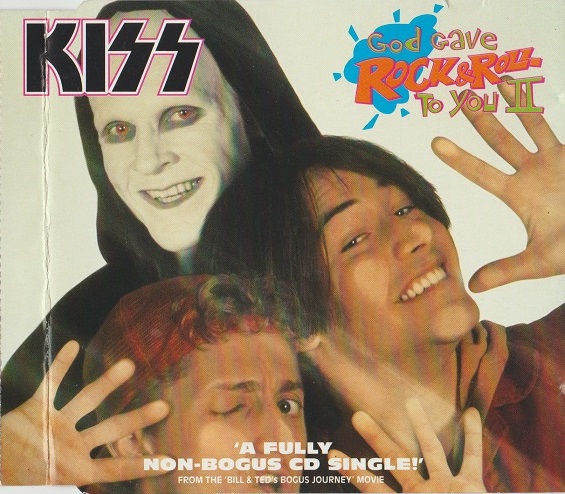
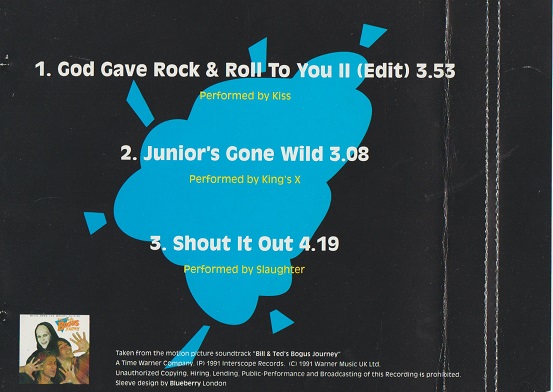
– “God Gave Rock & Roll to You II” (1991 Interscope single)
Kiss’ Hot in the Shade tour wasn’t a sellout, but it was well received by fans who appreciated that a bunch of older songs were back in the set. The tour was unfortunately highlighted by the June 15, 1990 date in Toronto, igniting a feud with Whitesnake. Kiss were third on a four-band bill, with David Coverdale, Steve Vai and company in the headlining slot. Paul Stanley used his stage raps to complain that Whitesnake wouldn’t let them use their full setup, including a giant sphinx. When Whitesnake hit the stage, it was to a chorus of boos. Steve Vai later stated that it was the first time he had ever been booed. Vai once even walked onstage to the sound of people chanting “Yngwie! Yngwie! Yngwie!”, but he had never been booed until the incident with Kiss in Toronto.
When the tour wrapped up in November, Kiss took a few months off before gearing up again in the new year. It was to be another album, another tour, but suddenly real life interfered.
Eric Carr hadn’t been feeling well. Flu-like symptoms turned out to be heart cancer. Simultaneously, Kiss received an offer to record a song for the sequel to Bill & Ted’s Excellent Adventure. Carr underwent surgery in April, with chemotherapy following. Having little choice, Kiss recorded without him. Eric Singer, who had performed so well on Paul Stanley’s solo tour, filled in on drums. Eric Carr, in a wig, was able to play for the music video taping. He gave his all, and did a full day’s shoot, with excellent (pun intended) results.
Unfortunately a rift was developing, with Eric Carr feeling shunned and excluded from Kiss. He was afraid he was going to be replaced, permanently, and his relationship with the band was strained. Although everybody hoped Eric would make a full recovery, he passed away from a brain haemorrhage on November 24, 1991. Eric Carr was 41.
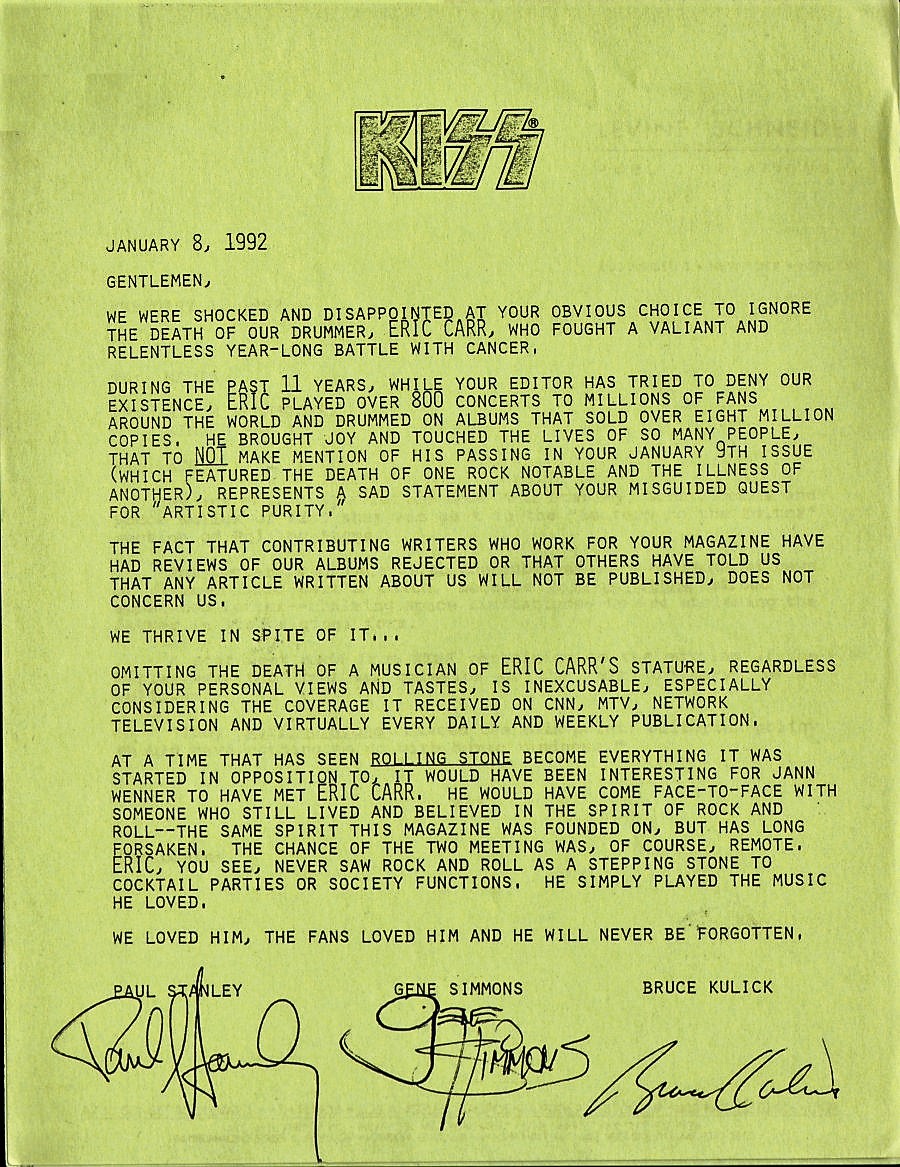
On the same date, Freddie Mercury of Queen succumbed to AIDS. Carr’s death was barely mentioned in the news, including Rolling Stone magazine who missed it completely, prompting a harsh reply from Kiss:
If anything positive came from Eric Carr’s death, it was that Kiss were going to put all that anger and frustration back into the music. The music was to be their Revenge.
It started with “God Gave Rock & Roll to You II”, a re-imagining of an old Argent song for the Bill & Ted movie. Eric Carr may not have been well enough to play drums, but that didn’t stop him from singing. His vocals on “God Gave Rock & Roll to You II” were his last. The song wouldn’t be the same without Carr, as he can be heard sweetly harmonising with Paul Stanley. Eric Singer wasn’t credited on the single, or the final soundtrack for Bill & Ted’s Bogus Journey. It simply says “performed by Kiss”.
“God Gave Rock & Roll to You II” was important for two more reasons. First, and very significantly, it was produced by Bob Ezrin. Ezrin was responsible for the two albums that some consider Kiss’ best, and Kiss’ worst. It had been 10 years. A Kiss-Ezrin reunion was very big news for fans. It indicated that Kiss meant business this time. Secondly, “God Gave Rock & Roll to You II” was the first Paul Stanley/Gene Simmons (with Bob Ezrin and Russ Ballard) co-writing credit since 1985, and their first shared vocals in ages upon ages.
Although it didn’t make waves in 1991, “God Gave Rock & Roll to You II” has become enough of a favourite to make it onto 2015’s Kiss 40 compilation, and continue to be played live. It shows off what Kiss can really do. Yes, they can sing! Yes, they can play! This lineup could do it particularly well. It’s appropriate that Eric Carr went out on a good Kiss track. And Eric Singer was the right guy to continue.
There are three released versions of “God Gave Rock & Roll to You II”: The single edit (3:57), the soundtrack version (5:23) and the final 1992 version that was later released on the next Kiss album (5:19). The single edit cuts out too much of the grand, pompous arrangement, including the epic opening.
In an ironic twist, the version of “God Gave Rock & Roll to You II” that is in the movie has a guitar intro solo by Steve Vai. The same guy whose band got booed in Toronto thanks to Kiss.
The CD single is rounded out by two more songs from the Bill & Ted soundtrack, by Slaughter and King’s X. The King’s X track, “Junior’s Gone Wild” (previously reviewed in our mega King’s X series) has never been one of their better tunes, but as a non-album rarity, a nice one to have. Just don’t judge King’s X by this one track. Slaughter turned in something better, a fun party tune called “Shout It Out”, also a non-album recording. Slaughter, of course, were one of Kiss’ well-received opening acts on the Hot in the Shade tour. And what was their Kiss connection? Mark Slaughter and Dana Strum were in a band with Kiss’ old guitar player, called the Vinnie Vincent Invasion!
As work proceeded on the next LP, the world suddenly changed. Hard rock was out, and grunge took over MTV. This single bought Kiss a little bit of time, but it was going to be the longest gap between Kiss albums yet — three years. Revenge had to wait a little longer.
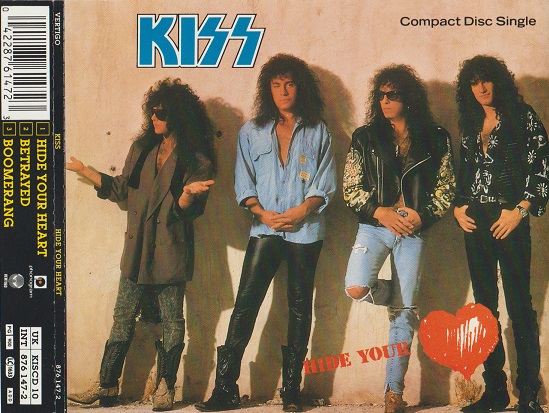
Kiss took the unusual step of waiting six months before going out on tour to support Hot in the Shade. Bands were having trouble selling out arenas. In the meantime they released singles and videos. “Hide Your Heart” came first in October of 1989. It did alright; for fans the best part of “Hide Your Heart” was seeing Paul Stanley playing guitar again in the music video. The CD single was nothing special; just the Paul Stanley A-side, backed by two Gene Simmons B-sides, as had become the norm. “Betrayed” and “Boomerang” were among the better Simmons tracks to chose from Hot in the Shade.
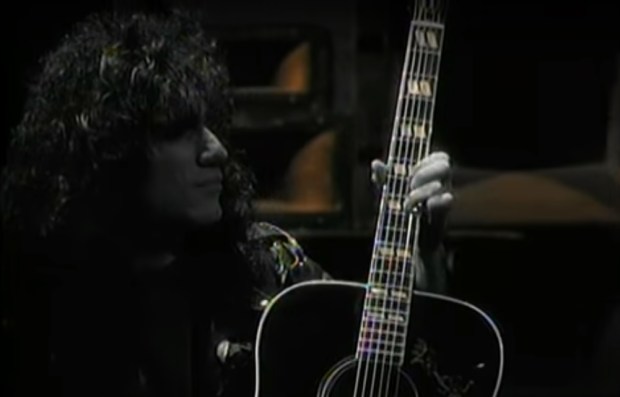
In January of the new year, they dropped what they hoped to be the big single, “Forever”. The excellent music video was an MTV hit, going to #1, while the single went to #8 on the U.S. Billboard Hot 100. One reason the video was so well received is that it was a rare back-to-basics look at the band. It was just four guys playing together in a room. No girls, no gimmicks, no dancing. Featuring exceptional performances by Eric Carr and Bruce Kulick, “Forever” was one of those rare ballads with integrity. Having Bruce’s old Blackjack buddy, Michael Bolton, in the writing credits didn’t hurt.
Ace Frehley wasn’t impressed though. In the July 1990 issue of Guitar for the Practising Musician, he dismissed it as pop. He wasn’t wrong, but that doesn’t make “Forever” bad.
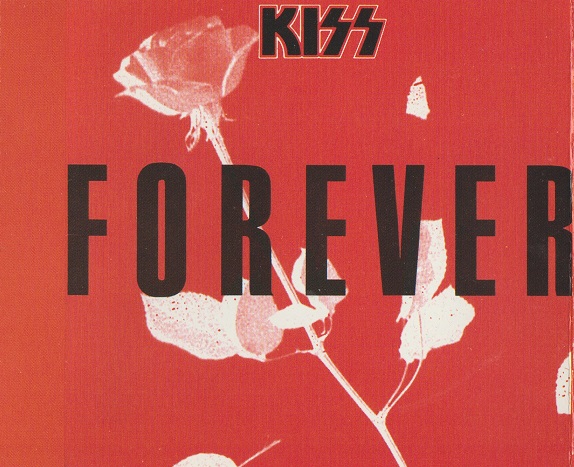
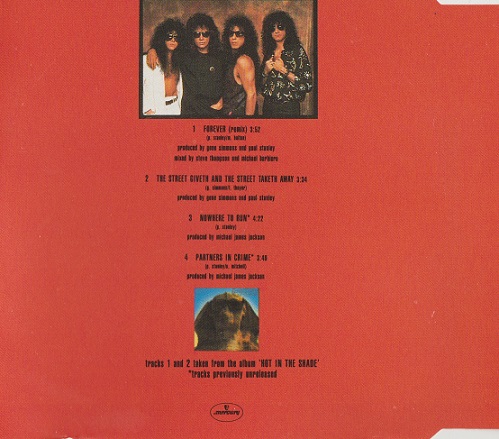
The single for “Forever” received a wider release on all three major formats (CD, vinyl and tape), and was expanded to EP length with four tracks. It also received something very rare for Kiss: a single exclusive remix, by Steve Thompson and Michael Barbiero. It has some difference in levels and echo. However, every CD copy of this single has a flaw, a skip at 1:40 that shouldn’t be there. It’s not even a damaged CD; if you look at the track times, the single version is encoded few seconds shorter. In other words a faulty master was used on every CD single. You won’t find one without the skip. Vinyl and cassette don’t have the flaw.
Fortunately this oversight was fixed when Kiss released their box set a decade later. The correct remixed single version without flaw was remastered and included in the set.
The included B-sides are an interesting mix. From the Hot in the Shade album, there’s the Gene Simmons throwaway “The Street Giveth and the Street Taketh Away”. The other two are, strangely, two of Paul’s “new” tracks from Kiss Killers. The logic here was the Kiss Killers was (and still is) unreleased in North America. At least this gave us an easy way to get the amazing “Nowhere to Run” on CD.
Too bad about that flaw on the CD version. Otherwise this isn’t a bad little single.
Step one: Get Gene Simmons’ demon head back into the game.
Step two: Record a rock album, not a Bon-keyboard-Jovi-Kiss hybrid.
Throw in the kitchen sink while you’re at it. It’s Kiss, so what’s wrong with excess? Why not a new album with 15 tracks? Why not work with Vini Poncia, Desmond Child, Holly Knight, and Michael Bolotin Bolton? How about bringing in Tommy Thayer from Black ‘n Blue to co-write some tunes?
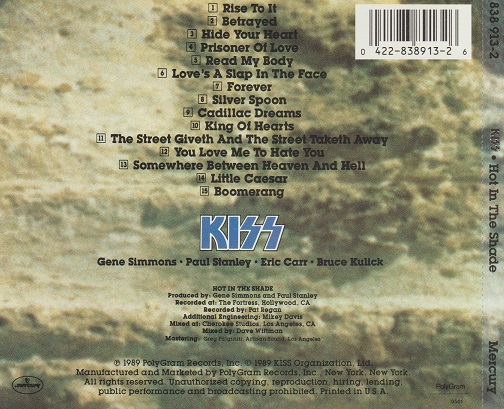
Why not indeed. The results yielded were interesting to say the least, and certainly more rock and roll than anything else Kiss did in the 1980s. It is also overall one of the hardest Kiss albums to listen to front to back. A for effort, D for songs. Its bloated and unfinished track list seemed like Kiss was trying really hard on one end, but gave up on the other.
Paul Stanley and Gene Simmons self-produced Hot in the Shade, after the negative experience with outsider Ron Nevison. This meant that there was no-one to push them to do better, as Bob Ezrin and Eddie Kramer would. No-one to say “no” to using demo tapes on the finished albums. No-one to say “no” to 15 tracks, to drum machines, and to sub-par songs.
Issues aside, Hot in the Shade is not all bad. At least you can say that Kiss went for it.
Opener “Rise to It” begins with something new: acoustic slide guitar (from Paul Stanley)! In a time when rock bands were re-discovering the blues, this old-timey touch was a welcome sound. The slide gives way to one of Paul’s most incendiary tracks of the decade. Written with expert songsmith Bob Halligan Jr., “Rise to It” hits all the right spots.
“Rise to It” was eventually chosen as a third single to promote Kiss’ upcoming 1990 tour. The music video opened a door that fans refused to allow them to close: Kiss in makeup again. Instead of the slide guitar intro, the video takes us to a theoretical 1975. Gene and Paul sit in the dressing room, applying their legendary whitepaint. The conversation was one that Gene and Paul may have had many times in the old days: musing on a life without makeup.
“I saw that review today. Some of those people don’t think this is gonna last. They think it’s a joke,” says Paul. Gene reassures them that it doesn’t matter as long as they believe in themselves.
“I bet you we could take the makeup off and it wouldn’t make any difference,” Paul retorts. Gene calls him nuts.
“Gene, there’s nothing we can’t do.”
“Still say you’re nuts.”
At the end of the video, there they were: Paul and Gene, Starchild and Demon, in makeup for the first time in seven years. What did it mean? Was it just hype? Of course it was. It would be seven more years before they’d do a tour in makeup again.
But it was cool, and it made many fans smile ear to ear.
Like all the previous Kiss albums from the non-makeup era, all three single/videos were Paul songs. Though “Rise to It” is the most noteworthy video, “Hide Your Heart” was first. This Stanley/Child/Knight outtake from Crazy Nights was actually first recorded by Bonnie Tyler in 1988. At the same time that Kiss were recording it for Hot in the Shade, Ace Frehley also did his own version for 1989’s Trouble Walkin’. Confusing? Kiss were the only band to have a semi-hit with it (#22 US).
As a nice change of pace from putting X’s in sex, the lyrics were a story about star-crossed lovers in gangland. “Tito looked for Johnny with a vengeance and a gun, Johnny better run better run,” sings Paul. In fact, “Hide Your Heart” does not get enough credit in fan circles for being lyrically different. At least it is recognised as a great tune from a poor album.
Kiss weren’t worried about competition from Ace and did indeed record the best version of “Hide Your Heart”.
The most notable single was the ballad “Forever” (and we will take a closer look at the CD single in the next instalment of this series). Michael Bolton was an old bandmate of Bruce Kulick’s from the Blackjack days. Before he was a superstar crooner, he was a rocker. Together he and Paul wrote “Forever”, which became the big hit (#8 Billboard hot 100).
As an acoustic ballad, “Forever” is far more palatable than the keyboardy “Reason to Live” from ’87. What gives it balls are the two unsung Kiss members: Kulick and Eric Carr. Eric’s heavy drumming on “Forever” really kicks it up a notch. Listen to that hammering 1-2-3-4 bit at the 1:05 mark. “When you’re strong you can stand on your own…” ONE TWO THREE FOUR on the snares. Heavy as fuck on a ballad! Then there’s Bruce’s acoustic solo, another first for Kiss. The temptation would be to record a ripping electric solo like everyone else. Bruce wrote and recorded a hook-laden acoustic solo that is as much a part of the song as the chorus.
Those are your three standouts from Hot in the Shade, leaving 12 more that don’t hit the same bar.
Of the remaining 12 tracks, Eric Carr’s lead vocal “Little Caesar” is significant. Making him sing “Beth” on Smashes, Thrashes & Hits was unfair and a cheat. “Little Caesar” is his “real” lead vocal debut. Originally written as “Ain’t That Peculiar” (later released on a Kiss box set), the words changed to reflect one of Eric’s nicknames. He was, after all, a little Italian guy! The funky “Little Ceasar” was performed entirely by Eric and Bruce Kulick.
US picture CD
Gene’s “Boomerang” (written for Crazy Nights with Bruce) may be noteworthy as the closest Kiss have ever gotten to thrash metal. Another Gene tune, “Cadillac Dreams” has a horn section and electric slide guitars. Paul’s “Silver Spoon” is augmented by soulful female backing vocals. You have to give them credit for stretching out and trying new things, but keeping it rock and roll.
Then there is a slew of filler, stuff that would never be played live nor remembered fondly. Gene has a number of generic sounding songs, heavy but uninteresting: “Betrayed”, “Prisoner of Love”, “Love’s a Slap in the Face”, “The Street Giveth and the Street Taketh Away”, and “Somewhere Between Heaven and Hell”. Paul is also guilty of providing filler material. “Read My Body” isn’t bad, but sounds like his attempt to re-write “Pour Some Sugar On Me”. “King of Hearts” and “You Love Me to Hate You” both have good parts here and there, but not quite enough.
As unfocused as Hot in the Shade is, at least it was a step. Sure, adding horns and slides smacked of Aerosmith. Going almost-thrash was following, not leading. Musically, Kiss have never been leaders, but what they do is create their own confections from the ingredients of their best influences. Hot in the Shade represented a better mixture of ingredients, just without the discipline to mould them into 10 (just 10, not 15!) good songs.
Today’s rating:
1.5/5 stars
The story of the next three years in Kiss will be explored in a series of reviews on CD singles, live bootlegs, and solo releases. Don’t miss them!

 BON JOVI – “Please Come Home for Christmas” (1994 Mercury single)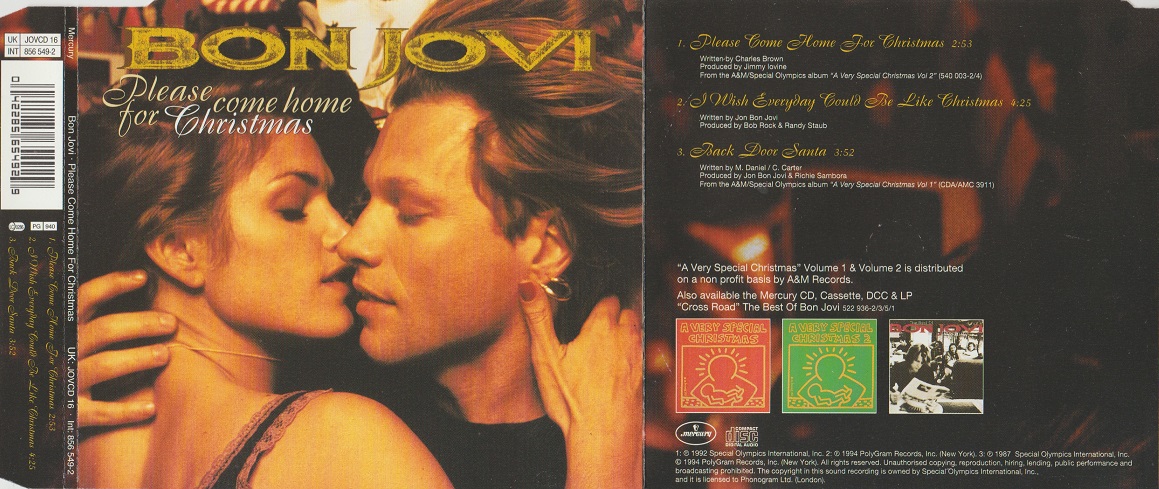



















 mikeladano.com