classic rock

REVIEW: Jimmy Page & The Black Crowes – Live at Jones Beach (2017)

Gratitude to James Kalyn of the KMA for acquiring this treasure.

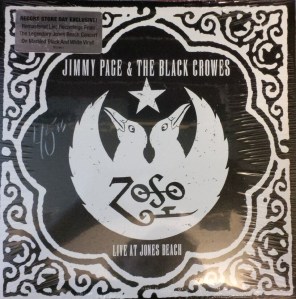
JIMMY PAGE & THE BLACK CROWES – Live at Jones Beach (2017 The Orchard Record Store Day EP)

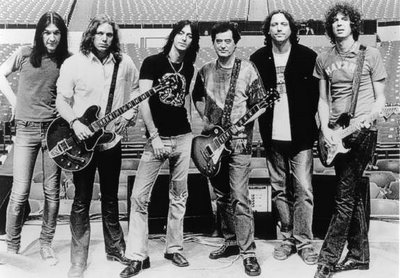
Aficionados of Led Zeppelin and the Black Crowes rejoice! It has been a long time since the fantastic concert collaboration, Jimmy Page & The Black Crowes Live at the Greek (2000).  That double CD delivered a surprisingly bang-on dose of legendary Zeppelin cuts and blues covers.  Here, it’s a seven piece band consisting of Page, Rich Robinson and Audley Freed in a lethal triple guitar lineup.  The band was completed by vocalist Chris Robinson, drummer Steve Gorman, bassist Greg Rzab and keyboard player Eddie Harsch.  Now you can hear three more tracks, from an additional concert at Jones Beach.

As expected, Pagey and the Crowes are whipped up into a blues jam rock frenzy loaded with atomic playing.  Off to Middle Earth with “Misty Mountain Hop”, a song easily conquered by Chris Robinson.  You may be surprised by how comfortably it fits the Crowes.  “Bring it on Home” seems more their style, and with Jimmy they turn it into a loud rocking assault.  The three guitarists are really able to bring to life “In the Light”, giving it the kind of depth it has in the studio.  Chris and Rich double the vocals to emulate the production on the Physical Grafitti original.

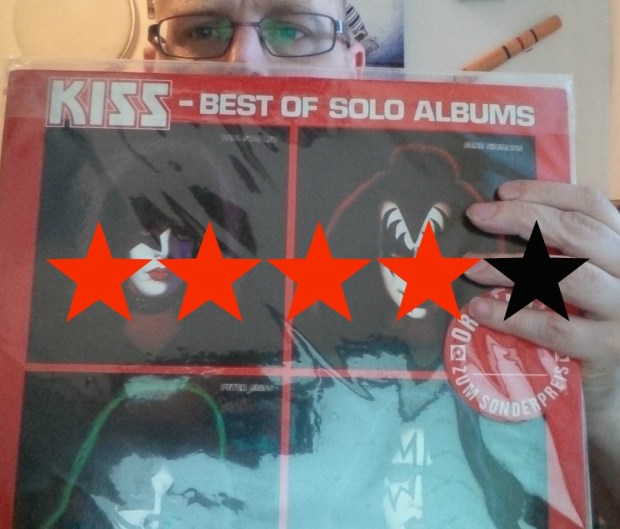
4.5/5 stars

This was a 200 word review in the tradition of the #200wordchallenge.


RE-REVIEW: KISS – Unmasked (1980)

The KISS RE-REVIEW SERIES Part 18:

  Unmasked (1980 Casablanca, 1997 Mercury remaster)

“I think Unmasked is a pretty crappy album.  It’s wimpy” – Paul Stanley, KISS Behind the Mask

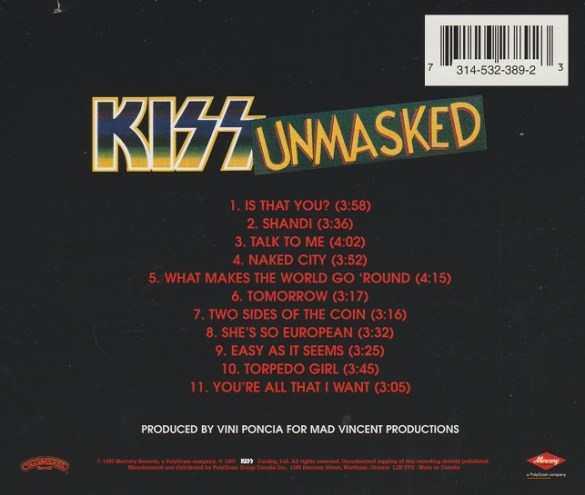
Here we are at Unmasked, the very album that inspired the Kiss Re-Review series in the first place.  It’s a polarizing platter.  The band often trash it and shun it in concert.  Meanwhile, some fans have grown to appreciate it, particularly in Europe and Australia.  There is even a tribute CD on a German label with covers of the entire album.  Indeed, Unmasked is not without strengths.  Ace Frehley contributed another three songs of his own, continuing the growth he demonstrated on his solo album and Dynasty.

On the other side of the ledger, there were factors that fans see as a diluting of the Kiss sound.  Co-writers were now the norm.  Returning producer Vini Poncia had eight co-writes.  They used a track by songwriter Gerard McMahon.  Even ghost guitarist Bob Kulick had a co-write on Gene’s “Naked City”.  Most importantly, but publicly unknown at the time, was that Kiss had effectively become a trio.  Peter Criss’ substance issues had come to a head and he was not involved with the album at all.  He was on the cover, and in the credits, but all Peter did was mime some drums for the “Shandi” music video.  When that shoot was done, Peter was gone.  Anton Fig (Dynasty, Ace Frehley) returned again to fill the gap behind the scenes.

The album demonstrated a slick turn towards pop rock.  Not disco so much, although the compression on the drums and guitars gives it a disco sound.  The keyboards and slick production sweetened the album to the point that the thunder of Alive! or Love Gun was completely absent.  Kiss were becoming caricatures in pursuit of megahits.

The Gerard McMahon song “Is That You?” was selected to open Unmasked.  This sexy grind is one of the best tracks, with Paul in peak voice showing off what he can do.  The slow and dirty pop rock number gets the job done, with minimal loss of integrity.  That’s Paul on lead guitar too, one of several songs on which he solos, though it is hard to tell.  In fact Unmasked is one of those Kiss albums on which you can’t be sure who played what.

Only one Kiss member appears on the big single, “Shandi”, and that’s Paul Stanley.  On bass was Tom Harper, and Holly Knight on keyboards.  There is little doubt that “Shandi” is a fantastic song, and it worked particularly well live in the acoustic setting.  While Unmasked blurred the lines between rock and pop, “Shandi” is pure pop joy — almost adult contemporary!

Frehley’s first track was a favourite called “Talk to Me”, a song many Kiss fans easily embraced.  These first three songs were performed on the Unmasked tour, which demonstrates their worth.  “Talk to Me” has a cool guitar riff and one of Ace’s most infectious choruses – an instant classic.  Ace had really grown as a singer by this point.

The waters get murkier after the first three tracks.  Gene’s “Naked City” is a grower.  It possesses hooks and great verses, but the main guitar riff doesn’t hit the spot.  Gene’s falsetto voice is employed to great effect.  It takes a few spins, but “Naked City” has a cool darkness to it and a strange kind of class.  That is followed by the very pop “What Makes the World Go ‘Round”, a keyboard-heavy Paul Stanley tune.  It sounds very little like Kiss, but Paul’s performance (guitar solo included) is stellar.  Falsetto must have been very popular at the time.  Bee Gees, anyone?

Paul’s side two opener “Tomorrow” is just as pop as “What Makes the World Go ‘Round”.  These would be great songs for somebody else’s album.  Perhaps Rick Astley.  Fortunately the side is quickly redeemed by Ace’s excellent “Two Sides of the Coin”.  Notably, this song inspired the title of Michael Brandvold’s Kiss podcast, “Three Sides of the Coin“.  Ace’s track is a fan favourite, upbeat and melodic with just enough guitar bite.  If the production was meatier, as on Ace’s solo album, it would be an absolute killer.

Gene continues chasing the ladies on “She’s So European”, a filler track with familiar themes.  “She makes love on a brass bed, because her parents are still awake.”  Not Gene’s finest moment.  “Easy As It Seems” is a Paul track, and also not one of his finest, but the bouncy bass (by Paul) is quite great.  But is that a bloody keyboard solo that I detect?

One of the most interesting tracks, and most instrumentally impressive, is Ace’s surf rock classic “Torpedo Girl”.  This is just a fun summertime track with infectious ooh-ahh vocal hooks.  His role within Kiss resulted in some of their more unique songs, and “Torpedo Girl” is unorthodox.  Ace’s picking is enviable, and the lyrics are just pure fun.  “Come on, get your feet wet.”

Album closer “You’re All That I Want” is one of Gene’s tunes, but Paul’s vocals on the outro sell it.  It’s a little on the light side, as is much of Unmasked, but it remains a good song.

On a personal note, I have one very strong memory of Unmasked.  I first heard it by taping it off a friend, my late neighbor George.  George dropped the needle on the record, hit record on my tape, and then got out his bass and played bass along to every song.  Unbeknownst to him, his bass playing bled onto the tape.  From that point until I finally got a store-bought cassette copy, I always heard George’s bass on the fade-outs of every song.  I can still hear it in my head.  I suppose that’s one way that George is still alive, in my memory.

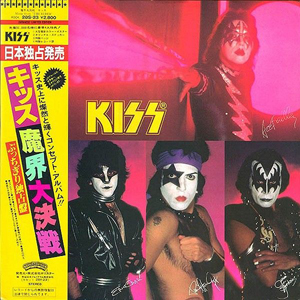
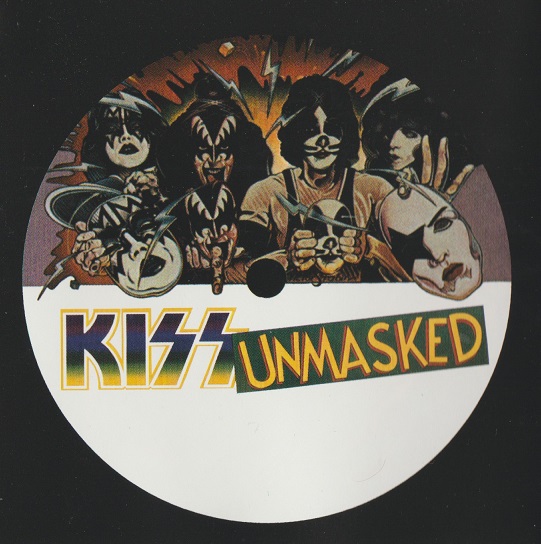
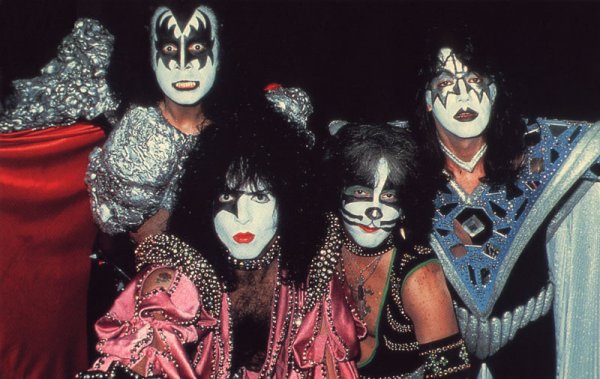
Unmasked was released on May 20, 1980, with a bright cartoony cover including Peter Criss.  Meanwhile the band were already preparing for their first of many lineup changes, something that was kept quiet until the right moment.

In July, Kiss were ready to unveil the new member.  Paul Caravello, from Brooklyn, impressed Kiss with his audition and humble personality.  The story that everybody remembers is that Caravello asked the guys for their autographs in case he never saw them again.  No worries there; the job was destined to be his.  But Kiss couldn’t have another guy named Paul, and his last name was too “ethnic” (obviously Italian), so his name was changed to Eric Carr.  (Fortunately, Gene’s suggestion of “Rusty Blades” was discarded.)  The newly dubbed Eric was an energetic mighty-mite of rock, and the band quickly grew to love him.  Everything was new to him.

“The Hawk”

A new makeup design was required.  This was a big deal — a new challenge.  A hawk concept was tried, but in the costume Carr looked more like Big Bird than a rock star.  He drew up an inspired fox design which immediately clicked.  The new character was born!

Carr’s first appearance with the band was at their only US date on this tour: New York on July 25 1980.  The rest of the tour took place in Europe and Australia where “Shandi” became a hit.  There were only 41 shows in total.  Despite their best efforts, Kiss’ fortunes were shifting.  Opening acts on the tour included Iron Maiden, which must have been quite the mismatch.  Given Maiden’s reputation for blowing away headliners (much like Kiss when they started out), you must wonder how this went down.  Girl, featuring future Def Leppard guitarist Phil Collen and future L.A. Guns singer Phil Lewis, also opened a handful of gigs.

Unfortunately for fans, especially in North America, this was the last tour for a long time.  It was also the only tour featuring this lineup.  While Kiss had endured their first lineup change, that was only just the beginning of the problems to solve.

Today’s rating:

3.5/5 stars


Uncle Meat’s rating:

4.5/5 steaks 

Meat’s slice:  Unmasked was released in May of 1980. A couple of months later I had heard that Kiss was going to introduce their new drummer on a show called Kids Are People Too. Seeing Kiss in the Phantom movie on TV was one thing. But knowing they were being interviewed, and introducing their newest member…Eric “The Fox” Carr. I watch it today on YouTube, and it’s so…umm…not what I remember. But it was monumental at the time for me. At this point, I had heard Unmasked once at a friend’s place and was underwhelmed. But I loved the album cover and still think it is probably their best. My take on Unmasked is much different now, and was how LeBrain’s Re-Reviews started in the first place. First of all I will address this. Mike referred in the beginning of this series to the two “Disco” era Kiss albums of Dynasty and Unmasked. Dynasty has one Disco song. Unmasked does not have anything close to a Disco song. Some would say “Shandi”, but that is Kiss capitalizing on the Soft Rock success of the day. Unmasked may not be a typical Kiss album, but thanks to Vini Poncia it’s a great album of Rock tunes and one of my favorite Kiss albums.

The drumming on this album is a major high point. Anton Fig shines all over this disc. Ace also continues his consistent roll with great rock songs like “Talk To Me”. He has such a great Rock and Roll voice. The background vocals are great too. “Two Sides of the Coin” is another song with incredible drumming, and a single writing credit. Both this song and “Talk To Me” are the only two songs on the album that don’t have an outside writing credit. Subsequently these songs sound more like classic Kiss than the rest of the album. However “Torpedo Girl” is another story. This might be the shining moment of Ace’s career in Meat’s opinion. Unbelievable guitar riff and funky drum beat. I have had it in my head for days now.

It seems that the addition of Vini Poncia to the Kiss machine inspired Gene Simmons as well. Unlike Dynasty where his songs were mostly forgettable, a couple of his songs on this album shine here. “She’s So European” is “completely ridiculous” but a “great fucking tune” (according to my longtime Kiss-mate Scott) . That about says it all. “Naked City” sees the falsetto of Gene Simmons on display here in another catchy song. There are great hooks within this song, which is indicative of the whole album really. However the album closer, “You’re All That I Want” might be the weakest track on the album. I do though love the ending, which you hear Stanley screaming in his typical live-show style.

Paul Stanley’s contributions on this album are good as well, with a few curveballs thrown in. “Shandi” was a massive Australian hit, and even though the song is about as limp as it can be, I still love the song. Reminds me of the Little River Band and Ambrosia songs of the Soft Rock era that I still dig. “What Makes the World Go ‘Round” is a solid song, with some of the greatest solo guitar playing Paul Stanley has put to record. “Tomorrow” sounds a lot like .38 Special to me and is just OK. “Easy As it Seems” is a solid song that incorporates keyboards in an interesting way, and might be the best Stanley song on Unmasked.

Overall Unmasked is a misunderstood, understated classic. I am curious to see if time has changed LeBrain’s take on this album. All I can say is…this may be Kiss’s last truly great album. From here on in, the “Meat’s Slice” section will start to get a lot shorter, with a couple exceptions.

Favorite Tracks: “Torpedo Girl”, “Shandi”, “Is That You”, “Talk To Me”, “She’s so European”

Forgettable Tracks: “You’re All That I Want”, “Tomorrow” (both borderline)


To be continued…

Original mikeladano.com review:  2012/07/25


REVIEW: Deep Purple – When We Rock, We Rock and When We Roll, We Roll (1978)

DEEP PURPLE – When We Rock, We Rock and When We Roll, We Roll (1978 Warner)

When Deep Purple broke up in 1976, their back catalog was ripe for exploitation for compilation by record labels.  One by one, out trickled Deepest Purple, Singles A’s and B’s, and When We Rock, We Rock and When We Roll, We Roll.  1978’s When We Rock is the least necessary of them all.

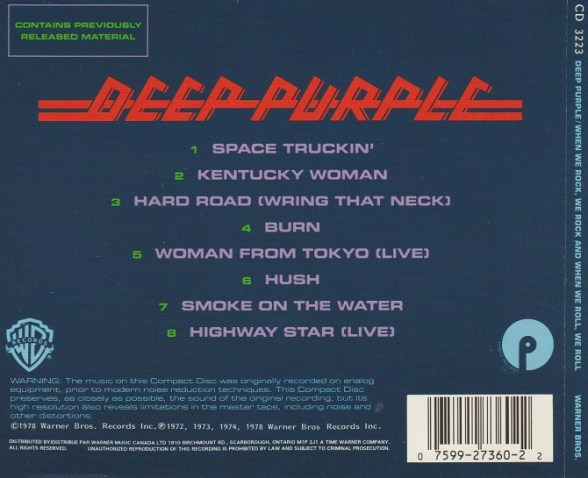
The only thing that When We Rock really has going for it is that did feature all the Deep Purple singers to date.  Ian Gillan sings the majority of tracks, Rod Evans has two (“Hush” and “Kentucky Woman”) and Coverdale/Hughes have one (“Burn”).  The shoddy package had no involvement from any ex-members of the band, and even has an incorrect track listing on the back.  “Woman From Tokyo” isn’t live, but “Smoke on the Water” is (from Made in Japan).

If music shoppers in 1978 were just looking for a handy-dandy single record set of all Purple’s radio hits, then When We Rock almost fits the bill.  “Hard Road (Wring That Neck)” is conspicuous by its inclusion, being a semi-obscure instrumental from 1969’s The Book of Taliesyn.  Swap that one out for “Strange King of Woman” and you could have had a serviceable hits set, even considering the live tracks.  After all, Made in Japan helped establish the live album as a viable hitmaker.

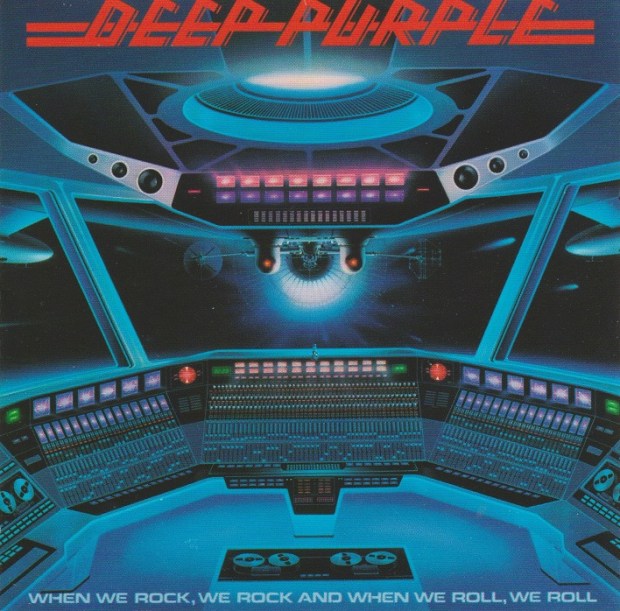
The only reason to own When We Rock, We Rock and When We Roll, We Roll is the cover art, which admittedly is pretty nifty.

1/5 stars

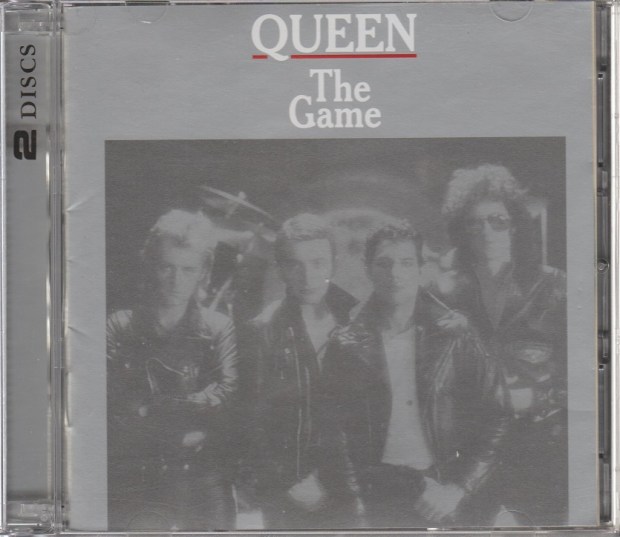
REVIEW: Queen – The Game (1980, all bonus tracks)

QUEEN – The Game (Originally 1980, 1991 & 2011 Hollywood recorded reissues)

When Queen released their devastating debut album Queen in 1973, the liner notes proudly stated “And nobody played synthesizer”.  A mere seven years later, Queen introduced the electronic instrument to their sound on 1980’s The Game. This did not in any way hinder the album from becoming a massive success, nor weaken the Queen sound.  The synth was just another colour in the Queen pallette.  It would be fair to argue that The Game contains no clunkers, no songs that should have been discarded.

All you have to do is fall in love.  Everybody play The Game.

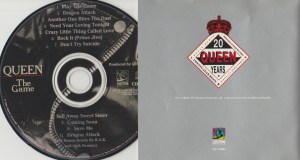
The Game eventually spawned five brilliant singles:  “Play the Game”, “Another One Bites the Dust”, “Crazy Little Thing Called Love”, “Need Your Loving Tonight” and the grandiose “Save Me”.  Anybody who has some decent Queen “hits” albums should know at least four of those songs.  But that’s not all, of course.  Funky bass and sharp danceable beats make “Dragon Attack” one not to miss.  The production of Mack and bass of the incredible and underrated John Deacon really cut through.  Rock albums that sound as good as The Game do not come around often, and “Dragon Attack” must be considered a prime example of why The Game is tops.    On album, it’s followed by Queen’s best known funk jam “Another One Bites the Dust”.  Dancefloor overload, baby!

Speaking of John Deacon, not only did he write “Another One Bites the Dust”, but also “Need Your Loving Tonight” which is good and hard rock and roll.  It could have been a Paul Stanley track.  As far as “rock and roll” goes, “Crazy Little Thing Called Long” is definitive.  The walking bassline and black leather jacket vibe are perfect.

The Game‘s second side has the deep tracks.  “Rock It (Prime Jive)” combines the synths with a scorching Roger Taylor hard rocker.  This cut is well worth getting acquainted with.  You’ll want some “Prime Jive”!  Then there’s the track I vaguely remember hearing on a radio as a kid, “Don’t Try Suicide”.  Good advice, and a strange and snappy little bopper to singalong to.  “Don’t try suicide, you’re just going to hate it,” was the line I found strangely amusing as a child.  “Isn’t that obvious?” a nine or ten year old me wondered.

Then there’s a song I first became acquainted with via Guns N’ Roses.  Axl, an unabashed Queen fan, used to do a bit of “Sail Away Sweet Sister” on piano in concert.  In my mind, it doesn’t matter how you first heard a song, as long as you eventually hear it.  The Queen original is a somber ballad sung by Brian May and featuring stunningly beautiful guitar work.  Another winning combo that sounds a bit Kiss-like is the rhythmic “Coming Soon”.   Don’t be surprised that Taylor penned it.

That is a tight ten songs, half of which were singles.  A damn perfect album.  Of course today there are expanded experiences to choose from.

When this album was reissued in 1991 by Hollywood records for their Queen “Twenty-Year Reign” series, they added a remix of “Dragon Attack”, now deleted.  Adding unnecessary loops, samples and raps brings nothing to the song.  Only collectors need seek this out.   Instead, you should search for the 2011 double CD remastered edition.  This one adds five bonus tracks.  “Save Me” and “Dragon Attack” are live, and the liner notes state that “Save Me” from 1981 could be the “ultimate” rendition of that song.  (It certainly is impressive.)  Then there is a first take of “Sail Away Sweet Sister” before all the words were in place.  The most fascinating demo is a spontaneous recording of what would later become “It’s a Beautiful Day”, finished for 1995’s Made in Heaven, the final Queen album.  History buffs will be delighted to discover a B-side written by Roger Taylor called “A Human Body”.  This unusual song is about the doomed Scott expedition to the South Pole in 1912.

They were talking in whispers,
In bear skins and fur,
Captain Scott and his heroes-to-be,
To have laboured so long,
To have made it this far,
Ooh it’s been such a long ride,
Ooh you know it’s been a long way,
For a human…human…human,
For a human body you see.

Indeed, Robert Falcon Scott was considered a hero of the British Empire, though he was beaten to the pole by Roald Amundsen of Norway and died on the way home.  Scott’s story is a tragedy of human error, ego, Imperialism, and the sheer deadly ability of the south pole to render a man lifeless in minutes.  Taylor’s quirky track does not convey this, and so it remains an odd curiosity.

However you get The Game, you will be delighted by the core 10 tracks.  The 2011 bonus CD is highly recommended.  All hail John Deacon, the boss of the bass.

5/5 stars

RE-REVIEW: KISS – Dynasty (1979)

The KISS RE-REVIEW SERIES Part 17:  


  Dynasty (1979 Casablanca, 1997 Polygram Japan remaster)

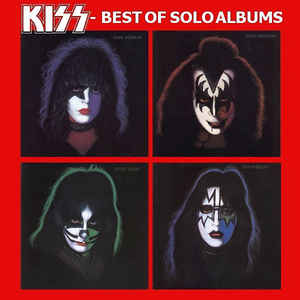
“The Return of Kiss”.  It sounds quaint today, that after a two year absence they called it “The Return of Kiss”.  Two years today means nothing.  But for Kiss, who were doing two releases a year, it did actually mean something.  Their last project was their series of four solo albums, one for each member, and unified by cover art.  This project only reinforced the idea that the whole is greater than the sum of its parts.

The truth is, the original Kiss were already over.  Peter Criss returned from his solo album and a car accident as a changed man, and not in a good way.  Upon walking in the door he insisted upon seeing sheet music for the new tunes.  That was a first.  It was quickly apparent that Peter was not in a condition to perform.  The band had even hired his solo album producer, Vini Poncia, to helm the new Kiss.  Poncia deemed Criss’ current abilities inadequate and he was replaced for the album by Anton Fig.  Anton was Ace’s solo drummer, and more than capable of filling in.  Previously, when Bob Kulick was hired to replace Ace on side four of Alive II, he was instructed to “play like Ace”.  Anton Fig was given no such instruction and was free to drum as he pleased.  Some Kiss fans were able to pick up on that.  Ultimately Peter Criss played drums on only one song, his own called “Dirty Livin’”.  And that would be Peter’s final appearance on a Kiss studio album until 1998’s Psycho-Circus, on which he also played drums on only one track.  Kiss was indeed broken, but few on the outside knew it.  Peter would never play on a whole Kiss album again.

A lot had changed.  Kiss’ massive marketing campaigns paid off, but was that a good thing?  Little kids were now coming to Kiss concerts.  Paul Stanley was actively seeking hits.  Together with new songwriting friend Desmond Child, Paul wanted to write a dance single.  Inspired by the clubs of New York, the pair produced “I Was Made For Lovin’ You”, the song that gave Kiss the “disco” tag.  The single sold a million copies.  Needless to say, it was not the last Kiss single written with Desmond Child.

The album went platinum and became the hit it was designed to be.  Inside the sleeve, the music was streamlined and more commercial than before.  “I Was Made For Lovin’ You” led the way, demolishing the walls between dance and rock.  Frehley had a hot solo in the mix, and the bouncy bass was performed by Paul Stanley.  The song had all the right ingredients and though thin sounding by today’s standards, it’s still a great little dance rock number.

The real revelation about Dynasty wasn’t the turn towards slicker, highly compressed recordings.  It was Ace Frehley coming out of his shell.  Newly confident after his hit solo experience, Frehley had three songs to sing on Dynasty.  Ace covered the Stones on “2000 Man”, a version that may be more beloved than the original.  It certainly sounds at home.  Ace rocks it up significantly.  Ace also had lead vocals on “Hard Times”, a track about growing up as an aimless youth in New York.  “We’d go to school, then we’d cut out, go to the park, and space our heads out.”  “Hard Times” is not an exceptional song, but it’s interesting since it’s so autobiographical.  Ace’s last song was the more aggressive “Save Your Love”.  This track closes Dynasty with the kind of rock that people often forget is on the album.  Ace’s tracks are the only ones that can be classified purely as “rock”.  He has more guitar riffage on “Save Your Love” than the other songs combined.  Without the Space Ace, Dynasty would have been a much weaker album.

The increase in Ace’s participation was balanced by a decrease in that of Gene Simmons.  Gene only had two songs on the album, neither of which were singles.  “X-Ray Eyes” and “Charisma” inhabit the same kind of compressed audio landscape as the rest.  “Charisma” is the best, due to its unusual echoey vocals, fitting for the demon persona.  Gene’s prime interest was still the opposite sex, and both songs have the demon’s stamp.  The main hooks on both are delivered by the backing vocals during the choruses.

The dominant force on Dynasty — and as it turns out, for the coming decade – was Paul Stanley.  Not only was “I Was Made for Loving You” a massive hit, but the second single “Sure Know Something” was also one of his.  Paul wrote this dancey ballad with producer Vini Poncia.  It’s not all simply dance floor moves though, as the chorus has the power chords and lung power that Kiss fans expected.  Stanley also wrote “Magic Touch”, a lesser known album classic.  “Magic Touch” burns slow, but hot.  Paul’s falsetto was a sign of the times, but the power chords explode on the chorus.

And that leaves poor Peter.  “Dirty Livin’” was written with Stan Penridge and Vini Poncia, and it was written as something more R&B in direction.  It was Kiss-afied and included on the album as Peter’s only appearance.  You can hear that it’s not the same drummer and that it’s a very different vibe.

For all outside appearances, Kiss maintained an image of solidarity.  There was no mention of a session drummer, and Peter was there on tour for all 82 shows.  However there were some cracks visible.  Several shows had to be cancelled for poor ticket sales, in areas such as New York City and Pontiac Michigan.  With the toys, comics and merchandise, Kiss were beginning to be seen as a kids’ band.  Dynasty was the hit it needed to be, but the situation was not sustainable.

Today’s rating:

4/5 stars


Uncle Meat’s rating:

4/5 steaks 

Meat’s slice:  The first of the two supposed “Disco Era” Kiss records LeBrain referred to in the introduction of this series, Dynasty really just is a pretty solid rock and roll record other than the mega-hit, “I Was Made For Lovin’ You”.  There really is not another song on the record that could be classified as Disco.  But more on that when I talk about Unmasked.

This album sees the beginning of a couple new eras in Kisstory. The first being the band’s writing collaboration with Desmond Child.  “I Was Made For Lovin’ You” was the first hit of many for Desmond Child.  He has “songwriter” credits (and yes I am using that term loosely) on such deplorable pap as “Livin’ La Vida Loca”, “She Bangs”, and upcoming Kiss dung like “Let’s Put the X in Sex” and “Uh! All Night”.  Basically when a band gets shittier, they go to Desmond Child.  When Ratt got shittier, in came Desmond.  When the Scorpions got shittier, he pops up again.  When Aerosmith started becoming a glossy joke, here comes Desmond Child and “Dude (Looks Like a Lady)”. Yes, as good as this album is, Kiss was starting to get shittier.

As George Costanza would say, worlds collide for me on this album.  For years I had no idea Peter Criss only played drums on his own song on Dynasty.  His phantom replacement turned out to be Mr. Anton Fig, who played drums in one of my favorite bands ever, Paul Shaffer and the World’s Most Dangerous Band.  Even Anton’s dry humor on the show was a high point in Late Night with David Letterman for me.  I am a true Letterman head and always will be.  Anton Fig went on to be Ace’s drummer in Frehley’s Comet, so maybe Fig’s presence somehow inspired the Space man, since he is a high point of Dynasty.  The Rolling Stones cover “2000 Man” is a fucking great tune.  “Hard Times” is just as good and a personal favorite of many Kiss fans.

There are a few weaker-ish songs on the album but nothing egregious here.  Very good rock album with ONE disco song.  Thank you Desmond Child for injecting Kiss with your “Bad Medicine”.  (Yes, he wrote that too.  As well as writing songs for such wonderful artists like Hanson, The Jonas Brothers, Lindsay Lohan and Clay Aiken.)  Hey Desmond…in the words of Ricky…you are truly a FuckGoof.

Favorite Tracks:  “Sure Know Something”, “Hard Times”, “2000 Man”, “Save Your Love”, “Magic Touch”

Forgettable Tracks:  “Dirty Livin'”


To be continued…

Original mikeladano.com review:  2012/07/24

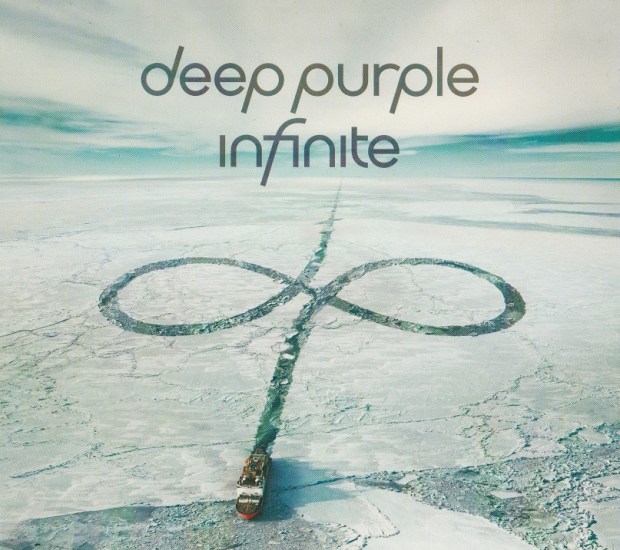
REVIEW: Deep Purple – InFinite (2017 deluxe box) Part 2 of 2

This is Part 2 of a double-sized Deep Purple deluxe InFinite box set review!  For Part 1, click here.

DEEP PURPLE – InFinite (2017 Edel deluxe box set edition)

When we last met, we took a solid look at Deep Purple’s fine new album, InFinite.  Because the year is 2017, InFinite is available in multiple editions.  The most logical to buy is the deluxe box set.  This includes:

  • InFinite on CD
  • From Here to InFinite – a full length documentary DVD
  • InFinite on a 2 LP set in its own double gatefold
  • The Now What?! Live Tapes, Vol. 2 – an exclusive live album included on three 10″ records
  • A T-shirt
  • A poster
  • Five lovely photo cards
  • A sticker

That’s a lot of goodies for a reasonable price, and it all comes housed in a sturdy box.

The included DVD is a very intimate look at the creation of InFinite from writing to overdubs.  Narrated by Rick Wakeman (you read that correctly), it also looks at the moments that Steve Morse and Don Airey joined the band.  Much attention is given to the shocking departure of Ritchie Blackmore in 1993, and the acquisition of Joe Satriani (who is interviewed for the DVD). However, Joe had commitments and couldn’t stay long.  Deep Purple couldn’t wait for him, so they had to look for someone else.  They had a list, and the first name on it was Steve Morse.  Almost instantly they found themselves rediscovering the joy of music.  The atmosphere and attitude of the band did a complete 180.   When Jon Lord’s passing is discussed, there are a few teary eyes and sincere words.  Moving on to InFinite, it is remarkable to watch the band pluck ideas from the air and mold them into songs.  Bob Ezrin is a huge part of the process, with his own ideas and preferences.  His reputation as a taskmaster is reinforced by the band, but it seems like a very easy collaboration.  They have the same goals and desires, and trust each other’s musical instincts.  There is also a shockingly frank discussion with Steve Morse, about the osteoarthritis in his picking hand.  His technique has, over the years, worn out his wrist to the point that there is bone-on-bone contact.  The pain has grown so severe that playing the guitar required him to completely change his picking technique, while wearing a wrist brace.  Meanwhile Don Airey gets 20 “Cool Points” for wearing both a Rival Sons T-shirt, and a Winnipeg Jets sweater.  Canucks will also be pleased to know that Ian Gillan recorded his vocals at Bob Ezrin’s studio in Toronto.

The DVD can be had in a CD/DVD set, so the real reason for fans to choose this box set is The Now What?! Live Tapes, Vol. 2.  Vol. 1 was included on the “gold” reissue of their last album Now What?!  Vol. 2 is, as it states on the sleeve, “100% live!  100% unreleased!”  There are some obscure tracks on here, making this live album very enticing indeed.  You don’t have to sit through more versions of “Smoke on the Water” or “Black Night”.  Even better, or perhaps best of all to the vinyl nerds, are the lovely records that comprise The Now What?! Live Tapes, Vol. 2.  Three 10″ records, each in their own coloured sleeve, and each on coloured vinyl!  White, clear, and clear blue.

“Après Vous” (from London) commences the proceedings.  This newby from Now What?! has a lot of life on stage, and the long instrumental section sounds kinda like the old days.  Then an oldie:  “Into the Fire” (Milan) from 1970’s Deep Purple In Rock.  Ian really strains his voice on this one, but somehow pulls it off with style.  Back to London for “The Mule”, a song featuring Ian Paice’s busiest drum work.  No problems from Paicey.  Indeed, on the DVD Paicey says he hasn’t experienced much physical difficulty in continuing to play the way he wants to.

The second record starts with Purple’s recent “Green Onions”/”Hush” medley (Gaevle, Sweden), a cool way to inject new life into one of Purple’s earliest singles.  The interplay between the four musicians during the jam section is remarkable.  Even though most of the originals are long gone, it sounds sorta like Purple circa 1969.  Another medley showcasing Steve Morse (“The captain of the skies, the Aviator”, says Gillan) occupies side two.  “Contact Lost” (London) is Morse’s short instrumental tribute to the crew of STS-107, known to most as the Space Shuttle Columbia disaster.  This merges into Purple’s majestic song for Jon Lord, “Uncommon Man” and finally Steve’s instrumental “The Well-Dressed Guitar”.

One more record to go.  The excellent single “All the Time in the World” from Now What?! comes from Aalborg, Denmark.  It’s a slick and laid back jazzy rock groove.  Purple always seem to find a great groove, and “All the Time in the World” is unlike previous ones.  “Highway Star” (London) is like a polar opposite.  Though you know they will hold it all together, “Highway Star” still sounds so fast that it could come off the tracks at any time.  1971’s “Strange Kind of Woman” (Aalborg) is a long-time favourite with fun vocal-guitar interplay.  Back to London for the last track, “Space Truckin'”.  What can you say about “Space Truckin'”?  Not much except that Ian Paice still kicks it, and hard!

Purple fanatics who still love what the band is doing today will need this box set.  It will be indispensable to them.  Wear your T-shirts with pride!  For the casual Purple fan who just wants to check out the CD and DVD, that edition will suffice.

To InFinite and beyond!

4/5 stars


Further reading on more Deep Purple InFinite related releases:

DEEP PURPLE – Time For Bedlam (2017 Edel EP)

DEEP PURPLE – All I Got is You (2017 Edel EP)

DEEP PURPLE – Limitless (2017 exclusive CD included with Classic Rock #234, April 2017)

DEEP PURPLE – InFinite (2017 Edel)

REVIEW: Deep Purple – InFinite (2017 deluxe box) Part 1 of 2

This is Part 1 of a double-sized Deep Purple deluxe InFinite box set review!

DEEP PURPLE – InFinite (2017 Edel)

49 years and still kicking it.  The Deep Purple of today is a very different band from the Deep Purple of 1968.  There is only one original member; drummer Ian Paice.  This matters not.  Ian Gillan and Roger Glover are the singer and bassist you remember from “Smoke on the Water” (1972).  Guitarist Steve Morse is a certified genius, and longstanding member for 22 years running.  Don Airey is still the “new guy”, but the former Rainbow/Ozzy/everybody keyboardist was the only man on Earth who could have replaced the late Jon Lord.  He’s done it for four albums straight, sometimes sounding exactly like Jon, and others like nobody else.

So if you didn’t know already, now you do:  There is no question that 49 years later, Deep Purple are still THE legitimate Deep Purple.  This isn’t like, God forbid, Quiet Riot.  Or Bobby Blotzer’s Ratt.

Deep Purple seem to work with producers in spurts.  They did two albums (Bananas and Rapture of the Deep) with producer Mike Bradford.  Now they have done two with the legendary Bob Ezrin!  As soon as Ezrin’s name enters the conversation, the bar is raised.  Ezrin is a full-on collaborator, with co-write credits on each song.  He is an educated musician with an impeccable ear.  His credits (The Wall!) speak for themselves.  Deep Purple is a very different band from Pink Floyd, but Ezrin gels with them in exciting ways.

We have already reviewed the first two singles (“Time For Bedlam” and “All I Got is You“), so for deeper impressions you can check those out.  “Time For Bedlam” opens the new album InFinite, quite successfully.  It’s reminiscent of “Pictures of Home” from Machine Head, which should catch listeners and keep them hooked.  “All I Got is You” (track 3) is the superior of the singles, smooth but smouldering hot.

The balance of InFinite, like much of the Steve Morse era of Deep Purple, takes a few solid listens to absorb.  The songs are challenging but rewarding.  Songs that are rock and roll can suddenly have highbrow instrumental sections.  Gillan and Glover’s lyrics are more biting than ever, enticing the listener to check them out over again.

“Hip Boots” has a vibe like “Lick It Up” from The Battle Rages On but better.  Don Airey really does sound perfect within Deep Purple, as this monster is largely powered by the good old Hammond organ.  Airey’s also the star of “One Night in Vegas” (working title:  “Something Else Or What”), with both organ and piano sounding oh-so-Purple.  (Bob Ezrin is also credited for additional keyboards on the album, but this sounds more likely to be Airey on both parts.)  Gillan’s lyrics as a storyteller are as amusing as always, going back to tracks like “Anyone’s Daughter”.  The first non-descript song is “Get Me Outta Here”, but perhaps more listens will increase the appeal.

An early favourite is “The Surprising”, a dramatic and quiet flight of progressive fancy.  The subtle but awesome drum work of Ian Paice unobtrusively creates a perfect backdrop for Don and Steve’s interplay.  Challenging “The Surprising” for dominance is the next track, “Johnny’s Band” (working title:  “Jig”).  It’s easily the most fun of the new songs, and the one with the instantly memorable chorus.  Then “On Top of the World” (working title:  “Slow Heavy”) is probably the most different of the tracks, containing a poetry section over a progressive backdrop.  Otherwise it’s just a smoking jam, with an oddly premature fade-out.  Steve Morse dominates “Birds of Prey” with his smooth stylings.  The track is a slow but excellent journey through the sand dunes of progressive rock.

The only questionable choice on InFinite is covering The Doors’ “Roadhouse Blues”.  It’s wonderful to hear Ian Gillan on the harmonica again.  (What was the last time?  “Hush” in 1988?)  But covering a beloved classic is dangerous 99.785% of the time (there are studies that have been done.*)  Fortunately Deep Purple are an exceptional jam band, so it’s not a total disaster.  Covering “Roadhouse Blues” is like another band covering “Smoke on the Water”.  It’s a “who cares?” moment.  I like to think of “Roadhouse Blues” as a bonus track on an otherwise excellent album.  The InFinite box set has the album on CD, and a 2 LP gatefold version, so you can listen any way you please.

4/5 stars

Check back soon for Part 2 of this review — the extras from the deluxe box set!  They include a DVD and three 10″ records that make up The Now What?! Live Tapes Vol. 2.  (Vol. 1 was a bonus CD on the Now What?! reissue.)

* No there weren’t.  


Further reading on more Deep Purple InFinite related releases (each with exclusives):

DEEP PURPLE – Time For Bedlam (2017 Edel EP)

DEEP PURPLE – All I Got is You (2017 Edel EP)

DEEP PURPLE – Limitless (2017 exclusive CD included with Classic Rock #234, April 2017)

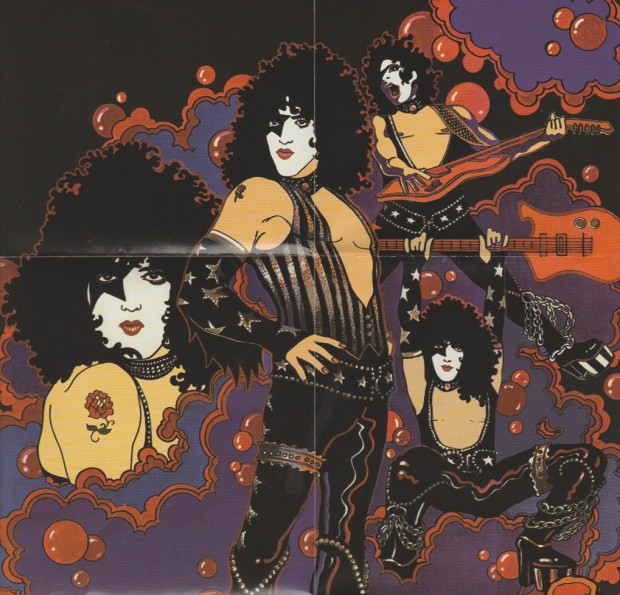
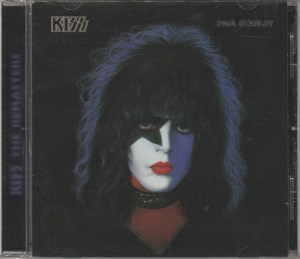
RE-REVIEW: KISS – Paul Stanley (1978 solo album)

The KISS RE-REVIEW SERIES Part 16:  

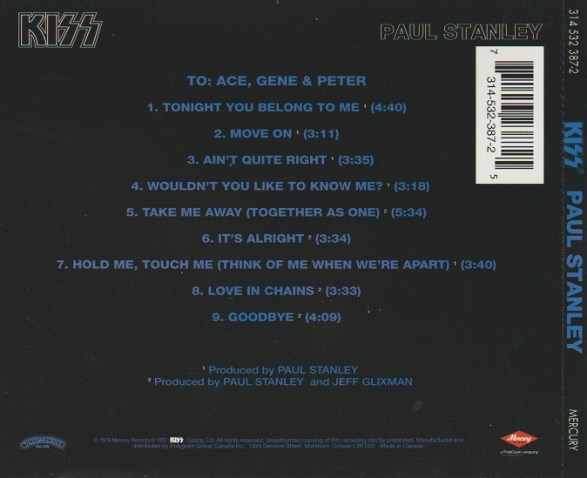
  Paul Stanley (1978 Casablanca solo album, 1997 Mercury remaster)

With the benefit of 20/20 hindsight, we know that Paul Stanley was capable of pretty much running Kiss by himself.  During much of the 1980s, Gene Simmons’ participation in Kiss had a severe drop.  Paul took the reins and the band more or less sounded like Kiss.  With that in mind, it’s no surprise that Paul’s 1978 solo album was also very Kiss-like.  Of the four, Paul’s album had an “if it ain’t broke, don’t fix it” attitude.  His solo songs sound very much like his Kiss songs.  Co-producing with Paul was Kansas producer Jeff Glixman.

Paul had an “ace” in his pocket, so to speak.  On lead guitar was shredder Bob Kulick.  Previously, Bob auditioned for Kiss but was squeezed out at the last minute by Ace Frehley.  He also played ghost guitar on the studio tracks of Alive II.  Now he was out of the shadows on Paul’s album, and his work here absolutely stuns.  It’s a feedback-laden monster of rock.

Paul’s songs are often overblown, and usually loud.  “Tonight You Belong to Me” is one such track:  melodramatic, riffy and loud.  It rocks hard.  It has loads of hooks, killer playing, and lead vocals that slay.  Few singers could touch Paul Stanley in his prime.  If that riff sounds familiar, the Hellacopters ripped it off for the intro to a song appropriately titled “Paul Stanley” (from 1999’s Grande Rock).

“Move On” is upbeat, Kiss-like rock and roll augmented with female backing vocals.  It’s the only song that Kiss played live on their 1979 tour.  It probably fits that standard Kiss mold better than any other tune on the album.  “Ain’t Quite Right” brings things down with a dark acoustic ballad, quite different from past songs Paul has written.  Its sad sound was fairly new territory for an upbeat rocker.

Hold on tight for “Wouldn’t You Like to Know Me”.  If this song was covered by a pop-punk band (pick one:  Sum 41, Blink 182, any of that ilk) it could be huge today.  It’s loud, brash and incredibly rocking, but Paul outsings any punk-pop upstart.  When Paul released his solo One Live Kiss album/video in 2008, “Wouldn’t You Like to Know Me” was one of its highlights.  Kudos must be given to drummer Richie Fontana for kicking it in the nuts.

One of rock’s most legendary (and hardest hitting) timekeepers plays drums on the massive “Take Me Away (Together As One)”.  You don’t associate Carmine Appice with Kiss, but there he is one of Paul’s songs.  It’s a bombastic arrangement of electrics and acoustics, and one of Paul’s most devastating tracks.  Carmine turns it from “stun” to “kill” with his dominating presence.  At 5:26 this is the longest song on the album and as close as Paul gets to epic.

Side two is just as vigorous as side one.  “It’s Alright” has a bright shimmer, plenty of hooks and guitars.  It easily could have been a Kiss classic.  “Girl if you want me to stay satisfied, girl if you want me to stay for the night, it’s alright.”  Sure sounds like Kiss to me.  The guitars have a very “rock and roll” vibe, a classic progression.  Paul has a knack for riffs like this, and “It’s Alright” is one of the best.

Paul’s single was the schlocky piano ballad “Hold Me, Touch Me (Think of Me When We’re Apart)”.  Fans will either love it or hate it.  It’s a song that could have been an AM radio hit on a 70s light rock station.  Lionel Richie could have recorded it.  The guitar solo cooks, and that is all Paul.  He handled all the guitars on this song.  Love it or hate it, it was the second most successful solo Kiss single after Ace’s “New York Groove”.

As the album draws to a close, “Love in Chains” hits hard with punchy drums and choppy guitars.  But it’s just a jab, compared to the closer “Goodbye”, which finishes things off with a flourish and hot riffing.  There is a cool descending guitar part, a superior chorus, and some seriously cool and busy bass by Eric Nelson.  “Goodbye” is a brilliant closer, and it held that slot on Paul’s 2006 solo tour.
Paul’s was the second shortest of the solo albums (only Peter’s being shorter), but it packed more punch than any except Ace Frehley’s.  Everybody has their favourites, and Ace’s album is always held in high esteem.  Ace stepped out of his box and delivered.  Meanwhile, Paul stuck to what he does best, and nailed it.  It’s a “safe” solo album, but lethal when it clicks with you.

5/5 stars

To be continued…

Original mikeladano.com review:  2012/07/22

RE-REVIEW: KISS – Gene Simmons (1978 solo album)

The KISS RE-REVIEW SERIES Part 15:  

 Gene Simmons (1978 Casablanca solo album, 1997 Mercury remaster)

Given Gene’s demon persona, certainly some fans would have expected his solo album to be the heaviest and darkest.  Imagine their shock upon finally hearing the finished disc!  Musical flights of fancy and whimsical songs dominate Gene’s record, as the demon was determined to do something very different.  His album has the most guest stars, the most diverse songs, and the most split of personalities.

Even the “evil” sounding choirs that open the album are more whimsical than demonic.  This soon gives way to a guitar riff, and the first song “Radioactive”.  The audio compression gives it a disco-like beat, but “Radioactive” is a rock and roll track.  It is one of the songs featuring guests Joe Perry and Bob Seger, not to mention a slew of backing vocalists.  It’s also the one track that Kiss played live on tour in 1979.

The demon sounds like he’s prowling for ladies on “Burning Up With Fever”.  If you’re wondering about that funky bass line, it was played by Neil Jason.  In a surprise move, Gene didn’t play bass on his solo album, only guitar.  This lends the whole LP a funkier-than-expected sound.  This plus the ample backing vocals almost makes Gene Simmons sound like an R&B/rock hybrid from time to time. “Burning Up With Fever” is a bad tune for a sexed-up demon, but not one of his finest either.

Some of Gene’s solo songs were oldies that predated Kiss.  Others were of more recent vintage.  The folksy ballad “See You Tonite” sounds like one of the older tunes.  It’s a good one; good enough that Kiss recorded it live in 1995 for their MTV Unplugged appearance.  In a strange twist, some of the best tunes on Gene’s solo platter are the ballads.  Jeff “Skunk” Baxter played on this one and “Burning Up With Fever” as the cavalcade of guest stars continues.  Even Katey Sagal (Married With Children) sings on the LP.

“Tunnel of Love” and “True Confessions” are two of Gene’s non-descript exploits, fairly ordinary songs given a huge boost by the larger than life production (by Gene and Sean Delaney).  The backing vocals are immaculately arranged.  “Tunnel” features Joe Perry and Donna Summer.  Helen Reddy sings on “True Confessions”.  Unfortunately these two songs are more notable by who appears on them rather than how good they are.

Gene was dating Cher at that time, so it’s not really a surprise that Cher appears on “Living in Sin” (as the groupie on the phone).  This side two opener has a bit of that rock and roll spirit missing on other songs, though very corny.  The ballads on side two are better.  “Always Near You/Nowhere to Hide” has some of Gene’s best singing, showing off that high falsetto.  Gene couldn’t get the Beatles to appear on his album, so he did the next best thing and had Mitch Weissman and Joe Pecorino from Beatlemania sing on “Always Near You/Nowhere to Hide”.  This melancholy song is one of Gene’s most ambitious.

“Man of 1000 Faces” is big and bombastic, orchestrated for maximum impact.  It has more in common with Destroyer than anything else Kiss has done, but even more overblown and bombastic.  It also suits Gene’s persona perfectly.  “I can put on any face, you won’t know me but it’s no disgrace.  The king of night, he understands!”  Then “Mr. Make Believe” is laid back and acoustic, and also another fantastic song.   Gene’s ability with ballads should not be understated.  “Mr. Make Believe” is the most Beatles-esque of Gene’s solo tracks.

“See You In Your Dreams” is a remake of the Kiss song from Rock and Roll Over.  Apparently Gene thought it could have been recorded better, but the more basic Kiss version is much more appealing.  Rick Neilson from Cheap Trick plays guitar on it, but Michael Des Barres’ backing vocals are obtrusive and irritating.

And that leaves only the final track.  Some stop playing the album before track 11, others consider it an indispensable part of Gene’s solo statement.  But there it is:  “When You Wish Upon a Star”, the song whose lyrics meant so much to Gene that he recorded it for the last track of his album.  It was not intended as a joke, but many see it as such.

Gene’s solo album can’t be dismissed as garbage, not with the great tunes it has (especially the ballads).  However it’s so scattershot and just plain strange that it’s hard to really just enjoy.  It’s interesting to study and dissect.  Not so much fun to play in the car.

2.5/5 stars

To be continued…

Original mikeladano.com review:  2012/07/20

RE-REVIEW: KISS – Ace Frehley (1978 solo album)

The KISS RE-REVIEW SERIES Part 14:  

 Ace Frehley (1978 Casablanca solo album, 1997 Mercury remaster)

Of the four members of Kiss, Ace Frehley felt he had the most to prove on his solo album.  He’d only had two lead vocals with Kiss, and usually only contributed a couple songs to each album.  Could he write and sing an entire solo album?  Some in the Kiss camp had their doubts.

Ace regrouped with his favourite Kiss producer, Eddie Kramer, and crucially got a newcomer named Anton Fig to play drums.  Anton, from South Africa, has a long and fruitful career but a huge chunk of it was with Ace, and it started right here.  Ace Frehley played almost everything else himself.  Will Lee (Anton’s future bandmate on the Late Night with David Letterman show) played bass on three tracks.  Ace also wrote the majority of the songs by himself, proving he wasn’t reliant on Gene and Paul.

“Rip It Out” is one of the great Ace album openers.  He used it to open his Frehley’s Comet shows in the 1980s, and on album, it really sets the right scene.  Ace was singing great, but more importantly, he had a chance to really let his guitars shine.   Listen to the main riff — you can clearly hear an acoustic guitar mixed in with the electrics.  In Kiss, Ace’s job was to solo and complement the rhythm guitars.  Now Ace could play with multi-layered guitars and effects.  “Rip It Out” really sounds like a statement of intent.  Listen very carefully to the number of guitar parts happening in the mix, from slides and squeals to solos.

Ace has a knack for a pop melody, and “Speeding Back to My Baby” has that side to it.  It’s pop rock complete with female backing vocals, but with serious crunch.  Frehley is the master of guitar crunch, so even when we call a song “pop”, it really rocks.  Check out Frehley’s partly backwards stoppy-starty guitar solo too.

The heavy side of Ace is explored on “Snow Blind”, a mean rocker with a nasty riff.  The solo section is to die for.  “Ozone” too is heavy, and possibly better known as a cover by the Foo Fighters.  There weren’t any questions about the subject matter:  “I’m the kind of guy who likes feelin’ high,” sings Ace in the opening line.  Gene would not have approved, but note the combined use of electrics and acoustics once again.

Ace ended the first side with another triumphant pop rocker:  “What’s On Your Mind”.  It is tracks like this that helped Ace’s solo album become a clear fan favourite.  The guitar riff has punch, but when doubled with acoustics, it rings like a bell.  From brilliant guitar licks to the unforgettable melody, Ace nailed it with “What’s On Your Mind”. It also bookends the first side very well with “Rip It Out”.

The big hit, still getting radio play today, was the Russ Ballard cover “New York Groove”.  Ballard originally gave his demo to the band Hello, but it was Ace that made it an important song.  Ace took the words (written by an Englishman!) and adapted his persona to them.  His lovable rough and tumble New York personality fit the song to a “T”.  It’s a bit cheesy, but Ace can take cheesy and make it cool.  The stompy beat was created using studio experimentation, Eddie Kramer the mad genius who would record anything and everything to get just the right sound.

A pair of rock tracks, “I’m In Need of Love” and “Wiped Out”, fill the middle of side two.  Ace’s echoey guitar slides on “I’m In Need of Love” deliver the prime hooks.  It’s an excellent example of what Ace can do with an electric guitar.  Meanwhile, “Wiped Out” is like a sequel to the surf rock classic “Wipe Out”, and not Ace’s last foray into surf rock either.  His intricate picking here would cause a lesser player’s fingers to fall off.  Check out that wacka-ja-wacka stuff too, funky and cool.

Ace saved the most impressive track for the last, and the first in his so-called Fractured Quadrilogy:  “Fractured Mirror”.  This instrumental features shimmering six and twelve strings working in tandem.  Ace and producer Eddie Kramer went to great lengths to get the guitar sounds on this song.  One technique included playing the figure on a doubleneck guitar, but only using the pickups on the open-tuned second neck.  The pickups to the neck that Ace was actually playing on were turned off.  Once overdubbed, this gave the guitars a bell-like chime, and fans spent years trying to figure out just how Ace did it.  Now you know.

This album was a turning point for Ace.  It gave him confidence.  It ushered in a slew of Ace Frehley lead vocals in Kiss.  And eventually, it set him up for his departure, as nothing he did in Kiss was as artistically freeing as his first solo album.

Today’s rating:

5/5 stars

To be continued…

Original mikeladano.com review:  2012/07/19